AND CRITICAL - ON ALL TITLES 2021 - STANFORD UNIVERSITY PRESS - Stanford University ...
←
→
Page content transcription
If your browser does not render page correctly, please read the page content below

S TA N F O R D U N I V E R S I T Y P R E S S

   PHILOSOPHY
  AND CRITICAL
     THEORY

20% DISCOUNT
ON ALL TITLES               2021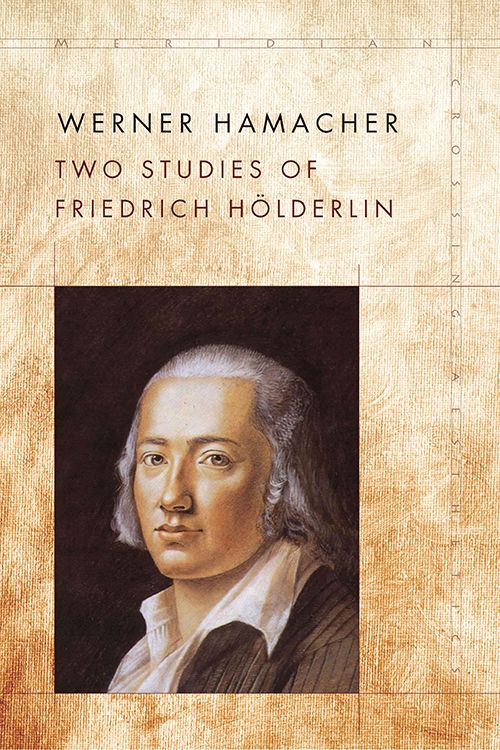
TABLE OF CONTENTS

    The Complete Works
    of Friedrich Nietzsche........... 2-3
    Political Philosophy................. 3-5
    Ethics and Moral
    Philosophy................................... 5-6
    Phenomenology and
    Critical Theory........................... 6-8
    Meridian: Crossing
    Aesthetics.................................... 8-9
    Cultural Memory in
    the Present..................................9-11
    Now in Paperback........................ 11
    Examination Copy Policy......... 11

                                                         The Case of Wagner /                     Unpublished Fragments
    O RDER ING
                                                         Twilight of the Idols /                  from the Period of Human,
    Use code S21PHIL to receive
    a 20% discount on all ISBNs
                                                         The Antichrist / Ecce Homo               All Too Human I (Winter
    listed in this catalog.                              / Dionysus Dithyrambs /                  1874/75–Winter 1877/78)
    Visit sup.org to order online. Visit                 Nietzsche Contra Wagner                  Volume 12
    sup.org/help/orderingbyphone/                        Volume 9                                 Friedrich Nietzsche
    for information on phone                                                                      Translated, with an Afterword,
                                                         Friedrich Nietzsche
    orders. Books not yet published                                                               by Gary Handwerk
                                                         Edited by Alan D. Schrift,
    or temporarily out of stock will be
                                                         Translated by Adrian Del Caro, Carol
    charged to your credit card when                                                              This volume presents the first English
                                                         Diethe, Duncan Large, George H.
    they become available and are in
                                                         Leiner, Paul S. Loeb, Alan D. Schrift,   translations of Nietzsche’s unpublished
    the process of being shipped.                                                                 notebooks from the years in which
                                                         David F. Tinsley, and Mirko Wittwar
                                                                                                  he developed the mixed aphoristic-
                                                         The year 1888 marked the last year       essayistic mode that continued across
    EXAMINATION COPY POLICY                              of Friedrich Nietzsche’s intellectual    the rest of his career. These notebooks
    Examination copies of select titles                  career and the culmination of his        comprise a range of materials, includ-
    are available on sup.org.                            philosophical development. In that       ing drafts of aphorisms that would
    To request one, find the book you
                                                         final productive year, he worked on      appear in both volumes of Human, All
    are interested in and click Request                  six books, all of which are now, for     Too Human. Additionally, there are
    Review/Desk/Examination Copy.                        the first time, presented in English     extensive notes for never-completed
    You can request either a free                        in a single volume. Together these       publications and detailed reading notes
    digital copy or a physical copy                      new translations provide a funda-        on philologists, philosophers, and
    to consider for course adoption.                     mental and complete introduction         historians of his era.
    A nominal handling fee applies                       to Nietzsche’s mature thought and
    for all physical copy requests.                      to the virtuosity and versatility of     Here, we trace more closely Nietzsche’s
                                                         his most fully developed style.          development of ideas that remain
                                                                                                  central to his mature philosophy,
           @stanfordpress                                Scrupulously edited, this critical       such as the contrast between free and
                                                         volume also includes commentary          constrained spirits, the interplay of
           facebook.com/
                                                         by esteemed Nietzsche scholar            national, supra-national, and personal
           stanforduniversitypress
                                                         Andreas Urs Sommer. Through this         identities, and the cultural centrality of
           Blog: stanfordpress.                          new collection, students and scholars    Bildung as education and cultivation.
           typepad.com                                   are given an essential introduction to
                                                                                                  560 pages, August 2021
                                                         Nietzsche’s late thought.                9781503614840 Paper $25.00 $20.00 sale
                                                         816 pages, January 2021
                                                         9781503612549 Paper $25.00 $20.00 sale

2                                                              THE COMPLETE WORKS OF FRIEDRICH NIETZSCHE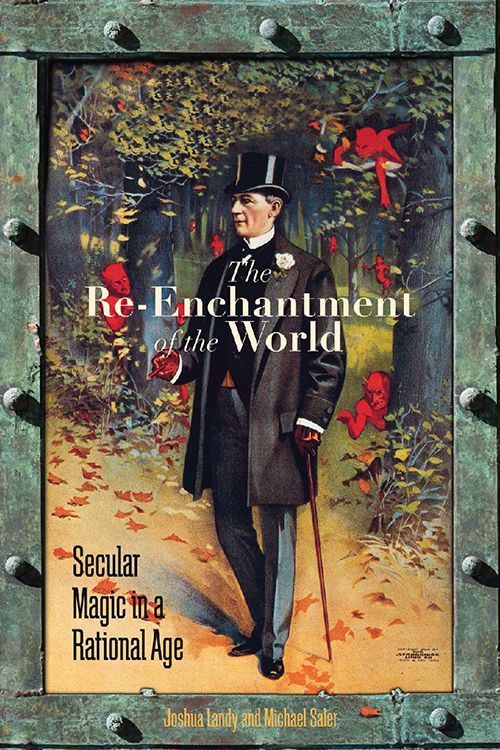
Unpublished Fragments                    Political Grammars                          Surging Democracy
(Spring 1885–Spring 1886)                The Unconscious Foundations                 Notes on Hannah Arendt’s
Volume 16                                of Modern Democracy                         Political Thought
Friedrich Nietzsche                      Davide Tarizzo                              Adriana Cavarero
Translated, with an Afterword,           Davide Tarizzo takes up the problem         In this provocative new work, Adriana
by Adrian Del Caro                       of modern democratic, liberal peoples       Cavarero weighs in on contemporary
This volume provides the first           —how to define them, how to explain         debates about the relationship between
English translation of all Nietzsche’s   their invariance over time, and how to      democracy, happiness, and dissent.
unpublished notes from the period        differentiate one people from another.      Drawing on Arendt’s understanding of
in which he wrote his breakthrough       Tarizzo proposes that Jacques Lacan’s       politics as a participatory experience,
philosophical books Beyond Good          theory of the subject enables us to         and also work by Émile Zola, Elias
and Evil and On the Genealogy of         clearly distinguish between the notion      Canetti, Boris Pasternak, Roland
Morality. Keen to reinvent himself       of personal identity and the notion         Barthes, and Judith Butler, Cavarero
                                         of subjectivity, and this distinction is    proposes a new view of democracy,
after Thus Spoke Zarathustra, the
                                         critical to understanding the nature        based not on violence, but rather on the
philosopher used these notes to
                                         of nations whose sense of nationhood        spontaneous experience of a plurality
chart his search for a new philo-
                                         does not rest on any self-evident           of bodies coming together in public.
sophical voice. The notebooks reveal
                                         identity or pre-existent cultural or        With this timely intervention Cavarero
his deep concern for Europe and
                                         ethnic homogeneity. Introducing the         suggests democracy’s emergence thrives
its future. We learn what Nietzsche      concept of “political grammar”—the
was reading and from whom he                                                         on the nonviolent creativity of a
                                         conditions of political subjectifica-       widespread, participatory, and relational
borrowed, and we find considerable       tion that enable the enunciation of
notes and fragments from the                                                         power shared horizontally rather than
                                         an emergent “we”—Tarizzo argues
non-book “Will to Power.” Richly                                                     vertically. From digital democracy to
                                         democracy flourishes when the
annotated and accompanied by a                                                       contemporary protest movements,
                                         opening between subjectivity and
detailed translator’s afterword, this                                                Cavarero argues that we need to rethink
                                         identity is maintained. As he compel-
landmark volume sheds light on                                                       our focus on individual happiness and
                                         lingly demonstrates, democracy can
the controversy surrounding the          be productively perceived as a process      rediscover birth through plural interac-
Nachlass of the 1880s.                   of never-ending recovery from a lack        tion. Let us be happy, she urges, but let
                                         of clear national identity.                 us do so publicly, politically, together.
616 pages, 2019
9781503608726 Paper $25.00 $20.00 sale   “A brilliant psychoanalytic exploration     “An inspiring vision of what
                                         of unconscious communities.”                democracy might mean.”
                                                                                                                   —Silvia Benso,
                                                             —John P. McCormick,                              author of Viva Voce
                                                             University of Chicago
                                                                                     144 pages, August 2021
                                         SQUARE ONE: FIRST-ORDER
                                         QUESTIONS IN THE HUMANITIES
                                                                                     9781503628137 Paper $22.00 $17.60 sale
                                         280 pages, April 2021
                                         9781503615311 Paper $25.00 $20.00 sale

                                                                                        POLITICAL PHILOSOPHY                    3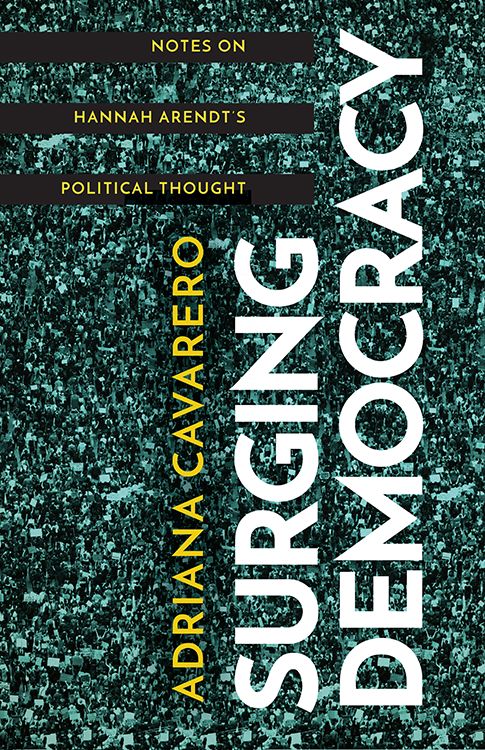
Across the Great Divide                    The Last Years of Karl Marx              Limits
    Between Analytic and Continental           An Intellectual Biography                Why Malthus Was Wrong and Why
    Political Theory                                                                    Environmentalists Should Care
                                               Marcello Musto
    Jeremy Arnold                                                                       Giorgos Kallis
                                               In the last years of his life, Karl
    The division between analytic              Marx expanded his research in            Western culture is infatuated with
    and continental political theory           new directions—studying recent           the dream of going beyond, even
    remains as sharp as it is wide,            anthropological discoveries,             as it is increasingly haunted by the
    rendering basic problems seemingly         analyzing communal forms of              specter of apocalypse: drought,
    intractable. Across the Great Divide       ownership in precapitalist societies,    famine, nuclear winter. Re-reading
    offers an account of how this split        supporting the populist movement         Thomas Robert Malthus and his
    has shaped the field and suggests          in Russia, and expressing critiques      legacy, this book reclaims, redefines,
    means of addressing it. Rather             of colonial oppression. With The         and makes an impassioned plea for
    than advocating a synthesis of             Last Years of Karl Marx, Marcello        limits—a notion central to environ-
    these philosophical modes, Arnold          Musto claims a renewed relevance         mentalism—clearing them from
    argues for aporetic cross-tradition        for the late work of Marx, high-         their association with Malthusian-
    theorizing: bringing together both         lighting unpublished or previously       ism and the ideology and politics
    traditions in order to show how            neglected writings, many of which        that go along with it. Limits are not
    each is at once necessary                                                           something out there, a property of
                                               remain unavailable in English.
    and limited.                                                                        nature to be deciphered by scien-
                                               Readers are invited to reconsider
                                                                                        tists, but a choice that confronts us,
                                               Marx’s critique of European colonial-
    Engaging with a range of fundamen-                                                  one that, paradoxically, is part and
                                               ism, his ideas on non-Western
    tal political concepts and theorists—                                               parcel of the pursuit of freedom.
                                               societies, and his theories on the
    including the work of Stanley Cavell,                                               Taking us from ancient Greece to
                                               possibility of revolution in non-        Malthus, from hunter-gatherers
    Philip Pettit and Hannah Arendt,
                                               capitalist countries. From Marx’s        to the Romantics, from anarchist
    John Rawls, and Jacques Derrida—
                                               late manuscripts, notebooks, and         feminists to 1970s radical environ-
    Arnold shows how we can better
                                               letters emerges an author markedly       mentalists, Limits shows us how an
    understand and address the pressing
                                               different from the one represented       institutionalized culture of sharing
    political issues of civil freedom and
                                               by many of his contemporary              can make possible the collective
    state justice today.
                                               critics and followers alike.             self-limitation we so urgently need.
    “Outstanding and original.”
                                               “Musto takes us by the hand and          “Compelling.”
                              —Paul Patton,
                            Wuhan University   invites us to discover a new Marx.”                           —Kate Raworth,
                                                                    —Antonio Negri,            author of Doughnut Economics
    232 pages, 2020                                      author of Marx Beyond Marx
    9781503612143 Paper $28.00 $22.40 sale
                                               208 pages, 2020
                                               9781503612525 Paper $22.00 $17.60 sale
                                                                                        168 pages, 2019
                                                                                        9781503611559 Paper $14.00 $11.20 sale

4            POLITICAL PHILOSOPHY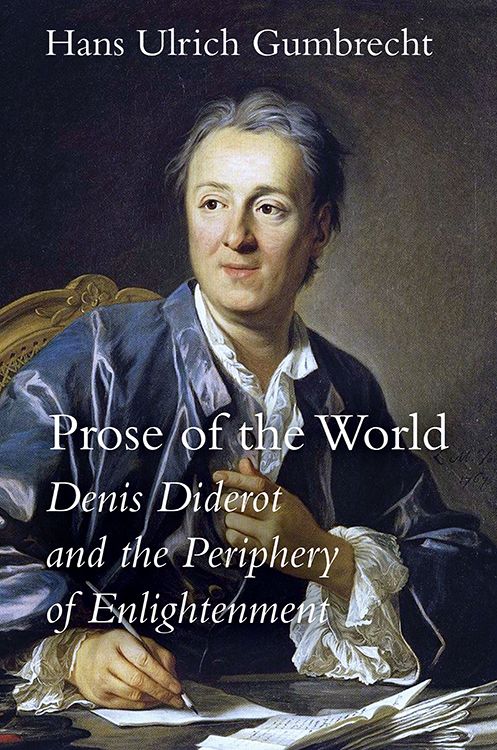
The Political Theory                        Toward the Critique of                         Love Drugs
of Neoliberalism                            Violence                                       The Chemical Future of
                                            A Critical Edition                             Relationships
Thomas Biebricher
                                            Walter Benjamin                                Brian D. Earp and
Neoliberalism has become a dirty
word. Yet the term remains necessary        Edited by Peter Fenves and Julia Ng            Julian Savulescu
for understanding the varieties of          Marking the centenary of Walter                Is there a pill for love? In fact,
capitalism across space and time.           Benjamin’s influential essay,                  biochemical interventions into love
Arguing that neoliberalism is widely        “Toward the Critique of Violence,”             and relationships are not some far-
misunderstood when reduced to a             this critical edition presents read-           off speculation. Our most intimate
doctrine of markets and economics           ers with a new, fully annotated                connections are already being
alone, this book shows that it has a        translation of a classic of modern             influenced by drugs we ingest for
political dimension that we can re-         political theory.                              other purposes. Controlled studies
construct and critique. By examining                                                       are underway to see whether arti-
the views of state, democracy, science,     The volume includes notes and                  ficial brain chemicals can enhance
and politics in the work of six major       fragments by Benjamin along                    couples therapy. And conservative
figures—Eucken, Röpke, Rüstow,              with passages from all of the                  religious groups are experimenting
Hayek, Friedman, and Buchanan—              contemporaneous texts to which                 with certain medications to quash
The Political Theory of Neoliberalism       his essay refers: provocative                  romantic desires—and even the
offers the first comprehensive account      arguments about law and violence               urge to masturbate—among
of the varieties of neoliberal political    advanced by Hermann Cohen,                     children and vulnerable sexual
thought. The book also interprets           Kurt Hiller, Erich Unger, and                  minorities. In Love Drugs ethicists
recent neoliberal reforms of the            Emil Lederer; a new translation                Brian D. Earp and Julian Savulescu
European Union to diagnose contem-          of selections from Georges Sorel’s             arm us with the latest scientific
porary capitalism more generally. The       Reflections on Violence; and, for              knowledge and a set of ethical tools
latest economic crises hardly brought       the first time in any language, a              that we can use to decide if these
the neoliberal era to an end. Instead,      bibliography Benjamin drafted for              sorts of medications should be a
as Thomas Biebricher shows, we are          the expansion of the essay and the             part of our society.
witnessing an authoritarian liberalism      development of a corresponding
                                            philosophy of law.                             “A fascinating, game-changing
whose reign has only just begun.                                                           scientific argument.”
“A model of what political theory           “The most comprehensible version                                       —Helen Fisher,
should be.”                                 yet of Benjamin’s compelling and                           author of Anatomy of Love
                       —Margaret Kohn,      demanding essay.”
                    University of Toronto                       —Kevin McLaughlin,
CURRENCIES: NEW THINKING
                                                                  Brown University         280 pages, 2020
FOR FINANCIAL TIMES                         376 pages, June 2021                           9780804798198 Cloth $25.00 $20.00 sale
272 pages, 2019                             9780804749534 Paper $25.00 $20.00 sale
9781503607828 Paper $25.00 $20.00 sale

                                                                                     ETHICS AND MORAL PHILOSOPHY                    5
Giving Way                                  Prose of the World                         Theory of the Earth
    Thoughts on Unappreciated                   Denis Diderot and the Periphery            Thomas Nail
    Dispositions                                of Enlightenment
                                                                                           We need a new philosophy of the
    Steven Connor                               Hans Ulrich Gumbrecht                      earth. Crafting a philosophy of geol-
    In a world that promotes assertion,         Philosopher, translator, novelist, art     ogy that rewrites natural and human
    agency, and empowerment, this               critic, and editor of the Encyclopédie,    history from the broader perspective
    book challenges us to revalue a             Denis Diderot was one of the liveliest     of movement, Thomas Nail provides
    range of actions and attitudes that         figures of the Enlightenment.              a new materialist, kinetic ethics of
    have come to be disregarded or              But how might we delineate the             the earth for this moment.
    dismissed as merely passive. Mercy,         contours of his diverse oeuvre,            Climate change and other
    resignation, politeness, restraint,         which is clearly characterized by a        ecological disruptions challenge
    gratitude, abstinence, losing well,         centrifugal dynamic?                       us to reconsider the deep history
    apologizing, taking care: today,
                                                Conjuring scenes from Diderot’s            of minerals, atmosphere, plants,
    such behaviors are associated with
                                                by turns turbulent and quiet life,         and animals and to take a more
    negativity or lack. But the capacity
                                                offering close readings of several         process-oriented perspective that
    to give way is better understood
                                                key books, and probing the motif           sees humanity as part of the larger
    as positive action, at once intricate
                                                of a tension between physical              cosmic and terrestrial drama of
    and demanding. Moving from
                                                perception and conceptual experi-          mobility and flow. Building on his
    intra-human common courtesies,
                                                ence, Gumbrecht demonstrates               earlier work on the philosophy of
    to human-animal relations, to the
                                                how Diderot belonged to a vivid            movement, Nail argues we should
    global civility of human-inhuman
                                                intellectual periphery that included       shift our biocentric emphasis from
    ecological awareness, the book’s
                                                protagonists such as Lichtenberg,          conservation to expenditure, flux,
    argument unfolds on progressively
                                                Goya, and Mozart. With this pro-           and planetary diversity, and rethink
    larger scales. At a time when it is
                                                vocative, elegant work, he elaborates      our ethical relationship to one
    on the wane, Giving Way offers a
                                                the existential preoccupations of          another, the planet, and the cosmos
    powerful defense of civility, the
                                                this periphery, revealing the way          at large.
    versatile human capacity to deflect
                                                they speak to us today.                    “A needed provocation.”
    aggression into sociability and to
    exercise power over power itself.           “A significant contribution by one of                           —Dorion Sagan,
                                                the world’s leading literary scholars               author of Cosmic Apprentice
    “This book gets to the root of what it      and public intellectuals.”                 320 pages, April 2021
    means to be an ethical human being.”                               —Markus Gabriel,    9781503627550 Paper $28.00 $22.40 sale
                               —David Kishik,                   author of Why the World
                             Emerson College                              Does Not Exist
    248 pages, 2019                             304 pages, May 2021
    9781503610835 Paper $26.00 $20.80 sale      9781503615250 Cloth $35.00 $28.00 sale

6             ETHICS AND MORAL                     PHENOMENOLOGY AND CRITICAL THEORY
              PHILOSOPHY
Crowds                                   Photography and Its Shadow                  Heidegger’s Fascist Affinities
The Stadium as a Ritual of Intensity                                                 A Politics of Silence
                                         Hagi Kenaan
Hans Ulrich Gumbrecht                                                                Adam Knowles
                                         Photography and Its Shadow argues
Finalist for the 2020 Football Book      that the invention of photography           This book argues that Martin
of the Year Award from the German
Academy for Football Culture             marked a rupture in our relation to         Heidegger’s politics and philosophy
                                         the world and what we see in it. The        of language emerge from a deep
Anyone who has ever experienced                                                      affinity for the ethno-nationalist
                                         dominant theoretical and artistic
a sporting event in a large stadium                                                  and anti-Semitic politics of the
                                         paradigm for understanding the
knows the energy that emanates                                                       Nazi movement. Himself a product
                                         invention has been the tracing of
from stands full of fans cheering on                                                 of a conservative milieu, Heidegger
                                         shadows. But what photography
their teams. Although “the masses”                                                   did not have to significantly
                                         really inaugurated was the shadow’s
have long held a thoroughly bad                                                      compromise his thinking to adapt
                                         disappearance—a disappearance that
reputation in politics and culture,                                                  it to National Socialism but only
                                         irreversibly changed our relationship
literary critic and avid sports fan                                                  to intensify certain themes within
                                         to nature and the real, to time and to
Hans Ulrich Gumbrecht finds                                                          it. Tracing the continuity of these
                                         death. A way of negotiating imper-
powerful, as yet unexplored reason                                                   themes in Heidegger’s work,
                                         manence, photography conflated
to sing the praises of crowds. Draw-                                                 Knowles argues that if Heidegger
                                         two incompatible configurations of
ing on his experiences as a spectator                                                was able to align himself so
                                         the visible: an embodied human eye,
in the stadiums of South America,                                                    thoroughly with Nazism, it was
                                         sensitive to nature, and a machine
Germany, and the US, Gumbrecht                                                       partly because his philosophy was
                                         vision that aimed to reify the instant
presents the stadium as “a ritual of                                                 predicated upon fundamental
                                         and wallow in images alone. Chal-
intensity,” thereby offering a differ-                                               forms of silencing and exclu-
                                         lenging the most influential accounts
ent lens through which we might                                                      sion. Rather than simply banish
                                         of the practice and taking us from its
capture and even appreciate the                                                      Heidegger from the philosophical
                                         origins to the present, Hagi Kenaan
dynamic of the masses.                                                               realm, Knowles asks: could what
                                         shows how photography has been
Pairing philosophical rigor with the     transformed over time, and how it           drove Heidegger to Nazism
enthusiasm of a true fan, Gumbrecht      transforms us.                              continue to haunt the discipline? In
writes from the inside and suggests                                                  the context of today’s burgeoning
                                      “Theorizes photography as power-
that being part of a crowd opens us   fully as Susan Sontag and Roland               ethno-nationalist regimes, can
up to an experience beyond ourselves. Barthes did.”                                  contemporary philosophy ensure
                                                             —Alexander Nemerov,     itself of its immunity?
                                                               Stanford University
                                                                                     “Game-changing.”
                                         248 pages, 2020                                                  —John K. Roth,
128 pages, May 2021                      9781503611375 Paper $24.00 $19.20 sale                Claremont McKenna College
9781503628830 Paper $14.00 $11.20 sale
                                                                                     256 pages, 2019
                                                                                     9781503608788 Paper $28.00 $22.40 sale

                                                                     PHENOMENOLOGY AND CRITICAL THEORY                        7
What Would Be Different                    The Book of Shem                            Two Studies of
    Figures of Possibility in Adorno           On Genesis before Abraham                   Friedrich Hölderlin
    Iain Macdonald                             David Kishik                                Werner Hamacher
    Possibility is a concept central to        One of the most radical rereadings          Edited by Peter Fenves and Julia Ng,
    both philosophy and social theory.         of the opening chapters of Genesis          Translated by Julia Ng and
    But in what philosophical soil, if         since The Zohar.                            Anthony Curtis Adler
    any, does the possibility of a better                                                  Two Studies of Friedrich Hölderlin
                                               The Book of Shem offers an inspir-
    society grow? At the intersection                                                      shows how the poet enacts a radical
                                               ing interpretation of this navel of
    of metaphysics and social theory,                                                      theory of meaning that culminates
                                               world literature. The six parts of the
    What Would Be Different looks                                                          in a unique and still groundbreaking
                                               primeval story—God’s creation, the
    to Theodor W. Adorno to reflect                                                        concept of revolution, one that begins
                                               Garden of Eden, Cain and Abel,
    on the relationship between the                                                        with a revolutionary understanding
                                               Noah’s Ark, the first covenant, and
    possible and the actual. In repeated                                                   of language. The product of an
                                               the Tower of Babel—come together
    allusions to utopia, redemption, and                                                   intense engagement with both Walter
                                               to address a single concern: How
    reconciliation, Adorno appears to                                                      Benjamin and Jacques Derrida, the
                                               does one become the human being
    reference a future that would break                                                    book presents Werner Hamacher’s
                                               that one is? By closely analyzing
    decisively with the social injustices                                                  major attempts at developing a critical
                                               the founding text of the Abrahamic          practice commensurate with the
    that have characterized history. To
                                               religions, this short treatise rethinks     immensity of Hölderlin’s late writings.
    this end, he also makes extensive
                                               some of their deepest convictions.          Readers will not only come away
    technical use of the concept
                                               With a mixture of reverence and             with a new appreciation of Hölderlin’s
    of possibility. Taking Adorno’s
                                               violence, Kishik’s creative commen-         poetic and political-theoretical
    critical readings of other thinkers,
                                               tary demonstrates the post-secular          achievements but will also discover the
    especially Hegel and Heidegger, as
                                               implications of a pre-Abrahamic             motivating force behind Hamacher’s
    his guiding thread, Iain Macdonald
                                               position.                                   own achievements as a literary scholar
    reflects on possibility as it relates to
    Adorno’s own writings and offers           “A fantastic book that teaches us           and political theorist.
    answers to the question of how we          something new and returns us to
                                                                                           An introduction by Julia Ng and an
                                               something we have abandoned for
    are to articulate such possibilities                                                   afterword by Peter Fenves provide
                                               too long.”
    without lapsing into a vague and                                                       further information about these stud-
                                                                           —Gil Anidjar,
    naïve utopianism.                                                Columbia University   ies and the academic and theoretical
    “This book is among the most genuinely     136 pages, 2018                             context in which they were composed.
    pathbreaking recent work on Adorno.”       9781503607347 Paper $18.00 $14.40 sale      “A fitting tribute to Werner Hamacher.”
                            —Maxim Pensky,                                                                          —Susan Bernstein,
                      Binghamton University                                                                          Brown University
    248 pages, 2019                                                                        240 pages, 2020
    9781503610637 Paper $26.00 $20.80 sale                                                 9781503611115 Paper $28.00 $22.40 sale

8            PHENOMENOLOGY AND CRITICAL THEORY                                               MERIDIAN: CROSSING
                                                                                             AESTHETICS
Creation and Anarchy                     What Is Real?                              Thinking Nature and
The Work of Art and the                  Giorgio Agamben                            the Nature of Thinking
Religion of Capitalism                                                              From Eriugena to Emerson
                                         Eighty years ago, Ettore Majorana,
Giorgio Agamben                          a brilliant student of Enrico Fermi,       Willemien Otten
Translated by Adam Kotsko
                                         disappeared under mysterious               A fresh, capacious reading of the
                                         circumstances while going by ship          Western religious tradition on
Creation and the giving of orders        from Palermo to Naples. How is             nature and creation, this book
are closely entwined in Western          it possible that the most talented         puts medieval theologian John
culture, where God commands              physicist of his generation vanished       Scottus Eriugena into conversation
the world into existence and later       without leaving a trace? It has long       with philosopher Ralph Waldo
issues the injunctions known as the      been speculated that Majorana              Emerson. Challenging historical
Ten Commandments. The arche, or          decided to abandon physics, disap-         religious models, Otten reveals a
origin, is always also a command,        pearing because he had precociously        line of thought that has long made
and a beginning is always the first      realized that nuclear fission would        room for nature’s agency as the
principle that governs and decrees.      inevitably lead to the atomic bomb.        coworker of God. Embracing this
This is as true for theology, where      This book advances a different             idea of nature in a world beset by
God not only creates the world but       hypothesis. Through a careful              environmental crisis will allow us
governs through continuous cre-          analysis of Majorana’s article “The        to see nature not as a victim but as
ation, as it is for the philosophical    Value of Statistical Laws in Physics       an ally in a common quest for re-
and political tradition according to     and Social Sciences,” which shows          attunement to the divine. Putting
which beginning and creation will        how in quantum physics reality             its protagonists into further dia-
together form a strategic apparatus      is dissolved into probability, and         logue with such classical authors as
without which our society would          in dialogue with Simone Weil’s             Augustine, Maximus the Confessor,
fall apart. Creation and Anarchy         considerations on the topic, Giorgio       Friedrich Schleiermacher, and Wil-
aims to deactivate this apparatus        Agamben suggests that, by disap-           liam James, her study deconstructs
through a patient archaeological         pearing into thin air, Majorana            the idea of pantheism and paves
inquiry into the concepts of work,       turned his very person into an             the way for a new natural theology.
creation, and command. Exploring         exemplary cipher of the status of
every nuance of the arche in search                                                 “Otten persuasively illustrates how
                                         the real in our probabilistic universe.
                                                                                    to engage religiously with religious
of an an-archic exit strategy, it        In so doing, the physicist posed a         texts without having to disdain the
points to a philosophical thought        question to science that is still await-   blessings of secularity.”
that might overthrow both the            ing an answer: What is Real?                                        —James Wetzel,
principle and its command.                                                                               Villanova University
                                         88 pages, 2018
104 pages, 2019                          9781503606210 Paper $16.00 $12.80 sale     312 pages, 2020
9781503609266 Paper $16.00 $12.80 sale                                              9781503611672 Paper $28.00 $22.40 sale

                                MERIDIAN: CROSSING AESTHETICS                              CULTURAL MEMORY                      9
                A SERIES FOUNDED BY THE LATE WERNER HAMACHER                                  IN THE PRESENT
The Implicated Subject                    Being with the Dead                       Theodor Adorno and the
 Beyond Victims and Perpetrators           Burial, Ancestral Politics, and the       Century of Negative Identity
 Michael Rothberg                          Roots of Historical Consciousness
                                                                                     Eric Oberle
 When it comes to historical               Hans Ruin
                                                                                     Identity has become a central feature
 violence and contemporary in-             All humans have developed                 of national conversations. We
 equality, none of us are completely       techniques of caring for and com-         have learned to think positively in
 innocent. Arguing that the familiar       municating with the dead. The             terms of identity when it comes to
 categories of victim, perpetrator,        premise of Being with the Dead is         personal freedom, social rights, and
 and bystander do not adequately           that we can explore our lives with        group membership and negatively
 account for our connection to             the dead as an existential a priori       when it comes to discrimination,
 injustices past and present, Michael      out of which the basic forms of           bias, and hate crimes. Turning to
 Rothberg offers a new theory of           historical consciousness emerge.          the Frankfurt School and drawing
 political responsibility through          Care for the dead is not just the         on Isaiah Berlin’s famous distinction
 the figure of the implicated              symbolic handling of remains;             between positive and negative
 subject. Examining a range of             it also points to a necropolitics,        liberty, this book presents the
 cultural texts, archives, and activist    the social bond between the dead          history of positive and negative
 movements from such contested             and living that holds socities            identity and its expanding applica-
 zones as transitional South Africa,       together—a shared space where             tion. Covering the period of the
 contemporary Israel/Palestine,            the dead are maintained among             Frankfurt School’s American exile,
 post-Holocaust Europe, and a              the living. Moving from mortuary          Oberle examines how the critique
 transatlantic realm marked by the         rituals to literary representations,      of racism, authoritarianism, and
 afterlives of slavery, Rothberg finds     from the problem of ancestrality to       hard-right agitation influenced the
 that the processes and histories          technologies of survival and inter-       self-conception of both Americans
 illuminated by implicated subjec-         generational communication, Hans          and Germans and considers how a
 tivity are legion in our intercon-        Ruin explores the epistemological,        new form of politics, based not on
 nected world and articulates how          ethical, and ontological dimensions       interest but on defining an Other,
 confronting our own implication           of what it means to be with the           has shaped our everyday language,
 in difficult histories can lead to        dead. His phenomenological                institutions, and social world.
 new forms of internationalism and         approach to key sources in a range
                                                                                     “Oberle’s book is full of pathbreaking
 long-distance solidarity.                 of fields gives us new purchase on        insights.”
 “This book’s stakes are as high as        the human sciences as a whole.                                      —Marginalia,
 its thinking is subtle, clear, and        “Stunning.”                                         Los Angeles Review of Books
 persuasive.”                                                   —Ethan Kleinberg,    352 pages, 2018
                      —Marianne Hirsch,                        Wesleyan University   9781503606067 Paper $25.00 $20.00 sale
                     Columbia University
 288 pages, 2019                           272 pages, 2019
 9781503609594 Paper $25.00 $20.00 sale    9781503607750 Paper $25.00 $20.00 sale

10       CULTURAL MEMORY IN THE PRESENT
         A SERIES EDITED BY HENT DE VRIES
EXAMINATION
COPY POLICY
Examination copies
of select titles are
available on sup.org.
To request one, find
the book you are
interested in and click
Request Review/Desk/
Examination Copy.
You can request either
a free digital copy or
a physical copy to
consider for course
Whither Fanon? The Re-Enchantment adoption. A nominal
Studies in the Blackness of Being of the World handling fee applies
David Marriott Secular Magic in a Rational Age
for all physical
Frantz Fanon is most known for his Edited by Joshua Landy and
copy requests.
political writings, but he was first a Michael Saler
clinician, a black Caribbean psychi- This interdisciplinary volume
atrist who had the improbable task challenges the long-prevailing view
of treating North African patients of modernity as “disenchanted.” There
during the wars of decolonization. is of course something to the wide-
Investigating and foregrounding the spread idea, so memorably put into
clinical system that Fanon devised words by Max Weber, that modernity
in an attempt to intervene against is characterized by the “progressive
negrophobia and anti-blackness, disenchantment of the world.” Yet less
this book rereads his clinical and often recognized is that a powerful
political work together, arguing that counter-tendency runs alongside this
the two are mutually imbricated. one, an overwhelming urge to fill the
For the first time, Fanon’s thera- vacuum left by departed convictions,
peutic innovations are considered and to do so without invoking
alongside his more overtly political superseded belief systems. Modernity
and cultural writings to ask how the produces an array of strategies for re-
crises of war affected his practice, enchantment, each fully compatible
informed his politics, and shaped with secular rationality. It has to,
his subsequent ideas. because God has many “aspects” and
traditional religion offers so much in
“Writing with an intensity and so many domains. From one thinker
momentum unparalleled by other to the next, the question of just what,
scholars in the field, David Marriott
in religious enchantment, needs to be
is Frantz Fanon’s first reader.”
replaced in a secular world receives
—Frank B. Wilderson III,
University of California, Irvine an entirely different answer and these
432 pages, 2018 strategies are presented in this wide-
9781503605725 Paper $30.00 $24.00 sale ranging collection.
“One of those rare books that creates
a paradigm shift in a topic of real
importance.”
—Simon During,
Johns Hopkins University
408 pages, April 2021
9781503628946 Paper $28.00 $22.40 sale
NOW IN PAPERBACK 11S TA N F O R D U N I V E R S I T Y P R E S S 485 Broadway, First Floor, Redwood City, CA 94063-8460 20% D I S C O U N T O N A L L T I T L E S
You can also read


