AND MEN Vers l'égalité réelle entre les femmes et les hommes - L'ESSENTIEL
←
→
Page content transcription
If your browser does not render page correctly, please read the page content below
CHIFFRES-CLÉS / ÉDITION 2020

        Vers l’égalité2020
                       réelle

                                          THE ESSENTIAL
              KEY FIGURES / EDITION

        entre EQUALITY
TOWARDS REAL    les femmes
        et les hommes
    BETWEEN      WOMEN
               AND MEN
         L’ESSENTIEL
Editorial
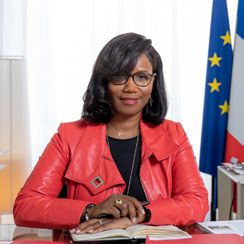
Élisabeth MORENO
Minister delegate to the Prime Minister for Gender Equality,
Diversity and Equal Opportunities
2020 was marked by an unprecedented health crisis, highlighting the professions
on the front line of Covid-19: health, education, waste management, food,
distribution, etc. However, these jobs are often poorly paid, insufficiently
valued socially, sometimes precarious and mostly occupied by women.
In this new edition of the Key Equality Figures, I wanted to focus on the impact
of the health crisis on women and men, in their professional life, but also on
the balance that they have had to make between their professional life and
their personal and family life, which has been completely disrupted. During
this unprecedented period, intra-family and marital violence increased sharply,
clearly revealing a situation that no one can accept.
Producing data on gender makes us face up to the situation head-on, and to
act better and faster on the sexual and gender-based violence that is still all
too present in our daily lives. It also means observing under the microscope
the gendered orientation of girls and boys in their school lives, women’s
participation in the media that is still too low, professional inequalities, multi-
speed entrepreneurship, differences in salaries and retirement pensions, health,
political parity, single-parent situations that sometimes lead to instability and
poverty, etc. These are all areas where inequalities between women and men, a
daily reality, remain glaring.
In 2017, the President of the Republic made equality between women and men
the "Great Cause" of his five-year mandate. This is a huge undertaking and
imposes a twofold obligation of action and results. To achieve this, we must
act together: the Government, local authorities, associations, companies, etc.
I know that I can count on our collective intelligence to succeed in this great
challenge, that of a more egalitarian and inclusive country, where equality
between women and men is a concrete and effective reality.
Key figures / Edition 2020 • Towards real equality between women and men 1Key figures / Edition 2020 • Towards real equality between women and men
Summary

> 1. Impact of the health crisis                                          p. 4

> 2. Culture of equality
          Sexism                                                          p. 6
          Education and career guidance                                   p. 7
          Media                                                           p. 8

> 3. Professional equality
          Employment                                                      p. 9
          Wage inequality and economic instability                        p. 12

> 4. Access to rights
          Social instability	                                             p. 14
          Health	                                                         p. 15
          Political parity	                                               p. 17
          Culture and sport	                                              p. 18

> 5. Exemplary public sector                                              p. 19

> 6. Gender-based and sexual violence	                                    p. 21

> 7. International feminist diplomacy                                     p. 25

Key figures / Edition 2020 • Towards real equality between women and men    3
1. IMPACT OF THE HEALTH CRISIS
1.1 > Female professions at the forefront of the health crisis
Percentage of women in "front line" occupations
Helping people Teachers Food sector
and cleaning jobs
83% 67% 48%
Source: France Stratégie, Les métiers au temps du Corona, April 2020
Doctors and non-medical Residential Care Facility for the Elderly
staff in hospitals
77.3% 87.4%
Source: Siasp, Insee. DGAFD-DESSI processing. Number of employees as of December 31, 2017
1.2 > Law enforcement interventions in the family sphere
in the home are increasing during lockdown
From March 17th to May 12th
2019 2020
+42%
52,304 74,324
interventions interventions
Scope: number of interventions for family disputes by the Internal Security Forces (ISF) from March 17th to May 12th, 2020 compared to the same period in 2019
Source: Ministry of the Interior
Source: “Domestic violence during lockdown”, Miprof, July 2020
1.3 > A sharp increase in reports of domestic violence
Calls received on 3919* tripled in the period from March to June 2020
March-June 2019 March-June 2020
23,140 79,228
calls received calls received
* 3919 is an information and referral number for victims of gender-based and sexual violence managed by the Fédération nationale solidarité femmes (FNSF)
Source: FNSF, 1st semester 2020
4 Key figures / Edition 2020 • Towards real equality between women and men1. IMPACT OF THE HEALTH CRISIS
1.4 > More time spent on domestic work for women
Daily time spent on household chores during lockdown
2 hours 2 hours
34 minutes 10 minutes
56% of women say they are most often involved in helping children
with homework*.
*Among the women surveyed, currently in a relationship and with a child or children aged 6 to 17 in the household
Source: Harris Interactive for the Ministry of Gender Equality; “The Impact of Containment on Gender Inequalities”, April 2020
1.5 > The number of women experts on the air drops during the health crisis
Share of women on air: Share of women experts:
41% 41% 38% 20%
in 2019 from March to May 2020 in 2019 from March to May 2020
Source: CSA, Study on the representation of women in the audiovisual media during the Covid-19 epidemic, June 2020
1.6 > The media coverage of women’s sports during the health crisis
is very low
2.4%
of L’Équipe's items during
the lockdown period concern
sports practiced by women
Source: "Covid-19: what place for women’s sport in the face of the crisis?" , IRIS, Carole Gomez, May 15, 2020
Key figures / Edition 2020 • Towards real equality between women and men 5> SEXISM
2. CULTURE OF EQUALITY
2.1 > Women are more likely than men to be subjected to sexist insults
In 2018, 1,392,000 women reported having been subjected to insults committed because
of sex outside of marriage (1 in 16 women), compared with 165,000 men.
89%
of victims
are women
Scope: population aged 18 to 75
Source: INSEE-ONDRP-SSMI, Living Environment and Security Survey, 2011-2018
2.2 > Women victims of sexual harassment and assault in public places
In the public space, over the last 12 months
20% 8% 3% 2% 1%
of the women insulted followed groped received
were whistled at (sometimes sexual proposals
associated with
forced kisses)
Focus on young women 20-24 years old
40% 14%
were subject to report sexual
unwanted chasing harassment and abuse
Scope: women and men aged 20 to 69 living in Metropolitan France
Source: Ined, Virage 2015 survey
2.3 > Women victims of sexual assault also at work
30% 9%
of French women have already of French women have ever
been sexually harassed had "forced" or "unwanted"
or assaulted in the workplace sex with someone in their
professional environment
Source: Ifop study for the Fondation Jean Jaurès and FEPS conducted by self-administered online survey from April 11 to 15, 2019 with a sample of 5,026 women,
representative of the female population aged 18 years and over residing in Italy, Spain, France, Germany and the United Kingdom.
6 Key figures / Edition 2020 • Towards real equality between women and men> EDUCATION AND CAREER GUIDANCE
2. CULTURE OF EQUALITY
2.4 > Teaching choices and orientation still not very mixed
Orientation of girls and boys in Year 12 in Secondary School at the start of the 2019 school year
Mathematics Physics-chemistry
Mathematics Physics-chemistry
61.4%*
61.4%* 77.8%*
77.8%* 39.0%
39.0% 56.5%
56.5%
*61.4 per cent of girls chose mathematics instruction compared
to 77.8 per cent of boys
Economic and social sciences Languages, literature
Economic and social sciences Languages, literature
42.4%
42.4% 35.1%
35.1% 34.9%
34.9% 20.1%
20.1%
Digital and computer sciences Engineering sciences
Digital and computer sciences Engineering sciences
2.6%
2.6% 15.2%
15.2% 1.6%
1.6% 11.1%
11.1%
Source : DEPP, 2019
2.5 > Women succeed in higher education but are still in the minority
in obtaining an engineering degree
Share of women in the main higher education degrees awarded in 2017
Degree Master's degree
58.4 % 60.2%
Doctorate Engineering school
46% 28.1%
Scope: Metropolitan France + DOM
Source: MESRI-SIES, SISE Information System for the Annual Publication of National Education, Higher Education and Research 2019
2.6 > Only one-third of women are in private sector apprenticeship contracts
Recipients of new private sector apprenticeship contracts in 2018
33.7% 66.3%
Source : Dares, 2020
Key figures / Edition 2020 • Towards real equality between women and men 7> MEDIA
2. CULTURE OF EQUALITY
2.7 > Audiovisual: women on the air more present but still a minority
50%
female presenters
41%
of those on air
(television and radio)
38%
experts
33%
political guests
Share of women in the 6-8 pm Share of women in the 6h-9h
(television) time slot time slot (radio)
33% 41%
Source: CSA, "Women’s Representation in Television and Radio", March 2020, 2019 data
2.8 > Print media: women still in the minority as editors in chief
Percentage of women Percentage of women holding
with a press card press card editors
49% 39%
Source: Ministry of Culture 2020, 2020
8 Key figures / Edition 2020 • Towards real equality between women and men> EMPLOYMENT
3. PROFESSIONAL EQUALITY
3.1 > Women with higher education have a higher participation rate than
non-graduates, which is still lower than that of men with diplomas
Activity rate in 2018
76% 84%
versus 59% in 1983 versus 87% in 1983
Difference in activity rates between women and men
28 8
points in 1983 points in 2018
Participation rate of women graduates in higher education in 2018
87% 92.6%
or 18 points higher than
among those with fewer
degrees (69%)
Scope: Metropolitan France, population in ordinary households aged 25 to 64 years
Source: INSEE, Emploi 2018 survey,France Stratégie, 2020
3.2 > An equivalent unemployment rate for women and men
Unemployment rate by gender 15-64 years old in 2019 in France
8.4% 8.5%
Scope: France excluding Mayotte, household population, persons aged 15 to 64 years
Source: Insee, Emploi 2020 survey
Key figures / Edition 2020 • Towards real equality between women and men 93. PROFESSIONAL EQUALITY
3.3 > More than a quarter of working women work part-time
28.4% 8.3%
of working women of working men
work part-time work part-time
Scope: France excluding Mayotte, household population, persons in employment
Source: Insee, Emploi 2019 survey
3.4 > Twice as many women as men are underemployed in 2019
Share of underemployment*, by gender, in 2019
7.8% 3.1%
of working women of working men
are underemployed are underemployed
*Underemployment includes employed persons working part-time and wanting to work more, or working part time or full-time but working less than usual during a reference
week because of partial unemployment.
Scope: employed persons aged 15 and over, France excluding Mayotte
Source: Insee, Emploi 2019 survey
3.5 > Horizontal occupational segregation still exists for women
Number of predominantly female, mixed and male occupations
Predominantly Mixed Male dominated
female occupations occupations occupations
7
4
8
3
14 25
4
8 9
2 2
Managers Intermediate occupations Employees Workers
Scope: jobs held by employees, household reference persons or spouses; all of France excluding Mayotte; metropolitan France in 2013
Source: INSEE, Emploi 2013 to 2016 survey; Dares 2019
10 Key figures / Edition 2020 • Towards real equality between women and men3. PROFESSIONAL EQUALITY
3.6 > Women’s access to training decreases with the number of children
Training rate of at least 18 hours following pregnancy
0,35
0,30
0,25
0,20
0,15
0,10
0,05
0
0 5 10 15 20 25 30 35 40 45 50 55 0 5 10 15 20 25 30 35 40 45 50 55 0 5 10 15 20 25 30 35 40 45 50 55
Number of months since birth
Read: 10 per cent of mothers received at least 18 hours of training 24 months after the birth of their third (or more) child.
Source: Dares, Document d’étude, n°237, July 2020
3.7 > Musculoskeletal disorders will affect women more than men in 2016
Age
68
63
58
53
48
43
38
33
28
23
18 Staff
1 000 750 500 250 0 250 500 750 1 00 1 250
Source: Document ANACT – Statistical Photograph of Work-related Accidents, Commuting Accidents and Occupational Diseases in France by Gender between 2001 and
2016 – November 2018
Key figures / Edition 2020 • Towards real equality between women and men 11> WAGE INEQUALITY AND ECONOMIC INSTABILITY
3. PROFESSIONAL EQUALITY
3.8 > Larger gender pay gaps among managers in 2016
Executives*
-20.6%
Intermediate occupations
-14.2%
Employees
-7.9%
Workers
-16.8%
All in all
-19.0%
Net monthly amounts in current euros
Difference in wages (W-M)/M (%)
*including salaried managers
Scope: France excluding Mayotte, EQTP employees in the private sector and public companies, including beneficiaries of subsidized contracts and professionalization
contracts. Excluded are apprentices, trainees, agricultural employees and employees of individual employers
Source: Insee, annual social data declarations (DADS), ed. 2020
3.9 > Pay gaps between women and men, which widen according to degree,
professional experience and number of children
No One Two Three or more
children child children children
Net wage income 18.1% 24.1% 32.3% 47.5%
difference difference difference difference
Full-time equivalent 7.0% 11.8% 21.2% 31.3%
net salary difference difference difference difference
Work volume 11.9% 14.0% 14.2% 23.6%
difference difference difference difference
Note: in 2017, in France, women employees in the private sector who have three or more children will earn on average 47.5% less in net salary income than men
Scope: private sector positions, metropolitan France, excluding apprentices and trainees, excluding agriculture, excluding private sector employees
Source: INSEE, all-employee panel
12 Key figures / Edition 2020 • Towards real equality between women and men3. PROFESSIONAL EQUALITY
3.10 > Women’s entrepreneurship can still grow
Share of women among Share of women
company directors micro-entrepreneurs in 2017
27.2% 41.9%*
Average turnover of commercial companies in 2017
Managed by women Managed by men
approximately approximately
8.1M€ 15.7M€
Share of women business leaders by legal status of the company
32.3% 30.2%
Economic interest Civil society
groups
21.8% 10.7%
Retailers Commercial
companies
Scope: representative of registered companies
Source: Infogreffe, March 2019
*Scope: France excluding Mayotte, self-employed persons as of December 31, 2017, excluding agriculture
*Source: INSEE, non-employee base 2017
Key figures / Edition 2020 • Towards real equality between women and men 13> SOCIAL INSTABILITY
4. ACCESS TO RIGHTS
4.1 > Lower pensions for women
Difference in the average monthly amounts of the direct entitlement pension in 2018
41% 28%
difference in direct pension difference among all
entitlement between women retirees when reversionary
and men or retirees residing pension is added
in France (including increases
for children)
Scope: all direct pensioners residing in France, living as of December 31, 2018
Sources: DREES, EACR, EIR, ANCETRE model
Focus Overseas
4.2 > Reunionese women benefit more than men from the minimum
social benefits 92%
Percentage of women among the bene-
92%
Share of women among RSA (income
ficiaries of the increased RSA (income support) beneficiaries in Reunion Island
support) in Reunion Island in 2018
92% 65%
65%
Percentage of single women with children among RSA (income support) beneficiaries
in Reunion Island in 2018
37%
65% 37%
Source: CAF de la Réunion, 2018
4.3 > Single-parenting is more prevalent in the French Overseas Territories (NEW)
Share of female lone-parent families headed by women in the 25-54 age group in 2016
Metropolitan France DROM (Overseas territories),
37% excluding Mayotte
12.7% 12.7%
28.2% 28.2%
Scope: population in households aged 25-54, excluding pupils and students
Source: INSEE, 2016 harmonized population censuses
14 Key figures / Edition 2020 • Towards real equality between women and men> HEALTH
4. ACCESS TO RIGHTS
4.4 > The number of voluntary terminations of pregnancy (abortion)
stable since 1991, but up slightly since 2018
232,000 ABORTIONS
2019
224,300 ABORTIONS
215,611 ABORTIONS
211,533 ABORTIONS 211,900 ABORTIONS 2018
1991 2001 2016
Scope: all of France, abortion of women residing in France
Sources: DREES, CNAMTS, INSEE
4.5 > Resort to abortion varies by region in 2018
Total residents in the DROM Guadeloupe Martinique
(Overseas territories)
15.1‰* 27.8‰** 14.6‰ 38,5‰ 14.5‰ 27.7‰
* 15,1 abortions ** 27,8 abortions
per 1,000 women per 1,000 women
aged 15-17 years aged 15-49 years
Total residents Provence Alpes Côte d'Azur Ile-de-France
in metropolitan France
5.9‰ 15.0‰ 8.1‰ 22.0‰ 6.2‰ 18.0‰
Abortion per 1,000 women aged 15-17 years Abortion per 1,000 women aged 15-49 years
Average time to access an abortion in 2019: 7.4 days***
Scope: all abortions performed in Metropolitan France and in the French overseas departments, all types of abortion
Source: DREES, PMSI-MCO; INSEE, localized population estimates as of January 1, 2018; CNAM, data on inter-scheme consumption, number of reimbursed drug plans
according to the date of care
*** DGOS survey of ARS, September 2019
Key figures / Edition 2020 • Towards real equality between women and men 154. ACCESS TO RIGHTS
4.6 > Nearly 3,000 new cases of cervical cancer in2018
2018
Approximately 2,920 cases
Approximately 1,117 deaths
Less than of girls 30%
16 years old are vaccinated against human papillomavirus (HPV)
Scope: Metropolitan France
Source: “Prevention of cervical cancer”, Weekly Epidemiological Bulletin, n°22-23, September 17, 2019
4.7 > Instability and hygiene: more than a third of women in precarious
situations lack menstrual protection
39% 12%
of the most precarious* of the most precarious*
women would not have women have given up going out 1 girl out of 10 in the most
enough menstrual protection of their homes or going to work precarious families has already
because of a lack of hygiene missed school due to a lack of
protection hygienic protection
*In this survey, beneficiaries of aid associations
Source: ”Hygiene and instability in France” survey, Ifop estimates for Dons Solidaires, 2019
4.8 > The pill mostly used by young women aged 20-24 years old
Contraceptive methods among women aged 15-49*, by age group, in 2016 (%)
15-49 years old 20-24 years old
Pill
8.0 4.3
Patch/vaginal ring
4.6
9.6
Pill+condoms 1.1
4.3
4.7
33.2 Definitive
contraception
52.6
Condoms
25.6 IUD
18.6
(intrauterine device)
3.3 1
Implant 6.9
15.5 4.5
Other methods**
2.2
No method
*Women affected by contraception account for 71% of women aged 15 to 49.
**This category includes the diaphragm, the cervical cap and so-called traditional methods such as symptothermal, temperature method and withdrawal.
Source: Baromètre Santé 2016
16 Key figures / Edition 2020 • Towards real equality between women and men> POLITICAL PARITY
4. ACCESS TO RIGHTS
4.9 > 12 women will be running cities with more than 100,000 inhabitants in 2020
In the 42 cities with more than 100,000 inhabitants
2014 2020
7
mayors
12
mayors
Nearly 20% of the municipalities are headed by a woman.
The share of women in municipal councils (mayors, deputies, councillors) at 42.4% compared
to 39.9% at the end of the previous term.
Source : vie-publique.fr
4.10 > Parliament: 39% women in the National Assembly and 33% in the Senate
2019 2020
577 348
seats Senate
in the National Assembly seats
228 117
women sit in women sit
the National Assembly in the Senate
or 39.5% of women or 33% women,
compared to 26.9% in 2012 compared with 25% in 2014
and 29.3% in 2017
Sources: National Assembly and Senate
Key figures / Edition 2020 • Towards real equality between women and men 17> CULTURE AND SPORT
4. ACCESS TO RIGHTS
4.11 > A third of women head cultural creation sites
Percentage of women among the directors of visual and performing arts creation
and dissemination venues subsidized by the Ministry of Culture: 34%
National Current National music
choreographic centres music scenes creation centres
16% 13% 13%
Regional contemporary
Orchestras
art funds
65% 65%
Source: Ministry of Culture, Observatory of Equality between Women and Men in Culture and Communication, over the year 2019, 2020
4.12 > Women still few in number at the head of sports federations
Out of 115 sports federations*
89 14
have adopted a are headed
feminization plan for 2017 by women in 2018
*Olympic, non-Olympic and multisport
Source: Brochure “Women’s Sport Always” 2020, CSA and Ministry of Sport
18 Key figures / Edition 2020 • Towards real equality between women and men5. EXEMPLARY PUBLIC SECTOR
5.1 > Women will be in the majority in the civil service, but will still be
in the minority in the highest bodies and jobs in 2018
Civil service State civil service Territorial civil service Hospital civil service
62% 56% 61% 78%
46% of women in the private sector
Share of women in category A
StateState
civil service
civil
State
service Territorial
Territorial
civil service civil
Territorial
service
civil service
civil service
Hospital
Hospital
civil Hospital
service
civil service
civil service
62%
62%62% 62%
62%62% 75%
75%75%
Share of women in bodies and jobs A+
State civil service Territorial civil service Hospital civil service
40% 51% 49%
Share of women in senior management and executive positions (ESD)
State civil service Territorial civil service Hospital civil service
34.5% 32.6% 49.1%
In the Public service:
- category A overlaps with the Executive category;
- the A+ category is frequently used to distinguish between the functional bodies and jobs within the A category;
- Senior and managerial jobs (ESD) include officers who either hold a managerial position in a department or establishment with responsibility for management of the units
under their responsibility, or, in a statutory logic, under a body or framework of employment constituting the main source of these jobs
Source: DGAFP, Annual Report on Professional Equality between women and men in the Public Service – 2020 edition, 2018 data
Key figures / Edition 2020 • Towards real equality between women and men 195. EXEMPLARY PUBLIC SECTOR
5.2 > Women civil servants with a strong presence in the National Education
and Social Ministries, and less so in the Interior and the Armed Forces
National education Social Ministries Interior/Overseas Army
72% 71% 29% 22%
Source: DGAFP, Annual Report on Professional Equality between women and men in the Public Service – 2020 edition, 2018 data
5.3 > Women’s net full-time equivalent (FTE) wages are lower than men’s
in 2018
In the Public service, women’s net full-time equivalent salary is on average 12.6% lower than
men’s in 2018 (a reduction of 0.3% from 2017).
State civil service Territorial Public service : F/P/T Hospital civil service
-13.5% -9.2% -20.9%
(21.3% in public hospitals
and 7.4% in medico-welfare
establishments)
Source: DGAFP, Annual Report on Professional Equality between women and men in the Public Service – 2020 edition, 2018 data
5.4 > The highest paid in the civil service will still be men in 2018
Characteristics of officers by salary level in the Public service in 2018
The 10% best paid The 1% best paid The 0.5% best paid
46.1% 53.9% 34.4% 65.6% 28.4% 71.6% 63
Note: In 2018, 71.6% of the 0.5% of the best paid agents are men.
Scope: Metropolitan France and French overseas departments (excluding Mayotte) excluding COM and foreign countries, in monthly full-time equivalent. Excluding military
personnel
Source: Siasp Insee. DGAFP treatment – Dessi
20 Key figures / Edition 2020 • Towards real equality between women and men6. GENDER-BASED AND SEXUAL VIOLENCE
6.1 > A woman dies every two days, victim of her partner
146 27
women men
killed by their partners
173 25
adult victims child victims
198 deaths in 2019, compared to 170 in 2018
Source: Delegation to victims, national study on deaths due to violence within couples, 2020
6.2 > The security forces recorded 142,000 victims of violence committed
by their partners in 2019
142,000 126,000 16,000
women men
victims of violence
committed by including including
their partners
(a 16% increase
3,700 rape victims 70 rape victims
over one year) 98 percent of rape victims
were women
Scope: all of France (including overseas territories)
Source: Info Rapide No. 15, Ministry of the Interior, November 2020
6.3 > 213,000 women and 82,000 men were victims of domestic violence
per year on average between 2011 and 2018
213,000* 82,000*
victims of violence within the household victims of violence within the household
152,000 30,000 75,000 4,000
physical abuse sexual violence physical abuse sexual violence
31,000 3,000
physical and sexual abuse physical and sexual abuse
72% 28% 14%
of victims of this violence concerns of victims
are women young women and men filed a complaint
between 18 and 29 years of age
*Note: On average each year over the period 2011-2018, 213,000 women between the ages of 18 and 75 have been victims of...
Source: Insee-ONDRP-SSMI, Cadre de vie et sécurité survey, 2012-2019
Key figures / Edition 2020 • Towards real equality between women and men 216. GENDER-BASED AND SEXUAL VIOLENCE
6.4 > 135,000 women and 41,000 men are victims of out-of-home sexual
violence per year on average between 2011 and 2018
135,000* 41,000
women who are men who are
victims of out-of-home victims of out-of-home
sexual violence sexual violence
including including
34,000 14,000
rape victims rape victims
77% 44% 86%
of the victims of this violence concerns of the perpetrators
are women young women and men of this violence
between 18 and 29 years old are men
*Note: On average each year over the period 2011-2018, 135,000 people aged 18-75...
Source: Insee-ONDRP-SSMI, Cadre de vie et sécurité survey, 2012-2019
6.5 > Women still suffer sexual mutilation in France
124,355
adult women living in France
in the mid-2010's underwent
sexual mutilation*
*Female sexual mutilation, female genital mutilation or excision.
Source: “Adult women estimate who have undergone female genital mutilation living in France”, Bulletin épidémiologique hebdomadaire, No. 21, July 23, 2019
22 Key figures / Edition 2020 • Towards real equality between women and men6. GENDER-BASED AND SEXUAL VIOLENCE
6.6 > Women with disabilities are more exposed to violence
7.3% of persons identified as disabled (women and men) experienced physical
and/or sexual violence.
7.3% were exposed to threats, and 15.4% were exposed to abuses.
9.0% compared with 5.8%
of women with disabilities were victims of women without disabilities
of physical and/or sexual violence within
their household or outside their home
Women with disabilities are twice as likely as women without disabilities to have experienced
sexual violence (4.0% versus 1.7%).
Source: Drees, Studies and results, no. 1156, July 2020
6.7 > Forced marriages still exist in France
97%
208 of these people
are girls and women
victims of forced marriage
sought the “SOS forced marriage”
hotline in 2019
646 47% 11%
people contacted this service are under are
between 2017 and 2019 20 years of age minors
27%
of young people in school
are out of school in the months
before or after marriage
Source: Association Voix de femmes, 2020
Key figures / Edition 2020 • Towards real equality between women and men 236. GENDER-BASED AND SEXUAL VIOLENCE
Focus Overseas
6.8 > Women living in the DROMs (Overseas territories) are more victims
of gender-based and sexual violence
In public spaces
In Reunion Island
2 times 3 times
more whistles than as many insistent
in Metropolitan sexual propositions
France despite their refusal as
in Metropolitan France
Source: Virage DOM survey, Ined, 2019
Within the relationship
In Martinique and Guadeloupe
nearly one woman out of five
is a victim of domestic violence
Source: Virage DOM survey, Ined, 2019
At work
In Reunion Island In Martinique In Guadeloupe
1 out of 4 women
has been a victim
of violence at work
1 in 20 women
has been a victim
of violence at work
1 woman out of 25 has been
Source: Ined, Virage DOM survey, 2019
a victim of violence at work
24 Key figures / Edition 2020 • Towards real equality between women and men7. INTERNATIONAL FEMINIST DIPLOMACY
7.1 > Poverty as a hindrance to education
2%
of girls in the poorest
countries complete
secondary education
Source: UNESCO Statistics Institute, 2019
7.2 > Poverty picking up the pace for the marriage of girls around the world
Poor girls are 2.5 times more likely to marry very young than wealthier girls
12 million
girls under the age of 18
are married each year
Source: UN Women, 2020
7.3 > 1 in 2 women is in the labour market worldwide compared to 9 in 10 men
Activity rate of women and men in the world between 25-54 years of age
51.6% 94.6%
Source: ILOSTAT, 2020
Key figures / Edition 2020 • Towards real equality between women and men 257. INTERNATIONAL FEMINIST DIPLOMACY
7.4 > Women, who are increasingly present on the boards of directors of large
companies, are still in the minority
Percentage of women sitting on company boards, 2010-2016 (%)
12 30 37 5 15 30 12,3 12,2 16,4 0,9 1,7 3,4
France Italy United States Japan
13 21 27 13 21 27 12,9 12,7 19,4
Germany United Kingdom Canada
2010 2013 2016
Source: International Labour Organization (ILO), A decisive step towards gender equality, 2019
7.5 > Women devote more time than men to unpaid caregiving activities
on a daily basis
Total 7h28 Total 6h44
Unpaid caregiving Unpaid caregiving
activities: 4:25 a.m. activities: 1h23
Paid work: 3h03 Paid work: 5h22
26 Key figures / Edition 2020 • Towards real equality between women and men7. INTERNATIONAL FEMINIST DIPLOMACY
7.6 > Female genital mutilation is still too common
Share of girls and women aged 15-49 who have undergone sexual mutilation, 2004-2015 (%)
Somalia 98
Guinea 97
Djibouti 93
Sierra Leone 90
Mali 89
Egypt 87
Sudan 87
Eritrea 83
Burkina Faso 76
Gambia 75
Ethiopia 74
Mauritania 69
Liberia 50
Guinea-Bissau 45
Chad 44
Ivory Coast 38
Nigeria 25
Senegal 25
Central African Republic 24
Kenya 21
Yemen 19
Tanzania 15
Benin 9
Iraq 8
Togo 5
Ghana 4
Niger 2
Uganda 1
Cameroon 1
Percentage of girls aged 0-14 who have undergone genital mutilation, 2004-2015 (%)
Gambia 56
Mauritania 54
Indonesia 49
Guinea 48
Eritrea 33
Sudan 32
Guinea-Bissau 30
Ethiopia 24
Nigeria 17
Egypt 14
Burkina Faso 13
Sierra Leone 13
Senegal 13
Ivory Coast 10
Kenya 3
Uganda 1
Central African Republic 1
Ghana 1
Togo 0,3
Benin 0,2
Source: Unicef, 2016
Key figures / Edition 2020 • Towards real equality between women and men 27Key figures / Edition 2020 • Towards real equality between women and men
This work was produced by the Direction générale de la cohésion sociale (DGCS)/
Directorate General for Social Cohesion, Service des droits des femmes et de l’égalité
entre les femmes et les hommes (SDFE)/Women’s Rights and Gender Equality Department.
It was supported by INSEE and the statistical services of the ministries concerned, which
made the data available to the DGCS-SDFE.
Publication Director: Virginie Lasserre, Director General of Social Cohesion
Coordination of the publication: Valérie Plomb, Charlotte Groppo, Flore Souesme and
Dorine Mbella
With the contribution for the Service des droits des femmes et de l’égalité entre les
femmes et les hommes (SDFE): Hélène Furnon-Petrescu, Catherine Lesterpt, Martine
Jaubert, Samira Touiti, Mélissa Fort, Christophe Pareschi, Emilie Quilin, Claire Fradet, Laure
Gonnet, Carole Modigliani-Chouraqui, Jean-Luc Thierry, Julie Vanhecke and Franck Charron.
Model: Parimage/Dicom
Edition : 2020
Printing : DILA
Health crisis impact, sexual and gender-based violence, educational orientation of
girls and boys, women’s participation in the media, occupational segregation in many
professions, entrepreneurship, wage and pension gaps, parity in politics, health, single
parenthood, social and economic instability. This new edition of Key Figures – Towards
Real Equality between women and men presents the most significant data for the year
2020.
This document allows everyone to take ownership of these data in order to promote real
equality between women and men in all spheres of society.

                                                                                            – Edition: Dicom - December 2020
                                                                                            Written by: DGCS - SDFE - Design:

                 Key figures / Edition 2020 • Towards real equality between women and men
You can also read


