CYBERSECURITY ALERT THE CONTINUED EVOLUTION OF DDOS ATTACK VECTORS - JANUARY 2021 - CISCO
←
→
Page content transcription
If your browser does not render page correctly, please read the page content below
White paper
                                                        Cisco public

Cybersecurity Alert
The Continued Evolution of
DDoS Attack Vectors

January 2021

Developed in conjunction with our partners at Radware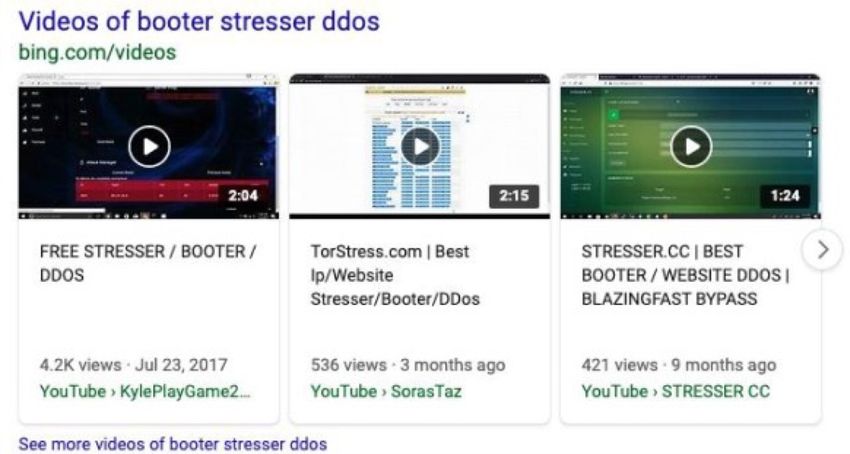
White paper
                                                                                                               Cisco public

Contents
Arrests and takedowns have little impact                                                          3

The advertisement problem                                                                         4

Front-Page problems                                                                               5

Darknet marketplace and forum services                                                            7
     Instagram                                                                                    8

New attack methods                                                                              10
     Memcached                                                                                  10
     Web Service Dynamic Discovery (WSD)                                                        10
     Apple Remote Management Service (ARMS)                                                     10
     NXNSAttack                                                                                 10
     TCP Reflection                                                                             11
     Jenkins                                                                                    11

New techniques                                                                                  11
     Carpet bombing                                                                             11

Prevention                                                                                      12

Learn more                                                                                      13

© 2021 Cisco and/or its affiliates. All rights reserved.   Cybersecurity Alert: The Continued Evolution of DDoS Attack Vectors | 2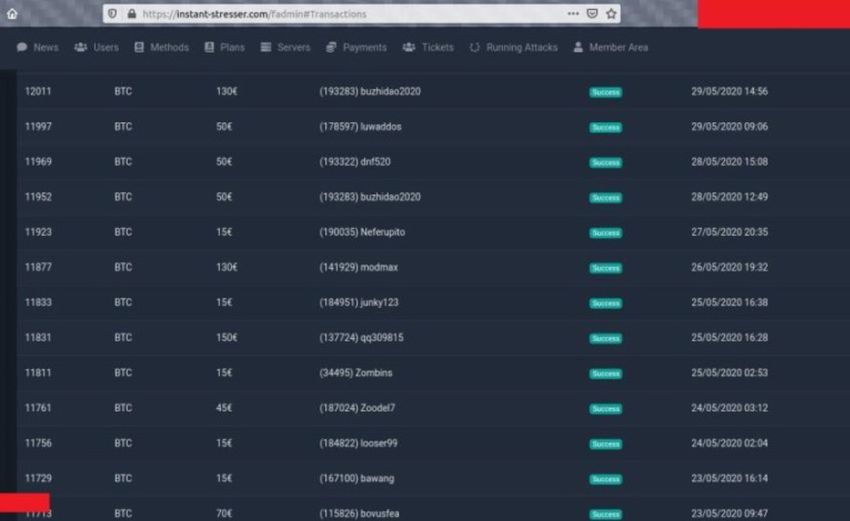
White paper
                                                                                                                 Cisco public

DDoS-for-Hire threat landscape
continues to grow
OVER THE LAST TWO YEARS, CORPORATIONS, INDEPENDENT
RESEARCHERS, AND LAW ENFORCEMENT AGENCIES AROUND THE
WORLD HAVE ATTEMPTED TO CURB THE GROWTH OF THE DDOS-FOR-
HIRE INDUSTRY THROUGH A SERIES OF TAKEDOWNS AND ARRESTS.
DESPITE GLOBAL EFFORTS, THE ILLICIT INDUSTRY CONTINUES TO GROW,
UTILIZING NEW ATTACK VECTORS AND PRODUCING LARGE-SCALE,
RECORD-BREAKING DDOS ATTACKS.

Arrests and takedowns have little impact
Traditionally, takedowns and arrests are effective         servers for IoT botnets. In April 2020, Dutch police
forms of control over criminal activity. They serve as     working with hosting services, registrars, the
an applicable way to remove known threats and send         international police force, Europol, Interpol, and the
a clear message to criminal operators. The problem is      FBI took down another 15 unnamed booters.
that the booter and stresser industry is complicated,      One would assume this would have put a noticeable
dynamic, and a profitable venture for cybercriminals.      dent in the overall booter and stresser industry.
If you remove one threat, dozens of other criminals        And while some have reported minor decreases
will seize the opportunity to fill the void.               in DDoS-related activity after the arrests and
For example, over the last two years we have               takedowns, overall, these actions were ineffective.
seen several notable takedowns related to botnet           In fact, in 2019, a white paper titled DDoS Hide &
activity. At the end of 2018, the FBI seized the           Seek: On the Effectiveness of a Booter Service
domains of 15 booter services that were known              Takedown reviewed the 2018 takedown by the
to represent some of the world’s leading DDoS-             FBI and determined that these activities led to a
for-hire services. In October 2019, Dutch police           temporary reduction in attack traffic. Criminals were
seized servers from bulletproof hosting provider           quick to replace those that have been removed.
K.V. Solutions. These servers where known to be
malicious, hosting several command-and-control

© 2021 Cisco and/or its affiliates. All rights reserved.     Cybersecurity Alert: The Continued Evolution of DDoS Attack Vectors | 3
White paper
                                                                                                               Cisco public

The advertisement problem
Just like any other industry, legal or illegal, criminal booters must find a way to distinguish themselves and
advertise their services. In the past, groups like Lizard Squad would engage in “stunt hacking.” This involved
launching large-scale DDoS attacks and using Twitter to post about the outage as a form of advertising.
Today, things are different. We no longer have notorious DDoS groups roaming social media or launching
attacks. The landscape seems quiet, but that is not the case. Raging underground is a scene overpopulated
with script amateurs looking to impress their friends, cause outages, and turn a profit.
One of the reasons for this growth is due to the accessibility of open source code used to build IoT botnets.
The booter and stresser industry have grown so much that it has left law enforcement agencies around the
world wondering how they can get a grip on a problem that is spiraling out of control. In the United Kingdom,
Britain’s National Crime Agency (NCA) decided to advertise the legal consequences of launching DDoS
attacks through Google Ads.

Figure 1. Google ad warning against DDoS services

Unfortunately, Google has become a common location for booter and stresser services. While DDoS is
illegal, the law has not prevented search engine algorithms from indexing criminal websites. Even worse,
there is nothing preventing cybercriminals from paying and using Google advertising to advertise their
services. While the NCA tactic to create awareness was a noble one, the impact is minimal when the same
service is used to advertise the illicit service that the NCA is trying to stop.

Figure 2. Google ad offering DDoS services

© 2021 Cisco and/or its affiliates. All rights reserved.   Cybersecurity Alert: The Continued Evolution of DDoS Attack Vectors | 4
White paper
                                                                                                                Cisco public

Front-Page problems
This is not just a problem for Google. All major search engines appear to index illegal booter and stresser
services. Just a simple search will produce dozens of results that take you directly to the criminal services
used to launch denial-of-service attacks for a fee. They also index videos about how the services work,
demo attacks, or how to build your own.

Figure 3. Booter videos on first search result page

One of the biggest problems about indexing illegal services is the perceived notion that the activity
is in a legal gray zone. While most teenagers understand that DDoS is illegal, there is still a trove of
resources and services readily available for them to abuse.

Figure 4. Stresser service offering

© 2021 Cisco and/or its affiliates. All rights reserved.    Cybersecurity Alert: The Continued Evolution of DDoS Attack Vectors | 5
White paper
                                                                                                                 Cisco public

Potential pay-to-play criminals, after a quick scroll through any search engine, will typically find a stresser
service with a similar offering. Nowhere on the websites can you find a warning that the service is illegal.
Only on a few services will you find a Terms of Service (TOS) that attempts to shift legal responsibility to the
user, ignoring the fact that the service likely leverages compromised devices.
To add to the confusion, these services also offer live chat and Telegram support for users that require
assistance. Basic packages for DDoS-for-hire on the clearnet have remained relatively unchanged over the
last 5 years. Basic packages still range between $9.99 and $19.99 a month. Paying for the service normally
grants you access to the attack panel for 30 days, allowing you to launch limited timed attacks that range
between 300 and 3600 seconds.

Figure 5. Stresser service attack panel

A recent leak has shown that some of these booter and stresser services offer custom monthly packages
outside of API services for anywhere between $150 and $5000 a month, depending on the service level
and target. The leaks also underscore how lucrative some of these services can be, allowing some criminals
to generate around $1000 a week. In 2016, after arresting the operators of vDOS, it was reported that the
service generated an excess of $600,000 over two years.

Figure 6. Leaked transaction information

© 2021 Cisco and/or its affiliates. All rights reserved.     Cybersecurity Alert: The Continued Evolution of DDoS Attack Vectors | 6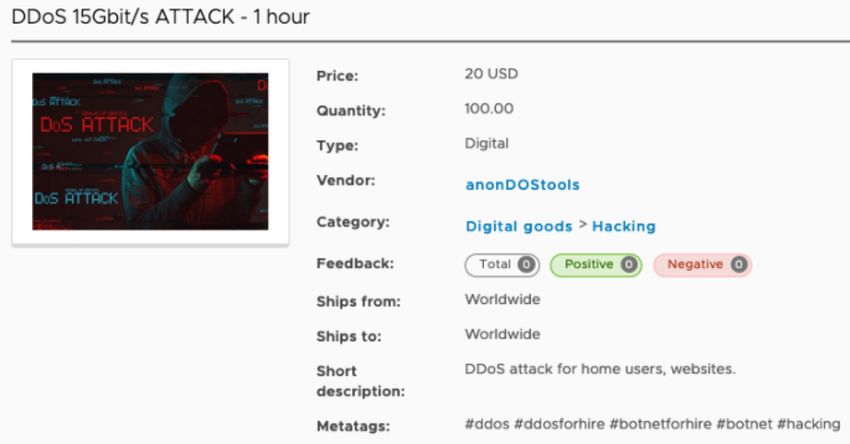
White paper
                                                                                                                Cisco public

Another growing concern are the new features that are being found inside the services. Not only do they
have chat support to ensure you are launching the right attack, they also offer multi-factor authentication for
their users and referral links so the user can make money as a reseller.

Figure 7. 2FA and referral link

Darknet marketplace and forum services
The past few years for darknet marketplaces have been rough. Between the takedowns by both law
enforcement and vigilante hackers, there has not been a lot of stability on the network. While some sites on
the Onion network have attempted to implement their own DDoS mitigation features, they have largely failed
to protect their domains. As a result, there has been a noticeable impact on the darknet. Once a place to
purchase source code and attack services, it is now largely dead with illegitimate or unverified offerings.

Figure 8. Darknet marketplace

The darknet forums, if they are up or if you can solve their impossible CAPTCHAs, have largely been
abandoned. Most of the noticeable activity comes from websites that provide both a clearnet and a .‘Onion’
domain. Offerings found in the forums for DDoS attacks are generally sold by the hour, day, week, or month.
A one-hour attack can cost up to $5 and is generally reserved for a sample attack. A 24-hour attack will
© 2021 Cisco and/or its affiliates. All rights reserved.    Cybersecurity Alert: The Continued Evolution of DDoS Attack Vectors | 7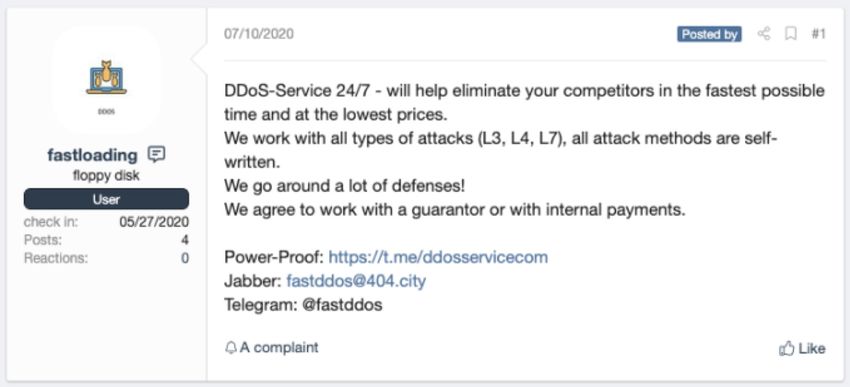
White paper
                                                                                                                Cisco public

range between $25 and $35 a day, while a one-week attack can cost anywhere between $150 and $250.
A persistent campaign that lasts 30 days could cost anywhere between $600 and $900 a month.

Figure 9. Criminal forum post offering DDoS services

One of the more interesting aspects of buying from a forum is the intended target. Some bot herders will
charge a different rate depending on the tier of the target. There can be a significant price difference if your
target is a popular stream versus an unprotected site. Packages for top-tier attacks sell for up to $1000 a day.

Instagram
Instagram is the new platform for the booter and stresser industry. The platform allows bot herders to
advertise their illegal services by posting images of their botnets. In general, bot herders enjoy showing off
their printed text and bot count as a form of advertisement. Regardless if they disclose sensitive information,
they will still post images on Instagram for advertisement.

Figure 10. Virum botnet advertisement on Instagram

© 2021 Cisco and/or its affiliates. All rights reserved.    Cybersecurity Alert: The Continued Evolution of DDoS Attack Vectors | 8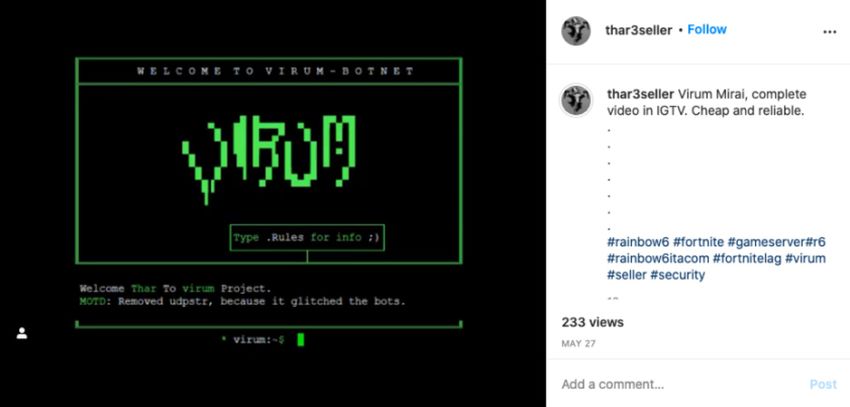
White paper
                                                                                                                   Cisco public

Prices for renting a botnet on Instagram are very low compared to underground forums. This is likely due to their
low bot count and limited capabilities. Typically, you will find bot herders selling access for one-hour, one-day,
and one-month periods. Most of those selling on Instagram will also sell lifetime packages, capping out at around
$50. This is likely due to low bot counts and thus low attack power and no guarantee for future updates.
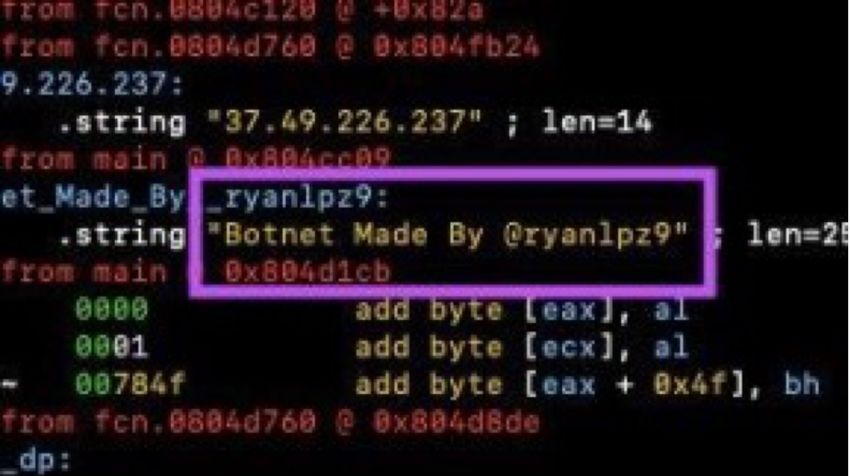
Some bot herders have gone as far as to add their Instagram or other handles into their bot malware
binaries. Below is an example of a malware binary caught by Radware®’s deception network. Inside the
binary data you can read “Botnet Made By @Ryanlpz9.” Further review of the actor’s account leads us to
Greek.Helios’ account and his reseller, @Thar3seller.

Figure 11. Instagram handle in malware binary

One of the more interesting aspects of the Instagram market is the ability to see the actions and platforms
used by criminal actors. On Greek.Helios’ page, you can find several videos of the actor demonstrating
and launching denial-of-service attacks from a discord channel. Discord is the modern incarnation of a
command-and-control platform, replacing the aging IRC platform as a service for a bot herder to control
their bots from a central console.

Figure 12. Discord as command-and-control server and console

© 2021 Cisco and/or its affiliates. All rights reserved.       Cybersecurity Alert: The Continued Evolution of DDoS Attack Vectors | 9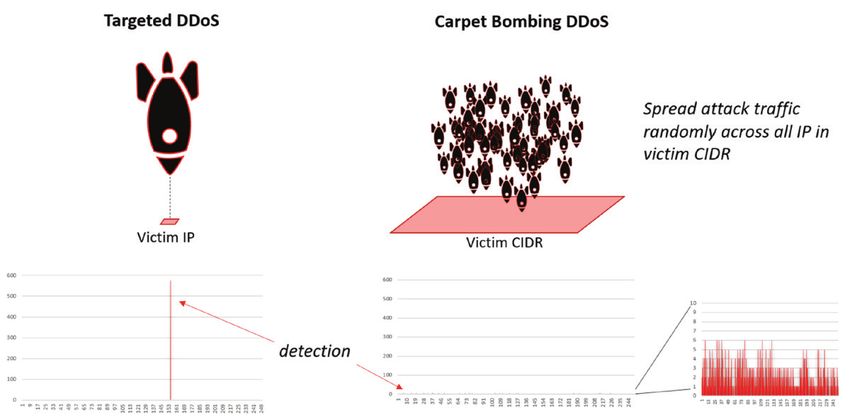
White paper
                                                                                                                 Cisco public

New attack methods
Despite the takedowns and arrests, the industry is         is overloaded, new requests cannot be processed
flooded with bot herders, and the reality is that it is    and regular traffic is unable to access the resource,
very unlikely they will be arrested. Time and again,       resulting in denial of service.
only top services are occasionally culled to send a
message to other operators. The problem is that            Web Service Dynamic Discovery (WSD)
this message has no barring as the likelihood of           WSD is a technical specification that defines a
getting arrested is slim.                                  multicast protocol to locate services on a local
Over the last two years of takedowns and arrests,          network. It operates over TCP and UDP port
the DDoS mitigation industry has seen six new              3702 and provides connected devices with a
attack vectors—so much for curbing the growth.             convenient way to discover services automagically
Specifically, Memcached and TCP reflection                 on a (home) network. UDP can be spoofed, just
attacks have been notable. In March 2019, a                as in the Memcached attack, and a WSD service
record-breaking 1.3-Tbps attack abusing exposed            that was exposed to the internet will respond
Memcached servers by exposing a protocol that              with large replies to small requests, sending large
was never intended to be exposed to the public             streams of traffic to a victim following a limited
was launched against GitHub. Just seven days later         stream of requests generated by an attacker. The
and the attack vectors were seen quickly being             problem is not the protocol itself, but the careless
added to booters and stressers.                            implementation of the service on consumer and
                                                           connected devices that enable the protocol on
Even more recently, a malicious actor was able to
                                                           all interfaces by default, including public-facing
abuse the TCP protocol to cause a TCP Reflection
                                                           interfaces.
attack. In August 2019, researchers at Radware
discovered this trend during a campaign targeting          Apple Remote Management Service
the financial services industry. These attacks were        (ARMS)
unique and evolved into a level of sophistication not
                                                           This attack vector gives attackers the ability to
previously seen from TCP reflection campaigns.
                                                           abuse Apple’s Remote Management Service
This was due to a wrong assumption that TCP
                                                           (ARMS) to launch an amplified denial-of-service
reflection attacks could not generate enough
                                                           attack. By sending malicious datagrams to exposed
amplification in comparison to UDP-based reflection
                                                           ARMS services on UDP port 3283, attackers can
attacks. Attackers still explore the possibilities of a
                                                           perform an amplification attack. Attacks leverage
TCP reflection attack. Below is a short review of the
                                                           the ARMS of macOS on systems connected to the
most recent attack methods disclosed in the last
                                                           internet without firewall or local network protection.
few months.

Memcached                                                  NXNSAttack
                                                           Unlike DDoS floods or application-level DDoS
Memcached is a database caching system for
                                                           attacks that directly target and impact a host or
speeding up websites and networks. A Memcached
                                                           a service, the NXNSAttack targets the domain
denial-of-service (DoS) attack leverages an exposed
                                                           name resolution capability of its victims. Like the
UDP service that provides massive amplification
                                                           NXDOMAIN or DNS Water Torture attack, this
to overload a targeted victim with internet traffic, a
                                                           DDoS attack is aimed at disrupting the authoritative
volumetric attack. The attacker spoofs requests to an
                                                           servers of the domain by overloading them with
exposed UDP service on a Memcached server with
                                                           invalid requests using random domain request
the IP address of its victim. The UDP service accepts
                                                           floods through recursive DNS resolvers. This attack
any requests and responds to the victim with a
                                                           is hard to detect and mitigate at the authoritative
very large response without verifying the origin of
                                                           server because the requests originate from
the request, potentially overwhelming a victim’s
                                                           legitimate recursive DNS servers. By disrupting
resources. While the target’s internet infrastructure

© 2021 Cisco and/or its affiliates. All rights reserved.    Cybersecurity Alert: The Continued Evolution of DDoS Attack Vectors | 10
White paper
Cisco public
name resolution for the domain, attackers effectively victim does not respond with the last ACK packet,
block access to all services provided under the the reflection service will continue to retransmit the
domain. New clients will not be able to resolve the SYN-ACK packet, resulting in amplification.
hostname of the service while under attack because
they have no way of locating the IP address to Jenkins
connect to the service. Jenkins, by default, supports two network
discovery services: UDP multicast/broadcast and
TCP Reflection DNS multicast. A vulnerability in Jenkins allowed
In a TCP SYN-ACK reflection attack, an attacker attackers to abuse the servers by reflecting UDP
sends a spoofed SYN packet, with the original requests off UDP port 33848, resulting in an
source IP replaced by the victim’s IP address, to a amplified response containing Jenkins metadata.
wide range of random or preselected reflection IP This is possible because the Jenkins Hudson
addresses. The services at the reflection addresses service does not properly monitor network traffic
reply with a SYN-ACK packet to the victim of and is left open to discover other Jenkins instances.
the spoofed attack. While your typical three-way
handshake might assume for a single SYN-ACK
packet to be delivered to the victim, when the
New techniques
Motivated attackers, over the last year, discovered not only new DDoS attack vectors, but also a new
technique to evade or slow down detection, known as carpet bombing. This attack technique has become
very common and a mild level of sophistication from the threat actor. The technique is typically used in
combination with reflection and amplification attack vectors, such as TCP reflection. At the end of 2019,
Radware research observed several attacks using carpet bombing to target South African ISPs.
Carpet bombing
Carpet bombing is used by attackers to evade or slow DDoS detection by not targeting a single IP but the full
CIDR of the victim. By spreading the attack across many targets, threshold and statistical detection will have
a harder time to detect the small ripple versus a large peak that would hit a single target.
Targeted DDos Carpet Bombing DDoS
Spread attack traffic
randomly across all IP in
victim CIDR
Victim IP Victim CIDR
600
600
500
500
10
9
400 400
8
7
300 300
6
200 detection 200
5
4
3
100 2
100
1
0 . . . . . ... . . . . .. . . . . .. . . .. .
0
0
1
10
19
28
37
46
55
64
73
82
91
100
109
118
127
136
145
154
163
172
181
190
199
208
217
226
235
244
1
13
25
37
49
61
73
85
97
109
121
133
145
157
169
181
193
203
217
229
241
1
9
17
25
33
41
49
57
65
73
81
89
97
105
113
121
129
137
145
153
161
169
177
185
193
201
209
217
225
233
241
249
Figure 13. Carpet bombing technique
© 2021 Cisco and/or its affiliates. All rights reserved. Cybersecurity Alert: The Continued Evolution of DDoS Attack Vectors | 11White paper
Cisco public
Prevention
Takedowns are not the long-term solution. Denial Effective DDOS protection essentials
of service should be mitigated in different ways. • Hybrid DDoS Protection - On-premises and
To curb the growing booter and stresser industry cloud DDoS protection for real-time DDoS
means addressing the core problem: the devices attack prevention that also addresses high-
and servers used to create large-scale botnets and volume attacks and protects against pipe
world-record volumes. Address the growth of the saturation.
IoT market and the lack of regulation and security
• Behavioral-Based Detection - Quickly and
standards for devices that get connected to the
accurately identify and block anomalies while
internet. In addition, address the issues surrounding
allowing legitimate traffic through.
open resolvers and reflectors on the internet. While
• Real-Time Signature Creation - Protection
disclosures of new attack vectors are hard to keep
from unknown threats and zero-day attacks.
pace with, we need to put steady pressure on those
who are not patching in a reasonable amount of • A Cybersecurity Emergency Response Plan
time and develop ways to cope with open resolvers - A dedicated emergency team of experts
such as DNS and NTP. who have experience with Internet of Things
security and handling IoT outbreaks.
While the solution sounds obvious, the distributed
• Intelligence on Active Threat Actors –
nature, the multiple levels of ownership of the
High-fidelity, correlated, and analyzed date
problems, the lack of financial incentive, and the
for preemptive protection against currently
lack of knowledge and a sense of urgency for
active known attackers.
security creates significant challenges.
For further network and application protection
However, if devices can be infected within
measures, Cisco and Radware urge companies
seconds and open services and resolvers remain,
to inspect and patch their network in order to
the problem will continue. Removing that vast
defend against risks and threats.
attack surface from the bot herders plus proper
mitigation which that increases the resistance Effective web application security
against successful DDoS attacks is the only way essentials
to demotivate criminals. The ultimate solution is
• Full OWASP Top-10 coverage against
to make launching these assaults too difficult and
defacements, injections, etc.
too expensive. Doing so will put an end to smaller
cybercriminals and wannabee hackers. • Low false positive rate – use negative
and positive security models for maximum
accuracy
• Auto policy generation – use capabilities
for the widest coverage with the lowest
operational effort
• Bot protection and device fingerprinting
capabilities to overcome dynamic IP attacks
and achieving improved bot detection and
blocking
• Securing APIs by filtering paths, understanding
XML and JSON schemas for enforcement, and
activity tracking mechanisms to trace bots and
guard internal resources
• Flexible deployment options - on-premises,
out of path, virtual, or cloud based
© 2021 Cisco and/or its affiliates. All rights reserved. Cybersecurity Alert: The Continued Evolution of DDoS Attack Vectors | 12White paper
Cisco public
Learn more
Cisco partners with Radware to provide best-of- • Live DDoS Threat Map:
breed DDoS, WAF, SSL, and bot management livethreatmap.radware.com
solutions that enhance network resilience, ensure • Cisco Security Blog: blogs.cisco.com/security
application availability, and protect digital enterprises
worldwide. • Radware DDoS Blog: blog.radware.com/
To learn more, please visit: • Radware DDoS Warriors:
https://security.radware.com
Cisco.com cisco.com/go/secure
• Cisco.com “What Is a DDoS Attack?”
cisco.com/c/en/us/products/security/what-is-a-
ddos-attack.html
For questions about our solutions or for sales support,
please contact Cisco at www.cisco/com/c/en/us/buy.
© 2021 Cisco and/or its affiliates. All rights reserved. Cisco and the Cisco logo are trademarks or registered trademarks of Cisco and/or its affiliates in the U.S.
and other countries. To view a list of Cisco trademarks, go to this URL: www.cisco.com/go/trademarks. Third-party trademarks mentioned are the property of
their respective owners. The use of the word partner does not imply a partnership relationship between Cisco and any other company. 03/21You can also read


