Orthodontic Services Billing Guide - January 1, 2018 - Washington State Health Care ...
←
→
Page content transcription
If your browser does not render page correctly, please read the page content below

Orthodontic Services

 Washington Apple Health (Medicaid)

 Orthodontic Services
 Billing Guide
 January 1, 2018

Every effort has been made to ensure this guide’s accuracy. If an actual or apparent conflict between this
document and an agency rule arises, the agency rules apply.
Orthodontic Services

About this guide∗
This publication takes effect January 1, 2018, and supersedes earlier billing guides to this
program.

HCA is committed to providing equal access to our services. If you need an accommodation or
require documents in another format, please call 1-800-562-3022. People who have hearing or
speech disabilities, please call 711 for relay services.

Services, equipment, or both, related to any of the programs listed below must be billed using
their program-specific billing guides:

•         Access to Baby and Child Dentistry (ABCD)
•         Dental-Related Services

          Washington Apple Health means the public health insurance programs for eligible
          Washington residents. Washington Apple Health is the name used in Washington
          State for Medicaid, the children's health insurance program (CHIP), and state-
          only funded health care programs. Washington Apple Health is administered by
          the Washington State Health Care Authority.

∗   This publication is a billing instruction.

                                                 2
Orthodontic Services
What has changed?
Subject Change Reason for
Change
How do I complete and Added additional condition, deep Policy Change
submit the impinging overbites with soft
Orthodontic tissue destruction, which requires a
Information (HCA 13- palatal photograph or study model.
666) form?
How does the agency Updated note to require providers Policy Clarification
pay for limited to list on the General
orthodontic treatment? Authorization form (HCA 13-835)
the date of the debanding and
which retainer was replaced.
How does the agency Updated note to require providers Policy Clarification
pay for comprehensive to list on the General
full orthodontic Authorization form (HCA 13-835)
treatment? the date of the debanding and
which retainer was replaced.
3Orthodontic Services
How can I get agency provider documents?
To access provider alerts, go to the agency’s provider alerts web page.
To access provider documents, go to the agency’s provider billing guides and fee schedules web
page.
Where can I download agency forms?
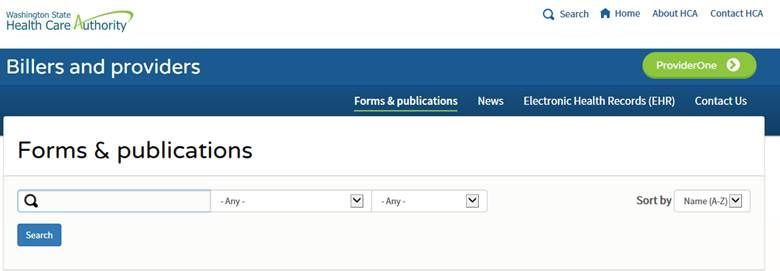
To download an agency provider form, go to HCA’s Billers and providers web page, select
Forms & publications. Type the HCA form number into the Search box as shown below
(Example: 13-835).
Copyright disclosure
Current Dental Terminology © 2018, American Dental Association.
All rights reserved.
4Orthodontic Services
Table of Contents
About this guide .........................................................................................................................2
What has changed? ....................................................................................................................3
How can I get agency provider documents? ..............................................................................4
Where can I download agency forms? .......................................................................................4
Definitions .......................................................................................................................................7
Client Eligibility .............................................................................................................................9
How can I verify a patient’s eligibility? ....................................................................................9
Are clients transferring from non-Medicaid or out-of-state providers eligible for
continued orthodontic treatment? ......................................................................................10
Are clients enrolled in an agency-contracted managed care organization eligible? ................10
Provider Requirements ...............................................................................................................11
Who may provide and be paid for orthodontic treatment and orthodontic-related
services? .............................................................................................................................11
What are the requirements for out-of-state providers? ............................................................11
Coverage .......................................................................................................................................12
When does the agency cover orthodontic treatment and related services? ..............................12
What orthodontic treatment and related services does the agency cover?...............................13
Treatment requirements .................................................................................................... 13
What orthodontic treatment and orthodontic-related services are not covered by the
agency? ..............................................................................................................................14
What services are covered under the EPSDT program? ..........................................................15
Coverage Table.............................................................................................................................16
General .....................................................................................................................................16
Clinical evaluations ........................................................................................................... 16
X-rays (radiographs) ......................................................................................................... 17
Other orthodontic services ................................................................................................ 17
Cleft lip and palate, cleft palate, or cleft lip with alveolar process involvement .....................18
Limited orthodontic treatment for cleft palate .................................................................. 19
Interceptive orthodontics for cleft palate .......................................................................... 21
Comprehensive orthodontic treatment for cleft palate...................................................... 21
Severe handicapping malocclusion ..........................................................................................23
Clinical evaluations ........................................................................................................... 23
Limited orthodontic treatment for severe malocclusion ................................................... 24
Interceptive orthodontics for severe malocclusion ........................................................... 25
Comprehensive orthodontic treatment for severe malocclusion ....................................... 26
Authorization................................................................................................................................27
What orthodontic treatment and orthodontic-related services require authorization? .............27
General information about authorization .................................................................................27
Alert! This Table of Contents is automated. Click on a page number to go directly to the page.
5Orthodontic Services
When do I need to get prior authorization? .............................................................................27
How do I request written prior authorization? .........................................................................28
Medical justification ......................................................................................................... 29
Where do I send requests for prior authorization? ...................................................................30
With x-rays or photos........................................................................................................ 30
Expedited Prior Authorization (EPA) ......................................................................................31
What is expedited prior authorization (EPA)? .................................................................. 31
When do I need to bill with an EPA number? .................................................................. 32
Orthodontic Information Form ..................................................................................................33
When do I need to complete the Orthodontic Information (HCA 13-666) form? ...................33
How do I complete and submit the Orthodontic Information (HCA 13-666) form? ...............33
Orthodontic information review ....................................................................................... 35
What if my request for client services is denied? ....................................................................36
Payment ........................................................................................................................................37
How does the agency pay for interceptive orthodontic treatment?..........................................37
How does the agency pay for limited orthodontic treatment? .................................................38
How does the agency pay for comprehensive full orthodontic treatment? ..............................39
Billing ............................................................................................................................................40
What are the general billing requirements? .............................................................................40
Does the agency pay for orthodontic treatment beyond the client’s eligibility period? ..........40
Where can I find the fee schedule for orthodontic treatment and related services? ................41
Alert! This Table of Contents is automated. Click on a page number to go directly to the page.
6Orthodontic Services
Definitions
This section defines terms and abbreviations, including acronyms, used in this billing guide.
Refer to Chapter 182-500 WAC for a complete list of definitions for Washington Apple Health.
This list also uses definitions found in the current American Dental Association’s Current Dental
Terminology (CDT) and the current American Medical Association’s Physician’s Current
Procedural Terminology (CPT®). Where there is any discrepancy between this section and
the current CDT or CPT, this section prevails.
Adolescent dentition – The dentition that is including anatomical and functional
present after the loss of primary teeth and relationships. (WAC 182-535A-0010)
prior to cessation of growth that would
affect orthodontic treatment. Craniofacial anomalies – Abnormalities of
the head and face, either congenital or
Adult – For the general purposes of the acquired, involving disruption of the
agency’s dental program, means a client age dentition and supporting structures.
21 and older. (WAC 182-535A-0010)
Appliance placement – The application of Craniofacial team – A cleft
orthodontic attachments to the teeth for the palate/maxillofacial team or an American
purpose of correcting dentofacial Cleft Palate Association-certified craniofacial
abnormalities. (WAC 182-535A-0010) team. These teams are responsible for the
management (review, evaluation, and
Child – For the general purposes of the approval) of patients with cleft palate
agency’s dental program, means a client age craniofacial anomalies to provide integrated
20 and younger. case management, promote parent-
professional partnerships, and make
Cleft – An opening or fissure involving the appropriate referrals to implement and
dentition and supporting structures, especially coordinate treatment plans.
those occurring in utero. These can be: (WAC 182-535A-0010)
1. Cleft lips Crossbite – An abnormal relationship of a
2. Cleft palates (involving the roof of the tooth or teeth to the opposing tooth or teeth, in
mouth) which normal buccolingual or labiolingual
3. Facial clefts (e.g., macrostomia). relations are reversed.
(WAC 182-535A-0010)
Dental dysplasia – An abnormality in the
Comprehensive full orthodontic development of the teeth.
treatment – Using fixed orthodontic (WAC 182-535A-0010)
appliances for treatment of adolescent
dentition leading to the improvement of a Ectopic eruption – A condition in which a
client’s severe handicapping craniofacial tooth erupts in an abnormal position or is
dysfunction and/or dentofacial deformity, 50% blocked out of its normal alignment in
the dental arch.
7Orthodontic Services
Early and periodic screening, diagnosis Occlusion – The relation of the upper and
and treatment (EPSDT) – The agency’s lower teeth when in functional contact during
early and periodic screening, diagnosis, and jaw movement. (WAC 182-535A-0010)
treatment program for client twenty years of
age and younger as described in chapter Orthodontics – Treatment involving the use
182-534 WAC. of any appliance, in or out of the mouth,
removable or fixed, or any surgical
Hemifacial microsomia – A developmental procedure designed to redirect teeth and
condition involving the first and second surrounding tissues. (WAC 182-535A-0010)
brachial arch. This creates an abnormality of
the upper and lower jaw, ear, and associated Orthodontist – A dentist who specializes in
structures (half or part of the face is smaller orthodontics, who is a graduate of a
in size). postgraduate program in orthodontics that is
(WAC 182-535A-0010) accredited by the American Dental
Association, and who meets the licensure
Interceptive orthodontic treatment – requirements of the Department of Health.
Procedures to lessen the severity or future (WAC 182-535A-0010)
effects of a malformation and to affect or
eliminate the cause. Such treatment may Permanent dentition – Teeth that succeed
occur in the primary or transitional dentition the primary teeth and the additional molars
and may include such procedures as the that erupt.
redirection of ectopically erupting teeth,
correction of isolated dental cross-bite, or Primary dentition – Teeth developed and
recovery of recent minor space loss where erupted first in order of time, which are
overall space is adequate. normally shed and replaced by permanent
(WAC 182-535A-0010) teeth.
Limited orthodontic treatment – Transitional dentition – The change from
Orthodontic treatment with a limited primary to permanent dentition in which the
objective, not involving the entire dentition. primary molars and canines are in the
It may be directed only at the existing process of exfoliating and the permanent
problem, or at only one aspect of a larger successors are emerging.
problem in which a decision is made to defer
or forego more comprehensive therapy.
(WAC 182-535A-0010)
Malocclusion – The improper alignment of
biting or chewing surfaces of upper and
lower teeth or abnormal relationship of the
upper and lower dental arch. (WAC 182-
535A-0010)
Maxillofacial – Relating to the jaws and
face. (WAC 182-535A-0010)
8Orthodontic Services
Client Eligibility
How can I verify a patient’s eligibility?
(WAC 182-535A-0020, WAC 182-501-0060)
The agency covers medically necessary orthodontic treatment and orthodontic-related services
for severe handicapping malocclusions, craniofacial anomalies, or cleft lips or palates for clients
age 20 and younger on a benefit package (BP) that covers such services.
Providers must verify that a patient has Washington Apple Health coverage for the date of
service, and that the client’s BP covers the applicable service. This helps prevent delivering a
service the agency will not pay for. Verifying eligibility is a two-step process:
Step 1. Verify the patient’s eligibility for Washington Apple Health. For detailed
instructions on verifying a patient’s eligibility for Washington Apple Health, see the
Client Eligibility, Benefit Packages, and Coverage Limits section in the agency’s
current ProviderOne Billing and Resource Guide.
If the patient is eligible for Washington Apple Health, proceed to Step 2. If the patient
is not eligible, see the note box below.
Step 2. Verify service coverage under the Washington Apple Health client’s BP. To
determine if the requested service is a covered benefit under the Washington Apple
Health client’s BP, see the agency’s Program Benefit Packages and Scope of Services
web page.
Note: Patients who wish to apply for Washington Apple Health can do so in one
of the following ways:
1. By visiting the Washington Healthplanfinder’s website at:
www.wahealthplanfinder.org
2. By calling the Customer Support Center toll-free at: 855-WAFINDER
(855-923-4633) or 855-627-9604 (TTY)
3. By mailing the application to:
Washington Healthplanfinder
PO Box 946
Olympia, WA 98507
In-person application assistance is also available. To get information about in-
person application assistance available in their area, people may visit
www.wahealthplanfinder.org or call the Customer Support Center.
9Orthodontic Services
Are clients transferring from non-Medicaid or
out-of-state providers eligible for continued
orthodontic treatment?
Eligible clients may receive the same orthodontic treatment and orthodontic-related services for
continued orthodontic treatment when originally rendered by non-Medicaid or out-of-state
providers as follows:
• The provider must submit the initial orthodontic case study and treatment plan records
with the request for continued treatment.
• The agency evaluates the initial orthodontic case study and treatment plan to determine if
the client met the agency’s orthodontic criteria. See When does the agency cover
orthodontic treatment and related services?
• The agency determines continued treatment duration based on the client’s current
orthodontic conditions.
The agency does not cover continued treatment if the client’s initial condition did not meet the
agency’s criteria for the initial orthodontic treatment. The agency pays a deband and retainer fee
if the client does not meet the initial orthodontic treatment criteria.
Are clients enrolled in an agency-contracted
managed care organization eligible?
Yes. Washington Apple Health covers orthodontic and orthodontic-related services for eligible
clients enrolled in an agency-contracted managed care organization (MCO). Bill the agency
directly for all orthodontic and orthodontic-related services provided to eligible agency-
contracted MCO clients.
10Orthodontic Services
Provider Requirements
Who may provide and be paid for orthodontic
treatment and orthodontic-related services?
(WAC 182-535A-0030)
The following provider types may furnish and be paid for providing covered orthodontic
treatment and orthodontic-related services to eligible Washington Apple Health clients:
• Orthodontists
• Pediatric dentists
• General dentists
• Agency-recognized craniofacial teams or other orthodontic specialists approved by the
agency
What are the requirements for out-of-state
providers?
(WAC 182-535A-0060(8))
Orthodontic providers who are in agency-designated bordering cities must meet the following
criteria:
• The licensure requirements of their state
• The same criteria for payment as in-state providers, including the requirements to
contract with the agency
11Orthodontic Services
Coverage
When does the agency cover orthodontic
treatment and related services?
(WAC 182-535A-0040)
The agency covers orthodontic treatment and related services, subject to prior authorization
requirements and the limitation list within this billing guide, for clients with one of the following
medical conditions:
• Cleft lip and palate, cleft palate, or cleft lip with alveolar process involvement
• Other craniofacial anomalies including, but not limited to:
Hemifacial microsomia
Craniosynostosis syndromes
Cleidocranial dental dysplasia
Arthrogryposis
Marfan syndrome
Treacher Collins syndrome
Ectodermal dysplasia
Achondroplasia
Treatment and follow-up care must be performed only by an agency-
recognized craniofacial team or an orthodontic specialist who has been
approved by the agency.
• Severe malocclusions with a Washington Modified Handicapping Labiolingual Deviation
(HLD) Index Score of 25 or higher. (See Where can I download agency forms? to
download the agency’s Orthodontic Information (HCA 13-666) form, for scoring
instructions.) The agency determines the final HLD Index Score based on documentation
submitted by the provider.
• Dental malocclusions other than those listed on a case-by-case basis and when prior
authorized.
12Orthodontic Services
What orthodontic treatment and related services
does the agency cover?
(WAC 182-535A-0040)
When deemed medically necessary with PA, the agency covers the following orthodontic
treatments and related services for clients age 20 and younger:
• Interceptive orthodontic treatment
• Limited orthodontic treatment
The treatment includes up to 12 months of treatment from the date of the original
appliance placement (see Authorization for information on limitation extensions).
The agency approves limited orthodontic treatment on transitional or adolescent
dentition only.
The agency may approve a single impacted tooth for limited orthodontic
treatment. When requesting PA for an impacted tooth, the agency requires the
provider to submit a panoramic x-ray.
• Comprehensive full orthodontic treatment
The treatment must be completed within 30 months of the date of the original
appliance placement (see Authorization for information on limitation extensions).
The agency approves comprehensive full orthodontic treatment on adolescent
dentition only.
• Orthodontic appliance removal as a stand-alone service only when both:
The client’s appliance was placed by a different provider or dental clinic, and
The provider removing the appliance has not furnished any other orthodontic
treatment or orthodontic-related services to the client.
• On an individual basis, other orthodontic treatment and orthodontic-related services as
determined medically necessary by the agency
Treatment requirements
• If it is anticipated the client will require orthognathic surgery, a treatment plan must be
submitted to the agency with the request for prior authorization confirming that an oral
surgeon has been consulted and has committed to treat the client.
13Orthodontic Services
• The treatment must meet industry standards and correct the medical issue. If treatment is
discontinued before completion, or treatment objectives were not obtained, clear
documentation must be kept in the client’s record explaining why treatment was not
completed or why treatment goals were not obtained.
What orthodontic treatment and orthodontic-
related services are not covered by the agency?
(WAC 182-535A-0040(4))
The agency does not cover the following orthodontic treatment and related services:
• Orthodontic treatment provided after the client’s 21st birthday (treatment provided after
the client’s 21st birthday is the financial responsibility of the client)
• Case studies that do not include a definitive treatment plan
• Orthodontic treatment for cosmetic purposes
• Orthodontic treatment that is not medically necessary, as defined in WAC 182-500-0070
• Orthodontic treatment provided out-of-state (except out-of-state bordering cities
according to WAC 182-501-0175)
Exception: Providers in agency-designated bordering cities may be eligible for
payment for services provided to agency clients. See Provider Requirements for
information.
• Orthodontic treatment and related services that do not meet the requirements listed in this
billing guide
Note: The agency evaluates a request for orthodontic treatment and related
services that are:
• In excess of the limitations or restrictions listed in this section, according
to WAC 182-501-0169; and
• Listed as noncovered according to WAC 182-501-0160.
14Orthodontic Services
What services are covered under the EPSDT
program?
(WAC 182-535A-0040(8))
Under the Early Periodic Screening and Diagnostic Treatment (EPSDT) program, clients age 20
and younger may be eligible for orthodontic treatment and orthodontic-related services
considered noncovered. The agency reviews requests for orthodontic treatment and orthodontic-
related services for EPSDT clients, according to the provisions of WAC 182-534-0100.
15Orthodontic Services
Coverage Table
General
Clinical evaluations
Maximum
CDT® Limitations/
Description PA? 1 Allowable
Code Requirements
Fee
D0160 Detailed and No Includes orthodontic oral examination,
extensive oral taking and processing clinical
evaluation – photographs, completing required
orthodontic form(s) and obtaining the agency’s
only authorization decision.
Allowed once per client, per billing
provider
Online Fee
D0170 Re-evaluation – No Not allowed in combination with
Schedules
limited, periodic/limited/comprehensive oral
problem evaluations.
focused
(established
patient; not
post-operative Allowed once per client, per billing
visit) provider, per year until appliances are
placed
1
PA-Prior Authorization
The CDT Code and Nomenclature above have been obtained from Current Dental Terminology
(including procedure codes, nomenclatures, descriptors and other data contained therein) (“CDT”). CDT
is copyright © 2017 American Dental Association. All rights reserved. Applicable FARS/DFARS apply.
16Orthodontic Services
X-rays (radiographs)
Maximum
CDT® Limitations/
Description PA? Allowable
Code Requirements
Fee
D0330 Panoramic film – Yes Included in case study. Additional films
maxilla and require prior authorization.
mandible
Panoramic films are not required when
submitting prior authorization requests
for orthodontic services unless the
request indicates that the client has an
impacted tooth or teeth. Therefore films
are not covered prior to case study
Online Fee
approval.
Schedules
D0340 Cephalometric Yes Included in case study. Additional films
film require prior authorization.
Cephalometric films are not required
when submitting prior authorization
requests for orthodontic services unless
the request indicates that the client has a
negative overjet. Therefore films are not
covered prior to case study approval.
Other orthodontic services
Maximum
CDT® Limitations/
Description PA? Allowable
Code Requirements
Fee
D8220 Fixed appliance Yes Considered for a Thumb Crib
therapy
D8680 Appliance Yes Use this code for a client whose
removal if placed appliance was placed by an orthodontic
Online Fee
by non-Medicaid provider not participating with the
Schedules
provider agency, and/or whose treatment was
previously covered by another third-
party payer. Fee includes debanding and
removal of cement.
The CDT Code and Nomenclature above have been obtained from Current Dental Terminology
(including procedure codes, nomenclatures, descriptors and other data contained therein) (“CDT”). CDT
is copyright © 2017 American Dental Association. All rights reserved. Applicable FARS/DFARS apply.
17Orthodontic Services
Cleft lip and palate, cleft palate, or cleft lip with
alveolar process involvement
Note: Providers must correctly indicate the appliance date on all orthodontic
treatment claims.
Maximum
CDT® Limitations/
Description PA? Allowable
Code Requirements
Fee
D8660 Cleft palate EPA Requires use of EPA # 870000970 Online Fee
pre-orthodontic when billing for cleft palate and Schedules
treatment visit craniofacial anomaly cases.
Billable only by the treating orthodontic
provider. Includes preparation of
comprehensive diagnostic records
(additional photos, study casts,
cephalometric examination film, and
panoramic film), formation of diagnosis
and treatment plan from such records,
and formal case conference.
Treating provider must be an
orthodontist and either be a member of
a recognized craniofacial team or
approved by the agency’s Dental
Consultant to provide this service.
Medically necessary ICD diagnosis
codes must be documented in the client’s
record. See the agency’s Approved
Diagnosis Codes by Program web page
for Orthodontic Services.
The CDT Code and Nomenclature above have been obtained from Current Dental Terminology
(including procedure codes, nomenclatures, descriptors and other data contained therein) (“CDT”). CDT
is copyright © 2017 American Dental Association. All rights reserved. Applicable FARS/DFARS apply.
18Orthodontic Services
Limited orthodontic treatment for cleft palate
Maximum
CDT® Limitations/
Description PA? Allowable
Code Requirements
Fee
D8020 Limited EPA Requires the use of EPA #870001402 when
orthodontic billing for cleft palate and craniofacial
treatment of anomaly cases.
the
transitional This reimbursement is for the initial
dentition for placement when the appliance placement date
cleft palate and the date of service are the same. Includes
first three months of treatment and
appliance(s).
D8020 Limited EPA This reimbursement is for each subsequent
orthodontic three-month period when the appliance
treatment of placement date and the date of service are
the different. The agency reimburses a maximum
transitional of three follow-up visits. Online Fee
dentition for Schedules
cleft palate Requires use of EPA # 870001403 when
billing for cleft palate and craniofacial
anomaly cases.
Note: To receive reimbursement for each
subsequent three-month period:
• The provider must examine the client in
the provider’s office at least once during
the three-month period.
*However, the agency prefers that the client be
seen every eight to ten weeks, or as medically
necessary.
• Continuing treatment must be billed after
each three-month interval.
• Document the actual service dates in the
client’s record.
The CDT Code and Nomenclature above have been obtained from Current Dental Terminology
(including procedure codes, nomenclatures, descriptors and other data contained therein) (“CDT”). CDT
is copyright © 2017 American Dental Association. All rights reserved. Applicable FARS/DFARS apply.
19Orthodontic Services
Maximum
CDT® Limitations/
Description PA? Allowable
Code Requirements
Fee
D8030 Limited EPA Requires use of EPA # 870000970 when
orthodontic billing for cleft palate and craniofacial
treatment of anomaly cases.
the
adolescent This reimbursement is for the initial
dentition for placement when the appliance placement date
cleft palate and the date of service are the same. Includes
first three months of treatment and
appliance(s).
D8030 Limited EPA This reimbursement is for each subsequent
orthodontic three-month period when the appliance
treatment of placement date and the date of service are
the different. The agency reimburses a maximum
adolescent of three follow-up visits. Online Fee
dentition for Schedules
cleft palate Requires use of EPA # 870000970 when
billing for cleft palate and craniofacial
anomaly cases.
Note: To receive reimbursement for each
subsequent three-month period:
• The provider must examine the client in
the provider’s office at least once during
the three-month period.
*However, the agency prefers that the client be
seen every eight to ten weeks, or as medically
necessary.
• Continuing treatment must be billed after
each three-month interval.
• Document the actual service dates in the
client’s record.
The CDT Code and Nomenclature above have been obtained from Current Dental Terminology
(including procedure codes, nomenclatures, descriptors and other data contained therein) (“CDT”). CDT
is copyright © 2017 American Dental Association. All rights reserved. Applicable FARS/DFARS apply.
20Orthodontic Services
Interceptive orthodontics for cleft palate
Maximum
CDT® Limitations/
Description PA? Allowable
Code Requirements
Fee
D8060 Interceptive EPA Requires use of EPA # 870000980 when Online Fee
orthodontic billing for cleft palate and craniofacial Schedules
treatment of the anomaly cases.
transitional
dentition for Payable only once per client. The
cleft palate maximum allowance includes all
professional fees, laboratory costs, and
required follow-up. No allowance for lost
or broken appliance.
Comprehensive orthodontic treatment for cleft palate
Maximum
CDT® Limitations/
Description PA? Allowable
Code Requirements
Fee
D8080 Comprehensive EPA This reimbursement is for the initial Online Fee
orthodontic placement when the date of service and the Schedules
treatment of the appliance placement date are the same.
adolescent
dentition for Requires the use of EPA # 870000990.
cleft palate This verifies that the client has a cleft palate
or craniofacial anomaly.
Includes first six months of treatment and
appliances.
Treating provider must be an orthodontist
and be either a member of a recognized
craniofacial team or approved by the
agency’s Dental Consultant to provide this
service.
The CDT Code and Nomenclature above have been obtained from Current Dental Terminology
(including procedure codes, nomenclatures, descriptors and other data contained therein) (“CDT”). CDT
is copyright © 2017 American Dental Association. All rights reserved. Applicable FARS/DFARS apply.
21Orthodontic Services
Maximum
CDT® Limitations/
Description PA? Allowable
Code Requirements
Fee
D8080 Comprehensive EPA This reimbursement is for each subsequent
orthodontic three-month period when the appliance
treatment of the placement date and the date of service are
adolescent different. The agency reimburses a
dentition for maximum of eight follow-up visits.
cleft palate
Requires the use of EPA # 870000990.
This verifies that the client has a cleft palate
or craniofacial anomaly.
Treating provider must be an orthodontist
and be either a member of a recognized
craniofacial team or approved by the
agency’s Dental Consultant to provide this
service.
Online Fee
Note: To receive reimbursement for each Schedules
subsequent three-month period:
• The provider must examine the client
in the provider’s office at least once
during the three-month period, with the
first three-month interval beginning six
months after the initial appliance
placement.
* However, the agency prefers that the client be
seen every eight to ten weeks, or as medically
necessary.
• Continuing treatment must be billed
after each three-month interval.
• Document the actual service dates in
the client’s record.
The CDT Code and Nomenclature above have been obtained from Current Dental Terminology
(including procedure codes, nomenclatures, descriptors and other data contained therein) (“CDT”). CDT
is copyright © 2017 American Dental Association. All rights reserved. Applicable FARS/DFARS apply.
22Orthodontic Services
Severe handicapping malocclusion
Note: You must correctly indicate the appliance date on all orthodontic treatment
claims.
Clinical evaluations
Maximum
CDT® Limitations/
Description PA? Allowable
Code Requirements
Fee
D8660 Severe Yes Use this code for Orthodontist Case Study. Online Fee
malocclusion Billable only by the treating orthodontic Schedules
pre-orthodontic provider. Includes preparation of
visit comprehensive diagnostic records
(additional photos, study casts,
cephalometric examination film, and
panoramic film), formation of diagnosis
and treatment plan from such records, and
formal case conference.
The CDT Code and Nomenclature above have been obtained from Current Dental Terminology
(including procedure codes, nomenclatures, descriptors and other data contained therein) (“CDT”). CDT
is copyright © 2017 American Dental Association. All rights reserved. Applicable FARS/DFARS apply.
23Orthodontic Services
Limited orthodontic treatment for severe malocclusion
Maximum
CDT® Limitations/
Description PA? Allowable
Code Requirements
Fee
D8020 Limited Yes This reimbursement is for the initial
orthodontic placement when the appliance placement
treatment of date and the date of service are the same.
transitional Includes first three months of treatment and
dentition for appliance(s).
severe
malocclusion
D8020 Limited Yes This reimbursement is for each subsequent
orthodontic three-month period when the appliance
treatment of placement date and the date of service are
transitional different.
dentition for Online Fee
severe The agency reimburses a maximum of three Schedules
malocclusion follow-up visits.
Note: To receive reimbursement for each
subsequent three-month period:
• The provider must examine the client in
the provider’s office at least once during
the three-month period.
* However, the agency prefers that the client
be seen every eight to ten weeks, or as
medically necessary.
• Continuing treatment must be billed after
each three-month interval.
• Document the actual service dates in the
client’s record.
D8030 Limited Yes This reimbursement is for the initial Online Fee
orthodontic placement when the appliance placement Schedules
treatment of date and the date of service are the same.
the adolescent Includes first three months of treatment and
dentition for appliance(s).
severe
malocclusion
The CDT Code and Nomenclature above have been obtained from Current Dental Terminology
(including procedure codes, nomenclatures, descriptors and other data contained therein) (“CDT”). CDT
is copyright © 2017 American Dental Association. All rights reserved. Applicable FARS/DFARS apply.
24Orthodontic Services
Maximum
CDT® Limitations/
Description PA? Allowable
Code Requirements
Fee
D8030 Limited Yes This reimbursement is for each subsequent Online Fee
orthodontic three-month period when the appliance Schedules
treatment of the placement date and the date of service are
adolescent different.
dentition for
severe The agency reimburses a maximum of
malocclusion three follow-up visits.
Note: To receive reimbursement for
each subsequent three-month period:
• The provider must examine the client
in the provider’s office at least once
during the three-month period.
* However, the agency prefers that the client
be seen every eight to ten weeks, or as
medically necessary.
• Continuing treatment must be billed
after each three-month interval.
• Document the actual service dates in
the client’s record.
Interceptive orthodontics for severe malocclusion
Maximum
CDT® Limitations/
Description PA? Allowable
Code Requirements
Fee
D8060 Interceptive Yes The maximum allowance includes all Online Fee
orthodontic professional fees, laboratory costs, and Schedules
treatment of the required follow-up.
transitional
dentition for
severe
malocclusion
The CDT Code and Nomenclature above have been obtained from Current Dental Terminology
(including procedure codes, nomenclatures, descriptors and other data contained therein) (“CDT”). CDT
is copyright © 2017 American Dental Association. All rights reserved. Applicable FARS/DFARS apply.
25Orthodontic Services
Comprehensive orthodontic treatment for severe
malocclusion
Maximum
CDT® Limitations/
Description PA? Allowable
Code Requirements
Fee
D8080 Comprehensive Yes This reimbursement is for the initial
orthodontic placement when the appliance placement date
treatment of the and the date of service are the same. Includes
adolescent first six months of treatment and appliances.
dentition for
severe
malocclusion
D8080 Comprehensive Yes This reimbursement is for each subsequent
orthodontic three-month period when the appliance
treatment of the placement date and the date of service are
adolescent different. The agency reimburses a maximum
dentition for of eight follow-up visits.
severe Online Fee
malocclusion Note: To receive reimbursement for each Schedules
subsequent three-month period:
• The provider must examine the client in
the provider’s office at least once during
the three-month period.
* However, the agency prefers that the client be
seen every eight to ten weeks, or as medically
necessary.
• Continuing treatment must be billed after
each three-month interval, with the first
three-month interval beginning six
months after the initial appliance
placement.
• Document the actual service dates in the
client’s record.
The CDT Code and Nomenclature above have been obtained from Current Dental Terminology
(including procedure codes, nomenclatures, descriptors and other data contained therein) (“CDT”). CDT
is copyright © 2017 American Dental Association. All rights reserved. Applicable FARS/DFARS apply.
26Orthodontic Services
Authorization
Prior authorization (PA) and expedited prior authorization (EPA) numbers do not override the
client's eligibility or program limitations. Not all categories of eligibility receive all services.
What orthodontic treatment and orthodontic-
related services require authorization?
(WAC 182-535A-0050)
All orthodontic treatment and orthodontic-related services require either prior authorization or
expedited prior authorization.
General information about authorization
• For covered orthodontic-related services that require PA, the agency uses the payment
determination process described in WAC 182-501-0165.
• Authorization of an orthodontic-related service only indicates that the service is
medically necessary. Authorization does not guarantee payment.
When do I need to get prior authorization?
If prior authorization is required, it must be received from the agency before the service is
provided.
Authorization is based on the establishment of medical necessity as determined by the agency on
a case-by-case basis.
27Orthodontic Services
How do I request written prior authorization?
Note: The agency requires an orthodontic provider who is requesting PA to
submit sufficient, objective, clinical information to establish medical necessity.
To request prior authorization for orthodontic treatment and related services, submit all the
following to the agency:
• A completed General Information for Authorization (HCA 13-835) form (See Where
can I download agency forms?) – See the agency’s current ProviderOne Billing and
Resource Guide for more information.
• Orthodontic Information (HCA 13-666) form, with the following information:
Client’s name and date of birth
Client’s ProviderOne client ID
Provider’s name and address
Provider’s telephone number (including area code)
Provider’s unique National Provider Identifier (NPI)
Physiological description of the disease, injury, impairment, or other ailment
Most recent and relevant radiographs (x-rays) as required. They must include the
client name, provider name, and date the radiographs were taken. Radiographs
should be duplicates as originals are to be maintained in the client’s chart
Proposed treatment
• Diagnostic color photographs
• A commitment letter from an oral surgeon when the request indicates that orthognathic
surgery may be needed
Orthognathic surgery requests must be submitted with the following documents:
• Treatment plan including expected surgical intervention CPT codes
• Cephlometric radiographs (x-rays)
• Color photographs (including five intraoral and three facial views)
Note: Prior authorization requests for orthognathic surgery must be submitted at
least 12 months after the start of active orthodontic treatment. The agency will
reject PA requests for orthognathic surgery that are submitted before the completion
of 12 months of active orthodontic treatment.
28Orthodontic Services
Note: For billing information on billing CPT codes for oral surgery, refer to the
agency’s current Physician-Related Services/Health Care Professional Billing
Guide. The agency pays oral surgeons for only those CPT codes listed in the Dental
Fee Schedule under Dental CPT Codes.
The agency may request the following additional information:
• Additional x-rays (radiographs) – The agency returns x-rays only for approved
requests and if accompanied by self-addressed stamped envelope.
• Study models – Study models must be trimmed to sit on their backs in centric
occlusion. Pack them carefully for shipping. Do not send study models with a wax bite
between the models.
• Any other information requested by the agency
Note: The agency may require second opinions and consultations before
authorizing any procedure.
Medical justification
1. All information pertaining to medical necessity must come from the client’s prescribing
orthodontist. Information obtained from the client or someone on behalf of the client
(e.g., family) will not be accepted.
2. Measurement, counting, recording, or consideration for treatment is performed only on
teeth that have erupted and can be seen on the diagnostic study models. All
measurements are made or judged on the basis equal to, or greater than the minimum
requirement.
3. Only permanent natural teeth will be considered for comprehensive full orthodontic
treatment of severe malocclusions.
4. A single impacted tooth alone is not considered a severe handicapping malocclusion.
5. Use either of the upper central incisors when measuring overjet, overbite (including
reverse overbite), mandibular protrusion, and open bite. The upper lateral incisors or
upper canines may not be used for these measurements.
29Orthodontic Services
Where do I send requests for prior
authorization?
Prior authorization (PA) requests must be faxed to the agency at 1-866-668-1214 using the
General Information for Authorization (HCA 13-835) form. See Where can I download agency
forms?
For information regarding submitting prior authorization requests to the agency, see the agency’s
ProviderOne Billing and Resource Guide.
With x-rays or photos
In order for the scanning and optical character recognition (OCR) functions to work, you must
pick one of the following options for submitting x-rays or photos to the agency:
• Use the FastLook™ and FastAttach™ services provided by National Electronic
Attachment, Inc. (NEA). You may register with NEA by visiting www.nea-fast.com. On
the dental registration page, enter “FastWDSHS” in the promotion code box. Contact
NEA at 1-800-782-5150, ext. 2, with any questions.
When this option is chosen, you can fax your request to the agency and indicate the
NEA# in the NEA field on the PA Request form. There is a cost associated which will
be explained by the NEA services.
• Mail your request to:
Authorization Services Office
PO Box 45535
Olympia, WA 98504-5535
If you choose to mail your requests, the agency requires you to:
1. Place x-rays in a large envelope.
2. Attach the PA request form and any other additional pages to the envelope (i.e.
tooth chart, periodontal charting, etc.).
3. Put the client’s name and ProviderOne ID# on the envelope.
Note: For orthodontics, write “orthodontics” on the envelope.
4. Place all materials in a larger envelope for mailing. You may mail multiple
requests together.
30Orthodontic Services
Note: If study models are requested, include the client information and
ID on the models. When mailing, indicate the provider’s name,
authorization reference #, and the word “orthodontics” on the box.
Expedited Prior Authorization (EPA)
What is expedited prior authorization (EPA)?
The expedited prior authorization (EPA) process is designed to eliminate the need for written
requests for prior authorization for selected dental procedure codes.
The agency allows for use of an EPA for selected dental procedure codes. The criteria for use of
an EPA are explained below.
• The EPA number must be used when the provider bills the agency.
• Upon request, a provider must provide documentation to the agency showing how the
client's condition meets all the criteria for EPA.
• A written request for prior authorization is required when a situation does not meet all the
EPA criteria for selected dental procedure codes.
• The agency may recoup any payment made to a provider if the provider did not follow
the required EPA process and if not all of the specified criteria were met.
Note: By entering an EPA number on your claim, you attest that all the EPA
criteria are met and can be verified by documentation in the client’s record. These
services are subject to post payment review and audit by the agency or its
designee.
31Orthodontic Services
When do I need to bill with an EPA number?
Orthodontic services that require expedited prior authorization (EPA) in Coverage must list the
assigned EPA number on the claim. By placing the appropriate EPA number on the claim,
providers verify that the bill is for a cleft palate or craniofacial anomaly case.
Note: Only use the unique EPA number when indicated in Coverage.
Exceeding Limitations or Restrictions
A request to exceed stated limitations or other restrictions on covered services is
called a limitation extension (LE), which is a form of prior authorization. The
agency evaluates and approves requests for LE for orthodontic services when
medically necessary, under the provisions of WAC 182-501-0169.
The agency evaluates a request for any orthodontic service not listed as covered in
this section under the provisions of WAC 182-501-0070.
The agency reviews requests for orthodontic treatment for clients who are eligible
for services under the EPSDT program according to the provisions of WAC 182-
534-0100.
(WAC 182-535A-0040)
Note: See the agency’s ProviderOne Billing and Resource Guide for more information
on requesting authorization.
32Orthodontic Services
Orthodontic Information
Form
When do I need to complete the Orthodontic
Information (HCA 13-666) form?
Any time orthodontic services are requested for a client, you must complete the Orthodontic
Information (HCA 13-666) form. See Where can I download agency forms?
Note: The agency updated the Orthodontic Information (HCA 13-666) form on
January 1, 2017. Effective April 1, 2017, the agency will process prior
authorization requests submitted on the updated form only.
This format follows requirements of the American Board of Orthodontics and the Orthodontic
How do I complete and submit the Orthodontic
Information (HCA 13-666) form?
(To be completed by the performing orthodontist or dentist. Otherwise, your requests will be
returned unprocessed. Use blue or black ink and a highlighter.)
Applying for authorization to provide orthodontic services is a two-step process.
Step 1. Complete the Orthodontic Information (HCA 13-666) form
a) Fill in the provider information and patient information sections at the top of the
form.
b) In Part 1, fill in the information requested in each area that applies to the
treatment being provided or enter N/A.
Note: Impacted tooth or teeth requires a recent panoramic x-ray.
33Orthodontic Services
c) In Part 2, place an “X” for each condition that applies and provide the required
justification
Note: If the following conditions apply, provide the indicated supporting
documentation:
• Overjet greater than 9mm requires a color photograph using either a
probe or ruler to demonstrate the 9mm or greater overjet.
• Negative overjet requires a recent cephalometric x-ray to confirm the
condition.
• Deep impinging overbite with soft tissue destruction requires a palatal
photograph or study model.
d) In Part 3, calculate the Handicapping Labiolingual Deviation (HLD) index using
the provided instructions.
e) Sign and date the form.
Step 2. Submit the following full set of eight dental color photographs to the agency:
a) Intraoral dental photographs:
1) Front view (teeth in centric occlusion)
2) Right lateral (teeth in centric occlusion)
3) Left lateral (teeth in centric occlusion)
4) Upper occlusal view (taken using a mirror/retractor to include second
molars)
5) Lower occlusal view (taken using a mirror/retractor to include second
molars)
34Orthodontic Services
b) Extraoral dental photographs:
1) Front, full-face view
2) Front, full-face smiling
3) Profile, full-face view, facing to the right
Note: All photos are to be printed on one sheet of 8.5 X 11-inch paper. Fill the
photo page as fully as possible. Position the photos on the page as follows:
Top row: facial views
Middle row: occlusal views with information about the client and provider
between the two photos
Bottom row: three-teeth-together views
To match the orientation of the occlusal views to the client’s left and right side of
their face:
• Print the right-side view on the left of the sheet.
• Print the left-side view on the right side of the sheet.
This format follows requirements of the American Board of Orthodontics and the
Orthodontic departments at the universities of Oregon and Washington.
Mail the materials, with the client’s ProviderOne Client ID number and name, to:
Health Care Authority
PO Box 45535
Olympia, WA 98504-5535
Note: Always include the authorization number in the appropriate field on the
electronic claim when submitting a claim.
Orthodontic information review
The agency’s orthodontic consultant will review the photos and all of the information submitted
for each case. The agency’s decision will be delivered through ProviderOne-generated
correspondence.
35Orthodontic Services
What if my request for client services is denied?
If your request for orthodontic treatment is not approved based on your initial submission,
submit only the information requested by the agency for re-evaluation. Such information may
include:
• The claim for the full case study attached to the Orthodontic Information (HCA 13-666)
form. See Where can I download agency forms?
• Appropriate radiographs (e.g., panoramic and cephalometric radiographs).
• Diagnostic color photographs (eight).
• A separate letter with any additional medical information if it will contribute information
that may affect the agency’s final decision.
• Study models (do not send study models unless they are requested).
• Other information if requested.
36Orthodontic Services
Payment
The agency considers that a provider who furnishes covered orthodontic treatment and
orthodontic-related services to an eligible client has accepted the agency’s fees as published in
the agency’s fee schedules (WAC 182-535A-0060(2)).
The agency requires a provider to deliver services and procedures that are of acceptable quality
to the agency. The agency may recoup payment for services that are determined to be below the
standard of care or of an unacceptable product quality (WAC 182-535A-0060(3).
How does the agency pay for interceptive
orthodontic treatment?
(WAC 182-535A-0060 (4))
The agency pays for interceptive orthodontic treatment on primary or transitional dentition in
one payment that includes all professional fees, laboratory costs, and required follow-up.
37You can also read


