1st Slide Set Cloud Computing - Prof. Dr. Christian Baun
←
→
Page content transcription
If your browser does not render page correctly, please read the page content below
Organisational Information Brave new World? Client-Server          Fundamentals, Laws and Limitations      Parallel Computers

                              1st Slide Set Cloud Computing

                                          Prof. Dr. Christian Baun

                                   Frankfurt University of Applied Sciences
                               (1971–2014: Fachhochschule Frankfurt am Main)
                                 Faculty of Computer Science and Engineering
                                       christianbaun@fb2.fra-uas.de

Prof. Dr. Christian Baun – 1st Slide Set Cloud Computing – Frankfurt University of Applied Sciences – SS2019             1/69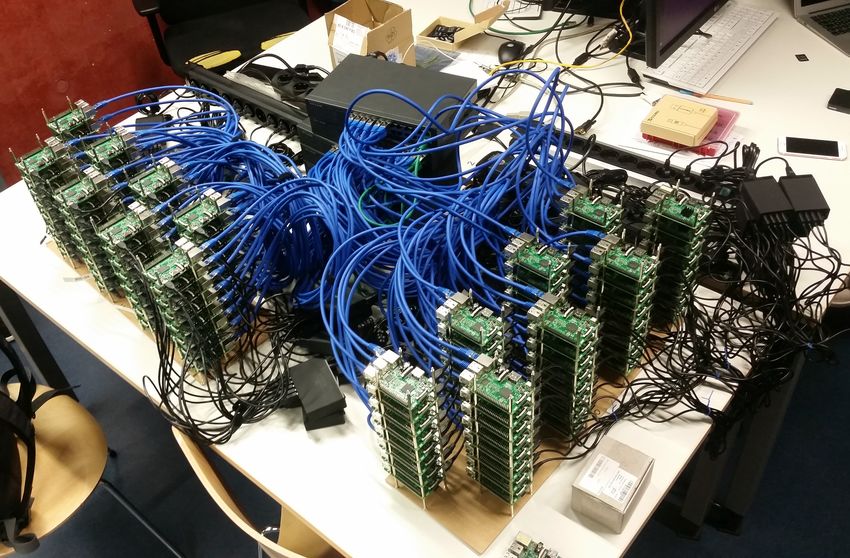
Organisational Information Brave new World? Client-Server          Fundamentals, Laws and Limitations      Parallel Computers

Agenda for Today

       Organisational Information
       Literature
       Generations of computer systems
       Brave new world?
       Client-Server
       Fundamentals, laws and limitations
               Moore’s law
               Amdahl’s law
               Granularity
               Gustafson’s law
       Parallel computers
               Shared memory
               Distributed memory

Prof. Dr. Christian Baun – 1st Slide Set Cloud Computing – Frankfurt University of Applied Sciences – SS2019             2/69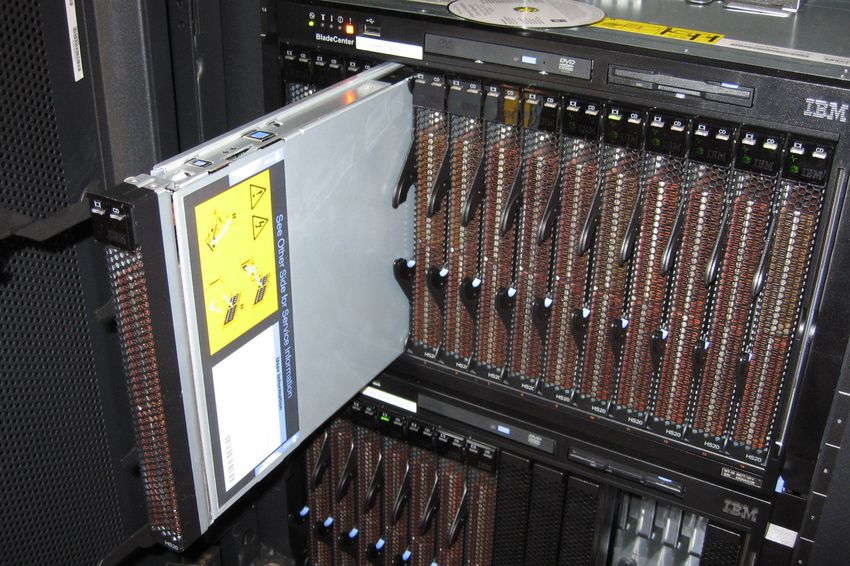
Organisational Information Brave new World? Client-Server          Fundamentals, Laws and Limitations      Parallel Computers

Organizational Information

       Website:
               http://www.christianbaun.de
       E-Mail:
               christianbaun@fb2.fra-uas.de
       Lecture:
               Lecture notes: PDF slides of the lecture can be found at the website
       Exercise:
               Exercise sheets: Can be found at the website in English language
               Participating the exercises is not a precondition for exam participation
                       But it is recommended to participate the exercises !!!

Prof. Dr. Christian Baun – 1st Slide Set Cloud Computing – Frankfurt University of Applied Sciences – SS2019             3/69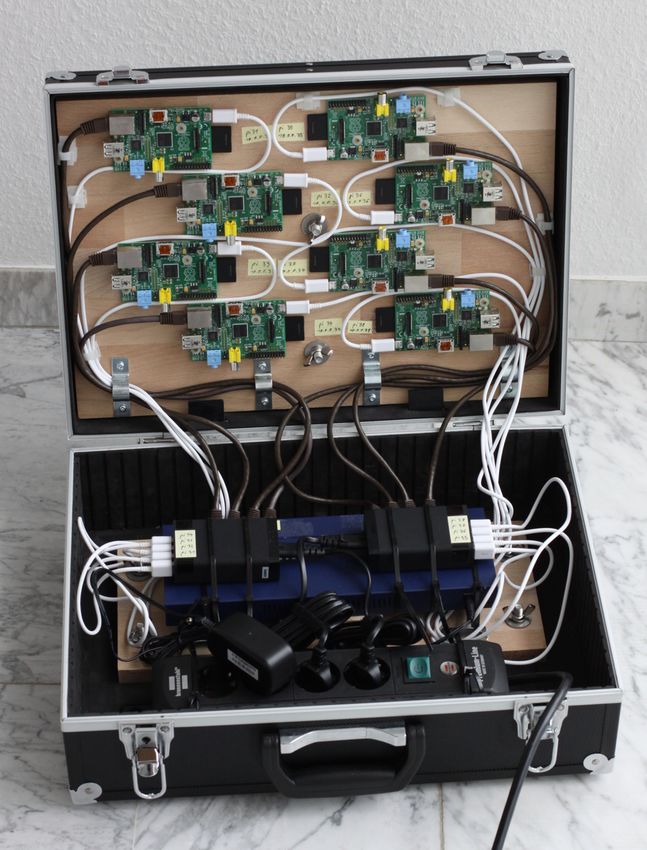
Organisational Information Brave new World? Client-Server          Fundamentals, Laws and Limitations      Parallel Computers

The Way a good Course works. . .                                                            Image source: Google Image Search

                                                                            Mr. Miyagi says:
                                                                            „Not only the student learns
                                                                            from his master, also the
                                                                            master learns from his
                                                                            student.“

       Active participation please!

Prof. Dr. Christian Baun – 1st Slide Set Cloud Computing – Frankfurt University of Applied Sciences – SS2019             4/69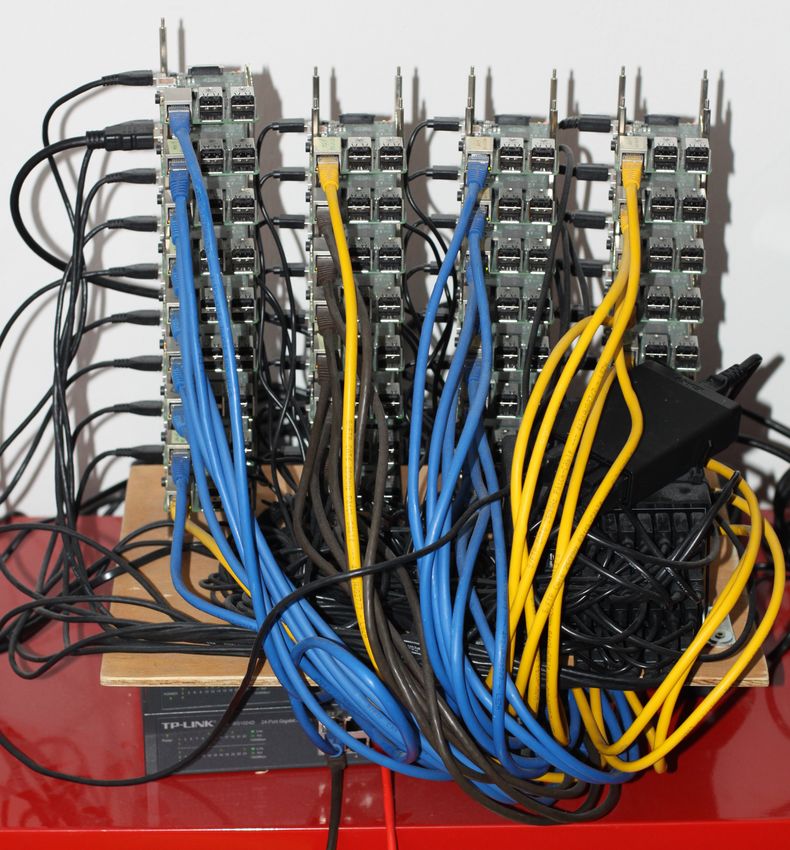
Organisational Information Brave new World? Client-Server          Fundamentals, Laws and Limitations      Parallel Computers

My Experience in this Course during several Semesters. . .

                             Image Source: Uli Olschewski (http://www.ulo-comics.de/index/)

       To get rid of this problem, we will try something „special“
       We will form teams
               Every team gets a special challenge
Prof. Dr. Christian Baun – 1st Slide Set Cloud Computing – Frankfurt University of Applied Sciences – SS2019             5/69
Organisational Information Brave new World? Client-Server          Fundamentals, Laws and Limitations      Parallel Computers

Your Special Challenge
       You and your teammates need to. . .
          1    Select one free software cloud service solution:
                       OpenFaaS (FaaS), Apache OpenWhisk (FaaS), AppScale (PaaS),
                       OpenNebula (IaaS), Eucalyptus (IaaS), Apache CloudStack (IaaS),
                       OpenStack (IaaS)
          2    Deploy a multi-node cloud service with the software you selected
                       You may use physical machines, virtual machines, containers, public cloud
                       infrastructure services, etc.
          3    Investigate which components your service has and analyze how these
               components do interact with each other
          4    Test your deployment with appropriate tools
          5    Create an installation guide and give a live demonstration during class
               or during an exercise session
                       Your installation guide should provide detailed steps how to deploy,
                       configure and use the service

Your outcomes will help you and you colleagues and they will become your exam questions

We will form the groups next week. Take your time to find the best service for you!
Prof. Dr. Christian Baun – 1st Slide Set Cloud Computing – Frankfurt University of Applied Sciences – SS2019             6/69
Organisational Information Brave new World? Client-Server          Fundamentals, Laws and Limitations      Parallel Computers

Generations of Computer Systems

 Generation           Timeframe           Technological progress
     0                 until 1940         (Electro-)mechanical calculating machines
     1               1940 – 1955          Elelectron tubes, relays, jack panels
     2               1955 – 1965          Transistors, batch processing
     3               1965 – 1980          Integrated circuits, time sharing
     4               1980 – 2000          Very large-scale integration, Microprocessors, PCs/Workstations
     5               2000 until ?         Distributed systems, the network is the computer, Virtualization

Quote from the magazine Popular Mechanics (1949)
„In the future, computers may weigh no more than 1.5 tonnes.“

Prof. Dr. Christian Baun – 1st Slide Set Cloud Computing – Frankfurt University of Applied Sciences – SS2019             7/69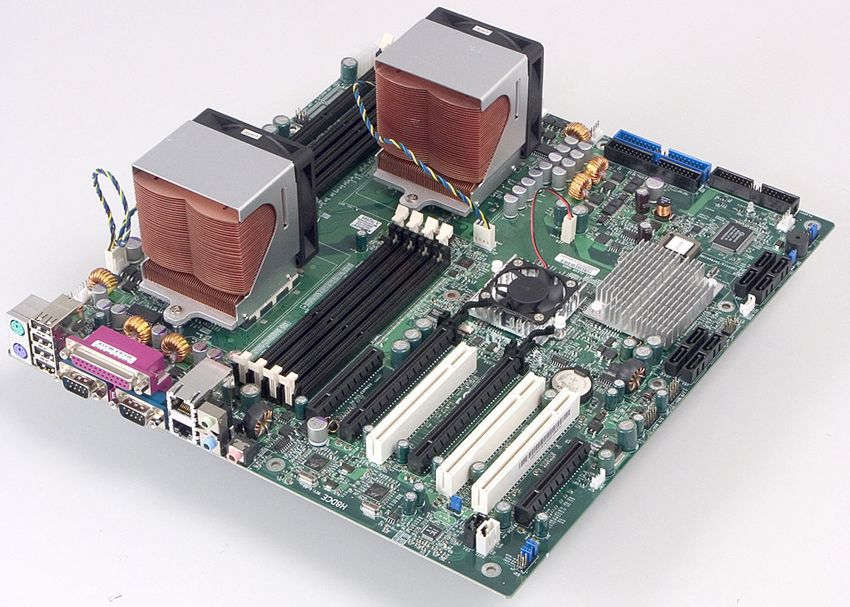
Organisational Information Brave new World? Client-Server          Fundamentals, Laws and Limitations      Parallel Computers

5.Generation (2000 – ????)
       Some keywords from the 5th generation:
               The network is the computer
               Distributed systems =⇒ Cluster-, Cloud-, Grid-, P2P-Computing
               Multicore processors and parallel applications
               Virtualization =⇒ VMware, XEN, KVM, Docker. . .
               OpenSource =⇒ Linux, BSD,. . .
               Communication everywhere =⇒ mobile systems, pervasive computing
               New ways of working =⇒ e-Science, e-Learning, e-Business,. . .
               Services =⇒ Service-oriented architectures (SOA), Web Services
               Resources are requested and rent when needed =⇒ on demand
               Artificial Intelligence (AI)

Many topics of the 5th generation will by discussed in this course

       Keywords for later generations:
               Quantum computers (probably 7th or 8th generation)
Prof. Dr. Christian Baun – 1st Slide Set Cloud Computing – Frankfurt University of Applied Sciences – SS2019             8/69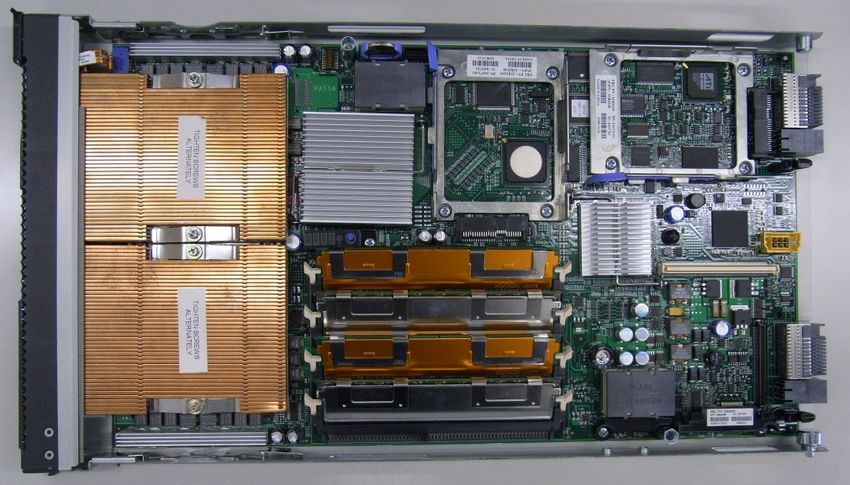
Organisational Information Brave new World? Client-Server          Fundamentals, Laws and Limitations      Parallel Computers

Brave new World?                                                                            Image Source: pixabay.com (CC0)

                                                    Brings the concept the network is the
                                                    computer only benefits?
                                                    Who decides, which applications we are
                                                    allowed to use in the future?
                                                    Who decides, which books we ware allowed
                                                    to read in the future?
                                                    How much freedom and self-determination
                                                    do we give up?

                                                    Some examples. . .

Prof. Dr. Christian Baun – 1st Slide Set Cloud Computing – Frankfurt University of Applied Sciences – SS2019             9/69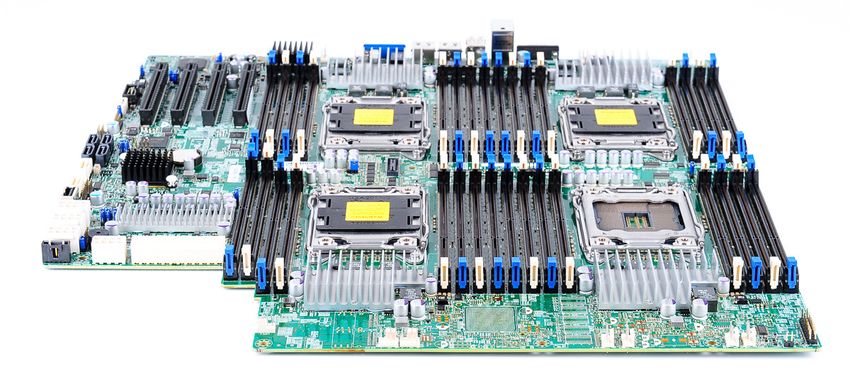
Organisational Information Brave new World? Client-Server          Fundamentals, Laws and Limitations      Parallel Computers

Apple iPhone                                                                                Image Source: pixabay.com (CC0)

                                                         No free software allowed
                                                         Apple regulates which applications are
                                                         allowed to run on the iPhone
                                                         All media files contain DRM technologies
                                                         (digital rights management)
                                                         DRM-free formats like Ogg Vorbis or
                                                         MP3 cannot be used
                                                         Reasons for the exclusion of applications
                                                         is somtimes difficult to understand and
                                                         always without warning
                                                         Apple can erase applications, which are
                                                         installed on the devices

Prof. Dr. Christian Baun – 1st Slide Set Cloud Computing – Frankfurt University of Applied Sciences – SS2019            10/69
Organisational Information Brave new World? Client-Server Fundamentals, Laws and Limitations Parallel Computers Prof. Dr. Christian Baun – 1st Slide Set Cloud Computing – Frankfurt University of Applied Sciences – SS2019 11/69
Organisational Information Brave new World? Client-Server          Fundamentals, Laws and Limitations      Parallel Computers

Prof. Dr. Christian Baun – 1st Slide Set Cloud Computing – Frankfurt University of Applied Sciences – SS2019            12/69
Organisational Information Brave new World? Client-Server          Fundamentals, Laws and Limitations      Parallel Computers

Google Android

Prof. Dr. Christian Baun – 1st Slide Set Cloud Computing – Frankfurt University of Applied Sciences – SS2019            13/69
Organisational Information Brave new World? Client-Server          Fundamentals, Laws and Limitations      Parallel Computers

Prof. Dr. Christian Baun – 1st Slide Set Cloud Computing – Frankfurt University of Applied Sciences – SS2019            14/69
Organisational Information Brave new World? Client-Server          Fundamentals, Laws and Limitations      Parallel Computers

Google Chrome OS

Prof. Dr. Christian Baun – 1st Slide Set Cloud Computing – Frankfurt University of Applied Sciences – SS2019            15/69
Organisational Information Brave new World? Client-Server          Fundamentals, Laws and Limitations      Parallel Computers

Amazon Kindle                                                                               Image Source: pixabay.com (CC0)

                                                                            Books can only be read with
                                                                            devices which are registered
                                                                            to a common Amazon
                                                                            account
                                                                            Sharing books is impossible
                                                                            Amazon can deny access to
                                                                            already purchased books

Prof. Dr. Christian Baun – 1st Slide Set Cloud Computing – Frankfurt University of Applied Sciences – SS2019            16/69
Organisational Information Brave new World? Client-Server Fundamentals, Laws and Limitations Parallel Computers Prof. Dr. Christian Baun – 1st Slide Set Cloud Computing – Frankfurt University of Applied Sciences – SS2019 17/69
Organisational Information Brave new World? Client-Server          Fundamentals, Laws and Limitations      Parallel Computers

                                                               Who decides in the future about
                                                               censorship and freedom?
                                                                       Politics?
                                                                       Industry?
                                                                       Population (customers/citizens)?

Image source: http://medium.com

Prof. Dr. Christian Baun – 1st Slide Set Cloud Computing – Frankfurt University of Applied Sciences – SS2019            18/69
Organisational Information Brave new World? Client-Server Fundamentals, Laws and Limitations Parallel Computers Interesting Article about this Topic: Parental Computing http://www.theatlantic.com/technology/archive/2011/09/the-clouds-my-mom-cleaned-my-room-problem/245648/ Prof. Dr. Christian Baun – 1st Slide Set Cloud Computing – Frankfurt University of Applied Sciences – SS2019 19/69
Organisational Information Brave new World? Client-Server          Fundamentals, Laws and Limitations      Parallel Computers

Client-Server

       A client-server system includes:
               one or more clients which use the services of the server and accesses
               data, stored at the server (=⇒ consumers)
               a server, which provides services and/or data (=⇒ producer)
       The connection establishment is initiated by the clients
       Communication works according to a protocol

                                                      A client sends a request to the server
                                                      responds with a reply
                                                      The client-server architecture consists of 2
                                                      layers and is called two-tier model
                                                      (tier = layer)

Prof. Dr. Christian Baun – 1st Slide Set Cloud Computing – Frankfurt University of Applied Sciences – SS2019            20/69
Organisational Information Brave new World? Client-Server Fundamentals, Laws and Limitations Parallel Computers
Tasks in the Client-Server Model
For a distributed application, that is based on the client-server
architecture, 5 tasks can be separated from each other:
Display (graphical) user interface
Calculation of the (graphical) user interface
Data processing
Data management
Data storage
The distribution of the tasks to clients and server determines the client
types
According to their areas of responsibility, 4 types of clients exist:
1 Text-/X-Terminals
2 Thin/Zero Clients
3 Applet Clients
4 Fat Clients
Prof. Dr. Christian Baun – 1st Slide Set Cloud Computing – Frankfurt University of Applied Sciences – SS2019 21/69Organisational Information Brave new World? Client-Server Fundamentals, Laws and Limitations Parallel Computers
Four Types of Clients in the Client-Server Model
X-Terminal or Text-Terminal
Only display the (graphical) user interface and transfer the user
interaction to the server
Calculation of the (graphical) user interface, data processing and data
storage, data management are tasks of the server
Thin Clients or Zero Clients
Calculate and display the graphical user interface
Applet Clients or Network Computers
Calculate and display the graphical user interface and do a part of the
data processing
The clients process the applications (applets) themselves
Fat Clients
Only data management and data storage are located on the (file or
database) server
Prof. Dr. Christian Baun – 1st Slide Set Cloud Computing – Frankfurt University of Applied Sciences – SS2019 22/69Organisational Information Brave new World? Client-Server Fundamentals, Laws and Limitations Parallel Computers
(Text-)Terminal: WYSE WY-50 (early 1990s)
Image source:
Google
image search
Prof. Dr. Christian Baun – 1st Slide Set Cloud Computing – Frankfurt University of Applied Sciences – SS2019 23/69Organisational Information Brave new World? Client-Server Fundamentals, Laws and Limitations Parallel Computers (X-)Terminal: NCD 88K (mid-1990s) Image source: http://en.wikipedia.org/wiki/X_terminal and http://www.geekdot.com/uploads/images/m88k/NCD17c/NCD88k_KDE.jpg Prof. Dr. Christian Baun – 1st Slide Set Cloud Computing – Frankfurt University of Applied Sciences – SS2019 24/69
Organisational Information Brave new World? Client-Server          Fundamentals, Laws and Limitations      Parallel Computers

Network Computer: SUN JavaStation (1996 – 2000)

                                                                                                        Image source:
                                                                                                        Google
                                                                                                        image search

Prof. Dr. Christian Baun – 1st Slide Set Cloud Computing – Frankfurt University of Applied Sciences – SS2019            25/69
Organisational Information Brave new World? Client-Server Fundamentals, Laws and Limitations Parallel Computers Fat Clients: Available everywhere Image source: Google image search Prof. Dr. Christian Baun – 1st Slide Set Cloud Computing – Frankfurt University of Applied Sciences – SS2019 26/69
Organisational Information Brave new World? Client-Server          Fundamentals, Laws and Limitations      Parallel Computers

Thin Clients                                                                                                   Image source: HP

Prof. Dr. Christian Baun – 1st Slide Set Cloud Computing – Frankfurt University of Applied Sciences – SS2019               27/69
Organisational Information Brave new World? Client-Server          Fundamentals, Laws and Limitations      Parallel Computers

More Thin Clients

Prof. Dr. Christian Baun – 1st Slide Set Cloud Computing – Frankfurt University of Applied Sciences – SS2019            28/69
Organisational Information Brave new World? Client-Server          Fundamentals, Laws and Limitations      Parallel Computers

Advantages and Drawbacks of Thin Clients over Desktops

       Advantages of Thin Clients
               Low acquisition costs (approx e 500)
               Reduced power consumption (a few watts) =⇒ reduced operating costs
               Reduced footprint (little space consumption)
               Reduced noise, because no hard drive and sometimes fanless
               Central storage of data is more efficient and more secure
               Reduced resource consumption because of virtualization on the server
               Reduced effort (cost) for administration
       Drawbacks of Thin Clients
               No 3D graphics performance
               Limited extensibility
               Users fear storing their data outside of their PC (outside of their own
               sphere of influence)
               Server is a single point of failure and eventually a bottleneck

Prof. Dr. Christian Baun – 1st Slide Set Cloud Computing – Frankfurt University of Applied Sciences – SS2019            29/69
Organisational Information Brave new World? Client-Server Fundamentals, Laws and Limitations Parallel Computers Linux and Windows CE with 3 Watt (flush-mounted) Image source: Google image search and www.instant-axess.co.uk Prof. Dr. Christian Baun – 1st Slide Set Cloud Computing – Frankfurt University of Applied Sciences – SS2019 30/69
Organisational Information Brave new World? Client-Server          Fundamentals, Laws and Limitations      Parallel Computers

Different Client-Server Scenarios (1/2)

       Company X runs 500 computer workplaces
       What are the electricity costs per year (including the leap year) for 24/7
       operation when the electricity price is 0,32 e/kWh?
       Scenario 1: Fat clients (PC)
               Electrical power rating per PC: 450 watts
               Electrical power rating per screen: 80 watts
       Electricity costs per year for 500 PCs with screens:

                             h           Day          e                     e
      0.53 kW ∗ 24              ∗ 365.25      ∗ 0.32     ∗ 500 = 743,356.8
                            Day          Year        kWh                   Year

Prof. Dr. Christian Baun – 1st Slide Set Cloud Computing – Frankfurt University of Applied Sciences – SS2019            31/69
Organisational Information Brave new World? Client-Server Fundamentals, Laws and Limitations Parallel Computers
Different Client-Server Scenarios (1/2)
Scenario 2: Thin clients (PC)
Electrical power rating per thin client: 30 watts
Electrical power rating per screen: 80 watts
Electrical power rating per server blade: 600 watts
Each server blade has enough resources to interact with 30 thin clients
Electricity costs per year (including the leap year) for 500 thin cliens with screens:
h Day e e
0.11 kW ∗ 24 ∗ 365.25 ∗ 0.32 ∗ 500 = 154, 281.6
Day Year kWh Year
17 server blades are required to run the 500 computer workplaces.
Electricity costs per year (including the leap year) for 17 server blades.
h Day e e
0.6 kW ∗ 24 ∗ 365.25 ∗ 0.32 ∗ 17 ≈ 28, 612.23
Day Year kWh Year
Electricity costs per year for the thin clients, screens and server blades.
e e e
154, 281.6 + 28, 612.23 ≈ 182,893.83
Year Year Year
Prof. Dr. Christian Baun – 1st Slide Set Cloud Computing – Frankfurt University of Applied Sciences – SS2019 32/69Organisational Information Brave new World? Client-Server Fundamentals, Laws and Limitations Parallel Computers
Summary about the Clients Image Source: Google
The era of X-Terminals and Text-Terminals is over
Applet Clients did fail in the 1990s but
their populularity may grow in the next years
=⇒ Google Chrome OS
Fat Clients are standard today
Thin/Zero Clients are rarely used today
Things change slowly in the industry
Thin Clients are a hot topic again because of rising energy costs
Keyword: Green IT
Prof. Dr. Christian Baun – 1st Slide Set Cloud Computing – Frankfurt University of Applied Sciences – SS2019 33/69Organisational Information Brave new World? Client-Server Fundamentals, Laws and Limitations Parallel Computers
Evolution of the Clients at the Client-Server Model
In the early days of the client-server era, clients were pure terminals
With the increasing computing power, the clients became more and
more powerful and more and more tasks have been outsourced to them
But computing power is a resource of which there is never enough
available
Do you know the 3 options to reduce the time, which is required to solve
computation-intensive tasks?
Prof. Dr. Christian Baun – 1st Slide Set Cloud Computing – Frankfurt University of Applied Sciences – SS2019 34/69Organisational Information Brave new World? Client-Server Fundamentals, Laws and Limitations Parallel Computers
Analysis of the 3 Options
1 Optimization of the algorithms used
Algorithms cannot be optimized infinitely
2 Increased compute performance with faster CPUs
The compute power of a computer cannot be increased infinitely
Symmetric multiprocessing (SMP) has limitations
The memory bus becomes a bottleneck =⇒ Von Neumann bottleneck
(see slide 38)
Each additional CPU decreases the relative performance gain
Reason: The storage subsystems can not deliver the data fast enough to fully utilize all
available CPUs
3 Using more than just a single computer system to increase the
performance
The possible performance enhancement is potentially unlimited and it is
only limited by these factors:
Performance of the nodes
Transfer rate of the network technology used
Maintenance and administration effort for the connected systems
Prof. Dr. Christian Baun – 1st Slide Set Cloud Computing – Frankfurt University of Applied Sciences – SS2019 35/69Organisational Information Brave new World? Client-Server Fundamentals, Laws and Limitations Parallel Computers
Moore’s Law Image Source: Intel
Published in 1965 by Gordon Moore
Not a natural law
Rule, which is based of empirical observation
Moore originally meant the electronic components on of integrated
circuit double every 12 months
Today, the number of transistors on an integrated circuit, or the number
of transistors per area unit is taken into account
Since the late 1970s, the packing density only doubles every 24 months
If we extrapolate the present increase rate, in approx. 2020, a transistor
would consist only of a single atom
Prof. Dr. Christian Baun – 1st Slide Set Cloud Computing – Frankfurt University of Applied Sciences – SS2019 36/69Organisational Information Brave new World? Client-Server Fundamentals, Laws and Limitations Parallel Computers Transistor Count and Moore’s Law Prof. Dr. Christian Baun – 1st Slide Set Cloud Computing – Frankfurt University of Applied Sciences – SS2019 37/69
Organisational Information Brave new World? Client-Server           Fundamentals, Laws and Limitations      Parallel Computers

Von Neumann Bottleneck (1/2)
       The data and control bus is increasingly becoming a bottleneck between
       the CPU and memory
               The main memory and the bus system are key factors for the
               performance of a computer

       The Von Neumann Architecture describes the structure of the general-purpose computer, which is not limited to a fixed
       program and has input and output devices
       Main difference to modern systems: A single Bus to connect I/O devices directly with the CPU, is impossible today

Prof. Dr. Christian Baun – 1st Slide Set Cloud Computing – Frankfurt University of Applied Sciences – SS2019               38/69
Organisational Information Brave new World? Client-Server Fundamentals, Laws and Limitations Parallel Computers
Von Neumann Bottleneck (2/2)
Main memory is usually DRAM
DRAM = Dynamic Random Access Memory
The access time („cycle time“) of DDR-400
SDRAM is 5 ns (6= CL value)
This corresponds to a frequency of just 200 MHz 1 Hz = 1s
1 1 1
= −9
= ∗ 109 Hz = 0.2 ∗ 109 Hz = 2 ∗ 108 Hz = 200 MHz
5 ns 5 ∗ 10 s 5
The access time of DDR3-2400 SDRAM is 0.833 ns =⇒ 1200 MHz
The access time of DDR4-4800 SDRAM is 0.417 ns =⇒ 2400 MHz
Caches reduce the bottleneck impact (=⇒ see memory hierarchy)
Cache is SRAM and its access speed is close to the CPU speed
SRAM = Static Random Access Memory
If multiple CPUs (or cores) share the main memory and thus share the
memory bus =⇒ impact of the Von Neumann bottleneck grows
Prof. Dr. Christian Baun – 1st Slide Set Cloud Computing – Frankfurt University of Applied Sciences – SS2019 39/69Organisational Information Brave new World? Client-Server Fundamentals, Laws and Limitations Parallel Computers
Amdahl’s Law Image source: archive.computerhistory.org
Published in 1967
Named after Gene Myron Amdahl
Calculates the maximum expected acceleration of
programs by parallel execution on multiple CPUs
According to Amdahl, the performance gain is
limited mainly by the sequential part of the problem
A program can never be fully executed in parallel
Program components such as process initialization and memory
allocation only run once on a single CPU
=⇒ Those parts of the program cannot be executed in parallel
Some parts of the program depend on the sequence of events,
input-output and of intermediate results
Prof. Dr. Christian Baun – 1st Slide Set Cloud Computing – Frankfurt University of Applied Sciences – SS2019 40/69Organisational Information Brave new World? Client-Server Fundamentals, Laws and Limitations Parallel Computers
Amdahl’s Law – Principle (1/3)
Source: https://en.wikipedia.org/wiki/Amdahls_law
The sequential and parallel executable parts of the program are
identified
P is the parallel portion and (1 − P) is the sequential portion
Total runtime of the program:
1 = (1 − P) + P
Example: A program requires 20 hours CPU time with a single CPU
For a single hour, the process runs sequentially
The remaining 19 hours are 95% of the total effort and can be
distributed to any number of CPUs
But the total computation time can never fall under a single hour
Not even with an infinite number of CPUs
Therefore, the maximum acceleration (SpeedUp) in theory is factor 20
Prof. Dr. Christian Baun – 1st Slide Set Cloud Computing – Frankfurt University of Applied Sciences – SS2019 41/69Organisational Information Brave new World? Client-Server Fundamentals, Laws and Limitations Parallel Computers
Amdahl’s Law – Principle (2/3) Image source: Wikipedia
N = number of CPUs
(1 − P) = sequential portion
(P/N) = accelerated parallel
portion
S = SpeedUp (acceleration)
1 1
S= P
≤
(1 − P) + N
(1 − P)
With an rising number of CPUs,
the acceleration depends more and
more of the sequential part Bad news: This is too much optimistic.
In practice, thing are much worse!
The graph does converge to
1/(1 − P)
Prof. Dr. Christian Baun – 1st Slide Set Cloud Computing – Frankfurt University of Applied Sciences – SS2019 42/69Organisational Information Brave new World? Client-Server Fundamentals, Laws and Limitations Parallel Computers
Amdahl’s Law – Principle (3/3)
The load caused by communication and synchronization rises with a
growing number of CPUs
For this reason, the inequality is extended by factor o(N), which grows
when N grows
1 1
S= P
≤
(1 − P) + o(N) + N
(1 − P)
Because of o(N), the graph does not converge to 1/(1 − P) any longer
The graph reaches a maximum and then declines when additional CPUs
are used
=⇒ see slides 49, 53 and 56
Prof. Dr. Christian Baun – 1st Slide Set Cloud Computing – Frankfurt University of Applied Sciences – SS2019 43/69Organisational Information Brave new World? Client-Server Fundamentals, Laws and Limitations Parallel Computers
Amdahl’s Law – Issues
Amdahl’s law does not take into account the cache and the effects,
which are caused by the cache in practice
A growing number of CPUs also increases the quantity of fast memory
which is available
In the optimal case, the entire data of the problem can be stored in the
cache, which is a faster than the main memory
In such a case (very rare!), a super-linear SpeedUp may occur, which
leads to an acceleration which is exceeds the additional compute power
S(p) = Speedup Factor when using p CPU cores of a
t(s) multiprocessor system
S(p) = t(s) = Execution time by using a single CPU core
t(p)
t(p) = Execution time by using p CPU cores
The max. SpeedUp is usually p with p CPU cores (=⇒ linear SpeedUp)
A super-linear SpeedUp is greater than p
The problems to be addressed in distributed computing today are very
big and the sequential part of these problems is very small
Prof. Dr. Christian Baun – 1st Slide Set Cloud Computing – Frankfurt University of Applied Sciences – SS2019 44/69Organisational Information Brave new World? Client-Server Fundamentals, Laws and Limitations Parallel Computers
Granularity
A daily life version of Amdahl’s law is the wallpaper example
A painter needs 1 hour for wallpapering a room
Realistic: 2 painters wallpaper the room in 30 minutes
Unrealistic: 60 painters wallpaper the room in 1 minute
Reason: The painters are standing in each others way
There are disputes caused by limited resources (table, ladder. . . )
Probably with 60 painters, it would take more than 30 minutes
With 60 painters, a room cannot be wallpapered 60 times as fast
But this works for a hotel with 60 rooms, when the painters are
distributed to the rooms
Transferred to parallel computers, this means that with a growing
number of CPUs, the problem size should grow too
The problem needs to scale with the number of CPUs
This finding initiated the development of Gustafson’s law in 1988
Prof. Dr. Christian Baun – 1st Slide Set Cloud Computing – Frankfurt University of Applied Sciences – SS2019 45/69Organisational Information Brave new World? Client-Server Fundamentals, Laws and Limitations Parallel Computers
Gustafson’s Law Image source: siliconsemiconductor.net
Amdahl’s law considered mainly small problems
But: the bigger a parallelizable problem is, the
smaller is the portion of the sequential part
Gustafson’s Law from John Gustafson (1988) says
that a problem, which is sufficiently large, can
be parallelized efficiently
Difference to Amdahl’s law:
The parallel portion of the problem grows with the number of CPUs
The sequential part is not limiting, because it gets more and more
unimportant as the number of CPUs rises
Gustafson, Montry, Benner. Development of Parallel Methods For a 1024-Processor Hypercube.
Sandia National Laboratories. 1988
Prof. Dr. Christian Baun – 1st Slide Set Cloud Computing – Frankfurt University of Applied Sciences – SS2019 46/69Organisational Information Brave new World? Client-Server Fundamentals, Laws and Limitations Parallel Computers
Gustafson’s Law: Speedup
If the number of CPUs grows to
infinity, the SpeedUp grows linear
with the number of CPUs
Big problems, where the
SpeedUp is nearly equivalent to
the number of CPUs, exist
among others in hydrodynamics,
structural engineering and
1
SpeedUp = meteorology
s + Np
Source: http://www.johngustafson.net/pubs/pub13/amdahl.pdf
Prof. Dr. Christian Baun – 1st Slide Set Cloud Computing – Frankfurt University of Applied Sciences – SS2019 47/69Organisational Information Brave new World? Client-Server Fundamentals, Laws and Limitations Parallel Computers
Example: Calculation of π via Monte Carlo Simulation
Inscribe a circle of radius r inside a square with side
length 2r
Generate random dots in the square
The number of dots in AC in relation to the number of
dots in AS is equal to the surface ratio
AC π · r2 π · r2 π
r = Radius = 2
= 2
=
A
C
=
=
Surface ratio
Circle
AS (2 · r ) 4·r 4
S = Square
The dots can be generated (X/Y axis values via
random) in parallel by the workers
The master receives from each worker the number of
calculated dots in AC and calculates:
4 · dots in AC
=π
Image source: Wikipedia dots in AS
Prof. Dr. Christian Baun – 1st Slide Set Cloud Computing – Frankfurt University of Applied Sciences – SS2019 48/69Organisational Information Brave new World? Client-Server Fundamentals, Laws and Limitations Parallel Computers
π Approximation with 32 Raspberry Pi 2 and MPI
33 Raspberry Pi 2 (900 MHz)
32 worker nodes and 1 master
128 CPU cores
24.7 Gflops
1 GB main menory per node
100 MBit/s Ethernet
This computation power is a similar to an Intel Core 2 Quad
Q9450 2.66 Ghz from 2008, which has approx. 25.6 Gflops
Source: https://www.tecchannel.de/a/
test-intel-core-i7-mit-nehalem-quad-core,1775602
Do you think the problem
Performance and Energy-Efficiency Aspects of Clusters of
Single Board Computers. Christian Baun. International size has a strong impact on
Journal of Distributed and Parallel Systems (IJDPS),
Vol.7, No.2/3/4, 2016, S.13-22. the scalability?
http://aircconline.com/ijdps/V7N4/7416ijdps02.pdf
Prof. Dr. Christian Baun – 1st Slide Set Cloud Computing – Frankfurt University of Applied Sciences – SS2019 49/69Organisational Information Brave new World? Client-Server Fundamentals, Laws and Limitations Parallel Computers
Can you see Amdahl’s Law and Gustafson’s Law?
Pi approximated with Pi approximated with Pi approximated with Pi approximated with
1,000,000 points 10,000,000 points 100,000,000 points 1,000,000,000 points
(Mean Time of 5 Tests) (Mean Time of 5 Tests) (Mean Time of 5 Tests) (Mean Time of 5 Tests)
5 5 30 300
3.5706
3.82
3.3746
25 250
3.1202
4 4
2.7566
15.3388
271.5374
2.6772
137.6018
27.8052
2.4984
20 200
2.3636
2.1954
2.1854
2.1848
3 3
1.9664
1.8964
1.8878
1.8792
15 150
[s]
[s]
[s]
[s]
8.7124
70.4142
2 2
0.9732
36.1448
5.293
10 100
3.1212
3.1088
16 nodes
32 nodes
3.786
3.671
2 nodes
4 nodes
8 nodes
19.154
1 node
1 node
1 node
10.799
6.9454
5.7724
1 1
5 50
0 0 0 0
1
2
4
8
16
32
64
128
1
2
4
8
16
32
64
128
1
2
4
8
16
32
64
128
1
2
4
8
16
32
64
128
60 60 60 60
47.04
50 50 50 50
39.09
40 40 40 40
Speedup
Speedup
Speedup
Speedup
25.14
30 30 30 30
14.17
20 20 20 20
8.94
8.90
7.57
7.51
7.34
5.25
3.85
10 10 10 10
2.10
1.97
1.81
1.54
1.53
1.42
1.35
1.22
1.08
1.00
1.00
1.00
1.00
.88
.51
.51
.51
.49
.44
.36
.27
0 0 0 0
1
2
4
8
16
32
64
128
1
2
4
8
16
32
64
128
1
2
4
8
16
32
64
128
1
2
4
8
16
32
64
128
Number of Cores Number of Cores Number of Cores Number of Cores
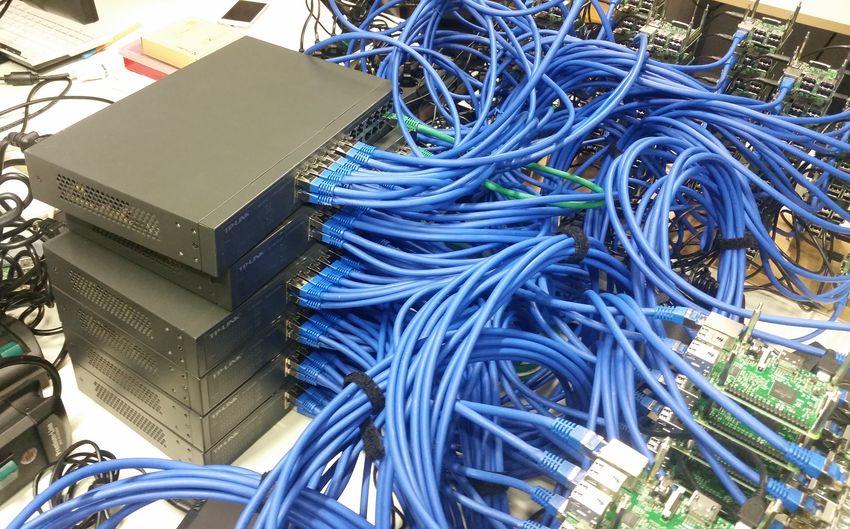
Prof. Dr. Christian Baun – 1st Slide Set Cloud Computing – Frankfurt University of Applied Sciences – SS2019 50/69Organisational Information Brave new World? Client-Server Fundamentals, Laws and Limitations Parallel Computers Our Cluster with 128 RPi 3 with 512 CPU Cores (until 2/2019) Prof. Dr. Christian Baun – 1st Slide Set Cloud Computing – Frankfurt University of Applied Sciences – SS2019 51/69
Organisational Information Brave new World? Client-Server          Fundamentals, Laws and Limitations      Parallel Computers

It was not a Beauty but it worked well. . .

Prof. Dr. Christian Baun – 1st Slide Set Cloud Computing – Frankfurt University of Applied Sciences – SS2019            52/69
Speedup Elapsed real (wall clock) time [s]
0
0.2
0.4
0.6
0.8
1
1.2
1.4
0
2
4
6
8
10
1 1.00 1 0.9034
2 1.05 2 0.8602
4 0.95 4 0.9444
8 0.95 8 0.9432
16 0.91 16 0.9904
32 0.74 32 1.2138
64 0.55 64 1.6176
128 0.31 128 2.9018
256 0.17 256 5.1404
1,000,000 points
Number of Cores
Number of Cores
512 0.09 512 9.7368
Pi approximated with
(Mean Time of 5 Tests)
Speedup Elapsed real (wall clock) time [s]
0
0.5
1
1.5
2
2.5
0
2
4
6
8
10
1 1.00 1 2.4278
2 1.50 2 1.613
4 1.59 4 1.5196
8 1.83 8 1.3204
16 2.05 16 1.184
32 1.86 32 1.3012
64 1.05 64 2.292
128 0.80 128 3.0266
256 0.47 256 5.1584
Number of Cores
Number of Cores
0.26 8.9948
10,000,000 points
512 512
Pi approximated with
(Mean Time of 5 Tests)
Speedup Elapsed real (wall clock) time [s]
0
2
4
6
8
10
0
2
4
6
8
10
12
14
16
18
1 1.00 1 17.6252
2 1.87 2 9.3952
4 2.37 4 7.436
8 3.79 8 4.6388
16 5.81 16 3.0318
32 7.58 32 2.3248
64 7.45 64 2.3628
128 5.73 128 3.0724
256 3.93 256 4.4822
Number of Cores
Number of Cores
512 1.92 512 9.1388
100,000,000 points
Pi approximated with
(Mean Time of 5 Tests)
Organisational Information Brave new World? Client-Server
Speedup Elapsed real (wall clock) time [s]
0
5
10
15
20
25
30
35
40
0
20
40
60
80
100
120
140
160
180
1 1.00 1 169.43
2 1.98 2 85.222
4 2.57 4 65.9132
8 5.04 8 33.565
16 9.33 16 18.154
32 16.13 32 10.5036
64 24.44 64 6.9318
128 31.23 128 5.4252
256 25.87 256 6.5478
Number of Cores
Number of Cores
512 17.94 512 9.4426
Pi approximated with
1,000,000,000 points
(Mean Time of 5 Tests)
Speedup Elapsed real (wall clock) time [s]
0
20
40
60
80
100
120
140
0
200
400
600
800
1000
1200
1400
1600
1800
1 1.00 1 1708.5738
2 1.99 2 854.776
4 2.66 4 640.5136
8 5.33 8 320.484
16 9.61 16 177.7266
32 18.02 32 94.8148
64 38.07 64 44.8752
128 68.17 128 25.0628
256 101.99 256 16.7522
Number of Cores
Number of Cores
512 108.86 512 15.6944
Pi approximated with
10,000,000,000 points
(Mean Time of 5 Tests)
Elapsed real (wall clock) time [s]
Speedup
Fundamentals, Laws and Limitations
0
50
100
150
200
250
300
0
2000
4000
6000
8000
10000
12000
14000
16000
18000
1 1.00 1 17122.3088
Prof. Dr. Christian Baun – 1st Slide Set Cloud Computing – Frankfurt University of Applied Sciences – SS2019
2 2.00 2 8535.6374
4 2.64 4 6485.037
8 5.16 8 3315.2166
16 9.99 16 1712.9914
32 18.71 32 914.8944
With 512 CPU cores the Results get more interesting
64 36.58 64 468.0172
128 70.89 128 241.501
256 135.49 256 126.368
Number of Cores
Number of Cores
512 229.55 512 74.5894
Pi approximated with
(Mean Time of 5 Tests)
100,000,000,000 points
Parallel Computers
53/69Organisational Information Brave new World? Client-Server Fundamentals, Laws and Limitations Parallel Computers
Another Example: task-distributor + POV-Ray
Ray tracing is an interesting topic for parallel systems
POV-Ray is a free, stable and feature-rich ray tracing solution
http://www.povray.org
Problem in 2015: no working (maintained) POV-Ray solution for
parallel image computation in clusters existed
Solution: task-distributor
http://github.com/christianbaun/task-distributor
Parallel computation of Combination of the
the partial images on =⇒ partial images to the
the worker nodes final image on one node
Parallel image computation in clusters with task-distributor. Christian Baun. SpringerPlus 2016 5:632.
http://springerplus.springeropen.com/articles/10.1186/s40064-016-2254-x
Prof. Dr. Christian Baun – 1st Slide Set Cloud Computing – Frankfurt University of Applied Sciences – SS2019 54/69Organisational Information Brave new World? Client-Server Fundamentals, Laws and Limitations Parallel Computers
Clusters used in 2015
Clusters with 8 nodes (RPi 1) each
One single core CPU per node
512 MB main memory per node
Mobile clusters of single board computers: an option for providing resources to student projects and researchers. Christian Baun.
SpringerPlus 2016 5:360.
http://springerplus.springeropen.com/articles/10.1186/s40064-016-1981-3
Prof. Dr. Christian Baun – 1st Slide Set Cloud Computing – Frankfurt University of Applied Sciences – SS2019 55/69Organisational Information Brave new World? Client-Server Fundamentals, Laws and Limitations Parallel Computers
Some Observations with task-distributor + POV-Ray
We see: Laws and challenges of distributed systems Amdahl’s law: The
performance gain is
200x150 400x300 800x600 1600x1200 3200x2400 6400x4800
8 12 40 140 700
1st seq. part
2500 limited mainly by the
2nd seq. part
7
10
35
120 600
Par. part
sequential part of the
2000
6 30
100 500
problem
8
5 25
1500
Gustafson’s law: A
Runtime [s]
Runtime [s]
Runtime [s]
Runtime [s]
Runtime [s]
Runtime [s]
80 400
4 6 20
60 300
problem, which is
1000
3 15
4
40 200
sufficiently large, can
2 10
2
500 be parallelized
20 100
1 5
efficiently
0 0 0 0 0 0
1 2 4 8 1 2 4 8 1 2 4 8 1 2 4 8 1 2 4 8 1 2 4 8
Nodes [#] Nodes [#] Nodes [#] Nodes [#] Nodes [#] Nodes [#] The sequential part
gets more and more
200x150 400x300 800x600 1600x1200 3200x2400 6400x4800 unimportant as the
5 5 5 5 5 5
number of CPUs rises
4.13
3.86
4 4 4 4
3.55
4 4
Swap with 6400x4800
3 3 3 3 3 3
(convert consumes
2.71
2.58
approx. 500 MB RAM
Speedup
Speedup
Speedup
Speedup
Speedup
Speedup
2.48
2.38
2.10
2 2 2
1.54
2
1.70
2 1.76 2
1.65 for putting together
1.36
1
1.00
.92 .85 1
1.00
1.28 1.26
1
1.00
1
1.00
1
1.00
1
1.00 the partial images. But
.69
we had just 512 MB
0
1 2 4 8
0
1 2 4 8
0
1 2 4 8
0
1 2 4 8
0
1 2 4 8
0
1 2 4 8
- 16 MB for the GPU
Nodes [#] Nodes [#] Nodes [#] Nodes [#] Nodes [#] Nodes [#]
- Space for Linux)
Prof. Dr. Christian Baun – 1st Slide Set Cloud Computing – Frankfurt University of Applied Sciences – SS2019 56/69Organisational Information Brave new World? Client-Server Fundamentals, Laws and Limitations Parallel Computers
Magnitudes of Data
Magnitudes and units
The size of storage is measured in Bytes
Kilobyte (KB) 103 = 1,000 Bytes 210 = 1,024 Bytes
Megabyte (MB) 106 = 1,000,000 Bytes 220 = 1,048,576 Bytes
Gigabyte (GB) 109 = 1,000,000,000 Bytes 230 = 1,073,741,824 Bytes
Terabyte (TB) 1012 = 1,000,000,000,000 Bytes 240 = 1,099,511,627,776 Bytes
Petabyte (PB) 1015 = 1,000,000,000,000,000 Bytes 250 = 1,125,899,906,842,624 Bytes
Exabyte (EB) 1018 = 1,000,000,000,000,000,000 Byte 260 = 1,152,921,504,606,846,976 Bytes
Zettabyte (ZB) 1021 = 1,000,000,000,000,000,000,000 Byte 270 = 1,180,591,620,717,411,303,424 Bytes
Bill Gates (1981)
„640 Kilobyte ought to be enough for anybody.“
Common assumptions about data:
It is easy to store data today
It is easy to transmit and transport data today
Are these assumptions correct? =⇒ exercise sheet 1
Prof. Dr. Christian Baun – 1st Slide Set Cloud Computing – Frankfurt University of Applied Sciences – SS2019 57/69Organisational Information Brave new World? Client-Server Fundamentals, Laws and Limitations Parallel Computers
Two Points of View
Seymour Cray (1925 - 1996)
„If you were plowing a field, what would you rather use? Two strong oxen or
1024 chickens?“
W. Gropp, E. Lusk, A. Skjellum. Using MPI. The MIT Press (1996)
„To pull a bigger wagon, it is easier to add more oxen than to grow a
gigantic ox.“
What does this mean?
Prof. Dr. Christian Baun – 1st Slide Set Cloud Computing – Frankfurt University of Applied Sciences – SS2019 58/69Organisational Information Brave new World? Client-Server Fundamentals, Laws and Limitations Parallel Computers
Seymour Cray (1925 – 1996)
Seymour Cray founded Cray
Research in 1972, the first
successful company for the
development and sale of
supercomputers
Cray was an opponent of the
multiprocessing
Crays supercomputers had few,
but very powerful CPUs
„Anyone can build a fast CPU. The
trick is to build a fast system.“
Image source: http://www.cray-cyber.org/memory/scray.php
Prof. Dr. Christian Baun – 1st Slide Set Cloud Computing – Frankfurt University of Applied Sciences – SS2019 59/69Organisational Information Brave new World? Client-Server Fundamentals, Laws and Limitations Parallel Computers
Background
Until the 1990s, the acceleration of single CPU had much potential to
increase the compute power
Today, it is hardly possible to accelerate individual CPU cores, without
causing an increase in the required electric power input, which causes to
additional waste heat
Ultimate limits will prevent Moore’s law to be valid forever
Someday, the traditional way to improve the performance of CPUs
(increasing the packing density and clock frequency) will not work any
longer
In the last years, increasing the CPU performance was achieved almost
exclusively by increasing the number of CPU cores
At the time of Seymour Cray, powerful computers were expensive
Since several years, the CPUs of inexpensive desktop systems are almost
as powerful as CPUs in supercomputers
Prof. Dr. Christian Baun – 1st Slide Set Cloud Computing – Frankfurt University of Applied Sciences – SS2019 60/69Organisational Information Brave new World? Client-Server Fundamentals, Laws and Limitations Parallel Computers
Parallel Computers
Brian Hayes. Collective Wisdom. American Scientist (1998)
If you have a big problem to solve, recruiting a few percent of the CPUs on
the Net would gain you more raw power than any supercomputer on earth.
Sequential operating computers which follow the Von Neumann
architecture are equipped with:
A single CPU
A single main memory for the data and the programs
For parallel computers, 2 fundamentally different variants exist:
Systems with shared memory
Systems with distributed memory
Prof. Dr. Christian Baun – 1st Slide Set Cloud Computing – Frankfurt University of Applied Sciences – SS2019 61/69Organisational Information Brave new World? Client-Server Fundamentals, Laws and Limitations Parallel Computers
Shared Memory
For systems with shared memory, the entire memory is part of a
uniform address space, which is accessed by all CPUs
The memory is accessed via an interconnect
Problem: Write operations of the CPUs must be coordinated
Further problem: Data inside the CPU caches
If a memory cell duplicated in multiple CPU caches, any change in the
memory cell must be propagated to all caches
Prof. Dr. Christian Baun – 1st Slide Set Cloud Computing – Frankfurt University of Applied Sciences – SS2019 62/69Organisational Information Brave new World? Client-Server Fundamentals, Laws and Limitations Parallel Computers
Symmetric and Asymmetric Multiprocessing
Most multiprocessor systems today operate according to the symmetric
multiprocessing (SMP) principle
SMP allows to dynamically distribute the running processes to all
available CPUs
All CPUs can access the memory with the same speed
In multiprocessor systems, which operates according to the asymmetric
multiprocessing principle, each CPU must be assigned to a fixed task
One or more CPUs run the operating system
The other processes are distributed to the remaining CPUs
Typically, the CPUs are identical
Today, it exists often a main CPU and some subordinated CPUs, which
are focused to specific tasks
Prof. Dr. Christian Baun – 1st Slide Set Cloud Computing – Frankfurt University of Applied Sciences – SS2019 63/69Organisational Information Brave new World? Client-Server Fundamentals, Laws and Limitations Parallel Computers
Examples for Asymmetric Multiprocessing (1/2)
IBM Cell processor
A single main CPU (PowerPC Processing Element) and 8 CPUs
(Synergistic Processing Elements), which are specialized for calculations
Image source: http://w3.impa.br/~andmax/images/sbac2009.jpg Image source: IBM
Prof. Dr. Christian Baun – 1st Slide Set Cloud Computing – Frankfurt University of Applied Sciences – SS2019 64/69Organisational Information Brave new World? Client-Server Fundamentals, Laws and Limitations Parallel Computers
Examples for Asymmetric Multiprocessing (2/2)
Digital Equipment
Corporation (DEC)
VAX-11/782
All I/O devices must
be connected to the
primary CPU
Source: http://www.9track.net/pdf/dec/vms/v3/aa-m543a-te.pdf
Prof. Dr. Christian Baun – 1st Slide Set Cloud Computing – Frankfurt University of Applied Sciences – SS2019 65/69Organisational Information Brave new World? Client-Server Fundamentals, Laws and Limitations Parallel Computers Dual or Quad Processor Mainboard (SMP) Image source: Google image search, servershop24.de, ebay (Supermicro), Puget Systems Prof. Dr. Christian Baun – 1st Slide Set Cloud Computing – Frankfurt University of Applied Sciences – SS2019 66/69
Organisational Information Brave new World? Client-Server          Fundamentals, Laws and Limitations      Parallel Computers

In the Professional Sector Today: Blades (IBM HS21)

Image source: http://commons.wikimedia.org/wiki/File:IBM_BladeCenter_HS21_8853_JPN_JPY.jpg
Prof. Dr. Christian Baun – 1st Slide Set Cloud Computing – Frankfurt University of Applied Sciences – SS2019            67/69
Organisational Information Brave new World? Client-Server          Fundamentals, Laws and Limitations      Parallel Computers

BladeCenter for the Blades (IBM HS20)

Image source: http://www.flickr.com/photos/jemimus/74452762/
Prof. Dr. Christian Baun – 1st Slide Set Cloud Computing – Frankfurt University of Applied Sciences – SS2019            68/69
Organisational Information Brave new World? Client-Server          Fundamentals, Laws and Limitations      Parallel Computers

Distributed Memory =⇒ Cluster Systems (see Slide Set 2)
       Each CPU can only access its own local memory
       The communication between the CPUs takes place via a network
       connection
               Network connections are much slower, compared with the data rate
               between CPU and memory
       In a parallel computer, every single CPU and it’s local memory, are is
       independent node

                                                                       A system with distributed
                                                                       memory is also called Cluster
                                                                       or Multicomputer, because
                                                                       each node is an independent
                                                                       computer with a Von
                                                                       Neumann architecture
                                                                       Nodes of the cluster can also
                                                                       be SMP systems. . .
Prof. Dr. Christian Baun – 1st Slide Set Cloud Computing – Frankfurt University of Applied Sciences – SS2019            69/69
You can also read


