PRESIDENT'S EXCELLENCE AWARDS - 2021 Call for Nominations - University of Nebraska
←
→
Page content transcription
If your browser does not render page correctly, please read the page content below

PRESIDENT’S
EXCELLENCE AWARDS
2021 Call for Nominations
      Outstanding Research and Creative Activity Award (ORCA)
      Outstanding Teaching and Instructional Creativity Award (OTICA)
      Innovation, Development, and Engagement Award (IDEA)
      Inclusive Excellence Collaboration Award (IECA)
      University-wide Departmental Teaching Award (UDTA)

       ®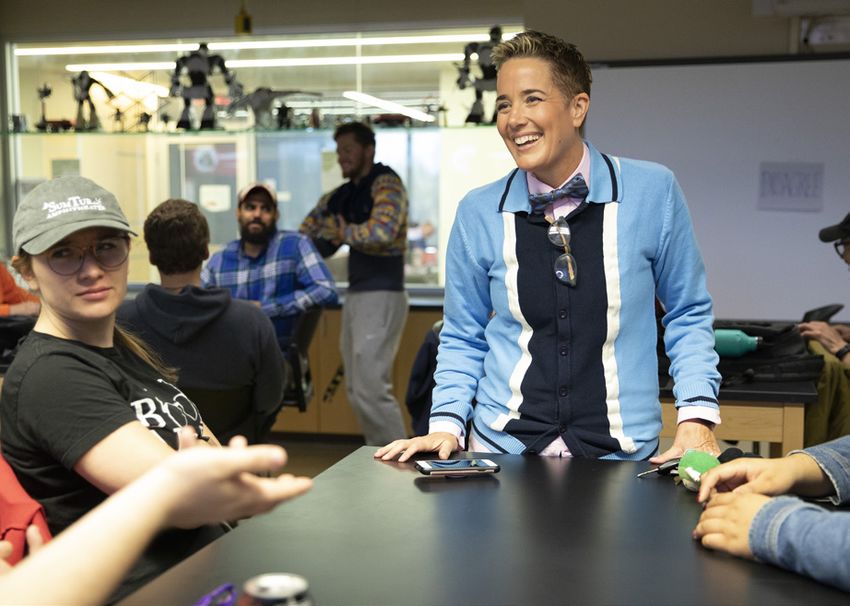
TABLE OF CONTENTS

   3      Message from the President and Provost

  4-5     Outstanding Research and Creative Activity Award (ORCA)

  6-7     ORCA Nomination Data and Memorandum to Peer Reviewers

  8-9     Outstanding Teaching and Instructional Creativity Award (OTICA)

   10     OTICA Nomination Data

11-12     Innovation, Development and Engagement Award (IDEA)

13-14     IDEA Nomination Data and Memorandum to Outside Reviewers

15-17     Inclusive Excellence Collaboration Award (IECA)

   18     IECA Nomination Data

19-21     University-Wide Departmental Teaching Award (UDTA)

  22      UDTA Nomination Data

  23      Questions and Submission Information

24-26     Past Award Recipients

                                            2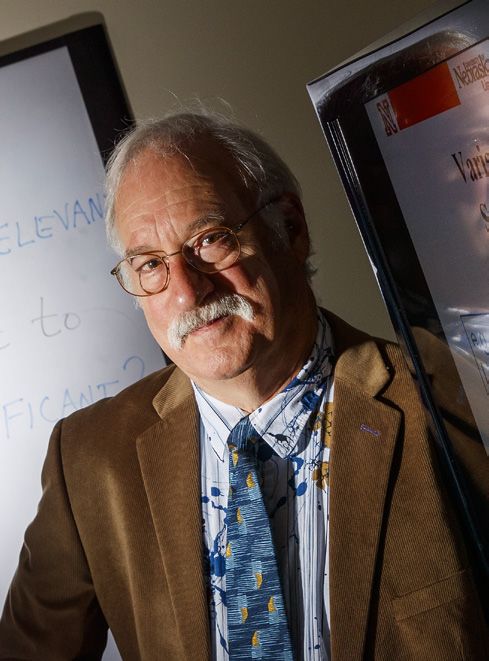
A MESSAGE FROM THE NU PRESIDENT AND THE EXECUTIVE VICE PRESIDENT AND PROVOST
    Dear Faculty:

    The University of Nebraska annually presents four distinguished awards to recognize especially meritorious research,
    teaching, and innovative efforts by individuals and within academic departments. We are now seeking and welcome your
    nominations for the 2020 awards. The award recipients will be announced in the spring.

    Outstanding Research and Creative Activity Award (ORCA)
    Honors members of the University of Nebraska faculty who have conducted outstanding research or creative activity
    of national/international significance.

    Outstanding Teaching and Instructional Creativity Award (OTICA)
    Honors members of the University of Nebraska faculty who have developed meritorious and sustained records of
    excellence in teaching and creativity related to teaching.

    Innovation, Development, and Engagement Award (IDEA)
    Honors members of the University of Nebraska faculty who have extended their academic expertise beyond the
    boundaries of the University in ways that have enriched the broader community.

    Inclusive Excellence Collaboration Award (IECA)
    Honors an academic and/or administrative department or unit at the University of Nebraska that has collaborated on
    sustained diversity, access and inclusion efforts that advance a culture of inclusivity and leads to increased equitable
    outcomes for faculty, staff and students.

    University-wide Departmental Teaching Award (UDTA)
    Honors a department/unit at the University of Nebraska that has outstanding esprit de corps in its dedication to the
    education of students at the undergraduate, graduate, or professional levels.

    Details of the awards and the nomination procedures are provided in this brochure. Please note that each award has its
    own requirements, selection process, and deadline for submission.

    We appreciate your assistance in recognizing excellence at the University of Nebraska across all four campuses.

    Ted Carter                             Susan M. Fritz, PhD
    President                              Executive Vice President and Provost
    University of Nebraska                 University of Nebraska

                                                                3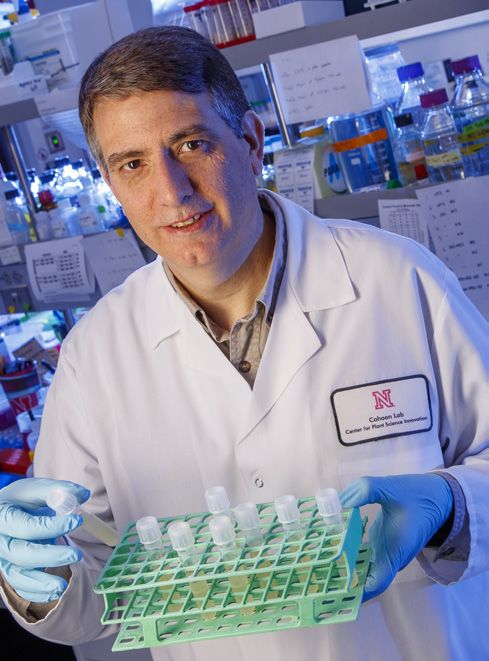
OUTSTANDING RESEARCH AND CREATIVE ACTIVITY AWARD (ORCA)

    Description
    Two ORCA Awards are presented each year honoring outstanding research or creative activity of national/international
    significance conducted by individual, full-time faculty members at the University of Nebraska. The awards are given for a
    sustained record of excellent accomplishment in research or creative activity, rather than “meritorious service.”

    Only one award may be presented in each of the two following academic areas (an award need not be made to either
    group in any given year):
        Group 1: Arts and Humanities (including Creative and Performing Arts), Business and Social Sciences, and
        Professional Education; and
        Group 2: Biological Sciences, Physical Sciences, and Medical Sciences.

    The recipients are honored at an awards ceremony in the spring and each are awarded $10,000, a presidential medallion,
    and an engraved plaque.

                     The ORCA awards are given for a sustained record of excellent
                   accomplishment in research or creative activity. The recipients are
                   honored at an awards ceremony in the spring and each are awarded
                       $10,000, a presidential medallion, and an engraved plaque.

    Eligibility
       • Nominations of full-time faculty members must be for one individual only and not for a couple or team.
       • A major part of the work on which each nomination is based must have been done while the nominee has served
         at the University of Nebraska. Each nominee must still be engaged in research or other creative activity at the
         University to be eligible.
       • Nominees are eligible for three consecutive years and must be resubmitted by the nominator each year. At the end of
         three years, a one-year waiting period is required before a nominee is eligible to be nominated again.
       • In the event of the death of a candidate, eligibility for that deceased candidate will extend only to include the
         academic year in which he or she died. No eligibility will be carried forward to subsequent years.

    Committee
    The Provost selects eight members representing six major academic areas: Arts and Humanities, Business and Social
    Sciences, Professional Education, Biological Sciences, Physical Sciences, and Medical Sciences from the Graduate Faculty
    of the University of Nebraska to serve three-year terms on the Awards Selection Committee. This committee reviews the
    nominations and determines the final winners.

                                                               4
NOMINATION MATERIAL REQUIREMENTS (ORCA)

    Nomination materials must be submitted via nuramp.nebraska.edu by
    November 30, 2020. The website will prompt you for the following information:

    1.   Nomination data (see page 6).

    2.   Letters from the nominator and seconder summarizing and giving specific
         examples of the nominee’s accomplishments in research or creative activity. The
         letters (each no more than five pages in length) may include any information on
         the nominee’s research or creative activity. The letters should clearly substantiate
         the national/international significance of the nominee’s work, as well as the
         nominee’s continued involvement in research or other creative activity. No
         faculty member should act as nominator or seconder for more than one
         nominee. Additional letters of recommendation from within the University               The 2020 Outstanding Research
         should not be solicited.                                                               and Creative Activity Award
                                                                                                winner: Edgar Cahoon, UNL.
    3.   A current curriculum vitae of the nominee.

    4.   A list of the nominee’s most significant publications or other creative works.
         Evidence presented for consideration might be publications (preferably refereed),
         books, invited talks at symposia, shows, honors, and awards.

    5.   Names, addresses, email, and telephone numbers of five peer reviewers
         from outside the University of Nebraska system who have been asked by the
         nominator to provide letters in support of the nomination (see below).

         The nominator(s) shall contact the five peer reviewers they listed on the online nomination form to solicit
         support letters (see page 7). These letters are to be sent directly to the Office of the Provost by November 30,
         2020. Only peer reviewer letters that are sent directly to the Provost by the referees themselves will be accepted.
         Nominators are encouraged to call the Provost’s Office to ensure their letters were received. The nominator is
         to share the insert (on back of enclosed ORCA nomination data) titled “Memorandum to Peer Reviewers” with the
         peer reviewers; this memorandum includes information about the award and guidelines to follow in writing letters of
         support. Care should be taken to contact peers in ample time so they may email their replies prior to the deadline.

                                                                  5
OUTSTANDING RESEARCH AND CREATIVE ACTIVITY AWARD (ORCA) NOMINATION DATA

    The ORCA Award is presented in recognition of outstanding research or other creative activity of national/international
    significance conducted by full-time faculty members of the University of Nebraska. The production of such significant
    work is the principal criterion on which the selection of award recipients is based. Nominations must be for one
    individual only and not for a couple or a team. A major part of the work on which each nomination is based must have
    been done while the nominee has served at the University of Nebraska, and each nominee must still be engaged in
    research or other creative activity at the University of Nebraska to be eligible.

    Website to enter nomination data: nuramp.nebraska.edu
    1. Use your campus credentials to log in to NuRamp.
    2. Click on the three lines in the upper left corner of your screen and navigate to Internal Competitions->Applications
    3. Click on “Add a New Application”.
    4. Scroll to:
             “President’s Excellence Awards 2021: Outstanding Research and Creative Activity Award (ORCA) - ARTS
             and HUMANITIES” (competition ID# 650).
       OR
    		“President’s Excellence Awards 2021: Outstanding Research and Creative Activity Award (ORCA) -
    		 BIOLOGICAL, PHYSICAL, and MEDICAL SCIENCES” (competition ID# 651).

    The website will prompt the nominator to enter the following information:

    Nominee:                                  Nominator:                                 Seconder:
      Name		                                    Name                                        Name
      Full Professional Title		                 Full Professional Title                     Full Professional Title
      Academic Area/Department		                Academic Area/Department                    Academic Area/Department
      Campus		                                  Campus                                      Campus
      Campus Phone (XXX-XXX-XXXX)               Campus Phone (XXX-XXX-XXXX)                 Campus Phone (XXX-XXX-XXXX)

    ORCA Peer Reviewers: (Information for five individuals)
      First Name
      Last Name
      Address
      Email
      Telephone Number (XXX-XXX-XXXX)

    List of five reviewers from which the nominator will seek support letters (see page 7).

    Upload a single PDF file with the following: (1) nominating letter, (2) seconding letter, (3) curriculum vitae of
    nominee, and (4) list of the nominees’ most significant publications or other creative works.

    The nomination and all materials must be submitted via nuramp.nebraska.edu by November 30, 2020.

                                                                6
MEMORANDUM TO PEER REVIEWERS FOR THE ORCA AWARD

    The following should be used to solicit peer review support letters. (A letterhead/PDF version is available on
    nuramp.nebraska.edu at the application step where nominees identify outside reviewers.)

    To: Peer Reviewers of Candidates for the University of Nebraska
        Outstanding Research and Creative Activity (ORCA) Award

    From: ORCA Awards Selection Committee

    Letters of support from five peer reviewers outside the University of Nebraska system are required for the nomination of
    a faculty member for the Outstanding Research and Creative Activity Award, which was established to recognize research
    and creative activity of national or international significance conducted at the University of Nebraska. Nominations
    are solicited from the faculties of the University of Nebraska–Lincoln, University of Nebraska at Omaha, University of
    Nebraska Medical Center, and University of Nebraska at Kearney.

    Two “ORCA” awards are given each year—one for a faculty member in the areas of arts and humanities (including the
    creative and performing arts), business and social sciences, and professional education, and one for a faculty member in
    the areas of biological sciences, medical sciences, and physical sciences. ORCA recipients are honored annually in the
    spring and each are awarded $10,000, a presidential medallion, and a plaque.

    Thank you for agreeing to write a letter of support on behalf of one of the professors who has been nominated for this
    prestigious award. Your support letter will be shared with the members of the Awards Selection Committee, which is
    composed of professors from a wide variety of disciplines and is intended to represent a cross-section of the University
    of Nebraska community. With that in mind, your letter will best represent the candidate if it is addressed to scholars of
    any discipline, avoiding technical terminology, and placing the candidate’s achievements and contributions in a wide and
    broad context.

    In the support letter, you may want to address the following questions:

    1.   Which of the professor’s works do you regard as most important?

    2.   What has been the influence of this work on the development of the field?

    3.   How does the professor rank among other scholars in this discipline nationwide?

    Please email your letter of support by November 30 to:
    Ms. Kelly Dick
    ORCA Awards Selection Committee
    Office of the Provost
    University of Nebraska
    evpp@nebraska.edu

    If you have any questions, please contact Kelly Dick at: (402) 472-5242 | evpp@nebraska.edu.

                                                                7
OUTSTANDING TEACHING AND INSTRUCTIONAL CREATIVITY AWARD (OTICA)
Description
Two OTICA Awards are presented each year to full-time faculty members of the University of Nebraska in honor and
recognition of meritorious and sustained records of excellence in teaching and creativity related to teaching. Both awards
may be made to the same campus in a given year.
The recipients are honored at an awards ceremony in the spring and each are awarded $10,000, a presidential medallion
and an engraved plaque.
The OTICA awards are given in honor and recognition of meritorious and
sustained records of excellence in teaching and creativity related to teaching.
The recipients are honored at an awards ceremony in the spring and each are
awarded $10,000, a presidential medallion and an engraved plaque.
Eligibility
• Faculty members who have served full-time at the University for at least five years are eligible.
• Nominees are eligible for three consecutive years and must be resubmitted by the campus each year. At the end
of three years, a one-year waiting period is required before a nominee is eligible to be nominated again. Each
resubmission should be accompanied by one new letter of support. Self-nominations are acceptable.
• An individual who has received the award will be known as a Distinguished Teacher Ad Perpetuum and is not
eligible for re-nomination for the award.
• In the event of the death of a candidate, eligibility for that deceased candidate will extend only to include the
academic year in which he or she died. No eligibility will be carried forward to subsequent years.
Committee and Nominations
The first screening of nominations will be done at the campus level. Each Chancellor will establish a campus committee
to screen the nominations received. The selection procedure of the screening committee will emphasize the outstanding
contributions made by nominees to the institution’s teaching mission.
A maximum of 20 nominees may be sanctioned by the campuses for consideration by the Faculty Excellence Awards
Selection Committee, with the following campus division of nominees: UNK - 4, UNL - 8, UNMC - 4, and UNO - 4.
The Provost appoints a Faculty Excellence Awards Selection Committee to review the campus-sanctioned nominations;
the committee will submit its awardee recommendations to the Provost. This five-member committee consists of faculty
nominated by the Academic Vice Chancellors, including two members from UNL and one from each of the other
campuses. Members of the committee serve staggered, three-year terms.
8NOMINATION MATERIAL REQUIREMENTS (OTICA)
Nomination materials must be submitted via nuramp.nebraska.edu by
November 30, 2020. The website will prompt you for the following information:
1. Nomination data (see page 10).
2. Letters from the nominator and the seconder summarizing and giving specific
examples of the nominee’s accomplishments in teaching. The nominator and
seconder should emphasize the impact of the nominee’s accomplishments
in motivating students to develop the full range of their intellectual talents.
Nominators can be faculty, students, or alumni. No one should serve as
nominator or seconder for more than one nominee. A nomination made by a
student must be seconded by a full-time faculty member. The student may be
assisted in the creation of the nomination by the nominee or other faculty. This
assistance may include, for example, providing advice on obtaining letters of
recommendation, collecting evaluation instruments, etc., so that the nomination
by a student may be competitive.
3. A one-page statement of the candidate’s teaching philosophy.
4. A current curriculum vitae of the nominee (limited to six pages), preferably
emphasizing the teaching accomplishments of the nominee.
5. A summary of student and peer evaluations of the nominee’s teaching,
including specific comparative data as evidence that the nominee’s teaching
is clearly superior to the norm established by his/her peers and including
evidence of teaching effectiveness. Individual student evaluation forms are not The 2020 Outstanding
to be included, however, questions used to solicit student evaluations may be Teaching and Instructional
included. Creativity Award winners:
Jody Kellas, UNL and
6. A condensed description of the nominee’s creative activities relating to
Walter Stroup, UNL.
teaching. Course syllabi or textbooks are not to be included. The Awards
Selection Committee prefers to receive carefully devised nominations without
voluminous and repetitive support information.
7. No more than five letters of support (preferably written within the past three years) from students (current or
former) suggested by the nominee who have direct knowledge of and who have been directly impacted by the
nominee. Letters from students should include commentary on: (1) the impact of the nominee’s teaching activity;
and (2) how the nominee compares with other faculty in areas of teaching excellence and creativity.
8. No more than three letters of support from peer reviewers (preferably written within the past three years) solicited
by the nominator about the quality of the nominee’s teaching contributions. Letters from peer reviewers should
include commentary on: (1) the importance and appropriateness of the nominee’s teaching activity for his or her
particular field; (2) the impact of the nominee’s teaching activity; and (3) the outstanding contributions of the
nominee to teaching excellence and instructional creativity.
9OUTSTANDING TEACHING AND INSTRUCTIONAL CREATIVITY AWARD (OTICA) NOMINATION DATA
The OTICA Award recognizes outstanding teaching and instructional creativity by full-time faculty members
of the University of Nebraska.
Website to enter nomination data: nuramp.nebraska.edu
1. Use your campus credentials to log in to NuRamp.
2. Click on the three lines in the upper left corner of your screen and navigate to Internal Competitions->Applications
3. Click on “Add a New Application”.
4. Scroll to “President’s Excellence Awards 2021: Outstanding Teaching and Instructional Creativity Award
(OTICA)” (competition ID# 652).
NuRamp will prompt the nominator to enter the following information:
Nominee: Nominator: Seconder:
Name Name Name
Full Professional Title Full Professional Title Full Professional Title
University of Nebraska Hire Date Academic Area/Department Academic Area/Department
Academic Area/Department Campus Campus
Campus Campus Phone (XXX-XXX-XXXX) Campus Phone (XXX-XXX-XXXX)
Campus Phone (XXX-XXX-XXXX)
Upload a single PDF file with the following: (1) nominating letter, (2) seconding letter, (3) one-page statement of
the candidate’s teaching philosophy, (4) curriculum vitae of nominee, (5) summary of student and peer evaluations of
nominee’s teaching, (6) condensed description of nominee’s creative activities related to teaching, (7) no more than five
letters of support from students, and (8) no more than three letters of support from peer reviewers.
The nomination and all materials must be submitted via nuramp.nebraska.edu by November 30, 2020.
10INNOVATION, DEVELOPMENT AND ENGAGEMENT AWARD (IDEA)
Description
Up to two IDEA Awards shall be presented each year to honor faculty members who have extended their academic
expertise beyond the boundaries of the University in ways that have enriched the broader community. These faculty
members have worked with citizens, businesses, government and non-profit organizations, other educational institutions,
communities, or regions to develop new ideas, projects, technologies, events, or businesses resulting in new development
that strengthened the region or community economically, culturally, environmentally, or governmentally.
Potential Areas of Achievement Include:
• Development of research and technology that results in economic growth;
• Creation of new regional, national, or international partnerships across public and private sectors that foster
economic growth;
• Initiatives that promote improved health, environment, and social services;
• Partnerships with schools and communities that improve quality and access to education;
• Cultural activities that enrich the community’s understanding of the arts, letters, and history of the state, nation,
and world; and
• Service, research and consultation with government, social agencies, community organizations, and other civic
or private groups working to build a better society.
Criteria
The awards are presented to faculty with a sustained record of excellent accomplishments, over a number of years, that is
above and beyond their normal job duties and documented impact in the creation of partnerships with businesses, schools,
or communities; or initiatives that improve social or cultural understanding, economic growth, or commercialization
of research and technology in ways that go beyond the ordinary expectations of faculty work. Recipients are honored
annually in the spring and each are awarded $10,000, a presidential medallion, and an engraved plaque.
Eligibility
Only those with full-time faculty appointments are eligible to be nominated. A major part of the work on which each
nomination is based must have been done while the nominee served at the University of Nebraska; ordinarily, a nominee
will have been at the University of Nebraska for at least 10 years. Each nominee must still be actively involved in outreach
and engagement with the state, region, or community as part of his or her work at the University.
A nominee is eligible for three consecutive years and must be resubmitted by the nominator each year. At the end of three
years, a one-year waiting period is required before a nominee is eligible to be nominated again.
In the event of the death of a candidate, eligibility for that deceased candidate will extend only to include the academic
year in which he or she died. No eligibility will be carried forward to subsequent years.
Committee
Each Chancellor will establish a campus process to review possible nominees and may sanction a maximum of three
nominees for consideration by the Faculty Excellence Awards Selection Committe.
The Provost appoints a Faculty Excellence Awards Selection Committee to review the campus-sanctioned nominations;
the committee will submit its awardee recommendations to the Provost. This eight-member committee will consist of one
faculty member from each campus and four community members from at least two different communities. Members of
the committee serve staggered, three-year terms.
11NOMINATION MATERIAL REQUIREMENTS (IDEA)
Nomination materials must be submitted via nuramp.nebraska.edu by
November 30, 2020. The website will prompt you for the following information:
1. Nomination data (see page 13).
2. Letters from the nominator and seconder summarizing and giving specific
examples of the nominee’s accomplishments in innovation, development and
engagement. Nominators can be faculty, community members, or alumni. The
letters should clearly substantiate the state/regional/national significance of the
nominee’s work beyond the boundaries of the University, as well as the nominee’s
continued involvement in community leadership. No person should act as
nominator or seconder for more than one nominee.
3. A current curriculum vitae of the nominee.
4. Evidence of the nominee’s most significant accomplishments. Evidence
to be considered might be letters from organizations or community leaders,
publications, patents, honors, awards, programs delivered that impact economic
development, applied research activities, service on community boards and
committees, and other community activities.
The nominators shall contact the five peer reviewers listed in the online
nomination form to solicit support letters (see page 14).
These letters should be from the leaders of community, business, private, The 2020 Innovation,
governmental, non-profit, cultural, or educational organizations from outside Development and
the University of Nebraska system. Each letter should include full contact Engagement Award winners:
information for its author. Sajda Qureshi, UNO and
Armando De Alba Rosales, UNMC.
The nominator is to share the text titled “Memorandum to Outside Reviewers”
with the reviewers (page 14); the memorandum includes information about the
award and guidelines to follow in writing letters of support.
12INNOVATION, DEVELOPMENT AND ENGAGEMENT AWARD (IDEA) NOMINATION DATA
The IDEA award recognizes faculty members who have extended their academic expertise beyond the boundaries of the
University in ways that have enriched the broader community.
Website to enter nomination data: nuramp.nebraska.edu
1. Use your campus credentials to log in to NuRamp.
2. Click on the three lines in the upper left corner of your screen and navigate to Internal Competitions->Applications
3. Click on “Add a New Application”.
4. Scroll to “President’s Excellence Awards 2021: Innovation, Development, and Engagement Award (IDEA)”
(competition ID# 653).
The website will prompt the nominator to enter the following information:
Nominee: Nominator: Seconder:
Name Name Name
Full Professional Title Full Professional Title Full Professional Title
University of Nebraska Hire Date Academic Area/Department Academic Area/Department
Academic Area/Department Campus Campus
Campus Campus Phone (XXX-XXX-XXXX) Campus Phone (XXX-XXX-XXXX)
Campus Phone (XXX-XXX-XXXX)
IDEA Peer Reviewers (Information for five individuals)
First Name
Last Name
Address
Email
Telephone Number (XXX-XXX-XXXX)
List five reviewers from which the nominator will seek support letters (see page 14).
Upload a single PDF file with the following: (1) nominating letter, (2) seconding letter, (3) curriculum vitae of
nominee, (4) evidence of nominee’s most significant accomplishments.
The nomination and all materials must be submitted via nuramp.nebraska.edu by November 30, 2020.
13MEMORANDUM TO OUTSIDE REVIEWERS FOR THE IDEA AWARD
The following should be used to solicit peer review support letters. (A letterhead/PDF version is available on
nuramp.nebraska.edu at the application step where nominees identify outside reviewers.)
To: Outside Reviewers of Candidates for the University of Nebraska Innovation,
Development and Engagement Award (IDEA)
From: IDEA Awards Selection Committee
Five letters of support from leaders of community, business, private, governmental, non-profit, cultural, or educational
organizations from outside the University of Nebraska system are required for the nomination of a faculty member for
the Innovation, Development and Engagement Award. This award has been established to recognize faculty who have
extended their academic expertise beyond the boundaries of the University resulting in new developments that have
strengthened the region or community economically, culturally, environmentally, or governmentally. Nominations are
solicited from the campuses of the University of Nebraska–Lincoln, the University of Nebraska at Omaha, the University
of Nebraska Medical Center, and the University of Nebraska at Kearney.
The recipients of the IDEA award are honored annually in the spring and each are awarded $10,000, a presidential
medallion, and a plaque.
Thank you for agreeing to write a letter of support on behalf of one of the professors who has been nominated for this
prestigious award.
When writing your letter of support, keep in mind the following criteria: the awards are given for a sustained record of
excellent accomplishments and documented impact in the creation of economic growth or partnerships with businesses,
schools, or communities, or initiatives that improve social or cultural understanding, or commercialization of research
and technology.
Please email your letters of support by November 30 to:
Ms. Kelly Dick
IDEA Awards Selection Committee
Office of the Provost
University of Nebraska
evpp@nebraska.edu
If you have any questions, please contact Kelly Dick at: (402) 472-5242 or evpp@nebraska.edu.
14INCLUSIVE EXCELLENCE COLLABORATION AWARD (IECA)
Description
The IECA Award is presented each year to honor sustained, outstanding contributions in diversity and inclusion between
two or more University of Nebraska academic and/or administrative units or campuses that move the university system
toward inclusive excellence.
The academic and/or administrative departments/units or campuses will exemplify significant advancement and proven
outcomes in inclusive excellence evidenced by successful and sustainable diversity, access, and inclusion effort(s). Efforts
must impact one or more of the University of Nebraska’s diversity and inclusion priority areas that correlate with the
inclusive excellence framework, and the President’s Cornerstones.
The award will only be given when merited and need not be made in any given year.
CORRESPONDING INCLUSIVE PRESIDENT’S
NU PRIORITY AREA
EXCELLENCE FRAMEWORK CORNERSTONE
Campus Climate and Intergroup Best place to be a student [faculty member,
Campus Climate
Relations staff member]; win with people
Student Recruitment
Access and Success Best place to be a student
and Retention
Faculty (P&T) and Staff Best place to be a student
Access and Success
Recruitment and Retention [faculty member, staff member]
Work hand in hand with partners
Supplier Diversity Institutional Infrastructure
to achieve our goals
The honored administrative and/or academic departments/units or campuses will be awarded $25,000 to support
diversity, access, and inclusion efforts on campus, an engraved plaque, and be featured on the University of Nebraska
website. Funds can be used for participation in conferences focused on (Diversity and Inclusion) best practices, diversity
curriculum efforts, purchasing diversity and inclusion instructional materials, or supporting the cost of delivering
diversity and inclusion development opportunities (e.g., workshops, presentations, seminars).
15WHAT IS INCLUSIVE EXCELLENCE?
Developed in 2005 through the efforts of the Association of American Colleges and Universities (AAC&U), Inclusive
Excellence is a research‐based approach that integrates diversity and inclusion efforts into core institutional operations.
For the purposes of this award, diversity, inclusion and equity will be defined by the AAC&U’s guiding principles, which
have been adopted for use by the University of Nebraska.
Diversity, inclusion and equity definitions
Diversity: Individual differences (e.g., personality, learning styles, and life experiences) and group/social differences
(e.g., race/ethnicity, class, gender, sexual orientation, country of origin, and ability as well as cultural, political,
religious, or other affiliations).
Inclusion: The active, intentional, and ongoing engagement with diversity in ways that increase awareness, content
knowledge, cognitive sophistication, and empathic understanding of the complex ways individuals interact within
systems and institutions.
Equity: The creation of opportunities for equal access to address an achievement or success gap.
Equity‐Mindedness: A demonstrated awareness of and willingness to address equity issues among institutional
leaders and staff.
Eligibility
• Any University of Nebraska administrative and/or academic departments/units or campuses may be nominated
for the award by a vice chancellor, assistant vice chancellor, dean, department chair, or director.
• Signature of approval must be provided by the chancellor for each nomination.
• Nominations must be based on sustained efforts where qualitative, quantitative, and/or longitudinal data
are available.
• Awarded departments/units or campuses are eligible for three consecutive years and must be resubmitted
by a nominator each year. At the end of three years, a one‐year waiting period is required before the campus
departments/units are eligible for nomination again.
Committee and Nominations
Each Chancellor will establish a campus committee and process to conduct the initial screening of nominations to select
those forwarded to the IECA Selection Committee. The number of departments/units nominated as finalists will be
limited to four from UNL and two from each of the other three campuses.
The Associate to the President for Diversity, Access, and Inclusion along with the President or Executive Vice President
and Provost’s designee will assemble a six‐member selection committee comprised of four campus members with
demonstrated commitment to diversity and two community stakeholders. Committee members will be nominated by the
campus’ Chief Academic Officers and will serve staggered three‐year terms.
After the review of nominations, a recommendation will be made to the President for final approval.
16NOMINATION MATERIAL REQUIREMENTS (IECA)
Nomination materials must be submitted via
nuramp.nebraska.edu by November 30, 2020. The 2020 Inclusive Excellence Collaboration Award
winners (co-equal partners): Nebraska College of Law, UNL;
1. Nomination data Department of Political Science, UNK; and Division of Student
(see potential areas of achievement and criteria below) Success, UNO.
2. A nomination letter clearly substantiating the
significance of the collaboration’s effectiveness of
diversity and inclusion strategies.
3. Names, addresses, email, and telephone numbers
of lead collaborating partners.
4. The nomination document will be limited to five pages and the text should be no smaller than 11 pt. font.
5. Up to three supporting documents of the submitter’s choosing.
6. Items must be submitted in a single PDF document not to exceed 12 pages in total (all supporting
materials combined).
For additional information or questions, please contact the Office of Diversity, Access and Inclusion at
sjenkins@nebraska.edu or (402) 472-5270.
Potential areas of achievement and criteria (IECA)
1. Nomination narrative should be no longer than five pages in length, no less than 11 point font, and should clearly
substantiate the significance of the campus’ work in inclusive excellence and outcomes. Examples of efforts in
support of the nomination may include but are not limited to the following:
• Outreach and recruitment efforts that encourage persons of underrepresented groups to seek employment with
the institution and/or retention efforts for those underrepresented groups.
• Efforts that address disparities in the recruitment and retention/promotion rates of faculty and staff that are
underrepresented at the institution.
• Programs and services that incorporate best practices for underrepresented student recruitment, retention,
achievement and graduation.
2. Nomination narrative or supporting documentation (not to exceed 12 pages) also must show evidence of
sustained efforts and provide qualitative, quantitative and/or longitudinal data. The narrative should also make a
defensible case for award consideration.
17NOMINATION DATA (IECA)
Website to enter nomination data: nuramp.nebraska.edu
1. Use your campus credentials to log in to NuRamp.
2. Click on the three lines in the upper left corner of your screen and navigate to Internal Competitions->Applications
3. Click on “Add a New Application”.
4. Scroll to “President’s Excellence Awards 2021: Inclusive Excellence Collaboration Award (IECA)” (competition
ID# 654).
The website will prompt the nominator to enter the following information:
Campus of Nominee/Unit (Dropdown) Department/Unit Administrator, Dean, Vice Chancellor, Chancellor:
Nominated Department/Unit: Name
Name Number of Faculty in Unit (Includes Lectures and Post-Docs)
Campus
Number of Graduate Assistants (GRAs and GTAs)
Number of Staff
Number of Students (Undergraduates, Professional, Graduates)
IECA Additional Nominee Information (optional):
How many additional co-equal partners do you wish to nominate? (Dropdown)
For any additional partner’s
IECA Nominated Partner: Department/Unit Administrator, Dean, Vice Chancellor, Chancellor:
Nominated Department/Unit: Name
Name Campus Address and ZIP
Campus Address and ZIP Campus
Campus Campus Phone (XXX-XXX-XXXX)
Campus Phone (XXX-XXX-XXXX)
Requirements for PDF Upload (Information only)
Upload a single PDF file with the following:
(1) a nomination letter
(2) a nomination document, limited to 5 pages/no less than 11-point font
(3) supporting materials – up to three of the submitter’s choosing
**The PDF should not exceed 12 pages in total**
The nomination and all materials must be submitted via nuramp.nebraska.edu by November 30, 2020.
For further information or clarification on the award criteria, please contact:
Ms. Stancia Jenkins
Office of Diversity, Access and Inclusion
University of Nebraska
(402) 472-5270
sjenkins@nebraska.edu
18UNIVERSITY-WIDE DEPARTMENTAL TEACHING AWARD (UDTA)
Description
One UDTA Award is presented each year in honor and recognition of a department/unit within the University of Nebraska
that has made a unique and significant contribution to the teaching efforts of the University and which has outstanding
esprit de corps in its dedication to the education of students at the undergraduate, graduate, or professional levels.
The honored department is awarded $25,000; these funds may be used in whatever manner the department sees fit.
For example, funds could be used to support travel to a conference of a pedagogical nature, purchase instructional
equipment, or improve the physical surroundings of a classroom or student resource center. The faculty members of the
chosen department are honored at an awards ceremony in the spring.
The UDTA award is presented each year in honor and recognition of a
department/unit within the University of Nebraska that has made a unique
and significant contribution to the teaching efforts of the University.
The honored department is awarded $25,000.
Eligibility
Most commonly, a teaching excellence award will be given to a department. However, because of the diverse programs
within the University, there are instances in which the department is not the most appropriate unit for receiving an
award (e.g., in some interdisciplinary or professional degree programs). While it will be possible for these programs to
be considered for an award, it will be the responsibility of such units to make a defensible case for their inclusion. Non-
departmental units should make a special effort to justify why their unit is appropriately included in the competition
for this award. No programs will be excluded from consideration. Professional degree programs in fields such as law,
architecture, and medicine will compete on equal footing with traditional baccalaureate and graduate degree programs.
In the remainder of these guidelines, the term “department” refers to the nominated unit. Normally, nominated
departments will be considered as a whole. For example, graduate and undergraduate missions would not be considered
separately. However, if a nominated department believes it has a mission that merits special consideration, it may make
such a request. Again, it will be the responsibility of such units to make a defensible case.
Committee and Nominations
Each Chancellor will establish a campus committee and a process to conduct the initial screening of nominations
to select those to be forwarded to a Faculty Excellence Awards Selection Committee. The selection procedure of the
screening committee will emphasize the outstanding contributions made by the department to the institution’s dedication
of educating students. The number of departments nominated as finalists will be limited to four from UNL and two from
each of the other three campuses.
The Provost appoints a Faculty Excellence Awards Selection Committee to review the nominations from the campuses;
the committee will submit its recommendations to the Provost. The six-member committee consists of faculty nominated
by the Academic Vice Chancellors, including two members from UNL and UNMC and one from UNK and UNO.
Committee members will serve staggered, three-year terms.
19NOMINATION MATERIAL REQUIREMENTS (UDTA)
Nomination materials must be submitted via
nuramp.nebraska.edu by November 30, 2020. The
website will prompt you for the following information:
1. Nomination data (see page 22).
2. Nominating document. The main body of the
document will be limited to 10 pages and the text
should not exceed 4,500 words. Although there is
no formal prescribed format for the body of the
nomination document, each nominated unit should
include its history, role/mission, future plans, and
strengths. Evaluation guidelines will be flexible enough
The 2020 University-wide Departmental Teaching
to accommodate the many teaching missions across
Award winner: Teacher Education Department, UNO.
the University. It is not possible to specify inclusive
criteria for teaching excellence that would apply to all
departments or programs. The use of headings that
match the criteria shown on page 21 are encouraged.
Within this framework, the general criterion should be the “instructional culture” of the nominated department
(or other unit). “Instructional culture” implies an attitude toward teaching ingrained in the entire department. This
should be reflected in many ways, including the regular program review process, outcome assessment data, and the
program’s reputation outside the institution. Having a few “superstar” teachers is not sufficient to earn a nominated
department the award. Instructional quality should be emphasized, not instructional quantity. Data such as student
credit hours per full-time equivalent is inappropriate, except insofar as it shows that high quality is maintained in
such a milieu. Key criteria to be considered when preparing the nomination are discussed on the following page.
Supporting materials not to exceed 30 pages in order to accommodate the difficult task of the Selection Committee.
Nominations exceeding documentation guidelines will not be considered.
20KEY CRITERIA TO BE CONSIDERED WHEN PREPARING AWARD NOMINATIONS (UDTA)
The key criteria that should be followed in all nomination materials are provided below. These are meant to be heuristic;
the list is not complete. Although most of the questions on the checklist are “generic,” it will be difficult for some units
to answer all of them and there is no implication that every criterion will be appropriate to every unit. The list may
be thought of as a set of possible criteria that should be considered, if appropriate. It is intended as a device to assist
departments in preparing applications and defining their instructional cultures, and it is helpful to the awards selection
committee during deliberations. We strongly encourage applicants to use applicable headings to organize their
submitted materials. Non-departmental units applying for this award should make a special effort to justify why their
unit is appropriately included in this competition.
1. How do you demonstrate esprit de corps in the dedication to the education of students?
2. How does the nominated department use incentives (promotion and tenure, salary increases, teaching awards,
etc.) to encourage teaching excellence?
3. What efforts does the nominated department make to develop good teaching (colloquia, “teaching circles,”
mentoring, graduate teaching assistant training, etc.)? How is your curriculum innovative? Identify and describe
examples of innovative teaching within the unit. Include grant support specific to improved or innovative teaching.
4. Do faculty participate in conferences, etc., in which the primary focus is on instruction?
5. What contribution does the nominated department make to scholarship on instruction (research, textbooks,
etc.)? What is the impact of these contributions?
6. Is effective use made of new technologies or methods in the classroom?
7. What support is there for students (advising, mentoring, honors programs, student association, internships, etc.)?
Are students trained in the modes and styles of communication appropriate to the discipline?
8. What is the quality of the major or program? This may be assessed through accreditation programs, performance
on national tests, graduate or professional school placement, employment, alumni surveys, student ratings, external
reviews, student evaluations, testimonials, etc.
9. What is the quality of the nominated department’s program for non-majors (if applicable)? Is it taken seriously?
Are experienced faculty involved? Are faculty rewarded for this work? Are there an adequate number of courses? Is
the curriculum well planned? What reputation does it have with other departments? What are the results of student
ratings, external review, testimonials, etc.?
10. What is the quality of the graduate or professional program (if applicable)? This may be assessed through such
factors as accreditation, curriculum development, quality of student research, external support for research or
professional service, student participation in national meetings, student publication, student employment after
graduation, student ratings of the program, alumni surveys, external reviews, testimonials, etc.
11. If part-time faculty, graduate teaching assistants, non-tenure-track instructors, etc., play a role in the nominated
department’s teaching, how are they brought into the “instructional culture”?
12. What is the quality of teaching in “outreach” programs or other off-campus activities that may be part of the
department’s instructional mission?
21UNIVERSITY-WIDE DEPARTMENTAL TEACHING AWARD (UDTA) NOMINATION DATA
The UDTA award recognizes unique and significant contributions to the teaching efforts of the University of Nebraska.
Website to enter nomination data: nuramp.nebraska.edu
1. Use your campus credentials to log in to NuRamp.
2. Click on the three lines in the upper left corner of your screen and navigate to Internal Competitions->Applications
3. Click on “Add a New Application”.
4. Scroll to “President’s Excellence Awards 2021: University-wide Departmental Teaching Award (UDTA)”
(competition ID# 655).
The website will prompt the nominator to enter the following information:
Nominated Department/Unit: Vice Chancellor:
Name Name
Campus Chancellor:
Department/Unit Administrator: Name
Name
Dean:
Name
Number of Faculty in Nominated Department Number of Students taking Service Courses
Number of Graduate Teaching Assistants Outside Grant Support (Specifcally tied to
teaching/instruction)
Number of Students:
Undergraduate Majors Requirements for PDF Upload (Information only)
Number of Students: Campus of Nominee/Unit
Graduate Majors
Number of Students:
Professional Majors
Upload a single PDF file with the following:
(1) nominating document, limited to 10 pages/4,500 words, and
(2) supporting materials, not to exceed 30 pages.
The nomination and all materials must be submitted via nuramp.nebraska.edu by November 30, 2020.
22QUESTIONS AND SUBMISSION INFORMATION
For further information or clarification on awards and to request additional individuals be allowed access to assist
with online award application/nomination materials, please contact:
Ms. Kelly Dick
Office of the Provost
University of Nebraska
3835 Holdrege Street
Lincoln, Nebraska 68583-0743
(402) 472-5242
evpp@nebraska.edu
This nomination packet and reviewer letters are available at:
www.nebraska.edu/offices-policies/provosts-office/academic-affairs/presidents-excellence-awards
23Past recipients of the P R E S I D E N T’S EXCELLENCE AWARDS
You can also read


