State Emergency Service - Honours and Awards Guidelines
←
→
Page content transcription
If your browser does not render page correctly, please read the page content below

State Emergency
Service - Honours
and Awards
Guidelines
TRIM: A19/164753
Version: 2.0
Updated: 31 December 2020
Contents
  1. Background .................................................................................... 3

  2. Objective ........................................................................................ 3

  3. Procedures ..................................................................................... 3
       3.1      Emergency Services Medal (ESM)…………………………………………………………………………….3

       3.2      Public Service Medal (PSM)………………………………………………………………………………………8

       3.3      National Medal……………………………………………………………………………………………………….10

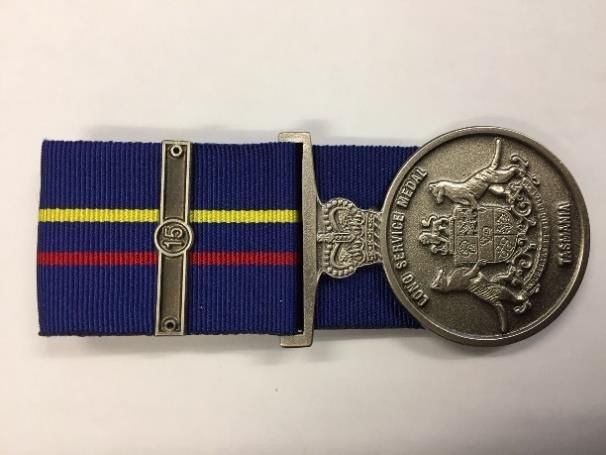
       3.4      SES Long Service Medal…………………………………………………………………………………………..13

       3.5      SES Life Membership Award……………………………………………………………………………………15

       3.6      Director's Commendation……………………………………………………………………………………….17

       3.7      Director's Certificate of Appreciation………………………………………………………………………17

       3.8      Employer Recognition Certificate…………………………………………………………………………….18

       3.9      Other Honours and Awards……………………………………………………………………………………..18

  4. Roles and Responsibilities ............................................................ 18

  5. SES Values .................................................................................. 18

  6. Communication Strategy .............................................................. 18

  7. Legislation and Related Documents ............................................. 19

  8. Document Information .................................................................. 20

  Attachments - Nomination Forms and Certificate Templates

SES Honours and Awards Guidelines                                                                  Page 2 of 20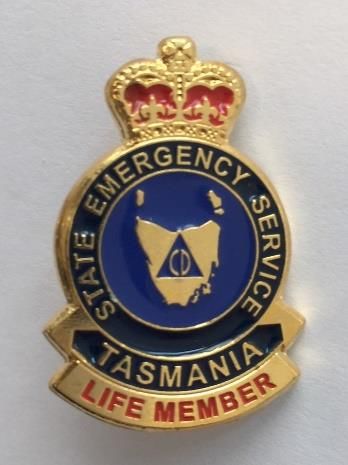
1. Background
      Special recognition of service and exceptional performance within the State Emergency
      Service (SES), is important if the organisation, all levels of government and the
      community are to value the contributions we make towards public safety. Honours and
      awards are a particularly important means of recognition that can show not only how
      much the contributions of some are valued, but can provide inspiration to others to
      perform to the same high level. As such, special care should be taken to ensure the
      honours and awards process is diligently managed and supported.

2. Objective
      To promote and provide guidance on the honours and awards processes and
      arrangements in order to appropriately recognise high levels of performance by members
      of the SES or those who support the SES. These guidelines will cover the following types
      of honours or awards:
          •   Emergency Services Medal
          •   Public Service Medal
          •   National Medal
          •   SES Long Service Medal
          •   SES Life Membership Award
          •   Director’s Commendation
          •   Director’s Certificate of Appreciation
          •   Employer Recognition Certificate
          •   Other honours and awards

3. Procedures

      3.1 Emergency Services Medal (ESM)

                                    Definitions

                                    Auxiliary members – Includes members who are not
                                    specifically a member of an emergency service, such as the
                                    SES, but provide direct front line support during emergencies
                                    or disasters where their role is inherently more hazardous than
                                    most other occupations. Auxiliary members can include
                                    Municipal Coordinators if being recognised for their front-line
                                    operational support during emergencies.

                                    Emergency Service – A civilian emergency service of
                                    Tasmania, such as the SES, regardless of whether the service
                                    is operated by the government or by a non-government

SES Honours and Awards Guidelines                                                     Page 3 of 20
organisation, such as Volunteer Coastal Patrol. It does not include emergency
              services organisations that are eligible for other national awards such as the
              Australian Fire Service Medal, Ambulance Service Medal, or Police Service Medal,
              unless the service being recognised was in direct support of an eligible emergency
              service organisation, such as the SES.

              Part-time members – Includes permanent part time employees of the emergency
              service, but does not include casual or fixed term employees.

              Volunteers - Includes all unpaid volunteers registered as members of the
              emergency service.

              Eligibility

              ESMs are awarded for distinguished emergency service by employees, volunteers
              or auxiliary members who provide or lead front line community responses to
              emergencies or disasters. The intent of the award is to recognise emergency
              services occupations which are inherently more hazardous than most other
              occupations.
              A person can only be awarded an ESM once.
              From the four available categories below, Tasmania may award three ESMs per
              year. Only one award per category is allowed (Emergency Services Medal
              Regulations published in Special Commonwealth of Australia Gazette No. S510,
              27 October 1999).
               Section                           Category
               S3(4) Distinguished Emergency     (a) Full-time permanent members of the
               Service – as a member of an           emergency service (SES);
               emergency service:
                                                 (b) Part-time members, volunteers or
                                                     auxiliary members of the emergency
                                                     service (SES); and
                                                 (c) Full-time permanent member, part-time
                                                     member, volunteer or auxiliary member
               S4 Emergency Management,              Who has given distinguished service
               Training and Education – any          relating to emergency management,
               person:                               training or education

              The intent of the ESM under section 3(4) is to recognise distinguished service by
              full-time permanent members, part-time members, volunteers or auxiliary
              members of an emergency service, whose operations, or normal duties, require
              exposure to hazards, such as first responders. Uniformed persons involved with
              controlling, managing or commanding emergency service resources during
              emergencies are also eligible.

SES Honours and Awards Guidelines                                                  Page 4 of 20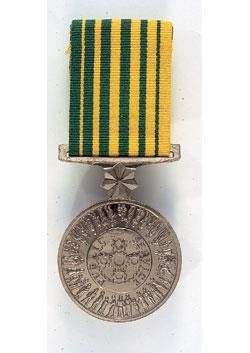
Apart from Section 4 nominations, the Minister for Police, Fire and Emergency
              Management is responsible for approving ESM nominations.

              Section 4 provides broader entitlements for people involved with emergency
              management, training and education, however, must be approved by the
              Commonwealth Minister responsible for the management of emergency situations.

              Nomination Process

              Nominations for the ESM can be made as per the timeframe below by any person,
              other than the recipient, using the nomination form which is attached, or available
              on Conexus under Medals and Awards.

              Members cannot nominate themselves and persons being nominated must not be
              informed that they are being nominated.

              If nominators need assistance obtaining specific details about nominees, they can
              seek assistance from the appropriate organisation. Other details regarding service
              history or any assistance writing the nomination should be obtained discretely
              through colleagues, family members or Regional staff.

              Written justification for the award should contain as much detail as possible in
              support of the judging criteria (below), but should be limited to one page, or 200 -
              400 words, if possible. Do not assume that approval authorities already know
              details about the nominee. Judging generally only assesses the content on the
              nomination form and any attachments.

              Information contained in completed nomination forms will be ‘Honours-In-
              Confidence’ and will therefore only be available to those with a need-to-know to
              assess or administer the nomination.

              Completed nomination forms must be signed by the nominator. A signed copy must
              then be sent to SES Headquarters by mail, fax or e-mail. Care is to be taken to
              ensure that they are properly addressed and are treated as ‘Honours-In-
              Confidence’.

              Timeframe

              In Tasmania, the ESM will usually be awarded in the Australia Day Honours List
              on 26 January each year. The nomination process begins the year before per the
              timetable below.

               May-June             Director SES calls for nominations. Nominations can
                                    otherwise be made at any time.

SES Honours and Awards Guidelines                                                     Page 5 of 20
By 31 July           Nominations for SES Volunteers, SES Staff, auxiliary
                                    members, or other eligible members are to be submitted to
                                    Director SES, SES State Headquarters by 31 July.

               By 31 August         Judging is completed and final recommendations submitted
                                    to the Secretary DPFEM for clearance ahead of approval by
                                    the Minister for Police, Fire and Emergency Management.
                                    Approved nominations are then forwarded to the Honours
                                    Secretariat by 31 August for processing.
              Judging Process

              All ESM nominations will be assessed by a panel chaired by the Director SES. The
              membership of the panel will be determined by the Director SES and may vary
              depending on availability and potential conflicts of interest. Membership will
              generally comprise of Deputy Chief/Assistant Director-level representation or
              current ESM recipients.

              To assist with judging, the Chair may consult with nominators or other persons to
              expand, explain or clarify issues raised in the nomination.

              Award recommendations are cleared through the State Emergency Management
              Controller (Secretary DPFEM) or delegate ahead of approval by the Minister for
              Police, Fire and Emergency Management.

              The Minister will then submit final recommendations to the Governor General via
              the Australian Honours Secretariat.

              The office of the Director SES will administer this nomination process.

              Judging Criteria

              Nominations for the ESM must first meet the following essential criteria:

              •   Must meet the above eligibility requirements;
              •   Must not be made by the intended recipient;
              •   Must not already be a recipient of the ESM;
              •   Must be legible with sufficient detail to make an assessment of the level of
                  eligible distinguished service; and
              •   Must be submitted within specified time frames.

              In determining distinguished service, the following can be used as a guide:

              •   Service History: Level of eligible distinguished emergency service to the
                  community in response to emergencies or disasters, particularly where the
                  work has been inherently more hazardous than most other occupations.

SES Honours and Awards Guidelines                                                     Page 6 of 20
•   Professional Qualities and Skills: Demonstrated outstanding professional
                  qualities in the emergency services context, including the demonstration of
                  exceptional skills in one or more emergency incidents or activities of an
                  operational nature. This is a broad criterion which allows members to be
                  assessed for exceptional ability and achievements in one or more specific
                  areas (e.g. integrity, initiative, leadership, interpersonal skills, management,
                  personnel welfare, reliability, efficiency and/or effectiveness), providing the
                  nature of the work is of an operational focus and inherently more hazardous
                  than most other occupations.
              •   Leadership: Uniformed operational members of eligible emergency services
                  who command or lead emergency services resources in the front-line
                  response to emergencies or disasters to support affected communities, can be
                  recognised for their distinguished service as a ‘leader’ of emergency services
                  resources operating in a hazardous work environment. This particularly
                  applies to leaders who are directly accountable for emergency operations and
                  who wear the burden of commanding emergency services in a hazardous or
                  risk prone environment under significant public and political scrutiny.
              •   Commitment: This relates to all of the above and represents the level of
                  commitment, devotion and good-will towards emergency services, emergency
                  management and/or public safety in general.
              Upon request, nominators will be informed of any reasons why the nomination
              could not be considered and may be invited to resubmit their nomination if there is
              sufficient time.

              Where assessors have difficulty deciding between two or more nominees, they
              may consult with the nominators to obtain further information. The Director SES
              will cast the deciding vote if a reasonable decision cannot be made on the basis of
              the written nomination form.

              Unsuccessful nominations may be considered the following year, however the
              nomination form will need to be resubmitted by the nominator.

              Notification and Award Ceremony

              Recipients of the ESM will be publicly announced in the 26 January Australia Day
              Honours List, at https://www.gg.gov.au/australian-honours-and-awards. The
              complete list is normally published in the Australian newspaper. Under current
              arrangements, recipients will be invited to receive the ESM from the Governor of
              Tasmania, during an official investiture ceremony at Government House, usually a
              few months later.

              Wearing

              The ESM is to be worn with any other national honours and awards (medals)

SES Honours and Awards Guidelines                                                    Page 7 of 20
above your left breast pocket. Multiple medals are to be worn in the correct order
per the SES Uniform Manual - Decorations and Awards and The Order of Wearing
Australian Honours and Awards.
3.2 Public Service Medal (PSM)
Eligibility
The Public Service Medal (PSM) recognises employees
of the Australian Government and state, territory and
local governments who have consistently given
outstanding service. Outstanding service could be
shown through:
• Service excellence to the public, or to external or
internal clients;
• Innovation in program, project or policy
development;
• Leadership, including as a member of a team; or
• Achievement of more efficient processes, improved productivity or better
service delivery.
SES employees who are eligible for the ESM would not normally be eligible for the
PSM. This rules out staff who are being recognised for front line emergency
services operations or leadership of those services.
PSM eligibility would apply to employees who perform broader emergency
management functions, such as planning and policy development, or any
employees involved with administrative, project management, training/education
and other non-operational roles.
Tasmania is entitled to award three PSMs across the public service at State and
local government levels per year, which may be awarded via the Australia Day
Honours List and/or the Queen’s Birthday Honours List.
A person should not nominate themselves and may only be awarded the PSM
once.
Nomination Process
Nominations are to be made through the State/Territory representative on the
external Public Service Medal Committee. The Tasmanian representative is:
SES Honours and Awards Guidelines Page 8 of 20Ms Fiona Birkett
State Protocol Officer
GPO Box 123
HOBART TAS 7001
Telephone: 03 6270 5671
Email: protocol@dpac.tas.gov.au
The nomination form and instructions are available at:
https://www.pmc.gov.au/sites/default/files/files/pmc/Honours/psm_form.pdf
Nominations can be made at any time, however the following timeframe should
be taken into account.
Timeframe
Closing dates for Public Service Medal Committees should be checked, however,
they generally meet around 1 February and 1 August each year to assess
nominations.
Judging Process
The PSM Committee (which does not have SES representation) assesses all
nominations based on eligibility criteria and merit and makes recommendations to
the Premier who then makes final recommendations to the Governor-General
through the Australian Honours Secretariat.
Award Ceremony
Recipients of the PSM will be publicly announced in the Australia Day Honours
List, or the Queen’s Birthday Honours List at https://www.gg.gov.au/australian-
honours-and-awards. The complete list is normally published in the Australian
newspaper. Under current arrangements, recipients will be invited to receive the
PSM from the Governor of Tasmania, during an official investiture ceremony at
Government House, usually a few months later.
Wearing
The ESM is to be worn with any other national honours and awards (medals) above
your left breast pocket. Multiple medals are to be worn in the correct order per the
SES Uniform Manual - Decorations and Awards and The Order of Wearing
Australian Honours and Awards.
SES Honours and Awards Guidelines Page 9 of 203.3 National Medal
Eligibility
The National Medal recognises diligent long service in
organisations, such as emergency services, police,
Australian Defence Force (ADF) and affiliates that protect life
and property at some risk to their members. Nominees must
perform the primary function of the organisation which
involves being exposed to risk and hazards in the course of
performing that primary function. Eligible functions can
include roles involving leadership/command, incident
management/control, training or simulated operational roles,
or operational support roles in the field.
Members who do not perform the primary function do not accrue qualifying time
for the Medal. An example of ineligible members in an eligible organisation include,
but is not limited to, members solely involved with administration in an office
environment and are not on call for operational work.
Pursuant to Section 19 of the National Medal Regulations 1999, for service to be
eligible, members must have maintained a level of training and physical fitness
sufficient to perform the primary function of the organisation.
Fifteen years eligible service is necessary to qualify for the medal. Clasps are
available for each additional ten year period. Previous eligible service in other
eligible organisations can be considered, providing it has not already been
recognised. This service will be subject to verification.
A person can only be awarded the National Medal once.
Application Process
Nominations for the award can be made by any eligible member or manager at any
time using the nomination form which is attached, or is available on Conexus under
Medals and Awards. Members who believe they are eligible may nominate
themselves. All applicable details requested on the form are to be filled out.
Persons who are claiming unrecognised Police or ADF service towards the
qualifying service period for the National Medal need to provide evidence of that
service (eg, apply for a Certificate of Service from ADF). Further details are on the
nomination form and assistance is available from State Headquarters, if required.
Once completed, the nomination form should then be forwarded for necessary
action, as follows:
SES Honours and Awards Guidelines Page 10 of 20• SES volunteer nominations to their Unit Manager (regardless of the
recommendation, the form must then be sent to the Regional Manager who
will also make a written recommendation)
• Unit Managers and regional staff to the appropriate Regional Manager
• State Headquarters staff to the Director.
Recommendations are to be made on the basis of the judging criteria detailed
below.
Timeframe
Nominations should be made by members or their managers at any time, as soon
as members are considered eligible.
These will be processed and administered by State Headquarters through the
Honours Secretariat in Canberra where eligibility will be checked and engraved
medals returned to SES Headquarters. Unless the nominee prefers to receive the
award in the mail, an award ceremony is then arranged through Regional Staff in
consultation with Unit Managers. This process can take one to two months.
State Headquarters will also remind members of the opportunity to make
nominations each year per the following:
February Director SES calls for nominations
By end Feb Nominations submitted to Director SES
March Nominations processed and submitted to Honours
Secretariat
April Medals received by State HQ
May Appropriate presentation ceremonies conducted
The presentation of the National Medal or clasp should be made in a reasonable
timeframe from the point the engraved medal/clasp has been received by State
Headquarters. If the Director SES is not available to personally present the award,
he is to appoint a delegate to do so on his behalf within two months. Exceptions
may apply if coordinated with a regional or State medal presentation ceremony,
however, this should not delay the presentation of the award more than six months.
If any recipient does not wish to be presented the award at a ceremony, they may
request that the award be mailed to them directly. Note that award ceremonies are
preferred over mail outs, as the awards are more likely to inspire other newer
members to provide long and diligent service.
Judging
SES Honours and Awards Guidelines Page 11 of 20It should not be assumed that the National Medal will be awarded solely for long
service. The National Medal Regulations 1999 S19 require assessors to determine
that the applicant:
• has maintained a level of training sufficient to fulfil the duties of a member for
the primary function of the organisation
• has maintained a level of physical fitness sufficient to fulfil the duties of a
member for the primary function of the organisation
• has been ready to perform and, as required, has performed the duties of a
member for the primary function of the organisation
• has served the organisation diligently, which means:
o the service given by the applicant has been conscientious, loyal and of a
good standard, and
o in the performance of the service, the applicant has demonstrated good
conduct as a member of the organisation and has been reliable.
Only applications that have been recommended by the appropriate Managers, as
listed above, will be considered. Applications that meet all the above requirements,
and have had eligible service with other approved organisations verified, will be
sent directly to the Australian Honours Secretariat for processing. This final stage
may take two months before the medal is delivered.
Reasons for not recommending or supporting an application are to be written on
the form and passed confidentially back to the applicant by the person making that
judgement, after it has been reviewed by the Regional Manager/Director.
Judgements of this type are to be equitably applied across each Region and the
Director informed under confidential cover. Appeals against any such judgements
may be submitted back through the system to the Director for a second judgement,
but the Director’s decision will be final for eligible service. Such an appeal must be
submitted within one month of being notified and include those factors that the
member wishes to be considered in reviewing the decision.
Award Ceremony
An appropriate award ceremony will be arranged in most cases in order to
recognise the importance of such an award. For this reason, medals and clasps
may be withheld until such a ceremony can be arranged.
Recipients may elect to receive their National Medal through the mail (registered
post).
Wearing
SES Honours and Awards Guidelines Page 12 of 20The National Medal is to be worn with any other national honours and awards
(medals) above your left breast pocket. Multiple medals are to be worn in the
correct order per the SES Uniform Manual - Decorations and Awards and The
Order of Wearing Australian Honours and Awards.
3.4 SES Long Service Medal
Eligibility
The SES Long Service Medal may be awarded to
members (volunteers or SES salaried staff) who
have completed a period of ten years’ diligent
service to the SES.
A clasp to the medal may be awarded to members
after the completion of each additional five years’
diligent service to the SES. An SES Service Pin
incorporating the relevant number of years of
service (in five year increments) will accompany the
medal.
A five year SES Service Pin may be awarded for five years’ of diligent service. The
length of service is calculated from the date of joining the SES or registering as a
member and includes any probationary period.
The period of service may be an aggregate amount of years, not necessarily a
continuous period.
It should not be assumed that the medal will be awarded solely because of long
service to SES. The long service must be diligent service. Diligent service means:
• the service of the applicant has been conscientious, loyal and of a good
standard per SES Values and supporting behaviours; and
• the applicant has demonstrated good conduct and has reliably attended SES
activities, or has been willing and able to be rostered on-call for SES work.
The medal may be granted to former members who have resigned, retired or died,
or members from other SES organisations, provided that person was a member of
the SES on or after 1 July 2006.
Unrecognised diligent service with another State/Territory SES organisation will be
recognised on a case-by-case basis subject to the following conditions:
• receipt of an accompanying letter or verifiable service record from the other
SES Headquarters to confirm any qualifying and unrecognised diligent service
per the nomination form; and
SES Honours and Awards Guidelines Page 13 of 20• completion of at least five years’ diligent service with Tasmania SES.
Application Process
Nominations for the award can be made by any eligible member or manager at any
time using the nomination form which is attached or is available on Conexus under
Medals and Awards. Members may self-nominate when they consider themselves
eligible. Their managers may also nominate members on their behalf.
Once the nomination has been made, the Regional Manager, in consultation with
Unit Manager/Supervisors, are to make recommendations to the Director as to the
suitability of those members to receive the award.
The Assistant Directors, in consultation with Supervisors, are to make
recommendations to the Director as to the suitability of those members to receive
the award.
Eligible former members or members from other SES organisations will also be
required to provide evidence of past unrecognised service per the eligibility
conditions.
Timeframe
Nominations should be made by members or their managers at any time, as soon
as members are considered eligible.
These will be processed and administered by State Headquarters where eligibility
will be checked and engraved medals ordered. An award ceremony is then
arranged through Regional Staff in consultation with Unit Managers. This process
can take one to two months.
State Headquarters will also remind members of the opportunity to make
nominations each year per the following:
February Director SES calls for nominations.
By end Feb Nominations submitted to Director SES
March/April Nominations processed and medals engraved
Appropriate presentation ceremonies conducted, possibly
May in conjunction with National Volunteer Week (Wear
Orange Wednesday) in May
The presentation of the SES Long Service Medal, clasp or pin should be made in
a reasonable timeframe from the point of approval. If the Director SES is not
available to personally present the award, he is to appoint a delegate to do so on
his behalf within two months of approval. Exceptions may apply if coordinated with
a regional or State medal presentation ceremony, however, this should not delay
the presentation of the award more than six months.
SES Honours and Awards Guidelines Page 14 of 20If any recipient does not wish to be presented the award at a ceremony, they may
request that the award be mailed to them directly.
Award Ceremony
An appropriate award ceremony will be arranged in most cases to recognise the
importance of such an award. For this reason, medals and clasps may be withheld
until such a ceremony can be arranged.
Members may elect to receive their SES Long Service Medal, clasp or lapel badge
through the mail (registered post). Note that award ceremonies are preferred over
mail outs, as the awards are more likely to inspire other newer members to provide
long and diligent service.
Wearing
The SES Long Service Medal is a State Award and is to be worn with any other
State awards (medals) above your right breast pocket (national medals on the left).
3.5 SES Life Membership Award
The award comprises a Life Membership Badge and
framed certificate. A suitable presento will normally
accompany these awards as a gesture of appreciation from
your peers.
Life Membership may be awarded to members who are still
serving or retired. The award will forever symbolise the
recipient’s identity as a major contributor to the SES. Upon
resignation or retirement as a Life Member, you will
automatically become an SES Honorary Life Member.
Honorary Life Members may not take part in SES operations, training or other
activities, but may be invited to mentor other members or to attend certain functions
or receive newsletters, etc. If invited to attend meetings, SES Honorary Life
Members may be heard but may not vote on matters relating to SES business
without the approval of the Director SES.
A register of Life Members and Honorary Life Members will be maintained on SES
records which can be publicised from time to time.
Eligibility
SES members (volunteers or staff) who have stood out among their peers as
providing long and consistently outstanding service to the SES may be nominated
to receive the SES Life Membership Award.
SES Honours and Awards Guidelines Page 15 of 20To be eligible, members must:
• Complete at least 25 years of diligent service with Tasmania SES,
• Be nominated by their peers (eg, fellow Unit members, Tasmania SES
Volunteer Association representative, manager/supervisor, etc);
• Not be nominated by the recipient; and
• Not already be an SES Life Member.
Nomination Process
Nominations may be made at any time. They must be made by one or more peers
using the SES Life Member Nomination Form attached or available on Conexus at
Medals and Awards (includes the template for the Life Member certificate).
Persons being nominated must not be informed that they are being nominated. If
nominators need assistance obtaining specific details about nominees, they can
discretely seek assistance through colleagues, family members or Regional staff.
Information contained in the completed nomination form will be ‘Personal and
Confidential’ and will therefore only be available to those with a need-to-know to
assess or administer the nomination.
The completed nomination form must be signed by the nominator. If it applies to
an SES volunteer, the nomination should be recommended by the applicable
Regional Manager. For a staff member, it should be recommended by the
applicable manager/immediate supervisor. A signed copy must then be sent to the
Office of the Director SES for approval by mail, fax or e-mail. Care is to be taken
to ensure that they are properly addressed and are treated as ‘Private and
Confidential’.
Timeframe
Nominations may be made to the Office of the Director SES at any time.
Once approved, the award is to be presented in a reasonable time period, with due
regard to the circumstances. For example, if the retirement of the member is
pending, the presentation of the award might best coincide with a farewell function;
or if close to May, it might be appropriate to coincide with a Wear Orange
Wednesday medal presentation event.
Award Ceremony
Once a nomination is approved, the office of the Director SES will liaise with the
applicable region and the nominator to arrange a suitable award ceremony.
SES Honours and Awards Guidelines Page 16 of 20Wearing
The SES Long Service Badge may be worn on the General Duties Uniform above
the right breast pocket above any State medals or ribbons. It may also be worn as
a lapel pin on civilian dress at any time.
3.6 Director’s Commendation
The Director may from time to time award Director’s Commendations to
individuals, groups of people or entire Units/Teams. These awards will recognise
outstanding achievements worthy of special recognition.
Members who consider any achievements to be worthy of special recognition
should provide details to the Director as soon as possible after the event. An email
or letter is acceptable however, it should contain contact details and a detailed
description of why the person should be recognised. Not all instances will be
judged in favour of a Commendation. In these instances, the Director may
acknowledge the achievements with a Certificate of Appreciation, or with a letter
of appreciation to the people involved.
Recipients need not be confined to SES members alone. Consideration can be
given to people outside the SES who have provided commendable service or
support to the SES.
An appropriate award ceremony will be arranged to achieve the desired level of
recognition.
The template for the certificate is attached or available on Conexus at Medals and
Awards.
3.7 Director’s Certificate of Appreciation
The Director may recognise the achievements or contributions of any individual,
group or company by presenting them with a Director’s Certificate of Appreciation.
Members are encouraged to provide the Director with details of any achievements
they consider to be worthy of special recognition. An email or letter is acceptable,
however, it should contain contact details and a detailed description of why the
person should be appreciated.
Recipients need not be confined to SES members alone. Consideration can be
given to people outside the SES who have provided service or support to the SES
(refer to 3.8).
An appropriate award ceremony will be arranged to achieve the desired level of
recognition.
SES Honours and Awards Guidelines Page 17 of 20The template for the certificate is attached or available on Conexus at Medals and
Awards.
3.8 Employer Recognition Certificate
Employers and business owners who provide support to their employees who are
active SES volunteers, particularly for the release of their employees during SES
callouts (without loss of pay or leave entitlements) may be nominated by members
to receive a Director’s Certificate of Appreciation (see 3.7).
Nominations can be made at any time using the nomination form which is available
on Conexus under Medals and Awards.
Nominators can indicate whether they wish the award to be presented in person
by themselves or the Director SES, or to be forwarded directly to their employer in
the mail with a covering letter from the Director SES.
3.9 Other Honours and Awards
There are a range of other Australian and State honours and awards that should
be considered from time to time. These range from the Companion of the Order of
Australia to a number of bravery awards and a range of awards under the
Tasmania Police Manual such as the Commissioner’s Commendation.
Details regarding eligibility of National awards and how to nominate can be
obtained from the Australian Government’s It’s An Honour website.
4. Roles and Responsibilities
The Executive Assistant to the Director SES or the Director SES have the responsibility
for providing further advice on the nomination process.
The Director, Assistant Directors, Regional Managers and Unit Managers have
responsibility for promoting and coordinating the nomination and awarding process.
5. SES Values
These Guidelines operate in accordance with all SES values of Professionalism, Respect,
Commitment and Integrity.
6. Communication Strategy
The Guidelines will be available to members through:
• ShopTalk newsletter
• SES intranet (Conexus)
SES Honours and Awards Guidelines Page 18 of 20• SES Internet https://www.ses.tas.gov.au/about/get-involved/awards/
Copies may be made available to non-members if requested
7. Legislation and Related Documents
7.1 Legislation
Emergency Services Medal Regulations 1999
National Medal Regulations 1999
7.2 Related Documents
State Emergency Service website
All SES nomination forms and certificate templates (Conexus): Medals and Awards (also
attached to these Guidelines)
It’s An Honour, Department of the Prime Minister and Cabinet, Australian Government
The Australian Honours Secretariat, Governor-General of the Commonwealth of Australia
The Order of Wearing Australian Honours and Awards, Department of the Prime Minister
and Cabinet, Australian Government
Tasmania Police Manual
SES Honours and Awards Guidelines Page 19 of 208. Document Information
General Information
A19/164753
HP Records Manager No. Version 2.0 Replaces documents Version 1.0 (January 2008)
(December 2020)
Effective from 31 December 2020 Review date FY 2022-23
Business Owner Office of the Director SES, SES State Headquarters
Applies to All members
Information Security
UNCLASSIFIED
Classification
Approval
Name Position, Division/Area Date
Prepared by A Lea Director SES Sep 2020
Approved by A Lea Director, SES 31 Dec 2020
Revision History
Version Approved By (Name) Approved By (Title) Amendment Notes
1.0 A Lea Director SES January 2008
2.A Draft A Lea Director SES 19 Oct 2020 – Reviewed by EMG and SLT
2.B Draft A Lea Director SES 26 Oct 2020 – Reviewed by all staff
2.0 A Lea Director SES 31 Dec 2020
SES Honours and Awards Guidelines Page 20 of 20Attachments:
1. Nomination Form - Emergency Services Medal
2. Nomination Form - National Medal or Clasp
3. Nomination Form - SES Long Service Medal, Pin or Clasp
4. Nomination Form - SES Life Membership Award
5. Nomination Form - Employer or Business Recognition
6. Certificate Template - Director’s Commendation
7. Certificate Template – Certificate of Appreciation (also for Employer or Business
Recognition)
8. Certificate Template – Life MembershipTASMANIA STATE EMERGENCY SERVICE
NOMINATION FORM FOR
EMERGENCY SERVICE MEDAL
_________________________________________________________________________________________
1. Details of person submitting nomination
The following information about the person submitting this recommendation is needed to enable assessors to
seek further details, if required.
Name (in full):
Home address:
Telephone number:
Occupation:
Business address:
Business telephone:
2. Details of person being recommended for the Emergency Services Medal
Please provide a biographical profile of the person you are nominating by completing the section below and by
providing the details requested on the next page. If insufficient space is available, please attach a separate
statement.
Surname:
Given Name(s):
Home address:
Telephone number:
Occupation:
Business address:
Business telephone:
Awards and/or Degrees, etc:
Date of Birth: Place of Birth:
If born outside of Australia:
(a) Date of arrival:
Naturalisation
(b)
Certificate Details:
Note: Honours matters are confidential and the nominee should not be approached direct for
Naturalisation or other details. If unknown please indicate accordingly.
HONOURS-IN-CONFIDENCE (when complete)
__________________________________________________________________________________________________________________________
Version 2. Effective: 31/12/2020
SES Nomination Form for Emergency Services Medal Review Date: 31/12/2022
RM Ref:Nomination of (Full Name):
Reason for Nomination:
Signed by the nominator: Date:
Nominator Printed Name:
Return completed form to:
Mail: Director’s Office In person: State Emergency Service
Attention: Margaret Ward Cnr Melville and Argyle Streets
Private & Confidential HOBART TAS 7000
State Emergency Service
GPO Box 1290
HOBART TAS 7001
or Email: margaret.ward@ses.tas.gov.au
HONOURS-IN-CONFIDENCE (when complete)
__________________________________________________________________________________________________________________________
Version 2. Effective: 31/12/2020
SES Nomination Form for Emergency Services Medal Review Date: 31/12/2022
RM Ref:TASMANIA STATE EMERGENCY SERVICE
NOMINATION FORM FOR
NATIONAL MEDAL OR CLASP
_________________________________________________________________________________________
1. Eligibility
The National Medal recognises diligent long service in organisations that protect life and property, such as the
SES, Fire Services, Ambulance Services, Police Services and the Australian Defence Force. Nominees must
perform the primary function of the organisation which involves being exposed to risk and hazards in the course
of performing that primary function. Members who do not perform the primary function do not accrue qualifying
time for the Medal. Examples of ineligible members in eligible organisations include, but are not limited to,
emergency services members solely involved with administration or maintenance. Such members may,
however, be eligible if these functions were performed in hazardous field conditions or in front line leadership
roles.
Pursuant to Section 19 of the Regulations, for service to be eligible, members must have maintained a level of
training and physical fitness sufficient to perform the primary function of the organisation.
Fifteen years eligible service is necessary to qualify for the medal. Clasps are available for each additional ten
year period.
2. Personal Details
Nominee’s name in full Nominee’s Date of Birth (dd/mm/yyyy)
Nominee’s postal address Award applied for (please tick)
National Medal
1st Clasp to National Medal
2nd Clasp to National Medal
3. Qualifying Service (if insufficient space, attach additional pages)
Exact Exact date
Type of Service Date ended Period of service
Service Agency Perm Vol started (or current) Years Months Days
Total
__________________________________________________________________________________________________________________________
Version 3. Effective: 31/12/2020
SES Nomination Form for National Medal or Clasp Review Date: 31/12/2022
RM Ref:Note: A person who has left the Australian Defence Force (ADF) and is now in another approved organisation,
may claim an unrecognised period of ADF service to count towards the qualifying service period required for
the National Medal. Prior to submitting an application, it will be necessary to apply for a Certificate of Service
from ADF, requesting to take benefit of Regulation 22 of the National Medal Regulations 1999. Postal address
is Directorate of Honours and Awards, T1-1-49, Department of Defence, Canberra Act 2600.
4. Previous Awards
Have you previously received a National Medal? Have you previously received a National Medal Clasp?
No No
Yes (if yes, please specify below) Yes (if yes, please specify below)
Date Awarded: / / Date Awarded: / /
day month year day month Year
Service Awarding Service Awarding
(insert name of Service Agency) (insert name of Service Agency)
For Service From: For Service From:
(insert dates) (insert dates)
/ / / /
day month year day month year
To: To:
/ / / /
day month year day month year
5. Method of Receiving Medal
You may elect to have your service recognised at a presentation arranged by SES, or you may receive
your medal through the post.
Please indicate your preference (tick one box)
Presentation Mail (Registered Post)
6. Declaration
Information provided in your recommendation for the National Medal will be disclosed to the Honours Secretariat
at Government House, Canberra, as part of the approval process. If approved, details of the award will be
provided to the Department of the Prime Minister and Cabinet and your name, award and date of award will be
made available through the searchable database on the Australian honours website www.itsanhonour.gov.au .
Once this information appears on the internet the Department of Prime Minister and Cabinet has no control over
its subsequent use and disclosure. Use and disclosure of your personal information is in accordance with the
attached Information Privacy Principles 1, 2, 3, 10 and 11 under the (Commonwealth) Privacy Act 1988.
__________________________________________________________________________________________________________________________
Version 3. Effective: 31/12/2020
SES Nomination Form for National Medal or Clasp Review Date: 31/12/2022
RM Ref:I declare that:
a) I have been advised how my personal information will be used to re commend me for the award of the
National Medal or clasp; and
b) I have read and I understand the attached Information Privacy Principles 1, 2, 3, 10 and 11.
Please print your full name Please sign Date
/ /
day month year
7. Recommended by Unit Manager
Recommended If not recommended, provide reason/s
Not Recommended
Recommending Officer’s Name Unit/Council Name
Recommending Officer’s Signature Date
/ /
8. Recommended by Regional Manager *
Recommended If not recommended, provide reason/s
Not Recommended
Recommending Officer’s Name Region
Recommending Officer’s Signature Date
/ /
9. Approval by Director SES
Approved If not approved, provide reason/s
Not Approved
Director’s Signature Date
/ /
Return Completed form to Office use only:
Declaration signed
Mail: Director’s Office
Yes No
State Emergency Service
GPO Box 1290
HOBART TAS 7001 Medal to be
Email: Margaret.ward@ses.tas.gov.au Presented Mailed
__________________________________________________________________________________________________________________________
Version 3. Effective: 31/12/2020
SES Nomination Form for National Medal or Clasp Review Date: 31/12/2022
RM Ref:Information Privacy Principles
(Section 14 of the Privacy Act 1988)
IPP 1 – Manner and purpose of collection of personal information
The information must be necessary for the agency's function and collected fairly and lawfully.
1. Personal information shall not be collected by a collector for inclusion in a record or in a
generally available publication unless:
a) the information is collected for a purpose that is a lawful purpose directly related to a
function or activity of the collector; and
b) the collection of the information is necessary for or directly related to that purpose.
2. Personal information shall not be collected by a collector by unlawful or unfair means.
IPP 2 – Solicitation of personal information form individual concerned
This is often called an IPP 2 notice. The agency must tell you the purpose of the collection, any
laws which give them authority to collect the information and who they usually disclose or give the
information to.
Where
a) a collector collects personal information for inclusion in a record or in a generally available
publication; and
b) the information is solicited by the collector from the individual concerned;
the collector shall take such steps (if any) as are, in the circumstances, reasonable to ensure that,
before the information is collected or, if that is not practicable, as soon as practicable after the
information is collected, the individual concerned is generally aware of:
c) the purpose for which the information is being collected;
d) if the collection of the information is authorised or required by or under law - the fact that
the collection of the information is so authorised or required; and
e) any person to whom, or anybody or agency to which, it is the collector's usual practice to
disclose personal information of the kind so collected, and (if known by the collector) any
person to whom, or anybody or agency to which, it is the usual practice of that first
mentioned person, body or agency to pass on that information
IPP 3 – Solicitation of personal information generally
The information must be relevant, up to date and complete. The collection of the information must
not be unreasonably intrusive.
Where:
a) a collector collects personal information for inclusion in a record or in a generally available
publication; and
b) the information is solicited by the collector:
the collector shall take such steps (if any) as are, in the circumstances, reasonable to
ensure that, having regard to the purpose for which the information is collected
c) the information collected is relevant to that purpose and is up to date and complete; and
d) the collection of the information does not intrude to an unreasonable extent upon the
personal affairs of the individual concerned.
IPP 10 – Limits on use of personal information
Outlines the rules about keeping accurate, complete and up to date personal information, using
information for a relevant purpose, and only using the information for another purpose with your
consent unless special circumstances apply such as health and safety or law enforcement.
__________________________________________________________________________________________________________________________
Version 3. Effective: 31/12/2020
SES Nomination Form for National Medal or Clasp Review Date: 31/12/2022
RM Ref:1. A record-keeper who has possession or control of a record that contains personal
information that was obtained for a particular purpose shall not use the information for any
other purpose unless
a) the individual concerned has consented to use of the information for that other
purpose;
b) the record-keeper believes on reasonable grounds that use of the information for that
other purpose is necessary to prevent or lessen a serious and imminent threat to the
life or health of the individual concerned or another person;
c) use of the information for that other purpose is required or authorised by or under law;
d) use of the information for that other purpose is reasonably necessary for enforcement
of the criminal law or of a law imposing a pecuniary penalty, or for the protection of the
public revenue; or
e) the purpose for which the information is used is directly related to the purpose for
which the information was obtained.
2. Where personal information is used for enforcement of the criminal law or of a law
imposing a pecuniary penalty, or for the protection of the public revenue, the record-
keeper shall include in the record containing that information a note of that use.
IPP 11 – Limits on disclosure of personal information
Sets out when an agency can disclose personal information about you to someone else, for
example another agency.
1. A record-keeper who has possession or control of a record that contains personal
information shall not disclose the information to a person, body or agency (other than the
individual concerned) unless:
a) the individual concerned is reasonably likely to have been aware, or made aware
under Principle 2, that information of that kind is usually passed to that person, body or
agency;
b) the individual concerned has consented to the disclosure;
c) the record-keeper believes on reasonable grounds that the disclosure is necessary to
prevent or lessen a serious and imminent threat to the life or health of the individual
concerned or of another person;
d) the disclosure is required or authorised by or under law; or
e) the disclosure is reasonably necessary for the enforcement of the criminal law or of a
law imposing a pecuniary penalty, or for the protection of the public revenue.
2. Where personal information is disclosed for the purposes of enforcement of the criminal
law or of a law imposing a pecuniary penalty, or for the purpose of the protection of the
public revenue, the record-keeper shall include in the record containing that information a
note of the disclosure.
3. A person, body or agency to whom personal information is disclosed under clause 1 of this
Principle shall not use or disclose the information for a purpose other than the purpose for
which the information was given lo the person, body or agency.
__________________________________________________________________________________________________________________________
Version 3. Effective: 31/12/2020
SES Nomination Form for National Medal or Clasp Review Date: 31/12/2022
RM Ref:TASMANIA STATE EMERGENCY SERVICE
NOMINATION FORM FOR SES LONG
SERVICE MEDAL, PIN OR CLASP
_________________________________________________________________________________________
The Tasmanian State Emergency Service Long Service Medal recognises long and diligent service
by SES employees and volunteers. A five-year Service Pin (lapel pin) is awarded after every five
years eligible service. Ten years eligible service is necessary to qualify for the medal with medal
clasps awarded for every additional five years of diligent service.
1. Personal Details (if more than one applicant attach list including full names and postal addresses)
Nominee’s printed full name Nominee’s Unit name
Nominee’s postal address
Award applied for (please tick) Service Pin & Clasps to SES Medal
SES 5 Year Service Pin 15 Years 20 Years
SES Long Service Medal (10 Years) 25 Years 30 Years
35 Years 40 Years
45 Years 50 Years
Note: Unrecognised diligent service with another State/Territory SES organisation will be recognised on a case-by-case basis subject to the following
conditions:
− Evidence of unrecognised service to be provided.
− Completion of at least five years’ diligent service in Tasmania SES.
2. Recommendations
Note: A recommendation to receive the award can only be made after the years of diligent service to SES has been checked.
By signing a recommendation you are declaring that the information is correct.
Recommended by Unit Manager (optional)
Recommended If not recommended, provide reason/s
Not Recommended
Recommending Officer’s Name Unit/Council Name
Recommending Officer’s Signature Date
/ /
__________________________________________________________________________________________________________________________
Version 2. Effective: 31/12/2020
SES Nomination Form for SES Long Service Medal or Clasp Review Date: 31/12/2022
RM Ref:Recommended by Regional Manager *
Recommended If not recommended, provide reason/s
Not Recommended
Recommending Officer’s Name Region
Recommending Officer’s Signature Date
/ /
*Completion of this section is mandatory
3. Approval by Director SES
Approved If not approved, provide reason/s
Not Approved
Director’s Signature Date
/ /
Return completed form to Office use only:
Mail: Director’s Office Award
State Emergency Service
GPO Box 1290 Presented Provided to
HOBART TAS 7001
or …………………………………...
Email: margaret.ward@ses.tas.gov.au Date: / / Date: / /
PERSONAL INFORMATION PROTECTION
Tasmania State Emergency Service, Cnr Melville and Argyle Streets Hobart TAS 7000 Tel: 03 6173 2703 Fax: 03 62349767
E-mail: margaret.ward@ses.tas.gov.au Website: www.ses.tas.gov.au
Personal information will be collected from you for the purpose of processing your medal application by the Tasmanian State Emergency Service. Failure to provide all
the information may result in your application not being processed. Your personal information will be used for the primary purpose for which it is collected. Your basic
personal information may be disclosed to other public sector bodies where necessary for the efficient storage and use of the information. Personal information will be
managed in accordance with the Personal Information Protection Act 2004 and may be accessed by the individual to whom it relates on request to the Tasmania State
Emergency Service You may be charged a fee for this service.
__________________________________________________________________________________________________________________________
Version 2. Effective: 31/12/2020
SES Nomination Form for SES Long Service Medal or Clasp Review Date: 31/12/2022
RM Ref:You can also read


