API Reference Optical Character Recognition - HUAWEI TECHNOLOGIES CO., LTD - Issue Date
←
→
Page content transcription
If your browser does not render page correctly, please read the page content below
Optical Character Recognition

API Reference

Issue           01
Date            2021-08-10

HUAWEI TECHNOLOGIES CO., LTD.
Copyright © Huawei Technologies Co., Ltd. 2021. All rights reserved.
No part of this document may be reproduced or transmitted in any form or by any means without prior
written consent of Huawei Technologies Co., Ltd.

Trademarks and Permissions

      and other Huawei trademarks are trademarks of Huawei Technologies Co., Ltd.
All other trademarks and trade names mentioned in this document are the property of their respective
holders.

Notice
The purchased products, services and features are stipulated by the contract made between Huawei and
the customer. All or part of the products, services and features described in this document may not be
within the purchase scope or the usage scope. Unless otherwise specified in the contract, all statements,
information, and recommendations in this document are provided "AS IS" without warranties, guarantees
or representations of any kind, either express or implied.

The information in this document is subject to change without notice. Every effort has been made in the
preparation of this document to ensure accuracy of the contents, but all statements, information, and
recommendations in this document do not constitute a warranty of any kind, express or implied.

Issue 01 (2021-08-10)          Copyright © Huawei Technologies Co., Ltd.                                  i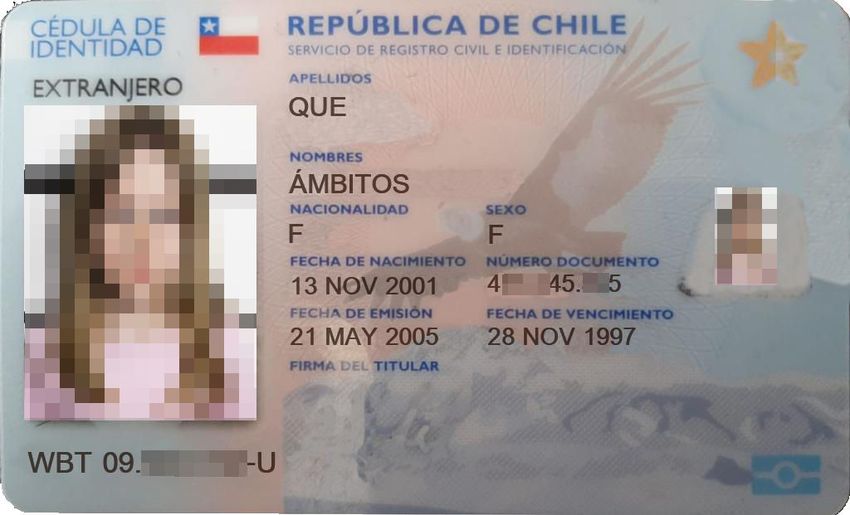
Optical Character Recognition
API Reference                                                                                                                                                                     Contents

                                                                                                                                                            Contents

1 Before You Start....................................................................................................................... 1
1.1 Overview.................................................................................................................................................................................... 1
1.2 API Calling..................................................................................................................................................................................1
1.3 Endpoints....................................................................................................................................................................................1
1.4 Constraints................................................................................................................................................................................. 2
1.5 Concepts..................................................................................................................................................................................... 2

2 API Overview............................................................................................................................ 4
3 Calling APIs............................................................................................................................... 6
3.1 Subscribing to OCR................................................................................................................................................................. 6
3.2 Making an API Request......................................................................................................................................................... 6
3.3 Authentication....................................................................................................................................................................... 11
3.4 Response.................................................................................................................................................................................. 12

4 APIs........................................................................................................................................... 15
4.1 Web Image OCR.................................................................................................................................................................... 15
4.2 Passport OCR.......................................................................................................................................................................... 21
4.3 Thailand ID Card OCR......................................................................................................................................................... 28
4.4 Myanmar ID Card OCR....................................................................................................................................................... 36
4.5 Myanmar Driving License OCR........................................................................................................................................ 44
4.6 Chile ID Card OCR.................................................................................................................................................................51
4.7 Thailand Plate Number OCR.............................................................................................................................................56

5 Appendix..................................................................................................................................61
5.1 Status Codes........................................................................................................................................................................... 61
5.2 Error Codes.............................................................................................................................................................................. 65
5.3 Obtaining a Project ID.........................................................................................................................................................72
5.4 Obtaining an Account ID....................................................................................................................................................73
5.5 Configuring Access Permissions of OBS........................................................................................................................ 74

A Change History...................................................................................................................... 76

Issue 01 (2021-08-10)                                     Copyright © Huawei Technologies Co., Ltd.                                                                                             ii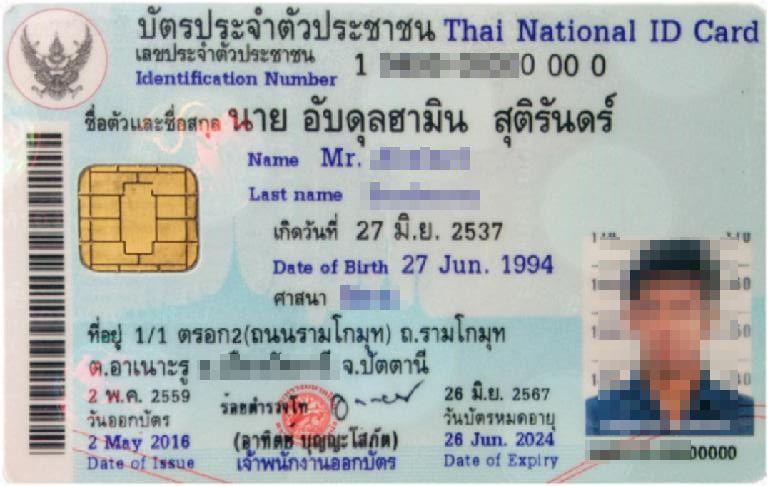
Optical Character Recognition
API Reference                                                                        1 Before You Start

                                                        1          Before You Start

1.1 Overview
                  Optical Character Recognition (OCR) allows you to detect and recognize printed
                  characters in images and convert the characters into editable text.

                  OCR provides services through open Application Programming Interfaces (APIs).
                  You can obtain the inference result by accessing and calling APIs in real time. It
                  helps you collect key data automatically and build an intelligent business system,
                  thereby improving service efficiency.

                  You can perform related operations based on the API description, syntax,
                  parameter description, and examples provided in this document. For example, you
                  can call the API for recognizing characters in general text, cards, or receipts. APIs
                  vary depending on regions. For details, see Endpoints. For details about all
                  operations supported by APIs, see API Overview.

                  If you intend to access OCR through an API, get familiar with OCR concepts. For
                  details, see the Service Overview.

                  OCR also provides software development kits (SDKs) for multiple programming
                  languages. For details about how to use SDKs, see SDK Reference.

1.2 API Calling
                  OCR provides Representational State Transfer (REST) APIs, allowing you to call
                  APIs using HTTPS. For details about API calling, see Calling APIs.

                  OCR also provides software development kits (SDKs) for multiple programming
                  languages. For details about how to use SDKs, see SDK Reference.

1.3 Endpoints
                  An endpoint is the request address for calling an API. Endpoints vary depending on
                  services and regions. For the endpoints of all services, see Regions and Endpoints.

Issue 01 (2021-08-10)           Copyright © Huawei Technologies Co., Ltd.                              1
Optical Character Recognition
API Reference                                                                         1 Before You Start

                  Table 1-1 lists the endpoints of OCR. Select an endpoint based on your service
                  requirements.

                  Table 1-1 OCR endpoints

                   Regio       Endpoi    Endpoint               Service
                   n           nt
                               Region

                   CN-         ap-       ocr.ap-                Passport OCR, Myanmar ID Card OCR,
                   Hong        southe    southeast-1.myhuaw     and Myanmar Driving License OCR
                   Kong        ast-1     eicloud.com

                   AP-         ap-       ocr.ap-                Thailand ID Card OCR, Passport OCR,
                   Bang        southe    southeast-2.myhuaw     Web Image OCR, and Thailand Plate
                   kok         ast-2     eicloud.com            Number OCR

                   LA-         la-       ocr.la-                Chile ID Card OCR
                   Santi       south-2   south-2.myhuaweiclo
                   ago                   ud.com

1.4 Constraints
                  For details, see the API description and Constraints.

1.5 Concepts
                  ●     Account
                        An account is created upon successful registration with HUAWEI CLOUD. The
                        account has full access permissions for all of its cloud services and resources.
                        It can be used to reset user passwords and grant user permissions. The
                        account is a payment entity. For security purposes, do not directly use the
                        account to perform routine management. Instead, create IAM users and grant
                        them permissions for routine management.
                  ●     User
                        A user is created in IAM using an account, for access to cloud services. Each
                        user has their own identity credentials (password and access keys).
                        An IAM user can view the account ID and user ID on the My Credentials
                        page of the console. The account name, username, and password will be
                        required for API authentication.
                  ●     Region
                        Regions are divided based on geographical location and network latency.
                        Public services, such as Elastic Cloud Server (ECS), Elastic Volume Service
                        (EVS), Object Storage Service (OBS), Virtual Private Cloud (VPC), Elastic IP
                        (EIP), and Image Management Service (IMS), are accessible within the same
                        region. Regions are classified as universal regions and dedicated regions. A
                        universal region provides universal cloud services for common tenants. A
                        dedicated region provides specific services for specific tenants.

Issue 01 (2021-08-10)            Copyright © Huawei Technologies Co., Ltd.                              2
Optical Character Recognition
API Reference                                                                        1 Before You Start

                  ●     AZ
                        An AZ contains one or more physical data centers. It has independent cooling,
                        fire extinguishing, moisture-proof, and electricity facilities. Within an AZ,
                        computing, network, storage, and other resources are logically divided into
                        multiple clusters. AZs within a region are interconnected using high-speed
                        optical fibers to allow you to build cross-AZ high-availability systems.
                  ●     Project
                        Projects group and isolate resources (including compute, storage, and network
                        resources) across physical regions. A default project is provided for each
                        HUAWEI CLOUD region, and subprojects can be created under each default
                        project. Users can be granted permissions to access all resources in a specific
                        project. For more refined access control, create subprojects under a project
                        and purchase resources in the subprojects. Users can then be assigned
                        permissions to access specific resources in the subprojects.

                        Figure 1-1 Project isolation model

Issue 01 (2021-08-10)             Copyright © Huawei Technologies Co., Ltd.                          3
Optical Character Recognition
API Reference                                                                           2 API Overview

                                                               2            API Overview

                  You can perform the operations described in Table 2-1 with OCR APIs.

                  Table 2-1 API description
                   API              Description                                         Deployment
                                                                                        Region

                   Passport         Passport OCR recognizes the text on the first       CN-Hong
                   OCR              page of a passport and returns the structured       Kong (ap-
                                    information in JSON format.                         southeast-1
                                                                                        )
                                                                                        AP-Bangkok
                                                                                        (ap-
                                                                                        southeast-2
                                                                                        )

                   Web Image        Web Image OCR recognizes characters in a web        AP-Bangkok
                   OCR              image and returns the structured result in JSON     (ap-
                                    format.                                             southeast-2
                                                                                        )

                   Thailand ID      Thailand ID Card OCR recognizes the text on a       AP-Bangkok
                   Card OCR         Thailand-issued national registration card.         (ap-
                                                                                        southeast-2
                                                                                        )

                   Myanmar ID       Myanmar ID Card OCR recognizes the text on a        CN-Hong
                   Card OCR         Myanmar-issued national registration card.          Kong (ap-
                                                                                        southeast-1
                                                                                        )

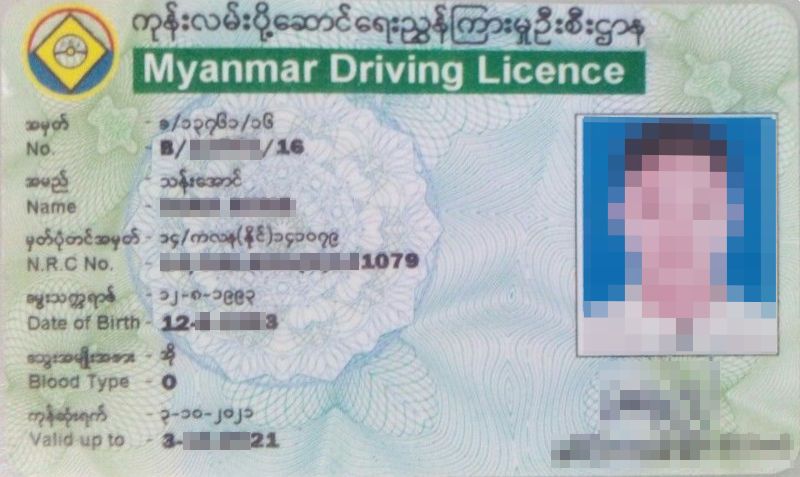
                   Myanmar          Myanmar Driving License OCR recognizes              CN-Hong
                   Driving          characters on a Myanmar-issued driver's license     Kong (ap-
                   License OCR      and returns the structured result in JSON format.   southeast-1
                                                                                        )

Issue 01 (2021-08-10)           Copyright © Huawei Technologies Co., Ltd.                             4
Optical Character Recognition
API Reference 2 API Overview
API Description Deployment
Region
Chile ID Chile ID Card OCR recognizes the text in a Chile LA-
Card OCR ID card image and returns the recognition result Santiago-
in JSON format. (la-south-2)
Thailand Thailand Plate Number OCR recognizes the AP-Bangkok
Plate license plate information in a Thailand license (ap-
Number plate image and returns the recognition result southeast-2
OCR and the location of the license plate. )
Issue 01 (2021-08-10) Copyright © Huawei Technologies Co., Ltd. 5Optical Character Recognition
API Reference 3 Calling APIs
3 Calling APIs
3.1 Subscribing to OCR
To use OCR, subscribe to it as instructed in the following procedure.
NOTE
● Register an account with HUAWEI CLOUD before applying for OCR.
● Apply for OCR before you can use it for the first time. You only need to subscribe to OCR
once. If the service is not enabled, an error message with error code "ModelArts.4204"
will be displayed when you call the service. Before calling the service, log in to the OCR
console and enable the service. Ensure that the region where the service is enabled is
the same as that where the service is called.
● When using OCR for the first time, you need to configure the OBS access permission
once. For details, see Configuring Access Permissions of OBS.
1. Go to the OCR homepage and click Try Now to go to the OCR console. You
need to have an account for logging in to the OCR console.
2. Select the region where the service is located on the console.
3. On the Overview page, locate the target service and click Subscribe in the
Operation column of the service.
4. After the service is successfully subscribed to, check that the status is
Subscribed.
3.2 Making an API Request
This section describes the structure of a REST API, and uses the IAM API for
obtaining a user token as an example to demonstrate how to call an API. The
obtained token can then be used to authenticate the calling of other APIs.
Request URI
A request URI is in the following format:
{URI-scheme} :// {endpoint} / {resource-path} ? {query-string}
Issue 01 (2021-08-10) Copyright © Huawei Technologies Co., Ltd. 6Optical Character Recognition
API Reference 3 Calling APIs
Although a request URI is included in the request header, most programming
languages and frameworks require the request URI to be transmitted separately.
Table 3-1 URI parameter description
Parameter Description
URI-scheme Protocol used to transmit requests. All APIs use HTTPS.
endpoint Domain name or IP address of the server bearing the REST
service. The endpoint varies between services in different
regions. It can be obtained from Regions and Endpoints.
resource-path Access path of an API for performing a specified operation.
Obtain the path from the URI of an API. For example, the
resource-path of the API used to obtain a user token is /v3/
auth/tokens.
query-string Query parameter, which is optional. Ensure that a question
mark (?) is included before each query parameter that is in the
format of "Parameter name=Parameter value". For example,
limit=10 indicates that a maximum of 10 data records will be
displayed.
For example, to obtain an IAM token in the CN-Hong Kong region, obtain the
endpoint of IAM (iam.ap-southeast-1.myhuaweicloud.com) for this region and
the resource-path (/v3/auth/tokens) in the URI of the API used to obtain a user
token. Then, construct the URI as follows:
https://iam.ap-southeast-1.myhuaweicloud.com/v3/auth/tokens
Figure 3-1 Example URI
NOTE
To simplify the URI display in this document, each API is provided only with a resource-
path and a request method. The URI-scheme of all APIs is HTTPS, and the endpoints of all
APIs in the same region are identical.
Request Methods
The HTTP protocol defines the following request methods that can be used to
send a request to the server:
Issue 01 (2021-08-10) Copyright © Huawei Technologies Co., Ltd. 7Optical Character Recognition
API Reference 3 Calling APIs
Table 3-2 HTTP-defined request methods
Method Description
GET Requests the server to return specified resources.
PUT Requests the server to update specified resources.
POST Requests the server to add resources or perform special
operations.
DELETE Requests the server to delete specified resources, for
example, an object.
HEAD Same as GET except that the server must return only the
response header.
PATCH Requests the server to update partial content of a specified
resource.
If the resource does not exist, a new resource will be
created.
For example, in the case of the API used to obtain a user token, the request
method is POST. The request is as follows:
POST https://iam.ap-southeast-1.myhuaweicloud.com/v3/auth/tokens
Content-Type: application/json
Request Header
You can also add additional header fields to a request, such as the fields required
by a specified URI or HTTP method. For example, to request for the authentication
information, add Content-Type, which specifies the request body type.
Common request header fields are as follows:
Table 3-3 Common request headers
Header Description Mandatory Example
Content MIME type of the Yes application/json
-Type response body
Content Length of the request This field is 3495
-Length body, in bytes. mandatory for
POST and PUT
requests, but
must be left
blank for GET
requests.
Issue 01 (2021-08-10) Copyright © Huawei Technologies Co., Ltd. 8Optical Character Recognition
API Reference 3 Calling APIs
Header Description Mandatory Example
X- Project ID. This No e9993fc787d94b6c886cba
Project- parameter is used to a340f9c0f4
ID obtain the token for
the project.
This parameter is
mandatory for the
request from a DeC or
multi-project user.
X-Auth- User token This parameter N/A
Token is mandatory for
token-based
authentication.
X-Sdk- Time when the This field is 20150907T101459Z
Date request is sent. The mandatory for
time is in AK/SK-based
YYYYMMDD'T'HHMM authentication.
SS'Z' format.
The value is the
current Greenwich
Mean Time (GMT) of
the system.
Authori Signature This parameter SDK-HMAC-SHA256
zation authentication is mandatory for Credential=ZIRRKMTWPT
information AK/SK-based QFQI1WKNKB/
The value can be authentication. 20150907//ec2/
obtained from the sdk_request,
request signing result. SignedHeaders=content-
type;host;x-sdk-date,
Signature=55741b610f3c
9fa3ae40b5a8021ebf7ebc
2a28a603fc62d25cb3bfe6
608e1994
Host Server domain name This field is code.test.com
and port number of mandatory for or
the resource being AK/SK-based
requested. The value authentication. code.test.com:443
can be obtained from
the URL of the service
API. The value is
hostname[:port]. If the
port number is not
specified, the default
port is used. The
default port number
for https is 443.
Issue 01 (2021-08-10) Copyright © Huawei Technologies Co., Ltd. 9Optical Character Recognition
API Reference 3 Calling APIs
NOTE
In addition to supporting token-based authentication, public cloud APIs also support
authentication using access key ID/secret access key (AK/SK). During AK/SK-based
authentication, an SDK is used to sign the request, and the Authorization (signature
information) and X-Sdk-Date (time when the request is sent) header fields are
automatically added to the request.
For more details, see AK/SK-based Authentication.
The API used to obtain a user token does not require authentication. Therefore,
this API only requires adding the Content-Type field. An example of such requests
is as follows:
POST https://iam.ap-southeast-1.myhuaweicloud.com/v3/auth/tokens
Content-Type: application/json
Request Body
The body of a request is often sent in a structured format as specified in the
Content-Type header field. The request body transfers all content except the
request header.
The request body varies depending on APIs. Some APIs do not require the request
body, for example, the APIs requested using the GET and DELETE methods.
In case of the API for obtaining a user token, obtain the request parameters and
parameter description in the API request. The following provides an example
request with a body included. Replace username, domainname, ******** (login
password), and xxxxxxxx (project name) with the actual values and obtain the
token specified for the project. For example, if the project name is set to ap-
southeast-1, the obtained token applies to the services in ap-southeast-1. For
details about how to obtain a username, domainname, and project name, see
Obtaining the Username, User ID, Project Name, and Project ID.
NOTE
The scope parameter specifies where a token will take effect. You can set scope to an
account or a project under an account. In the following example, the token takes effect
only for the resources in a specified project. For more information about this API, see
Obtaining a User Token.
POST https://iam.ap-southeast-1.myhuaweicloud.com/v3/auth/tokens
Content-Type: application/json
{
"auth": {
"identity": {
"methods": [
"password"
],
"password": {
"user": {
"name": "username", //Replace the value with the actual username.
"password": "********", //Replace the value with the actual password.
"domain": {
"name": "domainname" //Replace the value with the actual account name.
}
}
}
},
"scope": {
"project": {
Issue 01 (2021-08-10) Copyright © Huawei Technologies Co., Ltd. 10Optical Character Recognition
API Reference 3 Calling APIs
"name": "xxxxxxxx" //Replace xxxxxxxx with the actual project name. For example, ap-
southeast-1.
}
}
}
}
If all data required for the API request is available, you can send the request to call
the API through curl, Postman, or coding. In the response to the API used to
obtain a user token, x-subject-token is the desired user token. You can use this
token to authenticate the calling of other APIs.
3.3 Authentication
Requests for calling an API can be authenticated using either of the following
methods:
● Token-based authentication: Requests are authenticated using a token.
● AK/SK-based authentication: Requests are authenticated by encrypting the
request body using an AK/SK pair.
Token-based Authentication
NOTE
The validity period of a token is 24 hours. When using a token for authentication, cache it
to prevent frequently calling the IAM API used to obtain a user token.
A token specifies temporary permissions in a computer system. During API
authentication using a token, the token is added to requests to obtain permissions
for calling the API.
When calling the API to obtain a user token, you must set auth.scope in the
request body to project. In the following code block, username indicates the
username; domainname indicates the account name; ******** indicates the user
login password; and xxxxxxxx indicates the project name. When xxxxxxxx is set, the
token of a specified project will be obtained. For example, if xxxxxxxx is set to ap-
southeast-1, the token of ap-southeast-1 will be obtained. For details about how
to obtain the username, domain name, and project name, see Obtaining the
Username, User ID, Project Name, and Project ID.
{
"auth": {
"identity": {
"methods": [
"password"
],
"password": {
"user": {
"name": "username", //Replace it with the actual username.
"password": "********", //Replace it with the actual password.
"domain": {
"name": "domainname" //Replace it with the actual account name.
}
}
}
},
"scope": {
"project": {
"name": "xxxxxxxx" //Replace it with the actual project name, such as ap-southeast-1.
Issue 01 (2021-08-10) Copyright © Huawei Technologies Co., Ltd. 11Optical Character Recognition
API Reference 3 Calling APIs
}
}
}
}
After a token is obtained, the X-Auth-Token header field must be added to
requests to specify the token when calling other APIs. For example, if the token is
ABCDEFJ...., X-Auth-Token: ABCDEFJ.... can be added to a request as follows:
POST https://ocr.ap-southeast-1.myhuaweicloud.com/v2/{project_id}/ocr/passport
Content-Type: application/json
X-Auth-Token: ABCDEFJ....
AK/SK-based Authentication
NOTE
AK/SK-based authentication supports API requests with a body less than or equal to 12 MB.
For API requests with a larger body, perform token-based authentication.
In AK/SK-based authentication, AK/SK is used to sign requests and the signature is
then added to the requests for authentication.
● AK: access key ID, which is a unique identifier used in conjunction with a
secret access key to sign requests cryptographically.
● SK: secret access key used in conjunction with an AK to sign requests
cryptographically. It identifies a request sender and prevents the request from
being modified.
In AK/SK-based authentication, you can use an AK/SK to sign a request based on
the signature algorithm or use a dedicated signature SDK to sign a request. For
details about how to sign requests and use the signing SDK, see API Request
Signing Guide.
If no AK/SK has been generated, access the My Credentials page, and choose
Access Keys > Create Access Key to obtain the access keys.
NOTICE
The signing SDK is only used for signing requests and is different from the SDKs
provided by services.
For details about how to obtain the AK/SK, see Obtaining the AK/SK.
3.4 Response
Status Code
After sending a request, you will receive a response, including a status code,
response header, and response body.
A status code consists of multiple digits, which indicates the response status of a
request. If the 2xx status code is returned, the API is called successfully. For details
about the status code list, see Status Codes.
Issue 01 (2021-08-10) Copyright © Huawei Technologies Co., Ltd. 12Optical Character Recognition
API Reference 3 Calling APIs
Response Header
Similar to a request, a response also has a header, for example, Content-Type.
Table 3-4 lists the fields in the response header.
Table 3-4 Response Header
Field Description
Content-Length Length of the response body. The unit is byte.
Date Time when a request response is returned
Content-Type MIME type of the response body
Figure 3-2 shows the response header fields for the API used to obtain a user
token. The x-subject-token header field is the desired user token. This token can
then be used to authenticate the calling of other APIs.
Figure 3-2 Header fields of the response to the request for obtaining a user token
Response Body
The body of a response is returned in structured format as specified in the
Content-Type header field. The response body transfers all content except the
response header.
The following is part of the response body for the API used to obtain a user
token.
{
"token": {
"expires_at": "2019-02-13T06:52:13.855000Z",
"methods": [
Issue 01 (2021-08-10) Copyright © Huawei Technologies Co., Ltd. 13Optical Character Recognition
API Reference 3 Calling APIs
"password"
],
"catalog": [
{
"endpoints": [
{
"region_id": "aaa"//The region ID aaa is used as an example.
......
If an error occurs during API calling, an error code and a message will be
displayed. The following shows an error response body.
{
"error_msg": "The format of message is error",
"error_code": "AS.0001"
}
In the response body, error_code indicates the error code, and error_msg provides
information about the error.
Issue 01 (2021-08-10) Copyright © Huawei Technologies Co., Ltd. 14Optical Character Recognition
API Reference 4 APIs
4 APIs
4.1 Web Image OCR
Function
Web Image OCR recognizes characters in a web image and returns the structured
result in JSON format. For details about the constraints on using this API, see
Constraints. For details about how to use this API, see .
Prerequisites
Before using Web Image OCR, you need to apply for the service and complete
authentication. For details, see Subscribing to OCR and Authentication.
NOTE
Before using the service for the first time, you need to enable the service by clicking
Subscribe. You only need to subscribe to the service once. If the service is not enabled, an
error message with error code "ModelArts.4204" will be displayed when you call the service.
Before calling the service, log in to the OCR console and enable the service. Ensure that the
region where the service is enabled is the same as that where the service is called.
URI
POST https://{endpoint}/v2/{project_id}/ocr/web-image
Table 4-1 Path parameters
Parameter Mandator Description
y
endpoint Yes Domain name or IP address of the server
bearing the REST service endpoint. The endpoint
varies depending on services in different regions.
For more details, see Endpoints.
Issue 01 (2021-08-10) Copyright © Huawei Technologies Co., Ltd. 15Optical Character Recognition
API Reference 4 APIs
Parameter Mandator Description
y
project_id Yes Project ID, which can be obtained from
Obtaining a Project ID.
Request Parameters
Table 4-2 Request header parameters
Parameter Mandatory Type Description
X-Auth-Token Yes String User token
During API authentication
using a token, the token is
added to requests to obtain
permissions for calling the API.
The value of X-Subject-Token
in the response header is the
obtained token.
Content-Type Yes String MIME type of the request
body. The value is
application/json.
Table 4-3 Request body parameters
Parameter Mandator Type Description
y
image No. Set String Base64 character string converted
either this from the image. The size cannot
parameter exceed 10 MB.
or url. No side of the image can be
smaller than 15 or larger than
8,192 pixels. Only images in JPEG,
JPG, PNG, BMP, TIFF, GIF, or WEBP
format can be recognized.
Issue 01 (2021-08-10) Copyright © Huawei Technologies Co., Ltd. 16Optical Character Recognition
API Reference 4 APIs
Parameter Mandator Type Description
y
url No. Set String Image URL. Currently, the
either this following URLs are supported:
parameter ● Public network: HTTP/HTTPS
or image. URL
● URL provided by OBS. You need
to be authorized to use OBS
data, including service
authorization, temporary
authorization, and anonymous
public authorization. For
details, see Configuring Access
Permissions of OBS.
NOTE
● The API response time depends on
the image download time. If the
image download takes a long
time, the API call will fail.
● Ensure that the storage service
where the images to be detected
reside is stable and reliable. OBS is
recommended for storing image
data.
detect_direction No Boolean Whether to enable the function of
aligning tilted images. The options
are as follows:
● true: The tilted image is
aligned.
● false: The tilted image is not
aligned.
An image tilted at any angle can
be aligned. If this parameter is not
specified, the default value false is
used.
extract_type No Array of Structured data extraction
strings parameter list. Currently, only the
image width and height are
supported. The input parameter
value of the image width and
height is image_size.
If this parameter is not set or is
deleted, this parameter will not be
used.
Issue 01 (2021-08-10) Copyright © Huawei Technologies Co., Ltd. 17Optical Character Recognition
API Reference 4 APIs
Response Parameters
Response parameters and status codes vary in different recognition results. They
are described as below.
Status code: 200
Table 4-4 Response body parameter
Parameter Type Description
result WebImage Calling result of a successful API call
Result This parameter is not included when the API
object fails to be called.
Table 4-5 WebImageResult
Parameter Type Description
words_block_cou Integer Number of detected text blocks
nt
words_block_list Array of List of text blocks to be recognized. The
WebImage output sequence is from left to right and from
WordsBloc top to bottom.
kList
objects
Table 4-6 WebImageWordsBlockList
Parameter Type Description
words String Recognition result of a text block
confidence Float Confidence information of a related field. The
value ranges from 0 to 1.
A higher confidence level indicates a higher
reliability and accuracy of the corresponding
field identified.
The confidence is not equal to the accuracy,
and is calculated through related algorithms.
location Array of Recognized location information about a text
integers block, in list format, including the coordinates
(x, y) of four vertexes in the text area. The
image coordinate system is used. The
coordinate origin is the upper left corner of
the image, the X axis is horizontal, and the Y
axis is vertical.
Issue 01 (2021-08-10) Copyright © Huawei Technologies Co., Ltd. 18Optical Character Recognition
API Reference 4 APIs
Parameter Type Description
extracted_data Object Structured data extraction parameter list.
Currently, only the image width and height are
supported. The input parameter value of the
image width and height is image_size.
If extract_type is left blank or missing, no
information is extracted.
image_size Object Width and height of an image
If extract_type does not contain this
parameter, this parameter does not exist in the
response.
height Integer Image height, which is returned when
image_size is passed.
width Integer Image width, which is returned when
image_size is passed.
Status code: 400
Table 4-7 Response body parameters
Parameter Type Description
error_code String Error code of a failed API call. For
details, see Error Codes.
If error code ModelArts.4204 is
displayed, refer to Why Is a Message
Stating "ModelArts.4204" Displayed
When the OCR API Is Called?
This parameter is not included when
the API is successfully called.
error_msg String Error message returned when the API
fails to be called
Request Example
NOTE
● The endpoint is the request URL for calling an API. Endpoints vary depending on services
and regions. For details, see Endpoints.
For example, Web Image OCR is deployed in the AP-Bangkok region. The endpoint is
ocr.ap-southeast-2.myhuaweicloud.com. The request URL is https://ocr.ap-
southeast-2.myhuaweicloud.com/v2/{project_id}/ocr/web-image. project_id is the
project ID. For details about how to obtain the project ID, see Obtaining a Project ID.
● For details about how to obtain a token, see Making an API Request.
Issue 01 (2021-08-10) Copyright © Huawei Technologies Co., Ltd. 19Optical Character Recognition
API Reference 4 APIs
● Request example (Method 1: Use the image Base64 string.)
POST https://{endpoint}/v2/{project_id}/ocr/web-image
Request Header:
Content-Type: application/json
X-Auth-Token:
MIINRwYJKoZIhvcNAQcCoIINODCCDTQCAQExDTALBglghkgBZQMEAgEwgguVBgkqhkiG...
Request Body:
{
"image":"/9j/4AAQSkZJRgABAgEASABIAAD/..."
}
● Request example (Method 2: Use the image URL.)
POST https://{endpoint}/v2/{project_id}/ocr/web-image
Request Header:
Content-Type: application/json
X-Auth-Token:
MIINRwYJKoZIhvcNAQcCoIINODCCDTQCAQExDTALBglghkgBZQMEAgEwgguVBgkqhkiG...
Request Body:
{
"url":"https://BucketName.obs.xxxx.com/ObjectName"
}
● Sample code for a Python 3 request (For codes in other languages, refer to
the following sample or use OCR SDK.)
# encoding:utf-8
import requests
import base64
url = "https://{endpoint}/v2/{project_id}/ocr/web-image"
token = "Actual token value obtained by the user"
headers = {'Content-Type': 'application/json', 'X-Auth-Token': token}
imagepath = r'./data/web-image-demo.png'
with open(imagepath, "rb") as bin_data:
image_data = bin_data.read()
image_base64 = base64.b64encode(image_data).decode("utf-8") # Base64 encoding of images.
payload = {"image": image_base64} # url or image.
response = requests.post(url, headers=headers, json=payload)
print(response.text)
Example Response
Status code: 200
Successful response example
{
"result": {
"words_block_count": 2,
"words_block_list": [
{
"words": "Words recognized from the image",
"confidence": 0.9950,
"location": [
[13, 476],
[91, 332],
[125, 351],
[48, 494]
]
},
{
"words": "Words recognized from the image",
"confidence": 0.9910,
"location": [
[13, 476],
[91, 332],
[125, 351],
Issue 01 (2021-08-10) Copyright © Huawei Technologies Co., Ltd. 20Optical Character Recognition
API Reference 4 APIs
[48, 494]
]
}
],
"extracted_data": {}
}
}
Status code: 400
Failure response example
{
"error_code": "AIS.0103",
"error_msg": "The image size does not meet the requirements."
}
Status Codes
Status Code Description
200 Success response
400 Failure response
For details about status codes, see Status Codes.
Error Codes
For details about error codes, see Error Codes.
4.2 Passport OCR
Function
Passport OCR recognizes the text on the first page of a passport and returns the
structured information in JSON format.
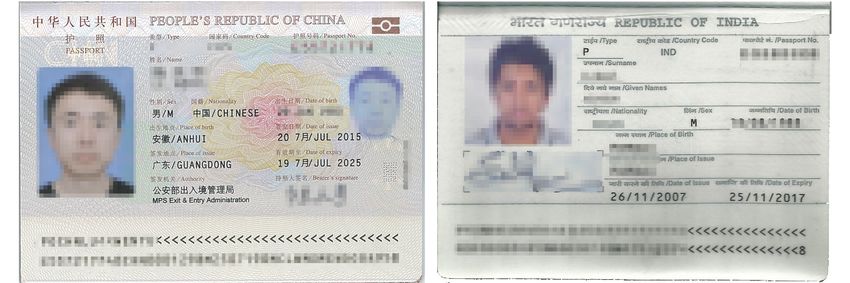
In the current version, all fields of a Chinese passport can be recognized. For non-
Chinese passports, two lines of internationally standardized machine-readable
codes on the bottom of each passport can be recognized, and 6 to 7 key fields can
be extracted from the codes.For details about the constraints on using this API, see
Constraints. For details about how to use this API, see Introduction to OCR.
Figure 4-1 Passport OCR example
Issue 01 (2021-08-10) Copyright © Huawei Technologies Co., Ltd. 21Optical Character Recognition
API Reference 4 APIs
Prerequisites
Before using Passport OCR, you need to apply for the service and complete
authentication. For details, see Subscribing to OCR and Authentication.
NOTE
Before using the service for the first time, you need to enable the service by clicking
Subscribe. You only need to subscribe to the service once. If the service is not enabled, an
error message with error code "ModelArts.4204" will be displayed when you call the service.
Before calling the service, log in to the OCR console and enable the service. Ensure that the
region where the service is enabled is the same as that where the service is called.
URI
POST https://{endpoint}/v2/{project_id}/ocr/passport
Table 4-8 Path parameters
Parameter Mandator Description
y
endpoint Yes Domain name or IP address of the server
bearing the REST service endpoint. The endpoint
varies depending on services in different regions.
For more details, see Endpoints.
project_id Yes Project ID, which can be obtained from
Obtaining a Project ID.
Request Parameters
Table 4-9 Request header parameters
Parameter Mandatory Type Description
X-Auth-Token Yes String User token
During API authentication
using a token, the token is
added to requests to obtain
permissions for calling the API.
The value of X-Subject-Token
in the response header is the
obtained token.
Content-Type Yes String MIME type of the request
body. The value is
application/json.
Issue 01 (2021-08-10) Copyright © Huawei Technologies Co., Ltd. 22Optical Character Recognition
API Reference 4 APIs
Table 4-10 Request body parameters
Parameter Mandator Type Description
y
image No. Set String Base64 character string converted
either this from the image. The size cannot
parameter exceed 10 MB.
or url. No side of the image can be
smaller than 15 or larger than
4,096 pixels. Only images in JPEG,
JPG, PNG, BMP, or TIFF format can
be recognized.
url No. Set String Image URL. Currently, the
either this following URLs are supported:
parameter ● Public network: HTTP/HTTPS
or image. URL
● URL provided by OBS. You need
to be authorized to use OBS
data, including service
authorization, temporary
authorization, and anonymous
public authorization. For
details, see Configuring Access
Permissions of OBS
NOTE
● The API response time depends on
the image download time. If the
image download takes a long
time, the API call will fail.
● Ensure that the storage service
where the images to be detected
reside is stable and reliable. OBS is
recommended for storing image
data.
country_code No String Country code on the passport. The
recognition mode is determined
based on the country code.
● If this parameter is left blank,
OCR automatically matches the
recognition mode based on the
passport type identified by the
service.
● If you set this parameter to
GENERAL, the passport is
recognized based on the
machine-readable code.
● If this parameter is set to CHN,
all fields in the Chinese
passport are recognized.
Issue 01 (2021-08-10) Copyright © Huawei Technologies Co., Ltd. 23Optical Character Recognition
API Reference 4 APIs
Response Parameters
Response parameters and status codes vary in different recognition results. They
are described as below.
Status code: 200
Table 4-11 Response body parameter
Parameter Type Description
result PassportR Calling result of a successful API call
esult result consists of the following three parts: 13
object key fields, expressed in English; extra_info,
passport information in the local official
language; confidence, confidence scores of
key fields. A higher confidence score indicates
a more accurate result.
This parameter is not included when the API
fails to be called.
Table 4-12 PassportResult
Parameter Type Description
passport_type String Passport type. Possible values are as follows:
● P: ordinary passport
● W: diplomatic passport
● G: service passport
country_code String Country code
passport_number String Passport ID
nationality String Nationality of the passport holder
surname String Last name
given_name String Given game
sex String Gender
date_of_birth String Date of birth
date_of_expiry String Passport date of expiry
date_of_issue String Date of issue
place_of_birth String Place of birth
place_of_issue String Place of issue
Issue 01 (2021-08-10) Copyright © Huawei Technologies Co., Ltd. 24Optical Character Recognition
API Reference 4 APIs
Parameter Type Description
issuing_authority String Issuing authority
The abbreviation of the issuing authority of
each consulate is not unified. The abbreviation
of Chinese issuing authority is P.R.China. For
example, if the issuing authority is P.R.C, the
recognition result is P.R.China.
confidence Object Confidence information of a related field. The
value ranges from 0 to 1.
Confidence of related fields. A higher
confidence indicates a more accurate result.
The confidence is not equal to the accuracy,
and is calculated through related algorithms.
extra_info Object By default, this parameter is left blank. For a
Chinese passport, extra_info contains Chinese
character-described fields on the passport,
such as the name and place of birth.
Status code: 400
Table 4-13 Response body parameters
Parameter Type Description
error_code String Error code of a failed API call. For
details, see Error Codes.
If error code ModelArts.4204 is
displayed, refer to Why Is a Message
Stating "ModelArts.4204" Displayed
When the OCR API Is Called?
This parameter is not included when
the API is successfully called.
error_msg String Error message returned when the API
fails to be called
This parameter is not included when
the API is successfully called.
Issue 01 (2021-08-10) Copyright © Huawei Technologies Co., Ltd. 25Optical Character Recognition
API Reference 4 APIs
Request Example
NOTE
● The endpoint is the request URL for calling an API. Endpoints vary depending on services
and regions. For details, see Endpoints.
For example, Passport OCR is deployed in the CN-Hong Kong region. The endpoint is
ocr.ap-southeast-1.myhuaweicloud.com. The request URL is https://ocr.ap-
southeast-1.myhuaweicloud.com/v2/{project_id}/ocr/passport. project_id is the
project ID. For details about how to obtain the project ID, see Obtaining a Project ID.
● For details about how to obtain a token, see Making an API Request.
● Request example (Method 1: Use the image Base64 string.)
POST https://{endpoint}/v2/{project_id}/ocr/passport
Request Header:
Content-Type: application/json
X-Auth-Token:
MIINRwYJKoZIhvcNAQcCoIINODCCDTQCAQExDTALBglghkgBZQMEAgEwgguVBgkqhkiG...
Request Body:
{
"image":"/9j/4AAQSkZJRgABAgEASABIAAD/4RFZRXhpZgAATU0AKgAAAA...",
"country_code": "GENERAL"
}
● Request example (Method 2: Use the image URL.)
POST https://{endpoint}/v2/{project_id}/ocr/passport
Request Header:
Content-Type: application/json
X-Auth-Token:
MIINRwYJKoZIhvcNAQcCoIINODCCDTQCAQExDTALBglghkgBZQMEAgEwgguVBgkqhkiG...
Request Body:
{
"url":"https://BucketName.obs.xxxx.com/ObjectName",
"country_code": "GENERAL"
}
● Sample code for a Python 3 request (For codes in other languages, refer to
the following sample or use OCR SDK.)
# encoding:utf-8
import requests
import base64
url = "https://{endpoint}/v2/{project_id}/ocr/passport"
token = "Actual token value obtained by the user"
headers = {'Content-Type': 'application/json', 'X-Auth-Token': token}
imagepath = r'./data/passport-demo.png'
with open(imagepath, "rb") as bin_data:
image_data = bin_data.read()
image_base64 = base64.b64encode(image_data).decode("utf-8") # Base64 encoding of images.
payload = {"image": image_base64} # url or image.
response = requests.post(url, headers=headers, json=payload)
print(response.text)
Example Response
Status code: 200
Chinese passport
{
"result": {
"passport_type": "P",
"country_code": "CHN",
"passport_number": "ED999XXXX",
"nationality": "CHINESE",
Issue 01 (2021-08-10) Copyright © Huawei Technologies Co., Ltd. 26Optical Character Recognition
API Reference 4 APIs
"surname": "ZHANG",
"given_name": "SAN",
"sex": "F",
"date_of_birth": "1990-12-12",
"date_of_expiry": "2020-07-08",
"date_of_issue": "2010-07-09",
"place_of_birth": "HUNAN",
"place_of_issue": "GUANGDONG",
"issuing_authority": "MPS Exit & Entry Administration",
"extra_info": {
"local_language": {
"name": "Name recognized from the image",
"sex": "Gender recognized from the image",
"place_of_birth": "Place of birth recognized from the image",
"place_of_issue": "Place of issue recognized from the image",
"issuing_authority": "Issuing authority recognized from the image",
"nationality": "Nationality recognized from the image",
}
},
"confidence": {
"passport_type": 1.0,
"country_code": 1.0,
"passport_number": 0.9997,
"nationality": 1.0,
"surname": 0.9729,
"given_name": 0.9729,
"sex": 1.0,
"date_of_birth": 0.9998,
"date_of_expiry": 0.9995,
"date_of_issue": 0.9969,
"place_of_birth": 1.0,
"place_of_issue": 1.0,
"issuing_authority": 0.9985
}
}
}
Non-chinese passport
{
"result": {
"country_code": "ETF",
"surname": "HUZHAO",
"given_name": "ZHAOMIN DESALEGN ",
"passport_number": "EP435XXXX",
"date_of_birth": "1985-09-18",
"sex": "M",
"date_of_expiry": "2022-01-15",
"machine_code": "POptical Character Recognition
API Reference 4 APIs
"error_msg": "The image size does not meet the requirements."
}
Status Codes
Status Code Description
200 Success response
400 Failure response
For details about status codes, see Status Codes.
Error Codes
For details about error codes, see Error Codes.
4.3 Thailand ID Card OCR
Function
Thailand ID Card OCR recognizes characters on a Thailand-issued national
registration card and returns the structured result in JSON format. For details
about the constraints on using this API, see Constraints. For details about how to
use this API, see Introduction to OCR.
Figure 4-2 Thailand ID Card OCR example
Prerequisites
Before using Thailand ID Card OCR, you need to apply for the service and
complete authentication. For details, see Subscribing to OCR and
Authentication.
Issue 01 (2021-08-10) Copyright © Huawei Technologies Co., Ltd. 28Optical Character Recognition
API Reference 4 APIs
NOTE
Before using the service for the first time, you need to enable the service by clicking
Subscribe. You only need to subscribe to the service once. If the service is not enabled, an
error message with error code "ModelArts.4204" will be displayed when you call the service.
Before calling the service, log in to the OCR console and enable the service. Ensure that the
region where the service is enabled is the same as that where the service is called.
URI
POST https://{endpoint}/v2/{project_id}/ocr/thailand-id-card
Table 4-14 Path parameters
Parameter Mandator Description
y
endpoint Yes Domain name or IP address of the server
bearing the REST service endpoint. The endpoint
varies depending on services in different regions.
For details, see Endpoints.
project_id Yes Project ID, which can be obtained from
Obtaining a Project ID.
Request Parameters
Table 4-15 Request header parameters
Parameter Mandatory Type Description
X-Auth-Token Yes String User token
During API authentication
using a token, the token is
added to requests to obtain
permissions for calling the API.
The value of X-Subject-Token
in the response header is the
obtained token.
Content-Type Yes String MIME type of the request
body. The value is
application/json.
Issue 01 (2021-08-10) Copyright © Huawei Technologies Co., Ltd. 29Optical Character Recognition
API Reference 4 APIs
Table 4-16 Request body parameters
Parameter Mandatory Type Description
image No. Set either String Base64 character string converted
this parameter from the image. The size cannot
or url. exceed 10 MB.
No side of the image can be
smaller than 15 or larger than
8,192 pixels. Only images in JPEG,
JPG, PNG, BMP, or TIFF format
can be recognized.
url No. Set either String Image URL. Currently, the
this parameter following URLs are supported:
or image. ● Public network: HTTP/HTTPS
URL
● URL provided by OBS. You
need to be authorized to use
OBS data, including service
authorization, temporary
authorization, and anonymous
public authorization. For
details, see Configuring Access
Permissions of OBS.
NOTE
● The API response time depends on
the image download time. If the
image download takes a long
time, the API call will fail.
● Ensure that the storage service
where the images to be detected
reside is stable and reliable. OBS is
recommended for storing image
data.
side No String ● front: front of an ID card
● back: back of an ID card
If this parameter is left empty or
not included, the system
automatically recognizes whether
the image is the front or back of
an ID card. To ensure accuracy, set
this parameter.
Issue 01 (2021-08-10) Copyright © Huawei Technologies Co., Ltd. 30Optical Character Recognition
API Reference 4 APIs
Parameter Mandatory Type Description
return_portra No Boolean Whether to return the head
it_image portrait. Possible values are as
follows:
● true: The Base64 code of the
head portrait on the ID card is
returned.
● false: The Base64 code of the
head portrait on the ID card is
not returned.
If this parameter is not set, the
default value false is used so that
the Base64 code of the head
portrait on the ID card is not
returned.
return_portra No Boolean Whether to return the location of
it_location the head portrait on the ID card.
Possible values are as follows:
● true: The location of the head
portrait on the ID card is
returned.
● false: The location of the head
portrait on the ID card is not
returned.
return_idcard No Boolean Whether to return the ID card
_type type. Possible values are as
follows:
● true: The ID card type is
returned, including the original
ID card and the copy of the ID
card.
● false: The ID card type is not
returned.
Response Parameters
Response parameters and status codes vary in different recognition results. They
are described as below.
Status code: 200
Issue 01 (2021-08-10) Copyright © Huawei Technologies Co., Ltd. 31Optical Character Recognition
API Reference 4 APIs
Table 4-17 Response parameters
Parameter Type Description
result Object Calling result of a successful API call
This parameter is not included when the API
fails to be called.
Table 4-18 Response parameters
Parameter Type Description
side String Front or back of an ID card. Possible
values are front or back.
id_number String ID number
name_th String Thai name
first_name_en String English given name
last_name_en String English surname
date_of_birth_th String Date of birth, in Thai
date_of_birth_en String Date of birth, in English
religion_th String Religion
address_th String Address on the ID card
date_of_issue_th String Date of issue, in Thai
date_of_issue_en String Date of issue, in English
date_of_expiry_th String Date of expiry, in Thai
date_of_expiry_en String Date of expiry, in English
serial_number String Serial number
card_number String ID number on the back of the ID card
laser_number String Laser code
confidence Object Confidence information of a related field.
The value ranges from 0 to 1.
A higher confidence indicates a higher
reliability of the corresponding field
identified this time. In the statistical
sense, a higher confidence indicates a
higher accuracy.
The confidence is not equal to the
accuracy, and is calculated through
related algorithms.
Issue 01 (2021-08-10) Copyright © Huawei Technologies Co., Ltd. 32Optical Character Recognition
API Reference 4 APIs
Parameter Type Description
portrait_image String Base64 code of the head portrait
This parameter is available only when
return_portrait_image is set to true.
portrait_location Array of Location of the head portrait on the
objects original image
This parameter is available only when
return_portrait_location is set to true.
The image is displayed in a list. The list
contains the two-dimensional coordinates
(x,y) of the four vertices in the head
portrait area. The origin of the
coordinates is the upper left corner of the
image. The x axis is horizontal, and the y
axis is vertical.
idcard_type String ID card type. Possible values are as
follows:
● normal: original ID card
● copy: copy of the ID card
This parameter is available only when
return_idcard_type is set to true.
Status code: 200
Table 4-19 Response body parameters
Parameter Type Description
error_code String Error code of a failed API call. For details, see
Error Codes.
If error code ModelArts.4204 is displayed,
refer to Why Is a Message Stating
"ModelArts.4204" Displayed When the OCR
API Is Called?
This parameter is not included when the API is
successfully called.
error_msg String Error message returned when the API fails to
be called
This parameter is not included when the API is
successfully called.
Issue 01 (2021-08-10) Copyright © Huawei Technologies Co., Ltd. 33You can also read


