Cyclops Grand Challenge workshop - January 11-12 De Vere Jubilee Conference Centre, Nottingham - Prof Paul Stewart
←
→
Page content transcription
If your browser does not render page correctly, please read the page content below
Cyclops Grand Challenge
                      workshop

                 January 11-12
De Vere Jubilee Conference Centre, Nottingham
Cyclops Grand Challenge workshop January 2018                                                     2

  Welcome
  We are delighted to welcome you to the 2nd Grand
  Challenge Workshop from the EPSRC-funded
  Cyclops Healthcare Network, at Nottingham.

  Our programme is rich and varied, and encourages
  interactivity among delegates. In the next two days,
  you will have intensive discussions about
  challenges in bringing autonomous treatment
  solutions to cancer, chronic wounds and critical
  care. You will have opportunities to discuss your
  novel ideas and solutions in delivering effective and
  personalised care to patients.
  We hope the workshop will encourage you to form
  new collaborations and apply for feasibility funding
  which will help to create new research programmes.
  On the first day, you will hear from Professor Niels
  Peek on how Artificial Intelligence can be used to
  improve healthcare. You also will hear from
  speakers from our three clinical areas who will set
  the scene on current treatment challenges. On day
  two, you will hear from our current feasibility study
  grant holders who will tell you about how their
  projects will help autonomous healthcare.
  Thank you for coming, we wish you a stimulating
  and productive meeting that will make a difference
  to improving healthcare.                                       Contents
                                                                 Front cover
  The Cyclops Team                                               1.Welcome
  Prof Steve Morgan, Dr Sergiy Korposh, Prof Jon Hardman, Prof
  Helen Byrne, Prof Declan Bates, Dr Jasmine Harvey.             2. Useful information
                                                                 3. Day 1 agenda
                                                                 4. Day 2 agenda
                                                                 5. Speaker profiles
                                                                 6. Speaker profiles
                                                                 7. Speaker profiles
                                                                 8. Attendee list—cancer care
                                                                 9. Attendee list—chronic wounds
                                                                 10.Attendee list—critical care
                                                                 Back cover. Contact Cyclops
Cyclops Grand Challenge workshop January 2018                                      3

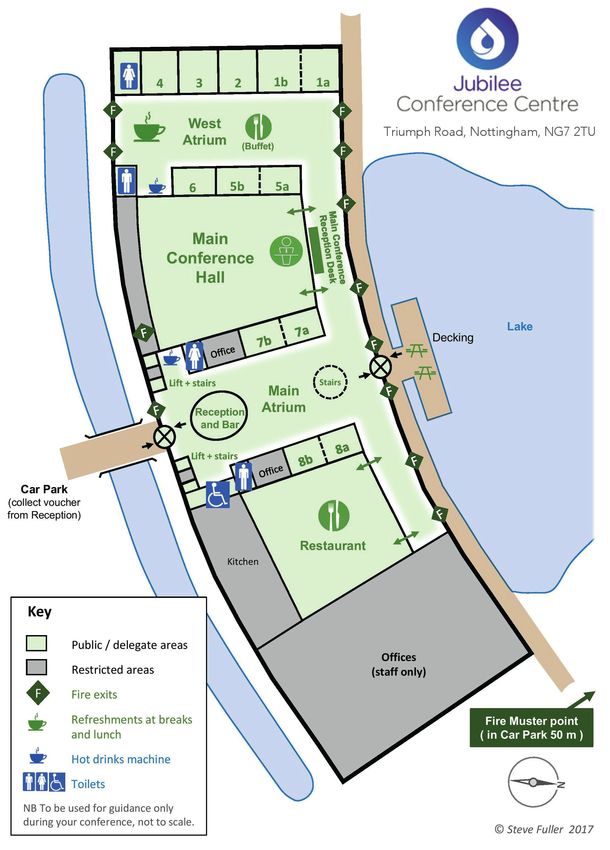
Venue Layout

Useful information

                  Free wi-fi:                          Complimentary parking:
        To access log in as UoN guest             Remember to complete and leave
                                                     voucher in your vehicle

                    Coffee:
                                                Lunch and Dinner
      Served in the West Atrium during
                   breaks                       Served at the Restaurant
Cyclops Grand Challenge workshop January 2018 4
Day 1 Agenda
9.00 Registration, refreshments, viewing delegate profiles
10.00 Welcome and opening remarks: Dr Sergiy Korposh, Director of
Cyclops Healthcare Network
10.10 Workshop set-up: led by Mr Chris Henderson
10.15 Keynote opening address: Professor Niels Peek: AI in medicine:
Where are we now?"
10.45 Meet the table: led by Mr Chris Henderson
11.05 Refreshments
11.20 Setting the clinical scene
Professor Frances Game: Diabetic Foot Disease; what stops
healing?
Dr Dan Harvey: Drowning in numbers - Data & Decision
Making in the ICU.
Professor Poulam Patel: Feedback loops for improving
cancer treatment.
12.30 Lunch
13.30 Interactive sessions 1 & 2: led by Mr Chris Henderson
15.00 Refreshments
15.15 Interactive session 3: led by Mr Chris Henderson
16.30 Exploring new ideas, Q&A: led by Mr Chris Henderson
17.15 Wrapping up day 1 – Professor Steve Morgan: Cyclops
Principal Investigator
Evening Programme
18.00 Drinks reception: Bar area
19.00 Dinner
8.30 (ish) Mystery entertainment: Professor Todd Landmann, Faculty
Pro-Vice-Chancellor, Social Sciences.
21.30 to 2.00 Bar is opened
Cyclops Grand Challenge workshop January 2018 5
Day 2 Agenda
10.00 Arrival, refreshments and networking
10.25 Welcome back: Professor Steve Morgan: Cyclops Healthcare
Network Principal Investigator
10.30 Existing feasibility projects updates
Professor Sergey Piletsky: Closed loop drug monitoring and
delivery in intensive care.
Prof Cameron Alexander: “SPI-CLOPS” (Surface Polymer
Imprinted Closed Loop Optical Patient Sensors) for Dose
Detection and Prevention of Cancer Resistance.
Prof Jonathan Hardman: Investigation of closed-loop
ventilation strategies for neonatal ICU patients using
computational simulation
11.00 Refreshments
11.15 Dr Sarah Bolton: How CHEATA can support your feasibility
study project
11.25 Interactive session: extending and confirming new
collaborations: Prof Steve Morgan
12.15 Refreshments
12.30 Potential applicants pitch their research ideas
12.50 Dr Jasmine Harvey: Call for proposals
13.00 Closing remarks and feedback: Professor Steve Morgan
13.05 Workshop close, Lunch
Cyclops Grand Challenge workshop January 2018                                                       6

 Speaker profiles

                        Dr Sergiy Korposh is an Associate Professor in Electronics, Nanoscale
                        Bioelectronics and Biophotonics at the University of Nottingham. His
                        research focuses on the development and fabrication of chemical sensors
                        based on a range of sensing platforms modified with functional nano-
                        materials. Sergiy has spent 8 years in Japan, as a researcher/lecturer where
                        he developed facile methods for the preparation of advanced functional nano
                        –materials with properties and parameters that can be tailored to satisfy
                        needs of specific applications. He has published more than 80 peer reviewed
journal and conference papers, book contributions and hold 11 patents (several of which have been
licensed to UK and Japan based companies). Sergiy is the Network Director of Cyclops.

                          Niels Peek is Professor of Health Informatics at the University of Manchester.
                          With a background in Computer Science and Artificial Intelligence, his
                          research focuses on data-driven informatics methods for healthcare quality
                          improvement, data mining for healthcare, predictive models, and computerised
                          decision support. He is director of the Greater Manchester Connected Health
                          City, which is part of the £20M "Health North" investment to establish a
                          learning health system in the North of England. Prof Peek has co-authored
                          more than 150 peer-reviewed, scientific publications. Previously based at the
University of Amsterdam, the Netherlands, he led the “CARDSS” initiative, a collaboration between
academic partners, professional and patient organisations in cardiac rehabilitation, and industry
partners which led to the introduction of computerised decision support in 40 Dutch hospitals and
national quality standards for cardiac rehabilitation. From 2013 to 2017 he was the President of the
Society for Artificial Intelligence in Medicine.

                       Professor Fran Game is a Consultant Diabetologist and Director of R,D&I at
                       Derby Teaching Hospitals NHS FT. She is an Honorary Professor at the
                       University of Nottingham and has an International reputation in the field of the
                       Diabetic Foot. She has been Chief Investigator on several National and
                       International trials, including several trials on wound healing. She regularly
                       lectures at national and international diabetes conferences on the subject of
                       the diabetic foot and has published over 70 papers and book chapters. She is
                       current Chair of the Wound Healing subgroup of the International Working
Group of the Diabetic Foot and has been an Associate Editor of Diabetic Medicine for the past 8
years. Closer to home, she co-chairs the East Midland Diabetic Foot network and works with
Diabetes UK on their “Putting Feet First” campaign.

                      Poulam Patel is Professor of Clinical Oncology at the University of Nottingham
                      and Honorary Consultant Medical Oncologist at Nottingham University
                      hospitals NHS Trust. He is head of the Division of cancer & Stem Cells in the
                      School of Medicine. In the clinic he focuses on the treatment of advanced
                      melanoma and renal cancers and has a special interest in cancer
                      immunotherapy both in the clinic and the laboratory.
Cyclops Grand Challenge workshop January 2018                                                      7

  Speaker profiles

                       Dr Dan Harvey is a Consultant in Adult Intensive Care at Nottingham University
                       Hospitals, and an Hon. Associate Professor at the University of Nottingham. As
                       National Education Clinical Lead for Organ Donation for the UK’s NHS Blood &
                       Transplant he has pioneered simulation training for organ donation with a
                       particular interest in ethical decision making & critical care practise. He is a
                       member of the UK Faculty of Intensive Care Medicine’s Professional Standards
                       Committee, and an author of the UK’s National Guidelines for the Provision of
                       Intensive Care Services. He is Vice Chair of the National Critical Care Group
with the UK National Institute for Health Research (NIHR), and chair of a national consensus group
shortly to publish guidance on the management of devastating brain injury in the UK.

                       Steve Morgan is Professor of Biomedical Engineering at the University of
                       Nottingham and Co-Director of the Centre for Healthcare Technologies. His
                       research focuses on the development of novel optical devices to monitor the
                       microcirculation for application in tissue breakdown and wound healing. Steve’s
                       recent work involves the development of photonic textiles that when
                       incorporated into garments can monitor pressure, temperature and the
                       microcirculation. He has 2 licence agreements with Moor Instruments Ltd
(blood flow imaging) and Footfalls and Heartbeats Ltd (Photonic Sensing Socks), and he is part of a
research team involved in Heartlight Systems Ltd (heartlightsystems.com) which is developing an
optical heart rate monitor for new born babies in the delivery room. Steve currently holds a Royal
Society Industry Fellowship, and is the Principal Investigator of the Cyclops.

                   Dr Sarah Bolton is CHEATA’s Business Manager. Sarah has been the Business
                   Manager for CHEATA since August 2016. Prior to joining CHEATA, Sarah was
                   responsible for Healthcare and Medical Devices at Pera Technology, a role
                   which included project delivery, client engagement and management, project
                   planning and management as well as bid writing for major UK and EC funding
                   bodies. Sarah is an experienced research scientist with a background in
                   academic and clinical research and she has specialized as an experimental
                   histopathologist in the respiratory therapy area at AstraZeneca and as an
independent consultant.

                        A leading expert on Molecularly Imprinted Polymers (MIPs) and biosensors,
                        Sergey Piletsky is a Professor of Bioanalytical Chemistry at University of
                        Leicester and Head of Leicester Biotechnology Group. Leicester Biotechnology
                        Group is prime centre involved in research and development of MIPs and their
                        application in biosensors for environmental, clinical, industrial and food
                        applications. Prof. Piletsky is Visiting Professor in Jinan and Huazhong
                        Universities, China, Toulon University, France, member of Editorial Board of
                        ACS Combinatorial Sciences, Scientific Board of Society of Molecular
Imprinting, Fellow of the Society of Biology, and Secretary General of the International Union of
Advanced Materials.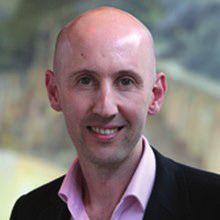
Cyclops Grand Challenge workshop January 2018                                                        8

 Speaker profiles

                      Cameron Alexander is Professor of Polymer Therapeutics, an EPSRC Impact
                      Fellow, and Head of the Division of Molecular Therapeutics and Formulation
                      at the School of Pharmacy, University of Nottingham, UK. He is a Royal
                      Society Wolfson Research Merit Award Holder, a Fellow of the Royal Society
                      of Chemistry, a recent (2009-2014) EPSRC Leadership Fellow, and has
                      published nearly 200 refereed articles. From 2006-2016, Professor Alexander
                      led the EPSRC Centre for Doctoral Training in Advanced Therapeutics and
                      Nanomedicines at Nottingham and University College London with a number
of leading pharmaceutical industry partners. He received the Royal Society of Chemistry Macro
Group Medal 2014 for contributions to polymer science.”

                        Jonathan Hardman is clinical professor in anaesthesia and critical illness at
                        the University of Nottingham, and a consultant anaesthetist in the NHS. He is
                        the Director of Research at the School of Medicine at the University of
                        Nottingham. His research focuses on the modelling of human
                        pathophysiology including the application of modelling to anaesthesia and
                        critical care. In Cyclops, he is a Co-Investigator and is co-leading the clinical
                        exemplar area of Intensive Care.

                     Dr Jasmine Harvey is experienced in leading technology-based healthcare
                     research projects. Previously, she was a post-doctoral researcher at University
                     of Oxford, Nuffield Department of Primary Health Care, and the School of
                     Medicine at the University at Nottingham. She also held brief roles at
                     Universities of Warwick and Loughborough. Jasmine’s current role is Cyclops
                     healthcare network manager. She also holds an honorary assistant
                     (consultant) professor post at the School of Medicine, University of Nottingham,
                     and continues to work at the intersection of academia and management .

Support services for medical devices adoption and translation
Title and name      Expert area                            Organisation    Email

Mrs. Beth Beeson    Medical Devices & Regulation           CHEATA, NUH     beth.beeson@nuh.nhs.uk
                                                           NHS Trust
Dr. Sarah Bolton    Support for Cyclops Network            CHEATA, NUH     sarah.bolton@nuh.nhs.uk
                    partners including regulatory          NHS Trust
                    compliance support, human factors,

Prof. Mike Hannay   Human Factors/ Adoption                EMAHSN          mike.hanny@nottingham.ac.uk

Mr. Chris Hart      Innovation funding and                 EMAHSN          sophie.marshall@nottingham.ac.
                    management                                             uk
Dr Tanya            Research, training and services        Centre for      Tanya.McCallum@nottingham.ac
McCallum            relating translating medical devices   Healthcare      .uk
                    into practice                          Technologies
Cyclops Grand Challenge workshop January 2018 9
Delegates interested in Cancer care
Title and Name Expert area Organisation Email
Prof. Helen Mathematical modelling at the life University of helen.byrne@maths.ox.ac.uk
Byrne sciences interface Oxford
Mr. Xin Chen Machine learning based medical University of xin.chen@nottingham.ac.uk
image analysis; disease diagnosis/ Nottingham
prognosis
Dr Judy Consultant clinical oncologist Nottingham Judith.Christian@nuh.nhs.uk
Christian University Hospitals
Mrs. Patricia Patient Advocate, Lay research Independent patriciafairbrother@gmail.com
Fairbrother applications reviewer Cancer Patients
Dr. Ketankumar Gynaecological cancer surgery and Nottingham gajjarkb@gmail.com
Gajjar cancer diagnostics, minimal access University Hospitals
surgery NHS
Mr. Ulises Developing optical fibre sensing University of pazuh@exmail.nottingham.ac.uk
Hernandez technology for biochemical detection Nottingham
Dr. Jongrae Kim Control engineer specialises in University of Leeds menjkim@leeds.ac.uk
robustness analysis; inferring
networks; control design for synthetic
biological circuits; noise analysis; and
large data analysis using parallel
Dr. VIishwesh Systems theoretical applications in University of V.Kulkarni@warwick.ac.uk
Kulkarni bioengineering and healthcare Warwick
Prof. Melissa Biomedical imaging, non-invasive Keele University m.mather@keele.ac.uk
Mather imaging, biophysics, optical
Dr. Filippo In vivo control of gene networks, The University of filippo.menolascina@gmail.com
Menolascina chemo informatics, microfluidics, Edinburgh
microscopy
Prof. James Lymphatic system mass transport Imperial College james.moore.jr@imperial.ac.uk
Moore London
Dr. Emilia Moradi Drug delivery, imaging, cancer, cell University of emilia.moradi@nottingham.ac.uk
biology Nottingham
Prof. Ioan Microscopy, imaging, sensors University of ioan.notingher@nottingham.ac.uk
Notingher Nottingham
Prof. Poulam Clinical Oncology, Novel systems Nottingham Poulam.Patel@nuh.nhs.uk
Patel University hospitals
Dr. Leandro Signal processing, sensing, data University of l.pecchia@warwick.ac.uk
Pecchia mining, circadian cycle control Warwick
Prof. Niels Peek Computer Science and Artificial University of niels.peek@manchester.ac.uk
Intelligence. Various clinical areas Manchester
Dr. Philip Pratt Image-guided surgery, autonomous Imperial College p.pratt@imperial.ac.uk
surgical robotics, intraoperative London
sensing (ultrasound, mass spec)
Dr. Enrique Computer Vision, Machine Learning, University of Enrique.SanchezLozano@notting
Sánchez Deep Learning, Face Tracking, Nottingham ham.ac.uk
Lozano Affective Computing
Dr. Mini Saaj Design, mathematical modelling and University of c.saaj@surrey.ac.uk
control of robotic systems for medical Surrey
applications
Dr Ananth Clinical oncologist Nottingham Mayuran.Sivanandan@nuh.nhs.u
Sivanandan University Hospitals k
Prof. Paul Intelligent Systems, various clinical University of p.stewart1@derby.ac.uk
Stewart areas Derby
Dr. Vincent Teng Development of biosensor using Swansea k.s.teng@swansea.ac.uk
nanoscale electronic materials for the University
detection of diseases.Cyclops Grand Challenge workshop January 2018 10
Delegates interested in Chronic Wound care
Title and name Expert area Organisation Email
Dr. Ali Alazmani Soft Robotics, Soft Sensing and Actuation University of Leeds a.alazmani@leeds.ac.uk
Mr. Mohammed Designing high resolution fetal heart rate University of eexma67@nottingham.ac.uk
Al-Badri monitor and developed device to care Nottingham
women in pregnancy period.
Dr. Jonathan Nanoscale sensors and measurement of University of jon.aylott@nottingham.ac.uk
Aylott biological systems. Point-of-care Nottingham
diagnostics. Analysis to ensure quality in
medicines manufacture for personalised
therapy.
Prof. Dan Bader Bioengineering strategies to prevent skin University of d.l.bader@soton.ac.uk
damage Southampton
Dr. Paolo Biosensors/Electrochemistry Swansea University p.bertoncello@swansea.ac.uk
Bertoncello
Dr. Anil Bharath Convolutional Neural Networks Imperial College a.bharath@imperial.ac.uk
London
Dr. Samit Neurophysiologist University of Leeds samit@cantab.net
Chakrabarty
Prof. Adam Clare Manufacturing technology University of adam.clare@nottingham.ac.uk
Nottingham
Prof. Fran Game Consultant Diabetologist Derby Teaching frances.game@nhs.net
Hospitals NHS
Foundation Trust
Prof. Amir Immune modulation, bio-instructive University of amg@nottingham.ac.uk
Ghaemmaghami materials, immune-assisted tissue Nottingham
regeneration, immune-competent tissue
models, wound healing.
Mrs. Sylvia Wound care; presenting; writing; Working Wound Care sylviehampton@outlook.com
Hampton with nursing homes; hospitals; Industry. Consultants Ltd
Research.
Prof. Steven Burns and traumatic wounds Queen Elizabeth sjeffery@nhs.net
Jeffery Hospital
Dr Dai Jiang Implantable and wearable electronics for UCL d.jiang@ucl.ac.uk
biomedical applications
Prof John King Mathematical Modelling University of john.king@nottingham.ac.uk
Nottingham
Dr. KP Lam Developing new cell-based therapies using Keele University k.p.lam@keele.ac.uk
autologous cells and stem cells.
Prof. Steve Sensors and instrumentation University of steve.morgan@nottingham.ac.
Morgan Nottingham uk
Dr. Danny Biosensors Imperial College d.ohare@imperial.ac.uk
O'Hare London
Prof. Ipsita Roy Production and development of natural University of royi@wmin.ac.uk
polymers for use in health care Westminster
applications. These have a range of
mechanical, thermal and degradation
properties which can be tailored.
Dr. Farshid Sefat Developing and characterising biomaterials University of f.sefat1@Bradford.ac.uk
to control cellular behaviour. Developing Bradford
engineered materials for tissue engineering
including both soft and hard tissue (Skin,
Cornea, bone and cartilage)
Miss Nicolette Final year student. Reducing pressure Nottingham Trent Nicolette.sizer@gmail.com
Sizer damage during prone positional surgery by University
designing a head support that can track
pressure distribution on the face to reduce
related damages in real time.
Dr. Reiko Tanaka Mathematical modelling and computational Imperial College r.tanaka@imperial.ac.uk
design of treatment strategies for skin London
inflammation and lung infection by
application of control theoretical tools.
Machine learning methods.Cyclops Grand Challenge workshop January 2018 11
Delegates interested in Critical (Intensive) Care
Title and name Expert area Organisation Email
Dr. Tim Collins Applied Signal Processing Manchester t.collins@mmu.ac.uk
Metropolitan
Dr. Damion Development of electrochemical sensors University of damion.corrigan@strath.ac.uk
Corrigan for medical applications. Fabricating Strathclyde
micro and nano sensors and using them
to detect MRSA infections, sepsis and
circulating tumour DNA for liquid biopsy.
Prof. Jonathan Modelling, clinical medicine, critical care, University of jghardman@gmail.com
Hardman anaesthesia Nottingham
Dr. Dan Harvey Adult Intensive Care , critical care Nottingham Dan.Harvey@nottingham.ac.u
practice University Hospitals k
Mr. Adrian High performance and parallel EPCC, The a.jackson@epcc.ed.ac.uk
Jackson computing, computational simulation, University of
data analysis, code optimisation and Edinburgh
novel hardware.
Prof. Stephen Optical instrumentation and sensors Cranfield University s.w.james@cranfield.ac.uk
James
Dr. Thomas Optical instrumentation, in particular Cranfield University t.kissinger@cranfield.ac.uk
Kissinger fibre optic sensors and 3D imaging
systems.
Dr. Sergiy Sensors in healthcare The University of s.korposh@nottingham.ac.uk
Korposh Nottingham
Dr. Anh-Cat Computer Vision, Machine Learning, University of lpzal1@nottingham.ac.uk
Le-Ngo Facial Expression Nottingham
Dr. Andrew Norris NHS Consultant 20 years. Special Nottingham andrew.norris@nottingham.ac.uk
interest in airway research and practice University Hospitals
and optical sensor applications. NHS Trust
Currently have a Cyclops feasibility
award developing optical drug sensors
for critical care.
Dr. Galina sensors, medical devices, mathematical University of galina.pavlovskaya@nottingham.ac.u
k
Pavlovskaya modelling, MRI Nottingham
Prof Sergey Bioanalytical Chemistry, Molecularly University of sp523@le.ac.uk
Pitletsky Imprinted Polymers, biosensors Leicester
Dr. Rasa Modelling of safety and efficiency of University of r.remenyte-
Remenyte- clinical teams Nottingham prescott@nottingham.ac.uk
Prescott
Dr. Andrew Ward Rapid, low cost detection of infectious University of andrew.c.ward@strath.ac.uk
microorganims using electrochemical Strathclyde
techniques. Creating the instrumentation
required to drive and measure
electrochemical signals from a sensor.
Dr. Homayemem Research student and junior clinician, Keele University h.k.weli@keele.ac.uk
Weli with experience in acute medicine.
Experienced in understanding human
tissues as biomaterials in research,
bridging the gap between clinical
understanding and needs.Cyclops Healthcare Network
Post:
University of Nottingham
Faculty of Engineering
Room 811
Tower Building,
University Park
NG7 2RD
Tel: 0115 74 86695
Email: email@cyclops-network.ac.uk
Web: www.cyclops-network.ac.uk
Cyclops member institutions
Cyclops funder
Cyclops PartnersYou can also read


