Information on Nutrition and Health Claims - August 2019 - The Food Safety ...
←
→
Page content transcription
If your browser does not render page correctly, please read the page content below
High in Vitamin C Rich in calcium Contains omega 3 With no added sugars Fat-free Cholestero
free Low energy Energy-reduced Energy-freeInformation            onLow saturated fat Source o
                                                  Low fat Fat-free
omega-3 fatty acids High omega-3 fatty acids Nutrition       and
                                                High monounsaturated     fat High polyunsaturate
fat High unsaturated fat Saturated fat-free Low sugars Sugars-free With no added sugar
                                               Health Claims
Low sodium/salt Very low sodium/salt Sodium-free/salt-free    Source of fibre High fibre Sourc
of protein High protein Source of vitamins andAugust
                                                minerals
                                                     2019
                                                           Contains nutrients Increased nutrient
Increased nutrients Light % RDA Natural High in Vitamin C Rich in calcium Contains omega
With no added sugars Fat-free Cholesterol free Low energy Energy-reduced Energy-free Low
fat Fat-free Low saturated fat Source of omega-3 fatty acids High omega-3 fatty acids Hig
monounsaturated fat High polyunsaturated fat High unsaturated fat Saturated fat-free Low
sugars Sugars-free With no added sugars Low sodium/salt Very low sodium/salt Sodium
free/salt-free Source of fibre High fibre Source of protein High protein Source of vitamins an
minerals Contains nutrients Increased nutrients Increased nutrients Light % RDA Natura
High in Vitamin C Rich in calcium Contains omega 3 With no added sugars Fat-free Cholestero
free Low energy Energy-reduced Energy-free Low fat Fat-free Low saturated fat Source o
omega-3 fatty acids High omega-3 fatty acids High monounsaturated fat High polyunsaturate
fat High unsaturated fat Saturated fat-free Low sugars Sugars-free With no added sugar
Low sodium/salt Very low sodium/salt Sodium-free/salt-free Source of fibre High fibre Sourc
of protein High protein Source of vitamins and minerals Contains nutrients Increased nutrient
Increased nutrients Light % RDA Natural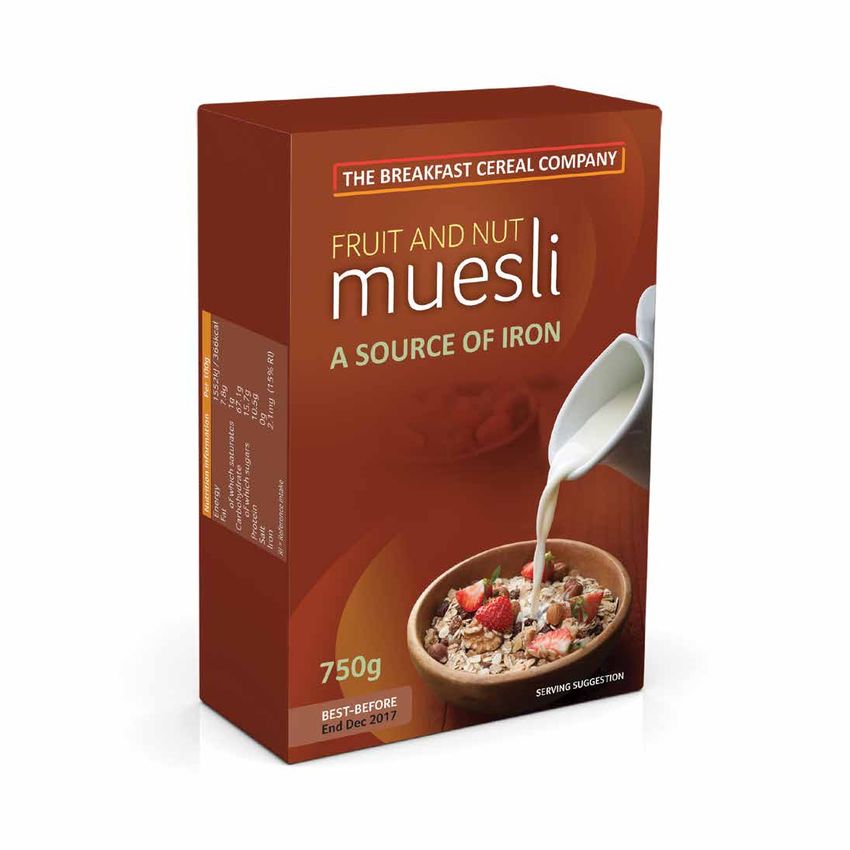
gh in Vitamin C Rich in calcium Contains omega 3 With no added sugars Fat-free Cholesterol
          Information on
ee Low energy Energy-reduced Energy-free Low fat Fat-free Low saturated fat Source of
          Nutrition
mega-3 fatty    acids andHigh omega-3 fatty acids High monounsaturated fat High polyunsaturated
          Health Claims
 t High unsaturated       fat Saturated fat-free Low sugars Sugars-free With no added sugars
ow sodium/salt      Very low sodium/salt Sodium-free/salt-free Source of fibre High fibre Source
          August 2019
  protein High protein Source of vitamins and minerals Contains nutrients Increased nutrients
         Published by:
         Food Safety Authority of Ireland
         The Exchange, George’s Dock, IFSC,
         Dublin 1, D01 P2V6
         T   +353 1 817 1300
         E   info@fsai.ie
         www.fsai.ie
         ISBN 1-904465-69-2
         © FSAI
         2019
         Applications for reproduction should
         be made to the FSAI Information Unit.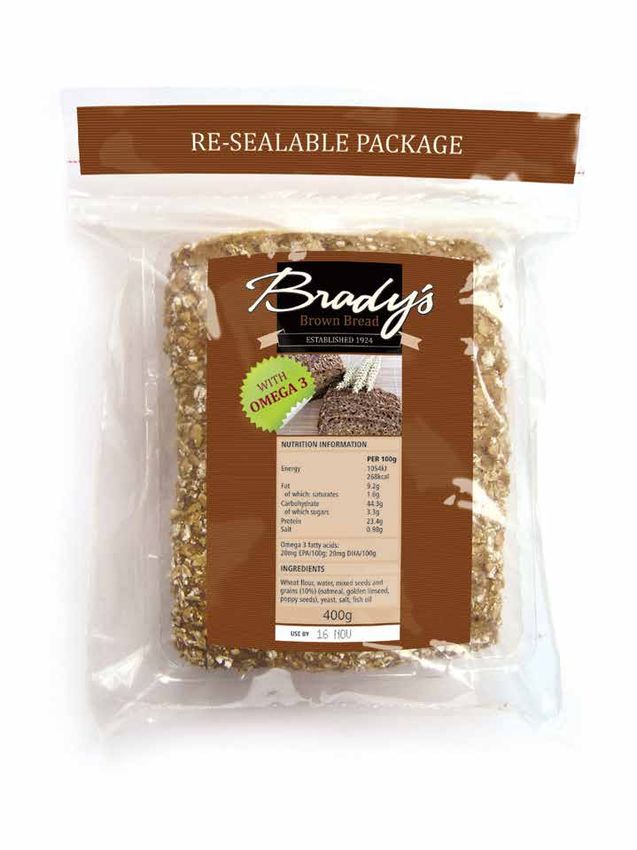
Contents

Background                                                 2
Legislation Referred to in this Document                   2
Nutrition and Health Claims Overview                       2
Nutrition Claims                                           4
Making ‘source-of’ Claims on Food Products                10
Health Claims                                             13
Nutrition Labelling Requirements
under Regulation EU No 1169/2011 (FIC)                    19
Mandatory Nutrition Labelling                             20
Front of Pack (FoP) Nutrition Labelling (Voluntary)       25
Sample Labels                                             26
Annex 1. How I Can Make Permitted Nutrition and
Health Claims on My Food Product – Practical Examples     29

                                                        page 1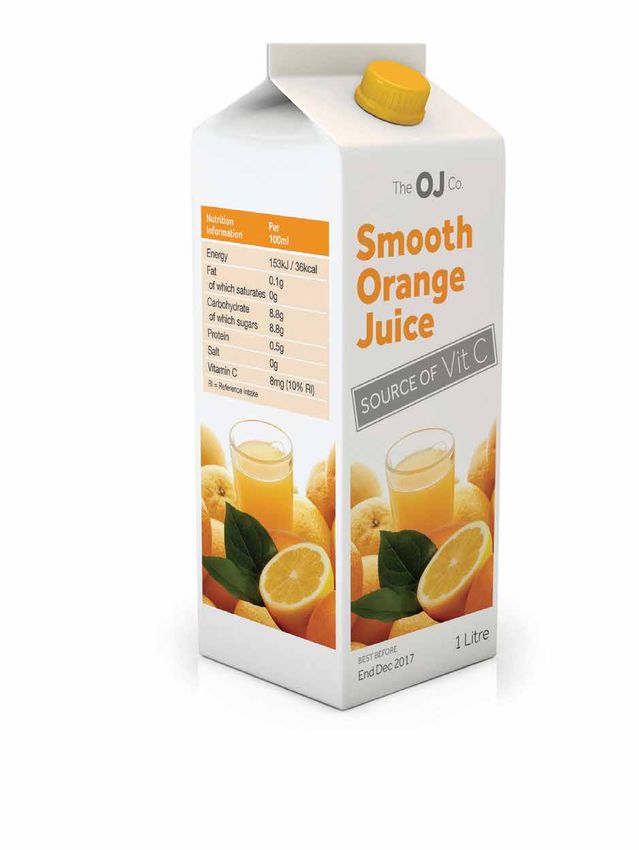
Food Safety Authority of Ireland

Background
This document is guidance information on the regulation of nutrition and health claims in Ireland*.
The document provides an overview of the:
   –     Nutrition and health claims legislation
   –     Nutrition labelling requirements for food products bearing authorised nutrition and health claims

Legislation Referred to in this Document
Throughout the document where guidance is given on aspects of the legislation, a reference to the relevant articles
and legislation is included. This is to facilitate a more detailed examination. For precise and accurate interpretation,
refer to the legislation below.

Nutrition and Health Claims
   1) Regulation (EC) 1924/2006 of the European Parliament and of the council of 20 December 2006 on nutrition
      and health claims made on food (as amended)
   2) Commission implementing decision of 24 January 2013 adopting guidelines for the implementation
      of specific conditions for health claims laid down in Article 10 of Regulation (EC) No 1924/2006 of the
      European Parliament and of the Council
   3) European Court of Justice Ruling C-19/15 regarding the scope of Commission Regulation 1924/2006 Article
      1(2)
   4) Regulation (EU) No 1169/2011 of the European Parliament and of the Council of 25 October 2011 on the
      provision of food information to consumers (commonly known as FIC)

Food Supplements
   4) Directive 2002/46/EC of the European Parliament and of the Council of 10 June 2002 on the approximation
      of the laws of the Member States relating to food supplements
   5) S.I. No. 506 of 2007 European Communities (Food Supplement) Regulations, 2007

Nutrition and Health Claims Overview
Regulation 1924/2006 on nutrition and health claims on food came into effect on 1st July 2007. It covers all
foods including foods for particular nutritional uses (PARNUTS), natural mineral waters, water intended for
human consumption and food supplements. As of July 20th 2016 PARNUTS was repealed by Regulation (EU)
No 609/2013 on food intended for infants and young children, foods for special medical purposes and total diet
replacement for weight control.
The Regulation applies to nutrition and health claims made in commercial communications (whether in the labelling,
presentation or advertising) of the food to be delivered to the final consumer, including health professionals.
It includes foods:
   –     Placed on the market unpacked or supplied in bulk
   –     Intended for supply to restaurants, hospitals, schools, canteens and similar mass caterers

The Regulation does not apply to claims made in non-commercial communications such as:
   –     Dietary guidelines
   –     Advice issued by public health authorities and bodies
   –     Information in the press and in scientific publications

* Given that food legislation continues to be adapted and amended, updates on nutrition and health claims will be provided through the
  FSAI website www.fsai.ie

page 2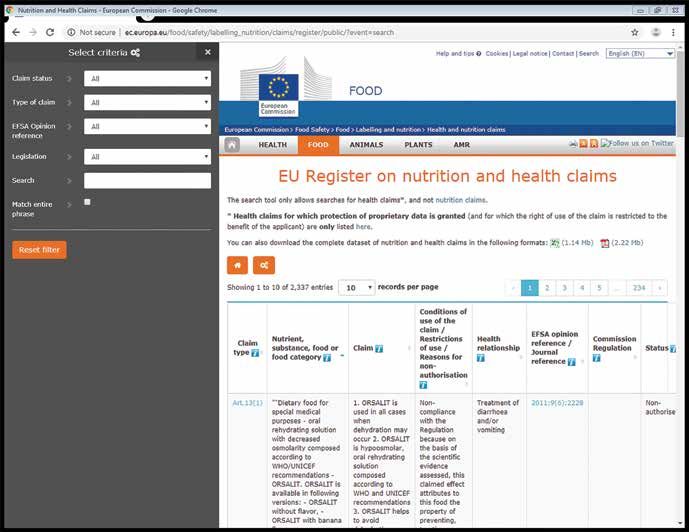
Information on Nutrition and Health Claims

Claims should not:
   8   Be false or misleading
   8   Give rise to doubt about the safety and/or nutrition adequacy of other foods
   8   Encourage or condone excess consumption of a food
   8   State, suggest or imply that a properly balanced and varied diet cannot provide adequate quantities
       of nutrients
   8 In general, refer to changes in bodily function that could give rise to, or exploit fear in the consumer either
       textually or through pictorial, graphic or symbolic representation
                                                                                 (Article 3 of Regulation 1924/2006)
   8 Attribute to any foodstuff the property of preventing, treating or curing a human disease, or referring to such
       properties
                                                                             (Article 7 (3) of Regulation 1169/2011)

In order to make a claim, the following conditions must be fulfilled:
   4 The substances for which a claim is made, must be shown to have beneficial nutritional or physiological
       effects established by generally accepted scientific principles
   4 The beneficial nutrient or substance for which the claim is made, is present in the final product in a
       significant quantity
       –	the nutrient or substance for which the claim is made is in a form that is ‘available for use by the body’
          (bioavailable)
       –	the claimed beneficial effect has to be provided by a ‘reasonable quantity of the consumed
          product’. This means that an adequate amount of the active nutrient or substance has to be present
          in a reasonable amount of the food product
       –	if the claimed beneficial effect is due to the absence or reduction of a nutrient or substance, then the
          nutrient or substance should be absent or reduced to the extent that produces the nutritional
          or physiological effect claimed
   4 The average consumer should understand the beneficial effects expressed in the claim
   4 The claim refers to the food ready for consumption according to the manufacturer’s instructions
   4 The claim complies with the specific conditions for nutrition claims and health claims (as outlined in
       this document)
                                                                                 (Article 5 of Regulation 1924/2006)

 Nutrient Profiles
 Food products bearing claims should not be inherently “unhealthy”. This means that foods bearing claims
 should not have high levels of nutrients that need to be restricted to prevent chronic diseases, e.g. fat,
 saturated fatty acids, trans fatty acids, sugars and salt. Rules setting “nutrient profiles” will establish
 healthy limits for different categories of foods.
                                                                            (Article 4 of Regulation 1924/2006)
 In 2008, the European Food Safety Authority published an opinion on nutrient profiles (http://www.efsa.
 europa.eu/en/efsajournal/pub/644.htm). However, nutrient profiles have yet to be established by the
 Commission and Member States.

                                                                                                                 page 3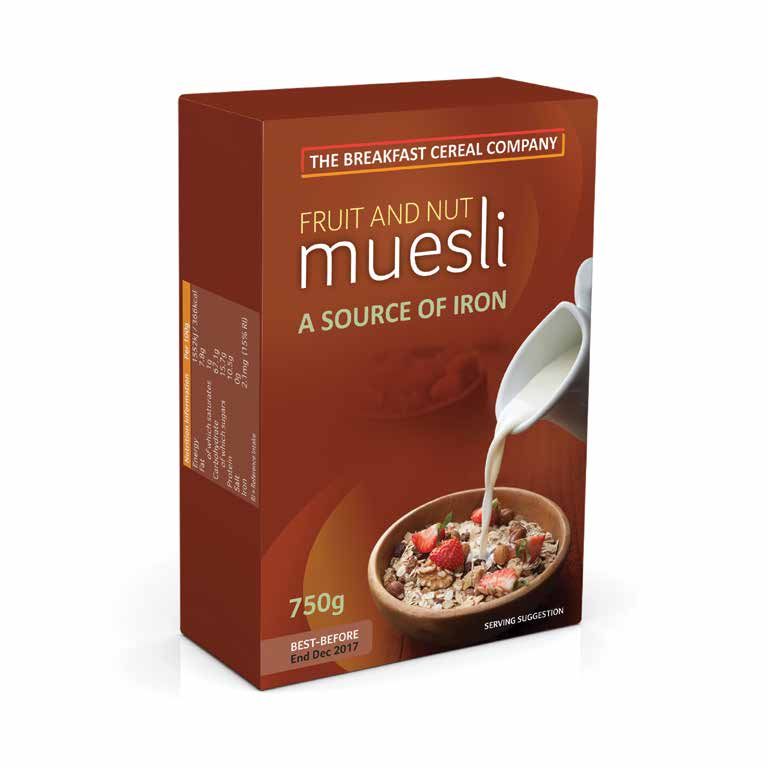
Food Safety Authority of Ireland

Nutrition Claims
Regulation 1924/2006 defines a nutrition claim as:
    ‘any claim which states, suggests or implies that a food has particular beneficial nutritional properties due to:
   (a) the energy (calorific value) it
       (i) provides;
       (ii) provides at a reduced or increased rate; or               Nutrition claims are the
       (iii) does not provide; and/or                                 simplest type of claim
                                                                      about the nutrients
   (b) the nutrients or other substances it
                                                                      a food contains, e.g.
       (i) contains;                                                  orange juice contains
       (ii) contains in reduced or increased proportions;             vitamin C.
       or
       (iii) does not contain.’

Regulation No 1169/2011 defines nutrient as:
  – Protein
  – Carbohydrate
  – Fat
  – Fibre
  – Sodium
  – Vitamins and minerals listed in point 1 of Part A
      of Annex XIII to this Regulation (see page 8) and
      substances which belong to or are components of
      one of those categories

How to find out if you can make a nutrition claim on your food product
This step-by-step guide will show you how to find out if you can make a nutrition claim on your food.

Step 1. Describe your food product
You need to find out exactly:
   1. What nutrients are in your food product?
   2. How much of each nutrient is present in 100g or 100ml of your food, as eaten?
   3. Is your food product high in total fat, saturated fat, trans fat, sugars and salt, so that when nutrient profiles
      are introduced, claims will not be permitted?

 Note:
 Levels for nutrient profiles have yet to be established by the Commission and Member States. In the
 meantime, it is inadvisable to put claims on food products high in these nutrients, particularly saturated fat,
 sugar and salt. http://www.efsa.europa.eu/en/efsajournal/pub/644.htm

First – describe your food in detail. This is important because the nutritional content of foods varies even between
foods that are very similar, e.g. white bread vs. wholegrain bread or dairy spread vs. polyunsaturated spread.
Second – if your food product is made up of different ingredients, e.g. sandwiches, lasagne, the nutritional content
will vary according to different recipe combinations. You need to find out what nutrients are present in the amount
of each ingredient that makes up 100g or 100ml of your product (see egg sandwich example on page 33).

page 4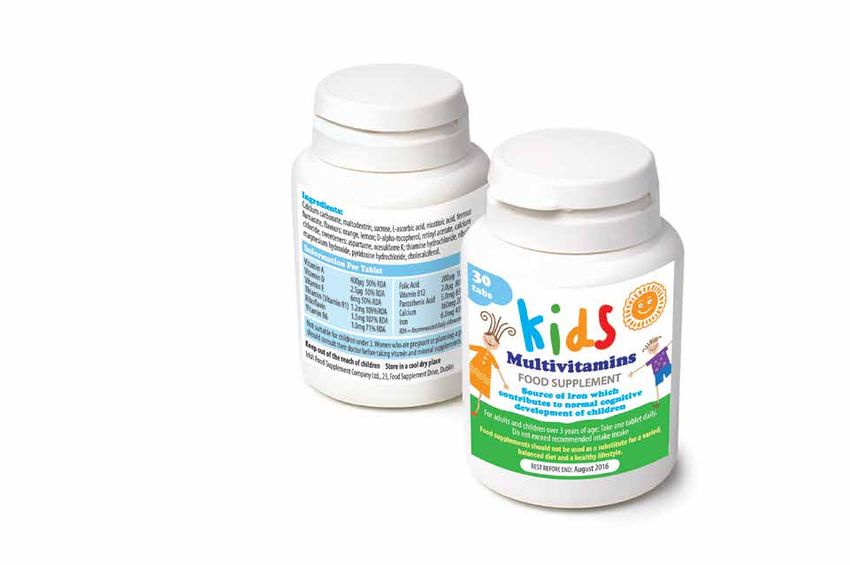
Information on Nutrition and Health Claims

    Note:
    Nutrition and health claims should refer to the food ready for consumption, as according to the
    manufacturer’s instructions.

Step 2. Find out the nutritional content of your food product
Information on the nutritional content of foods is can be found by accessing:
    – Food composition tables (make sure the data are suitable for use in Ireland)
    – Nutritional information from ingredient suppliers

Using food composition tables
Food composition tables always give the nutrient information per 100g/100ml.
In Ireland, McCance and Widdowson’s composition of foods integrated dataset (CoFIDs) is the accepted data
source for food composition. There is a free version of this available online: (https://www.gov.uk/government/
publications/composition-of-foods-integrated-dataset-cofid).
The information presented in food composition tables is quite complex. We encourage users to evaluate the accuracy,
relevance and completeness of their results themselves and where necessary, seek appropriate expert advice.

    Note:
    There is a user-friendly food composition database available online that you can use to find out roughly
    what nutrients your food product contains. The U.S. Department of Agriculture (USDA) database is
    available at: http://ndb.nal.usda.gov/. Unfortunately, this will not give you information that is accurate
    enough for your Irish food product because it is an American food database1. Nonetheless, information
    from the USDA database will give you some indication to help you decide if your food product has the
    potential to bear nutrition and health claims.

    Important:
    To ensure your product can really make a claim, the information you access from the USDA database must be
    validated by checking CoFIDs. This may require help from a dietitian/nutritionist with a recognised qualification.
    Nutrition and health claims for Irish foods or products made from Irish/European ingredients cannot be based
    on USDA food composition data.

Step 3. Identify what nutrition claims you can make on your food product
A full list of the nutrition claims permitted in Europe is outlined in the Annex of Regulation 1924/2006. There are
specific conditions your food product has to meet in order to legally bear these permitted claims – these are
referred to as ‘conditions of use’. A summary of these nutrition claims and their conditions of use are displayed in
this booklet on pages 6 and 7.

Nutrition claims on vitamins and minerals
In relation to claims on vitamins and minerals (‘source of’ or ‘high in’), the required levels to make these claims are
outlined on page 9.

Nutrition claims on protein, monounsaturated, polyunsaturated and unsaturated fat.
These nutrition claims require the use of a conversion factor. This is outlined in detail on page 8.

Practical examples on how to follow the step by step process to make permitted nutrition and health
claims on food products are outlined in Annex 1 (pages 29 – 35)

1
    American foods can differ from European foods due to geographic location, animal husbandry, climate and mandatory and voluntary
    food fortification policies.

                                                                                                                              page 5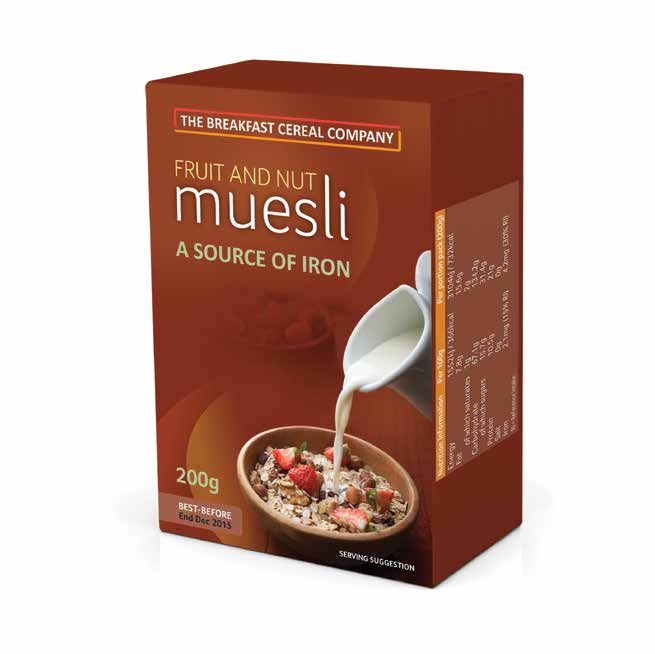
Food Safety Authority of Ireland

Listed below are the permitted nutrition claims with their conditions of use as detailed in the Annex of Regulation
1924/2006 (as amended). This list is on the Community Register of claims on the European Commission website.
http://ec.europa.eu/nuhclaims/

 Nutrition Claim           Condition of Use
 Low energy                Product does not contain more than –
                              40 kcal (170 kJ)/100g for solids or
                              20 kcal (80 kJ)/100ml for liquids
                           Table-top sweeteners (which have equivalent sweetening properties to 6g of sucrose
                           (approximately 1 teaspoon of sucrose providing 24kcal (100kJ) can bear this claim if they contain
                           no more than 4kcal (17kJ)/portion, which have equivalent sweetening properties to 6g of sucrose
                           (approximately 1 teaspoon of sucrose providing 24kcal (100kJ))
 Energy-reduced            Energy value is reduced by at least 30%, with an indication of the characteristic(s) which make(s)
                           the food reduced in its total energy value
 Energy-free               Product does not contain more than 4kcal (17kJ)/100ml.
                           For table-top sweeteners the limit of 0.4kcal (1.7kJ)/portion, with equivalent sweetening properties
                           to 6g of sucrose (approximately 1 teaspoon of sucrose), applies
 Low fat                   Product contains no more than –
                           3g of fat per 100g for solids or
                           1.5g of fat per 100ml for liquids
                           (1.8g of fat per 100ml for semi-skimmed milk)
 Fat-free                  Product contains no more than 0.5g of fat per 100g or 100ml
                           Claims expressed as ‘X% fat-free’ are prohibited.
 Low saturated fat         The sum of saturated fatty acids and trans-fatty acids in the product does not exceed
                           1.5g per 100g for solids or
                           0.75g per 100ml for liquids
                           and in either case, the sum of saturated fatty acids and trans-fatty acids must not provide more
                           than 10% of energy
 Source of omega-3         The product contains:
 fatty acids               at least 0.3g alpha-linolenic acid per 100g and per 100kcal, or at least 40mg of the sum of
                           eicosapentaenoic acid and docosahexaenoic acid per 100g and per 100kcal
 High omega-3 fatty        The product contains:
 acids                     at least 0.6g alpha-linolenic acid per 100g and per 100kcal, or at least 80mg of the sum of
                           eicosapentaenoic acid and docosahexaenoic acid per 100g and per 100kcal
 High                      At least 45% of the fatty acids present in the product derive from monounsaturated fat
 monounsaturated fat       under the condition that monounsaturated fat provides more than 20% of energy of the
                           product
 High polyunsaturated      At least 45% of the fatty acids present in the product derive from polyunsaturated fat under
 fat                       the condition that polyunsaturated fat provides more than 20% of energy of the product
 High unsaturated fat      At least 70% of the fatty acids present in the product derive from unsaturated fat under the
                           condition that unsaturated fat provides more than 20% of energy of the product
 Saturated fat-free        The sum of saturated fat and trans-fatty acids does not exceed 0.1g of saturated fat per
                           100g or 100ml
 Low sugar                 The product contains no more than –
                           5g of sugars per 100g for solids or 2.5g of sugars per 100ml for liquids
 Sugar-free                Product contains no more than 0.5g of sugars per 100g or 100ml
 With no added sugars      Product does not contain any added mono- or disaccharides or any other food used for
                           its sweetening properties. If sugars are naturally present in the food, the following indication
                           should also appear on the label: ‘Contains naturally occurring sugars’
 Low sodium/salt           Product contains no more than 0.12g of sodium, or 0.3g of salt, per 100g or per 100ml
                           For waters other than natural mineral waters falling within the scope of Directive 80/777/EEC, this
                           value should not exceed 2mg of sodium per 100ml
 Very low sodium/salt      Product contains no more than 0.04g of sodium, or 0.1g of salt, per 100g or per 100ml
                           This claim shall not be used for natural mineral waters and other waters.

page 6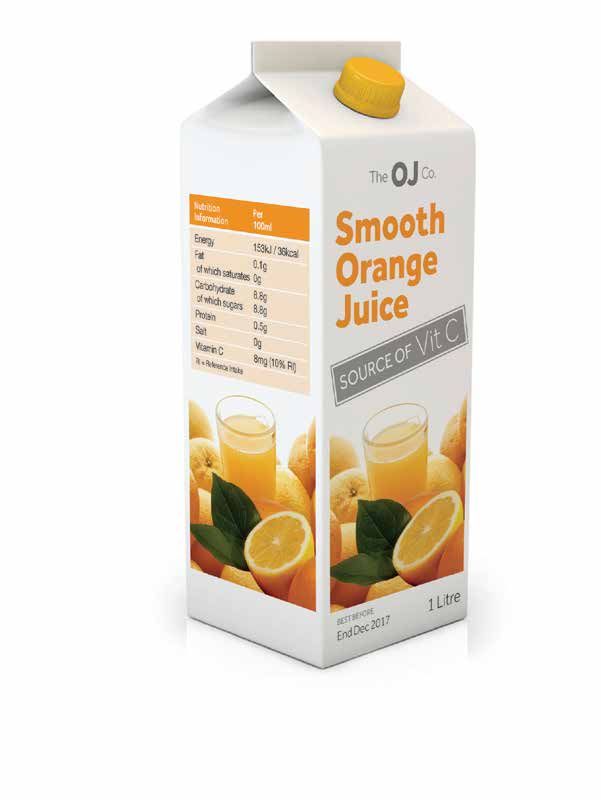
Information on Nutrition and Health Claims

 Nutrition Claim           Condition of Use
 Sodium-free/salt-free     Product contains no more than 0.005g of sodium, or 0.0125g of salt, per 100g
 No added sodium/          A claim stating that sodium/salt has not been added to a food and any claim likely to have the
 salt:                     same meaning for the consumer may only be made where the product does not contain any
                           added sodium/salt or any other ingredient containing added sodium/salt and the product contains
                           no more than 0.12g sodium, or the equivalent value for salt, per 100g or 100ml
 Source of fibre           Product contains at least 3g of fibre per 100g or at least 1.5g of fibre per 100kcal
 High fibre                Product contains at least 6g of fibre per 100g or at least 3g of fibre per 100kcal
 Source of protein         At least 12% of the energy value of the food is provided by protein
 High protein              At least 20% of the energy value of the food is provided by protein
 Source of [name of        The product contains at least a significant amount as defined in Annex XIII to Regulation EU No
 vitamin/s] and/or         1169/2011 (values are given on page 9)
 [name of mineral(s)       or
                           An amount provided for by derogations granted according to Article 6 of Regulation (EC) No.
                           1925/2006 of the European Parliament and of the Council of 20 December 2006 on the addition of
                           vitamins and minerals and of certain other substances to foods (note: the derogations referred to
                           here have not been agreed yet)
 High                      Where the product contains at least twice the value of ‘source of [name
 [name of vitamin/s]       of vitamin/s] and/or [name of mineral/s]’ (values are given on page 9)
 and/or
 [name of mineral(s)
 Contains                  A claim that a food ‘contains’ a nutrient or other substance (for which specific conditions are not
 [name of the nutrient     laid down in Regulation 1924/2006), or any claim likely to have the same meaning as ‘contains’
 or other substance]       for a consumer, may only be made where the product complies with Regulation 1924/2006,
                           particularly Article 5. For vitamins and minerals, the conditions of the claim ‘source of’ apply
 Increased                 Product meets the conditions for the claim ‘source of’ and the increase in content is at least
 [name of nutrient]        30% compared to a similar product
 Light/Lite                Conditions as those set for the term ‘reduced’; the claim shall also be accompanied by an
                           indication of the characteristic(s) which make(s) the food ‘light’ or ‘lite’
 Naturally/Natural         Where a food naturally meets the condition(s) laid down in this Annex for the
                           use of a nutritional claim, the term ‘naturally/natural’ may be used as a prefix
                           to the claim
 Reduced                   Where the reduction in content is at least 30% compared to a similar product, except for
 [name of nutrient]        micronutrients (vitamins and minerals), where a 10% difference
                           in the reference values as set in Regulation EU No 1169/2011 shall be acceptable,
                           and for sodium, or the equivalent value for salt, where a 25% difference
                           shall be acceptable
 Reduced saturated fat Where the sum of saturated fatty acids and of trans-fatty acids in the product is at least 30% less
                       than in a similar product; and where the content in trans-fatty acids is equal to or less than in a
                       similar product
 Reduced sugars            Where the amount of energy in the product is equal to, or less than the amount of energy in a
                           similar product

 Comparative Claims
 A comparison may only be made between foods of the same category, taking into consideration a range
 of foods from that category. The difference in the quantity of a nutrient and/or the energy value must be
 stated and the comparison must relate to the same quantity of food.
                                                                            (Article 9 of Regulation 1924/2006)
 When making a comparative claim about the presence of a nutrient, the product must contain a significant
 amount of that nutrient (see table on page 9 for significant amounts). For example, if a yogurt product in a
 125g pot makes a comparative claim such as ‘increased calcium‘, then the conditions of use for the claim
 ‘increased’ must be met. The yogurt must have at least a significant amount of calcium and the calcium
 content must be at least 30% higher compared to a similar 125g pot of yogurt.

                                                                                                                           page 7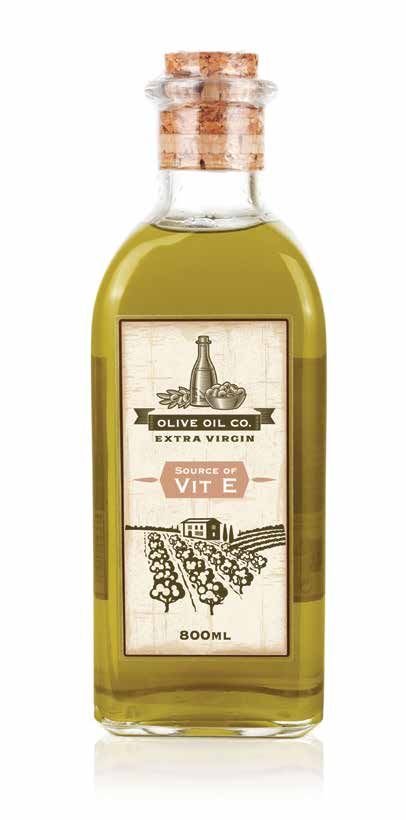
Food Safety Authority of Ireland

Nutrition Claims and Energy Conversion Factors

                                    }
“source of protein”
                                                To make these claims, a food
“high protein”
                                                must provide a minimum amount
“high monounsaturated fat”                      of energy from the specific nutrient
                                                (see pages 6 and 7 for the minimum
“high polyunsaturated fat”
                                                amounts required to make these claims).
“high unsaturated fat”

To verify the amount of energy provided by either protein or fat, the following conversion factors from Regulation
No 1169/2011, as amended, are used.

 Nutrient                                 Conversion Factor           Amount of Energy per 1g of Nutrient
 Protein                                  4kcal/g                     1g protein x 4kcal = 4kcal per g protein
                                          17kJ/g
 Fat (saturated, unsaturated,             9kcal/g                     1g fat x 9kcal = 9kcal per g fat
 polyunsaturated and                      37kJ/g
 monounsaturated)

 Therefore
 % energy from the nutrient = Grams of nutrient per 100g of product x Conversion factor for nutrient x 100
                                                Total Energy per 100g of product                        1

The nutrition table below is for a product making a ‘source of protein’ claim. A ‘source of protein’ claim requires
that at least 12% of the energy in the food is provided by protein.

                                   Nutrition Information     Per 100g
                                   Energy                    1136kJ
                                                             268kcal
                                   Fat                       2.3g
                                   of which saturates        0.67g
                                   Carbohydrate              48.8g
                                   of which sugars           41g
                                   Protein                   13g
                                   Salt                      0.425g

The calculation below uses the protein conversion factor of 4kcal/g to determine the amount of the energy from
protein in the product.

 % energy from protein = Grams of protein per 100g of product x Conversion factor for protein x 100
                                                Total Energy per 100g                            1

 13 x 4 x 100 = 19.4% is the amount of energy from protein. Therefore the claim ‘source of’
  268      1                        protein can be used for this product.

page 8
Information on Nutrition and Health Claims
Vitamins and Minerals
Daily Reference Intake (RI) values for vitamins and minerals are listed in the table below (Annex XIII of 1169/2011).
These RI values previously known as Recommended Daily Allowances (RDAs), have not changed. RI values should
be used on food labels. The minimum values of vitamins and minerals required to meet the conditions for ‘source
of’ and ‘high’ claims in solids, liquids and beverages are listed below.
Table 1. Amount of vitamins and Solids (per 100g) Beverages (per 100ml)
minerals required in solids, liquids Liquids* (per 100ml)
and beverages for ‘source of’ and Single-serve packs
‘high in’ claims. (solids, liquids, & beverages,
per portion)
Vitamin/ Reference Intake Claims that are a Claims that Claims that are a Claims that
mineral (RI) “Source of” are “High” “Source of” are “High”
Vitamin A 800μg 120μg 240μg 60μg 120μg
Vitamin D 5μg 0.8μg 1.6μg 0.4μg 0.8μg
Vitamin E 12mg 1.8mg 3.6mg 0.9mg 1.8mg
Vitamin K 75μg 11.2μg 22.4μg 5.6μg 11.2μg
Vitamin C 80mg 12mg 24mg 6mg 12mg
Thiamin 1.1mg 0.2mg 0.4mg 0.1mg 0.2mg
Riboflavin 1.4mg 0.2mg 0.4mg 0.1mg 0.2mg
Niacin 16mg 2.4mg 4.8mg 1.2mg 2.4mg
Vitamin B6 1.4mg 0.2mg 0.4mg 0.1mg 0.2mg
Folic acid 200μg 30μg 60μg 15μg 30μg
Vitamin B12 2.5μg 0.4μg 0.8μg 0.2μg 0.4μg
Biotin 50μg 7.6μg 15.2μg 3.8μg 7.6μg
Pantothenic acid 6mg 1.0mg 2mg 0.5mg 1.0mg
Potassium 2000mg 300mg 600mg 150mg 300mg
Chloride 800mg 120mg 240mg 60mg 120mg
Calcium 800mg 120mg 240mg 60mg 120mg
Phosphorus 700mg 105mg 210mg 52.5mg 105mg
Magnesium 375mg 56.2mg 112.4mg 28.1mg 56.2mg
Iron 14mg 2.2mg 4.4mg 1.1mg 2.2mg
Zinc 10mg 1.6mg 3.2mg 0.8mg 1.6mg
Copper 1mg 0.2mg 0.4mg 0.1mg 0.2mg
Manganese 2mg 0.4mg 0.8mg 0.2mg 0.4mg
Fluoride 3.5mg 0.6mg 1.2mg 0.3mg 0.6mg
Selenium 55μg 8.2μg 16.4μg 4.1μg 8.2μg
Chromium 40μg 6μg 12μg 3μg 6μg
Molybdenum 50μg 7.6μg 15.2μg 3.8μg 7.6μg
Iodine 150μg 22.6μg 45.2μg 11.3μg 22.6μg
* Liquids other than beverages, e.g. oils
Note:
For solid and liquid products* to claim ‘source of’, there must be at least 15% of the RI in 100g/100ml*
For beverages to claim ‘source of’, there must be at least 7.5% of the RI per 100ml*
For all products (solids, liquids & beverages) in single-serve portion packs, to claim ‘source of’ there must
be at least 15% of the RI in the pack
* These rules relate to full-sized product packs from which multiple servings can be taken.
page 9Food Safety Authority of Ireland
Making ‘source-of’ Claims on Food Products
1. Solid food in full-sized pack and single-serve portion pack
Must contain at least 15%
of the RI for iron (per 100g)
Must contain at least 15% of
the RI for iron (per portion pack)
page 10Information on Nutrition and Health Claims
2. Beverages in full-sized pack and single-serve portion pack
Reverse of pack
Nutrition Per Per portion pack
Information 100ml (150ml)
Energy 153kJ / 36kcal 230kJ / 54kcal
Fat 0.1g 0.15g
of which saturates Tr Tr
Carbohydrate 8.8g 13.2g
of which sugars 8.8g 13.2g
Protein 0.5g 0.75g
Salt 0g 0g
Vitamin C 8mg (10% RI) 12mg (15% RI)
RI = Reference Intake
Must contain at least 7.5% of
the RI for Vitamin C (per 100ml)
Must contain at least 15% of the
RI for Vitamin C (per portion pack)
page 11Food Safety Authority of Ireland
3. Liquids in full-sized pack and single-serve portion pack
Reverse of pack
Nutrition Per Per portion pack
Information 100ml (40ml)
Energy 3969kJ / 899kcal 1588kJ / 360kcal
Fat 99.9g 39.96g
of which saturates 14.9g 5.96g
OLIVE OIL CO. Carbohydrate
of which sugars
0g
0g
0g
0g
Protein 0g 0g
Salt 0g 0g
Source of Vitamin E 4.5mg (38% RI) 1.8mg (15% RI)
Vit E RI = Reference Intake
4
40
Must contain at least 15% of
the RI for Vitamin E (per 100ml)
Must contain at least 15% of the
RI for Vitamin E (per portion pack)
page 12Information on Nutrition and Health Claims
Health Claims
Regulation 1924/2006 on nutrition and health claims defines a health claim as:
‘any claim that states, suggests or implies that a relationship exists between a food category, a food or one of its
constituents and health.’ e.g. this drink will help you feel more energetic/this food will help you concentrate etc.
There are four types of health claims.
A LTH CLAIM
H E S
Reduction Children’s
of disease development
risk and health
Article 14 Article 14
General General
Article 13.5 Article 13
Claim Type of Claim
Article 14 health claims Reduction of disease risk claims and
Claims referring to children’s development and health.
Article 13(5) health claims Health claims other than disease risk reduction and children’s development and
health. These claims are based on newly developed scientific evidence and may
include a request for the protection of proprietary data.
Article 13 health claims Health claims other than disease risk reduction and children’s development and
health. Also known as ‘General health claims’, these claims relate to the effect of a
substance on a body function.
page 13Food Safety Authority of Ireland
Article 14 claims
‘Reduction of disease risk claim’ is defined as:
‘any health claim that states, suggests or implies that the consumption of a food category, a food or one
of its constituents significantly reduces a risk factor in the development of a human disease.’
(Regulation 1924/2006)
‘Children’s development and health claims’ are defined as:
‘health claims solely referring to the development and health of children and where the science is only valid
for children, e.g. calcium is good for children’s growth’.
and/or
‘health claims used on products intended exclusively for children, like follow on formulae, processed
cereal-based foods and baby foods.’
‘Children’ means persons between the ages of 0 and 18 years.
Note that claims relating to health benefits to a foetus are also classed as ‘Children’s development and health
claims’.
(EU guidance on the implementation of Regulation No 1924/2006 on nutrition and health claims made
on foods conclusions of the standing committee on the food chain and animal health 14th December 2007)
The following health claims are not permitted:
8 Claims that suggest that health could be affected by not consuming the food
8 Claims which make reference to the rate or amount of weight loss
8 Claims that make reference to recommendations of individual doctors or health professionals and other
associations, not provided for in community or national rules
Health claims must include:
4 A statement indicating the importance of a varied and balanced diet and a healthy lifestyle
4 The quantity of the food and pattern of consumption required to obtain the claimed beneficial effect
4 Where appropriate, a statement addressed to persons who should avoid using the food
4 An appropriate warning for products that are likely to present a health risk if consumed to excess
4 Other statements that are mandatory according to the conditions of the specific claim
The above information must be included in the labelling, or if no such labelling exists, in the presentation
and advertising.
(Article 10 of Regulation 1924/2006)
page 14Information on Nutrition and Health Claims
How to find out if you can make a health claim on your food product
Step 1. Describe your food product
Follow the procedures for nutrition claims outlined on pages 6 and 7
Step 2. Find out the nutritional content of your food product.
Follow the procedures for nutrition claims outlined on pages 6 and 7
Step 3. Identify what nutrition claims you can make on your food product
Follow the procedures for nutrition claims outlined on pages 6 and 7
Step 4. Identify what health claims you can make on your food product
Now that you have identified the nutrition claims that are possible for your product, you can investigate
what authorised health claims are permitted based on these nutrients. All types of authorised health claims
(13.1, 13.5, 14.1a, 14.1b) are all listed in the Community Register of Claims for the EU. You can find out what
health claims are authorised for your product by searching this register for claims relating to the nutrients you have
identified for your product.
Each authorised health claim has specific ‘conditions of use’ and these are listed in the Community Register
of Claims. You need to check that your food product satisfies the conditions of use for each claim in order
to use it legally.
Practical examples on how to follow the step by step process to make permitted nutrition and health
claims on food products are outlined in Annex 1 (pages 29 – 35)
page 15Food Safety Authority of Ireland Further Information on the Community Register of Claims The Community Register of Claims is on the European Commission website. The website address and snapshot are given below http://ec.europa.eu/nuhclaims/ This register lists approved health claims and conditions for their use, as well as rejected health claims and the reasons for rejection. Authorised health claims must be filtered by the ‘Claim Status’ drop-down list shown in the photo above. It provides up-to-date information on the legal status of health claims. The process of evaluating health claims is ongoing in Europe and claims are added to the Register on an ongoing basis. Health claims which are not on the authorised list cannot be used. There are some exceptions to this as some claims (mostly relating to botanical substances) are awaiting evaluation and are currently legal for use. Refer to the FSAI website for up to date information on the status of health claims. page 16
Information on Nutrition and Health Claims

Examples of Article 13 ‘general health’ claims and their conditions of use
‘Calcium is needed for the maintenance of normal teeth’
This claim on calcium can be made on any food/food supplement which is at least a ‘source of’ calcium.
This means it must contain a ‘significant amount’ (see table on page 9 for significant amounts).

‘Water contributes to the maintenance of normal regulation of the body’s temperature’
This claim can be made only on water which complies with the Directive on the exploitation and marketing of
natural mineral waters (2009/54/EC) and the Drinking Water Directive (98/83/EC). The product must clearly state
that the effect is obtained when at least 2 litres of water (from all sources) is consumed per day.

‘Oat grain fibre contributes to an increase in faecal bulk’
This claim can be made on foods containing oat grain fibre as long as the product meets the conditions for the
nutrition claim ‘High fibre’ (i.e. the product must contain 6g fibre per 100g or at least 3g fibre per 100kcal)

Wording of health claims
When wording health claims, food businesses should keep as close as possible to the authorised wording listed in
the Community register. However, some flexibility is possible to help consumer understanding.
   1) The adapted wording must have the same meaning to the consumer as the authorised wording
      and must not make the claim ‘stronger’ than the authorised claim
       Examples:
       Authorised wording: ‘ALA contributes to the maintenance of normal blood cholesterol levels’
       Permitted adapted wording: ‘Omega 3 contributes to the maintenance of normal blood cholesterol levels’
       Authorised wording: ‘Selenium contributes to the normal function of the immune system’
       Permitted adapted wording: ‘Selenium supports the normal function of the immune system’
       Non-permitted adapted wording: ‘Selenium optimises the normal function of the immune system’

   2) Use of the term ‘normal’
       The term ‘normal’ appears in the authorised wording of many Article 13 health claims. It should be
       retained if the wording is being adapted, and should not be replaced by another term or removed.
       Examples:
       The claim ‘Calcium contributes to normal muscle function’ should not be reworded to
       ‘Calcium contributes to muscle function’, as this changes the meaning

                                                                                                             page 17
Food Safety Authority of Ireland
3) Health claims should only be made for the nutrient, substance, food or food category for which
they have been authorised and not for the product that contains them
Take as an example, the authorised health claim ‘Iron contributes to the normal function of the immune
system’. In relation to a food called ‘Murphy’s Milk’ containing the relevant amount of iron, it would be
acceptable to say:
‘Iron contributes to the normal function of the immune system’ or
‘Murphy’s milk contains iron which contributes to the normal function of the immune system’
but not:
‘Murphy’s milk contributes to the normal function of the immune system’ since this does not make a clear
link between the nutrient (iron) and the claimed effect
4) General, non-specific health claims
When reference is made to general, non-specific benefits of a nutrient or food for overall good health, it must
be accompanied by a specific, authorised Article 13 or 14 health claim.*
For example, if a general claim like ‘GOOD FOR YOUR SKIN’ was made on the front of a food called
‘Sheila’s seaweed’ (which is a source of iodine), it would be acceptable to present this as:
‘GOOD FOR YOUR SKIN’ – Iodine contributes to the maintenance of normal skin’ or
‘GOOD FOR YOUR SKIN’ – Sheila’s seaweed contains iodine which contributes to the maintenance of
normal skin’
5) Reference to excerpts from EFSA opinions
The wording for each authorised health claim is provided in the EU register. EFSA opinions do not authorise
wording for health claims. Use of phrases from an EFSA opinion on food products is not appropriate, as the
phrase may not have the same meaning for the consumer as that of the authorised claim on the EU register.
* http://eur-lex.europa.eu/legal-content/EN/TXT/PDF/?uri=CELEX:32013D0063&qid=1408631024104&from=EN
page 18Information on Nutrition and Health Claims
Nutrition Labelling Requirements under Regulation EU
No 1169/2011 (FIC)
Nutrition labelling requirements:
– Information is expressed per 100g or per 100ml. In addition, the information may be given per serving
as quantified on the label or per portion, provided that the number of portions contained in the package
is stated
– Information provided relates to the foodstuff as sold. The information may relate to the product after
preparation, provided that sufficient preparation instructions are given and the label clearly states that
the information relates to the food as prepared for consumption
– Information must be presented together in one place in tabular form with the numbers aligned. Where
there is insufficient space on the label, the information may be presented in linear form
– Information must be legible, indelible, in a conspicuous location
– Information must be in English (other languages including Irish may be used in addition to English)
All pre-packaged foods must provide nutrition labelling from 13th December 2016*. Nutrition information on foods
bearing nutrition and/or health claims and foods to which vitamins and/or minerals have been added, must comply
with FIC since 13th December 2014.
However, if such foods have been placed on the market prior to 13th December 2014, with labelling compliant with
earlier rules, they may be marketed until stocks are exhausted.
Note:
Before 13th December 2016, the only foods which are required to have nutrition labelling are those bearing
nutrition and health claims and foods to which vitamins and/or minerals have been added. However,
some food businesses may voluntarily provide nutrition labelling on foods. Even in these cases, since
13th December 2014, the nutrition labelling must follow the format in FIC, and all other aspects of the
label must also follow rules in FIC.
* Requirements for nutrition labelling do not apply to food supplements, natural mineral waters and foods specified in Annex V of FIC.
They do apply to foods for particular nutritional uses, without prejudice to Directive 2009/39/EC.
page 19Food Safety Authority of Ireland
Mandatory Nutrition Labelling
It is mandatory for certain information to appear in the table of nutrition information and it must appear in a specific
order. Energy must be listed first in the table. Fat should be displayed directly after energy, followed by other
nutrients as shown in table 1 below.
The amount of salt must be declared. A statement can be included that salt is exclusively from natural sources if no
salt has been added. Salt is calculated by multiplying the sodium content by 2.5.
Where the amount of a nutrient is negligible, the nutrition declaration for the nutrient can be replaced with a
statement such as ‘contains negligible amount of...’ in close proximity to the nutrient declaration.
The European Commission has produced a guidance document on the tolerances allowed for nutrient values
declared on the label and indications of negligible amounts. This is available here
http://ec.europa.eu/food/safety/docs/labelling_nutrition-vitamins_minerals-guidance_tolerances_1212_en.pdf
Table 1: Mandatory nutrition declaration
Per 100g/ml
Energy kJ/kcal
Fat g
of which saturates g
Carbohydrate g
of which sugars g
Protein g
Salt g
The information in the nutrition table can be supplemented by the following nutrients: monounsaturates;
polyunsaturates; polyols; starch; fibre; vitamins and minerals. The order of presentation is shown below:
(a) Monounsaturates
(b) Polyunsaturates
(c) Polyols
(d) Starch
(e) Fibre
(f) Vitamins and minerals (see page 9 for a list of which vitamins and minerals can be listed)
page 20Information on Nutrition and Health Claims
If you choose to supplement the required nutrition information with information on the above nutrients, there is a
specific order you must follow in the table, as shown in Table 2.
Table 2: Mandatory nutrition declaration with supplementary nutrients
Per 100g/ml
Energy kJ/kcal Note:
Fat g Only the nutrients mandatorily
of which saturates g required and the supplementary
nutrients from the list above, i.e. (a)
of which monounsaturates g
to (f) can be included in the nutrition
of which polyunsaturates g table. Other nutrients cannot be
Carbohydrate g included in this table.
of which sugars g If a claim is made on pack about
of which polyols g a nutrient/substance that is not
of which starch g allowed to be listed in the nutrition
table, e.g. Omega 3 fatty acids,
Fibre g then the amount of that nutrient/
Protein g substance must be displayed in
Salt g close proximity to the nutrition table
Vitamins and Minerals Units specified on page 10 (see example on page 26).
& % RI Values
Green = Mandatory Purple = Voluntary/Optional
Reference Intakes (RI)
Where vitamins and minerals are declared in the nutrition table, the amount of each one must be declared
per 100g or 100ml, and as a percentage of the reference intake (%RI). The reference intake values are outlined in
Table 1 on page 9.
Along with the mandatory declaration listed above, the % Reference Intake (RI) values may also be provided on
a voluntary basis for nutrients other than vitamins and minerals (i.e. energy, fat, saturates, carbohydrate, sugars,
protein, salt). This optional declaration can be given per portion or per 100g or 100ml. The reference intakes for
these nutrients are outlined in Table 3.
Table 3: Reference Intakes
Reference intakes
Energy 8400kJ/2000kcal
Fat 70g
of which saturates 20g
Carbohydrate 260g
of which sugars 90g
Protein 50g
Salt 6g
See Table 4 for an example of a table with information on vitamins and minerals.
page 21Food Safety Authority of Ireland
Table 4: Mandatory nutrition declaration with supplementary information on vitamins and minerals
Per 100g/ml
Energy kJ/kcal
Fat g
of which saturates g
Carbohydrate g
of which sugars g
Protein g
Salt g
Vitamin A µg (%RI)
Vitamin C mg (%RI)
Iron mg (%RI)
Calcium mg (%RI)
RI = Reference Intake
Per Portion/Consumption Unit
In addition to the mandatory nutrition declaration per 100g/ml, manufacturers may also declare the amount of
nutrients per portion/consumption unit, provided that these are easily recognisable by the consumer. The label must
also indicate the size of the portion/consumption unit and the number of portions/consumption units contained in
the product.
It is the responsibility of the manufacturer to determine the size of the portion/consumption unit.
Examples of mandatory nutrition declaration with per portion/consumption unit information
Table 5a: Optimal per consumption unit information
Per 100g/ml Per Biscuit
(10g)*
Energy kJ/kcal kJ/kcal
Fat g g
of which saturates g g
Carbohydrate g g
of which sugars g g
Protein g g Green = Mandatory
Salt g g Purple = Voluntary/Optional
*This pack contains 10 biscuits
Table 5b
Per 100g/ml Per Portion
(2 biscuits / 20g)*
Energy kJ/kcal kJ/kcal
Fat g g
of which saturates g g
Carbohydrate g g
of which sugars g g
Protein g g Green = Mandatory
Salt g g Purple = Voluntary/Optional
*This pack contains 5 portions
page 22Information on Nutrition and Health Claims
Table 6: Mandatory nutrition declaration with supplementary information on vitamins and minerals
Per 100g/ml
Energy kJ/kcal
Fat g
of which saturates g
Carbohydrate g
of which sugars g
Protein g
Salt g
Vitamin A µg (%RI)
Vitamin C mg (%RI)
Iron mg (%RI)
Calcium mg (%RI)
See tables 7, 8 and 9 for examples of voluntary declarations.
Table 7: Mandatory nutrition declaration with voluntary % RI per 100g/ml
Per 100g/ml % RI
Per 100g/ml
Energy kJ/kcal %
Fat g %
of which saturates g %
Carbohydrate g %
of which sugars g %
Protein g % Green = Mandatory
Salt g % Purple = Voluntary/Optional
Table 8: Mandatory nutrition declaration with voluntary portion information and % RI per 100g/ml
Per 100g/ml Per Biscuit % RI
(10g)* Per 100g/ml
Energy kJ/kcal kJ/kcal %
Fat g g %
of which saturates g g %
Carbohydrate g g %
of which sugars g g %
Protein g g %
Salt g g %
*This pack contains 10 biscuits
Green = Mandatory Purple = Voluntary/Optional
page 23Food Safety Authority of Ireland
Table 9: Mandatory nutrition declaration with portion information and % RI values per 100g
and per portion
Per 100g/ml Per Biscuit % RI % RI
(10g)* Per 100g/ml** Per Biscuit
Energy kJ/kcal kJ/kcal % %
Fat g g % %
of which saturates g g % %
Carbohydrate g g % %
of which sugars g g % %
Protein g g % %
Salt g g % %
*This pack contains 10 biscuits
Green = Mandatory Purple = Voluntary/Optional
Font size
Regulation 1169/2011 has also introduced a minimum font size for all of the mandatory information and where
nutrition information is declared on the label, it must also comply with this minimum font size. The mandatory
information must appear on the label in characters using a font size where the x-height is equal to or greater than
1.2mm. This is covered in Annex IV of the Regulation.
Exemptions (Annex V of 1169/2011)
The following lists of foods are exempted from having to declare nutrition information:
– Unprocessed products that comprise a single – Fermented vinegars and substitutes for vinegar,
ingredient or category of ingredients including those where the only added ingredients
are flavourings
– Processed products which the only processing
they have been subjected to is maturing and – Flavourings
that comprise a single ingredient or category of
– Food additives
ingredients
– Processing aids
– Waters intended for human consumption
including those where the only added ingredients – Food enzymes
are carbon dioxide and/or flavourings
– Gelatine
– A herb, a spice or mixtures thereof
– Jam setting compounds
– Salt and salt substitutes
– Yeast
– Table top sweeteners
– Chewing gums
– Products covered by Directive 1999/4/EC of the
– Food in packaging or containers the largest
European Parliament and of the Council of 22
surface of which has an area of less than 25cm2
February 1999 relating to coffee extracts and
chicory extracts, whole or milled coffee beans – Food, including handcrafted food, directly
and whole or milled decaffeinated coffee beans supplied by the manufacturer of small quantities
of products to the final consumer or to local
– Herbal and fruit infusions, tea, decaffeinated
retails establishments directly supplying the
tea, instant or soluble tea or tea extract,
final consumer
decaffeinated instant or soluble tea or tea
extract, which do not contain other added
ingredients than flavourings which so not modify
the nutritional value of the tea.
page 24Information on Nutrition and Health Claims
Front of Pack (FoP) Nutrition Labelling (Voluntary)
Once the table of mandatory nutrition information is given, values for energy or for energy, fat, saturates,
sugar and salt can be repeated on the front of pack. This is voluntary.
If you choose to provide this repeat information, it must be in one of the following two formats:
1. Energy value alone
Energy must be given as kJ and kcal
or
2. Energy +4 (fat, saturates, sugars and salt)
Energy (kJ and kcal) plus amounts of fat, saturates, sugars and salt (in grams).
Expression of front of pack (FoP) information per 100g or per 100ml and/or per
portion/consumption unit
Depending on which of the above two formats
are used, the following specific rules apply to
how the nutrition information can be displayed:
1. Energy value alone
You may display the energy value (kJ and
kcal) per portion. However, you must also
display the energy value per 100g/100ml.
or
2. Energy +4 (fat, saturates,
sugars and salt)
The energy, fat, saturates, sugars
and salt (in grams) may be given:
per 100g or 100mls
or
per portion
However, if you give the values per
portion, you must also display energy
per 100g/100ml. Values for energy,
fat, saturates, sugars, and salt may
also be expressed as a percentage
of the reference intake (RI) values per
100g,100ml or portion.
Where the % RI information is provided
on a per portion basis only, the following
statement will also be required (if it is
not already elsewhere on the label) –
Reference intake of an average
adult (8400kJ/2000kcal).
page 25Food Safety Authority of Ireland
Sample Labels
Below is an example of a brown bread product bearing a permitted nutrition claim on Omega-3
Nutrition Claim
on Omega 3
The amount of Omega 3 in the product,
in close proximity to the nutrition table
Note:
Where a health claim is made in generic advertising (not linked to a food product).
There are special labelling rules for foods with added phytosterols/phytostanols and phytosterol/
phytostanol esters (see FIC Annex III 5.1 for information).
page 26Information on Nutrition and Health Claims
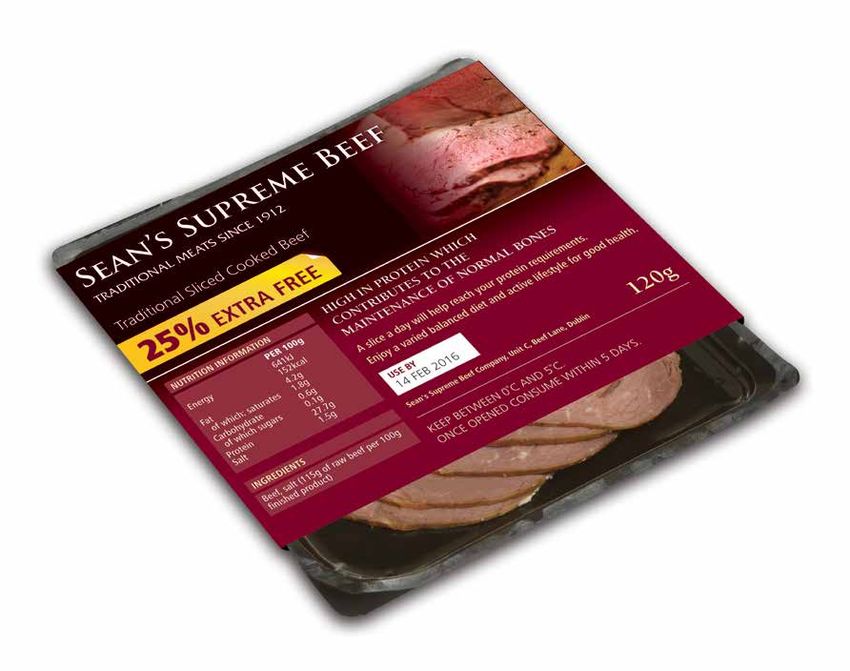
Below is an example of a cooked beef product bearing a permitted general health claim
Nutrition Labelling as per FIC Authorised General Health
Claim Regulation 1924/2006
Regulation 1924/2006
– Statement regarding
quantity of food and
pattern of consumption
– Statement about varied
and balanced diet
page 27Food Safety Authority of Ireland
Below is an example of a food supplement bearing a permitted children’s development
and health claim
Regulation
1924/2006
– Statement
regarding
Permitted children’s quantity of
health claim food and
1924/2006 pattern of
consumption
– Statement
about varied
and balanced
diet
Note:
Specific food supplement labelling rules in Directive 2002/46 must be followed.
page 28Information on Nutrition and Health Claims
Annex 1. How I Can Make Permitted Nutrition and
Health Claims on My Food Product – Practical Examples
1. Boiled Crab
Step 1 – Describe your food product
My food product is boiled crab meat.
Step 2 – Find out the nutritional content of your food product.
Accessing the free USDA database online at http://ndb.nal.usda.gov/ the closest match to my food product is –
‘Crab, crustations, cooked in moist heat, meat only’
This shows me that my food product can potentially make claims in relation to providing Protein, Riboflavin,
Pantothenic Acid, Chloride, Phosphorus, Magnesium, Zinc, Copper and Selenium.
This product was not high in total fat, saturated fat, trans fat, sugar or salt so there are no concerns about nutrient
profiles.
Therefore, it is worth proceeding to find out the exact nutritional composition of my food product using food
composition tables suitable for Ireland (CoFIDs) available at https://www.gov.uk/government/publications/
composition-of-foods-integrated-dataset-cofid.
Using CoFIDs nutrient composition data for my food product, I compare the levels per 100g with the required levels
to make a nutrition claim.
CoFIDs composition tables show boiled crab meat (Food Code: 16-331) to contain the following nutrients in
significant amounts.
Boiled Crab Meat (16-331)
Nutrient Amount per 100g
Protein 19.5g
Riboflavin 0.9mg
Pantothenic Acid 1.0mg
Chloride 640mg
Phosphorus 340mg
Magnesium 58mg
Zinc 5.5mg
Copper 1.8mg
Selenium 84µg
The product provides 535kJ/128kcal of energy per 100g.
page 29Food Safety Authority of Ireland
Step 3 – Identify what nutrition claims you can make on your food product
I find from the list of nutrition claims (pages 6 and 7) I can make the following claims:
‘Source of’ several vitamins and minerals (after considering levels on page 9)
‘High protein’ (this required energy conversion calculations outlined on page 8)
All of these claims are shown below:
Macronutrient Amount per 100g Nutrition claim
Protein 19.5g High protein as protein supplies at
(61% of energy from protein*) least 20% of the energy value
* % energy from protein: 19.5 x 4 x 100 = 61%
128 1
Micronutrient Amount per 100g ‘Source of’ ‘High in’
Riboflavin 0.9mg 4 4
Niacin 16mg 4 4
Pantothenic Acid 1.0mg 4 8
Chloride 640mg 4 4
Phosphorus 340mg 4 4
Magnesium 58mg 4 8
Zinc 5.5mg 4 4
Copper 1.8mg 4 4
Selenium 84µg 4 4
Step 4 – Identify what health claims you can make on your food product
I have identified that I can make nine nutrition claims on my food product.
I can now look up the Community Register of Claims to find out what authorised health claims are
permitted based on these nutrients.
For this example I will outline some of the health claims that may be possible for my product because of its zinc
content (please note there are several other claims that may be possible for this product based on the other eight
nutrients it contains in significant amounts).
Product Nutrient Authorised health claims
Boiled Crab Zinc Zinc contributes to Zinc contributes to Zinc contributes to
normal cognitive the maintenance of the maintenance of
Food Code: 16-331
function normal bones normal vision
page 30Information on Nutrition and Health Claims
2. Natural yogurt made from semi-skim milk
Step 1 – Describe your food product
My food product is natural yogurt made from semi-skim milk.
Step 2 – Find out the nutritional content of your food product
Accessing the free USDA database online at http://ndb.nal.usda.gov/ the closest match to my food product is
‘Yogurt, plain, low fat’.
This shows me that my food product can potentially make claims in relation to providing protein, reduced fat,
calcium, phosphorus, riboflavin and vitamin B12.
This product was not high in total fat, saturated fat, trans fat, sugar or salt so there are no concerns about nutrient
profiles.
Therefore, it is worth proceeding to find out the exact nutritional composition of my food product using food
composition tables suitable for Ireland (CoFIDs) available at https://www.gov.uk/government/publications/
composition-of-foods-integrated-dataset-cofid.
Using CoFIDs nutrient composition data for my food product, I compare the levels per 100g with the required levels
to make a nutrition claim.
CoFIDs show low-fat yogurt to contain the following nutrients in significant amounts:
Yogurt, low-fat, plain (12-379)
Nutrient Amount per 100g
Protein 4.8g
Fat 1.0g
Riboflavin 0.2mg
Chloride 235mg
Calcium 162mg
Phosphorus 143mg
Iodine 34µg
The product provides 239kJ/56kcal of energy per 100g.
page 31Food Safety Authority of Ireland
Step 3 – Identify what nutrition claims you can make on your food product
I find from the list of nutrition claims (pages 6 and 7) I can make the following claims:
A ‘low-fat’ claim
‘Source of’ several vitamins and minerals (after considering levels on page 9)
‘High protein’ (this required energy conversion calculations outlined on page 8)
All of these claims are shown below:
Macronutrient Amount per 100g Nutrition claim
Protein 4.8g High in protein as protein supplies
(34% of energy from protein*) at least 20% of the energy value
Fat 1.0g Low-fat as product contains less
than 3g fat per 100g
* % energy from protein: 4.8 x 4 x 100 = 34%
56 1
Micronutrient Amount per 100g ‘Source of’ ‘High in’
Riboflavin 0.2mg 4 8
Chloride 235mg 4 8
Calcium 162mg 4 8
Phosphorus 143mg 4 8
Iodine 34µg 4 8
Step 4 – Identify what health claims you can make on your food product
I have identified that I can make seven nutrition claims on my food product.
I can now look up the Community Register of Claims to find out what authorised health claims are
permitted, based on these nutrients.
For this example, I will outline some of the health claims that may be possible for my product because of its calcium
content (please note there are several other claims that may be possible for this product based on the other six
nutrients it contains in significant amounts).
Product Nutrient Authorised health claims
Low-fat, plain Calcium Calcium is needed Calcium contributes Calcium contributes
yogurt for the maintenance to normal muscle to normal energy-
of normal bones function yielding metabolism
(12-379)
page 32You can also read


