Section 24, Food Product Documentation - Section 24 Update Guide - Square Meals
←
→
Page content transcription
If your browser does not render page correctly, please read the page content below
Section 24, Food Product Documentation
 Section 24 Update Guide
 August 12, 2020    Updated Section 24, Food Product Documentation to update the Administrator’s
                    Reference Manual (ARM) section references
                    Incorporated the following United States Department of Agriculture guidance:
                       - USDA Memo SP 32-2019, Buy American and the Agricultural Improvement Act of
                          2018 (August 15, 2019)
                    Clarified information on the following topics:
                       - Labeling harvested fish
 April 3, 2018      Updated Section 24, Child Nutrition (CN Labeling and Product Documentation to
                    incorporate the following United States Department of Agriculture guidance:
                       - USDA Memo FD-107, National School Lunch Program (NSLP), Child and Adult
                          Care Food Program (CACFP), Summer Food Service Program (SFSP), Commodity
                          Supplemental Food Program (CSFP), Food Distribution Program on Indian
                          Reservations (FDPIR), The Emergency Food Assistance Program (TEFAP), and
                          Charitable Institutions
                          (November 21, 2017)
                       - USDA Memo SP 28-2016, Food and Drug Administration Requirements for
                          Vending Machines (March 2, 2016)
                       - USDA Child Nutrition Programs: TIPS for Evaluating a Manufacturer’s Product
                          Formula Statement (January 2016)
                       - USDA Memo SP 36-2015, Voluntary Menu Labeling in the National School Lunch
                          and School Breakfast Program (May 19, 2015)
                    Clarified information on the following topics:
                       - Calculating Calories from total fat and saturated fat, sugar, and sodium using
                            product labels
                       - CN Labels
                       - Compliance
                       - Food and beverage product labels, including product origin labeling
                       - Records retention
                       - Rounding in product formulation statements
                       - Standards for meal and poultry products
                       - Vending machines labeling
                       - Voluntary menu labeling
 February 9, 2015   Updated Section 24, Child Nutrition (CN Labeling and Product Documentation to
                    incorporate the following United States Department of Agriculture guidance:
                       - USDA Memo SP 11-2015, CN Labels Copied with a Watermark (November 26,
                          2014)
                       - USDA Memo TA 07-2010 (v.3), Guidance for Accepting Processed Product
                          Documentation for Meal Pattern Requirements (November 26, 2014)
                       - USDA Memo SP 23-2014 (v. 2), Questions and Answers Related to the “Smart
                          Snacks” Interim Final Rule (June 5, 2014)
                       - USDA Memo TA 07-2010, Revised, Guidance for Accepting Processed Product
                          Documentation for Meal Pattern Requirements (MPR) (January 15, 2013)

                      Texas Department of Agriculture | Food and Nutrition Division
                    Section 23, Food Product Labeling | August 12, 2020 | Page 1 of 28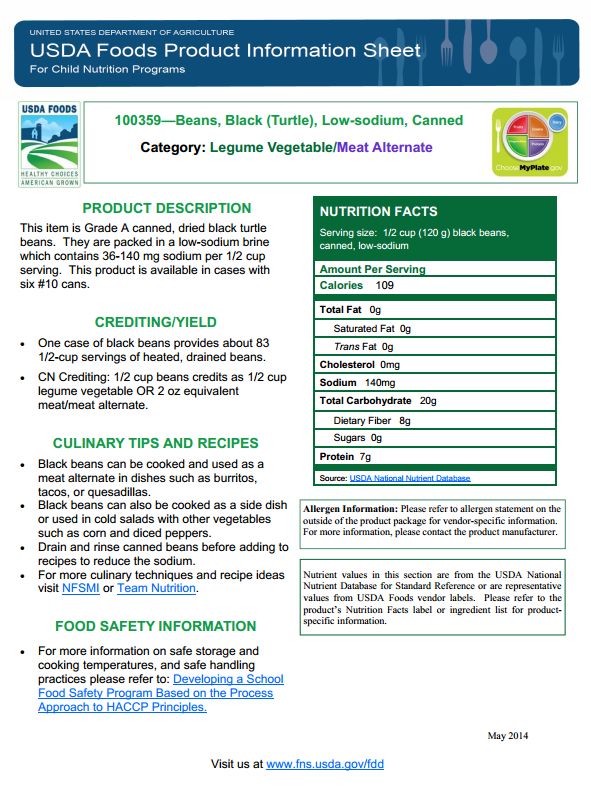
Clarified information on the following topics:
                       - Child Nutrition Label (CN Label)
                       - Compliance
                       - Documentation sources
                       - Food Buying Guide for School Nutrition Programs
                       - Nutrition Facts Labels
                       - Product formulation statement
                       - Records Retention
                       - Texas Department of Agriculture (TDA) Resources
                       - USDA Foods Fact Sheet for Schools & Child Nutrition Programs
February 11, 2013   Created Section 24, Child Nutrition (CN) Labeling and Product Documentation to provide
                    guidance specific to this topic.
                    Deleted School Meal Initiative Review section as this effort was no longer required.

                      Texas Department of Agriculture | Food and Nutrition Division
                    Section 23, Food Product Labeling | August 12, 2020 | Page 2 of 28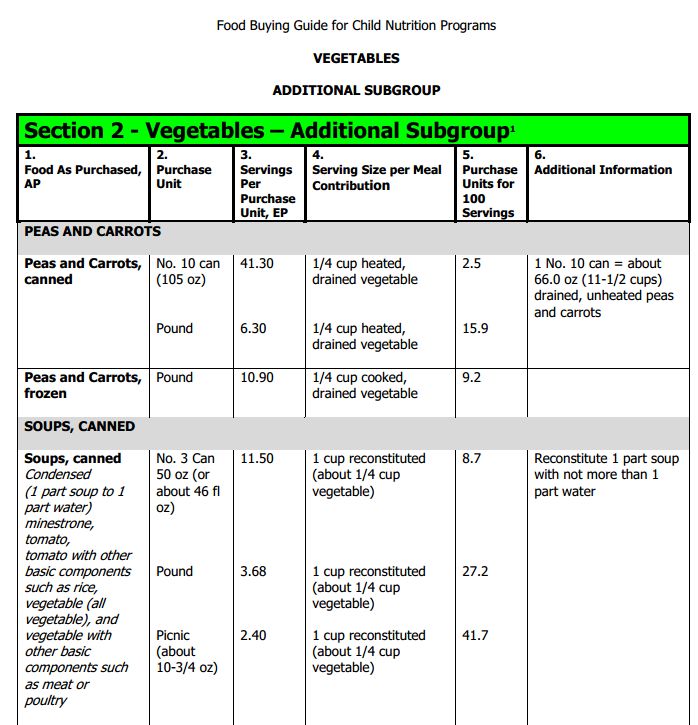
Table of Contents
Definitions for This Section ..................................................................................................... 7
Product Labels ....................................................................................................................... 7
      Acceptable Manufacturer Address ........................................................................................................................... 8
          Location of Labels .................................................................................................................................................. 8
          Label Statement about the Ingredients .............................................................................................................. 8
          Label Statement about Where Product Was Processed ................................................................................... 9
          Size of Print ............................................................................................................................................................ 9
      Product Use by or Sell by Dates ............................................................................................................................. 10
      Harvested Fish Designation ................................................................................................................................... 10
      Unlabeled Products.................................................................................................................................................. 10
Child Nutrition (CN) Label .................................................................................................... 10
   Label Statement ............................................................................................................................... 11
      Source to Verify CN Label Authenticity ................................................................................................................ 12
Federal Inspection ................................................................................................................ 13
CE Responsibility for Use of CN Labeling ................................................................................ 13
      Acceptable Forms of CN Label Documentation .................................................................................................. 13
Food Buying Guide (FBG) for Child Nutrition Programs .......................................................... 14
   CE Responsibility for Use of the Food Buying Guide (FBG) for Child Nutrition Programs ....................... 16
USDA Foods Fact Sheet for Schools & Child Nutrition Institutions............................................ 16
   CE Responsibility for Use of a USDA Foods Fact Sheet ........................................................................ 16
Nutrition Facts Label ............................................................................................................ 18
   CE Responsibility for Use of a Nutrition Facts Label ........................................................................... 18
      Nutrition Facts Label, Calculating Calories from Total Fat and Saturated Fat ............................................... 19
          Calories from Total Fat ....................................................................................................................................... 19
          Percentage of Calories from Saturated Fat Per Serving ................................................................................. 20
      Nutrition Facts Label, Calculating Percentage of Sugar Per Serving................................................................ 20
      Nutrition Facts Label, Calculating Sodium .......................................................................................................... 20
Product Formulation Statement ............................................................................................. 21
   Contents of Product Formulation Statement ...................................................................................... 21
   CE Responsibility for Use of a Product Formulation Statement ............................................................ 21
      General Guidance for CEs Reviewing Product Formulation Statements ........................................................ 22
Advertising Literature ........................................................................................................... 23
Standards for Meat and Poultry Products................................................................................ 23
   Meat and Poultry Inspection in Texas ................................................................................................ 23
Other Regulation Applying to Food Labeling ........................................................................... 23

                                        Texas Department of Agriculture | Food and Nutrition Division
                                      Section 23, Food Product Labeling | August 12, 2020 | Page 3 of 28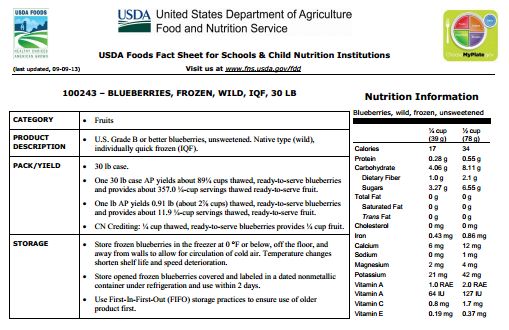
Food and Drug Administration (FDA) Vending Machine Guidance ...................................................... 24
      Additional Information on FDA Vending Machine Labeling Regulation ........................................................ 24
   United States Department of Health and Human Services (HHS) and FDA Voluntary Menu Labeling ..... 25
Additional Resources ............................................................................................................ 25
TDA Resources ..................................................................................................................... 26
Records Retention ................................................................................................................ 26
   Summary of Product Documentation ................................................................................................. 27
Compliance .......................................................................................................................... 27

Information Boxes and Charts
      Sample CN Label...................................................................................................................................................... 12
      Federal Inspection Labels Chart ............................................................................................................................ 13
      Sample Food Buying Guide for School Meal Programs ..................................................................................... 15
      Sample USDA Foods Fact Sheet ............................................................................................................................ 17
      Sample Nutrition Facts Label................................................................................................................................. 18
      Percentage of Calroies from Total Fat Per Serving Calculation Chart .............................................................. 19
      Percentage of Calroies from Sautrated Fat Per Serving Calculation Chart ...................................................... 20
      Percentage of Sugar by Weight Per Serving Chart .............................................................................................. 20
      Information Box 1, Records Retention ................................................................................................................. 26
      Product Documentation Chart ............................................................................................................................... 27

                                      Texas Department of Agriculture | Food and Nutrition Division
                                    Section 23, Food Product Labeling | August 12, 2020 | Page 4 of 28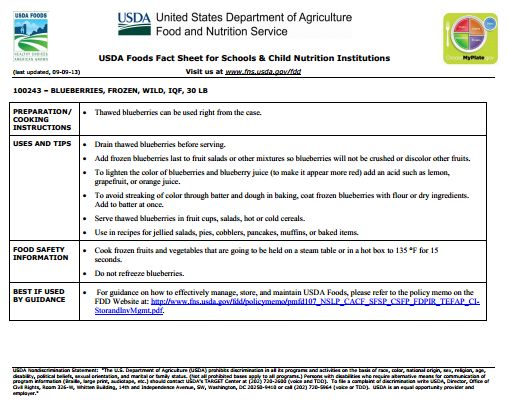
Contact Information for the
                                 Texas Department of Agriculture (TDA), Food and Nutrition
When contacting TDA by phone, Contracting Entities (CEs) need to have their CE Identification Number (CE ID) (and site ID, if
applicable). CEs should include their name and CE ID (and the site name and ID if applicable) in all communication or documentation.
General Contact Information
Physical Address                                                 Mailing Address
1700 N. Congress, 11th Floor, Austin, TX 78701                    PO Box 12847, Austin, TX 78711-2847
Phone     877-TEX-MEAL, (877) 839 -6325                          Email Contact      SquareMeals@TexasAgriculture.gov
Fax       (888) 203-6593                                         Website            www.SquareMeals.org
Questions about Program Applications                              Questions about Program Operation
Child & Adult Care Food Program                                   USDA Foods Operations
 CACFP.BOps@TexasAgriculture.gov                                   CommodityOperations@TexasAgriculture.gov
National School Lunch Program, School Breakfast Program, &        Community Operations (Child & Adult Care Food Program &
Special Milk Program                                              Summer Food Service Program)
 NSLP-SBP.BOps@TexasAgriculture.gov                                Community.Ops@TexasAgriculture.gov
Seamless Summer Option                                            School Operations (National School Lunch Program, School
 SSO.BOps@TexasAgriculture.gov                                    Breakfast Program, & Special Milk Program)
 Summer Food Service Program                                       School.Operations@TexasAgriculture.gov
 SFSP.BOps@TexasAgriculture.gov                                   Texas Eligibility List Management System (Texas ELMS)
Questions about Program Flexibility                                DirectCertification@TexasAgriculture.gov
SNPWaivers@TexasAgriculture.gov for questions about               Farm Fresh Initiative (Local Products)
 - Breakfast Waiver                                                FarmFresh@TexasAgriculture.gov
 - Child Nutrition Program Requirement Waivers                    Questions about Financial Issues
-     Gender Exception                                            Capital Expenditures
-     Hiring Standards, CEs with Less Than 500 Students            NSLP-SBP.BOps@TexasAgriculture.gov
-    Lunch Mealtime                                               Claims
-    Paid Lunch Equity (not currently available)                   BCT.BOps@TexasAgriculture.gov
-    RCCI Age/Grade Group Meal Pattern                            Procurement, Including Sole Source and Emergency Procurement
-    Seamless Summer Operation (SSO) Age/Grade                     CE.ProcurementReviews.BOps@TexasAgriculture.gov
-    Summer Mandate                                               Excessive Balance Plan
-    Technology-Based Confirmation                                 School.Operations@TexasAgriculture.gov
-    Universal Breakfast Mandate                                  Questions about USDA Foods
-    Vending Machine to Dispense Reimbursable Meals               USDA Foods Carryover Inventory
Nutrition@TexasAgriculture.gov for questions about                 CommodityOperations@TexasAgriculture.gov
- Milk Substitute Notification                                    USDA Foods Transfer
                                                                   CommodityOperations@TexasAgriculture.gov
June 22, 2020

                                   Texas Department of Agriculture | Food and Nutrition Division
                                 Section 23, Food Product Labeling | August 12, 2020 | Page 5 of 28
Food Product Labeling
All school nutrition programs (SNP) are required to retain documentation that demonstrates
that menus and beverage and food items served are compliant with the meal pattern as well as
the Competitive Food Nutritional Standards (competitive foods).1 There are typically six types of
documentation available for contracting entities (CEs) to use for this purpose:
• Child Nutrition (CN) Labeling—While general labeling requirements apply to all
food and beverage products, CN Labels are guaranteed to contain the
contributions listed on the CN Label when the product is manufactured according
to the directions.2
• Food Buying Guide for School Meal Programs—The Food Buying Guide for School
Meal Programs provides detailed information that can assist CEs in determining
(1) the number of creditable portions in specific products.3
• USDA Foods Fact Sheets for Schools & Child Nutrition Institutions (USDA Foods
Fact Sheet)—USDA Foods Fact Sheets provide detailed information about
products distributed through the USDA Foods (Commodities) program.4
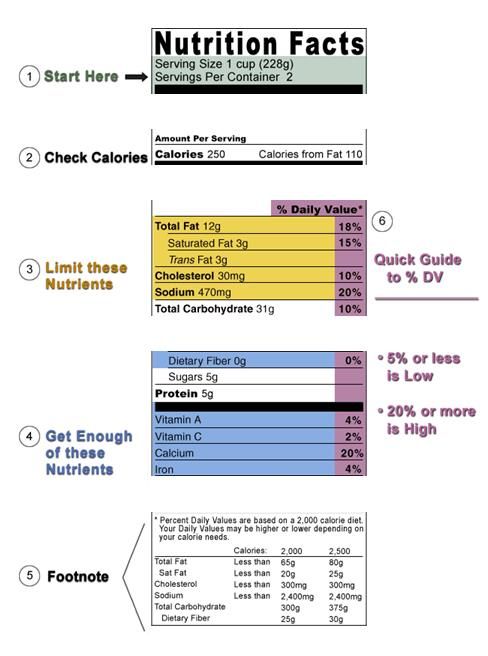
• Nutrition Facts Labels—Nutrition Facts Labels provide nutritional information
based on the recommended daily dietary values as specified by the United States
Food and Drug Administration (FDA).5
• Product Formulation Statements (also referred to as manufacturer’s product
statements and product analysis sheets)—Product formulation statements are
signed and certified by the manufacturer to accurately report the crediting
contribution of a product toward the meal pattern.
• Product Advertising—Advertising materials are commonly not certified and do
not provide extensive information on a product formulation.
The information in this section on product documentation is intended to be used with the
guidance provided in the following Administrator’s Reference Manual (ARM) sections:
• Section 7, Breakfast Meals
• Section 8, Lunch Meals
• Section 9, Pre-Kindergarten Meals
• Section 22, Competitive Food Nutrition Standards
• Section 31, Administrative & Other Compliance Reviews
1 See the Administrator’s Reference Manual (ARM), Section 7, Breakfast Meals; Section 8, Lunch Meals; and
Section 222, Competitive Foods for more information on requirements related to specific food items served.
2 Detailed information on the CN Labeling Program can be accessed at www.fns.usda.gov/cn/labeling-program/.
3 Available at www.foodbuyingguide.fns.usda.gov/
4 Additional information and individual NSLP USDA Food Fact Sheets are available at
www.fns.usda.gov/fdd/nslp-usda-foods-fact-sheets
5 Detailed information on Nutrition Facts Labels can be found on the U.S. Food and Drug Administration (FDA)
website at www.fda.gov/.
Texas Department of Agriculture | Food and Nutrition Division
Section 23, Food Product Labeling | August 12, 2020 | Page 6 of 28For this section, when guidance is provided on the use of CN Labels or product documentation
for meeting the meal pattern requirements, meal pattern requirements include menu planning,
food components, crediting contributions, weekly minimums, and weekly dietary specifications.
Definitions for This Section
For this section, the following definitions provide information that may assist CEs in retaining
documentation about meal served and competitive foods sold:
Agricultural Marketing Service, United States Department of Agriculture (USDA) agency
AMS
that administers the CN Labeling Program.
Product label that contains a statement that identifies the crediting contribution that a
CN Label
product makes toward the meal pattern.
Child Nutrition USDA program working directly with commercial food processing firms and in cooperation
Labels (CN with USDA and the U.S. Department of Commerce (USDC) to provide standardized food
Labels) crediting statements on product labels.
Standards established by USDA to ensure that students are able to purchase healthy meals
Competitive
and snacks when these items are not part of the reimbursable meal. There are four types of
Food Nutrition
Competitive Food Nutritional Standards in NSLP and SBP: beverage standards, entrée
Standards
criteria, general competitive food standards, and nutrient standards for beverage and food
(Also Called
items. These standards do not apply to the dietary specifications required for a reimbursable
Smart Snacks)
meal.
Food Buying
Guide (FBG) USDA resource that contains information that can assist CEs in determining (1) the number
for Child Meal of creditable portions in specific products.6
Programs
U.S. Food and Drug Administration (FDA) label that is added to beverage and food products
Nutrition Facts
to provide information about the product’s nutritional profile and serving size by weight or
Label
volume
Product Also called the product analysis sheet or manufacturer’s product statement, signed, and
Formulation certified documentation that provides specific information on a product’s potential crediting
Statement contribution toward the meal pattern.
USDA Foods
Documentation for products distributed by the USDA Foods (Commodities) program that
Fact Sheet for
provides product specific information on a product’s crediting contribution toward the meal
Schools &
pattern or provides information that may help determine whether a product meets the
Child Nutrition
competitive food requirements.
Institutions
Entity that controls or directs the function of a vending machine, including deciding which
Vending
articles of food are sold from the vending machine or the placement of the articles of food or
Machine
beverages within the vending machine and is compensated for the control or direction of the
Operator
function of the vending machine.
Product Labels
For all food and beverage products sold in the United States, the product label must provide
information about the product manufacturer or processor, nutrition information, and country of
6 Available at www.foodbuyingguide.fns.usda.gov/
Texas Department of Agriculture | Food and Nutrition Division
Section 23, Food Product Labeling | August 12, 2020 | Page 7 of 28origin.7 The Food and Drug Administration (FDA) guidance includes five items that must appear
on every food or beverage packaging label (sticker) in order for the label to provide the required
information:
Name of the food or beverage—specifically the common name for the food or
beverage, not the brand name
Statement of
Identity For Example: Sunny Delight is a brand name; orange juice is the product
name. Peter Pan is a brand name; peanut butter is the
product name.
Product Net Weight of the food or beverage item—net weight which does not include the
Weight weight of the container, wrappers, or packing materials
Manufacturer and Location where the food or beverage product is processed and prepared,
Manufacturer’s Address including country of origin information
Nutrition
Serving size, nutrients, vitamins, and minerals8
Facts
All ingredients in a food or beverage listed on the product package in the
Ingredient
order of highest amount of each ingredient by weight—includes, but is not
List
limited to, water, spices, and flavors
All labeling must be provided in clear and readable print. Print may be typed, printed, or
handwritten.
Acceptable Manufacturer Address
In addition to the name of the manufacturer, the label must also show the
address, country of origin for the product and, if a processed product, country of
origin where the processing occurred. For School Nutrition Programs (SNPs),
country of origin is used to demonstrate compliance with the Buy American
provision.9
Location of Labels
Manufacturers must have the manufacturer’s address and country of
origin (1) on individual product packaging or (2) on a box or container of
smaller packaged items.
The following guidelines will assist CEs in determining if the country of origin
information on the product label is acceptable or unacceptable.
Label Statement about the Ingredients
7 Product labels are also a key aspect of determining if the purchase meets the Buy American requirements. For
additional information on this requirement, see Administrator's Reference Manual (ARM), Section 17, Procurement.
8 See the Nutrition Facts Label subsection in this section for additional information on this topic.
9 Processing location may include the term substantially. For more information on the use of this term for the Buy
American provision, see Administrator's Reference Manual (ARM), Section 17, Procurement.
Texas Department of Agriculture | Food and Nutrition Division
Section 23, Food Product Labeling | August 12, 2020 | Page 8 of 28Acceptable
Product of … or Grown in …
Phrasing:
Unacceptable Regional location that does not list the actual location unless the
Phrasing: label lists both the regional location and the actual location
Unacceptable To Be Acceptable10
Grown and Raised in the Grown and Raised in
Atlantic Region Atlantic Region, MD, USA
Flag or other symbols to represent origin location unless the label
also provides a location in text as well
Unacceptable To Be Acceptable
Texas flag symbol Texas flag symbol and
Mexia, TX, USA
Origin location as product name
Unacceptable To Be Acceptable
Pecos Melon Pecos Melon, USA
Label Statement about Where Product Was Processed
Acceptable Manufactured in … or Prepared in … or Produced in… or Assembled
Phrasing: in … or Processed in …
Unacceptable Insufficient information to determine actual location where the food
Phrasing: was processed
Unacceptable To Be Acceptable
Manufactured in North Grown in Canada,
America manufactured in USA11
Indication of processing in United States and non-United States
locations (unless there is an indication that it was processed
substantially in United States)
Unacceptable To Be Acceptable
Manufactured in Texas and Grown and manufactured
Mexico substantially in Texas,
USA
Size of Print
Any font or size is allowed as long as it is legible, easily seen
(conspicuous), and in one color that contrasts with the background
color.12
10The US Custom and Border Protection (CBP) rules have established acceptable abbreviations for counties.
11 While this is acceptable country of origin labeling, a product with this statement would not meet the Buy American
requirements described in Administrator's Reference Manual (ARM), Section 17, Procurement because it does not
indicate that the product is grown in the United States and the label does not indicate if the product was
substantially processed in the United States.
12 FDA provides additional information on appropriate print sizes at
www.fda.gov/Food/GuidanceRegulation/GuidanceDocumentsRegulatoryInformation/LabelingNutrition/ucm2
006828.htm.
Texas Department of Agriculture | Food and Nutrition Division
Section 23, Food Product Labeling | August 12, 2020 | Page 9 of 28Product Use by or Sell by Dates
Manufacturers are not required to place best if used by, use by, sell by, or date of
pack dates on food products with the exception of infant formula. However,
manufacturers commonly include these statements to assist consumers and
retailers in determining when food is of the best quality.13
Best If Used by Indicates when a product will have the best flavor or
Before or Use by quality. It is not a purchase or safety date.
Assists retail stores with knowing when the product will
have the best flavor or quality and assists with
Sell by
managing product inventory management. It is not a
safety date.
Date of Pack, Indicates when the product was packaged, processed, or
Pack Codes, or manufactured. These dates do not communicate
Manufacturing
information related to quality or safety.
Dates
Harvested Fish Designation
All fish sold must also have a designation of country of origin. To meet the Buy
American provision requirements, the labeling must indicate the following:
- Farmed fish must be harvested within the US or any territory
or possession of the US
- Wild caught fish must be harvested as described below.
1. Within the Exclusive Economic Zone (EEZ) of US
(no more than 200 nautical miles from the
territorial sea baseline and is adjacent to the 12
nautical miles from the territorial sea of US,
territories of US, or possession of US).
2. By US flagged vessel (flies a US flag, uses US crew,
follows US safety rules, and is built in US shipyard).
Unlabeled Products
Since all food and beverage products sold in the United States must have product
labels, any food or beverage products that do not have adequate information on
the labels are suspect. CEs should evaluate these products and determine if they
should be used in the SNP.14
Child Nutrition (CN) Label
While the general label requirements apply to all products sold, the United States Department of
Agriculture (USDA), Food Nutrition Service (FNS), Child Nutrition (CN) Labeling Program works
directly with commercial food processing firms and in cooperation with the Food Safety
13 USDA provides additional information on these labels at www.fsis.usda.gov/wps/portal/fsis/topics/food-safety-
education/get-answers/food-safety-fact-sheets/food-labeling/food-product-dating/food-product-dating.
14 Product labels are also a key aspect of determining if the purchase meets the Buy American requirements. For
additional information on this requirement, see Administrator's Reference Manual (ARM), Section 17, Procurement.
Texas Department of Agriculture | Food and Nutrition Division
Section 23, Food Product Labeling | August 12, 2020 | Page 10 of 28Inspection Service (FSIS), Agricultural Marketing Service (AMS), and National Marine Fisheries
Service (NMFS) to approve and manage CN Labels which are designed to meet the specific
labeling needs of Child Nutrition Programs (CNPs).
A CN Label is
a product label that contains a statement that clearly identifies the crediting contribution that a
product makes toward the meal pattern.
To obtain a CN Label, the manufacturer has participated in a Quality Control plan administered
by the Agricultural Marketing Service (AMS) or National Marine Fisheries Service (NMFS) using
guidelines provided by USDA FNS. CN Labels must be authorized by USDA FNS prior to use.
CN Labels are designed to provide specific crediting contribution information for meat/meat
alternates. However, when meat/meat alternate products contain other components, the CN
Label may also provide information related to other meal pattern food components in addition
to the meat/meat alternate information.15
The CN Labeling Program is responsible for reviewing a product’s formulation to determine the
crediting contribution that a single serving of a product makes toward the meal pattern.
Schools and other program operators are not required to offer products with CN Labels;
however, it is important to recognize that a CN Label guarantees that the stated crediting
contribution toward meal pattern is correct when the product is prepared and served according
to the directions. No other available documentation is guaranteed to meet this standard.
Label Statement
The CN Label statement is an integral part of the product label and must include the following
information:
• The CN logo, a distinct border around the CN statement
• A six-digit product identification number assigned by FNS, located in the upper
right corner of the CN Label statement
• The statement of the product’s crediting contribution toward meal pattern
requirements for components included in the product
• Statement specifying the use of the logo and CN Label statement is authorized by
FNS
• The month and year the label was approved by FNS, located in the lower right
side.
CN Labels expire at the end of five years.
15 Although designed to identify crediting contributions for NSLP/SBP meal pattern, CN Labels may also provide
information that may be used to demonstrate whether the food product meets the competitive food requirements.
Texas Department of Agriculture | Food and Nutrition Division
Section 23, Food Product Labeling | August 12, 2020 | Page 11 of 28The Sample CN Label illustrates the information that is required to be included on a CN
Label as well as additional information that may be included on the CN Label.
The CN Label may be embedded
Sample CN Label within a larger label that has the
Chicken Stir-Fry Bowl manufacturer’s branding, barcodes,
preparation directions, nutrient facts,
Ingredient Statement and other information.
Chicken, brown rice, broccoli, red peppers, carrots, onions, water, olive oil, soy
sauce, spices
CN Label border
CN
Six-digit CN
000000 Identification
Each 4.5 oz. Chicken Stir-Fry Bowl provides 1.5 oz. Number
equivalent meat, 1.0 oz. eq. Grains, ¼ cup dark green
vegetable, ¼ cup red/orange vegetable, and ⅛ cup
Meal pattern
other vegetable for Child Nutrition Meal Pattern
contribution
Requirements. Use of this logo and statement
information
CN authorized by the Found and Nutrition Service, USDA, CN
Label Approval Date
Date of Approval,
Net Wt: 18 pounds Expires 5 years
Chicken Wok Company
from this date
1234 Kluck Street, Poultry, PA 12345
CN
Source to Verify CN Label Authenticity
USDA provides a list of valid labels that is updated monthly on the FNS CN
Labeling Program website at www.fns.usda.gov/cn/labeling-program. CE should
check the status of the label before using the product. This list may also provide
additional information including the manufacturer’s physical address and, in some
cases, contact information.
Texas Department of Agriculture | Food and Nutrition Division
Section 23, Food Product Labeling | August 12, 2020 | Page 12 of 28Federal Inspection
All CN Labeled products must be produced under an appropriate USDA or U.S. Department of
Commerce (USDC) federal inspection program to ensure Federal Inspection Labels
that the label statement accurately reflects the amount of Chart
Poultry Product | Red Meat Product |
each ingredient used in the product. Federal agencies Seafood Product
inspecting these products include the following agencies:16
• Food Safety and Inspection Service (FSIS) of
USDA
Nonmeat Products
• Agricultural Marketing Service (AMS) of USDA (Eggs, cheese, beans, and peanut butter)
• National Marine Fisheries Services (NMFS) of the
U.S. Department of Commerce (USDC)
The Federal Inspection Labels Chart illustrates the stamps
Juice Drink and Juice Drink Products
used by various federal inspectors to indicate that the
product has been inspected and meets the requirements
for that type of product.
CE Responsibility for Use of CN Labeling
Although USDA monitors manufacturer documentation and guarantees the accuracy of
information, the CE is responsible for interpreting the information presented on the label and
determining if a product meets the meal pattern.
A CN Label statement
• Does not assure that a product is
The CN Label statement tells how good for children
the labeled product can be credited
or counted toward meeting the meal • Does not assure that a product is
pattern. acceptable to children.
• Does not suggest that products
without CN Labels are inferior
Acceptable Forms of CN Label Documentation
CEs may use any of the following methods to retain CN Label documentation or
records.
− Original label removed from product package.
− Photocopy of CN Label attached to or printed on the product
package if the CN Label is difficult to remove or laser printed.
− Photograph of CN Label attached to or printed on the product
package if the CN Label is difficult to remove or laser printed.
16 Additional information about requesting copies of federally inspected product labels from manufacturers during
the bidding process can be found at www.fns.usda.gov/cn/labeling-program.
Texas Department of Agriculture | Food and Nutrition Division
Section 23, Food Product Labeling | August 12, 2020 | Page 13 of 28TDA recommends the following practices for retaining CN Labeling documentation or records.
• Establish a procedure for designated food service staff to safely remove
CN Labels from boxes. Only one CN Label is needed for the same CN Labeled
product purchased by the CE.
• File CN Labels in a designated binder for future reference and check CN Labels of
reordered products against CN Label on file to make sure the filed label is
current.
• File digital photos or electronically scanned labels with applicable SNP
documentation or records that can be easily retrieved for future reference.17
Food Buying Guide (FBG) for Child Nutrition Programs
The Food Buying Guide for Child Nutrition Programs is
a USDA resource that provides information that can assist CEs in determining (1) the
number of creditable portions in specific products and (2) whether a product fulfills the
requirements for a designated food component.18
USDA developed the Food Buying Guide for Child Nutrition Programs as a tool to assist CEs to
do the following:
1. To determine the number of purchase units needed to obtain the desired
number of servings of a particular food.
2. To adjust portion sizes and calculate servings to meet minimum meal pattern
requirements.
3. To calculate the quantity of food to buy to obtain the correct amount of ready-to-
cook and ready-to-use food for a recipe.
4. To determine correct yields for food purchased, prepared, and ready-to-cook or
ready-to-use, especially for fresh fruits and vegetables.
5. To calculate cost comparisons.
The Sample Food Buying Guide for Child Nutrition Meal Programs illustrates the way product
information is presented Food Buying Guide for Child Nutrition Programs.
17 School nutrition funds may be used to purchase a camera for food service operational needs. Most cameras can
also date stamp the photo.
18 Available at www.foodbuyingguide.fns.usda.gov/
Texas Department of Agriculture | Food and Nutrition Division
Section 23, Food Product Labeling | August 12, 2020 | Page 14 of 28Sample Food Buying Guide for Child Nutrition Programs
Take from (www.foodbuyingguide.fns.usda.gov)
Organized by Food Components
Vegetables Organized by Subgroups
Product Type
Purchase Unit (Package/Container Size)
Number of Servings per Purchase
Unit (Package/Container)
Crediting Contribution
Number of Purchase Units
(Packages/Containers) Needed for 100
Servings
Serving, Yield, Preparation
Information
Texas Department of Agriculture | Food and Nutrition Division
Section 23, Food Product Labeling | August 12, 2020 | Page 15 of 28CE Responsibility for Use of the Food Buying Guide (FBG) for Child Nutrition Programs
Although USDA provides nutritional information based on the most accurate available
information, the CE is responsible for interpreting the information presented in the FBG and
determining if a product meets the meal pattern.
CEs are not required to print and retain copies of the FBG but may find it helpful to retain
copies of pages that are commonly used.
USDA Foods Fact Sheet for Schools & Child Nutrition Institutions
The USDA Foods Fact Sheet for Schools & Child Nutrition Institutions
is a type of product documentation distributed by the USDA Foods (Commodities) program that
provides product specific information on crediting contribution toward the meal pattern or
provides information that may help determine whether a product meets the competitive food
requirements.
These documents incorporate nutritional information that is taken from the USDA National
Nutrient Database or average values based on information from vendors who provide USDA
Foods. Facts Sheet. This includes the following information:
• USDA Foods Material Code—a six-digit number that is unique to the product
(located to the left of the product name)
• Food Category—Grains, meat/meat alternates, fruits, and vegetables
• Nutrition Information
• Product yield and crediting information
• Allergen information (available as appropriate and on newer releases)
• Information on Product Preparation
• Food Safety Information
The Sample USDA Foods Fact Sheet illustrates the way product information is presented on the
facts sheet.
CE Responsibility for Use of a USDA Foods Fact Sheet
Although USDA provides nutritional information based on the most accurate available
information, the CE is responsible for interpreting the information presented on the fact sheet
and determining if a product meets the meal pattern or competitive food requirements.
Texas Department of Agriculture | Food and Nutrition Division
Section 23, Food Product Labeling | August 12, 2020 | Page 16 of 28To use a USDA Foods Fact Sheet for documentation, the CE must ensure that it uses the most
current fact sheet and must retain the fact sheet with its food documentation or records.
Sample USDA Foods Fact Sheet
(Taken from www.fns.usda.gov/fdd/nslp-usda-foods-fact-sheets)
USDA Foods Material Code
Category/Component
Product Description
Nutritional Values
Newer USDA
Foods Fact
Sheet
Crediting Contribution/Yield
Preparation Tips
Food Safety Information
Older USDA
Foods Fact
Sheet
The older USDA
Foods Fact Sheet
format provides the
same categories of
information.
Texas Department of Agriculture | Food and Nutrition Division
Section 23, Food Product Labeling | August 12, 2020 | Page 17 of 28Nutrition Facts Label
A Nutrition Facts Label
is a label that is added to beverage and food products to provide information about the product’s
nutritional profile and serving size by weight or volume.
Nutrition Facts Labels are regulated by the Food and Drug Administration (FDA).
The FDA requires that most food and beverage
products have Nutrition Facts Labels. The Sample Nutrition Facts Label
manufacturer is responsible for the accuracy (Taken from www.fda.gov)
of the information provided on a Nutrition
Facts Label based on criteria provided by the
FDA. The FDA audits Nutrition Facts Labels
but does not review and approve individual
Nutrition Facts Labels. Detailed information
on Nutrition Facts Labels can be found on the
FDA website at www.fda.gov/.
The information on Nutrition Facts Labels
may be helpful in calculating weekly dietary
specifications as well as determining whether
a product makes a creditable contribution
toward a meal pattern component or provides
information that may help determine whether
the product meets the competitive food
requirements.
A Nutrition Facts Label must contain specific
information on a food or beverage’s
nutritional profile in the following areas:
• Serving size by weight or volume
• Number of servings in the package
• Nutrient values for a product—calories,
saturated fat, trans fat, cholesterol,
sodium, carbohydrates, fiber, protein, and vitamins
The Sample Nutrition Facts Label illustrates the way product information is presented on a label.
CE Responsibility for Use of a Nutrition Facts Label
Although FDA monitors the information manufacturers include on the Nutrition Facts Label,
the CE is responsible for interpreting the information presented on the label and determining if
a product meets the meal pattern or competitive food requirements.
Texas Department of Agriculture | Food and Nutrition Division
Section 23, Food Product Labeling | August 12, 2020 | Page 18 of 28To use a Nutrition Fact Label for documentation, the CE must
Sample Nutrient Fact Label
ensure that it uses the most current Nutrition Fact Label and
must retain the Nutrition Fact Label with its food
documentation or records. When a Nutrition Fact Label
provides the needed nutritional information for a product, a
CE may use that information as recorded. There are instances
where a CE will need to perform calculations using the
nutritional information on a Nutrition Facts Label. The
following calculation formulas may be helpful:
Nutrition Facts Label, Calculating Calories from Total Fat
and Saturated Fat
The nutrition facts label panel includes total
fat in two places:
1. listed as calories from fat near the top and
2. listed as grams (g) on the list of Sample Nutrient Fact Label
nutrients in the product.
Calories from Total Fat
A CE may choose whether to use the
calories from fat method or the grams
of fat method for this calculation even
though each may yield slightly
different results. The result of either
method should not be rounded.
Percentage of Calories from Total Fat Per Serving Calculation Chart
Calories from Fat Method—Per Serving
Calories from Fat Total Calories Per Percentage of Calories
100
Per Serving Serving from Fat Per Serving
50 ÷ 140 = .357 x 100 = 35.7%
Grams of Total Fat Method—Per Serving
Number of Total Total Percentage
Grams of Fat 9^ Calories 100 of Calories from
Per Serving Per Serving Fat Per Serving
1
5 x 9 = 45 ÷ 140 = .3214 x 100 = 32.14 %
^ There are 9 calories in each gram of fat
Texas Department of Agriculture | Food and Nutrition Division
Section 23, Food Product Labeling | August 12, 2020 | Page 19 of 28Sample Nutrient Fact Label
Percentage of Calories from Saturated Fat Per
Serving
To calculate the percentage
of calories from saturated
fat per serving, the CE will
use the following formula.
Percentage of Calories from Saturated Fat Per Serving Calculation Chart
Grams of Total Fat Method—Per Serving
Number of Total Total Percentage
Grams of Calories of Calories from
9^ 100
Saturated Fat Per Saturated Fat Per
Per Serving Serving Serving
1
0.5 x 9 = 4.5 ÷ 140 = .0321 x 100 = 3.2%
^ There are 9 calories in each gram of fat
Sample Nutrient Fact Label
Nutrition Facts Label, Calculating Percentage of Sugar Per
Serving
The nutrition facts panel includes grams (g) of
sugar on the nutrition facts label. CEs may use
the following formula to calculate the
percentage of sugar by weight.
Percentage of Sugar by Weight Per Serving Chart
Item Total Percentage Sugar
Number of Grams of
Weight (Grams) 100 by Weight Per
Sugar Per Serving
Per Serving Serving
2 ÷ 28 = .0714 x 100 = 7.14%
Sample Nutrient Fact Label
Nutrition Facts Label, Calculating Sodium
Sodium is reported by milligrams (mg) for
each serving on the nutrition facts label for
each product. No further calculation is needed
to determine if the sodium meets the sodium
nutrition standard.
Texas Department of Agriculture | Food and Nutrition Division
Section 23, Food Product Labeling | August 12, 2020 | Page 20 of 28Product Formulation Statement
The product formulation statement
is a document that provides product specific information on the product’s potential crediting
contribution toward meal pattern.
When a CN Label is not available or the FBG, USDA Foods Fact Sheet, or Nutrition Facts Label
does not provide adequate information, a CE may request a product formulation statement from
a manufacturer.19 Product formulation statements are written, designed, signed/certified, and
distributed by the individual manufacturer. USDA does not review or approve product
formulation statement; therefore, there is no guarantee that the statements made by the
manufacturer are accurate.
[NOTE: Product formulation statements must be written by the manufacturer. A product formulation
statement written by a product vendor is not acceptable documentation for any purpose.]
Contents of Product Formulation Statement
A product formulation statement contains a description that clearly identifies the crediting
contribution that the product makes toward the meal pattern components.
When a manufacturer provides a product formulation statement, it should
• Be on the manufacturer’s letterhead.
• Be signed and certified by an officer for the manufacturer.
• Include contact information for the officer signing the Product Formulation
Statement.
• Provide the product name and product code number.
• Demonstrate how the processed product credits toward the meal pattern or
competitive food requirements citing school nutrition program resources and/or
regulations.
• Provide specific information about the amount of each food item in the product
and crediting contribution for the meal pattern components.
TDA provides sample templates for Product Formulation Statements at www.SquareMeals.org.
CE Responsibility for Use of a Product Formulation Statement
Although an officer for the manufacturer signs/certifies these statements to attest to the
information, CEs have to trust that the official for the manufacturer is providing accurate
nutritional information. USDA encourages CEs to review product formulation statements
carefully since the CE is responsible for ensuring that menus meet meal pattern.
19 A product manufacturer is not required to provide a product formulation statement but may do so at the request of
a CE.
Texas Department of Agriculture | Food and Nutrition Division
Section 23, Food Product Labeling | August 12, 2020 | Page 21 of 28If the formulation of a product changes, the CE will need to obtain a new product formulation
statement that reflects the product changes.
General Guidance for CEs Reviewing Product Formulation Statements
At a minimum, CEs should take the following actions before using a product formulation
statement as proof for crediting contributions:
• Ensure that the product formulation statement provides specific, not
approximate, crediting contribution specifications. Product formulation
statements that contain phrases like to the best of our knowledge and/or
contribution of the product is approximately do not provide the
necessary specificity for a CE to determine if the product provides the
crediting contributions as claimed. A CE should not accept a product
formulation statement containing such language since it does not certify
that the product contains the ingredients described.
• Determine that creditable ingredients listed in the product formulation
statement match a description in the FBG.20 If a product formulation
statement for a specific product claims to provide a higher credit than
what is listed in the FBG, the CE must ensure that the statement
1. clarifies all crediting contributions for ingredients and
2. demonstrates how the product provides that crediting
contributions according to FNS regulations, guidance, and
policy.
• Verify that the stated amount of crediting contribution for the product is not
greater than the serving size of the product. If the product formulation
statement indicates a larger crediting contribution than the actual serving
size of the product, the CE cannot use the product formulation statement.
For Example: A 2.2 fl. oz. (¼ cup) frozen fruit pop or bar may not credit for
more than 2.2 fl. oz. or ¼ cup of fruit or fruit juice.
• Ensure that the total contribution rounds down. The total creditable amount
must be rounded down to the nearest 0.25.oz.
For Example: The total creditable amount of 0.99 oz. must be rounded down to
0.75 oz.
• Verify that creditable components are visible in the finished product. It is
never acceptable for a CE to rely completely on a manufacturer’s
statement that a food item is included in the product. If the manufacturer
states that the product includes a crediting contribution for a specific
component for the meal pattern, the food item must be visible in the
product.
For Example: If the product formulation statement says that a fruit filled
pancake product contains a meat/meat alternate, but a
meat/meat alternate is not a visible ingredient in the product, the
20 The Food Buying Guide (FBG) for Child Nutrition Programs available at www.foodbuyingguide.fns.usda.gov.
Texas Department of Agriculture | Food and Nutrition Division
Section 23, Food Product Labeling | August 12, 2020 | Page 22 of 28CE cannot assume that the product contains a meat/meat
alternate.
Advertising Literature
Advertising literature is created and distributed by the product manufacturer. It may contain
useful information about one or more of the company’s products, including nutritional
information. However, the information in an advertisement is not sufficient to provide
information on the crediting contribution that a product makes toward the required meal
pattern or provide information that may help determine whether a product meets the
competitive food requirements.
Instead, the CE must use an acceptable form of documentation to demonstrate the crediting
contribution or nutritional profile of a beverage or food product. This includes a CN Label, FBG,
USDA Foods Fact Sheet, and Nutrition Facts Label, or product formulation statement.
Standards for Meat and Poultry Products
USDA standards for meat and poultry products set legal requirements for content, preparation,
and labeling before being manufactured and sold in commerce. Standards of identity set specific
(and optional) ingredients a food must contain—such as the kind and amount of meat, percent of
fat or moisture and additives, if any—when a product is to be labeled or identified by a common
product name. See USDA FNS website (www.ams.usda.gov/grades-standards) for more
information on the standards for meat and poultry products.
Meat and Poultry Inspection in Texas
The Texas Department of State Health Services (DSHS), Division for Regulatory Services, Meat
Safety Assurance Unit, is responsible for administering the meat and poultry inspection
program in Texas. All State of Texas meat and poultry plant labels are reviewed by the Labels
and Standards Program to assure they are truthful and accurate at the time of approval. For
additional information, contact DSHS.
Meat Safety Assurance Unit, MC 1872
Texas Department of State Health Services
P.O. Box 149347
Austin, Texas 78714-9347
Telephone: (512) 834-6760 |
TDD: 1-800-735-2989
Fax: (512) 834-6763
Other Regulation Applying to Food Labeling
CEs must follow the Food and Drug Administration (FDA) vending machine regulations as
applicable and may follow the United States Department of Health and Human Services (HHS)
and FDA menu labeling regulations.
Texas Department of Agriculture | Food and Nutrition Division
Section 23, Food Product Labeling | August 12, 2020 | Page 23 of 28Food and Drug Administration (FDA) Vending Machine Guidance
Any CE that owns or operates 20 or more vending machines is required (1) to disclose calorie
information for food and beverages sold from the machines and (2) to provide contact
information for vending machine operator. However, FDA recommends that all vending
machines provide this information.
FDA defines a vending machine owner or operator that is covered by this regulation as a person
or entity that
Controls or directs the function of the vending machine, including deciding which articles of
food or beverage are sold from the vending machine or the placement of the articles of food
or beverages within the vending machine and is compensated for the control or direction of
the function of the vending machine.
The calorie statements must meet the following requirements:
• Clear, conspicuous (easily noticeable and visible to users), and prominently
placed.
• Disclosed on a sign (e.g., small placard, sticker, or poster) near the food item or
selection button. The owner or operator may also use electronic or digital
displays to communicate the information. However, if the buyer can easily see the
nutrition fact label for the item or the nutrition information is visible at the point
of service (POS) because of the way the product is placed or stored, no statement
of calories is required.
Failure to comply with the FDA regulation will render covered vending machine food
misbranded under the Federal Food, Drug, and Cosmetic Act.
CNP operators also may wish to incorporate requirements of this FDA regulation into their
vending machine contracts in order to ensure that covered vending machine operators
contracted by the CNP operator include the calorie information when it is required.
Additional Information on FDA Vending Machine Labeling Regulation
- Food Labeling: Calorie Labeling of Articles of Food in Vending Machines at
www.federalregister.gov/articles/2014/12/01/2014-27834/food-labeling-
calorie-labeling-of-articles-of-food-in-vending-machines
- Vending Machines Labeling Requirements At-A-Glance at
www.fda.gov/food/food-labeling-nutrition/overview-fda-labeling-
requirements-restaurants-similar-retail-food-establishments-and-vending
Texas Department of Agriculture | Food and Nutrition Division
Section 23, Food Product Labeling | August 12, 2020 | Page 24 of 28United States Department of Health and Human Services (HHS) and FDA Voluntary Menu
Labeling
CEs may voluntarily follow the retail food establishment rules to (1) provide calorie information
for all standard menu items and (2) provide, on request, the following nutritional information:
total calories, calories from fat, total fat, saturated fat, trans fat, cholesterol, sodium, total
carbohydrates, dietary fiber, sugar, and protein.
Providing nutritional information for food and beverage items on menus may help students to
make more informed choices about the foods they select and consume at school. Since many
schools use nutrition software for menu planning and identifying acceptable competitive foods,
CEs are also likely to have all the needed information to provide menu labeling. However, it is
the CEs choice to provide this information.
Additional Resources
The following resources may be helpful for CEs developing and implementing an effective
system for retaining food product documentation:
• Food Buying Guide for Child Nutrition Programs (FBG)
Available at www.foodbuyingguide.fns.usda.gov/
• Food Labeling: Calorie Labeling of Articles of Food in Vending Machines
Available at www.federalregister.gov/articles/2014/12/01/2014-
27834/food-labeling-calorie-labeling-of-articles-of-food-in-vending-
machines
• Food Labeling; Nutrition Labeling of Standard Menu Items in Restaurants
and Similar Retail Food Establishments
Available at www.federalregister.gov/articles/2014/12/01/2014-
27833/food-labeling-nutrition-labeling-of-standard-menu-items-in-
restaurants-and-similar-retail-food
• Nutrient Analysis Protocols: How to Analyze Menus for USDA's School
Meals Programs
Available at https://theicn.org/cnss/menu-planning-tools/
• National Nutrient Database for Standard Reference
Available at https://fdc.nal.usda.gov/
• Overview of FDA Labeling Requirements for Restaurants, Similar Retail
Food Establishments and Vending Machines
Available at www.fda.gov/food/food-labeling-nutrition/overview-fda-
labeling-requirements-restaurants-similar-retail-food-establishments-and-
vending
• USDA, Agricultural Marketing Service, Grades and Standards
Available at www.ams.usda.gov/grades-standards
Texas Department of Agriculture | Food and Nutrition Division
Section 23, Food Product Labeling | August 12, 2020 | Page 25 of 28You can also read


