Annual Review 2017/18 - International Coffee Organization
←
→
Page content transcription
If your browser does not render page correctly, please read the page content below
Annual Review
2017/18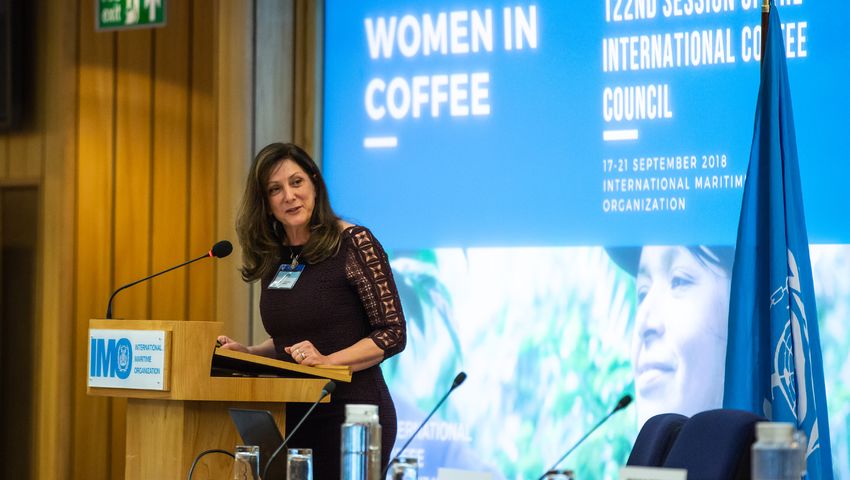
Front cover
Shortlisted entries of the International Coffee Day Photo Competition 2018, including the winning image
by Mr Alejandro José Pernía Paredes, from Mérida, Venezuela.

ISSN 1473-3331
ICO Annual Review 2017/18

                                                Contents

Highlights from the year	 1                                   ICO and the Sustainable Coffee Challenge                   37
                                                               ICO and the International Women’s Coffee Alliance         38
Our Mission	 3                                                ICO and the Global Coffee Platform                        39
                                                               ICO and the African Fine Coffees Association              40
Foreword by the Chair of Council	 4
                                                               Coffee Global Adaptation Plan (C-GAP)                     40
Message from the Executive Director	 5                        International Commodity Bodies’ Forum                      41
                                                               Bi-lateral discussions with international organizations   42
International Coffee Council and associated meetings           Industry events                                           43
7
121st Session: 7-12 April 2018 Mexico City, Mexico        7   Outreach	45
122nd Session: 17-21 September 2018 London,                    Library & Information                  45
United Kingdom                                            8   Links with universities and schools    45
                                                               ICO Internship Programme               47
A forum for dialogue	 11                                      Connecting with industry and consumers 47
Fostering gender equality in the coffee sector  13            Meet the intern                        47
How digital technologies and new financing instruments
can improve access to finance                          14     International Coffee Day 2018	49
Promoting funding opportunities                        15
                                                               International Coffee Agreement 2007 	51
Sharing developments in coffee consumption and health  17
                                                               Bolivarian Republic of Venezuela       51
Learning lessons on Coffee Leaf Rust                   18
                                                               China                                  51
Coffee development projects	19                                Jamaica                                51
Guide to Accessing Green and Climate Funding: The Global       Engaging with Members                  51
Environment Facility (GEF)                               20
                                                               Members	53
Supporting a sustainable coffee sector in Uganda         21
                                                               Exporting Members - 44 (As at 30 September 2018) 54
Promoting domestic consumption                           22
                                                               Importing Members - 7 (As at 30 September 2018)  54
Satellite remote sensing for improved and sustainable
coffee production: Colombia                              23   Finance & Administration	55
Monitoring implementation of Sustainable Development
                                                               Governance and management    55
Goals                                                    24   Introducing a thematic focus 55
                                                               Resources                    55
Markets, statistics and economics	25
                                                               Monitoring the Programme of Activities through Key
World Coffee Market                          27
                                                               Performance Indicators                                    55
Improving ICO statistics                     29
Country coffee profile                       30               Looking ahead	55
Economic research                             31
Gender equality in the coffee sector          31              Office holders 2017/18	56
Development of coffee trade flows            32
                                                               Organisational structure	58
Emerging coffee markets: South and East Asia 33
The role of the coffee futures market in discovering
prices for Latin American producers                      33
Economic and Policy Analysis for Improving Smallholder
Coffee Producers’ Incomes                                34
Promotion and Market Development                         34

Partnering for impact	35
ICO Annual Review 2017/18

                                                       Highlights
                                                     from the year

     WORLD COFFEE PRODUCTION IN COFFEE YEAR 2017/18

                          163.5 million bags

                                                      4.8% higher than last year.

                                                              In collaboration with the Sustainable Coffee
             GUIDE TO ACCESS
            GREEN AND CLIMATE
             FUNDING FOR THE
              COFFEE SECTOR
                                                              Challenge, the ICO published the Guide to
                                                              Access Green and Climate Funding for the
            The Global Environment Facility (GEF)

                                                              Coffee Sector
ICC-122-9                                             V.1.2

                              In cooperation with

                                                    ICO’S KEY ACTIVITIES FOR 2018/19

                •             Implementation of Resolution 465 on
                              coffee price levels
                •             Launch of first ICO Flagship Report focusing
                              on economic sustainability.

                                                                           1
Highlights from the year

           ICO MEMBERS

                                                    World coffee consumption
              98%                                        is estimated at
            of world coffee                            161.93 million bags
              production                                    in 2017/18.

              2/3
           of world coffee                         1.8% higher than in 2016/17
            consumption

                              Closing the gender gap could unlock an increase in
                              coffee production of 4 to 6.5 million 60-kg bags to
                              meet future global demand.

                              Now in its fourth year, International Coffee Day 2018
                              celebrated the growing importance of women across
                              the coffee value chain.

                              In coffee year 2017/18, the composite indicator price
COFFEE PRICES IN 2017/18      averaged 111.51 US cents/lb, 15.8% lower than the
                              average of 132.43 US cents/lb in 2016/17.
      15.8%                   This sustained downward trend in coffee prices has
  lower than in 2016/17       been a great concern to the ICO and the world coffee
                              sector over the past year.

                                              2
ICO Annual Review 2017/18

                                    Our Mission

         The International Coffee Organization (ICO) is a multilateral organization,
         which works through international cooperation to strengthen the global
        coffee sector and promote its sustainable development in economic, social
                                      and environmental terms.

We were set up in 1963 under the auspices of the           Our Member Governments represent 98% of the
United Nations, with responsibility for implementing       world’s coffee production and over two-thirds of
the International Coffee Agreement (ICA) – an              world consumption, providing a unique forum for
important instrument for development cooperation           the global coffee community. Our Members regularly
and trade. The latest Agreement, ICA 2007, entered         discuss and decide the ICO’s guiding principles,
into force in 2011.                                        strategy and work programme in line with the 2030
                                                           Sustainable Development Agenda.

                                      Our Strategic Focus Is On:

                   Delivering world-class data, analysis and information
                                to policy-makers and the industry

                        Providing a global forum for dialogue between
                           and within the public and private sectors

                      Facilitating development projects and promotion
                      programmes through public-private partnerships

                                                       3
ICO Annual Review 2017/18

                               Foreword by the
                               Chair of Council

I was greatly honoured to serve as Chair of the              As Members of the ICO we all have a duty to ensure
International Coffee Council during coffee year              the Agreement is fulfilled and must support the
2017/18. We have yet again witnessed a year of               ICO in its role as administrator of the Agreement,
challenges for the global coffee community and the           not only for the consumers across the world, but
operation of the International Coffee Organization           most importantly for the 120 million people whose
(ICO), but throughout I have always believed in and          livelihood depends on coffee. It was with regret,
championed the power of collaboration.                       therefore, that Members received notification this
      I come from a coffee tradition, which served           year of the decision of the United States of America
to inspire me in my function as Chair. During my             to withdraw from the ICA 2007. I firmly believe that
tenure I had the pleasure to chair the 121st Session         we need to work together and mobilize our resources
of the International Coffee Council in Mexico City           in order to ensure a sustainable global coffee sector.
and the 122nd Session in London, providing not               This is why I was proud to lead a high-level delegation
only a valuable forum for the international coffee           to Washington in June calling on the United States
community to come together to discuss and explore            Government to reconsider its decision, and look
how to address the multiple challenges facing today’s        forward to welcoming back our American friends to
sector, but also the great opportunities offered by          the global coffee family as soon as possible.
producing, trading, processing and consuming coffee.               We live in a rapidly changing world, and the
      Eighty percent of the world’s coffee is produced       world of coffee is no exception. For this reason, the
by small-scale growers in Africa, Asia and Latin             sector has to adapt, and that includes the ICO. I
America and the major challenge overshadowing                am heartened to see that the ICO has continued to
this coffee year has been the dramatic impact of low         innovate its work practices and open itself up to
coffee prices, which do not allow many coffee growers        wider collaboration with global partners, to ensure
to cover their production costs, thus compromising           it is an effective, efficient and relevant Organization
their economic sustainability and jeopardizing future        responding to the needs of its Members and all
availability from important origins. The recognition         stakeholders in the coffee value chain.
that the global coffee community needed to act was                 I would like to take this opportunity to thank my
manifested in Resolution 465 on coffee price levels,         fellow Members of the ICO for their hard work and
approved during the Council´s 122nd Session, which           commitment over the coffee year, as well as thank
gave the ICO a strong mandate to actively promote            the ICO Secretariat for their support and dedication
a dialogue and engage all stakeholders in the coffee         to the work of the Organization.
value chain to find common solutions addressing the                Finally, I wish the incoming Chair, Ms Stefanie
economic sustainability of the coffee producers. The         Kűng of Switzerland, every success in the next
ICO is already actively implementing this Resolution         coffee year. Through the power of collaboration, I am
and I am confident that together we can overcome             convinced the global coffee sector has a bright future.
the many challenges involved and find long-lasting
solutions.
      The International Coffee Agreement (ICA) 2007          H.E. Mr Aly Touré
was established between coffee-producing and                 Chair of the International Coffee Council 2017/18
consuming countries to strengthen the global coffee          Permanent Representative of the Government of Côte d’Ivoire to
sector and promote its sustainable expansion.                international organizations

                                                         4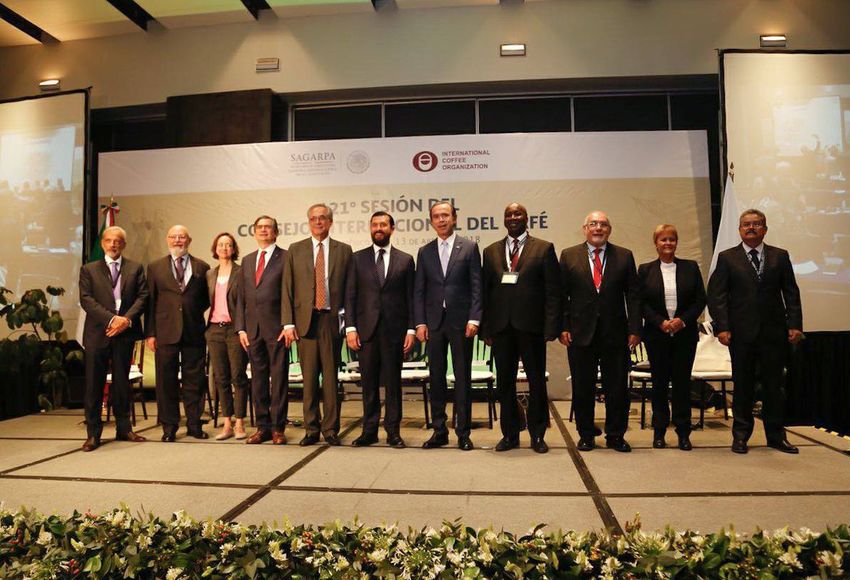
ICICO Annual Review 2017/18

                             Message from the
                             Executive Director

It is a pleasure to present the Annual Review of the           value chain. A number of other public events on the
International Coffee Organization for 2017/18, a year of       same theme were also held, including as a focus of
change for the ICO and for the global coffee sector.           the International Coffee Day information campaign.
      In terms of the internal functioning of the              The main conclusion to be drawn is that increased
Organization, our greatest challenge was to deal with          gender equality is not only a human right, but also
the implications of the regrettable withdrawal of the          makes good sense in economic terms and for the
United States of America from the 2007 International           future sustainability of the coffee sector.
Coffee Agreement. The consequent reduction in                        Listening and responding to calls by Members
income from contributions required a significant               to have wider access to sources of financing for
change in the Organization’s structure, especially             coffee development projects, we hosted a number
in terms of staffing. Although the departure of                of innovative events this year. These included
many dedicated staff members was painful, the                  a Consultative Forum exploring how digital
restructuring has been designed to minimize any                technologies and new financing instruments can
adverse impact on the services that our Members                improve access to finance, as well as a Partnership
expect from us. As we move forward in coffee year              Fair and a Donors Forum during which bilateral
2018/19, we will review the impact of such changes             and multilateral development agencies, financial
to ensure the ICO continues to fulfil its essential role       institutions and donors presented their priorities
in the world coffee sector.                                    and opportunities for collaboration with Members.
      Despite these testing times, important progress          We are ready to assist Members to develop and seek
has been made to further improve the efficiency                funding for projects, and hope to see more concrete
and effectiveness of the Organization. Members                 results in the near future.
have approved a set of key performance indicators                    As the ICO does not function in a vacuum, we
to provide objective measurements of the ICO´s                 must continue to establish partnerships with key
progress in meeting the goals set out in our Five-             non-governmental actors in the world coffee sector,
year Action Plan (2017-21). Another innovation has             in addition to Member governments, in order to
been the introduction of an annual theme for the               achieve our goals. Building on the Memorandums
work of the Organization, in alignment with the                of Understanding with the Global Coffee Platform
Sustainable Development Goals of the United                    and the African Fine Coffees Association, signed in
Nations. This initiative will enable us to sharpen the         2016/17, this year we established new links with the
strategic focus and to better define the priorities of         Sustainable Coffee Challenge (under the auspices
the Organization and their implementation, as well             of the Conservation International Foundation), and
as to streamline resources to enable the ICO to meet           the International Women´s Coffee Alliance. An
its goals.                                                     important outcome from such collaboration has
      Our first annual theme was gender equality, on           already manifested in the publication of the Guide
which we published two studies, and in September               to Accessing Green and Climate Funding: The Global
2018 hosted a workshop on “Women in Coffee”,                   Environment Facility (GEF), a joint initiative with the
including a panel of high-level experts who explored           Sustainable Coffee Challenge; other measures are
ways to foster gender equality across the coffee               already underway to strengthen the global coffee

                                                           5
Message from the Executive Director

sector. We have also taken great strides to establish        The Secretariat and I are committed to ensuring that
and re-establish an active dialogue with our fellow          the Organization is nimble, innovative and relevant
international organizations, and had the honour to           in these challenging times. Working closely with our
welcome Mr Kitack Lim, Secretary General of the              Members and the wider coffee community, I am sure
International Maritime Organization, and Ms Luiza            that together we can go far.
Carvalho from UN Women, to present at the Opening                 Finally, I would like to express my gratitude for
Ceremony of the 122nd Session of the International           the support received from delegates, staff members
Coffee Council in September 2018.                            and all those who share my passion for coffee, not
      Crucially, one cannot ignore the external              only as a source of sensory pleasure but also as a
environment in which the Organization and our                positive force in economic, social and environmental
Members work, and this year will be remembered               development.
as one of particular strain. Coffee prices have been
systematically falling over the last two years and
reached their lowest point in recent history during
September 2018, the last month of the 2017/18
coffee year. The low prices received by growers
call into question the economic sustainability of
the world coffee sector and are a source of great
unease to all ICO Members. This deep concern was
expressed with the passage of Resolution 465 on              José Sette
“Coffee price levels”, which gives the Organization          Executive Director
a strong mandate to take actions, such as: the               International Coffee Organization
promotion of effective exchanges between Members
of national public policy initiatives to deal with low
prices; the encouragement of exporting Members
to adopt programmes to further raise their internal
consumption of coffee; and the strengthening of ties
with the private sector, especially the international
roasting industry.
      In response, the annual theme of the work of the
ICO for 2018/19 will be the economic sustainability of
the coffee sector, which will enable us to explore
various possible approaches to a multifaceted and
complex issue. As the only intergovernmental body
dedicated to coffee with a global reach, the ICO is
uniquely placed to lead this important dialogue in
order to foster inclusive and sustainable growth.

                                                         6
ICO Annual Review 2017/18

                              International
                           Coffee Council and
                          associated meetings

                  The International Coffee Council is the ICO’s governing body.
               It meets twice a year to discuss wide-ranging issues with the aim
                               of promoting a sustainable coffee sector.

                                                                –– The introduction of an ICO Award for Coffee-
121st Session: 7-12 April 2018 Mexico City,
                                                                   Related Research to stimulate research on
Mexico                                                             emerging issues in the global coffee sector while
The 121st Session of the International Coffee Council              strengthening partnerships with universities and
and associated meetings were presided over by the                  research institutions.
Chair of the Council, H.E. Mr Aly Touré of Côte d’Ivoire.       –– The alignment of the Organization’s work
                                                                   programme to the Sustainable Development Goals,
Council decisions included the approval of:                        including an annual thematic focus.
–– A Memorandum of Understanding between the
                                                                –– A bid by the Government of Kenya to host the 124th
   ICO and Sustainable Coffee Challenge, under
                                                                   Session of the International Coffee Council and
   the auspices of the Conservation International
                                                                   associated meetings in Nairobi in 2019
   Foundation, with the objective to expand and
   enhance the coordination of public-private
                                                                During the 121st Session of the Council, the ICO
   collaboration in the coffee sector towards a
                                                                –– Hosted a Dissemination Workshop on Coffee Leaf
   sustainable and healthy coffee community, at
                                                                   Rust.
   the same time as contributing to the Sustainable
   Development Goals.                                           –– Hosted a Dissemination Workshop on Coffee and
                                                                   Health.
–– Resolution 462 calling on Member Governments to
   encourage the USA to continue to be a Member of
   the International Coffee Organization.

–– Co-Funding a specialized study Economic and
   Policy Analysis for Improving Smallholder Coffee
   Producers’ Incomes.

–– The establishment of a Coffee Sustainability
   Projects Trust Fund to mobilize funds to assist
   Members in the design, financing and monitoring of
   development projects.

                                                            7
ICO Annual Review 2017/18
Ms Luiza Carvalho of UN Women
122nd Session: 17-21 September 2018 Dates of future sessions:
London, United Kingdom –– 124th International Coffee Council: 25-29 March
2019 (Nairobi, Kenya).
With the theme of “Women in Coffee”, the International
Coffee Council and associated meetings were presided –– 125th International Coffee Council: 23-27 September
over by H.E. Mr Aly Touré of Côte d’Ivoire. 2019 (London, United Kingdom).
–– 126th International Coffee Council: 20-24 April 2020
Council decisions included the approval of: (location tbc).
–– A Memorandum of Understanding between the –– 127th International Coffee Council: 11-17 September
ICO and International Women’s Coffee Alliance to 2020 (Bengaluru, India).
promote women empowerment and inclusion as
a means of achieving sustainable development
through social and economic progress in coffee- “The time has come to realize that investing
producing countries. in gender equality is good business, not
–– Resolution 465 on Coffee Price Levels, to ensure only for empowering women to realize
the economic sustainability of coffee producers.
their full potential and participate fully
–– A project proposal to support a sustainable coffee
sector in Uganda.
in sustainable development, but also to
–– A monitoring framework for the implementation of
promote results that will benefit current and
Key Performance Indicators. future generations of the world ...”
–– The Programme of Activities for coffee year 2018/19.
Ms Luiza Carvalho,
–– The composition of Committees and office holders
Regional Director, UN Women for the
for 2018/19, including the election of Ms Stefanie
Americas and the Caribbean
Küng (Switzerland) as Chair and Mr Deny Wachyudi
Opening Ceremony: 122nd Session of the
Kurnia (Indonesia) as Vice-Chair.
International Coffee Council
8ICO Annual Review 2017/18
During the week of the 122nd Session of the Council, –– Launch reception of the book ‘Coffee: A Global
the ICO hosted a series of public-facing events History’, by Professor Jonathan Morris from the
including: University of Hertfordshire.
–– A Thematic Workshop: Women in Coffee with a –– Coffee cupping organized by female-led roasting
panel of high-level experts to explore ways of company Girls Who Grind Coffee.
fostering gender equality in the coffee sector.
The ICO would like to thank the Government of Mexico
–– The 8th Consultative Forum on Coffee Sector
for hosting the 121st Session of the International
Finance focusing on harnessing technology and
Coffee Council and associated meetings in Mexico
innovation for investments in the coffee sector
City, and to the Governments of Burundi, Côte
and how digital technologies and new financing
d’Ivoire and Nepal, Conservation International (CI),
instruments could improve coffee growers’ access
Girls Who Grind Coffee, National Coffee Association of
to finance.
the United States of America (NCA), Specialty Coffee
–– A Donors Forum to assist Members to learn and Association (SCA), Tate Coffee, Vietnam Coffee and
link with key donors, international organizations Cocoa Association (VICOFA), United Nations Industrial
and other partners. Development Organization (UNIDO) and the University
–– A Partnership Fair to provide a platform for of Hertfordshire, for sponsoring the exhibition and
international cooperation agencies, donors and events held as part of the 122nd Session.
partners to share with delegates their programmes, The ICO expresses its immense gratitude to the
tools, funding opportunities for the coffee sector International Maritime Organization (IMO) and staff
and the procedures for application. for providing the venue and invaluable support for
–– An exhibition to showcase projects, products and the 122nd Session of the International Coffee Council
services, share innovation, promote good practice in September 2018.
and foster cooperation. Exhibitors included the
Government of Burundi, Government of Nepal,
United Nations Industrial Development Organization
(UNIDO), Vietnam Coffee and Cocoa Association, as
well as a stand dedicated to International Coffee
Day.
Excellent coffee served during this year’s
–– Launch receptions of the e-book: ‘Women in
Council Sessions was kindly provided by
Coffee in Brazil,’ supported by Embrapa – the
Honduras, Mexico, Nepal and Vietnam.
Brazilian Agricultural Research Corporation –
and spearheaded by the Brazilian Chapter of the
International Women’s Coffee Alliance.
H.E. Dr Le Quoc Doanh, Vice Minister of Agriculture and
Mr Kitack Lim, Secretary General of the IMO Rural Development (Vietnam)
9International Coffee Council and associated meetings
encouragement of exporting Members to adopt
Resolution 465 Resolution 465 on
programmes to further raise their internal
Coffee Price Levels1 consumption levels and the strengthening of
A key focus for discussion at the 122nd Session ties with the international roasting industry as a
was the impact of current low coffee prices matter of urgency.
on the livelihoods of coffee farmers, increasing The Resolution covers four main areas:
food insecurity, reducing access to health and advocacy and communication; mobilization
education and increasing the propensity to of coffee stakeholders; research, knowledge-
migrate or take other extreme measures such as building and transparency; and the promotion of
turning to the cultivation of illicit crops. coffee consumption.
The Executive Director emphasized the
important role for the ICO as the voice of the
entire world coffee sector and the need to convey
this serious situation to the outside world,
including consumers, the ever-growing roasting Resolution 465 gives the ICO
industry and the wider international community. the mandate to take action
This discussion led to the approval of Resolution
465 on coffee price levels, giving a mandate to to ensure the economic
the ICO to take action to ensure the economic
sustainability of coffee producers, including sustainability of coffee
the effective exchange between Member States producers
of national public policy initiatives promoting
economic sustainability and consumption, the
1. ICC Resolution 465 on Coffee Price Levels, September 2018
10ICO Annual Review 2017/18
A forum for dialogue
The International Coffee Organization is the only global
forum on coffee matters, bringing together exporting and
importing governments, while also working with the private
sector. Through this convening power, we strive to drive
change through exchanges of views on coffee matters, market
conditions and trends, and to coordinate and implement
policies to address the challenges and opportunities facing
the global coffee community.
11A forum for dialogue
Coffee is the drink most consumed after water – Examples of financing
instruments for the
255kg per second or eight million tonnes per year
coffee sector projects:
STDF
US$410m
Coffee Leaf Rust, an orange powdery fungus
“Hemileia vasatrix’ is one of the most common EU
diseases affecting coffee production
9 billion
euros
The digital revolution has a huge potential to IFAD
transform the economy and the coffee sector
US$294m
GEF
4.1 billion
euros
12A forum for dialogue
Panel speakers included a female entrepreneur and buyer
Fostering gender equality in the
of green coffee from Uganda, a representative from Nestlé
coffee sector Nespresso, two female co-founders of a small-scale roaster
During coffee year 2017/18, an annual theme was introduced that sourced coffee exclusively from women farmers, and
to guide the work of the Organization, not only to improve the Director of the Gender Team of the European Bank for
the efficiency of ICO operations but also to position itself Reconstruction and Development. A key conclusion of the
as an agenda-setting institution in the coffee and wider Thematic Workshop – moderated by Ms Eileen Gordon
political arena, in alignment with the 2030 Agenda for from the European Coffee Federation and chaired by Ms
Sustainable Development. Kellem Emanuele, President of the International Women’s
The first of its kind for the ICO, a Thematic Workshop Coffee Alliance – was that the global coffee sector is very
on Women in Coffee kicked off a series of public and live- diverse and complex. Hence, the level of empowerment, as
streaming events held during the week of the 122nd Session well as the gender gap, varies greatly between countries
of the International Coffee Council in September 2018. and regions, and at different stages of the value chain.
Reflecting the chosen theme of the ICO for coffee year A consensus exists that there is a clear business case
2017/18 on Gender equality, the Workshop not only served for gender equality, not only contributing to achieving UN
as the launch pad for the ICO’s latest insight report ‘Gender Sustainable Development Goal (SDG) 5, but also wider
equality in the coffee sector’2, but also brought together economic benefits, such as improved welfare for rural
delegates from the public and private sectors, in addition communities, as well as higher productivity to help to meet
to a panel of speakers from across the coffee value chain to the growing demand for coffee. However, more data is
explore the obstacles faced by women in the coffee sector needed to develop targeted solutions ranging from gender
and to identify possible solutions for empowerment and policies and development programmes, non-discriminatory
equality. supply chain policies, to management and leadership
training for women. Panellists also agreed that in order to
support women, foster empowerment and gender equality,
the public and private sectors need to work hand in hand,
contributing to achieving SDG 5.
Ms Barbara Rambousek of the European Bank for
Reconstruction and Development
Melanie Landthaler launching Nestlé Nespresso’s AAA
Programme Report on gender equality
Some of the panellists in the ICO’s
Thematic Workshop on Gender Equality
2. ICC-122-11 – Gender equality in the coffee sector. An insight report from the International Coffee Organization, September 2018
13A forum for dialogue
How digital technologies and new financing instruments can improve
access to finance The first panel provided an opportunity to learn about
new technologies and innovative approaches currently
Held once a year, the Consultative Forum on Coffee
being implemented and leaving a mark across agricultural
Sector Finance is one of the most significant world
commodity sectors, such as blockchain applications
coffee events to facilitate discussion on topics related to
and insurance schemes for smallholder farmers against
finance and risk management in the sector, particularly
price volatility. The panellists discussed the potential for
the needs of small- and medium-scale producers
adoption of these innovations in the coffee sector and
and coffee communities. Sponsored by Conservation
identified the barriers that needed to be overcome to ensure
International (CI), the 8th Consultative Forum on Coffee
financial inclusion. The second panel explored how impact
Sector Finance3 in September 2018 focused on how
investments, as well as climate and green bonds, could
digital technologies and new financing instruments could
channel additional funds into the coffee sector, to support
improve coffee growers’ access to finance. Chaired by
investments in the rehabilitation and renovation of ageing
Mr Kirill Matrenichev (Russian Federation), the Forum
coffee trees as well as increase productivity and resilience
featured speakers who shared innovative approaches
to the impact of climate change. The experts also discussed
and technologies from across the public and private
how to ensure that additional funds could be channelled
sectors, including from Stable, bext360, the Coffee Board
into the sector to reach and benefit marginal producers
of India, London Business School, UBS, Climate Bonds
through smart finance instruments and structures.
Initiative, Common Fund for Commodities and CI.
The Forum reached three main conclusions:
1. The rise of new technologies and the data revolution could have a significant and positive impact on producers via many
channels, including improved access to finance. The digital revolution has a huge potential to transform the economy and
the coffee sector. However, if not managed properly, technological change also has the potential to increase inequalities.
Steps must be taken to ensure that small and marginalized farmers, such as female producers, could benefit. Otherwise,
technology could increase the divide between the digital have- and have-nots. The panellists stressed that there is a role
for both the government and the private sectors to play to ensure financial inclusion.
2. The financing requirements of the coffee sector could be partly met by new and innovative instruments. Participants
stressed that a blending of different finance instruments – for example, impact investment, green bonds and grant
elements – could be particularly effective. The challenge is not necessarily the availability of funds, but the availability of
bankable projects. A lot of thought therefore was going into designing structures and mechanisms that allows the matching
of financiers with environmental and social impact objectives with projects supporting coffee growers and communities.
The 2030 Agenda for Sustainable Development and the Sustainable Development Goals provides an excellent framework
and a common language for investors and those designing projects to formulate impact objectives and track progress,
unlocking finance opportunities.
3. In order to pursue sustainable coffee production that is economically viable, the collaboration of all stakeholders in the
sector, the governments, the industry, NGOs and donor institutions is necessary. For example, governments could provide
the right regulatory framework to facilitate adoption of new technologies, provide smart subsidies to increase uptake and
ensure financial inclusion. Harnessing risk-sharing between private investors and multilateral development banks could
increase the availability of finance for agricultural producers.
3. CF-16/18 - Summary report of the 8th Consultative Forum on Coffee Sector Finance
14A forum for dialogue
Promoting funding opportunities
of Foreign Affairs and International Cooperation, and
ICO Member countries and all coffee stakeholders
the African Export-Import Bank.
face many challenges affecting their livelihood,
The presentations made clear that there were
sustainability and businesses, including price
numerous financing instruments already in place for
volatility, costs of inputs, gender inequality, pests
the coffee sector, including development assistance
and diseases and climate change. To address these
across coffee-producing countries, particularly for
challenges, the ICO assists Members in project
smallholder farmers. STDF provided an overview of
identification, design, fundraising and monitoring
Official Development Assistance (ODI) benefitting the
and by linking public and private coffee stakeholders
coffee sector: some 500 projects that had a reference
with international organizations, institutions, donors
to the coffee sector across 60 developing countries
and the private sector.
between 2006 and 2016, totalling US$410 million. As
During coffee year 2017/18 the ICO also hosted
the world’s main development donor, for the period
two innovative events opened up to the wider public
2014-2020, the European Union is providing around
– a Donors Forum and Partnership Fair – both of
9 billion euros for agricultural rural development
which were chaired by H.E. Mr Iván Romero-Martínez
and nutrition projects, with 60 countries already
(Honduras) and helped to chart a path to further
selected for agricultural support and a number of
collaboration.
projects covering specifically the coffee sector.
IFAD is financing 15 projects with components on
Donors Forum4
coffee value chain development in 13 countries,
Sponsored by the United Nations Industrial
totalling US$730 million (IFAD contributes US$294
Development Organization (UNIDO), the objective
million). The GEF – established to leverage public
of the Donors Forum was to expose Members to
and private sector funding in order to mitigate the
best practices and organizations supporting coffee
effects of climate change and reduce environmental
sector development projects and their priorities
impact – with a current financing cycle (GEF-7)
and funding mechanisms. Presentations were given
amounting to US$4.1 billion, now includes coffee
by high-level representatives from key bilateral
in the list of commodities eligible for funding. The
and multilateral agencies and one regional trade
GEF representative praised the ICO for the timely
finance institution, including: Standards and
preparation of its guide on GEF-7 funding, developed
Trade Development Facility (STDF)/World Trade
in conjunction with the Sustainable Coffee Challenge.5
Organization (WTO), the European Commission (EC),
Global Environment Facility (GEF), International Fund
for Agricultural Development (IFAD), Italian Ministry
4. PJ-127/18 - Donors Forum: Project Development Funding Report
5. ICC-122-9. Guide to Access Green and Climate Funding for the coffee sector. The Global Environment Facility (GEF): International Coffee Organization and
Sustainable Coffee Challenge, August 2018
15A forum for dialogue
Partnership Fair6 promote access to finance in Uganda, and South-
The Partnership Fair provided a further platform East Asia and a public-private partnership in Peru.
for international cooperation agencies, donors and –– JICA’s technical cooperation in Ethiopia, the
partners to share with delegates their programmes, Philippines, Rwanda and Thailand, along with
tools, and funding opportunities for the coffee sector support for private sector investment and financing
and the procedures for partnership and application. in Vietnam.
Presentations were given by representatives from
–– UNDP’s Green Commodities Programme using a
the following cooperation agencies and international
multi-stakeholder approach, including the Coffee
organizations: International Trade Centre (ITC),
National Action Plan of Peru, which guarantees
United Nations Industrial Development Organization
the development and sustainability of coffee by
(UNIDO), Deutsche Gesellschaft für Internationale
increasing levels of production and productivity.
Zusammenarbeit (GIZ), Standards and Trade
Development Facility, Global Environment Facility, –– IFAD’s work to improve the livelihood of smallholder
Japan International Cooperation Agency (JICA), farmers and promote inclusive value chains in the
United Nations Development Programme (UNDP), coffee sector in Uganda.
International Fund for Agriculture Development –– Twin’s promotion of market linkages between
(IFAD), as well as Twin and Twin Trading. Examples small-scale farmers across the entire value chain,
of existing support provided to the coffee sector providing technical assistance, in collaboration with
included: producer organizations, for example on governance,
–– The ITC connecting companies from coffee- gender, sustainable agriculture, quality, business
producing countries with buyers and roasters, and management and market access. An example cited
providing assistance for developing country coffee was the Export Capability Programme in Rwanda
strategies, for example in East Africa, Indonesia and and Burundi.
Nepal. Member delegations had the opportunity to deepen
–– The Coffee Sustainability Programme in Ethiopia discussion on partnership for financing development
(€4 million) implemented by the Department of Agri- projects during the Q&A session that complemented
business of UNIDO – a public-private partnership each presentation and also continued the dialogue
funded by the Italian Government, illycaffè and the with speakers bilaterally. To respond to demand
Ethiopian Coffee and Tea Authority, in addition to for further assistance by Members following the
UNIDO’s work on promoting a circular economy in publication of the Guide to Access GEF financing7,
Madagascar, Peru and Vietnam. the ICO will now produce a comprehensive guide on
how to access the support provided by multilateral
–– GIZ’s programmes for a sustainable supply chain,
and bilateral funding institutions.
including cooperation with the private sector to
“Our sincere thanks to the ICO for this innovative
approach and to all the speakers and their
organizations for their commitment and for sharing
with ICO Members the many opportunities to
support the sustainable development of the coffee
sector.
We look forward to closer cooperation.”
Chair of the ICO Project Committee
H.E. Mr Iván Romero-Martínez (Honduras)
6. PJ-128/18 - Partnership Fair Report
7. ICC-122-9. Guide to Access Green and Climate Funding for the coffee sector. The Global Environment Facility (GEF): International Coffee Organization and
Sustainable Coffee Challenge, August 2018
16A forum for dialogue
Today, consumer values are driving changes in
Sharing developments in coffee
product choices, behaviour and attitudes. Consumers
consumption and health increasingly value ethical sourcing, sustainability,
Coffee is the drink most consumed after water – 255kg certification and products that support health,
per second or eight million tonnes per year, hence with changes seen most clearly when examining
the drink is of immense interest, especially in terms generational differences. If consumers knew the good
of its potential effects on health. The ICO hosted news about coffee, they would increase consumption.
a public Dissemination Workshop on Coffee and Concern was raised that a legal ruling from California,
Health8 during the 121st Session of the International commonly referred to as Proposition 65, could result
Coffee Council in Mexico City to share the latest in warnings on coffee cups associating coffee with
developments relating to coffee consumption and cancer. This was despite study after study proving no
health, with presentations from eminent speakers link between coffee and cancer.
in the field: Dr Astrid Nehlig – Research Director The main conclusions of the Workshop were as follows:
at the French National Medical Research Institute, –– Communication on coffee and health needs to
Professor Rui Daniel Prediger PhD – Department of separate the clutter from the credible science, to
Pharmacology, Federal University of Santa Catarina, be factually accurate, simple and straight-forward
Brazil, and Mr William ‘Bill’ Murray, President & CEO
–– Key messaging points should be developed and
of the National Coffee Association of the USA.
reinforced with examples from third-party experts
Latest research confirms that coffee has
numerous benefits to health, including improved –– A need for wider dissemination of information on
mood and performance, increased vigilance, coffee and health within the sector
prevention of age-related cognitive decline (mainly –– Support for more research studies and the best
in women), prevention of Parkinson’s disease and methods to communicate the findings to consumers
possibly Alzheimer’s disease, liver cancer and in order to increase coffee consumption across the
diseases, Type II diabetes, and protection of the world
cardiovascular system.
–– A call for all parties across the coffee sector to
As the world of medicine constantly evolves,
come together to help everyone in the coffee
the challenge is how to communicate the positive
supply chain to grow consumption.
effects of coffee to consumers and in so doing
increase levels of coffee consumption.
8. PM-58/18 - Summary report of the Dissemination Workshop on Coffee and Health
17A forum for dialogue
Coffee Leaf Rust, an orange
powdery fungus ‘Hemileia
vasatrix’ is one of the most
common diseases affecting coffee
production
Learning lessons on Coffee Leaf Rust
The ICO hosted a public Dissemination Workshop learning. Other than India, none of the other countries
on Coffee Leaf Rust during the 121st Session of the undertake regular monitoring of the evolution of rust
International Coffee Council to share the outcomes races. The evaluation of Coffee Leaf Rust race profiles
and lessons learned in managing this devastating in all countries was undertaken and an updated list
disease in selected Member countries. Keynote of races compiled, including new races not previously
speaker Dr Charles Agwanda of CABI9 presented the recorded. The research capacity in the countries was
results and lessons learnt from its Coffee Leaf Rust increased and modernized, leading to trials with new
Management project – an ICO-sponsored initiative, and existing materials under a range of field conditions.
financed by the Common Fund for Commodities In India, an innovative ‘Café Móvel’ telephone helpline
and implemented by CABI in India and four African service was introduced, providing direct support and
countries including Kenya, Rwanda, Uganda and real-time information to coffee farmers on the latest
Zimbabwe. research, in addition to a complementary face-to-face
Coffee is an important source of foreign extension programme, helping to boost yield and quality.
exchange earnings for all the five target countries, Through ‘Café Móvel’, growers not only receive advice
mainly grown by smallholders for whom coffee and access to market data, auction prices and weather
accounts for the substantial proportion of their in their local language, but are also able to create
livelihoods. Along with falling productivity and quality, discussion threads and invite feedback from other
Africa and India are the regions most affected by farmers and wider experts. This real-time access to
Coffee Leaf Rust, due to control agents – particularly pest management information is important to develop
expensive pesticides out of reach of the majority timely strategies to address the challenge of Coffee Leaf
of smallholders – a lack of availability of Coffee Rust. Using the model provided by ‘Plantwise’ – a global
Leaf Rust resistant varieties of coffee trees, and the programme led by CABI to increase food security and
added impact of climate change. The aim of this improve rural livelihoods by reducing crop losses – CABI
project therefore was to build the capacity of coffee is now looking to introduce a similar initiative for coffee.
stakeholders to share improved germplasm between Dr Carlos Ariel Angel of the National Coffee
participant countries, conduct demand-led research Research Centre (CENICAFÉ) of Colombia, and Dr Alfredo
to generate alternative methods for controlling the Zamarippa of the Secretariat of Agriculture, Livestock,
disease in a sustainable way, and to deliver new Rural Development, Fisheries and Food (SAGARPA) of
technologies such as resistant planting materials Mexico, also shared the experiences of their countries
and environmentally-friendly control measures. in tackling the disease. Members were encouraged to
Although most smallholder farmers were able continue to share and learn from the experiences of
to recognize the symptoms of Coffee Leaf Rust, other countries in limiting the impact of Coffee Leaf
many lacked the knowledge needed to manage Rust, as the spread of the disease was far from over,
the disease, particularly in Africa. This led to the with the added burden arising from new challenges
creation of platforms to facilitate farmer-to-farmer caused by climate change.
9. Centre for Agriculture and Bioscience International (CABI) is an international not-for-profit organization providing information and scientific expertise to solve
problems in agriculture and the environment.
18ICO Annual Review 2017/18
Coffee development
projects
We work with government and the private sector to develop
and implement strategies to enhance the capacity of local
communities and smallholder farmers to benefit from coffee
production, which can make a significant contribution to
poverty alleviation. This work includes developing and seeking
finance for projects to foster inclusive and sustainable growth.
19Coffee development projects
Guide to Accessing Green and Climate Funding:
The Global Environment Facility (GEF)
Developed in collaboration with the Sustainable GUIDE TO ACCESS
GREEN AND CLIMATE
Coffee Challenge, this year the ICO produced a new FUNDING FOR THE
COFFEE SECTOR
Guide10 to assist governments of coffee-producing The Global Environment Facility (GEF)
countries to understand the opportunity and the
mechanisms to access GEF funding in order to
address coffee sector challenges.
ICC-122-9 V.1.2
The GEF, in its new four-year replenishment cycle In cooperation with
GEF-7 with an allocation of US$4.1 billion, includes
coffee in the list of commodities eligible for funding.
GEF-7 thereby provides an invaluable opportunity
for countries to prioritize investments in
development programmes, not only to enable
sustainable coffee production, but also to have
a positive impact on nature conservation, as
well as on the livelihoods of coffee-producing
communities.
10. ICC-122-9. Guide to Access Green and Climate Funding for the coffee sector. The Global Environment Facility (GEF): International Coffee Organization and
Sustainable Coffee Challenge, August 2018
20Coffee development projects
SEEKING FUNDS
Uganda
Supporting a sustainable coffee sector
in Uganda
D
uring coffee year 2017/18, the ICO The project includes the following components:
provided its technical expertise to assist –– Building a sustainable coffee production system
the Government of Uganda to develop through transfer of technology and capacity-
concrete steps to implement the Uganda Coffee building
Roadmap – which aims to increase the export
–– Climate change adaptation and environmentally
value from its current level of US$544 million to
responsible practices
US$2 billion.
The coffee sector in Uganda continues to be –– Green coffee quality improvement and value
a major contributor to the national economy in addition
terms of revenue and employment, with around –– Market development for coffee farmers.
2.5 million people depending on coffee growing
and trading for their livelihood. Moreover, Uganda
has the largest number of small-scale coffee
farmers in the world, totalling over 1.7 million The Ugandan Coffee Roadmap ...
with an average farm size of 0.25 hectare. aims to increase the export value
Despite fluctuations in world prices and the from its current level of
government policy of diversification, coffee still
remains the engine of the national economy. US$544 million to US$2 billion
During the last five years, the country exported
annually 3.4 million bags of coffee, generating
The initial total costs of the project, including
over US$417 million in export earnings. Similar
grants and loans are estimated to be US$24
to many developing countries, 84% of the total
million over five years of implementation. The ICO
population of Uganda lives in rural areas, where
and the Ugandan Coffee Development Authority
poverty is widespread and concentrated among
are actively involved in fundraising, seeking
women and young people. This project aims to
relevant partners to complement resources
develop a more sustainable and inclusive coffee
committed by the Government of Uganda.
sector that will generate income for coffee-
farming communities, including youth and
women, reducing poverty among small-scale
coffee farmers, while providing resources for the
sustainable economic growth of the country.
21Coffee development projects
Promoting domestic consumption
Promoting domestic consumption of coffee in producing countries can not
only help to strengthen production, but also assist in alleviating poverty and
increase value addition.
Latin America (Due for completion in 2019) Asia
The Regional Cooperative Programme for the ICO Members from Asian coffee-producing
Technological Development and Modernization of nations are in discussion to reach a consensus
Coffee Cultivation (PROMECAFE) is approaching on use of the Special Fund to promote domestic
the end of a three-year project funded by the consumption in the region.
‘Special Fund’ (see below) to promote and
increase domestic consumption in Costa Rica,
the Dominican Republic, El Salvador, Guatemala,
Honduras, Jamaica, Mexico, Nicaragua and
Panama. The current average per capita domestic
consumption is 1.23kg per year, with the aim to Special Fund
increase this by 30% by 2019. Using the funding The Special Fund was established under
received – US$458,566 – to date the project the International Coffee Agreement 1976
has included regional workshops, with the and continued under the International
participation of Member countries, coffee experts Coffee Agreement 1983 to finance
and representatives of the coffee industry. The a d d i t i o n a l m e a s u re s re q u i re d t o
remaining cycle of the project is focusing on the ensure that relevant provisions of the
development of regional promotional materials Agreements could be implemented, such
to showcase the links between coffee and as introducing the system of certificates
health, and coffee and sports as potential ways of origin, expenditures involved in the
of improving the domestic consumption strategy verification of stocks as well as the
in each country. costs of the improvements in the system
for the collection and transmission of
Africa (Ongoing project) statistical information. The Fund was
The Interafrican Coffee Organization (IACO) built up by a levy on each bag of coffee
has recently sought approval for use of the exported to importing Members, payable
portion of the Special Fund designated for by exporting Members. As market control
Africa to promote domestic consumption in mechanisms were no longer in force
the continent. Africa has a great potential for in the subsequent International Coffee
coffee consumption, but domestic consumption Agreements of 1994, 2001 and 2007, the
across the producing countries of the region, use of the Special Fund was not required.
with the exception of Ethiopia, is limited. The The Fund was therefore liquidated to
significant levels of urbanization in the continent allow for distribution of the fund totalling
and a youth cohort comprising more than 70% US$1,376,233 as at 30 September 2016
of the population, represents a huge opportunity among the three coffee-producing
for entrepreneurship as well as a potential regions (Africa, Asia and Latin America)
increase in consumption, which bodes well for on projects focused in particular on the
the transformation of the African coffee value promotion of consumption.
chain. IACO is developing partnerships with other
African countries, and with the African Export-
Import Bank – nominated by the African Union to
be the lead agency for the Africa Free Trade area.
22Coffee development projects
DUE FOR COMPLETION 2020
Colombia
Satellite remote sensing for improved
and sustainable coffee production:
Colombia
S
ustainable coffee production is becoming This project also has an important gender and
ever more important as the high-altitude inclusion component, prioritising engagement
areas where coffee is grown, such as in with female smallholders. During farm visits,
Colombia, are increasingly sensitive to the effects comprising exploration of coffee plantations
of climate change, as well as pest and diseases. with reference to recent satellite imagery and
This collaboration brings together a collection of GPS waypoints, female farmers
British SME, Colombian SME, the ICO and in particular will be invited to assist as guides,
the Colombia Coffee Growers’ Federation whereby they will become involved in inspecting
(FEDECAFE11 ). This innovative project – estimated and interpreting satellite imagery in relation to
at £350,000 and funded mostly by Innovate UK12 – features on the ground. The project team will
will develop the use of satellite data for mapping seek to collaborate with female growers, through
and monitoring changes in coffee plantations, as training in the use of satellite and remote sensing
well as monitoring the condition of the crop in technologies to facilitate information gathering
relation to pests and diseases, and deterioration and strengthen adaptation to climate change.
due to climate change. The project will include
testing the use of different types of data, with
a focus on high resolution satellite data, in
addition to the collection of UAV/drone data for
localized detailed analysis. Recent developments This project also has an important
in satellite data availability, linked to cloud-based gender and inclusion component,
processing, are potentially ground-breaking for
the coffee sector, including online delivery of prioritising engagement with female
images and products directly into existing coffee smallholders
crop information systems. Results are aimed
at implementation within national systems,
contributing to decision-making processes as
well as improving the technical support services
offered to growers.
10. ICC-122-9. Guide to Access Green and Climate Funding for the coffee sector. The Global Environment Facility (GEF): International Cstainable Coffee
Challenge, August 2018.
11. FEDECAFÉ represents over 500,000 coffee-growing families, providing technical assistance to address environmental, pest and disease challenges.
12. Innovate UK is a non-departmental public body operating at arm’s length from the UK Government’s Department for Business, Energy and Industrial
Strategy.
23Coffee development projects
Monitoring implementation of
Sustainable Development Goals
How can coffee farmers, policy makers and
coffee companies track the implementation of
Sustainable Development Goals (SDGs)? The Delta
Project is a collaborative initiative between the
ICO, the Global Coffee Platform (GCP), the Better
Cotton Initiative and the International Cotton
Advisory Committee to develop a commonly Coffee Sustainability Projects Trust Fund
agreed sustainability performance measurement To foster investment to ensure the
and reporting framework. This framework will economic, social and environmental
include a set of indicators that will help track sustainability of the coffee sector,
compliance with SDG commitments across the particularly the challenges faced by
public and private sectors. The data required to smallholder farmers, in 2018 the ICO
implement the measurement framework will be established the Coffee Sustainability
collected at farm level, including testing the use Projects Trust Fund. Through this Fund
of innovative technology for data collection. The the ICO’s focus is to sensitize potential
project aims to benefit multiple parties including: donors and mobilize adequate funds
and resources to better assist Member
–– Farmers: better targeted services and
countries in a number of key areas,
information for decision and learning
including project identification and
–– Governments: globally relevant metrics for development, monitoring and evaluation
aligned reporting, and evidence-based decision- of development projects in the coffee
making for agricultural policies and services sector, identifying and disseminating
–– Private sector: comparable SDG reporting, good practice and capacity-building.
standardized sustainability information to The Trust Fund will play a pivotal role
customers and simplified data collection. to finance the actions identified for the
implementation of ICC Resolution 465
The Delta Project has a three-year life cycle and
on Coffee Price Levels.
is funded by a CHF550,000 (£438,000) grant from
the ISEAL Innovations Fund13.
13. The ISEAL Innovations Fund seeks to support the best innovations that can help sustainability standards to deliver more value to different
stakeholders and to be more effective at driving improvement over time and at scale.
24You can also read


