ANU H Course Korean Culture and Language - Written under the Integrated Learning Framework Accredited from 2021 2022 - ACT Board of ...
←
→
Page content transcription
If your browser does not render page correctly, please read the page content below
ANU H Course
                 Korean Culture and Language

Written under the Integrated Learning Framework
Accredited from 2021 – 2022
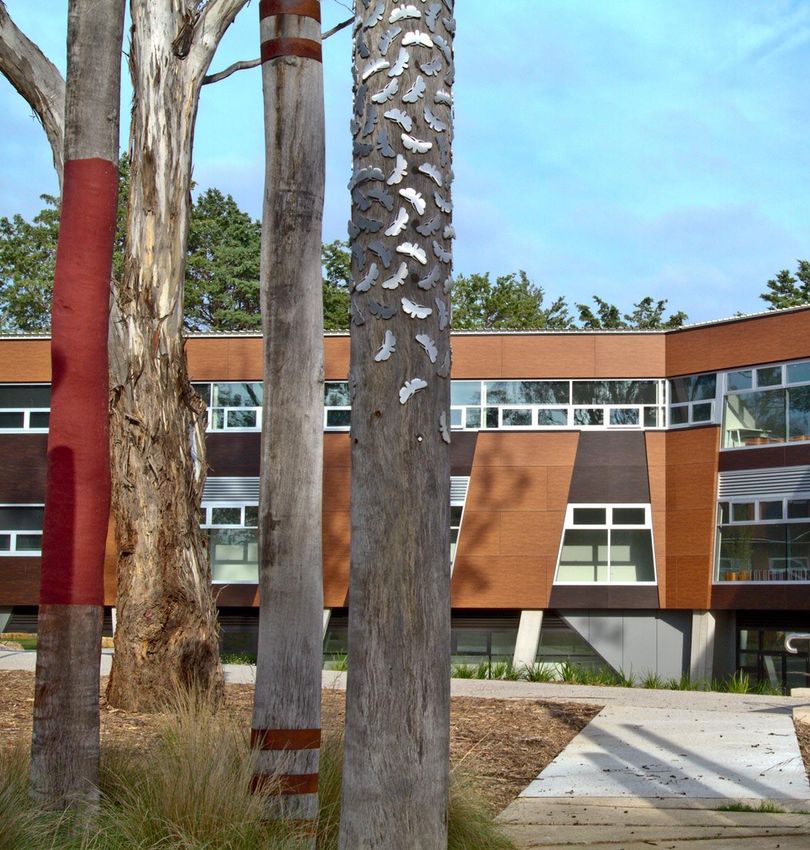
Cover Art provided by ANU
ANU Image Library
Fiona Foley, Winged harvest 2001, Wood, aluminium, ochre and stainless steel, commissioned 2000
(WEH Stanner Building courtyard)Table of Contents H Courses ................................................................................... 1 The ACT Senior Secondary System ................................................................................... 1 ACT Senior Secondary Certificate ................................................................................... 2 Learning Principles ................................................................................... 3 General Capabilities ................................................................................... 4 Cross Curriculum Priorities ................................................................................... 6 ANU H Course ................................................................................... 7 Korean Culture and Language ................................................................................... 7 Rationale ................................................................................... 7 Goals ................................................................................... 7 Unit Titles ................................................................................... 7 Organisation of Content ................................................................................... 8 Assessment ................................................................................... 9 Achievement Standards ................................................................................. 10 Korean History and Language Value: 1.0 ................................................................. 13 Contemporary Korea and Language Value: 1.0 ................................................................. 15 Appendix A – Implementation Guidelines ................................................................................. 17 Appendix B – Course Developers ................................................................................. 20 Appendix C – Common Curriculum Elements ................................................................................. 21 Appendix D – Glossary of Verbs ................................................................................. 22 Appendix E – Glossary for ACT Senior Secondary Curriculum .............................................................. 23 Appendix F – Language Information ................................................................................. 24
ACT BSSS ANU H Course Korean Culture and Language 2021-2022

H Courses
H classification is given to a year 11 and 12 course which is designed and accredited by the Board of
Senior Secondary Studies (BSSS) and an Australian university, and where successful completion of
the course will be recognised both towards the ACT Senior Secondary Certificate and an
undergraduate degree with that university.
The BSSS considers H courses as complementary to studies in the home college. These extension
courses allow students to pursue depth of study in an area of interest, while also gaining experience
in a tertiary context to prepare for future studies.

The ACT Senior Secondary System
The ACT senior secondary system recognises a range of university, vocational or life skills pathways.
The system is based on the premise that teachers are experts in their area: they know their students
and community and are thus best placed to develop curriculum and assess students according to
their needs and interests. Students have ownership of their learning and are respected as young
adults who have a voice.
A defining feature of the system is school-based curriculum and continuous assessment. School-
based curriculum provides flexibility for teachers to address students’ needs and interests. College
teachers have an opportunity to develop courses for implementation across ACT schools. Based on
the courses that have been accredited by the BSSS, college teachers are responsible for developing
programs of learning. A program of learning is developed by individual colleges to implement the
courses and units they are delivering.
Teachers must deliver all content descriptions; however, they do have flexibility to emphasise some
content descriptions over others. It is at the discretion of the teacher to select the texts or materials
to demonstrate the content descriptions. Teachers can choose to deliver course units in any order
and teach additional (not listed) content provided it meets the specific unit goals.
School-based continuous assessment means that students are continually assessed throughout years
11 and 12, with both years contributing equally to senior secondary certification. Teachers and
students are positioned to have ownership of senior secondary assessment. The system allows
teachers to learn from each other and to refine their judgement and develop expertise.
Senior secondary teachers have the flexibility to assess students in a variety of ways. For example:
multimedia presentation, inquiry-based project, test, essay, performance and/or practical
demonstration may all have their place. College teachers are responsible for developing assessment
instruments with task specific rubrics and providing feedback to students.
The integrity of the ACT Senior Secondary Certificate is upheld by a robust, collaborative and
rigorous structured consensus-based peer reviewed moderation process. System moderation
involves all year 11 and 12 teachers from public, non-government and international colleges
delivering the ACT Senior Secondary Certificate.
Only students who desire a pathway to university are required to sit a general aptitude test, referred
to as the ACT Scaling Test (AST), which moderates student scores across courses and colleges.
Students are required to use critical and creative thinking skills across a range of disciplines to solve
problems. They are also required to interpret a stimulus and write an extended response.
Senior secondary curriculum makes provision for student-centred teaching approaches, integrated
and project-based learning inquiry, formative assessment and teacher autonomy. ACT Senior
Secondary Curriculum makes provision for diverse learners and students with mild to moderate
intellectual disabilities, so that all students can achieve an ACT Senior Secondary Certificate.

                                                       1
ACT BSSS ANU H Course Korean Culture and Language 2021-2022
The ACT Board of Senior Secondary Studies (BSSS) leads senior secondary education. It is responsible
for quality assurance in senior secondary curriculum, assessment and certification. The Board
consists of nominees from colleges, professional bodies, universities, industry, parent/carer
organisations and unions. The Office of the Board of Senior Secondary Studies (OBSSS) consists of
professional and administrative staff who support the Board in achieving its objectives and
functions.
ACT Senior Secondary Certificate
Courses of study for the ACT Senior Secondary Certificate:
• provide a variety of pathways, to meet different learning needs and encourage students to
complete their secondary education
• enable students to develop the essential capabilities for twenty-first century learners
• empower students as active participants in their own learning
• engage students in contemporary issues relevant to their lives
• foster students’ intellectual, social and ethical development
• nurture students’ wellbeing, and physical and spiritual development
• enable effective and respectful participation in a diverse society.
Each course of study:
• comprises an integrated and interconnected set of knowledge, skills, behaviours and
dispositions that students develop and use in their learning across the curriculum
• is based on a model of learning that integrates intended student outcomes, pedagogy and
assessment
• outlines teaching strategies which are grounded in learning principles and encompass quality
teaching
• promotes intellectual quality, establish a rich learning environment and generate relevant
connections between learning and life experiences
• provides formal assessment and certification of students’ achievements.
2ACT BSSS ANU H Course Korean Culture and Language 2021-2022
Underpinning beliefs
• All students are able to learn.
• Learning is a partnership between students and teachers.
• Teachers are responsible for advancing student learning.
Learning Principles
1. Learning builds on existing knowledge, understandings and skills.
(Prior knowledge)
2. When learning is organised around major concepts, principles and significant real world issues,
within and across disciplines, it helps students make connections and build knowledge structures.
(Deep knowledge and connectedness)
3. Learning is facilitated when students actively monitor their own learning and consciously develop
ways of organising and applying knowledge within and across contexts.
(Metacognition)
4. Learners’ sense of self and motivation to learn affects learning.
(Self-concept)
5. Learning needs to take place in a context of high expectations.
(High expectations)
6. Learners learn in different ways and at different rates.
(Individual differences)
7. Different cultural environments, including the use of language, shape learners’ understandings
and the way they learn.
(Socio-cultural effects)
8. Learning is a social and collaborative function as well as an individual one.
(Collaborative learning)
9. Learning is strengthened when learning outcomes and criteria for judging learning are made
explicit and when students receive frequent feedback on their progress.
(Explicit expectations and feedback)
3ACT BSSS ANU H Course Korean Culture and Language 2021-2022
General Capabilities
All courses of study for the ACT Senior Secondary Certificate should enable students to develop
essential capabilities for twenty-first century learners. These ‘capabilities’ comprise an integrated
and interconnected set of knowledge, skills, behaviours and dispositions that students develop and
use in their learning across the curriculum.
The capabilities include:
• literacy
• numeracy
• information and communication technology (ICT)
• critical and creative thinking
• personal and social
• ethical understanding
• intercultural understanding
Courses of study for the ACT Senior Secondary Certificate should be both relevant to the lives of
students and incorporate the contemporary issues they face. Hence, courses address the following
three priorities. These priorities are:
• Aboriginal and Torres Strait Islander histories and cultures
• Asia and Australia’s engagement with Asia
• Sustainability
Elaboration of these General Capabilities and priorities is available on the ACARA website at
www.australiancurriculum.edu.au.
Literacy
In ANU H Course Korean Culture and Language, students become literate as they develop the
knowledge, skills and dispositions to interpret and use language confidently for listening, engaging in
collaborate practice, and expressing their research and conclusions about questions and problems in
Korean and English and consider how that translates into practical applications. Literacy in ANU H
Course Korean Culture and Language, involves students listening to, reading, viewing, speaking,
writing and creating academic texts, and using and modifying language for different purposes in an
academic university context.
Numeracy
In ANU H Course Korean Culture and Language, students become numerate as they develop the
knowledge and skills to use numeracy confidently to create and interpret data as they research and
communicate their findings in their research and studies. They become aware of the contingency
and malleability of data produced using mathematical methods. Numeracy in ANU H Course Korean
Culture and Language encompasses the knowledge, skills, behaviours and dispositions that students
need to use mathematical knowledge in a wide range of situations. It involves students recognising
and understanding the role of mathematics in the world and having the dispositions and capacities
to use mathematical knowledge and skills purposefully.
4ACT BSSS ANU H Course Korean Culture and Language 2021-2022
Information and Communication Technology (ICT) Capability
In ANU H Course Korean Culture and Language, students develop Information and Communication
Technology (ICT) capability as, in examining Korean issues, they learn to use ICT effectively and
appropriately to access, create and communicate information and ideas, solve problems and work
collaboratively. They consider the role and culpability of ICT in creating and in addressing Korean
Culture and Language. ICT capability involves students learning to make the most of the digital
technologies available to them, adapting to new ways of studying and being, as technologies evolve
and understanding the risks to themselves and others in a digital environment. They learn to use
hangul keyboards and develop a repertoire of search terms suitable for research in Korean studies.
Critical and Creative Thinking
In ANU H Course Korean Culture and Language, students develop capability in critical and creative
thinking as they learn to generate and evaluate knowledge, clarify concepts and ideas, seek
possibilities, consider alternatives and solve problems in Korean Culture and Language. They engage
in thinking critically about issues in Korean Culture and Language and the ways different theories
highlight and obscure different questions and opportunities. They think creatively about solutions to
challenges to individuals, groups and to Korean language communities. Critical and creative thinking
involves students thinking broadly and deeply using skills, behaviours and dispositions such as
reason, logic, resourcefulness, linguistic awareness, imagination and innovation.
Personal and Social Capability
In ANU H Course Korean Culture and Language, students develop personal and social capability as
they learn to understand themselves and others, and manage their relationships, lives, work and
learning more effectively by examining and accounting for Korean Culture and Language. They
develop the skills to engage in respectful and thoughtful discussion and investigation of significant
and controversial issues. As they investigate questions in Korean Culture and Language, they build
personal and social capability through a range of practices including recognising and regulating
emotions, developing empathy for others and understanding relationships, establishing and building
positive relationships, making responsible decisions, working effectively in teams, handling
challenging situations constructively and developing leadership skills. These will be further
developed by learning to operate and learn in the university context.
Ethical Understanding
In ANU H Course Korean Culture and Language, students develop ethical understanding, as they
identify and investigate the nature of ethical concepts and values and understand how reasoning can
assist ethical judgement. Further, they problematise ethical knowledge by examining how ethics
affects the generation of knowledge in Korean Culture and Language. Ethical understanding involves
students building a strong personal and socially oriented ethical outlook that helps them to manage
context, conflict and uncertainty, and to develop an awareness of the influence that their values and
behaviour have on others through the exploration of their ethics as researchers and thinkers.
Intercultural Understanding
In ANU H Course Korean Culture and Language, students develop intercultural understanding as they
learn to value their own cultures, languages and beliefs, and those of others. They come to
understand how personal, group and national identities are shaped, and the variable and changing
nature of culture. Intercultural understanding involves students learning about and engaging with
diverse cultures in ways that recognise commonalities and differences, create connections with
others and cultivate mutual respect.
5ACT BSSS ANU H Course Korean Culture and Language 2021-2022
Cross Curriculum Priorities
Aboriginal and Torres Strait Islander Histories and Cultures
The Aboriginal and Torres Strait Islander histories and cultures priority provides the opportunity for
all young Australians to gain a deeper understanding and appreciation of Aboriginal and Torres Strait
Islander histories and cultures, deep knowledge traditions and holistic world views. This knowledge
and understanding provided in ANU H Course Korean Culture and Language, will enrich all learners’
ability to participate positively in the ongoing development of Australia through a deepening
knowledge and connection with the world’s oldest continuous living cultures.
Asia and Australia’s Engagement with Asia
This priority in ANU H Course Korean Culture and Language, will ensure that students learn about
and recognise the diversity within and between the countries of the Asia region. They will develop
knowledge and understanding of Asian societies, cultures, beliefs and environments. Korean literacy
provides students with the skills to communicate and engage with the peoples of Asia so they can
effectively live, work and learn in the region, and in particular, Korea.
Sustainability
The sustainability priority ANU H Course Korean Culture and Language, provides the opportunity for
students to develop an appreciation of the necessity of acting for a more sustainable future and so
address the ongoing capacity of Earth to maintain all life and meet the needs of the present without
compromising the needs of future generations. In particular they consider sustainability in the
Korean context.
6ACT BSSS ANU H Course Korean Culture and Language 2021-2022
ANU H Course
Korean Culture and Language
Rationale
This H Course is intended to build the number of students studying Korean language and culture and
improve the quality and depth of students' learning. It provides links between school-based
education and tertiary studies, inviting new generations of Korean culture and language learners into
a community of Korean language and culture experts at the Australian National University.
While this course can be undertaken in English, the specific content and language covered in the
units of this course is designed to give challenging language learning opportunities for students who
are currently enrolled in Korean T courses at their home school.
This H Course can complement the existing ACT Korean language courses, with an emphasis on
studying contemporary and popular Korean culture in English and Korean, but also be accessible to
students not studying Korean in their home college. Those students focus on developing an
understanding of Korean culture. The course will focus on not only developing essential
communication skills and intercultural capabilities, but also a broader understanding of the role of
culture and language in human communication.
Topics include the transformation of the Korean language and communication strategy through
technology, the emergence of K-Pop, and Korean in business. The course draws on the significant
research into and success of Content and Language Integrated Learning (CLIL ) - both in Europe and
Australia to engage students creatively through performance-based activities, guided research into
student-directed projects, and high-order content delivered in a prestigious university setting.
Goals
• synthesise, analyse and evaluate ideas, methodologies, concepts, issues and knowledge
• apply ethical frameworks that underpin relevant disciplines
• plan and develop research projects
• reflect on the learning process
• demonstrate interpersonal and communication skills
• build on and connect, concepts and skills from diverse disciplines
• use inquiry and research methods from diverse disciplines to identify problems and to
research solutions
• use critical and creative thinking skills to synthesise methodologies and insights from a
variety of disciplines
• demonstrate collaboration and build mentoring relationships within the community
• apply creative and innovative solutions to real life contexts.
Unit Titles
• Korean History and Language
• Contemporary Korea and Language.
7ACT BSSS ANU H Course Korean Culture and Language 2021-2022
Organisation of Content
Korean History and Language
This unit will examine the history and contemporary culture of Korea. Situational role playing and
other activities based on a range of topics outlined below will assist the students to learn basic
language, or for students in Korean in their home college, consolidate their language skills and
develop their cultural and communication skills in Korean. Students will also be given opportunities
to choose an area of interest related to Korea and to prepare a presentation (in Korean and English)
and a final essay (in English). This unit will allow students to explore areas of their own interest in
relation to Korea and will also focus on the many changes in the Korean written and spoken
language, including those that have taken place during the age of the mobile phone and internet.
Students will also have the opportunity to develop interpersonal skills further and better understand
polite forms within the context of the Korean language.
Contemporary Korea and Language
This unit will examine aspects of Korean culture, and related vocabulary. This unit will focus on
contemporary life, modern culture, and the economy, and will introduce, and consolidate through
use, useful words, phrases and idioms in addition to learning basic grammar. Students will further
develop their knowledge of the contemporary Korean culture and language to enhance their ability
to interact with speakers of the Korean language and deepen their critical understanding of Korea.
Both units will follow a similar structure. Students will work on assignments using both English and
Korean language sources, according to whether they study Korean in their home college. Each
assignment will include practical tasks such as conducting research on current affairs in Korea,
expanding vocabularies and debating. The students will be asked to conduct a presentation based on
their chosen assignment, which will form the basis of a group discussion. They will also be asked to
prepare and submit a final essay. Students will be asked to present their progress report in English
but will be encouraged to use Korean where appropriate. In order to further improve their
understanding of the culture and the language, students will be also assessed in various forms on
their writing and speaking skills in Korean.
8ACT BSSS ANU H Course Korean Culture and Language 2021-2022
Assessment
The identification of criteria within the achievement standards and assessment tasks types and
weightings provide a common and agreed basis for the collection of evidence of student
achievement.
Assessment Criteria (the dimensions of quality that teachers look for in evaluating student work)
provide a common and agreed basis for judgement of performance against unit and course goals,
within and across colleges. Over a course, teachers must use all these criteria to assess students’
performance but are not required to use all criteria on each task. Assessment criteria are to be used
holistically on a given task and in determining the unit grade.
Assessment Tasks elicit responses that demonstrate the degree to which students have achieved the
goals of a unit based on the assessment criteria. The Common Curriculum Elements (CCE) is a guide
to developing assessment tasks that promote a range of thinking skills (see Appendix C). It is highly
desirable that assessment tasks engage students in demonstrating higher order thinking.
Rubrics are constructed for individual tasks, informing the assessment criteria relevant for a
particular task and can be used to assess a continuum that indicates levels of student performance
against each criterion.
Assessment Criteria
Students will be assessed on the degree to which they demonstrate:
• knowledge and understanding
• skills.
Assessment Task Types
Weightings Knowledge and understanding Skills
Students synthesise their key findings Students demonstrate their skills in a
(knowledge, skills, and ideas) to variety of ways.
produce an outcome.
Suggested tasks include: Suggested tasks include:
• written results, conclusions, • viva voce
recommendations, or question • field work
(e.g. an essay, a report, a booklet, • event management
or an article)
• social intelligence (teamwork,
• a product (e.g. an artefact, a collaboration, leadership)
manufactured article, or a work
• reflection on the research process
of art or literature
• decision making
• a display or exhibition
• project management (including
• a multimedia presentation or
time management/organisation)
podcast
• journal (reflecting on the process
of learning)
Weightings
10 - 60% 10 - 60%
for T 1.0
Additional Assessment Information
• For a 1.0 unit, students must complete a minimum of three assessment tasks.
9ACT BSSS ANU H Course Korean Culture and Language 2021-2022
Achievement Standards
A Year 12 student in any unit is assessed using the Year 12 achievement standards. A Year 11 student
in any unit is assessed using the Year 11 achievement standards. Year 12 achievement standards
reflect higher expectations of student achievement compared to the Year 11 achievement
standards. Years 11 and 12 achievement standards are differentiated by cognitive demand, the
number of dimensions and the depth of inquiry.
An achievement standard cannot be used as a rubric for an individual assessment task. Assessment
is the responsibility of the college. Student tasks may be assessed using rubrics or marking schemes
devised by the college. A teacher may use the achievement standards to inform development of
rubrics. The verbs used in achievement standards may be reflected in the rubric. In the context of
combined Years 11 and 12 classes, it is best practice to have a distinct rubric for Years 11 and 12.
These rubrics should be available for students prior to completion of an assessment task so that
success criteria are clear.
10ACT BSSS ANU H Course Korean Culture and Language 2021-2022
Unit Achievement Standards for Integrated Learning - Year 11
A student who achieves an A/ A student who achieves a B/ A student who achieves a C/ A student who achieves a D/ A student who achieves an E/N
High Distinction grade typically Distinction grade typically Credit grade typically Pass grade typically Fail grade typically
• critically analyses the purpose • analyses the purpose and • explains the purpose and • describes the purpose and • identifies the purpose and
and types of inquiry types of inquiry types of inquiry types of inquiry types of inquiry
• critically analyses theories, • analyses theories, models, • explains theories, models, • describes theories, • identifies theories, models,
Knowledge and understanding
models, researchers, ideas, issues, researchers, ideas, issues, researchers, ideas, issues, models, researchers, ideas, researchers, ideas, issues,
arguments and themes arguments and themes arguments and themes issues, arguments and themes arguments and themes
• synthesis of knowledge, skills, • analyses knowledge, skills, and • explains knowledge, skills, • describes information and • identifies ideas to produce
and ideas to produce a creative and ideas to produce a creative and ideas to produce a ideas to produce a partial a limited resolution to the
innovative resolution to the focus resolution to the focus of the resolution to the focus of the resolution to the focus of the focus of the inquiry question
of the inquiry question inquiry question inquiry question inquiry question
• evaluates information and • analyses information and • explains information and • describes information and • identifies similarities,
analyses for similarities, explains similarities, differences, describes similarities, identifies similarities, differences in information with
differences, contradictions, contradictions, connections and differences, contradictions, differences to inform decisions little or no link to decision
connections and interconnections interconnections to inform connections and making
to inform decisions decisions interconnections to inform
decisions
• plans and undertakes • plans and undertakes • plans and undertakes • plans and undertakes • plans and undertakes
independent inquiries independent inquiries independent inquiries independent inquiries independent inquiries
incorporating specific discipline incorporating specific discipline incorporating discipline incorporating some discipline incorporating minimal
knowledge and skills and evaluates knowledge and skills and analyses knowledge and skills with some knowledge and skills with discipline knowledge and skills
information for reliability and information for reliability and analysis of information for minimal analysis of information with little or no analysis of
usefulness usefulness reliability and usefulness for reliability and usefulness information for reliability and
usefulness
• communicates effectively • communicates cogently • communicates • communicates basic • communicates basic
understanding, reasoned understanding, reasoned competently understanding, information reflecting minimal information reflecting little or
conclusions, and new ideas and conclusions, and new ideas about conclusions, and new ideas understanding of the learning no understanding of the
Skills
insights about the learning interest the learning interest with accurate about the learning interest with interest, with some referencing learning interest
with accurate referencing referencing referencing
• evaluates, reflects on and • analyses, reflects on and • explains the inquiry • describes the inquiry • identifies key features of
responds to the inquiry process, responds to the inquiry process and process and own learning and process and own learning and the inquiry process with little or
own learning and progress in own learning and progress in progress in learning with progress in learning with no reflection
learning with insight learning with insight considered reflection minimal reflection
• demonstrates effective • demonstrates constructive • demonstrates highly • demonstrates minimal • demonstrates little or no
communication, interpersonal and communication, interpersonal and developed communication, communication, interpersonal communication, interpersonal
intrapersonal skills in a range of intrapersonal skills in a range of interpersonal and intrapersonal and intrapersonal skills in and intrapersonal skills in
contexts within the community contexts within the community skills in familiar contexts within familiar contexts within the familiar contexts within the
the community community community
11ACT BSSS ANU H Course Korean Culture and Language 2021-2022
Unit Achievement Standards for Integrated Learning - Year 12
A student who achieves an A/ A student who achieves a B/ A student who achieves a C/ A student who achieves a D/ A student who achieves an E/ N
High Distinction grade typically Distinction grade typically Credit grade typically Pass grade typically Fail grade typically
• critically analyses the purpose • analyses the purpose and types • explains the purpose and types • describes the purpose and • identifies the purpose and
and types of inquiry including the of inquiry including the skills, of inquiry including the skills, types of inquiry including with some types of inquiry with little or no
skills, attitudes and ethical attitudes and ethical considerations attitudes and ethical considerations consideration of skills, attitudes and consideration of skills, attitudes and
considerations required for research required for research required for research ethical considerations required for ethical considerations required for
research research
Knowledge and understanding
• critically analyses theories, • analyses theories, models • explains theories, models, • describes theories, models, • identifies theories, models,
models, researchers, ideas, issues, researchers, ideas, issues, arguments researchers, ideas, issues, arguments researchers, ideas, issues, arguments researchers, ideas, issues, arguments
arguments and themes including the and themes including the role and and themes including the role and and themes including the role and and themes including the role and
role and structure of information structure of information structure of information structure of information structure of information
• synthesis of knowledge, skills, • analyses knowledge, skills, and • explains knowledge, skills, and • describes information and ideas • identifies ideas to produce a
and ideas to produce a creative and ideas to produce a creative ideas to produce a resolution to the to produce a partial resolution to the limited resolution to the focus of the
innovative resolution to the focus of resolution to research question the focus of the inquiry focus of the inquiry inquiry
the inquiry focus of the inquiry
• evaluates information and • analyses information and • explains information and • describes information and • identifies similarities,
analyses for similarities, differences, explains similarities, differences, describes similarities, differences, identifies similarities, differences to differences in information with little
contradictions, connections and contradictions, connections and contradictions, connections and inform decisions or no link to decision making
interconnections to inform decisions interconnections to inform decisions interconnections to inform decisions
• critically analyses different • analyses different perspectives • explains perspectives of various • describes perspectives of • identifies limited or no
perspectives of various disciplines on of various disciplines on the same disciplines on the same topic disciplines on the same topic perspectives on a topic
the same topic topic
• plans and undertakes • plans and undertakes • plans and undertakes • plans and undertakes • plans and undertakes
independent inquiries incorporating independent inquiries incorporating independent inquiries incorporating independent inquiries incorporating independent inquiries incorporating
specific discipline knowledge and specific discipline knowledge and discipline knowledge and skills with some discipline knowledge and skills minimal discipline knowledge and
skills and evaluates information for skills and analyses information for some analysis of information for with minimal analysis of information skills with little or no analysis of
reliability and usefulness reliability and usefulness reliability and usefulness for reliability and usefulness information for reliability and
usefulness
• communicates effectively • communicates cogently • communicates competently • communicates basic • communicates basic
understanding, reasoned understanding, reasoned understanding, conclusions, and new information reflecting minimal information reflecting little or no
conclusions, and new ideas and conclusions, and new ideas about ideas about the learning interest understanding of the learning understanding of the learning
Skills
insights about the learning interest the learning interest with accurate with referencing interest, with some referencing interest
with accurate referencing referencing
• evaluates, reflects on and • analyses, reflects on and • explains the inquiry process and • describes the inquiry process • identifies key features of the
responds to the inquiry process, own responds to the inquiry process and own learning and progress in and own learning and progress in inquiry process with little or no
learning and progress in learning own learning and progress in learning with considered reflection learning with minimal reflection reflection
with insight learning with insight
• demonstrates effective • demonstrates constructive • demonstrates highly developed • demonstrates minimal • demonstrates little or no
communication, interpersonal and communication, interpersonal and communication, interpersonal and communication, interpersonal and communication, interpersonal and
intrapersonal skills in a range of intrapersonal skills in a range of intrapersonal skills in familiar intrapersonal skills in familiar intrapersonal skills in familiar
contexts within the community contexts within the community contexts within the community contexts within the community contexts within the community
12ACT BSSS ANU H Course Korean Culture and Language 2021-2022
Korean History and Language Value: 1.0
Unit Description
This unit will discuss the history and contemporary culture of Korea. Situational role playing and
other activities based on a range of topics outlined below will assist the students to learn basic
language, or for students in Korean in their home college, consolidate their language skills and
develop their cultural and communication skills in Korean. Students will also be given opportunities
to choose an area of interest related to Korea and to prepare a presentation (in Korean and English)
and a final essay (in English). This unit will allow students to explore areas of their own interest in
relation to Korea and will also focus on the many changes in the Korean written and spoken
language, including those that have taken place during the age of the mobile phone and Internet.
Students will also have the opportunity to develop interpersonal skills further and better understand
polite forms within the context of the Korean language.
Specific Unit Goals
This unit should enable students to:
• understand theories about Korean culture, society, language, and linguistics
• use research skills and knowledge of Korea in research
• communicate critically and creatively on issues in Korea.
Content Descriptions
All knowledge, understanding and skills below must be delivered:
Concepts and Ideas
• critically analyse major issues in Korean culture, society, language, and linguistics
• critically analyse diversity in the Korean language
• evaluate and apply research and inquiry skills.
Contexts
• evaluate how customs and traditions, including language, may vary within a culture, as well as
between cultures, and across time
• critically analyse ways in which language shapes and embodies culture and identity in Korea
• critically analyse the effect of digital environments on Korean culture and language.
Communication
• demonstrate their Korean language skills
• demonstrate capacity in accessing Korean and English language sources in conducting
research
• evaluate and apply communication strategies for pair and group work
• use appropriate texts and modes to communicate inquiry results, with appropriate
referencing conventions.
13ACT BSSS ANU H Course Korean Culture and Language 2021-2022
Reflection
• evaluate decisions made in response to challenges and/or opportunities specific to the
research and language learning processes used
• self-evaluate the quality of their own learning.
A guide to reading and implementing content descriptions
Content descriptions specify the knowledge, understanding and skills that students are expected to
learn and that teachers are expected to teach. Teachers are required to develop a program of
learning that allows students to demonstrate all the content descriptions. The lens which the
teacher uses to demonstrate the content descriptions may be either guided through provision of
electives within each unit or determined by the teacher when developing their program of learning.
A program of learning is what a college provides to implement the course for a subject. It is at the
discretion of the teacher to emphasis some content descriptions over others. The teacher may teach
additional (not listed) content provided it meets the specific unit goals. This will be informed by the
student needs and interests.
Assessment
Refer to pages 9-10
14ACT BSSS ANU H Course Korean Culture and Language 2021-2022
Contemporary Korea and Language Value: 1.0
This unit will discuss particular aspects of Korean culture, and related vocabulary. This unit will focus
on contemporary life, modern culture, and the economy, and will introduce, and consolidate
through use, useful words, phrases and idioms in addition to learning basic grammar. Students will
further develop their knowledge of the contemporary Korean culture and language to enhance their
ability to interact with speakers of the Korean language and deepen their critical understanding of
Korea.
Both units will follow a similar structure. Students will work on assignments using both English and
Korean language sources, according to whether they study Korean in their home college. Each
assignment will include practical tasks such as conducting research on current affairs in Korea,
expanding vocabularies and debating. The students will be asked to conduct a presentation based on
their chosen assignment, which will form the basis of a group discussion. They will also be asked to
prepare and submit a final essay. Students will be asked to present their progress report in English
but will be encouraged to use Korean where appropriate and reasonably expected according to their
background. In order to further improve their understanding of the culture and the language,
students will be also assessed in various forms on their writing and speaking skills in Korean.
Specific Unit Goals
This unit should enable students to:
• understand arguments about contemporary Korean politics and popular culture
• find and access source material for research in Korean politics and culture
• communicate critically and creatively on issues in Korea.
Content Descriptions
All knowledge, understanding and skills below must be delivered:
Concepts and Ideas
• critically analyse contemporary Korean politics and culture
• understand and apply principles of Korean grammar to beginning Korean language
• critically analyse Korean popular culture texts.
Contexts
• critically analyse ways in which language shapes and embodies culture and identity in Korea
• evaluate the perspectives and contexts of source material in conducting and reporting on
research
• evaluate the relationship between culture, context and idiom, and use idiomatic Korean
appropriately.
Communication
• consolidate Korean language skills
• demonstrate capacity in accessing Korean and English language sources in conducting
research
• evaluate and apply communication strategies for pair and group work
• use appropriate texts and modes to communicate inquiry results, with appropriate
referencing conventions.
15ACT BSSS ANU H Course Korean Culture and Language 2021-2022
Reflection
• evaluate decisions made in response to challenges and/or opportunities specific to the
research and language learning processes used
• self-evaluate the quality of their own learning.
A guide to reading and implementing content descriptions
Content descriptions specify the knowledge, understanding and skills that students are expected to
learn and that teachers are expected to teach. Teachers are required to develop a program of
learning that allows students to demonstrate all the content descriptions. The lens which the
teacher uses to demonstrate the content descriptions may be either guided through provision of
electives within each unit or determined by the teacher when developing their program of learning.
A program of learning is what a college provides to implement the course for a subject. It is at the
discretion of the teacher to emphasis some content descriptions over others. The teacher may teach
additional (not listed) content provided it meets the specific unit goals. This will be informed by the
student needs and interests.
Assessment
Refer to page 9-10.
16ACT BSSS ANU H Course Korean Culture and Language 2021-2022
Appendix A – Implementation Guidelines
Available course patterns
A standard 1.0 value unit is delivered over at least 55 hours. To be awarded a course, students must
complete at least the minimum units over the whole minor, major, major/minor or double major
course.
Course Number of standard units to meet course requirements
Minor Minimum of 2 units
Units in this course can be delivered in any order.
Co-requisite and prerequisites for the course or units within the course
The student should be undertaking English rich tertiary courses also.
Duplication of Content Rules
Students cannot be given credit towards the requirements for a Senior Secondary Certificate for a
unit that significantly duplicates content in a unit studied in another course. The responsibility for
preventing undesirable overlap of content studied by a student rests with the principal and the
teacher delivering the course. Students will only be given credit for covering the content once.
Guidelines for Delivery
Program of Learning
A program of learning is what a school provides to implement the course for a subject. This meets
the requirements for context, scope and sequence set out in the Board endorsed course. Students
follow programs of learning in a college as part of their senior secondary studies. The detail, design
and layout of a program of learning are a college decision.
The program of learning must be documented to show the planned learning activities and
experiences that meet the needs of particular groups of students, taking into account their interests,
prior knowledge, abilities and backgrounds. The program of learning is a record of the learning
experiences that enable students to achieve the knowledge, understanding and skills of the content
descriptions. There is no requirement to submit a program of learning to the OBSSS for approval.
The Principal will need to sign off at the end of Year 12 that courses have been delivered as
accredited.
Content Descriptions
Are all content descriptions of equal importance? No. It depends on the focus of study. Teachers can
customise their program of learning to meet their own students’ needs, adding additional content
descriptions if desired or emphasising some over others. A teacher must balance student needs with
their responsibility to teach all content descriptions. It is mandatory that teachers address all
content descriptions and that students engage with all content descriptions.
17ACT BSSS ANU H Course Korean Culture and Language 2021-2022
Moderation
Moderation is a system designed and implemented to:
• provide comparability in the system of school-based assessment
• form the basis for valid and reliable assessment in senior secondary schools
• involve the ACT Board of Senior Secondary Studies and colleges in cooperation and
partnership
• maintain the quality of school-based assessment and the credibility, validity and
acceptability of Board certificates.
Moderation commences within individual colleges. Teachers develop assessment programs and
instruments, apply assessment criteria, and allocate Unit Grades, according to the relevant
Framework. Teachers within course teaching groups conduct consensus discussions to moderate
marking or grading of individual assessment instruments and unit grade decisions.
The Moderation Model
Moderation within the ACT encompasses structured, consensus-based peer review of Unit Grades
for all accredited courses, as well as statistical moderation of course scores, including small group
procedures, for T courses.
Moderation by Structured, Consensus-based Peer Review
Review is a subcategory of moderation, comprising the review of standards and the validation of
Unit Grades. In the review process, Unit Grades, determined for Year 11 and Year 12 student
assessment portfolios that have been assessed in schools by teachers under accredited courses, are
moderated by peer review against system wide criteria and standards. This is done by matching
student performance with the criteria and standards outlined in the unit grade descriptors as stated
in the Framework. Advice is then given to colleges to assist teachers with, and/or reassure them on,
their judgments.
Preparation for Structured, Consensus-based Peer Review
Each year, teachers teaching a Year 11 class are asked to retain originals or copies of student work
completed in Semester 2. Similarly, teachers teaching a Year 12 class should retain originals or
copies of student work completed in Semester 1. Assessment and other documentation required
by the Office of the Board of Senior Secondary Studies should also be kept. Year 11 work from
Semester 2 of the previous year is presented for review at Moderation Day 1 in March, and Year 12
work from Semester 1 is presented for review at Moderation Day 2 in August.
In the lead up to Moderation Day, a College Course Presentation (comprised of a document folder
and a set of student portfolios) is prepared for each A, T and M course/units offered by the school
and is sent into the Office of the Board of Senior Secondary Studies.
18ACT BSSS ANU H Course Korean Culture and Language 2021-2022
The College Course Presentation
The package of materials (College Course Presentation) presented by a college for review on
moderation days in each course area will comprise the following:
• a folder containing supporting documentation as requested by the Office of the Board
through memoranda to colleges
• a set of student portfolios containing marked and/or graded written and non-written
assessment responses and completed criteria and standards feedback forms. Evidence of all
assessment responses on which the unit grade decision has been made is to be included in
the student review portfolios.
Specific requirements for subject areas and types of evidence to be presented for each Moderation
Day will be outlined by the Board Secretariat through memoranda and Information Papers.
Visual evidence for judgements made about practical performances
(also refer to BSSS Website Guidelines)
It is a requirement that schools’ judgements of standards to practical performances (A/T/M) be
supported by visual evidence (still photos or video).
The photographic evidence submitted must be drawn from practical skills performed as part of the
assessment process.
Teachers should consult the BSSS guidelines at:
http://www.bsss.act.edu.au/grade_moderation/moderation_information_for_teachers
for current information regarding all moderation requirements including subject specific and
photographic evidence.
19ACT BSSS ANU H Course Korean Culture and Language 2021-2022
Appendix B – Course Developers
Name College
Roald Maliangkay College of Asia and the Pacific, ANU
Narah Lee College of Asia and the Pacific, ANU
Joowhee Lee College of Asia and the Pacific, ANU
20ACT BSSS ANU H Course Korean Culture and Language 2021-2022
Appendix C – Common Curriculum Elements
Common curriculum elements assist in the development of high-quality assessment tasks by
encouraging breadth and depth and discrimination in levels of achievement.
Organisers Elements Examples
create, compose apply ideas and procedures in unfamiliar situations, content and processes
and apply in non-routine settings
compose oral, written and multimodal texts, music, visual images, responses to
complex topics, new outcomes
represent images, symbols or signs
create creative thinking to identify areas for change, growth and innovation,
recognise opportunities, experiment to achieve innovative solutions,
construct objects, imagine alternatives
manipulate images, text, data, points of view
analyse, justify arguments, points of view, phenomena, choices
synthesise and hypothesise statement/theory that can be tested by data
evaluate
extrapolate trends, cause/effect, impact of a decision
predict data, trends, inferences
evaluate text, images, points of view, solutions, phenomenon, graphics
test validity of assumptions, ideas, procedures, strategies
argue trends, cause/effect, strengths and weaknesses
reflect on strengths and weaknesses
synthesise data and knowledge, points of view from several sources
analyse text, images, graphs, data, points of view
examine data, visual images, arguments, points of view
investigate issues, problems
organise, sequence text, data, relationships, arguments, patterns
sequence and visualise trends, futures, patterns, cause and effect
explain
compare/contrast data, visual images, arguments, points of view
discuss issues, data, relationships, choices/options
interpret symbols, text, images, graphs
explain explicit/implicit assumptions, bias, themes/arguments, cause/effect,
strengths/weaknesses
translate data, visual images, arguments, points of view
assess probabilities, choices/options
select main points, words, ideas in text
identify, reproduce information, data, words, images, graphics
summarise and respond data, visual images, arguments, points of view
plan
relate events, processes, situations
demonstrate probabilities, choices/options
describe data, visual images, arguments, points of view
plan strategies, ideas in text, arguments
classify information, data, words, images
identify spatial relationships, patterns, interrelationships
summarise main points, words, ideas in text, review, draft and edit
21ACT BSSS ANU H Course Korean Culture and Language 2021-2022
Appendix D – Glossary of Verbs
Verbs Definition
Analyse Consider in detail for the purpose of finding meaning or relationships, and identifying patterns,
similarities and differences
Apply Use, utilise or employ in a particular situation
Argue Give reasons for or against something
Assess Make a Judgement about the value of
Classify Arrange into named categories in order to sort, group or identify
Compare Estimate, measure or note how things are similar or dissimilar
Compose The activity that occurs when students produce written, spoken, or visual texts
Contrast Compare in such a way as to emphasise differences
Create Bring into existence, to originate
Demonstrate Give a practical exhibition an explanation
Describe Give an account of characteristics or features
Discuss Talk or write about a topic, taking into account different issues or ideas
Evaluate Examine and judge the merit or significance of something
Examine Determine the nature or condition of
Explain Provide additional information that demonstrates understanding of reasoning and /or
application
Extrapolate Infer from what is known
Hypothesise Put forward a supposition or conjecture to account for certain facts and used as a basis for
further investigation by which it may be proved or disproved
Identify Recognise and name
Interpret Draw meaning from
Investigate Planning, inquiry into and drawing conclusions about
Justify Show how argument or conclusion is right or reasonable
Manipulate Adapt or change
Plan Strategize, develop a series of steps, processes
Predict Suggest what might happen in the future or as a consequence of something
Reflect The thought process by which students develop an understanding and appreciation of their own
learning. This process draws on both cognitive and affective experience
Relate Tell or report about happenings, events or circumstances
Represent Use words, images, symbols or signs to convey meaning
Reproduce Copy or make close imitation
Respond React to a person or text
Select Choose in preference to another or others
Sequence Arrange in order
Summarise Give a brief statement of the main points
Synthesise Combine elements (information/ideas/components) into a coherent whole
Test Examine qualities or abilities
Translate Express in another language or form, or in simpler terms
Visualise The ability to decode, interpret, create, question, challenge and evaluate texts that
communicate with visual images as well as, or rather than, words
22You can also read


