APD Use of Force Advisory Council - Interim 14-Day Assessment & Recommendations - Atlanta, GA
←
→
Page content transcription
If your browser does not render page correctly, please read the page content below
APD
Use of Force
Advisory Council
Interim 14-Day Assessment
& Recommendations

                            Photo: Luca Eandi
Dear Honorable Mayor Keisha Lance Bottoms,
            We are honored to serve as Co-Chairs of the Police Use of Force Advisory Council. We share your commitment to
            ensuring that our communities are safe and healthy and appreciate your recognition that this requires an
            examination of how to improve policing in our city. Atlanta has earned a reputation for being at the forefront of the
            nation’s struggle for civil and human rights. Today, the national spotlight focuses on how law enforcement
            agencies interact with communities of color. As jurisdictions across America turn their attention to this aspect of
            the criminal justice system, we hope that Atlanta will serve as a model for police reform. We are excited for the
            opportunity to be a part of that.
            Over the past several weeks, the world has erupted in protest over several highly publicized encounters in which
            police killed Black Americans. In fact, within days of forming this Council, Rayshard Brooks was shot in the back
            just two miles from City Hall. We are well aware that the unnecessary use of force in these killings is connected to a
            broader system in which communities of color are disproportionately policed and criminalized. To compound the
            problem, far too many challenges plaguing marginalized communities – from substance abuse to mental illness to
            lack of quality education to homelessness – are addressed through the criminal legal system.
            Police violence is not the result of one or two wayward police officers and the issue is not unique to the Atlanta
            Police Department. We must examine the culture of policing that subjugates Black communities through highly

Letter
            disproportionate uses of force.
            As a Council, we have been asked to propose recommendations to address some of the most obvious symptoms of
            this culture. We have worked hard to come up with a list of proposals that can be implemented right away. We are
            mindful, however, that to truly get at the root of this cultural challenge, Atlanta will need to couple these reforms

from the    with an explicit commitment to reimagine the current approach to policing.
            If the past several weeks have taught us anything, it is that we have a lot of work to do to realize transformative
            change in Atlanta. We are grateful to you, Mayor Bottoms, for your willingness to take this first step in that

co-chairs
            direction.
            Again, we are honored to have been invited to serve in this role on this critical journey.
            .

            .

                    Tharon Johnson                             Jonathan Rapping                              Tiffany Roberts
                 Paramount Consulting                     Atlanta’s John Marshall Law;                     Southern Center for
                                                                Gideon's Promise                              Human Rights
Our team
Advisory Council                                                                                                     Invested over 2 weeks

                                                                                                                        800            ++
Tharon Johnson, Paramount Consulting (Co-Chair)                Michelle Falconer, Bailey & Hunter, LLC
Jonathan Rapping, Atlanta’s John Marshall Law School;          Maya Hadley, Youth and Resident
Gideon's Promise (Co-Chair)                                    Jestin Johnson, City of Atlanta                     collective hours of meetings
Tiffany Roberts, Southern Center for Human Rights (Co-Chair)   Alvin Kendall, Kendall Law Group

                                                                                                                        200            ++
Rafiq Ahmad, NOBLE (Georgia Chapter)                           Yonasda Lonewolf, Hip Hop 4 Foundation
Kenneth Alexander, Antioch Baptist Church                      Bryant Marks, Morehouse College
Shar Bates, My Vote is Hip Hop                                                                                   meetings and discussion forums
                                                               Toni Michelle Williams, SnapCo
Maya Beatty, Youth and Resident

                                                                                                                           50
                                                               Suzanne Wynn Ockleberry, AT&T
Nelson Boyce, Google                                           Rashad Richey, Radio Personality
                                                                                                                                       +
J. Cannon Carr, Rotary; CornerCap Institutional                Joyce Sheperd, Atlanta City Council
Mawuli Davis, Bozeman Davis Law Firm                                                                                    ideas socialized
                                                               Brian Spears, G. Brian Spears, P.C.

                                                                                                                           10
Johnathan Davis, Covenant Community
Marissa Dodson, Southern Center for Human Rights
                                                               Lovette Karbo Thompson, Black Alliance for Just
                                                               Immigration
                                                                                                                              +
Miguel Dominguez, Criminal Justice PAWG; Morgan & Morgan       Shean Williams, Cochran Firm
                                                                                                                     stakeholders engaged
Jauan Durbin, Youth Advocate & Resident                        Joycelyn Wilson, Georgia Tech
Photo: Luca Eandi
                                                     There is pain within our communities – the traumatic effects of a damaged relationship
                                                     between our black and brown communities and the police officers who took an oath to serve all.
                                                     The sources of this pain are many, but police use of force experiences in the community are central and are
                                                     deserving of this overdue conversation.

                                                     At the behest of Mayor Keisha Lance Bottoms, we have established a community-led Advisory Council.
                                                     The role of our Advisory Council is to recommend a series of new use of force policing policies, that if acted
                                                     upon immediately, should positively impact our city in the near term. Each recommendation is aligned to
                                                     three distinct areas: Law & Policy, Culture & Mindset Shift, and Community & Partnerships. They represent

A Call                                               the voice of Atlanta's proud residents and what we’ve heard they expect from law enforcement.

                                                     With agreement, these recommendations will be a step in the journey to repair the trust between the Atlanta

for Action
                                                     Police Department and the neighborhoods they serve. These inputs lay the groundwork for a 45-day analysis
                                                     that we will conduct, and recommendations from this Advisory Council that will begin to transform and
                                                     amount to a new standard of care between the Atlanta Police Department and the community.

                                                     We are the city where a dream was born. A dream that inspired many hearts and opened
Now more than ever is the time                       even more eyes. We are better than this moment, and we will be better in this moment.

for us to come together and                          We will face the injustices that have divided our community by embracing the diversity
                                                     and unique values that we all share. While this Advisory Council is making the commitment to provide
address needed changes to                            recommendations in good faith, the success of our city rests on the willingness of the Atlanta Police
our policing policies.                               Department to do the same and move these recommendations forward.

                                                     Together, the APD and our Community will restore the trust, security, and future of our historic
                                                     city, assuring the light that we shine will illuminate a new path forward.
Photo: Luca Eandi
Goals for this   Review                               Engage               Report              Reform
Advisory         our police use                       the Advisory         the findings of     our community’s
Council.         of force policies.                   Council on
                                                      solutions informed
                                                                           our review to our
                                                                           community and
                                                                                               police use of
                                                                                               force policies.
                                                      by national          seek feedback.
                                                      expertise and
                                                      appropriate to
                                                      Atlanta context.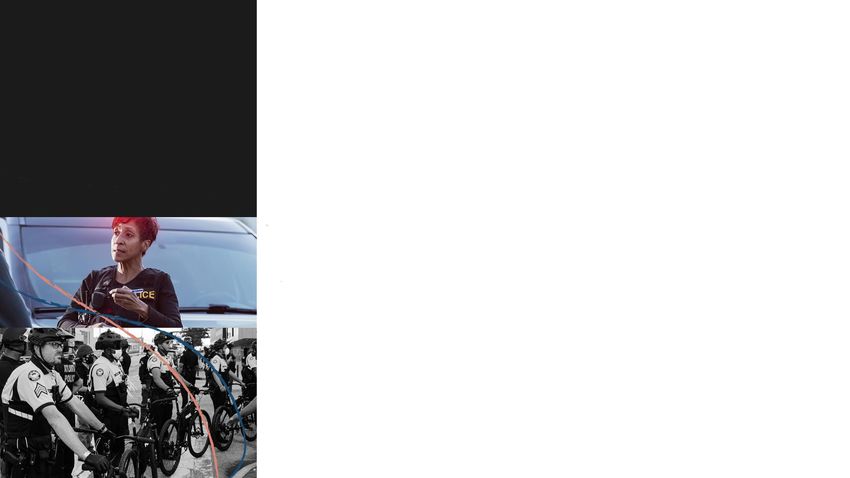
Atlanta continues
                                                             to invest in improving public safety
                                                             and its police department …

                                                             Atlanta fields a racially diverse police force that is largely representative of the City
                                                             of Atlanta – one of few major cities nationally.

                                         Photo: Luca Eandi
                                                             In 2018, Mayor Keisha Lance Bottoms made an investment to increase the pay of
                                                             APD officers by up to 30%.

                                                             APD invests significantly more in training its officers than most other police
                                                             departments – APD's academy requires approximately 90% more training hours than

What we                                                      the State of Georgia, and 70% more hours than the national average.

do know                                                      APD also invests in relationship-building within Atlanta, with 70 community-facing
                                                             programs, including the Atlanta Police Athletic League and @Promise Youth Center, a
                                                             learning and community facility that provides specialized services
The City of Atlanta has invested in
                                                             for local youths.
APD over the years but challenges
exist that have deteriorated the trust                       Mayor Bottoms began an effort to reimagine the Atlanta Corrections and Detention
                                                             Center (ACDC) in 2019 and has made significant strides towards closing the ACDC
of our community                                             and transitioning public safety resources to community-focused initiatives.
… but there are lingering issues and
opportunities for improvement

Despite declining arrests over the past 7 years,

                                                                                                                                   Photo: Luca Eandi
reported annual use of force incidents have
increased on average 2% every year, with 615
total incidents in 2019.

There is a racial and gender disparity in who is   15 people have died in the custody of APD from 2013-2019, which places
                                                   Atlanta 22nd among the top 50 US cities for in-custody deaths per capita.
on the receiving end of uses of force by APD:
66% of use of force incidents were against         8 of those persons who died in police custody were unarmed – Atlanta ranks
                                                   4th in unarmed deaths per capita among the same set of 50 US cities.
black males.
                                                   While use of force by firearm is down in 2019, all deaths in APD custody were
                                                   the result of a firearm.
The way forward demands we reconcile
our differences, re-embrace one another
as neighbors, and revive this city together.

reconcile                               re-embrace                                         revive
community                               APD as neighbors                                   the Atlanta
perception and                          and servant                                        we know
APD vision                              leaders

“
We always believe that when you look
at APD, you have to see yourself. The
department should reflect the people
and values of the City.”
                                        “
                                        They should see themselves as facilitators
                                        of human development – their role is to create
                                        an environment where I can go after my passions.
                                        Their work should allow me to feel safe and free
                                        to pursue my interests.”
                                                                                           “
                                                                                           There is humanity in caretaking.
                                                                                           We are family. How do we treat
                                                                                           people we really care about?”

Member of APD                           Diversity and Implicit Bias Trainer                Atlanta Law Professor
The Advisory Council landed                                                             Shared Expectations

on 3 focus areas to shape
                                                                        Aligning on a mutual understanding of expectations between
                                                                                      APD and the residents of Atlanta

its recommendations
Established on June 10th,
                                                      1 Law
                                                        & Policy                       2 Culture &
                                                                                         Mindset Shift 3 Community &
                                                                                                         Partnerships
the council was mandated to present
its recommendations within 45 days

     June 10th
     Creation of the Use of Force
     Advisory Council                                     Revisiting policies that         Cultivating a "servant     Strengthening ties within the
                                                           shape the standard           leader" culture focused on     community to rebuild trust
     June 24th                                            operating procedures           service to the community       and improve safety for all

     Publication of the 14-day

                                      Photo: Luca Eandi
     interim report, focused on
     immediate actions
     July 24th
     Publication of the 45-day
     final report, covering a
                                                                                            Accountability
     more comprehensive set
     of recommendations                                                      Embedding sustainable change through increased
     across focus areas                                                               transparency and oversight
These Recommendations are a subset of
the opportunities identified by the
Advisory Council

                                   Culture &       Community &
                    Law & Policy   Mindset Shift   Partnerships

Actions in
focus today             5               3              2

Current
initiatives under
consideration        14+             13+             10+
for 45-day report
Recommendation for immediate actions
Law & Policy Culture & Mindset Shift Community & Partnerships
1 Commit to revising the Use of Force continuum
in Standard Operating Procedures (SOP) to 6 Commit to re-evaluating and revising
mission, vision, core values, and oath 9 Extend powers and community awareness of
Atlanta Citizen Review Board (ACRB), including:
increase specificity and align with best practices of the Atlanta Police Department • Mandated 3rd party audit of misaligned
recommendations in use of force incidents
2 Ensure that changes taken under the Mayor’s
Administrative Orders 2020-18 align with best 7 Conduct additional screenings -
including mental health and implicit
• Increased funding to improve ACRB outreach,
awareness, and program effectiveness
practice policy changes from other cities and bias assessments - for all applicants
continue measures for accountability during the recruiting process, and on
an ongoing basis for all officers 10 Begin to evaluate policies, procedures, and
partner organizations for least harm approach
3 Commit to identifying policies to improve officer
compliance and public transparency of captured
8 Require more exhaustive
background checks with attention
to reduce the likelihood of use of force long-
term, including:
body worn camera footage • Evaluate partnership model, resourcing, and
to record of complaints from other
agencies, previous applications to legal framework for non-law enforcement
4 Create a centralized repository for witness
footage of use of force by officers police departments, and social
media sentiment
officials to respond to community
• Expand and incentivize adoption of Pre-
Arrest Diversion program across additional
5 Mandate immediate drug testing for officers
when a use of force incident resulting in serious
zones
injury or death occursRecommended Immediate Action
1 Commit to revising the Use of Force continuum
3 Commit to identifying policies to improve officer
Law & in Standard Operating Procedures (SOP) to increase
specificity and align with best practices
compliance and public transparency of captured
body worn camera footage
Policy 2 Ensure that changes taken under the Mayor’s
Administrative Orders 2020-18 align with best
practice policy changes from other cities and
4 Create a centralized repository for witness footage of
Use of Force by officers
"If there is a place that could be a
national model of good policing and
strong communities, Atlanta is going to
continue measures for accountability
5 Mandate immediate drug testing for officers when a
use of force incident resulting in serious injury or
be the place." death occurs
Atlanta Citizen Review Board Staff
Member Where We Stand Today Recent Actions
The APD's Standard Operating Procedures (SOP) currently Recent administrative orders by Mayor Bottoms have
has notable limits on actions involving mandated additional limitations, including:
use of force, including: • Requiring de-escalation
• Prohibition of chokeholds • Creating an explicit duty for officers
and strangleholds to intervene in – and report - cases of unwarranted
• Prohibition of warning shots excessive force by their peers
• Restrictions on use of deadly force • Banning shooting at moving vehicles
to situations that prevent "serious
physical harm”
As the administrative order recognizes, there are additional best-in-class safeguards that can be implemented to further
mitigate use of force.
Every APD officer is equipped with Body Worn Cameras (BWC) to record use of force incidents, and APD has invested in
technology to improve capture rates, including automated activation of BWC using signal sidearm devices in officer holsters
Photo: Luca Eandi
for both their tasers and firearms. However, additional steps can be taken to improve the current 94% BWC capture rate of
use of force: Create alternative paths for members of the community to submit video footage they have recorded, and
facilitate faster public access to all footage to improve transparency.Detailed
description
of immediate
actions Recommended action Category Expected outcome
1 Commit to revising Use of Force Continuum – Conduct • Mitigate the frequency and severity of officer uses of
including incorporating de-escalation guidelines force
requirements; revisiting requirements for use • Develop clear, prescriptive guidelines to support
of firearms / deadly force ongoing training
2 Ensure that changes taken under the Mayor’s Conduct • Bring APD Use of Force SOP guidelines to best in class
Administrative Orders 2020-18 align with best guidelines • Develop clear, prescriptive guidelines to support
practice policy changes from other cities and ongoing training
continue measures for accountability
3 Commit to identifying policies to improve officer Reporting & • Improve percentage of use of force incidents captured
compliance and public transparency of transparency using Body Worn Cameras (94% in current state)
captured body worn camera footage • Build trust and accountability between ATL community
and APD
LAW & POLICY 4 Create a centralized repository for witness Reporting & • Supplement existing APD Body Worn Camera footage of
footage of use of force by officers transparency use of force incidents
• Create a formal channel for community input into use of
CULTURE force investigations
5 Mandate immediate drug testing for officers Reporting & • Expand available data for use of force investigations
when a use of force incident resulting in transparency • Bring officers into alignment with current drug testing
COMMUNIT Y serious injury or death occurs policy for other City of Atlanta employeesRecommended Immediate Action
6 Commit to re-evaluating and revising mission,
8 Require more exhaustive background checks
Culture & vision, core values, and oath of the Atlanta
Police Department
with attention to record of complaints from
other agencies, previous applications to police
Mindset Shift
departments, and social media sentiment
7 Conduct additional screenings - including mental
health and implicit bias assessments - for all
applicants during the recruiting process, and on
"Our objective on every call should be to an ongoing basis for all officers
leave the neighborhood better than when
we entered it."
Where We Stand Today
Member of Atlanta Police Department The APD's current recruiting process is made up of three phases intended to both verify the applicant's background and
qualifications, and evaluate their fitness for the role of policing. This includes:
• Initial screenings, including cognitive and Psychometric testing
• Background checks encompassing criminal history, employment history, and character reference assessments
• A final confirmation pending results of a thorough background interview and completion of a psychological interview,
Georgia's Peace Officer Standards & Training (POST) screening, and drug testing
Upon accepting their offer, new Cadets attend the APD's academy, which includes over 780 hours of training (almost double
that required by the State of Georgia) across a breadth of topics. All members of the APD are also required to complete 24 hours
of training each year to refresh their knowledge. These comprise of:
• Mandatory Use of Force and De-Escalation training
• Elective Cultural Awareness, Procedural Justice, and Community Relations courses
In order to build and sustain a culture of accountability within the APD, monitoring systems have been put in place to
preemptively minimize risks of putting officers unfit for duty on patrol. The Early Intervention and Early Warning System –
implemented to identify employees with a pattern of detrimental behavior (including use of excessive force) - has been in place
at the APD since 2016 and is maintained by The Office of Professional Standards (OPS) command.
The Council recognizes that truly transformative change requires a strategy to transform culture that cannot be implemented in
the brief life-span of this Council. Transformation towards a servant leader culture takes time. However, the process must begin
now.Detailed
description
of immediate
actions
Recommended action Category Expected outcome
6 Commit to re-evaluating and revising the Culture building • Ensure that the principles that govern
mission, vision, core values, and oath of the APD are in alignment with the principles
Atlanta Police Department that govern the community at large
7 Conduct additional screenings - including Recruitment • Reduced exposure to individuals that are
mental health and implicit bias assessments not fit to be officers
- for all applicants during the recruiting • Help recruits identify potential biases
process, and on an ongoing basis for all prior to beginning service
officers
8 Require more exhaustive background Recruitment • Reduced exposure to individuals that are
checks w/ attention to record of complaints not fit to be officers
from other agencies, previous applications • Improving APD's effectiveness in hiring
LAW & POLICY to police departments, and social media officers aligned with core values of the
sentiment department
CULTURE
COMMUNIT YRecommended Immediate Action
9 Extend 10
Community &
the powers and community awareness Begin to evaluate policies, procedures, and partner
of Atlanta Citizen Review Board (ACRB), including: organizations for least harm approach to reduce
• Mandated 3rd party audit of misaligned the likelihood of use of force long-term, including:
Partnerships recommendations in use of force incidents
• Increased funding to improve ACRB outreach,
awareness, and program effectiveness
• Evaluate partnerships, resourcing, and legal
framework for non-law enforcement officials to
respond to community
• Expand and incentivize adoption of Pre-Arrest
"I expect the APD to befriend the Diversion program across additional zones
community before it polices the
community."
Grady High School Student, Class of '20 Where We Stand Today
The APD in tandem with non-profit orgs ran ~70 unique community engagement initiatives in the past year to bridge
the gap between law enforcement and the community. This includes a range of programs, spanning from athletic leagues to youth
centers to special projects (e.g., Coffee with a Cop).
The Atlanta Citizen Review Board (ACRB), established 2007, investigates residents’ complaints and provides recommendations
on disciplinary action to APD Chief. While scope and alignment across APD and ACRB has improved, there is currently a 124-day
median response time. In 2019, 26% of opinions on excessive use of force had differing APD/ACRB recommendations. In cases
with differing opinions, the APD's recommendation is upheld without further third-party arbitration or audit.
Recent administrative orders have mandated reporting of all uses of deadly force to the ACRB, expanding the scope and influence
of the ACRB further.
The City of Atlanta has also invested in piloting least harm initiatives (e.g., Pre-Arrest Diversion program, @Promise youth center)
to partner with APD in alternative outcomes. Opportunities exist to increase coverage to all zones and increase use of these
initiatives for eligible persons.
Expansion of these initiatives presents an opportunity to support APD in response to situations regarding mental health,
homelessness, substance abuse, domestic violence, human trafficking, and child abuse.Detailed
description
of immediate
actions
Recommended action Category Expected outcome
9 Increase powers and awareness of ACRB Community • Shorter delays in APD response
– Enforce 30-day APD response collaboration to ACRB recommendations
– Mandate 3rd party audit of misaligned • Greater APD/ACRB alignment
cases on complaints
– Increase funding to increase outreach • Increased community reporting of
and program effectiveness excessive UoF incidents
10 Begin to evaluate policies, procedures, and Community • Reduced reportable use of force
partner organizations for least harm approach integration incidents
to reduce the likelihood of use of force long- • Increased community
term, including: goodwill & trust
– Evaluate partnerships, resourcing, and • Reduced arrests for
legal framework for non-law enforcement minor infractions
LAW & POLICY officials to respond to community • Reduced risk of
– Expand and incentivize adoption of Pre- needless escalation
Arrest Diversion program across
CULTURE additional zones
COMMUNIT YPhoto by Luca Eandi
Additional information on the work of the
Continued input from Advisory Council, including materials
presented during meetings to date:
community members will be an https://www.atlantaga.gov/government/mayor-s-
integral part of our work as we office/projects-and-initiatives/Use-of-Force-Advisory-Council
proceed past these initial For questions and comments, please reach
recommendations. the Council via:
useofforce@AtlantaGa.GovYou can also read


