APPLICATION GUIDELINE - AT KANSAI UNIVERSITY
←
→
Page content transcription
If your browser does not render page correctly, please read the page content below
APPL I C AT I O N G UIDE LINE

SUMMER
SCHOOL
2020
AT KANSAI UNIVERSITY
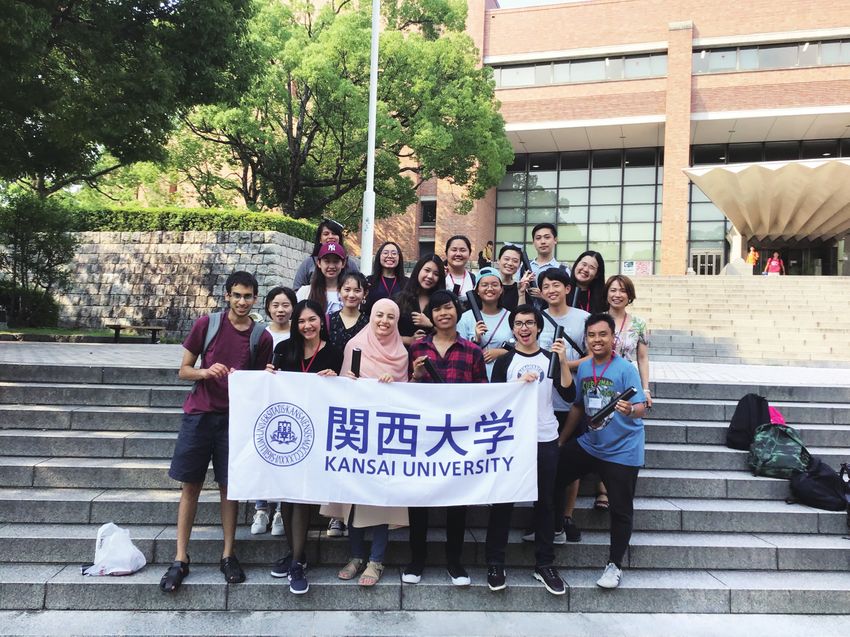
Kansai University
Kansai University (KU), is one of the leading private universities in Japan. With a history of over 130
years, KU has 13 undergraduate faculties, 13 graduate schools, and 3 professional graduate schools.
There are over 30,000 students enrolled at our university, and we have 4 campuses located in Osaka,
the second largest city in Japan. Osaka is about half an hour train ride to the popular tourist
destinations of Kyoto, Kobe and Nara.

 Summer School Program
Participants will study their chosen subjects in English in the 2 or 4-week programs. “Survival
Japanese Language” is also available as an optional course. The total amount of classtime for each
course, which includes in-class lectures, tutorials, self-study and homework, is 45 hours. Academic
performance will be assessed at the end of the program, and a certificate of completion will be issued.
Classes will be conducted at KU’s main campus in Senriyama giving participants opportunities to
interact with Japanese students. This program is highly recommended for those who wish to study
and experience Japanese language and culture at a top class university located in Osaka, the
historical commercial hub of Japan.

Transportation to Kansai University
Senriyama Campus
                                                               Kansai
3-3-35 Yamate-cho, Suita-shi, Osaka                    North
                                                       exit
                                                               University
564-8680 JAPAN                                                 Senriyama
                                                               Campus
Tel : +81-6-6368-1121
                                              kandai-mae

Take the Hankyu Senri Line from Osaka
(Umeda) to Kandai-mae. From the station, it
is about a 5-minute walk to the main gate.             South
                                                       exit

                                                                                  Summer School Application Guideline   2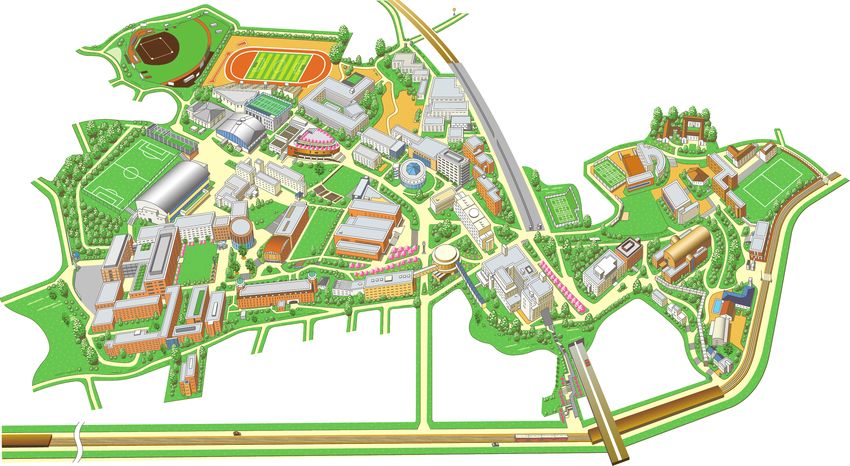
Program Overview
         ■ Period
         2-Week Unit Unit 1 : July 1 (Wed)~July 15 (Wed), 2020
                                Unit 2 : July 16 (Thu)~July 30 (Thu), 2020
         4-Week Unit Unit 3 : July 1 (Wed)~July 30 (Thu), 2020

         ■ Eligible Applicants
         The applicant must be an undergraduate or graduate student currently enrolled at an accredited
         college/university/research institution outside Japan. All lectures (except “Survival Japanese
         Language”) are taught in English. A certain degree of English proficiency is required to understand the
         lectures and engage in the various activities (TOEFL score 500 [PBT] / 61 [iBT] or equivalent is the
         minimal recommendation for non-native English speakers).

         ❶Faculties of Law, Letters, Policy Studies, Foreign Language Studies
         ❷Faculties of Economics, Business and Commerce; School of Accountancy
         ❸Faculty of Sociology
         ❹Faculties of Engineering Science, Environmental and Urban Engineering, Chemistry, Materials and Bioengineering,
         ❺University Library
         ❻Mediapark RINPUKAN(cafeteria, shops)

                                                          ❹                      Division of International Affairs
                                                                                         (2nd floor)
                                                      ❻
                                                                             ❷

                                                                                                                               to Awaji
                                                                                                                               Umeda,
                                                              ❺                                                              Tengachaya

                                ❶
                                                                                   ❸

                                                                                                                     South
                                                                                                                      Exit

               (to Kitasenri)
                                                                                                 North
                                                                                                  Exit

3   Summer School Application Guideline
■ Program Summary
                                            2-week unit                                               4-week unit
                               Unit 1                              Unit 2                                    Unit 3
  Program period        July 1 (Wed)〜                        July 16 (Thu)〜                          July 1 (Wed)〜
                        July 15 (Wed), 2020                  July 30 (Thu), 2020                     July 30 (Thu), 2020

 Minimum number             10 students                         10 students                              10 students
 of participants
                                                                    Main Course

                                                                                          Available in the first half of the program.
                                                                                          ・Global PBL (Ethnography of Osaka Japan)
                     ・Global PBL                        ・Work-Based Learning              ・Business for SDGs
                      (Ethnography of Osaka,            ・Japanese Popular Culture          Choose either one
                       Japan)
                     ・Business for SDGs
                                                                                          Available in the second half of the program.
                       Choose either one                  Choose either one
                                                                                          ・Work-Based Learning
     Courses                                                                              ・Japanese Popular Culture
                                                                                           Choose either one

                                                                 Optional Course

                                                                                          Survival Japanese Language
                                                                                           Cycle 1: available in the first half.
                                                                                           Cycle 2: available in the second half.
                    Survival Japanese Language          Survival Japanese Language
                               Cycle 1                             Cycle 2                 Choose either cycle
                                                                                           (Course content of Cycle 1 and Cycle 2
                                                                                            are the same.)

   Course Fee
   (per person)             JPY 175,000                         JPY 175,000                              JPY 340,000

                     Choose either apartment (student dormitory) or homestay (You cannot change the type of accommodation
 Accommodation       during your stay). Additional fee is required for homestay (JPY 7,000 for 2 weeks, JPY 13,500 for 4 weeks).

■ Additional fee (JPY 18,000) is required for "Survival Japanese Language".
■ Indicate for which unit (Unit1, Unit 2 or Unit 3) you apply. As to Units, cancellation would occur if the minimum
  number of participants is not met. We will notify participants by the end of April should unit cancellations
  occur.
■ Choose one "main" course when applying for the program. The course selected may not be available if no
  more than 5 students apply. In any case, we will contact the applicable students.
■ Indicate your preference(s) for main course(s) and Survival Japanese Language as an optional course by
  ticking boxes.
■ Your course preference (s) is unchangeable once the application form is submitted. However, we might not
  be able to meet your request.
■ Select either apartment (student dormitory) or homestay. Refer to “Accommodation” (#10) for the details.
■ Transportation costs for activities outside campus are not included in the program fee.
■ All participant is required purchasing the overseas travel accident insurance specified by Kansai University.
  The insurance premium is JPY 6,000 for 2 weeks and JPY 9,200 for 4 weeks. Refer to the item “Overseas
  Travel Accident Insurance” (#9) for the details.
■ Come with your laptop to this program.

                                                                                                         Summer School Application Guideline   4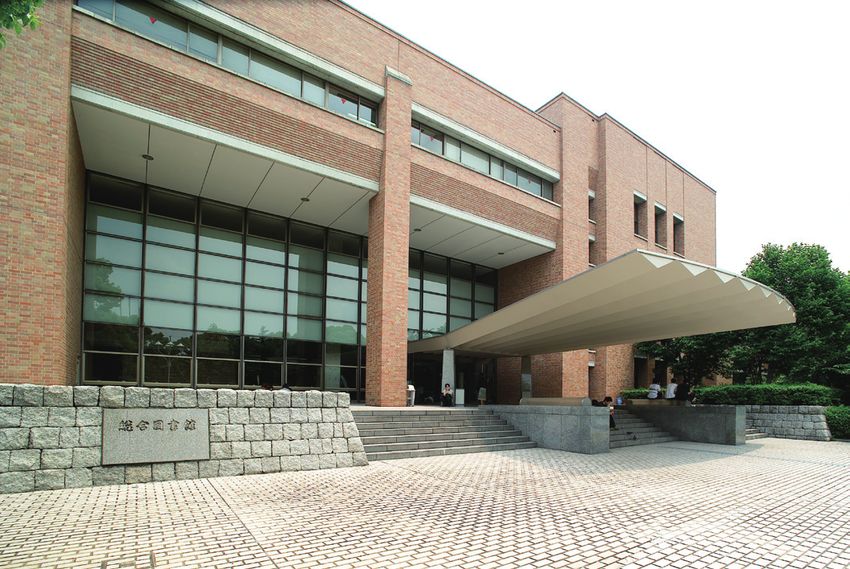
Course Descriptions
         Applicants may choose one of the two courses available in each 2-week unit. Total classtime for each
         course is 45 hours, including time spent for assignment, tutoring and homework. The “Survival
         Japanese Language” course is optional.

          English-mediated courses available for Unit 1 (2-week unit) / Unit 3 (4-week unit)

         ■ Global PBL (Ethnography of Osaka, Japan)
         Project-based learning is a dynamic classroom approach in which students actively explore and nurture a deeper
         knowledge of real-world problems and challenges. In this course, students will form groups to investigate various
         field sites in Osaka, and will conduct ethnographic research projects. The groups will generate inquiries and seek
         to answer various questions that arise through theories of ethnography.
         Students will be able to:
         1) cultivate the competence to work with peers in a cross-culture setting and
         2) learn how to conduct fieldwork (ethnography).
         This course requires getting to know the people at the site, knowledge of social dynamics in that milieu, and an
         understanding of the shared meanings within the target community.
         Through fieldwork, students will be able to explore Osaka from a different perspective and as a result, it will foster
         a deeper understanding in Japan.

         ■ Business for SDGs
         This course will consider and explore what the targets of the SDGs/Sustainable Development Goals (SDGs) are
         and how their progress can be measured, In addition, a historical overview of SDGs related themes and
         concerns will be undertaken given that the SDGs are relevant for the management of the global system as well
         as in Japan. The main goal of this course is to enable students to bring their academic understandings of the
         SDGs to practical application through the generation of a creative business plan that functions as a platform for
         delivering solutions and strategies to achieve the SDGs goals. While there has been a worldwide increase in
         interest in how to accommodate such things as “Society 5.0” consider that we must protect and sustain the
         planet we live on. Here, the main societal resource harnessed is not seen to be primarily technological, rather it is
         human beings and human action. Through various group projects, guest lectures from private sectors, and field
         visits in this course, students will find their own methods to be knowledgeable about SDGs, develop more
         innovative approaches to thinking of solutions, and develop skills in being co-creative with regard to generating
         future potential in business.

5   Summer School Application Guideline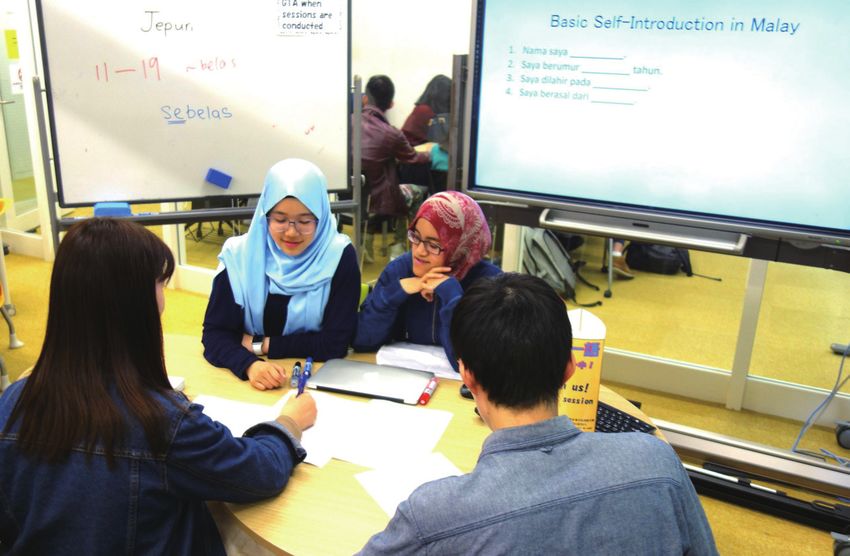
English-mediated courses available for Unit 2 (2-week unit) / Unit 3 (4-week unit)

■ Work-Based Learning
In this course the registered students will individually conduct a field research at an appropriate site such as in a
Japanese company, a foreign company in Japan, or at other organizations (e.g., NPO) in Japan. The students
will gain work-based experience through this field study. They will be able to cultivate their cultural literacy for
Japanese business management, and furthermore, they will be able to develop their skills for practical business
communication in practice. In the early half of the course, students will be given instructions on how to carry out
a qualitative ethnographic research in a field; the students will be exposed to the methods such as participatory
observation, data analysis approaches such as (critical) discourse analysis, conversation analysis, and various
qualitative interpretation approaches. As a final task of this course, the students will be expected to produce a
final research paper with a specific topic focus, based on the field experience. The workload hours for the field
study will be determined individually, according to an agreement between each student and the hosting site.

■ Japanese Popular Culture (Postwar Japanese Culture)
Japan has sometimes been described as a “soft superpower,” referring to the difference between so-called hard
power (usually in the form of military capability) and so-called soft power (or cultural influence). This course
introduces students to the historical contexts and social implications behind contemporary popular culture in
Japan. We will explore a wide variety of artistic media, ranging from manga, anime, and literature to fashion, film,
and music. Of particular concern will be the way culture has developed in the postwar period and how Japanese
culture has influenced global trends. Topics include Godzilla and atomic energy, Miyazaki Hayao and
environmentalism, gender roles and social activism.

 Optional Course
■ Survival Japanese Language (available in both 2-week units)
  2-week unit (Unit 1 and Unit 2) / 4-week Unit (Unit 3)
Applicants for the 4-week unit must specify the language course term (cycle 1 or cycle 2) in the application form.
An additional fee (JPY 18,000) will be required to enroll. The Survival Japanese Language course targets
beginner students (less than 300 hours of study). Restrictions may apply to intermediate level or above due to
class size limitation (priority will be given to beginners).
* The Japanese language course cannot be taken twice as content for both classes is the same.

This course is an introductory Japanese language course for students who have never learned Japanese before,
or have a very basic knowledge of Japanese greetings, hiragana and katakana. Students will be taught
fundamental expressions and phrases necessary to “survive” during a short stay in Japan, and will also learn
Japanese culture and society through a variety of activities (e.g., Japanese cultural studies with Kansai University
students). By the end of the course, students will be able to: 1) understand and use basic Japanese
conversational expressions and phrases in daily life, and 2) make a short presentation using language skills
developed in the course.

                                                                                             Summer School Application Guideline   6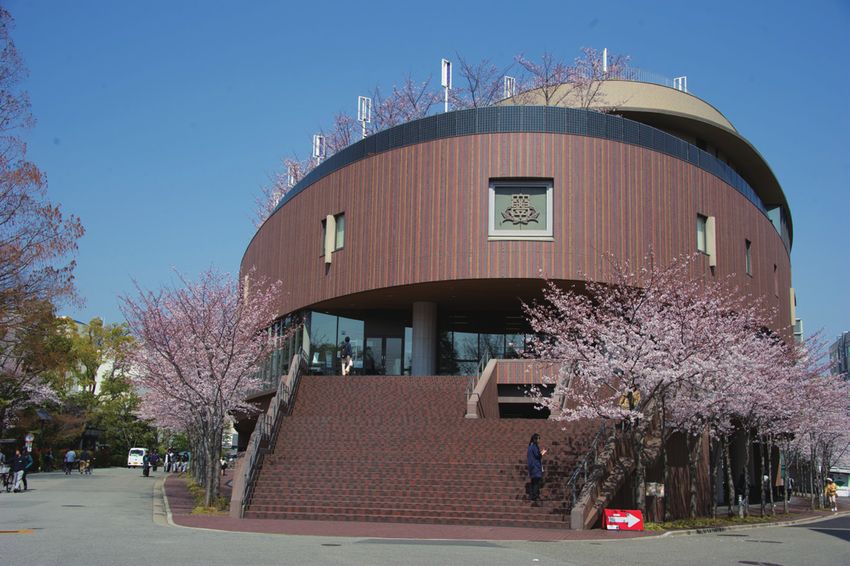
Course Schedule (TBA)
NOTE: The following schedules are tentetive, so would be changed in the future.
UNIT1:July 1~July 15, 2020 Please refer to page #8 for the time schedule at the top on the right side,
Group English-Mediated Courses English-Mediated Courses you selected
A Global PBL Survival Japanese Language
B Business for SDGs Others
Mon Tue Wed Thu Fri Sat Sun
Period 1-Jul 2-Jul 3-Jul 4-Jul 5-Jul
1st Orientation Class Class
Campus Tour
2nd Welcome party Class Class
3rd Class e-Learning Class
Check-in
4th Class Tutorial Hours
(afternoon)
Japanese Culture Study
5th Tutorial Hours
Period 6-Jul 7-Jul 8-Jul 9-Jul 10-Jul 11-Jul 12-Jul
1st Class Class Group A Class Class Class
Field Work
2nd Class Class Class Class Group A
Group B Tutorial Hours & Field Work
3rd e-Learning Class Group Work Group A e-Learning
Field Work Group B
4th Tutorial Hours Classes & Tutorial Hours
Japanese Culture Study Group B Japanese Culture Study
5th Group Work
Period 13-Jul 14-Jul 15-Jul
1st Class Group A Check-out
Classes & Presentation (morning)
2nd Class
Group B
3rd Class(Presentation) Work & Presentation
4th Class(Presentation) Closing Ceremony &
Farewell Party
5th
UNIT2:July 16~July 30, 2020
Group English-Mediated Courses English-Mediated Courses you selected
C Work-Based Learning Survival Japanese Language
D Japanese Popular Culture Others
Mon Tue Wed Thu Fri Sat Sun
Period 16-Jul 17-Jul 18-Jul 19-Jul
1st Orientation Class
Campus Tour
2nd Welcome party Class
3rd Class e-Learning
Check-in
4th Class
(afternoon)
Japanese Culture Study
5th Tutorial Hours
Period 20-Jul 21-Jul 22-Jul 23-Jul 24-Jul 25-Jul 26-Jul
1st Class Class Class Group C Class Class
Field Work
2nd Group C Class Group C Class
Field Work Field Work Group D Group C
3rd e-Learning Group Work Field Work e-Learning
Group D Group D
4th Classes & Tutorial Hours Classes & Tutorial Hours Group D
Japanese Culture Study Classes & Group Work Japanese Culture Study
5th
Period 27-Jul 28-Jul 29-Jul 30-Jul
1st Class Class Group C Check-out
Classes & Presentation (morning)
2nd Group C Class
Field Work Group D
3rd Class(Presentation) Group Work & Presentation
Group D
4th Classes & Tutorial Hours Closing Ceremony &
Class(Presentation) Farewell Party
5th
7 Summer School Application Guideline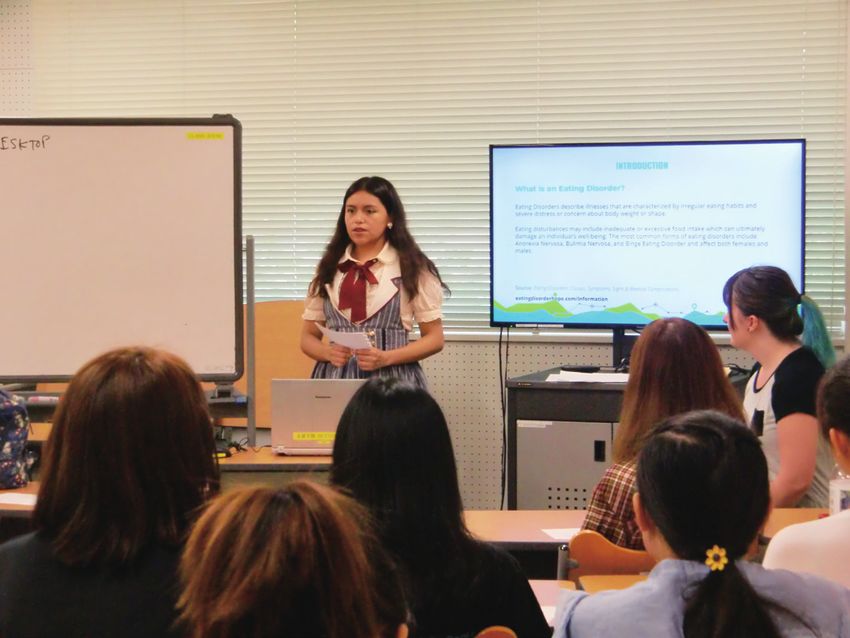
Period
1st 9:00-10:30
2nd 10:40-12:10
3rd 13:00-14:30
4th 14:40-16:10
5th 16:20-17:50
Unit3:July 1~July 30, 2020
Group English-Mediated Courses NOTE: The following schedules are tentetive, so would be changed in the future.
A Global PBL
English-Mediated Courses you selected
B Business for SDGs
Survival Japanese Language
C Work-Based Learning
Others
D Japanese Popular Culture
Mon Tue Wed Thu Fri Sat Sun
Period 1-Jul 2-Jul 3-Jul 4-Jul 5-Jul
1st Orientation Class Class
Campus Tour
2nd Welcome party Class Class
3rd Class e-Learning Class
Check-in
4th Class Tutorial Hours
(afternoon)
Japanese Culture Study
5th Tutorial Hours
Period 6-Jul 7-Jul 8-Jul 9-Jul 10-Jul 11-Jul 12-Jul
1st Class Class Group A Class Class Class
Field Work
2nd Class Class Class Class Group A
Group B Tutorial Hours & Field Work
3rd e-Learning Class Group Work Group A e-Learning
Field Work Group B
4th Tutorial Hours Classes & Tutorial Hours
Japanese Culture Study Group B Japanese Culture Study
5th Group Work
Period 13-Jul 14-Jul 15-Jul 16-Jul 17-Jul 18-Jul 19-Jul
1st Class Group A Class
Classes & Presentation
2nd Class Class
Group B
3rd Class(Presentation) Work & Presentation Class e-Learning
4th Class(Presentation) Closing Ceremony & Class
Farewell Party
Japanese Culture Study
5th Tutorial Hours
Period 20-Jul 21-Jul 22-Jul 23-Jul 24-Jul 25-Jul 26-Jul
1st Class Class Class Group C Class Class
Field Work
2nd Group C Class Group C Class
Field Work Field Work Group D Group C
3rd e-Learning Group Work Field Work e-Learning
Group D Group D
4th Classes & Tutorial Hours Classes & Tutorial Hours Group D
Japanese Culture Study Classes & Group Work Japanese Culture Study
5th
Period 27-Jul 28-Jul 29-Jul 30-Jul
1st Class Class Group C Check-out
Classes & Presentation (morning)
2nd Group C Class
Group D
Field Work
3rd Class(Presentation) Group Work & Presentation
Group D
4th Classes & Tutorial Hours Class(Presentation) Closing Ceremony &
Farewell Party
5th
Summer School Application Guideline 8
Evaluation
         The instructor(s) for each course will evaluate students based on the criteria stipulated below. Letter
         grades (S~F) based on Kansai University rating criteria will be used for your assessments in this
         program. Assessment criteria for each course will be specified in the syllabi.

                                          Percentage                           Grades
                                           100〜90              S               Superior
                                           89〜80               A               Excellent
                                           79〜70               B               Good
                                           69〜60               C               Passable
                                           Below 59            F               Fail

        ■ Certificates of completion will be presented in a part of closing ceremony.
        ■ Academic transcripts will be sent by post within two weeks after the program.

          Overseas Travel Accident Insurance
         All participants are required purchasing the overseas travel accident insurance specified by Kansai
         University. The insurance premium is JPY 6,000 for 2 weeks and JPY 9,200 for 4 weeks. This
         insurance premium is not included in the program fee, but participants are obliged to pay it along with
         the program fee. The insurance coverage is as follows:

                                           Coverage                        Insured Amount
                                 Accidental Death                          JPY 10,000,000
                                 Accidental Disability                     JPY 10,000,000
                                 Accidental Medical Expenses               JPY 30,000,000
                                 Sickness Medical Expenses                 JPY 30,000,000
                                 Rescuerʼs Expenses                        JPY 10,000,000
                                 Personal Liability                        JPY 100,000,000

         ■ This insurance does NOT cover pre-existing conditions (including allergies) or damage to baggage.
         ■ The insurance can cover you only for a certain period of time (starting from check-in day to
             check-out day). Earlier or later than the program schedule is exclusive.
         ■ Should you need additional coverages other than the above, you need to purchase another one out
             of your pocket.

9   Summer School Application Guideline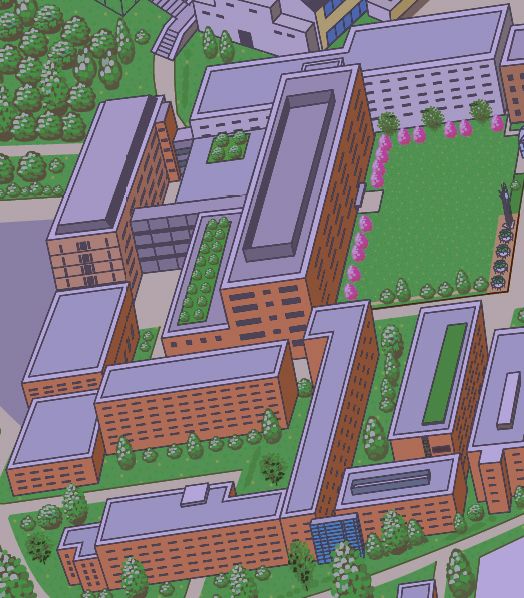
Accommodation
Choose either apartment or homestay when you apply for this program.
We will contact applicants individually as needed if the certain number of room availabilities exceed.
Schedule for check-in/ out is unchangeable. Please check the dates in the schedule (#7 and 8).

■ Apartment: (student apartment/ dormitory, single room)
No additional fee is required (apartment utilities such as water, electricity and Wi-Fi are included. Meals
are exclusive).
Each room in student apartments will be equipped with a bathroom, a bed and bedding, TV, a
refrigerator, and daily commodities (As for washing machine (s), it is attached in a room or equipped in
the premise).
Most of them are located within walking distance but the exception would happen depend on the
number of applicants.
We would arrange you a room in the student dormitory nearby, for example, a male student dormitory
as follows;
・Each room is divided into two for two students with a wall, so you can feel as if you stay in a single.
*An entrance is shared with another male student.
・Students feel free to use the facilities and items below in the shared spaces of the dormitory.
E.g.; Shower rooms, bathrooms, washing machines, items in the pantries.

■ Homestay:
An additional fee is required.
*JPY 7,000 for 2 weeks and JPY 13,500 for 4 weeks (includes breakfast and dinner).
Houses of host families are located within an hour commute by public transportation to Senriyama
Campus.
Your host family will pick you up at Senriyama campus on the check-in day.

http://www.kansai-u.ac.jp/Kokusai/short_term/

 VISA
Participants are responsible for obtaining the appropriate visa. Please refer to the Ministry of Foreign
Affairs website or consult the nearest Embassy or the Consulate General of Japan in your area for
more information and advices before applying for this program.

www.mofa.go.jp/j_info/visit/visa/index.html

                                                                                     Summer School Application Guideline   10
Application Deadline
Friday, April 17 th, 2020
All documents must be received no later than this date.
Application Procedures and Documents
Send the application documents to Kansai University by the deadline as an attachment file to the email
address below. Confirmation of your application will be sent to you by e-mail within three days. If you
do not receive any email from us by Tuesday, April 21st, 2020, please contact us immediately. There
is a possibility that your application has not been received if there is no response.
You can download this application guideline and form by accessing the following URL.
(This application will open around the middle of December.)
http://www.kansai-u.ac.jp/Kokusai/short_term/
■ Documents for application:
①Application form for Kansai University Summer School 2020.
②Official certificate of enrollment issued by the university or other institution where the applicant is
enrolled or affiliated (English).
③Pledge
■ Send the application documents to:
Email: short_term@ml.kandai.jp
Subject: “Summer School application”
■ Please direct all inquiries to:
Summer School Team
Division of International Affairs, Kansai University
3-3-35 Yamate-cho, Suita-shi, Osaka 564-8680
Tel: +81-(6)-6368-0178
Email: short _ term@ml.kandai.jp
11 Summer School Application GuidelineSelection Procedure
Application documents will be screened and then applicants will be notified the result via e-mail by
Thursday, May 7 th , 2020 accordingly. The guidelines for the program fee payment and other
instructions will be sent to the successful applicants as well. If you do not receive notification
email by Friday, May 8th, 2020, please contact us immediately.
Program Fee Payment
Payment deadline: Thursday, May 21st, 2020
After we have confirmed your payment, acceptance letter will be sent to you.
■ Basic program fee per person
2-week unit:JPY 175,000 4-week unit:JPY 340,000
Basic program fee includes:
● Tuition fees (2-week unit includes 1 main course, 4-week unit includes 2 main course)
● Accomodation (daily commodities and utilities included)
● Course materials
● Facility usage fee
● Administration fee
Basic program fee DOES NOT include:
● Overseas travel accident insurance (reference: #9)
● Airfare tickets
● Transportation costs in Japan
● Optional course “Survival Japanese Language” fee JPY18,000
● Meals (except for welcome and farewell parties)
● Additional homestay fee (reference: #10)
■ Follow the instruction and transfer the required fee in one transaction to the designated bank
account by the deadline.
■ Remittance must be made in Japanese yen.
■ Money transfer from outside of Japan may take some time to be completed. Be sure to transfer as
early as possible so that the payment will be completed by the deadline.
■ Applicants are responsible for the remittance fee.
■ Please kindly note that we will not refund tuition and other fees once payment is
completed.
Summer School Application Guideline 12Personal Information
Kansai University Summer School follows Japanese laws, guidelines, and other norms concerning the
use of personal information (address, name, telephone number or personally identifiable information)
provided by the applicant. When you apply for this program, be sure to refer to the following website
for the details regarding the use of personal information:
Japanese only : http://www.kansai-u.ac.jp/global/footer/privacy.html
Others
You can find the details of this program (an application guideline and an application form) by
accessing the following URL.
http://www.kansai-u.ac.jp/Kokusai/short_term/
Mi-Room(Multilingual Immersion Room) University Library
Classroom scene Mediapark RINPUKAN
13 Summer School Application GuidelineKANSAI UNIVERSITY International Education Group, Division of International Affairs 3-3-35 Yamate-cho, Suita-shi, Osaka 564-8680 JAPAN Tel: 81-6-6368-0178 Email: short̲term@ml.kandai.jp http://www.kansai-u.ac.jp/English/(Kansai University) http://www.kansai-u.ac.jp/Kokusai/short̲term/(Summer School)
You can also read


