Armwood High School Curriculum and Course Selection Guide 2021 2022
←
→
Page content transcription
If your browser does not render page correctly, please read the page content below
Armwood High School
              Curriculum and Course Selection Guide
                           2021 – 2022

                                   A Message from the
                            Assistant Principal for Curriculum:

 Shortly, you will be making decisions affecting course selection for the 2020-2021 school
year. While it is not easy to make choices that impact your future, it is imperative that you
give careful thought to these selections. Think about your future aspirations while keeping
   in mind the requirements for each course of study: Career Prep or College Prep. Choose
    electives with an eye on your interests and future goals. To assure proper placement in
 classes, talk to your parents, teachers, and counselors, taking into account previous grades
     and achievement. Decide on courses that will enable you to perform well at colleges,
      universities, trade, or technical schools to meet your personal and career goals.

  The administration, guidance counselors, and teachers at Armwood are committed to
 giving you their time, understanding, and counsel. Counselors will review worksheets
 and meet with students individually through their English classes. Wise choices today will
result in continued success tomorrow. We wish each of you a very successful school year.

                                   Matthew Johnson
                            Assistant Principal for Curriculum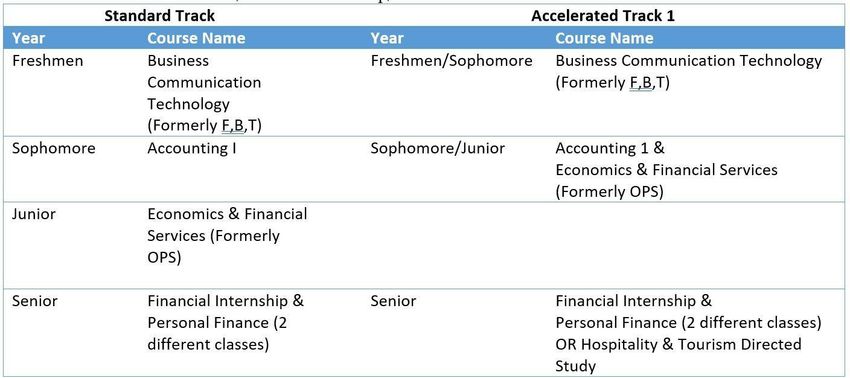
Required Courses

All courses required for graduation are automatically scheduled for each of the students based
upon FSA scores, course of study, and current coursework achievement. The courses listed
in this guide are the elective courses students need to choose based upon their major area of
interest and post-secondary plans.

                                  Believe… Achieve… Succeed!
                                     Armwood High School
                               Committed to Excellence in Education

                                        Armwood’s Mission

             We will work hard to meet the needs of each individual student each day.

                                         Armwood’s Vision

                     We will be a caring and educationally sound community.

                         Graduation Requirements & Guidance Information

Guidance Services

The Guidance Department, while working with students, parents, school staff, and community,
strive to create a positive atmosphere in which all students may develop to their fullest potential.
The counselors and college/career resource specialist serve a major role in the course selection
process. They are your best resource when it comes to specific program and course requirement
information relating to graduation. The counselors also have the most current information re-
garding the Florida Bright Futures Scholarship Program.

Honors/Advanced Placement Courses

It has been shown that the weighing of grades in advanced courses more accurately correlates
to a student’s achievement than with his/her class standing. A 0.04 bonus will be added to the
student’s district cumulative grade point average for each ½ credit completed in an honors
course (C or higher). A 0.08 bonus will be added to the student’s district cumulative grade point
average for each ½ credit earned in an Advanced Placement course (C or higher).
Dual Enrollment

Dual Enrollment (College Credit) courses require a 3.0 grade point average and passing scores
on the PERT, SAT, or ACT PRIOR to scheduling. Dual enrollment courses will continue to earn
an additional 0.08 in honors points to their district GPA per ½ credit earned.

Additional Requirements

~ Students who pass all 24 of their required courses but fail to pass the FSA Reading benchmark
will receive a Certificate of Completion.
~ Students must have a 2.0 State Grade Point Average or higher to graduate.
~ Students must complete all 24 credits required for graduation in order to participate in the
graduation ceremony.

                       Armwood High School Articulation Highlights School
                      Improvement Team Requirements and Adjustments To
                                  State Graduation Standards

~ All 9th or any 10th grader whose FSA Reading scores indicate that they are at risk to pass the
graduation benchmark for Reading will be scheduled in Reading classes as appropriate.

~ Any 11th or 12th grader who has not passed his/her FSA Reading or Algebra I EOC Math
benchmark will be scheduled into the appropriate remediation classes.

~ All students are required to carry a balanced academic load of 7 credits each year.

~ Students are encouraged to take the most academically rigorous courses available.

~ Students should make every effort to qualify for one of the Bright Future Scholarships:
Florida Academic Scholars, Florida Vocational Gold Seal Endorsement and Scholarship, or the
Florida Medallion Scholarship.
EXCEPTIONAL STUDENT EDUCATION

Exceptional Student Education programs offer both standard and special diploma courses. Ex-
ceptional Student Education students are programmed on an individual basis after consultation
with the case manager and the Individual Education Plan (IEP) goals and objectives are re-
viewed. Prerequisite for all courses is the placement by the Department of Special Instructional
Services Staff. Armwood High School offers programs in:

1.    Specific Learning Disabilities
2.    Emotional/Behavioral Disabilities
3.    Intellectual Disabilities
4.    Physically Impaired
5.    Deaf/Hard of Hearing
6.    Varying Exceptionalities
7.    Other Health Impairments
8.    Speech/Language
9.    Visually Impaired
CREATIVE WRITING I
ENGLISH                                                                 (0.5 credit) (Grades 9-12)
                                                                        The purpose of this course is to develop students’ writing and
ADVANCED PLACEMENT                                                      language skills needed for individual expression in literary
ENGLISH- LANGUAGE & COMPOSITION                                         forms. The content includes, but is not limited to, instruction
(1.0 credit) (Grade 11)                                                 in the development and practice of writing a variety of literary
The purpose of this course is to provide students with an under-        works, including original poetry, short stories, plays, novels, and/
standing of the semantic, structural and rhetorical resources of        or essays and other notification. The course may also include
the English language as they relate to the principles of effective      technical aspects of publishing students’ work in a literary
writing. The course is also designed to provide students with           publication.
a variety of writing opportunities, calling for the use of different
styles and themes. The advanced placement exam administered
                                                                        CREATIVE WRITING II
in May is a requirement.
                                                                        (0.5 credit) (Grades 9-12)
                                                                        The purpose of this course is to enable students to develop and
ADVANCED PLACEMENT
                                                                        use grade 11-12 writing and language skills for creative
ENGLISH-LITERATURE AND COMPOSITION
                                                                        expression in a variety of literary forms. Studying and modeling a
(1.0 credit) (Grade 12)
                                                                        variety of genres will be emphasized at this level of creative
The purpose of this course is to involve students in the study
                                                                        writing.
and practice of writing and in the study of literature. Students
learn to use the modes of discourse and to recognize the
                                                                        THEATRE I
assumptions underlying various rhetorical strategies. Students
                                                                        (1.0 credit) (Grades 9-12)
acquire an understanding of the resources of the language and an
                                                                        Gives students a broad based survey of theatre arts; instills an
understanding of the writer’s craft. They should develop critical
                                                                        appreciation of theatre; explores professional aspects of the
standards for the appreciation of any literary work and increase
                                                                        theatre. This beginning course introduces the beginning student
their sensitivity to literature as a shared experience. The
                                                                        to acting. It begins by developing concentration, characterization,
advanced placement exam administered in May is a requirement.
                                                                        physical agility, and creativity through the use of improvisation,
                                                                        pantomime, monologues and directing.
DUAL ENROLLMENT FRESHMAN ENGLISH I & II
(1.0 credit each) (Grade 12)
                                                                        THEATRE II
Students will need a 3.0 or higher GPA, a passing score on the
                                                                        (1.0 credit) (Grades 10-12)
College Placement Test through Hillsborough Community College
                                                                        This course continues the work on characterization, and role
or a passing score on their SAT or ACT exam. When students
                                                                        analysis that was developed in Theatre I. This course also
complete this course, they will earn college credit through HCC.
                                                                        provides students with the opportunity to apply theories learned in
There is no fee and textbooks are provided.
                                                                        the classroom to live performances.
JOURNALISM I
(1.0 credit) (Grades 9-12)                                              THEATRE III HONORS
                                                                        (1.0 credit) (Grades 10-12)
Journalism is the study of gathering, writing, and reporting news.
Beginning journalism students receive instruction in all areas          This course is designed for students with significant experience in
of journalism needed to pursue staff positions on the yearbook.         theatre, and promotes depth of engagement and lifelong
Among the areas covered in this course include: interviewing,           appreciation for theatre through a broad spectrum of teacher-
reporting, feature writing, news stories, layout design, advertising,   assigned and self-directed study and performance. Students
photography, journalistic ethics, and professional standards. This      regularly reflect on aesthetics and issues related to and
is not a student publications course.                                   addressed through theatre, and create within various aspects of
                                                                        theatre in ways that are progressively more innovative. In keeping
                                                                        with the rigor expected in an accelerated setting, students
JOURNALISM II – IV
(1.0 credit) (Grades 10-12)                                             assemble a portfolio that showcases a significant body of work
(Honors points can be earned if students complete honors                representing personal vision and artistic growth over time;
portfolio requirements.)                                                mastery of theatre skills and techniques in one or more areas; and
Students may apply for a staff position on the yearbook.                evidence of significant oral and written analytical and problem-
Yearbook staff learn the different aspects of yearbook journalism,      solving skills based on their structural, historical, and cultural
including advertising, photography, copy, layout, page proof            knowledge.
checking, and deadlines. This is a student publications and
business course. Students will be required to produce and               TECHNICAL THEATRE DESIGN &
promote/sell the product. Teacher recommendation required.              PRODUCTION 1
                                                                        (1.0 credit) (Grades 10-12)
Students focus on developing the basic tools and procedures for        required to attend and/or participate in rehearsals and
creating elements of technical theatre, including costumes,            performances outside the school day to support, extend, and
lighting, makeup, properties (props), publicity, scenery, and sound.   assess learning in the classroom.
Technical knowledge of safety procedures and demonstrated safe
operation of theatre equipment, tools, and raw materials are           LITERATURE IN THE ARTS I HONORS
central to success in this course. Students explore and learn to       (0.5 credit) (Grades 10-12)
analyze dramatic scripts, seeking production solutions through         These courses promote a better understanding of fundamental
historical, cultural, and geographic research. Students also learn     aesthetic and cultural issues. They sharpen critical and analytical
the basics of standard conventions of design presentation and          abilities so that students may develop a deeper appreciation
documentation; the organizational structure of theatre production      of works of art. The goal of this requirement is to enhance the
and creative work in a collaborative environment; and the resulting    student’s ability to read critically, to understand the elements of
artistic improvement. Public performances may serve as a               art, and to grasp something of the complex relations between
culmination of specific instructional goals. Students may be           artist and public, and between art work and cultural literature.
required to attend or participate in technical work, rehearsals,       This course generally focuses on the central significance of
and/or performances beyond the school day to support, extend,          one’s cultural literacy and thereby enhances the student’s
and assess learning in the classroom.                                  understanding of our literary and artistic heritage. This course
                                                                       stresses literary works in all forms of Mythology including
THEATRICAL DIRECTION & STAGE                                           Roman, Greek, and Norse history and criticism of literature and
                                                                       the arts.
MANAGEMENT 1
(1.0 credit) (Grades 10-12)
Students learn how to select, organize, and mount formal and           LITERATURE IN THE ARTS II HONORS
informal staged productions by means of exploring the leadership       (0.5 credit) (Grades 11-12)
roles of director and stage manager. Students focus on the nature      The purpose of this course is to enable grades 11-12 students,
and responsibilities of the director and stage manager in relation     using texts and artistic works of high complexity, to develop
                                                                       advanced knowledge of the relationship between literature and
to the entire production team; the effect of the director's concept
on the overall production; vocabulary and principles of the various    the fine arts through integrated educational experiences of
elements of play production; techniques used to create an              viewing, reading, writing, speaking and listening, and language.
effective theatre work; and basic knowledge and application of         Emphasis will be on the varied cultural influences highlighting
                                                                       the major themes, issues, and topics associated throughout
staging. Public performances may serve as a culmination of
                                                                       selected literary and artistic periods.
specific instructional goals. Students may be required to attend
and/or participate in rehearsals and performances outside the
school day to support, extend, and assess learning in the              DEBATE I
classroom.                                                             (1 credit) (Grades 10-12)
                                                                       The purpose of this course is to develop students’ beginning
                                                                       awareness, understanding, and application of language arts as
ACTING I
                                                                       they apply to oral communication concepts and strategies for public
(1.0 credit) (Grades 9-12)                                             debate in a variety of given settings.
Through improvisation, simple scripted scenes, performance
projects, and/or practical application, students learn to identify     DEBATE II
what makes performances believable and explore the tools used          (1 credit) (Grades 10-12)
to create, articulate, and execute them. Upon completion of this       The purpose of this course is to continue to develop students'
course, students have a strong foundation for future scene work,       awareness, understanding, and application of language arts as
script analysis, and play production. Public performances may          they apply to oral communication concepts and strategies for public
serve as a culmination of specific instructional goals. Students       debate in a variety of given settings. Some work outside of the
may be required to attend and/or participate in rehearsals and         regular school day may be required.
performances outside the school day to support, extend, and
assess learning in the classroom.
                                                                       SOCIAL MEDIA I
ACTING II                                                              (0.5 credit) (Grades 10-12)
(1.0 credit) (Grades 10-12)                                            The purpose of this course is to enable students to develop
Students examine the various dimensions of characters through          fundamental skills in the use of social media across print,
analysis, discussion, and classroom performance, working with
                                                                       multimedia, web, and broadcast platforms, including ethical and
scripts from a variety of time periods and cultures. They learn to
                                                                       legal uses.
break down a scene from a character’s point of view, and also
learn to sustain a character and build the relationship between
actor and audience. Public performances may serve as a
culmination of specific instructional goals. Students may be
ideas orally with accuracy and fluency. The AP Spanish Language
MATHEMATICS course is projected to be the equivalent of a third-year college
Spanish Language and to prepare the students to take the
ADVANCED PLACEMENT CALCULUS AB Advance Placement Exam in May.
(1.0 Credit) (Grades 11-12)
Prerequisite: Analysis of Functions ADVANCED PLACEMENT SPANISH LANGUAGE
The purpose of this course is to provide study of elementary (1.0 credit) (Grades 11- 12)
functions and the general theory and techniques of calculus.
AP Spanish Literature and Culture is designed to introduce
The content includes that which is determined by the Advanced
students to the formal study of Peninsular Spanish, Latin
Placement Program. The course prepares students to take the
American, and U.S. Hispanic literature from the middle ages to the
required advanced placement examination administered in May.
present day. The course aims to develop students’ critical reading
and analytical writing skills in Spanish to perform successfully on
World Language the Advanced Placement exam in Spanish Literature, as well as
develop students' ability to make interdisciplinary connections and
explore linguistic and cultural comparisons.
SPANISH I
(1.0 credit) (Grades 9-12)
FRENCH I
The purpose of this course is to introduce students to the Spanish
(1.0 credit) (Grades 9-12)
language and its culture and to develop communicative skills and
The purpose of this course is to introduce students to the French
cross-cultural understanding. The content includes, but is not
language and its culture, and to develop communicative skills and
limited to, beginning skills in listening and speaking with special
cross-cultural understanding. The content includes, but is not
attention to pronunciation. An introduction to reading and writing
limited to,beginning skills in listening and speaking with special
is also included, as well as the fundamentals of grammar and
attention to pronunciation. An introduction to reading and writing
culture.
is also included, as well as the fundamentals of grammar and
culture.
SPANISH II
(1.0 credit) (Grades 9-12) Prerequisite: Spanish I FRENCH II
The purpose of this course is to reinforce the fundamental skills (1.0 credit) (Grades 9-12)
previously acquired by the students. This course develops Prerequisite: French I
increased listening, speaking, reading and writing skills as well The purpose of this course is to reinforce the fundamental skills
as cultural awareness. The content includes, but is not limited to, previously acquired by the students. This course develops
an expansion of the listening and oral skills previously acquired. increased listening, speaking, reading and writing skills as well
Although reading and writing receive more emphasis, oral as cultural awareness. The content includes, but is not limited to,
communication remains the primary objective.
an expansion of the listening and oral skills previously acquired.
Although reading and writing receive more emphasis, oral
SPANISH III HONORS communication remains the primary objective
(1.0 credit) (Grades 11-12)
The purpose of this course is to reinforce the fundamental skills
previously acquired by the students. This course develops
increased listening, speaking, reading and writing skills as well
as cultural awareness. The content includes, but is not limited to,
an expansion of the listening and oral skills previously acquired.
Although reading and writing receive more emphasis, oral
communication remains the primary objective.
ADVANCED PLACEMENT SPANISH LANGUAGE
(1.0 credit) (Grades 11- 12)
AP Spanish Language is intended for students who wish to
develop proficiency in all four language skills: listening, speaking,
reading and writing. Students who enroll in this course should
already have a basic knowledge of the language and culture of
Spanish-speaking people and should have attained a reasonable
proficiency in listening comprehension, speaking, reading and
writing. Emphasis is placed on the ability of the students to
comprehend, to compose expository passages, and to expressSOCIAL STUDIES
ADVANCED PLACEMENT HUMAN GEOGRAPHY ADVANCED PLACEMENT PSYCHOLOGY
(1.0 credit) (Grades 9-12) (1.0 credit) (Grades 10-12)
Advanced Placement Human Geography provides students with Prerequisites: Psychology I, II or Teacher Approval
the opportunity to identify and analyze contemporary concerns Meets Requirements for Social Studies Elective
and problems from local, national, and global perspectives. The purpose of Advanced Placement Psychology is to introduce
Using geographical tools and skills students will consider students to the systematic and scientific study of the behavior
issues pertaining to population distribution and migration, cultural and mental processes of human beings and other animals.
patterns and processes, political organization, land use, Students are exposed to the psychological facts, principles, and
industrialization and economic development, and urbanization. phenomena associated with each of the major subfields within
The course teaches students to analyze the human condition psychology. They also learn about the methods psychologists use
through a spatial perspective and to evaluate human patterns in their science and practice. The course traces the emergence
through a global viewpoint. This course prepares students for the of scientific psychology in the nineteenth century from its roots
required advanced placement examination administered in May. in philosophy and physiology and covers the development of
the major “schools” of psychology, showing how these schools
ADVANCED PLACEMENT WORLD HISTORY differed in what they viewed as the proper subject matter of
(1.0 credit) (Grades 10-12) psychology and the methods they used to study it. This historical
The purpose of the Advanced Placement World History course introduction helps students gain an understanding of the principal
is to develop a greater understanding of the evolution of global twentieth century approaches to psychology: behavioral,
processes and contacts in interaction with different types of biological, cognitive, humanistic, and psychodynamic. Students
human societies. This course builds an understanding of learn how these approaches guide research and practice in
historical, cultural, political, geographical, and social aspects psychology. The course prepares students to take the required
of Asia, Europe, Africa and the Americas. This understanding advanced placement examination administered in May.
is advanced through a combination of factual knowledge and
analytical skills. This course emphasizes relevant factual ADVANCED PLACEMENT MACROECONOMICS
knowledge deployed in conjunction with leading interpretive (1.0 credit) (Grades 12)
issues and types of historical evidence. This course prepares Meets Requirements for Economics
students for the required advanced placement examination Explore the principles of economics that apply to an economic
administered in May. This course meets the World History system as a whole. You’ll use graphs, charts, and data to
graduation requirement. analyze, describe, and explain economic concepts.
ADVANCED PLACEMENT US HISTORY DUAL ENROLLMENT U.S. HISTORY AMH 1010 & 1020
(1.0 credit) (Grades 11-12) (0.5 credit each) (Grades 11-12)
Advanced Placement US History is a challenging course that This course covers United States History from exploration to the
is meant to be the equivalent of a freshman college course and present. Research, critical thinking, essay writing and
can earn college credit. It is a two-semester survey of American interpretation of primary source documents are emphasized. This
history from the age of exploration and discovery to the present. course meets the United States History graduation requirement.
Solid reading and writing skills, along with a willingness to Students must have a GPA of a 3.0 or higher and a passing score
devote time to homework and study, are necessary to succeed. on the College Placement Test through Hillsborough Community
Emphasis is placed on critical and evaluative thinking skills, essay College or a passing score on their SAT or ACT exam prior to
writing, interpretation of original documents, and historiography. being scheduled for this course. When students complete this
The course prepares students to take the required advanced course, they will earn college credit through HCC. There is no fee
placement examination administered in May. This course meets and textbooks are provided.
the United State History graduation requirement.DUAL ENROLLMENT
DUAL ENROLLMENT
PUBLIC SPEAKING SPC 1608
COLLEGE SUCCESS SLS 1501
(0.5 credit) (Grades 11-12)
(0.5 credit) (Grades 11-12)
Prerequisites: College level reading and writing skills are
This interdisciplinary course empowers students by preparing
required.
them for a successful college challenge experience, and
Focuses on practical methods of speech composition
providing them with additional opportunities to develop intellectual
potential and life skills. Topics include goal assessment, time organizational pattern and presentation; addresses the individual
management, power reading, creative and critical thinking, needs of students. Meets speech component of the
test taking, memory, note taking, communication skills, study general education communication requirement.
techniques and interpersonal relationship issues.
DUAL ENROLLMENT
PRINCIPALS OF ECONOMICS ECO 2013
DUAL ENROLLMENT
(0.5 credit) (Grades 11-12)
AMERICAN GOVERNMENT POS 2041
Prerequisites: College level reading, writing and math skills
(0.5 credit) (Grades 11-12)
are required.
Prerequisites: College level reading and writing skills are
Introduction to the theory of national income determination with
required.
emphasis on fiscal and monetary policies. This course includes
Covers the structure and function of the American government,
analysis of full employment, price stability and economic growth.
the dynamics of political change and contemporary issues.
DUAL ENROLLMENT PSYCHOLOGY I & II
(0.5 credit) (Grades 9-12)
INTRODUCTION TO PHILOSOPHY PHI 2010
(0.5 credit) (Grades 11-12) Prerequisite for Psychology II is Psychology I.
Prerequisites: College reading and writing skills are required. The purpose of these courses is to provide students with the
Introduces the study of our human capacity to reflect consciously opportunity to acquire an understanding of human behavior,
and critically on our experience and our routines. It introduces behavioral interaction and the progressive development of
several basic concepts in philosophy such as the idea of being, individuals. Specific topics include psychological methods
the nature and criteria of knowledge claims, ethical foundations, of study, human development and learning, heredity and
free will, the existence of God, and methods of philosophical environment, measuring intellectual ability, remembering,
inquiry with selected applications to practice. forgetting, thinking, sensation and perception, motivation and
emotion, frustration and conflict, coping with stress, psychological
DUAL ENROLLMENT disturbances and treatment, group behavior, social influence, and
GENERAL PSYCHOLOGY PSY 2012 interaction.
(0.5 credit) (Grades 11-12)
Prerequisites: College level reading and writing skills are VIETNAM & 20th CENT CONFLICT
required. (0.5 credit) (Grades 9-12)
An introduction to modern scientific psychology and its application This course is a comprehensive study of warfare throughout the
to human behavior. Topics include perception, motivation, 20th Century, with emphasis on American involvement in the
learning, thinking, remembering, emotion, intelligence, personality Spanish-American War, World War I & II, the Korean War, the
development, psychological disorders, therapy, social behavior, Vietnam War, and the first Gulf War. It will include geography,
and the scientific methods used in psychology. social, economic, political and military events from the United
States first using imperialism up until the final events of the first
DUAL ENROLLMENT Gulf War. Learning techniques include music of the Vietnam War
INTRODUCTION TO RELIGION REL 2300 period, video presentations, group projects/presentations, and
(0.5 credit) (Grades 11-12) frequent guest speakers who served in these wars.
Prerequisites: College level reading and writing skills are
required. LAW STUDIES HONORS
An introductory course which explores such topics as the nature (0.5 credit) (Grades 9-12)
of religion, features shared in world religions, differences among Films, activities, and presentations will serve as a guide through
world religions, the relationship between belief and behavior, and America’s criminal justice system. Topics explored throughout this
methods and problems associated with classifying and studying course will include criminal and civil law, the criminal process,and
religion. your rights on a Federal and State level. The honors course will
explore law at a more in depth level.SOCIOLOGY LATIN AMERICAN HISTORY (0.5 credit) (Grades 9-12) (0.5 credit) (Grades 9-12) Humans spend their entire lives in different social groups and Latin American history allows students to explore through the sociology is the scientific study of human social behavior within use of primary and secondary texts and film the histories of Latin these groups. Sociologists study formal organizations and American countries. Although Hispanics/Latinos are projected various informal social groups. Unlike psychology, sociology to be the largest racial minority in the United States classes that focuses on patterns of group behavior that result from following focus on their histories are limited in core history classes. The the rules of society and culture. This course includes the study of course begins with the ancient Mesoamerican civilizations (Maya, culture and society, socialization, gender roles, social Aztec, Inca) to modern times. Not only will the histories of specific classes, marriage and family, social institutions such as religion Latin American countries be studied but so will the interaction be- and government, and social problems such as racism. Role tween the United States and Latin America be learned. Therefore playing, videos, movie clips, class discussion and group projects it is a good supplemental class to United States History. are used extensively in covering these topics. AFRICAN AMERCIAN HISTORY (0.5 credit) (Grades 9-12) This course will provide students an opportunity to trace African American history beginning with the origins of Africans coming to America. This course will also examine the role of African Ameri- cans throughout American History which include topics, such as the Civil War, Harlem Renaissance and the Civil Rights movement.
SCIENCE
                                                                      PHYSICS HONORS
ADVANCED PLACEMENT BIOLOGY                                            (1.0 credit) (Grades 10-12)
(1.0 credit) (Grades 10-12)                                           The purpose of this course is to provide students with an
Prerequisite: Biology Honors with a C or higher                       introductory study of the theories and laws governing the
This course provides students with advanced exploration of            interaction of matter, energy and the forces of nature. The
biological concepts previously introduced. The content should         content will emphasize the four energy systems (mechanical,
include molecular and cellar biology, organism biology, and           fluid, electrical, thermal) concurrently through the individual
population biology. Opportunities to understand the interactions of   application of the following principles: momentum, waves and
science with technology and society will be provided. The course      vibrations, energy converters, transducers, radiation, and time
prepares students to take the required advanced placement             constants.
examination administered in May.
                                                                      ASTRONOMY HONORS
ADVANCED PLACEMENT PHYSICS B                                          (1.0 credit) (Grades 10-12)
(1.0 credit) (Grade 12)                                               The purpose of this course is to provide opportunities for the
Prerequisites: Physics Honors with a C or higher                      students to study objects above the Earth’s atmosphere. The
The purpose of this course is to enable students to explore           content includes the fundamental concepts of Physics: the
knowledge of physics at an advanced level. The course prepares        study of origin, evolution, the structure of the universe, the earth
students to take the required advanced placement examination          and moon, solar system, star brightness, galaxies, telescopes,
administered in May.                                                  astronomical instruments, discoveries from planetary missions,
                                                                      and general cosmology.
ADVANCED PLACEMENT ENVIRONMENTAL SCIENCE
(1.0 credit) (Grade 11-12)                                            FORENSIC SCIENCE HONORS
Prerequisites: Biology and Chemistry                                  (1.0 credit) (Grades 10-12)
The purpose of this course is to provide students with the            Forensic Science is an elective course that provides students
scientific principles, concepts, and methodologies required to        with opportunities to experience the application of science
understand the interrelationships of the natural world, to identify   through investigation of crime scenes. Students will be introduced
and analyze environmental problems both natural and human-            to the basic concepts using chemical analysis and biological
made, to evaluate the relative risks associated with these            concepts and techniques. The content includes integrating the
problems, and to examine alternative solutions for resolving          use of scientific evidence, five steps in the scientific method,
or preventing them. The course prepares students to take the          critical thinking skills, deductive reasoning, problem solving, and
required advanced placement examination administered in May.          reporting media. Students are required to do a research paper.

ANATOMY AND PHYSIOLOGY
REGULAR OR HONORS
(1.0 credit) (Grades 10-12)
The purpose of this course is to provide students with advance
laboratory activities in the structures and functions of the
components of the human body. The content includes anatomical
terminology, cells and tissues, skeletal system, muscular
system, circulatory system, respiratory system, digestive system,
excretory urinary system, reproductive system, and special
research projects and computer analysis of data.

MARINE SCIENCE HONORS
(1.0 credit) (Grades 10-12)
The purpose of this course is to provide the students with a
survey of the marine biome. The content should include the
following: the nature of science, the origins of the oceans,
the chemical, physical, and geological aspects of the marine
environment, ecology of various sea zones, marine communities,
the diversity of marine organisms, characteristics of major marine
phyla divisions, and the interrelationship between humans and the
ocean.
BASKETBALL I-II
PHYSICAL EDUCATION (0.5 credit) (Grades 9-12)
The purpose of this course is to provide students with
DRIVER EDUCATION opportunities to acquire knowledge and skills in basketball that
(0.5 credit) (Grades 9-12) may be used in recreational pursuit today
Prerequisites: Must be 15 years of age or older, have original as well as in later life and maintain and/or improve their personal
Birth Certificate, and the $40 lab fee plus the cost of the fitness.
permit.
The purpose of Driver Education/Traffic Safety Classroom and VOLLEYBALL I-II
Lab is to introduce students to the transportation system and to (0.5 credit) (Grades 9-12)
strategies which will develop driving knowledge and skills related The purpose of this course is to provide students with
to today’s motorized society and to provide an in depth study of opportunities to acquire knowledge and skills in power volleyball
the scope and nature of accident problems and their solutions. that may be used in recreational pursuits today as well as in later
Laboratory activities may include street multiple car driving range life and maintain and/or improve their personal fitness. Strategies
and on street driving practice in a dual-controlled car under the of team play, skill acquisition, and the maintenance and/or
direction of an instructor. improvement of personal fitness are stressed.
TEAM SPORTS I
(0.5 credit) (Grades 9-12)
The purpose of this course is to provide students with
opportunities to acquire knowledge of strategies of team sports,
and develop skills in selected team sports. Sports may include
flag football, soccer, softball, basketball and volleyball.
TEAM SPORTS II
(0.5 credit) (Grades 9-12)
The purpose of this course is to provide students with
opportunities to develop skills and acquire knowledge of
strategies of team sports, and maintain and/or improve their
personal fitness. Sports may include Lacrosse, Flag Rugby,
Ultimate Frisbee, and Track and Field.
HEALTH OPPORTUNITIES THROUGH PHYSI-
CAL EDUCATION (HOPE)
(1.0 credit) (Grades 9-12)
This course combines the personal fitness and health content and
fulfills the state graduation requirement for Physical Education.
WEIGHT TRAINING I-III
(0.5 credit) (Grades 9-12)
The purpose of these courses is to provide students with
opportunities to further extend the acquisition of knowledge and
the development of skills in weight training that may be used
in physical fitness pursuits today as well as in later life, further
improve muscular strength and endurance, and enhance body
image.
POWER WEIGHTS
(0.5 credit) (Grades 9-12)
The purpose of this course is to provide students with
opportunities to acquire knowledge and the development of skills
in weight training that may be used in physical fitness pursuits
today as well as in later life. Also to further improve muscular
strength and endurance and enhance body image.FINE ARTS, PERFORMING ARTS, &
CAREER TECHNICAL EDUCATION
TV Production
Art
Music
Business Technology
Marketing
Academy of Finance
Agriculture
Hospitality and Management
Health Sciences/Nursing
Army Leadership and Education - JROTC
Machine Technology
Advanced Placement Courses
Music Theory
Studio/2D Art
Computer Science Principals2D STUDIO ART II (1.0
FINE ARTS credit) (Grades 10-12)
Prerequisite: 2D Studio Art I
TV PRODUCTION I The purpose of this course is to give students a second level ex-
(1.0 credit) (Grades 9-12) perience in the artistic expression of ideas. The content includes
This introductory course teaches the three phases of production: studio production and critiquing of complex ideas and images
scriptwriting, camera production, daily news and digital editing. in two-dimensional media. Elements are organized to create
Production projects include sports features, commercials, public arrangements by using a variety of principles.
service announcements, comedies, dramas, documentaries and
CREATING 3D ART
music videos. The members of the class will contribute material
(0.5 credit) (Grades 10-12)
to our daily morning show.
The purpose of this course is to give students a basic
understanding of three-dimensional art methods, media,
TV PRODUCTION II-IV techniques and craftsmanship. The content includes production
(1.0 credit) (Grades 10-12) and appreciation of original, three-dimensional art forms;
Armwood’s advanced television production students produce a perception and response to design qualities; the value of design
live, information program which also includes the student-pro- in three-dimensional art; the production of individual sculpture and
duced features. Many of these features have won prestigious three-dimensional art statements; understanding of the history
awards at the local, state, national and international levels. The of traditional and contemporary three-dimensional art and the
longest-running high school morning show in Hillsborough County, relationship of arts to the cultures in which they are found.
ATV is an award-winning news and entertainment show produced
by the advanced TV class.
3D STUDIO ART I (1.0
credit) (Grades 10-12)
DIGITIAL CINEMA PRODUCTION 1 Prerequisite: Creating 3D Art
(1.0 credit) (Grades 10-12) The purpose of this course is to give students a second level
This course covers competencies in the history of cinema, experience in the artistic expression of ideas. The content
production process, intellectual property rights, computer skills, includes studio production and critiquing of complex ideas and
photo editing software and production writing.
images in three-dimensional media. Elements are organized to
CREATING 2D ART create arrangements by using a variety of principles.
(0.5 credit) (Grades 9-12)
The purpose of this course is to give students a basic under- ADVANCED PLACEMENT STUDIO/2D
standing of the artistic expression of the ideas through perceiving (1.0 credit) (Grade 12)
and responding to the qualities of art found in drawing, painting, The purpose of this course is to give students an advanced
and print making; valuing the expressive and creative aspects of understanding of quality, concentration and breadth of art.
ideas developed through two-dimensional media; producing and The content follows the curriculum prescribed for it by the
developing works with a particular composition, subject matter, CollegeBoard/Educational Testing Service. The course prepares
expressive quality or expressive content; knowing about the histo- students to take the required advanced placement examination
ry of visual art and its relationship to other processes and periods; administered in May.
and knowing and understanding criteria for making judgments of
the aesthetic merits of works of art. PERFORMING ARTS
2D STUDIO ART I (1.0
GUITAR I
credit) (Grades 10-12)
(1.0 credit) (Grades 9-12)
Prerequisite: Creating 2D Art
This course is designed for students who are interested in
The purpose of this course is to give students a second level ex-
learning how to play acoustic guitar.
perience in the artistic expression of ideas. The content includes
studio production and critiquing of complex ideas and images
GUITAR II
in two-dimensional media. Elements are organized to create
(1.0 credit) (Grades 10-12)
arrangements by using a variety of principles.
Prerequisite: Guitar I
This course is for students that want to further their skills playing
an acoustic guitar.
KEYBOARD I
(1.0 credit) (Grades 9-12)
This course is designed for students who are interested in learn-
ing how to play keyboard.BAND I-VI Introduction to Digital Information Technology
(1.0 credit) (Grades 9-12) (1.0 credit) (Grades 9-12)
Students are required to participate in the Fall marching band This course will also count towards program requirements for
season and the concert band season in the Spring. Band is some other Career and Technical Education programs. This is
open to all students who have had a minimum of one year prior a good basic course in using the computer for word
instruction on a band instrument. Students must either own or processing, database, and spreadsheet exercises. This is the
rent an instrument to participate core course for Business Technology Education and is the first
step in becoming a Program Completer for possible Gold Seal
Scholarships. *Industry Certification available
ORCHESTRA I-IV
(1.0 credit) (Grades 9-12)
DIGITAL DESIGN 1
Orchestra is open to all students who have had a minimum of one
(1.0 credit) (Grades 10-12)
year prior instruction on an orchestra instrument and either own or
Meets Performing Arts graduation requirement.
rent an instrument.
Prerequisite/Co-requisite: Computing for College and Careers
In this popular, project-oriented computer course, students learn
INSTRUMENTAL TECHNIQUE I-IV (Drum Line,
Adobe InDesign, and Photoshop CS—and enjoy designing
Marching Band)
and creating REAL publications (i.e., newsletters, brochures,
(1.0 credit) (Grades 9-12)
certificates, and special projects for faculty). In this course,
Prerequsite: Students must audition for this class.
student’s communication skills, customer service skills and
time management skills will improve. *Industry Certification
EURHYTHMICS I and II
available
(1.0 credit ) (Grades 9-12)
This class is the color guard and auxiliary unit for the marching
DIGITAL DESIGN 2
band. This class is required for members of the color guard to
(1.0 credit) (Grades 10-12)
take. The guard performs at all football games and competitions
the along with the marching band. Students will learn performance
Meets Performing Arts graduation requirement.
techniques in flag spinning, rifle toss, and dance with live and Prerequisite: Digital Design 1.
recorded music. During the spring semester the guard performs Students will become proficient at digital imaging and graphics
at independent guard competitions and assessments. After school editing, while continuing to create more challenging publications.
rehearsals are required. They will become better at managing resources and time,
prioritizing and problem solving as they meet real deadlines for
ADVANCED PLACEMENT MUSIC THEORY real customers. Software includes: Adobe In Design, Photoshop
(1.0 credit ) (Grades 11-12) CS2 and Illustrator CS2. *Industry Certification available
This course contains the study of fundamental terminology,
notational skills, key signatures, and transposition. Two-part FOUNDATIONS OF WEB DESIGN
counterpoint, harmonizaiton of melodies and four-part realization (1.0 credit) (Grades 9-12)
of figured bass symbols will be studied. Extensive melodic, Meets Performing Arts graduation requirement.
rhythmic, and harmonic ear training will be included. Students are Prerequisite/Co-requisite: Computing for College and Careers
required to take the advanced placement exam in the spring. Learn to create your own web pages. This course is designed
to provide a basic overview of the Internet, Intranet and WWW.
Topics include operating systems, basic HTML commands,
BUSINESS TECHNOLOGY & navigation of the Internet, Intranet and Web, and web page
COMPUTER EDUCATION design. *Industry Certification available
Business Technology Education programs require a different
combination of courses. Certificates are awarded to students
upon completion of various occupational completion points and
programs. In addition, students completing three courses in a
Business Technology Education program may qualify for the
Florida Vocational Gold Seal Endorsement and Scholarship.
Dual enrollment with Erwin Tech is available for some courses.
Honors points are available for some upper level courses. FBLA
is the Career & Technical Student Organization for the business
program.ADVANCED PLACEMENT COMPUTER HEALTH SCIENCE FOUNDATIONS
SCIENCE PRINCIPLES (1.0 credit) (Grade 12)
(1.0 Credit) (Grades 10-12) Prerequisite: Health Science Anat & Physiology
Prerequisite(s): Algebra 1 Honors This course is considered the core for the Health Science cluster.
AP Computer Science Principles offers a multidisciplinary Students completing this course will be able to demonstrate
approach to teaching the underlying fundamentals of computing knowledge of the health care delivery system, effective commu-
including problem solving, working with data, understanding nication and use of interpersonal skills, legal and ethical respon-
the Internet, cybersecurity, and programming. The course will sibilities, apply understanding of wellness and disease concepts,
introduce students to the creative aspects of abstractions, safety and security procedures, emergency situations, computer
algorithms, large data sets, the Internet, cybersecurity concerns, literacy, blood borne diseases including AIDS, and basic math and
computing impacts and programming. AP Computer Science science skills. Students are required to obtain certification in CPR
and First Aid. Students will take this course in conjunction with
Principles will give students the opportunity to use technology to
Nursing Assistant 3. *HOSA Required
address real-world problems and build relevant solutions.
NURSING ASSISTANT 3
GAME & SIMULATION FOUNDATIONS (1.0 credit) (Grade 12)
(1.0 credit) (Grades 10-12)
This course is designed to prepare students for employment as
This course is designed to provide an introduction to game and
nursing assistants, nurse aides in nursing homes, hospitals, or
simulation concepts and careers, the impact game and simulation
other health care facilities. Successful completion of this program
has on society and industry, and basic game/simulation design
concepts such as rule design, play mechanics, and media prepares the student for certification from the State Board. This
integration. This course compares and contrasts games and course includes both acute and long term care. The students will
simulations, key development methodologies and tools, careers, obtain a certification in CPR, First Aid, HIV/AIDS, domestic vio-
and industry-related information. This course also covers lence, and infectious control measures that will make them eligible
strategies, processes, and methods for conceptualizing a game or for employment as a Nursing Assistant. Students must provide
simulation application; storyboarding techniques; and development their own transportation to and from the clinical setting. After
tools. *Industry Certification available successful completion of this course, students may be eligible for
the Florida Gold Seal Scholarship. Students will take this course
in conjunction with their Health Science Foundations course.
COMPUTER FUNDAMENTALS *HOSA Required
(1.0 credit) (Grades 9-12)
This course introduces students to the essential concepts,
components, terminology, and knowledge about computers,
computer systems, peripherals, and networks. *Industry
Certification available
HEALTH SCIENCES
HEALTH SCIENCE ANATOMY &
PHYSIOLOGY
(1.0 credit) (Grades 11-12)
This course covers general knowledge of the functions and
structures of the human body, the study of common diseases
and the effects on the human body, medical terminology, medical
math, and the chain of infection and prevention. The content is
designed to prepare students for the Nursing Assistant class.
*HOSA SuggestedACADEMY OF FINANCE AND MARKETING
This program gives students an opportunity to learn about and prepare for college careers in financial services. Emphasis is placed
on college preparatory curriculum that is directly linked to the financial world. Armwood High School also maintains a branch of the
Suncoast Schools Federal Credit Union on campus that is completely managed by upper level Finance students as a component of
the program. Accounting students also work with the IRS to assist students with tax preparation (when available). Students compete
for paid summer internships in many local financial institutions prior to their senior year. Completion of the Academy of Finance
program enables students to compete for Tampa’s highly coveted William A. Gregory Scholarship worth over $20,000 as well as
other scholarships through their club associations. DECA is the Career and Technical student organization affiliated with the Finance
program. The Armwood Chapter of DECA has been highly successful in the District, State and International levels of the marketing
competition.
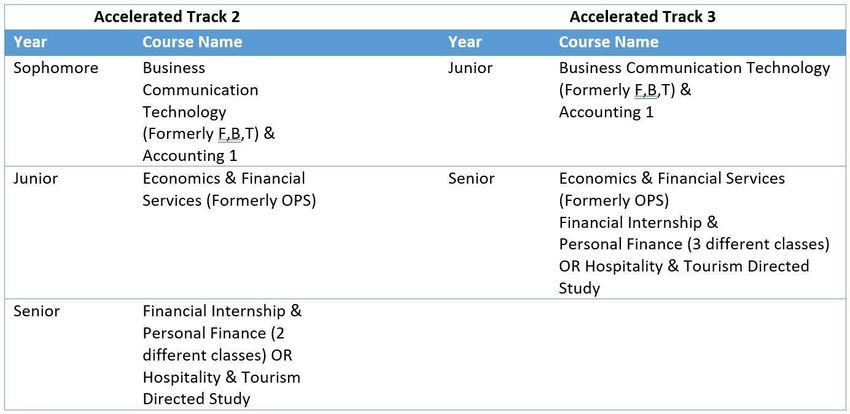
Academy of Finance – Traditional Student
Complete four courses and an internship to qualify for scholarship opportunities. The student should have completed or be enrolled
in Accounting and must get approval from the Academy of Finance Director(s) to take Economics & Financial Services, Financial
Internship, and Personal Finance.Academy of Finance – Collegiate Academy Student
Complete four courses and an internship to qualify for scholarship opportunities. The student should have completed or be enrolled
in Accounting and must get approval from the Academy of Finance Director(s) to take Economics & Financial Services, Financial
Internship, and Personal Finance.
The National Academy of Finance (NAF) allows students taking dual enrollment classes to replace certain courses in the Academy of
Finance with the following identified courses. The student may only replace two classes in the track and must complete the final two
classes and the Internship inside the Academy of Finance classroom.
*CGS-1000 replaces Business, Communication Technology
**ACG-2021 replaces Accounting Applications 1
***FIN-1100 replaces Personal Finance
****FIN-2001 replaces Economics and Financial Servicesinvestments. Students also examine careers in financial planning.
BUSINESS COMMUNICATION TECH
*Industry Certification available
(1.0 credit) (Grades 9-12)
This course provides students with a basic knowledge of data
FINANCIAL INTERNSHIP
processing. In addition, this course is the foundation for further (1.0 credit) (Grade 12)
training in computer programming for business use. Microsoft
Prerequisite: Economics and Financial Services and one
word, excel, and power point are covered in this class. Students
other finance course. Only program completers are provided
work towards accomplishing their MOS Certification while also
an internship.
focusing on financial concepts. Students need one full year to
The financial internship course provides students the opportunity
accomplish the certification. Students who take this course must
to demonstrate human relations, communications, and
also take the NAF exam at the end of the year.
employability skills necessary for entry-level employment in
• 1st Semester focuses on Basic Financial Principles, Microsoft
the financial services industry. It is completed over a 6 week
Word, and Microsoft PowerPoint
period during the summer between 11th & 12th grade. This is a
• 2nd Semester focuses on Business Ethics, Microsoft Excel and
paid internship. Additionally, it will enhance the instruction and
Microsoft Outlook (if time permits)
competencies developed through classroom instruction. Students
. *Industry Certification available
must provide their own transportation to the job site location.
ACCOUNTING APPLICATIONS I
COOPERATIVE DIVERSIFIED EDUCATION OJT
(1.0 credit) (Grades 10-12)
(1.0 credit) (Grades 11-12)
Prerequisite: Business Communication technology or Dual
Prerequisite: Enrollment in any Career and Technical Educa-
Enrollment CGS-1000
tion program.
This is an accelerated course which covers two years of
The purpose of Cooperative Diversified Education (CDE) is to
accounting in one. There is a focus on the accounting cycle for
provide the student with competencies developed through paid,
both business and manufacturing industries through the trial
supervised on-the-job training related to instruction in a job
balance and adjusting entries. Students learn how to use special
preparatory program.
journals, ledgers, and controlling accounts. In addition, they
prepare financial statements for single proprietors, partnerships,
CUSTOMER SERVICE REPRESENTATIVE 1
and corporations. An emphasis is placed on the analysis and
(1.0 credit) (Grades 10-12)
interpretation of financial reports. *Industry Certification
This course provides instruction in the basic principles of
available
customer service including technology
literacy related to customer service, the human relations,
ECON. & FINANCIAL SERVICES - HONORS
leadership, organization, and communication skills necessary for
(1.0 credit) (Grades 10-12)
success in the customer service industry, and the terminology
Prerequisite: Accounting Applications I
unique to customer service. Students will receive classroom
Students learn concepts of economic principles and financial
instruction and will be assigned to a workstation location on-
services and will complete semester capstone projects and
campus to receive On-The-Job training as a Customer Service
NAF exam to receive credit. Business Economics and Financial
Representative/Office Assistant.
Services introduces students to the key concepts of economics as
*Industry Certification available.
they pertain to business. This course discusses the American
economy and the factors that influence the success of businesses
and products. It describes forms of business ownership, CUSTOMER SERVICE REPRESENTATIVE 2-4
discusses the relationship of labor and business, and provides (1.0 credit) (Grades 11-12)
a broad overview of the global economy. Students also examine Prerequisite: Customer Service Representative 1
careers in business, both as employees and as business owners. This course provides instruction in more advanced principles of
*Industry Certification available customer service including technology
literacy related to customer service, the human relations,
PERSONAL FINANCE - HONORS
leadership, organization, and communication skills necessary for
(1.0 credit) (Grades 10-12) success in the customer service industry, and the terminology
Prerequisite: Economics and Financial Services unique to customer service. Students will receive classroom
Financial Planning provides students with an overview of the job instruction and will be assigned to a workstation location on-
of a financial planner. Students learn to consider how all aspects campus to receive On-The-Job training as a Customer Service
of financial planning might affect a potential client, and learn about Representative/Office Assistant.
the importance of financial planning in helping people reach their *Industry Certification available.
life goals. This course includes lessons on saving, borrowing,
credit, and all types of insurance, and covers various types ofAGRICULTURAL BIOTECHNOLOGY II
AGRISCIENCE & NATURAL
(1.0 credit) (Grades 10-12)
Prerequisite: Agriscience Foundations I.
RESOURCES EDUCATION This course is designed to develop competency in most
agricultural fields. Topics covered include: variety selection,
For each of the Agriscience courses, the National FFA Orga- management, plant and animal breeding, nutrition, growth
nization (FFA) is an integral part of the instructional program. and development, and research techniques. Land laboratory
Students are expected to join & participate in the CTSO. The experiences are necessary. The FFA organization is an integral
mission of FFA is to develop premier leadership, foster personal part of the instructional program
growth and prepare students for career success in more than 300
agricultural related occupations. Land laboratory experiences are ANIMAL/PLANT BIOTECHNOLOGY III
necessary and provided. Students are encouraged to develop HONORS
individual supervised experience projects. Completing a program (1.0 credit each) (Grades 10-12)
of study in agriculture meets one of the requirements for the Flori- Prerequisites: Ag Foundations I and Ag Biotech II.
da Gold Seal Vocational Scholars Award/Scholarship. The course This course is designed to develop competencies in the areas of
AGRISCIENCE FOUNDATIONS I is the first prerequisite for ALL biotechnology in plant science, plant growth and reproduction,
other Agriscience courses. and the role of plants in society.
AGRISCIENCE FOUNDATIONS I ANIMAL SCIENCE AND SERVICES II-IV
(1.0 credit) (Grades 9-12) (1.0 credit) (Grades 10-12)
This course is designed to develop competencies in the areas Prerequisite: Agriscience Foundations I & Animal Science
of agricultural history and the global impact of agriculture, career and Services II
opportunities, scientific and research concepts, biological and This course will explore the sciences involved in animal
physical science principles, environmental principles, agriscience production. Instruction will lead students through animal anatomy
safety, principles of leadership, and agribusiness, employability, and physiology, reproduction, nutrition, health issues, marketing,
and human relations skills in agriscience. Laboratory-based and animal products. Students will gain knowledge and skills
activities are an integral part of this course. These include the through direct instruction, labs, and exhibiting animals at local
safe use and application of appropriate technology, scientific fairs. This information will tie into students’ FFA (Future Farmers
testing and observation equipment. The course Agriscience of America), CDE (career development events), and SAE
Foundations I is the first course in all agriculture education (supervised agriculture experiences) activities.
programs that qualify for the Florida Gold Seal Vocational
Scholars Award/Scholarship. ARMY JROTC
AGRICULTURAL COMMUNICATIONS II LEADERSHIP EDUCATION – JUNIOR ROTC
(1.0 credit) (Grades 10-12) “Honor Unit With Distinction”
*Satisfies a performing arts credit graduation
The purpose of this program is to prepare students for The Armwood High School JROTC “Fighting Hawk” Battalion
employment in the agricultural communications industry. It offers many opportunities for leadership and excellence. JROTC
focuses on transferable skills and stresses understanding and prepares you for life. JROTC is a high school course given
demonstration of planning, management, and other environmental during regular school hours but includes many out-of-classroom
issues in the agricultural industry. activities. It covers the basics in history, government, technology,
awareness, and current events, but it also teaches leadership
skills (like how to motivate others) and personal skills (how
to study, take tests, interview for jobs). JROTC also offers
extracurricular activities like drill team and color guard. You might
even have a chance to go to a JROTC summer camp where you’ll
train on confidence courses, play team sports, and learn land
navigation and water safety techniques. The JROTC’s interest is
simply to give you an opportunity to develop and improve yourself
in ways schools generally don’t offer. It also uses military skills
to teach self-discipline, confidence, and pride in a job well done.
Completion of two or three credits in JROTC allows entry into the
military services with advanced rank and increased pay if all other
requirements are met. Completion of two credits of JROTC gives
student their H. O. P. E. credit.You can also read


