Assessment of Internet Hospitals in China During the COVID-19 Pandemic: National Cross-Sectional Data Analysis Study
←
→
Page content transcription
If your browser does not render page correctly, please read the page content below
JOURNAL OF MEDICAL INTERNET RESEARCH                                                                                                                 Xu et al

     Original Paper

     Assessment of Internet Hospitals in China During the COVID-19
     Pandemic: National Cross-Sectional Data Analysis Study

     Xingyan Xu1*, MMed; Yingying Cai1*, MMed; Siying Wu1*, MD; Jianhui Guo1, MMed; Le Yang1, MMed; Jieli Lan1,
     MPH; Yi Sun2, MD; Bingbing Wang1, BMed; Jieyu Wu1, MPH; Tinggui Wang1, MPH; Shuna Huang3, MMed; Yawen
     Lin1, MMed; Yuduan Hu1, MMed; Mingjun Chen1, MMed; Xuecai Gao1, BMed; Xiaoxu Xie1, MD
     1
      Department of Epidemiology and Health Statistics, School of Public Health, Fujian Medical University, Fuzhou, China
     2
      Department of Preventive Medicine, School of Public Health, Fujian Medical University, Fuzhou, China
     3
      Department of Clinical Research and Translation Center Office, The First Affiliated Hospital of Fujian Medical University, Fuzhou, China
     *
      these authors contributed equally

     Corresponding Author:
     Xiaoxu Xie, MD
     Department of Epidemiology and Health Statistics
     School of Public Health
     Fujian Medical University
     No. 1 Xuefu North Road
     Minhou County
     Fuzhou, 350122
     China
     Phone: 86 059122862023
     Email: xiexiaoxu@aliyun.com

     Abstract
     Background: Internet hospitals in China are being rapidly developed as an innovative approach to providing health services.
     The ongoing COVID-19 pandemic has triggered the development of internet hospitals that promote outpatient service delivery
     to the public via internet technologies. To date, no studies have assessed China's internet hospitals during the COVID-19 pandemic.
     Objective: This study aimed to elucidate the characteristics of China's internet hospitals and assess the health service capacity
     of these hospitals.
     Methods: Data on 711 internet hospitals were collected from official websites, the WeChat (Tencent Inc) platform, smartphone
     apps, and the Baidu search engine until July 16, 2020.
     Results: As of July 16, 2020, 711 internet hospitals were developed in mainland China. More than half of these internet hospitals
     (421/711, 59.2%) were established during 2019 (206/711, 29%) and 2020 (215/711, 30.2%). Furthermore, about one-third
     (215/711, 30.2%) of internet hospitals were established at the beginning of 2020 as an emergency response to the COVID-19
     epidemic. The 711 internet hospitals consisted of the following 3 types of hospitals: government-oriented (42/711, 5.91%),
     hospital-oriented (143/711, 20.11%), and enterprise-oriented internet hospitals (526/711, 73.98%). The vast majority of internet
     hospitals were traditional hospitals (526/711, 74%). Nearly 46.1% (221/711) of internet hospitals requested doctors to provide
     health services at a specific web clinic. Most patients (224/639, 35.1%) accessed outpatient services via WeChat. Internet hospitals’
     consulting methods included SMS text messaging consultations involving the use of graphics (552/570, 96.8%), video consultations
     (248/570, 43.5%), and telephone consultations (238/570, 41.8%). The median number of available web-based doctors was 43,
     and the median consultation fees of fever clinics and other outpatient clinics were ¥0 (US $0) per consultation and ¥6 (US $0.93)
     per consultation, respectively. Internet hospitals have provided various services during the COVID-19 pandemic, including
     medical prescription, drug delivery, and medical insurance services.
     Conclusions: The dramatic increase of internet hospitals in China has played an important role in the prevention and control
     of COVID-19. Internet hospitals provide different and convenient medical services for people in need.

     (J Med Internet Res 2021;23(1):e21825) doi: 10.2196/21825

     http://www.jmir.org/2021/1/e21825/                                                                     J Med Internet Res 2021 | vol. 23 | iss. 1 | e21825 | p. 1
                                                                                                                          (page number not for citation purposes)
XSL• FO
RenderX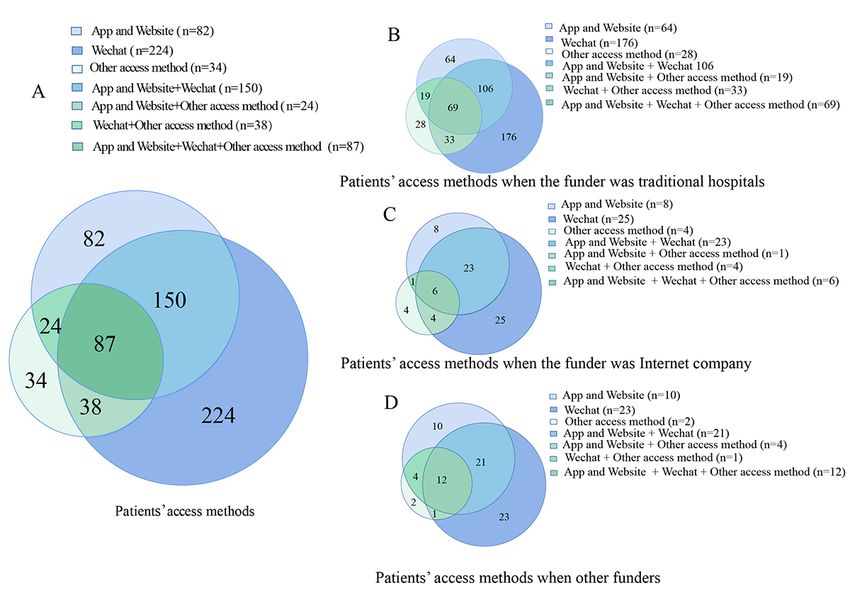
JOURNAL OF MEDICAL INTERNET RESEARCH                                                                                                          Xu et al

     KEYWORDS
     internet hospital; COVID-19; prevention; control; health care; China; cross-sectional; digital health; accessibility

                                                                            360 App Store) to find medical care platforms and mobile health
     Introduction                                                           apps that were affiliated with internet hospitals. The study region
     The outbreak of the novel COVID-19 disease was first reported          included all of mainland China, except Hong Kong, Macau,
     in January 2020, and the disease has been spreading throughout         Taiwan, and several islands in the South China Sea. Ultimately,
     the entire globe without any indication of stopping any time           we found 711 internet hospitals.
     soon [1,2]. This epidemic has constituted a public health              Data Collection
     emergency of pandemic proportions [3], which has created
                                                                            We searched for information about each internet hospital by
     major dilemmas in all areas of health care. Such dilemmas
                                                                            using official websites, the WeChat platform (ie, one of the
     include a lack of hospital resources, the suspension of outpatient
                                                                            largest mobile social network apps in China, with more than 1
     services, inconvenience in seeking medical treatment due to
                                                                            billion monthly active users), and smartphone apps (ie, if
     social isolation, and lockdown. In addition, the human-to-human
                                                                            available). Collected data were recorded on a digital archive
     transmission of the SARS-CoV-2 virus has become the primary
                                                                            via Microsoft Excel. Information on internet hospital features
     transmission route of COVID-19 [4].
                                                                            included construction date, location, the identity of investors,
     Strict prevention measures and effective therapeutics are              hospital characteristics, and the role that the hospital played in
     urgently needed for the effective control of the COVID-19              combating COVID-19.
     pandemic. Such measures include the promulgation of Chinese
                                                                            We assessed the consultation characteristics of internet hospitals,
     government decrees that require domestic internet hospitals to
                                                                            including access method (ie, website, app, WeChat, and other);
     vigorously develop telemedicine services [5]. Currently, internet
                                                                            consulting method (ie, video consultations, telephone
     hospitals have been developed as a new approach for the
                                                                            consultations, and SMS text messaging consultations involving
     provision of health services, including outpatient services
                                                                            the use of both text and graphics); medical insurance,
     delivered through the internet or various digital technologies
                                                                            prescription, and drug delivery service provision; doctor source
     [6,7]. Internet hospitals surmount geographical obstacles and
                                                                            (ie, local hospital, medical union, district, and nationwide
     time-related barriers, thereby making it easy for Chinese patients
                                                                            doctors); service time (ie, any time or specific times); the
     to rapidly seek doctor services [8]. Additionally, internet
                                                                            number of available web-based doctors who could deliver instant
     hospitals reduce the chance of nosocomial cross infection by
                                                                            medical services; and the availability of outpatient departments.
     potentially keeping patients away from hospitals. This protects
     both clinicians and other patients, which is a practice that is        In this study, the roles played by internet hospitals referred to
     welcomed by most Chinese people [9]. Internet hospitals have           whether the hospital provided COVID-19–related inquiries
     proliferated as Chinese people continue to seek health services        regarding fever clinic consultations, psychological counseling,
     and psychological assistance amid the COVID-19 pandemic.               the provision of COVID-19–related information, and whether
                                                                            there was an overseas version of an internet hospital that could
     China’s new internet hospitals, which were established during
                                                                            help in the fight against COVID-19. When collecting
     the epidemic, have yet to be systematically and exhaustively
                                                                            information on fever clinics, we focused on how consultations
     assessed. In this study, we aimed to provide an overview of
                                                                            were conducted (ie, manual, artificial intelligence, or both
     internet hospitals in China (ie, as of July 2020) through a
                                                                            manual and artificial intelligence) and the fee per consultation.
     national cross-sectional study that describes the characteristics
                                                                            Additionally, we collected information on internet
     of these hospitals. We also aimed to evaluate the health service
                                                                            hospital–related policies and regulations that were released by
     capacity of internet hospitals during the COVID-19 epidemic.
                                                                            the government, management agencies, medical institutions,
                                                                            and health care industry associations. This helped us to
     Methods                                                                understand the actions taken by the health community in China
     Internet Hospital Eligibility                                          during the COVID-19 outbreak and assess the role of internet
                                                                            hospitals in combating COVID-19. At least 2 researchers
     Data were collected by conducting a search on national websites,       extracted data for each internet hospital independently. Any
     including the popular Baidu search engine and the official             objections to the data were resolved via discussion.
     websites of the National Health Commission of the People’s
     Republic of China and each provincial health commission. The           Data Analysis and Visualization
     search was conducted by using specific Chinese search terms,           Data management and analysis were performed with Microsoft
     such as those for “Internet hospitals,” “Internet health,” “Internet   Excel 2017. Geographical and time distributions were drawn
     medicine,” “mobile medicine,” “mobile health,” “Telehealth,”           with R 4.0.2. Count data were expressed as number (percentage)
     “digital medicine,” “digital health,” “Web hospitals,” and             and presented on bar charts, Venn diagrams, mosaic plots,
     “Cloud hospitals.” All officially registered internet hospitals        Nightingale rose diagrams, and statistical maps. Skewed
     were eligible for inclusion. Data from October 10, 2006 to July        continuous data were expressed as median (interquartile range)
     15, 2020 were collected. Additionally, we used a public WeChat         and presented on Violin plots.
     (Tencent Inc) account and app stores (ie, the Apple App Store,
     Android App Store, Huawei App Store, Xiaomi App Store, and

     http://www.jmir.org/2021/1/e21825/                                                              J Med Internet Res 2021 | vol. 23 | iss. 1 | e21825 | p. 2
                                                                                                                   (page number not for citation purposes)
XSL• FO
RenderX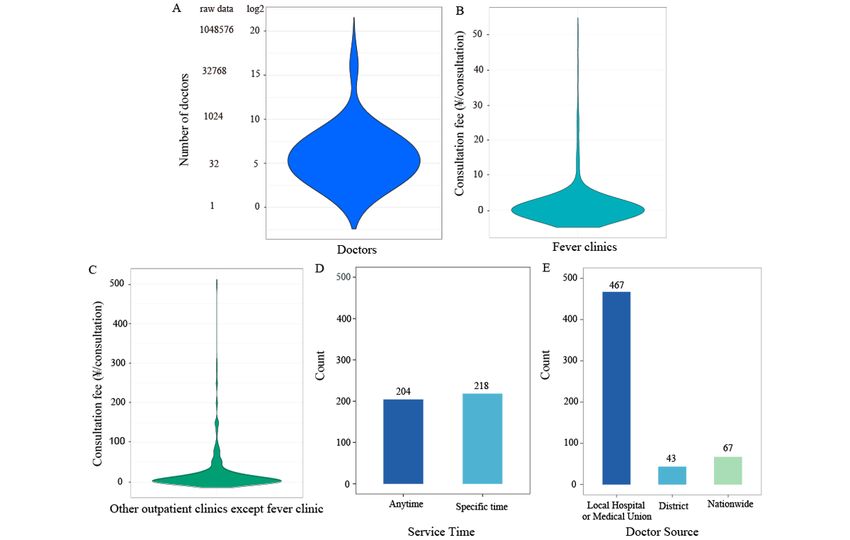
JOURNAL OF MEDICAL INTERNET RESEARCH                                                                                                                       Xu et al

                                                                                    closely related to the foundation and early development of
     Results                                                                        internet hospitals in these areas [10]. However, internet hospitals
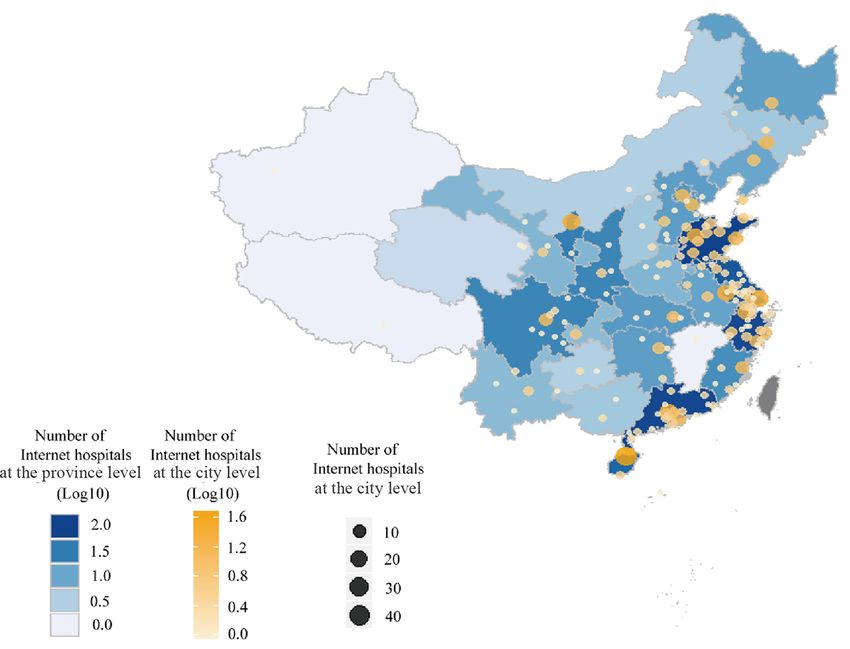
     Internet Hospital Characteristics                                              were not limited to these first-to-try areas. At the time of this
                                                                                    study, every province had at least 1 internet hospital. This
     As of July 2020, data on 711 internet hospitals were collected.                reflects the trend of gradual development from coastal cities to
     Generally, internet hospitals were mainly distributed in the east              inland regions (ie, the gradual spread of internet hospitals from
     and southern coastal provinces (Figure 1). This distribution was               the point of origin to mainland China).
     Figure 1. Spatial distributions of internet hospitals in China. The different shades of blue denote the total number of internet hospitals in each province.
     The color (ie, the different shades of yellow) and size of the circles indicate the number of internet hospitals in each city.

     In recent years, internet hospitals have been rapidly developed.               S2 in Multimedia Appendix 1). Notably, we could not identify
     Of the 711 internet hospitals found in this study, 215 (30.1%)                 the date of foundation for 21.9% (156/711) of internet hospitals.
     were established in 2020 (ie, after the beginning of the                       We concluded that there has been a growing trend for the
     COVID-19 outbreak) and 5 (0.7%) were established before                        establishment of internet hospitals up to July 2020. Additionally,
     2015 and until July 2020. Moreover, 2.1% (15/711), 3.1%                        the government has issued a series of policies that were
     (22/711), 5.6% (40/711), 7.3% (52/711), 29% (206/711) and                      conducive to the role of internet hospitals in combating
     30.2% (215/711) of internet hospitals were established in 2015,                COVID-19 (Figure 2).
     2016, 2017, 2018, 2019, and 2020, respectively (Figure 2; Table

     http://www.jmir.org/2021/1/e21825/                                                                           J Med Internet Res 2021 | vol. 23 | iss. 1 | e21825 | p. 3
                                                                                                                                (page number not for citation purposes)
XSL• FO
RenderX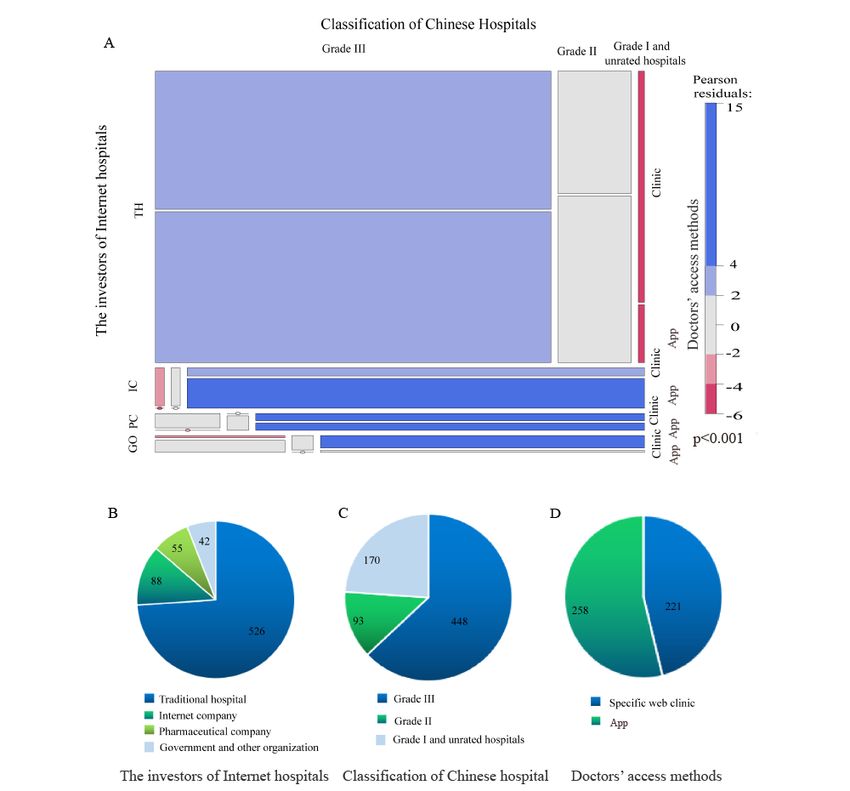
JOURNAL OF MEDICAL INTERNET RESEARCH                                                                                                                     Xu et al

     Figure 2. The construction dates of internet hospitals in China. (A) The construction dates of internet hospitals in China by month. (B) The construction
     dates of internet hospital in China by year. The following important policies were issued during the COVID-19 epidemic in China: (1) Notice on internet
     diagnosis and treatment consultation services for COVID-19 prevention and control (February 6, 2020), (2) Notice on strengthening internet diagnosis
     and treatment consulting services for COVID-19 prevention and control (February 8, 2020), (3) Notice on the national telemedicine and internet medical
     center for the national remote consultation of critically ill patients with COVID-19 (February 21, 2020), (4) Notice on further promoting the development
     and standardized management of internet medical services (April 18, 2020), and (5) Notice on the technical specifications and financial management
     of the "Internet+ medical service" project of public medical institutions (May 8, 2020).

     In terms of patients’ (N=639) methods for accessing internet                  WeChat, and 5.3% (34/639) visited internet hospitals by using
     hospitals, 13.6% (87/639) of patients accessed internet hospitals             other access methods. Additionally, regardless of who funded
     by using apps, websites, WeChat, and other access methods                     the internet hospitals, the most widely used service that patients
     simultaneously. Of note, 12.8% (82/639) of patients visited                   used to access outpatient services was WeChat, followed by
     internet hospitals by exclusively using apps and websites, 35.1%              apps or websites, and other access methods (Figure 3).
     (224/639) visited internet hospitals by exclusively using

     http://www.jmir.org/2021/1/e21825/                                                                         J Med Internet Res 2021 | vol. 23 | iss. 1 | e21825 | p. 4
                                                                                                                              (page number not for citation purposes)
XSL• FO
RenderX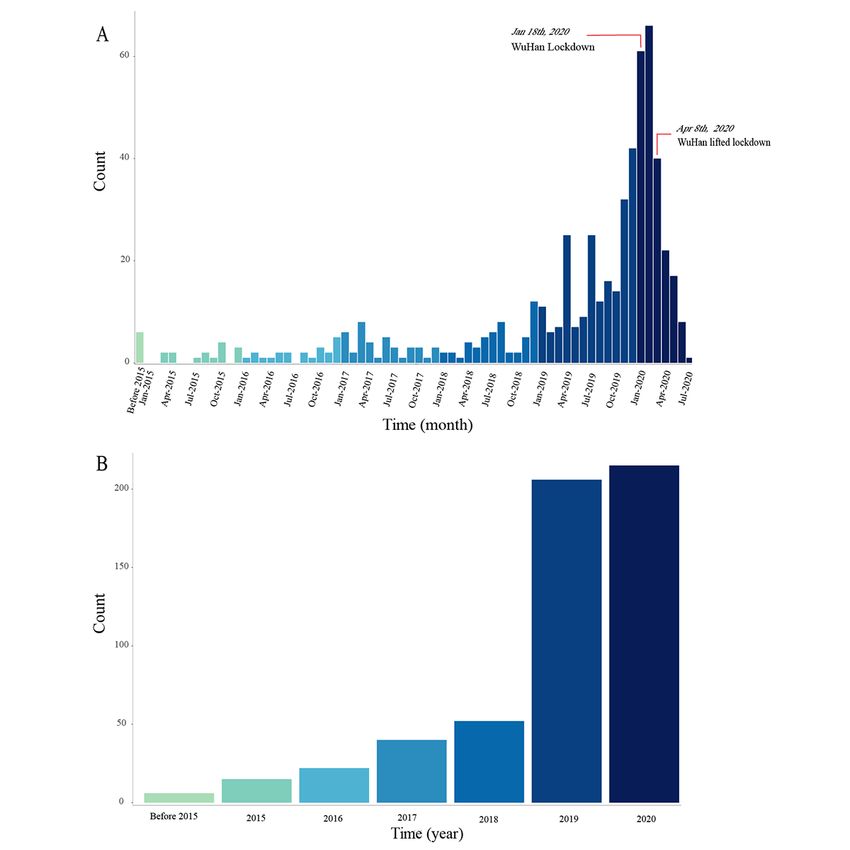
JOURNAL OF MEDICAL INTERNET RESEARCH                                                                                                              Xu et al

     Figure 3. Methods for accessing internet hospitals. (A) Patients’ access methods. (B) Patients’ access methods when the funder was a traditional
     hospital. (C) Patients’ access methods when the funder was an internet company. (D) Patients’ access methods when the funder was another type of
     company.

     The vast majority of internet hospitals were traditional hospitals       proportion (448/711, 62%) of internet hospitals. Furthermore,
     (526/711, 74%). This finding shows that traditional hospitals            government departments, such as health administrations, also
     were more capable of integrating internet hospital services into         supported the construction of internet hospitals. In terms of the
     their infrastructure than other types of hospitals. Grade III            consultation characteristics of the 711 internet hospitals, 221
     hospitals, which have a large number of outpatients, superb              (46.14%) hospitals asked doctors to provide medical services
     medical technology, diverse and complex service types, and               at a specific web clinic, whereas 258 (53.86%) adopted the use
     various business process requirements, accounted for a large             of apps for health service delivery (Figure 4).

     http://www.jmir.org/2021/1/e21825/                                                                  J Med Internet Res 2021 | vol. 23 | iss. 1 | e21825 | p. 5
                                                                                                                       (page number not for citation purposes)
XSL• FO
RenderX
JOURNAL OF MEDICAL INTERNET RESEARCH Xu et al
Figure 4. Characteristics of internet hospitals. (A) A mosaic plot with areas that show the proportion of doctors’ web-based methods for accessing
internet hospitals in China, stratified by the classification of Chinese hospitals and the structure of the main investment. The investors of internet hospitals
include THs, ICs, PCs, and GOs. The classification of Chinese hospitals were as follows: Grade III, Grade II, and Grade I and unrated hospitals. Doctors
provided medical services through a specific web clinic or app. (B) The investors of internet hospitals. (C) Classification of Chinese hospitals. (D)
Doctors’ access methods. GO: government and other organization; IC: internet company; PC: pharmaceutical company; TH: traditional hospital.
busters of COVID-19 service, 20.6% (29/141) assessed epidemic
Medical Service Characteristics situation dynamics, and 3.8% (17/443) made donations (Figure
With regard to the roles that the 711 internet hospitals played 4). Internet hospitals’ consulting methods included SMS text
in combating COVID-19, most hospitals (419/484, 86.6%) messaging consultations involving the use of graphics (552/570,
provided medical prescriptions. Furthermore, 74.5% of hospitals 96.8%), video consultations (248/570, 43.5%), and telephone
(411/552) provided drug delivery services, 67.5% (335/496) consultations (238/570, 41.8%). Moreover, 18.6% (106/570)
provided medical insurance, 60.7% (335/496) provided epidemic of internet hospitals offered 3 methods for patient consultations
prevention and control information, 60% (316/527) provided (Figure 5). It should be noted that several internet hospitals were
fever clinic consultations, 35.2% (186/529) provided missing pertinent data. As such, these hospitals were excluded
psychological counseling, 13.3% (64/483) provided a myth from analysis.
http://www.jmir.org/2021/1/e21825/ J Med Internet Res 2021 | vol. 23 | iss. 1 | e21825 | p. 6
(page number not for citation purposes)
XSL• FO
RenderXJOURNAL OF MEDICAL INTERNET RESEARCH Xu et al
Figure 5. Medical service characteristics of China’s internet hospitals. (A) The roles that internet hospitals played in fighting COVID-19. (B) Internet
hospitals’ consulting methods.
$0; IQR ¥0 [US$ 0]-¥0 [US $0]) per consultation and ¥6 (US
Human Medical Resources $0.93; IQR ¥0 [US $0]-¥20 [US $3.09]) per consultation,
The distribution of the internet hospitals’ human medical respectively (Figure 6, Table 1). About half of the hospitals
resources in China is shown in Figure 6. The median number (204/422, 48.3%) provided services at any time. Furthermore,
of available web-based doctors was 43 (IQR 3-172; maximum: 80.9% (467/577) of doctors were from local hospitals and
563,881). The median consultation fees of fever clinics and medical unions (Figure 6).
other outpatient clinics (ie, excluding fever clinics) were ¥0 (US
Figure 6. Human medical resources in China’s internet hospitals. (A) Violin plots that show the number of doctors in China’s internet hospitals. The
numbers on the y-axis are logarithms to the base 2. (B, C) Violin plots displaying the consultation fees for a person who visited an internet hospital to
find medical help (ie, consultation fees for fever clinics and other clinics). (D, E) Bar plots that show the distribution of doctors’ service times and doctor
sources with regard to internet hospitals, respectively.
http://www.jmir.org/2021/1/e21825/ J Med Internet Res 2021 | vol. 23 | iss. 1 | e21825 | p. 7
(page number not for citation purposes)
XSL• FO
RenderXJOURNAL OF MEDICAL INTERNET RESEARCH Xu et al
Table 1. Number of doctors and consultation fees for internet hospitals in China.
Variable Minimum 5th per- 25th per- 50th per- 75th per- 95th per- Maximum
centile centile centile centile centile
Number of available web-based doctors, n 1 3 11 43 172 1496.4 563881
Consultation fee of fever clinics, ¥a/consultation 0 0 0 0 0 8.9 50
Consultation fee of other outpatient clinics (ie, 0 0 0 6 20 120 500
excluding fever clinics), ¥/consultation
a
A currency exchange rate of ¥1=US $0.15 is applicable.
Multiple internet hospitals had different departments for patients; relatively small. Of the 711 internet hospitals, 363 (51.1%)
the department of surgery (441/711, 62%) was the most introduced fever clinics in response to the COVID-19 pandemic
common. In contrast, the number of stomatology (327/711, (Figure 7).
46%) and ophthalmology (327/711, 46%) departments was
Figure 7. A bar plot that depicts the number of available departments in internet hospitals.
of internet hospitals provided psychological counseling,
Relation to COVID-19 epidemic prevention and control information, myth busters
With regard to the internet hospitals with available data, 60% services, and donations, respectively, in response to COVID-19.
(316/527) of internet hospitals provided telemedicine services Furthermore, a number of internet hospitals supported medical
for managing COVID-19. Internet hospitals mainly conducted prescription (419/484, 86.6%), drug delivery (411/552, 74.5%),
manual consultations (209/289, 72.3%). In addition, 35.2% and medical insurance (335/496, 67.5%) services to further
(186/529), 60.7% (327/539), 13.3% (64/483), and 3.8% (17/443) enhance COVID-19 prevention and control (Figure 8).
http://www.jmir.org/2021/1/e21825/ J Med Internet Res 2021 | vol. 23 | iss. 1 | e21825 | p. 8
(page number not for citation purposes)
XSL• FO
RenderXJOURNAL OF MEDICAL INTERNET RESEARCH Xu et al
Figure 8. (A-J) Bar plots that depict the roles of internet hospitals during the COVID-19 epidemic. AI: artificial intelligence.
up a large proportion of internet hospitals; only Ningxia and
Discussion Hainan are dominated by corporate-led internet hospitals.
Principal Findings The catalytic effect of the COVID-19 pandemic on the internet
This national cross-sectional study outlines the status of the hospital industry has been obvious since 2020; the pandemic
internet hospitals established in China by July 2020. There has has resulted in major development opportunities for internet
been a rising trend in the emergence of internet hospitals in hospitals. Due to the need for epidemic prevention and control,
China. This trend peaked in December 2019 after the China the National Health Commission, the National Medical
National Healthcare Security Administration promulgated the Insurance Bureau, and other health departments have intensively
Guidance of the State Medical Security Bureau on improving introduced a series of policies [12-16] to vigorously promote
the Internet+ medical service price and medical insurance the development of internet hospitals. During the epidemic,
payment policy [11]. Furthermore, the number of internet internet hospitals have launched web-based fever clinics; chronic
hospitals peaked in February 2020. This may have been the disease follow-up consultations, prescriptions, and drug delivery
period with the largest number of internet hospitals established services; and several medical insurance reimbursement
in a single month due to the epidemic. programs, and these have been continuously and urgently
approved. Web-based medical treatment has promoted the public
Due to inequalities in medical resources, medical technology, awareness of internet hospitals. Additionally, the epidemic has
and informatization level across the country, the status of prompted people to develop a habit of using internet hospitals,
internet hospitals in China varies greatly. Overall, the eastern to a certain extent [17].
and southern coastal provinces have the highest distribution of
major internet hospitals. This distribution is closely related to Internet hospitals can reduce crowd gathering in physical
the foundation and early development of internet hospitals in hospitals through a variety of methods. Web-based medical
these regions [10]. However, internet hospitals are no longer services, such as web-based education, publicity, and
limited to these areas. Jiangxi, Jilin, and other areas established psychological intervention, can not only help the public master
the first batch of internet hospitals in 2020. This reflects the basic anti-epidemic knowledge and skills, but also reduce social
trend of gradual development from coastal cities to inland areas. panic, thereby reducing the number of unnecessary physical
hospital visits and enhancing psychological resilience [18]. By
The vast majority of internet hospitals have been constructed integrating web-based resources with offline epidemic control
by Grade III hospitals, which have a large number of patients, measures, internet hospitals can play a greater role in epidemic
superb medical technology, and diverse and complex health prevention and control [19].
services. The independent construction of an internet hospital
system can meet the needs of individualized development. With the launch of internet hospitals, the tension regarding
Moreover, the health administration department has been offline medical resources has, to a certain extent, been relieved.
promoting the construction of internet hospitals. A concern With regard to upper first-class hospitals, the most direct role
however is that in most provinces, traditional hospitals make of internet hospitals has been shifting to providing returning
patients with web-based services and improving the efficiency
http://www.jmir.org/2021/1/e21825/ J Med Internet Res 2021 | vol. 23 | iss. 1 | e21825 | p. 9
(page number not for citation purposes)
XSL• FO
RenderXJOURNAL OF MEDICAL INTERNET RESEARCH Xu et al
of medical treatment. Small and medium regional hospitals with the needs of the public in time to adjust response strategies, and
a small number of outpatients or limited construction and developing more standardized consulting service guidelines.
operation capabilities have the choice of relying on regional At the same time, there is a need to improve the availability of
internet hospitals or third-party, internet-based medical internet hospital services in a variety of ways, strengthen
platforms. This approach is meant to reduce input costs by publicity efforts for expanding the internet hospital user base,
making full use of the advantages of internet hospitals, as and cooperate with community service centers and the Centers
internet-based platforms can help doctors concentrate on for Disease Control and Prevention to improve joint epidemic
becoming the core resource for serving patients. As a result, control and prevention mechanisms.
internet hospitals and internet-based platforms will achieve the
advantage of complementation and achieve a win-win situation.
Conclusion
This study demonstrates how the concepts of medical service
After several years of development, China's internet hospitals provision have been redefined by internet hospitals and
can now overcome the limitations of time and space and provide internet-based technologies. Internet hospitals allow for the
various medical services with a high degree of accessibility for transferring of patients to medical centers that can provide
all patients [20]. Moreover, interdisciplinary and transregional medical services and health care without requiring people to
exchanges and cooperation can be achieved with internet leave their homes. Internet hospitals can provide different types
hospitals, thereby improving doctors’ ability to deal with of medical services to people seeking medical needs; offer
emerging diseases. The Chinese government encouraged internet essential medical support to the public during the COVID-19
hospitals to join epidemic prevention and control efforts at the outbreak, thereby regulating social psychology and easing social
beginning of the COVID-19 outbreak [11], and confirmed that panic; maintain proper social distancing; and promote correct
internet hospitals are an important part of the joint epidemic medical-seeking behaviors. These advantages result in the
prevention and control system [21]. To make better use of reduction of the incidence of cross-infection in hospitals. Thus,
internet hospitals, more measures should be implemented, such it is evident that internet hospitals play an important role in
as encouraging more doctors (ie, especially psychologists and COVID-19 prevention and control.
pediatricians) to take part in web-based services, discovering
Acknowledgments
The authors thank all the participants who made this study possible. This study was funded by Fujian medical university talent
research funding (Grant No. XRCZX2019031), which was received by XXie.
Authors' Contributions
XXie and SW contributed to the study design. XXu and YC performed statistical analyses, interpreted the data, and drafted the
manuscript. XXu, YC, JG, JL, BW, JW, TW, YL, YH, MC, and XG contributed to data collection. LY, YS, and SH revised the
manuscript. All authors contributed to the critical revision of the final manuscript and approved the final version of the manuscript.
Conflicts of Interest
None declared.
Multimedia Appendix 1
Supplementary tables.
[DOCX File , 20 KB-Multimedia Appendix 1]
References
1. Zhou F, Yu T, Du R, Fan G, Liu Y, Liu Z, et al. Clinical course and risk factors for mortality of adult inpatients with
COVID-19 in Wuhan, China: a retrospective cohort study. Lancet 2020 Mar 28;395(10229):1054-1062 [FREE Full text]
[doi: 10.1016/S0140-6736(20)30566-3] [Medline: 32171076]
2. Xu X, Wu X, Jiang X, Xu K, Ying L, Ma C, et al. Clinical findings in a group of patients infected with the 2019 novel
coronavirus (SARS-Cov-2) outside of Wuhan, China: retrospective case series. BMJ 2020 Feb 19;368:m606 [FREE Full
text] [doi: 10.1136/bmj.m606] [Medline: 32075786]
3. Cucinotta D, Vanelli M. WHO Declares COVID-19 a Pandemic. Acta Biomed 2020 Mar 19;91(1):157-160 [FREE Full
text] [doi: 10.23750/abm.v91i1.9397] [Medline: 32191675]
4. Wu Z, McGoogan JM. Characteristics of and Important Lessons From the Coronavirus Disease 2019 (COVID-19) Outbreak
in China: Summary of a Report of 72 314 Cases From the Chinese Center for Disease Control and Prevention. JAMA 2020
Apr 07;323(13):1239-1242. [doi: 10.1001/jama.2020.2648] [Medline: 32091533]
5. Gong K, Xu Z, Cai Z, Chen Y, Wang Z. Internet Hospitals Help Prevent and Control the Epidemic of COVID-19 in China:
Multicenter User Profiling Study. J Med Internet Res 2020 Apr 14;22(4):e18908 [FREE Full text] [doi: 10.2196/18908]
[Medline: 32250962]
http://www.jmir.org/2021/1/e21825/ J Med Internet Res 2021 | vol. 23 | iss. 1 | e21825 | p. 10
(page number not for citation purposes)
XSL• FO
RenderXJOURNAL OF MEDICAL INTERNET RESEARCH Xu et al
6. Tu J, Wang C, Wu S. The internet hospital: an emerging innovation in China. Lancet Glob Health 2015 Aug;3(8):e445-e446
[FREE Full text] [doi: 10.1016/S2214-109X(15)00042-X] [Medline: 26187488]
7. Xie X, Zhou W, Lin L, Fan S, Lin F, Wang L, et al. Internet Hospitals in China: Cross-Sectional Survey. J Med Internet
Res 2017 Jul 04;19(7):e239 [FREE Full text] [doi: 10.2196/jmir.7854] [Medline: 28676472]
8. Hong Z, Li N, Li D, Li J, Li B, Xiong W, et al. Telemedicine During the COVID-19 Pandemic: Experiences From Western
China. J Med Internet Res 2020 May 08;22(5):e19577 [FREE Full text] [doi: 10.2196/19577] [Medline: 32349962]
9. Wu J, Xie X, Yang L, Xu X, Cai Y, Wang T, et al. Mobile health technology combats COVID-19 in China. J Infect. Epub
ahead of print 2020 Jul 27 [FREE Full text] [doi: 10.1016/j.jinf.2020.07.024] [Medline: 32730998]
10. He C, Zhou Q, Chen W, Tian J, Zhou L, Peng H, et al. Using an Internet-Based Hospital to Address Maldistribution of
Health Care Resources in Rural Areas of Guangdong Province, China: Retrospective and Descriptive Study. JMIR Med
Inform 2018 Dec 21;6(4):e51 [FREE Full text] [doi: 10.2196/medinform.9495] [Medline: 30578195]
11. Guidance on improving Internet+ medical service price and medical insurance payment policy. National Healthcare Security
Administration. 2019 Aug 30. URL: http://www.nhsa.gov.cn/art/2019/8/30/art_37_1707.html [accessed 2021-01-11]
12. Notice on accomplishing online consultation services in the epidemic prevention and control. National Health Commission
of the People's Republic of China. 2020 Feb 02. URL: http://www.nhc.gov.cn/yzygj/s7653p/202002/
ec5e345814e744398c2adef17b657fb8.shtml [accessed 2021-01-11]
13. Strengthening the consultation service of Internet diagnosis and treatment in epidemic prevention and control. National
Health Commission of the People's Republic of China. 2020 Feb 08. URL: http://www.nhc.gov.cn/yzygj/s7652m/202002/
32c3e98988894fa18280e4543d2710c7.shtml [accessed 2021-01-11]
14. Notice on further promoting the development and standardized management of internet medical services. National Health
Commission of the People's Republic of China. 2020 May 08. URL: http://www.nhc.gov.cn/yzygj/s3594q/202005/
fddc84a0c623460c89091d92c57385fe.shtml [accessed 2021-01-11]
15. Notice on the technical specification and financial management of the Internet plus medical service project in public medical
institutions. National Health Commission of the People's Republic of China. 2020 May 13. URL: http://www.nhc.gov.cn/
caiwusi/s7788c/202005/43367d28fc7544db855e218f9b26f137.shtml [accessed 2021-01-11]
16. Notice on novel coronavirus pneumonia critical national patients' remote consultation at national telemedicine and Internet
Medical Center. National Health Commission of the People's Republic of China. 2020 Feb 21. URL: http://www.nhc.gov.cn/
yzygj/s7658/202002/69b24672365043eebc379c8bab30c90d.shtml [accessed 2021-01-11]
17. Berger ZD, Evans NG, Phelan AL, Silverman RD. Covid-19: control measures must be equitable and inclusive. BMJ 2020
Mar 20;368:m1141. [doi: 10.1136/bmj.m1141] [Medline: 32198146]
18. Ho CS, Chee CY, Ho RC. Mental Health Strategies to Combat the Psychological Impact of COVID-19 Beyond Paranoia
and Panic. Ann Acad Med Singap 2020 Mar 16;49(3):155-160 [FREE Full text] [Medline: 32200399]
19. Lv Q, Jiang Y, Qi J, Zhang Y, Zhang X, Fang L, et al. Using Mobile Apps for Health Management: A New Health Care
Mode in China. JMIR Mhealth Uhealth 2019 Jun 03;7(6):e10299 [FREE Full text] [doi: 10.2196/10299] [Medline: 31162131]
20. Wu H, Lu N. Online written consultation, telephone consultation and offline appointment: An examination of the channel
effect in online health communities. Int J Med Inform 2017 Nov;107:107-119. [doi: 10.1016/j.ijmedinf.2017.08.009]
[Medline: 29029686]
21. Notice on launching online services to further strengthen epidemic prevention and control in Hubei. The State Council's
Comprehensive Team for Joint Prevention and Control of New Coronavirus Pneumonia. 2020 Feb 26. URL: http://www.
gov.cn/xinwen/2020-02/27/content_5483977.htm [accessed 2021-01-11]
Edited by G Eysenbach; submitted 29.09.20; peer-reviewed by L Ding, W Zhang; comments to author 24.10.20; revised version
received 14.11.20; accepted 03.12.20; published 20.01.21
Please cite as:
Xu X, Cai Y, Wu S, Guo J, Yang L, Lan J, Sun Y, Wang B, Wu J, Wang T, Huang S, Lin Y, Hu Y, Chen M, Gao X, Xie X
Assessment of Internet Hospitals in China During the COVID-19 Pandemic: National Cross-Sectional Data Analysis Study
J Med Internet Res 2021;23(1):e21825
URL: http://www.jmir.org/2021/1/e21825/
doi: 10.2196/21825
PMID:
©Xingyan Xu, Yingying Cai, Siying Wu, Jianhui Guo, Le Yang, Jieli Lan, Yi Sun, Bingbing Wang, Jieyu Wu, Tinggui Wang,
Shuna Huang, Yawen Lin, Yuduan Hu, Mingjun Chen, Xuecai Gao, Xiaoxu Xie. Originally published in the Journal of Medical
Internet Research (http://www.jmir.org), 20.01.2021. This is an open-access article distributed under the terms of the Creative
Commons Attribution License (https://creativecommons.org/licenses/by/4.0/), which permits unrestricted use, distribution, and
reproduction in any medium, provided the original work, first published in the Journal of Medical Internet Research, is properly
http://www.jmir.org/2021/1/e21825/ J Med Internet Res 2021 | vol. 23 | iss. 1 | e21825 | p. 11
(page number not for citation purposes)
XSL• FO
RenderXJOURNAL OF MEDICAL INTERNET RESEARCH Xu et al
cited. The complete bibliographic information, a link to the original publication on http://www.jmir.org/, as well as this copyright
and license information must be included.
http://www.jmir.org/2021/1/e21825/ J Med Internet Res 2021 | vol. 23 | iss. 1 | e21825 | p. 12
(page number not for citation purposes)
XSL• FO
RenderXYou can also read


