ATTITUDES TOWARDS MOBILE DATING APPLICATIONS OF THAI USERS - TU e-Thesis
←
→
Page content transcription
If your browser does not render page correctly, please read the page content below
ATTITUDES TOWARDS MOBILE DATING
     APPLICATIONS OF THAI USERS

                   BY

   MISS NISAKORN THONGSAWATWATTANA

AN INDEPENDENT STUDY SUBMITTED IN PARTIAL
             FULFILLMENT OF
  THE REQUIREMENTS FOR THE DEGREE OF
MASTER OF SCIENCE PROGRAM IN MARKETING
        (INTERNATIONAL PROGRAM)

 FACULTY OF COMMERCE AND ACCOUNTANCY
         THAMMASAT UNIVERSITY
           ACADEMIC YEAR 2017
  COPYRIGHT OF THAMMASAT UNIVERSITY

                                       Ref. code: 25605902040376EHB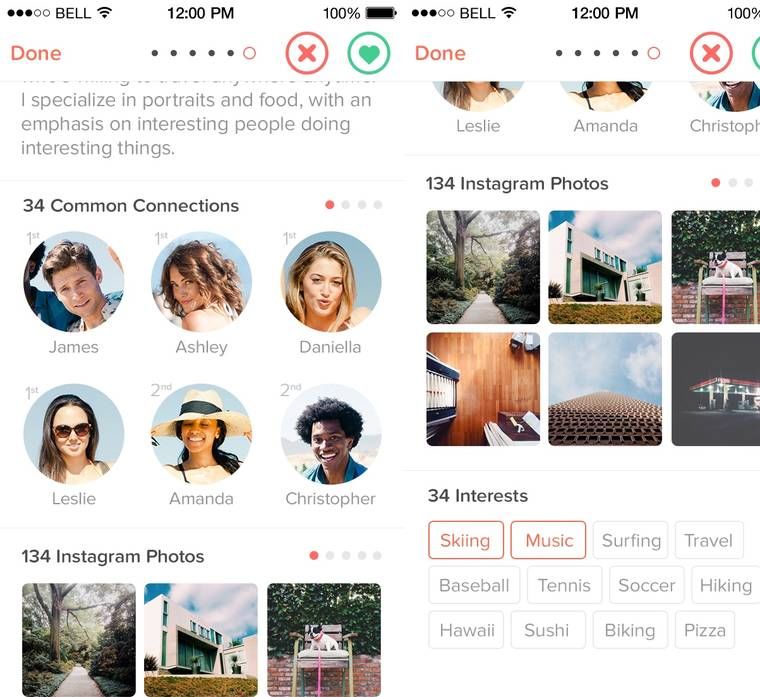
ATTITUDES TOWARDS MOBILE DATING
        APPLICATIONS OF THAI USERS

                      BY

      MISS NISAKORN THONGSAWATWATTANA

   AN INDEPENDENT STUDY SUBMITTED IN PARTIAL
FULFILLMENT OF THE REQUIREMENTS FOR THE DEGREE
  OF MASTER OF SCIENCE PROGRAM IN MARKETING
           (INTERNATIONAL PROGRAM)
    FACULTY OF COMMERCE AND ACCOUNTANCY
            THAMMASAT UNIVERSITY
              ACADEMIC YEAR 2017
      COPYRIGHT OF THAMMASAT UNIVERSITY

                                          Ref. code: 25605902040376EHB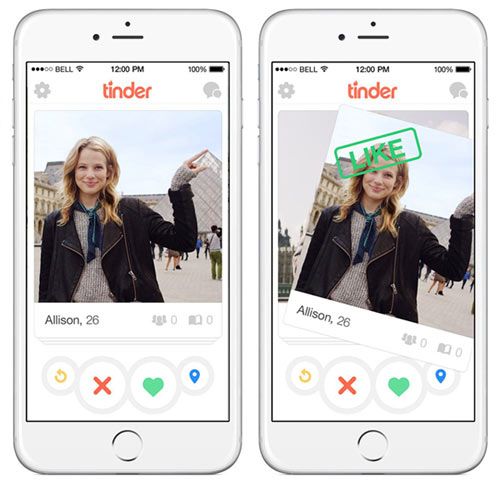
( 1)

Independent Study Title                ATTITUDES TOWARDS MOBILE DATING
                                       APPLICATIONS OF THAI USERS
Author                                 Miss Nisakorn Thongsawatwattana
Degree                                 Master of Science Program in Marketing
                                       (International Program)

Major Field/Faculty/University         Faculty of Commerce and Accountancy
                                       Thammasat University
Independent Study Advisor              Professor Kenneth E. Miller, Ph.D.
Academic Year                          2017

                                   ABSTRACT

            Nowadays, declined marriage is a global issue. People tend to stay single
longer. Marriage has not just been delayed but they occurred less and less as it is
perceived to be less important life event for this generation. Households become
smaller as well. With many reasons in the society such as living cost or time cost.
People are choosing to stay single. Nevertheless, researcher has seen this issue
differently as the revenue online dating service industry is growing every year. They
are single by chances not by choices
            Smart phones are the gadgets that widely used in the society, growing
along with them is the mobile applications industry. As mentioned earlier, online
dating industry is growing. Thanks to technologies, it migrated itself to smartphone
applications as well. We could not deny that dating applications are one of the fastest
growing segment with 29% growth in the year 2017 with the revenue of US$415. The
applications in this segment are in the top 3 downloaded applications with more than
billions of times downloaded. Daily active users are around 50 million. However, the
segment has hugely growth and enormous number of users, it struggles in generating
revenue. Comparing with the whole online dating service, mobile dating applications
accounted for less than 1% of the entire industry revenue.
            The research was conducted only in qualitative, using exploratory
research methodology. The exploratory research comprised of 30 in-depth interviews.

                                                                            Ref. code: 25605902040376EHB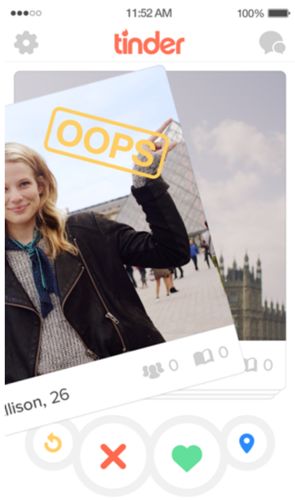
( 2)

Snowball sampling method was used to recruit the respondents. Respondents were in
the age range from 23 – 24 years old. These was helped getting insight and deep
information in terms of perception and attitude that users have toward mobile dating
applications. And later it was decrypted and analyzed by the researcher in order to
gain insights as objectives.
            The study “Attitudes towards mobile dating applications of Thai users”
aimed to study insights of the users, trying to understand the attitudes they have
towards these applications, their intentions of using the applications as well as the
positive and negative impacts caused by the applications. So, the findings would
benefit application developers or business managers to design the applications as well
as strategies to generate more revenue from users.

Keywords: Moblie dating applications, Relationship, Marriage

                                                                           Ref. code: 25605902040376EHB
( 3)

                          ACKNOWlEDGEMENTS

            I would like to express my deeply gratitude to first of all, Professor Dr.
Kenneth E. Miller, my advisor in MK 701 Independent Study I and MK 702
Independent Study II. Thank you for your dedications to MIM Program, all your
students as well as me. Without your advices and guidance, this independent study
will not successfully be done.

            Moreover, I would like to say thank you to all of my respondents for their
time and their opinion, sharing for this study. Without them, this study will not be
able to finish

            Lastly, thank you for my lovely family for your support and
understanding. I am lucky to have you all by my side. Thank you.

                                                   Miss Nisakorn Thongsawatwattana

                                                                           Ref. code: 25605902040376EHB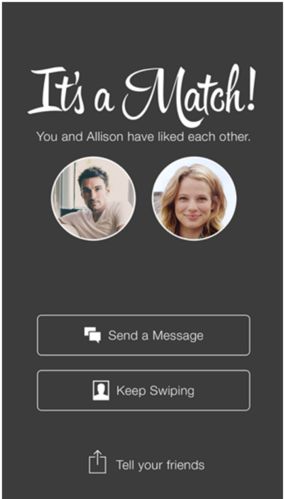
( 4)

                           TABLE OF CONTENTS

                                                       Page
ABSTRACT                                                  (1)

ACKNOWLEDGEMENTS                                          (3)

LIST OF TABLES                                            (6)

LIST OF FIGURES                                           (7)

CHAPTER 1 INTRODUCTION                                       1

     1.1 Problem Statement and Research Purpose              1
     1.2 Research Objective                                  2

CHAPTER 2 REVIEW OF LITERATURE                               4

CHAPTER 3 RESEARCH METHODOLOGY                               9

     3.1 Description                                         9
     3.2 Research Methodology                                9
       3.2.1 Secondary Research                              9
       3.2.2 Primary Research                              10
            3.2.2.1 In – depth Interviews                  10
     3.3 Sampling Plan                                     11
     3.4 Data Collection                                   11
     3.5 Data Analysis                                     12

                                                  Ref. code: 25605902040376EHB
( 5)
CHAPTER 4 RESULTS AND DISCUSSION 13
4.1 Secondary Research – Key Findings 13
4.2 In – depth Interviews – Key Findings 16
CHAPTER 5 CONCLUSIONS AND RECOMMENDATIONS 30
5.1 Conclusion 30
5.2 Recommendations 31
5.3 Limitations 32
REFERENCES 34
APPENDICES
APPENDIX A: Tinder’s functions and features 37
APPENDIX B: A list of questions for in – depth interviews 38
BIOGRAPHY 41
Ref. code: 25605902040376EHB( 6)
LIST OF TABLES
Tables Page
Table 1: Key findings from in – depth interviews with mobile dating 16
applications users
Ref. code: 25605902040376EHB( 7)
LIST OF FIGURES
Figures Page
Figure 1: Mobile dating applications revenue from 2009 to 2017 5
Ref. code: 25605902040376EHB1
CHAPTER 1
INTRODUCTION
1.1 Problem Statement and Research Purpose
Smart phone is as if one of the organ, born with human. People in this
generation accept that they cannot live without it. It can be not only substitute almost
everything that people’s life encounter with, but also make people’s life easier. It can
turn to be a wallet. Shopping can be done through smart phone. Everything is
controllable in one device, Smart phone. The number of smart phone users is
forecasted to increase from 2.1 billion in 2016 to around 2.5 billion in 2019. Over
36% of the world population is projected to use a smart phone by 2018, up from 10%
in 2011 (Number of smart phone user worldwide 2014-2020 , 2018). While smart
phone’s penetration rate is increased and as well as users, mobile application is the
essential complement, growing along with the smart phone market.
Mobile Application market is a huge and increasing. The revenue of mobile
application market is growing every year. The market is worth US$ 88 billion in
2016, 20% increased from previous year. (Worldwide mobile app revenues in 2015,
2016 and 2020 , 2016). There more than 2.2 billion applications available for
download in 2016. Social network applications are the category that gets the most
visitation from smart phone users as well as the most share of time from consumers,
accounted for 20% of the time that users spend with their smart phone.
Apart from social network and game applications, mobile dating applications
are one of the categories that has been downloaded from smart phone users the most
too. The number has shown in the App Store application that top 10 mobile dating
applications such as Tinder, OkCupid, Coffee meet Bagels and Hater have been
downloaded for more than 500 million times. Tinder applications is by far the most
popular application among all mobile dating application. According to Business
Statistics showed the number of 100 million times download, 50 million users and 10
million active users daily. (Smith C. , 2018) Couple are matched in the tinder
Ref. code: 25605902040376EHB2
application more than 2.2 billion times daily. A user tends to spend time around 35
minutes in the application a day with more than 140 times of swiping.
Mobile dating application has potential to grow in terms of mobile application
infrastructure as top category application and the number of download and users is
growing rapidly. Conversely, it generates revenue only US$ 415 million 2017 which
accounted for a very tiny bit of mobile application revenue. Data from Tinder
application only 3 million users are paying for the applications, accounted for 6% of
users in Tinder application. Paid users are extremely less in other dating application.
Not only the converse of users and revenue, but also in the society aspect. The
number of mobile dating application itself as well as the users are contradicted with
the marriage rate. While dating applications are launched more, the percentage of
marriage population is decreased. The marriage rate in the year 2017 has diminished
from 2007 around 20%. People tends to stay single in a smaller household. Especially,
in the urban area. Statistics shows that 40% of Thai population aged between 20 – 50
years old are single. This number goes up to 60% in Bangkok. (Thairathonline, 2015).
Moreover, single household has increased around 1 million household yearly.
This study of “Attitude towards mobile dating applications of Thai users” has
been chosen to be a part of a contemporary topic in applied marketing. The purpose of
this study is to be able to understand attitudes of mobile dating applications’ users.
The study will be great contribution to business managers or application developers in
mobile application industry. The finding will allow both business managers and
application develops to have a better understanding of dating application users’
behavior, attitudes, their key influencing factors leading to adopt the applications as
well as subscription. Finding of the study will assist the application developers in
designing or further developing the applications that are suitable to users’ demand as
well as the business managers in designing effective marketing strategy to yield the
revenue from this growing market segment.
1.2 Research Objective
1.2.1 To understand Thai mobile dating applications users
• To determine users’ status and ideal relationship of users
Ref. code: 25605902040376EHB3
• To find the motivation in using the application of the users
• To understand users’ main goal of using mobile dating applications
1.2.1 To understand attitudes that Thai users have toward mobile dating
applications
• To examine how Thai mobile dating application users, perceive the
applications both positive and negative opinion
• To understand how the users perceived about finding a romantic
relationship from mobile dating applications
• To find out how mobile dating application impact users in terms of life
and relationship.
Ref. code: 25605902040376EHB4
CHAPTER 2
REVIEW OF LITERATURE
Online dating services and mobile dating applications situation
Since the arrival of internet era in 1990s, many of internet dating service has
also been founded. Increasing number of people has been using internet to find their
romantic partner. Around 11% of American adults which this percentage accounted
for 20 million people has subscribed the online dating sites in 2013 (Smith A. , 2013).
However, in the previous decade, there is also an emergence of smartphone.
Dating sites migrates itself to dating application. Dozens of applications are invented
from the previous decade for instance, OkCupid, Tinder, Coffee meets Bagels,
Happen, Hater and Grindr (DOVE, 2017). The mentioned applications are on the top
chart of downloaded applications in 2017. They have so far been downloaded more
than 500 million times and has active users of more than 50 million people in
previous year.
Online dating service has the revenue of US$ 4.7 billion in 2017 with CAGR
(2017-2022) of 4.9% (Dating Services , 2017) (Borowski, n.d.) (Cook, 2015) (Lee,
2015 ). On the other hands, the revenue of mobile dating application accounts for only
1% online dating service industry which is worth US$ 415 million. However, the
market is promising as from the figure 1: Mobile dating application revenue from
2009 to 2017. The market is growing double-digits since 2009 and it has 29% growth
from 2016 to 2017. (Mobile dating market revenue in the United States from 2009
through 2017 , 2017)
Ref. code: 25605902040376EHB5
Figure 1: Mobile dating application revenue from 2009 to 2017
In addition, the number of mobile dating application users is significantly higher than
online dating sites. With the big market of dating service and rising number of people
using smartphone, mobile dating applications are waiting for a good strategy to
cultivate revenue from the market. To ensure the potential of this market, the data
from App Store showed that on September 2017 Tinder - one of mobile dating
applications has reached number one of global top grossing section in the App Store,
meaning that it is the application that generated the highest revenue in the App Store
at that moment. (Crook, 2017)
An increasing of single population and delayed marriage
In Southeast Asia and East Asia, mainly in big city like Bangkok, Tokyo and
Hong Kong, there is an increasing number on non-married women. For this region,
non-married women become more common and it is even more common than in the
western country (Jones, 2000). As the trends showed that percentage of non-married
woman in their 30s has correlation to the quite similar percentage in their 40s,
predicting that if women didn’t get married before 30s they tend to stay unmarried. In
2000, 17% of Bangkokians at ages 45-49 is still single and this high proportion is also
derived from non-married women in 30s and still remains this number till the end of
their childbearing period.
Ref. code: 25605902040376EHB6
The statistic from the research “The Fight from Marriage in South-East Asia
and East Asia” shows 3 main variables that related to rising of non-married women.
First is the education level. Mainly in Bangkok, the number of women with high
education level has high correlation with non-married women. As the consequence of
having high education and the increasing acceptance of women executive, women are
more in to the work and tend to pay their attention to work instead of finding romantic
relationship. Conversely, men marriage was just delayed. They tend to get married
slower. As the number showed non-married men in their 30s was high and it gets
lower in their 40s. Secondly, women are likely to find a partner that have higher level
of education than themselves. As the statistic, the proportion of women with
undergraduate level of education is higher than men. Lastly, the unbalanced between
men and women ratio. Actually, the ratio of men and women from the birth until six
years old was 107:100 which means that men are born more than women but at the
age of above 40, the ratio is down to 97:100 that causes the unbalanced between two
genders. (Katewongsa, 2010) If everyone get married before aging 40s, only 3% of
population will be single. In reality, the statistics showed that more than 60% of
women in the age of 20 – 50 years old is single. (Thairath online, 2015)
In Thailand, the marriage rate is shrinking significantly from the past decades.
People committed to a relationship lesser and lesser especially, people that live in
urban area. According to statistic from the Bureau of Registration and Administration,
in 2017 the number of marriage decreased 20% from 2007 while the divorce
increased. Single household in the urban area heighten to almost 2 million households
in 2016 which accounted for almost 30% of population in Bangkok. This is
considered as social issue in Bangkok as the marriage is low as well as the birthrate.
Nowadays, technologies such as social network applications and mobile dating
applications allow people to get to know new people more easily. Nevertheless,
people are less likely to commit in a relationship and choose to stay single.
Mobile Dating Applications
In this study, the applications that will be mentioned are Tinder (Picture 1:
Tinder) and Coffee meet Bagels (Picture 2: Coffee meet Bagels). The number of
Ref. code: 25605902040376EHB7
mobile dating applications users is still undefinable by countries. However, these two
applications were mentioned the most in Thai social media such as Pantip.com or
Facebook.
Picture 1: Tinder Picture 2: Coffee meet Bagels Application
Tinder is by far the most popular mobile dating application in the world
guaranteed by 2016 Dating Sited Reviews Editor’s Top Pick Dating Award and
ranking in the first place of top grossing category in App Store. Tinder is linked with
Facebook application. Once user sign in, the data and pictures will be derived to the
application from Facebook. It is user-friendly and increases credibility of users. Users
only need choose which pictures they will use and briefly write their profile, then set
up the criteria of their potential match namely, gender, ages and distance. After that
people in the setting distance area, age and gender will appear for the users to swipe.
Users are allowed to view the other profiles such as name, age, briefly message and
pages like in Facebook before swiping. They are able to swipe left or right. Swiping
left means that the person is not passed. They would not like to get to know this
person. They will be gone for goods and swiping right meaning that the person is
passed. They would like to get to know this person. When the users like each other,
“It’s match” would appear on the screen. The application will allow both of them to
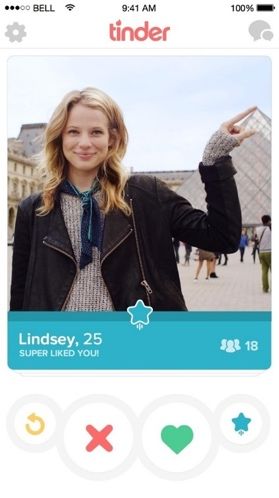
start chatting. (twometre, 2015) There is also another feature called “SuperLike”.
Normally users will not know who swipes right for them and cannot let the other side
know that they are swiping right for. With the SuperLike features, it will appear on
the other side screen that they have been SuperLike. And if users are swiping right
back for SuperLike, it is definitely a match. (See Appendix A: Features in mobile
dating applications)
Ref. code: 25605902040376EHB8
Tinder application alone has 100 million times download by far, more than 50
million users and 10 million active users daily. Matches are occurred more than 20
billion times. Average a user spends times around 35 minutes in the applications with
more than 140 times swiping daily. Tinder generates revenue from subscription of
Tinder Gold for US$ 9.99/week and $24.99/month. Additional features are rewind
swiping, location change and unlimited SuperLike. Normally, when users are swiping
left, they are unable to find that person again as well as they could not undo their
swiping. Rewind swiping allows users to bring back their previous swiping left.
Tinder application only allow users to find each other in the range of 0 – 150
kilometers far. Users can change their location base with the Gold package
subscription. The last feature is SuperLike. It is given to the users for free once
weekly while it is unlimited for the Gold users. (Dating site reviews.com , 2017)
Coffee meet Bagels has similar mechanic to Tinder; swiping right, swiping left
and match. Though more conditions are added to Coffee Meet Bagels. Swiping
consumes coffee beans which is limited. Users could receive free 100 coffee beans by
rating others’ profile picture or subscribe unlimited coffee beans for US$ 35.99 per
month. Moreover, users need to put required self-information for example, height,
ethnicity, religion and education level. This self-information will be using to filter
other users that would appear to them. Users also need to complete the sentences such
as I am…, I like… and I appreciated when my date…, the statement will help ice-
breaking between each other as they will see the statement after they like each other.
After matching, users will be granted 2 weeks to start chatting with his/her match. If
the conversation is not occurred, the match will be gone.
Ref. code: 25605902040376EHB9
CHAPTER 3
RESEARCH METHODOLOGY
3.1 Definitions
Relationship status groups analyzed in this report
In this report, I will refer to several groups of people based on their current
relationship status and this relationship status would also classify whether they are
looking for a partner. In particular, this study will focus on one or more of the
following groups: (Smith, 2013)
• Group 1, “Married or in a committed relationship for ten years or less” – This
group includes people who are committed in a relationship or lived with
partners for ten years or less. They still need to be in a relationship at this
moment
• Group 2, Married or in a committed relationship for ten years or less” – This
group includes people who are committed in a relationship or lived with
partners for ten years or less. They still need to be in a relationship at this
moment.
• Group 3, “Single and looking” – People in this group is not married and not in
a relationship yet. They are seeking for a romantic partner at this time.
• Group 4, “Single but not looking” – People in this group are not married and
they are not currently searching for a romantic partner.
3.2 Research Methodology
3.2.1 Secondary Research
Secondary research was conducted to search for more understanding of details
under the topic studied. Online dating industry and mobile dating applications’ market
landscape were studied as well as the information helped scope down the users of
Ref. code: 25605902040376EHB10
mobile dating applications. Information and data are obtained from reliable sources
such as academic journals from universities, The statistic portal and population and
housing census.
This data collection method helped researchers gain important information and
data before collecting primary data as the following
• Got the knowledge of online dating industry
• Gained the knowledge of mobile dating industry; market size and players in
the specific market
• Understood core features in mobile dating application in the market
• Found out users of mobile dating applications as well as learned their behavior
and understood roughly of their attitudes towards the applications
Figured the pros and cons of mobile dating applications
3.2.1 Primary Research
Key questions for in – depth interviews were designed based on findings from
secondary research. The objectives of the interviews were to acknowledge the
attitudes of mobile dating applications’ users. Attitude towards dating and mobile
dating applications are still a personal topic for Thais. In-depth interview was by far a
great method to collect insight data and deeper details from the respondents as well as
it could avoid building self – image and getting influences by others. Findings of the
study would help to develop and design applications that satisfy users. General
Information such as the users’ lifestyle were studies as well.
3.2.1.1 In – depth Interviews
In – depth interviews were conducted with 30 mobile dating applications’
users to gain the knowledge as following;
• Found out users’ main objective of using mobile dating applications
• Was able to get the information about how they see their goal relationship
• Determined the users’ motivation of using mobile dating applications
Ref. code: 25605902040376EHB11
• Examined the attitude that Thai users’ have toward mobile dating
application both positive and negative attitudes
• Gained the information of how mobile dating application have impacted
users’ life and relationship both positive and negative way
3.3 Sampling Plan
The sampling method for selecting interviewees was mixed between purposive
sampling and snowball sampling. First, the purposive sampling was used to recruit
early interviewees. Later on, snowball sampling was used. Early interviewees were
asked to recommend people who used mobile dating applications. Characteristics of
the sample are as followed;
• Gender: both male and female
• Ages: between 23 – 34; from the secondary research, this is the age range that
interact with mobile dating application the most
• The respondents have been downloaded and any of mobile dating applications,
namely Tinder or Coffee meets bagels. On the interview date, interviewees
may have stopped using the applications or still use it but they got to use the
applications for at least 3 months.
3.4 Data Collection
The sampling procedure employed for this study were purposive sampling and
snowball sampling, given the time constraints and personal topic of dating
experiences in order to collect data quickly and it was easier to get insight and deep
information from the respondents as both interviewer and respondents could be
referred.
A total of 30 in – depth interviews were conducted face to face with the
respondents in Bangkok during period from August 2017 to February 2018. The
interviewees were consisting of 15 women and 15 men. The interview duration was
Ref. code: 25605902040376EHB12
approximately 30 – 45 minutes per respondent. The interviews were voice recorded
and jotted down for further analysis
A list of questions was used to guild the interviews. The questions were
designed to understand attitudes that users have toward the applications and other
users. For some respondents, improvisation and proving were required for
clarification. Appendix B are the list of questions used in interview.
3.4 Data Analysis
Data collected from the in – depth interview were transcribed, coded and
classified on the Microsoft Excel program. It was selected to make to respondent
opinions manageable and understandable. The groups mentioned in definition were
used to organized and classified respondents. After that, attitudes and opinions of each
group were studied, aimed to understand each group of users and connection
throughout each group and respondent as well as insight from each respondent.
Moreover, verbal statements are used to provide evidence for assertions.
Ref. code: 25605902040376EHB13
CHAPTER 4
RESULTS AND DISCUSSION
4.1 Secondary Research – Key Findings
Mobile dating applications in Thailand were not fully accepted in Thai society
Mobile dating applications have been adopted to Thai society around 2013 and
they have gone widespread. The applications have been argued among users in many
aspects. There are two sides of the arguments. Both sides feel that the applications are
aiding tools to meet new people. But the differences of two groups are; one side say
that they will not commit to the person they meet online. They admit that they use the
applications to kill the time and just want to meet new people as their life is too busy
to go out meeting new people. While another side has more positive feeling to the
applications more than the first group. Some of them have found a partner from the
applications or believe that people could really find a partner online. They have also
defended that meeting people online is somehow better than meeting someone offline.
For the reasons that, mobile dating applications allowed them to screening people
from profile that users put in.
However, the majority of people thinks that they would definitely not commit
to a relationship from mobile dating applications. They felt that it is embarrassing to
use the applications. The users were desperate and loser in the offline world. So,
mobile dating applications were not widely talked as some of users feared of being
judge by others especially, non – users.
User of mobile dating applications are millennials
According from the study, we could differentiate the users of mobile dating
applications out of the whole online dating service industry users. For online dating
applications, users are in all age ranges from 18 to more than 65. Their primary
motivation of using these services is straightforward which is to find romantic
relationships. On the other hands, majority of mobile dating applications users are in
their mid-20s to mid-30s; 79% of users are millennials and their primary motivation
Ref. code: 25605902040376EHB14
of using these applications are varied. As from the Tinder statistic and facts showed
percentage of users’ relationship, 54% of Tinder users are single, 3% are divorced
while 12% are committed in a relationship. This number is obviously a proof that
romantic relationship not the only objective of users. Some of them just want to meet
new people while other groups are looking for short-term relationship or aiming
hooking up on others.
Self-esteem and intentions are the key drivers of users’ expressions in mobile
dating applications.
Many people believed that mobile dating applications users are desperate.
According to a study “Psychological Characteristics of Internet Dating Service Users:
The Effect of Self-Esteem, Involvement and Sociability on the Use of Internet Dating
Services” This statement is not true. Users with active lifestyle and have high self-
esteem tend to be active in mobile dating applications more than users with inactive
lifestyle and has low self – esteem.
Mobile dating applications are perceived by the users as tools that allow them
to meet new people and have a chance to fine better partner. The research shows there
are three dependent variable characteristics used to study mobile dating application
users. They are user’s self-esteem, sociability and their intention of looking for a
romantic relationship. From the dependent variables, users could be divided in two
groups which have high correlation, sociable high self-esteem and unsociable low
self-esteem. And the key factor that differentiates these two groups is the users’
intentions whether they are looking for romantic relationships. If they are looking for
romantic relationships, there is a difference between sociable high-esteem people and
unsociable low-esteem people. Sociable high-esteem people are prone to use mobile
dating applications more than another group which is less sociable and has low self-
esteem. Users’ profile in the applications is as if the marketing of users’ self. High
self-esteem people, they encourage the abilities they have and they are determined to
their goal; finding a relationship is one of the goal they are pursuing as well.
Moreover, the people who join activities offline are more interactive with mobile
dating applications than the people who do not join activities offline, while low self –
Ref. code: 25605902040376EHB15
esteem unsociable users do differently. They normally not have much activities in
offline life as well as they are not confident enough to promote themselves and
determine to their goals. In other words, people who use mobile dating applications,
they are not desperate. In fact, they have high self-esteem and are sociable.
However, when finding a romantic relationship is not a goal. There is no
difference between sociable high and unsociable low self-esteem people. The number
of unsociable low self-esteem and not looking for a romantic relationship group are
slightly higher than unsociable low self-esteem and looking for a romantic
relationship group. The conclusion is that when unsociable low self-esteem people
would like to find a romantic partner, they are overthinking of their profile; what they
should promote themselves. So, they would rather not be using the applications. On
the hands, when they are not looking for a relationship, they would not careful much
of what they are putting online. (Mikyoung Kim, 2009)
Users of mobile dating applications tend to have positive attitudes towards
mobile dating applications than non-users.
The number of people that know someone who use online dating sites have
increased from the previous decades and as well as the number of people who have
committed in a long-term relationship and knew each other from online dating sites.
Positive perceptions towards mobile dating applications have increased as
well. They think that it is a good way to meet people and allow people to find better
matches as they could better match each other interests and criteria. Online daters who
have experiences in online dating themselves feel positive to the applications more
than non-users. However, there are still some negative opinions for instance, online
dating applications keep people from settling down as they have higher opportunities
to meet new people
Many risks have also been mentioned in mobile dating applications; cyber
impersonation or deception. Not to mention the huge issue such as cyber
impersonation which it does not happen overall in social network. Deception is more
common among users. In order to be accepted or get more likes in cyber world, users’
profile and pictures are decorated to draw attentions from other users. According to
the study “The Truth about Online Dating” (Epstein, 2007) concludes that users
Ref. code: 25605902040376EHB16
perceive that deception should not happen in mobile dating application. They will not
deceive anyone and do not want to be deceived intentionally or unintentionally. On
the other hands, when users are asked about their profile in the applications, pictures
are carefully picked the best shot, which is not similar to them or their real lifestyle. In
additions, mostly men are fake their height, education level and income. Whereas
women tell lie about their age and weight. The older they get, the more they are likely
to tell lie. The intentions of deception are that they would like to build their self-image
and be in the visible criteria of other users.
4.2 In – depth Interviews – Key Findings
A total of 30 mobile dating applications users were interviewed. The
respondents were consisted of 16 women and 14 men. They are in the age of 23 – 34
years old. All of them had at least Bachelor’s degree. They are office employers,
pilots, business owners and freelancers. The majority of the groups are current mobile
dating applications users. Tinder were the applications that mentioned by the
respondents the most, following by Coffee meet bagels, Grind and Sapio. Every
respondent has downloaded and used mobile dating applications for more than 3
months.
Table 1: Key findings from in-depth interviews with mobile dating applications
users
• Age: 23 – 34
• Occupations: university students, office employees, pilots,
engineers, architects, creatives, auditors, freelancers,
Respondents’ translators and business owners
Profile
• Most of the respondents has mentioned that they have busy
lifestyle. They work hard and play hard as well. Apart from
the group that were busy because they were occupied
themselves with work, another group also have active
Ref. code: 25605902040376EHB17
lifestyle. They often join outdoor activities, music festival
and go travelling.
• All of them has smart phone, downloaded mobile dating
Respondents’
applications and have been using it for a least 3 months
Profile
(Continued)
• Some of the users have stopped using the applications. The
reason that they stopped using it was that; they were in
relationship. Some found a partner from the applications
and some found a partner offline.
• Most of the users used the applications when they were
single but single status did not mean that they were
currently looking for someone from the dating applications.
As well as being occupied did not mean that they were not
looking for serious and romantic relationships
• People that were committed in a relationship also users of
mobile dating applications. It could be divided into two
Respondents’
intentions of this occupied group. The first one were really
status during
looking for a new relationship as they admitted that their
using application
current relationship was not going to work well. While the
other group was no intention to break up with their current
lover. Some were living far away from their partners and
some were just physically cheating on their partner.
“I and my boyfriend, we talk once a month. It doesn’t
seem we are together anymore. I don’t feel the same and
I think he feels the same way.” – Pim, 28
Ref. code: 25605902040376EHB18
• Most of the respondents were admitted that they did not
have specifications of their partner. They said similarly that
they would justified by feeling whether this person is the
right one. The one that they could share both good and bad
moments as well as interests.
Respondents’
• Apart from using the feeling, women respondents had
expected
mentioned that in order to feel that this is the right one,
relationship
men should be able to make them physical and emotionally
safe and calm. Moreover, men’s income and educational
level should not be lower than them. However, for men,
most of them mentioned that they would never imagine
their life partner yet. They were not thinking about settling
down
• Motivations or intentions of using the applications could be
divided in two big groups which were looking for a
romantic relationship and not looking for romantic
relationship.
“I used Tinder because one of my friend suggest. She
Motivations and
also found her boyfriend from Tinder. So, I might have
Intentions of
found one too. And I did. We have been together for 2
using mobile
years now.” – Taii, 25
dating
applications
• The number of each group in the study was not
significantly different. Majority of the respondents were
fallen into looking for a romantic relationship group,
followed by not looking for a romantic relationship. They
admitted that they used mobile dating applications but they
were really not looking for someone even they are single.
Ref. code: 25605902040376EHB19
Lonely were the number one motivations mentioned by the
users. Following by time poor, they would like to make
new friends but they do not have time to find do other
activities than their job. Interesting reason for single group
is that they would like to find someone new to heal their
previous relationship’s pain.
“I just broke up with my girlfriend. I am not ready for
any new relationship. I just want to find someone who
can talk to. Maybe I might not feel empty” – Noey, 23
Motivations and • A branch of respondents was using the applications for a
Intentions of physical relationship.
using mobile
dating “The first time I used, I don’t think that it will be just for
applications hook up. Then, a girl that I matched on Tinder asked me
(Continued) out for sex. Later, I take the relationship less serious
with the people I found on the applications and short –
term relationships make me feel better as girls would not
have many conditions and they are less demanding” –
Ice, 30
• Another intersection reason is that; some user used the
applications to practice the language skill.
“I only swipe right foreigners. I don’t think that it will
improve to be a relationship. I just want to make friend
and practice my English and Chinese.” – Yingying, 24
Ref. code: 25605902040376EHB20
• Among all of mobile dating applications, Tinder was the
application that respondents used and spent time with the
most. Averages was around 1 – 2 hours a day.
“I like Tinder more than the others applications. It’s user
friendly. I open the application 4 - 5 times a day; in
traffic, when I’m bored or when someone send me a
message. I spend around 10 – 15 minutes per time. –
Toey, 25
Respondents mentioned that they have huge number of
matches. They talked to uncountable people from the
applications. Some of them remembered people they have
dated but some did not. Most of them went out to see their
Respondents’
match once. Very few number of respondents went on a
mobile dating
date with the same people. The reason was that their dates
application using
could not make them impress enough. So, they opened the
behavior
applications and swiped for a new one.
“I chatted with lots of people. Some of them I didn’t
even remember the name. Every time they send me a
message, I need to slide up to see their name. – Mild, 27
“Sometimes, I felt that it’s such a waste of time. We
went out for dinner or saw movies and it is the same
with everyone.” – Gift, 28
• Respondents who found a relationship from mobile dating
applications had similar pattern of using behavior within
group. They might have had lots of match and talked to lots
of people. But they were not randomly talking to anyone.
Ref. code: 25605902040376EHB21
They tend to have their criteria of people such as common
interest. Their partner was the one they took time to chat
online or phone call before they met in person. They felt
positive than others who they instantly met. They knew
about each other much enough to feel more impress when
they really met. And relationship improvement could be
started from that.
“I met my boyfriend from the applications. I felt that we
have so many common interest. It was just fun chatting
Respondents’ with him at first and I was chatting with others as well at
mobile dating that time. After a month, I went on a date with him. The
application using feeling that he was right was intensified then I gradually
behavior stop playing Tinder” – Pompam, 26
(Continued)
• On the other hands, respondents who only wanted to have
physical relationship. They were asking the other sides to
meet very fast, in the first week they met. They were seeing
each other not more than twice and they would find a new
one.
“If you are this type of users, you would know who is the same
type as you. And then everything is easy. It starts very fast and
end very fast too. Nothing more than that” – P, 27
Perception on • Most of the respondents perceived that offline world and
mobile dating online world are indifferent. Relationship, friends, risks had
applications a chance to happen on both online and offline.
Ref. code: 25605902040376EHB22
• Almost every respondent felt positive towards mobile
dating applications. The applications were perceived as the
tool to meet new people and to make new friend. They felt
less awkward to make friend in mobile dating applications
than other social media applications or even offline and the
applications gave them the senses of power to choose.
“It is awkward to say hi to people you think they are cute
and you want to know them even it’s in a night club or
they are friend of friend in Facebook. But in mobile
dating applications I don’t feel that way” – Nutto, 25
• Respondents felt that meeting people online was better than
Perception on
meeting offline in some aspects. With the applications’
mobile dating
functions they could screen people before they talked to
applications
whether it is their educational background or their lifestyle.
(Continued)
“I am usually not the one who start the chat but when
someone send me a message after we match. I often
search their name on Facebook, looking for their
lifestyle before talking to them” – Fai, 25
• However, Coins always have two-sided. While the group
that were mentioned earlier felt that users profile was
advantages to other users, some of the respondents will not
update their real profile on mobile dating applications.
They left it blank or put the fake profile as they were afraid
that they would be traced back and they felt uncomfortable
to reveal themselves to someone they do not know
Ref. code: 25605902040376EHB23
“My name on Facebook is in Japanese which is
definitely not my real name. I don’t want someone I
don’t know searching on my profile from Facebook and
digging in my personal life” - Amy, 24
• Most of respondents admitted that mobile dating
applications added dynamics to their life. The applications
brought them to meet people who were out of their circle.
“I’m auditor. I hardly meet people that are out of this
filed. New people that I met are somehow related. The
Perception on app was eye-opening from me to make friends that we
mobile dating could share different aspects. – Tong, 26
applications
(Continued) • Most of the respondents had opinions about risks that it
could occur in both online and offline but in different
aspects, depended on individual judgement. Additional
views from some respondent were that; online were safe
than offline. They have mentioned if we were meeting a
new person offline what we know was their face.
Conversely, if we matched with a person online, we knew
basic information about that person life. We could cross
check on other social media, see what their friends were
talking about them. However, it did not mean that
everything they put online were true. Individual judgement
would tell what kind of information could be believed.
Ref. code: 25605902040376EHB24
• Respondents were definitely divided into two groups on
this aspect. The first group was believed that a long lasting
romantic relationship could happen from mobile dating
applications. However, some of them believed that could
happen but when it comes to themselves, they did not think
that they would committed to a person that they met from
the applications
“I don’t think that I will be in a relationship with someone I met
online. Just friend is enough. But I think it could possible to find
Perceptions on
a lover online. I saw my friend did that. Not for me” – Por, 31
finding a
relationship from
• Another group of the respondents felt that relationship from
mobile dating
mobile dating applications were impossible. There were
applications
also some respondents who felt this way before they were
using these applications and some that changed after using.
“I think I would find a girlfriend the app before using.
Then, I never met a good one the applications. I was
cheated or lied many times.” – Mhoo, 34
“The girls are too easy in the applications. If I would
find a mother of my child. She would definitely not
come from the applications. – Ice, 30
• Most of the respondents were accepted that after they used
Impact from
the applications for a while, they took relationship less
mobile dating
serious. As a result of meeting new people was fast and
application to
easy for them. They were not care how many people they
themselves
would talked to. Some were considered that all the
Ref. code: 25605902040376EHB25
conversion had no quality, they stopped and carefully
picked someone they really want to talked. Some still
enjoyed chatting with a lot of people without deep
meaningful conversations.
Impact from
• Risks were individual judgement as well. All of the have
mobile dating
the same agreement that risks happened because they have
application to
let them to. Someone never encountered risks because they
themselves
were aware of their conversation and expression as well as
(Continued)
the other side’s conversation and expression
“I am not naïve and people who used the applications should not
be naïve. Believing whatever the others said is stupid and this
kind of people tend to be easily deceived.” – Mook, 29
• From the in – depth interviews, Tinder was the online
applications this respondent group subscribed. Among 3
additional features; location change, rewind swipe and
SuperLike. Location change was the only reason why they
pay. They felt that choosing the right target group were the
most important. But for rewind swipe and SuperLike, they
Technology had no connection with that person enough to pay to bring
aspects them back.
“I like Japanese. So, I pay to change my location to
Japan” – Nutto, 25
“New person will be appearing in a second. In a couple swipes,
I will find a cute guy like that again or even better” – Ja, 25
Ref. code: 25605902040376EHB26
From conducting in – depth interviews with mobiles dating applications users,
researcher could not divide mobile dating applications users based on gender,
relationship status or their personal lifestyle. As they were not the factors that
differentiated respondents’ perception towards mobile dating applications and their
expressions. Intention of using was the factors that made them different. 3 main
intentions were concluded from the interviews which were lover searcher, making
friend and friend with benefits group.
Segment 1: Lover searcher
The first group was lover searchers. This group were consisted of both single
and occupied. Both status group acted as a single person and opened to new person
with the aim to improve the relationships. Their intention of using mobile dating
applications was straight-forward which was find a romantic partner. It started from
the same key driver; they were time poor to find a lover. Applications were used as
the tool.
The perception towards mobile dating applications of this segment was totally
more positive than another two segments. Majority of mobile applications users were
tending to use to find a lover. They were accomplishing their goal by using the
applications. Moreover, applications offered them varieties of choices and the power
to choose what kind of people they would allowed to come into their life. They
thought that they do not get negative impact from the applications. Although the risks
sometimes caused the negative feeling, they would still feel positive with the
applications and saw the risks as individual users’ problems. Some respondents were
still being together with a lover that they met from the applications while some had
more than one lovers met from the applications. Both groups said that, if they and
their lover from the applications went to the end. They would not feel negative and
blame the applications. They would go back to use the applications anyway.
Deception and impersonate were the risks that mentioned by this group. They
had been encountered with both of the risks. As this group had deep conversation with
the matches more than another two group. They have caught the lie the most.
However, they perceived them as experiences. The more they talked and met people,
Ref. code: 25605902040376EHB27
the more experience they have gained. They believed that being too naïve caused
troubles and easily being seduced. It would allow imposter to take advantages from
them. Although they knew means to avoid risks, they still think that deception and
impersonate should really not occur. The believe also came from some of the
occupied group who caused the risk to other themselves. As they were the one who
tell a lie. Their belief was emphasized a statement;
“Most people use two totally different sets of criteria for judging themselves
versus others. We tend to judge others according to their actions. It’s very cut-
and-dried. However, we judge ourselves by our intentions. Even if we do the
wrong thing, if we believe our motives were good, we let ourselves off the
hook. And we are often willing to do that over and over before requiring
ourselves to change.” (Maxwell J.)
Intention was the execute of their lie. Their motive was to really find a new lover.
They were not hiding the truth. Their relationship was unable to go further but they
just not broke up with their current lover yet. Many reasons were mentioned; they felt,
their current lovers did nothing wrong and they would not want to hurt them or they
did not want to be the one who said goodbye.
Segment 2: making friend
The second segment was making friend group. The respondents were also
consisted of both single and non-single respondents. There were many motivations
under this intention, depended on the types of friend they would like to make. From
the study it could be divided as followed; friends who shared the same interests,
foreign friends and normal friends. The first friends were obvious. They just would
like to find a person who understood what were they up to. The second group was a
little bit weird. There really were some respondents who used dating applications as a
study tool. They were practicing their English with native speakers who travelled to
Bangkok or even lived here. In return, they might take those friends to sight-seeing if
the time period was possible to do so. The last group came with hidden agenda. They
were mentioned that they were looking for a friend. But after probing, it was a friend
that was possible to improve to be a lover. Men were the majority of this group. It was
Ref. code: 25605902040376EHB28
their self-defense that benefits them in saying that. They would not lose face if they
failed on winning some girl. They were able to talk to many girls as friends. They
could keep their self-image as flirting on many girls at the same time would be
perceived as a playboy.
The perceptions of this group were in the middle level. They were not totally
positive or negative. They were not expected much from the applications. They
wanted to find a friend which was not critical as finding a partner. They took
advantages from the features of applications as they would not let themselves being
hurt. The first two types of friend were more positive than the last one. As they had a
very clear direction of using the applications, clearly saw through things that was
going on as well as people as they were not blind because of love. They perceived that
there was nothing wrong with the applications as well as nothing wrong with other
users. They were the decision makers and controllers. However, some of the group
that would like to find a friend and had a feeling that it could later improve to be more
than friend. This group perceived these applications more on the negative side than
positive. That way another reason why they intended to find a friend instead of a lover
from the applications. They were not fully trust the applications nor other people in
the applications.
Perceived risks stayed in the same aspect as the first group. Though they were
more aware and self-protective than the first group. As they were not into the
applications or has strong connections with other users like the first segment.
Although they knew how to avoid the risks, they usually took the paths that would not
allow any risks to occur. When they encountered the doubt in talking to others, they
would easily stop, and stepped back from the situations. The friend status was allowed
them to take actions more easily than lover status.
Segment 3: friends with benefits
The group did not intend to find any romantic relationship from the
applications. They were expected for physical relationship only. They tended to swipe
right based on physical appearance. They started conversation fast, straight to the
Ref. code: 25605902040376EHB29
point and mostly closed the deal within a couple day of their matches. Both gender
and status were the members of this segment.
They perceived mobile dating applications as the tool to make them
accomplished their desired faster. Comparing with finding friends with benefits or one
night stand offline, online was direct to the target group than offline. The impact was
more on the positive side as it was win – win situations for both users. It would cause
a negative feeling when the relationships were not stop as they agreed. But it was not
happened much as they tended to stop talking and find a new one.
Perceived risks of this segment were infection and pregnancy. Deception or
impersonate was not their problems as they were not expected any relationship from
the others. They said they were willingly to be seduced. Therefore, they were not
perceived any risks from using the applications. The risked mentioned at the
beginning, would be danger if they did not protect themselves. It was not risks
causing by others.
Ref. code: 25605902040376EHB30
CHAPTER 5
CONCLUSIONS AND RECOMMENDATIONS
5.1 Conclusion
From the finding of the study, it could be summarized that majority of the
users were using the applications to find a romantic partner. Although the other two
groups were still significantly for the applications developer as well as business
managers to take them into consideration. Even though, all 3 segments were using
mobile dating applications for different intentions and targets, the applications were
successfully fulfilled all of their need.
Romantic relationships were less important for millennials
It could be concluded from the study that millennials were mostly investing
their time with themselves in the areas of their interests such as their hobbies or
careers. Romantic relationships were less important for them. Relationships took time
and emotions before it could start. In return for relationship, there are both positive
and negative feelings. Relationships were like gambling. It took risks because not
evert relationships would work well. So, the respondents tended to do other things
that they felt worth investing for and got positive returns.
Mobile dating applications were appropriated for users’ lifestyles and for any
kind of relationships nowadays.
Romantic relationships were not the end goals of lives anymore as well as the
time poor lifestyle. Mobile dating applications were invented just the right features to
reduce their pain points. Getting to know a person or finding any kind of relationship
consumed less time, less effort as well as the switching costs were low. In additions, it
increased users’ variety of choices. As from the benefits of the functions, the
applications were the right answers among 3 users segment. For whatever reasons or
intentions why, they have downloaded and started using the applications. The
applications were fulfilled all of their demands and desired.
Ref. code: 25605902040376EHBYou can also read


