Avatar: A Framework to Support Dynamic Security Analysis of Embedded Systems' Firmwares
←
→
Page content transcription
If your browser does not render page correctly, please read the page content below
Avatar: A Framework to Support Dynamic Security
    Analysis of Embedded Systems’ Firmwares

                            Jonas Zaddach, Luca Bruno, Aurélien Francillon, Davide Balzarotti
                                                 EURECOM, France
                                    {zaddach,bruno,francillon,balzarotti}@eurecom.fr
    Abstract—To address the growing concerns about the security            Over the years, such SoCs have significantly grown in
of embedded systems, it is important to perform accurate analysis     complexity. Nowadays, they often include Multiple Processors
of firmware binaries, even when the source code or the hardware       (MPSoC) and complex, custom, hardware devices. As a conse-
documentation are not available. However, research in this field      quence, virtually every embedded system relies on a different,
is hindered by the lack of dedicated tools. For example, dynamic      application specific, system configuration. As a witness of this
analysis is one of the main foundations of security analysis, e.g.,
through dynamic taint tracing or symbolic execution. Unlike
                                                                      phenomenon, the website of ARM Ltd., which provides one
static analysis, dynamic analysis relies on the ability to execute    of the most common CPU core used in embedded systems,
software in a controlled environment, often an instrumented           lists about 200 silicon partners1 . Most of those partners are
emulator. However, emulating firmwares of embedded devices            producing several product families of SoCs relying on ARM
requires accurate models of all hardware components used by the       cores. This leads to a huge number of systems on the market,
system under analysis. Unfortunately, the lack of documentation       which are all different, but all rely on the same CPU core
and the large variety of hardware on the market make this             family.
approach infeasible in practice.
                                                                          Unfortunately, the increasing pervasiveness and connectiv-
     In this paper we present Avatar, a framework that enables        ity of embedded devices significantly increased their exposure
complex dynamic analysis of embedded devices by orchestrating         to attacks and misuses. Such systems are often designed
the execution of an emulator together with the real hardware. We
first introduce the basic mechanism to forward I/O accesses from
                                                                      without security in mind. Moreover visible features, low time
the emulator to the embedded device, and then describe several        to market, and reduction of costs are the common driving
techniques to improve the system’s performance by dynamically         forces of their engineering teams. As a consequence, an
optimizing the distribution of code and data between the two          increase in the number of reports of embedded systems ex-
environments. Finally, we evaluate our tool by applying it to         ploitation has been recently observed, often with very serious
three different security scenarios, including reverse engineering,    consequences [8], [11], [12], [19], [23], [25], [44], [46], [54],
vulnerability discovery and hardcoded backdoor detection. To          [60]. To make things worse, such systems frequently play an
show the flexibility of Avatar, we perform this analysis on three     important role in security-relevant scenarios: they are often part
completely different devices: a GSM feature phone, a hard disk        of safety critical systems, integrated in home networks, or they
bootloader, and a wireless sensor node.                               are responsible to handle personal user information. Therefore,
                                                                      it is very important to develop the tools and techniques
                      I.   I NTRODUCTION
                                                                      that would make easier to analyze the security of embedded
    An embedded system consists of a number of interdepen-            systems.
dent hardware and software components, often designed to
interact with a specific environment (e.g., a car, a peacemaker,          In the traditional IT world, dynamic analysis systems play a
a television, or an industrial control system). Those compo-          crucial role in many security activities - ranging from malware
nents are often based on basic blocks, such as CPUs and               analysis and reverse engineering, to vulnerability discovery and
bus controllers, which are integrated into a complete custom          incident handling. Unfortunately, there is not an equivalent
system. When produced in large quantities, such customization         in the embedded system world. If an attacker compromises
results in a considerable cost reduction. For large quantities,       the firmware of a device (e.g., a smart meter or a PLC in a
custom built integrated circuits (ASIC) are preferred as they         Stuxnet-like attack scenario [25]) even vendors often do not
allow to tailor functionality according to the specific needs,        have the required tools to dynamically analyze the behavior of
which results in cost reduction, better integration, and a            the malicious code.
reduction of the total number of parts. Such chips, also called           Dynamic analysis allows users to overcome many limita-
System on a Chip (SoC), are often built from a standard CPU           tions of static analysis (e.g., packed or obfuscated code) and to
core to which both standard and custom hardware blocks are            perform a wide range of more sophisticated examinations [24]
added. Standard blocks, commonly called IP Cores, are often           - including taint propagation [33], [55], symbolic and concolic
in the form of a single component that can be integrated              execution [10], [15], [22], unpacking [34], malware sandbox-
into a more complex design (e.g., memory controllers or               ing [1], [5], and whitebox fuzzing [28], [29].
standard peripherals). On the other hand, custom hardware
blocks are often developed for a specific purpose, device,                 Unfortunately, all these techniques and their benefits are
and manufacturer. For example, a mobile phone modem may               still not available in the world of embedded systems. The
contain a custom voice processing DSP, an accelerator for the         reason is that in the majority of the cases they require an
GSM proprietary hardware cryptography (A5 algorithms) and               1 http://www.arm.com/community/partners/silicon.php
an off-the-shelf USB controller.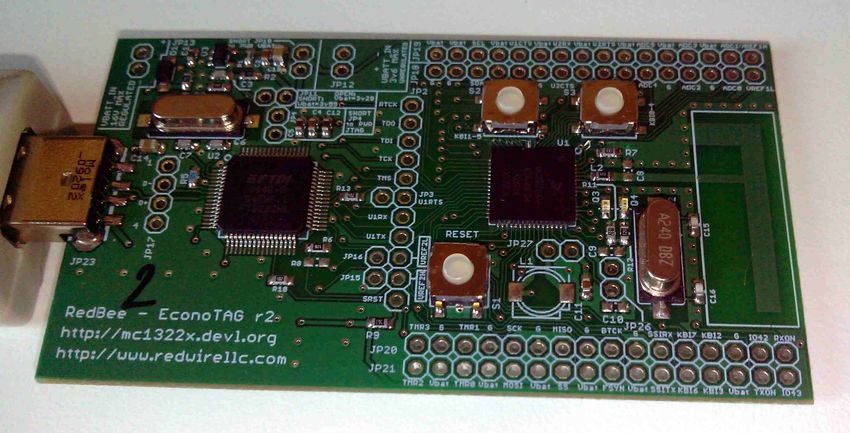
emulator to execute the code and possibly monitor or alter its           are often limited in their functionalities and do not allow the
execution. However, as we will explain in Section II, the large          user to perform complex operations, such as taint propaga-
number of custom and proprietary hardware components make                tion or symbolic execution. In fact, these advanced dynamic
the task of building an accurate emulator a daunting process. If         analysis techniques require an instruction set simulator to
we then consider that additional modules and hardware plugins            interpret the firmware of the embedded target. But for a proper
should be developed for each embedded system on the market,              emulation of the embedded system, not only the CPU, but
we can easily understand the infeasibility of this approach.             all peripheral devices need to be emulated. Without such a
                                                                         support, the emulated firmware would often hang, crash, or
    In this paper, we present a technique to fill this gap and           in the best case, show a different behavior than on the real
overcome the limitation of pure firmware emulation. Our tool,            hardware. Such deviations can be due, for example, to incorrect
named Avatar, acts as an orchestration engine between the                memory mappings, active polling on a value that should be
physical device and an external emulator. By injecting a special         changed by the hardware, or the lack of the proper hardware-
software proxy in the embedded device, Avatar can execute the            generated interrupts or DMA operations.
firmware instructions inside the emulator while channeling the
I/O operations to the physical hardware. Since it is infeasible to
perfectly emulate an entire embedded system and it is currently
impossible to perform advanced dynamic analysis by running                  To overcome these problems, researchers and engineers
code on the device itself, Avatar takes a hybrid approach.               have resolved to three classes of solutions, each with its own
It leverages the real hardware to handle I/O operations, but             limitations and drawbacks:
extracts the firmware code from the embedded device and
emulates it on an external machine.
    To summarize, in this paper we make the following con-
tributions:                                                                 •    Complete Hardware Emulation
                                                                                 Chipounov [14] and Kuznetsov et al. [37] analyze
   •    We present the design and implementation of Avatar,                      device drivers by relying on an emulated PCI bus
        a novel dynamic analysis framework that allows a user                    and network card that return symbolic values. This
        to emulate the firmware of an embedded device.                           approach has the main drawback that it requires to
                                                                                 emulate the device properly. While this is not much
   •    We discuss several techniques that can be used to                        of a problem for well understood devices, like a PCI
        optimize the performance of the system and to adapt                      network card supported by most PC emulation soft-
        Avatar to the user’s needs. We also show how com-                        ware, it can be a real challenge in embedded systems
        plex dynamic analysis applications (such as concolic                     and can be just impossible when the hardware is not
        execution) can be implemented on top of Avatar.                          documented. Unfortunately, lack of documentation is
   •    We evaluate Avatar by applying it to three different                     the rule in the embedded world, especially in complex
        security scenarios, including reverse engineering, vul-                  proprietary SoCs.
        nerability discovery, and backdoor detection. To show                    In some cases, accurate system emulators are devel-
        the flexibility of our system, each test was performed                   oped as part of the product development to allow the
        on a completely different class of devices.                              firmware development team to develop software while
                                                                                 the final hardware is still not available. However, those
                                                                                 emulators are usually unavailable outside the develop-
            II.   DYNAMIC F IRMWARE A NALYSIS                                    ment team and they are often not designed for code
    While the security analysis of firmwares of embedded                         instrumentation, making them unable to perform basic
devices is still a new and emerging field, several techniques                    security analysis like tainting or symbolic execution.
have been proposed in the past to support the debugging and
troubleshooting of embedded systems.
    Hardware debugging features (mostly built around In-                    •    Hardware Over-Approximation
Circuit Emulators [13], [35], [42] and JTAG-based hardware                       Another approach consists in using a generic, ap-
debuggers [3]) are nowadays included in many embedded                            proximated, model of the hardware. For example, by
devices to simplify the debugging procedure. However, the                        assuming interrupts can happen at any time or that
analysis remains extremely challenging and often requires ded-                   reading an IO port can return any value. This approach
icated hardware and a profound knowledge of the system under                     is easy to implement because it does not require
test. Several debugging interfaces exist, like the Background                    a deep knowledge of the real hardware, but it can
Debug Mode (BDM) [58] and the ARM CoreSight debug and                            clearly lead to false positives, (e.g., values that will
trace technology [58]. Architecture-independent standards for                    never be returned by the real system) or misbehavior
debugging embedded devices also exist, such as the IEEE                          of the emulated code (when a particular value is
NEXUS standard [4]. Most of these technologies allow the user                    required). This approach is commonly used when an-
to access, copy, and manipulate the state of the memory and                      alyzing small systems and programs that are typically
of the CPU core, to insert breakpoints, to single step through                   limited to a few hundreds lines of code, as showed
the code, and to collect instructions or data traces.                            by Schlich [49] and Davidson et al. [22]. However,
                                                                                 on larger programs and on complex peripherals this
    When available, hardware debugging interfaces can be used                    approach will invariably lead to a state explosion that
to perform certain types of dynamic analysis. However, they                      will prevent any useful analysis.

                                                                     2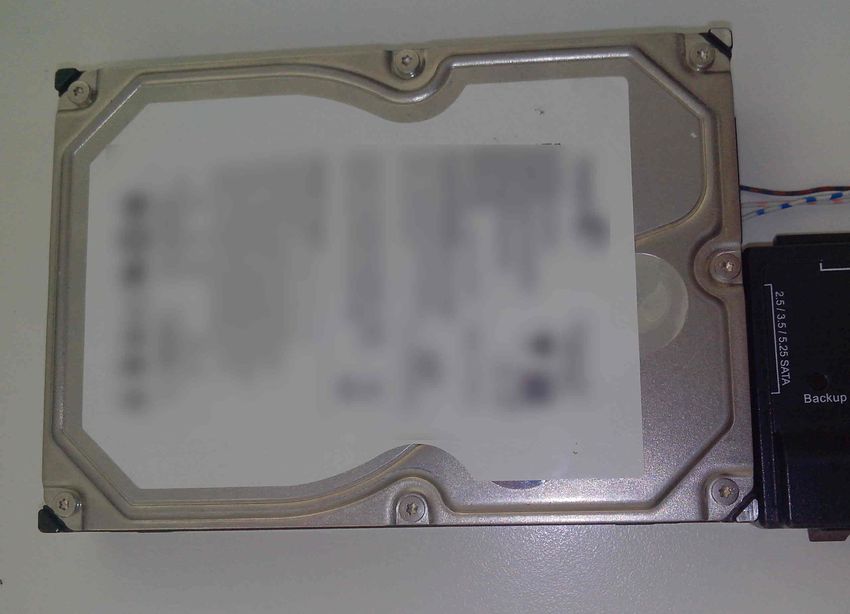
•      Firmware Adaptation                                                           S2 E leverages the intermediate binary code representation
           Another approach consists in adapting the firmware                        of Qemu called Tiny Code Generator (TCG), and dynamically
           (or in extracting limited parts of its code) in order                     translates from TCG bytecode to Low-Level Virtual Machine
           to emulate it in a generic emulator. While this is                        (LLVM) bytecode whenever symbolic execution is active [39].
           possible in some specific cases, for example with                         KLEE, the actual symbolic execution engine, is then taking
           Linux-based embedded devices, this technique does                         care of exploring the different execution paths and keeps track
           not allow for an holistic analysis and may still be                       of the path constraints for each symbolic value [10]. Evaluating
           limited by the presence of custom peripherals. More-                      possible states exhaustively, for some symbolic input, can be
           over, this approach is not possible for monolithic                        assimilated to model checking and can lead to proving some
           firmwares that cannot be easily split into independent                    property about a piece of software [38].
           parts - unfortunately a very common case in low-end
           embedded systems [20].
                                                                                         Even though S2 E uses the TCG representation of the binary
    In the next section we present our novel hybrid technique                        code to generate LLVM code, each processor architecture has
based on a combination of the actual hardware with a generic                         its own intricacies that make it necessary to write architecture
CPU emulator. Our approach allows to perform advanced                                specific extensions to make S2 E work with a new processor
dynamic analysis of embedded systems, even when very little                          architecture. Since our focus was on embedded systems and
information is available on their firmware and hardware, or                          all the systems we analyzed are ARM systems, we updated
when basic hardware debugging support is not available. This                         and improved an existing incomplete ARM port3 of S2 E, to
opens the possibility to analyze a large corpus of devices on                        suit the needs of dynamic analysis of firmware binaries.
which dynamic analysis was not possible before.
                                                                                         To control the execution of code in more detail, S2 E pro-
                               III.        AVATAR                                    vides a powerful plugin interface that allows instrumentation
                                                                                     of virtually every aspect of execution. Any emulation event
   Avatar2 is an event-based arbitration framework that or-                          (e.g., translation of a basic block, instruction translation or
chestrates the communication between an emulator and a target                        execution, memory accesses, processor exceptions) can be
physical device.                                                                     intercepted by a plugin, which then can modify the execution
   Avatar’s goal is to enable complex dynamic analysis of                            state according to its needs. This modular architecture let
embedded firmware in order to assist in a wide range of                              us perform dynamic analysis of firmware behaviour, such
security-related activities including (but not limited to) re-                       as recording and sandboxing memory accesses, performing
verse engineering, malware analysis, vulnerability discovery,                        live migration of subroutines (see Section III-C), symbolically
vulnerability assessment, backtrace acquisition and root-cause                       executing specific portion of code as well as detecting vulner-
analysis of known test cases.                                                        abilities (see Section V).

A. System Architecture                                                                    S2 E is connected through three different control interfaces
                                                                                     with Avatar: the first interface is a GDB debug connection
    The architecture of the system is summarized in Figure 1:
                                                                                     using the GDB serial protocol. Avatar is connecting to this
the firmware code is executed inside a modified emulator,
                                                                                     interface using a GDB instance controlled via the GDB/MI
running on a traditional personal computer. Any IO access is
                                                                                     protocol. This connection is used for fine-grained control over
then intercepted and forwarded to the physical device, while
                                                                                     the execution, such as putting breakpoints, single-stepping the
signals and interrupts are collected on the device and injected
                                                                                     execution, and inspecting register values. The second interface
into the emulator.
                                                                                     is Qemu’s Management Protocol (QMP) interface, a JSON-
   The internal architecture is completely event-based, allow-                       based request-response protocol. Though detailed virtual ma-
ing user-defined plugins to tap into the data stream and even                        chine control is possible through this interface, it is currently
modify the data as it flows between the emulator and the target.                     only used to dynamically change S2 E’s configuration at run
                                                                                     time. This is done by accessing S2 E through its Lua interface,
    In the simplest case Avatar requires only a backend to                           which is called from Lua code embedded in the JSON requests.
talk to the emulator and one to talk to the target system,                           The third interface is a plugin for S2 E that is triggered
but more plugins can be added to automate, customize, and                            whenever a memory access is performed. This S2 E plugin
enhance the firmware analysis. In our prototype, we developed                        then forwards this request to Avatar, which in turn handles the
a single emulator backend. This controls S2 E (or Selective                          memory access (e.g., sends it to Avatar’s plugins), or forwards
Symbolic Execution engine), which is an open-source platform                         it to the target.
for selective symbolic execution of binary code [15]. It builds
on the foundation of Qemu, a very popular open-source system
emulator [7]. Qemu supports many processor families such as                             Even though at the moment the only available emulator
i386, x86-64, Arm, Mips and many others. Apart from being                            back-end is for Qemu/S2 E, the emulator interface is generic
a processor emulator, Qemu can also mimic the behavior of                            and allows other emulators to be added easily.
many hardware devices that are typically attached to the central
processor, such as serial ports, network cards, displays, etc.
   2 The    Avatar framework          is    open-source   and   available   at         3 Our patches have been submitted to the official S2 E project and are
http://s3.eurecom.fr/tools/avatar.                                                   currently under review for merging.

                                                                                 3
Analysis script

                                Emulator                                                  Avatar                                 Target device
                          TCG
                                                                                                                    UART
                                                         Qemu          Config                             GDB/MI
                                              Qemu       config        writer                             adapter          In-memory
                                            frontend     Qemu           GDB                              BinProto             stub
        Qemu
       executer                   LLVM                   GDB          interface   Emulator      Target   adapter

                   S²E           KLEE                    S²E          QMP/Lua     backend      backend     Telnet
    VM state      hooks                                QMP/Lua        interface                           adapter   Open                 Target state
    ●  Registers                 Symbolic                                                                           OCD
                                                                                                                                         ●   Registers
                                                       RemoteMem       Memory                              GDB
    ●  CPU state                  states                              forwarder                           adapter
                                                                                                                                         ●   CPU state
                                                         plugin                        Analysis
    ●  Memory                                                                                                       JTAG
                                                                                                                                         ●   Memory
                                                                                       Plugins

                                                                  Fig. 1: Overview of Avatar.

   On the target side, we developed three back-ends:                                       Even though this technique is in theory capable of perform-
                                                                                       ing dynamic analysis on unknown firmwares, it has several
   •     A back-end that uses the GDB serial protocol to                               practical limitations. First of all, the execution is very slow.
         communicate with GDB servers (e.g., a debugger stub                           Using a serial debug channel at 38400 Baud, the system can
         installed on the device or a JTAG GDB server).                                perform around five memory accesses per second, reducing
   •     A back-end to support low-level access to the                                 the overall emulation speed to the order of tens instructions
         OpenOCD’s JTAG debugging interface via a telnet-                              per second. Even worse, many physical devices have time-
         like protocol.                                                                critical sections that need to be executed in a short amount
                                                                                       of time or the execution would fail, making the system crash.
   •     A back-end that talks to a custom Avatar debugger                             For example, DRAM initialization, timer accuracy and stability
         proxy over an optimized binary protocol (which is                             checks belong to this category.
         more efficient than the verbose protocol used by
         GDB). This proxy can be installed in an embedded                                 Moreover, tight hardware-polling loops (e.g., UART read-
         device that lacks debugging hardware support (e.g.,                           with-timeout) become painfully slow in full separation mode.
         no hardware breakpoints) or on which such support                             Finally, regular interrupts (e.g., the clock tick) quickly overload
         was permanently deactivated.                                                  the limited bandwidth between the target system and the
                                                                                       emulator.
    The proper target back-end has to be selected by the user
based on the characteristics and the debugging functionalities                             These limitations make the full separation approach viable
provided by the hardware of the embedded device. For exam-                             only to analyze a limited number of instructions or when the
ple, in our experiments we used the OpenOCD back-end to                                user wants to focus only on particular events in more complex
connect to the JTAG debugger of the mobile phone and of the                            firmwares. For this reason, Avatar supports arbitrary context-
Econotag, while we used the Avatar proxy to perform dynamic                            switching between the emulator and the real device.
analysis of the hard drive firmware.
                                                                                       C. Context Switching
    To analyze a firmware, an access to the firmware’s device
is needed. This can be either a debugging link (e.g., JTAG), a                             While it is possible to run the firmware code from be-
way to load software or a code injection vulnerability. In cases                       ginning to end inside the emulator, sometimes it is more
where a debugging stub, for example the GDB stub, is used,                             efficient to let the firmware run natively on the target device
an additional communication channel, e.g., an UART, is also                            for a certain amount of time. This allows, for example, to
needed.                                                                                execute the code without any delay until a particular point
                                                                                       of interest is reached, skipping through initialization routines
B. Full-Separation Mode                                                                that may involve intensive I/O operations or network protocol
                                                                                       communications that may need to be performed in real-time.
    When Avatar is first started on a previously unknown                               In such cases, it is important to let the target device run the
firmware, it can be run in what we call “full-separation mode”.                        firmware, while still monitoring the execution for regions of
In this configuration, the entire firmware code is executed in                         code relevant to the current analysis. The ability of Avatar to
the emulator and the entire (memory) state is kept in the                              perform arbitrary context switches gives the user the ability
physical device. In other words, for each instruction that is                          to quickly focus her analysis on a particular section of the
executed by the emulator, the accessed memory addresses are                            code, without the drawbacks of emulating the entire firmware
fetched from and written to the real memory of the embedded                            execution.
system. At the same time, interrupts are intercepted by the
debugging stub in the physical system and forwarded back to                               Starting the analysis at specific points of interest: In this
the emulator. Code and memory are perfectly separated, and                             case the firmware starts the execution on the physical device
Avatar is responsible to link them together.                                           and runs natively until a certain pre-defined event occurs (e.g.,

                                                                                   4
Avatar

                                             Emulator               Emulator             Target               Proxy
                                                                    Backend             Backend
                                                    read/write memory
                                                                                            read/write memory
                                     ...
                                 mov r2, r0
                                 mov r3, r1             value                                      value
                                 add r3, r3, #1
                                 add r2, ip, r2
                                                                                                  interrupt
                                 ldr  r2, [r2, #0       interrupt
                                 cmp r2, r3
                                     ...

                                 Firmware
                                                                                                                      Embedded
                                                                Plugins                                                device

                            Fig. 2: Avatar architecture and message exchange in full separation mode.

a breakpoint is reached or an exception is raised). At this                                       actual execution speed in the emulator. The equivalent
point, the execution on the physical device is frozen and the                                     number of instructions between two interrupts should
state (e.g., the content of the CPU registers) is transferred to                                  be executed in the emulator as it would on the target
the emulator, where the execution is resumed. An example                                          running in native mode. In our current implementation,
of this transition is described in Section VI-C, in which the                                     an Avatar plugin detects periodic interrupts and report
firmware of a mobile phone baseband chip is executed until                                        their information to the user, who can decide how to
the phone receives an SMS, and then transferred by Avatar in                                      handle each class. For example, the user can instruct
the emulator to perform further analysis.                                                         Avatar to drop the clock interrupts on the device and
    Returning execution to the hardware: After the required                                       just generate them (at the right frequency) on the
analysis is performed on the emulator, the execution of the                                       emulator, thus saving bandwidth and increasing the
firmware can be transferred back to continue on the real device.                                  analysis performance.
In this case, any state kept on the virtual environment is copied                           •     Hardware interrupts that notify of an external event.
back to the physical device. Depending on the user’s needs, it                                    For example the receive interrupt of an UART indi-
is possible to switch again to the emulator at a later stage. This                                cates that new data on the UART buffer is available.
approach is used in Section VI-A, in which the firmware of                                        The emulation strategy for those interrupts depends
a hard disk is started inside the emulator and later transferred                                  on the frequency of the external event. For events
back to the disk.                                                                                 that require previous activity (e.g., a request-response
                                                                                                  protocol where the response triggers an interrupt) a
D. Interrupts Handling                                                                            simple forwarding strategy can be used. For unrelated
    Software interrupts do not present a problem for our                                          events that happen very frequently (i.e., where the
framework, since they are issued by the firmware code and                                         handler in the emulator cannot process the interrupt
the emulator takes care of calling the corresponding interrupt                                    in time before the next interrupt is generated) the user
handler directly. However, as shown in Figure 2, hardware                                         can choose if she wants to suppress some of them or
interrupts need to be trapped in the real hardware and for-                                       to handle the interrupt by migrating the handler itself
warded back to the emulator. In this case, the stub in the                                        back to the embedded device (see Section IV)
embedded system receive the interrupt and forwards them to
Avatar’s target back-end. Finally, using the emulator back-                                 While the straightforward interrupt forwarding does not
end, Avatar suspends the firmware execution and injects the                             present any problem for Avatar, when the user needs to tune
interrupt in the emulator.                                                              the framework to handle specific cases (e.g., regular or very
                                                                                        frequent interrupts) the stub needs to be able to distinguish
   Based on the circumstances in which the interrupt is                                 between them. Unfortunately, this task is often difficult.
generated, we distinguish three different cases:
                                                                                            Interrupts de-multiplexing: In a traditional, x86-based,
   •    Hardware interrupts that indicate the completion of a
                                                                                        personal computer there is a standard interrupt controller
        task. These interrupts are issued by a device to indicate
                                                                                        that handles interrupt lines from each device and peripheral.
        that a particular task initiated by the code has been
                                                                                        However, on ARM-based systems there are only two interrupt
        completed. For example, the UART send interrupt
                                                                                        lines directly attached and visible to the processor: IRQ and
        indicates that the send buffer has been successfully
                                                                                        FIQ. Because of this embedded devices often use an interrupt
        transmitted. This type of interrupts is easy to handle
                                                                                        multiplexer (or controller) peripheral that is normally included
        because it just needs to be forwarded from the target
                                                                                        as an hardware block (“IP core”) on the same chip. The disad-
        to the emulator.
                                                                                        vantage for a user is that at the point where the interrupt vector
   •    Periodical hardware interrupts, e.g., the timer notifica-                       routine is called, all interrupt signals are still multiplexed
        tions. These interrupts can be forwarded to the emula-                          together. The driver for a particular interrupt multiplexer will
        tor but their frequency needs to be scaled down to the                          then query the underlying hardware multiplexer to identify

                                                                                  5
which line was actually triggered and then forward the event Access type Read Write Cumulative
to the handler registered for this interrupt. Code 61,632 - 61,632
Stack & data 646 1,795 64,073
Now, suppose the user wants to instruct Avatar to suppress
a particular interrupt on the device (e.g., the timer), while I/O 3,614 2,097 69,784
still letting through the ones associated to important hardware
events that need to be forwarded to the emulator. In this case, TABLE I: Number of memory accesses grouped by memory
the proxy needs to take a decision based on the interrupt regions for the HDD bootloader.
type which is unfortunately not available when the interrupt
is received.
In this case, the user needs to disassemble the interrupt experiments an average of five instructions per second were
vector handler, and follow the code flow until the code of the executed using the GDB stub through a 38400 baud UART
interrupt controller driver branches into different functions that connection.
handle each device’s interrupt. At this point, she can specify The reason why memory operations need to be forwarded
these program points to Avatar that can terminate the interrupt in the first place is that different embedded systems typically
vector’s execution and signal to the proxy that an interrupt have different mappings of addresses to memory regions. Some
has been identified. The proxy then sends the interrupt event of these memory regions are used for code (in RAM, ROM or
to Avatar. Now the target backend of Avatar can suppress Flash memories), stack and heap, but one or several regions
a particular interrupt by instructing the proxy to drop the will be used to access registers of physical peripherals through
corresponding event. Memory-Mapped I/O (MMIO). In this case, any I/O operation
on those areas is equivalent to sending and receiving data from
E. Replaying Hardware Interaction an external device. If these address ranges are known, the user
It is quite common for a firmware to have several sec- can configure Avatar to keep every read-only memory (such
tions that require only a limited interaction with dedicated as the code segment) on the emulator. Read-write memory
peripherals. In this case, the I/O operations can be recorded by regions can also be marked as local to the emulator, but
Avatar and transparently replayed during the next execution of modifications to them need to be tracked by Avatar to be able
the firmware. to transfer those changes to the target at a later context switch.
In fact, when an emulator-to-target context switch happens, all
This allows the user to test the firmware without the modified local memory (“dirty memory”) needs to be copied
bottleneck of the interaction with the physical device. In this to the target before the execution can resume on the embedded
mode of operation the firmware itself or parts of it (e.g., device.
applications) can be significantly changed, as long as the
order of I/O interactions is not modified. This is a major However, in most of the cases the user does not know a
advantage over resuming a snapshot, which requires the full priori which area of memory is assigned to I/O. For this reason,
code path until the snapshot point to be executed to ensure Avatar includes an automated memory optimization plugin
that peripherals are in the state the snapshot expects them to that monitors the execution in the emulator and automatically
be in. identifies the regions that do not require access to the hardware.
This includes the stack (easily identified by the execution
of stack-related operations) and the code segment (identified
IV. OVERCOMING THE LIMITS OF F ULL S EPARATION
by the values of the program counter). For any other area,
The techniques introduced in the previous section are Avatar starts by forwarding the read and write operations to
enough to perform dynamic analysis on small portions of a the target device. It then keeps track of the values that are
firmware code. However, sometimes the internals and behavior returned and applies a simple heuristic: if the target always
of the system are completely unknown. In those cases, it can returns the value that was previously written by the firmware
be very useful to perform the analysis on larger portions of code (or if it always returns the same value and it is never
the binary, or, in the extreme case, on the entire firmware. written by the firmware) then it is probably not assigned to a
memory mapped device.
In this case, the performance of Avatar running in full
separation mode poses a great limitation to the usability of Table I shows an example of how many memory accesses
our framework. To overcome this problem, in this section we could be saved by keeping memory regions local to the emu-
present two techniques designed to overcome the limits of full lator: transferring the code region to the emulator would save
separation by moving part of the code to the physical device 61,632 memory accesses (88%). Moving the stack and data
and part of the memory to the emulator. This results in a region in local memory as well would save 64,073 memory
considerable reduction in the number of messages forwarded accesses (92%). Only the I/O accesses cannot be moved to the
by Avatar between the emulator and the target, and therefore emulator’s memory.
a large improvement in the overall performance of the analysis
system. B. Selective Code Migration
So far, we assumed that the firmware is either running
A. Memory Optimization
entirely inside the emulator, or entirely on the embedded
Forwarding all memory accesses from the emulator to the device. The user can instruct Avatar to switch from one mode
target over a limited-bandwidth channel like UART or JTAG to the other when certain conditions are met, but such context
incurs in a heavy performance penalty. For example, in our switches are time consuming.
6In this section we present a fine-grained solution that V. E XTENDING AVATAR
allows the user to migrate only parts of the firmware code
back to the target. This technique allows to overcome two Avatar’s architecture is designed to be modular and its base
limitations of the full-separation mode. Some code blocks framework can be easily customized to fit different analysis
need to be executed atomically, for example when there are scenarios. We chose S2 E as default Avatar emulator back-end
timing constraints on the code. We will describe such a case because it offers many hooks and manipulation facilities on
in Section VI-A, where we encountered a function that read top of QEMU which facilitates the development of custom
the timer twice and waited for the difference to be below dynamic analysis plugins.
a certain limit. Another example is when delays introduced In this section, we show an example of an Avatar extension:
by Avatar would lead the target in an invalid state. We we built upon its core capabilities to support selective symbolic
encountered such a case during the DRAM initialization of execution. For this we add several features and plugins to
the HDD, as shown in Section VI-A). the ARM port of S2 E. Moreover, we believe the symbolic
execution engine provides a super-set of the capabilities needed
The second limitation addressed by selective code migra- to implement taint analysis, even though a targeted plugin
tion is related to the analysis performance. In fact, certain could be needed to perform concrete data tracking and taint
functions (e.g., polling loops and interrupt handlers) can be analysis in a more lightweight way.
executed significantly faster when run natively on the target. In the rest of this section we describe the technique
Avatar employs to fully exploit the symbolic engine of S2 E and
In the current Avatar prototype, code migration is sup- perform selective symbolic execution on unmodified portions
ported at a function level. In this case, the code can be copied of firmware blobs. Moreover, we show how we use our
to its location in the target’s memory without modification. Its extended version of S2 E in Avatar to dynamically detect
exit points are then replaced by breakpoints, and the virtual potential control flow corruption vulnerabilities by injecting
machine register state is transferred from the emulator to the and tracking symbolic inputs.
target. The execution is resumed on the target until one of
the exit breakpoints is triggered, and at that point the state is A. Injecting Symbolic Values Into the Firmware’s Execution
transferred back to the emulator. This transition is much faster Flow
than a complete context switch, since Avatar only needs to In the field of program testing, symbolic execution is
transfer few bytes and not the entire content of the memory. a technique employed to improve code coverage by using
symbols as input data (instead of concrete values) and keeping
Even though this simple technique is enough to circumvent track of constraints upon their manipulation or comparison
critical code regions in several real world scenarios, it neglects (c.f. [51]). The result of symbolic evaluation is an execution
some difficulties that may affect code migration. First, the code tree, where each path is a possible execution state that can
may read or write arbitrary memory locations associated, for be reached by satisfying the constraints associated to each
example, with global variables. Avatar keeps track of those symbolic value.
locations, copy their content over to the target before the S2 E further develops this concept by performing selective
execution, and copy written locations back after the execution. symbolic execution, i.e., by restricting the area of symbolic
Second, the code may use instructions that change the control execution to specific code portions and treating only specific
flow in unforeseen ways, like software interrupts, processor input data as symbolic [15]. This greatly helps to speedup
mode changes, and indirect jumps. the analysis process (as symbolic execution of code results in
significant slowdowns) and to drive the exhaustive symbolic
Our framework prototype addresses these issues by per- exploration into selected regions of code. This process requires
forming an on-the-fly static analysis. When a function is Avatar to control the introduction of symbolic values into S2 E,
selected for code migration, Avatar disassembles its code in place of existing real values.
using the llvm-mc disassembler. The result is then analyzed The remote memory interface between S2 E and Avatar, as
to identify critical instructions. In this way, we can predict introduced in Section III, ensures that only concrete values
memory accesses outside the function stack, compute the reach the real hardware through Avatar. Symbolic values re-
control flow of the code and verify that no instructions can main therefore confined to the emulation domain. If a symbolic
escape from this computed control flow. As we describe in value is about to be written to the target hardware, the remote
Section VI, this technique is sufficient to migrate small, atomic memory interface in S2 E performs a forced concretization
functions. However, we plan to extend the capabilities of before forwarding it. Such symbolic value concretizations
the code migration system to apply transformations to the happen in two stages. First, all the constraints associated with
code. On the one hand, those transformations will allow to the value are retrieved and evaluated by the integrated SAT-
ensure that instructions which are not statically verifiable (e.g., solver. Second, a single example value which satisfies all the
indirect jumps) will not escape the proxy’s sandbox. On the constraints is forwarded to Avatar to be written on the target.
other hand, it can be used to track memory accesses, so
that only the modified (“dirty”) part of the state needs to be On the one hand, making Avatar handle only concrete
copied back from the target to the emulator when a context values leaves it as a controller with a simpler external view
switch happens. Those critical instructions will be replaced of S2 E and avoids having to keep track of execution paths
with instrumentation code that calls functions in proxy, which and paths conditions twice. On the other hand, this choice
will handle them in a safe way. brings the minor drawback that Avatar has no direct control
7on symbolic execution, which is instead under the control of back into S2 E. Once symbolic values are introduced in the ex-
S2 E/KLEE. ecution flow, S2 E tracks them and propagates the constraints.
We designed a simple plugin for detecting arbitrary exe- Symbolic analysis via Lua annotations is intended to be
cution conditions. It relies on the following heuristics as signs used as a tool for late stage analysis, typically to ease the
of possibly exploitable conditions: discovery of flaws in logic-handling code, with hand-made
Lua analysis code directly provided by the user. It can be
• a symbolic address being used as the target of a load employed in both full separation mode and context switching,
or store instruction, as soon as code execution can be safely moved to the emulator
• a symbolic address being leaked into the program (e.g., outside of raw I/O setup routines, sensors polling). This
counter (e.g., as the target of a branch), normally happens after an initial analysis has been done with
Avatar to detect interesting code and memory mappings.
• a symbolic address being moved into the stack pointer
register. A similar non-intrusive approach has already been used
in a x86-specific context, to test and reverse-engineer the
In order to selectively mark some input data as symbolic, Windows driver of a network card [14]. To the best of our
two different approaches can be taken: either modify the knowledge, however, this technique has never been applied
binary code (or the source code, if available) to inject cus- before to embedded devices. In the context of firmware se-
tom instructions into the firmware, or dynamically instrument curity testing, annotations can be used in a broad range of
the emulation environment to specify the scope of symbolic scenarios. In Section VI, we present how we applied this
analysis at run-time. The first approach requires some high- technique to different technologies and devices, to perform
level knowledge of the firmware under analysis (e.g., access dynamic analysis of widespread embedded systems such as
to source code) and the guarantee that injecting custom in- hard drives, GSM phones, and wireless sensors.
structions into firmware code would not affect its behavior.
Examples include the Android Dalvik VM, whose source code
B. Symbolically Detecting Arbitrary Execution Conditions
can be modified and rebuilt to enable transparent analysis of
pristine Java bytecode with S2 E [36]. When dealing with modern operating systems, an incorrect
Since we did not want to limit Avatar to this scenario, behavior in a user-space program is often detected because
we decided to follow the second approach, which requires to an invalid operation is performed by the program itself. Such
extend the symbolic engine and the Avatar framework. Such operations can be, for example, an unauthorized access to a
extensions should know when symbolic execution has to be memory page, or the access to a page that is not mapped in
triggered and where symbolic values should be injected. memory. In those cases, the kernel would catch the wrong
behavior and terminate the program, optionally triggering some
This choice leads to two major advantages: analysis tools to register the event and collect further informa-
tion that can later be used to identify and debug the problem.
• Firmware Integrity Moreover, thanks to the wide range of exploit mitigation
The binary code is emulated as-is, without injecting techniques in place today (DEP, canaries, sandboxing and
custom opcodes or performing recompilation. This more), the system is often able to detect the most common
guarantees that the emulated code adheres to the invalid operations performed by userspace processes.
original firmware behavior (i.e., no side-effects or bugs
are introduced by the intermediate toolchain) When dealing with embedded systems, however, detecting
misbehavior in firmware code can be more difficult. The
• Programmatic Annotation observable symptoms are not always directly pinpointed to
The control and data flow of firmware emulation can some specific portion of code. For example, many firmware
be manipulated and annotated with symbolic meta- are designed for devices without a Memory Management Unit
data in an imperative way. A high-level language (Lua) (MMU) or Memory Protection Unit (MPU) or are just not
is used to dynamically script and interact with current using them. In such a context, incorrect memory accesses
emulation environment, as well as introducing and often result in subtle data corruption which sometimes leads
tracing symbolic meta-data. to erratic behaviors and rare software faults, such as random
events triggering, UI glitches, system lock or slowdown [18].
For this we first completed the port of S2 E to the ARM For this reason, it is common for embedded devices to have a
architecture in order to have complete symbolic execution hardware watchdog in charge of resetting the device execution
capabilities, then we ported the Annotation plugin to the ARM in case of any erratic behavior, e.g., a missed reply to timed
architecture. The Annotation plugin lets the user specify a watchdog probes.
trigger event (e.g., a call/return to a specific subroutine or the
execution of code at a specific address), and a Lua function For these reasons, detecting incorrect execution inside
to be executed upon the event. A simple API is then provided the emulation is easier when some OS support can be used
to allow for manipulation of the S2 E emulation environment for co-operation (e.g., a Blue Screen Of Death interceptor
directly from the Lua code. Avatar provides direct channels to for Windows kernel bugs is implemented in S2 E). On the
dynamically control the emulation flow via QMP command other hand, catching such conditions during the emulation
messages. These channels can also be used to inject Lua of an embedded device firmware is bound to many system-
code at run-time, in order to dynamically generate annotations specific constraints, and require additional knowledge about
which depend on the current emulation flow and inject them the internal details of the firmware under analysis.
8However, Avatar does not rely on the knowledge of any or cache invalidation instructions might be taken as hint that
specific operating system or the fact that a MMU is used. some memory region has been changed by DMA.
Instead, it aims at detecting a larger range of potentially
Second, if code is executed on the device, Avatar is
critical situations which may result in control flow hijacking
currently incapable of detecting which regions have been
of firmware code, by using a technique similar to the one
modified. In consequence, whenever memory accesses of the
employed by AEG [6].
code run on the device are not predictable by static analysis,
All three conditions may lead to false positives, when the we need to transfer the whole memory of the device back to
variable is symbolic but strongly constrained. Therefore, once the emulator on a device-to-emulator state switch. We plan to
such a condition is detected the constraints imposed on the address this issue by using checksumming to detect memory
symbolic variables must be analyzed: the less constrained is region changes and minimize transferred data by identifying
the result, the higher is the chance of control flow corruption. smallest changed regions through binary search.
Intuitively, if the constraints are very loose (e.g., a symbolic
Third, when Avatar performs symbolic execution, symbolic
program counter without an upper bound) then the attacker
values are confined to the emulator. In case that a symbolic
may obtain enough control on the code to easily exploit the
value needs to be concretized and sent to the device, a
behavior. In addition to this, tight constraints are sometimes
strategy is needed to keep track of the different states and
encountered in legitimate cases (e.g., access to an array with
I/O interactions that were required to put the device in that
a symbolic but constrained index such as with a jump table),
state. This can be performed reliably by restarting the device
and are not relevant for the purpose of security analysis.
and replaying I/O accesses. While this solution ensures full
When an interesting execution path is detected by the above consistency, it is rather slow.
heuristic, the state associated to the faulty operation is recorded
and the emulation is terminated. At this point a test-case with VI. E VALUATION
an example input to reach this state is generated, and the
In this section we present three case studies to demonstrate
constraints associated with each symbolic value are stored to
the capabilities of the Avatar framework on three different real
be checked for false positives (i.e., values too strictly bound).
world embedded systems. These three examples by no means
Automatically telling normal constraints apart from those cover all the possible scenarios in which Avatar can be applied.
that are a sign of a vulnerability is a complex task. In fact Our goal was to realize a flexible framework that a user can
it would require knowledge of the program semantics that use to perform a wide range of dynamic analysis on known
were lost during compilation (e.g., array boundaries). Such and unknown firmware images.
knowledge could be extracted from the source code if it
As many other security tools (such as a disassembler or an
is available, or might be extrapolated from binary artifacts
emulator), Avatar requires to be configured and tuned for each
in the executable itself or the build environment. In such
situation. In this section, we try to emphasize this process, in
cases, specific constraints could be fed into Avatar by writing
order to show all the steps a user would follow to successfully
appropriate plugins to parse them, for example by scanning
perform the analysis and reach her goal. In particular, we will
debug symbols in a non-stripped firmware (e.g., a DWARF
discuss how different Avatar configurations and optimization
parser for ELF firmwares) or by reading other similar symbols
techniques affected the performance of the analysis and the
information.
success of the emulation.
Finally, Avatar could highly benefit from a tighter coupling Not all the devices we tested were equipped with a debug
with a dynamic data excavator, helping to reverse engineer interface, and the amount of available documentation varied
firmware data structures [17]. In particular, the heuristic considerably between them. In each case, human intervention
proposed in Howard [52] for recovering data structures by was required to determine appropriate points where to hook
observing access patterns under several execution cycles could execution and portions of code to be analyzed, incrementally
be easily imported into the Avatar framework. Both tools building the knowledge-base on each firmware in an iterative
perform binary instrumentation on top of QEMU dynamic way. A summary of the main characteristics of each device
translation and make use of a symbolic engine to expand the and of the goal of our analysis is shown in Table II.
analyzed code coverage area.
A. Analysis of the Mask ROM Bootloader of a Hard Disk
C. Limitations of state synchronization Drive
Our current implementation of the synchronization between Our first case study is the analysis of a masked ROM
device state and emulator state works well in general, but is bootloader and the first part of the secondary bootloader of
difficult in some special cases. a hard disk drive.
First it is difficult to handle DMA memory accesses in our The hard disk we used in our experiment is a commercial-
current model. For example, the firmware can send a memory off-the-shelf SATA drive from a major hard disk manufacturer.
address to a peripheral and request data to be written there. It contains an ARM 966 processor (that implements the
The peripheral will then notify the firmware of the request’s ARMv5 instruction set), an on-chip ROM memory which con-
completion using an interrupt. Since Avatar does not know tains the masked ROM bootloader and some library functions,
about this protocol between firmware and peripheral, it will an external serial flash that is connected over the SPI bus
not know which memory regions have been changed. On newer to the processor, a dynamic memory (SDRAM) controller, a
ARM architectures with caches, data synchronization barrier serial port accessible through the master/slave jumpers, and
9Target device Manufacturer and model System-on-Chip CPU Debug access Analyzed code Scope of analysis
Experiment VI-A Hard disk undisclosed unknown ARM966 Serial port Bootloader Backdoor detection
Experiment VI-B ZigBee sensor Redwire Econotag MC13224 ARM7TDMI JTAG ZigBee stack Vulnerability discovery
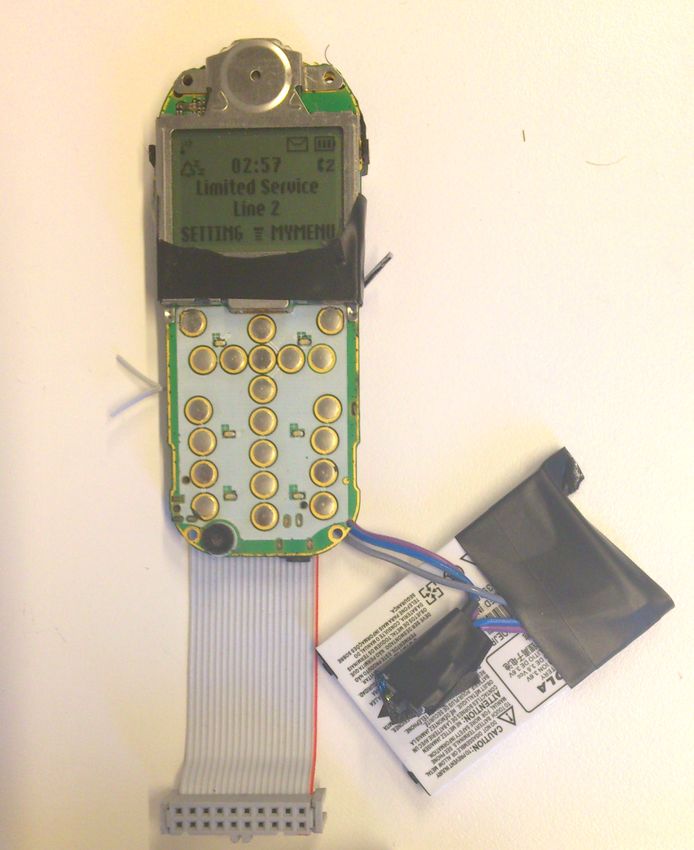
Experiment VI-C GSM phone Motorola C118 TI Calypso ARM7TDMI JTAG SMS decoding Reverse engineering
TABLE II: Comparison of experiments described in Section VI.
Address Space
Interrupt vect. 0x00000000
0x00000040
Code SRAM
0x00008000
0x00100000
ROM
0x00120000
0x00200000
DRAM
0x00400000
0x04000000
Data SRAM
0x04004000
Fig. 3: The disk drive used for experiments. The disk is
connected to a SATA (Data+Power) to USB interface (black 0x40000000
box on the right) and its serial port is connected to a TTL- Memory Mapped IO
serial to USB converter (not shown) via the 3 wires that can 0x50000000
be seen on the right.
0xFFFFFFFF
Fig. 4: Hard drive memory layout.
some other custom hardware that is necessary for the drive’s
operation. The drive is equipped with a JTAG connection,
but unfortunately the debugging features were disabled in our without even reaching the first bootloader menu, we aborted
device. The hard drive’s memory layout is summarized in the experiment.
Figure 4.
In the second experiment we kept the same setting, but we
The stage-0 bootloader executed from mask ROM is nor- used the memory optimization plugin to automatically detect
mally used to load the next bootloader stage from a SPI- the code and the stack memory regions and mark them as
attached flash memory. However, a debug mode is known to local to the emulator. This change was enough to reach the
be reachable over the serial port, with a handful of commands bootloader menu after approximately eight hours of emulation.
available for flashing purposes. Our first goal was to inject Though considerably faster than in the first experiment, the
the Avatar stub through this channel to take over the booting overhead was still unacceptable for this kind of analysis.
process, and later use our framework for deeper analysis of
possible hidden features (e.g., backdoors reachable via the Since the bottleneck of the process was the multiple read
UART). operations performed by the firmware to load the second stage,
we configured Avatar to replay the hardware interaction from
The first experiment we performed consisted of loading the disk, without forwarding the request to the real hardware.
Avatar stub on the drive controller and run the bootloader’s In particular, we used the trace of the communication with
firmware in full separation mode. This mimics what a user the flash memory from the second experiment to extract the
with no previous knowledge of the system would do in the content of the flash memory, and dump it into a file. Once the
beginning. In full separation mode, all memory accesses were read operations were performed locally in the emulator, the
forwarded through the Avatar binary protocol over the serial bootloader menu was reached in less than four minutes.
port connection to the stub and executed on the hard drive,
while the code was interpreted by S2 E. Because of the limited At this point, we reached an acceptable working configu-
capacity of the serial connection, and the very intensive I/O ration. In the next experiment, we show how Avatar can be
performed at the beginning of the loader (to read the next used in conjunction with the symbolic execution of S2 E to
stage from the flash chip), only few instructions per second automatically analyze the communication protocol of the hard
were emulated by the system. After 24 hours of execution drive’s bootloader and detect any hidden backdoor in it.
10DS Use a minimal version of the Motorola S-Record Address Space
binary data format to transmit data to the device
ROM interrupt vect. 0x00000000
AP Set the value of the address pointer from the parameter
ROM
0x00000020
passed as hexadecimal number. The address pointer
provides the address for the read, write and execute Libraries in ROM
commands.
0x00400000
WT Write a byte value at the address pointer. The address User interrupt vect.
pointer is incremented by this operation. The reply of 0x00400020
RAM
this command depends on the current terminal echo User program
state.
RD Read a byte from the memory pointed to by the address 0x80000000
pointer. The address pointer is incremented by this Unused
operation. The reply of this command depends on the
current terminal echo state. 0x80003000
IO
Memory mapped IO
GO Execute the code pointed to by the address pointer. 0x80003000
The code is called as a function with no parameters, Unused
to execute Thumb code one needs to specify the code’s
0xFFFFFFFF
address + 1.
Fig. 5: Econotag memory layout (respective scales not re-
TE Switch the terminal echo state. The terminal echo state spected).
controls the verbosity of the read and write commands.
BR Set the serial port baud rate. The parameter is the
value that will be written in the baud rate register,
for example ”A2” will set a baudrate of 38400.
can be separated by any character from the command, not only
BT Resume execution with the firmware loaded from flash. spaces. It is also possible to enter arbitrarily long numbers as
WW Erase a word (4 bytes) at the address pointer and arguments, where only the last 8 digits are actually taken into
increment address pointer. account by the firmware code.
? Print the help menu showing these commands.
After the analysis of the first stage was completed, we tried
TABLE III: Mask ROM bootloader commands of the hard to move to the emulation of the second stage bootloader. At
drive. In the left column you can see the output of the help one point, in what turned out to be the initialization of the
menu that is printed by the bootloader. In the right column DRAM, the execution got stuck: the proxy on the hard drive
a description obtained by reverse engineering with symbolic would not respond any more, and the whole device seemed to
execution is given. have crashed. Our guess was that the initialization writes the
DRAM timings and needs to be performed atomically. Since
we already knew the exact line of the crash from the execution
trace, it was easy to locate the responsible code, isolate the
We configured Avatar to execute the hard drive’s boot- corresponding function, and instruct Avatar to push its code
loader until the menu was loaded, and then replace all data back to be executed natively on the hard drive.
read from the serial port register by symbolic values. As a
result, S2 E started exploring all possible code paths related to In a similar manner, we had to mark few other functions
the user input. This way, we were able to discover all possible to be migrated to the real hardware. One example is the timer
input commands, either legitimate or hidden (which may be routine, which was reading the timer value twice and then
considered backdoors), that could be used to execute arbitrary checked that the difference was below a certain threshold (most
code by using S2 E to track when symbolic values were used as probably to ensure that the timer read had not been subject
address and value of a memory write, and when the program to jitter). Using this technique, in few iterations we managed
counter would become symbolic. With similar methodologies, to arrive at the final Avatar configuration that allowed us to
a user could use symbolic execution to automatically discover emulate the first and second stages up to the point in which
backdoors or undocumented commands in input parsers and the disk would start loading the actual operating system from
communication protocols. the disk’s platters.
In order to conduct a larger verification of the firmware
input handler, we were also able to recover all the accepted B. Finding Vulnerabilities Into a Commercial Zigbee Device
commands and verify their semantics. Since the menu offered
The Econotag, shown in Figure 6, is an all-in-one device for
a simple online help to list all the available commands, we
experimenting with low power wireless protocols based on the
could demonstrate that Avatar was indeed able to automatically
IEEE 802.15.4 standard [32], such as Zigbee or 6lowpan [43].
detect each and all of them (the complete list is reported
It is built around the MC13224v System on a Chip from
in Table III). In this particular device, we verified that no
Freescale. The MC13224v [47] is built upon an ARM7TDMI
hidden commands are interpreted by the firmware and that
microcontroller, includes several memories, peripherals and
a subset of the commands can be used to make arbitrary
has an integrated IEEE 802.15.4 compatible radio transceiver.
memory modifications or execute code on the controller, as
As it can be seen in Figure 5, the device includes 96KB of
documented.
RAM memory, 80 KB of ROM and a serial Flash for storing
However, we found that the actual protocol (as extracted by data. The ROM memory contains drivers for several peripher-
symbolic analysis) is much looser than what is specified in the als as well as one to control the radio, known as MACA (MAC
help menu. For example the argument of the ’AP’ command Accelerator), which allows to use the dedicated hardware logic
11You can also read


