Io 4K/XT - Installation and Operation Manual - Capture, Display, Convert - AJA Video Systems
←
→
Page content transcription
If your browser does not render page correctly, please read the page content below
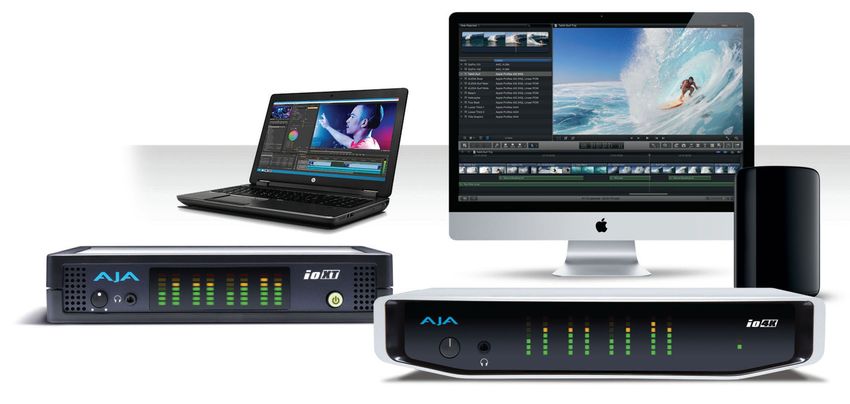
                                  Io 4K/XT
                              Capture, Display, Convert

            Installation and Operation Manual

Version 15.5
Published November 12, 2019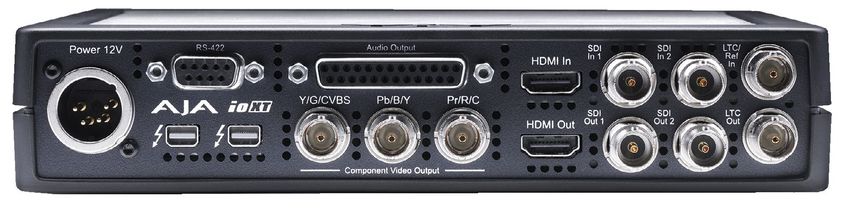
    Notices
                   Trademarks
                       AJA® and Because it matters.® are registered trademarks of AJA Video Systems, Inc.
                       for use with most AJA products. AJA™ is a trademark of AJA Video Systems, Inc. for
                       use with recorder, router, software and camera products. Because it matters.™ is a
                       trademark of AJA Video Systems, Inc. for use with camera products.
                       CION®, Corvid Ultra®, lo®, Ki Pro®, KONA®, KUMO®, ROI® and T-Tap® are registered
                       trademarks of AJA Video Systems, Inc.
                       AJA Control Room™, KiStor™, Science of the Beautiful™, TruScale™, TruZoom™,
                       V2Analog™ and V2Digital™ are trademarks of AJA Video Systems, Inc.
                       All other trademarks are the property of their respective owners.

                   Copyright
                       Copyright © 2019 AJA Video Systems, Inc. All rights reserved. All information in
                       this manual is subject to change without notice. No part of the document may be
                       reproduced or transmitted in any form, or by any means, electronic or mechanical,
                       including photocopying or recording, without the express written permission of AJA
                       Video Systems, Inc.

                   Contacting AJA Support
                       When calling for support, have all information at hand prior to calling. To contact AJA
                       for sales or support, use any of the following methods:

                         Telephone          +1.530.271.3190
                         FAX                +1.530.271.3140
                         Web                https://www.aja.com
                         Support Email      support@aja.com
                         Sales Email        sales@aja.com

Io 4K/XT Capture, Display, Convert v15.5                          2                                              www.aja.com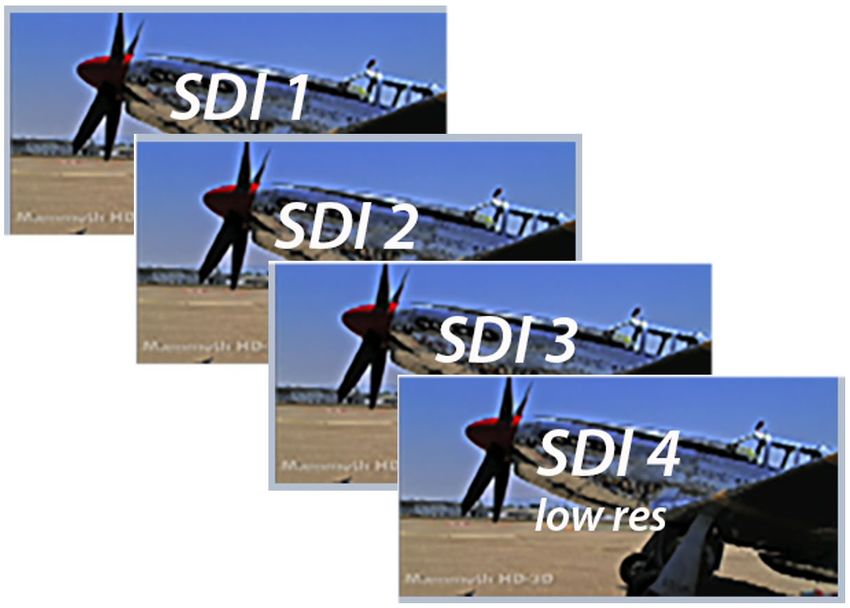
    Contents
                            Notices  .  .  .  .  .  .  .  .  .  .  .  .  .  .  .  .  .  .  .  .  .  .  .  .  .  .  .  .  .  .  .  .  .  .  .  .  .  .  2
                                   Trademarks .  .  .  .  .  .  .  .  .  .  .  .  .  .  .  .  .  .  .  .  .  .  .  .  .  .  .  .  .  .  .  .  .  .  .  .  .  .  .  .  .  .  .  2
                                   Copyright  .  .  .  .  .  .  .  .  .  .  .  .  .  .  .  .  .  .  .  .  .  .  .  .  .  .  .  .  .  .  .  .  .  .  .  .  .  .  .  .  .  .  .  .  2
                                   Contacting AJA Support .  .  .  .  .  .  .  .  .  .  .  .  .  .  .  .  .  .  .  .  .  .  .  .  .  .  .  .  .  .  .  .  .  .  .  2

                            Chapter 1 – Introduction .  .  .  .  .  .  .  .  .  .  .  .  .  .  .  .  .  .  .  .  .  .  .  .  .  .  .  5
                                   Overview .  .  .  .  .  .  .  .  .  .  .  .  .  .  .  .  .  .  .  .  .  .  .  .  .  .  .  .  .  .  .  .  .  .  .  .  .  .  .  .  .  .  .  .  .    5
                                      Features  .  .  .  .  .  .  .  .  .  .  .  .  .  .  .  .  .  .  .  .  .  .  .  .  .  .  .  .  .  .  .  .  .  .  .  .  .  .  .  .  .  .  .  .   5
                                      Broadcast-Quality Conversion .  .  .  .  .  .  .  .  .  .  .  .  .  .  .  .  .  .  .  .  .  .  .  .  .  .  .  .  .  .                          6
                                      Io 4K/XT Audio  .  .  .  .  .  .  .  .  .  .  .  .  .  .  .  .  .  .  .  .  .  .  .  .  .  .  .  .  .  .  .  .  .  .  .  .  .  .  .            6
                                      AJA Software & Utilities  .  .  .  .  .  .  .  .  .  .  .  .  .  .  .  .  .  .  .  .  .  .  .  .  .  .  .  .  .  .  .  .  .  .                 7
                                   System Requirements .  .  .  .  .  .  .  .  .  .  .  .  .  .  .  .  .  .  .  .  .  .  .  .  .  .  .  .  .  .  .  .  .  .  .  .  .                 8
                                   What’s In The Box?  .  .  .  .  .  .  .  .  .  .  .  .  .  .  .  .  .  .  .  .  .  .  .  .  .  .  .  .  .  .  .  .  .  .  .  .  .  .  .           8
                                   In This Manual  .  .  .  .  .  .  .  .  .  .  .  .  .  .  .  .  .  .  .  .  .  .  .  .  .  .  .  .  .  .  .  .  .  .  .  .  .  .  .  .  .         9

                            Chapter 2 – Installation .  .  .  .  .  .  .  .  .  .  .  .  .  .  .  .  .  .  .  .  .  .  .  .  .  .  .  10
                                   Installation Overview .  .  .  .  .  .  .  .  .  .  .  .  .  .  .  .  .  .  .  .  .  .  .  .  .  .  .  .  .  .  .  .  .  .  .  .  .10
                                   Connecting To Your Computer  .  .  .  .  .  .  .  .  .  .  .  .  .  .  .  .  .  .  .  .  .  .  .  .  .  .  .  .  .  .10
                                      Cable Connections . . . . . . . . . . . . . . . . . . . . . . . . . . . . . . . . . . . . 10
                                      Connector Descriptions .  .  .  .  .  .  .  .  .  .  .  .  .  .  .  .  .  .  .  .  .  .  .  .  .  .  .  .  .  .  .  .  . 11
                                   Installing Io 4K/XT Software  .  .  .  .  .  .  .  .  .  .  .  .  .  .  .  .  .  .  .  .  .  .  .  .  .  .  .  .  .  .  .  .13
                                      Download  .  .  .  .  .  .  .  .  .  .  .  .  .  .  .  .  .  .  .  .  .  .  .  .  .  .  .  .  .  .  .  .  .  .  .  .  .  .  .  .  .  .13
                                      Software Package Installation and Re-installation .  .  .  .  .  .  .  .  .  .  .  .  .  .  .  .  .13
                                      Firmware Update Procedure  .  .  .  .  .  .  .  .  .  .  .  .  .  .  .  .  .  .  .  .  .  .  .  .  .  .  .  .  .  . 14

                            Chapter 3 – Io 4K/XT Operation  .  .  .  .  .  .  .  .  .  .  .  .  .  .  .  .  .  .  .  .  .  . 16
                                   Front Panel Operation .  .  .  .  .  .  .  .  .  .  .  .  .  .  .  .  .  .  .  .  .  .  .  .  .  .  .  .  .  .  .  .  .  .  .  .16
                                      Monitor Output and Gain Control .  .  .  .  .  .  .  .  .  .  .  .  .  .  .  .  .  .  .  .  .  .  .  .  .  .  .16
                                      Audio Level Meters .  .  .  .  .  .  .  .  .  .  .  .  .  .  .  .  .  .  .  .  .  .  .  .  .  .  .  .  .  .  .  .  .  .  .  . 16
                                      Power LED (Io 4K)  .  .  .  .  .  .  .  .  .  .  .  .  .  .  .  .  .  .  .  .  .  .  .  .  .  .  .  .  .  .  .  .  .  .  .  .  . 17
                                      Power Switch (Io XT)  .  .  .  .  .  .  .  .  .  .  .  .  .  .  .  .  .  .  .  .  .  .  .  .  .  .  .  .  .  .  .  .  .  .  . 17
                                   AJA Control Panel Overview  .  .  .  .  .  .  .  .  .  .  .  .  .  .  .  .  .  .  .  .  .  .  .  .  .  .  .  .  .  .  .  .17
                                      AJA Control Panel Operating Modes .  .  .  .  .  .  .  .  .  .  .  .  .  .  .  .  .  .  .  .  .  .  .  .  . 17
                                      AJA Control Panel User Interface .  .  .  .  .  .  .  .  .  .  .  .  .  .  .  .  .  .  .  .  .  .  .  .  .  .  .  .18
                                      Controlling Application . . . . . . . . . . . . . . . . . . . . . . . . . . . . . . . . . 20
                                      Presets .  .  .  .  .  .  .  .  .  .  .  .  .  .  .  .  .  .  .  .  .  .  .  .  .  .  .  .  .  .  .  .  .  .  .  .  .  .  .  .  .  .  .  . 21
                                      Single-User & Shared Preferences .  .  .  .  .  .  .  .  .  .  .  .  .  .  .  .  .  .  .  .  .  .  .  .  .  .  .21
                                      Function Screens .  .  .  .  .  .  .  .  .  .  .  .  .  .  .  .  .  .  .  .  .  .  .  .  .  .  .  .  .  .  .  .  .  .  .  .  .  .22
                                   Io 4K and Io XT for HD, SD, 2K  .  .  .  .  .  .  .  .  .  .  .  .  .  .  .  .  .  .  .  .  .  .  .  .  .  .  .  .  .  .  . 23
                                      Control Screen .  .  .  .  .  .  .  .  .  .  .  .  .  .  .  .  .  .  .  .  .  .  .  .  .  .  .  .  .  .  .  .  .  .  .  .  .  .  . 23
                                      Format Screen  .  .  .  .  .  .  .  .  .  .  .  .  .  .  .  .  .  .  .  .  .  .  .  .  .  .  .  .  .  .  .  .  .  .  .  .  .  .  . 25
                                      Conversion Screen .  .  .  .  .  .  .  .  .  .  .  .  .  .  .  .  .  .  .  .  .  .  .  .  .  .  .  .  .  .  .  .  .  .  .  .  .26
                                      Input Select Screen .  .  .  .  .  .  .  .  .  .  .  .  .  .  .  .  .  .  .  .  .  .  .  .  .  .  .  .  .  .  .  .  .  .  .  . 28
                                      SDI Output Screen .  .  .  .  .  .  .  .  .  .  .  .  .  .  .  .  .  .  .  .  .  .  .  .  .  .  .  .  .  .  .  .  .  .  .  .  .29
                                      HDMI Screen  .  .  .  .  .  .  .  .  .  .  .  .  .  .  .  .  .  .  .  .  .  .  .  .  .  .  .  .  .  .  .  .  .  .  .  .  .  .  .  . 30
                                      Analog Out Screen (Io XT Only) .  .  .  .  .  .  .  .  .  .  .  .  .  .  .  .  .  .  .  .  .  .  .  .  .  .  .  .  .32
                                      Video Setup Screen  .  .  .  .  .  .  .  .  .  .  .  .  .  .  .  .  .  .  .  .  .  .  .  .  .  .  .  .  .  .  .  .  .  .  .  .33
                                      Audio Setup Screen .  .  .  .  .  .  .  .  .  .  .  .  .  .  .  .  .  .  .  .  .  .  .  .  .  .  .  .  .  .  .  .  .  .  .  .35
                                      DS Keyer Screen .  .  .  .  .  .  .  .  .  .  .  .  .  .  .  .  .  .  .  .  .  .  .  .  .  .  .  .  .  .  .  .  .  .  .  .  .  . 36
                                      LUT Screen .  .  .  .  .  .  .  .  .  .  .  .  .  .  .  .  .  .  .  .  .  .  .  .  .  .  .  .  .  .  .  .  .  .  .  .  .  .  .  .  .  .38
                                      Timecode Screen .  .  .  .  .  .  .  .  .  .  .  .  .  .  .  .  .  .  .  .  .  .  .  .  .  .  .  .  .  .  .  .  .  .  .  .  .  .40
                                      Presets Screen  .  .  .  .  .  .  .  .  .  .  .  .  .  .  .  .  .  .  .  .  .  .  .  .  .  .  .  .  .  .  .  .  .  .  .  .  .  .  . 41
                                      Firmware Screen .  .  .  .  .  .  .  .  .  .  .  .  .  .  .  .  .  .  .  .  .  .  .  .  .  .  .  .  .  .  .  .  .  .  .  .  .  .42
                                      Info Screen .  .  .  .  .  .  .  .  .  .  .  .  .  .  .  .  .  .  .  .  .  .  .  .  .  .  .  .  .  .  .  .  .  .  .  .  .  .  .  .  .  .43
                                   Using Io 4K for UltraHD/4K  .  .  .  .  .  .  .  .  .  .  .  .  .  .  .  .  .  .  .  .  .  .  .  .  .  .  .  .  .  .  .  .  .43
                                      4K/UltraHD Transport Modes .  .  .  .  .  .  .  .  .  .  .  .  .  .  .  .  .  .  .  .  .  .  .  .  .  .  .  .  .  .43
                                      Io 4K in 4K Mode Audio Monitoring .  .  .  .  .  .  .  .  .  .  .  .  .  .  .  .  .  .  .  .  .  .  .  .  .  .45
                                      Io 4K Control Panel Screen Differences in 4K Mode .  .  .  .  .  .  .  .  .  .  .  .  .  .  .  .46
                                      Io 4K Control Screen in 4K Mode .  .  .  .  .  .  .  .  .  .  .  .  .  .  .  .  .  .  .  .  .  .  .  .  .  .  .  .46

Io 4K/XT Capture, Display, Convert v15.5                                                          3                                                                                      www.aja.com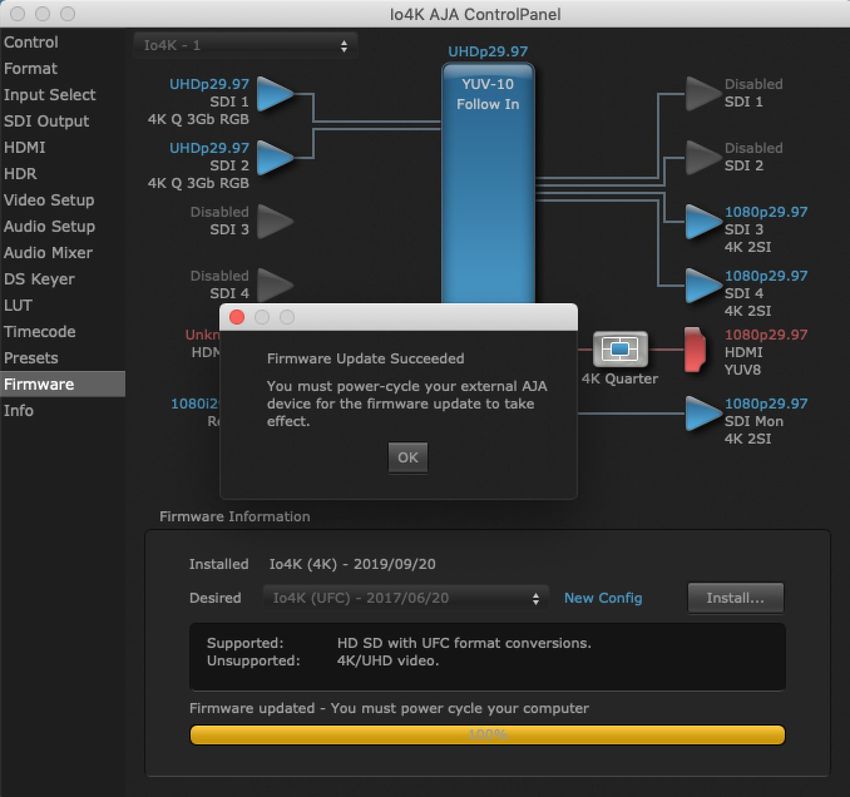
                                       Io 4K Format Screen in 4K Mode .  .  .  .  .  .  .  .  .  .  .  .  .  .  .  .  .  .  .  .  .  .  .  .  .  .  .  .48
                                       Io 4K Input Select Screen in 4K Mode .  .  .  .  .  .  .  .  .  .  .  .  .  .  .  .  .  .  .  .  .  .  .  .  .49
                                       Io 4K SDI Output Screen in 4K Mode  .  .  .  .  .  .  .  .  .  .  .  .  .  .  .  .  .  .  .  .  .  .  .  .  . 50
                                       Io 4K HDMI Screen in 4K Mode .  .  .  .  .  .  .  .  .  .  .  .  .  .  .  .  .  .  .  .  .  .  .  .  .  .  .  .  .51
                                       Io 4K HDR Screen in 4K Mode .  .  .  .  .  .  .  .  .  .  .  .  .  .  .  .  .  .  .  .  .  .  .  .  .  .  .  .  .  .52
                                       Io 4K Video Setup Screen in 4K Mode .  .  .  .  .  .  .  .  .  .  .  .  .  .  .  .  .  .  .  .  .  .  .  .  .54
                                       Io 4K Audio Mixer Screens (4K Mode only) .  .  .  .  .  .  .  .  .  .  .  .  .  .  .  .  .  .  .  .  .  .55
                                       Playback Monitor Mode (4K Mode only) .  .  .  .  .  .  .  .  .  .  .  .  .  .  .  .  .  .  .  .  .  .  .57
                                       Io 4K Downstream Keyer in 4K Mode .  .  .  .  .  .  .  .  .  .  .  .  .  .  .  .  .  .  .  .  .  .  .  .  .58

                            Appendix A – Specifications .  .  .  .  .  .  .  .  .  .  .  .  .  .  .  .  .  .  .  .  .  .  .  .  59
                                   Io 4K Tech Specs .  .  .  .  .  .  .  .  .  .  .  .  .  .  .  .  .  .  .  .  .  .  .  .  .  .  .  .  .  .  .  .  .  .  .  .  .  .  .  .59
                                   Io XT Tech Specs .  .  .  .  .  .  .  .  .  .  .  .  .  .  .  .  .  .  .  .  .  .  .  .  .  .  .  .  .  .  .  .  .  .  .  .  .  .  .  .61
                                   Audio Connection Pinouts .  .  .  .  .  .  .  .  .  .  .  .  .  .  .  .  .  .  .  .  .  .  .  .  .  .  .  .  .  .  .  .  . 64

                            Appendix B – Safety and Compliance .  .  .  .  .  .  .  .  .  .  .  .  .  .  .  .  .  .  65
                            Warranty and Liability Information  .  .  .  .  .  .  .  .  .  .  .  .  .  .  .  .  .  .  .  . 73
                                   Limited Warranty on Hardware .  .  .  .  .  .  .  .  .  .  .  .  .  .  .  .  .  .  .  .  .  .  .  .  .  .  .  .  .  . 73
                                   Limitation of Liability .  .  .  .  .  .  .  .  .  .  .  .  .  .  .  .  .  .  .  .  .  .  .  .  .  .  .  .  .  .  .  .  .  .  .  .  .73
                                   Governing Law and Language; Your Rights  .  .  .  .  .  .  .  .  .  .  .  .  .  .  .  .  .  .  .  .  .  .73

                            Index .  .  .  .  .  .  .  .  .  .  .  .  .  .  .  .  .  .  .  .  .  .  .  .  .  .  .  .  .  .  .  .  .  .  .  .  .  .  . 75

Io 4K/XT Capture, Display, Convert v15.5                                                     4                                                                                 www.aja.com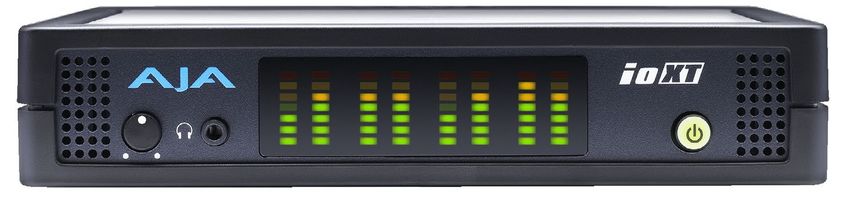
Chapter 1 – Introduction

Overview
                       AJA’s Io 4K and Io XT provide professional-grade I/O for high-end computers,
                       and each is an ideal companion for lightning-fast video capture, playback and
                       up/down/cross conversion. Designed for today’s workflows, Io 4K/XT provides
                       an ideal interface for video professionals to bridge the gap between their
                       Thunderbolt-enabled computers, and other pro video devices.
                       Io 4K/XT connects with a single Thunderbolt cable and provides a second
                       Thunderbolt connector for storage, making them perfect for on set, or in the edit
                       suite. Io 4K/XT's 10-bit hardware conversion capability paired with a Thunderbolt
                       storage system creates a super-fast editing system, portable enough to fit in a
                       backpack—with desktop level power.

         Features
                       Table 1. Io 4K/XT Feature Comparison
                         Feature                                                               Io XT       Io 4K
                         Two Thunderbolt 2 ports                                                              √
                         Two Thunderbolt 1 ports                                                  √
                         Two SD-SDI, HD-SDI, and 3G HD-SDI inputs and outputs                     √           √
                         Dedicated realtime 4K to HD down-conversion output (SDI 5 BNC)                       √
                         Supports both Quadrant and Two Sample Interleave transport of                     4K Mode
                         UltraHD and 4K video
                         HDR Features (HDR10 or HLG via HDMI, 12 Bit RGB, BT2020))                            √
                         Single link SDI 4:2:2 or 4:4:4; Dual-link SDI 4:4:4                      √           √
                         Bidirectional SDI BNCs configurable for four 4K inputs or outputs                 4K Mode
                         HDMI Input and Output                                                    √           √
                         Analog component/composite output, 10-bit                                √
                         Broadcast quality hardware-based 10-bit up-conversion                    √           √
                         Broadcast quality hardware-based 10-bit down-conversion                  √           √

Io 4K/XT Capture, Display, Convert v15.5                            5                                              www.aja.com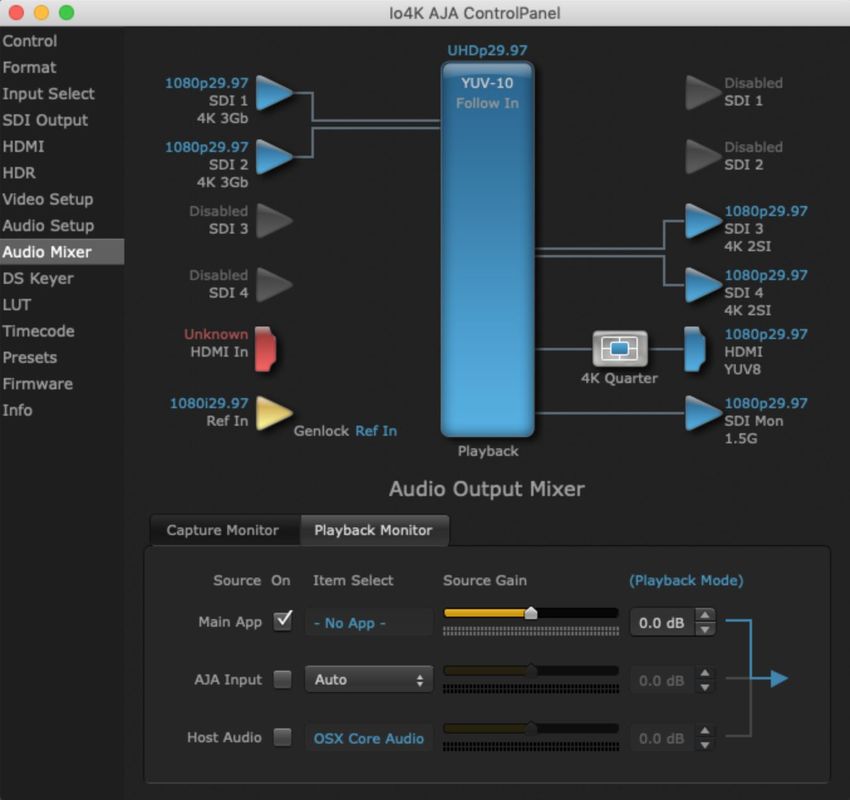
                         Feature                                                                  Io XT       Io 4K
                         Broadcast quality hardware-based 10-bit cross-conversion (1080 to           √           √
                         720 and 720 to1080)
                         Dedicated realtime 4K to HD down-conversion output (SDI 5 BNC)                          √
                         DVCProHD hardware scaling acceleration                                      √           √
                         HDV hardware scaling acceleration                                           √           √
                         Broadcast quality hardware-based 10-bit SD aspect ratio conversion          √           √
                         (anamorphic to letterbox, etc.)
                         16-Channel Embedded SDI audio                                               √           √
                         Eight channels analog audio output (Tascam-style DB25-type cable)           √           √
                         Audio Monitoring Mixer, including Host Computer and Application                      4K Mode
                         Front panel LED VU meters and Headphone output w/level control              √           √
                         Reference In/LTC In (selectable)                                            √           √
                         LTC Output                                                                  √           √
                         RS-422 control via 9-pin                                                    √           √
                         Rugged Chassis, Small Size                                                  √           √
                         12V DC, 4-pin XLR Power (AC adapter included)                               √           √

         Broadcast-Quality Conversion
                       Io4K operating in UFC Mode, and Io XT both feature hardware-based full 10-bit
                       broadcast quality motion adaptive SD to HD up-conversion, HD to SD down-
                       conversion and HD to HD cross-conversion.
                       The quality of the conversion features is virtually identical to AJA’s award winning
                       stand-alone converter products used throughout the post production market.
                       The Io 4K/XT's built-in up converter uses a full 10-bit path, fully motion adaptive
                       de-interlacing, and large multi-point digital interpolators. Down-conversion uses
                       large multi-point digital interpolators, anti-alias filtering and interpolation.
                       Cross-conversion is high-quality hardware-based and offers true broadcast
                       picture quality in realtime. Because these functions are in hardware, they are
                       available full time, all the time—with no CPU load. Such conversions are useful for
                       cost effective monitoring, making standard definition dubs of an HD project, or
                       up-converting from a standard definition project to an HD deliverable.

                       Video Formats
                       For a list of supported video formats, see "Appendix A Specifications" on page 59.

         Io 4K/XT Audio
                       Io 4K/XT provides up to 16 channels of SDI embedded audio. The front panels
                       have a mini TRS headphone output with a lockable level control knob.
                       Io 4K/XT also supports HDMI Audio, 2 or 8 channels.
                       For analog audio output monitoring, Io 4K/XT provides a DB25 connector with
                       eight channels of audio to be used with industry standard Tascam-style audio
                       breakout cables. The front panel has an eight-channel VU meter display to
                       monitor output levels.
                       Io 4K, when in 4K Mode, also supports monitoring mixed audio from Io 4K inputs,
                       host computer, and controlling application.

Io 4K/XT Capture, Display, Convert v15.5                         6                                                    www.aja.com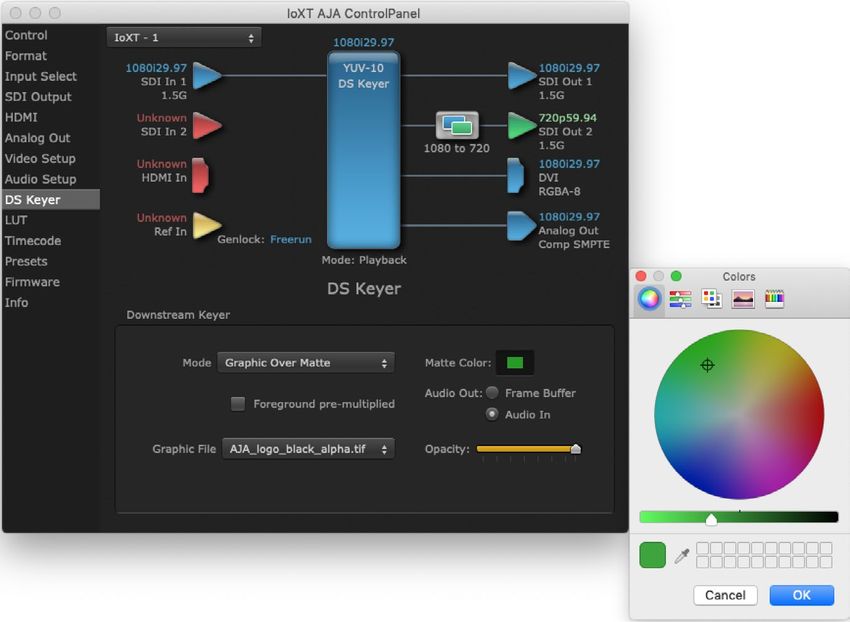
         AJA Software & Utilities
                       AJA’s Io 4K/XT software and hardware were developed for powerful integrated
                       video/audio capture, editing, and production with a variety of 3rd-party
                       software. With Io 4K/XT and a qualified computer, you have the ultimate system
                       for production, post-production, broadcast, and streaming work. AJA software
                       is distributed as a unified package which includes all the software, firmware,
                       plugins, and utility programs for AJA’s Io, KONA, and T-TAP products.
                       Two retail packages are available, one for Mac and one for Windows.

                Mac and Windows Packages
                       These packages include:

                       Firmware
                       Firmware, otherwise referred to as a bit file or the card's 'personality', refers to
                       very low level code that defines the capabilities of the hardware. It is important
                       to always update to the firmware recommended following install of new, or older
                       versions of software.

                       Drivers
                       AJA device drivers for the host system OS provide tightly integrated hardware/
                       software operation.

                       AJA Control Panel
                       The Control Panel provides:
                        • Source selection and control of your AJA hardware.
                        • A block diagram to show visually what routing and processing is being
                          performed.

                       AJA Control Room
                       Control Room is a cross-platform software application for ingest, playback and
                       output with AJA products.

                       AJA System Test
                       AJA System Test provides accurate and detailed evaluations of drive and system
                       performance statistics, allowing you to measure the capabilities of your system
                       for recording and playing back various resolutions and codecs. The application
                       includes:
                        • System Disk Test
                        • AJA Device Test
                        • Disk + Device Test
                        • System Report
                       The application tests Read and Write, Capture and Playback speeds in both
                       Megabytes per second and Frames per second. The disk speed tests differ from
                       standard disk I/O performance applications in that they specifically test the
                       system under conditions typically encountered with video capture, playback, and
                       editing.
                    NOTE: Theoretically the best test (or simulation) is to fill your storage disk to 80% and
                          then test capture at the highest data rate you will use.

Io 4K/XT Capture, Display, Convert v15.5                           7                                            www.aja.com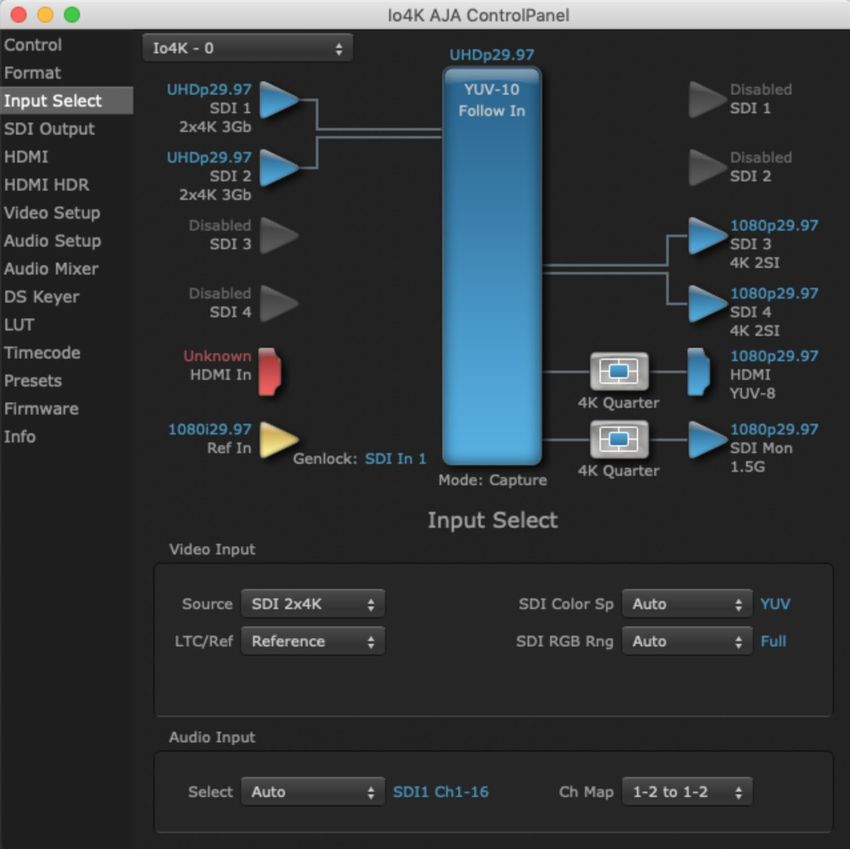
                       3rd-Party Plug-ins
                       Plug-ins for popular 3rd-party Professional Video Applications from Adobe, Avid,
                       Apple, Telestream, and others.

System Requirements
                       AJA Video recommends that your system meet minimum hardware and software
                       requirements to achieve a satisfactory level of performance. Updates to system
                       requirements are subject to change.
                    NOTE: See Software Vendor system requirements for GPU recommendations and
                          additional hardware requirements and recommendations.
                       AJA recommends:
                        • MacOS 10.12 Sierra or later (including 10.15 Catalina)
                        • Win 10 or later with all updates
                        • 2.5 GHz quad core i7 minimum, for HD
                        • 3.5 GHz eight core minimum, faster processors and more cores recommended,
                          for UHD/4K workflows, especially with high frame rate*
                        • 16GB RAM minimum, 32GB or more recommended, especially for UHD/4K or
                          High Frame Rate applications
                        • A reasonably fast and powerful graphics card, with plenty of on-board
                          memory. Examples (may be specific to application version and/or host CPU)
                          include:
                          • NvidiaK5200
                          • Nvidia K4200
                          • Nvidia M6000
                          • Nvidia M5000
                          • Nvidia M4000
                          • AMD W7100
                          • AMD W8100
                        • Apple Metal support
                        • Media storage with adequate bandwidth to sustain the capture and playback
                          of the material you expect to be working with.
                    NOTE: For large scale installations with shared storage, or for very high performance
                          requirements, AJA recommends consultation with an experienced a system
                          integrator. A consultant will be able to assist with many important variables.

What’s In The Box?
                       As you unpack the shipping box(es), carefully examine the contents. Ensure you
                       received everything and that nothing was damaged during shipment. If you find
                       any damage, immediately notify the shipping service and supply them with a
                       complete description of the damage. AJA will repair or replace damaged items.
                       If you find shipping damage, contact your AJA dealer or distributor for details
                       on how to have your Io 4K/XT repaired or replaced. Save packing materials and
                       the shipping box. If you ever require service or move your system—use the
                       packaging materials and box for safe shipment.
                       When you unpack your AJA Io 4K/XT, you’ll find the following components:
                        • Io 4K or Io XT
                        • 12V power adapter and power cord

Io 4K/XT Capture, Display, Convert v15.5                         8                                          www.aja.com
In This Manual
                       Chapter 1 - Introduces the product briefly, listing features, box contents, and
                       system requirements.
                       Chapter 2 - Provides complete instructions for installing and configuring the AJA
                       Io 4K/XT. The user is guided through unpacking, cabling the Io 4K/XT, installing
                       AJA & third-party support software, then getting it up and running.
                       Chapter 3 - Discusses operational aspects of Io 4K/XT and how to work with 3rd-
                       party software.
                       Appendix A - Presents a list of technical specifications for the product.
                       Appendix B - Provides important Safety and Compliance information.
                       Warranty and Index

Io 4K/XT Capture, Display, Convert v15.5                         9                                         www.aja.com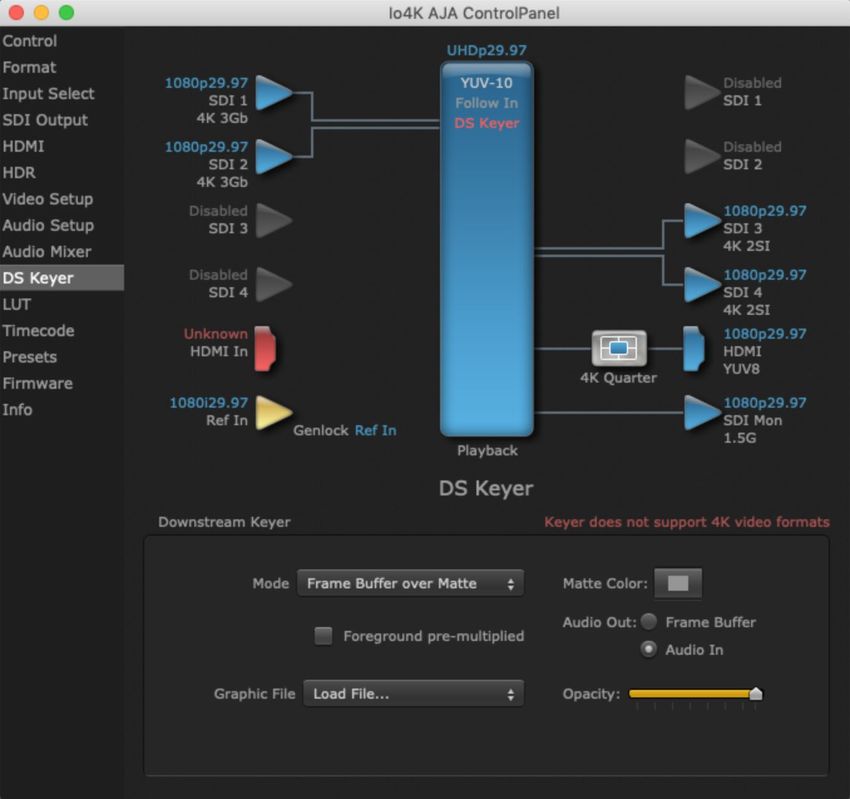
Chapter 2 – Installation

Installation Overview
                       1. If not previously installed on your Thunderbolt equipped computer, ensure
                          that appropriate application software is installed as detailed in its user
                          documentation.
                       2. For latest System Compatibility and Software Version information visit the
                          AJA website.
                          • For Io 4K visit: https://www.aja.com/en/products/io-4k#overview
                          • For Io XT, visit: https://www.aja.com/en/products/io-xt/#/overview
                       3. Install the latest AJA software on your computer from the AJA website.
                          • For Io 4K visit: https://www.aja.com/en/products/io-4k#support
                          • For Io XT, visit: https://www.aja.com/en/products/io-xt/#support
                       For further support information and downloads for third-party software and
                       DirectShow for Developers, go to:
                          • https://www.aja.com/en/category/edit/compatibility
                          • https://www.aja.com/support/directshow

Connecting To Your Computer
                       1. Connect a Thunderbolt cable between the computer and the Io 4K/XT.
                       2. Power the unit (AC supply or battery) and if it is Io XT, turn it on using the
                          power button on the front. Io 4K does not have a power button.
                       3. Cable the system audio and video sources, VTR, audio monitor, and video
                          monitor.
                       4. When you run the AJA Control Panel, you’ll notice that the Io 4K/XT is auto-
                          discovered as long as it is properly cabled and powered up.

         Cable Connections
                       Figure 1. Io 4K Rear Connectors
                                     Bidirectional
                                 3G/HD/SD-SDI BNCs (4)
                                                     HD/SD-SDI     HDMI        HDMI     Thunderbolt 2
                       LTC Output                  Monitor Out BNC Output      Input      Ports (2)

                       Reference or        Audio Monitor Out      Balanced Audio    DB-9F RS-422             4-Pin XLR
                        LTC Input             RCA (2-Ch)         Out DB-25F (8-Ch) Machine Control         DC Power Input

Io 4K/XT Capture, Display, Convert v15.5                         10                                                    www.aja.com
                       Figure 2. Io XT Rear Connectors
                                                                                         Two 3G/HD/SD-SDI Inputs or
                                                                                             One Dual-link Input
                               DB-9F RS-422         Balanced Audio                 HDMI                       Reference or
                              Machine Control      Out DB-25F (8-Ch)               Input                        LTC Input

                            4-Pin XLR    Thunderbolt 3                         HDMI                   LTC Output
                          DC Power Input   Ports (2)                           Output
                                                     SD or HD Component Output
                                                       with Composite Output    Two 3G/HD/SD-SDI Outputs or
                                                            on Y Connector          One Dual-link Output

         Connector Descriptions

                Connectors Common to Both Models
                       HDMI Input and Output
                       Two HDMI connectors on the Io 4K/XT provide input and output of HDMI video
                       and multi-channel embedded audio.
                        • Io 4K has HDMI 1.4b input and output capability, supporting Ultra HD and 4K
                          resolutions at up to 30 frames per second at 10 Bit 4:2:2 and 50/60 frames per
                          second at 8-Bit 4:2:0. Io 4K also supports HDR (HDR10 and HLG) via the HDMI
                          1.4 output.
                        • Io XT has HDMI v1.3 input capability at 30 bits per pixel that allows full support
                          of the latest 10-bit monitors, and has HDMI v1.4 output capability.
                        • Both Io 4K and Io XT support 2 or 8 channel HDMI audio input and output.
                       HDCP is not supported on either input or output. Io 4K/XT HDMI output does not
                       have HDCP, and input sources having HDCP are not supported. The HDMI input
                       is designed to support long cable runs—up to 100 ft. when using 22 or 24AWG
                       HDMI cable, or up to 50 ft. using 28 or 30AWG HDMI cable. The HDMI output
                       supports standard HDMI cables only.

                       RS-422 Machine Control
                       A female DE-9 connector on Io 4K/XT provides connection for VTRs, camcorders,
                       disk media servers, and other devices using RS-422 SMPTE (Sony) protocol.

                       Reference Video and LTC Input
                       Two BNC connectors on Io 4K/XT provide reference Input and Output. The
                       Reference Video input can also be used for LTC input. The selection of Reference
                       (sync) or LTC is set using the AJA Control Panel ("Input Select Screen" on page 28).
                       In Video Pass-through mode, these connectors are effectively loop-through.
                       Supplying reference signal to the Reference input allows you to synchronize
                       Io 4K/XT outputs to your house analog reference video signal (or black burst).
                       If you have a sync generator or central piece of video equipment to use for
                       synchronizing other video equipment in your studio, then connect its analog
                       composite output here. When Io 4K/XT outputs video, it uses this reference signal

Io 4K/XT Capture, Display, Convert v15.5                        11                                                   www.aja.com
                       for locking. When connecting a reference video source, the locking signal should
                       be the same format as the Device Format selected in the AJA Control Panel. It is
                       possible in some circumstances to use an alternate format video signal as long as
                       the basic frame rate is compatible.

                       Balanced Analog Audio Output
                       A 25-pin DB connector provides 8-channel, 24-bit D/A analog audio, 48kHz
                       sample rate, balanced via 8x XLR on DB-25 breakout cable. (Cable not supplied.)

                       12V Power Connector
                       A standard 4-pin XLR type connector is provided for either battery or line source
                       power using the supplied AC power adapter.

                Io 4K Connectors
                       These connectors are offered only on the Io 4K model.

                       Thunderbolt 2 Ports
                       The Io 4K provides the second-generation Thunderbolt ports to support
                       UltraHD and 4K signals. Two ports are provided for “daisy-chained” network
                       configurations.
                       See https://www.aja.com/solutions/thunderbolt for more information about
                       Thunderbolt.

                       Bi-directional SDI I/O
                       Four bidirectional BNC connectors can be configured via the AJA Control Panel
                       for:
                        • HD/SD inputs (x2) and outputs (x2)
                        • Or you can input or output 4 channels of video representing individual
                            quadrants of the higher definition UltraHD (3840x2160) and 4K (4096x2160)
                            formats.
                    NOTE: The Io 4K can only be configured for either input or output of UltraHD or 4K at a
                          time. It cannot support input and output at the same time since both require four
                          BNCs.

                       Dedicated SDI HD/SD Output
                    NOTE: One BNC connector is provided for full-time, real-time output of HD/SD video. 4K
                          video is down-converted to 2K HD and UltraHD is down-converted to HD.

                Io XT Connectors
                       These connectors are used only on the Io XT model.

                       Thunderbolt Ports
                       The Io XT provides first-generation Thunderbolt ports. Two ports are provided for
                       “daisy-chained” network configurations.
                       See https://www.aja.com/solutions/thunderbolt for more information about
                       Thunderbolt.

Io 4K/XT Capture, Display, Convert v15.5                        12                                            www.aja.com
                       HD/SD SDI Input and Output
                       BNC connectors are provided on Io XT for two HD/SD-SDI inputs and two HD/
                       SD-SDI outputs. The input and output support video and embedded 24-bit
                       digital audio. Use SDI wherever possible for the best quality 10-bit uncompressed
                       video input, capture and output. If peripheral equipment has a variety of inputs/
                       outputs, look to see if it has SDI I/O, and use it where possible. Most high-end
                       professional broadcast equipment supports SDI (VTRs, cameras, media storage
                       servers, etc.).

                       Component Video Output
                       Io XT features a group of 3 BNC connectors for output of component, composite
                       and Y/C functions. The signals are labeled on the BNC connectors on the rear
                       panel of Io XT.
                    NOTE: Component Video, or YPbPr, has been given several names over time. YUV,
                          Y/R-Y/B-Y, and YCbCr, are just some examples. Although these various formats
                          have some differences in levels, they are all basically the same. Io XT uses the
                          modern YPbPr terminology exclusively. Io XT supports three different types of
                          YPbPr: SMPTE/EBU N10, Betacam (NTSC), and Betacam (NTSC Japan). These three
                          formats differ in level only and are configured via the AJA Control Panel.

Installing Io 4K/XT Software
                    NOTE: Always uninstall previous versions of Io 4K/XT software before updating your
                          software.

         Download
                       Go to the AJA website and download the latest Io 4K/XT driver software
                       containing the AJA Control Panel application:
                       https://www.aja.com/en/support/downloads/
                       System software updates may occasionally become available to AJA Io 4K/XT
                       owners on our website (www.aja.com). We recommend checking occasionally for
                       both software updates and additional product information.
                    NOTE: If your computer has previously had another video capture or multimedia device
                          installed, ensure you uninstall any related software before installing Io 4K/XT This
                          will prevent any hardware or software conflicts.

         Software Package Installation and Re-installation
                       Before installing the Io 4K/XT software package, ensure that your capture/editing
                       application is installed as detailed in its user documentation. You cannot use
                       Io 4K/XT with a third-party application until the application has been installed
                       and run at least once on your workstation. Next, install the AJA software package.
                       If you add Io 4K/XT supported applications at a later date and have not previously
                       installed the appropriate drivers, you must run the install program again selecting
                       the appropriate application support software to be installed.

Io 4K/XT Capture, Display, Convert v15.5                         13                                              www.aja.com
         Firmware Update Procedure
                       After the AJA Software Package has been installed on a computer connected to
                       your AJA hardware, the firmware on that AJA device can be updated if a newer
                       version of firmware is included with that software package.
                       1. Open the AJA Control Panel application.
                       2. If more than one AJA device is connected, choose the device you want to
                          update by selecting its name from the drop-down menu at the top of the
                          screen.
                       3. Go to the Control Panel Firmware Screen.
                       4. Select the firmware version (if multiple versions exist) in the Desired
                          dropdown.
                       5. Click on Install. Messages appear and when finished, firmware update
                          completed messages are shown (Figure 3).
                       Figure 3. Update Completed Messages

                       6. Click OK and then power cycle the computer by shutting it down
                          completely.
                       7. After the computer has shut down, power cycle the AJA device by
                          disconnecting and reconnecting it's power plug. If the unit is an Io XT, press
                          the front power switch.
                       8. Restart the computer.
                       9. Open AJA Control Panel. The AJA hardware with the updated firmware
                          should be recognized by the Control Panel application.

Io 4K/XT Capture, Display, Convert v15.5                        14                                         www.aja.com
                Firmware Versions
                       Io 4K supports two different versions of firmware that have different capabilities.
                       One version of firmware can be installed at a time.
                        • Io 4K (UFC Mode) - When UFC firmware is installed, Io 4K supports up, down
                           and cross conversion between 2K, HD, and SD video formats. This version does
                           not support UltraHD/4K playback or capture.
                        • Io 4K (4K Mode) - When 4K firmware is installed, Io 4K supports input and
                           output of UltraHD/4K, 2K, HD, and SD video, and down-conversion of
                           UltraHD/4K to 2K/HD video on the monitor output BNC. In 4K Mode Io 4K also
                           provides the Audio Mixer screen, to control audio monitoring.
                    NOTE: Io XT supports only one version of firmware, for 2K/HD/SD capabilities.

Io 4K/XT Capture, Display, Convert v15.5                        15                                           www.aja.com
Chapter 3 – Io 4K/XT Operation
                       Figure 4. Io 4K Front Panel Controls and Indicators
                                                                      Audio Level             Power
                                                                       Meters (8)              LED

                          Monitor             Monitor Output
                        Gain Control        Connector 1/8 in. TRS

                       Figure 5. Io XT Front Panel Controls and Indicators
                                                                    Audio Level                          Power
                                                                     Meters (8)                          Switch

                          Monitor             Monitor Output
                        Gain Control        Connector 1/8 in. TRS

Front Panel Operation
                       The Io 4K/XT front panel has the following controls and indicators:

         Monitor Output and Gain Control
                       A 1/8 inch TRS connector is available for monitoring two channels of audio,
                       selectable in channel pairs using the Control Panel application. Typically used
                       with a pair of headphones.
                       The Monitor Gain knob on the left adjusts the monitor output level. Pushing in
                       the knob extends it (for adjustment) or recesses it (to prevent accidental changes).

         Audio Level Meters
                       The Audio Level Meters in the center of the front panel indicate:
                        • During Capture - The first 8 channels of the audio source selected (SDI, HDMI,
                          Analog).
                        • During Playback - The sum of whatever sources are being played out via
                          the AJA hardware; i.e. NLE timeline and mix of host system audio output (if
                          applicable).
                       The meter's LEDs are colored to indicate the amount below 0dBfs when averaged
                       over a one millisecond time interval:

Io 4K/XT Capture, Display, Convert v15.5                       16                                                 www.aja.com
                         dBfs              LED Color and Location
                         -2 db             Red LED 1 (top)
                         -12 db            Yellow LED 2
                         -20 db            Yellow LED 1
                         -30 db            Green LED 4
                         -40 db            Green LED 3
                         -50 db            Green LED 2
                         -60 db            Green LED 1 (bottom)
                    NOTE: These audio level meters are for guidance only. Third-party audio metering
                          should be employed when doing critical audio editing and mixing.

         Power LED (Io 4K)
                       The power LED lights up yellow when power is provided via the power supply.
                       Once a Thunderbolt 3 connection is made, and the host is in an active state, the
                       light turns green.

         Power Switch (Io XT)
                       When the power supply is plugged in and receiving power, pressing the power
                       switch toggles power on and (when held for one second) powers the unit off. The
                       switch lights green when the unit has power.

AJA Control Panel Overview
                    NOTE: This section initially describes the Io 4K UFC version of the Control Panel screens
                          that support video formats up to 2K. Io XT screen differences will be noted, and
                          detailed Io4K 4K mode UltraHD/4K operations are discussed in "Using Io 4K for
                          UltraHD/4K" on page 43.
                       The AJA Control Panel is a software application that provides a simple visual
                       showing how the Io 4K/XT hardware is currently configured and allows you to
                       make changes. You can change signal input and output parameters and define
                       the video processing that will be performed.
                       The AJA software installer automatically installs the Control Panel application on
                       your computer.

         AJA Control Panel Operating Modes
                       AJA Control Panel has two fundamental operating modes.
                       Playback Mode - Used for playing back video files from the computer, usually
                          with a non-linear editing application (NLE) or AJA Control Room, through the
                          Io 4K/XT video/audio outputs for viewing and/or external recording.
                       Capture Mode - Used for capturing video/audio signals that are coming into the
                         Io 4K/XT from an external source to create video files on the computer using
                         AJA Control Room or an NLE, or just for display on the Io 4K/XT outputs. This
                         mode is also used for stand-alone video display or conversion when Control
                         Panel is being used without an external controlling application.
                       The current Io 4K/XT operating mode is reported on the Control Panel UI screen,
                       below the block diagram (see "Controlling Application" on page 20).

Io 4K/XT Capture, Display, Convert v15.5                          17                                            www.aja.com
         AJA Control Panel User Interface
                       The AJA Control Panel user interface includes a visual block diagram of the unit’s
                       current configuration. The current status, input and output settings, and many
                       other details are depicted in the color-coded block diagram. Below this block
                       diagram are various controls for changing operating parameters, which will vary
                       depending on which function screen has been selected.
                       The left side of the AJA Control Panel provides a navigation list of available
                       function screens. Clicking on a link (or alternatively, a related element in the block
                       diagram) displays a function screen corresponding to that topic.
                       Figure 6. AJA Control Panel, Block Diagram and Controls
                                           AJA Device Selection           Device Format (Framebuffer)
                                                                                                                  Controlling
        Currently                                                                                                 Application
        Selected
     Function Screen

                                                                                                                  Outputs
         Inputs

                                                                                                                  Operating
                                                                                                                   Mode

       Parameter
        Controls

                  Block Diagram Area
                       The top block diagram area of the Control Panel screen is a visual representation
                       of the processing, if any, that’s currently occurring, including inputs/outputs,
                       reference source, and system status. Lines between inputs, the framebuffer, and
                       outputs, show a video path. Where there are no lines, there is no connection; this
                       can be because an input or output isn’t selected in the Input Select menu. The
                       lines will also show whether the outputs are video or video + key.
                       You can click any of the function screen selection links in the left column to view
                       its current settings or click on an icon to call up its related settings screen. You can
                       also right-click or Control-click to see context-sensitive information and choices
                       (Figure 7).
                       Figure 7. Context Sensitive Menu

Io 4K/XT Capture, Display, Convert v15.5                          18                                                    www.aja.com
                Color Meanings
                       All items in the AJA Control Panel block diagram are color-coded to show what is
                       happening in realtime. This applies to both icons and text. These colors indicate:

                       Blue
                       Video is same format as the Device Format (framebuffer).

                       Green
                       Indicates that Io 4K/XT is performing an active change to the video making it
                       different from the Device Format (e.g., down-conversion).

                       Red
                       The selected operation cannot be performed.

                       Yellow
                       Reference video (black burst or other reference source).

                Input/Output Icons
                       The input and output icons are triangles that together with their color show all
                       the input and outputs and their status (selected, not selected, input present or
                       not, format, etc.). A complete video path is shown when inputs and outputs are
                       connected with lines going to/from the framebuffer.
                       Figure 8. Input/Output Icons

                Framebuffer
                       The framebuffer is the “engine” where your third-party applications interface with
                       the AJA device. The framebuffer has a format (called the “Device Format”) and
                       color space that it follows, as defined in the linked menu screens or via external
                       application software.

                Device Format
                       The Device Format is the media format written to disk and used in your project.
                       This is the format that the framebuffer will use and is shown in the Control Panel
                       using the color blue. It is the format that the third-party application software will
                       either receive from the AJA hardware, or is sending to the hardware. All icons in
                       blue are the same as the Device Format used by the framebuffer. Also any text
                       descriptions in the block diagram that appear in blue indicate that something is
                       in the Device Format. For example:
                        • If the input and output icons are blue, you know that the same format is used
                           throughout the video path. No format conversion is being performed.
                        • If the input or output icon colors differ (blue input and green output icons for
                           example), you know that a format conversion is being performed.

                Converted Format
                    NOTE: A Converted Format is not available on Io 4K operating in 4K Mode.

Io 4K/XT Capture, Display, Convert v15.5                        19                                             www.aja.com
                       Any format other than the currently selected Device Format is a Converted
                       Format. As described previously, this means that either the Inputs or Outputs are
                       somehow different from the framebuffer’s assigned format—the Device Format.
                       A conversion is readily apparent because of the color change from blue.
                       In some cases the application you use with the Io 4K/XT will automatically set the
                       Device Format, overriding the user’s selected Device Format in the AJA Control
                       Panel.

                Conversion Icons
                       When an input or output is a different standard than the framebuffer, the
                       Io 4K/XT may be up- down- or cross-converting the signal to the selected
                       standard. This may be automatic, because it’s detected an input signal that
                       differs from the standard currently selected, or because you’ve explicitly told it to
                       convert. In either case, the block diagram will show the conversion by displaying a
                       conversion icon in between the input/output and the framebuffer.
                       Figure 9. Up, Down, and Cross-Convert Icons

         Controlling Application
                       It is important to understand that the computer can contain many applications
                       that can use the AJA device (as you switch from window to window) and it may
                       not always be obvious which currently controls it. In the top right corner, the
                       Control Panel displays the name of the application controlling the unit.
                       Figure 10. Control Panel In Use Message (in red)

                       Io 4K/XT is very flexible and most controlling applications perform the necessary
                       housekeeping so they work correctly when they’re active and when they’re not.
                       This means that the application that is “active” (in front) will be granted control of
                       the Io 4K/XT video output. Generally, when you switch to a different application,
                       the previous application lets go of the video output and the new application gets
                       control.
                       In some cases, however, applications may not always properly “let go” of the I/O
                       interface as another takes over. If this occurs you’ll be able to tell by looking at the
                       Control Panel's in use application name.

                Controlling Application Format Selection
                       If a running controlling application uses Io 4K/XT for capture or output, it controls
                       the Device Format via its own menus and settings. For example, when the
                       Third-party editing application is active (it’s the front-most application) and has
                       Io 4K/XT as its “A/V Device”, the Io 4K/XT’s Device Format is determined by the
                       application’s “Video Playback” settings. These format selections are reported in
                       the AJA Control Panel block diagram.

Io 4K/XT Capture, Display, Convert v15.5                         20                                               www.aja.com
                       Controlling applications can start and stop and change modes—even while they
                       are running. And the behavior of different controlling applications can vary: some
                       applications take control of the interface as soon as they are launched and don’t
                       give it up until they quit, while other applications take control of the interface
                       only when they are the “front-most” running application and then relinquish
                       control when they’re not. Even these controlling applications may not relinquish
                       control until capture or output operations are completed.

                Control Recommendations
                       We recommend you have the Control Panel running and visible at all times. When
                       the Control Panel is running in the background (not front-most) you can see what
                       the interface is doing and who has control of it.

         Presets
                       Setups can be named and saved as a snapshot (Preset) for recall at any time. You
                       can save various Control Panel configurations associated with your frequent tasks.
                       You don’t have to spend time resetting interface configurations—just load the
                       previously saved Preset for each task. If you work on multiple systems and want
                       to carry your saved setup to another location, you can copy your saved Presets
                       file on to movable storage and load it into any computer running the AJA Control
                       Panel application. Presets are described in more detail later in this manual.

         Single-User & Shared Preferences
                       When an AJA device starts up, preferences can determine what settings it will
                       have it when it begins to operate. The AJA Control Panel offers preference
                       settings that support both:
                        • User Preferences— Preferences stored from the last Control Panel State to be
                          used on next startup of AJA Control Panel.
                        • Shared Preferences— Preferences saved by an Administrator for use as a
                          default start state for AJA Control Panel.

                User Preferences
                       This file exists to immediately, automatically, store preference changes made by a
                       user on a particular AJA device. When any control is changed in the Control Panel,
                       that change is recorded in the preferences file stored in a unique user preferences
                       location dedicated to that particular device and serial number. Then, when AJA
                       control panel is restarted for any reason, it will restart with the same preferences
                       it used when it closed.
                       However, if a user sets their preferences, and then replaces the AJA device with a
                       different one, the Control Panel will either:
                        • Start up with the factory defaults, or
                        • Start up with the “house defaults” dictated by the system administrator (if a
                           Shared Preferences file exists).
                       The User Preferences file can be found in the following locations.
                       On Mac:
                          • /Users//Library/Preferences/com.aja.devicesettings
                       On Windows:
                          • C:\Users\\AppData\Local\Aja\com.aja.devicesettings

Io 4K/XT Capture, Display, Convert v15.5                       21                                             www.aja.com
                Shared Preferences
                       An administrator can establish house standards for the AJA Control Panel by
                       creating the user preferences file (described above) and placing it in a shared
                       location where it will establish a standard default startup state for all users of a
                       given computer system. These settings preempt the initial AJA default settings.
                       To establish the House Default for every user on every system, a system or
                       network administrator can move this default file to all systems on the network
                       (manually or by pushing it out across the network). All users on the network will
                       then open to the House Defaults when they launch the AJA control panel for the
                       first time.
                    NOTE: If the user makes changes to the control panel themselves, those changes will
                          be saved in their user preferences, which will take priority over the house default
                          dictated by the shared preferences file.
                       The Shared Preferences file should be a file created at the User Preferences
                       location described above, and placed by the System Administrator in the
                       following locations.
                       On Mac:
                        • /Users/Shared/Library/Preferences/com.aja.devicesettings
                       On Windows:
                        • C:\Users\All Users\Aja\com.aja.devicesettings

         Function Screens
                       Listed below are the function screens for Io 4K/XT and what they are used for.

                       Table 2. Io 4K/XT Function Screens
                         Screen            Functions
                         Control           Configure some basic operation options and output timing.
                         Format            Select the framebuffer primary video format.
                         Conversion        (Io XT and Io 4K in UFC Mode) Permits selection of a Conversion Format.
                         Input Select      View and edit input selections and audio mapping.
                         SDI Output        Select output format.
                         HDMI              Configure the HDMI I/O.
                         HDR               (Io 4K in 4K Mode only) Configure High Dynamic Range settings for HDMI output.
                         Analog Out        (Io XT only) Configure the component format and audio monitor setup.
                         Video Setup       Configure Video such as composite black level, progressive format and ancillary
                                           data (Closed Caption) option.
                         Audio Setup       Configures Audio options such as analog audio monitor level.
                         Audio Mixer       (Io 4K in 4K Mode only) Select and mix audio sources for playback and capture.
                         DS Keyer          Setup and control the insertion of keyed video from the framebuffer or graphics
                                           files with alpha channel.
                         LUT               Load a lookup table (LUT) file to adjust the calibration of color for any source.
                         Timecode          Monitors SMPTE 12M-2 timecode and configure timecode window burn output.
                         Presets           Add or delete saved preset configurations (handy for quick and easy recall of
                                           different Io 4K/XT settings for varied workflows).
                         Firmware          Install device firmware from your currently installed AJA software package.
                         Info              Display status information and the firmware version number. This information is
                                           generally intended for troubleshooting/support.

Io 4K/XT Capture, Display, Convert v15.5                           22                                                   www.aja.com
Io 4K and Io XT for HD, SD, 2K
                       In this section, standard SD, HD, and 2K Control Panel operations are described.
                       These are essentially the same for both Io 4K and Io XT and are illustrated using
                       Io 4K screen shots (Io XT exceptions are noted).
                       Control Panel operation for Io 4K using UltraHD and 4K formats are described
                       separately (see "Using Io 4K for UltraHD/4K" on page 43).

         Control Screen

                       The Control Screen is where you set the Default Output, what the device outputs
                       when no application has control of the board. This screen also has controls for
                       setting the genlock source, and for setting the Horiz and Vert timing offsets. The
                       top of the Control Screen shows the current state of the device.

                Default Output
                       Many video applications can grab control of the Io 4K/XT, so its outputs can
                       change dynamically. The Default Output settings are used to select what will be
                       output when no third-party video application is controlling Io 4K/XT.

                       Video Output
                         • Pass Through (Cap) - This selection directs Io 4K/XT to route video from its
                           selected input through the card for processing and output.
                         • Test Pattern - This selection directs Io 4K/XT to output a preset pattern when
                           no other application is in control. The pattern is selected from the Test Pattern
                           dropdown list below, or a graphic file can be chosen.
                         • Hold Last App - This selection directs Io 4K/XT to hold and output the last
                           frame of video from the last application to control Io 4K/XT. This can be
                           helpful when operating in an environment where you’re switching back and
                           forth between multiple application windows.

Io 4K/XT Capture, Display, Convert v15.5                        23                                             www.aja.com
                       Test Pattern
                       With Test Pattern selected above, you can choose the pattern type. Select from:
                        • Black, Color bars (75% or 100%), Ramp, Multiburst, Line Sweep, Multi Pattern,
                          or Flat Field, Check Field, White, Border, Linear Ramp, Slant Ramp, Zone Plate,
                          Color Quadrant, or Color Quad Border.
                       For HD and UltraHD with RGB-12 Pixel Formats the following HDR test patterns
                       are available:
                        • HDR Zone Plate, HDR Linear Ramp, HDR HLG Narrow, HDR PQ Narrow, or HDR
                           PQ Wide.

                       Graphic File Display
                       In addition to the test patterns above, a “Load File...” selection at the bottom
                       of the Test Pattern dropdown menu allows you to load a standard RGB/RGBA
                       graphics file (.tif,.psd, etc.) into the frame buffer for display (including alpha
                       channel). Some graphics formats and bit depths may not be supported. Files that
                       have been loaded are listed for quick reuse. Loaded graphic files are retained for
                       redisplay if another test pattern is selected, and even if Io 4K/XT is power cycled.
                    NOTE: A loaded graphics file will not be scaled to fit. If it’s smaller than the current frame
                          buffer format,Io 4K/XT will center it in the frame. If larger than the current frame
                          buffer format it will be cropped.
                         • Clear Files - This selection on the pulldown clears all the Graphic Display files.

                       Fan Settings
                       Io 4K offers a fan speed control. The High setting forces maximum fan cooling,
                       with some increased noise, but this setting could be appropriate if the unit is
                       located in, for example, a machine room rather than an editing suite.
                        • Auto - Fan speed controlled by temperature, increasing or decreasing
                           automatically.
                        • High - Fan always operates at its highest speed.

                Playback Timing
                       Use these controls to set the Genlock source and Timing adjustment.

                       Genlock
                       Selects how Io 4K/XT will synchronize program video:
                        • Freerun: Generates sync without an external reference source
                        • Ref In: Use the Ref Video source for sync (usually an analog black burst video
                          signal)
                        • Video In: Use whichever video input source has been selected in the Inputs
                          screen for sync
                       For video stability and proper system operation, you can genlock all equipment
                       to house sync. However genlock is not required for Io 4K/XT due to its excellent
                       freerun accuracy. On the Io 4K/XT house sync is connected to “LTC/Ref In”.
                       Alternatively, Io 4K/XT can receive externally supplied Linear Time Code on that
                       same input connector. The LTC/Ref setting on the Input Select screen (see "LTC/
                       Ref" on page 28) selects how that input signal will be used.

Io 4K/XT Capture, Display, Convert v15.5                           24                                                www.aja.com
                       Timing (Horiz and Vert)
                       These two pull-downs allow output timing adjustment with reference to the Ref
                       Video source selected.
                        • Horizontal: The Horizontal reference can be adjusted by selecting a number of
                          pixels (clocks) to offset
                        • Vertical: The vertical reference can be adjusted by specifying a number of lines
                          to offset.

         Format Screen

                       The Format screen shows the video format currently in use by the Io 4K/XT
                       framebuffer (called the Device Format) and allows you to change it.

                AJA Device Format
                       Video Format
                       This pull-down menu shows the currently selected Device format. If you select an
                       alternate value using the pull-down, it will change the format used by Io 4K/XT’s
                       framebuffer.
                       When a change is made via the Video Format pull-down or by clicking an icon
                       and selecting a new format via a contextual menu, the block diagram will change
                       to reflect the new format.

                       Pixel Format
                       Use this pulldown menu to choose: YUV-10, YUV-8, RGB-10, or ARGB-8 or RGB-12.

                       RGB Range
                       The RGB Range pulldown menu allows you to select either Auto, Full-range (0-
                       1023) or SMPTE range (typically 64-940) for RGB color output.

Io 4K/XT Capture, Display, Convert v15.5                       25                                            www.aja.com
                    NOTE: The AJA Control Panel software uses the abbreviation “sf” instead of “PsF” when
                          referring to “progressive segmented frame” formats. In the manual and in other
                          literature you may see either of these acronyms used interchangeably. Visually, it
                          is easier to recognize:
                         • “sf” for progressively segmented frame formats
                         • “p” for progressive frame formats

                       Follow Input
                       Enabling the Follow Input checkbox allows the Control Panel Frame Buffer
                       to auto-switch to the detected input format. This feature works only if the
                       controlling application supports input-based capture—AJA Control Room for
                       example.

         Conversion Screen
                    NOTE: The Conversion screen is not available on Io 4K in 4K Mode.

                       The Conversion Screen allows you to select an alternative Conversion format that
                       can be defined for the Io 4K/XT outputs, when operating in UFC mode.

                Conversion Control
                       Format
                       The Format control shows the currently selected Conversion format. When the
                       Converson Format is different from the Device Format, a conversion will be
                       performed on the output, and the block diagram changes to reflect the new
                       processing.
                       The Conversion Formats available can vary based on what the Device Format is
                       and the input signal (frame rates of input sources limits the to/from conversion
                       choices). The pull-down menu lists all compatible formats for selection
                       (incompatible formats are not shown). This allows you to see what you’ve chosen,
                       and also see those formats that are compatible with the selected Device format.

Io 4K/XT Capture, Display, Convert v15.5                         26                                            www.aja.com
                       Down
                       For down-conversion the following choices are available:
                        • Letterbox: image is reduced with black top and bottom added to image area
                          with the aspect ratio preserved
                        • Crop: image is cropped to fit new screen size
                        • Anamorphic: full-screen “stretched” image

                       Up
                       The Up and Down pull-down menus are available when conversion has been
                       selected for the video path to/from the framebuffer and identical frame rates are
                       selected (one exception is 1080PsF 23.98, which can be down-converted to 525i
                       29.97.) Different choices will be available depending on the type of conversion
                       and formats being converted. SD to SD conversions are essentially aspect ratio
                       conversions to accommodate transforming anamorphic images to letterbox or
                       vice versa.
                       For up-conversion the following choices are available:
                        • Anamorphic: full-screen “stretched” image
                        • Pillar box 4:3: results in a 4:3 image in center of screen with black sidebars
                        • Zoom 14:9: results in a 4:3 image zoomed slightly to fill a 14:9 image with black
                          sidebars
                        • Zoom Letterbox: results in image zoomed to fill full screen
                        • Zoom Wide: results in a combination of zoom and horizontal stretch to fill a
                          16:9 screen; this setting can introduce a small aspect ratio change

                       SD to SD
                       This pulldown is for SD to SD aspect ratio conversion.
                        • Letterbox: this transforms SD anamorphic material to a letterboxed image
                        • H Crop: will produce a horizontally stretched effect on the image; transforms
                          anamorphic SD to full frame SD
                        • Pillarbox: will produce an image in the center of the screen with black borders
                          on the left and right sides and an anamorphized image in the center
                        • V Crop: will transform SD letterbox material to an anamorphic image

Io 4K/XT Capture, Display, Convert v15.5                       27                                             www.aja.com
         Input Select Screen

                       On the Input Select screen you can view or set the currently selected video and
                       audio input sources and map audio sources to the channels supported by your
                       editing application. Two information panes in the screen are provided: Video
                       Input and Audio Input.

                Video Input
                       Source
                       The Source pulldown menu allows you to see and change what’s currently
                       selected and shows the video format that Io 4K/XT has detected (if any). To select
                       a different input use the pulldown to choose from:
                        • SDI 1, SDI 2, Dual Link, or HDMI

                       LTC/Ref
                       Use the LTC/Ref menu pulldown to identify the type of signal being received by
                       the LTC/Ref BNC:
                        • Reference - BNC is used as a video reference input.
                        • LTC- BNC is used for linear time code (LTC) input.

                       SDI Color Sp
                       Sets the color space. Select from Auto, YUV, or RGB.

                       SDI RGB Rng
                       Sets the RGB range. Select from Auto, SMPTE, or Full.

Io 4K/XT Capture, Display, Convert v15.5                       28                                           www.aja.com
                Audio Input
                       Select
                       This pulldown menu allows you to pick where the audio comes from. Io 4K/XT
                       supports up to 16 channels of embedded audio, up to 8 channels of HDMI audio.
                       Choose from:
                        • Auto, HDMI, SDI Ch 1-16, or SDI2 Ch 1-16

                       Ch Map
                       Here you can select which two audio input channels will be mapped to your
                       editing application if only two channels (Ch 1 and Ch2) are selected in that
                       application.
                        • Choose in pairs from 1-2 through 15-16.
                       Incoming embedded SDI audio supports the routing of all eight channel pairs.
                       HDMI embedded audio supports routing of the first four channel pairs. Analog
                       audio supports routing the first two channel pairs.
                    NOTE: This setting does not affect the embedded audio being sent to the Io 4K/XT's BNC
                          or HDMI output connectors.

         SDI Output Screen

                       The SDI Output screen shows the current settings for the SDI outputs. Because
                       the outputs can be configured independently, one output may be the Device
                       Format and the other output may be the Device Format. If an input/output has no
                       video, it will be indicated on the block diagram (“No Video”).

Io 4K/XT Capture, Display, Convert v15.5                       29                                            www.aja.com
                SDI 1
                       Select
                       Configure the SDI 1 Outputs choosing from::
                        • Primary YUV - The SDI output is set to the same format as the frame buffer
                          with YUV color.
                        • Secondary - Use the Secondary (Converted) format for output.
                        • Video+Key - The SDI 1 Output video is set to the same format as the
                          framebuffer. SDI 2 Output is set to a video key signal associated with SDI 1
                          (the shape to be cut out from the video - this will appear as a black and white
                          image/matte). Using the second output as an Alpha Channel key, with the
                          video output, may be useful for feeding production switchers, DVEs or other
                          professional video equipment.

                       Color Space
                       Sets the color space. Select from Auto, YUV, or RGB.

                       RGB Range
                       Sets the RGB range. Select from Auto, SMPTE, or Full.

                       3G Transport
                       Sets the output transport. Select from:
                        • Auto - Automatically selects the transport, based on the input or selected
                          format.
                        • 2xHD-DL - Dual link HD output transport, using two BNCs.
                        • 3Gb
                        • 3Ga

         HDMI Screen

Io 4K/XT Capture, Display, Convert v15.5                       30                                           www.aja.com
                       The Io 4K/XT HDMI output and input are configured at this screen. For Io 4K
                       UltraHD and 4K format setup, see "Io 4K HDMI Screen in 4K Mode" on page 51.

                HDMI Output
                       Source
                         • Auto - Automatically sets the HDMI output format, based on the input or
                           selected format.
                         • Primary - Selects the framebuffer format for output.
                         • Secondary - Sets the HDMI output to the Device Format (set in the Format
                           screen) for up/down/cross-conversion).
                    NOTE: The 4K Transport setting on the SDI Out screen also affects the Io4K HDMI output
                          signal, even if the SDI inputs are not being used. A SMPTE 2Si setting is required
                          for UltraHD/4K HDMI output. Other 4K Transport settings will downconvert HDMI
                          output to HD or 2K.

                       Audio Ch
                       This pulldown allows you to select the number of embedded audio channels for
                       the HDMI output. Two or eight channels can be chosen. Select from:
                        • 2 Ch 1-2 through 15-16
                        • 8 Ch 1-8
                        • 8 Ch 9-16

                       Protocol
                       This pull down allows you to choose between two “Auto” modes, or to explicitly
                       force the output to a desired protocol.
                        • Auto Detect – (most reliable) AJA device attempts to reconfigure the HDMI
                           output to match the current protocol setting of the output monitor. This
                           option will be the most reliable in creating an output image. However, the
                           output may result in loss of audio.
                        • Auto Set – (best quality) The AJA device HDMI out will attempt to
                           automatically set the output monitor into the best protocol, usually HDMI.
                        • HDMI – Forces the use of the HDMI protocol regardless of the attached
                           device’s EDID. Connection may fail if output monitor does not support the
                           HDMI protocol.
                        • DVI – Forces the use of the DVI protocol regardless of the attached device’s
                           EDID.

                       Color Space
                       This pulldown Color Space pulldown allows you to choose between two “Auto”
                       modes, or to explicitly force the output to a desired color space.
                        • Auto Detect – (most reliable) AJA device attempt to reconfigure the HDMI
                          output to match the current color space setting of the output monitor EDID.
                          This option will be the most reliable in creating an output image. However, the
                          output may result in an inferior image due to color space conversion and loss
                          of bit depth.
                        • Auto Set – (best quality) The AJA device will attempt to automatically set the
                          output monitor into the best color space and bit depth that matches the user's
                          application needs regardless of EDID of the output monitor. This may result
                          in loss of image if the output monitor does not support a specific color space
                          mode.
                        • RGBA-8 – Forces the use of RGBA-8 regardless of the attached device’s EDID or
                          user application needs.

Io 4K/XT Capture, Display, Convert v15.5                        31                                             www.aja.com
You can also read


