2018 Introduction to Science UNIVERSITY OF CANTERBURY
←
→
Page content transcription
If your browser does not render page correctly, please read the page content below

2018
Introduction to Science

  Science.

Bachelor of Science
Bachelor of Speech and Language Pathology with Honours
Plus related degrees
SCIENCE
                                       GRADS
                                      GET JOBS
                                       STEM graduates are employed
                                     full-time at a higher rate than non-
                                      STEM graduates (UC Graduate
                                          Destination Survey, 2016).

Contents
Why study at UC                     Plan your degree                        Subject guide
1    Welcome from the PVC           20 Best preparation for a BSC or        29 Index
2    Why study Science at UC           BSLP(Hons)
4    Applied learning               21 Bachelor of Science
6    Interdisciplinary approach     22 Bachelor of Speech and Language
                                       Pathology with Honours
                                                                            More information
8    Purpose-built
                                    23 Bachelor of Forestry Science         54 Work ready and highly employable
10   Accessible experts
                                    24 Bachelor of Health Sciences          55 Frequently asked questions
12   Living laboratory
                                    25 Certificates                         57 Other UC publications
14   Flexibility
                                    26 Graduate and postgraduate options
16   Student support
                                    28 Complementary and
18   Compact city and campus
                                       double degrees

            SCIENCE
                                                                            Cover: Channell Thoms (PhD in Environmental Science),
                                                                            Rudeep Gaur (Bachelor of Science in Physics and Mathematics)
                                                                            and Elizabeth McSweeney (Bachelor of Arts in Geography)
                                                                            performing an experiment in Ilam Stream. This waterway runs
Choose science. Change the world.                                           through the middle of campus.
Welcome to Science
Nau mai, haere mai         The University of Canterbury’s          Choosing to study science at
ki Te Rāngai Pūtaiao.      College of Science/Te Rāngai            UC means you will be taught by
                           Pūtaiao prides itself on facilitating   academics who work at the cutting
E ngā mana, e ngā reo,     excellent and lasting learning. In      edge of science, who have published
                                                                   in the best international scientific
e ngā karangatanga maha,   2017, the laboratories, research
                                                                   journals, who collaborate on globally
                           centres and field stations in which
nei rā te whakamiha        you will experience practical, hands-   significant projects, and are world-
ki a koutou.               on learning will be transformed         renowned experts in their field.
Tēnā koutou katoa.         by an unparalleled $216 million
                                                                   We offer a Bachelor of Science
                           investment in our science facilities.   degree with a wide range of subject
                           UC operates one of New Zealand’s        choices, and a professionally
                           leading university science              accredited Bachelor of Speech and
                           programmes with staff and               Language Pathology with Honours
                           students learning and researching       qualification. On behalf of all in the
                           across a broad spectrum of              College of Science, I wish you all
                           scientific topics — from molecular      the best with your future study.
                           biology, to volcanology, to speech-
                           language pathology. For some
                           of these topics you need to have
                           studied science at school: for          Professor Wendy Lawson
                           others, the entry requirements          Pro-Vice-Chancellor,
                           are broader.                            College of Science

                                                                               www.canterbury.ac.nz     1
$216
                                       MILLION
                                        investment in new facilities
                                     including the new state-of-the-art
                                       Rutherford Regional Science
                                          and Innovation Centre.

Study Science at UC
                                                                          Purpose-built
                                                          UC’s laboratories, research
                                                          centres and field stations are
UC Science arms students with the knowledge and           internationally renowned. Added
transferable skills to make a real difference in society. to this is a brand new regional
Take a look at our reasons why the College of Science is centre, designed to keep students
unique, and hear from our students about what you can at the forefront of contemporary
                                                          science. Learning spaces in the
get while studying a Science or a Speech and Language centre will have state-of-the-art
Pathology degree here.                                    equipment in a modern
                                                          teaching environment (page 8).

Applied learning                    Interdisciplinary                     Accessible experts
You will have hands-on learning
                                    approach                              The depth of research activity at
experiences in lectures, labs and   Contemporary science cuts             UC, the most research-intensive
at our field stations. You can      across diverse domains and            university in New Zealand, ensures
‘do’ science right from the first   is constantly changing. An            that students are taught by
semester of your first year         academically varied background        scientists who are at the forefront
(page 4).                           allows you to see how things          of advances in their field
                                    fit together to get results           (page 10).
                                    (page 6).

2    2018 Introduction to Science
Living laboratory
Christchurch and Canterbury
are a living laboratory where
students can see science in
action and the impact that it
has on communities (page 12).

Flexibility
With a broad degree programme
that gives you plenty of
opportunities to specialise
later on, UC Science fosters the
flexible and knowledgeable
graduate employers are
looking for (page 14).

Student support
The College of Science takes pride
in supporting you with ongoing
study advice. Across UC, there
are also many initiatives to help
students navigate university life,
from mentoring to essay or CV
writing skills. And being part of
our UC community, your support
network is campus-wide
(page 16).

Compact campus
and city
Christchurch is an accessible
city with many businesses and
research locations close by and
our campus is like a mini city
(page 18).

                                     www.canterbury.ac.nz   3
50%
                                                                                                                of Speech and Language Pathology
                                                                                                               coursework in your final year will be
                                                                                                               clinical practice or applied learning.

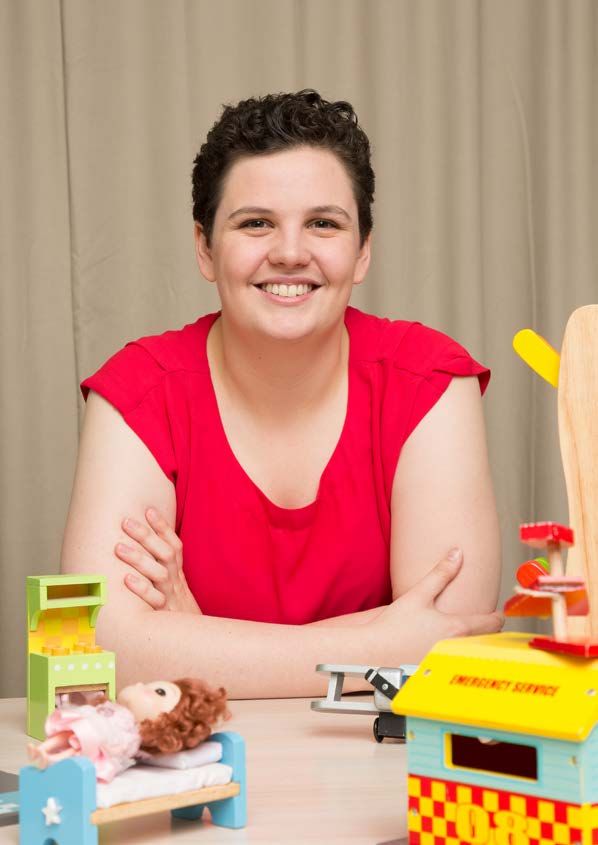
                                                                                                           ‘I chose Speech and Language

Applied learning
                                                                                                           Pathology because I really
                                                                                                           wanted to work with people —
                                                                                                           sitting behind a desk isn’t
                                                                                                           for me!
You will have hands-on learning experiences in                                                             I love my degree. It’s got a
lectures, labs and at our field stations. You can ‘do                                                      scientific side and we learn a lot
                                                                                                           of practical skills too. I’ve had
science’ right from the first semester of your first year.                                                 a different clinical placement
                                                                                                           every single semester. That
Time to get practical                                   • We operate NZ's leading astronomical             really helps you get to know
                                                          observatory at Mount John, Tekapo.
As well as extensive science laboratories,                                                                 what you like and what you
research hubs and field stations, UC has:               • UC also has research bases in Antarctica and     don’t. I had a misconception
                                                          the Nigerian rainforest.
• a new $216 million Rutherford Regional                                                                   that I’d love working with
  Science and Innovation Centre (see page 6)                                                               kids, but it turns out I prefer
                                                        Influence the world around you
• a high-performance computing facility                                                                    working with and helping
• on-site clinics
                                                        A BSc will expose you to new ideas and
                                                                                                           older adults. I like that we get
                                                        technologies, develop your research skills
• 24-hour computer labs                                 and help you work out how to influence the         to try everything before we
• an Engineering and Physical Sciences library.         world around you. Internships and projects, on     commit to a job. I’ve already
                                                        issues such as climate change, human health,       used advanced research
First in the field                                      the global water crisis, food security, and        technology like EEGs and MRI
You will have plenty of chances to test out your
                                                        environmental protection, are an ideal way of      machines. Also, we often get
                                                        solidifying learning and effecting change on
knowledge, as UC has the most field stations of         topics you are passionate about.
                                                                                                           placed with newly graduated
any New Zealand university.                                                                                students. That’s great because
• Our courses make extensive use of the field           Improve people’s lives                             we get to see how they’ve
  stations in Cass, Harihari and Westport.                                                                 adjusted to the workplace.’
                                                        Did you know that UC students can solve real-
• Field facilities are utilised in Birdlings Flat and   world problems in on-campus clinics? Those         Eloise Smith (pictured right)
  Cashmere in Christchurch.                             studying Communication Disorders, Linguistics
                                                                                                           Studying towards a Bachelor of Speech and
                                                        and Psychology can apply their learning in these
                                                                                                           Language Pathology with Honours
                                                        clinics to help real people.

4        2018 Introduction to Science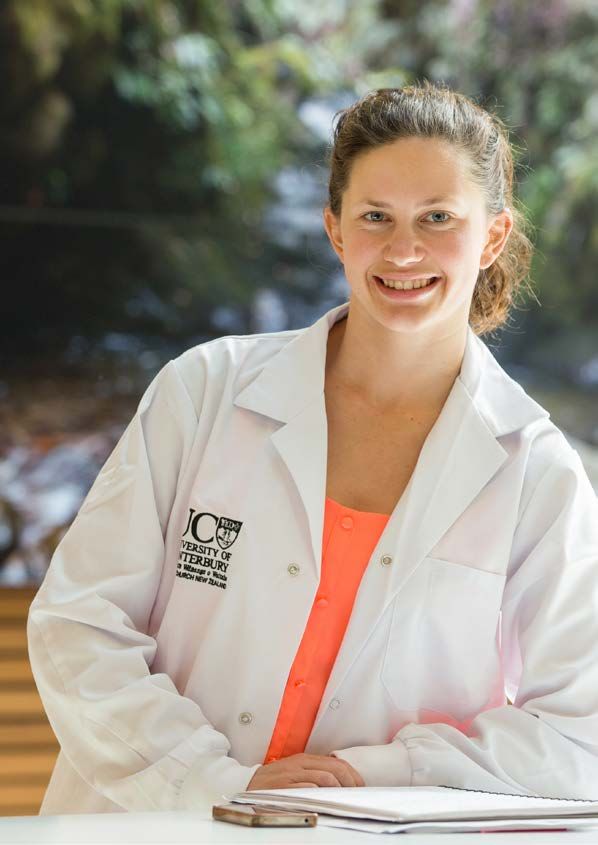
www.canterbury.ac.nz 5
ANYTHING
                                                                                                             IS
                                                                                                          POSSIBLE
                                                                                                             Career opportunities with a UC
                                                                                                           science degree range from forensic
                                                                                                           scientist to meteorologist, resource
                                                                                                              planner to clinical therapist.

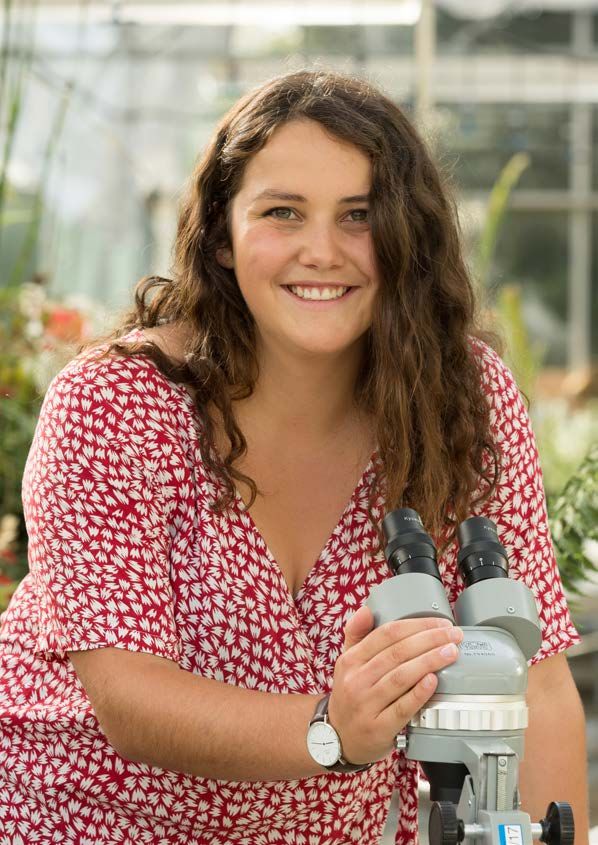
                                                                                                      ‘I’m doing a mix of Physics,

Interdisciplinary
                                                                                                      Computer Science and
                                                                                                      Astronomy. It’s been pretty
                                                                                                      easy to take multiple subjects

approach
                                                                                                      at UC. I have a slightly
                                                                                                      heavier workload but there
                                                                                                      are people who can help
                                                                                                      if I need extra support. I
Modern science cuts across diverse domains and                                                        especially like sharing my
is constantly changing. An academically varied                                                        astronomy knowledge. People
                                                                                                      are interested and there’s not
background allows you to see how things fit together                                                  much information out there.
to get results.
                                                                                                      There are lots of places where
                                                                                                      students can study together. I
So many study options                             working alongside each other on projects            like to study at the library with
Studying a UC Science degree means you
                                                  to create new connections. UC is the only
                                                                                                      my friends. You’re not boxed
                                                  New Zealand university that will be able to
can explore a wide range of subjects, from
                                                  deliver science in this way.                        in and you can find out about
Antarctic Studies and Astronomy, to Physics                                                           what they’re studying. I would
                                                  This builds on the strong tradition of research
and Psychology — see pages 29–53.
                                                  collaboration at UC, with research centres and      recommend interdisciplinary
The interdisciplinary approach to science at UC
                                                  other entities uniting people from different        study. It keeps your options
creates more potential pathways and enables
                                                  disciplines within UC, nationally and globally.     open and gives you a great
you to delve deeper or broaden your studies,
depending on your study or career goals.                                                              balance. I’m not sure if I’ll ever
                                                  Exciting careers ahead                              use astronomy but I’m glad I
Our student advisors can help you work out how
to juggle a double degree, endorsements, double   Interdisciplinary learning opens up roles in        did it! It was amazing seeing
majors and other combinations — see page 16.      science that are contemporary, relevant and         Saturn’s rings and star clusters
                                                  exciting. Depending on your chosen subject, you     at the Mount John Observatory.
Working side by side                              could become a toxicologist or a food technician,
                                                                                                      I’ll never forget it.’
                                                  a meteorologist or a marine biologist, a
Our modern interdisciplinary Rutherford           psychologist or a policy advisor, a software        Liam Cordelle (pictured right)
Regional Science and Innovation Centre will see   engineer or a science writer.
staff and students from multiple disciplines                                                          Studying towards a Bachelor of Science in
                                                                                                      Computer Science and Physics

6       2018 Introduction to Science
www.canterbury.ac.nz 7

25,000
                                                                                                               square metres of brand new
                                                                                                            teaching, research and lab spaces
                                                                                                                      in the RRSIC.

                                                                                                      ‘I love the lectures. I find the

Purpose-built
                                                                                                      content really interesting.
                                                                                                      I also like the labs because
                                                                                                      I’m a very practical person.
                                                                                                      The Chemistry department is
UC’s laboratories, research centres and field stations                                                full of really cool instruments
                                                                                                      and machines. We did a whole
are internationally renowned. Added to this is a brand                                                course just learning about
new regional centre, designed to keep students at the                                                 them, what they do and how
forefront of contemporary science practice.                                                           to use them. There’s heaps of
                                                                                                      fascinating technology here
                                                                                                      and it’s kept really up to date.
State-of-the-art                                    Communication Disorders students
learning environment                                have excellent resources including eight          In one of my Chemistry
The extensive facilities already in use by UC
                                                    on-site clinics.                                  courses I worked in a small
Science students will be boosted even more                                                            team to compare the iron
with the opening of the $216 million Rutherford
                                                    Catering for today’s learners                     content of various types of
Regional Science and Innovation Centre (RRSIC)      and tomorrow’s leaders                            flour. We had to design the
in 2017. This will be an exciting learning space    The RRSIC will be dynamic and adaptable to the    whole experiment ourselves.
where staff and students can collaborate, be        diverse needs of today’s learners. The centre     It was a very innovative
inspired and grow their scientific knowledge        has been purposefully designed to encourage
about New Zealand and the world.                    innovation and support flexible learning and
                                                                                                      process which I really enjoyed.
Our students in Geography, Geology, Chemistry,      teaching methods, with:                           I also took a summer school
Physics, Astronomy, Biochemistry, Ecology and       • state-of-the-art laboratories                   course where we went up to the
Biological Sciences will benefit from the most                                                        Cass field station, and visited
                                                    • built-in technologies
modern university science and research facilities                                                     places like the West Coast and
                                                    • informal social and study spaces.
in the Southern Hemisphere.                                                                           Lake Ellesmere.’
Psychology and Linguistics students benefit         It will enable easy interactions between
from modern computer laboratories, video            departments, and support face-to-face             Emily Mace (pictured right)
equipment, equipment for animal behaviour           teaching methods, individual and small group      Bachelor of Science in Chemistry
and neuroscience research and teaching.             investigative laboratory work, online research,   Studying towards a Master of Science in
                                                    and learning either individually or in groups.    Environmental Science

8       2018 Introduction to Science
www.canterbury.ac.nz 9
75
                                                                                                                    experts from around the world
                                                                                                                   come to teach and collaborate at
                                                                                                                   UC each year through the Erskine
                                                                                                                       Fellowship programme.

                                                                                                             ‘At first I found it daunting to

Accessible experts
                                                                                                             go up and ask questions, but
                                                                                                             the teachers here are really
                                                                                                             relaxed. I feel comfortable
                                                                                                             talking to them and I can
The depth of research activity at UC, the most                                                               email them with questions if
                                                                                                             I need. The lecturers at UC are
research-intensive university in New Zealand,                                                                really passionate about what
ensures that students are taught by leading scientists.                                                      they do. For example, I had a
                                                                                                             Statistics professor who was
Learn from the best                                  UC is ranked in the top two of New Zealand’s            teaching what seemed like
                                                     eight universities for research in 10 out of 17         really boring subject matter
What do these people have in common: the
discoverer of a new species of plant in the
                                                     subject areas.** UC has the country’s top-rated         to me as a Psychology student.
Philippines; the expert who advised on a spider
                                                     Biological Sciences research school and                 But he was so into it, his
sequence in a BBC Attenborough series; the
                                                     our geologists are world leaders in
                                                                                                             passion was contagious.
                                                     earthquake studies.
recipient of the Distinguished New Zealand
Geographer Award; the scientist finding planets
                                                                                                             The research they are
around other stars in our galaxy; the architect of   World leaders who teach                                 involved in here is also really
the Sustainable Seas National Science Challenge;     UC Science lecturers are actively involved in           impressive. It’s awesome
and the brains behind Te Papa and Weta               research and publishing in their specialist areas.      having these well-known
Workshop’s latest exhibition BugLab?                 As a result, you will be taught by those who are        people who are experts in
You could be taught by these people during
your time at UC.
                                                     at the forefront of knowledge. In fact, UC is the
                                                                                                             their field guiding you through
                                                     top university in the country for proportion of
                                                     researchers that teach.                                 what can be quite a daunting
Highly ranked                                        UC’s teachers make learning interesting; many
                                                                                                             process.’
UC is placed in the top 200 universities in the      receive international and national awards for the       Lihini Mendis (pictured right)
world in Computer Science and Information            quality of their teaching.
                                                                                                             Studying towards a Bachelor of Science
Systems, Earth and Marine Sciences,                  Our staff can provide you with a knowledge              in Psychology
Environmental Sciences, Geography,                   framework which you can apply to new
Linguistics, Psychology, and Statistics and          problems. Our scientists challenge students to
Operational Research.*                               look beyond the surface and what is known.              Photos from top left: Associate Professor Katharina
                                                                                                             Narswell, Head of the Department of Psychology, with
                                                     * QS World University Rankings by Subject, 2017.
                                                                                                             student Lihini Mendis; Dr Malcolm Campbell monitoring
                                                     ** The latest Tertiary Education Commission 2012 PBRF
                                                                                                             air quality on the Port Hills.
                                                     Assessment.
10      2018 Introduction to Science
www.canterbury.ac.nz 11
6 MILLION
                                                                                                               YEARS
                                                                                                                 since the two volcanoes in
                                                                                                              Banks Peninsula were last active.

                                                                                                           ‘As a little kid I was fascinated

Living Laboratory
                                                                                                           with volcanology and now
                                                                                                           I’m interested in Engineering
                                                                                                           Geology. I did a summer school
                                                                                                           field trip course. We were on
Christchurch and Canterbury are a living laboratory                                                        campus for a week, followed by
                                                                                                           a week on the Banks Peninsula
where students can see science-in-action and the                                                           looking at volcanic processes.
impact that it has on communities.                                                                         Then we went to the UC field
                                                                                                           station in Westport. I find it
Discover the sea and stars                          Transformation and Emergence really interesting to study
                                                                                                           out in the field. You can see
Your course at UC may take you to the Pacific       The Canterbury earthquakes have provided an
Ocean or the Southern Alps, an ancient volcanic     unprecedented opportunity to rethink and renew
                                                                                                           the physical evidence of these
peninsula or an agricultural plain. Whether         a city. Christchurch is a living lab for scientists to extremely slow geological
you’re in native bush, a glacial lake, or an        study emerging aspects of science and challenge processes. Basically, wherever
International Dark Sky Reserve, this is your        old ways of thinking.                                  there are rocks I’m in a lab!
Canterbury classroom.                               The Christchurch Central Recovery Plan aims            The more interesting the
The region is full of contrast and excitement. It’s to improve the social, economic, cultural and          formations, the better.
home to the highest point of New Zealand, the       environmental well-being and resilience of
spectacular Aoraki/Mount Cook, as well as deep      greater Christchurch and its communities.           Studying here puts me within
sea marine life in the submarine trenches off the   From research on biodiversity to technological      just a few hours’ drive from
coast of Kaikōura.                                  innovation, brain research to economic revival,     all sorts of amazing natural
Christchurch has a history of involvement in        UC scientists have been at the forefront of the     features. And I’ve learnt how to
                                                    rebirth of New Zealand’s most modern city.
Antarctic exploration – both Robert Falcon                                                              do all sorts of different things,
Scott and Ernest Shackleton departed from           Across disciplines UC students have applied their   which definitely makes me
Lyttelton port.                                     knowledge in this real-world context through
                                                    internships, research projects, fieldwork and
                                                                                                        more employable.’
As a UC student these locations are where you
will test hypotheses and discover new truths.       community-based initiatives (see page 4 for         Dacre Herlihy (pictured right)
And some of these places are within 20 minutes      more information on applied learning).
                                                                                                        Studying towards a Bachelor of Science in
of campus.                                                                                              Geography and Geology

12      2018 Introduction to Science
www.canterbury.ac.nz 13
43
                                                                                                                   main subject combinations
                                                                                                                  are available to study within
                                                                                                                     a Bachelor of Science.

                                                                                                         ‘I’ve always been interested

Flexibility
                                                                                                         in the environment and living
                                                                                                         things, which naturally drew
                                                                                                         me to biology. I decided to
                                                                                                         take law as well because I
With a broad degree programme that gives you plenty                                                      want to help people and give
                                                                                                         them a voice. Maybe I’ll go
of opportunities to specialise later on, UC Science                                                      into environmental law or
fosters the flexible and knowledgeable graduate                                                          biosecurity.
employers are looking for.                                                                               So far I’ve had a lot of
                                                                                                         opportunities with both.
Explore a range of options                           You’re not on your own                              For example, I’ve done
Our three-year Bachelor of Science (BSc) degree      We understand that it can be hard to decide         an internship with the
is hugely flexible and you can mix-and-match         what to study and you may want to keep your         New Zealand Public Interest
subjects across a range of disciplines. This         options open, particularly in your first year.      Project where we work on
allows you to explore a wide range of subjects,      We give students the ability to try different       miscarriages of justice. That
try things out and see what you like before your
specialise and progress in your career.
                                                     things so you can work out what you want to         opened my eyes to forensics
                                                     do, all the while offering guidance so you remain
You can choose from:                                 on track. See page 16 for information on how our
                                                                                                         which was really cool. I feel
                                                     dedicated Science Student Advisor can help you      like I’m gaining a well-rounded
• 18 major subjects
                                                     to explore your options and make decisions that     knowledge base as I go.’
• 32 disciplines in total                            are right for you.
• endorsement pathways                                                                                   Morgan Couch (pictured right)
• double major pathways or even study a              The value of science graduates                      Studying towards a Bachelor of Laws with
  double degree – see page 28.                                                                           Honours and a Bachelor of Science in Biological
                                                     The benefit of a generalist degree like a BSc is    Sciences with an endorsement in Ecology
These options give you the opportunity to            that students gain transferable skills applicable
design your own future.                              within a range of industries, scientific and
Find out about topics as diverse as artificial       otherwise. A broad degree can open up career
intelligence or risk and resilience, biotechnology   options. There are also expanding opportunities
or science education.                                in new science and technology.

14      2018 Introduction to Science
www.canterbury.ac.nz 15
1,500
                                                                                                                          students were seen
                                                                                                                   face-to-face by a Science Student
                                                                                                                            Advisor in 2016.

                                                                                                             ‘I wanted to gain more

Student support
                                                                                                             practical experience in my field
                                                                                                             so I went to the UC Careers
                                                                                                             team. They helped me develop
                                                                                                             my CV and cover letter, and
The College of Science takes pride in supporting you                                                         gave me good tips about how to
                                                                                                             approach employers. They were
with ongoing study advice. UC has many support                                                               a huge help in enabling me to
initiatives to help students navigate university life.                                                       land a summer job.
                                                                                                             I’ve also joined the rugby
A little advice can go a long way                    • Advice on eligibility to graduate
                                                                                                             club, learned how to surf and
When you join UC it’s the start of a relationship.   • Cross-crediting between degrees                       snowboard, gone tramping
We walk alongside you as you progress through        • Transferring between degrees or universities          and mountain biking. There’s
your studies, and we take pride in your success.     • Exemptions, such as waivers of pre-requisites         a phenomenal amount of help
Our academic advisors, and Māori and Pacific           or core-requirements.                                 provided at UC, whether it’s
development teams provide all the support
                                                                                                             through the clubs, the UCSA,
you need. Our strong alumni network, and             Other support services on offer                         or religious, social and ethnic
connections with employers and researchers
throughout New Zealand and overseas add even         UC offers many services that can help you to            groups. There are so many
                                                     flourish personally and academically:
more value to your UC experience.                                                                            people waiting and willing
And don’t forget the expert lecturers or             • mentoring                                             to help.’
technicians on hand — many are award-winning         • Pacific student support
teachers and they are keen to help you progress      • Māori student support                                 Sef Erasito (pictured right)
your knowledge. See page 10 for more.                                                                        Studying towards a Bachelor of Science
                                                     • Academic Skills Centre
                                                                                                             in Geography
                                                     • Disability Resource Service
What can a Science Student
Advisor help you with?                               • Careers, Internships and Employment
                                                     • UC Students’ Association
• Degree planning, including double degrees
  and double majors                                  • Student Care advice                                     More information
• Explaining your course options                     • the RecCentre                                           www.science.canterbury.ac.nz
                                                     • UC Health Centre.                                       www.canterbury.ac.nz/student-support
• Understanding degree regulations
                                                     Photo top left: Sef Erasito and Rebecca Phipps, Human
16      2018 Introduction to Science
                                                     Resources Administrator from Environment Canterbury.
www.canterbury.ac.nz 17
11
                                                                                                              major global software, hardware,
                                                                                                             electronic, telecommunication and
                                                                                                               service companies are based in
                                                                                                                        Christchurch.

                                                                                                        ‘My favourite part of life at UC

Compact Campus
                                                                                                        is all the people I’ve met. Last
                                                                                                        year I lived at Rochester and
                                                                                                        Rutherford Hall on campus. It

and City
                                                                                                        was my first time living out of
                                                                                                        home. I met so many different
                                                                                                        people from so many different
                                                                                                        places, all studying completely
Christchurch is an accessible city with many                                                            different things.
businesses and research locations close to university.                                                  There’s a nice mix of old and
UC’s single campus connects you to a broad                                                              new on campus. You get the feel
scientific community.                                                                                   of a traditional university, with
                                                                                                        modern facilities as well. The
                                                                                                        library is my favourite place
One place — more connections                        A campus for the curious                            to go when I have a break. It’s
Studying Science at UC will prepare graduates for   A bustling campus with over 87 hectares of          a great place to be a student.
a connected and fulfilling career.                  park-like surroundings, UC has plenty of learning   There are lots of places to
An Innovation Hub in the new Rutherford             spots for the scientifically inclined. Students     live nearby. You can walk
                                                    can be found testing pH levels in Ilam Stream
Regional Science and Innovation Centre (RRSIC)
                                                    waterway, growing specimens in the hydroponic
                                                                                                        everywhere, it’s easy to get to
will foster connections with industry. Students
                                                    gardens, analysing the campus layout                class and there’s a really good
will be able to build knowledge and networks
while working on projects of significance. This     geospatially, conducting psychological surveys,     bus system for getting around
will ensure our graduates enter the workforce       admiring the rock and gem collection, or using      Christchurch.’
with work-ready skills and the knowledge            the new MARs scanner.
employers need.                                     In addition to UC’s world-class laboratories,       Alysha Voon (pictured right)
UC has connections with many organisations          libraries and equipment, there are over             Studying towards a Bachelor of Arts in
within Canterbury’s key industries. They attend     15 recognised science research centres,             Japanese with a minor in Psychology and a
careers fairs on campus, offer work experience,     institutes and hubs based at UC.                    Bachelor of Science in Computer Science
collaborate on projects, take part in research,
give guest lectures and recruit UC graduates.

18      2018 Introduction to Science
www.canterbury.ac.nz 19
Best preparation for a BSc
or BSLP(Hons)
Listed below are the major subjects for a Bachelor of Science degree and a Bachelor
of Speech and Language Pathology with Honours degree, and the recommended
subjects at NCEA Level 3 that students should take to prepare for their
first-year courses. All students must meet University Entrance requirements or
their equivalent. All BSc majors recommend English language skills at NCEA
Level 2, except Linguistics which recommends NCEA Level 3.

BSc Majors
                                   Biology             Chemistry   Physics   Calculus   Statistics   Other
 Astronomy                                             *           ***       ***        *
 Biochemistry                       **                 ***         *         *          *
                                    **                 **          *         *          **           ** Chemistry, for cell biology and
 Biological Sciences
                                                                                                     molecular genetics
 Chemistry                          *                  ***         *         *          *            ** Calculus for Physical Chemistry
 Computer Science                                                            **         **           ** Computer Science — digital technologies
 Data Science   †

 Economics                                                                   **         **
 Finance                                                                     **         **
                                                                             **         **           ** Economics
 Financial Engineering
                                                                                                     ** Computer Science — digital technologies
                                                                                                     * Geography NCEA Levels 2 or 3;
 Geography
                                                                                                     * Any science subjects
 Geology                            *                  *           *         **         *            * Any science subjects
 Linguistics                                                                            *            * Any science subjects
 Mathematics                                                                 **         *
 Philosophy                                                                                          * Any science subjects
 Physics                                               *           ***       ***        *
                                    *                                                   *            ** A strong background in maths at NCEA
 Psychology                                                                                          Level 1. Laboratories are computer-based and
                                                                                                     elementary skills in computer use are required
 Statistics                                                                  **         **

BSLP(Hons)
                                   **                                                   *            ** Any other science subjects; high
 Bachelor of Speech and                                                                              standard in oral and written English;
 Language Pathology
 with Honours                                                                                        computer skills; work experience; other
                                                                                                     languages are also useful (eg, Te Reo Māori)

 Key
 *            Useful background
 **           Recommended background
 ***          Required background

† Subject to Universities New Zealand CUAP approval,
due August 2017.

20        2018 Introduction to Science
Bachelor of Science BSc
A BSc will extend your Bachelor of Science – typical degree structure
knowledge in multiple Year 1
100 100 100 100 100 100 100 100
interest areas, satisfying Level Level Level Level Level Level Level Level
many questions you may Year 2
have about the world 200
Level
200
Level
200
Level
200
Level
200
Level
200
Level
200
Level
100
Level
and encouraging you to
investigate even further.
Year 3
300 300 300 300 300 300 200 200
Level Level Level Level Level Level Level Level
Students benefit from cutting-edge research
undertaken by UC staff, visiting international Science major courses Potential Science majors1 Other Science courses Courses from Science or
other degrees
scholars and the many research centres and
institutes based at UC. The unique network of Each small block represents a 15-point course. However, some courses may be 30 points (or more).
1 Students should allow for more than one potential major subject. Students should check the 100-level requirements for their potential
field stations, from Antarctica to Nigeria, offer majors as some majors require more than two 100-level courses or enrolment in a complementary subject such as Mathematics.
amazing active learning opportunities in For full course requirements go to the University Regulations webpage www.canterbury.ac.nz/regulations/award/bsc_regs.shtml
Science courses.
Major subjects
Recommended preparation Astronomy Data Science* Geography Physics
Provided you have entry to the University, all Biochemistry Economics Geology Psychology
Science subjects can be started in the first year. Biological Sciences Environmental Science Linguistics Statistics
However, previous study is recommended for Chemistry Finance Mathematics
many Science subjects, in particular Chemistry, Computer Science Financial Engineering Philosophy
Mathematics and Physics. Some of these courses
Endorsements
have entry requirements.
Biosecurity Biotechnology Ecology
If you have not studied one or more of the
required subjects, or did not achieve enough
credits, but have University Entrance, you may
When choosing your first-year courses you Further study
should include courses that allow you to
consider taking a Headstart preparatory course If you have achieved top grades during your
advance to 200-level in at least two subjects.
or a summer catch-up course. Bachelor of Science you may be permitted to
The BSc is very flexible; as well as the major enter the BSc(Hons), which is an accelerated
You may be able to fast-track your degree and
subjects and endorsements offered you can 12-month postgraduate degree.
gain direct entry to the second year if you
study courses such as Antarctic Studies, Forestry,
have excellent Year 13 results or a New Zealand If you wish to continue your Science studies,
Water Resource Management and Health
Certificate in Science with outstanding merit. there are a number of other postgraduate
Sciences that count towards your BSc.
Contact the College of Science Student Advisor qualifications available – see pages 26–27
to discuss this. for listings.
Double degrees
Degree structure Many students combine the study of a BSc Career opportunities
with another degree such as a BA, BCom or LLB.
The BSc degree requires a minimum total of UC Science graduates find work in a range of
Students considering this should seek advice
360 points: different fields and sectors. Depending on your
from the College of Science Student Advisor.
• a minimum of 255 points of Science courses chosen path, you can become anything from a
seismologist to a soil technician, a meteorologist
• the remaining 105 points can be from either Endorsements to a marine biologist, a psychologist to a policy
Science courses or courses from other degrees.
An endorsement can be added to your major advisor, a software engineer to a science writer, a
At least 225 points must be from courses above in recognition of the fact that your studies in forensic analyst to a food technician, and much
100-level, with at least 90 points at 300-level. that subject have had a particular focus. See the more. For further information please go to
above table for specialisations available. www.canterbury.ac.nz/careers
Your major/s For full details on endorsements, including a list
For a major you must complete all majoring of required courses, see the Regulations for the More information
requirements, including 60 points at 300-level BSc or contact the Science Student Advisor. College of Science
in a single Science subject (unless specified T: +64 3 369 4117
otherwise). Science does not require a minor E: collegeofscience@canterbury.ac.nz
* Subject to Universities New Zealand CUAP approval,
subject, however, a double major is possible. due August 2017. www.science.canterbury.ac.nz
www.canterbury.ac.nz 21Bachelor of Speech and BSLP(Hons)
Language Pathology with Honours
Over the four years of Bachelor of Speech and Language Pathology with Honours – typical degree structure*
this degree, students Year 1 – Intermediate
100 100 100 100 100
gain the knowledge and
CMDS CMDS STAT
161 162 101 Level1 Level2 Level2 Level2 Level2
skills to assist people Year 2 – 1st Professional
with communication and 25%
swallowing disorders.
Year 3 – 2nd Professional
The Bachelor of Speech and Language Pathology 30%
with Honours is a highly regarded, professional
degree accredited by the New Zealand Year 4 – 3rd Professional
Speech-Language Therapists’ Association.
UC students are able to utilise on-site resources 50%
such as clinics and research facilities.
Compulsory courses Clinical placement Elective courses
Recommended preparation 1 Students must take one of the following: HLTH 106; MAOR 165; SCIM 101/MAOR 172; TREO 110; TREO 111.
2 Students can choose courses from other degrees to make up 120 points. Some courses are recommended – go to the University
Regulations webpage www.canterbury.ac.nz/regulations/award/bslphons_regs.shtml
Entry into the Intermediate Year Each small block represents a 15-point course. However, some courses may be 30 points (or more).
*
Subject to Universities New Zealand CUAP approval, due August 2017.
The Intermediate Year is open to all students
with University Entrance. A background in
science is recommended. Students must also take one course in Career opportunities
Māori culture, language, or health. The four
The speech–language therapy profession offers
Entry into the Professional Years recommended courses cover communication
a range of career opportunities. Graduates
disorders, linguistics, and psychology.
The first year is followed by the Professional are highly employable as clinicians both in
Years. Entry into the Professional Years is limited New Zealand and overseas. The BSLP(Hons) is
The Professional Years recognised in Australia, the United Kingdom,
and is based on completion of the Intermediate
Year, academic merit (normally a B+ or better First Professional Year courses focus on speech Ireland and Canada.
grade average) and fluency in English. Relevant and language development and disorders, You can work with people or computers,
work experience may also be considered. evidence-based practice and audiology. By in a research laboratory, a private clinic or
Applications for entry to the First Professional working with a range of clients you will gain a government agency. You can work with
Year close on 1 October of the preceding year, practical experience (which represents up to 25% language-delayed children in a school setting or
although late applications will be considered if of the year’s work). with elderly stroke patients in a large hospital
places are available. In the Second Professional Year you continue or nursing home. You can be an entrepreneur,
If you are unsuccessful in gaining a place in the studying different types of communication developing and marketing new communication
First Professional Year, your completed courses disorders, work with practising therapists and devices and tests, or building your own
can usually be credited to a BSc, BHSc or BA. complete coursework in a hospital setting. This private practice.
year your fieldwork increases to 30%. For further information, please go to
Degree structure In the Third Professional Year you take more www.canterbury.ac.nz/careers
advanced courses and also complete research
The BSLP(Hons) requires a total of 480 points.
work. About half of your year will be based in More information
the field, with you spending more time taking
The Intermediate Year* responsibility for the assessment of clients and Department of Communication Disorders
The first year (Intermediate Year) comprises the planning, management and evaluation of T: +64 3 369 4314
a minimum of 120 points or eight 15-point therapy programmes. E: communicationdisorders@canterbury.ac.nz
courses (or equivalent). The Intermediate courses www.cmds.canterbury.ac.nz
may be taken in one full-time year of study or Further study
accumulated over more than one year.
Postgraduate options include:
The compulsory courses in your first year
• Master of Audiology
cover anatomy and physiology, neuroscience,
and statistics. • Master of Science (majoring in Speech and
Language Sciences)
* Subject to Universities New Zealand CUAP approval,
• Doctor of Philosophy. due August 2017.
22 2018 Introduction to ScienceBachelor of Forestry BForSc
Science
The Bachelor of Forestry Bachelor of Forestry Science – typical degree structure
Science is a professional Year 1
FORE FORE FORE FORE BIOL BIOL CHEM STAT
degree offered by the 111 131 141 151 111 112 100 Level1 101
New Zealand School Year 2
of Forestry. It is an FORE
205
FORE
215
FORE
218
FORE
219
FORE
222
FORE
224
SOIL
203
interdisciplinary degree Year 3
that prepares graduates FORE FORE FORE FORE
for managing forest 307 316 327 342
resources by combining Year 4
the study of core
FORE FORE FORE FORE
419 422 447 414
science courses with Compulsory Elective Forestry Dissertation for honours
management, commerce, courses Science courses students only
and technologies.
1 CHEM 114 is recommended.
Each small block represents a 15-point course. However, some courses may be 30 points (or more).
Small classes and field trips make for an In the second, third and fourth years you There is also a Forest Engineering programme at
engaging and rewarding learning experience at will then apply your knowledge to the forest UC, which students can study as a Bachelor of
UC. Forestry Science graduates are highly sought situation, with elective options available in the Engineering with Honours in four years.
after by employers and follow exciting and third and fourth years.
rewarding career paths. It is possible to study the first year of the BForSc Further study
at other New Zealand universities. Students UC offers a Graduate Diploma and Postgraduate
Recommended background considering this option should consult the Diploma in Forestry for graduates looking to
The BForSc is open to all students who gain School of Forestry for their course selection, update or retrain and a master's and PhD for those
entry to the University. It is recommended that which would include FORE 102 Forests and who wish to advance their Forestry Science studies
prospective students take NCEA Level 3 biology Societies (available by distance). and research.
and maths – or the IB/Cambridge equivalent. For the full degree requirements see the
You may be able to fast-track your degree and Regulations for the BForSc at Career opportunities
gain direct entry to the second year if you www.canterbury.ac.nz/regulations
UC students benefit from New Zealand Institute
have excellent Year 13 results or a New Zealand of Forestry meetings, lectures on campus and
Certificate in Science with outstanding merit. Bachelor of Forestry Science summer work opportunities. Some of the biggest
It is possible to gain exemption for parts of the with Honours companies in New Zealand hire UC graduates and
Forestry Examinations with a Bachelor of Science many obtain work overseas.
Students with a good grade average across
(BSc) or a New Zealand Diploma in Forestry with
200 and 300-level courses may be invited to Possible careers include forest management
outstanding merit.
undertake honours as part of the fourth year of (plantation and native forests), conservation,
If you have not studied Year 12 chemistry or their degree. Honours involves the completion of harvesting, wood processing, planning, policy,
Year 13 statistics, or if you feel you have a weak a research course FORE 414 Dissertation. forest science, timber appraisal, biosecurity, forest
background in these subjects, you should economics, sustainability and land management.
consider enrolling in a UC Headstart preparatory
course over summer.
Double degrees For further information go to
You can combine the Forestry Science degree www.canterbury.ac.nz/careers
Degree structure with the study of another degree, such as a
Bachelor of Commerce (BCom) or BSc degree. More information
The BForSc requires a total of 480 points over Normally you can complete the two degrees in
four years. The first year provides a substantial School of Forestry
five years, but some degree combinations may
base in pure science which is necessary for the T: +64 3 364 2109
take longer. It is also possible to complete a
professional study of Forestry Science. E: forestry@canterbury.ac.nz
BCom degree with a strong Forestry emphasis. If
www.forestry.ac.nz
First year courses cover a broad range of topics you are considering a double degree you should
from trees, forests and the environment to consult the School of Forestry or the Liaison
the commercial aspects of forestry and the Office before enrolling.
importance of ecology, diversity
and conservation.
www.canterbury.ac.nz 23Bachelor of Health BHSc
Sciences
The Bachelor of Health Bachelor of Health Sciences majoring in Psychology – typical degree structure
Sciences is a three-year Year 1
100 100
non-clinical degree
HLTH HLTH BIOL HLTH PSYC PSYC
101 106 116 110 105 106 Level Level
designed to address gaps Year 2
in the health workforce by HLTH
201
HLTH
202
MAOR
270
PSYC
206
PSYC
200 Level
PSYC
200 Level
200
Level
200
Level
producing graduates with
multidisciplinary skills
Year 3
HLTH PSYC PSYC PSYC 200
and an understanding 301 339 344 300 Level Level
of important national Compulsory Major Other courses from Health Sciences
health issues.
courses courses or other degrees
Some majors have different requirements. For full course requirements go to the University Regulations webpage
www.canterbury.ac.nz/regulations/award/bhsc_regs.shtml
New Zealand’s health and disability sector is Each small block represents a 15-point course. However, some courses may be 30 points (or more).
characterised by a diverse workforce made up of
many occupations. This diversity is essential to
be able to provide the range of services required
with communities to improve health outcomes. Further study
Students will graduate able to evaluate
to meet population health outcomes. quantitative, qualitative and Kaupapa Māori Students with a health-related undergraduate
This programme is based on world-leading information equipping them for decision-making degree may apply for entry to the Postgraduate
research and provides the opportunity for in the workplace. Diploma in Health Sciences and Master of
internships in health-related workplaces. Health Sciences programmes. Students with the
Graduating BHSc students who complete appropriate background may be able to apply
HLTH 312 Health Planning, Implementation for programmes in Counselling, Child and Family
Recommended preparation and Evaluation are recognised by the Health Psychology, Nursing* or Specialist Teaching.
Entry to a BHSc degree is open to all students Promotion Forum as meeting the foundation See pages 26–27 for more on the graduate and
with University Entrance. For some majors, a knowledge and understanding of postgraduate qualifications on offer.
background in biology, chemistry and statistics Ngā Kaiakatanga Hauora mō Aotearoa/Health
Promotion Competencies for New Zealand.
can be beneficial. If you would like to brush up Career opportunities
on your knowledge in these areas, Headstart
preparatory and summer catch-up courses Major subjects The BHSc at UC is ideal preparation to equip
are available. students to work within the many non-clinical
Majors areas of health, health management and health
Environmental Health care. Graduates will gain multidisciplinary skills
Degree structure and insights that are highly valued in these fields.
Health Education
• The BHSc requires a total of 360 points made Māori and Indigenous Health Health Sciences graduates work in settings such
up of 135 points from compulsory courses and as district health boards, government ministries,
Psychology
at least 90 points from one subject major. local government, non-government organisations,
Public Health
• The first year of study gives students a Society and Policy Māori health providers, aged residential care,
foundation in Health Sciences through core schools, primary care organisations, universities
courses introducing students to health and polytechnics.
studies, human biology, epidemiology, and Double majors
For further information go to
Māori health. Students will also undertake Many students choose to enrol in a double www.canterbury.ac.nz/careers
courses from their chosen major. major and this can often be completed in the
• At least 225 of the total points must be same length of time as a single major. Students
More information
for courses above 100-level. In the second commonly combine majors in Public Health
and third years of study, students will gain and Society and Policy; Health Education and UC Liaison
specialist knowledge in their chosen major. Psychology; and Māori and Indigenous Health T: 0800 VARSITY (827 748)
and Public Health. Elective courses may be E: liaison@canterbury.ac.nz
chosen from Health Sciences or other degrees www.health.canterbury.ac.nz
Workplace skills and knowledge
across the University.
This degree will provide students with an * The Master of Health Sciences Professional Practice and
awareness of the critical health challenges facing Bachelor of Nursing joint initiative between UC and the Ara
Institute of Canterbury gives the opportunity for students
New Zealand. Essential workplace skills will be who already hold a relevant degree to gain two further
gained in cultural competency and working qualifications in just two years.
24 2018 Introduction to ScienceCertificates
Certificate in Science CUP welcomes students who: BRDG 019 Statistics: Probability
If you are interested in science but don’t wish to • have recently finished Year 13 programmes but Distributions and Inference
commit to full-time degree study just yet, you missed University Entrance BRDG 023 Chemistry
might consider the Certificate in Science. • are under 20 and left school without BRDG 024 Physics
University Entrance BRDG 025 Biology
Certificate in Science – possible structure • have been out of study for a number of years BRDG 028 Accounting
Year 1 and want to refresh their study skills and BRDG 029 Economics
obtain further background knowledge before BRDG 032 Special Topic
100 100 100 beginning a degree programme
Level Level Level Level BRDG 034 Making the World a Better Place:
• are New Zealand or Australian Citizens or Ideals and Realities
Year 2 BRDG 035 Pacific Migration, European
Permanent Residents who are proficient
200 200 in English. Expansion and the Treaty of
Level Level Waitangi
If you are under 18 you must meet the literacy
Science subject (eg, Geography) and numeracy requirements for University
Each block represents a 15-point course. This diagram is an
Entrance and provide evidence of support More information
example only – other combinations are possible (eg, students from your school. For more information about
may choose to study three courses at 200-level). UC Liaison
eligibility go to
T: 0800 VARSITY (827 748)
The certificate comprises a minimum of www.canterbury.ac.nz/transitions/cup
E: liaison@canterbury.ac.nz
75 points at 100 and/or 200-level and can be www.canterbury.ac.nz/transitions/cup
completed in one to two years of part-time Programme structure and duration
study. Credit can be transferred to the Bachelor The CUP programme helps students to develop Foundation Studies Certificate
of Science (and some other degrees), provided the skills necessary for successful university
you have not graduated with the certificate and study, including study and time management UC International College (UCIC) offers pathways
no more than five years has elapsed. skills; oral and written communication skills; to undergraduate study at UC for international
analytical, critical and problem-solving skills; students who need to qualify for direct entry to
To study the certificate you must meet the entry
and interpersonal, group and teamwork skills. the University bachelor degree programmes.
requirements of the University.
The CUP programme is delivered in partnership The Foundation Studies Certificate is a
Certificate structure with Hagley College. The core course BRDG 006 pre-degree preparation programme offered on
Academic Communication and Study Skills is campus. It runs full-time over two semesters
For the full requirements see the Regulations with three intakes each year in February, June
for the Certificate in Science at delivered by Hagley College on their campus in
the February and June intakes. and October.
www.canterbury.ac.nz/regulations
While it is desirable to complete the CUP Successful completion of Foundation Studies
Certificate is accepted for direct entry into
More information full-time in one semester, it is possible to study
the first year of all UC's undergraduate
part-time. Students who want to enrol in one or
College of Science more CUP courses are able to do this by enrolling degree programmes.**
T: +64 3 369 4117 in a Certificate of Proficiency Preparatory (COP Available study streams:
E: collegeofscience@canterbury.ac.nz PREP).
www.science.canterbury.ac.nz • Arts and Mass Communication
CUP courses • Business
Certificate in University The certificate comprises of four courses: • Engineering
Preparation BRDG 006 and three optional courses. • Information Technology
The Certificate in University Preparation (CUP) Course Course title • Science.
is a one-semester programme designed for code
** Some degree options may require students to satisfy
students who do not meet the requirements BRDG 006 Academic Communication and additional entrance criteria or a higher level of English
for University Entrance or who have been out of Study Skills* language ability. Students will be advised at application if
there are any additional requirements.
study for a substantial period. BRDG 011 Individuals in Society
BRDG 014 Teacher Education and For more information go to www.ucic.ac.nz or
Students who successfully complete the
Educational Studies email info@ucic.ac.nz
programme will be eligible to apply for entry to
100-level degree courses at UC. BRDG 016 Mathematics Part One
CUP intakes are in February, June and November. BRDG 017 Mathematics Part Two
BRDG 018 Statistics: Data and Probability
* Compulsory
www.canterbury.ac.nz 25Graduate and
postgraduate options
UC scientists are involved Science facilities at UC are world-class and will
be enhanced by the completion of the new
Study options
in ground-breaking $216 million Rutherford Regional Science and Graduate options
research. They have Innovation Centre (RRSIC). The first building
will open in 2017 and include specialist
Graduate Diploma in Science
discovered a new plant teaching and research laboratories for physics, Postgraduate options
species, halved the rate astronomy, chemistry, geology, geography and
biological sciences.
Bachelor of Science with Honours
of pneumonia in stroke
Postgraduate Certificate in Antarctic Studies
The field stations — from Cass in the west to Postgraduate Diploma in Applied Data Science
patients, and helped fight Antarctica in the south — are unique in
Postgraduate Diploma in Clinical Psychology
mosquito-borne diseases New Zealand.
Postgraduate Diploma in Geographic
in Tonga. Dive in deep — specialise in
Information Science
your chosen field Postgraduate Diploma in Science
International rankings UC Science students can choose from a broad
Postgraduate Diploma in Water
Resource Management
UC is ranked in the top 200 universities in the range of specialised topics at graduate and
postgraduate level. Master of Antarctic Studies
world for Computer Science and Information
Systems, Earth and Marine Sciences, Topics such as: Master of Applied Data Science
Environmental Studies, Geography, Psychology, Master of Audiology
• Applied Data Science
and Statistics and Operational Research.* Master of Disaster, Risk and Resilience
• Geographic Information Science
For research, UC is ranked first in New Zealand Master of Geographic Information Science
for molecular, cellular and whole organism • Medical Physics
biology and in the top two universities in the Master of Speech and Language Pathology
• Water Resource Management, and
country for its research in agriculture and many more. Master of Science
applied biological sciences, computer science, For all the subjects you can study at Master of Urban Resilience and Renewal
and ecology, evolution and behaviour.** postgraduate level, see the Postgraduate Master of Water Resource Management
Prospectus or www.canterbury.ac.nz/subjects
Globally connected Professional Master of Engineering Geology
Doctor of Philosophy (PhD)
Expert UC staff are joined by visiting
international authorities every year, through the
Erskine programme. Specialists from all over * QS World University Rankings by Subject, 2017.
the world come to UC to teach and collaborate, ** The latest Tertiary Education Commission 2012
PBRF Assessment.
providing unparalleled access to expertise.
26 2018 Introduction to ScienceWorld-class research centres Geospatial Research Institute –
and institutes The Geospatial Research Institute (GRI) Toi
Hangarau is a multi-disciplinary research
Science at UC is home to many institute dedicated to outward-facing,
world-leading research centres and collaborative geospatial research
institutes, which gives students access and innovation.
to the latest advancements across a wide www.geospatial.ac.nz
range of different specialisations, such as:
• Rose Centre for Stroke Recovery and
• Biomolecular Interaction Centre Research – The Rose Centre at St Georges
– This centre researches molecular Medical Centre is a new, state-of-the-
interactions critical to biological function. art facility building on the successes of
Understanding biomolecular interactions the current Swallowing Rehabilitation
is central to a range of fundamental Research Laboratory and will extend
sciences, new treatments for disease, and this research and clinical expertise
a wide range of highly functional products. to address all aspects of rehabilitation
www.bic.canterbury.ac.nz in this population.
• Gateway Antarctica – The Centre for www.rosecentre.canterbury.ac.nz
Antarctic Studies and Research aims to • Waterways Centre for Freshwater
‘My study has given me a broad
contribute to increased understanding Management – The Waterways Centre is background in various topics.
and more effective management of the focused on improving knowledge-driven As I’ve entered the workforce
Antarctic and the Southern Ocean. management of freshwater resources I have discovered areas that
www.anta.canterbury.ac.nz in Canterbury, and aims to address further interest me and used
• GeoHealth Laboratory – The GeoHealth national and international water
my existing skills to help
Laboratory undertakes applied research, management issues.
including focusing on how the local and www.waterways.ac.nz expand my knowledge. GIS is
national contexts shape health outcomes Science also has connections with other
both a tool and a discipline –
and health inequalities. research centres. and extremely versatile.’
www.geohealth.canterbury.ac.nz www.research.canterbury.ac.nz
Hamish Kingsbury
Bachelor of Science in Geography,
Postgraduate Diploma in Geographic
Advanced resources for 2017
Information Science
graduates and postgraduates
Postgraduate
Prospectus Consultant, Interpret Geospatial Solutions
World-leading facilities and resources enable our
BE PREPARED
Science students to learn and research at the
TO CHANGE
THE WORLD
cutting edge. UC Science operates:
• the foremost network of field stations of any
New Zealand university
• BlueGene, an IBM supercomputer
• speech and language clinics
• a sports science centre
• a brand new hub for UC Science students,
researchers and the community — see page 8.
For more information on graduate and postgraduate study
at UC, see the Postgraduate Prospectus at
www.canterbury.ac.nz/publications/postgrad.shtml
www.canterbury.ac.nz 27You can also read


