Barts and The London School of Medicine and Dentistry Undergraduate Study 2015 - www.smd.qmul.ac.uk
←
→
Page content transcription
If your browser does not render page correctly, please read the page content below
Barts and The London
School of Medicine
and Dentistry
Undergraduate Study 2015

                           www.smd.qmul.ac.uk
Open Days
  School of Medicine
  and Dentistry
  Undergraduate Medicine (A100)
  and Graduate Entry Medicine (A101)
  20 June
  15 and 18 July

  Dentistry (A200)
  8 July

  For more information please visit:
  smd.qmul.ac.uk/undergraduate/opendays

Any section of this publication is
available in large print upon request.
If you require this publication in a
different accessible format we will
endeavour to provide this where
possible. For further information
and assistance, please contact:
hr-equality@qmul.ac.uk;
Tel:
+44+44
     (0)20(0)20
            78827882
                  5585.5585

The information given in this publication is correct at the time
of going to press. The College reserves the right to modify or
cancel any statement in it and accepts no responsibility for the
consequences of any such changes. For the most up-to-date
information, please refer to the website qmul.ac.uk

This prospectus has been printed on environmentally
friendly material from well-managed sources.

2 www.geog.qmul.ac.uk
2 www.smd.qmul.ac.uk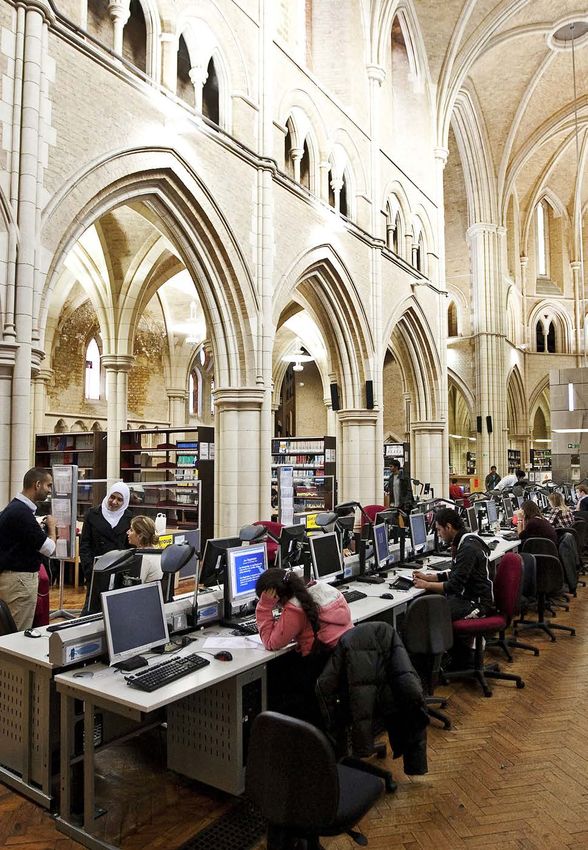
Contents

Welcome                                    4
Why study at Barts
and The London?                           6
Essential facts about the School         10
Curriculum and
intercalated degrees                     15
Degree programmes – Medicine             18
Degree programmes – Dentistry            24
Subjects related to Medicine and
Dentistry taught at Queen Mary           30
Living in east London                    32
Student life                             35
Sport                                    38
Accommodation                            41
Living costs, tuition fees
and bursaries                            44
Student support                          49
Entry requirements                       52
Entry requirements
– Alternative entry routes
  into Medicine                          56
Selection                                58
Further information
and how to apply                         66
Maps                                     68

                         www.smd.qmul.ac.uk 3
Welcome to Barts and The London
School of Medicine and Dentistry

Deciding where to study medicine or                  students who are all committed to continuous
dentistry is a big deal, and we want to              improvement and quality enhancement. We met
                                                     with students who are well supported and heard
help you get it right. Please take the
                                                     about strong support infrastructures.” We are
time to look through this prospectus;                very proud of how well our School was received
we think you will like what you see.                 by the national regulator.
Then come and visit us and meet our
                                                     Barts and The London School of Medicine
staff and students. We are confident                 and Dentistry brings together two venerable
that you will pick up on the pride that              teaching institutions: St Bartholomew’s Hospital,
we all have in Barts and The London –                which dates back to 1123, and The London
and the warmth of our welcome.                       Hospital Medical College, founded in 1785, the
                                                     oldest medical school in England and Wales.
There is a genuine excitement about being            The two hospitals lie in very different parts of
part of this institution. A unique combination       London, the City and the East End, meaning
of contrasts and opportunities flows from our        that you will be exposed to a greater diversity of
history. In the late 19th century, Queen Mary        people and their problems than at almost any
University of London grew out of the desire          other medical school. This combination of the
to bring education to the East End of London         scientific excellence mentioned above, and the
to people who had previously had limited             unmatched medical and dental opportunities
opportunities, either because of their social        that flow from our location, means that we are
background or because there were so few              in an unrivalled position to offer you the very
opportunities available to women. In a relatively    best experience as a student, shaping the sort
short period of time, the College has grown          of doctor or dentist you will become and the rest
to achieve an extremely high international           of your life.
standing. Commenting on the 2008 Research
Assessment Exercise, the Times Higher                Of course, it’s not all about studying. We are the
Education Supplement described us as “the            only true campus-based medical and dental
biggest star among the research-intensive            school in London and we offer fantastic social,
institutions”; and in the same process, we were      sporting and cultural experiences for all our
ranked second in the UK in Dentistry and in          students. All this makes Barts and The London a
Medicine – and, in both cases, top in London.        great place to study. We hope you enjoy reading
Since then, we have been climbing all the            our prospectus and that you’ll think seriously
externally validated league tables of universities   about coming and joining the Barts and The
and medical and dental schools as well as            London family. We’d love to welcome you!
the National Student Survey. Most recently, in
                                                     Professor Anthony Warrens
February 2013, the General Medical Council
                                                     Dean for Education, Barts and The
published the outcome of their recent inspection
                                                     London School of Medicine and Dentistry
of the School. They wrote “We observed a
strong sense of community amongst staff and

4 www.smd.qmul.ac.uk
www.smd.qmul.ac.uk 5

Why study at Barts
and The London?

Excellent league table ranking                     Campus-based
Barts and The London School of Medicine            Barts and The London is part of Queen Mary
and Dentistry has been rated first in the UK       University of London, the only university
for Dentistry and fourth for Medicine in the       in central London to offer a self-contained
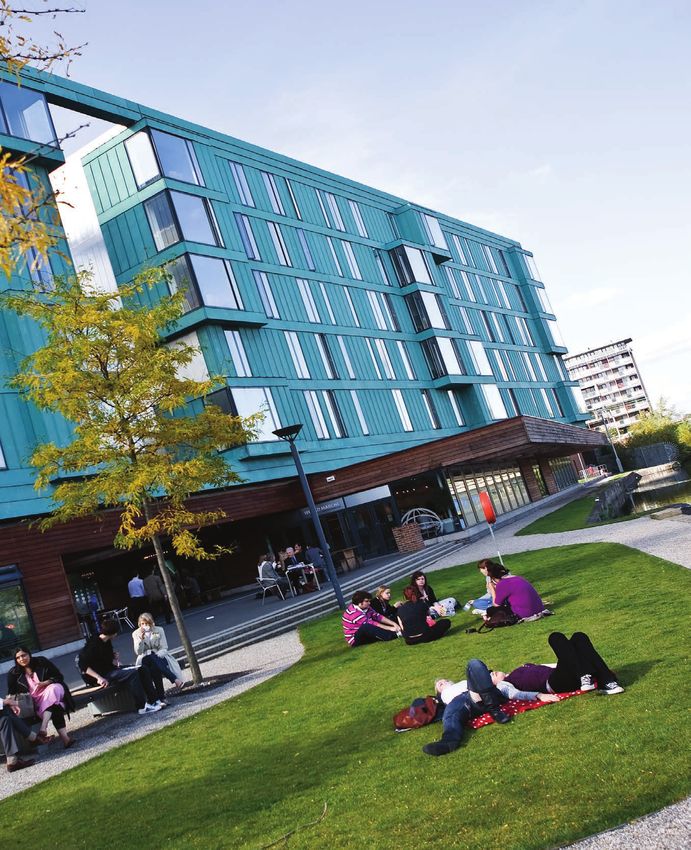
Complete University Guide 2015 subject             residential campus, which creates a strong
league tables.                                     sense of community. If you are a single, full-
                                                   time, first-year undergraduate who applies
Professor Richard Trembath, Vice-Principal for     during the normal admissions cycle and has
Health at Queen Mary University of London,         not lived in Queen Mary housing before,
Barts and The London School of Medicine            you may be eligible for accommodation on
and Dentistry, comments: “We are proud of          campus. Priority is given to those who apply
our achievements in providing the highest          by the required deadline and who live furthest
standards in Medical and Dental education,         away. East London also offers affordable
recognised in the latest Complete University       privately owned accommodation at a walking
Guide league tables. To be identified as leaders   distance from our campuses. See page 41 for
in training the next generation of doctors and     more details about accommodation.
dentists is a reflection of our dedicated and
talented academics and all who support our         Russell Group member
teaching services.”                                Queen Mary is one of 24 leading UK
                                                   universities represented by the Russell Group
The east London advantage                          that are committed to maintaining the very best
Our location in the east of London and             research, an outstanding teaching and learning
elsewhere in the East London Gateway will          experience, excellent graduate employability
enhance your experience. Not only are we           and unrivalled links with business and the
in one of the capital’s most vibrant areas to      public sector.
live, we also serve a diverse local community
where you will develop your clinical skills and    State-of-the-art clinical facilities
knowledge.                                         We have modern state-of-the-art buildings
                                                   alongside more traditional facilities, such as
Moreover, Barts and The London offers you          our fantastic library. The School takes pride
many exciting opportunities to develop an          in its clinical skills laboratory, which closely
understanding of health and the treatment          simulates the real clinical experience and is
of disease in a global and international           an invaluable learning facility, helping new
context. Many curricular and extra-curricular      students prepare themselves well for patient
developments are under way to support              care in clinics. The majority of the new Royal
learning in this area.                             London Hospital is now completed and is
                                                   the largest hospital in Europe, and includes
                                                   London’s leading trauma and emergency care
                                                   centre, one of Europe’s largest renal services
                                                   and one of the UK’s biggest paediatric services.
6 www.smd.qmul.ac.uk
“What I enjoy most is living in
                                                  a hugely diverse and up-and-
                                                  coming part of London. This
                                                  exposes me to a wide variety
                                                  of patients that other London
                                                  medical students don’t have
                                                  the chance to treat – and
                                                  I’m right in the thick of what
                                                  London has to offer!”
                                                  Hannah Fisher, Graduate Entry Programme

Students learn surface anatomy by body painting
– an essential part of their anatomy class
                                                                        www.geog.qmul.ac.uk 7
                                                                         www.smd.qmul.ac.uk 7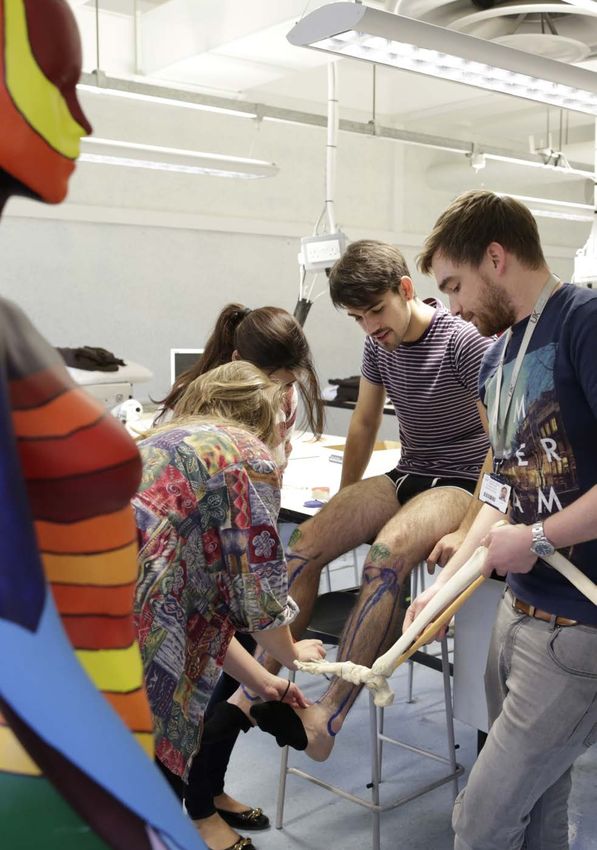
Why study at Barts
and The London?

New Dental Hospital
The Institute of Dentistry moved to new             “There is a great social life
accommodation in the Alexandra wing of
the Royal London Hospital in Whitechapel in         with a strong community feel
April 2014. Costing in the region of £78m,
it is the first new dental school to be built in
                                                    here which was evident from
the UK for over 40 years, and houses state-         day one. Everyone looks out
of-the-art facilities providing, we believe, the
most modern learning environment for dental         for each other and is proud of
education of any UK dental hospital.
                                                    being part of such a prestigious
Designed with clinical functionality at its core,
and complemented by cutting-edge technology,        institution.”
our staff, students and their patients benefit      Faraaz de Belder, MBBS
from an enhanced teaching and learning
experience, enabling improved quality of care,
underpinned by world-class research.                Excellence in research
                                                    The 2008 Research Assessment Exercise
New facilities in the 17,700 m2 of floor space      results showed Barts and The London School
include:                                            of Medicine and Dentistry joining Oxford,
• 11 dedicated seminar rooms and a student          Cambridge, Imperial College and University
  learning centre                                   College London in the top five medical and
• 92 production laboratory spaces                   dental schools in England for quality of
• Digital imaging and two cutting-edge cone         research. For more information, visit: smd.
  beam CT machines                                  qmul.ac.uk/research
• A PC in every operatory with ‘slave screen’
  on chair for viewing images and discussing        Integrated curriculum and opportunity
  results with patient                              for academic development
• Modern facial-scanning equipment                  We have completely eliminated the traditional
• Facilities and services for 72 ‘phantom’ heads    divide between pre-clinical studies and clinical
                                                    years and operate an integrated curriculum,
                                                    which means that you will start seeing patients
 DID YOU KNOW?
                                                    from the very first term. Subject to satisfactory
 Dentistry is ranked 1st in the UK in
                                                    academic performance, you will also have the
 the 2015 Complete University Guide
                                                    opportunity to take an extra year of studies
 subject rankings.
                                                    leading to an undergraduate Master in Science
 www.thecompleteuniversityguide.co.uk
                                                    degree, known as an intercalated degree.
                                                    This gives you a greater choice of career
                                                    opportunities.

8 www.smd.qmul.ac.uk
International students                             Friendly environment
We have a long history of welcoming                We pride ourselves on being a friendly School,
international students from many countries.        with excellent staff-student relationships.
We support our international students in a
variety of ways – each year, for example, we       Small dental school
visit Hong Kong and Singapore to interview         With around 70 students per year, we are still
applicants from across South East Asia and         a relatively small dental school. Our size and
talk to prospective candidates in selected         location mean that there is a strong sense
schools, helping them to save on the cost          of community and that we are never short
of travelling to London for interview. For         of patients. Dental students also have the
successful applicants, our international student   opportunity to study at a variety of outreach
welcome programme is designed to make              clinics, gaining experience within different
you feel at home straight away. We will collect    clinical settings.
you from the airport and offer an induction
programme that includes practical advice
about living and studying in London. You           “We are a comparatively
will also have the opportunity to meet other
international students.                            small dental school and all
Student support                                    the teachers know the students.
We have a highly developed network for             We know them because we
pastoral and academic support; recently
commended by the General Medical Council           interact with them and teach,
as an area of good practice. At every stage of
your studies you will receive support from staff
                                                   assist and support. Students
who are experienced in helping and advising        are able to approach us
students.
                                                   and know that we care about
 DID YOU KNOW?
 Medicine is ranked 4th in the UK in
                                                   their personal and academic
 the 2015 Complete University Guide                welfare.”
 subject rankings.
 www.thecompleteuniversityguide.co.uk              Dr Robert J McGeoch, BDS,
                                                   Clinical Senior Lecturer (Hon. Consultant)

                                                                                      www.smd.qmul.ac.uk 9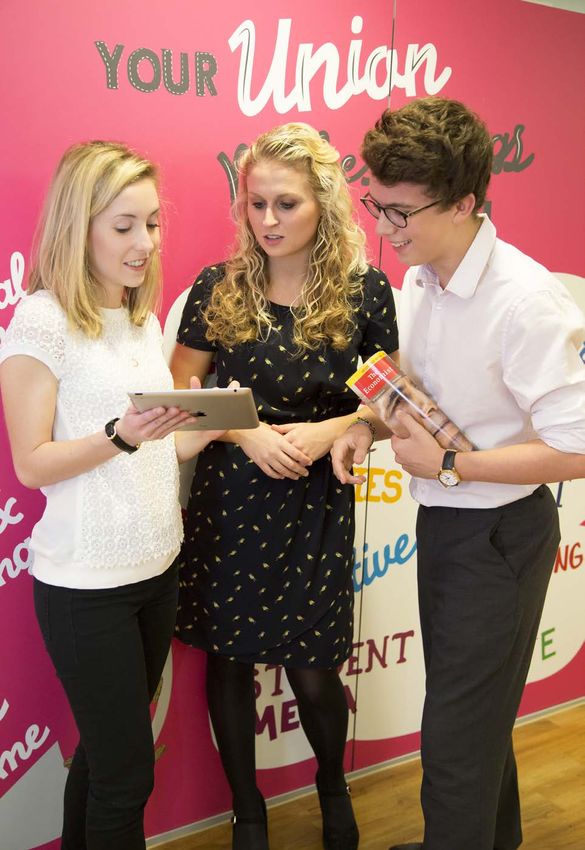
Essential facts about the School

Barts and The London is part of Queen Mary        What can I study at Barts
University of London, one of the three largest    and The London?
colleges of the University of London, and a       We run three programmes in medicine and
member of the Russell group. The College has      one in dentistry:
around 17,000 students enrolled on a wide
range of programmes including sciences, arts,     • A five-year MBBS programme (A100)
engineering, law and social science degrees.      • A shortened (four-year) Graduate-entry
The only residential campus-based College of        MBBS programme (A101)
the University of London, Queen Mary provides     • A shortened (three-year) Oral and
a close-knit environment for studying.              Maxillofacial Surgery (OMFS)/Oral Medicine
                                                    programme (A300)
The School of Medicine and Dentistry was
formed in 1995 following the merger of The        • A five-year BDS programme (A200).
Medical College of St Bartholomew’s Hospital
and The London Hospital Medical College,          We also offer a range of taught medical
both important training institutions with long    and dental postgraduate programmes. For
and distinguished histories.                      more information, visit: smd.qmul.ac.uk/
                                                  postgraduate
The Royal London Hospital opened its
medical school in 1785, making it the oldest      Where will I be based?
in England and Wales, and St Bartholomew’s        Teaching takes place on three campuses: Mile
Hospital dates back to the 12th century. The      End, West Smithfield (site of St Bartholomew’s
Dental School opened in 1911 and celebrated       Hospital) and Whitechapel (site of the Royal
its centenary in October 2011. Barts and The      London Hospital), which are based in east
London has a student body made up of people       London and the City of London.
from all over the country, from a range of
different educational and social backgrounds.     Medical students: in the first two years (A100)
The School has 2,351 undergraduate and 927        or in your first year (A101) you will be taught
postgraduate students, and is a major centre of   mainly at the Whitechapel campus. From an
medical and dental teaching and research in       early stage in the medical programme you
the UK.                                           will gain experience in the local community
                                                  through attachments with general practices.
Our location in east London and the wider
Thames Gateway offers a great opportunity to
develop varied clinical skills and knowledge.
You will be living in one of the capital’s
most vibrant areas and serve a diverse
local community.

10 www.smd.qmul.ac.uk
“The dentistry course here at
Barts gives you maximum clinical
exposure and experience,
starting in the first year. This
is reinforced with lectures and
assessments to make sure
we understand the theory. To
further cement our knowledge
and develop our clinical skills,
we’re sent to outreach clinics
in Barkantine, in Docklands and
Southend, which are brilliant;
really state-of-the-art equipment
and staff who make you feel like
an actual dentist rather than a
student.”
Noor Taha, Dentistry
www.geog.qmul.ac.uk 11
www.smd.qmul.ac.uk 11Essential facts about the School
Your third, fourth and fifth years (A100) or Hospital redevelopment programme
your second, third and fourth years (A101) Barts and The London is approaching the
are mostly spent on the wards in one of end of a £1 billion hospital redevelopment
the main hospitals used by the School for programme. Many of the hospital’s ageing
teaching. Apart from the Royal London and buildings have been replaced with state-of-
Barts, students go to Homerton Hospital, the-art healthcare facilities to rival the best
Newham General and Whipps Cross University in the world. The Royal London Hospital will
Hospital, as well as a number of other hospitals be Britain’s biggest new hospital, providing
in Greater London and Essex. Students excellent general and specialist services.
particularly value their placements in district The historic buildings of Barts, Britain’s oldest
general hospitals, as they provide excellent hospital, have been refurbished and joined
teaching resources, with a good patient-to- with a major new building to create Cancer
student ratio. and Cardiac centres of excellence.
Dental students: the BDS programme is The Blizard Building
based at Barts and The London Dental School At the heart of the Whitechapel campus is the
attached to the Royal London Hospital in Blizard Building, which houses state-of-the-
Whitechapel, but you will also undertake art facilities for students and staff: open-plan
extended outreach periods in a number of research laboratories, office space, a 400-seat
locations currently including the Barkantine lecture theatre and a café. The lecture theatre
Outreach centre in the Docklands and is fully equipped with audiovisual facilities and
Southend Outreach. The Dental Hospital an induction loop system.
provides a wide range of services and operates
as a major centre for the local community and There is also an interactive science centre,
for patients who need specialist treatment. the Centre of the Cell, designed to inspire
Experience of dental practice outside the local schoolchildren to develop an interest in
School also forms an important part of your science. The Centre is open to children, their
learning. parents and teachers. For more information,
see centreofthecell.org
Teaching facilities and learning
The Francis Bancroft Building
resources This large modern building, located at Mile
You will be able to make use of excellent
End, is used for practical teaching during
facilities and learning resources during your
the first two years (the first year for dental
studies. We have listed a few of them below.
students). It houses two lecture theatres
with IT facilities, and multi-user laboratories
equipped with computers and closed-circuit
television for practical classes.
12 www.smd.qmul.ac.ukTurnbull Centre The Clinical Skills Centre is designed and
Practical sessions on anatomy and physiology equipped to allow medical students to practise
take place in the Turnbull Centre in the clinical methods and practical skills using
Francis Bancroft Building. Here tutors lead mannequins and models. Communication
demonstrations of anatomy using anatomical skills are developed with the help of specially
specimens and models, clinical images, videos trained actors who simulate patients and are
of surgical and endoscopic procedures and able to give valuable feedback.
specialised computer imaging. You will have
the opportunity to learn topographical anatomy Libraries
through cadaveric dissections. The physiology During your studies you will have access
labs use state-of-the-art equipment and to a large collection of basic medical and
software for practicals such as ECG analysis dental texts in the main library at Mile End.
and control of breathing. Online facilities are The Library is open seven days a week.
available for the purpose of study, revision This resource is complemented by the two
and assessment. large medical and dental archives based
at The Royal London and at Barts in older,
Garrod Building architecturally distinguished buildings that
The historic Medical College building at are well worth a visit just to experience
Whitechapel has teaching rooms for Problem- their atmosphere.
Based Learning (PBL) sessions as well as
larger lecture theatres, computing facilities All the libraries have computer facilities and
and the Student Office. space where you can work quietly on your own
or with other students on group projects. You
Innovation Centre will also be able to use the extensive central
The latest addition to the Whitechapel facilities at the University of London, including
development is the Innovation Centre, which the library at Senate House, which contains
has office space, a café and the 122-seat A.E. around 1.4 million volumes.
Clark Kennedy lecture theatre, which is fully
equipped with audiovisual facilities, including Computing facilities
those for the hard of hearing and an induction There are many computers available across
loop system. Queen Mary’s campuses: the IT lab in the
Francis Bancroft Building, the Library at
Clinical and Communications Skills Centre Mile End, and the computer centres at West
At West Smithfield, we have a purpose-built Smithfield and Whitechapel campuses all have
Clinical and Communications Skills Centre, open-access computers.
which is one of the most advanced of its kind
and was the first to be developed in the UK. You will be given a personal email account
along with access to an extensive medical and
dental knowledge-base.
www.smd.qmul.ac.uk 13“I liked the structure of the course and
the component modules. The variation
of specialisms across the members of
staff was also one deciding factor for
me, as well as the fact that the course
had been designed and headed up by
Professor Pollock.”
Nazia Malik, Global Public Health and Primary Care iBSc
14 www.smd.qmul.ac.ukCurriculum and intercalated degrees
Key benefits of our innovative curricula Excellent patient care
Early clinical experience Throughout our programmes we emphasise
An early introduction to clinical topics provides the development of communication skills that
a context for your learning and makes are essential to building good relationships
studying more enjoyable and relevant. In between doctor or dentist and their patients.
the first two years, you will be able to start
applying your growing knowledge in a clinical Our curricula aim to enhance understanding of
context. Medical students accompany GPs in ethical and moral dilemmas relating to medical
consultations, discuss diagnoses, work with and dental practice.
general practice staff and, most importantly,
Greater choice
meet patients. Dental students have the
There are 13 separate opportunities to study
opportunity of studying at a variety of outreach
an area of your own interest in greater detail.
dental clinics. You will also gain clinical
These opportunities are spread over the five
experience during placements with general
years of the MBBS. Over 800 such ‘Student
dental practitioners.
Selected Components’ (SSCs) are available.
These experiences will help you appreciate These may be taken in fields such as HIV
the social factors that influence health and medicine, diagnostic imaging, plastic surgery,
healthcare. The diversity of the local population intensive care and inner-city general practice.
will give you a valuable insight into the issues For dental students the choices include
affecting different social classes and ethnic pathology, pharmacology and social and
groups. psychological sciences.
Wide-ranging experience Teamwork
You will develop your clinical skills through We encourage a team approach throughout.
a variety of clinical attachments at the Royal In addition to working with fellow students
London, Barts and Homerton hospitals, as on study projects, you will on occasion train
well as further afield at hospitals in Greater alongside nurses, physiotherapists and other
London and Essex. Community general healthcare professionals and, if you are a
practice sessions are integrated into these dental student, alongside dental nurses,
hospital attachments, complementing the therapists and hygienists. These experiences
clinical skills teaching. This gives you a useful will help you to appreciate better the different
practical experience of a diverse range of roles involved in the delivery of medical and
healthcare settings. dental services.
Dental students start outreach in their third
year, currently working at Barkantine, a
new community dental clinic in Docklands.
Here you will encounter a completely
different environment and broaden your
clinical experiences.
www.smd.qmul.ac.uk 15Curriculum and intercalated degrees
Learning and teaching • Communication skills: You will have practical
We understand that the transition from your training in interviewing techniques and
school learning environment to university can special sessions devoted to communication
be a challenge, and with support from tutors, between doctors or dentists and their
we encourage you to develop an independent patients.
attitude to learning. This approach is designed • Clinical Skills: In the early stages of the
to prepare you well for life as a qualified course this involves working with GPs and
doctor or dentist, when you will have to take community tutors.
responsibility for keeping your knowledge
up-to-date through continuing professional • Care of dental patients: If you are a dental
development. Important features of teaching student, you will start to experience the
and learning are listed below: clinical environment. In the second year
you will see medical patients at Newham
• Problem-Based Learning (PBL): This is an University Hospital as part of the training
element of the medical curriculum (A100 and in General Medicine as well as beginning
A101). Here PBL involves groups of eight to to see your own patients. You will take part
ten students working together to understand in examination, diagnosis, assessment and
and explain the central issues of a problem the prevention and management of disease,
under the guidance of a tutor. Effective working alongside therapists and hygienists
teamwork is essential for PBL and undertaking also training at the School.
independent research and presenting your
findings to the group will help you retain the • E-learning: You will have access to a large
information, and develop your communication amount of teaching material via the university
skills. The early use of clinical scenarios will virtual learning environment – an intranet-
help you apply your knowledge. Please note based facility which enables you to revisit
that even though PBL has a place in the lectures and masses of other teaching
dental curriculum, it features to a far lesser material at any time you want.
extent than for medicine.
DID YOU KNOW?
• Practical sessions: Sessions take place
Barts and The London were the first school
in our laboratories, IT labs, clinical skills
of medicine and dentistry to offer an
labs and wards. The Dental School has a
intercalated degree in Medical Education
recently installed state-of-the-art clinical
skills laboratory.
• Seminars.
• Lectures and symposia: In the Dentistry
course, symposia aim to integrate learning by
focusing on all aspects of a particular topic
and making connections.
16 www.smd.qmul.ac.ukIntercalated degree – a chance to gain • Master in Science (Medical Education)
an extra qualification • Master in Science (Molecular Medicine)
At Barts and The London School of Medicine
• Master in Science (Molecular Therapeutics)
and Dentistry, most students will have the
opportunity to take an extra year of study • Master in Science (Neuroscience)
leading to a Bachelor of Science (BSc) or • Master in Science (Oral Biology)
an undergraduate Master in Science degree
• Master in Science (Sports and Exercise
(MSci). The MSci has recently been introduced
Medicine)
and reflects the high standards expected
and achieved by our intercalating students. • Bachelor of Science (Pre-Hospital Medicine,
Normally taken at the end of either the third developed and delivered in partnership with
or fourth year, an intercalated degree allows London’s Air Ambulance
you to study in depth the biomedical sciences
that underpin your course. This gives you a See: nhsbsa.nhs.uk/Students.aspx
greater insight into your clinical studies and
To find out more about our intercalated
can also broaden your career choices when
degree programmes, see: smd.qmul.ac.uk/
you graduate. The opportunity to intercalate
undergraduate/intercalated
depends on your academic performance.
The study programmes aim to encourage you
to experiment and undertake practical work
and research projects in topics that form the “The School places a large
theoretical basis of modern medicine and
dentistry. You will benefit from tutors who have focus on clinical teaching,
personal research experience, lectures by
outside speakers and workshops where you
and is set in a fascinating
can talk about new developments. area of London, with lots of
There are now 11 intercalated degree courses history and lots of stories,
available:
• Master in Science (Biomedical Engineering which all contribute to the
and Clinical Materials) experience of studying here.”
• Master in Science (Experimental Pathology)
Anthony Hopkins, MBBS
• Master in Science (Global Public Health and
Primary Care)
• Master in Science (Infectious disease and
Epidemiology)
www.smd.qmul.ac.uk 17Degree programmes – Medicine
Medicine MBBS – A100 Phase 1 A100 (Years 1 and 2)
Medicine Graduate Entry Programme Phase 1 is taught via a series of systems-
(GEP) MBBS – A101 based modules which introduce the basic
biological sciences and address key topics
– including normal biological structure and
Medical curriculum
function of cells, organs and body systems,
The programme has been designed to provide
the effect of illness on people and their
you with the medical knowledge, clinical skills
families and the impact of environmental
and professional attitudes that are required
and social factors on health.
to become a competent and safe first-year
Foundation Year (FY1) Doctor. The curriculum You take five systems-based modules and
closely follows the recommendations set out in three student-selected components (SSCs)
Tomorrow’s Doctors (General Medical Council: each year. You will be part of an effective
September 2009). and mutually supportive community which
encourages collaborative learning through
Our spiral curriculum is taught in a series of
a programme of Problem-Based Learning
modules which are based on body systems
scenarios (PBLs); these involve groups of 8-10
which, in turn, encompass various scientific
students and a facilitator working together
and medical themes. Each system is visited
to tackle a problem presented as a clinical
a minimum of three times during the
scenario. In addition, learning is facilitated by
programme.
a programme of lectures, workshops and other
group activities. Regular patient contact is a
DID YOU KNOW?
key feature of these early years.
Barts and The London School of Medicine
and Dentistry was the first medical school
in the country to offer a pre-hospital care
programme: prehospitalcareprogramme.org Phase 1 A101 (Year 1)
You take eight modules – six systems-based
plus Human Sciences and Public Health and
Infection and Immunity. A101 students do not
complete an SSC programme in their first year.
You will be part of an effective and mutually
supportive community, which encourages
collaborative learning through a programme
of Problem-Based Learning scenarios
(PBLs) (see Phase 1 above for the five-year
MBBS). In addition, learning is facilitated by a
programme of lectures, workshops and other
group activities. Regular patient contact is a
key feature of these early years.
18 www.smd.qmul.ac.ukOn the wards: exposure to patients
early on in your studies is a key
feature of our medical degrees
www.smd.qmul.ac.uk 19Degree programmes – Medicine
Phase 2 A100 (Years 3 and 4) Phase 3 A100 (Year 5) and A101
and A101 (Years 2 and 3) (Year 4)
You will return regularly to the medical The final year of the programme provides
school for teaching weeks and assessments you with clinical and community
as well as being introduced to clinical placements, practical skills and first-hand
medicine through a series of placements experience of the working life of a first-year
in our associated teaching hospitals. Your Foundation Year (FY1) doctor.
knowledge and clinical skills are enhanced
by working alongside clinical teams both You will be placed in the hospital and
in the hospital and also within community firm where you will be based for your
placements. This enables you to expand FY1 training. During this time, you will
and apply the knowledge and skills acquired shadow the current FY1 doctor. Community
during Phase 1. placements include GP surgeries. You will
complete your SSC programme, which may
You may visit some or all of these hospitals include spending time in a specialism not
during your clinical years: The Royal previously experienced or may allow you to
London Hospital, Whitechapel, London • St gain a deeper understanding in an area that
Bartholomew’s Hospital, West Smithfield, already interests you. Throughout the year,
London • Whipps Cross University Hospital, you will return to the medical school for a
Leytonstone, London • Newham University teaching programme; in addition, there are
Hospital, Newham, London • Homerton individual sessions in communication skills
University Hospital, Homerton, London • teaching and simulated patient scenarios.
Broomfield Hospital, Chelmsford, Essex • You will also complete your Intermediate Life
Southend University Hospital, Southend, Support qualification.
Essex • Colchester University Hospital,
Colchester, Essex • The Princess Alexandra On successful completion of final
Hospital, Harlow, Essex • Queens’ Hospital, examinations, you will complete a four-week
Romford, Essex • King George Hospital, elective and this is followed by a further
Romford, Essex four-week hospital placement shadowing the
FY1 doctor you will be replacing following
You will complete three SSCs over the two graduation.
year cycle, which are based around clinical
scenarios, patient interviews and history
taking and associated issues surrounding
the chosen patient.
20 www.smd.qmul.ac.ukStudent-Selected Components (SSCs) Assessment
There are 13 separate SSCs spread across the The pattern of assessment is a combination
five years of the MBBS, comprising around of continuous assessment and regular
20 per cent of the total programme. Some are examinations throughout the programme,
carried out in blocks, lasting from two to six with final exams each year. A scheme of
weeks, while others run throughout the year. merits and distinctions rewards excellent or
They are an integral part of the curriculum, outstanding performance across each sector of
enabling you to demonstrate mandatory the curriculum. There is also a comprehensive
competences while allowing a degree of choice scheme of prizes to recognise special ability
in studying an area of particular interest. both in the main examinations and in specialist
subjects.
• SSCs range from basic sciences
(biochemistry, anatomy, physiology and Continuous assessment
pharmacology), to clinical specialisms, Continuous assessment provides you with
community and public health, ethics regular opportunities to consolidate your
and law as applied to medicine, and learning. You can monitor your own progress,
understanding the importance of research and teaching staff can identify whether or
in the development of medicine. You are not you need additional help. Continuous
encouraged to pursue any area related assessment takes many forms: short in-course
to medicine or medical sciences that has examinations, written accounts of problems
particularly interested you. You are also or cases studied, poster or clinical or other
encouraged to organise your own SSCs. presentations, log-books, work-books, direct
observation or clinical firm grades. This
Elective approach to the end-of-year examinations
One of the most interesting areas of the results in less cramming and examination
programme is the elective period in your final stress.
year, in which you will spend time studying one
or more topics in the UK or abroad. This is a DID YOU KNOW?
vital and challenging aspect of the programme Medicine is ranked 6th in the UK in the
enabling you to gain experience invaluable to Guardian University Guide 2015
your future career and personal development. www.theguardian.com/education
www.smd.qmul.ac.uk 21Degree programmes – Medicine
End-of-year examinations Assessment of Student-Selected
End-of-year examinations measure progression Components
through the core curriculum and use a range SSCs are assessed individually on a simple
of innovative assessment methods. Written grading system, and they build into a portfolio
papers test knowledge and its application covering many aspects of medicine. They must
to problem solving with extended matching be successfully completed at the end of each
questions, short answer and modified essay year in order for the student to progress to the
questions, often used in conjunction with next year, and they can help inform the award
clinical scenarios. In addition, computer- of merit in other parts of the programme.
based exams for anatomy, histology and data
interpretation are used in the first two phases
of the programme.
‘When choosing which medical
Objective Structured Clinical
Examinations (OSCEs)
school to attend, Barts and
These are used from the first year of the The London really shone
programme to assess competence in clinical,
communication and practical skills. You will through as having a great
move through a series of stations, where you
have five or ten minutes to perform a specified
social atmosphere and great
task with a real or simulated patient or a relations between students
mannequin.
and the college/staff. When I
Formative assessment workshops came for my interview everyone
Formative assessment workshops (where
scores do not count) and informal feedback was really open and friendly in
in small group teaching sessions help you
develop your knowledge, personal and group comparison to other interviews
skills throughout the programme.
I’d had, and this reinforced my
first impression.’
Angela McGilloway, MBBS
22 www.smd.qmul.ac.uk‘Our unique selling point is that
we initially teach anatomy using
models and prosections and then
every student can dissect the
structures later on in the year.
This means that students have
a good background knowledge
and understand the clinical
relevance of structures before
they begin to dissect.’
Cathy Molyneux,
Director of Anatomical Studies
www.smd.qmul.ac.uk 23Degree programmes – Dentistry
Dentistry BDS – A200 • Clinical practice: more dominant from Year 2
onwards.
Dental curriculum
The five-year course leading to Bachelor of • Teamwork and professionalism and social
Dental Surgery was completely redesigned responsibility: runs throughout.
after 2012 to provide a modern student- • Evidence-based dentistry, dental public
focused integrated curriculum which: health, global health and research: all years.
• Promotes oral health and provides patient- • Academic advising and graduate
centred, evidence-based care. attributes: overarching support of individual
• Develops knowledge, skills values, attributes development through feedback, monitoring
and behaviours of a dental professional. and career development throughout all years.
• Recognises the need for lifelong learning Scientific basis of clinical practice/
and professional development. clinical practice year 1
• Promotes the development of social Year 1
responsibility and awareness of global Overview
oral health needs. The first part of the programme aims to
introduce you to basic biological principles.
You will develop the appropriate knowledge, You will develop the study skills necessary
skills, attitudes and understanding of scientific throughout the programme to make
and clinical principles so that you are able to the successful transition from school to
apply them to the prevention, alleviation and university learning. Through lectures,
treatment of oral diseases. Great emphasis is seminars, practicals and clinical sessions in
placed on the acquisition of clinical skills and the dental hospital and e-learning, you will
professional attributes by working closely with be given a firm grounding in the scientific
your teachers, peers and other members of the basis of clinical practice.
dental team. You will provide patient care in
a range of settings, exposing you to a diverse What will I be doing?
population group and a variety of opportunities You will be introduced to: the normal
for professional development. biological structure and function of cells,
the body’s main organs and systems, oral
The new curriculum will have five themes biology, the effects of illness on people and
running through all the years, with some their families, the impact of environmental
themes having a greater presence in the early and social factors on health and clinical
years. The themes will be: skills, dental materials and their application,
• Scientific basis of clinical practice: more key early clinical skills and critical thinking.
dominant in Years 1 and 2 but will run
throughout the programme.
24 www.smd.qmul.ac.ukThe Institute of Dentistry moved to a
new accommodation in the Alexandra
wing of the Royal London Hospital in
Whitechapel in April 2014
www.smd.qmul.ac.uk 25Degree programmes – Dentistry Clinical practice, scientific basis Final-year preparation for of clinical practice years 2-4 independent practice Year 2-4 Year 5 Overview Overview You will build on the knowledge gained The final part of the curriculum provides in the first year and apply this to learn you with the opportunity to consolidate the about the body systems in both health knowledge and skills you have developed in and disease, with topic areas geared preparation for professional dental practice. towards the requirements of a dentist in There will be a greater exposure to cases training. Particular emphasis is placed on and teaching normally seen as hospital cases. oral biology, including the study of normal structures and functions of the adjacent What will I be doing? tissues. This leads to the consideration of As newly qualified dentists you will work for abnormalities and diseases of the mouth a year in an approved practice as part of and the understanding of how to care your Dental Foundation Training. This year effectively for patients suffering from them. is often called Vocational Training, or DFY1. During the second year there is a greater Your final year is designed to consolidate the emphasis on patient care, which increases knowledge and skills acquired in the earlier throughout the subsequent years. All part of the course as well as to assist you in the main dental disciplines are covered, obtaining the best results in readiness for including adult and child restorative application of your first job after qualification. dentistry, prosthodontics, endodontics, oral Teaching is delivered through symposia, surgery and orthodontics. During Years 3 small group teaching, elective modules and and 4 you will experience dental practice continuing clinical experience, including in our outreach centres, with a diverse practice visits. As part of your preparation group of patients, in which you will devise for graduation you will get a chance to hear strategies for prevention and treatment. the experiences of graduates when they What will I be doing? applied for jobs. You will also hear about A considerable proportion of time will be different career routes from dentists working spent in clinical contact with patients, in a variety of fields. During this period you coupled with complementary educational will consolidate your own career pathway activities, including seminars, laboratory and recognise your distinctive graduate class work, tutorials, e-learning projects and attributes. The Queen Mary careers team library activity. You will also be encouraged provides excellent support, including group to engage critically with knowledge and workshops (eg interview skills), careers ultimately be able to adapt to new and diagnosis and one-to-one advice. They also unfamiliar settings while providing treatment provide a range of information on the Mind for your patients. the Gap website (mindthegap.qmul.ac.uk). 26 www.smd.qmul.ac.uk
Elective modules                                     Ethics and jurisprudence
Elective modules are included in the dental          Through case-oriented group discussions,
curriculum to provide opportunities for you to       you will gain an insight into the salient
study particular areas of personal interest in       aspects of ethics and jurisprudence (law) that
greater depth. Examples of SSCs currently on         relate to working in dental practice. Topics
offer, include:                                      discussed will include informed consent,
                                                     truth telling, confidentiality, medical and
• Pathology
                                                     dental experimentation and research, rights of
• Pharmacology                                       children, rights of mentally ill people and those
• Clinical and Communication Skills                  with a learning impairment and the moral and
                                                     legal obligations of the dental practitioner.
• Dental Materials Science
• Prevention of Oral Diseases.                       Evidence-based dentistry and global health
                                                     Throughout the course you will learn the
Team work, professionalism                           principles and application of evidence-based
and social responsibility                            dentistry as well as learning about global and
We emphasise the development of clinical             dental public health.
and communication skills in oral healthcare,
history-taking and patient examination. You          Elective period
will practise communication skills in small          One of the most interesting areas of the
groups using role-play with each other and           programme is the elective period at the end of
simulated patients as part of the teamwork,          Year 4, in which you will spend time studying
professionalism and social responsibility            one or more topics in the UK or abroad.
theme that runs through all the years. Clinical      This is a vital and challenging aspect of the
skills are currently taught in our clinical skills   programme, enabling you to gain experience
laboratories and two on-site polyclinics – one       invaluable to your future career and personal
for adults, one for children and in two purpose-     development.
built outreach centres at Barkantine in London
Docklands and at Southend-on-Sea in Essex.
                                                      DID YOU KNOW?
Further outreach locations are currently in
                                                      Barts and The London dental students start
development.
                                                      working in our clinics in Year 1 and seeing
As well as developing your clinical skills at the     their own patients in Year 2
Dental School, you will also spend time at the
Royal London and St Bartholomew’s Hospitals.
You will be given responsibility to manage your
own supervised practice in the Dental Institute.

                                                                                 www.smd.qmul.ac.uk 27
Degree programmes – Dentistry
Assessment Annual assessments
A range of innovative methods is used to Annual examinations using a range of
assess your progress and acquisition of assessment methods allow you to demonstrate
knowledge and skills. We are moving away the knowledge, skills and attitudes you have
from the ‘finals’ examination that was once developed throughout the programme. These
the traditional climax of a dental student’s assessments will also contribute to your final
programme. You accumulate a varying degree result.
proportion of your marks as you progress
throughout the programme. All assessments Formative assessments
are focused on you demonstrating the Throughout the programme, you will also be
integration of knowledge and its application given formative assessments that are designed
in practice. Prompt and effective feedback is to help you appreciate the effectiveness of your
always provided following such assessment. own learning. The dental school has invested
in the LIFTUPP iPad system which enables
There are four main types of assessment: tutors to provide feedback after every session
and records all student participation. This does
Continuous assessment not count towards your final marks or grading,
This measures your progress throughout but allows us to identify whether you need
the programme and comprises in-course additional help with your studies.
summative examinations, project and elective
modules (using virtual learning environment, Objective Structured Clinical Examinations
libraries, internet, laboratory or clinic as (OSCEs)
sources of information). A progress review OSCEs are used to test your abilities across a
is carried out twice a year, informed by your wide range of areas by assessing your clinical
electronic portfolio and the LIFTUPP system and communication skills. In OSCEs you
– essentially a diary. This helps you reflect move through a series of stations and will be
on your daily experiences and achievements assessed on your ability to interact with clinical
and, with the help of personal tutors, devise simulations, effectively accomplish tasks and
personal action plans and targets. communicate or interact with both real and
simulated patients.
DID YOU KNOW?
Dentistry is ranked 2nd in the UK in the
Guardian University Guide 2015
www.theguardian.com/education
28 www.smd.qmul.ac.uk“The people you meet
at the Dental School are
truly wonderful, warm and
inviting – both students
and staff alike. With tutors
who are specialised and
proficient at their subjects,
you can feel confident you
are delivering good care to
the patients who attend the
clinics.”
Joanne Omidvaran, BDS Student
Joanne mixes up some white stone
to articulate her study casts
www.smd.qmul.ac.uk 29Subjects related to Medicine and
Dentistry taught at Queen Mary
The university has a well-established reputation
Alumni profile: Naila Aslam
for excellence across many medically-related
and health-related disciplines. Graduates of Studied: Biomedical Sciences BSc; Graduate Entry
these programmes will often go on to study Medicine
Medicine or Dentistry at Barts and The London Currently: Doctor specialising in paediatrics
School of Medicine and Dentistry or at another
university. What did you enjoy most about your time here?
Everything! I think the best part was what you
Subjects related to Medicine and Dentistry that learned outside the lecture theatres. QMUL gives you
we offer include: the opportunity to meet people from all walks of life
and learn about them as well as about yourself.
Barts and The London School
It’s more than just a university, it’s an amazing
of Medicine and Dentistry
experience.
• Global Health
What did Queen Mary do to prepare you for work?
Faculty of Science and Engineering Let’s put it this way – I wouldn’t be a doctor if it
• Biochemistry wasn’t for QMUL.
• Biology The biomed course really helped me to prepare for the
graduate entry medicine course. That’s what I did and
• Biomedical Sciences
I have never looked back.
• Chemistry
Could you provide a brief description of your
• Dental Materials current role?
• Genetics At the moment I am working in neonatology. I get
• Medical Engineering to go to deliveries and save newborn babies! It just
doesn’t get any better.
• Medical Genetics
• Medical Materials
• Pharmaceutical Chemistry
• Pharmaceutical Chemistry with a Year in Student profile: Samantha A. Gabriel
Industry Studied: Medical Materials
• Psychology What do you enjoy about studying at Queen Mary?
• Zoology I love my course because it’s very multidisciplinary,
having topics based in biology, mathematics, physics
Forthcoming new programmes and my favourite: physical chemistry. In addition,
• Neuroscience
everything I learn has a practical use in commercial
• Pharmacology and Innovative Therapeutics products that people use every moment of the day.
To find out more about these programmes, I am so very happy that I came to Queen Mary. I can’t
see: www.qmul.ac.uk/undergraduate imagine going anywhere else
30 www.smd.qmul.ac.uk“Our research and teaching
are unique because of their
multidisciplinary nature and their
focus on public health and social
justice at home and abroad”
Allyson Pollock,
Professor of Public Health Research and Policy
www.smd.qmul.ac.uk 31Living in east London
The hub of London’s creative community, and In nearby Stratford, the Queen Elizabeth
home to its financial centres, Canary Wharf Olympic Park opened in spring 2014
and the City, east London is one of the most following an amazing £300m transformation.
dynamic and vibrant areas of the capital. It includes five state-of-the-art sporting
During your time at Barts and The London, venues, cafes, restaurants, cultural venues
you will have the opportunity to sample the full and lots of green space. Find out more at
spectrum of East End life. Another benefit of queenelizabetholympicpark.co.uk
our location is that the cost of living is lower
than many other parts of London. London is one of the greenest cities in the
world. Regent’s Canal and the nearby Victoria
East London is home to a huge range of cafes Park are pleasant areas for relaxing walks or
and restaurants, most famously the curry invigorating runs and bike rides. The Mile End
houses on Brick Lane. The nearby Spitalfields campus is just beside the Millennium Park
market has a host of great bars and restaurants with its distinctive ‘green bridge’, a road bridge
catering for all tastes and budgets. planted with grass and wildflowers.
There are also many traditional pubs close Exploring the capital
by. You are also in the right place for bargain Both the Whitechapel and Mile End campuses
hunting, with several nearby street markets, are well connected to the rest of the capital
including Whitechapel, Brick Lane, Spitalfields, by public transport. From Mile End it is only
Petticoat Lane and the Columbia Road Flower five minutes to the City and fifteen minutes
Market. to the West End by underground. London’s
sightseeing often costs little or nothing, with
The area has long been a favourite destination many renowned galleries and museums
with artists, many of whom live in the area. The offering free entry. You will love the fascinating
Chisenhale, Hales Gallery and the Whitechapel mixture of architecture, the atmosphere on the
galleries are all nearby. The Museum of busy streets and the amazing array of shops.
Childhood in Bethnal Green and the Geffrye There is always something going on; for the
Museum are local museums with exhibitions most up-to-date information, visit: timeout.com
and collections which draw national audiences. londonist.com, mouthlondon.com
The Truman Brewery, that hosts contemporary
exhibitions and lively bars is on Brick Lane.
Both the Barbican Centre, with its concert
halls, galleries, theatre and cinema, and Tate
Modern art gallery are a short distance away.
32 www.smd.qmul.ac.ukAs a student at Queen Mary, you’ll be
at the heart of a thriving community
www.smd.qmul.ac.uk 33Students finding out about the
activities offered by the Student Union
34 www.smd.qmul.ac.ukStudent life
Barts and The London (BL) students are in Clubs and societies
a unique and privileged position of having BLSA has over 50 clubs and societies that
membership to three Students’ Unions: Barts offer students the chance to meet new people,
and The London Students’ Association (BLSA), develop new skills and have a good time. Each
which is part of Queen Mary Students’ Union year, there is a varsity day in which BL clubs
(QMSU), and through this, the University of play their QMUL counterparts, the winner
London Union (ULU). This means that as well being crowned ‘Merger Cup’ champions.
as enjoying all the social activities available to
you on campus, you can also benefit from the Dental Society
facilities and social events offered by all these Student dentists have the opportunity to
organisations. become involved in the Dental Society, a
historic group which is dedicated to the
Barts and The London Students’ dentists’ academic, welfare and social needs.
Association The society works closely with BLSA and dental
Medical and dental students spend a lot staff and encapsulates the community that
of their leisure time together on campus, exists at the School.
taking part in the wealth of activities on offer
through the Students’ Association. This is an Queen Mary Students’ Union (QMSU)
association within the overarching QMSU that As a student of Barts and The London, you
exists to represent and provide services to automatically become a member of Queen
those studying at BL and protect the history Mary Students’ Union (QMSU), which
and traditions of the historic medical schools. It represents students both within the College
is led by the BLSA President who is supported and at a national level. QMSU is one of the
by a student committee with strong links with most active students’ unions in the country.
teaching staff. The Association reflects the
QMSU has a number of different clubs
friendly community atmosphere of the whole
and societies in addition to those offered
School. It offers a place to meet, relax and
by BLSA. There is also plenty of support if
socialise and provides cultural and sporting
you wish to set up your own student group.
facilities, and personal advice and support if
You will additionally have the opportunity to
you need it.
develop skills through student community
Whitechapel is home to the BLSA Building, action projects or volunteering opportunities
which has recently undergone a major run through an accredited volunteering
redevelopment. It now houses a newly fitted programme.
bar and grill that also hosts a number of
For more information on any of the societies,
evening events ranging from quiz nights to
please contact the Vice President, Student
live bands and club nights. The building also
Activities by email: vpactivities@qmsu.org
has a games room, dance studio and IT suite.
The building is truly the heart of BLSA.
www.smd.qmul.ac.uk 35You can also read


