Lincoln University Investment Plan 2019-2021
←
→
Page content transcription
If your browser does not render page correctly, please read the page content below

Lincoln
University
Investment
Plan
2019–2021

www.lincoln.ac.nz   1

Lincoln
       University
                                                   89.4%
                                                      successful
                                                                               15th
                                                                                 rated for
       Facts                                            course
                                                     completion*
                                                                             small universities
                                                                               in the world
                                                        *Level 7 and above

            15%                                        Top
                                                                             Genuine
           higher                                     1.2%                     student staff
             graduate                              of all universities          interaction
          employment rate                               globally

             3rd                                      Higher                     Attracts

            oldest
                                                    percentage               urban
                                                   of graduates
              University in                          compared to             & rural
              New Zealand                          national average              students

2   Lincoln University Investment Plan 2019–2021
1.   Introduction                                                 2
2. Governance                                                     4
3. Transformation                                                 5
4. Strategic drivers                                              6
   4.1 A Strategy for Lincoln University                          6
   4.2 University organisation                                    8
5. Proposed outcomes for the coming three years                    9
   5.1 Academic programmes                                        12
   5.2 Brand management and marketing campaigns                  14
   5.3 Student experience and engagement                         16
   5.4 Campus                                                    20
   5.5 Partnerships                                              22
6. The Lincoln University AgResearch Joint Facility              23
7. Contribution to government priorities                         25
   7.1 Delivering skills for industry (Priority 1)               25
   7.2 Boosting achievement of Māori and Pasifika (Priority 3)   28
   7.3 Strengthening research-based institutions (Priority 5)    32
   7.4 Growing international linkages (Priority 6)               38
8. Our Programmes                                                43
   8.1 Faculty of Agriculture and Life Sciences                  43
   8.2 Faculty of Agribusiness and Commerce                      44
   8.3 Faculty of Environment, Society and Design                46
   8.4 University Studies and English Language Division          47
   8.5 Library, Teaching and Learning (LTL)                      47
9. Managing resources                                            50
   9.1 Financial performance                                     50.
   9.2 Quality Assurance Reviews                                 51
10. Statement of service performance                             52
    10.1 Our tools and what they tell us                         52
    10.2 Mix of Provision                                        52
    10.3 Volume of EFTS by NZQF Level                            53
    10.4 Performance commitments                                 54
Appendices (internal only)                                       56

www.lincoln.ac.nz                                                      1
2 Lincoln University Investment Plan 2019–2021
1. Introduction

As the longest-running                      We enable our students to grow into                    Size for size, Lincoln has a higher
                                            their potential so that they can help                  number of academics producing world-
agriculturally-based
                                            shape a world that benefits from a                     class research than any other university
university in the Southern                  greater relationship with the land. From               in New Zealand.
Hemisphere, it’s safe to say                Tourism to Viticulture to Landscape
                                            Architecture to Food Science to                        Harnessing the value of our land
the Lincoln story begins with                                                                      Though diverse, we don’t attempt to
                                            Agribusiness and more.
farming. But it certainly                                                                          offer everything; we put our resources
doesn’t end there. What we’re               To achieve this, we’ve cultivated a few                into what we truly excel at. Our natural
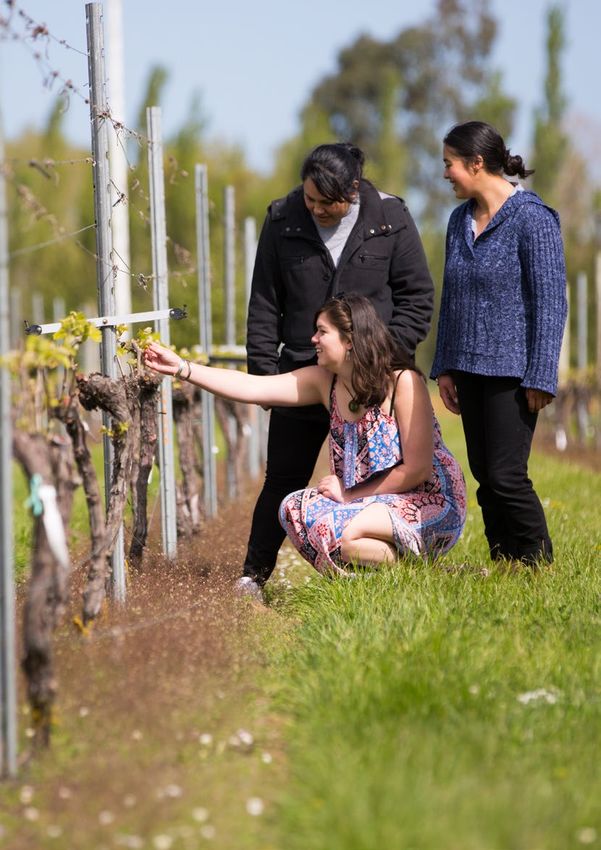
                                            strengths of our own.                                  history is land-based and that’s where
mainly interested in growing,
                                                                                                   our future is. We offer unique courses
is people.                                  Course structure
                                                                                                   that are directly aligned with the
                                            Many of the world’s leading universities
We have big goals – Lincoln University                                                             industry demand in the primary sector
                                            now allow their students to pick and mix
is globally ranked in the top 1.2% of                                                              and speak to New Zealand’s identity
                                            their learning to tailor it to where they
all universities globally and aspires to                                                           of primary production, environmental
                                            want to end up. Lincoln University is
become a globally-ranked, top five                                                                 management, agricultural commerce
                                            the only New Zealand university to have
agri-focused university and top five New                                                           and tourism.
                                            adopted this.
Zealand university. As one of only two                                                             Lincoln students enjoy a wealth of
New Zealand universities to improve in      Small is big                                           opportunities to develop skills here and
the QS rankings this year, and moving       Being the smallest university in New                   in the real world. Just as importantly,
up to number 6 in the New Zealand           Zealand is a good thing. It means                      they become part of a thriving and
ranking, we know we are on our way.         we offer a more personable learning                    inclusive student community, forging
                                            environment, with greater access                       friendships that will last a lifetime, and
We have a student headcount roll of
                                            to and more face-time with lecturers.                  our graduates will arrive at their careers
around 2,800 and approximately 600
                                            The village-like atmosphere leads                      globally connected, forward thinking
staff. With three academic faculties,
                                            to a greater sense of community                        and ready to shape tomorrow.
one teaching division, several research
                                            and transfer of knowledge between
centres (including the soon to be built                                                            Lincoln University is here to enhance
                                            students.
27,000 sqm Joint Facility, in partnership                                                          and enrich lives. To grow the knowledge
with AgResearch), and a range of            Research                                               of our students so they can shape
corporate service units, Lincoln            At Lincoln University, we dig deep. The                a world that benefits from a greater
University draws its students from          Lincoln University and AgResearch                      understanding of the relationship
throughout New Zealand and over             (LUAgR) Joint Facility is a 27,000 sqm                 between our land, the food produced
60 countries.                               facility supporting a collaboration of                 from it and the ecosystems within it.
                                            700-900 researchers.

                                            Why are we here? We are here to enhance and enrich lives. To undertake research and grow the
Purpose:                                    knowledge of our students, shaping a world that benefits from a greater understanding of the

Unlocking the
                                  1         relationship between our land, the food and experiences we create from it and the ecosystems
                                            within it. To produce thought leaders who will grow the future, so people can live well for
                                            generations to come.
power of the
land to enhance
lives and grow                              What? We provide an environment that enables our students and researchers to grow into their
the future.                       2         potential, so they can go on to enhance and enrich lives of others. An environment that nurtures and
                                            facilitates growth in all areas of development; physical, emotional, intellectual, financial and societal.

                                            How? We facilitate great learning and growth through powerful, applied research, cultivation
                                 3          of deep industry relationships, world-class, modern learning environments and teaching, global
                                            connections and collaborations. To ensure that what we teach is relevant today, and tomorrow.

lincoln.ac.nz                                                                                                                                        3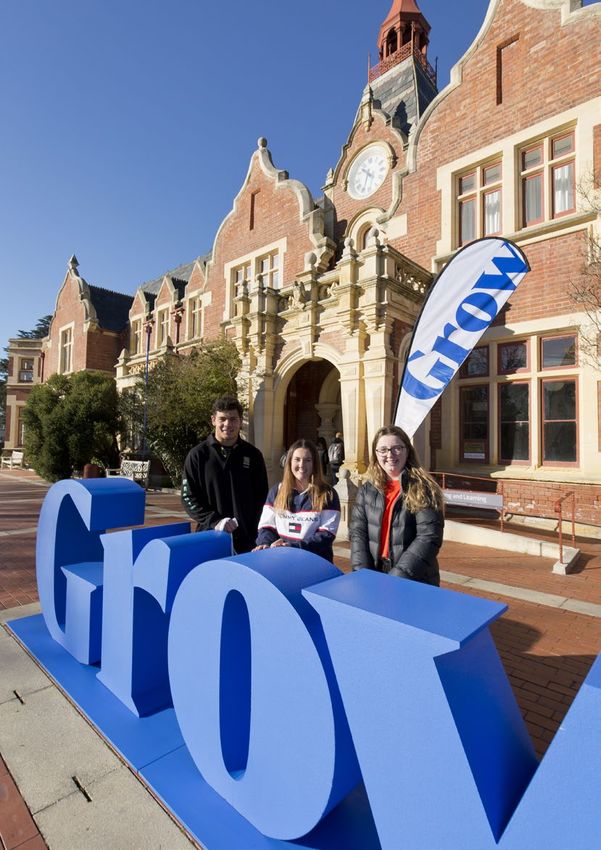
2. Governance

Lincoln University Council                      Risk Management                            on appropriate expressions of:
The 12 member Lincoln University                Council’s Audit and Risk Management        Rangatiratanga, Kāwanatanga, active
Council comprises a mix of members              Committee oversees the University’s        protection of Māori rights, interests and
appointed by the Minister of Education          effective management of strategic risk.    knowledge, and redress for Māori.
and by Council itself, including elected        High level strategic risks are reviewed
                                                                                           Targeted support is provided to Māori
staff and student members. The                  monthly by the Committee and
                                                                                           students through the Māori and Pacific
selection of appointed members utilises         quarterly by Council. Risk management
                                                                                           Island Support Coordinator.
a skills matrix framework covering              systems are operated university-wide.
                                                                                           Te Awhioraki (Māori Students
the expected competencies and                   The Capital Asset Committtee governs
                                                                                           Association) supports students from
experience. Prospective candidates              the Joint Facility build.
                                                                                           its base at the Whare, running events
for elected positions are briefed
                                                Treaty of Waitangi                         and advocating to enhance the student
on the expectations and selection
                                                Under the Education Act 1989, the          experience for Māori.
framework. Additional high-calibre
capability is co-opted for specific             University Council has a duty to           Further to the Transformation Board1
purposes, as demonstrated through the           acknowledge the principles of the          report, external governance review
establishment of the Transformation             Treaty of Waitangi, in the performance     and the strategy workshops, new
Board in 2017.                                  of its functions. The Council              capabilities are required at the
                                                constitution provides for one member       University. One of the key themes
Educational Performance                         to be appointed after consultation with    includes introducing a commitment
Academic Board, a Committee of                  Te Rūnanga o Ngāi Tahu. A Council          to bi-culturalism. As bi-culturalism
Council, has the responsibility to              Committee, Ahumairaki, has the             and collaboration are core to the
ensure the quality and standards of             purpose of maintaining governance          University’s strategy, the Chancellor
learning, teaching and research are             oversight of the obligations under the     is championing the initiation of this
maintained across the University. The           Education Act, the Tertiary Education      work for Lincoln University governance
Board provides academic leadership              Strategy and the University Investment     and leadership. The Mana Whenua
that guides the academic community              Plan to recognise and provide for the      have been approached to support the
to achieve the best possible outcomes           Treaty of Waitangi and to contribute to    development of skills and awareness of
for the University’s students, staff and        Māori development aspirations.             the Council and the Leadership team.
stakeholders. Equal prominence is given                                                    It is hoped that the collaborative
                                                Further, under the State Sector Act
to research, teaching and learning,                                                        strategy can be co-designed with
                                                1988, as a good employer the University
informed through its two major                                                             the Mana Whenua.
                                                operates a personnel policy containing
subcommittees (Learning and Teaching
                                                provisions for the fair and proper
Committee and Research Committee),
                                                treatment of employees in all aspects of
and a Student Experience Board.
                                                their employment, including an equal
Organisational Performance                      employment opportunities programme
Performance is monitored at                     and recognition of: the aims and
governance level through a suite of             aspirations of the Māori people; the
standard reports including financials,          employment requirements of the
student recruitment, research, and              Māori people; and the need for greater
health and safety. The Lincoln Measures         involvement of the Māori people in the
provide strategic financial and non-            education service.
financial performance targets to                The University’s Whenua Strategy
give an overall view of organisational          includes a Māori responsiveness
performance. Six-monthly reports are            framework, incorporating a Treaty of
provided to Council on achievement              Waitangi Matrix to guide University
against targets.                                decision-making processes by focusing

1   http://www.lincoln.ac.nz/About-Lincoln/Brochures-Publications/?sti=4

4      Lincoln University Investment Plan 2019–2021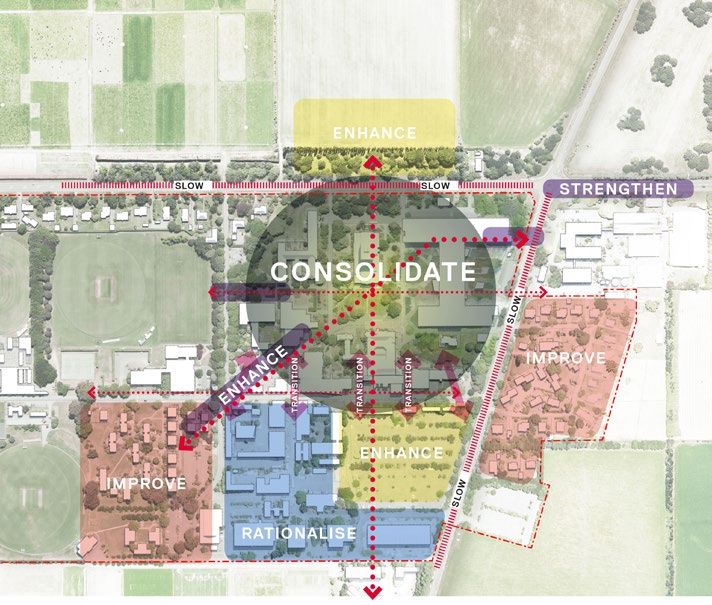
3. Transformation

In 2017, the Transformation                   c. Move away from being a standalone         • Robust governance arrangements
                                                 university to being the academic            are in place for the building of the
Board was established,
                                                 heart of the Lincoln Community and          Joint Facility with AgResearch over
and subsequently released                        a valued partner to institutions with       the next two years. Governance
a report in October 2017                         shared goals.                               oversight of the project at Lincoln
detailing five key themes,                       This is covered in section 6 The            University is the responsibility
                                                 Lincoln University AgResearch               of the Capital Asset Committee,
which are reflected in the                       Joint Facility.                             which meets monthly and reports
initiatives Lincoln University                                                               to the full Council. The University
is undertaking. The                           d. Imbue Lincoln University with a clear       also participates in a Governance
recommendations are:                             purpose that delivers for Aotearoa          Oversight Group with
                                                 New Zealand and contributes                 AgResearch and the Tertiary
                                                 globally to create knowledge and            Education Commission.
a. Redefine quality course offerings             opportunities around land, food
                                                                                         As a result of these changes and
   and create new ways of student-               and ecosystems, building on the
                                                                                         ongoing efforts to address the
   focused learning for undergraduates,          University’s historical strengths.
                                                                                         recommendations listed above, the
   postgraduates and mid-career                  This is covered in section 4
                                                                                         University achieved an operating
   professionals.                                University Organisation.
                                                                                         surplus of $493k in 2016 – its first
   This is covered in section 5.1                                                        surplus in a decade, and an operating
   Academic Programmes.                       e. Reset the governance and executive
                                                                                         surplus of $7.5m from continuing
                                                 capability to achieve Lincoln
                                                                                         operations in 2017.
b. Build Lincoln University’s research           University’s renewed purpose.
   outcomes and reputation to deliver                                                    It has also developed the Student
                                                The recommendations of an external
   positive change for Aotearoa New                                                      Growth Strategy2, a direct response
                                                governance review are being
   Zealand in the land, food and                                                         to an environment of declining
                                                addressed to ensure an appropriate
   ecosystems domain.                                                                    enrolments, identifying a series of
                                                and adaptable governance structure
                                                                                         changes and initiatives to improve
  Over the next three years we will             is in place through a period of
                                                                                         the attractiveness of the University
  develop a suite of research initiatives       significant change. The main
                                                                                         and its offerings, lift both domestic
  at Lincoln University. Each research          recommendations addressed the
                                                                                         and international student enrolments,
  initiative will represent a contribution      following areas:
                                                                                         and further improve the retention
  to a grand challenge confronting              • Relationships with Māori and other     of students.
  society. This will be tackled at                stakeholders be enhanced through
  world class level through a mix of                                                     By the end of 2018, both the Research
                                                  effective outreach and liaison.
  disciplines from Lincoln University                                                    Strategy and the Library, Teaching and
  and in strong collaboration with              • The content, planning and              Learning Strategy will be refreshed and
  members of other institutions.                  timeliness of Council papers be        will be aligned to reflect the university’s
                                                  focused on strategic and high          transformation goals.
  The first of three planned initiatives          level monitoring of performance
  for 2018 has been launched with the             and risk.
  intention of maintaining a portfolio of
  up to five at any one time. Details of        • Collaboration with other research
  the first initiative “Designing Future          institutions, especially Crown
  Productive Landscapes – Houhake,                Research Institutes and other
  Haumako, Hauora” are contained in               universities, be prioritised.
  Appendix B.

  2    Appendix A – Student Growth Strategy

www.lincoln.ac.nz                                                                                                                  5
4. Strategic drivers

4.1     A strategy for Lincoln University
A comprehensive strategic framework is under             A. Renewal – move from viability to sustainability
development to ensure that the strategies,               There has been a lot of effort to improve financial
goals, KPIs and key milestones are delivered.            viability over the past few years, which has resulted
The proposed strategic planning development              in a strong financial result in recent times. With a
framework is outlined below:                             disciplined approach, there are more opportunities
                                                         to reduce costs and become more productive.
                                                         This will require targeted investment into
        Purpose                                          infrastructure. For example, enhancements to
                                                         current IT systems (not new systems), investing
                                                         in targeted student recruitment and expansion
                                                         of learning infrastructure. This will be achieved
                                                         by a robust focus on Operational Excellence and
       Strategic                                         Continuous Improvement.
       Objectives
                                                         It is proposed that a strategic approach is taken
                                                         to optimising viability of the organisation over the
                                                         next two years. Systems to support Operational
                                                         Excellence and Continuous Improvement will then
      Strategic Plan                   Business Plan     become part of business as usual, rather than a
                                                         specific Strategic Objective. A core objective of this
                                                         strategy is to move the University from a focus on
                                                         viability, to one where lean highly efficient systems
                                                         mean that the University frees up resources
                                                         (financial and people) to identify areas for growth
                                          Budgets
                                                         and development.

The new strategic framework and core strategies          B. Shaping – collaborative at the core
were developed in the first half of 2018. An             The Transformation Board report identified
“ambidextrous” approach was confirmed, where             collaboration as a key competency and strategy for
the University executes a Renewal strategy to            the University. This was supported by the review
complete the process of making the institution           of governance completed late 2017. This is new for
operationally excellent and viable, in conjunction       the University and will require new investment, new
with a Shaping strategy of collaboration with the        organisational capabilities, and new governance and
land-based sector.                                       business models.

Implementation                                           The shaping strategy sees Lincoln University work
The strategy requires an ambidextrous approach.          towards its new purpose. The role of the University
This will involve most of the organisation being         is the platform upon which other organisations
focused on the “A Strategy”, while a small focused       succeed, such as research centres, the Agri-industry,
team will work to develop, test and roll out the         business partners, and Iwi. The work on this has
“B Strategy”.                                            commenced on a small scale and an example of
                                                         a successful shaping strategy deliverable is the
                                                         recently announced initiative Designing Future
                                                         Productive Landscapes – Houhake, Haumako,
                                                         Hauora” which is contained in Appendix B.
    A culture of collaboration is a key
    competency for the future of
    Lincoln University.

6         Lincoln University Investment Plan 2019–2021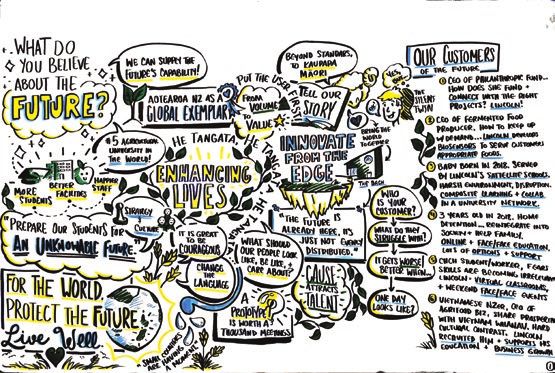
Visual interpretation (1)
from Strategy and Planning
workshop

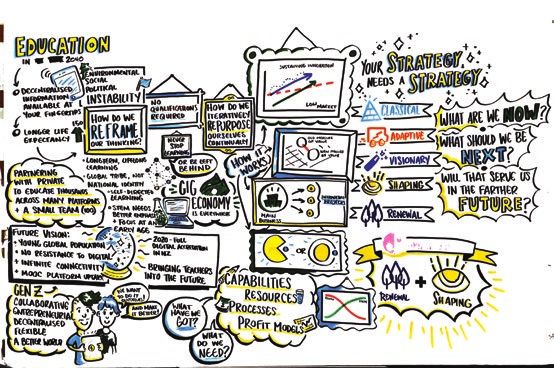
Visual interpretation (2)
from Strategy and Planning
workshop

www.lincoln.ac.nz            7
4.2    University Organisation
Lincoln University has a goal of becoming a globally-ranked,
top five agri-focused university and top five New Zealand
University. In order to achieve this, it will require the University
to build on its past strengths and to deliver positive change in
the domains of land, food and ecosystems, integrated with a
sharper focus on better student experiences and outcomes.
The University Organisation project is focused on aligning and
organising university structure and activities.

      What we                                     To attract                                  To attract
      deliver:                                    and build                                   new students
      Aotearoa New Zealand
                                                  partnerships                                • Redefine quality course
                                                                                                offerings
      • Contribute towards global                 • Become the academic heart
        knowledge and opportunities                 of Blinc Innovation                       • Create new ways of
                                                    (Lincoln Hub)                               student-focused learning
      • Build on our past strengths
        and research outcomes                     • Valued partner to institutions
      • Deliver positive change                     with shared goals
        in the land, food and
        ecosystems domain

       Tackling important                         • Multi-disciplinary approach, providing relevant capability and solutions
       societal challenges                        • High quality, high impact research and learning

       Building awareness                         • Māori, industry, Government – tackling challenges that matter
                                                  • For students – providing novel and relevant learning

       Attracting new                             Aspiration
       revenue                                    • Research: Increasing revenue by > 10% per year (from 2020)
                                                  • IP and Enterprise – potentially $10m+pa
                                                  • Education: 300 additional domestic EFTS (under-graduates, post-graduates,
                                                    mid-career professionals)

8        Lincoln University Investment Plan 2019–2021
5. Proposed outcomes for the coming
three years
The forecast student volume is summarised below: Lincoln University is committed to responding to future
demand from the land-based sector for more skilled
Total graduates to improve productivity, environmental quality and
2018 2019 2020 2021
growth food safety. The Government’s Business Growth Agenda (BGA)
Domestic 1,560 1,565 1,616 1,691 8% includes a challenging goal of increasing the ratio of the
Sub-degree 183 174 173 171 -7% value of exports: GDP to 40% by 2025, effectively requiring
the doubling of the value of exports from the land-based
Undergraduate 1,192 1,198 1,242 1,309 10%
sector. This goal is set against an expected increase in global
Postgraduate 184 193 202 210 14%
demand for food by 60% over the next decade. Furthermore,
International 946 1040 1,105 1,161 23% the land-based sector has already indicated it needs more
Sub-degree 228 259 269 277 21% than 50,000 additional skilled workers and to increase skill
Undergraduate 286 274 275 280 -2% levels for its existing workforce.
Postgraduate 432 507 561 604 40% To achieve student growth, Lincoln University must increase
the number of students it is recruiting. At the same time, to
TOTAL EFTS 2,505 2,604 2,721 2,851 14%
ensure year-on-year growth, newly recruited students must
then be retained. To achieve this, a series of initiatives have
been identified that address both recruitment and
retention. These have been grouped into five key themes,
Total projected EFTS broken down by domestic and which sit across target markets and cover the end-to-end
international qualification levels: student lifecycle:
3,000 • Academic Programmes: All initiatives relating to Lincoln
2,500 University’s product mix (e.g. introducing online and
2,000
blended learning, staircasing, taught master’s degrees and
changes to the University Organisation).
1,500
1,000 • Brand Management and Marketing Campaigns: All
500 initiatives relating to brand awareness and positioning of
0
Lincoln University, and the key marketing campaigns and
2018 2019 2020 2021 activities for target markets.
• Student Experience and Engagement: All initiatives
Domestic sub-degree Domestic undergraduate
relating to the student experience, improving pastoral
Domestic postgraduate International sub-degree
International undergraduate International postgraduate
care and increasing student engagement. These initiatives
are integral to growing retention and progression,
ensuring that students have a positive experience at
Lincoln University.
An increase in EFTS from 2496 in 2018
• Campus: All initiatives relating to Lincoln University’s
to 2844 EFTS in 2021.
facilities and grounds. The LUAgR Joint Facility is a key
This is to be achieved through the strategies and key initiative in this category that will be integral to growing
initiatives detailed in the Student Growth Strategy. student recruitment and retention, as it is recognised that
Over the next three years Lincoln University expects to: quality facilities and an outstanding campus environment
will attract students, researchers, and academic staff.
• Grow overall EFTS by 14% (see further details in section 5.2)
• Grow international EFTS from 38% of the student • Partnerships: All initiatives relating to partnering with
population to 41% of the student population (see further research institutes, industry, iwi, and community, to drive
details in section 7.4.1) student growth, with a particular focus on the postgraduate
• Grow postgraduate EFTS from 25% of the student market. Blinc Innovation and the Joint Facility are integral
population to 29% of the student population (see further to the University’s strategy for partnerships, due to the
details in sections 6, and 7.3). research, industry-access, and employment opportunities it
presents for students, researchers and academic staff.
This will be achieved through a series of initiatives covering
both recruitment and retention, and have been grouped into
five key themes.
www.lincoln.ac.nz 9ri
Maoium Dom
d
Mehools est
a
ik id s Sc ic
nt Pos
stuNZA if
ia
ifik
s
tg
Pa
de
as nships
Heat map of impact
Int
9 83
ern
er )
ra EFTS
(20
P
du
2
ri &
(20 t
Entitieri
ation
s
on target markets
in
2
26
Mao
ate
00%
Mao 3400
)
TOTAL
al
1
EFTS
China
I n t e 14 2 8 0
s
ul u m
C u i b u si n e s
(2026)
02 F T c
E ti
at
rn
6) S
es
E io
r ric
m
26 F T S n a l D o 1972 2
In d
(2
gr
) (
ia A
ia
n
S t it e d
U
r
st
al
at
es Sec
o nd- Au
Tie an d
r Marke
ts A u c kl
KEY:
Domestic International High impact
Medium level impact
Minimal level impact
Agri-business
Postgraduate
United States
Secon-tier
Auckland
Australia
Pasifika
China
Maori
India
Product Mix review
180 Credit Taught Masters
Blended Learning
Completely online courses
Academic
Programmes
Revised pathways
University Studies and English Language
University Organisation (D’s and I’s)
Whenua Arotake Akoranga
Campus redevelopment plan
Student accommodation Campus
Joint Facility
Joint Facility/Lincoln Hub
International partnerships and rankings
International joint programmes and pathways Partnerships
Domestic partnerships
Māori / Pasifika community partnerships
Positioning and Brand Refresh
Māori and Pasifika awareness building
Domestic school visits and marketing campaigns
Brand Management
and Marketing
Auckland / Australia specific campaigns
Strategic domestic scholarships
International scholarships, conferences, digital marketing
Pastoral care and wellbeing services
Onboarding support
Student participation and direct engagement
Student Management Solution (CRM) replacement/upgrade Student Experience
Learning support and Engagement
Māori engagement
Parent communications
Student insights and market intelligence
10 Lincoln University Investment Plan 2019–2021KEY:
High impact
Medium level impact
Minimal level impact
Initiative Primary target Expected Timing
market(s) impact
Product mix review ALL Now – 2020
180 Credit Taught Master’s Postgraduate Now – 2020
Blended learning ALL Now – 2020
Academic Completely online courses ALL Now – 2020
Programmes Revised pathways Undergraduate Now – 2020
University Studies and English Language International Now – 2019
University Organisation (Ds and Is) Postgraduate Now – 2020
Whenua Arotake Akoranga Māori Now – 2019
Campus redevelopment plan ALL 2018 - 2025
Student accommodation ALL 2018 - 2025
Campus
Joint Facility ALL – but particularly Now - 2020
for Postgraduate
Joint Facility ALL – but particularly Now - 2020
for Postgraduate
International partnerships and rankings International Now – 2020
Partnerships
International joint programmes and pathways International Now – 2020
Domestic partnerships Domestic Now – 2020
Māori / Pasifika community partnerships Māori Now – 2020
Positioning and brand refresh Domestic Now – 2019
Māori and Pasifika awareness building Māori and Pasifika Now – 2019
Domestic school visits and marketing Undergraduate Now – 2019
Brand campaigns
Management Auckland / Australia specific campaigns Domestic – Auckland, Now – 2019
and Marketing Australia
Strategic domestic scholarships Domestic Now – 2019
International scholarships, conferences, and International Now - 2020
digital marketing
Pastoral care and wellbeing services ALL Now – 2019
Onboarding support ALL Now – 2019
Student participation and direct engagement ALL Now – 2019
Student Student Management Solution (CRM) ALL Now – 2021
Experience / replacement/upgrade
Engagement Learning support ALL Now – 2019
Māori engagement Māori Now – 2019
Parent communications ALL Now – 2019
Student insights and market intelligence ALL Now – 2019
www.lincoln.ac.nz 115.1 Academic programmes
A Programme Review Committee currently evaluates new and
existing programme ideas using the 5A’s matrix3 to ensure For 2019 the following changes are planned:
they are flexible and kept up to date.
The annual review process has resulted in the revision of the More flexible degrees with majors attached
content and structure of the least popular specialist degrees.
It has also divested some offerings, notably at the sub-degree 1 to ‘Initiatives’ that address real-world
level with the transfer of Telford to Taratahi Agricultural problems (refer 4.2 University Organisation)
Training Centre. Such divestment reflects Lincoln University’s
strategic decision to focus less on sub-degree offerings, and
focus more on postgraduate offerings.
There are now 12 transferable majors that nearly all Bachelor
Improve staircasing from postgraduate
degree programmes can incorporate to allow double majors. 2 certificates/diplomas up to master’s degrees
To overcome Lincoln University and AgResearch supervisor
constraints, which was limiting the potential for student
growth at the postgraduate level, changes were approved so
that students can be supervised by external scientists and
other Joint Facility partners.
Increase flexibility through increased
There is industry representation on liaison and advisory
groups within Divisions, Faculties and Departments. Their
3 elective choice and fewer prerequisites
representation ensures current needs and advice are
identified in the design of courses and programmes.
All programme proposals encourage Māori and student
scrutiny and input through membership on each Division/ Further reduce the number of low
Faculty Teaching Committee, Learning and Teaching 4 volume courses
Committee and Academic Board. The University’s Whenua
Strategy aims to inculcate a kaupapa Māori ethic and
approach to course and programme design. These are
assessed against Māori responsiveness criteria to ensure the
curriculum content, delivery and overall pedagogy reflect Increase the number of 180 credit taught
Māori desires to study as Māori. The Learning and Teaching 5 master’s degrees
Committee, in partnership with the Director Kaiarahi Māori, is
developing a framework for Faculties and Divisions to apply
the objectives, skills and values from the Whenua Strategy to
the design of programmes and courses.
6 Increase the number of 180 credit taught
master’s programmes offered totally online.
3 5A’s Matrix: Acceptability; Accessibility; Accreditation; Affordability; Appropriateness
12 Lincoln University Investment Plan 2019–20215.1.1 180 credit taught master’s Effective blended learning builds on the traditional strengths
180 credit taught master’s, which do not require supervisors, of face-to-face teaching at Lincoln University. The blended
are a growing feature of the New Zealand tertiary education learning rollout across the University has seen staff from
market, and are expected to account for a substantial portion all three Faculties and the University Studies and English
of the expected increase in postgraduate enrolments, as has Language Division take part in a structured staff development
occurred internationally. Lincoln University has committed programme. This development programme led by the
to producing four more taught master’s programmes in the Teaching Quality Team is being run each year over 12 weeks
coming year and expects that within two to three years each (delivered in a blended learning format) with structured face-
of these programmes will have approximately 20-30 EFTS. to-face sessions and online modules. This structured training
The new programmes include: is seeing great results with all attendees moving from the
traditional face-to-face delivery to using a blended learning
• Master of Bio-protection and Bio-security approach within their courses.
• Master of Digital Agriculture
• Master of Finance With the introduction of blended learning, we are combining
• Master of Viticulture and Oenology the best of both approaches to facilitate the best learning
outcomes for students. We know from student feedback that
Domestic Postgraduate growth students are appreciating the higher quality and quantity of
interaction with our academics and their peers that blended
2018 2019 2020 2021
2017
forecast target target target
learning can facilitate. Structured academic staff development
in blended learning will continue as we look to moving the
Bachelors with Honours 47.7 38.0 48.5 49.0 50.5
majority of our first year of courses into a blended format.
Postgrad Certs / Dips 10.6 12.7 12.8 12.9 13.3 Students coming straight from high school have experienced
Taught Masters 14.0 25.2 29.1 30.4 30.5 blended learning and through this change in how we deliver
Research Masters 56.9 46.8 54 56.5 56.7 our courses it should make the transition from high school to
PhD (Dom & Intl) 243.8 273.0 323.1 364.1 405.9
Lincoln University easier and increase our retention.
All courses now have an online course site in LEARN with
a consistent structured course outline which sets out the
5.1.2 Blended learning learning contract between the academic and the student. All
Blended learning at Lincoln University combines face-to-face assessment items across the University are listed online in
and online activities in a seamless and complementary flow of the course sites. Since 2016 we have seen a 40% increase in
learning. Our academics are using flipped classrooms, where the number of lectures that are recorded and made available
online activity is introduced prior to a face-to-face class, in the to students online. This year sees the introduction of a media
form of reading materials and other artefacts. These resources studio which our academics can use to build digital learning
are provided through our recently updated Learning content. The content can be created in the studio or the
Management System LEARN and provide a springboard equipment can be taken out in to the field. Our professional
for students to conduct further online research through camera team have worked closely with our academic staff to
personal learning networks and digital curation activities. create a number of videos on farm management, vineyard
Further work in the classroom is spent in small groups with operation and animal welfare.
the aim of deepening this learning through problem-based
activities. This weaving together of different modes of 5.1.3 Entirely online courses
delivery with a purposeful pedagogical underpinning is one Separate to the Blended Learning initiative, is the delivery of
example of a blended approach that combines synchronous entirely online courses.
and asynchronous elements. Other blends might be purely
synchronous and take the form of a face-to-face class in Online learning supports Lincoln University’s ability to grow
which some learners join remotely via web conferencing its presence outside of the Canterbury region. By increasing
tools. Lincoln uses a range of different blended approaches; flexibility and accessibility, online learning cuts down the
the balance between online and face-to-face components, amount of time students have to spend on campus, and
and the integration of other methods, depending on the therefore better enables them to complete their studies
needs of learners and the context within which the learning around employment and geographic constraints. There is now
is implemented. The more innovative of these approaches potential for students living in the North Island, or in another
increase student engagement by enabling learning, thinking country, to complete a qualification entirely through distance
and conversation across multiple spaces and over time. learning – which broadens opportunities for the University and
potential students alike.
By mid 2019, we plan to have a set of postgraduate
programmes that are offered 100% online.
www.lincoln.ac.nz 135.1.4 Provide clear pathways to degree level study 5.2 Brand management and marketing campaigns
Certificate in University Studies (CUS) and Diploma in Lincoln University has prioritised specific target markets to
University Studies (DUS) are key staircase qualifications with drive growth in student recruitment and retention.
an average retention rate of completed students of 90% over
The majority of Lincoln University’s domestic students
both programmes.
have traditionally come from the Canterbury region. Its
Once students have successfully transitioned from CUS and representation continues to be significant, with Canterbury
DUS to degree study and a completed degree they can expect accounting for between 37% and 66% of students across each
the same employment outcomes as their peers who entered of Lincoln’s top nine programmes.
with University Entrance.
In order to build its domestic market share, Lincoln University
The table below shows the progression to higher study to must invest in building student numbers from the broader
Lincoln University programmes. The Level 5 programmes New Zealand student pool, in particular urban students.
(excluding DUS) includes the Diploma of Agriculture and Lincoln has a number of competitive advantages compared
Diploma of Horticulture from which students tend not to to other New Zealand tertiary institutions, which should prove
progress. The majority of DUS students progress into either attractive to students from all regions. These include:
the Bachelor of Commerce or Bachelor of Science.
• The highest percentage of students that transition into
paid employment compared to other tertiary institutions in
Progression to Higher Study New Zealand
2018 2019 2020 2021
2017
forecast target target target • Specialist degrees in fields that are in-demand, and speak
directly to the New Zealand identity of primary production,
CUS 91.7% 90% 91% 91.5% 92%
environmental management, agricultural commerce
DUS 97.6% 97% 97.5% 97.8% 98%
and tourism
Level 5
34.6% 38% 38.5% 39% 40% • Global reach and access to global experts, particularly
(excluding DUS)
once the LUAgR Joint Facility is completed.
Note: These figures denote progression to Lincoln University programmes only
Recognising this, Lincoln is focused on increasing student
numbers from across the regions but with a particular focus
The value of CUS and DUS to students at Lincoln University is on growing its Auckland market. Auckland has been identified
that they offer shorter and more highly supported pathways to as the only region in New Zealand projected to have growth in
degree than traditional bridging programmes. its number of school leavers over the next ten years. However,
despite having the greatest growth potential, it does require
The anticipated time to completion of degree for a CUS
significant investment, in large part to cut through the noise
student is a further three years, with a shorter time frame
and shift the prevailing stigma of Lincoln as a farming school.
available for those on an accelerated pathway. For DUS
students, the expected time to completion of degree is
between 2 and 3 years.
All forward Growth is probably the most common yardstick by which we
momentum in life measure or evaluate where we’re at on our journey through life.
is a type of growth. Life itself is all about growth.
At the very core of what a land-based university offers, the
proposition Grow is Lincoln. It is steeped in Lincoln’s mission
- to grow people, with a view to enhancing lives.
14 Lincoln University Investment Plan 2019–2021Key initiatives include:
Domestic students:
Building a stronger domestic • Investing in future talent through supporting the development of a new
pipeline of potential students by: agribusiness secondary schools curriculum
• Expanding beyond the traditional Canterbury market by targeting Auckland’s top
35 feeder schools, capitalising on Auckland school-leavers as the only domestic
market forecasted to grow over the next ten years
• Growing enrolments from Australia through developing partnerships with high-
decile, rural secondary schools
• Extending the traditional two semester learning year to include a third semester
to allow students to fast track their degree by studying over summer.
Māori and Pasifika communities:
Increasing the diversity of students • Developing marketing and branding content specifically for Māori and
by building stronger awareness Pasifika students
of Lincoln University with these • Targeting a number of rural and urban secondary schools with a substantial
communities, and broadening Māori or Pasifika presence
engagement, as land is at the heart
• Building and fostering partnerships and internships with iwi.
of the culture and heritage of Māori
and Pasifika communities. Key
activities will include:
Postgraduate students:
Growing postgraduate numbers in • Growing the number of 180 credit taught master’s programmes, in response to
response to increasing industry and demand from students and industry
student demand, primarily driven • Increasing the number of postgraduate researchers through the LUAgR Joint
by the partnerships with research Facility and changes to ways of working, which includes allowing researchers from
institutes that will be offered other organisations to serve as supervisors of PhD students. This will allow an
through the LUAgR Joint Facility. attendant increase in research-based post graduates at the University
Key initiatives include:
• Developing a city venue to deliver study closer to where professionals work.
International students:
Growing international numbers, with • Maintaining China - presently the largest market but where enrolments will
a focus on postgraduate research be diversified to minimise risk of over-reliance and ensure diversity of the
and partnerships, and key principles student population
associated with the following • Growing India – an active market, with rapid growth and prevalence of
market segments: postgraduate study. This will likely require investment in on-the-ground presence
to grow partnerships with Indian research and education institutions
• Maintaining the United States – while this is limited to short-term Study Abroad
programmes, it is crucial to fostering diversity of the student population
• Growing second-tier international markets, which will minimise the risk of over-
reliance on large markets like China. Opportunities have been identified in South
Asia (notably Sri Lanka and Pakistan) and South East Asia (notably Malaysia,
Indonesia, and Vietnam), which are particularly attractive given their strong
postgraduate markets.
www.lincoln.ac.nz 155.3 Student experience and The Parent Experience: Prior to enrolment, Student Experience
engagement Parents, in supporting children through and Engagement staff assist prospective
A series of initiatives to support and their learning, are also impacted by students in making informed choices
improve the end-to-end student Lincoln University’s offering and, as about their tertiary enrolments by
journey have been adopted. Student key influencers of both their own and coaching them in how to ascertain that
Experience and Engagement is a others’ current and future children, the career path they are looking at is
powerful recruitment drawcard and it is important that they have a right for them. This could be through
also has a positive impact on retention. positive experience of the Lincoln assisting them with finding people
It is therefore integral to ensuring University brand. within the industry for networking and/
newly recruited students are then or shadowing. We spend a large amount
Voice of the Student: of time talking about outcomes and
retained. Many Student Experience
The best way to improve student coach them in ‘working backwards’
and Engagement initiatives apply to
engagement is to go to the students by looking into their area of interest
all students. However, to recognise
themselves, incorporating the voice and seeing what type of jobs come
the unique needs of student segments
of students into all decision-making up, how buoyant the market is, and
we have developed a series of market-
on matters affecting their experience. what qualifications and attributes are
specific initiatives:
This includes ensuring there is student required. Aiming at both prospective
Hauora: representation on our academic students and their influencers, we bring
Hauora wellbeing is at the heart of the committees and the establishment of a graduates in particular sectors back to
student experience, and is frequently Student Experience Board. the schools to talk about what they do
found outside the lecture hall. Lincoln to help inform them.
University has invested in a number of
services, ranging from general social
facilities and activities, to specific one-
on-one health and support services.
Welcoming:
In response to student feedback
regarding the on-boarding experience,
Lincoln University has adopted a project
management approach to orientation
and is now using digital technologies to
improve communications.
Engaging:
There is a correlation between student
involvement in on-campus activities,
and retention and progression rates;
the more engaged a student is, the
more likely they are to progress and
return. Examples of involvement include
working on campus, having a gym
membership, and/or being a member of
a team or club.
Students participate in 2018 Orientation activities.
16 Lincoln University Investment Plan 2019–20215.3.1 Graduate destination survey
After a hiatus of nearly 10 years, Lincoln
University has reinitiated the Graduation The 2018 survey of 2017 graduates achieved a
Destination Survey, with the first online
survey undertaken in 2017, collected
data relating to the 2016 graduates’: 39% response rate
• Post-Lincoln University employment
and/or study situation
which is higher than is normally expected for
externally distributed online surveys.
• Type of employment (eg job type,
industry) and future employment
plans
• Experiences of work-related Key findings were:
opportunities and skill development
at Lincoln University.
82% of the survey respondents were in paid
employment with
91% of these working full-time;
92.3% of those in paid employment worked
30 hours or more a week
18% were not in paid employment
of respondents who were not in paid
46% employment were not looking for
employment, with half of them enrolled
for further study
of the survey respondents who were
85% in paid employment said it was either
their ideal employment at this stage of
their career (45%) or a step in the right
direction (40%).
www.lincoln.ac.nz 1718
Lincoln University Student Experience Journey
GUIDING PRINCIPLES
Student needs are anticipated through Students are given equal opportunities to have Students can easily and comfortably voice
seamless, genuine, consistent and personalised the best end-to-end experience relevant to their feedback during interactions with touchpoints
experiences; both on and off line. needs and intents. throughout their journey.
DISCOVER APPLY SELECT PREPARE ENROL ADAPT EXPERIENCE SUCCEED GRADUATE ADVOCATE GIVE
STAGES
Lincoln University Investment Plan 2019–2021
• Attend events. • Decide • Request more info. • Sort finances & • Receive advice. • Adjust to • Make use of • Pass assessments. • Receive • Engage with • Give to
• Receive qualification. • Visit campus or employment. • Review course new living campus facilities. • Review results. recognition content. campaigns.
professional • Prepare personal talk online. • Arrange travel/ content. environment. • Get support from • Monitor progress. through awards • Talk positively • Volunteer time to
guidance docs. • Receive academic visas. • Select courses. • Be officially service areas. • Seek and receive and certificates. about Lincoln. support Lincoln
(agents, • Create & submit advise. • Buy gear & tech. • Pay fees. welcomed. • Socialise. help. • Celebrate • Attend events. initiatives.
teachers, application/s • Compare choices. • Engage • Establish • Attend • Build • Receive achievements • Recommend • Provide
advisors). (academic, • Discuss with with online timetable. orientations. relationships. recognition. with friends and Lincoln to professional
• Observe scholarship, influencers. communities. • Join clubs & • Explore campus, • Grow personally. • Re-enrol. whānau. friends, expertise.
DOING advertising. accommodation. • Make decision. • Organise new associations. Lincoln, • Discover new • Share moments colleagues and • Make a major
• Listen to • Respond to • Share decision home life. • Join rec centre & Christchurch. ways of learning. on social media. family. donation.
influencers. admission with social • Buy orientation health centre. • Make friends. • Gain knowledge. • Join alumni • Support a
• Search online. requests. networks. tickets. • Receive key to • Attend first • Attend lectures community. scholarship.
• Visit campus. • Accept offer/s. • Register for Lincoln (ID card). lecture! and tutorials. • Re-apply. • Make a bequest.
• Access online orientation. • Receive academic
resources. and career
guidance.
“I wouldn’t be
“Being a student “Lincoln has “This is my “Some of
“That was easier “I am so pleased “I can’t wait “I did it! – it’s “I’m confident where I am today
“I can picture as Lincoln is given me biggest my fondest QUALITATIVE
THINKING than I I’ve made a to make new great to finally be about my if it wasn’t for
my future.” going to be opportunities I achievement memories are of
expected.” decision.” friends.” settled in.” future.” Lincoln
amazing.” never imagined.” yet” Lincoln Uni.”
University.”
FEELING INSPIRATION ANTICIPATION HAPPINESS EXCITEMENT CONFIDENCE CONTENTMENT ACCOMPLISHMENT ACCOMPLISHMENT PRIDE LOYALTY GRATITUDE QUALITATIVE
MEASURE MEASURE MEASURE MEASURE MEASURE
MEASURE MEASURE MEASURE MEASURE MEASURE MEASURE QUANTITATIVE
MEASURE MEASURE MEASURE MEASURE MEASUREwww.lincoln.ac.nz 19
5.4       Campus                                                  Recognising that achieving a fit-for-future campus, which
With a view to the future, Lincoln has embarked on a campus       is attractive to potential students and will support their
masterplan project with a vision to be the place of choice for    retention, requires strategic decision-making around what
students and researchers. A place where people will grow in       and where to invest. Changes therefore involve improvement
their knowledge, an incubator of innovation and agribusiness,     and enhancement but also involve some rationalisation and
and a national hub for land based research.                       consolidation.

The vision for the campus – with people at the core – draws
on the University’s Māori strategy and focus on sustainability,   Our campus – which includes the
while balancing respect for our heritage with an eye to the
future. Our desire is to create a campus that enhances            land surrounding it – will act as an
connections and collaboration. A campus with vibrant heart
at the centre.
                                                                  incubation site, hatching ideas,
The output of this is the 20 Year Campus Master Plan,
                                                                  developing new products and
which details a range of changes, from quick-wins to              hosting emerging businesses and
long-term investments.
                                                                  like-minded partners.
The Campus Master Plan4 also details four
key objectives, which will underpin all change
initiatives. These are:                                           The overall investment, estimated as up to $111m, is proposed
                                                                  to be undertaken over a 10-year period (2018-2027). This
                                                                  approach has been outlined through the LUAgR Joint Facility
                                                                  business cases and a shorter term three-year plan has been
                                                                  approved in principle by the University Council.

      1             Leader                                        In the initial three years of the work programme, the focus is
                                                                  on “essential works”. Essential works include work needed to
                    Be a leader, look like a leader,              enable the LUAgR Joint Facility to be brought into use, urgent
                    act like a leader, and walk the talk          earthquake remediation, health and safety improvements,
                                                                  student experience spaces, and creation of decanting
                                                                  space to enable earthquake remediation works. The
                    Attractor                                     remaining funding is allocated to modernisation of student
      2             Be the place of choice for students,
                                                                  accommodation and learning technology.

                    researchers, and business
                                                                  New Zealand and our land-based
                                                                  sectors is defined as our primary,
                    Collaborator
      3             Be the national hub of land-based
                                                                  agri-food and fibre, natural resources,
                    science, education, design                    conservation and tourism sectors.
                    and commerce

                    Incubator
      4             Be an incubator of innovation
                    and agribusiness.

4     Refer Appendix C – Campus Master Plan

20         Lincoln University Investment Plan 2019–2021
The Campus Master Plan involves both development and rationalisation Student accommodation as revamping the current offering to A voice of student analysis will be One of the focus areas in the Campus meet desired standards. To support this, conducted to ensure a fit-for-future Master Plan is student accommodation. a supply and demand model has been offering is developed that meets the A business case is currently being developed which assesses the number needs of the ‘future student’. This will developed for improving the University’s of beds required over time by type and be tested with industry experts and the accommodation. Given this is such an offering (halls, flats, houses), and the business case will be completed in Q4 important component of the student various options available to meet the 2018 with remedial work beginning by experience, the University is ensuring demand in a timely manner. the end of 2018. it is prepared for future demand as well www.lincoln.ac.nz 21
5.5 Partnerships                                 an incorporated society funded by its      The Biological Husbandry Unit (BHU)8
Partnerships are integral to growing             membership, which includes Lincoln         A charitable trust and a joint venture
awareness, improving perceptions                 University. PICA plays an important        between Lincoln University and the New
and providing direct channels to reach           role in raising awareness of, and          Zealand organic sector. The trust aims
and attract students. Partnerships               changing perceptions about, primary        to promote organics through education,
also lend themselves towards                     sector careers.                            research and extension work.
collaboration, which can enable                  Through this relationship, Lincoln         Funding from MAF Sustainable
partners to collectively grow capacity           University is able to extend its reach     Farming Fund and the Agricultural and
and capability, achieving scale through          into schools careers expos and field-      Marketing Research and Development
multi-organisational collaboration.              days, and through targeted careers         Trust has enabled research-based
These activities are drawcards for               promotions. It also provides Lincoln       development and promotion techniques
students wanting to be involved in               access to industry specific customer       for commercial scale organic
solving the grand challenges facing the          insights work such as “Attracting career   agriculture, workshops aimed mostly
land-based sector.                               changers” which covers the dairy, wool,    at small farmers and growers and the
                                                 forestry, sheep and beef sectors.          development of a large published
5.5.1 Partnerships that promote                                                             resource (both in print and online) of
      domestic growth                            5.5.2 Partnerships with other              practical and technical information for
The Joint Facility, with its many                      organisations to promote             commercial growers. BHU staff now
campus-related benefits, also presents                 education in Canterbury              teach into the new Diploma of Organic
partnership opportunities, and the work-         SIGNAL                                     Agri-Food production (L5).
to-date with AgResearch has already              The TEC funded South Island ICT
started this partnership journey. We see         Graduate School is a collaboration
this type of industry collaboration as           between University of Otago, Ara
a key drawcard for potential students            Institute of Canterbury, Lincoln
through our ability to increase our              University, Otago Polytechnic and the
postgraduate supervisory capacity,               University of Canterbury. SIGNAL is a
opening up research opportunities,               direct response to the rapid growth
and employment opportunities for the             in IT roles across all sectors, where
postgraduate students attracted by the           thousands of new jobs will be created in
industry interaction, and vice-versa.            the next 10 years.
Blinc Innovation (formerly known as              Christchurch Educated6
Lincoln Hub) is located in the heart             Christchurch Educated Inc. is a group
of the campus and builds on the 140              of education providers based in the
years of research and education here             city of Christchurch and the region of
at Lincoln University, aligning the              Canterbury, New Zealand. Members
needs of New Zealand’s land-based                are all registered and approved by
sector through their work with leading           the New Zealand Government to host
organisations, start-ups, researchers,           international students.
growers, and universities.
                                                 New Zealand College of Business7
GrowingNZ – the Primary Industry                 Lincoln University and New Zealand
Capability Alliance (PICA)5 – is an              College of Business (NZCB) have jointly
industry, education and government               introduced platforms for international
alliance providing information,                  students to pursue their studies toward
activities and resources to support              bachelor’s and master’s degrees at
career opportunities in New Zealand’s            Lincoln University.
innovative primary sectors. PICA is

5    http://www.growingnz.org.nz/index_pica.php
6    http://www.christchurcheducated.co.nz/about-us/
7    http://www.nzcb.ac.nz/
8    https://www.bhu.org.nz/

22      Lincoln University Investment Plan 2019–2021
You can also read


