Bath and North East Somerset Youth Justice Plan 2019 2020 - Working in partnership to prevent youth offending
←
→
Page content transcription
If your browser does not render page correctly, please read the page content below

Bath and North East Somerset
           Youth Justice Plan
               2019 – 2020

Working in partnership to prevent youth offending
                        1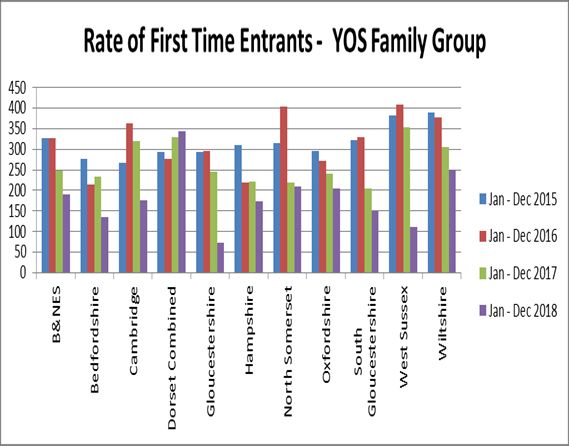
Contents

1.   Introduction                                                 3

2.   Review of last year (including performance indicators)       4

3.   Young People’s Voice                                         9

4.   Governance and Partnership arrangements                      11

5.   Resources                                                    13

6.   Risks to Future Delivery                                     16

7.   Youth Justice Work Plan                                      17

8.   Approval and Sign Off                                        21

9.   Glossary                                                     22

                                                              2
1. Introduction
Youth Offending Services and the partners they work with have a statutory responsibility to prevent offending by children and young people
aged 10-17 years. This Plan has been written in accordance with Section 40 of the Crime and Disorder Act 1998 and national guidance from
the Youth Justice Board and sets out how services to prevent youth offending will be provided and funded in 2019-20. It will be submitted to
the Youth Justice Board and published in accordance with the directions of the Secretary of State.
Ambition for young people at risk of offending and re-offending
Locally, the Service seeks to improve outcomes in accordance with the ambition set out in the Children and Young People’s Plan 2018-21:
We want all children and young people to enjoy childhood and to be well prepared for adult life and parents to take responsibility for
for understanding and meeting their children’s needs, enjoying their childhood with them and preparing them for adult life.
The local outcomes children and young people will also reduce the likelihood of offending and re-offending:
Children and young people are safe;
Children and young people are healthy;
Children and young people have fair life chances;
Children and young people are engaged citizens in their own community.
Responding to Youth Offending
Criminal justice and other agencies share the responsibility for working to prevent youth offending and keeping young people and the wider
public safe. Youth Offending Services carry particular responsibilities for assessing and working with young people to address a range of
needs linked to their risk of offending. Professionals from Police, Health, Social Care, Education and the National Probation Service help
make up the multi-agency Youth Offending Service and work in an integrated way alongside other specialists. They have key statutory
functions, including the assessment and supervision of young people aged 10-17 subject to Out-of-Court Disposals and community and
custodial Court Orders, giving victims a voice, enabling those who have offended to make amends for the harm they have caused and
strengthening parenting skills. This work is supplemented by a prevention service, Compass, which works with children aged 8-17 years who
are at high risk of offending and with their families.
32. Review of last year including performance
2.1 Summary
The Youth Offending Service has seen a number of developments and successes this year:
Significant reduction in custodial sentencing - just one sentence compared with nine in the previous year. It is anticipated that this
marks a return to a more usual pattern of low custodial sentencing in Bath and North East Somerset;
Continued reduction in young people offending and entering the youth justice system for the first time;
Staff training and readiness to commence the enhanced case management, trauma-informed pilot. The training was extended to
partner agencies, with a total of 49 people trained from Social Care, Police and the voluntary sector and a follow-up day included
representation from the Management Board, Forensic Child and Adult Mental Health Service and the Court;
Staff have been trained in, and now use, AMBIT, an approach to understanding the behaviour and needs of traumatised young people;
A review has been undertaken of Compass, the early intervention part of the Service that works with those at risk of offending;
Led in the development of the local Youth @ Risk Strategy and associated protocols for Missing Children, Radicalisation, Harmful
Sexual Behaviour and Serious Youth Violence;
Revised the process for Out of Court Disposals
The number of reparation projects has increased, giving young people more opportunities to make amends for their offending;
The Service has consolidated its practice with Return Home Interviews, undertaken with children and young people who have returned
from being missing, and more have been completed;
Two Integrated Working Officers joined the Service to support work with volunteers and Return Home Interviews and bringing with them
responsibilities for Early Help Assessments across the children’s workforce. This diversification into wider early help work strengthens
links with partner agencies;
Health provision has been consolidated within the Youth Offending Service, with more internal referrals made in the past year. Early
identification of need has enabled this provision to be extended to younger siblings of those known to the Youth Offending Service;
More parenting programmes have been offered, with positive feedback from parents/carers;
The Service has re-located to work alongside the rest of children’s services in Keynsham and has opened a new reporting office for
young people in central Bath.
The work of the Service was acknowledged in the recent positive SEND Inspection and it has been actively involved in preparations for a Joint
Targeted Area Inspection as well as for its own anticipated Inspection of Youth Offending Services.
42.2 Performance
The partnership’s statutory duty to prevent offending by young people is measured by three indicators, focusing on young people who enter
the youth justice system for the first time, the rate of sentencing to custody and the rate of re-offending.
2.2.1 First Time Entrants
This indicator is the number of young people aged 10-17 who received either a Caution, Conditional Caution or Conviction without ever having
received one of these disposals before, shown as a rate per 100,000 young people in the general population. Information is taken from the
Police National Computer and is based on the geographical area where offences took place. The latest data available is for January to
December 2018 compared with January to December 2017 during which time the local rate of first time entrants reduced significantly from 266
to 190 per 100,000 and reduced from the baseline by -28.5%.
This is a better improvement than most comparators and reflects well on the effectiveness of early help work, including Compass. The multi-
agency Youth Crime Prevention Board meets twice per year and continues to scrutinise local first time entrants’ data to inform targeting of
resources and sharing of effective practice.
52.2.2. Custody
The indicator is the number of custodial sentences passed by the Courts, presented as a rate per 1000 young people aged 10-17 in the local
general population. The latest published data set for the financial year 2018 – 19 compared with 2017 – 18 shows a significant reduction in
the custody rate from 0.58 to 0.06. This relates to 1 custodial sentence in the period, compared with 9 in the previous year. The rate restores
local performance to its longstanding low rate and is better than all comparator group averages. The Custody Review Panel continues to
oversee young people at risk of custody and put together strong proposals for community sentencing wherever it is considered safe to do so .
62.2.3 Re-offending
This is measured in two ways. The first is a binary rate, the overall percentage of young people in an identified cohort who re-offend within 12
months and receive a Caution or Conviction. In the most recent aggregated 12 month cohort for July 2016 to June 2017, 32 of the 67 (47.8%)
re-offended, an increase of 13.6% on the July 2015 – June 2016 cohort of whom 27 out of 79 (34.2%) re-offended. The earlier performance
was better than Avon and Somerset, regional and national averages but the most recent rate is higher than all comparators.
7The second way in which re-offending is measured is by the rate of new offences committed by the smaller group of young people within each
cohort who do re-offend. The 27 young people in the July 2015- June 2016 who re-offended committed 118 new offences, an average of 4.37
each; by comparison, the 32 young people in the 2016 –17 cohort who re-offended committed a total of 110 new offences, an average of 3.44
each. The equivalent data for all comparator group averages increased, with B&NES having a reduction of 21.3% and the lowest rate.
The data therefore shows a mixed picture; even though the overall rate of re-offending increased, the rate of offences committed per young
person who re-offended reduced and overall, fewer new offences were committed by young people in the youth justice system. The Youth
Offending Service is considering whether to resume use of the YJB re-offending toolkit to improve understanding of the re-offending rate. The
commencement of the Enhanced Case Management pilot, together with a wider commitment to incorporate trauma-informed practice into its
work may lead to medium-term improvments in re-offending
83. Young People’s Voice
The Service has been taking another look at how it involves the young people it is working with in reviewing and influencing the development
of services. Through surveys and focus groups it is clear that young people recognise the benefits of working with the Youth Offending
Service, with the value of relationships, education support and reparation featuring highly.
… support and Controlling my
help young Giving me a second behaviour
offenders in not chance Insight into
offending law helped
me to
Only thing that understand
Done good for The worker being as a victim
helped me was the
my education funny and friendly
education stuff,
and not always
helping me with my
talking about bad
college application
stuff Told me
information I
Reparation, because it didn’t know
made me realise that Having people
In a way, they actions have to talk to
have helped me consequences and that I
get my job. My didn’t want to waste time Talking with Dealing
worker helped as I would rather be with
the nurse
me get my CV doing things I like and YOS are good
helps all the conflict
need to do when you are in
time
Court with them
Reparation, being picked up and in other words
YOS makes me think
dropped off activities rather
Help to get before I do stuff like
than just talking
accommodation Reparation, being
when picked
I amupinand
town and
I’ve stopped hanging round
dropped off
not joining in with fights
which has helped to 9 with the same people and
organise my life getting in troubleYoung people have also highlighted areas to work on, some of which have been incorporated into the work plan for the year ahead:
… doing things with the
There should be more working in worker - activities rather
groups. Of course people would Don’t like filling in work
than just talking
have to be chosen carefully so they sheets
don’t kick off.
Don’t like filling out work
We meet with each other in groups sheets
It feels too Don’t like
We meet with each other in
Working with much like reading
sheetsso
groups anyway so YOS should
animals can help school much stuff
work with groups so YOS should
you think about the
work with groups meet with each It can feel too
importance of not
other in groups anyway so YOS much like school
hurting people and
should work with groups Helping us to get our
things animals can reading so much
Need to help kids lives together
make you think about stuff
put themselves in
the importance of not
others’ shoes the worker – in other words
hurting
Vary people and
reparation It can feel too
(victims) activities rather than just
things
sessions,because
dothey are
more much like school
talking
innocent.
things in the local anyway so YOS (I don’t like) the worker
community should work with trying to catch you out by
The offencesgroups
we are working things with the worker – in
asking questions about
Working with animals on happened too long ago other words activities rather
what you and your friends
can make you think to remember them than just talking
did on the weekend or
aboutThe ‘payback’of
the importance aspect of asking who you are with
notreparation doesn’t really get
hurting people and all the time
things because
throughare
they to us
innocent. 10 It can feel too much like
school
reading so much stuff4. Governance and Partnership Arrangements
4.1 Youth Offending Service Management Board
The Board holds four business meetings and a development meeting each year, to oversee the budget, performance, National Standards
compliance and service delivery. It has recently reviewed its effectiveness using a self-assessment tool based on Inspection guidance and
has updated the arrangements set out in its Terms of Reference and Partnership Agreement. All statutory partners are represented and have
substitutes but a more formal link is needed with the Clinical Governance Group. The Youth Court is represented for the first time.
Name Agency represented (subject to local Partnership Agreement) Comments
Mary Kearney Knowles Director, Children, Young People and Families Service Statutory member/chair
Elizabeth Spencer Assistant Chief Officer, South West South Central, National Probation Service Statutory member
Steve Kendall Police District Commander, Avon and Somerset Constabulary Statutory member
Christopher Wilford Head of Education Inclusion Service, Bath and North East Somerset Council
Jane Davis Bath College
Val Scrase Head of Operations, Wiltshire and B&NES Children’s Community Services, Virgin
James Fortune Clinical Director, Children &Young People, Oxford Health NHS Foundation Trust
Kevin Guy Lead Member for Children, Bath and North East Somerset Council
Sally Churchyard Head of Young People’s Prevention Service, B&NES Service Manager
Martyn Russell Magistrate, Youth Bench
Marc Hole Avon and Somerset Police and Crime Commissioner’s Office Annual attendance
Graham Sabourn Head of Housing, B&NES Attendance as required
11There has been a wider review of safeguarding arrangements to reduce duplication and release capacity for addressing areas of common
interest and statutory requirement, including domestic abuse, serious violence, modern slavery and addressing radicalisation. The new
arrangements, expected to be implemented by December 2019 will also create efficient, integrated governance arrangements. The Youth
Offending Service Management Board will become one of eight sub-groups of the new Community Safety and Safeguarding Partnership
Operational Group and its chair will represent the board on the operational Group as shown in the diagram below. It will also report to the
Health and Wellbeing Board. Any serious incidents affecting young people known to the Youth Offending Service will be referred to the Quality
and Performance sub group. The Board will continue to operate with two multi-agency sub-groups for Youth Crime Prevention and Custody
Review, each linked with a performance indicator.
B&NES Community Safety and Safeguarding Partnership
Executive Group
Operational Group
Early Practice Domestic Youth Offending
Intervention Review Sub Abuse Sub Service
Sub Group Group Group Management Board
Board *
Vulnerable Quality and
Communities Performance
Sub Group
Exploitation
Sub Group
Training and Workforce Development Sub Group
125. Resources
5.1 Budget summary
Most partner contributions remain constant, with a small Council increase (+ £6,320) and a small core YJB grant reduction (-£2,068).
Source Pooled Staffing Other Comments Total £
budget £ costs £ costs £
Full-time Police Constable plus in-kind use
Avon and Somerset Police 5,000 41,236 0 46,236
of Police National Computer
National Probation Service 5,000 21,689 0 0.5 fte Probation Officer 26,689
Office bases, Financial and Human
Bath and North East Somerset 18,685 399,593 36,237 454,515
Resources services
Council
0.4 fte Nurse. Speech and Language
Bath and North East Somerset 14,885 31,109 0 45,994
Therapy is delivered separately
Clinical Commissioning Group
Specialist Harmful Sexual Behaviour
NHS England N/A 40,000 0 40,000
Consultant (secondment from CAMHS)
Contributes to Compass. Another £7,902
Avon and Somerset Police and N/A 10,217 0 10,217
goes towards substance misuse services
Crime Commissioner
Core grant goes directly to the Youth
Youth Justice Board for England N/A 142,353 39,916 179,269
Offending Service
and Wales
Remand bed grant goes directly to the
Youth Custody Service N/A 0 3,523 3,523
Youth Offending Service
Total 43,570 686,197 76,676 806,443
135.2 Youth Offending Service Organisational Chart
Head of Young People’s
Prevention Service
Operational Harmful Business and
Sexual Performance
Behaviour Manager
post (0.5 fte)
Administrative
Deputy Team
Officers 1.8 fte
Youth Probation Social Education Manager
Justice Officer (2 fte)
Officers Officer Worker Worker
(2.6 fte) (0.7) fte)
(0.5 fte)
Compass Police Integrated Nurse
Keyworkers Working (0.4 fte)
(3 fte) Constable
Officers
(3
(2 fte) Speech &
Reparation
(3 fte) Language
Worker
Therapist
(0.6 fte)
(0.2 fte)
(0.2 fte)
Volunteer
Community Panel
14 Members (15)5.3 Youth Offending Service Staff by Gender and Ethnicity (based on census 2001 categories):
At the time of preparing this Plan, the Service was fully staffed with a stable staff team. During the year ahead, there will be another
recruitment round for new volunteer Referral Order Panel Members.
Including volunteers, the overall staff make-up of the Service is 74% female and 10.2% from ethnic minority backgrounds. However, there are
no practitioners from ethnic minority backgrounds.
Strategic Team
Practitioner Administrator Sessional Student Volunteers Total
Manager Manager
M F M F M F M F M F M F M F M F
Asian or Asian 1 1
British
Black or Black
British
Mixed 1 1
Chinese or Other 1 1 2
White or White 1 1 1 3 15 3 5 6 35
British
Preferred not to say
Total 1 1 1 3 15 3 6 9 39
156. Risks to future delivery against youth justice outcomes
The following risks have been identified for delivery of the Youth Justice Plan and the statutory purpose of preventing youth offending.
Risk Impact Likelihood Actions to reduce/manage the risk
Exploitation of young High High The Service is actively involved in implementation of the Youth @Risk Strategy which includes
people, including into a commitment to the use of contextualised approaches to keeping young people safe and to
offending disruption of those who groom and exploit them.
More serious youth High High A small number of young people, often those who are being exploited, are at risk of committing
offending, including violent and drug dealing offences. Those who carry knives are at heightened risk of committing
serious violence serious violent offences. The Service is leading the development of a local Protocol to address
this issue at all levels and will introduce new ways of working with young people. Participation
in the enhanced case management pilot also presents opportunities for more structured,
trauma recovery, work.
Increase in Looked After High Medium Looked After Children are more vulnerable to being groomed into offending and their
Children offending circumstances sometimes make it harder for them to stop offending. They will be a priority for
the initiatives outlined above.
Increase in ethnic High Medium Whilst numbers are low, young people from ethnic minority backgrounds are over-represented
minority background in the youth justice system. This has been flagged as a work stream for the Early Help Board.
disproportionality
Insufficient readiness for High Low The Youth Offending management and team are actively preparing for Inspection, using the
Inspection national framework. It is a standing item at Management Board.
Not able to deliver the High Low Regular review in management meetings and Management Board oversight and the Council’s
Work Plan Scrutiny arrangements will hold everyone to account and provide support in progressing this.
Maintaining staff Medium Medium The relatively small Service is particularly vulnerable to fluctuations in staffing levels when
continuity people leave or are Sick. Commitment to staff well-being and provision of good quality
Supervision and training maintain its reputation and help to attract good candidates.
Maintaining two office Medium Medium Use of the central Bath reporting office depends on having two staff available for cover and is
bases linked with staffing levels. This is kept under careful review.
167. Youth Justice Work Plan 2019-2020
These are the main areas of development for the year ahead and are reflected in staff members’ individual action plans
a. Prevent Offending
Actions Benefit or Impact Timescale Owner
1. Launch new Compass model (ensuring it Children at risk of offending receive a more September 2019 Deputy Team
addresses the needs of young people from ethnic tailored approach to meeting their needs Manager
minority backgrounds and Looked after Children)
2. Work with partner agencies to develop a Clear understanding of issue locally and specific December 2019 Head of Service
‘problem profile’ for serious violence plan to address risks
3. Develop and commence serious youth violence Children in Year 5/6 at risk benefit from a targeted December 2019 Head of Service
programme (ensuring it addresses the needs of early help programme based on evidence-
young people from ethnic minority backgrounds informed risk factors and interventions
and Looked after Children)
4. Work with Police to develop knife crime Consolidate practice in the Out of Court Disposal December 2019 Operational
diversion and other initiatives Panel and ensure that evidence informed Manager
interventions are offered
5. Recruit addition Champions across the Identify and address the needs of children and December 2019 Head of Service
workforce for children affected by parental families and reduce the risk of offending
imprisonment and ensure there are sufficient
monitoring arrangements.
6. Develop use of the Learning for Work initiative Support 16-17 year olds with little positive March 2020 Education Worker
experience of learning to prepare for work
7. Promote awareness, deliver training and Early help support is available for young people March 2020 Harmful Sexual
develop Harmful Sexual Behaviour prevention. and their parents/carers and staff feel more Behaviour Lead
confident to address this need.
17b. Reduce Re-Offending
Actions Benefit or Impact Timescale Owner
1. Re-introduce use of the YJB re-offending toolkit Improve local understanding of patterns of re- December 2019 Business and
or equivalent offending and identify areas of practice to improve Performance
Manager
2. Commence Enhanced Case Management pilot Test out a new way of working with prolifically re- September 2019 Operational
offending young people who have experienced Manager
trauma
3. Work with young people to propose how to Improved engagement with young people leading December 2019 Youth Justice
make interventions more activity-based and to more successful completions and better Officers
explore possibilities for more group work (action outcomes.
in response to young people’s feedback)
4. Work with young people to review how Young people have greater understanding of the December 2019 Reparation Worker
reparation is explained and evaluated (action in purpose of reparation
response to young people’s feedback)
5. Support the development of information Reduction in exploitation and serious youth December 2019 Head of Service
sharing arrangements for young people at risk of violence
exploitation and ensure that those at risk of
serious violence are also identified and assessed
6. Introduce trauma-informed approaches to Apply learning about young people’s experience March 2020 Operational
working with young people across the Service of trauma wherever relevant Manager
18c. Reduce Rate of Custody
Actions Intended Impact Timescale Owner
1. Support launch of Youth @ Risk Strategy and Ensure that exploited children receive the support September 2019 Head of Service
Serious Youth Violence Protocol they need to be safe and that a ‘child first’
approach is taken wherever possible, also
incorporating contextualised safeguarding
2. Develop initiatives to reduce offending by No Looked After Children sentenced to custody December 2019 Deputy Team
Looked After Children Manager
3. Incorporate the views of children in custody Ensure that the most vulnerable young people December 2019 Operational
(and those transferring back into the community) are safe and have tailored support as they return Manager
into the development of services for them to the community
4. Ensure that parents/carers of young people at Partnership in preventing offending March 2020 Operational
risk of custody are offered parenting support Manager
d. Strengthen Governance and Workforce
Actions Intended Impact Timescale Owner
1. Review content and presentation of Ensure reports provide necessary assurance, September 2019 Business &
Management Board data generate challenge and support service Performance
improvement Manager
2. Review statutory partner arrangements Ensure that all statutory partners are represented September 2019 Chair of the
at an appropriate level on the Management Board Management Board
3. Establish regular Youth Offending Service Ensure agreed governance and align the work of September 2019 Chair of the YOS
Management Board reporting to the Health and preventing youth offending with health initiatives Management Board
19Wellbeing Board
4. Ensure the Service and the Management Readiness to show the Service and Partnership December 2019 Head of Service
Board are prepared for Inspection at their best
5. Complete baseline assessments and Readiness for self-assessment March 2020 Operational
implement new National Standards Manager
6. Recruit a new cohort of volunteer Panel Ensuring continuity of Panel March 2020 Integrated Working
Members Officers
208. Approval and Sign Off
This Plan has been approved by the Chair and members of the Youth Offending Service Management Board in June 2019 and has been
signed off by the statutory partners below:
Partner Organisation Name of Chief Officer Signature Date
Local Authority Ashley Ayre, Chief Executive
Local Authority Mike Bowden, Corporate Director, People
and Communities Department
(Health and Education)
Local Authority Mary Kearney-Knowles, Director Children,
and Young People Service
(Social Care)
Avon and Somerset Steve Kendall, District Commander
Constabulary (Police)
South West South Central Elizabeth Spencer, Assistant Chief Officer
Division, National Probation
Service (Probation)
219. Glossary
‘Child first’ approach A principle endorsed in the new National Standards that clarifies that young people who offend are to be treated as
children first and offenders second
Compass A local youth crime prevention initiative for 8-17 year olds, managed within the Youth Offending Service and working
with children, young people and their families on a voluntary basis to address risks of offending
Contextualised Emerging practice that takes full account of the nature of risk to young people outside their family environment and
safeguarding seeks to keep them safe from exploitation
A sub group of the Youth Offending Service Management Board that meets quarterly to address the local custody rate
Custody Review Panel
by undertaking multi-agency audits and promoting awareness of the use of custody for young people as a
safeguarding issue. (a sub group of the Youth Offending Service Management Board)
A YJB funded initiative across B&NES, North Somerset, Bristol and South Gloucestershire and building on a previous
Enhanced Case
pilot in Wales, to incorporate trauma-informed approaches into statutory youth justice work. A Clinical Psychologist
Management pilot will oversee the development of interventions that take full account of what has happened to young people.
Support for young people and their families before difficulties become entrenched
Early Help
Sexual behaviours expressed by children that are developmentally inappropriate, may be harmful towards self or
Harmful Sexual
others, and/or be abusive towards another child, young person or adult
Behaviour
City of Bath College funded project led by Youth Connect to support young people who have previously found it
Learning for Work
difficult to engage in learning, to prepare for work by undertaking individual placements and receiving bespoke
support.
Minimum standards for the youth justice system, published by the YJB
National Standards
Reparation Making amends to someone harmed. This can be doing something of direct benefit to the victim of an offence or could
be undertaking work that benefits the wider community, ideally suggested by the victim. Examples include working for
Bath City Farm, the National Trust, Bath Cat and Dogs’ Home and the Swallow Café in Radstock.
Restorative Justice A range of approaches to resolving a situation where harm, often an offence, has been caused. It focuses on victim
satisfaction, offering a range of services by which the victim can gain an understanding of the offence, have a chance
22to be fully heard, and agree to or even participate in any suitable reparation.
Drawing on the national Serious Violence Strategy (April 2018), this is youth violence caused through the spread of
Serious Youth Violence
exploitation linked to drug dealing through ‘county lines.’ Young people can be groomed into this activity and
sometimes go on to groom and exploit others. Serious youth violence can include homicide, robbery, violence against
the person and possession of drugs and/or weapons, particularly knives.
Trauma informed Factors in some young people’s lives that combine to reduce the likelihood of life turning out well for them (including
practice experience of abuse, neglect, parental mental health, domestic violence, parental imprisonment etc.). Young people
with four or more of these factors may benefit from work to address the trauma they have experienced
YOS Family The Youth Justice Board has developed sets of Local Authorities linked through common demographics and other
Group/Comparators characteristics to compare performance with. Bath and North East Somerset’s ‘family’ for youth offending includes
Gloucestershire, Wiltshire, Cambridgeshire, Bedfordshire, Oxfordshire, West Sussex, Hampshire, North Somerset,
Dorset Combined Authority and South Gloucestershire
Youth Crime Prevention A sub group of the Youth Offending Service Management Board that meets twice each year to oversee work to
Board reduce the rate of first time entrants by analysing first time entrants’ data, identifying areas of concern and sharing
good practice.
Youth Justice Board or The Youth Justice Board for England and Wales is responsible for overseeing the youth justice system, including
YJB performance monitoring, providing advice and disseminating good practice. It receives and endorses Youth Justice
Plans and issues the Youth Justice Grant on behalf of the Ministry of Justice.
23You can also read


