Pre-Retirement Seminar - Oklahoma Public Employees ...
←
→
Page content transcription
If your browser does not render page correctly, please read the page content below

OKLAHOMA PUBLIC EMPLOYEES RETIREMENT SYSTEM
                                                                                                                   O PERS
                                                                                                                        PO Box 53007
                                                                                                         Oklahoma City, OK 73152-3007
                                                                                                  5400 North Grand Boulevard, Suite 400
                                                                                                         Oklahoma City, OK 73112-5625
                                                                                                                   www.opers.ok.gov
                                                                                                                      tel 405-858-6737
                                                                                                                     fax 405-848-5946
                                                                                                               toll-free 800-733-9008
                                                                                                         O PERS
                                     Don’t Be Puzzled By Retirement
                    Pre-Retirement Seminar
S Y S T E M   R E T I R E M E N T   E M P L O Y E E S   P U B L I C   O K L A H O M A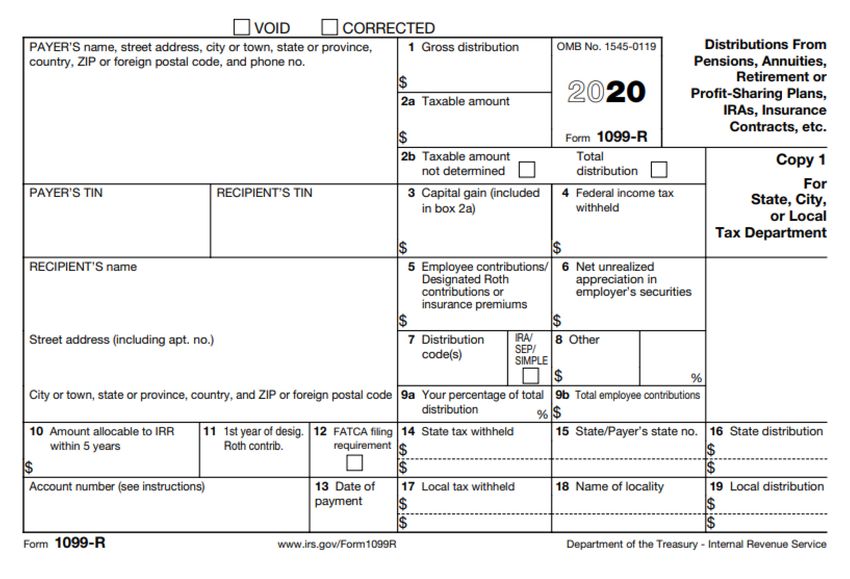
Table of Contents - Pre-Retirement
About This Seminar ................................................................................................................................................................................ 2
About OPERS........................................................................................................................................................................................... 2
When May I Retire?................................................................................................................................................................................ 3
    Normal Retirement ........................................................................................................................................................................... 3
    Early Retirement ................................................................................................................................................................................ 3
    Disability Retirement ........................................................................................................................................................................ 4
    Elected Officials .................................................................................................................................................................................. 4
    Hazardous Duty Employees ............................................................................................................................................................ 5
How to Calculate My Retirement Benefit?....................................................................................................................................... 6
    Unused Sick Leave ............................................................................................................................................................................. 7
Benefit Options........................................................................................................................................................................................ 8
    Maximum: Single-Life Annuity......................................................................................................................................................... 8
    Option A: One-Half Joint and Survivor Annuity ........................................................................................................................ 8
    Option B: 100% Joint and Survivor Annuity................................................................................................................................ 8
    Option C: Single Life Annuity with a 10 Year Certain Period ............................................................................................... 8
    Joint Annuitant vs. Beneficiary ........................................................................................................................................................ 8
Retirement Application.......................................................................................................................................................................... 9
What Happens After I Submit My Retirement Application?...................................................................................................... 13
Taxation of Retirement Benefits ....................................................................................................................................................... 15
Returning to Work After Retirement ............................................................................................................................................. 17
Medicare Gap Benefit Option............................................................................................................................................................ 19
Excess Accumulated Contributions ................................................................................................................................................. 19
Death Benefits........................................................................................................................................................................................ 20
SoonerSave ............................................................................................................................................................................................. 21
Required Minimum Distribution Worksheet................................................................................................................................. 24
Reduction Factors ................................................................................................................................................................................. 25
Important Points to Review ............................................................................................................................................................... 31

This booklet is intended only as a summary of the main features of the Oklahoma Public Employees Retirement System
(OPERS) defined benefit plan and is prepared only for Pre-Retirement Seminar participants. The official text governing the
operation of OPERS is found at 74 O.S.2001 §901 et. seq., as amended, and Title 590 of the Oklahoma Administrative Code.
OPERS reserves the right to correct any errors contained herein to comply with federal or state statutes, rules, and regulations
governing the Plan. Any information contained in this booklet referring to federal or state tax regulations is not intended to be
tax advice. All readers of this material are encouraged to consult a professional tax advisor before receiving any distribution
from the plans mentioned in this booklet.

                                                                                                    1
About This Seminar
This seminar is designed to provide helpful information to members of the Oklahoma Public Employees
Retirement System (OPERS) who are about to retire. Seminar participants have the opportunity to receive
important information about the following topics:
• Eligibility for retirement benefits • Returning to work after retirement
• Insurance* • Death benefits
• Benefit types • SoonerSave/Deferred Compensation
• Taxes • Medicare Gap Benefit Option
*All insurance information is provided courtesy of the Employees Group Insurance Division (EGID). Insurance
information and/or personnel may not be available at all OPERS seminars, but EGID provides their own insurance
seminars. For more information, please contact EGID at (800) 752-9475 or visit
https://omes.ok.gov/services/employees-group-insurance-division.
If your employer uses a health plan apart from EGID, see your insurance coordinator.
About OPERS
Defined Benefit Plan
The Oklahoma Public Employees Retirement System (OPERS) administers retirement plans for several different
types of state and local government employees. In the OPERS defined benefit plan, members include state and local
government employees, state and county elected officials, and state hazardous duty employees. OPERS provides a
lifetime retirement benefit when you meet certain eligibility requirements.
Membership is a mandatory condition of employment. You participate by contributing a certain percentage of your
salary to OPERS each month. Likewise, your employer also contributes on your behalf. The benefit you receive is
determined by a formula consisting of your salary and years of credited service. The contributions paid by both
you and your employer are invested by OPERS, under the direction of the OPERS Board of Trustees, to make the
benefit promise a reality for all present and future members.
Defined Contribution Plan
OPERS also administers a defined contribution retirement plan — known as SoonerSave. SoonerSave is comprised
of two plans, the Deferred Compensation Plan and the Deferred Savings Incentive Plan. These plans allow
participants to invest additional money to supplement the income they will receive from the Defined Benefit Plan
during retirement. In a defined contribution plan, no specific benefit is promised to a plan participant. The
participant is primarily responsible for making contributions and managing those assets to produce a source of
income available at retirement. Only state employees are eligible to participate in SoonerSave. See page 21 for
more information about SoonerSave.
Financial Information
An OPERS Comprehensive Annual Financial Report (CAFR) is published each year and available to those who
would like more detailed financial information about the retirement system. Visit our website at
www.opers.ok.gov/publications to view the CAFR online.
2When May I Retire?
The requirements most OPERS members must meet to be eligible for normal or early retirement are described
below. Please note in all situations, termination of employment is required to receive any benefit. If you are an
elected official or hazardous duty member other requirements or provisions will apply (see pages 4-5).
Note: Full-time-equivalent employment refers to a member’s employment and participation with a participating
employer of OPERS. A member obtains full-time-equivalent employment in two ways: working for a participating
employer, and/or making certain types of purchases of OPERS service credit for past work with a participating
employer.
Normal Retirement
If you became a member of OPERS before November 1, 2011, you can begin receiving unreduced retirement
benefits:
• Age 62 – When you are at least age 62 with six1 full years of full-time-equivalent employment; or,
• 80 Points – When the sum of your age and years of service equals 80 if you became a member before July
1, 19922; or,
• 90 Points – When the sum of your age and years of service equals 90 if you became a member on or after
July 1, 19922.
If you became a member of OPERS on or after November 1, 2011, you can begin receiving unreduced
retirement benefits:
• Age 65 – When you are at least age 65 with six1 full years of full-time-equivalent employment; or,
• 90 Points – When you are at least 60 years of age and the sum of your age and years of service equals
902.
Early Retirement
If you became a member of OPERS before November 1, 2011, you can begin receiving reduced retirement
benefits once you have reached age 55 and have at least 10 years of participating service.
If you became a member of OPERS on or after November 1, 2011, you can begin receiving reduced retirement
benefits once you have reached age 60 and have at least 10 years of participating service.
If you choose early retirement, you will receive a permanent actuarial reduction in your benefit based on your age
at retirement. See Reduction Factors, beginning on page 25.
1
In this scenario, a member only needs six full years of full-time-equivalent employment and must be actively
employed with a participating OPERS employer at the applicable age to become eligible for normal retirement.
2
Those who became members of OPERS after January 1, 1983, must have at least six complete years of full-time-
equivalent employment to be eligible to retire.
3Disability Retirement
If you must terminate participation in OPERS due to significant health problems resulting in permanent disability,
you may be entitled to disability benefits if:
1. You qualify for payment of disability from the Social Security Administration or the Railroad Retirement
Board, the disability onset date falls within one year of your last date physically on the job, and you were
an active employee with a participating OPERS employer at the time of disability onset; and,
2. You have at least eight years of credited service (including six full years of full-time-equivalent
employment).
To apply for disability retirement, you will need to send OPERS a complete (all pages) copy of the Notice of
Award Letter. Upon receipt and determination of probable eligibility, OPERS will send you an Application for
Disability Benefits to complete and return.
Elected Officials
Elected officials employed on or after January 1, 1983, must have six or more years of full-time equivalent
employment with a participating employer to be eligible to retire under any of the eligibility requirements for
normal or early retirement. To be eligible to retire under the elected official provisions, you must retire and end
your service as an elected official.
Normal Retirement – Elected Officials
If you were first elected before November 1, 2011, you can begin receiving unreduced retirement benefits:
• Age 60 – When you are at least age 60 with six3 years of full-time-equivalent participation as an elected
official; or
• 80 points – When the sum of your age and years of service equals 804.
If you were first elected on or after November 1, 2011, you can begin receiving unreduced retirement benefits:
• Age 62 – When you are at least age 62 with 10 years of full-time-equivalent participation as an elected
official; or
• Age 65 –When you are at least age 65 with eight years of full-time-equivalent participation as an elected
official.
Early Retirement – Elected Officials
If you were first elected before November 1, 2011, you can begin receiving reduced retirement benefits once
you have reached age 55 and have at least 10 years of participating service.
If you were first elected on or after November 1, 2011, you can begin receiving reduced retirement benefits
once you have reached age 60 and have at least 10 years of participating service.
3
In this scenario, a member only needs six full years of full-time-equivalent participation as an elected official and
must be actively employed with a participating OPERS employer at the applicable age to become eligible for normal
retirement.
4
Those who became members of OPERS after January 1, 1983, must have at least six complete years of full-time-
equivalent employment to be eligible to retire.
4If you choose early retirement, you will receive a permanent actuarial reduction in your benefit based on your age
at retirement. The early retirement reduction factors are available in the Elected Official handbook on the OPERS
website at www.opers.ok.gov/publications.
Hazardous Duty Employees
Certain employees of the Department of Corrections, the Oklahoma Military Department, the Grand River Dam
Authority and county deputy sheriffs and jailers5 have different eligibility requirements. In addition to the
retirement eligibility provisions listed on page 3, you may begin receiving full, unreduced retirement benefits with
20 full years of full-time-equivalent employment in the hazardous duty plan.
The 20-Year Rule applies to the following job classifications:
Job Title Job Codes
Correctional Security Officer I10A, I10B, I10C, I10D
Correctional Security Manager I11A, I11B
Correctional Chief of Security I12A, I12B, I12C
Probation and Parole Officer I40A, I40B, I40C, I40D
Fugitive Apprehension Agent I17A, 117B, 117C
Oklahoma Military Department Firefighter
Grand River Dam Authority Lake Patrol Officer Q50
County Deputy Sheriff5
County Jailer5
The job classifications listed above are subject to change. Contact your employer for the most current job
classifications.
Note: DOC employees with at least five years of service as a hazardous duty employee who change to another
position in DOC after June 30, 2004, are required by law to continue participating as a hazardous duty member.
5
Deputy sheriffs and jailers who are hired by a participating county as deputy sheriffs or jailer for the first time on
or after November 1, 2020, will participate in the hazardous duty plan. This plan is open only to members who
have not worked as a deputy sheriffs or jailer prior to November 1, 2020.
5How to Calculate My Retirement Benefit?
Your gross annual retirement benefit is calculated by multiplying your:
Final Average Compensation X Years of Service X 0.02 (2.0% Computation Factor)
• Final Average Compensation:
o If you became a member before July 1, 2013, this is the average of your compensation during
your highest three years out of the last 10 years of participating service prior to retirement
(including highest three longevity payments).
o If you became a member on or after July 1, 2013, this is the average of your highest five years out
of the last 10 years of participating service prior to retirement (including highest five longevity
payments).
• Total Service Credit – The years and full months you have participated in OPERS, including any
purchased service, prior service, bonus years, military service, and months of unused sick leave (6 months
maximum). Participation begins the 1st of the month following a member’s hire date.
o If you became a member before November 1, 2012, your total service is rounded up or down to
the nearest full year.
o If you became a member on or after November 1, 2012, your service credit is determined by the
actual number of years and months, without the benefit of rounding.
• Computation Factor – Two percent is the computation factor for most members. It is different for
elected officials and hazardous duty employees. Also, if a member has elected to participate in the 2.5%
Step-Up Program, he or she will have applicable full years calculated at 2.5 percent instead of 2 percent.
For more information about the 2.5% Step-Up, see the example below, ask your retirement coordinator
or contact OPERS for a brochure.
Example: Sally is retiring with a final average compensation of $30,000. She Benefit as a
Total
has 15 years of service credit and has the standard computation factor of 2 % of Average
Service
percent. Compensation
10 years 20%
$30,000 x 15 x 0.02 = $9,000 (or $750 per month)
15 years 30%
By looking at the table to the right, you can see each year of service equals 2 20 years 40%
percent of the final average compensation. With Sally’s 15 years of service,
her retirement benefit will replace approximately 30 percent of her final 25 years 50%
average compensation in retirement. 30 years 60%
35 years 70%
40 years 80%
45 years 90%
50 years 100%
6Step-Up Example: Sally is retiring with a final average compensation of $30,000. She has 15 years of service credit,
but she contributed at the Step-Up rate for the last five years. The standard computation factor of 2 percent will
apply to the first 10 years, while the remaining five full-years will be calculated using the Step-Up computation
factor of 2.5 percent.
Non-Step-Up Years: $30,000 x 10 x 0.02 = $6,000 (or $500 per month)
Step-Up Years: $30,000 x 5 x .025 = $3,750 (or $312.50 per month)
Total: Non-Step-Up Years ($500 per month) + Step-Up Years ($312.50 per month) = $812.50 per month
Unused Sick Leave Hours of Unused Months of OPERS
Unused sick leave can be added to a member’s service credit at Sick Leave Service Credit
retirement. OPERS cannot accept more than 960 hours of
0-159 0
unused sick leave. If the addition causes the total credited
service to equal or exceed a fractional year of six months, 160-319 1
service is rounded up to the next higher year and the member 320-479 2
gains one year of service credit.
480-639 3
Examples of how unused sick leave may affect your service
640-799 4
credit are provided below.
800-959 5
960 (maximum) 6
When it adds a year: When it does not add a year:
21 Years 0 Months Service Credit 21 Years 9 Months Service Credit
+ 6 Months Unused Sick Leave + 6 Months Unused Sick Leave
21 Years 6 Months Total Service 22 Years 3 Months Total Service
22 Years Total Service Credit 22 Years Total Service Credit
Note: OPERS rounds up only total accumulated service credit for those who became members before November
1, 2012.
Elected Officials & Hazardous Duty Members
The computation factor and benefit formula for elected officials and hazardous duty employees is different than
for regular state and local government employees. For additional information about retirement and benefit
calculation for elected officials and hazardous duty employees, consult the unique versions of the Member
Handbook, available at www.opers.ok.gov/publications.
7Benefit Options
You may choose between one of four retirement benefit options described below. No changes in the type of
benefit or the joint annuitant may be made on or after the effective retirement date. However, if your joint
annuitant under Options A or B dies before you do, you must contact OPERS and provide a certified death
certificate. After OPERS receives the certified death certificate, you will begin receiving benefits under the
Maximum Benefit option.
Maximum: Single-Life Annuity
If you are married, your spouse must consent to your choice of the Maximum Benefit. Under this option, you will
receive the largest possible benefit based upon the benefit formula. The benefit is paid monthly for your lifetime
and ceases the last day of the month in which you pass away. No further monthly benefits are paid. This is different
for elected officials. For more information, see the Elected Officials Member Handbook at
www.opers.ok.gov/publications.
Option A: One-Half Joint and Survivor Annuity
Under this option, you will receive a reduced retirement benefit for life (see reduction factor chart on page 28).
After your death, one-half of the reduced retirement benefit will be paid to your surviving joint annuitant for his or
her lifetime. Your joint annuitant must be a specific person (not a trust, charity, etc.).
Married Members
You must retire and name your spouse under Option A if you
are married at retirement, unless your spouse consents to
you choosing a different option. Your spouse’s consent is also
required if you choose someone other than your spouse as
your annuitant.
Option B: 100% Joint and Survivor Annuity
If you are married, your spouse must consent to your choice of Option B. Under this option, you will receive a
reduced retirement benefit for life (see reduction factor chart on page 29). After your death, the same reduced
retirement benefit will be paid to your surviving joint annuitant for his or her lifetime. Your joint annuitant must be
a specific person (not a trust, charity, etc.) and can be no more than 10 years younger than the member, unless
he/she is the member’s spouse.
Option C: Single Life Annuity with a 10 Year Certain Period
Under this option, you will receive a reduced retirement benefit for life (see reduction factor chart on page 30). If
you die within the first 10 years of benefit payments, payments will then be made to your beneficiary for the
balance of the 10-year period. Your beneficiary does not have to be a specific person, and may be changed at any
time during the 10-year period.
Joint Annuitant vs. Beneficiary
• Joint Annuitant: Person designated to receive a lifetime benefit under Option A or B after a member’s
death. The joint annuitant must be a specific person, and cannot be changed after retirement.
• Beneficiary: Designated to receive accumulated contributions, death benefit, and/or retirement benefit
under Option C. The beneficiary is not required to be a specific person and can be changed at any time.
• Specific Person: An individual human being. This term does not include a corporation, partnership,
trust, charity, organization, or any other non-living entity.
8Retirement Application
Your completed Retirement Application must be received by OPERS at least 60 days prior to your effective
retirement date. You can obtain a Retirement Application from the retirement coordinator in your organization.
OPERS recommends you meet with your retirement coordinator at least 90 days prior to your retirement date.
You can find a listing of each agency’s main retirement coordinator at www.opers.ok.gov/coordinator-listing or by
calling OPERS at (800) 733-9008.
The following is a step-by-step explanation of the form. An example of a form completed by a member choosing
the Maximum Benefit is provided for your reference on pages 11-12.
Part 1 – Retirement Date
Each form requires the member to choose the month and year of their desired retirement date. Write your
requested retirement month and year (for example, July 2021) in the boxes provided. (Note: All retirement dates
are as of the first day of a month.)
Part 2 – Member Information
1. Print your complete name.
2. Provide your Social Security number.
3. Print your mailing address.
4. Provide a primary and secondary telephone number.
5. Provide your complete date of birth. If you have not previously furnished proof of birth date, it will be
necessary to do so.
6. Indicate your current marital status (married, married but separated, never married, divorced, or widowed).
Check one.
7. Provide a personal email address.
Part 3 – Type of Retirement
Indicate how you are eligible to receive retirement benefits. Your selection (Normal or Early) cannot be changed
on or after your effective retirement date. However, under certain conditions you may change from Early to
Disability retirement after your retirement date. See pages 3-5 for eligibility requirements.
Part 4 – Type of Benefit
Please mark your choice of retirement benefit type. If choosing Option A, B or C, provide the information for the
joint annuitant or beneficiary in Part 5. You cannot change your retirement option or joint annuitant on or after
your retirement date.
Part 5 – Joint Annuitant or Beneficiary Information
Do not complete this section if you selected the Maximum Benefit in Part 4. In Part 5, you will name a joint
annuitant if you selected Option A or Option B, or a beneficiary if you selected Option C. You cannot change your
joint annuitant (Option A or B) on or after your retirement date.
Part 6 – Spouse Consent
You can skip Part 6 if:
• You are not married at retirement; or,
• You are married at retirement and you are designating your spouse as your joint annuitant under
Option A.
9Complete Part 6 under all other circumstances, and your spouse Important
must sign and date Part 6.
OPERS requires you submit your
Part 7 – Member Verification Retirement Application (Form 515-117)
You must sign and date Part 7 indicating the application has been at least 60 days prior to your retirement
completed in accordance with your wishes. date. In a few rare instances, the OPERS
Executive Director may grant a waiver
Part 8 – Retirement Coordinator Verification “for good cause shown” as defined by
Your retirement coordinator must complete Part 8 and indicate the OPERS Board of Trustees. “Good
your last date physically on the job, your last date on the regular cause” is generally shown in cases of:
payroll, and your estimated amount of unused sick leave. Do not
send the form to OPERS without this signature. • Unforeseen hardship;
• Reduction-in-force/lay-off; or,
You can find a listing of each agency’s main retirement coordinator
• Error or delay on the part of
by visiting us at www.opers.ok.gov/coordinator-listing or by calling
the employer.
OPERS at (800) 733-9008.
Deadlines for Retirem ent Application
All retirement dates are as of the first day of the month
Retirement Date: Notice Deadline: Payment Date:
January 1, 2021 November 2, 2020 February 26, 2021
February 1, 2021 December 3, 2020 March 31, 2021
March 1, 2021 January 5, 2021 April 30, 2021
April 1, 2021 February 2, 2021 May 28, 2021
May 1, 2021 March 2, 2021 June 30, 2021
June 1, 2021 April 2, 2021 July 30, 2021
July 1, 2021 May 4, 2021 August 31, 2021
August 1, 2021 June 2, 2021 September 30, 2021
September 1, 2021 July 6, 2021 October 29, 2021
October 1, 2021 August 3, 2021 November 30, 2021
November 1, 2021 September 2, 2021 December 31, 2021
December 1, 2021 October 4, 2021 January 31, 2022
January 1, 2022 November 2, 2021 February 28, 2022
You may also view these dates at www.opers.ok.gov/dates-and-deadlines
1011
12
What Happens After I Submit My
Retirement Application?
                                            Retirement Timeline

                     Submitting your Retirement Application begins the retirement process. Submit your
                     Retirement Application along with the following forms and documents.

                         •    Direct Deposit Authorization
                         •    Withholding Preference Certificate
 A t least 60 days       •    Beneficiary Designation for Retiree Death Benefits
       B efore           •    Vital documents: *
         (A )                      o Proof of birth (you and your joint annuitant) Acceptable documents
                                       include a valid, unexpired driver’s license, passport or birth certificate.
                                       Please contact OPERS for more information.
                                   o Marriage license, divorce decree and/or spouse’s death certificate

                     *Legible copies of these documents are acceptable. You may be able to request copies of
                     vital documents at www.usa.gov/replace-vital-documents. Documents will not be returned.

                     Approximately 45 days before your retirement date, OPERS will send you an
 45 days before      Acknowledgment Letter requesting any missing documents required to complete your
      (B )           retirement. If you do not provide these documents by the specified due date, the payment
                     of your retirement benefits will be delayed until the end of the following month.

                     Approximately 15 days before your retirement date, OPERS will send you a Preliminary
                     Benefit Statement, which will provide the following information:

                         1.   An accounting of your service credit;
 15 days before
                         2.   An estimate of your gross monthly benefit; and,
      (C)                3.   The date your first two benefit payments will be issued.

                     You also will receive information about the Medicare Gap Benefit Option and rules for
                     returning to work after retirement.

Retirem ent Date     OPERS will process your retirement benefit according to your wishes. If more information
      (D)            is needed, you will be notified.

                                                     13
Approximately 55 days after your chosen retirement date, OPERS will send you a final
letter just before your first two months of benefit payments are issued stating the
following:
55 days after
(E) 1. A final statement of your benefits (gross amount, withholding for insurance,
federal and state income tax and net amount); and,
2. A statement showing the total contributions (both after tax and pre-tax) you have
paid into OPERS.
60 days after
OPERS will direct deposit your first two retirement payments to your financial institution.
(F)
Retirement Timeline Example - July 1st Retirement Date
SUN MON TUE WED THU FRI SAT SUN MON TUE WED THU FRI SAT
1 2
May A June
3 4 5 6 7 8 9 1 2 3 4 5 6
10 11 12 13 14 15 16 7 8 9 10 11 12 13
17 18 19 20 21
B22 23 14 15 16 17 18 19 20
C
24 25 26 27 28 29 30 21 22 23 24 25 26 27
31 28 29 30
SUN MON TUE WED THU FRI SAT SUN MON TUE WED THU FRI SAT
1
July August
1 2 3 4 2 3 4 5 6 7 8
D
5 6 7 8 9 10 11 9 10 11 12 13 14 15
12 13 14 15 16 17 18 16 17 18 19 20 21 22
19 20 21 22 23 24 25 23 24 25 26 27 28 29
E
26 27 28 29 30 31 30 31
F
For more information regarding the retirement process, please see Important Points to Review on page 31.
14Taxation of Retirement Benefits
Retirement benefits from OPERS are considered income for Oklahoma
and federal income tax purposes. Under current tax provisions, Get Tax Advice
$10,000 of your OPERS retirement benefits may be excluded from your
Oklahoma state income tax each year if you are an Oklahoma resident. The tax information provided here is
a general description of tax liability
OPERS will provide you with the Withholding Preference Certificate, for OPERS retirees. Your tax liability
which is used to withhold state and federal taxes from each monthly may differ. OPERS encourages you to
benefit payment. You may change your tax withholding amounts at any consult a competent tax advisor
time. If you do not file a Withholding Preference Certificate, OPERS is about your tax liability.
required by law to assume that you are married and are claiming three
allowances.
Safe Harbor
If you have any accumulated nontaxable contributions (post-tax contributions) as of your retirement date, you will
be able to reduce the taxable portion of your benefit to the extent of your nontaxable contributions in accordance
with the Internal Revenue Service’s Safe Harbor provision. Generally, this method allows OPERS to spread your
accumulated nontaxable contributions over your life expectancy or the joint life expectancies of you and your joint
annuitant. OPERS will calculate this exclusion for you, and the resulting taxable portion will appear on your Form
1099-R. However, you may consult IRS Publication 575 for more information about the Safe Harbor method.
Form 1099-R
You will receive a Form 1099-R each January. The information contained in the 1099-R should be used in
completing your state and federal income tax return. The 1099-R will show:
1. Gross amount of your retirement benefits for the previous calendar year;
2. Amount of state and federal income tax withheld from your retirement benefits; and,
3. The federal taxable amount of your retirement benefits for the year.6
6
After-tax employee contributions can reduce the federal taxable amount. Contact OPERS for more information.
1516
Returning to Work After Retirement
Some retirees with the Oklahoma Public Employees Retirement System (OPERS) choose to go back to work after
retirement. If you return to work with an employer who participates in OPERS, you should be aware of
certain rules and guidelines, including:

    1.   Effective July 1, 2008, state law prohibits you, as an OPERS retiree, from returning to work with the
         same employer for a period of one year, unless you waive receipt of your OPERS retirement benefits
         (see page 18).

    2.   You may return to work with a different OPERS participating employer and continue to receive
         your OPERS benefits after your first full month of retirement.

    3.   Retiring members and participating OPERS employers may
         not enter into pre-retirement employment                           Social Security Full Eligibility*
         arrangements that permit the member to retire and
                                                                            Birth Year          Full Eligibility Age
         subsequently be rehired on any basis by that same
         employer, including third party contracts (e.g. Galt                 1941                65+8 months
         temporary employment). Such an action is a direct                    1942               65+10 months
         violation of the Internal Revenue Service Code and does             1943-54                  66
         not constitute an actual retirement.                                 1955                66+2 months
                                                                              1956                66+4 months
    4.   You and your employer will be required to complete the               1957                66+6 months
         Post-Retirement Employment form and you and your                     1958                66+8 months
         employer will commence paying retirement contributions               1959               66+10 months
         on your earnings, regardless of the status of the
                                                                            1960-later                67
         employment or hours worked.
                                                                         *Information is from the Social Security
    5.   If you choose to continue receipt of your OPERS
                                                                          Administration’s web site at www.ssa.gov
         retirement benefit while working for a participating
         employer, your OPERS benefits are subject to calendar
         year earnings limits established by the Social Security Administration (SSA). This applies only to persons
         who are younger than the SSA full retirement age.

    6.   A retiree continues to accrue service credit while working for a participating employer, which may
         increase his or her retirement benefits

Independent contractors do not participate in OPERS, but before a participating employer hires an OPERS retiree
as an independent contractor, they must submit a copy of the contract to OPERS for review. The determination of
whether or not an employee is an independent contractor for the purpose of participation in OPERS will be made
solely by the Oklahoma Public Employees Retirement System.

If you return to work with a participating OPERS employer, you must choose to either:

    A. Continue receiving benefits, subject to earnings limits; or,
    B. Waive the receipt of benefits while employed.

                                                         17
Continuation of Retirement Benefits While Working for an OPERS Employer
You may continue to receive benefits while you are working. However, unless you are eligible for full Social
Security retirement (see table on page 17), your OPERS benefits will cease when your salary reaches the allowed
earnings limit during that calendar year. Once your salary reaches the allowed earnings limit, your OPERS benefits
will not be paid for the rest of that calendar year. Your benefits will resume at the beginning of the next calendar
year until your salary reaches the allowed earnings limit for that calendar year or your employment terminates.
Each month you work for a participating OPERS employer and
2021 Earnings Limits
contribute to OPERS, you earn service credit. Every additional
year of full-time equivalent service earned will increase your
You will NOT reach your
benefits. The increase will occur in January of each year if you
SSA Full Retirement Age in 2021:
have earned an additional year as of the end of the previous fiscal
$18,960
year (June 30th). Benefit increases are based upon the
compensation earned during the additional year of service. The Up to the point you reach your
compensation is inserted in the benefit formula with one year of SSA Full Retirement Age in 2021:
service. $50,520
$25,000 Once you reach your
Example .02 SSA Full Retirement Age:
If you earn $25,000 during the X 1 (year) No limit
additional year of service, your $500.00
monthly benefit would increase: These limits apply for the calendar year
÷ 12 months
2021 only. The full retirement age will
= $41.67
increase each year (see table on page 16)
By state law, the earnings limit for retirees
Waiver of Retirement Benefits While Working for an
who have returned to work with an OPERS
OPERS Employer
participating employer are linked to the
You may also stop receiving your OPERS retirement benefits
amounts allowable as wages or earnings by
completely while employed with a participating OPERS employer.
the Social Security Administration in any
In such a case, no earnings limits apply and you may retire for a
calendar year. The information above is
second time, but only after earning the equivalent of 36
based upon the amounts established by the
consecutive months of full-time service credit. All of your service
Social Security Administration for 2019.
credit (before and after retirement) will be recomputed based
upon the law governing this System at the time of your second
retirement. When you retire the second time, you may also re-select a retirement option.
Note: The retirement provisions for elected officials do not apply to former elected officials who return to work
as regular state or local government members.
If you waive your benefits, but your post retirement employment ends before you earn 36 consecutive months of
service credit, you will not receive the waived benefit payments. However, you may apply for your payments to
resume and you will receive a benefit increase based on an additional year of service credit earned (as with those
who do not waive their benefits). You may cancel your waiver of benefits at any time by giving OPERS written
notice, but your receipt of benefits will be subject to the annual earnings limit if your employment continues.
IMPORTANT: If you elected the Medicare Gap Benefit Option upon your initial retirement and return to work
for an OPERS participating employer, you may not waive benefits and retire a second time.
18Medicare Gap Benefit Option
The Medicare Gap Benefit Option is an irrevocable election you may make at retirement to temporarily increase
the amount of your monthly retirement benefit from OPERS if you are under the age of 65. This increase is
intended to help pay health insurance premiums until you become eligible for Medicare. However, there will be a
permanent decrease in your monthly benefit amount to repay this pre-Medicare increase. In som e cases, the
perm anent decrease in the benefit am ount will be greater than the tem porary initial increase. In
essence, you are taking a loan against future benefits to fund this temporary increase, and you will pay it back in
the form of a permanent decrease in benefits upon reaching Medicare eligibility.
During the retirement process each eligible member will receive a customized letter informing them of the
Medicare Gap Benefit Option. The letter will list what the Medicare Gap Benefit amount will be for the year you
are retiring, what your inflated benefit will be before age 65 and what your lifetime decreased benefit will be after
age 65. If you wish to elect the Medicare Gap Benefit Option, you will sign this letter and return it to OPERS
before your retirement date.
For more information, view the Medicare Gap Benefit Option brochure on the OPERS website at
www.opers.ok.gov/medicare-gap-benefits-option.
Excess Accumulated Contributions
Occasionally, at the death of a retiree, the amount of contributions paid into OPERS is more than the total benefits
received in retirement. In such a case, OPERS will provide your designated beneficiary or estate with the excess
contributions. A form entitled Application for Payment of Accumulated Contributions in Excess of Retirement
Benefits Paid will be sent to your beneficiary. This application will show the balance remaining between the total
amount of contributions you paid to OPERS and the total amount of retirement benefits you received prior to
your death. The signature of your beneficiary must be notarized on the application.
Excess accumulated contributions will not be paid to your beneficiary if you elect Option A, B or C. Joint
annuitants under Option A or B will receive a lifetime monthly benefit instead. Option C beneficiary(ies) will
receive benefits for the balance of the first 10 years of the member’s retirement.
19Death Benefits
OPERS will pay $5,000 to your named beneficiaries or to your estate if there is no living beneficiary. This death
benefit will be paid in addition to:
1. Any excess employee contributions provided to your beneficiary;
2. Option A or B payments to your joint annuitant, or Option C payments to your beneficiaries (if within
the first 10 years of retirement);
3. Final retiree benefit payment; and/or
4. Insurance.
OPERS will supply the Beneficiary’s Application for Retiree Death Benefits form to be used in claiming the $5,000
benefit when OPERS is notified of your death. You must be receiving a retirement benefit during the month of
your death for your beneficiary to be eligible to receive the $5,000 benefit.
The death benefit is subject to taxation. There are several distribution options available to the named beneficiary
and vary somewhat between spouse and non-spouse beneficiaries. Your beneficiaries will receive more detailed
rules before any distribution is paid.
As with all tax matters, OPERS encourages you and your beneficiaries to seek advice from a competent tax advisor
regarding your particular tax liability.
Beneficiary Information
Please remember to keep your beneficiary designation current. Particularly if you get married, divorced, or
suffer a death in your family. To update your beneficiary, call OPERS and request a Beneficiary Designation for
Retiree Death Benefits. You may also download the form from the OPERS website at www.opers.ok.gov/forms.
For each beneficiary, you will need:
• Name
• Address
• Date of birth
• Telephone number
• Social Security number
20SoonerSave
For state employees, another source of retirement income may come from your SoonerSave plan. Participants
have two accounts, one for their contributions (Deferred Compensation plan 457) and one for the State’s
contribution (Deferred Savings Incentive plan 401a). You do not have to withdraw funds from your SoonerSave
accounts at retirement if you are younger than age 72. You can choose to leave your money in the SoonerSave
plans, where it will remain invested under your direction.
After a 30-day break in state employment, SoonerSave participants may
withdraw funds from either plan. To receive distribution of these funds, you will SoonerSave
need to contact Empower Retirement, the recordkeeper for SoonerSooner, at
877-538-3457. You may withdraw funds from these plans in a variety of Local (405) 858-6737
arrangements, including: Toll-Free (800) 733-9008
Keytalk (877) 538-3457
• Installment payment (monthly, quarterly, annually, etc.) www.soonersave.com
• Lump-sum payment
• Partial Lump-sum
• Rollover (limitations and conditions exist)
Distributions from your SoonerSave accounts are considered ordinary income for state and federal taxes, unless
directly rolled over into another plan. Unless a payout of 10 or more years is selected, there is a mandatory
withholding requirement of 20 percent federal and applicable state withholding. You may be subject to an
additional 10 percent tax penalty if money is distributed to you from your Deferred Savings Incentive Plan (401a)
before the age of 59 ½. See IRS form 5329 or IRS Publication 575 for more details. The 10 percent penalty does
not apply to distributions from the Deferred Compensation Plan (457).
Required Minimum Distribution
Required Minimum Distribution (RMD) refers to the amount of qualified pre-tax retirement savings that retired
plan participants must begin taking as a distribution from their retirement accounts before April 1st following the
year they reach age 72 (70½ if you reach age 70½ before January 1, 2020). If you are still working for a
SoonerSave-participating employer you are not required to begin your RMD until you end employment. RMD
amounts must then be distributed each subsequent year. SoonerSave will notify you in writing of the amount and
date by which this distribution needs to occur. Make sure to stay vigilant of the RMD deadlines, as to avoid the 50
percent penalty accessed to those who fail to take the required disbursement. The Required Minimum Distribution
Worksheet is available on page 24.
If you have additional questions about your SoonerSave accounts, please contact a SoonerSave representative.
Participant Fee Structure
There is a $2.61 per month participation fee. These fees pay for administration, recordkeeping and communication
services. This fee will be automatically deducted from your total account balance and will be reflected on your
quarterly statement.
21SoonerSave Distribution Options
You have several options for distribution. You may combine options and change periodic payments once your
distribution has started. Below are brief descriptions of your distribution options.
Leave the money in the Plan You may defer distribution until a future date, up to the calendar
year in which you reach age 72. You do not need to take any action
to defer distribution.
Full Distribution Payment You can receive one lump sum payment for the total amount. This
amount will be taxed entirely in the year received.
Partial Distribution Payment You can take a partial payment at any time and leave the balance to
be distributed at a later date.
Periodic Payments—Amount Monthly, quarterly, semi-annual, or annual payments are available in
Certain the amount you specify. Payments will continue until the account is
depleted or you request to change or cancel payment.
Periodic Payments—Period You can have payments calculated to last a selected period of time
Certain such as 5, 10, 15, 20 years, etc. The amount of the payment will be
calculated every year using the previous year’s balance and the
number of years left in the payout period. You can cancel or change a
periodic payment at a future date.
Rollover to IRA/Qualified Plan You may elect to roll over your accounts to another qualified
retirement plan that accepts rollovers (e.g. 457, 401(a/k), 403(b), IRA
or Roth IRA). No taxes will be withheld from the transfer amount.
You are encouraged to discuss rolling money from one account to
another with your financial advisor/planner, taking into consideration
any potential fees, the tax implications and/or limitation of investment
options.
To initiate a withdrawal call Empower Retirement at (877) 538-3457. A plan representative will walk you through
the process and send you any necessary forms. The distribution will be processed once the forms are received
completed and signed.
All distributions paid out in less than 10 years will have a mandatory withholding of 20 percent for federal taxes
and an applicable state withholding. A W-4P form may be completed for distributions of 10 years or more.
22Your SoonerSave Plan consists of a Deferred Compensation Plan 457, funded by employee contributions, and a
Deferred Savings Incentive Plan 401(a), funded by a State match. You may withdraw money from each plan
separately. Both plans have the same rules and options for distribution except where noted below.
Will my money still be invested after I terminate employment?
Yes. Your investments will remain invested until you have depleted the account. You may redirect your
investments at any time.
When am I eligible to withdraw from my accounts?
You may withdraw when you retire (regular, early, or disability), terminate employment with the State or when
you pass away (benefit is paid to the beneficiary).
Is there a waiting period before I can withdraw funds?
Funds are available no earlier than 30 days after separation from your employer.
What are my distribution options?
You may leave money in the plan, take a full or partial distribution, receive periodic payments or roll over to
another qualified plan. See the back of this document for more information. NOTE: You are not required to take
a distribution until age 72.
What are my rollover options?
You may only roll over to another qualified plan, IRA or Roth IRA.
How is my distribution taxed?
SoonerSave distributions are considered regular income for federal and state income tax purposes. Lump sum
distributions and periodic payments lasting less than 10 years will have a mandatory withholding of 20 percent for
federal taxes and an applicable state withholding. A W-4P form may be completed for distributions of 10 years or
more.
Is there a tax penalty for early withdrawal?
Deferred Compensation Plan 457: No.
Deferred Savings Incentive Plan 401(a): Yes. 10 percent tax penalty may apply. See 401(a) Special Tax Notice.
What do I need to do to begin distributions from my account?
To initiate a withdrawal, call the SoonerSave record keeper Empower Retirement at (877) 538-3457. A plan
representative will walk you through the process and send you any necessary forms.
How will I receive my distribution?
Distributions can be paid out by check or by Automated Clearing House (ACH), also referred to as direct deposit.
ACH is a faster, more secure way to transfer money. The initial set-up takes a minimum of 15 days to complete.
Save time by providing your banking information now at www.soonersave.com.
If I do not wish to begin a distribution at this time, do I need to do anything when I retire/leave
employment?
No. You are not required to begin distribution until the calendar year you are 72 years of age. (Additional
distribution information on previous page)
23Required Minimum Distribution Worksheet
This worksheet may be used to calculate this year’s required withdrawal from SoonerSave. SoonerSave is
comprised of a 457 plan and a 401(a) plan. Both are subject to the IRS required minimum distribution (RMD).7
Deadline for receiving required minimum distribution:
• The year you turn 72 8 – by April 1 of the following year 9
• All subsequent years – by December 31 of that year
Deferred Compensation Plan [457]
1. Plan balance as of December 31 of previous year. $____________
2. Distribution period from the table below for your age on your birthday this year. ____________
3. Line 1 divided by number entered on line 2. $____________*
Savings Incentive Plan [401(a)]
1. Plan balance as of December 31 of previous year. $____________
2. Distribution period from the table below for your age on your birthday this year. ____________
3. Line 1 divided by number entered on line 2. $____________*
*This is your required minimum distribution for this year.
Distribution Distribution Distribution Distribution
Age Age Age Age
Period Period Period Period
70 27.4 82 17.1 94 9.1 106 4.2
71 26.5 83 16.3 95 8.6 107 3.9
72 25.6 84 15.5 96 8.1 108 3.7
73 24.7 85 14.8 97 7.6 109 3.4
74 23.8 86 14.1 98 7.1 110 3.1
75 22.9 87 13.4 99 6.7 111 2.9
76 22.0 88 12.7 100 6.3 112 2.6
77 21.2 89 12.0 101 5.9 113 2.4
78 20.3 90 11.4 102 5.5 114 2.1
79 19.5 91 10.8 103 5.2 115 and over 1.9
80 18.7 92 10.2 104 4.9
81 17.9 93 9.6 105 4.5
7
If your spouse is the sole beneficiary and he or she is more than 10 years younger, you will need to use the Joint
Life and Last Survivor Expectancy Table found at www.irs.gov.
8
70 ½ if you reach age 70 ½ before January 1, 2020.
9
If you have reached the required minimum distribution age or older and still employed for a SoonerSave-
participating employer, the required minimum distribution will not go into effect until the year in which you retire
or terminate from the SoonerSave-participating employer.
24Reduction Factors
The following pages include reduction factors for the following:
• Early Reduction Factors – For members who began participation in OPERS before November 1, 2011
• Early Reduction Factors – For members who began participation in OPERS on or after November 1, 2011
• Option A – Retirement Benefit Option
• Option B – Retirement Benefit Option
• Option C – Retirement Benefit Option
Note: All reduction factor tables are based upon the analysis and experience of the Oklahoma Public Employees
Retirement System and prepared by an actuary.
Reduction Factor Example: Sally is retiring with a final average compensation of $30,000. She has 15 years of
service credit and has the standard computation factor of 2 percent.
$30,000 x 15 x 0.02 = $9,000 (or $750 per month). This represents Sally’s maximum monthly benefit.
If Sally were 62 at retirement and choosing Option A with a joint annuitant 2 years younger, her reduction factor
would be 92.5 percent (See reduction factors below. Complete Option A table on page 27.). This reduction factor
will be applied to Sally’s maximum monthly benefit.
Member’s Years Younger Years older
age at
retirement 5 4 3 2 1 0 1 2 3 4 5
50 95.38% 95.51% 95.64% 95.77% 95.90% 96.03% 96.16% 96.29% 96.41% 96.54% 96.67%
55 94.09% 94.27% 94.45% 94.62% 94.80% 94.98% 95.16% 95.33% 95.51% 95.68% 95.85%
60 92.46% 92.70% 92.94% 93.18% 93.43% 93.67% 93.11% 94.15% 94.39% 94.63% 94.86%
61 92.08% 92.33% 92.59% 92.85% 93.11% 93.37% 93.37% 93.88% 94.13% 94.39% 94.63%
62 91.68% 91.95% 92.22% 92.50% 92.77% 93.05% 93.05% 93.60% 93.87% 94.13% 94.39%
63 91.26% 91.55% 91.84% 92.13% 92.42% 92.72% 92.72% 93.30% 93.58% 93.87% 94.15%
64 90.81% 91.12% 91.43% 91.74% 92.05% 92.37% 92.37% 92.98% 93.29% 93.59% 93.88%
65 90.34% 90.67% 91.00% 91.33% 91.66% 92.00% 92.00% 92.65% 92.97% 93.29% 93.60%
Maximum Monthly Benefit x Option A Reduction Factor = Sally’s Option A Monthly Benefit Amount.
$750 x .9250 (92.50%) = $693.75 Sally’s Monthly Benefit Amount
Upon Sally’s death, her joint annuitant will begin receiving ½ the amount Sally had received ($346.87 per month).
25Early Reduction Factors – For members who began participation in OPERS before November 1, 2011
Expressed as a percentage of the total Maximum Benefit
Age % Age % Age %
62 – 00 mo. 100 59 – 06 mo. 83.333 57 – 00 mo. 66.667
61 – 11 mo. 99.444 59 – 05 mo. 82.778 56 – 11 mo. 66.389
61 – 10 mo. 98.888 59 – 04 mo. 82.222 56 – 10 mo. 66.111
61 – 09 mo. 98.333 59 – 03 mo. 81.667 56 – 09 mo. 65.834
61 – 08 mo. 97.777 59 – 02 mo. 81.111 56 – 08 mo. 65.556
61 – 07 mo. 97.222 59 – 01 mo. 80.555 56 – 07 mo. 65.278
61 – 06 mo. 96.666 59 – 00 mo. 80.000 56 – 06 mo. 65.000
61 – 05 mo. 96.111 58 – 11 mo. 79.444 56 – 05 mo. 64.723
61 – 04 mo. 95.555 58 – 10 mo. 78.889 56 – 04 mo. 64.445
61 – 03 mo. 95.000 58 – 09 mo. 78.333 56 – 03 mo. 64.167
61 – 02 mo. 94.444 58 – 08 mo. 77.778 56 – 02 mo. 63.889
61 – 01 mo. 93.888 58 – 07 mo. 77.222 56 – 01 mo. 63.611
61 – 00 mo. 93.333 58 – 06 mo. 76.666 56 – 00 mo. 63.333
60 – 11 mo. 92.777 58 – 05 mo. 76.111 55 – 11 mo. 63.055
60 – 10 mo. 92.222 58 – 04 mo. 75.555 55 – 10 mo. 62.777
60 – 09 mo. 91.666 58 – 03 mo. 75.000 55 – 09 mo. 62.500
60 – 08 mo. 91.111 58 – 02 mo. 74.444 55 – 08 mo. 62.222
60 – 07 mo. 90.555 58 – 01 mo. 73.889 55 – 07 mo. 61.944
60 – 06 mo. 90.000 58 – 00 mo. 73.333 55 – 06 mo. 61.666
60 – 05 mo. 89.444 57 – 11 mo. 72.778 55 – 05 mo. 61.389
60 – 04 mo. 88.889 57 – 10 mo. 72.222 55 – 04 mo. 61.111
60 – 03 mo. 88.333 57 – 09 mo. 71.667 55 – 03 mo. 60.833
60 – 02 mo. 87.779 57 – 08 mo. 71.111 55 – 02 mo. 60.555
60 – 01 mo. 87.223 57 – 07 mo. 70.555 55 – 01 mo. 60.277
60 – 00 mo. 86.667 57 – 06 mo. 70.000 55 – 00 mo. 60.000
59 – 11 mo. 86.111 57 – 05 mo. 69.444
59 – 10 mo. 85.555 57 – 04 mo. 68.889
59 – 09 mo. 85.000 57 – 03 mo. 68.333
59 – 08 mo. 84.444 57 – 02 mo. 67.778
59 – 07 mo. 83.889 57 – 01 mo. 67.222
26You can also read


