AQUINAS LEARNING JOURNEY - Aquinas College
←
→
Page content transcription
If your browser does not render page correctly, please read the page content below
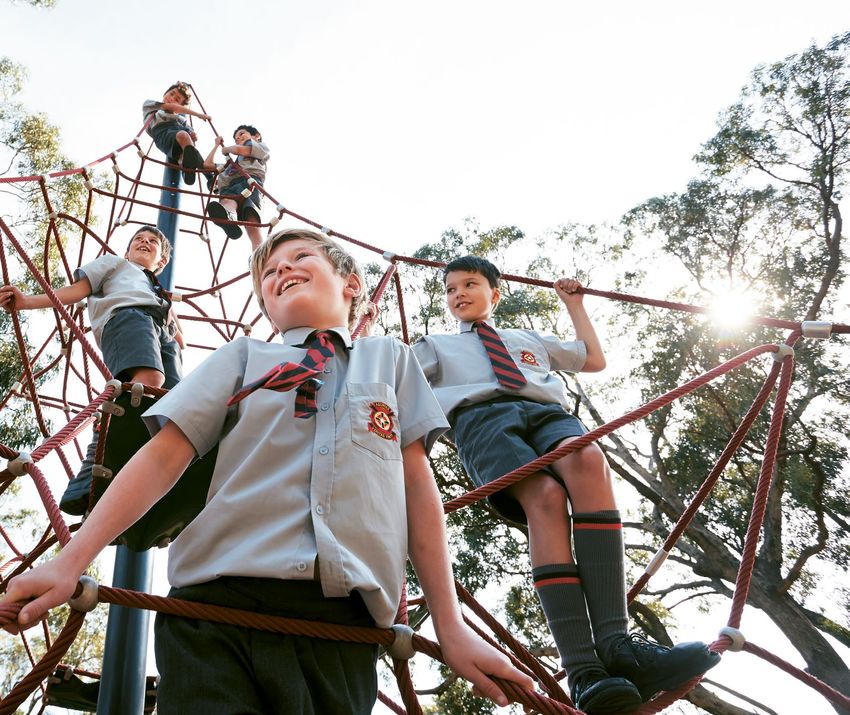
E VERY E XPERIENCE IS AN OPPORTUNIT Y TO LE ARN

AQUINAS LEARNING JOURNEY
                     BEGIN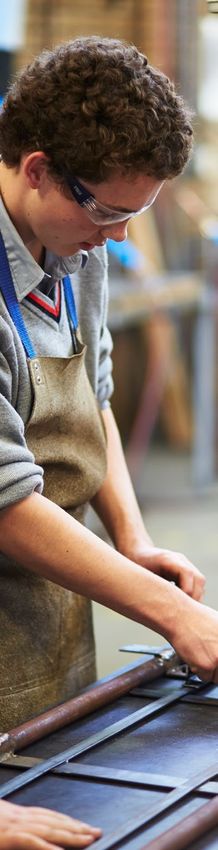
AQUINAS LEARNING JOURNEY

One of the key strategic                        The Aquinas Learning Journey is based
                                                on research and accepted models of
dimensions for the College
                                                personal development. The work of Piaget,
has been to develop a                           Kohlberg, Erikson, Fowler and others
framework for a boys’ learning                  guides the mapping process across each
journey from kindergarten                       of the domains. These domains include:

to graduation. Our Vision                       COGNITIVE – 	acquisition and application
                                                             of knowledge
is to educate boys to become
                                                SOCIAL         – relationships with others
‘the men the world needs’.
                                                EMOTIONAL – acceptance of self
As a Christian Brothers’ College since 1894,    PHYSICAL       – 	growing from a boy
our purpose has been to be a Catholic                             into a man

school for boys in the Edmund Rice tradition.   SPIRITUAL      – 	the moral compass to
                                                                  determine right from wrong.
The Aquinas Learning Journey is centred
upon developing a boy’s journey through         A boy’s spiritual development is overarching
academic, emotional, social and the             and underpins each of the other domains.
overarching spiritual domains.
                                                Furthermore, each of these domains is
The Aquinas Learning Journey is within the      mapped through each developmental phase
context of family, school and community         of a boy’s learning journey:
to provide nurturing in a values-based
                                                • EARLY BOY
environment. Aquinas College has at its
                                                • YOUNG BOY
core, values of:                                • BOY

• FAITH IN ACTION                               • ADOLESCENT BOY

• JUSTICE WITH COMPASSION                       • YOUNG MAN

• SERVICE WITH GENEROSIT Y
                                                This creates a unique matrix which allows
• RESPECT FOR ALL
                                                clearer, ongoing understanding of a boys’
• EXCELLENCE EVERY DAY
                                                growth at Aquinas College for staff, parents
                                                and the community.
In support of this Learning Journey,
Aquinas College has developed a map
of the boy’s journey from the early years
of formal education through to the boy
emerging as a good young man taking
his place in our community.

   CLICK TO ENTER FULL SCREEN MODE                                             NEXT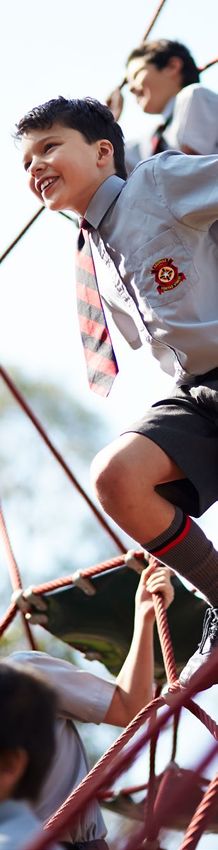
K - PP                          YEARS 1-3                   YEARS 4-6                    YEARS 7-9                       YEARS 10-12
     Age 4-6

                                                  THE EARLY BOY
                        A time to explore, discover, belong and grow to become me.
            Transition phase: From home to a more social environment less dependent on mother in particular.
                               Spiritual: Faith develops through modelling the behaviour of adults
                           who care for the boy. Boys learn through repetition, stories, images and ritual.

   COGNITIVE
         Exploring                              PHYSICAL                                  SOCIAL                         EMOTIONAL

Based on our research,                            Boys in our setting                              At Aquinas we offer...
he needs opportunities                            typically display a(n)...
                                                                                                   • age and developmental stage appropriate
to develop...                                                                                        resources.
                                                  • interest in make-believe play.
                                                                                                   • multi-sensory resources and environments.
• learning through sensory experiences.           • enjoyment of singing, dancing and
                                                    general movement.                              • play-based learning programs.
• play with concrete operations.
                                                  • ability to form number concepts, time,         • inquiry-based learning opportunities.
• and display curiosity, imagination and
                                                    shapes and letter/sound recognition.
  wonderment. ‘Why?’ becomes the way                                                               • literacy programs with structured assessment
  in which the boy explores his world.            • keen curiosity about their world.                and practice of skills and understandings
                                                                                                     with an initial focus on oral literacy.
• oral language skills. Boys are now able to      • desire to share information and ask
  follow simple direct instructions and rules       lots of questions.                             • support programs built into learning for boys
  and their language increases in complexity.                                                        who need more time to acquire concepts.

• the ability to classify objects by a single                                                      • extension support built into learning for boys
  feature, such as colour, size or shape.                                                            who show potential for higher level learning.

• learning through play and inquiry.                                                               • behaviour management which requires boys
                                                                                                     to understand the impact of their behaviour
                                                                                                     on others.

                                                                                                   • specialist programs in music, art, physical
                                                                                                     education and library.

                                                                                                   • speech assessments and screenings.

                                                                                                   • programs based on the Early Years Learning
                                                                                                     Framework principles.

                                                                                                   • reporting to parents on Australian Curriculum
                                                                                                     Standards (PP only).

                                                                                                   • reporting to parents using online
                                                                                                     assessments (T1 PP).

                                                                                                   • access to CEO specialist support staff and
                                                                                                     educational psychologist.

                                                                                                   • access to CEO specialist support staff and
                                                                                                     educational psychologist.
K - PP                          YEARS 1-3                    YEARS 4-6                    YEARS 7-9                       YEARS 10-12
     Age 4-6

                                                   THE EARLY BOY
                        A time to explore, discover, belong and grow to become me.
            Transition phase: From home to a more social environment less dependent on mother in particular.
                               Spiritual: Faith develops through modelling the behaviour of adults
                           who care for the boy. Boys learn through repetition, stories, images and ritual.

                                                PHYSICAL
    COGNITIVE                             He Can Do It By Himself                          SOCIAL                         EMOTIONAL

Based on our research,                             Boys in our setting                              At Aquinas we offer...
he needs opportunities                             typically display a(n)...
                                                                                                    • an indoor/outdoor purpose-built classroom.
to develop...
                                                   • clumsiness in movements.                       • physical education programs.

• gross motor skills through play, such as         • desire to be independent in gross              • gross motor programs targeted at age
  climbing, building and balancing.                  motor activities.                                and ability acquisition.

• fine motor skills that may be developing at      • enjoyment of group sports and games.           • large open spaces for outdoor play.
  a slower rate than the gross motor skills.                                                        • opportunities to engage with older boys
                                                   • understanding of learning to lose
• laterality and hand preference along with          but may also always want to win.                 who model physical play and act as mentors.
  spatial awareness.                                                                                • open plan classrooms with purpose-built
                                                   • knowledge about personal space
• energetic play that enables boys to learn          and the space around them.                       furniture and learning centres that promote
  about rules and how to follow them.                                                                 a play-based approach to learning
                                                   • interest in outdoor and indoor play
• an awareness of personal hygiene and               and learning.                                  • Skill Builders’ assessment of fine and
  increased responsibility for it.                                                                    gross motor skills through Occupational
                                                                                                      Therapy screenings.
• high energy play opportunities.
                                                                                                    • purpose-built bathroom facilities for
• an ability to toilet themselves.
                                                                                                      young boys.

                                                                                                    • active daily routines and learning
                                                                                                      opportunities.

                                                                                                    • school swimming lessons.

                                                                                                    • gross motor play embedded in the nature
                                                                                                      based playground.

                                                                                                    • fine motor activities that support and develop
                                                                                                      young hand muscles.

                                                                                                    • opportunities for movement embedded
                                                                                                      in play and learning activities.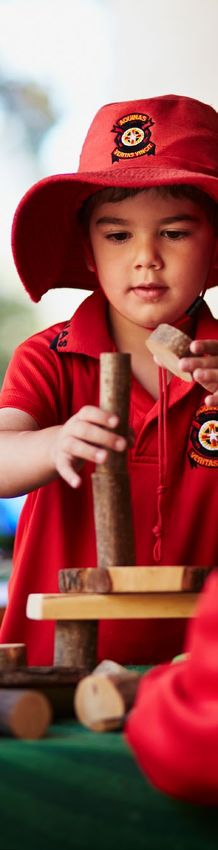
K - PP                            YEARS 1-3                      YEARS 4-6                         YEARS 7-9                    YEARS 10-12
      Age 4-6

                                                      THE EARLY BOY
                         A time to explore, discover, belong and grow to become me.
             Transition phase: From home to a more social environment less dependent on mother in particular.
                                Spiritual: Faith develops through modelling the behaviour of adults
                            who care for the boy. Boys learn through repetition, stories, images and ritual.

                                                                                                 SOCIAL
    COGNITIVE                                       PHYSICAL                              Learning to Belong                     EMOTIONAL

Based on our research,                                Boys in our setting                                 At Aquinas we offer...
he needs opportunities                                typically display a(n)...
                                                                                                          • a strong link between the home, school
to develop...                                                                                               and faith community.
                                                      • ability to sit and listen for extended
                                                        periods of time.                                  • regular contact with families in the form of
• the ability to play with others,
                                                                                                            newsletters, parent forums, clubs
  and to parallel play.                               • inability to handle extreme emotions –
                                                                                                            and activities.
                                                        i.e. may exhibit tantrums/poor behaviours.
• independence and a range of social skills.
                                                                                                          • explicit teaching of social stories and how to
                                                      • developing ability to articulate feelings.
• conflict resolution skills.                                                                               respond and behave in common situations.
                                                      • desire to be independent yet still fall back
• the feeling of a sense of belonging to a family                                                         • opportunities to talk about feelings in
                                                        into less mature behaviour.
  and a sense of belonging to other groups.                                                                 conjunction with the Friendly Schools
                                                      • inability to see the ‘whole picture’ and need       Plus Program.
• the ability to use his own initiative.
                                                        practice and opportunities to self-regulate.
                                                                                                          • time to be a boy and engage with boys in
• sharing and cooperating skills.
                                                                                                            their class as well as those from other
• empathy for another viewpoint.                                                                            year levels through buddy activities and
• gender stability.                                                                                         reciprocal learning.

                                                                                                          • Friendly Schools Plus classroom resources
                                                                                                            that target self-awareness, self-management,
                                                                                                            social awareness, relationship skills and
                                                                                                            social decision making.
K - PP                         YEARS 1-3                    YEARS 4-6                         YEARS 7-9                    YEARS 10-12
      Age 4-6

                                                 THE EARLY BOY
                           A time to explore, discover, belong and grow to become me.
             Transition phase: From home to a more social environment less dependent on mother in particular.
                                Spiritual: Faith develops through modelling the behaviour of adults
                            who care for the boy. Boys learn through repetition, stories, images and ritual.

                                                                                                                           EMOTIONAL
    COGNITIVE                                  PHYSICAL                                    SOCIAL                             Learning to Be

Based on our research,                           Boys in our setting                                 At Aquinas we offer...
he needs opportunities                           typically display a(n)...
                                                                                                     • whole group, small group and individual
to develop...                                                                                          learning.
                                                 • desire to be a part of group play and
                                                   learning.                                         • maximum class sizes of 24 students.
• strong family dependence, maintaining
  closeness to a few special people.             • sense of fairness and wanting to have a turn.     • opportunities to learn conflict resolution
                                                                                                       via adult modelling and scaffolding.
• an awareness of praise and recognition         • ability to begin learning about how others
  from others especially adults. As part of        may be feeling.                                   • Friendly Schools Plus social and emotional
  this process they can praise themselves.                                                             learning program.
                                                 • desire to follow rules to please.
• empathy and sense of others’ emotions.                                                             • access to the school’s psychologist who also
                                                 • awareness of bad behaviour and the
                                                                                                       conducts student and parent workshops.
• gender stability. This is commencing as          ability to tell teachers about their friends’
  boys start to associate with their gender.       bad behaviour at times.                           • clear boundaries and rules.

• egocentric thinking as they believe that                                                           • Catholic practices and principles taught
  others see the world in the same way as                                                              within the Catholic Education Guidelines.
  they do.

• fair play with others.

• age appropriate social skills.

• conflict resolution skills.

• a usage of words to explain how they feel.

• an understanding that rules can be
  fixed and absolute.
K - PP                       YEARS 1-3                          YEARS 4-6                     YEARS 7-9                      YEARS 10-12
                                             Age 6-9

                                                       THE YOUNG BOY
          A time for reasoning, to follow rules, making choices and trying by myself.
                        Transition phase: Transition from play-based learning to the language of learning.
                                    Structured learning that is enquiry-based begins to impact.
                   Spiritual: The young boy begins to see the world in a broader context. God is not only a
                  God to his family, but for all families. God is the Creator of All. Therefore, the boy becomes
                     aware of his place and the place of his family and friends in the scheme of Creation.

     COGNITIVE
    Making Connections                             PHYSICAL                                      SOCIAL                         EMOTIONAL

Based on our research,                                 Boys in our setting                                At Aquinas we offer...
he needs opportunities                                 typically display a(n)...
                                                                                                          • opportunities to design and make.
to develop...
                                                       • interest in making and doing.                    • learning programs that focus on the concrete
                                                                                                            moving to abstract.
• concrete learning with some boys                     • interest in playing with real things.
  engaging in abstract learning.                                                                          • many opportunities to do and practice.
                                                       • increased ability to show what they
•   sensory and play-based learning                      know on paper.                                   • focus on speaking and articulating well.
    opportunities with concrete materials.                                                                • strong literacy and numeracy programs
                                                       • interest in how things work.
• logical thinking and reasoning skills.                                                                    with support and extension embedded in
                                                                                                            the learning process.
• an increasing attention span and memory.

• knowledge to go from specific to
  general concepts through connections.

• complexity of thoughts still anchored
  in concrete experience.
K - PP YEARS 1-3 YEARS 4-6 YEARS 7-9 YEARS 10-12
Age 6-9
THE YOUNG BOY
A time for reasoning, to follow rules, making choices and trying by myself.
Transition phase: Transition from play-based learning to the language of learning.
Structured learning that is enquiry-based begins to impact.
Spiritual: The young boy begins to see the world in a broader context. God is not only a
God to his family, but for all families. God is the Creator of All. Therefore, the boy becomes
aware of his place and the place of his family and friends in the scheme of Creation.
PHYSICAL
COGNITIVE Practice Makes Progress SOCIAL EMOTIONAL
Based on our research, Boys in our setting At Aquinas we offer...
he needs opportunities typically display a(n)...
• nature based play spaces.
to develop...
• desire to get better at a skill. • specialist sports instruction.
• improved skills through practice and • high interest in outdoor games and sports. • opportunities to move while learning.
making the connection between practice
• connection to teams or sporting groups.
and skill acquisition.
• balance, control and coordination.
• hand-eye coordination that will improve as
‘adult like’ vision develops.
• and maintain high energy levels and self
regulation. Boys will see both the need for
and preference towards being engaged
in physical activity.K - PP YEARS 1-3 YEARS 4-6 YEARS 7-9 YEARS 10-12
Age 6-9
THE YOUNG BOY
A time for reasoning, to follow rules, making choices and trying by myself.
Transition phase: Transition from play-based learning to the language of learning.
Structured learning that is enquiry-based begins to impact.
Spiritual: The young boy begins to see the world in a broader context. God is not only a
God to his family, but for all families. God is the Creator of All. Therefore, the boy becomes
aware of his place and the place of his family and friends in the scheme of Creation.
SOCIAL
COGNITIVE PHYSICAL Making Friends EMOTIONAL
Based on our research, Boys in our setting At Aquinas we offer...
he needs opportunities typically display a(n)...
• Friendly Schools Program.
to develop...
• awareness of fairness and justice. • all boys environment.
• a sense of acceptable social behaviour • increased ability to explain themselves. • play with older boys as role models.
based on approval and acceptance • targeted swimming lessons.
• sense of how others impact their play.
by others.
• desire to make good choices.
• his ability to regulate his own behaviour.
• enjoyment of playing with own gender.
• a sense of learning to do what is right.
He can be concerned about good and
bad behaviour.
• a desire to be independent but reliant on
parents for safety.
• the ability to play with his own gender. At
this age, friendships are generally unstable.
• significant relations within community
and school.K - PP YEARS 1-3 YEARS 4-6 YEARS 7-9 YEARS 10-12
Age 6-9
THE YOUNG BOY
A time for reasoning, to follow rules, making choices and trying by myself.
Transition phase: Transition from play-based learning to the language of learning.
Structured learning that is enquiry-based begins to impact.
Spiritual: The young boy begins to see the world in a broader context. God is not only a
God to his family, but for all families. God is the Creator of All. Therefore, the boy becomes
aware of his place and the place of his family and friends in the scheme of Creation.
EMOTIONAL
COGNITIVE PHYSICAL SOCIAL Making Good Choices
Based on our research, Boys in our setting At Aquinas we offer...
he needs opportunities typically display a(n)...
• opportunities to belong to school clubs.
to develop...
• desire to be part of the group. • Friendly Schools Program.
• connections to other groups as family • ability to articulate feelings with • Father reading mornings.
ties begin to loosen. increasing awareness.
• male role models.
• understanding and reasoning to make • desire to boast about achievements.
the right choices more consistently.
• connection to older male role models
• a sense of worthiness, which may mean in the community.
exaggerating about feats or connections.
• understanding of how what they do
• an attachment to a father/ father figure, affects others.
and he will often seek his approval.
• an appreciation for different points of view.K - PP YEARS 1-3 YEARS 4-6 YEARS 7-9 YEARS 10-12
Age 9-12
THE BOY
A time for connections, co-operating, taking responsibility and participating.
Spiritual: The boy begins to see how there is a set of moral principles that come from God.
People have rights and responsibilities that need to be recognised, upheld and respected.
COGNITIVE
Facts and How PHYSICAL SOCIAL EMOTIONAL
Based on our research, Boys in our setting At Aquinas we offer...
he needs opportunities typically display a(n)...
• age and developmental stage appropriate
to develop... resources.
• sense of curiosity.
• literacy and numeracy programs with
• an emerging ability to think logically with the • thirst for knowledge.
structured assessment and practice of skills
capacity to consider in a more abstract way.
• preference for kinesthetic learning. and understandings.
Imagination is becoming a more important
part of the processing. • sense of competitive behaviour. • support programs built into learning for boys
• range of abilities. who need more time to acquire concepts in
• a curiosity not about ‘why’ but ‘how’ things
and out of class.
work the way they do.
• extension support built into learning for boys
• learning from experience and drawing
who show potential for higher level learning.
conclusions based on events in the past.
• buddy programs: Years 4-6, K-5, and PP-6
• the ability to concentrate and focus for longer
to promote tutoring and peer learning.
time periods especially when the challenge
is problem based and connected to his world. • behaviour management which highlights the
impact of one’s own behaviour.
• a sense of industry.
• inquiry-based learning.
• specialist programs in music, art, physical
education and library.
• GATE program: Gifted and Talented Education.
• student and teacher access to curriculum
concepts via SEQTA Learning Area
cover pages.
• home study diary.
• excursions and incursions.
• specialist staff to identify undiagnosed
behaviours and links to organisations that
offer support and diagnosis.
• The Aquinas Way Learning Support
Document for the development of effective
study and learning skills.K - PP YEARS 1-3 YEARS 4-6 YEARS 7-9 YEARS 10-12
Age 9-12
THE BOY
A time for connections, co-operating, taking responsibility and participating.
Spiritual: The boy begins to see how there is a set of moral principles that come from God.
People have rights and responsibilities that need to be recognised, upheld and respected.
PHYSICAL
COGNITIVE Competition and Challenge SOCIAL EMOTIONAL
Based on our research, Boys in our setting At Aquinas we offer...
he needs opportunities typically display a(n)...
• a purpose-built classroom with attached
to develop... ‘wet area’.
• desire to play.
• playgrounds which promote adventure,
• the desire to learn new skills and • the ability to participate in sports
movement and creativity.
understand the importance of practice that develop ball skills and promote
to enhance skill acquisition. movement and balance. • space for large games and ball games.
• an interest in sport and become more • use of outdoor play areas. • organised and competitive sports.
competitively focused on outcomes. • Physical Education programs targeted
• desire to create games using
• strength and coordination in order to surroundings, available equipment at age and ability acquisition.
overcome any propensity for clumsiness and developing associated rules.
• opportunities to engage with older boys who
that is due to rapid growth. model physical play and act as mentors.
• the ability to overcome challenges • age appropriate designed learning centre
associated with puberty. which caters for different learning styles.
• Skill Builders’ assessment of fine and
gross motor skills through Occupational
Therapy screenings.
• active daily routines and learning.
• school swimming lessons.K - PP YEARS 1-3 YEARS 4-6 YEARS 7-9 YEARS 10-12
Age 9-12
THE BOY
A time for connections, co-operating, taking responsibility and participating.
Spiritual: The boy begins to see how there is a set of moral principles that come from God.
People have rights and responsibilities that need to be recognised, upheld and respected.
SOCIAL
COGNITIVE PHYSICAL Peer Approval EMOTIONAL
Based on our research, Boys in our setting At Aquinas we offer...
he needs opportunities typically display a(n)...
• a strong link between the home, school
to develop... and faith community.
• willingness to serve, particularly those
in need or ‘less fortunate’ (JSP). • regular contact with families through
• friendships with peers. The influence of the
newsletters, parent forums, clubs and
peer group has great importance and a • general fairness in games and activities
activities, email and SEQTA.
significant friend may also be on the horizon. so all ‘get a go’.
• explicit teaching of social stories and how to
• a more cooperative behaviour with adults • increasing ability and desire to take
respond and behave in common situations.
and friends. on a leadership role.
• opportunities to talk about feelings in
• play that may involve teasing and
conjunction with the Friendly Schools
boisterous behaviour.
Plus Program.
• the ability to become more cooperative
• time to be a boy and engage with boys
socially as he becomes conscious of fairness.
in their year group as well as from
• engaging in active participation with clubs other year levels through buddy activities
and group activities. and reciprocal learning.
• buddy programs: Years 4-6, K-5, and PP-6.
• Junior Service Learning programs.K - PP YEARS 1-3 YEARS 4-6 YEARS 7-9 YEARS 10-12
Age 9-12
THE BOY
A time for connections, co-operating, taking responsibility and participating.
Spiritual: The boy begins to see how there is a set of moral principles that come from God.
People have rights and responsibilities that need to be recognised, upheld and respected.
EMOTIONAL
COGNITIVE PHYSICAL SOCIAL Becoming More Independent
Based on our research, Boys in our setting At Aquinas we offer...
he needs opportunities typically display a(n)...
• whole group, small group and
to develop... individual learning.
• sense of respect.
• maximum class sizes of 24.
• behaviour whereby he gains acceptance • desire to make new friends.
and approval of others particularly those • learning conflict resolution via adult
• preference to interact socially with others.
significant adults and peers. modelling and scaffolding.
• appropriate behaviour in and out of class.
• a consciousness of fairness and • Friendly Schools Plus social and
understanding that rules are important. emotional learning program.
• a willingness and ability to take • access to the school psychologist
responsibility and grow in independence. who also conducts student and
parent workshops.
• an increased sensitivity about self
with a greater ability to self regulate and • voluntary and compulsory House
be self critical. group activities.
• an awareness of personal strengths. • College activities e.g. Lifelink and
Edmund Rice Day.
• clear boundaries and rules.
• Catholic practices and principles
taught within the Catholic Education
Guidelines taking into account
the Church’s Sacramental program.
• special interest clubs.K - PP YEARS 1-3 YEARS 4-6 YEARS 7-9 YEARS 10-12
Age 12-15
THE ADOLESCENT BOY
A time to aspire, to be independent, to accept and challenge myself.
Spiritual: The boy becomes aware of not only physical changes but his growing desire to be independent
and learn his place beside others. In the world he seeks to take ownership of his faith
and therefore often challenges the spiritual and moral understandings of his youth to make
them particularly personal. It is a time in the child’s faith where he seeks mature moral understanding.
COGNITIVE
Clarifying Ideas PHYSICAL SOCIAL EMOTIONAL
Based on our research, Boys in our setting At Aquinas we offer...
he needs opportunities typically display a(n)...
• English and Mathematics tutorials.
to develop...
• high participation in learning that • cross-curricular programs – Year 7.
involves real life application.
• transitioning from concrete thinking - • Learning support.
pre-abstract and developing the skills to • understanding of some abstract
• St Thomas Aquinas Program for
fully comprehend abstract ideas. concepts and the ability to link ideas.
Gifted and Talented Students.
• greater control over learning and he may • improved ability to manage time and tasks.
• real-time assessment and reporting.
challenge authority.
• improvement in management of
• detailed program information for parents,
• connections across different subject areas. cognitive executive control.
students and staff through SEQTA.
• the ability to clarify ideas by exploring • enjoyment of the use of technology to
• Loving for Life Program / Health curriculum.
these ideas with others, and in doing so, assist his learning.
develop frameworks for future learning. • Music and Drama program – choirs,
ensembles, production, individual
• thinking in abstract terms and to use instrumental lessons.
variables as well as developing and
understanding of metaphors and analogy. • Interschool and House debating.
• the ability to identify immediate behaviour • College assemblies to showcase
impacts on future choices. achievements.
• Parent/Teacher/Student interviews.K - PP YEARS 1-3 YEARS 4-6 YEARS 7-9 YEARS 10-12
Age 12-15
THE ADOLESCENT BOY
A time to aspire, to be independent, to accept and challenge myself.
Spiritual: The boy becomes aware of not only physical changes but his growing desire to be independent
and learn his place beside others. In the world he seeks to take ownership of his faith
and therefore often challenges the spiritual and moral understandings of his youth to make
them particularly personal. It is a time in the child’s faith where he seeks mature moral understanding.
PHYSICAL
COGNITIVE How Do I Look Growing Up SOCIAL EMOTIONAL
Based on our research, Boys in our setting At Aquinas we offer...
he needs opportunities typically display a(n)...
• progressive programs that are
to develop... developmentally appropriate.
• interest in a range of physically demanding
sports and activities. • development through physical activities.
• physically as changes become pronounced
with growth related to the onset of puberty. • enjoyment of participating in physical • structured sport program.
activities which involve his peer group.
• physically which requires greater amounts • Health Centre – action plans and
of both sleep and food intake. • need for greater food intake and more rest. medical support provided.
• physically due to differing levels of maturity • wide range of physical maturation shown
which is becoming evident. in height, size and weight differences.
• an ability to overcome anxieties associated
with physical appearance.K - PP YEARS 1-3 YEARS 4-6 YEARS 7-9 YEARS 10-12
Age 12-15
THE ADOLESCENT BOY
A time to aspire, to be independent, to accept and challenge myself.
Spiritual: The boy becomes aware of not only physical changes but his growing desire to be independent
and learn his place beside others. In the world he seeks to take ownership of his faith
and therefore often challenges the spiritual and moral understandings of his youth to make
them particularly personal. It is a time in the child’s faith where he seeks mature moral understanding.
SOCIAL
COGNITIVE PHYSICAL Needs to Know Himself EMOTIONAL
Based on our research, Boys in our setting At Aquinas we offer...
he needs opportunities typically display a(n)...
• mandatory Christian Service Programs
to develop... across all year levels.
• very significant relationship within his peer
group which adds to his social status. • various social events with girls’ colleges.
• peer group relationships which are often
school-based. • desire to form a peer group based on those • opportunities to develop independence
he shares sporting and school interests with. and risk taking through outdoor learning
• and act out his strong need for privacy and
experiences.
engage in distancing self from parents. • enjoyment of social events which involve girls.
• consistent behaviour management approach.
• thinking about the future. Aspirations are
often pitched very high at this stage. • role models through the House system -
mentors and prefects.
• the ability to seek a role model who is often
external to family, such as coaches and • tutor system to help create a sense of
teachers. belonging.
• the ability to take part in risky behaviour
in a safe environment in an attempt to
establish boundaries and a sense of self.
• the ability to conform to social norms in
an effort to gain acceptance.K - PP YEARS 1-3 YEARS 4-6 YEARS 7-9 YEARS 10-12
Age 12-15
THE ADOLESCENT BOY
A time to aspire, to be independent, to accept and challenge myself.
Spiritual: The boy becomes aware of not only physical changes but his growing desire to be independent
and learn his place beside others. In the world he seeks to take ownership of his faith
and therefore often challenges the spiritual and moral understandings of his youth to make
them particularly personal. It is a time in the child’s faith where he seeks mature moral understanding.
EMOTIONAL
COGNITIVE PHYSICAL SOCIAL Becoming Resilient
Based on our research, Boys in our setting At Aquinas we offer...
he needs opportunities typically display a(n)...
• Year 7 mindfulness activities.
to develop...
• increased control over impulsive behaviour. • Year 8 Father and Son event.
• his struggle for autonomy, which is • excitement when interacting with peers. • opportunities to support each other
commencing along with emerging and work in teams.
• interest in self and personal identity.
identification of personal characteristics. • staff committed to student wellbeing.
• independence from immediate family.
• the ability to express feelings with • school psychologist offering support
actions rather than words. • enjoyment of being with older male
to students, parents and staff.
role models.
• self-esteem to prevent anxiety that can
be brought about by physical changes.
• developing resilience when faced
with challenges and disappointment.
• the ability to engage in activities that offer
an intense emotional experience, which
can be related to risk behaviours.
• self management relating to mood swings
when he can exhibit childlike behaviour.K - PP YEARS 1-3 YEARS 4-6 YEARS 7-9 YEARS 10-12
Age 15-18
THE YOUNG MAN
A time to engage deeply, and make good decisions, for balance and myself.
Spiritual: The young man is now on the verge of going into the wider community. Christ is offered
as a template, an example of love and masculinity. Emphasis is placed on how following the teachings and
examples of Christ can allow one to come to the fullness of freedom and personal being.
COGNITIVE
Future Problem Solvers PHYSICAL SOCIAL EMOTIONAL
Based on our research, Boys in our setting At Aquinas we offer...
he needs opportunities typically display a(n)...
• subject specific enriching experiences
to develop... (incursions, excursions, guest speakers, etc.).
• interest in academic achievement with
preference for rote learning. • development of study techniques.
• high order thinking and abstract thought.
• understanding of complex concepts. • faculty or teacher-led tutorial sessions in
• generalisation skills: this will assist
classrooms and boarding houses.
with the transfer of skills and with making • critical thinking and systematic problem
connections across learning areas. solving approach to challenges. • invitation to participate in the St Thomas
Aquinas program - Oxford experience.
• metacognition. • increasing development of effective
study habits. • cultural events – music, drama and art.
• systematic problem solving as well
as thinking hypothetically in cause and • understanding of the nature of ideologies.
effect relationships.
• deep contemplation of ideological issues.K - PP YEARS 1-3 YEARS 4-6 YEARS 7-9 YEARS 10-12
Age 15-18
THE YOUNG MAN
A time to engage deeply, and make good decisions, for balance and myself.
Spiritual: The young man is now on the verge of going into the wider community. Christ is offered
as a template, an example of love and masculinity. Emphasis is placed on how following the teachings and
examples of Christ can allow one to come to the fullness of freedom and personal being.
PHYSICAL
COGNITIVE Ready to be a Gentle Man SOCIAL EMOTIONAL
Based on our research, Boys in our setting At Aquinas we offer...
he needs opportunities typically display a(n)...
• compulsory PSA sport.
to develop...
• hyper awareness of physical appearance • interstate/international sports tours.
including links between body image and
• self-confidence as physical growth • Interhouse sporting events.
self-esteem.
continues, his maturity in terms • physical and health education classes.
of height and appearance. • unhealthy focus on perceived or real
physical imperfections, creating stressors • Outdoor Education.
• self-regulation as high interest in physical
which detract from other priorities.
activity often alternates with lethargy.
• competitive attitude in sport.
• an awareness and appreciation of physical
appearance, particularly around body shape. • increased attention span during class.
• a long term view of physical wellness that • early morning fatigue.
is not solely based upon participating
in competitive sport, but also on social
and personal activity.K - PP YEARS 1-3 YEARS 4-6 YEARS 7-9 YEARS 10-12
Age 15-18
THE YOUNG MAN
A time to engage deeply, and make good decisions, for balance and myself.
Spiritual: The young man is now on the verge of going into the wider community. Christ is offered
as a template, an example of love and masculinity. Emphasis is placed on how following the teachings and
examples of Christ can allow one to come to the fullness of freedom and personal being.
SOCIAL
COGNITIVE PHYSICAL He Can Be Himself EMOTIONAL
Based on our research, Boys in our setting At Aquinas we offer...
he needs opportunities typically display a(n)...
• cultural tours - music, arts, Italian.
to develop...
• inner conflict between acceptance of self • socials - Year 10 dancing lessons,
and the need to belong to a group. Year 11/12 formal ball.
• the ability to make good conscious decisions
about those around him based on trust. • desire to interact more regularly with girls • Mother and Son dinner.
while lacking the social skills/confidence
• appropriate ways to socialise with girls as • cultural interhouse and interschool
to do so.
the interest in girls increases. competitions.
• sense of belonging via friendship groups
• friendships based on common values and • acknowledgement of important events -
based on common interests.
interests. Anzac Day, Edmund Rice Day, etc.
• high level of social etiquette and maturity
• a family and friend balance as tension
in social and formal settings.
with parents may arise if personal choices
are divergent to parents’ aspirations. • awareness of identity issues impacted by
peer pressure and media representations.
• self-confidence as boys are prone to
behaviour that is within popular culture
to establish identity.K - PP YEARS 1-3 YEARS 4-6 YEARS 7-9 YEARS 10-12
Age 15-18
THE YOUNG MAN
A time to engage deeply, and make good decisions, for balance and myself.
Spiritual: The young man is now on the verge of going into the wider community. Christ is offered
as a template, an example of love and masculinity. Emphasis is placed on how following the teachings and
examples of Christ can allow one to come to the fullness of freedom and personal being.
EMOTIONAL
COGNITIVE PHYSICAL SOCIAL Accepting Who He Is
Based on our research, Boys in our setting At Aquinas we offer...
he needs opportunities typically display a(n)...
• yearly retreat programs with a ‘coming
to develop... into manhood’ Year 11 Encounter Retreat.
• culturally-driven ability to suppress
emotions which can lead to low • various guest speakers.
• reflective thinking to work out life’s balance,
self-esteem, anxiety and stress.
time management and mindfulness. • leadership camps - Prefect,
• sense of morality and importance of Peer Support, Boarding, Indigenous.
• awareness of identity with intense self-
family and friendship.
involvement to discern ‘who I am?’ and • Careers Expo.
‘where do I belong?’. • degree of anxiety about the future yet
• mandatory Christian Service
most have an ability to handle pressure.
• a realisation of the connection between Learning program.
choices and consequences as he is held
accountable for his actions as a young adult.
• ideals and a moral compass being formed
and influenced through the selection of
role models.
• a wider view of the world, by looking outside
personal circles to critically examine and
develop personal values.AQUINAS C OLLEGE
A Catholic School for Boys in the Edmund Rice Tradition
Mt Henry Rd, Salter Point, Western Australia
Locked Bag 11, Bentley Delivery Centre, Bentley WA 6983
T: (08) 9450 0600 • F: (08) 9313 1901
CRICOS Code: 00428E
www.aquinas.wa.edu.auYou can also read


