A Case Study of Changing Corn to Coffee Fields in Tanah Karo District - Atlantis Press
←
→
Page content transcription
If your browser does not render page correctly, please read the page content below
Advances in Social Science, Education and Humanities Research, volume 424
                   3rd International Conference on Language, Literature, Culture, and Education (ICOLLITE 2019)

        Adaptation Strategy as a Social Engineering:
      A Case Study of Changing Corn to Coffee Fields
                  in Tanah Karo District
      Celerina Dewi Hartati, Yulie Neila Chandra                                                    Rosramadhana
               China Language and Culture                                                      Anthropology Education
               Universitas Darma Persada                                                        Medan State University
                   Jakarta, Indonesia                                                             Medan, Indonesia
  c.dewihartati@gmail.com, ync.puellabona@gmail.com                                          rosramadhana@unimed.ac.id

    Abstract—This paper discusses one of the adaptation strategies           Adaptation is a dynamic process because neither the
of peasant society in Tanah Karo, North Sumatera. The eruption           organism nor the environment itself is constant. Ellen (1982)
of the Mount Sinabung had impacted on the condition of the               divides the stages of adaptation into four types. These include
people in Tanah Karo, such as crop failures of corn. As a strategy,      (1) phylogenetic stages that work through the genetic adaptation
local people start to implement an adaptation of planting fields         of individuals through natural selection; (2) physical
with coffee rather than planting the corn. This research was             modification of phenotypes/physical traits; (3) learning
conducted through field research, and data were collected through        processes; and (4) cultural modification.
interviews and observation in Perbaji village, and Tiganderket
village, Tanah Karo. The changes show a form of adaptation                   Cultural adaptation of the work process is considered faster
strategy in Karo people. The adaptation strategy the Karo people         than the three processes above because it is considered to work
used can be said in social engineering. This paper shows how Karo        through the survival of the population where each community
people adapt to their environment and show the transformation            has a different endurance based on the feeling of risk, awareness
through social engineering.                                              response, and opportunity.
   Keywords—adaptation strategy; coffee; corn; social engineering            Adaptation can be called an active human strategy
                                                                         (Hardesty, 1977). Adaptation can be seen as an effort to maintain
                       I. INTRODUCTION                                   living conditions in the face of change. Adaptation is understood
    Adaptation is a concept that has long been used in the study         as a coping strategy by humans in responding to negative
of cultural ecology/human ecology since it was first used by             feedback from the living environment of a living thing. The
Julian Steward (1982). From the standpoint of human ecology,             intended sacrifice is any change caused by the environment, both
Adaptation is understood as a coping strategy by humans in               the ecosystem/biophysical environment and social systems.
responding to negative feedback from the environment of a                Adaptation is divided into three types; adaptation to physiology,
living thing (Moran, 1982). Early emergence of the concept of            adaptation to behavior, and adaptation to culture.
adaptation comes from the concepts of biology and exact                      Ethnic diversity and social groups have led to various
science. The concepts of biology and science must be the basis           adaptation strategies. Understanding of the adaptation strategies
for explaining existing social phenomena. The concept of                 adopted reflects the cognitive forms learned through the
adaptation comes from the world of biology. There are two                socialization of supporters of a culture, which is then expected
important points, namely genetic evolution, focusing on                  to be able to explain the social phenomena encountered.
feedback from environmental interactions, and biological                 Adaptation is defined as a process that connects a cultural
adaptation that focuses on the behavior of an organism during its        system with its environment. Adaptation always refers to a
lifetime, where the organism is trying to master environmental           certain environment.
factors, but also continue the processes cognitively.
                                                                             Helmi and Satria’s (2012) research in Tanah Bumbu District,
    Adaptation is also a key concept in two versions of system           South Kalimantan showed the adaptation strategies applied by
theory, both biologically, behaviorally, and socially that was put       the fishermen are caused by ecological changes. These
forward by John Bennet (Bennet, 2005). Adaptation develops               ecological changes are caused by various forms of utilization of
from an evolutionary understanding that always sees humans               coastal resources which tend to exploitative. Adaptation
trying to adapt to the surrounding natural environment, both             strategies that are applied by the fishermen are not limited to one
biologically / genetically, and culturally. The process of               type of adaptation, and it is in accordance with the resources
adaptation in evolution involves genetic selection and cultural          owned.
variants which are considered as the best way to solve
environmental problems.                                                     Simbolon (2018) showed the role of women as a form of
                                                                         adaptation strategy as refugees of the Mt. Sinabung in Tanah

                                       Copyright © 2020 The Authors. Published by Atlantis Press SARL.
          This is an open access article distributed under the CC BY-NC 4.0 license -http://creativecommons.org/licenses/by-nc/4.0/.   336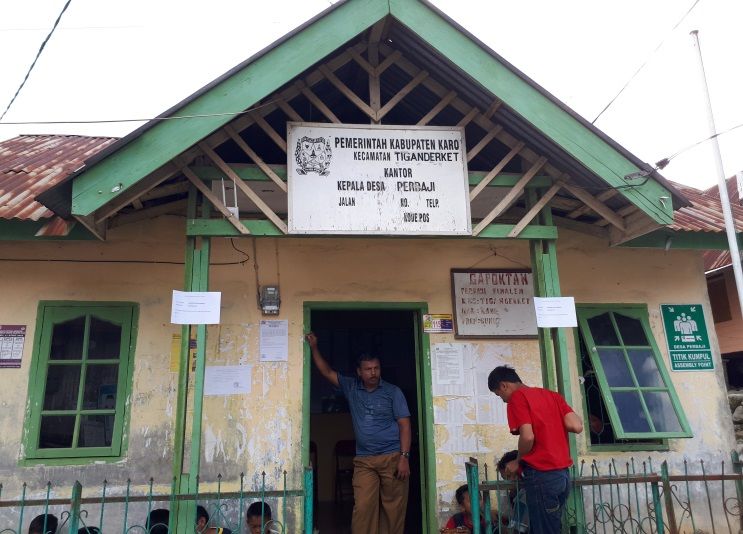
Advances in Social Science, Education and Humanities Research, volume 424

Karo. Its role is in reproductive, productive activities, as well    the largest producer of crops in North Sumatra. Likewise the
as community and economic management activities. The role            Tiganderket sub-district, most of the population of
of women will improve living standards and well-being.               Tiganderket sub-district work as farmers, especially for those
                                                                     who live and own agricultural land in rural areas, such as in
    This research is conducted in Tanah Karo, North Sumatera.        Perbaji village, Tiganderket village, Tanjung Mbelang village,
Karo is an ethnic group in North Sumatra. The Karo people            Nari Gunung Dua village, Jandi Meriah village and Suka
live in Tanah Karo which is a plateau surrounded by mountains        Tendel village. This happens considering that in the rural areas
with an altitude of 140 to 1400 meters above sea level. Laying       most of it is still in the form of agricultural lands, so it is very
on the hillside of the Bukit Barisan, between the mountains to       supportive for the residents to cultivate it by planting crops or
the north is Mount Barus, Pinto, Sibayak, Simole, and
Sinabung. On the south, there is Mount Sibuaten. There are           farming. The agricultural land in Tiganderket sub-district is
two volcanoes in Tanah Karo, there are Sibayak and Sinabung          in the form of gardens, fields, and plantations.
(Tarigan, 2008).                                                          The existing crop products are corn, yams, peanuts,
    The identity of the Karo people has distinctive                  mung beans, and soybeans. Vegetables like spinach.leek,
characteristics from the other ethnic groups found in North          onion, garlic, beans, chilies, cabbage, chicory, and tomatoes.
Sumatra. The characteristics of the Karo people are strongly         Fruits like avocado, durian, orange, mango, papaya, banana,
influenced by the natural environment surrounding it. As a           and salak. The existing plantations are coconut, rubber, coffee
society isolated in the highland interior, the culture which is      chocolate, candlenut, and tobacco.
formed is a culture that is a pattern for its people to connect         Tiganderket sub-district has 17 villages. This research is
with the creator, nature and its contents, and especially the        conducted in Perbaji, and Tiganderket village in Tiganderket
relations between the people. The culture in the Karo                sub-district, following Figure. 1.
community which is the identity of the Karo people has four
identities including merga (clan), language, art, and customs.
    The clan is the identity of Karo people. There are five Karo
clans which are called in Bahasa Karo “silima merga” namely
Ginting, Karo-karo, Perangin-angin, Sembiring and Tarigan.
The clan is the most important identity for Karo people. In
every introduction in Karo society, the first thing to be asked is
the clan/surname. Merga comes from the word meherga
(expensive). Expensive in Karo culture has a meaning
“important”.
    Karo language is a special language that has a special
script. Traditional Karo art are gendang and traditional clothes,
like uis gara and uis nipes. The special custom which is             Fig. 1. Map of Karo Regency
identity is customary negotiations namely runggu (deliberation           The reason for choosing this sub-district is this sub-district
and consensus) in the marriage ceremony and other traditional        is located near the Sinabung Mountain and affected by the
ceremonies, and rebu (avoidance to talk with certain relatives).     eruption of Mount Sinabung. Mount Sinabung (in Karo
    The Karo people has never been separated from agricultural       language: Deleng Sinabung) is the volcanic mountain in Karo
life. The majority of the Karo people are farmers. Besides           highland, Karo regency, North Sumatera, Indonesia. Sinabung,
agriculture as an activity subsistence economics is also a profit    along with Sibayak in its rear are the two active volcanoes in
farming activity. Ethnic Karo is the biggest shareholder in          North Sumatera and become the highest peak of it. The height
classical agriculture in East Sumatra until North Sumatra. Karo      of this mountain is 2.460 meters. It is noticed that this
is the largest pepper exporter in the 1800s was followed by          mountain never erupts since 1600 but it became suddenly
tobacco. Karo farmers are tough farmers and exemplary                active in 2010 and 2013.
farmers. Formerly, the Karo people planted corn and rice. In             The eruption of Sinabung Mountain caused such thing the
the 1940s, a group of Chinese people came to plant vegetables,       ashes which can harm the plants in the surroundings; the hot
like peleng spinach, chicory, and carrots, to meet the needs of      cloud is dangerous because it consists of high degrees (>200 C)
Dutch residents who live in Berastagi. The Chinese cultivating       volcanic materials (ashes, gas, and stones) that may harm the
vegetables by renting native land and hire them. There was a         people and burn everything it passes. Lahar is quite potentially
transformation of knowledge so that citizens’ natives                happened, because of tons of ashes/eruption materials and
understand how to grow vegetables well. Gradually, the people        high precipitation. Lahar can occur in every river valley that
of Karo besides plant corn and rice and then plant vegetables        started from the mountain peak. The potency of an avalanche
too (Pelzer, 1978).                                                  in the northern slope of Mount Sinabung (Lau Kawar) is high
      Karo people live in Tanah Karo. Tanah Karo is one of           because of the detour hole of new fumaroles and it happened
the regencies in North Sumatera. There are 17 sub-districts in       several times.
Tanah Karo, one is Tiganderket sub-district. In general, the            Tiganderket is the name of one of the villages that were
main livelihood of the Karo community is farming. This is due        once known with the name Luhak, the village was formed
to the very fertile agricultural land, which makes Tanah Karo        when Marga Bangun was from the Raja's Urung Batu Karang

                                                                                                                                  337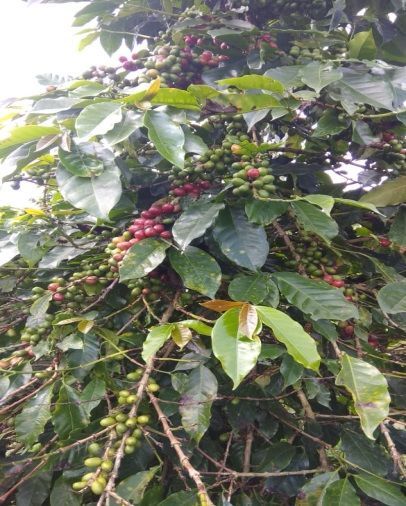
Advances in Social Science, Education and Humanities Research, volume 424

territory moved somewhere because the relationship was not             distinguishes society from other communities. The value which
harmonious.                                                            is the idea finally becomes the dominant force of a group of
                                                                       people, which differentiate existence from other communities
    Tiganderket comes from the words tiga means market and             (Salim, 2002).
nderket, is a kind of large wooden tree. At that time in the west
of the Tiganderket village (now a market location) has a large             Social change is a living phenomenon experienced by every
Nderket wooden tree. Under that tree, transactions of people's         society wherever and whenever. Every human society during
agricultural products are always carried out there so that the         his life must change various aspects of his life, which occur
location more famous as "Tiganderket" (Market under the                during the interaction between fellow individual citizens of the
Nderket tree). Tiganderket sub-district is located at 03 ° 08          community, as well as between communities with the
North Latitude and 98 ° 37 east longitude whose entire territory       environment (see Figure 2 & Figure 3).
is on a stretch of the plateau with elevation ranges from 500 to
1500 meters above the sea level. Tiganderket sub-district is an
area of 86.76 km² which is consists of 17 (seventeen) villages.
The north Tiganderket sub-district is bordered by Langkat
Regency, to the south is bordered by Munte and Payung sub-
districts, in the west, are bordered by Kutabuluh sub-district,
and in the east is bordered by the Naman Teran and Payung
sub-districts. (BPS Kabupaten Karo, 2019).
    The area of the village of Perbaji is 2.60 km2 with
population 575 and Tiganderket village is 5.90 km2 with
population 1943. Perbaji village is located on the hillside of
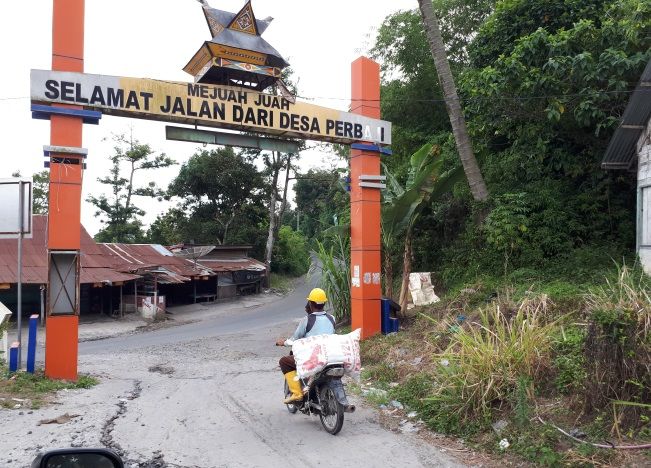
Sinabung and the red zone of Sinabung Mountain. Social
engineering, moreover, must come to be viewed as self-
management, as is outlined by modern Yugoslavian
sociologists (Horvat, Markovic, & Supek, 1975; Sher, 1977).
As Markovic illustrates, the application of sociology in the
form of self-management requires that the social world adopt a
renewed version of what it means to engage in social planning.
No longer, as is the case with positive science, is the efficient
development of an already sediment social structure thought to
be the goal of social planning (Murphy, 1981).
                                                                       Fig. 2. Map of Tiganderket Sub-district
    "The social engineer believes that man is the master of his
destiny and that in accordance with our aims we can influence
or change the history of the man just as we have changed the
face of the earth ". But the history of man is fundamentally
different from the face of the earth, and so is the science of it. "
The beginning of social science . . . is marked by the distinction
between two different elements in man's environment his
natural environment and his social environment (Rhees, 1947).
    Social engineering simply can be interpreted as an action to
influence social attitudes and actions in a large scale. The term
social engineering was born in the Union Soviet in the 1920s to
overthrow the power of the Tsar. The Soviet government used
newspapers, books, films, architectural materials to change the
order and structure of ideology Public. (Handoko, 2013).
Social engineering is a way to make a planned social change.
The concept of social engineering basically in the form of
planned social change (planned social change). Social                      Fig. 3. Perbaji village located in the red zone of Sinabung Mountain
engineering is related to efforts to realize a certain vision,
mission, and goals. The process of social change must begin                                    II. METHOD
with ideas about these three things.                                      The research method used in this study is a qualitative
    For Marx, social change is driven by the use of science,           descriptive method and a case study with an ethnographic
knowledge, and technology so that it can accelerate its                study approach. Qualitative research methods are carried out
movement. As a result, people feel a rapid and fundamental             in natural settings and the data collected is qualitative.
change. According to Weber's view, stated that before the              Qualitative methods are based more on phenomenological
change in technology first, it has become a change of new ideas        philosophy that prioritizes appreciation. Qualitative methods
in thought public patterns. In every society, there is a living        seek to understand and interpret the meaning of an event in
value system and develop specifically, and this is what                human behavior interactions in certain situations (Usman &

                                                                                                                                             338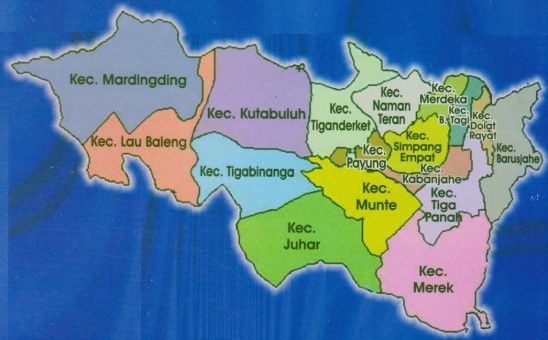
Advances in Social Science, Education and Humanities Research, volume 424

Akbar, 2006). According to Yin (2002), case studies are used           yard around the house and its use does not move. Ladang /
extensively in social science research, both in traditional            huma is agricultural land, which is not rice fields (dry land)
disciplines (psychology, sociology, political science, and             usually planted with annuals crops and their use only one
anthropology). Case studies are also used as research methods          season or two seasons.
to complement qualitative descriptive methods. In this study,
researchers used an ethnographic approach. Ethnographic                    According to data from the Central Statistical Bureau (BPS)
                                                                       of Tiganderket sub-districts in the village of Perbaji there are
studies describe and interpret culture, social groups or systems
                                                                       154 gardens, 2 fields, 14 plantations, and 11 community
(Yin, 2002).
                                                                       forests. The area of coffee plantations in Perbaji village is
    In this study, data collection was carried out by in-depth         73.14 hectares. It is the largest area in the Tiganderket sub-
interviews with the secretary of Perbaji village and Tiganderket       district with a production of 14.50 tons (BPS Kabupaten Karo,
sub-district government employees. In this interview, the              2019)
author obtained a cultural view and identified the actions and             As the secretary of Perbaji village office stated people in
understanding of Karo people in Perbaji village and                    Perbaji after the eruption of Sinabung Mountain, started to
Tiganderket sub-district in the acts of planting coffee rather         plant coffee. Many horticultural crops developed by farmers
than planting another corn. The research is conducted both at          were damaged and died due to the splash of very hot volcanic
the village office, sub-district office, and coffee plantation (see    dust. Many farmers turn to coffee and leave horticultural crops
Figure 4).                                                             that they have been concentrating on like oranges, corn. Coffee
                                                                       is one commodity that was considered a crop that was resilient
                                                                       against Sinabung volcanic ash. Karo nature can give coffee
                                                                       plants two times the peak harvest in a year, ranging from
                                                                       October to December and April to June each year. While in
                                                                       Java, only one peak harvest per year. Karo nature is indeed
                                                                       very extraordinary for coffee plants, he explained.
                                                                           Perbaji Village is one of the villages in the red zone
                                                                       because it is located at the hillside of Sinabung Mountain.
                                                                       Many of the villagers left their homes for refugee camps. Karo
                                                                       culture in farming does not fade. Many people returned to their
                                                                       villages to just look at the fields and their pets. No matter how
                                                                       dangerous the fury of Mount Sinabung that can spit hot clouds
                                                                       at any time. The majority of plants that live around Mount
                                                                       Sinabung are unable to withstand the influence of hot clouds
                                                                       and volcanic ash that continue to be present. Until the villagers
                                                                       understand the plants that were more able to withstand the
                                                                       effects of Sinabung ash. With reason to survive, people turn to
Fig. 4. Perbaji Village Office                                         grow coffee because of the resistance of coffee plants to
                                                                       volcanic ash.
                 III. FINDINGS AND DISCUSSION
    The Sinabung eruption that occurred several years ago even
today (eruptions continue) did not only bring sorrow to the
people of Karo Regency, North Sumatra Province (North
Sumatra). Behind that long sorrow, there is greatness given by
the Divine for the people of Tanah Karo. Their agricultural
land which has been 'powdered' volcanic ash as if transformed
into fertile land.
   The beginning of this study began with the author's
objective to examine the use of corncob waste in Tanah Karo.
Our initial research location in Berastagi, which took us to the
Tiganderket sub-district, began with the Cattle farm/Gundaling
Farm in Berastagi. Every day trucks of corn stalks and corn
come to this cattle farm to feed cattle. Based on an interview
with the truck driver, he mentioned one of the places produce
corn near Berastagi village is Perbaji village. After we visited
Perbaji village, we find there is social change in the community
because of the eruption of Sinabung Mountain.                          Fig. 5. Coffee farm

   The plantation is divided into the types: tegal/ kebun or              As shown in Figure 5, coffee has indeed become the most
garden is agricultural land which is not rice fields (dry land)        popular commodity of the Karo people and the type of coffee
which planted annual or annual plants and separated by the             planted is Arabica coffee. Perbaji village, which was originally

                                                                                                                                 339
Advances in Social Science, Education and Humanities Research, volume 424
known as a corn farmer, has turned to coffee. Although coffee REFERENCES
plant, in the beginning, is not very popular in Karo society, and BPS Kabupaten Karo. (2019)
Karo people regard coffee as a barrier plants but due to the Bennett, J. W. (2005). The ecological transisition cultural antrhropology and
disaster, people start to adapt. Similar a research conducted by human adaption. St Louis : Washingtin University.
Ellen, R. (1982). Environment, subsistence and system: The ecology of small-
Helmi and Satria (2012), the adaptation strategies applied by scale social formations. Centerbury : University of Kent.
the people is caused by ecological changes. The adaptation Handoko. (2013). Bahasa sebagai instrumen rekayasa sosial. Retrieved from
strategies that are applied are not limited to one type of Kompasiana. http://eddymumu.wordpress.com/2013/08/30/bahasa-
adaptation, and it is in accordance with the resources owned. sebagai-instrumenrekayasa-sosial/)
Hardesty, D. L (1977) Ecological anthropology. New York: John Wiley.
IV. CONCLUSION Helmi, A., & Satria, A.(2012). Strategi adaptasi nelayan terhadap perubahan
ekologis. Makara, Sosial Humaniora, 16(1), 68-78.
The way people move from growing corn to growing coffee Moran, Emilio F. (1982). Human adaptability; An introduction to ecological
can be called an active human strategy in adapting to their anthropology. Boulder, Colorado : Westview Press, 5.
Murphy, J. W. (1981) Applied Sociology, Social Engineering, and Human
environment. Visible community efforts to maintain living Rationality. The Journal of Sociology & Social Welfare, 8, 10.
conditions in the face of change. The strategy of switching Pelzer, K. J. (1978). Planters and peasant: Colonial policy and the agrarian
from growing corn to coffee is understood as an adaptation struggle in East Sumatra 1863-1947. Verhandelingen KITL 841, S-
strategy by humans in responding to negative feedback from Gravenhage-Mrtinus Nijhoff, pp 21.
Rhees, R (1947). Social engineering. Mind, 56(224), 317-331.
nature. The adaptation strategies deal with all changes caused Simbolon, M. S. 2018. Akses perempuan pengungsi bencana gunung sinabung
by the environment, both the ecosystem/biophysical dan upaya peningkatan ekonomi keluarga di daerah siosar kabupaten
environment and social systems in this case of nature. Karo. Juitech, 2(2), 47.
Salim, A. (2002). Perubahan sosial: Sketsa teori dan reflesi metodoogi kasus
ACKNOWLEDGMENT Indonesia. Yogyakarta: Tiara Wacana Yogya. pp. 61
Steward, J. H. (1982). Theory of culture change: The methodology of
We thank Simlitabmas Ristek Dikti to support this research. multilinear evolution. Chicago: University of Illinois Press.
This work is supported by Simlitabmas Ristek Dikti (PDUPT). Tarigan, S. (2008). Dinamika orang Karo, budaya dan modernisasi, Medan :
Balai Adat Budaya Karo Indonesia. pp 1-15.
Usman, H., & Akbar, P. S. (2006) Metodologi penelitian sosial. Jakarta :
Bumi Aksara
Yin, R. K. (2002) Studi kasus desain dan metode. Jakarta : Rajawali Pers.
340You can also read


