BATSin - Bat Conservation International
←
→
Page content transcription
If your browser does not render page correctly, please read the page content below
BAT CONSERVATION INTERNATIONAL

SUMMER 2015         // B AT C O N . O R G

The untold—and still
unfolding—story of the
Pacific Islands’ rich and
diverse species of bats

                                               BATSin
                                                        PARADISE
                       SPOTLIGHT ON: GOLDEN-   EQUIPPING WIND    INSIDE LEK BREEDING
                       CROWNED FLYING FOX      FARMS WITH UADs   IN NEW ZEALAND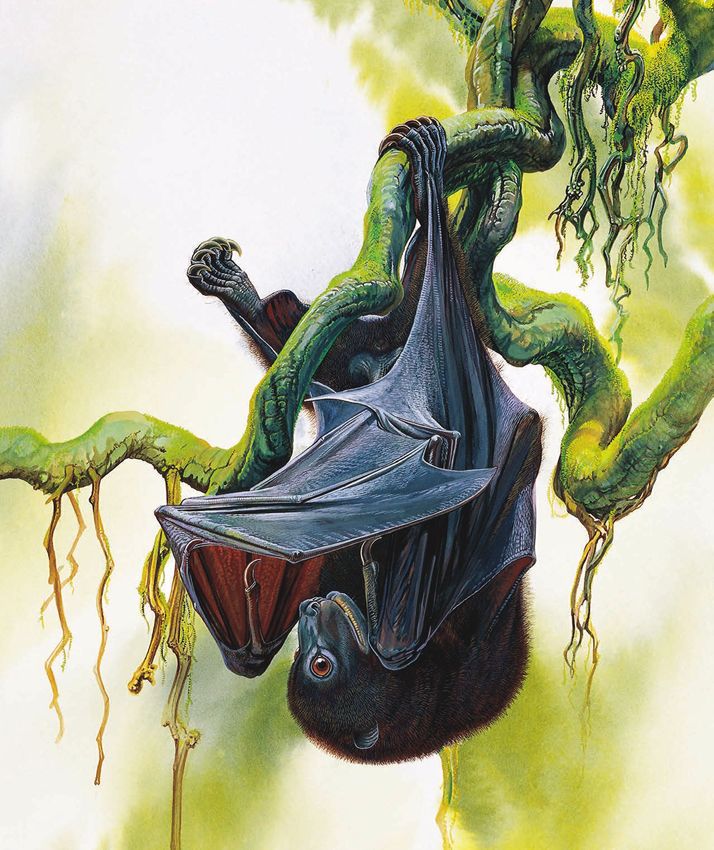
WORKPL ACE                                       giving
You can help save the world’s bats
every pay period when you choose to
give through the Combined Federal
Campaign (CFC) and EarthShare.
Combined Federal Campaign
If you’re a federal employee or member of
the military, please support us through the
Combined Federal Campaign. All you have
to do to donate is
find Bat Conservation
International (#12064) in
your campaign catalog
or online through the
CFC universal giving portal, and follow the
instructions on “How to make a gift.”

EarthShare
BCI is a member of EarthShare, a nonprofit
federation of America’s most respected
environmental and conservation organizations.
EarthShare has engaged people and
workplaces in conservation for more than 25
years, primarily
through workplace
giving. Ask
your company’s
human resources
department about EarthShare and select Bat
Conservation International to receive a single
gift or a sum each pay period.
    Contact EarthShare to learn how you can
help introduce EarthShare@Work to your
employer and support Bat Conservation
International at your workplace! Learn more at            Photo: Steve Geddle \ Rodrigues Flying Fox (Pteropus rodricensis)
EarthShare.org and info@earthshare.org.

Matching Gifts
Double, or even triple, your impact with
a matching gift. Did you know that many
employers will match donations made by
current employees, employees’ spouses and
retirees? This increases the impact of your
investment! Check with your company's
human resources department to see if your
employer sponsors a matching gift program.
bats S U M M ER 2015
INSIDE THIS ISSUE
08
SPECIAL REPORT
BATS IN
PARADISE
The untold—
and still
unfolding—
story of the
rich and
diverse bat
species of the
Pacific Islands
02 18
OFF THE BAT [PAGE 21]
MAKING A DIFFERENCE
BCI's Dave Waldien on why global Thanks to BCI’s many generous
conservation must be collaborative friends and members who gave
and culturally appropriate this past quarter
Photo: Micaela Jemison
06 21
SPECIES SPOTLIGHT ON THE WING
The wingspan of the golden- Using a tiny GPS transmitter to
crowned flying fox is matched help tag and track the Florida
only by its ecological impact bonneted bat and its habits
N E W S & U P DAT E S
03 15
BAT SIGNALS FIELD NOTES
BCI news and Research news from
conservation around the globe
updates
ltrasonic bat deterrent
�U ew research reveals a
�N
devices for wind farms unique breeding system
arth Day in Texas
�E among New Zealand’s lesser
O N T H E COV E R
Photo: Merlin J. Tuttle
CI at the White House
�B short-tailed bats
ats magazine recognized
�B cuador’s research community
�E The greater monkey-faced
bat (Pteralopex flanneryi)
�B CI award honoring proposes a national action is endemic to a few islands
[PAGE 03]
Verne and Marion Read plan for bat conservation in the Pacific Ocean.
Illustration: Peter Schout
batcon.org bats
{ 01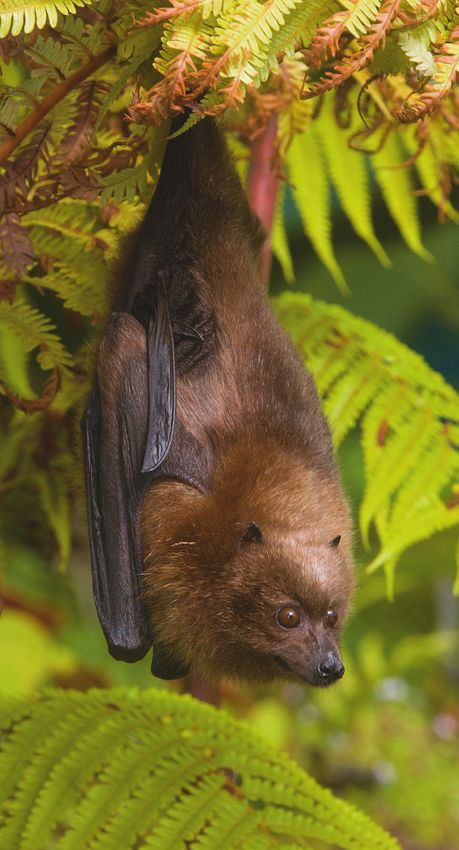
bat
  off the                                  A F E W W O R D S O F I N T R O D U C T I O N F R O M YO U R F R I E N D S AT B C I

A global conservation commitment                                                                         Bat Conservation International (BCI) is the only 501(c)(3)
                                                                                                         organization working to protect bats and their essential
                                                                                                         habitats worldwide. A copy of our current financial
                                                                                                         statement and registration filed by the organization
                               By DAVE WALDIEN                                                           may be obtained by contacting our office in Austin,
                                                                                                         below, or by visiting batcon.org.

“I
     nevitable” is an apt way to                 Although we continue to work as                         Main Office                     Washington DC
      describe why BCI has prioritized        leaders and collaborators in global                        500 North Capital of            4600 North Fairfax Drive
                                                                                                         Texas Highway, Building 1       7th floor
     working with island bats around          bat conservation, BCI recognizes
                                                                                                         Austin, TX 78746                Arlington, VA 22203
the world. With the conservation of           that we do not have the capacity or                        512-327-9721                    703-962-6775
globally endangered bats identified           resources to support or even engage
as one of our top priorities in our           on every priority bat conservation                         Editor Emeritus                 Managing Editor
2013–2018 Strategic Plan, many island         issue. While in some ways this gap                         Robert Locke                    Micaela Jemison
bats naturally flew to the top of a           in our capacity adds to our burden                         Publication Management GLC
list of species most in need of our           and certainly to the urgency in
help. Of the 78 bat species currently         our mission, I am heartened and                            Bats welcomes queries from writers. Send your article
recognized as endangered or critically        believe that we, and the broader                           proposal in a brief outline form and a description of
                                                                                                         any photos, charts or other graphics to the Editor at
endangered on the International               conservation community, have the                           pubs@batcon.org.
Union for Conservation of Nature’s            collective skills, knowledge and
                                                                                                         Members: We welcome your feedback. Please send
(IUCN) Red List of Threatened                 power to make a difference. We are                         letters to the Editor at pubs@batcon.org. Changes
Species, 68 percent are found on              not alone in our mission; we have                          of address may be sent to members@batcon.org
islands. Of all the regions around the        support and participation from                             or to BCI at our Austin, Texas, address above. Please allow
world, the islands of the Indo-Pacific        the IUCN Bat Specialist Group,                             four weeks for the change of address to take effect.
region are home to the majority of            bat networks, conservationists,                            From time to time, BCI exchanges mailing lists with
them and are highlighted in this              researchers, educators and the global                      other like-minded conservation groups to make more
edition.                                      conservation                                               people aware of the importance of bats. If you wish
                                                                                                         to opt-out of these exchanges, please lets us know
   But what does effective and                community, as                                              at members@batcon.org.
sustainable conservation look like            well as many                 TALK TO US                    Founder: Dr. Merlin D. Tuttle
for endangered island bats?                   governments,             Share your thoughts
   This is an exceptionally difficult         members of               and feedback with                 Board of Directors
question, and our attempt to answer           the corporate            Bats magazine at                  Dr. Cullen Geiselman            Bettina Mathis
it must take into account not only            sector and the           pubs@batcon.org.                      Chair                       Dr. Gary McCracken
                                                                                                         Steven P. Quarles,              John D. Mitchell
the ecological needs of individual            public. Together,                                              Vice Chair                  Alexander “Sandy” Read
species, but also the needs of the            we can achieve                                             Danielle Gustafson,             Dr. Wes Secrest
communities that call these islands           significant and sustainable                                    Treasurer                   Susan Wallace
home. The threats that many island            conservation through raising greater                       C. Andrew Marcus,               Joe Walston
                                                                                                             Secretary                   Dr. Charles C. Chester
bats face are unique to each species          awareness, seizing conservation
and each island. While our tactics and        opportunities, and collaborating on                        Science Advisory Committee
                                                                                                         Dr. Kate Jones         Dr. Rodrigo Medellín
strategies must differ by species, our        and implementing effective strategies.                     Dr. Tigga Kingston     Dr. Paul Racey
fundamental philosophy for achieving             I hope this issue of Bats gives                         Dr. Gary McCracken,    Dr. Charles Rupprecht
sustainable conservation is built upon        you a greater appreciation of the                              Board liaison
on a collaborative approach that brings       conservation challenges facing                             Senior Staff
diverse stakeholders together to invest       island bats and insights into our                          Andrew Walker,                  Joy Gaddy,
in and support local leadership. Just as      collaborative initiatives in the                              Executive Director              Operations
each bat species faces a unique set of        Indo-Pacific region. Meaningful bat                        David Waldien,                  Mylea Bayless,
circumstances, so do many of the local        conservation is within our collective                         Global Conservation             U.S./Canada
                                                                                                         Susan Sirkus,                      Conservation
island communities. For conservation          grasp, and I look forward to seeing                           Philanthropy
action to truly work at a local island        what we can achieve together.
level, conservation strategies need                                                                      Visit BCI’s website at batcon.org or the following
to be culturally appropriate and              Dave Waldien                                               social media sites:
                                                                                                              Facebook.com/batcon
inclusive—something BCI is working            Senior Director for Global                                      Twitter.com/BatConIntl
hard to achieve.                              Conservation

02 }bats       summer 2015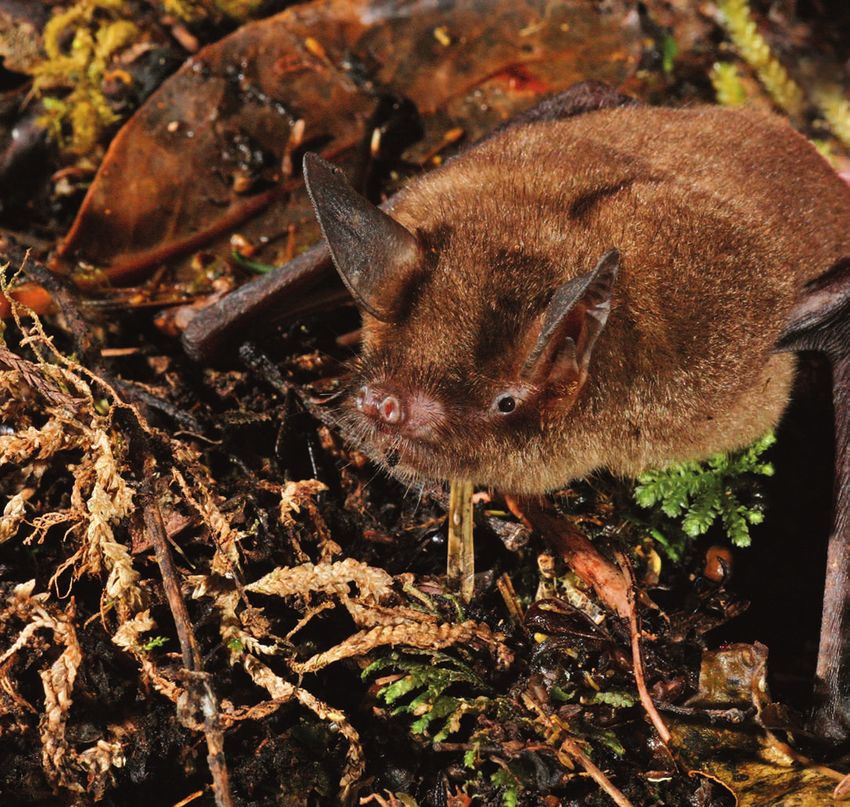
The hoary bat (Lasiurus cinereus;
                                                                                  shown here) and silver-haired bat
                                                                                  (Lasionycteris noctivagans) are the
                                                                                  two species most impacted by wind
                                                                                                                                  bat
                                                                                  turbines in the U.S. and Canada;
Photo: Merlin J. Tuttle

                                                                                  they account for 56 percent of all
                                                                                                                                        B C I U P DAT E S A N D
                                                                                  reported fatalities between 2000
                                                                                  and 2011. Preliminary field tests of                 CO N S E R VAT I O N N E W S
                                                                                  the UAD design at an operational
                                                                                  wind energy facility indicated as
                                                                                  much as a 64 percent decrease in
                                                                                  bat fatalities at deterrent-equipped
                                                                                  turbines. A significant reduction
                                                                                  in hoary bat and silver-haired bat
                                                                                  fatalities were also recorded.

                             CO N S E R VAT I O N

                          Wind farm windfall
                          Department of Energy funds BCI efforts to develop, test ultrasonic bat deterrent devices
                          Wind turbines can endanger bat populations. In our efforts to address the problem of protecting wildlife while enhancing the responsible
                          operation of this source of clean energy, BCI has found support from the U.S. Department of Energy, which announced in April that it
                          would provide more than $1.75 million to fund five projects aimed at developing and demonstrating technologies that can reduce the
                          potential negative impacts of wind farms on sensitive bat species. As a strategic partner working with one of the five projects, BCI will
                          receive a portion of these funds for this initiative.
                             Ten years of BCI research has made it clear that many species of bats can be spared fatal collisions with turbine blades by preventing
                          blades from spinning in low-wind conditions, when insects and bats are present in abundance. But not all species respond equally well to
                          this strategy. As an alternative, BCI has been developing an ultrasonic acoustic deterrent (UAD)—emitting a loud sound humans can't
                          hear—that bats will avoid. Placing UADs on turbines may allow wind farms to operate normally while dramatically decreasing bat kills.
                             The success of BCI's prototype device has encouraged the Department
                          of Energy, the Spanish wind company Iberdrola and others to support further
                          development of this technology. The current grant will allow BCI researchers                WINDS OF CHANGE
                          to conduct reliability tests for the next generation of this device, carrying out       For more information on wind energy and bats,
Photo: Michael Baker

                          a full-scale validation of its effectiveness at a wind plant, while comparing that      or to listen to the pre-recorded BCI webinar
                          effectiveness to the current system of turbine curtailment.
                                                                                                                  "Wind Energy and Wildlife Workshop," head to
                                                                                                                    batcon.org/wind.

                                                                                                                                                batcon.org   bats
                                                                                                                                                                    { 03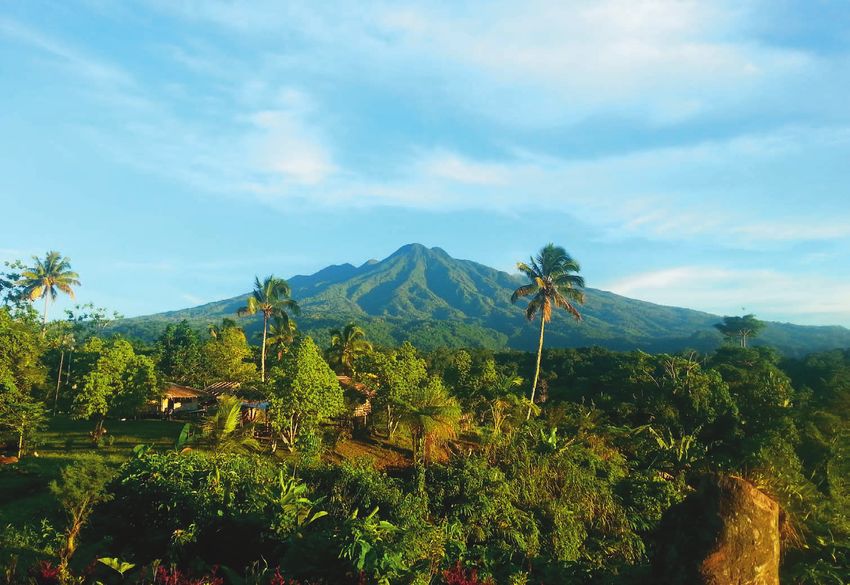
bat The first Earth Day took place on April 22, 1970, and became recognized as a worldwide event in 1990.
Earth Day
A P P R EC I AT I O N
Texas
BCI’s bat presentation proved
to be a hit with festivalgoers
T
he Earth Day Texas festival, held in April
Photos: Paul Rook
at Fair Park in Dallas, Texas, is a family-
friendly event that brings together leaders
in the corporate, academic and nonprofit worlds
to show Texans how green choices can lower
their cost of living, improve their health and help also was a big draw— Above:
save the environment. The conservation message especially for children Dr. Cullen
Geiselman,
presented by BCI’s Board Chair, Dr. Cullen in attendance, who BCI's
Geiselman, and our Education & Public Outreach were eager to play our board chair,
Manager, Dianne Odegard, was well-received on large interactive board addresses
the main stage, but the stars of the show were the game. Students from attendees
live bats. the Dallas Independent at Earth
Day Texas.
Using new presentation equipment, including School District helped Left: Local
an Elmo projection camera, Odegard was able to answer questions and students
give the audience an up-close and personal look learn unique “bat play a game
at many of the state’s native bat species while facts” as they moved at BCI's
providing only minimal disturbance to the bats. their bodies around interactive
booth.
The fun didn’t stop there; BCI’s interactive booth the board.
R ECO G N I T I O N
It’s a winner! WISH LIST
Help us be a
BCI’s Bats magazine wins design award voice for bats
Along with its new look and feel, we have more and more of our content and topics being picked up
Gifts in support
been steadily expanding the scope of our
BAT CONSERV
ATION
INTERNA
TIONAL
by other media outlets. of Bats magazine
quarterly Bats magazine to include a wealth Others are noticing, too: Bats magazine is now a proud will help us cover
WINT
ER 20
15
// B AT
C
of stories and images to better explore
ON.O
RG
recipient of the 2015 Apex costs associated
the fascinating diversity of bats around Award of Publication with research and
the world. Bats serves to connect our Excellence for Design BATS original writing,
RT
members, supporters and the broader & Layout. BCI hopes STACKS photography and
more. Visit batcon.
EPO
ERIES OF
IAL R
SPEC
THE MYST
EBOL A community to the larger stories of this accomplishment For a searchable
org/wishlistbats
tions
archive of all past
the connec and
bats and their far-reaching effects on will further promote its
Probing bats NEW
humans, ERING THE
among virus in West REDISCOV ARED BAT
la TS OF A ‘ONE GUINEA BIG-E
the Ebo beyond THE MERI
Africa and
ER- OACH
to help ensure
HEALTH’ APPR
issues of BCI's
ON: HAMM
SPOTLIGHT BAT
HEADED FRUIT
conservation, public opinion, human mission of protecting the
health, research, habitat restoration, agriculture and the world’s bat population
Bats magazine, the magazine’s
visit batcon.org/ continued
economy. Thus far, two issues into the redesign, feedback through education and batsmag. excellence.
has been overwhelmingly positive, and we are seeing research.
04 }bats summer 2015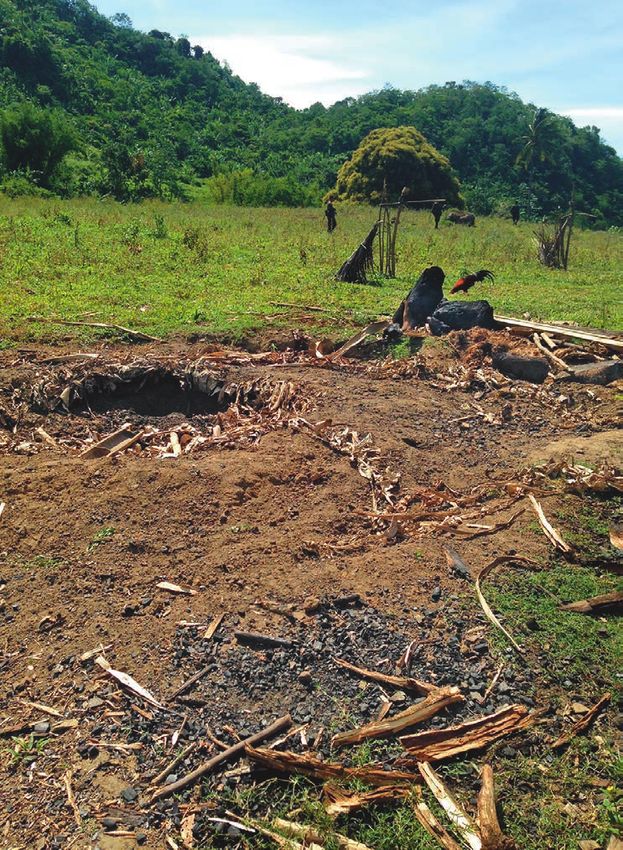
Long-time BCI supporters Verne and Marion Read provided the organization with our very first donation back in 1982.
Ensuring a
A DVO C AC Y L EG AC Y
Bats at the White House
At this year’s Easter Egg Roll, bunnies had bright future
competition from bats Announcing the Verne and Marion
B
CI and the Organization for Bat Conservation (OBC) were Read Bat Conservation Award
invited to join the family fun at the White House’s annual
V
Easter event to promote the benefits of bats and other wildlife erne and Marion Read were among the
in sustainable agriculture. earliest and most ardent supporters of
More than 35,000 people gathered on the South Lawn to join in BCI. They shared a love of the world’s
activities with the President and the First Lady. While we were sad bats with family and friends, and on their
not to receive a visit from the much sought-after couple, we enjoyed numerous adventures abroad. They also worked
talking with the thousands of people interested in bats. Attendees met tirelessly with Merlin Tuttle (BCI’s Founder) to
four different bat species up close, including a very popular Malayan launch BCI, and we are achieving conservation
flying fox (Pteropus vampyrus), and gained an appreciation for how around the world because of their dedication and
bat conservation is connected to healthy human lifestyles. commitment. To honor their leadership, the BCI
The theme of this year’s White House event was “#gimmefive,” Board of Directors is
which encourages Americans to share with others five things they are proud to announce
doing to lead a healthier life. It was all a part of the First Lady’s “Let’s
Move!” campaign, which promotes healthy lifestyles in children.
the establishment
of the Verne and
WISH LIST
Marion Read Bat Support local,
Conservation sustainable
Award, a funding action
opportunity for
those wishing to This annual award
strengthen bat will provide financial
conservation beyond support to worthy
the U.S. and Canada. individuals and orga-
Recipients of this nizations promoting
distinguished award innovative approaches
to bat conservation at
will be chosen
the local level focused
from among the
on sustainable results.
applications received Please contact us
by BCI during at (512) 327-9721
a given year in extension 14 for
response to Requests more information,
for Proposals. or visit batcon.org/
BCI Communication Manager Micaela Jemison (above center; below left) and The Verne and readaward to
BCI Education Manager Dianne Odegard (above left) represent BCI the White Marion Read Bat support this fund.
House’s 2015 Easter Egg Roll. Conservation
Award will inspire
education and
community action to protect bats around the
world and address critical conservation needs.
Since 1998, BCI has awarded more than
$1 million to more than 200 aspiring bat
Photos: Micaela Jemison
conservation leaders for projects in 40 countries.
Many of those recipients are now recognized for
their expertise at the highest levels in their home
countries and within the international scientific
and conservation communities.
batcon.org bats
{ 05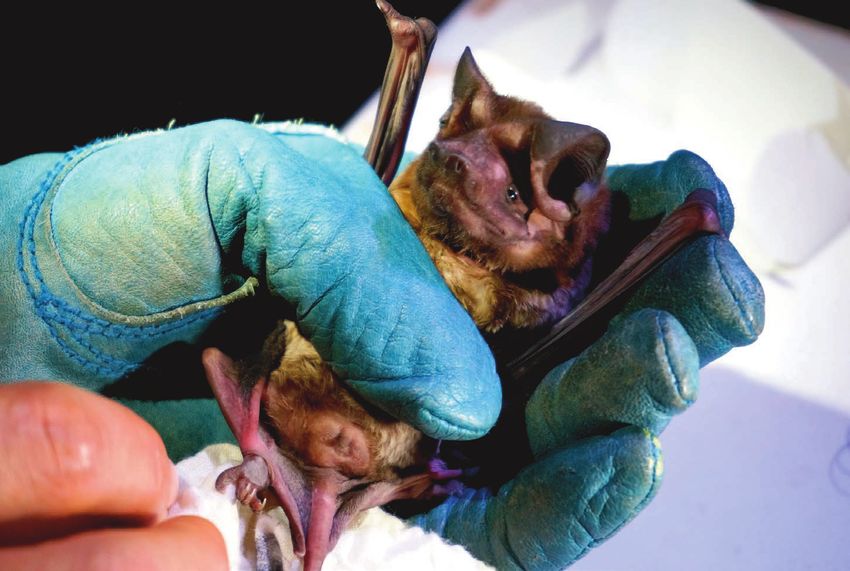
spott
species                             T H E R E A R E 1, 3 3 1+ S P EC I E S O F B AT S I N T H E W O R L D. T H I S I S O N E O F T H E M .

 light

    bat statsBINOMIAL
          Acerodon jubatus

               FAMILY
            Pteropodidae

             ROOSTING
     co-roost with other species;
      small numbers to 1,000+

             WINGSPAN
       up to 5'6" (1.7 meters)
                                                                                                     Golden-
                                                                                                    crowned
                DIET
             frugivorous

       IUCN RED LIST STATUS
            Endangered

              REGIONS

                                                                                                    flying fox                               Photo: Godfrey Jakosalem

      The Philippines

  06 }bats      summer 2015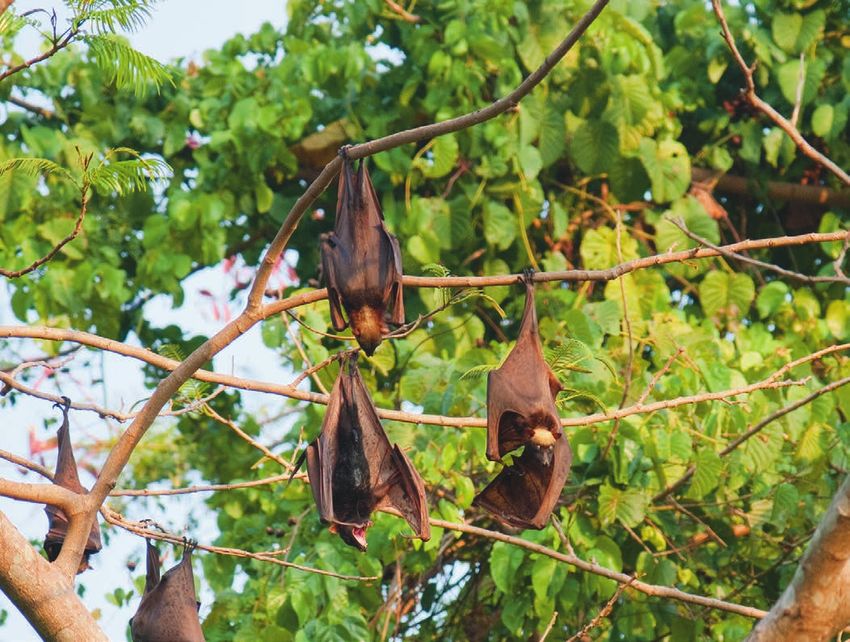
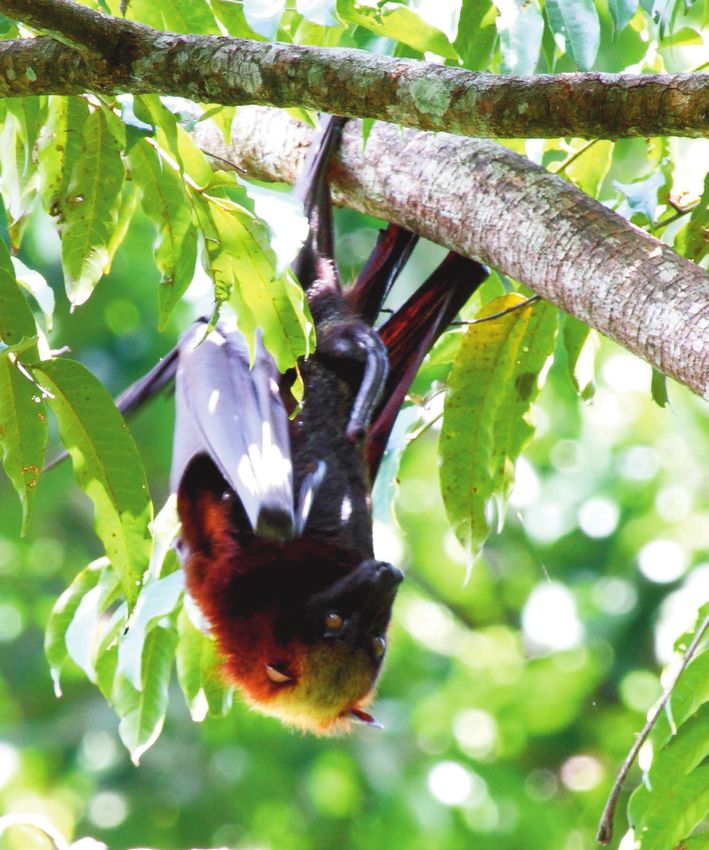
The golden-crowned flying fox is the largest bat on the planet by weight, weighing up to 2.6 lbs. (1.2 kg).

A megabat species that                                                                                                                      The golden-crowned
plays an important ecological                                                                                                               flying fox can fly as much
                                                                                                                                            as 50 km in a night,
role in the Philippines                                                                                                                     spreading seeds around
                                                                                                                                            forests and pollinating
                                                                                                                                            many unique forest plants.

T
       he golden-crowned flying fox
       (Acerodon jubatus) is a fruit-
       eating megabat found only
in the Philippines. It is one of the
planet’s largest bat species, with a
wingspan up to 5 feet 6 inches long
and a weight of up to 2.6 pounds.
The genus to which it belongs,
Acerodon, includes four other
megabat species found in Southeast
Asia. The golden-crowned flying
fox, however, is the only one of this
genus whose range encompasses a
large part of the Philippines.

                                                                                                                                                                         Photo: Yushi Osawa
  In areas where hunting and roost
disturbance are prevalent, this
megabat retreats to undisturbed
native forests, avoiding humans,
and often roosting on very steep
and hard-to-access slopes 0–1,000                     foxes can be found in forest patches                    bat species in the world, it can
meters above sea level. Conversely,                   near human population centers,                          be incredibly hard to find, as
where laws against hunting are                        including along roads and on resort                     habitat destruction and hunting
respected and disturbance is                          grounds. In all cases, this species                     have caused huge declines in
minimized, golden-crowned flying                      enjoys having other bat neighbors,                      this species’ numbers in the
                                                                   as they share their                        past and continue to threaten its
                                                                   roosts with several                        survival. Local communities hunt
    Are you taller than a bat?                                     flying fox species—
                                                                   most commonly
                                                                                                              bats for sale, sport and personal
                                                                                                              consumption. In addition, more
                          5'6"                                     the large flying fox                       than 90 percent of the Philippines’
                                                    golden-
                                                    crowned flying
                                                                   (Pteropus vampyrus).                       old-growth forests have been
                                                    fox wingspan      The eating habits of                    destroyed, and the species has
                                                                   this flying frugivore                      completely disappeared from
                                                                   play an essential role                     several of its old roosting sites on
                                                                   in the multiple forest                     multiple islands.
                                                                   ecosystems in which                          In order to preserve the golden-
                                                                   it lives. As it eats                       crowned flying fox, BCI has
                                                                   fruits, primarily figs,                    been working with two Filipino
                                                                   it distributes their                       non-governmental
                                                                   seeds all over the                         organizations that
                                                                   forest, contributing                       collaborate with                   FIND A
                                                                   to reforestation in the                    national and local             NEW FACE
                                                                   Philippines. It also will                  government units,              To see and discover
                                                                   sometimes eat fruit                        other NGOs, and local          more about this
   Meet a Megabat                                                  grown for agricultural                     communities to protect         and other bat
   Acerodon jugatus                                                use, but only if it is near                roosting sites and             species around the
   Did you know that the golden-crowned flying fox has                                                                                       world, access BCI's
   one of the longest wingspans in the entire world? In
                                                                   undisturbed forests.                       educate people. (For           Pinterest page
   fact, some are known to measure up to 5'6"! How do you             While the golden-                       more on conservation           via batcon.org/
   measure up to this megabat?                                     crowned flying fox                         in the Philippines, see        pinterest.
                                                                   is one of the largest                      page 10.)

                                                                                                                                         batcon.org   bats
                                                                                                                                                             { 07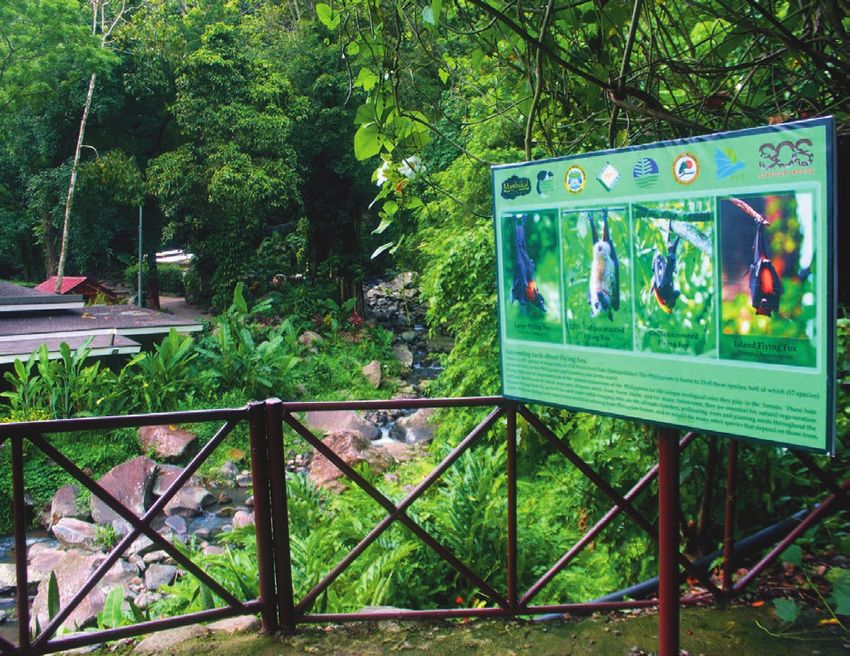
bats in
                                           By ALISON GILLESPIE

                      Clockwise from
                      top: Mount Balbi,
                      Bougainville; Mambukal
                      Mountain Resort,
                      Philippines; and a greater
                      monkey-faced bat.

                                                                 Photo: Chris Woodruff
                                                                 Photo: Godfrey Jakosalem
Image: Peter Schout

                      08 }bats          summer 2015
paradise
S P E C I A L R E P O R T: I S L A N D B AT S
The untold—and still unfolding—story of the
Pacific Islands’ rich and diverse species of Bats
F
or many in the Western world, islands off of mainland Southeast
the necklace of 27,000 islands Asia; Indonesia alone is home to 219
stretching from the south bat species, more than any other
of Asia eastward across the warm, nation in the world.
sunny Pacific is the stuff of fantasy
and escape, and the very definition Geology Meets Evolution
of tropical paradise. Although often It is also here in the tropical Pacific
very small in size, these islands Islands that some of the newest
play a huge role in the realm of landmasses on earth are being
bats. Collectively, these islands are created, as tectonic plates on the
home to some of the biggest and earth’s crust scrape against one Earlier this year, BCI and the International National
most unique bats in the world. But another and gradually fold upward, Trusts Organisation (INTO)—a London-based
while these bats contribute greatly and volcanoes located under the network of more than 60 national conservation and
to the Pacific Islands’ incredible water spew forth lava that eventually historic preservation organizations, with a combined
species richness and diversity, their builds up into mountainous peaks membership of nearly 8 million—forged a unique
existence there is in jeopardy. on the forming masses. partnership to protect the world’s 1,330-plus species
This region, which extends east This intense geologic activity of bats. The two organizations will share information
to the Cook Islands in central plays a special role in the evolution regarding best practices and work to provide the public
Polynesia and north to Ryukyu of bats, says Chris Filardi, Director with reliable information about the value of bats and the
and Ogasawara in Japan, contains Pacific Programs for the Center for threats they face.
an astonishing 31 percent of the Biodiversity and Conservation at “In this time of climate change and widespread
currently recognized bat species the American Museum of Natural habitat loss, it is more important than ever that
on earth and approximately 74 History. The mainland often is just international conservation organizations work together
percent of those species commonly close enough to these relatively new to save these vital animals. The immense value of bats to
called flying foxes. In many places land formations that some mainland our environment is becoming clearer to people around
throughout these islands, bats are species are able to fly over the the globe,” said INTO Chairwoman Fiona Reynolds.
the only native terrestrial mammal. water and reach the new locations. The INTO-BCI agreement is already bearing fruit
Some of the bats in this global But once there, the species are in Fiji, where the National Trust of Fiji, BCI and the local
region are known to inhabit various just far enough away from the organization NatureFiji are teaming up to protect the
locations across a vast stretch of the mainland that they either do not critically endangered Mirimiri fruit bat, found only on the
globe. Other species dwell in only seek to return or cannot easily do island of Taveuni, and the Fijian tree-tailed bat, known
one location. Diversity of bat species only from a single cave on the island of Vanua Levu.
in this area is largest on the bigger continued on page 11
batcon.org bats
{ 09S P E C I A L R E P O R T: I S L A N D B AT S Visitors to golden-crowned flying fox roosts can view the animals from a safe distance using spotting scopes.
Protecting one of the largest bats in the world, the golden-crowned many places, including the
flying fox (Acerodon jubatus), will take more than just conserving its Northern Sierra Madre
habitat; it will take changing attitudes and traditional practices. Natural Park in Luzon.
To do this, BCI has partnered with two local organizations, the Her organization, the
Mabuwaya Foundation and the Philippines Biodiversity Conservation Mabuwaya Foundation,
Foundation Inc., which in turn have collaborated with more than 20 has been celebrated for its
other organizations to form the Filipinos for Flying Foxes Initiative. community-based work
This initiative aims to help stabilize and recover the species through with crocodiles, and many thought the same approach could be used
protection of roost sites and community outreach. for protecting bats.
Listed as endangered by the International Union for Conservation “We think it is important to tell people about the flying foxes
of Nature (IUCN) Red List, the golden-crowned flying fox is because they can be the foresters of the future, as they spread seeds
threatened not only by deforestation and fragmentation of its over great distances,” she says.
habitat, but also from hunting by local communities. Although illegal To date, the two-year-old program has been able to establish
throughout the Philippines, six sanctuary roost sites across the Philippines. The latest sanctuary,
hunting for sport, sale and launched at Mambukal Mountain Resort in June, is the result of
personal consumption of much discussion, education and training efforts with resort staff
these large flying foxes and management, as well as engagement with local leaders in the
at their roost sites is the community. The resort is one of the top tourist destinations in the
greatest threat to the Negros Islands and hosts a colony of flying foxes, which include
species’ survival. golden-crowned flying foxes, as well as large flying foxes (Pteropus
Many people who vampyrus) and island flying foxes (Pteropus hypomelanus), all of which
live close to bat roosting are protected within this newly recognized sanctuary.
locations are often surprised “This is the first formally declared bat sanctuary managed by a
to find out how vulnerable resort in the Philippines,” explains Lisa Paguntalan, Director of Field
golden-crowned flying Operations at Philippines Biodiversity Conservation Foundation Inc.
foxes are, says BCI Global “This initiative has raised the standards of how resorts can facilitate
Conservation Program and help in biodiversity/bat conservation, and is one that can easily
Manager Chris Woodruff. be replicated. This is, therefore, a very exciting development both for
When asked, people will bat conservation as well for how private corporations can contribute to
sometimes say they assume advancing conservation.”
BCI staff and partners hike to a roost site there are hundreds of Beyond education at roost sites, the initiative has been engaging
for the golden-crowned flying fox near thousands of them in any younger generations with the bat conservation message. Working
E.B. Magalona on the island of Negros given location, but scientists with school groups, local partners have been teaching children the
Occidental, Philippines. estimate that only about importance of all bats to the forests through puppet shows and
10,000 individual bats of educational materials. The ability of BCI to partner with these groups
the species exist—an extreme decline from the numbers that were seen that already have great relationships within local communities is key
in the Philippines a century ago. to the success of this initiative. BCI can bring a global perspective and
While the Filipinos for Flying Foxes Initiative has sought to train international credibility to the table, but for long-term success the
local leaders to protect some of the roost sites, education, Woodruff conservation effort needs to be locally based.
says, can play an even larger role in deterring hunting. “Understanding “We realize that the initiative cannot depend on BCI always
that different animals reproduce differently—bats aren’t like rabbits investing money and having staff closely monitoring this project,”
that may have 12 young per year and quickly overcome population Woodruff says. “The idea is to empower and build up the local
declines—can be very powerful,” he adds. capacity to a point where local communities can take the lead on
To that end, the initiative is working with local communities to the initiative.”
develop roost sanctuaries to not only to protect the golden-crowned To generate further in-country support for community action,
Photo: Chris Woodruff
flying fox from hunters, but also to use as educational tools and BCI is engaging with the Philippine Department of Environment and
tourist attractions. Natural Resources. With their support, it is hoped that a combined
Well-known champion of Philippine wildlife Marites “Tess” Balbas government and community-based effort can advance long-term
has been working with the initiative to identify and protect roosts in conservation of the golden-crowned flying fox.
10 }bats summer 2015One of the many words for “ bats” in the native pidgin languages of Bougainville is “Bilak bokis,” meaning “ black fox.”
continued from page 9 BCI engages
with local
so; this isolation on these islands Bougainville
then forces the bats to adapt and residents at
evolve to fit their new surroundings. an important
community
Luckily, on most of the islands, there workshop
are very few other mammals such as that took
monkeys competing for resources. place at the
The process “lends itself to the sort beginning of
of evolutionary trajectories that tend the Numa
Photo: Chris Woodruff
Numa trail.
to become unique,” Filardi adds.
That same intense geologic
activity also causes the formation
of mountain peaks, which in turn
provide new niches and habitats
within which bats can evolve. For On islands like Bougainville, where there has been challenging.
example, bats that move upward is very little known about endangered “We are starting to ask what are
toward the peaks to roost follow bat species, engaging in cultural the true sources of stress here for bats,
a different evolutionary pathway dialogue with local communities is the and how can we relieve them,” says BCI
than those that stay in the lowland, first step toward conservation. Senior Director for Global Conservation
rainforest coastal areas. The Autonomous Region of Dave Waldien.
“Many people don’t realize that Bougainville is officially part of Papua To answer these questions BCI is
the colonization of bats in the New Guinea. The main island has seen engaging with the local communities.
South Pacific began in the Solomon its share of political conflict over the Although the island is small in size, it
Islands,” says Patrick Pikacha, who past century, including an invasion by is home to several diverse groups of
grew up in Papua New Guinea and the Japanese during World War II.
is now a researcher working with Throughout much of modern history, it
Queensland University in Australia. was under Australian control but became
In this archipelago, the elevation part of nearby Papua New Guinea in
shifts from sea level to just above 1975 after a civil war. The island became
8,000 feet. For mountain-dwelling autonomous in 1997.
bats, the high end of this elevation Bougainville and the nearby island
makes these islands a rare draw in of Choiseul, the northern-most island
this region. of the Solomon Islands archipelago,
“If we pan east across the South are the only known locations for
Pacific, we won’t reach another high the Bougainville monkey-faced bat
elevation again until we reach the (Pteralopex anceps). In 2005, a second,
Andes in South America,” Pikacha very closely related species, the greater Indigenous Peoples. BCI is working with
explains. “If we pan west, we won’t monkey-faced bat (Pteralopex flanneryi) the help of Rotokas Ecotourism Group
reach another until the mountains was discovered in Bougainville. The (RET), a local Civil Society organization
of New Guinea.” IUCN Red List has these species as established by members of the Rotokas
Cyclones also likely play a role endangered and critically endangered, people in the Wakunai District, to build
in moving species through the respectively, which is the impetus for partnerships with the clans of the region.
area over time, picking up some BCI’s conservation engagement in Many of the clans that live across
bats and transporting them to new, the region. the island have traditions of living in
flatter locations, Pikacha says. This The greater monkey-faced bat is harmony with their environment and
phenomenon can cause further thought to live only in undisturbed retain valuable traditional knowledge of
evolutionary twists and turns: Those lowland rainforests and has disappeared many bat species. By working with local
bats that arrive on more isolated, from many of the places where it once clans, BCI hopes to launch a sustainable
flat islands may again change into flourished. Because Bougainville’s bat conservation initiative to address the
something very different from bats recent history includes political change issues of deforestation, hunting and lack
of the same species that remain in and economic upheaval as well as of scientific information in a manner that
the mountains among more densely sometimes-violent labor conflicts, respects local culture and empowers the
clustered island chains. But with getting ongoing data about the bats communities.
fewer niches within flat terrain,
batcon.org bats
{ 11S P E C I A L R E P O R T: I S L A N D B AT S The Mirimiri (Mirimiri acrodonta), seen below, is featured on the Fijian 10 cent coin.
six native mammals, all of endangered status on
them bat species. These the IUCN Red List and
include the critically its restriction to a single
endangered Mirimiri remaining site, this species
(Mirimiri acrodonta; shown has been recognized as a
at right), the endangered priority by the Alliance for
Fijian free-tailed bat Zero Extinction (AZE).
(Chaerephon bregullae) This alliance engages
and the endangered 88 non-governmental
Pacific sheath-tailed bat biodiversity conservation
(Emballonura semicaudata). organizations around
The Mirimiri is only the world in identifying
In 2014, BCI launched a found on the upper ridges and safeguarding the
collaborative conservation of the volcanic Fijian island last remaining places of
Photo: Guy Botroff
initiative for the three of Taveuni, and the last endangered or critically
endangered bats of Fiji. confirmed sighting of endangered species.
The archipelago of 333 this species was in May Unfortunately, the
islands is home to only 2009. Due to its critically threats to Fiji’s bats are
such islands harbor fewer species than their exciting things to realize,” Helgen says. “If we
mountainous neighbors. As a result, the diversity are still naming the biggest bats out there, then
of bats decreases from west to east: The Solomon there’s a lot of the picture that hasn’t taken
Islands are home to more than 40 species; in shape yet.”
Fiji, there are only six; and Tahiti does not have As travel has increased across the globe, so
bats at all. have the opportunities for researchers like
Helgen to do their work. Islands that were once
Closing the Research Gap very remote and very sparsely inhabited are
Information on the bats of this region is still also becoming easier to reach for field research.
being gathered, and some major taxonomic He also notes that development has brought an
questions remain unanswered. In some locations, improvement in training and access to education
political and economic upheaval has made and resources.
research difficult. In others, geographically “Many people in these countries that have
remote roosting locations have proven especially this biodiversity are now the ones able to study
hard to survey. it,” Helgen continues. “That’s a source of great
In 2005, Kris Helgen gained optimism for me. The techniques are getting
worldwide attention for discovering better, and the playing field is being leveled in
WISH LIST a new species of bat from the terms of scientists from the developing world
islands of Bougainville: the greater doing this work.”
Support island bats monkey-faced bat (Pteralopex Yet such optimism, whether it’s attributed to
flanneryi), which was also quickly research or other advances, remains tempered
Supplies and tools designed to
labeled one of the largest bats on by many considerable conservation concerns
enable researchers to study bats
earth. Helgen made his discovery at regarding bats living in the tropical islands of
without harming them—mist
nets, harp traps, canopy nets the Smithsonian Institution, where the Pacific.
and bat detectors—are needed he works as the curator-in-charge
to assess conditions and protect of the division of mammals. He has The Conservation Challenge
the endangered bats on Fiji and not yet been able to see the bat in its The numbers are stark: Experts say that 70 of the
Bougainville Island. Thank you for native habitat. region’s bat species are threatened at some level—
considering a gift toward this need; “A completely clear picture of 11 species are considered critically endangered,
visit batcon.org/equipment to help how all this works across Southeast 22 endangered, and 37 vulnerable.
us reach our initial goal of $5,000. Asia and the Pacific is still emerging, Habitat is disappearing for many of the
and that’s maybe one of the most region’s bat species due to development, logging,
12 }bats summer 2015Fiji is made up of 333 tropical islands in the heart of the South Pacific.
The islands
all too familiar—extensive the International National of Fiji are
deforestation, cave Trusts Organisation, see the know for
disturbance, hunting, lack sidebar on page 9.) their beauty,
but tourism
of scientific information Together, we are has spurred
and persecution. However, developing and starting economic
BCI remains cautiously to implement a unified development
optimistic in this case, as we national bat conservation that is
have begun to collaborate vision. Our next steps are to indirectly
changing
with an amazing group of work with local communities the country's
in-country partners and to secure and restore the ecology.
international organizations. only known maternity
These include NatureFiji cave of the Fijian free-
MareqetiViti, National Trust tailed bat and to launch a
of Fiji, University of South field expedition to better
Pacific, the Smithsonian and understand the distribution
Photo: Dave Waldien
Fiji’s government, to name and critical roosts for Fiji’s
a few. (For details on BCI’s endangered bats to inform
recent partnership in Fiji with our conservation actions.
increased agriculture and fire.
Statistics are not available for every
island and vary widely from nation
to nation, but where numbers are
available, the amount of change is
dramatic. In the Philippines, for
example, more than 90 percent of
the country’s primary forest has
been removed.
In some tropical island countries
of the Pacific, forest coverage has
remained healthy, but many of the
places with tree cover are filled with
both secondary forests that have
been highly disturbed and exotic
species, which results in a degraded
habitat for bats.
“Bats are a good bellwether
species,” says BCI Executive Director
Andrew Walker. “If there’s one thing
these islands are suffering from,
it is acute deforestation.” Walker NO BAT
says he’s been shocked to find that AN ISLAND
To learn more
many of the forests he has known about bat species
during decades of travel to Fiji, for richness and related
example, have been dramatically conservation
challenges in the
Photo: Chris Woodruff
transformed and now look more like
the grasslands of Wyoming. Pacific Islands and
around the globe,
Increased travel and economic visit batcon.org/
opportunities, which are helping our-work/regions/
some of the nations in this part worldwide.
Deforestation plagues the Philippines, among other Pacific Islands. of the world develop rapidly, can
batcon.org bats
{ 13S P E C I A L R E P O R T: I S L A N D B AT S Pollination and seed dispersal activities of flying foxes are vital to the regeneration of tropical forests.
Flying foxes live in this rain forest habitat of Tutuila, the chief island of American Samoa.
communities also consider bat meat
a very healthy food choice.
Flying foxes seem to be
particularly vulnerable. Despite their
name, flying foxes are not closely
related to their namesake canines,
but they often have facial features
that are remarkably similar to
European foxes—pointy muzzles,
large eyes and triangular ears. Like
other megabats, most flying foxes
are fruit-eaters that do not use
echolocation but instead depend
heavily on their sense of smell.
Flying foxes are also very large
and roost hanging upside down
from trees in groups that can
include thousands of individuals.
This has made them incredibly
vulnerable to hunters in recent
decades, says Mildenstein.
Most bats, like the endangered
golden-crowned flying fox,
(Acerodon jubatus), only have one
“There’s no way around the fact that
pup per year during a synchronized breeding
season. If hunters attack bats who are pregnant
Pacific Islanders themselves are the
or holding their pups close to their bodies as they
sleep during the day, it can potentially wipe out
greatest hope for conservation in
an entire year’s worth of reproduction at a single
site. (For more on the roosting habits and known
these local environments.”
activities of the golden-crowned flying fox, see
page 6.)
Even disturbances during the breeding season
—Chris Filardi, Director Pacific Programs for the Center for Biodiversity and Conservation,
American Museum of Natural History can be a problem, Mildenstein notes, because they
can cause a panic in the mothers, who sometimes
improve the standard of living for people, drop their babies to the forest floor as they flee
Helgen notes. But they also bring an increase gunshots and the smell of hunters’ cigarettes.
in urbanization and the spread of agriculture, Even so, Mildenstein says she finds that the
causing change at a speed that is “sobering.” hunters often care very deeply about the bats in
“There has been a massive transformation of Southeast Asia. “They want to eat them, but they
the original native forests into these other types don’t want them to go away permanently as a
of uses,” Helgen says. “Of course, many types of result of hunting,” she says.
bats can use those habitats that are replaced. But “There’s no way around the fact that Pacific
in many cases or most, they can’t.” Islanders themselves are the greatest hope for
Although bat hunting is illegal in many of the conservation in these local environments,”
tropical islands of the Pacific, it remains popular says Filardi. “Where they have sovereignty, the
and is also a huge conservation challenge. future is in their hands. And really there are no
“There are a lot of people-bat interactions better hands to hold the future of the islands
Photo: Merlin J. Tuttle
in Southeast Asia,” says Tammy Mildenstein, than the people and cultural histories that have
an assistant professor and Old World fruit bat been birthed by these places. If science has a
researcher from Cornell College. Mythical stories role, then it is in strengthening the curiosity, the
and oral histories about bats and their spiritual commitment and the vision that exists in the
powers abound, but at the same time, many Pacific Island communities.”
14 }bats summer 2015M AT I N G
field
notes
RESEARCH NEWS
FROM AROUND
T H E G LO B E
On the dating scene The lesser short-tailed bat’s
take on lek breeding
N
ew Zealand’s lesser short-tailed bat (Mystacina game, the furry creature has adopted new rules by which
tuberculata) is unusual in more ways than one. to play.
Omnivorous and opportunistic, these bats forage on It starts with a song. Tucked away in the cavity of a
the forest floor when searching the night sky yields little hollow tree, the male lesser short-tailed bat is known to
food. With a majority of their weight in their wrists, they vocalize for hours in pursuit of a female. Singing from
can comb through deep leaf litter and munch on all the the roost, however, is not where the anomaly lies; many
Photo: Merlin J. Tuttle
critters they find. other species of bat are known to carry a tune. What is
But the temperate bat’s un-bat-like behavior extends unusual, albeit fairly straightforward, is what happens
beyond its dietary habits. When it comes to the mating next: In response to the males’ vocalizations, the female
batcon.org bats
{ 15field
notes Lesser short-tailed bats are also at risk from introduced predators such as rats and stoats.
Researcher Cory Toth used cameras and PIT-tag readers to keep track of males using singing roosts.
High Skies to
the Forest Floor
The lesser short-tailed bat is a very unusual and
unique creature. While most bats find their meals
in the sky, this particular bat has no problem
eating dinner off the forest floor.
The lesser short-tailed bat’s ability to forage
on the ground can be accredited to its body
composition. Though measuring only 75 mm in
Photo: Cory Toth
length, these small creatures have the ability to
fold their wings under a leather-like membrane.
This membrane runs along the side of the body,
and allows them to use their forearms as front
legs. And just like their shrew ancestors, these lesser short-tailed bats system” was indeed a single cavity on a
terrestrial bats have become experts at using act as promiscuous consistent with the one-at-a-time basis.
those forearms to burrow through forest debris. independents as they defined characteristics Toth’s discovery
Though a typical bat might be confined to seek out males on of lek breeding. is not all it seems,
eating mosquitos, moths, and beetles, the lesser display—without To this day, lek however. According
short-tailed bat is far from a picky eater. Worms, concern for any direct breeding remains to his research, a
crickets, fruit, and even nectar are staples in their gains those males one of the most major “side effect” to
diet. In this regard, these bats also act like bees, might provide as a confounding mating lek breeding is that
pollinating flower after flower as they feast. result of a sexual systems among the lesser short-tailed
encounter. In scientific mammals. Leks are bat can only survive
terms, the lesser short- presumed to form in undamaged tracts
tailed bat practices in part for economic of native forest. As
what researcher Cory reasons. Frugal males New Zealand forests
Toth refers to as “lek who are at a loss become more and
breeding.” trying to protect their more fragmented, the
“Lek breeding is a resources or defend a remaining populations
system where females mate ultimately decide of lesser-short tailed
receive no resources to advertise only for bats decline by
from the males,” he says. one-night stands. extension.
“They're just selecting For the male lesser And just as a
males based on the short-tailed bat, self- performer needs a
quality of their displays advertisement—in the stage, the male bat
and so it's basically form of sexual display needs that forest.
a distilled version of and singing—occurs Not just for eating or
sexual selection.” in small holes found sleeping. But also for
With funding from in trees. It is presumed singing.
BCI, Toth managed that males sing from
to keep track of the the cavities in order
lesser short-tailed bat’s to attract potential BAT
BALLADS
Photo: Cory Toth
mating patterns using lovers. Much to Toth’s
For more on lesser
microchip technology surprise, the male short-tailed bats'
and infrared cameras. bats also divvy up the songs, visit batcon.
Lesser short-tailed bats rely on native forests, like this one, which In doing so, he realized “singing duties,” with org/mystacina.
are currently under threat from logging and land clearing. the bat’s “weird mating multiple males sharing
16 }bats summer 2015There are two bat species in Galapagos: Lasiurus cinereus and Lasiurus brachyotis; little is known about either.
Protecting Ecuador’s bats
L AT I N A M E R I C A
A national action plan for bat conservation proposed
E
cuador has long been known for its
ecological riches: It is considered
one of 17 countries in the world with
“megadiversity” and is recognized as having the
most biodiversity per square kilometer of any
nation. And this wealth of endemic plants, birds,
reptiles, butterflies as well as the renowned
fauna of the Galapagos Islands routinely garner
headlines. Until recently, though, Ecuador’s bats
have received relatively little fanfare — despite
the fact that with 173 species, the tiny country
is home to more than 12 percent of the world’s
known bat species.
This lack of attention on the country’s bats
began to change in February 2015 when the
Photo: Christian Ziegler
Program for Bat Conservation in Ecuador
(PCME), led by Santiago Burneo of the Pontificia
Universidad Católica del Ecuador, and Ecuador’s
Ministry of the Environment held the first Bat
Specialists Workshop with the goal of producing
a national action plan for bat conservation. The fringe-lipped bat (Trachops cirrhosus) feeds on lizards, other mammals (including some bats),
Chris Woodruff, BCI’s Global Conservation birds and frogs. It is found across Central and South America, including Ecuador.
Program Manager, traveled to the workshop
in Quito to reinforce the importance of the implement conservation actions for the most
Ecuadorean government adopting the plan’s critical habitats and species of concern.
recommendations. Woodruff also emphasized Nineteen bat species are considered seriously
the need for a collaborative approach, whereby all threatened at the national level within Ecuador.
of the country’s conservation stakeholders, from At a global scale, the IUCN Red List of
researchers to local and international NGOs, Threatened Species lists three bats as endangered
recognize the value of bats and join together to (Amorphochilus schnablii, Balantiopteryx infusca,
and Platyrrhinus chocoensis), and
an additional four species are listed
as vulnerable. Eleven more are so
poorly known that they are simply
considered “data deficient.”
BCI congratulates the PCME and
the Ministry of the Environment
for taking the initiative to launch
a national bat conservation action
plan, which will be only the second
such plan in all of South America. VÁMONOS
Photo: Santiago Burneo
Furthermore, BCI is already taking For more about
proactive steps with our local bat conservation
in Latin America,
partners to raise funds and begin visit batcon.org/
on-the-ground conservation at our-work/regions/
priority sites and for priority species latin-america.
Participants of the first Bat Specialists Workshop in Ecuador. in the country.
batcon.org bats
{ 17MAKING A DIFFERENCE Your support enables BCI to engage with communities around the world in bat conservation.
T H A N K YO U T O :
Ms. Gale Epstein $250 - $999 Ms. Anne W. Everly Mr. Richard K. Johnson
INDIVIDUAL & Ms. Michele H. Finley
Robin and Carol Fiore
Anonymous (3)
Mr. Michael Adami-Sampson
Fred and Mary Anna Feitler
Matthew, Michael and Maki Fife
Mr. Walt Johnson
Ms. J.E. Jones
FAMILY DONORS
We offer our deepest grati-
Ted and Katy Flato
Mr. Cameron H. Fowler
Mr. Harry S. Affleck ,Jr.
Mr. Jeff Alvarez
Mr. Edward A. Firestone
Judy and Arnie Fishman
Rob Elia and Suzanne Jones
Mr. and Mrs. William Jones
tude to these individuals and Sheila Wallace and Gary M. Gabris Mr. Godfrey Amphlett Mr. Robert G. Florand Doug Busch and Andrea Jones
Robert Rowe and Joy Gaddy Wendy and Dave Andrews Ms. Cindy M. Floyd Ms. Judith M. Joy
families for their generous
Martin and Susan Giesecke Mr. John T. Annear Jennifer and Parnell Flynn Mrs. Laura Kajor
support of BCI as we work Marj Lundy and James Godshalk Mr. Hugo B. Barreca Mr. Thomas Francis Mr. Michael L. Karapetian
around the globe to protect Mr. Kyle Hein Mr. Paul Bentz Mr. Nicholas Frankel Mr. Charles Keenan
bats and their habitats. We George (Tim) and Karen Hixon Mr. James Bilbro Awato Fujino Joan and Herb Kelleher
are honored to recognize Esther F. Hope, D.V.M., D.A.B.T Ms. Susan Billetdeaux Mr. James Gaddis Dr. Elizabeth Kempski
several groups of donors: Ms. Patricia Jacobina Ms. Caroline Bissell Mr. Christian Gainsley Mr. Michael Kenner
those who contributed $250 Jo Kurth Jagoda Mr. Denis Blanchet Stephanie and David Galt Mrs. Charlotte Kidd
or more from Nov. 1, 2014 Gwen Brewer and George Jett Ms. Cindy Bouldin Ms. Avril Gardner Mr. Edward King
through March 31, 2015, Mr. William J. Karwoski Jeff and Freya Bowen Ms. Christiana Garton Kathryn Lee Kirkland, M.D.
our Monthly Recurring Suzanne Neumann and Mr. John Branigin Ms. Barbara Garwood Gail and Jeff Kodosky
Members, new Legacy Circle Andrew Kimmel Mr. Greg Brendel Robert and Peggy Gerrie Dr. Felicitas Koller
Members and the Estates of Mr. and Ms. Ray W. King Ms. Coco Brennan Mr. Daryl W. Gerwin Mr. Mike Kong
Ms. Elizabeth F. Kitchen Ms. Monica Briess Mr. Paul Gilbert Edith and Robert Korn
past supporters. Thank you Ms. Ann Kneedler Ms. Eleanor Briggs Beverly and Lee Gilman Mr. Michael J. Koski
all for your leadership and Miss Patricia Knight Mr. and Mrs. Phil Brodak Stew Tolnay and Patty Glynn Ms. Beth Kubly
encouragement. Jane and Bill Lacy Mr. Gary A. Bronson Mrs. Ann D.Goldblatt Ms. Cindy Kuenzi
Ms. Tillie Page Laird Mrs. Sheldon V. Brooks Mr. Mitchell Golden Laura Plath and Richard Kunz
Ms. Joanna Langdale Mr. Robert T. Brown Mrs. Jennifer Goodwin Ms. Ellen Kurtz
$10,000 & Above Ms. Anna Lawson Mr. Brian Brumit Mr. and Mrs. Frederick Graboske Ms. Diane Lamb
Dr. Cullen Geiselman Liza Levy, M.D. Ms. Darla Brunner Ms. Spike Gram Ms. Elizabeth Lambert
Robert and Annie Graham Mr. Ed Littlefield, Jr. Mr. William A. Bunch Mr. Frank J. Graninger Mr. and Mrs. Richard Lane
Mr. Daniel Maltz Jack and Carolyn Long Mrs. Carole Burke Ms. Anne Greene Mr. Stephen Lankford
Mr. William N. Mayo Maggie C. Brandt and Mr. William D. Burrows Ms. Arvella Greenway Ms. Lenora Larson
Terry and Bill Pelster Albert W. Lyons Dr. Cassandra Butterworth Mr. Robert Gregory Dr. Kathleen Lavoie
Ms. Beth Robertson Ms. Elizabeth Peaslee Masur Prassede Calabi, Ph.D. Mr. Mark Grosse Ms. Nancy Lenon
Ms. Catherine Sachs Mike Schaeffer and Michelle Maton Mr. Tim Caron Ms. Vickie Grove Ms. Nina Lewin
Mr. Herb Stumberg Ms. Mary Melkonian Ms. Melissa Carp Miss April Hagen Jeffrey and Anita Liebman
Ms. Karen L. Van Dusen Ms. Annette Mennel Mr. Edward Carpenter Mr. Eric Hagerson Mr. Brian Lies
Lois and Gene Merlino Ms. March Cavanaugh Ms. Kathleen Hamilton Ms. Lucinda Long
$5,000 - $9,999 Ms. Lynne Nelson Ms. Willow Cheeley Ms. Hollis Hansen Dr. Steve Lovelace
Anonymous (1) Mr. and Mrs. John W. Newman Mr. and Mrs. Lynn Christiansen Ms. Judith M. Harada Mr. Andrew Luk
Dr. and Mrs. Howard F. Burt Ms. Heidi Nitze Ms. Jane Civins Rob Hardy, M.D. Mrs. Mary W. Lunt
Ms. Susan A. Fredericks Ms. Virginia Ogle Ms. Susan B. Clark Mr. Keith Harrington Mr. Daniel MacEachron
Ms. Rebecca M. Harvey Ms. Susan M. Penner Mr. Tim Cliffe Ilene Goldstein and Bruce Hart Tom and Phyllis Mahan
Dr. and Mrs. Stanley J. Herman Kris Gulbran and Pat Pielage David and Cindy Cochran Ms. Ann H. Harvey Ms. Pamela Maher
Ms. Violet Margly Don and Lois Shepherd Porter Mr. David Cohn Ms. Karen Harville Ms. Rochelle Mains
Ms. Anne L. Pattee Ms. C. J. Puotinen Ms. Cathy Coleman Ms. Judith Haskell Mr. Vaughn C. Maley, Jr.
Andrew and Janet Raddatz Dr. Joanna-Louise Coleman Mr. John Hatchell Mrs. Barbara Malizia
Mr. Patrick Sands
Capt. and Mrs. Thomas and Mr. and Mrs. Glenn Conant Mr. Axel Haubold Ms. Terry Mallen
Ms. Mary Simun
Lisa Read Ms. Anastasia Condron Ms. Constance L. Hauver Howard and Lynne Markus
Mr. and Mrs. L. George Rieger Ms. Curby Conoley Mrs. Rebecca G. Hayes Ms. Adrienne Mars
$1,000 - $4,999 Dr. Carolyn C. Rizza Mr. George M. Covington Mr. Matthew Hedman Charlea Massion, MD
Anonymous (2) Mr. and Mrs. Dennis Roberts Ron and Karen Cozean Mr. Ken F. Hein Nancy and John Matro
Robin M. Anderson, D.V.M. Mr. Douglas Robertson Ms. Sharon Cunningham Dr. and Mrs. Cris Hein Ms. Sara D. May
Ms. Linda Barrett Mr. James Rosen Mr. and Mrs. Charles Davidson Ephraim and Kira Heller Thomas and Dorothy Mayer
Ms. Nancy Bernstein Ms. Kay Sibary and Mr. Robert Mr. John Dayton Brian Michel and Jo Ann Herr Edith and Taddy McAllister
Dr. Ulista Brooks-Hoover "Buck" Shaw Ms. Jennifer Dean Mr. Alan P. Hewett Mr. and Mrs. William McCartney
Profs. Jane K. and K. Rene Smith Staff Ms. Maryanne deGoede Ms. Trista Hoffman Ms. Gloria McClain
Marshall Brown Fred and Alice Stanback Jr. Cal DeRemer Mike and Gayla Horn Ms. Gail McDonald
Capt. Jo A. Carlton, USN, Ret. Darrell and Patricia Steagall Mr. James Dever Ms. Inga Horton Ms. Margaretha McGrail
and Major John I. McClurkin, Joanna and Alice Sturm Mr. Joshua Dey Dr. Robert J. Howe Mrs. Vera McLean
USMC, Ret. Ms. Paula Szortyka Ms. Cynthia Dietzmann Liz Strauss and Mark Hughes Ms. Dianne A. McLoughlin
Ms. Carol Carpenter Mr. William Vanderson Ms. Barbara DiPietro Ms. Sarah Hunt Beverly Wolcott and
Jan and Jack Cato Mrs. Tonya S. Vaughan Mr. Daniel Donovan Ms. Colleen Hustead Louis McLove
Mr. David H. Clarke Mr. Carl Vickery Ms. Twila Dove Ms. Igo Mrs. Mimi McMillen
Mr. Robert Coffland Dr. and Mrs. Fred Q. Vroom Mr. Martin P. Doyle Inner Space Cavern Ms. Lisa McQuay
Mr. Stewart Corn Andrew and Christina Walker Ms. Nancy Dudley John Talbot and Nora Iversen Ms. Therese Meike
Tracy and Michael DiLeo Ms. Cynthia Wayburn Mr. Howard Dudley Mr. Steve Ivy Mr. Marc Melcher
Mr. and Mrs. W. F. Dingus Mr. and Mrs. Marc Weinberger Sylvia A. Earle, Ph.D. Donald and Diane Jackson Ms. Lori Menachof
Dr. and Mrs. William Ms. Patricia R. Wood Ms. Lydia Edison Ms. Mary Jasnowski Ms. Marie Messina
Dudley, M.D. Melissa Mason and Dr. Anne Ehrlich Mr. Peter Jaszi Barb Casler-Mikulski and
Mr. Keith Dunlap John Zapp Ms. Jo Ann Engelhardt Ms. Flora-Louise M. Jenkins Mike Mikulski
18 }bats summer 2015You can also read


