Bayside School Gibraltar - KS4 OPTIONS 2019 - 2021 'It is our choices... that show what we truly are, Bayside ...
←
→
Page content transcription
If your browser does not render page correctly, please read the page content below

Bayside
                     School
                     Gibraltar

                KS4 OPTIONS
                 2019 – 2021

‘It is our choices... that show what we truly are,
            far more than our abilities.’
                   J. K. Rowling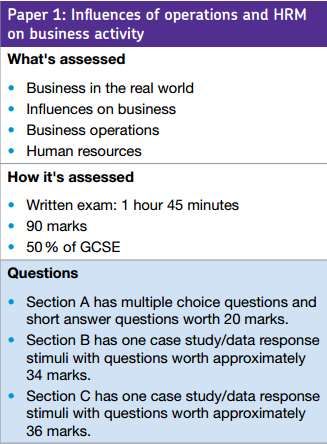
CHOOSING YOUR OPTIONS
      YEAR 10 & 11:
In September 2019 you will start a two year course. You have already completed the ‘Choosing Your Options’
booklet in PSHE. You will now have to make your final choices.

It is important for you to know that you can come and discuss your choices. You can discuss choices with your
Form Tutor or Year Tutor. You can also speak to the Senior Teachers, Mrs Marsden and Mr Felice (ag) or the
Deputy Heads, Mrs Benitez (ag), Ms Noguera, Mrs Lester or Mr Lester.

Bayside offers a range of courses. We realise that there are some of you who prefer more academic subjects
and others who prefer practical subjects. We aim to help you choose the best combination of subjects.

From pages 5-44 you will find details about each subject. We encourage you to look at this information with
your parents/guardians. If you want more information you can look at the following websites which are
general links to the exam boards where you can download the specification documents:

                          www.aqa.org.uk – www.edexcel.com – www.ocr.org.uk

FURTHER STUDIES

A list of subjects currently available at ‘A’ Level will is provided at the back of this booklet to help you make a
more informed choice about your progression after Year 11. Alternative opportunities are available at the
Gibraltar College of Further Education. You and your parents/guardians will be addressed by members of the
College at the end of Year 11 to explain further.

                                                                                                                 2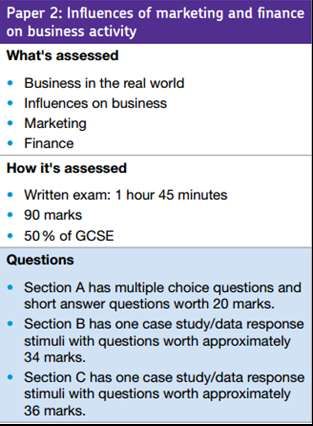
SUBJECTS OFFERED
Students will follow a course in all of these subjects:

                                                     COURSES
                                                    English*
                                                  Mathematics
                                               Combined Science
                                                     Spanish
                                                     Core PE
                                                      PSHE
                                             Religious Education **

*English Literature is not a separate option but done within normal GCSE English lessons. We aim to have
as many students as possible doing Language and Literature, but this will be dependent on your ability and
potential.

** If you do not currently study RE you will not be required to follow an RE course in Year 10 &11.

Students will choose to follow a course in 3 of these subjects*:

                                                    COURSES
                                              Art & Design: Fine Art
                                                 Business Studies
                                              Certificate of Personal
                                                   Effectiveness
                                               Design Technology
                                                       Drama
                                                  Employability
                                              Food Preparation and
                                                     Nutrition
                                            Foodwise and Independent
                                                       Living
                                                      French
                                                    Geography
                                                 Hair and Beauty
                                                      History
                                                       Italian
                                                         ICT
                                                       Music
                                                Physical Education
                                                 Religious Studies
                                                     Sociology
                                                  Study Support
                                                  Triple Science

*Study Support is an option aimed at students who require extra help with their other subjects.
                                                                                                        3
Important Notes:
  ● We will make every effort to accommodate your choices. However, please note that in some cases
    this may not be possible. For example, we may not be able to offer a course if there is not enough
    interest in the subject.
  ● We encourage you to give your options choices a great deal of thought. Changing options is possible
    but not recommended.
  ● You may also find that some subjects are full and the change may not be possible.
  ● Level 1 and 2 grades are the same as GCSEs.
  ● For COPE/ Personal Social development and Employability Level 1 is a Grade D/E and Level 2 is a GCSE
    Grade B
  ● To clarify GCSE grading equivalence for National Awards ( IT) see below:

                      Technical/National Award             9 to 1 GCSE grading

                  L2 Distinction*                                  8/9
                  L2 Distinction                                    7
                  L2 Merit                                          6
                  L2 Pass                                          4/5
                  L1 Advanced Credit/Distinction                   2/3
                  L1 Merit                                          2
                  L1 Credit/Pass                                   1/2

  ●   No options can be changed after the 12th October 2019

                                                                                                      4
ENGLISH
English is a CORE Subject, which is taken by all students. The English Department offers students in Year
10/11 five different Courses/Specifications:

1. AQA English Language GCSE (8700)

2. Cambridge O’Level English Language (1123)

3. Edexcel English Language IGCSE, Spec B ((4EBO)

4. OCR Entry Level Certificate (R393)

5. AQA English Literature GCSE (8702)

Students’ choice of Course will be based on Year 9 Subject Teacher recommendations, which will take into
account performance, ability, attitude towards the subject and attainment.
The students’ best interest will be taken into account, at all times, when choosing the Exams most suited to
meet their needs and potential.

AQA English Literature will only be offered to students who have initiated the Literature Specification in
Years 8 and 9 (Groups 1 – 3).

                                                                                                               5
ENGLISH LANGUAGE
                                     AQA Specification GCSE (8700)
            http://filestore.aqa.org.uk/resources/english/specifications/AQA-8700-SP-2015.PDF

Introduction

The GCSE English Language course encourages students to achieve the following:

   ●   read fluently, and with good understanding, a wide range of texts from the 19th, 20th and 21st
       centuries, including literature and literary non-fiction as well as other writing such as reviews and
       journalism.
   ●   read and evaluate texts critically and make comparisons between texts.
   ●   summarise and synthesise information or ideas from texts.
   ●   use knowledge gained from wide reading to inform and improve their own writing.
   ●   write effectively and coherently using Standard English appropriately.
   ●   use grammar correctly and punctuate and spell accurately.
   ●   acquire and apply a wide vocabulary, alongside a knowledge and understanding of grammatical
       terminology, and linguistic conventions for reading, writing and spoken language.
   ●   listen to and understand spoken language and use spoken Standard English effectively.

Specification Content/Examinations

The above skills will be assessed at the end of Year 11.

The English Language exam consists of two papers, taken at the end of Year 11. There is also a Speaking and
Listening module but this does not influence the final grade.

Paper 1, Explorations in Creative Reading and Writing, looks at how writers use narrative and descriptive
techniques to engage the interest of readers. Section A will focus on one literature fiction text. Section B is a
writing section where pupils will have to choose between a descriptive or narrative piece of writing.

Length of exam: 1 hour 45 minutes
80 marks
50% of GCSE

Paper 2, Writers' Viewpoints and Perspectives, looks at how different writers present a similar topic over
time. This exam is also divided into two sections. Section A is a reading section and Section B asks pupils to
present a viewpoint.

Length of exam: 1 hour 45 minutes
80 marks
50% of GCSE

Other Information

   ● This is a Core Subject taken by all students.
   ● It is important to note that homework will be set on a regular basis.
   ● This GCSE follows the NEW GCSE Grading system 9 -1
                                                                                                               6
ENGLISH LANGUAGE
                                Edexcel International (Specification B) GCSE (4EB1)

http://qualifications.pearson.com/en/qualifications/edexcel-international-gcses-and-edexcel-
certificates/international-gcse-english-language-b-2016.html

Introduction

The aim of the Edexcel qualification is to enable students to read a wide range of texts fluently and with good
understanding. They will be expected to read critically and ensure that they write effectively and coherently. This
course aims to familiarise pupils with the linguistic conventions for reading, writing and spoken language.

Specification Content/ Examination

The Edexcel International GCSE in English Language (Specification B) comprises one mandatory paper. It is a linear
qualification and the paper must be taken at the end of the course of study.

Paper overview
It consists of a 3 hour paper that is externally assessed.

Content Summary: develop skills to analyse how writers use linguistic and structural devices to achieve their effects;
explore links and connections between writers’ ideas and perspectives; develop transactional and imaginative writing
skills for a variety of purposes and audiences to engage the reader; use spelling, punctuation and grammar accurately.

Assessment
Section A – Short-answer questions related to two previously unseen extracts. Students are advised to allocate 1 hour
to Section A. There will be a mixture of short-answer questions related to two previously unseen non-fiction text
extracts. Students will answer all questions in this section. Questions will test the following Assessment Objectives:
AO1 - Read and understand a variety of texts, selecting and interpreting information, ideas and perspectives.
AO2 - Understand and analyse how writers use linguistic and structural devices to achieve their effects.
AO3 - Explore links and connections between writers’ ideas and perspectives, as well as how these are conveyed.

Section B – ONE 30-mark directed writing task, based on the ideas presented in the source texts involving a given
audience, form or purpose.
Students are advised to allocate 1 hour to Section B. There will be ONE 30-mark writing task, based on a prompt
involving a given audience form or purpose. Students will answer ONE question in this section. Questions will test
the following Assessment Objectives:
AO1 - Read and understand a variety of texts, selecting and interpreting information, ideas and perspectives.
AO4 - Communicate effectively and imaginatively, adapting form, tone and register of writing for specific purposes
and audiences.
AO5 - Write clearly, using a range of vocabulary and sentence structures, with appropriate paragraphing and accurate
spelling, grammar and punctuation.

Section C – ONE 30-mark writing task, from a choice of three (discursive, narrative, and descriptive). Questions will
test the following Assessment Objectives:
AO4 - Communicate effectively and imaginatively, adapting form, tone and register of writing for specific purposes
and audiences.
AO5 - Write clearly, using a range of vocabulary and sentence structures, with appropriate paragraphing and accurate
spelling, grammar and punctuation.

                                                                                                                      7
ENGLISH LITERATURE
AQA Specification GCSE (8702)
http://filestore.aqa.org.uk/resources/english/specifications/AQA-8702-SP-2015-V1-1.PDF
Introduction
This course encourages students to develop their knowledge and skills in reading, writing and critical
thinking. Through literature students have a chance to develop culturally and read a wide range of literary
texts.
Specification Content/ Examinations
GCSE English Literature is divided into two papers and both papers are examined at the end of Year 11.
Paper 1, Shakespeare and the 19th Century Novel
This consists of a written exam [1 hour 45 Minutes] which is worth 40% of the final grade. In Section A,
students will answer a question on a Shakespeare play. It will require them to write in detail about an
extract from the play and about the play as a whole. Section B explores a 19 th century novel. Here, pupils
will be required to write about an extract in detail and then about the novel as a whole.
Paper 2, Modern Texts and Poetry
This paper is worth 60% of the final grade and the written exam lasts 2 hours and 15 minutes. The paper is
divided into 3 sections:
Section A – Modern Texts - Students will answer a question on their chosen novel or drama.
Section B – Poetry – students will answer one comparative question on an unnamed poem and one that
belongs to the Anthology.
Section C – Unseen Poetry – Students will answer one question on an unseen poem and one question
comparing this poem with a second unseen poem.
Other Information/ Entry Requirements
It is important to note that this course is not an option. Pupils who embark on this course will be selected
by their subject teachers.
Homework will be set on a regular basis.
All assessments are closed book and all exams take place at the end of Year 11
This GCSE follows the NEW GCSE Grading system 9 -1
8MATHEMATICS
OCR Specification A GCSE (J560)
http://www.ocr.org.uk/qualifications/gcse-mathematics-j560-from-2015/
Introduction
Mathematics is a CORE subject and is taken by all students. The course will provide students with an
understanding of mathematics and the opportunity to acquire a valuable qualification often requested by
employers. It has been designed to meet the needs of the National Curriculum and to provide skills that will
be useful in later life.
The course is appropriate to candidates requiring a general qualification in Mathematics and is suitable for
anyone wishing to progress to GCE A level or other similar courses.
Specification Content/Examination
Learners are entered for either Foundation tier (Paper 1, Paper 2 and Paper 3) or Higher tier (Paper 4, Paper
5 and Paper 6).
Qualification Overview Assessment Overview
Foundation Tier Grades 5
to 1
Paper 1 (Foundation Tier) Written Paper 33.33%
J560/01 100 marks of total
1 hour 30 mins GCSE
Calculator permitted
Paper 2 (Foundation Tier) Written Paper 33.33%
J560/02 100 marks of total
1 hour 30 mins GCSE
Calculators not
permitted
Paper 3 (Foundation Tier) Written Paper 33.33%
J560/03 100 marks of total
1 hour 30 mins GCSE
Calculator permitted
9Qualification Overview
Assessment
Overview
Higher Tier Grades 9 to 4
Paper 4 (Higher Tier) Written Paper 33.33%
J560/04 100 marks of total
1 hour 30 mins GCSE
Calculator permitted
Paper 5 (Higher Tier) Written Paper 33.33%
J560/05 100 marks of total
1 hour 30 mins GCSE
Calculators not
permitted
Paper 6 (Higher Tier) Written Paper 33.33%
J560/06 100 marks of total
1 hour 30 mins GCSE
Calculator permitted
Other Information
This GCSE follows the NEW GCSE Grading system 9 -1
Alternative Course Routes
Entry Level Certificate or ASDAN Mathematics Short Course
The Entry Level Certificate or/and Asdan Course is for those students who would find following a GCSE course
in mathematics too demanding at this stage.
Entry Level Certificate
This is a unit based specification with students required to complete eight units of work. In each unit there
is a focus on the basic skills that learners need to function in society and to be prepared for further study at
GSCE level or equivalent. Throughout the course, learners will have opportunities to apply their mathematical
skills in relevant contexts such as managing money and dealing with measures as well as engaging in problem
solving activities at an appropriate and accessible level.
10GCSE Combined Science – Trilogy
AQA Specification 8464
http://www.aqa.org.uk/subjects/science/gcse/new-science-gcse-specifications
INTRODUCTION
Combined Science is a joint award that looks at all three science disciplines. It is worth two GCSEs upon
completion. Please note that the previously offered ‘Core and Additional Science’ options have now been
replaced with the new ‘Combined Science’ which is compulsory.
This covers the new Key Stage 4 Science Programme of Study (the content of this makes up part of the
separate Science awards). This has been developed so that students become more ‘scientifically literate', i.e.
they are able to make reasoned judgements about scientific issues which may affect them in their everyday
lives. It looks at aspects of Biology, Chemistry and Physics and includes a detailed look at investigative skills.
SPECIFICATION CONTENT / EXAMINATIONS
Programme of Study
Year 10
The topics covered are: cell biology, organisation, infection and response, bioenergetics, atomic structure and
the periodic table, bonding, structure and the properties of matter, quantitative chemistry, chemical changes,
energy changes, energy, electricity, particle model of matter and atomic structure.
Year 11
.
The topics covered are: homeostasis and response, inheritance, variation and evolution, ecology, the rate and
extent of chemical change, organic chemistry, and chemical analysis, chemistry of the atmosphere, using
resources, forces, waves, magnetism and electromagnetism.
Note: Some of these topics have already been covered in Year 9, but they will be revisited over the two years
to refresh subject knowledge.
How will I be assessed?
Assessment will use the new 9-1 grading system, replacing the A*-G. The foundation tier will cover grades 1–
5 and the higher tier grades 4-9. There are no controlled assessments in the new science qualification
however the questions assessing students’ use of mathematical skills will make up 15% of the assessments.
The final examination will consist of 6 separate papers (two for each science), each 1 hour and 15 minutes
long, making up a total of 7.5 hours worth of assessment on Biology, Chemistry and Physics.10% of the Biology
paper, 20% of the Chemistry and 30% of the Physics will assess mathematical skills.
Practical skills are assessed within the 6 papers the students will sit. The questions within the papers are
based upon 15 practicals set by the exam board. These will be done within lesson time over the 2 years.
OTHER INFORMATION
11Future opportunities
The course prepares students for progression onto A level sciences. Entry requirements for A Level sciences
can be found on Page 44/45. The development of science in a modern society is essential for economic
growth. It increasingly plays a part in our everyday lives. The list of career opportunities is almost endless.
They range from the medical profession, i.e. doctor, nurse, pharmacist, public health and dentistry, to
construction engineering, chemical engineering and mechanical engineering. Opportunities also occur in
computing, electronics, telecommunications and electrical engineering. Scientists also form an important part
of the aerospace, chemical manufacturing, textiles and motor industries.
SPANISH
12AQA Specification GCSE (8698)
http://www.aqa.org.uk/subjects/languages/gcse/spanish-8698
Introduction
All students in Year 10 & 11 take Spanish. The course aims to develop listening, speaking, reading and writing
skills in the language. These four language skills form the basis of the GCSE examination in Spanish.
Listening - the ability to understand & respond to spoken Spanish
Speaking - the ability to use Spanish effectively for purposes of practical communication
Reading - the ability to read, understand & respond to written Spanish
Writing - the ability to communicate in writing
Students who are not native speakers are withdrawn from mainstream Spanish lessons and taught in different
ability groups, better geared to the needs of the non-native users of the language. They will also sit the GCSE
examination.
Specification Content/Examination
● Listening Component = 25% of the total GCSE marks.
● Speaking Component = 25% of the total GCSE marks.
● Reading Component = 25% of the total GCSE marks.
● Writing Component = 25 % of the total GCSE marks.
Students will be entered either for Foundation Tier exams or Higher Tier exams. They must sit exams in all
four skills at the same tier. Students who are non-native speakers are advised to purchase a set of verb tables
to help them with the controlled assessments. This GCSE follows the NEW GCSE Grading system 9 -1
Other Information
Homework will be set on a regular basis. Students are advised to study grammar points covered in class
regularly at home, in order to keep up with the course.
Useful links and resources:
www.bbc.co.uk/education/subjects/z4dqxnb
www.bbc.co.uk/schools/gcsebitesize/spanish/
www.bbc.co.uk/language/spanish/
http://conjugator.reverso.net/conjugation-spanish.html
www.linguee.com
Collins verb tables and dictionary
Alternative Course Routes
Students who may not be suitable for the GCSE Spanish course will be offered a Languages Short Course
through ASDAN.
13ART AND DESIGN: ART, CRAFT AND DESIGN
AQA Specification GCSE (8201)
http://filestore.aqa.org.uk/resources/art-and-design/specifications/AQA-ART-GCSE-SP-2016.PDF
Introduction
GCSE Art and Design provides students with a wide
range of creative and stimulating opportunities to
explore their interests in ways that are both personally
relevant and developmental in nature. This two Unit
Specification motivates students to develop their ability
to actively engage in the processes of Art and Design.
The course aims to further creative skills through
learning and doing, to enhance imaginative and
intuitive ways of working and develop knowledge
and understanding of materials and technologies in
historical and contemporary contexts. GCSE Art and
Design is a strong foundation for further progression to
Art and Design related courses such as A-level Art and
Design and career pathways.
Specification Content/Examination
GCSE Art and Design provides students with a wide range of creative and stimulating opportunities to explore
their interests in ways that are both personally relevant and developmental in nature. This two Unit
Specification motivates students to develop their ability to actively engage in the processes of Art and Design.
The course aims to further creative skills through learning and doing, to enhance imaginative and intuitive
ways of working and develop knowledge and understanding of materials and technologies in historical and
contemporary contexts. GCSE Art and Design is a strong foundation for further progression to Art and Design
related courses such as A-level Art and Design and career pathways.
This title promotes learning across a variety of experiences and through various processes including drawing,
painting, print-making, sculpture and digital imaging. Emphasis is on an increased breadth of approach
enabling students to generate different kinds of evidence of working and outcomes.
Unit 1 Portfolio
14Each student must select and present a portfolio representative of their course of study. The portfolio must
include both:
1. 1 A sustained project developed in response to a subject, theme, task or brief evidencing the journey
from initial engagement with an idea(s) to the realisation of intentions. This will give students the
opportunity to demonstrate, through an extended creative response, their ability to draw together
different areas of knowledge, skills and/or understanding from across their course of study.
2. 2 A selection of further work resulting from activities such as trials and experiments; skills-based
workshops; mini and/or foundation projects; responses to gallery, museum or site visits; work
placements; independent study and evidence of the student’s specific role in any group work
undertaken.
Unit 2 Externally set assignment
AQA will provide an externally set assignment with seven different starting points. Students must select and
respond to one starting point. The externally set assignment provides students with the opportunity to
demonstrate, through an extended creative response, their ability to draw together different areas of
knowledge, skills and/or understanding in response to their selected starting point.
A three months preparation period is followed by 10 hours of supervised unaided work in which students are
required to realise their intentions.
Assessment
Unit 1: Portfolio 60%
Unit 2: Externally set assignment 40%.
Other Information
Students opting for the subject should have both an interest in art and also some drawing and painting ability.
This GCSE follows the NEW GCSE Grading system 9 -1
BUSINESS STUDIES
AQA Specification GCSE (8132)
15http://filestore.aqa.org.uk/resources/business/specifications/AQA-8132-SP-2017.PDF
Introduction - Why choose GCSE Business Studies?
● This course offers students a chance to enter a field of study they have not covered at Key Stage 3: to
learn about and develop an understanding of business concepts, business terminology, business
objectives, the integrated nature of business activity and the impact of business on individuals and
wider society.
● It provides students with an understanding of the commercial world and applies this knowledge and
understanding to contemporary business issues and to different types and sizes of businesses in local,
national and global contexts.
● Students will be encouraged to investigate and analyse real business opportunities and issues to
construct well-argued, well evidenced, balanced and structured arguments, demonstrating their
depth and breadth and understanding of business.
● Students will develop and apply quantitative skills relevant to business, including using and
interpreting data.
● It gives students the opportunity to develop as enterprising individuals with the ability to think
commercially and creatively to demonstrate business acumen, and draw on evidence to make
informed business decisions and solve business problems.
● It will obviously provide progression to AS/A level Business Studies.
● Gibraltar’s main industry being the Finance Centre makes Business Studies and its application in the
workplace extremely valuable, equipping them for their future careers. This course is also useful for
career paths in business, marketing, management, retailing, finance or economics.
Specification content/examination
The new Business Studies GCSE is a linear qualification. Linear means that students will sit all their exams at
the end of the course
Subject content
1. Business in the real world
2. Influences on business
3. Business operations
4. Human resources
5. Marketing
6. Finance
Assessments
16Assessment Objectives
The exams will measure how students have achieved the following assessment objectives.
•AO1: Demonstrate knowledge and understanding of business concepts and issues.
•AO2: Apply knowledge and understanding of business concepts and issues to a variety of contexts.
•AO3: Analyse and evaluate business information and issues to demonstrate understanding of business
activity, make judgements and draw conclusions.
Other information
It is essential that students understand the demands of this subject so they should seek advice from a Business
Studies teacher who will explain the course content further and show you relevant materials.
During the GCSE course, both summative and formative assessments are used to assess the progress of the
student. The qualification will be graded at the end of the GCSE course on a nine-point scale: 1 to 9 – where
9 is the best grade. If the course is proving to be too challenging you can opt or be recommended to change
to Employability (See page 23).
Alternative Course Route: Employability (see page 23).
CERTIFICATE OF PERSONAL EFFECTIVENESS
COPE- ASDAN- LEVEL 1 OR 2
17FILE:///C:/USERS/USER/DOWNLOADS/COPEL1L2_JAN15_WEBFLYER.PDF
Introduction
The Certificate of Personal Effectiveness (CoPE) is ASDAN's flagship qualification and offers an imaginative
way of accrediting young people’s curriculum enrichment and extra-curricular activities, allowing centres to
certificate a wide range of personal qualities, skills and achievements, as well as introducing new activities
and challenges.
The aims of the qualification are to enable candidates:
• to develop and demonstrate a range of personal, key and employability skills leading to personal
effectiveness
• to broaden their experience and manage learning through the enrichment activities provided by the ASDAN
challenges
• to receive formal recognition and accreditation for the above.
This is a nationally recognised qualification where Level 1 CoPE is equivalent to a D/E Grade at GCSE and
Level 2 a B Grade at GCSE.
Specification Content/Examination
CoPE offers students the opportunity to develop a number of skills needed for life long learning. These skills
are assessed through a number of activities – for example:
Problem Solving - Students need to organise their own work experience and reflect on the difficulties faced
in doing this.
Working with others - To demonstrate their ability to work in groups effectively, students are asked to work
in teams to raise money for charity or to organise a school trip. This year our students raised £800 for The
GBC Open Day and they have organised a trip to Ronda.
Research skills - Success in this area requires students to identify a question for research, design and
administer questionnaires and make conclusions from their findings. Some of the questions recently
researched are:
Which Chinese meal is a favourite for Gibraltarians?
What is the most common injury for 15 to 18 year old football players?
Improving own learning - This is probably the most important of skills. By working through a series of
exercises students are helped to understand their individual learning styles.
Participating in discussions and presentations - Students are often challenged when developing both these
skills. After researching different topics, (e.g. Holocaust, abortion), students are asked to deliver a power
point presentation to the class and a discussion then follows. Students who perform well in this area are
able to present well reasoned arguments and are able to support their opinions with facts .
18Challenges can come from 12 modules within the Student Booklet under the following areas of study:
• Communication
• Citizenship and Community
• Sport and Leisure
• Independent Living
• The Environment
• Vocational Preparation
• Health and Fitness
• Work Related Learning and Enterprise
• Science and Technology
• International Links
• Expressive Arts
• Beliefs and Values
Students can choose the challenges that suit their strengths, which make for an interesting and varied
course and they will build a Portfolio of Evidence as they complete various challenges.
Other Information
THIS COURSE DOES NOT HAVE AN EXAMINATION. IT IS ASSESSED VIA THE PORTFOLIO WORK DEVELOPED
OVER THE 2 YEARS.
DESIGN & TECHNOLOGY
AQA Design and Technology: GCSE (8552)
http://filestore.aqa.org.uk/resources/design-and-technology/specifications/AQA-8552-SP-2017.PDF
19Introduction
The new GCSE Design and Technology will prepare students to participate confidently and successfully in an
increasingly technological world. Students will gain awareness and learn from wider influences on Design and
Technology including historical, social, cultural, environmental and economic factors.
Students will get the opportunity to work creatively when designing and making and apply technical and practical
expertise. Our GCSE allows students to study core technical and designing and making principles, including a broad
range of design processes, materials techniques and equipment.
They will also have the opportunity to study specialist technical principles in greater depth.
Specification Content/Examination
In Year Ten the course is structured as follows:
Lesson One: Theory content delivered in class which will normally include a homework activity on a weekly basis. This
will continue throughout the second year and will lead up to the final written examination.
Lesson Two: During this lesson students will be working on their Design folders which can either be presented on A4
format or in Digital form. These lessons will focus on topics which include research skills, generating designs, planning
and evaluation techniques.
Lesson Three: This will be the student’s practical lesson where they will be able to work on their products using tools,
machinery and equipment available in school.
In Year Eleven, pupils are prepared to meet the final course requirements of:
50% Theory. Tested by a two hour written examination.
50% Design Folder and Practical outcome.
This is also an academic subject. The practical element is only 30% of the allocated time
(1 out of 3 lessons.)
Other Information
Pupils need to understand that the course carries substantial homework content. Most weeks they will have
questions to complete at home related to the theory covered that week. Added to this they will also have
ongoing Design Folder work to complete at home linked to the practical outcomes being covered.
DRAMA
AQA Specification GCSE (8261)
http://filestore.aqa.org.uk/resources/drama/specifications/AQA-8261-SP-2016-DRAFT.PDF
20Introduction
GCSE Drama is not just for students who want to be actors. Universities and employers value a background
in Drama because of the personal and social skills the subject helps you to develop. Succeeding in Drama
shows the following:
● That you can work effectively as part of a teamThat you can work to deadlines
● That you can communicate clearly with people
● That you are confident about speaking in public
● That you have an imaginative and creative mind
These skills are all valuable in any area of higher education and/or employment.
Specification Content/Examination
The GCSE Drama course consists of three components:
Understanding Drama (worth 40% of the GCSE course): Students will study a set play from the point of view
of performance. They will also watch live productions and develop evaluative and analytical skills in response
to live theatre. The unit is assessed through a 1 hour and 45 minute exam consisting of questions on the set
play and on a response to a live theatre production seen during the course.
Devised Drama (worth 40% of the GCSE course): This is a practical component. Students will devise and
performance a piece of original drama. The unit is assessed through a performance of the piece.
Texts in Practical (worth 20% of the course): This is a practical component. Students will perform two extracts
from one play. The unit is assessed through a performance of both extracts.
Other Information
At Bayside, we explore a number of theatre styles, including Theatre-In-Education, Devising and Acting. You
will take part in a number of performances and will develop an advanced understanding of many drama
techniques. This GCSE follows the NEW GCSE Grading system 9 -1
Success in GCSE Drama can lead to the A-Level Theatre Studies course currently available to Bayside students.
EMPLOYABILITY
ASDAN CERTIFICATE-LEVEL 1 OR 2
http://www.asdan.org.uk/courses/qualifications/employability
Introduction
21The Employability qualifications at Entry 2 and 3 and Levels 1 to 3 are nationally recognised qualifications
available in the Qualifications and Credit Framework (QCF). They are credit based with a choice of units.
Candidates achieve Employability qualifications by completing a number of core and additional units at the
appropriate level. Each unit is credit rated: 6 credits are required for an Award qualification and 15 credits
are required for a Certificate qualification. One credit is broadly equivalent to 10 hours of learning time.
Single-unit accreditation is also available. Evidence of completed units must be collated in a portfolio of
evidence, which documents candidates’ work-related activities and experiences.
Specification Content/Examination
This is a vocational structured course aimed at helping students understand how businesses work as well as
what type of work they would be expected to carry out in a Business Administration environment.
The course emphasises employability skills for the Business sector by teaching skills that students will find
relevant and beneficial when seeking employment
During this two year course students will study most of the following units:
• Team working
• Learning through work experience
• Career exploration
• Enterprise skills
• Rights and responsibilities at work
• Applying for a job
• Health and safety in the workplace
• Planning and reviewing learning
• Tackling problems
• Customer service
• Working with numbers
There is no final examination. This is continually assessed through the above Units covered. Students will
produce a portfolio of evidence, which will be assessed and moderated by ASDAN certified moderators.
Other Information
Students gain increased confidence and self-esteem; effective work and social skills; an understanding of how
a business operates; and the ability to work with adults outside the home or school environment.
Students will be required to spend one afternoon a week on work experience in order to gain their
employability skills and evidence for their portfolio.
FRENCH
AQA Specification GCSE (8658)
http://www.aqa.org.uk/subjects/languages/gcse/french-8658
22‘If you talk to a man in a language he understands, that goes to his head. If you talk to him in his
language, that goes to his heart.’
Nelson Mandela
Introduction
The GCSE French course will allow you to further develop your competence in the language in order to
progress from beginner to intermediate level. You will be able to understand the language in different
contexts and acquire the skills to communicate effectively.
Why choose French for your options?
● get ready for life in a multilingual world
● increase your chances of getting a good job
● improve your English and Maths (students who do foreign languages tend to perform better in these)
● improve your chances of entry into university (some top universities now require applicants to have a
GCSE in a foreign language)
● have a better chance to study or work abroad
● improve your communication and social skills
● get more out of travel to other countries
● enjoy and appreciate other cultures
● make friends all around the world
● Bayside has a very high pass rate A*- C / 9-4 in GCSE French (78% over the past eight years)
Specification Content/Examination
What does the GCSE involve?
The AQA GCSE in French is a linear qualification with 100% external assessment. Linear means that students
will sit all their exams at the end of the course. There are four equally weighted components:
Listening 25% Reading 25%
Speaking 25% Writing 25%
This GCSE follows the NEW GCSE Grading system 9 -1
Assessment of these skills will be as follows:
Students will be entered for either Higher Tier or Foundation Tier across all four components. They will sit
written papers in Listening, Reading and Writing. The Speaking tests are conducted and recorded by the class
teacher and assessed by the exam board.
Other Information
In the GCSE course you will continue to follow the Boardworks audio-visual course that is used in Years 8
and 9. This is delivered through interactive Power Point presentations in class which, as you already know,
23are also accessible to you at home on the Doddle website. The ‘AQA French GCSE’ textbook, with access to
the Kerboodle audio-visual online content, is used in conjunction with Doddle and you will also have free
access to Linguascope which is another very useful online resource aimed at developing vocabulary. You will
regularly be set homework tasks online on Doddle and Kerboodle. These will often involve interactive audio-
visual assessments which you will be able to repeat as many times as necessary in order to ensure progress.
By logging into your Doddle account you will also have access to revision material on every single aspect
covered for the GCSE, which will provide you with excellent opportunities for independent study.
Thanks to the new technologies it has never been so easy to learn a foreign language, hence the name Doddle
for this very practical and useful resource. However, this does not mean that you do not have to work hard.
What it means is that you have the latest and best tools at your disposal to learn a language successfully, in
an enjoyable and stimulating manner, if you are prepared to put in the time and effort required.
What will be expected of you at GCSE?
You will be required to:
● listen and respond to spoken French
● perform role-plays and do oral presentations
● read and respond to written French
● write text messages, posts, emails, blogs, articles and reports in French
● translate passages from French to English and from English to French
● keep good, neat, organised notes on language and grammar
● read and listen to French regularly at home and look up new words that you come across
● revise your notes regularly in order to learn what you have covered before moving on to the next topic
or grammar point
● use online resources such as Doddle and Linguascope on a regular basis to enhance your language
learning
IMPORTANT NOTE: If you are learning Spanish as a foreign language you need to consult the Head of
Modern Foreign Languages (Mr Enriles) before opting for French.
Useful websites:
https://www.doddlelearn.co.uk/french
http://www.linguascope.com/preview/
http://www.wordreference.com/
24FOOD PREPARATION AND NUTRITION
AQA Specification GCSE (8585).
http://filestore.aqa.org.uk/resources/food/specifications/AQA-8585-SP-2016.PDF
Introduction
This new GCSE Food Preparation and Nutrition is an exciting and creative course which focuses on practical
cooking skills to ensure students develop a thorough understanding of nutrition, food provenance and the
working characteristics of food materials. At its heart, this qualification focuses on nurturing students'
practical cookery skills to give them a strong understanding of nutrition.
Specification Content/Examination
Food preparation skills are integrated into five core topics:
• Food, nutrition and health
• Food science
• Food safety
• Food choice
• Food provenance.
Paper 1: Food preparation and Non- Examination Assessment Task 1: Non- Examination Assessment Task 2:
nutrition Food investigation Food preparation assessment
(30 marks)* (70 marks)*
Written or electronic portfolio
Written exam Written or electronic report • Including photographic evidence.
Theoretical knowledge of food • (1,500–2,000 words) including • Assessment of knowledge, skills
preparation and nutrition photographic and understanding in relation to
• 1 hour 45 minutes evidence of the practical investigation. the planning, preparation, cooking,
• 100 marks • Presentation of food and
• 50% of GCSE Questions application of nutrition related to
• Multiple choice questions (20 • Assessment of the understanding the chosen task.
marks) of the working
• Five questions, each with a characteristics, functional and chemicalStudents will prepare, cook and present
number of sub questions (80 properties of ingredients. a final menu of three dishes within a
marks) single period of no more than 3 hours,
planning in advance how this will be
Practical investigations are a achieved.
compulsory element of this NEA task.
*NEAs form 50% of the final mark.
Other information
Students must take note that the majority of this course involves challenging science based theory. It is not
just a practical cookery course and students will NOT cook every week.
Students will carry out practical tasks throughout the year to learn necessary skills and put theory into
practice. Some of which will be investigative tasks. This GCSE follows the NEW GCSE Grading system 9 -1
Alternative Course Routes See FoodWise and Living Independently Short Courses.
25FOODWISE & LIVING INDEPENDENTLY
ASDAN Short Courses
https://www.asdan.org.uk/courses/programmes/foodwise-short-course
https://www.asdan.org.uk/courses/programmes/living-independently-short-course
Introduction
Short Courses are multi-level; the focus is on completing challenges and skills development according to
individual ability, rather than attainment at a specific level.
The FoodWise Short Course gives candidates the opportunity to develop and accredit their practical cooking
skills, as well as building knowledge of a variety of food-related issues. (Year 10)
The Living Independently Short Course is focused on helping children make a successful transition from
school education to adulthood. (Year 11)
Specification Content/Examination
Both Short Courses require students to present a portfolio of evidence of their activities.
This portfolio will contain:
● completed FoodWise and Living Independently book and evidence of challenges completed
● planning and reviewing documents
● record of progress
● summary of achievement, identifying skills development
The FoodWise Short Course contains seven The Living Independently Short Course contains nine
modules: modules:
● Healthy Eating ● Earning and Spending Money
● Basic Food Safety ● Keeping Track of your Money
● Food Preparation and Presentation ● Making Financial Choices
● Cooking on a Budget ● A Place of your Own
● Entertaining ● Health and Wellbeing
● The Food Industry ● Cooking on a Budget
● Practical Cooking Skills ● Practical Cooking Skills
● Career Management
● Preparing for the World of Work
Other Information/ Alternative Course Routes
Students will be required to do practical lessons most weeks and present food to build a portfolio of
evidence. Can count as up to 3 of the credits needed to achieve the Personal Development Programmes OR
UP TO 6 of the credits needed to achieve CoPE.
26GEOGRAPHY
AQA Specification GCSE (8035)
http://filestore.aqa.org.uk/resources/geography/specifications/AQA-8035-SP-2016.PDF
Introduction
This exciting course is based on a balanced framework of physical and human geography. It allows
students to investigate the link between the two themes, and approach and examine the battles between
the man-made and natural worlds.
Geography AQA is designed to provide students following GCSE Geography with a course that
develops a sound understanding and knowledge of geographical themes, issues and skills. Students are also
encouraged to understand their role in society, by considering different viewpoints, values and attitudes.
The examination consists of 3 written papers: One for physical topics, one for human topics and the third to
test the students' ability in geographical application.
Specification Content/Examination
Paper 1: Living with the physical environment.
Written Paper – 1hr 30 mins. – 35% of total marks.
● The challenge of natural hazards 1
● The living world 5
● Physical landscapes in the UK 3
Paper 2: Challenges in the Human Environment.
Written Paper – 1hr 30 mins. – 35% of the total marks.
● Urban issues and challenges 4
● The changing economic world 2
● The challenge of resource management 6
Paper 3: Geographical applications.
Written Paper – 1 hr 15 mins – 30% of the total marks
● Pre-Release material issued 12 weeks before exam
● BOTH field work activities and associated write ups are carried out during the two year course.
Other Information
There will be two sets of field work with associated write up and it is crucial students complete these. There
is a day trip to the Rio Hozgarganta towards end of Year 10 and so students will need a valid passport.
27HAIR AND BEAUTY STUDIES
CITY & GUILDS / LEVEL 2 TECHNICAL AWARD (SPEC 3038-21)
https://www.cityandguilds.com/qualifications-and-apprenticeships/beauty-and-complementary-
therapies/beauty/3038-technicals-in-hair-and-beauty#tab=information
Introduction
This qualification allows you to explore the exciting world of hair and beauty and the environment in which its
industries operate.
If you enjoy looking back in time to explore changing trends and developments within the hair and beauty sector, find
out how science is used to create products, and understand why we create images for business use, then this
qualification is for you.
Students will study how hair and beauty has developed from ancient times to the present day and develop hair-
styling, make-up and manicure technical skills to produce your own photographic image. You will explore ethics of
product testing, effects of ingredients on hair and skin and how disorders of the hair and skin can impact services.
The qualification develops the following knowledge, understanding and skills:
specific services carried out within the hair and beauty sectors, roles and responsibilities and typical working
patterns
evolution of hair and beauty from use in ancient times to the mid 90s
how technological advancements, changes to the economy, and social factors have influenced the sector
chemistry of cosmetics and biology related to hair and beauty
uses of design and images for business use
technical hair styling, make-up and manicure skills
The course will be delivered by qualified external instructors.
Specification Content/ Examination
This course into three units:
Exploring the world of hair and beauty
Students will explore the exciting world of hair and beauty and the global environment in which its industries
operate. You will explore key features of typical hair and beauty businesses and know how a range of trades
and industries link to the sector. You will study how hair and beauty has developed from ancient times to the
present day and understand how technological advancements have changed and shaped the range of
products and services on offer today.
Science of hair and beauty
The purpose of this unit is to encourage learners to explore the relevance of the associated sciences in hair
and beauty and how science influences the development of products in the hairdressing and cosmetic
industry. The study of the application of science in the hairdressing and cosmetic industry should promote an
understanding of the commercial application of science and how it may affect personal decisions.
Design in the hair and beauty sector
28The purpose of this unit is for learners to explore the creative world of design used in business. Students will
have the opportunity to plan and create their own design image using technical hair and beauty skills.
Students will complete two mandatory assessment components:
1. Synoptic assignment - an externally set, internally marked and externally moderated project that requires
candidates to identify and use effectively in an integrated manner an appropriate selection of skills, techniques,
concepts, theories and knowledge from across the whole content area. This is worth 60% of the overall
qualification.
2. Theory exam - a 90-minute externally set and externally marked written examination that assesses the
candidates’ depth and breadth of understanding across the mandatory content in the qualification. This is
worth 40% of the overall qualification.
Other Information/ Entry Requirements
This course is graded according to the following scale:
Distinction*
Distinction
Merit
Pass
Fail
These grades are equivalent up to Level 9 at GCSE.
This qualification provides a good foundation for future employment in this industry.
29AQA: New GCSE Specification (8145)
%20gcse%20spec/new%20gcse%20spec.pdf
Introduction
Why should you take History GCSE and why is it such a useful subject?
History is accessible to all pupils and the class teachers offer their recommendations in the Year 9 reports and parents’
evening. The main requirements are an enjoyment of the subject and a positive attitude to learning.
In History you learn how to analyse sources; to weigh up evidence; to detect bias and inconsistencies, and to draw
conclusions. You also learn how to use your knowledge to construct clear, balanced and convincing arguments. These
skills are very useful in careers such as law or journalism. History is not compulsory for law students but is highly
recommended because it develops similar skills.
A STUDENT’S VIEW OF HISTORY
“Every child is born a captive to his age. History emancipates the individual from the shackles of his time – it enlightens
and enables the mind by showing that the concerns of this age are not the highest of concerns, that the achievements of
this age are not the greatest of achievements, and most of all, that the spirit of this age may be no closer to the truth than
any other”. Luke Perera, former Bayside student.
This GCSE follows the NEW GCSE Grading system 9 -1
302. AQA: New GCSE Specification (8145)
2A Britain: Health and the people: Elizabethan England, c1568–1603
c1000 to the present day
This period study focuses on one country for over Students will deepen their understanding on an
50 years. Students will gain a coherent international conflict of the modern world; the cold
understanding of developments in Germany and War.
Paper
their impact on1people through a variety of They will gain a coherent understanding of how and
perspectives:exam:
Written political, social and cultural, why conflict occurred and why it proved difficult to
1 hour andthe
economic, 45role
minutes
of ideas and the contribution of resolve the immediate issues which resulted from it.
84 marks
individuals and groups. Content includes;
Content includes; The origins of the Cold War
Worth and
Kaiser Wilhelm 50%Prussian militarism. The Iron Curtain, Berlin Blockade
The impact of World War One Relations with Asia, China and North Korea
Weimar democracy and the rise of Nazi Germany. Arms and space race
Life in Nazi Germany Developments such as Berlin Wall, tensions with Cuba,
Czechoslovakia and lastly easing of tensions.
Conflict and tension between East
and West, 1945–1972
Gain an understanding of how medicine This topic
and public
promotes coherent understanding of
health developed in Britain over a long the period
relationship
of time.
between
It the historic environment in
considers the causes, scale, nature Elizabethan
and consequences
England of and the historical events.
short and longPaper 2
term developments. Learn to make connections and evaluate how
Written
Content includes; exam: specified sites have shaped or have been shaped by
1 hour and 45 minutes
Medieval medicine; Hippocratic and Galenic method
the historical events and developments of the time.
contribution of 84 marks and Islam to medical
Christianity progress
Content includes;
Renaissance; work of Vesalius, Paré and William Harvey.
Elizabeth and her court; female ruler difficulties
Worth 50%
Germ theory and the work of Pasteur and Koch
A ‘Golden Age’ and the ‘poor’ in comparison.
Improvements to public health; cholera epidemics
Religiousand acts and Rebellions; Mary Queen of Scots
matters
Modern treatments including the impact ofSpanish
war Armada
Specific site (10%)
31INFORMATION AND COMMUNICATION
TECHNOLOGY (ICT)
OCR SPECIFICATION LEVEL 1/2 (J810)
HTTP://WWW.OCR.ORG.UK/IMAGES/82572-SPECIFICATION.PDF
Introduction
We live in a world that is changing at breath-taking speed – the way we work, play, shop and communicate
has changed dramatically in the last few years and continues to do so at an even faster pace - and all this is
due to ICT.
ICT skills are essential for success in employment and higher education, and are among the fundamental
transferable skills required by employers. More and more organisations are looking for people who have
practical and relevant ICT skills at every level of employment.
Bayside is always looking to provide a stimulating, up-to-date course that will keep up with the pace of
change both in the workplace and in education. With this in mind, we have introduced a new course to
replace the current one.
This new course is “The OCR Cambridge Level 1/2 National Certificate in ICT”. It is the equivalent of one
GCSE.
“The Cambridge Nationals in ICT have been founded upon the recommendations of the Wolf Report and
created in partnership with teachers, students, education specialists and industry-leading employers. This
collaborative approach has resulted in a qualification that offers students a solid foundation for their
future studies and careers.” - OCR
Students who opt for this qualification will be starting a study programme that is relevant, practical,
engaging but demanding.
The course is designed to get students to solve realistic and practical problems with the use of ICT. Students
will be encouraged to develop their ability to work independently, to complete a project as part of a team
and to present and communicate ideas clearly by using the practical tools and the knowledge and skills that
they will develop over the two-year course.
Specification Content/Examination
ASSESSMENT
The table on the next page shows how students will be assessed:
(Detailed information on each Course Unit can be seen in the Specification- link above).
32Units covered over 2 years Assessment Assessment Date
Unit 1 Written paper. OCR June 2021
Understanding computer set and marked 1
systems. hour – 60 marks
Hardware and software types Learners answer all
Understand how computers can question
be used in business and leisure
Information and data processing
methods
Unit 2 Centre assessed task. June 2020
Using ICT to create business OCR moderated.
solution Approx 10 hours – 60
Understand and apply software marks
solutions to make business
systems more efficient
Security Issues
Unit 3 Centre assessed task. June 2021
Creating an interactive product OCR moderated.
using multimedia components Approx 10 hours – 60
Students learn to create marks
interactive products containing
multimedia components using a
range of software
Unit 4 Centre assessed task. June 2020
Creating dynamic products OCR moderated.
using sound and vision Approx 10 hours – 60
Students learn to create marks
dynamic products using
software and other media
Other Information
This course can lead to A Level IT.
THIS COURSE IS CURRENTLY BEING REVIEWED AND MAY BE
REPLACED BY ANOTHER GCSE-EQUIVALENT SPECIFICATION
33ITALIAN
Edexcel Specification GCSE (2IN01)
http://qualifications.pearson.com/content/dam/pdf/GCSE/Italian/2017/specification-and-sample-
assessments/Specification_GCSE_L1-L2_in_Italian.pdf
‘A different language is a different vision of life’
Federico Fellini
Introduction
The GCSE Italian course will allow you to further develop your competence in the language in order to
progress from beginner to intermediate level. You will be able to understand the language in different
contexts and acquire the skills to communicate effectively.
Why choose Italian for your options?
● get ready for life in a multilingual world
● have a better chance to get a good job
● improve your English and Maths (students who do foreign languages tend to perform better in these)
● improve your chances of entry into university (some top universities now require applicants to have a
GCSE in a foreign language)
● have a better chance to study or work abroad
● improve your communication and social skills
● get more out of travel to other countries
● enjoy and appreciate other cultures
● make friends all around the world
● a very high pass rate A*- C in Bayside (79% over the past eight years)
Specification Content/Examination
What does the GCSE involve?
The Edexcel GCSE in Italian is a linear qualification with 100% external assessment. Linear means that
students will sit all their exams at the end of the course. There are four equally weighted components:
Listening 25% Reading 25%
Speaking 25% Writing 25%
This GCSE follows the NEW GCSE Grading system 9 -1
Assessment of these skills will be as follows:
Students will be entered for either Higher Tier or Foundation Tier across all four components. They will sit
written papers in Listening, Reading and Writing. The Speaking tests are conducted and recorded by the
class teacher and assessed by the exam board.
34You can also read


