Bebe Moore Campbell National Minority Mental Health Awareness Month July 2021 - Guide for NAMI State Organizations and Affiliates
←
→
Page content transcription
If your browser does not render page correctly, please read the page content below
Bebe Moore Campbell
 National Minority Mental Health
        Awareness Month
            July 2021
Guide for NAMI State Organizations and Affiliates
This guide is intended to help NAMI State Organizations and Affiliates coordinate
                       awareness month efforts with the national office for greater impact.

                                                                         IN THIS GUIDE

                       ABOUT NAMI’S YOU ARE NOT ALONE AWARENESS CAMPAIGN............. 3
                       ABOUT BEBE MOORE CAMPBELL NATIONAL MINORITY MENTAL
                       HEALTH AWARENESS MONTH...................................................................... 3
                          Activities and Engagement Opportunities............................................................... 4
                                Inspiration, Samples and Downloads...................................................................... 4
                                Events.............................................................................................................................. 4
                                Social Media Activities................................................................................................ 4
                                NAMI Blog...................................................................................................................... 4
                                NAMI.org Personal Stories..........................................................................................5
                                Strength Over Silence Videos....................................................................................5
                                How to Spread Awareness in Your Community.....................................................5
                          Social Media................................................................................................................. 6
                                Hashtags.........................................................................................................................6
                                Sample Posts.................................................................................................................6
                          Suggested Graphics.................................................................................................... 7
                          Resources..................................................................................................................... 8
                          Mental Health Fast Facts............................................................................................ 9
                          Sample Press Release............................................................................................... 10
                          PSA Script.................................................................................................................... 11
Sharing your story
is not only helpful    BRAND AND LOGO INFORMATION..............................................................12
for your own mental       Brand Guidelines........................................................................................................12
health journey, it’s      Recommended Fonts.................................................................................................12
also a great way to       Color Palette...............................................................................................................12
let others know they
are #NotAlone.

                                                July 2021 | Awareness Guide for NAMI State Organizations and Affiliates                                    Page 2
ABOUT NAMI’S YOU ARE NOT ALONE
                         AWARENESS CAMPAIGN
                         For 2021’s Bebe Moore Campbell National Minority Mental Health Awareness Month
                         in July, NAMI will continue to amplify the message “You Are Not Alone.” We will
                         use this time to focus on the healing value of connecting in safe ways, prioritizing
                         mental health and acknowledging that it’s okay to not be okay through NAMI’s blog,
                         personal stories, videos, digital toolkits, social media engagements and events.

                         We encourage NSOs and NAs to promote your local online resources and programs
                         as much as possible during July to highlight the mental health supports and services
                         in your area and to emphasize that the NAMI community is here to help.

                         Together, we can realize our shared vision of a nation where anyone affected by
                         mental illness can get the appropriate support and quality of care to live healthy,
                         fulfilling lives — a nation where no one feels alone in their struggle.

                         ABOUT BEBE MOORE CAMPBELL NATIONAL
                         MINORITY MENTAL HEALTH AWARENESS MONTH
                         Mental health conditions do not discriminate based on race, color, gender or
                         identity. Anyone can experience the challenges of mental illness regardless of their
                         background. However, a person’s culture and identity can make access to mental
                         health treatment much more difficult. Bebe Moore Campbell National Minority Mental
                         Health Awareness Month was established in 2008 to start changing this reality.
If you ever feel alone   In 2008, the U.S. House of Representatives designated July as Bebe Moore
because of your          Campbell National Minority Mental Health Awareness Month in honor of the author,
mental illness, the      advocate, co-founder of NAMI Urban Los Angeles, national spokesperson and
NAMI community           mental health leader in the Black community.
is here for you.
#NotAlone                Moore Campbell, who died in 2006, received NAMI’s 2003 Outstanding Media
                         Award for Literature for the children’s book “Sometimes My Mommy Gets Angry,”
                         a story about a girl who learns how to cope with her mother’s bipolar disorder. In
                         2005, her novel “72-Hour Hold” focused on an adult daughter and her family’s
                         experience with the onset of mental illness.

                         While there have been recent legislative attempts to change the name of this
                         month to “BIPOC Mental Health Month,” the official name remains Bebe Moore
                         Campbell National Minority Mental Health Awareness Month. For NAMI, we feel the
                         title should continue to honor the legacy of Bebe Moore Campbell who advocated
                         for individuals and their families affected by mental illness.

                         Additionally, NAMI feels the name of July’s awareness month should be inclusive
                         of all groups underserved by the mental health care system, which includes the
                         LGBTQI community and people with disabilities, not just BIPOC. So for 2021, NAMI
                         will continue to use the official title while referencing this event.

                         Learn more at nami.org/BebeMooreCampbell.

                                          July 2021 | Awareness Guide for NAMI State Organizations and Affiliates   Page 3
Activities and Engagement Opportunities
                      Inspiration, Samples and Downloads
                      Download graphics, logos and social media images to use during July here:
                      nami.org/Get-Involved/Awareness-Events/Awareness-Resources

                      Events
                      • On Thursday, July 8, at 1 p.m. ET, NAMI CEO Daniel H. Gillison, Jr., will take part in
                       a virtual symposium “Erase the Stigma Not Her Name: The State of Mental Health
If you are looking     in Communities of Color” featuring national mental health thought leaders, health
for someone to         experts and advocates to discuss the state of mental health in communities of
talk to about how      color. To attend, click here to register.
you’re doing, the      In partnership with NAMI, NAMI Urban LA, American Psychiatric Association, Hurdle,
NAMI HelpLine has      Affinity, Hillcrest Children and Family Center and other mental health organizations.
created a directory   • Visit nami.org/Awareness for updates on activities and events happening in July.
of Warmlines you
can call. #NotAlone   Social Media Activities
nami.org/             • See specific sample posts (page 6) and suggested graphics (page 7) related to
warmline-directory     Bebe Moore Campbell National Minority Mental Health Awareness Month.
                      • Share a video of what mental health means to you. Use short-form video-sharing
                       apps like TikTok or Instagram Reels to create 15-second videos to post on your
                       social media profiles.
                      • Retweet our Twitter post featuring NAMI’s Chief Medical Officer Dr. Ken Duckworth
                       in the new Apple TV+ documentary, “The Me You Can’t See,” produced by Oprah
                       Winfrey and Prince Harry. The six-part series aims to tackle stigma around mental
                       health and shed light on treatment options. Or promote the show’s full trailer,
                       https://youtu.be/dWevopoBmAE, on your other social channels.
                      • Weekly activations will be taking place on NAMI’s social media channels
                       throughout the month of July, including:
                             n   Weekly Instagram takeovers and live chats with a variety of NAMI
                                 Ambassadors and influencers.
                             n   Hosted #NotAlone conversations — candid discussions about the
                                 intersection of mental health, race and identity between experts,
                                 influencers and other people with lived experience.
                             n   TikTok videos from youth ambassadors.
                        So be sure to follow NAMI’s social media channels to tune in, repost, retweet
                        and share.
                             n   Facebook		            n   Instagram
                             n   LinkedIn		            n   Twitter
                             n   TikTok		              n   YouTube

                      Read the NAMI Blog and Share
                      During July, the NAMI Blog will feature stories about How Culture and Identity
                      Intersect with Mental Health. New posts will be added weekly. Be sure to check
                      out the NAMI Blog at nami.org/Blogs/NAMI-Blog and look for posts on our social
                      media channels featuring quotes from our authors.

                                        July 2021 | Awareness Guide for NAMI State Organizations and Affiliates   Page 4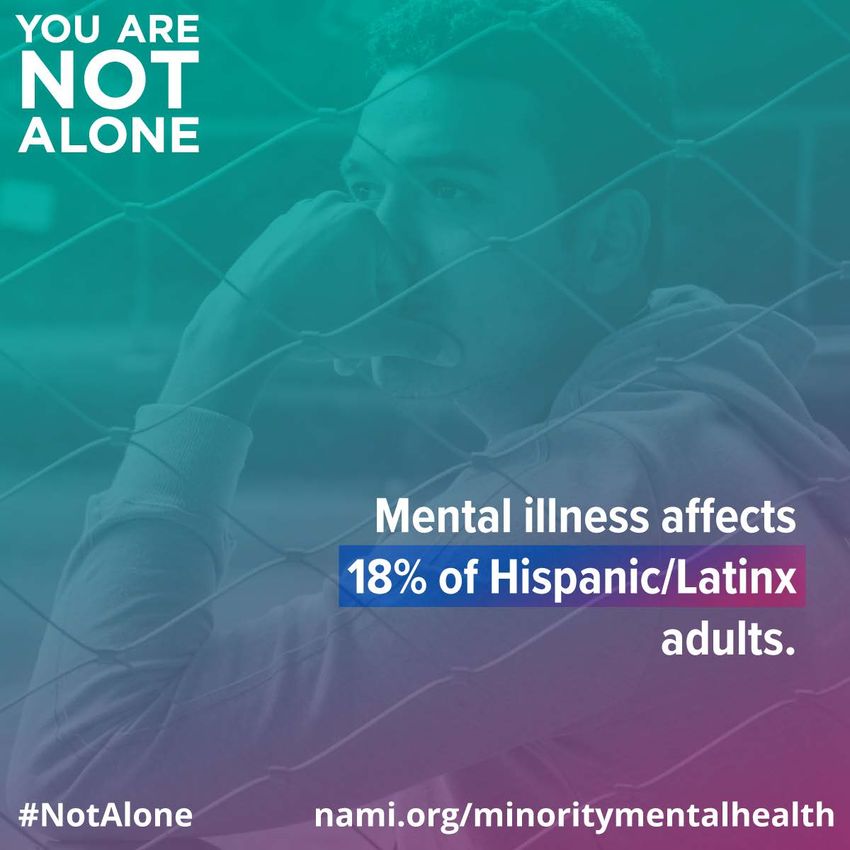
Get Inpired by NAMI.org Personal Stories
                     In July, we will also feature personal stories of lived experience on
                     nami.org/Personal-Stories and on our social media channels. Personal stories are
                     brief, more informal pieces submitted to NAMI. By sharing these stories, we aim to
                     highlight the importance of mental health in all communities and to make people
                     feel less alone in their mental health journeys.

                     View and Share NAMI’s Strength Over Silence Videos:
                     Stories of Courage, Culture and Community
                     NAMI continues to feature new voices of unique perspectives on mental health
                     from the Black, Hispanic/Latinx, Asian American/Pacific Islander and LGBTQI
                     communities in our documentary miniseries Strength Over Silence.

                     Through candid and courageous stories of lived experience, these mental health
                     champions share their journeys of resiliency and recovery:
                       • Charita Cole Brown, an author, educator, and NAMI presenter and facilitator
                         who works within the Black community to dispel stereotypes and help end the
                         silence surrounding mental health.
                       • Nao Gamma, a neuroscientist, entrepreneur, and NAMI presenter and
                         facilitator who speaks about living with bipolar disorder. As a Japanese-
                         American woman, she addresses the need for greater openness about mental
                         health within the AAPI community.
                       • Joseline Castanos, Ph.D., a mother and educator who, alongside her family,
                         became an advocate for mental health in the Hispanic/Latinx community
                         following her daughter’s suicide attempts. Through NAMI, she works to
                         provide greater mental health and culturally competent resources for Spanish-
                         speakers, especially following COVID-19.

                     View the videos at nami.org/StrengthOverSilence and share with your networks.
Now more than        Look for additional videos on nami.org/Awareness and our YouTube Channel.
ever before, it is
important for the    How to Spread Awareness in Your Community
mental health        There are different ways to get the word out during these awareness months to
community to come    help start the conversation about mental health in your community.
together and show
the world that no      • Host a Facebook or Instagram Live with an expert or a person with lived
one should ever          experience to discuss how they manage their mental health or how they
feel alone. #MMHM        spread awareness in their community.
#NotAlone              • Promote online NAMI programs, local support groups or resources offered in
                         your area. Use these awareness months as opportunities for getting the word
                         out in your communities through social media or other outreach efforts about
                         valuable mental health resources available.

                       • Promote a local helpline and warmline information to your area. If none are
                         available in your community, you can share the national NAMI HelpLine’s
                         expanded hours and new online web chat feature:
                            Monday–Friday, 10 a.m.–8 p.m., ET
                            800-950-NAMI (6264), info@nami.org
                            nami.org/Help

                                      July 2021 | Awareness Guide for NAMI State Organizations and Affiliates   Page 5
Social Media
Hashtags for Bebe Moore Campbell National Minority Mental
Health Awareness Month
#NotAlone
#MMHAM

Sample Posts
Below are some sample social media posts you can use throughout the month of July.

In addition, July 24 is International Self-Care Day and an opportunity to post mental
health self-care content that day.

  • 1 in 5 U.S. adults experience a mental health condition each year. That
    includes individuals from every culture, community or background. #NotAlone
    #MMHAM
  • If you ever feel alone because of your mental illness, the NAMI community is
    here for you. #NotAlone
  • As the consequences of racial injustice continue to unfold, we need to
    understand how culture, race and background impact people’s mental health.
    #MMHAM
  • Only 23% of Asian adults with mental illness receive treatment. #MMHAM
  • Sharing your story is not only helpful for your own mental health journey, it’s
    also a great way to let others know they are #NotAlone.
  • Communities of color face an added level of stigma and discrimination when
    seeking mental health care. This #MMHAM, let’s break down stigma so no one
    struggles in silence.
  • Mental illness affects:
    n   14% of Asian adults
    n   17% of Black adults
    n   18% of Hispanic/Latinx adults
    n   32% of multiracial adults
    n   44% of LGB adults
  • Trans adults are nearly 12x more likely to attempt suicide than the general
    population. We need to end mental health discrimination so no one feels alone
    in their struggle. #NotAlone
  • Sexual and gender minority individuals and people of color have less access
    to appropriate mental health services, meaning they are less likely to receive
    necessary high-quality care. This needs to change. #MMHAM
  • Mental health care should be tailored to a person’s culture, language and
    background. #MMHAM #NotAlone
  • If you’re struggling, the NAMI HelpLine has created a directory of warmlines
    you can call. #NotAlone nami.org/warmline-directory

                  July 2021 | Awareness Guide for NAMI State Organizations and Affiliates   Page 6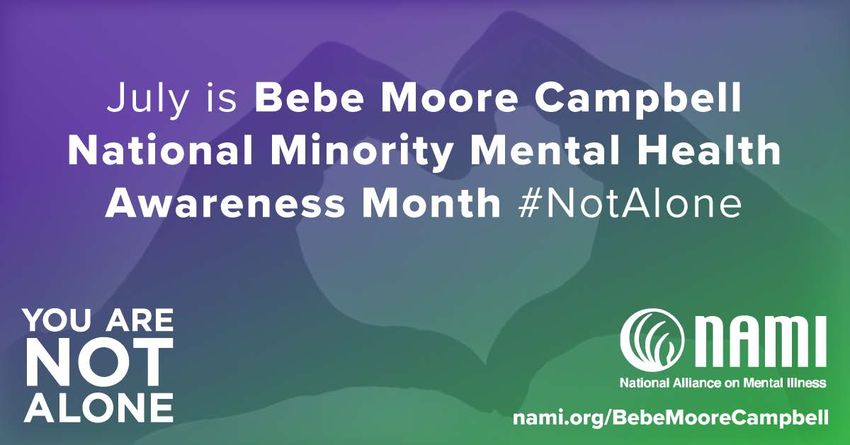
Suggested Graphics
Download these graphics and logos to use in social media posts, cover images,
website hero images or existing messaging to help spread awareness during July:
nami.org/Get-Involved/Awareness-Events/Awareness-Resources.

                July 2021 | Awareness Guide for NAMI State Organizations and Affiliates   Page 7
Resources
Our culture, beliefs, sexual identity, values, race and language all affect how
we perceive and experience mental health conditions. Cultural differences can
significantly influence what treatments, coping mechanisms and supports work for
us. It is therefore essential for culture and identity to be a part of the conversation
as we discuss both mental health and mental health care.

Visit nami.org/Your-Journey/Identity-and-Cultural-Dimensions, our online Identity
and Cultural Dimensions section, for resources specific to these communities:
  •   Asian American and Pacific Islander
  •   Black/African American
  •   Hispanic/Latinx
  •   Indigenous
  •   LGBTQI
  •   People with Disabilities

Refer to NAMI’s COVID-19 Information and Resource Guide, or La Guía COVID-19
in Spanish, and select tips and recommendations that are best aligned with your
unique needs or for your employees. Share these via email and online news, or talk
about them in a virtual town hall.

Additional Helpful Sites:
  • National Institute of Mental Health:
      www.nimh.nih.gov/health/statistics/mental-illness.shtml
  • U.S. Department of Health and Human Services, Office of Minority Health:
      www.minorityhealth.hhs.gov/omh/browse.aspx?lvl=2&lvlid=26
  • American Psychological Association Office of Ethnic and Minority Affairs:
      www.apa.org/pi/oema/resources/index
  • American Psychological Association Office on Sexual Orientation and Gender
      Diversity: www.apa.org/pi/lgbt/resources/lgbt-health

                  July 2021 | Awareness Guide for NAMI State Organizations and Affiliates   Page 8
Mental Health Fast Facts
These numbers are only a few of the reasons why it’s important to take part in
promoting our awareness events. Please use these facts and others, including the
infographics on our website, nami.org/MHStats, to encourage discussions with
your community, whether through social media or other forms of outreach.

Individual Impact
  • 20.6% of U.S. adults (51.5 million people) experienced mental illness in 2019,
    but only 43.8% of them received treatment.*
    n   1 in 5 U.S. adults experience mental illness each year, but less than half
        get treatment.
  • 5.2% of U.S. adults (13.1 million people) experienced serious mental illness in
    2019, but only 65.5% of them received treatment.*
    n   1 in 20 U.S. adults experiences a serious mental illness each year, but less
        than two-thirds get treatment.*
  • 16.5% of U.S. youth aged 6–17 (7.7 million people) experienced a mental health
    disorder in 2016, but only 50.6% of them received treatment.
    n   1 in 6 U.S. youth experience a mental health condition each year, but only
        half get treatment.
  • 50% of all lifetime mental illness begins by age 14, and 75% by age 24.
  • Suicide is the 2nd leading cause of death among people aged 10–34 and
    the 10th leading cause of death overall in the U.S.
  • The overall suicide rate in the U.S. has increased by 35% since 1999.

Community Impact
  • Lesbian, gay and bisexual youth are 4x more likely to attempt suicide than
    straight youth.
  • Transgender adults are nearly 12x more likely to attempt suicide than the
    general population.
  • The average delay between onset of mental illness symptoms and treatment
    is 11 years.
  • 55% of U.S. counties do not have a single practicing psychiatrist.*
  • 3.8% of U.S. adults experienced both mental illness and a substance use
    disorder in 2019 (9.5 million people).*
  • Mental illness and substance use disorders are involved in 1 out of every
    8 emergency department visits by a U.S. adult (estimated 12 million visits).
  • 20.5% of people experiencing homelessness in the U.S. have a serious
    mental health condition.*
  • 37% of adults incarcerated in the state and federal prison system have a
    diagnosed mental illness.
  • 70.4% of youth in the juvenile justice system have a diagnosed mental illness.
  • 41% of Veteran’s Health Administration patients have a diagnosed mental
    illness or substance use disorder.
*Denotes statistics that have been updated since 2020.

                   July 2021 | Awareness Guide for NAMI State Organizations and Affiliates   Page 9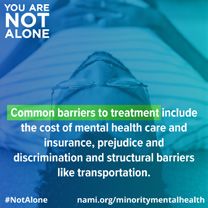
Sample Press Release
For Immediate Release			                                                 [Contact Name]
[Date]		                       		                                    [Phone] and [E-mail]

       This Bebe Moore Campbell National Minority Mental Health Awareness Month,
                     NAMI [Affiliate Name] is Raising Awareness that
                     You Are Not Alone with Resources and Support

[City, State] — Over the past year, we have seen the divide widen among Americans with increased
levels of racial injustice, xenophobia and inequitable access to health services in underserved
communities. This July, for Bebe Moore Campbell National Minority Mental Health Awareness
Month, [Name], the [state organization/local affiliate] of NAMI, the National Alliance on Mental Illness,
is raising awareness with support for people in need of culturally competent mental health care in
diverse and underserved communities so no one feels alone in their mental health journey.

During these difficult times, there has been a spotlight on social injustice, trauma, anxiety, grief and
isolation that can negatively impact anyone’s mental health. Our culture, beliefs, sexual identity,
values, race and language all affect how we perceive and experience mental health conditions. In
fact, cultural differences can influence what treatments, coping mechanisms and supports work for
us. For example, a person who has experienced discrimination due to their identity may experience
depression symptoms as anger more than sadness. It is therefore essential for culture and identity
to be a part of the conversation as we discuss both mental health and mental health care.

Mental health conditions do not discriminate based on race, color, gender or identity. However,
a person’s culture and identity can make access to mental health treatment much more difficult.
Bebe Moore Campbell National Minority Mental Health Awareness Month was established in 2008
to change this reality and encourage a dialogue essential to getting help in the face of the unique
challenges of racism and its debilitating impact a person’s mental health. At [NAMI XX], we recognize
the importance of honoring Bebe Moore Campbell’s incredible legacy and groundbreaking work.
She was an author, advocate, co-founder of NAMI Urban Los Angeles, national spokesperson and a
mental health leader in the Black community.

“Many people nationwide are feeling anxiety, fear or an acute sense of vulnerability as we return to
work and a new normal while still dealing with COVID-19 and social injustice. These are stressful and
uncertain times; we’re all feeling the impact of mental health challenges even if you had no
preexisting mental health vulnerability.” said [insert local spokesperson]. “We are coming together to
raise awareness about the importance of mental health in all communities so that no one, no matter
their race, color, gender, or identity, feels alone in their journey.”

The NAMI community is here to help everyone no matter where they are in their mental health
journey, including both caregivers and people with lived experience. NAMI stands in solidarity with
people who have been affected by racial injustice and xenophobia across the country. We are
working together to help anyone affected by a mental health condition get access to the
appropriate support and quality of care to live healthy and fulfilling lives.

We are creating a community where no one feels alone in their struggle. [Name] will [insert short
description of any affiliate event or anything specific to an activity during July’s awareness month,
including location, date and time or web address for more information].

For additional resources, please visit NAMI’s Identity and Cultural Dimensions section for resourc-
es tailored to specific cultural groups. NAMI is facilitating much-needed conversations through our
Sharing Hope initiative, an in-depth set of empowerment tools for NAMI affiliates created to help
shape how we talk about mental wellness in Black and African American communities. We offer
compelling stories and fresh perspectives on mental wellness targeted to specific audiences,
including youth, families and community leaders.

Our goal is to connect members of underserved communities to the best care possible, as early as
possible, and to drastically curb the effect that institutional racism has on mental health access and
awareness for communities of color.

    The National Alliance on Mental Illness is the nation’s largest grassroots mental health
                        organization dedicated to improving the lives of
                      individuals and families affected by mental illness.

                       July 2021 | Awareness Guide for NAMI State Organizations and Affiliates   Page 10
PSA Script
NAMI’s “You are Not Alone” 30-second PSA script is intended for local
broadcasters to read on-camera by a station host or a local celebrity. You can also
use it to record yourself and post on your social media.
Graphics, end cards and editable files are available at: https://www.dropbox.com/
sh/n6iyrkp44yy9w3o/AADdLdyfosBSqdTxevLXOkm6a?dl=0
Video Audio
Station host or a local celebrity
We all know, these are tough and uncertain
speaking to camera (lower-third
times.
ID as needed)
Our mental health matters.
If you or a loved one is struggling, you are not
alone!
NAMI, the nation’s largest grassroots mental
health organization, is here in our community
to help.
Graphic: NAMI logo and URL full Visit nami.org (NAMI DOT O-R-G) to learn more
screen or as lower-third about the free programs and services near you.
Graphic: NAMI HelpLine info You can also call the NAMI HelpLine at 1-800-
builds onto previous graphic 950-NAMI (6264)
Or text “NAMI” to 741741.
On-camera talent or hold on info You are not alone!
July 2021 | Awareness Guide for NAMI State Organizations and Affiliates Page 11BRAND AND LOGO INFORMATION
Brand Guidelines
As always, we ask that you to follow NAMI’s brand guidelines.
The NAMI Identity Guide and NAMI logos can be found at nami.org/Identity
or upon request to Nathan Lemon, Senior Manager, Creative Design, at
nlemon2@nami.org. We encourage you to use and share these in your campaigns.
When designing your own materials, you may use the You Are Not Alone and
#NotAlone graphics and your NSO/NA logo, but you should not use the official
NAMI logo without clearance by a NAMI National staff representative.
Recommended Fonts
• Franklin Gothic (sans serif)
• Museo Slab (serif) [or Roboto Slab as a free alternative]
• Proxima Nova (sans serif) [or Open Sans as a free alternative]
Color Palette
Primary Colors:
If you ever feel alone NAMI Blue Teal Pear Green
because of your PMS Reflex Blue PMS 321 PMS 377
mental illness, the CMYK: 100/82/0/2 CMYK: 80/21/32/1 CMYK: 58/23/100/4
RGB: 0/37/150 RGB: 0/153/168 RGB: 121/153/0
NAMI community
is here for you.
#NotAlone
Questions?
If you have any questions about the materials in this guide or how to use them,
please reach out to Fredric Miggins, Senior Manager, Field, Allies & Professionals, at
fmiggins@nami.org.
July 2021 | Awareness Guide for NAMI State Organizations and Affiliates Page 12You can also read


