Belgian Defence Air Combat Capability Successor Program Preparation Survey - Defensie
←
→
Page content transcription
If your browser does not render page correctly, please read the page content below

Belgian Defence Air Combat Capability Successor Program Preparation Survey

Cover Photo courtesy of Vador
Brussels, June 2nd, 2014

        DEFENCE

                                            To whom it may concern

The Air Combat Capability, currently based on the F-16 weapon system, has been a cornerstone of
the Belgian Defence since 40 years and has a sound operational track record. From the beginning it
was used for missions such as the control of the Belgian airspace, later and for ten years to come, in
expeditionary multirole missions in collaboration with our international partners.

It is the ambition of the Belgian Defence to maintain this core capability in the future.

The Belgian Defence is determined to follow a «best practices» and «due diligence» approach, in
support of the decision making process for the replacement of its current multi role
Air Combat Capability.

This Preparation Survey sets the scene for the Belgian Air Combat Capability Successor Program and
seeks to obtain pertinent knowledge (program scope, capability and associated budgetary
framework) needed to request initial governmental approval to start with the program phase.

                                                    We thank you for your cooperation in this endeavor.

                                                                                Guy CLÉMENT ir
                                                                               Lieutenant General
                                                                     Director General Material Resources

Belgian Defence Air Combat Capability Successor Program – Preparation Survey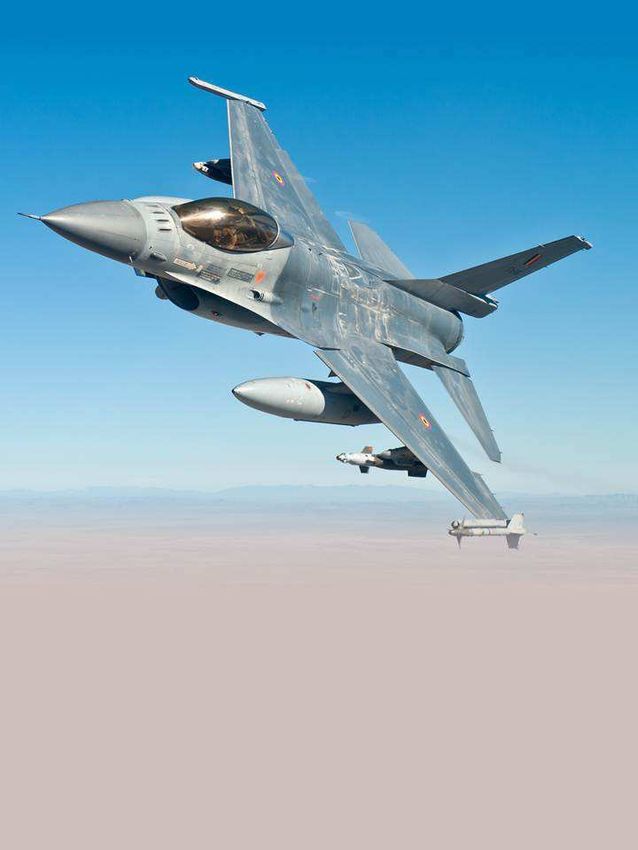
Important Notice

This Survey is neither a Call for Tender nor a Request for Proposal. No agreement or contract will be
concluded following this Survey. The issuance of this Survey is not to be construed in any way as a
commitment by the Government of Belgium or the Belgian Defence to reimburse, pay, or otherwise
be liable for any cost incurred in responding to this Survey.

The assessment of the provided information will not lead to a down selection nor will it exclude any
participation to the next phase of the process.

Belgian Defence Air Combat Capability Successor Program – Preparation Survey
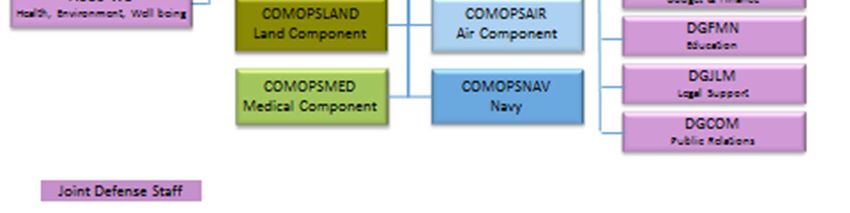
Table of Contents

Table of Contents ..................................................................................................................................... i
1.     General Framework ........................................................................................................................ 1
     1.1.     Introduction ............................................................................................................................ 1
     1.2.     Air Combat capability .............................................................................................................. 1
     1.3.     Need for a credible partner(ship) ........................................................................................... 2
     1.4.     Planned Program Roadmap .................................................................................................... 2
2.     Belgian National Security Framework ............................................................................................. 4
     2.1.     Belgian National Security Strategy and Defence Policy .......................................................... 4
     2.2.     Strategic Objectives for the Belgian Armed Forces ................................................................ 4
     2.3.     Belgian Defence Armed Forces Operational Framework ....................................................... 4
     2.4.     Belgian Air Component Air Combat capability ....................................................................... 5
     2.5.     Belgian Air Component Air Combat Capability Level of Ambition .......................................... 6
     2.6.     Belgian Air Component Air Combat Capability Mission and Roles ......................................... 6
     2.7.     Belgian Air Component Future Mission Environment ............................................................ 7
3.     Belgian Defence’s Organizational Structure ................................................................................... 8
4.     Preparation Survey ......................................................................................................................... 9
5.     Preparation Phase ......................................................................................................................... 10
     5.1.     Preparation Phase process.................................................................................................... 10
     5.2.     Survey Framework ................................................................................................................ 10
     5.3.     Data Delivery Instructions ..................................................................................................... 11
     5.4.     Releasability .......................................................................................................................... 11
     5.5.     Information Confidentiality .................................................................................................. 11
     5.6.     Program Point of Contact ..................................................................................................... 12
6.     Operational capabilities of the proposed Air Combat Capability ................................................. 13
     6.1.     Introduction .......................................................................................................................... 13
     6.2.     Air Combat Capability dimensioning..................................................................................... 13
     6.3.     Capability description ........................................................................................................... 13
     6.4.     Operational Support ............................................................................................................. 15
     6.5.     Training ................................................................................................................................. 16
     6.6.     Concept for future evolution & growth potential ................................................................ 16
7.     Integrated Logistic Support ........................................................................................................... 18
     7.1.     Introduction .......................................................................................................................... 18
     7.2.     Current Logistic Support Concept ......................................................................................... 18

Belgian Defence Air Combat Capability Successor Program – Preparation Survey                                                                       Page i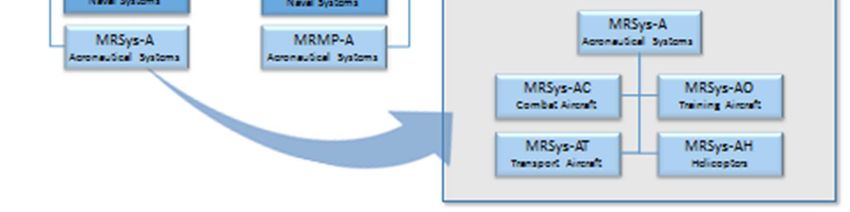
7.3.     Envisioned logistic support concept ..................................................................................... 19
       7.3.1.        General Information ..................................................................................................... 19
       7.3.2.        Maintenance Concept & Associated organizational structure ..................................... 19
       7.3.3.        Supply Chain .................................................................................................................. 20
     7.4.     Airworthiness ........................................................................................................................ 20
8.     Possibilities for multinational cooperation partnerships.............................................................. 21
9.     Program Information .................................................................................................................... 23
     9.1.     Timelines ............................................................................................................................... 23
       9.1.1.        Generic timeline ............................................................................................................ 23
       9.1.2.        Order, Production and Delivery Timeline ..................................................................... 23
     9.2.     Price Estimate Data and Methodology ................................................................................. 23
       9.2.1.        Acquisition Costs ........................................................................................................... 24
       9.2.2.        Initial Build-up Costs ..................................................................................................... 24
       9.2.3.        Operating Costs ............................................................................................................. 24
       9.2.4.        Sustainment Costs......................................................................................................... 25
       9.2.5.        Attrition Costs ............................................................................................................... 25

Belgian Defence Air Combat Capability Successor Program – Preparation Survey                                                                     Page ii
1.       General Framework
1.1. Introduction

         Since the early eighties, the Belgian Defence operates and sustains the F-16 within the framework
         of the F-16 Multinational Fighter Program. The member nations of this collaborative program are
         Belgium, Denmark, Norway, the Netherlands, Portugal and the United States of America. Together
         they ensure that the F-16 Air Combat Capability remains operationally relevant and can be
         sustained in the long run at an acceptable cost to fulfill the Belgian Defence requirement for a
         multirole Air Combat Capability (ACCap).

         Taking into account the current usage profile and the expected service life of the F-16 MLU1,
         Belgian Defence estimates its current fleet will gradually reach its end of life in the 2023-2028
         timeframe, hence defining our F-16 Replacement Window.

         The Belgian Defence is assessing the feasibility of replacing its current combat aircraft fleet in order
         to maintain its multirole ACCap for the next decades.

         Although the ambition to maintain a multirole ACCap is confirmed by the current Minister of
         Defence, the decision on the succession of the F-16 as well as the selection of a successor is subject
         to formal governmental approval envisioned to take place during the next legislature (2014-2019).

1.2. Air Combat capability

         Operating and maintaining a credible and relevant ACCap over time at a reasonable cost goes well
         beyond the acquisition and operation of an aircraft fleet. It requires a broad multidimensional and
         overarching approach including interoperable training and weapon procedures, operational and
         long term technical and logistic support, multinational operations support, weapon support, etc.

         Not only an operationally capable platform including a long term sustainment approach for all
         systems and subsystems is key but also adequate and continuous training, NATO / EU
         interoperability in the area of operational concepts and procedures, interoperability at weapon
         system level are essential to achieve and to maintain an effective operational capability level.
         Moreover, taking into account the usage horizon of an ACCap, maintaining the capability at a
         relevant operational level requires continuous efforts over the life cycle of the weapon system in
         the areas of aircraft configuration updates driven by technical and/or operational obsolescence,
         system and subsystem overhauls, structural integrity and engine life cycle management,

         The transition towards a new ACCap requires the implementation of such a multidimensional
         approach from the onset and a clear understanding of the path ahead.

         Furthermore, it is of utmost importance for a country the size of Belgium that the initial
         procurement of the weapon system and its multidimensional support is executed in a collaborative
         framework in order to maintain the future interoperability of the ACCap and this at a manageable
         and acceptable cost.

     1
         MLU: Mid Life Update

     Belgian Defence Air Combat Capability Successor Program – Preparation Survey                          Page 1
1.3. Need for a credible partner(ship)

     Taking into account the complexity of and the long term responsibility associated with a program
     to maintain the Belgian Defence ACCap, the Belgian Defence is convinced that the only way to
     success for this multidimensional and overarching program is to rely on a credible partner(ship)
     being able to cover all above domains.

     As such a partnership can only be found at the government level, the envisioned procedure to
     implement our ACCap will be an agreement between governments albeit guaranteeing, for all
     possible candidates, equal treatment, transparency and non-discrimination.

     However, as the Belgian Defence ACCap is a major asset to support the Belgian international
     defence commitments within the EU and NATO and as interoperability is of utmost importance to
     perform and sustain operations, the sought-after partnership will be limited to EU and/or NATO
     Member States.

1.4. Planned Program Roadmap

     The envisioned roadmap (figure 1) towards a final governmental decision foresees 3 phases with
     multiple consultations at various levels during the decision making process. The progress of the
     overall approval process is conditioned by 3 major decision milestones at the governmental level
     (“F-16 Successor Program Start”, “F-16 Successor Start Governmental Approval Process” and “F-16
     Successor Program Approval” in the figure below).

                                             Figure 1: Replacement Program Roadmap

     The roadmap as laid out above should achieve first aircraft delivery in the 2023 timeframe with the
     objective to have a Basic Operational Capability, performing Quick Reaction Alert, in 2025. The
     Initial Operation Capability to maintain the Belgian Defence expeditionary capability is foreseen in
     2027, followed by Full Operational Capability in 2029.

    Belgian Defence Air Combat Capability Successor Program – Preparation Survey                   Page 2
The above depicted time line is provided for planning purposes only and does not represent a
 commitment whatsoever of the Belgian Defence concerning its ACCap Program.

 During the preparation phase for which this document is the basis, the Belgian Defence Staff will
 explore the global environment:

    •    Belgian Defence – ‘customer’ side : level of ambition, refinement of the operational
         requirements, definition of the budgetary framework, international cooperation, pooling &
         sharing opportunities, …
    •    Foreign governmental agencies – ‘provider’ side : operational capabilities, system support
         concepts, rough order of magnitude costs, capability roadmaps, international cooperation,
         pooling & sharing opportunities, operational relevance in future environments …

 This present « ACCap Successor Program – Preparation Survey » document describes the general
 framework of the program, provides a high level insight in the envisioned operational capabilities
 and provides a set of data requirements to describe the approaches that could be proposed by a
 responding governmental organization (further referred to as Respondent). As the definition of an
 ACCap is a very complex process, the current document will be refined through iterative
 consultations between Belgian Defence and the Respondents.

 The obtained information will be used to define a detailed ACCap Successor program scope and
 associated budgetary framework, needed to request initial governmental approval to start the
 program phase.

 Furthermore it will be used to fine-tune the program requirements which will be issued, during the
 Program Phase, by means of the « ACCap Successor Program - Descriptive Document ».

 The reply to our « ACCap Successor Program - Descriptive Document », through which precise and
 binding information will be requested based on a detailed program scope, will provide the ultimate
 dataset for the program phase. During this phase a team of subject matter experts will review and
 assess the provided information from the Respondents. This assessment, which will guarantee
 equal treatment of all Respondents, will result in a detailed and comprehensive motivated
 recommendation for the Belgian government based on the best available information about each
 of the options including a comparative ranking. This comprehensive report will be based on the
 binding information provided as an answer to the « ACCap Successor Program - Descriptive
 Document » and the information gathered through an iterative dialogue with each Respondent.
 The iterative dialogue will permit the different Respondents to explain and refine the previously
 provided information in order to guarantee that the comparative ranking will be based upon the
 best available dataset.

 The procurement phase is characterized by two approval sequences up to the level of the council
 of ministers. The first approval sequence comprises the approval of the scope of the program
 (including the associated budget) at all levels of the decision making chain based on the ranking
 recommendations reported at the end of the program phase. After approval by the council of
 ministers, the Belgian Defence will start the negotiation and finalization of the proposed
 agreement(s) with the selected governmental agency. The second approval sequence comprises
 the approval of the negotiated agreement(s) required to implement the chosen solution.

Belgian Defence Air Combat Capability Successor Program – Preparation Survey                 Page 3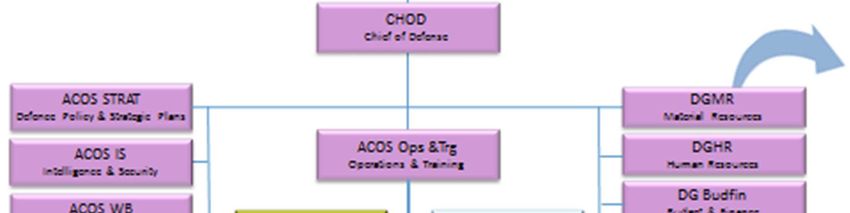
The program implementation phase will start with the implementation, by the government agency,
         of the contracts associated to the signed agreement(s).

2.       Belgian National Security Framework2
2.1. Belgian National Security Strategy and Defence Policy

         The Belgian National Security Strategy sets out a vision within the framework of an international
         oriented security strategy (UN, NATO and EU) in which Belgium is prepared to accept a fair share of
         the security burden (burden sharing) and of the operational risk (risk sharing) inherently part of the
         execution of operations.

         The Belgian Defence policy, in support of the Security Strategy, aims to provide a wide range of
         “power” instruments to the Belgian government in order to maintain its national sovereignty, to
         reach its national strategic objectives, to protect its national interests and to remain a loyal and
         reliable international contributor.

2.2. Strategic Objectives for the Belgian Armed Forces

         On the basis of the Belgian National Security and Defence Policy, 6 strategic objectives (SO) were
         defined for the Belgian Defence Armed Forces :

          SO 1. Participation in collective defence, including operations that are part of the prevention and
                deterrence of an armed attack on one or more NATO or EU countries.
          SO 2. Participation in the collective defence of the vital and essential interests of NATO and / or
                EU.
          SO 3. The protection of compatriots or Belgian interests abroad, including the liberation and
                evacuation of nationals.
          SO 4. Participation in 'security operations’, peacekeeping and peace enforcement.
          SO 5. Participation in humanitarian operations in order to alleviate human suffering.
          SO 6. Contributions within the national borders to the safety of the Belgian society, based on the
                specificity of military expertise or capacity, or when civil resources are inadequate.

2.3. Belgian Defence Armed Forces Operational Framework

         The Belgian Defence Armed Forces must be capable and be ready to carry out their missions in the
         following operational frameworks:

           •   Deterrence and preventive actions
               Contribute to the risk mitigation of an armed attack or a military conflict, through
               deterrence, surveillance, monitoring and rapid intervention operations.
           •   Collective defence against an armed attack
               Assure collective defence pursuant to Article 5 of the Washington Treaty (NATO) or pursuant
               to Section 42.7 of the Lisbon Treaty (EU).

     2
         CHOD-APG-MISSION-001 Opdrachtverklaring van Defensie en Strategisch kader voor de paraatstelling

     Belgian Defence Air Combat Capability Successor Program – Preparation Survey                           Page 4
• Protection of NATO or EU vital and essential interests
Safeguard the common strategic interests of the member states of NATO and / or EU within
or outside the NATO / EU area which are outside the scope of collective defence.
• Protection and Evacuation Operations
Protect and evacuate Belgian and foreign nationals in the framework of international
agreements (Non Combatant Evacuation Operations).
• Security Operations
Contribute to restore the security and stability of a State or a region, in principle at the
request of the United Nations.
• Peacekeeping
Conduct peacekeeping operations under Chapter VI of the Charter of the United Nations.
• Peace Enforcement
Conduct peace enforcement operations under Chapter VII of the Charter of the United
Nations.
• Military Cooperation
Deploy defence personnel and / or defence resources in the framework of military
cooperation.
• International Humanitarian Assistance
Assure humanitarian assistance abroad to a population in need because of natural disasters
or other catastrophic events.
• Homeland Operations
Assure in-country assistance in the framework of public safety to the Belgian population in
need because of natural disasters or other catastrophic events.
2.4. Belgian Air Component Air Combat capability
The F-16 MLU ACCap has a sound operational track record. From the beginning, the F-16 executed
missions such as the control of the Belgian airspace, and later, in collaboration with our
international partners, expeditionary multirole missions.
With a common multirole platform like the F-16 MLU, the
Belgian Defence manages to fulfill a prominent operational
role in all domains of air operations: Air Policing, maintaining
and enforcing air superiority, the protection of national
ground forces and ground forces of our allied partners,
intelligence gathering and high precision ground attack.
The list of operations in which the F-16 of the Belgian Air
Component has participated (see figure 2) proves that the
Belgian Air Component can be continuously engaged in
multirole operations during long and sustained periods with a
high operational tempo, and that it can be deployed on short
notice in a flexible way. For the past 30 years, the Belgian Air
Component participated nearly continuously in air-to-air
operations (Air Policing) as well as in air-to-ground operations
(Kosovo, Afghanistan, Libya) carried out under the mandate
Belgian Defence Air Combat Capability Successor Program – Preparation Survey Page 5of the international community (UN, NATO and/or EU) for the safeguarding of international
security.
In this way, the Belgian Air Component contributed to the reputation of Belgium as a reliable
partner in the international community, prepared to accept a fair share of the security burden
(burden sharing) and of the operational risk (risk sharing).
2.5. Belgian Air Component Air Combat Capability Level of Ambition
Belgium is and wants to remain a reliable partner supporting international peace and security in
the framework of the UN, the EU and the NATO. Therefore the Belgian Defence has the ambition
to maintain, amongst other capabilities, an ACCap which can provide a solid and credible
capability, which can be rapidly deployed and execute operations in a modern hostile environment
over friendly as well over hostile territory at an acceptable risk.
The current level of ambition for the ACCap of the Air Component is to :
- Guarantee Quick Reaction Alert (QRA) / Air Policing on a 24/7 basis with 2 to 4 aircraft
(depending alert status level)
and
- Execute expeditionary operations (from 2 deployed operating bases) for a sustained period
of undetermined duration with a maximum engagement of 10 aircraft
or
- Execute a one-time participation in a multinational operation with a maximum engagement
of 30 aircraft3
In the framework of the ACCap Successor Program, the current level of ambition could be reviewed
taking into account possible pooling and sharing concepts, new political guidance at program start,
budgetary constraints, etc.
Therefore, the current level of ambition will be used as a baseline but, during the iterative
discussions in the preparation phase, a modular/scalable approach needs to be outlined in order to
take into account possible evolutions of the Belgian Defence level of ambition.
2.6. Belgian Air Component Air Combat Capability Mission and Roles
In order to execute its level of ambition, the Belgian Defence ACCap must be able to execute, in a
multinational cooperative and interoperable environment, the following NATO missions4 and/or
roles in a low, medium and high threat environment:
• Defensive Counter Air (DCA) / Air Policing
DCA operations protect friendly forces and vital interests from enemy air attacks; as such it is
synonymous with Air Defence and Air Policing. DCA consists of all active and passive air
defence operations to detect, identify, intercept, and destroy or negate enemy air and
3
This requirement is a non-dimensioning factor for the determination of the fleet size
4
Reference: NATO AJP 3.3, November 2009
Belgian Defence Air Combat Capability Successor Program – Preparation Survey Page 6missile forces attempting to attack or penetrate friendly battle space, or to nullify or reduce
the effectiveness of such attacks should they escape destruction.
• Offensive Counter Air (OCA)
OCA operations consist of offensive operations to destroy, disrupt or degrade enemy air and
missile threats including their supporting systems both before and after launch, as close to
their source as possible. OCA includes attack operations, air-to-air missions (sweep & escort
operations), suppression and destruction of enemy air defences (SEAD/DEAD).
• Air Interdiction (AI)
AI is the action to destroy, disrupt, degrade, divert or delay the enemy’s surface potential by
targeting fielded enemy ground forces and the infrastructure directly supporting them
before they can be used effectively against friendly forces, or otherwise achieve their
objectives. It is carried out at such distance from friendly forces that detailed integration of
each air mission with the fire and movement of friendly forces is normally not required.
Thus, it may offer the potential to reduce or even eliminate the requirement for ground
combat.
• Close Air Support (CAS)
CAS operations require detailed integration with the fire and movement of friendly forces for
fratricide avoidance and targeting guidance by third parties. It provides ground or
amphibious forces with aerial firepower in offensive and defensive operations, by day and
night, to destroy, suppress, neutralize, disrupt, fix or delay enemy forces in close proximity to
friendly ground forces.
Furthermore following missions have been identified as key mission types contributing to the
operational flexibility of the weapon system.
• Non-Traditional Intelligence, Surveillance, and Reconnaissance (NTISR)
The use of sensor systems that, while not primarily designed for ISR operations, can
contribute vital information to the development of battle space awareness and increase joint
force ability to conduct decisive operations.
• Strike Coordination and Reconnaissance (SCAR)
A mission flown for the purpose of detecting targets and coordinating or performing attack
or reconnaissance on those targets. Strike coordination and reconnaissance missions are
flown in a specific geographic area and are an element of the command and control
interface to coordinate multiple flights, detect and attack targets, neutralize enemy air
defence and provide battle damage assessment.
2.7. Belgian Air Component Future Mission Environment
It is unlikely that the future operational environment will resemble the current environment. The
future concept of operations will require flexibility and a wide range of scenarios in which the
weapon system can be utilized. The future ACCap is expected to be able to participate in a wide
array of mission types, in the full spectrum of warfare regarding mission complexity and mission
intensity.
Over time the threat spectrum will continue to evolve: from entities with dated defence systems to
modern peer competitors with the latest equipment. The proliferation of civilian, military and dual
use technologies will result in a vast enlargement of the threat spectrum. Allied forces, if the
Belgian Defence Air Combat Capability Successor Program – Preparation Survey Page 7necessity arises, risk being confronted by integrated defence systems that will continue to be
improved by evolution and more in general by new concepts facing opposing forces.
3. Belgian Defence’s Organizational Structure
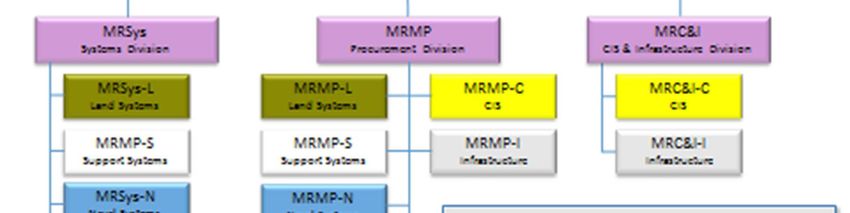
The Belgian Defence is headed by the Chief of Defence (CHOD) and organized as a Joint Staff
composed of Assistant Chiefs of Staffs (ACOS) and Directorates General (DG) supporting the four
core Components: Land Component, Naval Component, Air Component and Medical Component.
The key stakeholders for the Belgian Defence ACCap Successor Program are the Air Component
and the Directorate General for Material Resources (DGMR).
Taking into account the multi-disciplinary approach required to prepare the ACCap Successor
Program, a specific structure will be implemented.
Belgian Defence Air Combat Capability Successor Program – Preparation Survey Page 8The Director heading a multidisciplinary team and supported by a Program Support Cell reports to
the Steering Committee composed of the Air Component Commander and the Chiefs of the
Systems Division and the Procurement Division of the Directorate General for Material Resources.
The Steering Committee can be advised by external experts in specific matters (e.g. the Federal
Public Service of Economy on matters related to the support structure).
The multidisciplinary team consists of three subcommittees each responsible for specific aspects of
the program. These subcommittees will be composed of subject matter experts from different
Belgian Defence Staff entities, from the FPS of Economy and will interact when needed while
preserving strict confidentiality of data (“need to know basis” policy).
4. Preparation Survey
The purpose of this Preparation Survey is to gather pertinent information and to offer the
Respondents an opportunity to provide information with the objective to:
- Identify different possible approaches and solutions,
- Estimate, based on the provided data, the associated costs, risks and schedules of the
possible approaches,
- Define the budgetary scope of the Belgian Defence ACCap Successor Program.
The assessment of the provided information will not lead to a down selection nor will it exclude
any Respondents from the next phase of the process.
The Survey is structured along four chapters:
- The first part seeks detailed information on the operational capabilities of the proposed
ACCap (chapter 6);
- The second part seeks detailed information on the logistical support of the proposed ACCap
(chapter 7);
- The third part explores the possibilities for multinational cooperation partnerships
(chapter 8);
- The fourth part requests information on the program timeline and an estimation of the
associated costs of such program (chapter 9);
As the preparation phase will be an iterative process, the chapters 6 to 9 provide an initial
approach of points of interest that the Belgian Defence would like to see addressed during the
interactive meetings of the Preparation Phase.
Belgian Defence Air Combat Capability Successor Program – Preparation Survey Page 95. Preparation Phase
5.1. Preparation Phase process
If a Respondent agrees with the Survey framework as depicted in the present document, he is
kindly invited to provide a positive feedback to the program POC referred to in para 5.6 confirming
its participation to the Preparation Phase. For agenda streamlining purposes, this initial feedback is
requested not later than 10 working days after receipt of this Survey.
Upon receipt of this confirmation, an initial meeting with each Respondent will be scheduled to
make sure the ACCap Successor Program process and the objective of this Survey are well
understood.
After this first meeting, subsequent meetings/discussions can take place to further discuss all
aspects of the program, to identify additional information required by the Respondents and to
prepare the answers the Respondent envisions to provide.
During the Preparation Phase, each Respondent is free to come to the meetings supported by
representatives of its public, private and/or industrial partner(s).
For all correspondence and all meetings, the English language will be used.
5.2. Survey Framework
This Survey is neither a Call for Tender nor a Request for Proposal. No agreement or contract will
be concluded following this Survey. The issuance of this Survey is not to be construed in any way as
a commitment by the Government of Belgium or the Belgian Defence to reimburse, pay, or
otherwise be liable for any cost incurred in responding to this survey.
The information received will be used to obtain pertinent knowledge (program scope, capability
and associated budgetary framework) needed to request initial Belgian governmental approval to
start with the program phase. Given the importance of this decision milestone, the Belgian
Defence expects to receive the most accurate information as possible.
Respondents will not be reimbursed for any cost incurred in providing a response to the Survey.
Any and all expenses incurred by the Respondents or by any of its team partners in responding to
this Survey are at its sole risk and expense. No legal liability against the author of the present
survey, and by extension the Belgian Defence, for payment of any sort shall arise.
Respondents should note that information received in response to this Survey may also be
supplemented with information already available in the public domain or in Government
repositories.
Belgian Defence Air Combat Capability Successor Program – Preparation Survey Page 105.3. Data Delivery Instructions
All information shall be written in English.
All provided information shall be submitted on USB-stick or by e-mail.
The following Data delivery timing is envisioned:
- Pre-Summer 2014 Holiday activities :
o Dimensioning of the ACCap taking into account the provided Level of Ambition
o Scoping of the associated budgetary framework (at the macroscopic level)
o Discuss the content of the data to be provided in the 2nd half of 2014
The Belgian Defence envisions to hold at least one bilateral meeting prior 18 July in order to
work on these topics.
- Post-Summer 2014 Holiday activities :
o Fine-tuning based on initial findings and preliminary results
o Provide and discuss the requested data
o Discuss the Descriptive Document
The Belgian Defence envisions to hold one or more bilateral meetings prior 30 Sep 14, date by
which the delivery of the initial dataset (fleet size and associated budget) is expected.
The delivery of the remaining data requested in the Preparation Survey is expected by end Nov
2014.
5.4. Releasability
Regarding the information requested that is not immediately releasable or that is sensitive, the
Respondents are requested to proceed with the necessary release processes that would allow the
information to be shared with the Belgian Defence. Respondents should identify sensitive
information at the earliest possible opportunity in the process. In addition, any obstacles to release
information should be brought up as early as possible in the preparation process.
Should a technical assistance agreement or a non-disclosure agreement be required prior to
submitting the requested information, Respondents are urged to forward applicable documents
immediately.
5.5. Information Confidentiality
This ACCap Preparation Survey as well as responses hereto will, unless otherwise described, be
handled as commercial in confidence by Belgian Defence.
The information is not for public use. Information received with a higher security classification will
be treated in accordance with the marked security classification.
The Survey responses will become the property of Belgian Defence and will not be returned.
Respondents should clearly mark any portion of their response that they consider proprietary or
Belgian Defence Air Combat Capability Successor Program – Preparation Survey Page 11confidential or if the response contains controlled goods or information that could be considered
classified information.
Access to the information will be restricted to the review teams composed of Belgian Government
Officials (civil and military) who will review the Survey responses. The Belgian Defence reserves the
right to use any Belgian Government resources it considers necessary to review any response while
respecting the limitations applicable to non-disclosure and other agreements. Not all members of
the review team will necessarily review all Survey responses.
5.6. Program Point of Contact
Air Combat Capability Successor Program
Preparation Survey
Directorate General Material Resources
Systems Division – Aeronautical System
F-16 Combat Aircraft Subsection
Eversestraat 1 – 1140 Brussels
Belgium
ACCap@mil.be
Belgian Defence Air Combat Capability Successor Program – Preparation Survey Page 126. Operational capabilities of the proposed Air Combat Capability
6.1. Introduction
This chapter will handle the operational capabilities of the proposed ACCap as it would be
delivered during the defined Replacement Window. The objective is to provide initial insight in the
force structure and the capabilities in order to meet the level of ambition presented in para 2.5.
At this Preparation Phase, each Respondent is free to propose different possible approaches.
6.2. Air Combat Capability dimensioning
Each Respondent is requested to provide a dimensioning rationale for the ACCap fleet in line with
the level of ambition in para 2.5. The rationale shall address following elements (not exhaustive
list):
a) The training concept
o use of flight simulators & mission training systems
o the minimal required flying hours per year to maintain multirole qualification
b) The yearly flight plan
c) The estimated number of flying hours that can be generated per aircraft per year
d) Fleet size (including required subsystems and weapons)
e) An operational recommendation regarding the number of main operating airbases in
Belgium
f) A recommendation of the organizational structure (military personnel) to operate the ACCap
g) Attrition estimation
6.3. Capability description
The intent of Belgian Defence is to implement a weapon system which is fully common with
Partner Nations operating the same weapon system. Therefore Belgian Defence has no intention to
require/impose the implementation of Belgian specific capabilities, systems or subsystems.
All Respondents are requested to provide a description of the contributing elements to the ACCap
Mission Effectiveness (differentiated in the referenced subdomains) of the proposed weapon
system in the 2025 timeframe.
The mission effectiveness contributing elements beyond 2025 will be handled in the growth
potential section (see chapter 6.6).
Definitions & subdomains :
Mission Effectiveness : the ACCap ability to successfully complete a given task in accordance
with predefined missions and scenarios. Mission effectiveness is a combined result of
survivability and lethality.
Survivability : the capability of a system and crew to avoid or withstand a man-made hostile
environment without suffering an abortive impairment of its ability to accomplish its designated
mission. Survivability consists of vulnerability and susceptibility.
Belgian Defence Air Combat Capability Successor Program – Preparation Survey Page 13Vulnerability : the characteristic of a system that causes it to suffer a definite degradation (loss
or reduction of capability to perform its designated mission) as a result of having been subjected
to a certain (defined) level of effects in an unnatural (manmade) hostile environment.
Vulnerability is considered a subset of survivability.
Susceptibility : The degree to which a weapon system is open to effective attack because of one
or more inherent weakness. (Susceptibility is a function of operational tactics, countermeasures,
probability of enemy fielding a threat, etc.). Susceptibility is considered a subset of survivability.
Lethality : The ability of weapon system to cause damage that will result in a loss or degradation
in the ability of the targeted system to complete its designated mission(s).
For clarity purposes, the Respondent is requested to address these different contributing elements
in the framework of the “Live Chain” and “Kill Chain” cycle.
Live Chain: Kill Chain:
Avoid detection Transit to the area of interest
(to include air to air refueling).
Avoid tracking Detection and approximate location of
target
Avoid engagement Classification and identification of target
Break weapon guidance Precise location of target
Survive weapon effects Weapon delivery
Safe recovery and landing Battle damage assessment
Next to a general description of the operational capabilities contributing to the ACCap Mission
Effectiveness, special attention will be given to following topics :
a) Air Vehicle
o Range, speed, persistence, maneuverability, air-to-air refueling,…
o Signature-reduction techniques including thermal management
b) Propulsion system
o Fuel consumption characteristics
o Real-time performance management
o Noise signature
c) Sensors
o Environmental coverage (day / night / all weather)
o Spatial coverage (distance/accuracy)
o Sensor apertures, frequency coverage, …
o Sensor performance : susceptibility to signal intercept
d) Information Dominance & Situational Awareness
o Multi sensor data integration & data fusion concepts
o Use of intra flight data links
o Collaborative data generation & data processing
o Pilot Vehicle Interface systems (displays, HMCS5, HOTAS6, voice, … )
5
HMCS: Helmet Mounted Cueing System
6
HOTAS: Hands On Throttle And Stick
Belgian Defence Air Combat Capability Successor Program – Preparation Survey Page 14e) Weapons
o Integrated & certified weapon suite
o Environmental coverage (day / night / all weather)
o Concept of weapon integration & certification
f) Operational Use
o CONOPS7 as weapon system or operation as a system of systems
o Interoperability (with other NATO / EU fielded systems, with same platforms
across production lots)
o Cross-sensor cueing, third party targeting, weapons data link, …
o Networking & broad bandwidth connectivity
g) Features or capabilities that the weapon system could provide to enhance global
deployability and employability
h) Flight Simulator Capability
o Describe the training solutions for aircrew
o Initial & continuation training
o Distributed mission training & mission rehearsal capability
o Live virtual training (link between Aircraft and Simulator)
o Aircraft software & simulators software concurrency concept
6.4. Operational Support
Each Respondent is requested to provide insight on how following operational support elements
are going to be provided in order to assure the employability of the weapon system:
a) Crypto systems & crypto key handling
b) Mission planning
o HW & SW systems for preplanning of all mission parameters
o pre-mission visualization in 2D and 3D
o Integration of Mission planning software and weaponeering tools
c) Mission Debrief
o HW & SW systems for mission debrief
o post-mission visualization in 2D and 3D
8
d) EW Support
o Access to threat data for pre-mission assessment and visualization
o Concept of reprogramming the integrated electronic warfare (EW) suite
o Access to threat data for integrated EW suite programming (RWR9 and
jamming systems)
e) Weaponeering tools and for integrated weapon suite
o Weapon effect analysis
f) Fly-out models Tactics development tools
g) Development & delivery of Operational Manuals
o Access to Operational Test & Evaluation results
o Participation to Operational Test & Evaluation periods
7
CONOPS: Concept of Operations
8
EW: Electronic Warfare
9
RWR: Radar Warning Receiver
Belgian Defence Air Combat Capability Successor Program – Preparation Survey Page 156.5. Training
The Respondent is requested to provide insight on the training concept:
a) Training concept
o Initial conversion, leader qualification training & continuity training
o Advanced Operational Training (Flag exercises, … )
o Participation to Fighter Weapon Instructor Training
o Instructor Pilot Training
b) Related to the training concept of the various levels the Respondent is requested to describe
the requirements for airspace, training & support assets, …
6.6. Concept for future evolution & growth potential
Maintaining the capability at a relevant operational level requires continuous efforts over the life
cycle of the weapon system in the areas of aircraft configuration upgrades driven by technical
and/or operational obsolescence, system and subsystem overhauls, structural integrity and engine
life cycle management, etc. It is essential that these efforts can be done at an acceptable cost.
Therefore the Belgian Defence’s opinion is that cooperation within a long term partnership with
(an)other governmental organization(s) is essential. Sharing of costs and economy of scale related
to future improvements will likely ensure affordability (see Chapter 8 - Possibilities for
multinational military cooperation partnerships).
The Respondents are requested to describe the concept to assure this continuous process. The
description should address following topics (non-exhaustive list):
a) Upgrade process cycle
o Concept
o Process steps (Requirement Definition, Capability Development, Integration,
Test, Development Test & Evaluation, Operational Test & Evaluation, … )
o Upgrade cycle and timing
o Program participants (nations, ... )
o Process participants (user group, national representatives, … ) and level of
participation (observer, voting rights, …)
o Data & information access.
o Cost sharing principles (common versus country specific candidates): driven by
national requirements, foreign export demands, or as part of international
program requirements.
o Envisioned order of magnitude cost of the upgrade programs
b) Requirements definition process
o Process
o Participants (user group, … )
o Requirements definition sources (capturing operational experience, … )
o R&D and S&T10 programs supporting requirements definition process
10
R&D, S&T: Research and Development, Science and Technology
Belgian Defence Air Combat Capability Successor Program – Preparation Survey Page 16o Capability releasability policy and process. As Belgian Defence is striving to
enter into a partnership11, please detail how capability access will be
guaranteed
c) Current envisioned roadmap at Air Vehicle level and Subsystem level
o Describe the capability upgrade approach, list the already planned upgrade
programs, including software and hardware to avoid parts obsolescence
d) Approach to
o Handle Urgent operational requirements
o Handle Core avionics suite obsolescence issues
o Maintain common (software and hardware) configuration (across production
lots, different users, … )
e) Technical growth potential of the current platform
o Core avionics busloads, power & cooling loads, processing power throughput,
spare capacities, etc.
o Space & weight spare capacity
o Use of “open architecture”
f) Track record of capability evolution
o Provide insight in the implemented & budgeted capability evolutions
o Nations involved, number of platforms, program order of magnitude
o Provide overview of cooperation MOU’s and their accessibility to new
participants
g) Vision on capability evolution
o Provide information on potential future capability evolutions, such as but not
limited to improved data distribution systems, high-bandwidth links, versatile
networks, use of off board sensor systems, use of multimode, multispectral,
and/or improved counter countermeasures, signature controlling
techniques, …
11
Already existing partnership or teaming up with the originating government
Belgian Defence Air Combat Capability Successor Program – Preparation Survey Page 177. Integrated Logistic Support
7.1. Introduction
The future sustainment concept will also need to present an effective and flexible solution to
operate from the Main Operating Bases in Belgium as well from the Deployed Operating Bases with
a minimum of personnel, as little maintenance as possible and with just the spare parts and
support equipment necessary.
In order to correctly apprehend the future sustainment potential, all Respondents are requested to
provide sufficient details related to their proposed Logistic Support concept.
Each Respondent is allowed to propose more than one Logistic Support concept.
7.2. Current Logistic Support Concept
The current Belgian Defence F-16 maintenance concept in support of the yearly flight plan is
differentiated taking into account the aircraft subsystems :
Avionics : With the implementation of new state of the art avionics systems, the concept
evolved to a 2 level maintenance concept. O-level activities are performed at the flight line
or in the aircraft maintenance hangar by military personnel. Depot level activities are
executed by different sources of repair external to Belgian Defence : industry or organic
depot of our partner nations. In order to minimize the number of Could Not Duplicates at
the Depot level, a centralized Go-NoGo test capability was established in Belgium, manned
by military personnel.
Airframe : The current scheduled inspections are centered around a 50Hr, 100Hr and 300Hr
cycle. In order to accommodate the workload of this scheduled maintenance, 2 levels of
maintenance have been implemented in the operational units. The I-level activities comprise
the 300Hrs Phased Inspection and also minor aircraft modifications. The O-level activities
comprise all other minor scheduled inspections and unscheduled maintenance activities. All
these activities are executed by military personnel.
Major aircraft modifications and aircraft structural integrity maintenance are executed at
the Depot level which is fully outsourced to the Belgian industry.
Engine : In order to maintain the required level of engines in support of aircraft operations
both F-16 units have an engine back-shop, with military personnel, to perform engine
module replacement and execute test runs on an engine test bench.
Module maintenance & overhaul are executed at the Depot level which is fully outsourced
to the Belgian industry.
Armament : The support concept for armament is built around a 2 level maintenance
concept. The O-level is responsible for the handling (loading, deloading, … ) of the weapons
to and from the aircraft on the aircraft line. The I-level is responsible for the maintenance of
the weapons and the alternate mission equipment (AME). The maintenance of the high tech
weapons is based on a GO/NO GO concept from All Up Round containers. All these activities
are executed by military personnel.
Belgian Defence Air Combat Capability Successor Program – Preparation Survey Page 18For specific work, each airbase disposes of back-shops (hydraulic, wheels & tires, survival, ground
support equipment, …) to support aircraft operations and maintenance activities.
The organizational structure at the main operating bases is structured around a single flight line
and a centralized maintenance approach.
7.3. Envisioned logistic support concept
7.3.1. General Information
Each Respondent is requested to:
a) Provide Air Vehicle and Propulsion System’s designed structural life information : maximum
number of flying hours, maximum number of take-offs and landings, or other structural life
constraints/limitations
b) Provide estimation on turnaround times : refueling, re-arming, through-flight inspections
c) Provide an overview of the scheduled maintenance (on Airframe, Engine, Avionics and other
subsystems) and the associated required skill levels
d) Provide an overview of ground support equipment and/or test equipment required to
operate and maintain the aircraft
e) Describe fatigue testing and service life monitoring system (structural health and engine
technical health integrity program)
f) Indicate forecast (or demonstrated, if available) weapon system reliability in terms of
average yearly flying rate per aircraft and daily availability.
g) Provide information on technical support postures for post-production support reflecting
the long-term commitment of the OEM12 and/or Government Agencies covering activities
such as :
o Engineering services, engineering expertise and technical support
o System support for on-going activities : technical expertise, investigate and
resolve field/operational problems and deficiencies, on site Contractor Support
o Technical Order Maintenance : Technical Order change analysis & update
services
o Test and Support Equipment changes support
o Centralized Configuration management including associated data management
o Obsolescence management
h) Provide the timeframe in which the necessary support for the aircraft and its associated
Integrated Logistic Support will be guaranteed.
i) Describe the infrastructure and ICT13 requirements to support the aircraft's operations. If
there are special requirements, list the requirements.
7.3.2. Maintenance Concept & Associated organizational structure
In order to optimize the Life Cycle Cost of a weapon system, a judicious choice has to be made of
the way the system will be operated, maintained and sustained.
12
OEM: Original Equipment Manufacturer
13
Information and Communication Technology
Belgian Defence Air Combat Capability Successor Program – Preparation Survey Page 19a) The Logistic Support organization is closely linked to the chosen support concept. Please
provide information on the preferred concept (full PBL14, incentivized support, full unit to
depot level organic15 support, outsourcing of certain maintenance activities, …). Each
Respondent may propose different concepts.
b) As Belgian Defence must, at least, be capable to perform self-sufficient operations in
deployed locations, please provide information on the organizational structure (number of
enlisted personnel) needed to support the activities identified as organic.
c) In order to be able to apprehend the full scope of the Logistic Support concept (timely
repairs, place of execution of major modifications, availability of technical
assistance/expertise, obsolescence support, …) the industrial organization should be
identified. Please provide information on the industrial organization (Defence Technology
Industrial Base (DTIB)) and its implementation plan.
7.3.3. Supply Chain
In order to optimize the Life Cycle Cost of a weapon system, a judicious choice has to be made of
how the supply chain will be set-up.
a) Supply of Avionics systems, Accessoires, Engine parts, …
b) Supply of Consumables
c) Ownership principle(s) of spare parts: leased, pooled, Belgian Defence owned, …
7.4. Airworthiness
a) Describe the airworthiness and flight clearance process
b) Describe the structure involved in the flight certification of the aircraft
c) Describe the continued/continuing airworthiness concept
14
PBL: Performance Based Logistics. At this stage, Belgian Defence is willing to discuss all sorts of public
private partnerships conditioned by a certain level of weapon system availability.
15
Organic: in-house (by Belgian Defence personnel within Belgian Defence infrastructure (main or deployed
operating base)).
Belgian Defence Air Combat Capability Successor Program – Preparation Survey Page 208. Possibilities for multinational cooperation partnerships
The Belgian Defence seeks to implement an operationally relevant ACCap for the coming 40 to 50
years with advanced avionics and weapons capabilities which can be easily used within the
operational framework of NATO and EU and is easily maintainable. Belgian Defence recognizes the
benefits linked to international cooperation regarding standardization of fighter aircraft including
its associated equipment, the communalization of the operational requirements and the
conservation of the interoperability of the ACCap.
Therefore the Belgian Defence wishes to enter into a robust partnership with (an)other
governmental organization(s) over the life cycle of the ACCap covering the procurement, the
production, the overall support and the follow-on development of the ACCap.
Please provide information to what extent the proposed ACCap is managed within a robust
partnership for cooperation throughout its lifecycle and address, at least, the following domains :
a) The collaborative management structure of the program and how Belgian National
Representatives can be integrated in a combined program office which will be the single
manager of the ACCap;
b) The sustainment while ensuring the security of supply for the ACCap. In this framework the
Respondent is requested to provide insight in the Defence and Technology Industrial Base
(DTIB) for the production and the sustainment of the platform. The Respondent is requested
to give special attention to the European dimension of the DTIB;
c) The follow-on development, which will consist of identifying and developing upgrades that
will ensure that the ACCap remains affordable, interoperable, operationally relevant,
operationally safe, and operationally suitable throughout its life cycle;
d) The exchange of ideas and the promotion of collaborative initiatives among the participating
nations to maximize the ACCap’s commonality to ensure affordability and coalition
interoperability;
e) The opportunities for collaboration in the field of Research & Development and Science &
Technology which are at the basis of long term operational capability planning;
f) The training of pilots and technical personnel;
g) The contracting, contract monitoring and quality assurance support.
Indicate the nature of such a partnership, the requirements to become member of this
partnership, the cost sharing principles associated to the financial and non-financial costs including
but not limited to overhead costs, administrative costs, common and non-common non-recurring
follow-on development efforts, …
Furthermore Respondents are requested to provide a list of the participating nations and potential
participating nations (including number of weapon systems) to the partnership.
Taking into account such a multinational relationship can only be built upon an agreement
between governments, please
a) Provide a general description of the government-to-government cooperation that can be put
in place or describe the procedure needed to join an existing government-to-government
cooperation;
Belgian Defence Air Combat Capability Successor Program – Preparation Survey Page 21You can also read


