BELIZE Child Rights Monitoring: Reporting on Children and the SDGs in Belize - Unicef
←
→
Page content transcription
If your browser does not render page correctly, please read the page content below
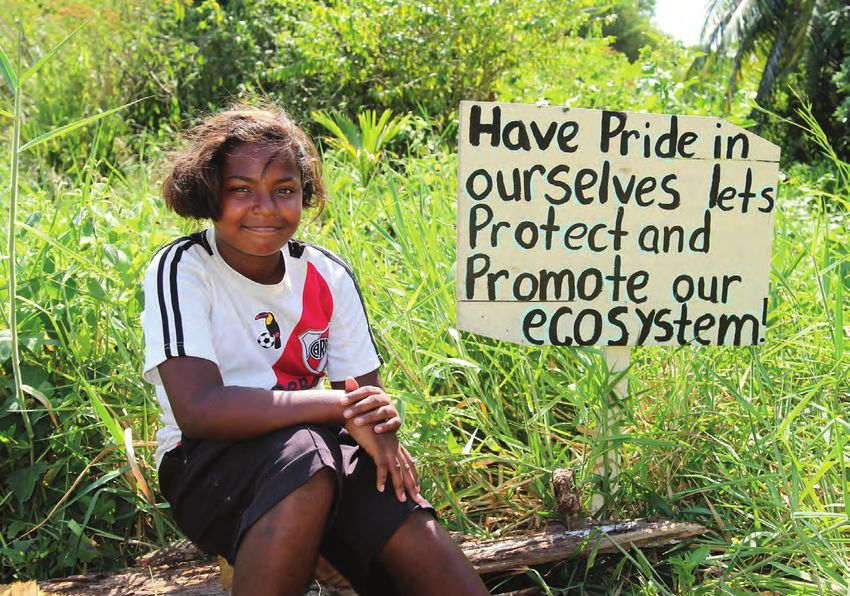
© UNICEFBELIZE/JTrapp-Ignite Belize/2017

             BELIZE
Child Rights Monitoring: Reporting
on Children and the SDGs in Belize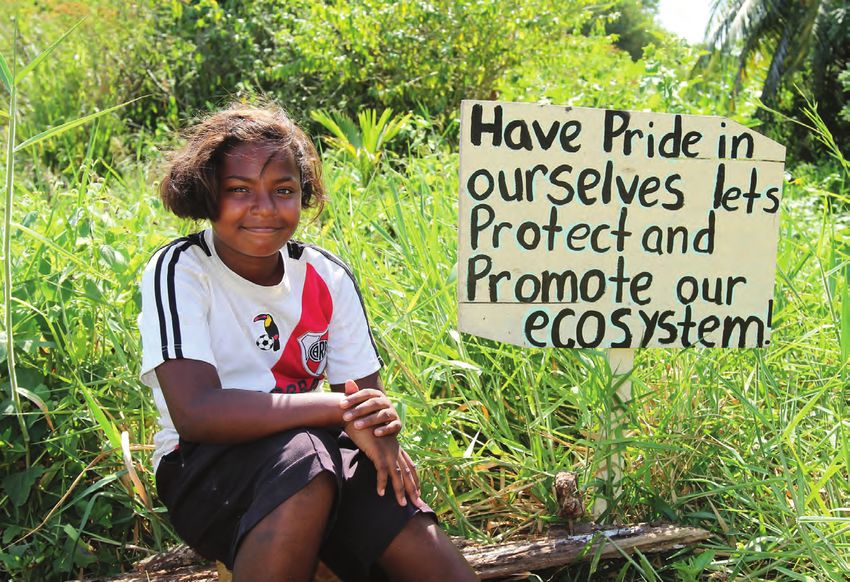
© UNICEFBELIZE/JTrapp-Ignite Belize/2017

        Table of Contents
Children and Clean Water in Belize
Children and Climate Action in the
           Caribbean
Children and Quality Education in
             Belize
Children and Good Health in Belize
Good Jobs and Employment in Be-
              lize
 Children and Nutrition in Belize
Children and Life Below Water in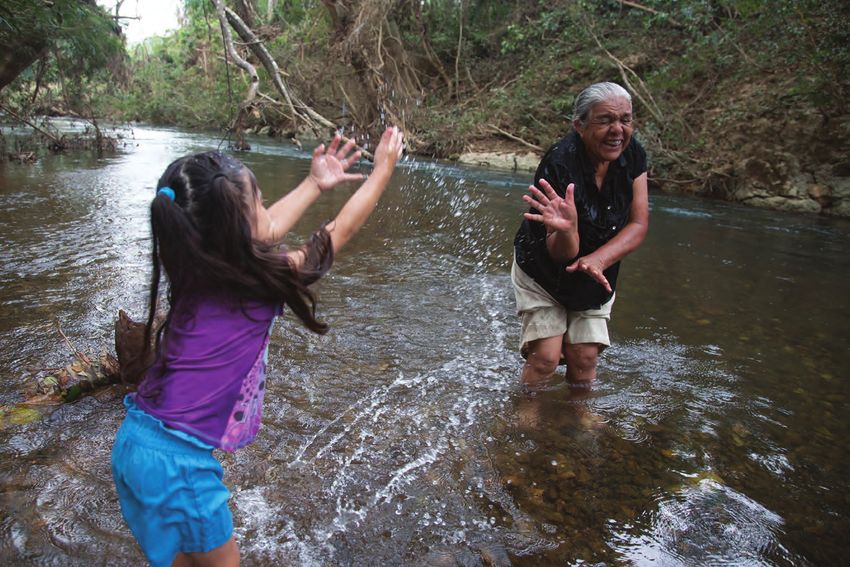
The Sustainable Development Goals:
                                     Children and Clean Water in Belize
© UNICEF/UN032052/LeMoyne

                            Key messages
                            1. Clean, accessible water for all is an essential part of the world we want to live in. There is sufficient fresh
                               water on the planet to achieve this. Due to bad economics or poor infrastructure, every year millions of
                               people, most of them children, die from diseases associated with inadequate water supply, sanitation
                               and hygiene
                            2. Water scarcity, poor water quality and inadequate sanitation negatively impact food security, livelihood
                               choices and educational opportunities for poor families across the world. Drought afflicts some of the
                               world’s poorest countries, worsening hunger and malnutrition

                            Sustainable Development Goal (SDG) 6: Clean water & sanitation – Targets for children
                             SDG 6: Ensure availability and sustainable management of water and sanitation for all
                             6.1 By 2030, achieve universal and equitable access to safe and affordable drinking water for all
                             6.2 By 2030, achieve access to adequate and equitable sanitation and hygiene for all and end open defecation,
                             paying special attention to the needs of women and girls and those in vulnerable situations
                             6.3 By 2030, improve water quality by reducing pollution, eliminating dumping and minimizing release of
                             hazardous chemicals and materials, halving the proportion of untreated waste water and substantially increase
                             recycling and safe reuse globally
                             6.4 By 2030, substantially increase water-use efficiency across all sectors and ensure sustainable withdrawals
                             and supply of freshwater to address water scarcity and substantially reduce the number of people suffering
                             from water scarcity
                             6.5 By 2030, implement integrated water resources management at all levels, including through transboundary
                             cooperation as appropriate
                             6.6 By 2030, protect and restore water-related ecosystems, including mountains, forests, wetlands, rivers,
                             aquifers and lakes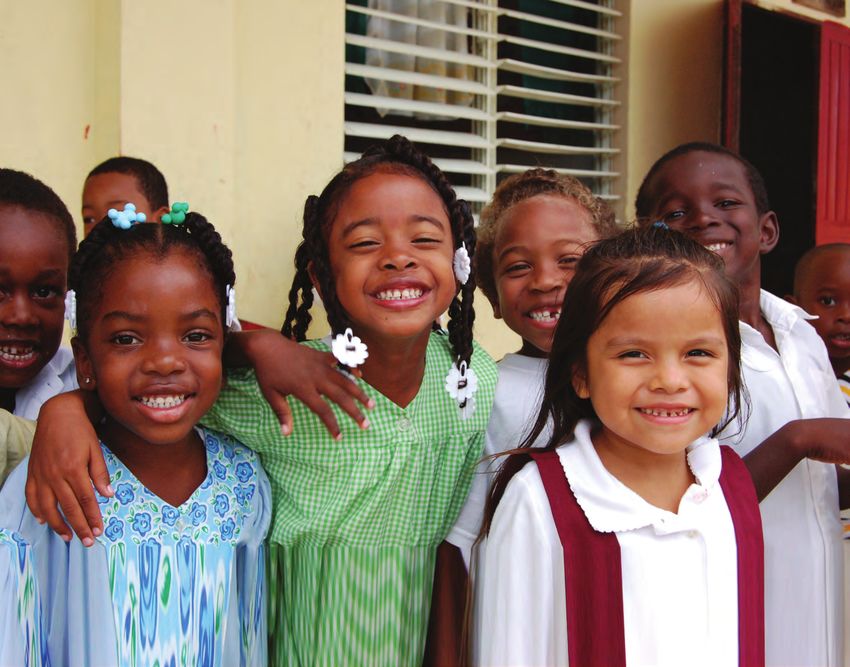
2

                                  1
Where we stand in Belize (2015)
• 96.1% of Belizeans benefit from improved sources of drinking water2
• 93% of the population lives in households using improved sanitation facilities3
• 84% of households use improved sources of drinking water and improved sanitation facilities
• 75% and 44% of households in urban and rural areas, respectively, use bottled water for drinking
• Demand for water resources is broken down as follows: from agriculture (43.7%), industry (36.5%) and
  domestic/residential use (19.7%)
• Belize has 39 identifiable watersheds,18 of them are classified as major ones
• Swamps cover 13.4% of mainland Belize; 29 lagoons have been identified
• Belize shares five major watersheds with Mexico and Guatemala
• The potable water supply for the town of Benque Viejo, Belize City and all the communities along the
  Belize River originates in Guatemala
• There are three water treatment facilities in three municipalities – Belmopan, Belize City and San Pedro:
  o The Belmopan City Treatment Plant serves approximately 7,900 households and treats approximately
    200,000 gallons of water daily
  o The Belize City Treatment Plant serves approximately 37,500 households and treats approximately 1.5
    million gallons of water daily
  o The San Pedro Treatment Plant serves approximately 3,400 consumers and treats about 160,000 gallons
    of water daily

Handwashing in Belize
Geographic regions
• 83.9% of households in Belize Southside4 have a specific place for handwashing, where soap or another
  cleansing agent is present
• 95.6% of households in Belize City have a specific place for handwashing, where soap or another cleansing
  agent is present
• 85% of East-Indian-headed5 households have an observed place in their household for handwashing, where
  soap or some other cleaning agent is present
• 89.5% of Creole-headed households have an observed place in their household for handwashing, where
  soap or some other cleaning agent is present

Disposal of faeces in Belize
• 8.4% of residents in Toledo District engage
  in open defecation
• Countrywide, 16% of children’s faeces are
  disposed of safely
• 78% of households dispose of children’s
  faeces by throwing them into the garbage
3

The national response to water preservation and opportunities for acceleration in Belize
The priority for Belize is to achieve SDG 6 with equity through child-sensitive policy and integrated service
delivery. The following are some of the mechanisms and actions to achieve this goal:

• The Growth and Sustainable Development Strategy (GSDS), Belize’s national development strategy, and the
  Children’s Agenda 2030 outline the national roadmap for the achievement of the Sustainable Development
  Goals. The framework spells out practical actions, areas for investment and accountabilities for children and
  adolescents across all sectors
• The National Adaptation Strategy addresses climate change in Belize’s water sector, which is defined as all
  freshwater sources in Belize
• The National Integrated Water Resources Authority Project addresses water consumption and preservation
  by implementing a tariff to moderate usage

Specific interventions to accelerate results in water preservation
    Ministry of Health          Ministry of Natural Resources                   Caribbean Community Climate
                                                                                   Change Centre (CCCCC)
 Policy                             Policy                                 Policy
 -- Drinking Water Policy (Draft)   Water Conservation Policy              Climate Change Policy
 -- Drinking Water Quality
    Regulation (Draft)
 -- Public Health Act

 Plan                             Plan                                     Plan
 -- Health Sector Strategic Plan National Integrated Water Resources       Green Climate Fund (GCF)
 -- Children’s Agenda 2030        Authority Project (NIWRA)
    (National Result Framework
    for Children and Adolescents)

 Priorities in Service Delivery     Priorities in Service Delivery         Priorities in Service Delivery
 Distribution of water              Conservation and preservation of water The Caribbean Community Climate Change
 purification tablets               and water sources in Belize (NIWRA)    Centre (CCCCC) is accredited as a regional
                                                                           implementing entity by the Board of the
                                                                           Green Climate Fund (GCF). The GCF is used
                                                                           to mitigate the adverse effects of climate
                                                                           change in the region, especially rising sea
                                                                           temperatures and water pollution

 Evidence Generation                Evidence Generation                    Evidence Generation
 -- Administrative database for     -- Administrative data                 Green Climate Fund (GCF)
    water quality information       -- Belize Info (Ministry of Human
 -- Belize Health Information          Development)
    System

 Capacity Building                  Capacity Building                      Capacity Building
 -- Community members               Dissemination of informative materials Community workers trained in project
    trained on safe water           on water conservation and preservation management
 -- Dissemination of                to the general public
    information on safe water
    storage, usage and water
    - borne diseases to rural
    communities
4

Awareness building and participation of children
The Government of Belize has put in place several initiatives to ensure children and adolescent’s participation
in national development. Each of these provides important platforms for continued engagement with children,
as Belize moves forward with the monitoring of progress towards the SDGs. They include:

• The Department of Youth Services (Ministry of Education)
• The Ministry of Natural Resources (Hydrology Unit)
• The Sustainable and Child-Friendly Municipality Initiative led by the Ministry of Labour, Local Government
  and Rural Development, together with the Belize Mayors’ Association, which supports systematic child
  participation in the existing Children’s Advisory Bodies across all municipalities in Belize

Financing for children
The Government’s yearly budget is allocated to line ministries, however there is no direct budget line for children.

Resources
• Belize Enterprise for Sustainable Technology, National Adaptation Strategy to Address Climate Change in the Water Sector in Belize, ,

    accessed 14 August 2017.

• Belize Water Services, Waste Water Treatment, , accessed 14 August 2017.

• Government of Belize and the United Nations Children’s Fund, Multiple Indicator Cluster Survey 2015, UNICEF, Belize City, 2016.

• National Integrated Water Resources Authority (NIWRA), Consultancy Report, , accessed 15 August 2017.

• United Nations Development Programme, NIWRA World Water Day, , accessed 15 August 2017.

1    All data on clean water & sanitation in Belize are drawn from the 2015 MICS5 Survey.
2    Improved sources of drinking water are defined as those using any of the following types of supply: piped water (into dwelling, compound, yard or plot,
    to neighbour, public tap/standpipe), tube well/borehole, protected well, protected spring, and rainwater collection (source: MICS5).
3   Improved sanitation facilities include flush or pour flush to a piped sewer system, septic tank, or pit latrine; ventilated improved pit latrine, pit latrine
    with slab, and use of a composting toilet (source: MICS5).
4   Belize Southside refers to the side of Belize City south of the river that cuts through the city, and is a particularly disadvantaged area.
5   East Indians are one of the seven main ethnic groups in Belize, in addition to Creole, Mestizo, Maya, Garifuna, Chinese and Mennonites.

United Nations Children’s Fund, UNICEF

Belize Country Office
#1 Coney Drive, Gordon House, 3rd Floor
Belize City, Belize, Central America
PO Box 2672
Tel: (501) 223- 3864/3609/7294
Website: www.unicef.org/belize
Facebook: www.facebook.com/UNICEFBelize
Twitter: https://twitter.com/unicefbelize
YouTube: www.youtube.com/unicefbelize
The Sustainable Development Goals:
                                               Children and Climate Action in the Caribbean
© UNICEF Belize/2016/Brent Toombs

                                    Key messages
                                    1. People are experiencing the significant impacts of climate change, which include changing weather patterns,
                                       rising sea levels and more extreme weather events
                                    2. Greenhouse gas emissions from human activities are driving climate change and continue to rise. They are
                                       now at their highest levels in history. Without action, the world’s average surface temperature is projected to
                                       rise over the 21st century. The poorest and most vulnerable people are being affected the most
                                    3. Affordable, scalable solutions are now available to enable countries to leapfrog to cleaner, more resilient
                                       economies. The pace of change is quickening as more people are turning to renewable energy and a range of
                                       other measures that will reduce emissions and increase adaptation efforts

                                    Sustainable Development Goal (SDG) 13: Climate action – Targets for children
                                    SDG 13: Take urgent action to combat climate change and its impacts
                                    13.1 Strengthen resilience and adaptive capacity to climate-related hazards and natural disasters in
                                    all countries
                                    13.2 Integrate climate change measures into national policies, strategies and planning
                                    13.3 Improve education, awareness raising and human and institutional capacity on climate
                                    change mitigation, adaptation, impact reduction and early warning
                                    13.a Implement the commitment undertaken by developed-country parties to the United Nations
                                    Framework Convention on Climate Change to a goal of mobilizing jointly USD$100 billion annually
                                    by 2020 from all sources to address the needs of developing countries in the context of meaningful
                                    mitigation actions and transparency on implementation and fully operationalize the Green Climate
                                    Fund through its capitalization as soon as possible
                                    13.b Promote mechanisms for raising capacity for effective climate change-related planning and
                                    management in least developed countries and small island developing States, including focusing on
                                    women, youth and local and marginalized communities
2

Where we stand in Belize (2015)
• Under the Caribbean Community Climate Change Centre (CCCCC), Antigua and Barbuda, the Bahamas,
  Barbados, Belize, the Dominican Republic, Haiti, Jamaica, St Lucia, St Kitts and Nevis, St Vincent and
  the Grenadines, Suriname, and Trinidad and Tobago implemented the Green Climate Fund (GCF), a
  mechanism aimed at combatting climate change and mitigating its impact on the Caribbean economies
• In Belize, the National Emergency Management Organization (NEMO) is responsible for the preservation
  of life and property countrywide
• The Climate and Development Knowledge Network (CDKN) has climate change projection and climate
  visualization tools at sub-regional levels. The information collected by the CDKN has been applied to real-
  life situations in St Lucia, Jamaica, Belize, Cuba and Barbados
• Belize is located south of Mexico and east of Guatemala; this puts the country inside of the Caribbean
  Hurricane Belt
• An increase in sea water temperature has exacerbated coral bleaching in the Belize Barrier Reef. Coral
  bleaching destroys coral, which is important for the protection against erosion, natural disasters
  and inclement weather. In terms of marine life, warmer temperatures destroy the habitats of marine
  species and reduce their food supply. This forces them to seek new habitats, which in turn adversely
  affects the livelihoods of local fisherfolk

Climate change across the Caribbean
Geographic regions
• The CDKN has funded three projects: The Caribbean Weather Impacts Group (CARWIG), The Global Islands’
  Vulnerability Research, Adaptation Policy Development Project (GIVRAPD) and The Caribbean Research Call
• The CARWIG has generated climate change data that are locally relevant to help decision makers evaluate
   climate change and its impact across a range of timescales
• Globally, 2005 was the warmest year on record and 2007 tied for the second warmest (source: GISS, 2008)
• The increase in global surface temperature to date is approximately 0.74°C, based on the 100-year linear
   trend, 1906-2005 (source: IPCC, 2007)

The effects of climate change on the Caribbean economy
• In 2014 tourism’s total contribution to the Caribbean economy amounted to US$51.9 billion (14.6% of total
  GDP) and to 2,231,500 jobs (13% of employment) – including industries supporting, and dependent on, tourism
• 94% of tourist accommodation facilities and 79% of tourist attraction facilities in Belize are located at lower
  coastal elevation
3

The national response to climate change and opportunities for acceleration in Belize and the Caribbean
The priority for Belize and the Caribbean Community (CARICOM) is to achieve SDG 13 with equity through
child-sensitive policy and integrated service delivery. The following are some of the mechanisms and actions to
achieve this goal:

• The National Emergency Management Organization (NEMO) provides Belizeans with pertinent information and
  updates regarding storm strength, size and location. It also provides hurricane tips and emergency
  preparedness plans for families to follow during the hurricane season
• The Caribbean Community Climate Change Centre (CCCCC) aims to unify the Caribbean Community with the
  goal of mitigating climate change and its effects in their member states
• The Green Climate Fund (GCF) is a global financial mechanism implemented regionally by the CCCCC. Funds
  are used to mitigate the adverse effects of climate change in the region

Specific interventions to accelerate results in the fight against climate change
     Caribbean Community Climate                 National Emergency                Ministry of Education, Youth,
        Change Centre (CCCCC)                  Management Organization                 Sports and Culture
Policy                                        Policy                            Policy
Climate Change Policy                         Climate Change Policy             Belize Education Sector Strategy Plan

Plan                                          Plan                              Plan
Green Climate Fund (GCF)                      Emergency Family Plan             Children’s Agenda 2030 (National Result
                                                                                Framework for Children and Adoles-
                                                                                cents)
Priorities in Service Delivery                 Priorities in Service Delivery   Priorities in Service Delivery
-- The CCCCC is the first regionally                                            -- WASH in schools
   accredited organization that acts a conduit                                  -- Climate change curriculum in schools
   for Caribbean countries                                                      -- Continuing development workshops
-- The CCCCC collects funds from the small                                         for teachers
   island nations of the Caribbean to use in
   the Green Climate Fund (GCF)
-- The GCF is used to mitigate the adverse
   effects of climate change in the region

 Evidence Generation                           Evidence Generation              Evidence Generation
 Green Climate Fund (GCF)                      Emergency Management             Educational Management
                                               System                           Information System

 Capacity Building                             Capacity Building                Capacity Building
 Community Workers trained in                  Community Workers trained        Climate change/environment included
 Project Management                            in Disaster Management           in the primary school curriculum
4

Awareness building and participation of children
Together with other governments in the Caribbean the Government of Belize has put in place several initiatives
to ensure children and adolescent’s participation in national development. Each of these provides important
platforms for continued engagement with children, as Belize moves forward with the monitoring of progress
towards the SDGs. They include:

•    The Department of Youth Services (Ministry of Education)
•    The National Emergency Management Organization (NEMO)
•    The Caribbean Community Climate Change Centre (CCCCC)
•    The Sustainable and Child-Friendly Municipality Initiative led by the Ministry of Labour, Local Government
     and Rural Development, together with the Belize Mayors’ Association, which supports systematic child
     participation in the existing Children’s Advisory Bodies across all municipalities in Belize

Financing for children
In Belize, the Government’s yearly budget is allocated to line ministries, however there is no direct budget line
for children.

Resources
• Caribbean Community Climate Change Centre, Green Climate Fund, ,

    accessed 10 August 2017.

• Climate & Development Knowledge Network (CDKN), Achieving Development Resilient to Climate Change: A Source Book for the Caribbean Water Sector, , accessed 10 August 2017.

• Climate & Development Knowledge Network (CDKN), Climate Impacts on Agriculture and Tourism: the Case for Climate Resilient Investment in the Caribbean, , accessed 10 August 2017.

• Goddard Institute for Space Studies (GISS), , accessed 26 August 2017.

• Government of Belize, National Youth Development Policy of Belize 2012, ,

    accessed 6 May 2017.

• Government of Belize, Nationally Determined Contribution under the United Nations Framework Convention on Climate Change, , accessed 10 August 2017.

• Intergovernmental Panel on Climate Change, Climate Change 2007: Synthesis Report, IPCC, Geneva, 2007, , accessed 26 August 2017.

• National Emergency Management Organization, , accessed 10 August 2017.

• United Nations Development Programme, Belize and Climate Change: The Costs of Inaction, UNDP, Belmopan, 2009, , accessed 14 August 2017.

United Nations Children’s Fund, UNICEF

Belize Country Office
#1 Coney Drive, Gordon House, 3rd Floor
Belize City, Belize, Central America
PO Box 2672
Tel: (501) 223- 3864/3609/7294
Website: www.unicef.org/belize
Facebook: www.facebook.com/UNICEFBelize
Twitter: https://twitter.com/unicefbelize
YouTube: www.youtube.com/unicefbelize
The Sustainable Development Goals:
Children and Quality Education in Belize
© UNICEF/2016/Martina Tomassini
Key messages
1. Without quality education, all the other Sustainable Development Goals will prove difficult to achieve
2. Access to quality education is not only a goal in itself, but a fundamental building block to creating a
1
better world of sustainable peace, prosperity and development
Sustainable Development Goal (SDG) 4: Quality education – Targets for children
SDG 4: Ensure inclusive and quality education for all and promote lifelong learning
The new SDG Targets aim to improve the quality of education globally by 2030
4.1 By 2030, ensure that all girls and boys complete free, equitable and quality primary and secondary
education leading to relevant and effective learning outcomes
4.2 By 2030, ensure that all girls and boys have access to quality early childhood development, care
and pre-primary education so that they are ready for primary education
4.3 By 2030, ensure equal access for all women and men to affordable and quality technical,
vocational and tertiary education, including university
4.4 By 2030, substantially increase the number of youth and adults who have relevant skills, including
technical and vocational skills, for employment, decent jobs and entrepreneurship
4.5 By 2030, eliminate gender disparities in education and ensure equal access to all levels of
education and vocational training for the vulnerable, including persons with disabilities, indigenous
peoples and children in vulnerable situations
4.6 By 2030, ensure that all youth and a substantial proportion of adults, both men and women,
achieve literacy and numeracy
4.7 By 2030, ensure that all learners acquire the knowledge and skills needed to promote sustainable
development, including, among others, through education for sustainable development and
sustainable lifestyles, human rights, gender equality, promotion of a culture of peace and non-
violence, global citizenship and appreciation of cultural diversity and of culture’s contribution to
sustainable development2
2
Where we stand in Belize (2015)
• Literacy rate is 97% among women and 95%
among men
• Adult literacy rate is 90% in urban areas and 89%
in rural areas
• The net attendance for students in primary school is
95.7%
• 44% of children aged 0-59 months live in
households where at least 3 children’s books are
present
• Three in four children in the 0-23 months age
group do not have access to three or more children’s books
• Two-thirds of children aged 0-59 months have two or more types of playthings in their homes
• 53% of children aged 36-59 months are developmentally on track in literacy and numeracy
• 97% of children aged 36-59 months are developmentally on track physically
• 77% of children aged 36-59 months are developmentally on track in the socio-emotional domain
• 93% of children aged 36-59 months are developmentally on track with learning
• 57.4% of male students are currently attending secondary school
• 86.3% of students complete primary school
• 83.1% of students transition to secondary school
Disparities in education in Belize
Geographic regions
• In Toledo District, 38% of children who are in First Grade attended pre-school the previous year
3
• In Belize Southside, 91.8% of children who are in First Grade attended pre-school the previous year
• In Cayo District, 37% of children aged 36-59 months receive early childhood education
• The net attendance for primary school students in Corozal District is 87.4%
• Stann Creek District has the highest primary school net attendance (98.4%)
4
• Maya-headed households reported the lowest literacy rates for both women and men (86.6% and 89.1%
respectively)
• Garifuna-headed households reported the highest literacy rates for both women and men (97.9% and 97.5%
respectively)
• Gender parity in primary school is 1.0
• Gender parity in secondary school is 1.1
Sex
• Literacy rate is 93% for women and 91% for men
• 24% of fathers are involved in four or more activities with their child, compared to 68% of mothers
Age
• 93% of women aged 15-19 years are literate
The national response to quality education and opportunities for acceleration in Belize
The priority for Belize is to achieve SDG 4 with equity through child-sensitive policy and integrated service
delivery. The following are some of the mechanisms and actions to achieve this goal:3
• An Interagency ECD task force was established in 2014 and serves as the primary mechanism for the
coordination for coordination of action related to human development and education
• The Growth and Sustainable Development Strategy (GSDS), Belize’s national development strategy, and
the National Result Framework for Children and Adolescents 2017-2030 (NRFCA) outline the national
roadmap for the achievement of the Sustainable Development Goals. The framework spells out practical
actions, areas for investment and accountabilities for children and adolescents across all sectors
• The Government of Belize has recently adopted a national policy on Early Childhood Development (ECD).
Improving early childhood development through enhanced care and nutrition is a critical part of this policy
• The Ministry of Education has developed the Belize Education Sector Strategy (BESS), an integrated system
designed to implement policies aimed at improving the access, quality and governance of education in Belize
Specific interventions to accelerate results in education
Ministry of Health Ministry of Human Ministry of Education, Youth,
Development Sports and Culture
Policy Policy Policy
ECD Policy ECD Policy Education Policy
Plan Plan Plan
- Health Sector Strategic Plan - Children’s Agenda 2030 - Belize Education Sector Strategy
- Children’s Agenda 2030 (National (National Result Framework for - Children’s Agenda 2030 (National
Result Framework for Children and Children and Adolescents) Result Framework for Children and
Adolescents) - Return to Happiness Adolescents)
Programme
Priorities in Service Delivery Priorities in Service Delivery Priorities in Service Delivery
-- Iron, folic acid and multivitamins -- Conditional Cash Transfer -- Secondary School Subsidy
distributed to females aged 10-49 Programme – Building -- Caribbean Examination Council (CXC)
years Opportunities for Our Social Tuition Grant
-- Delivery of fortified food to pregnant Transformation (BOOST) -- District Education Centres (DECs)
women and children at risk or -- “The Pantry” -- Annual professional and technical
undernourished The programme provides scholarships
-- Nutritional education to women during a basic food basket at a
preconception, prenatal and postnatal subsidized cost to poor
care families in Toledo, Cayo and
Belize City
Evidence Generation Evidence Generation Evidence Generation
Belize Health Information System -- FAMCare: national case -- Education Management Information
management system System
-- Single Information System for -- Early Warning System
Beneficiaries: social registry to -- Out-of-School Study
inform inter-sectoral planning -- OpenEMIS information management
and monitoring tool
-- BelizeInfo: data dissemination
platform
Capacity Building Capacity Building Capacity Building
Community Health Workers trained Community Health Workers -- Teachers, parents and children trained
in Health Education and Early trained in Early Childhood in the drafting, operationalizing and
Childhood Development Development monitoring of School Improvements
Plans
-- Convention on the Rights of the
Child included in the primary school
curriculum4 Awareness building and participation of children The Government of Belize has put in place several initiatives to ensure children and adolescent’s participation in national development. Each of these provides important platforms for continued engagement with children, as Belize moves forward with the monitoring of progress towards the SDGs. They include: • The Department of Youth Services (Ministry of Education) • The Youth and Community Transformation Project (Ministry of Human Development, Social Transformation and Poverty Alleviation) • The Sustainable and Child-Friendly Municipality Initiative led by the Ministry of Labour, Local Government and Rural Development, together with the Belize Mayors’ Association, which supports systematic child participation in the existing Children’s Advisory Bodies across all municipalities in Belize Financing for children The Government’s yearly budget is allocated to line ministries, however there is no direct budget line for children. Resources • Government of Belize, Growth and Sustainable Development Strategy 2016-2019, , accessed 6 May 2017. • Government of Belize, National Youth Development Policy of Belize 2012, , accessed 6 May 2017. • Government of Belize and the United Nations Children’s Fund, Multiple Indicator Cluster Survey 2015, UNICEF, Belize City, 2016. • Ministry of Education and Youth, Belize Education Sector Strategy 2011-2016, , accessed 25 July 2017. • Ministry of Health, , accessed 6 May 2017. • Ministry of Human Development, Social Transformation and Poverty Alleviation, , accessed 6 May 2017. • National Committee for Families and Children, National Result Framework for Children and Adolescents, NCFC, Belize City, 2017. • Statistical Institute of Belize, Statistics of the Nation, , accessed 6 May 2017. • The Consultancy Group, Impact Evaluation of Belize’s Conditional Cash Transfer Programme (BOOST), 2016, , accessed 6 May 2017. • United Nations, Quality Education: Why It Matters, , accessed 25 July 2017. 1 Quote by Peter Thomson, President of the UN General Assembly (September 2016-2017). 2 All data on the educational status of children in Belize are drawn from the 2015 MICS5 Survey. 3 Belize Southside refers to the side of Belize City south of the river that cuts through the city, and is a particularly disadvantaged area. 4 The Maya are one of the seven main ethnic groups in Belize, in addition to Creole, Mestizo, Garifuna, East Indians, Chinese and Mennonites. United Nations Children’s Fund, UNICEF Belize Country Office #1 Coney Drive, Gordon House, 3rd Floor Belize City, Belize, Central America PO Box 2672 Tel: (501) 223- 3864/3609/7294 Website: www.unicef.org/belize Facebook: www.facebook.com/UNICEFBelize Twitter: https://twitter.com/unicefbelize YouTube: www.youtube.com/unicefbelize
The Sustainable Development Goals:
                                                 Children and Good Health in Belize
UNICEF Belize/2016/Martina Tomassini
        ©

                                       Key messages
                                       1. Health and well-being act as both an outcome of, and a determinant for, development. Child and maternal
                                          mortality are among the most important indicators of progress in addressing inequities in health outcomes
                                          and access
                                       2. Strengthening health systems – including emergency preparedness, response and resilience – requires a
                                          robust health information system that includes the most marginalized and provides timely and
                                          comprehensive data to inform action
                                       3. Integrated, multi-sectoral policies and programmes are essential to improving health outcomes.
                                          Resilient and healthy communities are built when sectors and partners work jointly to assess data, budget
                                          accordingly and deploy resources to address the underlying causes of health challenges

                                       Sustainable Development Goal (SDG) 3: Good health and well-being— Targets for children
                                       SDG 3: Ensure healthy lives and promote well-being for all at all ages
                                       3.1 By 2030, reduce the global maternal mortality ratio to less than 70 per 100,000 live births
                                       3.2 By 2030, end preventable deaths of newborns and children under 5 years of age, with all countries aiming to
                                       reduce neonatal mortality to at least as low as 12 per 1,000 live births and under-5 mortality to at least as low
                                       as 25 per 1,000 live births
                                       3.3 By 2030, end the epidemics of AIDS, tuberculosis, malaria and neglected tropical diseases and combat
                                       hepatitis, water-borne diseases and other communicable diseases
                                       3.7 By 2030, ensure universal access to sexual and reproductive health-care services, including for family
                                       planning, information and education, and the integration of reproductive health into national strategies and
                                       programmes
                                       3.8 Achieve universal health coverage, including financial risk protection, access to quality essential health-care
                                       services and access to safe, effective, quality and affordable essential medicines and vaccines for all
                                       3.9 By 2030, substantially reduce the number of deaths and illnesses from hazardous chemicals and air, water
                                       and soil pollution and contamination
2
1
Where we stand in Belize (2015)
• 56% of deaths in infancy occur during the first 28 days of a child’s life
• 40% of girls and 44% of boys aged 15-19 years have comprehensive
knowledge of HIV/AIDS
• About 1 in 10 girls aged 15-19 years has had a birth
• 65% of adolescents reported using a condom during their last sexual
intercourse
• 39% of girls aged 15-19 years, married or in union, currently use a
method of contraception
• 96% of the population uses an improved source of drinking water
• 93% of the population lives in households using improved sanitation
facilities
• 84% of household population uses improved drinking water sources
and improved sanitation facilities
• Stools are disposed of safely for only 16% of children
• 78% of stools are thrown into garbage
Disparities in health for children in Belize
Geographic regions
• Adolescent fertility in Corozal District: 104/1,000
• Adolescent fertility in Stann Creek District: 101/1,000
• Women currently married or in union reported using a contraceptive as follows: 72% in Corozal
District; 58% in Orange Walk District; 56% in Belize City (excluding Belize Southside);2 51% in
Belize Southside; 41% in Cayo District; 47% in Stann Creek District; and 31% in Toledo District
• 100% of births in Belize Southside are delivered by a skilled attendant
• 90% of births in Toledo District are delivered by a skilled attendant
• In 94% of live births, both the mother and the newborn receive a health check following birth
• Stools are disposed of safely for 20% of children in rural areas and for 12% in urban areas
Sex
• Under–five mortality for mothers younger than age 20 is 15 per 1,000 live births
Age
• 39% of women aged 15-19 years, married or in union, currently use a method of contraception
The national response to good health and well-being opportunities for acceleration in Belize
The priority for Belize is to achieve SDG 3 with equity through child-sensitive policy and integrated service
delivery. The following are some of the mechanisms and actions to achieve this goal:
• An Interagency ECD task force was established in 2014 and serves as the primary mechanism for the
coordination of action related to nutrition, health and protection of children aged 0-8 years
• The Growth and Sustainable Development Strategy (GSDS), Belize’s national development strategy, and
the National Result Framework for Children and Adolescents 2017-2030 (NRFCA) outline the national roadmap
for the achievement of the Sustainable Development Goals. The framework spells out practical actions,
areas for investment and accountabilities for children and adolescents across all sectors3
• The Government of Belize has recently adopted a national policy on Early Childhood Development (ECD).
Improving early childhood development through enhanced care and nutrition is a critical part of this policy;
its implementation is supported through inter-sectoral collaboration in planning, skills development and
service delivery
• The Ministry of Health has developed the Belize Nutrition Surveillance System (BNSS), an integrated system
designed to provide data on existing nutrition interventions at two levels: biological impact and process indicators
Specific interventions to accelerate results in health
Ministry of Health Ministry of Human Ministry of Education,
Development Youth, Sports and Culture
Policy Policy Policy
-- ECD Policy ECD Policy ECD Policy
-- Breastfeeding Policy and Manual
-- Food and Nutrition Security Policy
-- Nutrition through Life Cycle Policy (Draft)
Plan Plan Plan
-- Health Sector Strategic Plan National Result Framework for -- School Nutritional Plan (Draft)
-- National Result Framework for Children and Children and Adolescents -- National Result Framework
Adolescents for Children and Adolescents
Priorities in Service Delivery Priorities in Service Delivery Priorities in Service Delivery
-- Iron, folic acid and multivitamins distributed to -- Conditional Cash Transfer WASH in schools
females aged 10-49 years, pregnant women and Programme – Building
postnatal mums Opportunities for Our Social
-- Deworming and vitamin A mega dose administered Transformation (BOOST)
to children in primary schools -- “The Pantry”
-- 7 public sector hospitals certified as baby-friendly, The programme provides a
1 private sector hospital initiating the certification basic food basket at a
process subsidized cost to poor
-- Delivery of fortified food to pregnant women and families in Toledo, Cayo and
children at risk or undernourished Belize City
-- Weight and height checks for children under 5 years
-- Nutritional education to women during
preconception, prenatal and postnatal care
Evidence Generation and Routine Data Systems Evidence Generation Evidence Generation
-- Micronutrient deficiency survey carried out in 2011 -- FAMCare: national case -- Height Census 2009
and 2012 management system -- Monitoring and Evaluation of
-- Surveillance system for neural tube defects and -- Single Information System feeding programme
congenital malformations for Beneficiaries: social -- Educational Management
-- Nutrition Surveillance System registry to inform inter- Information System
-- Belize Health Information System sectoral planning and
-- Family Health Survey monitoring
-- Nutrition Survey -- BelizeInfo: data
dissemination platform
Capacity Building Capacity Building Capacity Building
Health Educators trained in Early Childhood Health Educators trained in Teachers, parents and children
Development Early Childhood Development trained in the drafting, opera-
tionalizing and monitoring of
School Improvements Plans4
Awareness building and participation of children
The Government of Belize has put in place several initiatives to ensure children and adolescent’s participation
in national development. Each of these provides important platforms for continued engagement with children,
as Belize moves forward with the monitoring of progress towards the SDGs. They include:
• The Department of Youth Services (Ministry of Education)
• The Youth and Community Transformation Project (Ministry of Human Development, Social Transformation
and Poverty Alleviation)
• The Sustainable and Child-Friendly Municipality Initiative led by the Ministry of Labour, Local
Government and Rural Development, together with the Belize Mayors’ Association, supports systematic
child participation in the existing Children’s Advisory Bodies across all municipalities in Belize
Financing for children
The Government’s yearly budget is allocated to line ministries, however there is no direct budget line for children.
Resources
• Government of Belize, Growth and Sustainable Development Strategy 2016-2019, Belize City, ,
accessed 6 May 2017.
• Government of Belize, National Youth Development Policy of Belize 2012, Belize City, ,
accessed 6 May 2017.
• Government of Belize and the United Nations Children’s Fund, Multiple indicator Cluster Survey 2015, UNICEF, Belize City, 2016.
• Ministry of Health, Belize City, , accessed 6 May 2017.
• Ministry of Human Development, Social Transformation and Poverty Alleviation, Belize City, , accessed 6 May 2017.
• National Committee for Families and Children, National Result Framework for Children and Adolescents, NCFC, Belize City, 2017.
• Statistical Institute of Belize, Statistics of the Nation, Belmopan, , accessed 6 May 2017.
• The Consultancy Group, Impact Evaluation of Belize’s Conditional Cash Transfer Programme (BOOST), 2016, , accessed 6 May 2017.
1 All data on the health status of children in Belize are drawn from the 2015 MICS5 Survey.
2 Belize Southside refers to the side of Belize City south of the river that cuts through the city, and is a particularly disadvantaged area.
United Nations Children’s Fund, UNICEF
Belize Country Office
#1 Coney Drive, Gordon House, 3rd Floor
Belize City, Belize, Central America
PO Box 2672
Tel: (501) 223- 3864/3609/7294
Website: www.unicef.org/belize
Facebook: www.facebook.com/UNICEFBelize
Twitter: https://twitter.com/unicefbelize
YouTube: www.youtube.com/unicefbelizeThe Sustainable Development Goals:
Good Jobs and Economic Growth in Belize
© UNICEF/2016/Brent Toombs
Key messages
1. Roughly half the world’s population still lives on the equivalent of about US$2 a day. And, in too many places,
having a job doesn’t guarantee the ability to escape from poverty. This slow and uneven progress requires us
to rethink and retool our economic and social policies aimed at eradicating poverty
2. A continued lack of decent work opportunities, insufficient investments and under-consumption lead to
an erosion of the basic social contract underlying democratic societies: that all must share in progress. The
creation of quality jobs will remain a major challenge for almost all economies well beyond 2017
3. Sustainable economic growth will require societies to create the conditions that allow people to have quality
jobs that stimulate the economy while not harming the environment. Job opportunities and decent working
conditions are also required for the whole working-age population
Sustainable Development Goal (SDG) 8: Good jobs and economic growth – Targets for children
SDG 8: Promote inclusive and sustainable economic growth, employment and decent work for all
8.1 Sustain per capita economic growth in accordance with national circumstances and, in particular,
at least 7 percent gross domestic product in the least developed countries
8.2 Achieve higher levels of economic productivity through diversification, technological upgrading
and innovation, including through a focus on high-value added and labour-intensive sectors
8.3 Promote development-oriented policies that support productive activities, decent job cre-
ation, entrepreneurship, creativity and innovation, and encourage the formalization and growth
of micro-, small- and medium-sized enterprises, including through access to financial services
8.4 Improve progressively, through 2030, global resource efficiency in consumption and production
and endeavour to decouple economic growth from environmental degradation, in accordance with
the 10-Year Framework of Programmes on Sustainable Consumption and Production, with devel-
oped countries taking the lead
8.5 By 2030, achieve full and productive employment and decent work for all women and men, includ-
ing for young people and persons with disabilities, and equal pay for work of equal value
8.6 By 2020, substantially reduce the proportion of youth not in employment, education or training
8.7 Take immediate and effective measures to eradicate forced labour, end modern slavery and human
trafficking and secure the prohibition and elimination of the worst forms of child labour8.5 By 2030, achieve full and productive employment and decent work for all women and men, in-
cluding for young people and persons with disabilities, and equal pay for work of equal value
8.6 By 2020, substantially reduce the proportion of youth not in employment, education or training
28.7 Take immediate and effective measures to eradicate forced labour, end modern slavery and human
trafficking and secure the prohibition and elimination of the worst forms of child labour
8.8 Protect labour rights and promote safe and secure working environments for all workers,
including migrant workers, in particular women migrants, and those in precarious environments
8.9 By 2030, devise and implement policies to promote sustainable tourism that creates jobs and
promotes local culture and products
8.10 Strengthen the capacity of domestic financial institutions to encourage and expand access to
banking, insurance and financial services to all
Where we stand in Belize1
• The annual growth rate of GDP per capita was 0.8%
between 2011 and 2015
• The annual growth rate of GDP was 4.1% between 2011 and
2015
• The labour force participation rate is 64.3%
• There are approximately 7,485 people aged 14-24 years who
are unemployed
• Tourism contributes approximately 15% to Belize’s GDP
• Tourism directly contributes approximately 18,000 jobs
to Belizeans
• There are 5,188 children employed in Belize
2
Disparities in unemployment and child labour activities
Geographic regions
• In Belize District, the unemployment rate is 10.9%
• In Toledo District, the unemployment rate is 3.9%
• Belize District has the lowest children’s employment rate
(3.0%)
• Corozal District has the highest children’s employment rate (9.1%)
Sex
• 4.8% of Belizean males are unemployed
• 15.6% of Belizean females are unemployed
Age
• 33.68% of the workforce are aged 14-24 years
• 12.43% of the workforce are aged 45-54 years
The national response to unemployment alleviation and opportunities for acceleration in Belize
The priority for Belize is to achieve SDG 8 with equity through child-sensitive policy and integrated service
delivery. The following are some of the mechanisms and actions to achieve this goal:
• The Belize Trade and Infrastructure Development Service (Beltraide) is the official national agency for the
promotion of tools and investments in Belize. It operates under the Ministry of Economic Development
and consists of four units, which work towards creating employment opportunities, improving the quality
of the workforce and establishing new markets for Belizean products. These units are BTEC, BelizeINVEST,
EXPORTBelize, SBDCBelize
• The Belize Training & Employment Centre (BTEC) seeks to improve the employability skills of Belizeans
and to foster an inclusive environment where participants, staff and the community show respect for
diversity3
• BelizeINVEST provides tailored services to local and foreign investors who want to conduct business in
Belize and utilize investments to create job opportunities for Belizeans
• EXPORTBelize provides services aimed at preparing businesses to export products regionally and internationally
• The Small Business Development Centre Belize (SBDCBelize) aims to prepare micro, small and medium
enterprises to better compete in the local, regional and international trade markets
Specific interventions to accelerate results in employment
Ministry of Economic Ministry of Labour, Ministry of Education, Youth,
Development Local Government and Rural Sports and Culture
Development
Policy Policy Policy
Micro, Small and Medium Enter- -- Belize Labour Act -- Belize Education Act
prise (MSME) Policy -- Belize Shops Act -- Education Policy
-- Commercial Sexual Exploitation of
Children (CSEC) (Prohibition) Act
-- Belize International Labour
Organization Conventions Act
-- Families and Children Act
Plan Plan Plan
-- Belize National -- Children’s Agenda 2030 (National -- Vocational education
Entrepreneurship Strategy Result Framework for Children and -- Special education for people with
-- Belize MSME Policy and Adolescents) disabilities
Strategy Report -- Municipal Strategic Plans -- Children’s Agenda 2030 (National Result
Framework for Children and Adolescents)
Priorities in Service Delivery Priorities in Service Delivery Priorities in Service Delivery
-- Increase the flow of capital to -- Belize Rural Finance Programme -- Employment training & educational
MSMEs -- Inspection services of all work services
-- Promote market access and places -- Gateway Youth Center
competitiveness of MSMEs -- Labour advice to the public, -- National Resource Center for Inclusive
-- Enable MSMEs to access workers and employers Education
resources (human, -- Receive and settle labour -- Institute for Technical and Vocational
technological and financial) complaints Education & Training
needed to respond to -- Enforcement of labour legislations -- Government bookstores (nine
economic opportunities -- Provide public employment municipalities)
services (e.g. employers and -- Secondary School Subsidy
employees matching) -- Caribbean Examination Council (CXC)
-- Vetting of temporary employment Tuition Grant
permits -- Annual professional and technical
scholarships
-- Youth services
Evidence Generation Evidence Generation Evidence Generation
-- Belize Central Bank Annual -- Labour Force Survey -- Early Warning System
Report -- Child Activity Survey -- Educational Management Information
-- Balance of Payment Survey System
-- Economic indicators -- Out-of-School Study
-- General statistics
Capacity Building Capacity Building Capacity Building
Business and entrepreneurial -- Skills training for women and girls Job training and internship programmes
skills training of MSM by the Women’s Department in secondary and tertiary education
owners and managers -- Mock interviews for job training in
schools
-- Labour education sessions4 Awareness building and participation of children The Government of Belize has put in place several initiatives to ensure children and adolescent’s participation in national development. Each of these provides important platforms for continued engagement with children, as Belize moves forward with the monitoring of progress towards the SDGs. They include: • The Department of Youth Services (Ministry of Education) • The Youth and Community Transformation Project (Ministry of Human Development Social Transformation and Poverty Alleviation) • The Sustainable and Child-Friendly Municipality Initiative led by the Ministry of Labour, Local Government and Rural Development, together with the Belize Mayors’ Association, which supports systematic child participation in the existing Children’s Advisory Bodies across all municipalities in Belize • Beltraide (BTEC, BelizeINVEST, EXPORTBelize and SBDCBelize) Financing for children The Government’s yearly budget is allocated to line ministries, however there is no direct budget line for children. Resources • Beltraide, BelizeINVEST, , accessed 8 August 2017. • Beltraide, BTEC, , accessed 8 August 2017. • Beltraide, EXPORTBelize, http://www.belizeinvest.org.bz/exportbelize.html, accessed 8 August 2017. • Beltraide, SBDCBelize Policies and Strategies, , accessed 8 August 2017. • Government of Belize and the United Nations Children’s Fund, Multiple Indicator Cluster Survey 2015, UNICEF, Belize City, 2016. • International Programme on the Elimination of Child Labour (IPEC), Report of the National Child Activity Survey – Belize 2013, < http://www.ilo.org/ipec/ Informationresources/WCMS_IPEC_PUB_26817/lang--en/index.htm>, accessed 26 August 2017. • Ministry of Human Development, Social Transformation and Poverty Alleviation, , accessed 7 August 2017. • Statistical Institute of Belize, , accessed 7 August 2017. • Statistical Institute of Belize, Labour Force Survey – April 2017, , accessed 26 August 2017. • The World Travel & Tourism Council, Travel &Tourism Economic Impact 2015 – Belize, , accessed 26 August 2017. 1 All data on the employment rate and economic status of Belize are drawn from the 2017 Labour Force Survey. 2 All data on child labour activities in Belize are drawn from the 2013 National Child Activity Survey. All children aged 5-17 years engaged in economic activities are considered to be working children. United Nations Children’s Fund, UNICEF Belize Country Office #1 Coney Drive, Gordon House, 3rd Floor Belize City, Belize, Central America PO Box 2672 Tel: (501) 223- 3864/3609/7294 Website: www.unicef.org/belize Facebook: www.facebook.com/UNICEFBelize Twitter: https://twitter.com/unicefbelize YouTube: www.youtube.com/unicefbelize
The Sustainable Development Goals:
                                   Children and Nutrition in Belize
UNICEF/UN035784/LeMoyne
     ©

                          Key messages
                          1. Without action on nutrition, not only will SDG 2 not be achieved, but all SDGs will falter – from
                             health, education and gender equality to poverty and peace
                          2. Nutrition systems and service delivery must promote integrated, multi-sectoral policies, programmes
                             and interventions beyond the nutrition sector to ensure that gains in nutrition and other sectors are
                             sustained over the long term
                          3. Data on nutrition must be strengthened and better disaggregated to enhance decentralized level
                             planning and targeting of programmes, in order to achieve efficiency, equity and sustained impact

                          Sustainable Development Goal (SDG) 2: Zero hunger — Targets for children
                          SDG 2: End hunger, achieve food security and improved nutrition, and promote sustainable agriculture

                          2.1 By 2030, end hunger and ensure access by all people, in particular the poor and people in
                          vulnerable situations, including infants, to safe, nutritious and sufficient food all year round
                          2.2 By 2030, end all forms of malnutrition, including achieving, by 2025, the internationally agreed
                          targets on stunting and wasting in children under 5 years of age, and address the nutritional needs of
                          adolescent girls, pregnant and lactating women and older persons

                                                         1
                          Where we stand in Belize (2015)
                          • Almost 5% of children under the age of 5 are moderately or severely underweight
2
• Less than 1% are severely underweight
• 15% are moderately stunted or too short for their age
• 2% are moderately wasted or too thin for their height
• 7% of children are overweight or too heavy for their height
Disparities in nutrition for children in Belize
Geographic region
• 35% of children in Toledo District are likely to be
stunted
2
• Almost 7% of children in Belize Southside are more
likely to be underweight
• 3% of children in both Stann Creek District and Belize
Southside are wasted
• Belize District and Belize Southside have the highest
percentage of overweight children (11% and 9%,
respectively)
Sex
• Boys (0-4 years) appear to be slightly more likely to be
underweight, stunted and wasted than girls of the same age
Age
• The period of transition from breastfeeding to solid foods is critical. A higher percentage of children aged
12-23 months are undernourished (underweight, stunted and wasted) than children in younger and older age
groups
Ethnicity
3
• 35% stunting and 5% severe stunting are observed among children in Maya-headed households
• 15% of children in Garifuna-headed households are overweight
The national response to nutrition and opportunities for acceleration in Belize
The priority for Belize is to achieve SDG 2 with equity through child-sensitive policy and integrated service
delivery. The following are some of the mechanisms and actions to achieve this goal:
• An Interagency ECD task force was established in 2014 and serves as the primary mechanism for the
coordination of any action related to nutrition
• The Growth and Sustainable Development Strategy (GSDS), Belize’s national development strategy, and the
National Result Framework for Children and Adolescents 2017-2030 (NRFCA) outline the national roadmap
for the achievement of the Sustainable Development Goals. The framework spells out practical actions,
areas for investment and accountabilities for children and adolescents across all sectors
• The Government of Belize has recently adopted a national policy on Early Childhood Development (ECD).
Improving early childhood development through enhanced care and nutrition is a critical part of this policy; its
implementation is supported through inter-sectoral collaboration in planning, skills development and service
delivery3
Specific interventions to accelerate results in nutrition
Ministry of Health Ministry of Human Ministry of Education, Youth, Sports
Development and Culture
Policy Policy Policy
-- ECD Policy ECD Policy ECD Policy
-- Breastfeeding Policy and Manual
-- Food and Nutrition Security Policy
-- Nutrition through Life Cycle Policy (Draft)
Plan Plan Plan
-- Health Sector Strategic Plan National Result Framework for -- School Nutritional Plan (Draft)
-- National Result Framework for Children Children and Adolescents -- National Result Framework for Children
and Adolescents and Adolescents
Priorities in Service Delivery Priorities in Service Delivery Priorities in Service Delivery
-- Iron, folic acid and multivitamins -- Conditional Cash Transfer -- Enhanced targeted school feeding
distributed to females aged 10-49 years, Programme – Building programme for students from vulnera-
pregnant women and postnatal mums Opportunities for Our Social ble households in 25 primary schools: 4
-- Deworming and vitamin A mega dose Transformation (BOOST) school in Belize River Valley, 15 in Belize
administered to children in primary -- “The Pantry” City, 6 in Dangriga
schools The programme provides a -- School gardening programme as part of
-- 7 public sector hospitals certified as basic food basket at a long-term community behaviour change
baby-friendly, 1 private sector hospital subsidized cost to poor and sustainability strategy
initiating the certification process families in Toledo, Cayo and -- Reactivated Food and Nutrition Security
-- Delivery of fortified food to pregnant Belize City Commission to address nutrition and
women and children at risk or food security projects at national level
undernourished -- Expanding feeding programme to 4
-- Weight and height checks for children schools in Toledo in 2017, including
under 5 years gardening and cooking instructors to
-- Nutritional education to women during guide parents
preconception, prenatal and postnatal
care
Evidence Generation and Routine Data Evidence Generation Evidence Generation
Systems -- FAMCare: national case -- Height Census 2009
-- Micronutrient deficiency survey carried management system -- Monitoring and Evaluation of feeding
out in 2011 and 2012 -- Single Information System programme
-- Surveillance system for neural tube for Beneficiaries: social -- Educational Management Information
defects and congenital malformations registry to inform inter- System
-- Nutrition Surveillance System sectoral planning and
-- Belize Health Information System monitoring
-- BelizeInfo: data
dissemination platform
Capacity Building Capacity Building Capacity Building
Health Educators trained in Early Childhood Health Educators trained in -- Standard operating manual for feeding
Development Early Childhood Development programmes in schools
-- Cooks, children and teachers trained in
nutrition, handwashing practices and
Acute Respiratory Infections (ARIs)
-- Annual Nutrition Competition in primary
schoolsYou can also read


