Benchmarking Methodology - 2021 About the GDS-Index: Global Destination ...
←
→
Page content transcription
If your browser does not render page correctly, please read the page content below

Benchmarking Methodology
2021

About the GDS-Index:
The Global Destination Sustainability Index (GDS-Index) is a destination level
programme that measures, benchmarks and improves the sustainability strategy and
performance of tourism and events destinations.
Its purpose is to inspire, engage and enable destinations to become more
regenerative, flourishing and resilient places to visit, meet in and thrive in.
Scope: Unlike other standards and rankings, the GDS-Index was specifically created
– originally - for the events and meetings industry and is the only programme of its
type in the world. Since 2020 we have integrated leisure tourism into the criteria,
making it relevant for all leisure and business tourism destinations.
Origins: The GDS-Index was created in 2015 by fifteen visionary Scandinavian Cities,
MCI and the International Congress and Convention Association (ICCA).
Ownership: The GDS-Index is not owned by any one organisation. It is operated as a
multi-stakeholder partnership founded and endorsed by IMEX, MCI, the International
Congress and Convention Association (ICCA), European Cities Marketing, and GUBI
Consulting. Guy Bigwood is responsible for the management of the Secretariat.

Governance and Criteria Development
The criteria are annually reviewed and a draft is developed by the GDS-Index team
following consultation and input from participating destinations. These draft criteria
undergo an in-depth revision from the GDS-Index Technical Advisory Committee,
which is composed of destination sustainability experts from NGOs, DMOs and cities
around the world. The GDS-Index team integrate all changes before sharing with a
smaller set of destination sustainability managers, for final review. To ensure the
continued quality and relevance of the GDS-Index, we work to align the criteria with
the following internationally recognized standards and initiatives:
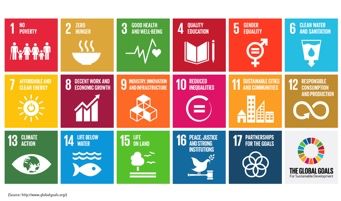
SDGs: The GDS-Index is continually committed to the 2030 Agenda, and we strive to
mainstream the integration of the 17 Sustainable Development Goals into the
management of destinations globally.

GSTC Destination Criteria: We use the GSTC-D v2 criteria to inform the development
of the GDS-Index criteria, ensuring that we remain relevant for business and leisure
tourism.
UNWTO: We are an official partner of the UN One Planet Sustainable Tourism
Programme, and integrate key components of the One Planet Vision into the criteria
European Cities Marketing DMMO Continuity Checklist: We have also referenced this
checklist which is so relevant for tourism and events destinations during this
challenging time.

Benchmarking categories and methodology

Criteria
The 2021 GDS-Index comprises of 71 indicators that evaluate the destinations across
four key areas.

Environmental Performance:
17 questions – includes a city’s performance pertaining to its policies and
infrastructure, such as climate change commitment, carbon emissions, renewable
energies, resource and water management, public transport and air pollution levels.

Social Progress Performance:
11 questions – indicates the performance of the city against indicators of SDG
integration, Corruption, Personal Safety, Access to Information and
Communications, Health and Wellness, Inclusiveness, using external sources such as
the Social Progress Index, and Corruption Perceptions Index.

Supplier Performance:
13 questions – addresses the sustainability commitment and performance of the
local meetings' industry supply chain, including airports, events agencies, hotels,
venues and restaurants.

Destination Management Performance:
30 questions – indicates the sustainability commitment of the convention bureau or
destination management organisation, including questions pertaining to maturity of
a destination’s sustainability and regeneration strategy, leadership, communication
of sustainability initiatives to support client planners, and the rigorousness of their
reporting on sustainability operations.
Data collection and verification
Once signed up as a member of the GDS-Index, the municipality or destination
management organisation, gather data from stakeholders, and complete an online
questionnaire using our OMNI data portal. They answer the questions using locally
available data, alongside supporting evidence. Consultants from the GDS-Index
then evaluate the submission, looking for errors in the data before verifying it. Valid
evidence must be submitted to qualify each answered criterion. Failure to provide
relevant evidence could result in the loss of points.
Only after this assessment can the benchmarking results be released to the
destination and made available online.

Data sources
The Index criteria evaluates 28 quantitative data points such as recycling/landfilling
rates or percentages of third- party certified hotel rooms; and 41 qualitative
concepts such as the destination’s commitment to sustainability, the existence of a
destination sustainability strategy or maturity of their reporting practices.
The quantitative data submitted by the destinations should originate from official
sources, such as the city or the country’s statistics office or from publicly available
data from credible sources such as The World Bank’s databank. Where there is no
comparable city level data, a regional or national value is taken. As for qualitative
indicators, usually it is information collected by the Destination Management
Organisation, Convention Bureau or city with the help of their partners (city
departments, hotel associations etc).

Scoring
Each performance indicator is assigned a number of maximum points, and
according to how well the destination fulfils each indicator, it obtains some of these
points, no points or all points (a full score). All of the indicators’ points for each
category are then aggregated to get the category score and calculated as
following, where i = indicator and c = category.

                                                          ./ℎ12324 561789"
                !"#$%&' ):          Category ScoreC = ∑ +                  ,
                                                         :.;1:
CITY ENVIRONMENTAL PERFORMANCE CRITERIA
2021 Criteria
Category 2021 Indicator Scoring
Number
Does the city have a Climate Change Mitigation and Adaptation strategy?
- City has a climate change mitigation strategy 1 point
- City has a climate change adaptation strategy 1 point
EN-1
- Strategy includes a roadmap to carbon neutrality 1 point
- Strategy includes reference to tourism 1 point
- Strategy includes reference to events and meetings 1 point
Has the city signed up to an international movement to measure and reduce GHG
emissions inline with the Paris agreement?
EN-2 1 points
-Yes
-No
> 71% reduction - 4 points
Climate, Energy 51 - 70% reduction - 3 points
& Emissions What are the city's emission reduction targets for 2030 compared to business as usual 31 - 50% reduction - 2 points
EN-3
levels? Please state the reference year. 20 - 30% reduction - 1 point
40% - 4 points
sources? 30% > 39.9% - 3 points
EN-5 20% > 29.9% - 2 points
Please calculate electricity consumed (not produced) from renewable sources, divided 10% > 19.9% - 1 point
by total electricity consumed from all sources. < 10% - 0 points
Does the city have a publicly available circular economy strategy? Select all that apply.
- Advanced circular economy strategy exists that focuses on designing out waste and
2 points
pollution, increasing material and product reuse and regenerating natural systems
EN-6
- Basic circularity strategy exists focusing on recycling and waste management 1 point
- Strategy explicitly includes tourism and events 1 point
- Performance report produced in last 3 years 1 point
> 50% - 0 points
35% > 50% - 1 point
EN-7 What percentage of the city’s municipal solid waste has been disposed of in a landfill? 20% > 35% - 2 points
Resources 10% > 20% - 3 points
0% to 10% - 4 points
> 71% - 4 points
51% > 70% - 3 points
What percentage of city's solid municipal waste is recycled? Please include composting
EN-8 31% > 50% - 2 points
but do not include incineration.
15% > 30% - 1 point
< 15% - 0 points
Very low < 299 kg/yr - 3 points
Low 300 > 449 kg/yr - 2 points
EN-9 What is the annual total collected municipal solid waste (MSW) per capita (Kg/capita)?
Medium 450 > 599 kg/yr - 1 points
High > 600 kg/yr - 0 points
Very Low (101) - 0 points
> 80% - 4 points
60% > 79% - 3 point
EN-12 What percentage of city wastewater receives centralised treatment? 40% > 59% - 2 points
20% > 39% - 1 points
0% to 19% - 0 points
Water
90 -100 - 4 points
75-90 - 3 points
EN-13 What is the country's water and sanitation score on the Social Progress Index 50-75 - 2 points
25-50 - 1 point
0-24 - 0 points"
30 km = 0 points
Transport
Does the city have an integrated mobility plan and/or initiatives to improve citizen health
                          and reduce pollution? Please select what is included.
 Transport
                           - Transport affordability                                                                     1 point
                  EN-15    - Soft mobility (i.e. walking, pedestrianisation, biking strategies)                          1 point
                           - Low carbon public transport                                                                 1 point
                           - Facilitation of soft mobility connections (i.e. bicycles on trains, electrical car rental
                                                                                                                         1 point
                           from airports)
                          Does the city have a biodiversity strategy, and what does it include?
                           - Yes, the city has a biodiversity strategy                                                   1 point
                           - The strategy is time-bound with a regular monitoring and revision process in place          0.5 points
                           - Different biodiversity threats are identified, alongside action plans and policies to
                                                                                                                         0.5 points
                  EN-16    manage and mitigate them
                           - It was developed with proper stakeholder engagement (e.g. conservationists and
Biodiversity               scientists, universities, NGOs and organisations, local communities, indigenous               0.5 points
                           peoples, general public, etc.)
                           - Strategy includes reference to tourism and/or events                                        0.5 points
                                                                                                                         > 1000 ha - 4 points
                                                                                                                         500 > 999 ha - 3 points
                  EN-17   What is the city's green and blue area (hectares) per 100,000 population?                      201-499 ha - 2 points
                                                                                                                         101-200 ha - 1 point
CITY SOCIAL PERFORMANCE CRITERIA

                  2021 Criteria
   Category                                                                 2021 Indicator                                                     Scoring
                    Number
                      SO-1        Is the city's sustainability strategy aligned with the UN Sustainable Development Goals?          3 Points
                                                                                                                                >80 - 4 Points
                                                                                                                                70 - 80 - 3 Points
     SDGs                         What is the country's performance at implementing the UN Sustainable Development Goals on the
                      SO-2                                                                                                      60 - 70 - 2 Points
                                  UN SDG Index?
                                                                                                                                50 - 60 - 1 Point
DESTINATION SUPPLIER PERFORMANCE CRITERIA
2021 Criteria
Category 2021 Indicator Scoring
Number
> 80% - 4 points
What percentage of the destination’s hotel room inventory has an active 3rd party 50% > 79% - 3 points
SU-1 sustainability certification? See the guiding notes for the relevant hotel room numbers 25% > 49% - 2 points
that are determined per population size. 10% > 24% - 1 point
< 10% - 0 points
Are there destination wide initiatives or programmes in place that specifically target
hotels to create a more circular economy? Please select all that apply.
- Food waste reduction programme 0.5 points
SU-2
- Single use and plastic elimination programme 0.5 points
Hotels
- Composting programme 0.5 points
- Publicly available report on performance (produced in last 2 years) 0.5 points
Does the destination have a programme promoting and supporting hotels with a
commitment to sustainable food? Please select the areas that the programme addresses.
- Sustainable/Organic produce 0.5 points
SU-3
- Locally grown and made produce 0.5 points
- Plant-based healthy options 0.5 points
- Cultural, dietary and allergy restrictions 0.5 points
>68% - 2 points
What percentage of the destination's key airport(s) have a current third party
33%-67% - 1 point
SU-4 certification (i.e. ISO 14001) for its management of sustainability? Please calculate an
0-32% - 0 points
average if there is more than one airport.
Airport
> 80% - 3 points
What percentage of the destination's key airports are carbon neutral for their direct 50% > 79% - 2 points
SU-5
emissions (not flights)? Please calculate an average if there is more than one airport. 25% > 49% - 1 point
< 24% - 0 points
> 80% - 4 points
50% > 79% - 3 points
What percentage of event agencies located in the destination have a formal written
SU-6 25% > 49% - 2 points
sustainability policy?
10% > 24% - 1 point
Less than 10% -0 points
Agencies
> 80% - 4 points
50% > 79% - 3 points
What percentage of event agencies located in the destination have an active third
SU-7 25% > 49% - 2 points
party sustainability certification?
10% > 24% - 1 point
Less than 10% -0 points
Are there destination wide initiatives or programmes in place that specifically target
restaurants to create a more circular economy? Please select all that apply.
- Food waste reduction programme 1 point
SU-8
- Single use and plastic elimination programme 1 point
- Composting programme 1 point
- Publicly available report on performance (produced in last 2 years) 1 point
Does the destination have a programme promoting and supporting restaurants and
Restaurants caterers with a commitment to sustainable food? Please select the areas that the
programme addresses.
SU-9 - Sustainable/Organic produce 1 point
- Local produce 1 point
- Plant-based healthy options 1 point
- Cultural, dietary and allergy restrictions 1 point
Does the destination promote and incentivise third party certification for restaurants and
SU-10 1 point
caterers with a commitment to sustainable food?
> 80% - 4 points
50% > 79% - 3 points
What percentage of the destination’s dedicated congress, conference and exhibition
Venues SU-11 25% > 49% - 2 points
centres have active third-party sustainability certification for the operation of the facility?
10% > 24% - 1 point
Less than 10% - 0 points
> 80% - 3 points
What percentage of the destinations universities, colleges and hospitality schools have
50% > 79% - 2 points
SU-12 integrated sustainability into their undergraduate tourism and event management
25% > 49% - 1 point
curriculum?
< 24% - 0 points
Academia
> 80% - 3 points
The destinations universities colleges and hospitality schools have integrated sustainability 50% > 79% - 2 points
SU-13
into their postgraduate (e.g. masters) tourism and event management curriculum? 25% > 49% - 1 point
< 24% - 0 points
Copyright GDS-Index.DESTINATION MANAGEMENT PERFORMANCE CRITERIA
2021 Criteria
Category Indicator Scoring
Number
Has the DMO established and published a long term vision and plan (+3 years) for an improved
future state of sustainability of the tourism and events sector? Please select all that apply.
- Sustainability vision and action plan established for events 1 point
DM-1
- Sustainability vision and action plan established for tourism 1 point
- Multi-year strategy (+3 years) 1 point
- Aligned to the city's overall development agenda (not just tourism and events) 1 point
- Integrates the UN Sustainable Development Goals 1 point
Which of the following considerations are included in your destination's COVID-19 recovery plan?
- Environmental & Climate Action 0.5 points
- Upskilling of local ecosystem 0.5 points
DM-2
- Provision of new skills to a new segment of population 0.5 points
- Diversification of markets and/or products 0.5 points
- Resident sentiment analysis and management 0.5 points
- Other (please share) 0.5 points
Does the DMO strategy contain objectives, KPIs and an action plan that aim to generate socially
positive outcomes? Please select all that apply.
- Clearly defines 1 or more impact objectives for the change that is desired within the
0.5 points
destination in a defined timeline
- Contains a minimum of 1 indicator (KPI) that can be measured against to demonstrate
DM-3 0.5 points
progress towards the objective
- Clearly defines an action plan and initiatives that will be put in place to achieve each
0.5 points
objective through the DMOs events strategy
- Clearly defines an action plan and initiatives that will be put in place to achieve each
0.5 points
objective through the DMOs tourism strategy
Does the DMO strategy contain objectives, KPIs and an action plan that aim to generate
environmentally positive outcomes? Please select all that apply.
- Clearly defines 1 or more impact objectives for the change that is desired within the
0.5 points
destination in a defined timeline
Strategy - Contains a minimum of 1 indicator (KPI) that can be measured against to demonstrate
DM-4 0.5 points
progress towards the objective
- Clearly defines an action plan and initiatives that will be put in place to achieve each
0.5 points
objective through the DMOs events strategy
- Clearly defines an action plan and initiatives that will be put in place to achieve each
0.5 points
objective through the DMOs tourism strategy
Does the DMO strategy contain objectives, KPIs and an action plan that aim to generate
economically positive outcomes? Please select all that apply.
- Clearly defines 1 or more impact objectives for the change that is desired within the
0.5 points
destination in a defined timeline
- Contains a minimum of 1 indicator (KPI) that can be measured against to demonstrate
DM-5 0.5 points
progress towards the objective
- Clearly defines an action plan and initiatives that will be put in place to achieve each
0.5 points
objective through the DMOs events strategy
- Clearly defines an action plan and initiatives that will be put in place to achieve each
0.5 points
objective through the DMOs tourism strategy
Has the DMO strategy been developed with widespread stakeholder consultation? Please select
all that apply and explain how the stakeholder feedback is reflected in the strategy.
- Involvement of key industry partners (hotels, venues, agencies) 1 point
DM-6 - Involvement of visitors and event attendees to the destination 1 point
- Involvement of clients 1 point
- Involvement of key local government departments 1 point
- Involvement of local community and citizens 1 point
Has the DMO sustainability strategy and its development process been reviewed and/or updated
and publicly released to principle stakeholder groups within in the last 3 years? Please select all
that apply.
- Publicly released to principle stakeholder groups 0.5 points
DM-7
- Reviewed and/or updated in last 3 years 0.5 points
- Reviewed and/or updated in the last year: to include learnings, risks, new goals/KPIs and
0.5 points
plans as a result of major issues and crisis (i.e. COVID-19 pandemic, terrorism disasters)
- Strategy describes consultation and development process 0.5 points
Does the DMO have a documented sustainability policy signed by the most senior executive
DM-8 support, that is available publicly and defines the organisation's vision, commitment and key 1 point
goals on sustainability?
Does the DMO have a sustainable procurement policy that clearly defines
DM-9 1 point
procurement/purchasing practices, expectations and requirements from suppliers?
Does the DMO hold a current third party sustainability certification for its own event and/or office
Policy &
operations or is in the formal process of obtaining one?
Certification DM-10
- Certification obtained and valid 2 points
- Certification in formal process 1 point
Does the destination hold a current third party sustainable destination certification or is in the
formal process of obtaining one?
DM-11Policy &
Certification
DM-11
- Certification obtained and valid 2 points
- Certification in formal process 1 point
How does the DMO manage the development and governance of the sustainable tourism and
events program? Please select all that apply.
- Internal sustainability team / committee 1 point
Governance DM-12 - Dedicated sustainability manager 1 point
- committee with external industry stakeholders (e.g. venues, hotels) 1 point
- Committee with external non-industry stakeholders (e.g. NGOs, authorities, citizens or clients) 1 point
Do new and existing staff in the DMO receive periodic guidance and training regarding the
sustainability strategy, including their roles and responsibilities in its delivery? Please select all that
DM-13 apply.
- All new staff are trained 1 point
- All existing staff have been trained, and must be retrained/updated every 2 years 1 point
Capacity
Building Has the DMO supported or organised sustainability training for tourism and events suppliers in the
DM-14 1 point
last year (i.e.. hotels, venues, F&B, activity companies, restaurants, production companies)?
Has the DMO supported or organised sustainability training for meetings and events planners and
DM-15 1 point
organisers in the last year?
Does the DMO provide support to suppliers in the form of local destination advice, incentives or
DM-16 1 point
funding to enable them to increase their sustainability performance? Please specify.
Does the DMO have an up to date system (reviewed in last 2 years) to measure and monitor on
environmental, economic, and social impact and performance of tourism? Please select all that
apply.
- Data collected showing how tourism and/or events positively and/or negatively impacts
1 point
DM-17 economic issues in the destination
- Data collected showing how tourism and/or events positively and/or negatively impacts
1 point
social issues in the destination
- Data collected showing how tourism and/or events positively and/or negatively impacts
1 point
environmental issues in the destination
Does the DMO have an up to date system (reviewed in last 2 years) to measure and monitor on
environmental, economic, and social impact and performance of events? Please select all that
apply.
- Data collected showing how tourism and/or events positively and/or negatively impacts
1 point
DM-18 economic issues in the destination
- Data collected showing how tourism and/or events positively and/or negatively impacts
1 point
social issues in the destination
- Data collected showing how tourism and/or events positively and/or negatively impacts
1 point
Measurement environmental issues in the destination
& Reporting Is the data collected, analysed and incorporated to influence DMO strategy development?
Please select all that apply.
DM-19
- Data and insights used to develop business events strategy and policy 1 point
- Data and insights used to develop tourism strategy and policy 1 point
How does the DMO publicly communicate and report on sustainable destination strategy AND
performance? Please select all that apply.
- Performance data (KPIs) from the previous and/or current year is displayed via a graphical
1 point
dashboard
DM-20
- Performance data (KPIs) from the previous and/or current year is published on the DMO
1 point
website
- Performance data (KPIs) from the previous and/or current year is included in Annual DMO or
1 point
sustainability report
Does the DMO use official reporting frameworks to improve disclosure on sustainable destination
strategy AND performance? Please select all that apply.
- Sustainability reporting employs SDG goals, targets and indicators 1 point
DM-21
- Sustainability reporting employees a internationally recognised framework; i.e. GRI, CDP, SASB,
1 point
IIRC
- Sustainability report is audited by a third party 1 point
Does the DMO tourism and events website(s) provide information about the destination’s
sustainable events and tourism strategy, performance, and initiatives? Information must be
available in English and local language as a minimum. Please select all that apply.
- Sustainable events strategy and approach 0.5 points
- Sustainable tourism strategy and approach 0.5 points
DM-22
- Sustainability guides and manuals for suppliers, clients and visitors (i.e. a sustainable event
0.5 points
guide)
- Sustainability information about key suppliers (i.e., hotels, venues, agencies, restaurants)
0.5 points
including any Sustainability certificates and credentials
- Best practice examples and stories 0.5 points
Marketing &
Communications Does the DMO have a programme that encourages and promotes local businesses and initiatives
DM-23 1 point
that support social innovation and development of local sustainable products and services?
When exhibiting at trade shows, are booths made from more sustainable materials and/or
reused? Please select all that apply.
DM-24
- Made from bio-based and recycled materials 1 point
- Booth reused for multiple events 1 point
Does the DMO provide information about the destination’s sustainability strategy, performance,
features, suppliers and best practice in its RFP responses and sales information?
DM-25
- Always 2 points
- Sometimes 1 point
Does the DMO actively promote the use of soft mobility and zero emissions forms of transport (i.e.
walking, bicycles, charging infrastructure maps, hydrogen fuelling stations, electric/hydrogen bus
DM-26 transportation services) to visitors and event participants?
AccessibilityDM-26
- Promotion to tourists 1 point
- Promotion to event participants 1 point
Does the DMO have a programme to financially incentivise event participants to use public
1 answer only
Accessibility transport?
- Free Public Transport for all convention and congress visitors 3 points
DM-27
- Discounted Public Transport for all convention and congress visitors 2 points
- Free or Discounted Public Transport for SOME conventions and congresses 1 point
- No public transport in destination 0 points
Does the DMO supply a list of places of interest, transport lines, hotels / venues that supports Yes - 1 point
DM-28
visitors with accessibility challenges to navigate in the destination? Please explain. No - 0 points
Does the DMO provide clients with up to date ideas and resources to support local social,
environmental or economic causes and projects? Please select all that apply and explain.
- Donation programmes for food 1 point
DM-29 - Donation programmes for leftover event materials 1 point
- List of organisations who offer social support programmes and volunteering opportunities for
1 point
events participants and visitors
- Local carbon offsetting programme 1 point
Generating Does the DMO have a legacy and social impact programme for events?
Impact - Provide an impact or legacy framework and tools to clients 1 point
- Provide clients with training on impact or legacy management 1 point
- Provide sustainable event advice and support (supplier recommendations, measurement
1 point
DM-30 tools, local facilities)
- Provide funding or financial incentives to clients to help increase the social, environmental
1 point
and economic impact of events on the destination
- Facilitate formal non-industry partnerships to help clients to generate a long term positive
1 point
impact and legacy in the destination
Copyright GDS-Index.You can also read


