BUILDING CODE REFERENCE GUIDE - Polymeric Cladding - Vinyl Siding Institute
←
→
Page content transcription
If your browser does not render page correctly, please read the page content below
Polymeric Cladding
     BUILDING CODE
    REFERENCE GUIDE
An at-a-glance breakdown of the International, Florida and Canadian building
  codes, performance indicators and regional installation requirements for
        vinyl, polypropylene and insulated exterior cladding products
INTRODUCTION
                                           The following resources provide a deeper understanding
                                           of polymeric cladding.

                                           You’ll find information about I-Code regulations and building codes
                                           for Canada and Florida’s coastal regions, safety and performance
                                           benefits, installation requirements and other technical specifications
                                           in this guide. It was researched and written by the Vinyl Siding
                                           Institute (VSI), the trade association for siding manufacturers.

                                           The purpose of VSI is to further the development and growth
                                           of the vinyl siding and other polymeric cladding industries by:

                                           • Addressing regulatory issues, including material restrictions,
                                             monitoring of building codes, and the education of building code
                                             developers and regulators.

                                           • Helping develop material, product and performance
                                             standards by working through standards-making
                                             organizations and code bodies.

                                           • Sponsoring certification programs that improve the quality
                                             of vinyl siding and its installation.

                                           • Engaging in product stewardship and outreach activities
                                             to enhance the image of the industry and its products.

1   |   2021 I-Codes, 2020 NBCC, 2020 FL Codes
TABLE OF CONTENTS

1       Introduction

3       North America’s Choice

5       What Are I-Codes, NBCC and FBC?

6       International Residential Code

7–8     Understanding the Fire Performance Benefits of Polymeric Cladding

9–10    International Building Code

11      Energy Code & International Wildland-Urban Interface Code

12      National Building Code of Canada

13      Florida Residential Code

14      Florida Building Code

15–16   Understanding Polymeric Cladding Performance in High Wind Regions

17–18   Installing Polymeric Cladding and Soffit in Coastal Areas

19      Ensuring Proper Cladding Installation

20–22   Code Specifications Review: Quick Reference Charts

                                         2021 I-Codes, 2020 NBCC, 2020 FL Codes   |   2
Polymeric Cladding

                     NORTH AMERICA’S CHOICE
        Properly installed                       Polymeric cladding meets the stringent requirements of building codes across the
                                                 United States and Canada. These codes require vinyl siding, insulated vinyl siding
        certified polymeric
                                                 and polypropylene siding to be manufactured and certified to their respective ASTM
        cladding, as                             standards. When manufactured to the appropriate material standard and installed
        required by code,                        correctly, they meet the demands of these regulations, such as providing protection
        can withstand high                       from the elements.

        winds and resist
                                                 For example, properly installed certified polymeric cladding, as required by the code,
        heat, cold, rain                         can withstand high winds—110 miles per hour or more—and resist heat, cold, rain
        and moisture.                            and moisture.

                                                 Although the codes don’t address warranties, the durability of vinyl siding has enabled
                                                 vinyl siding manufacturers to offer warranties that are among the longest and strongest
                                                 in the cladding industry. The leading material Life Cycle Assessment tool has estimated
                                                 the lifespan of vinyl siding to be at least 50 years.1

                                                 CERTIFIED
                                                 These code-recognized products are certified to meet or exceed industry standards
                                                 through a program administered by an independent, accredited
                                                 quality control agency.

                                                 ENERGY EFFICIENT
                                                 Insulated siding is vinyl siding with rigid foam insulation permanently attached to the
                                                 panel. It helps increase the exterior wall’s R-Value and contributes to a home’s energy
                                                 efficiency as a form of continuous insulation, making it a great option for energy
                                                 efficiency compliance.

                                                 1. National Institute of Standards and Technology, Building for Environmental and Economic Sustainability, November 2020

3   |   2021 I-Codes, 2020 NBCC, 2020 FL Codes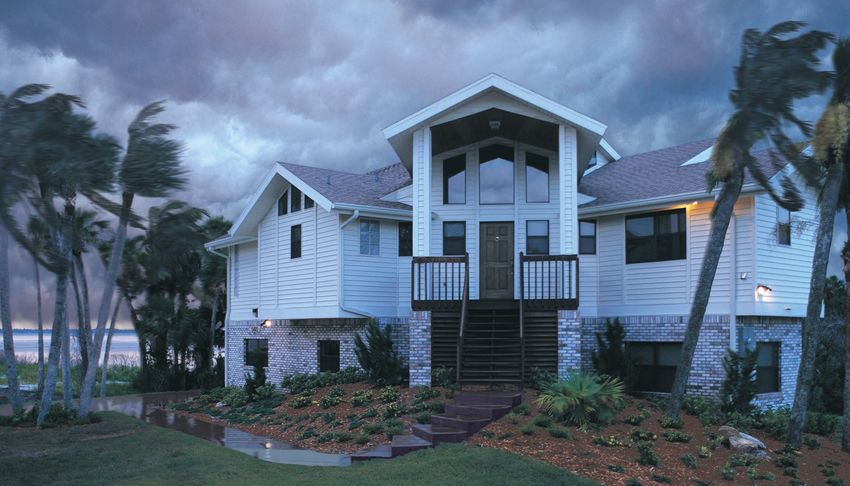
Defining Polymeric Cladding
LEVEL UP CURB APPEAL
Polymeric cladding offers versatile beauty and unbeatable strength. The architectural
polymers create vinyl siding, insulated vinyl siding, polypropylene siding, and other polymeric
claddings like Cellular PVC.

POLYMERIC CLADDING CATEGORIES

       VINYL SIDING               Cladding made primarily of polyvinyl chloride (PVC)

                                  General category for cladding that provides continuous
    INSULATED SIDING
                                  insulation with an R-Value of 2.0 or greater

                                  Insulated cladding using vinyl siding combined with foam
        INSULATED
                                  plastic insulation to produce an R-Value of 2.0 or greater
       VINYL SIDING

     POLYPROPYLENE                Cladding made primarily from polypropylene
         SIDING

                                                                   2021 I-Codes, 2020 NBCC, 2020 FL Codes   |   4
WHAT ARE I-CODES, NBCC AND FBC?

        The International Codes, or I-Codes, published by the International Code           The International Code
        Council, provide a regulatory framework for the construction of homes
                                                                                           Council develops innovative
        and buildings and are adopted by every state in the United States.
                                                                                           and coordinated construction
        I-CODES INCLUDE CONSIDERATIONS FOR RESILIENT                                       and public safety codes
        CONSTRUCTION AND SAFE USE OF CLADDING
                                                                                           through a governmental
        AND ITS ROLE IN PROTECTING AGAINST:
                                                                                           consensus process. This
        WATER                                                                              system of code development
        Both bulk and vapor.
                                                                                           has provided the highest
        WIND                                                                               level of safety in the world
        Products are tested and verified to meet the wind requirement for the majority
                                                                                           for more than 90 years.
        of the country, and certain polymeric cladding has been designed for use in
        coastal high wind areas.

        FIRE
        Codes are determined by risk, building size and occupancy type. In some cases,
        cladding may be required to be a part of an assembly that provides necessary
        fire protection and performance (i.e., flame spread, hourly rated assemblies and
        radiant heat release).

        I-CODES IMPACTING POLYMERIC CLADDING
        The four I-Codes that affect vinyl siding, polypropylene siding, and insulated
        vinyl siding and the buildings they provide regulations for are:

        INTERNATIONAL RESIDENTIAL CODE (IRC)
        One- and two-family dwellings, including townhouses

        INTERNATIONAL BUILDING CODE (IBC)
        Other than one- and two-family dwellings, including apartments and hotels

        INTERNATIONAL ENERGY CONSERVATION CODE (ENERGY CODE)
        Energy efficiency

        INTERNATIONAL WILDLAND-URBAN INTERFACE CODE (IWUIC)
        Communities that are built in designated areas prone to wildfires/forest fires

5   |   2021 I-Codes, 2020 NBCC, 2020 FL Codes
INTERNATIONAL RESIDENTIAL CODE

IRC Chapter 7 provides general product and installation requirements for cladding.   CONSIDERATIONS AND
PRODUCT REQUIREMENTS (IRC R703)                                                      CONDITIONS FOR USE IN HIGH-
Products must be certified and labeled to show they conform to their established     DENSITY DEVELOPMENTS
ASTM standard:

                                                                                     • In general, vinyl siding, polypropylene
                                                                                       siding and insulated vinyl siding are not
                                                                                       limited in their application with homes
                                                                                       built under the IRC.

                                                                                     • In two instances, performance measures
   VINYL SIDING               INSULATED VINYL SIDING        POLYPROPYLENE SIDING       related to high density construction and
ASTM D3679 — R703.11            ASTM D7793 — R703.13         ASTM D7254 — R703.14
                                                                                       fire will apply:
INSTALLATION REQUIREMENTS
                                                                                           – IRC R302 General

CLADDING — IRC R703 provides prescriptive and performance
                                                                                           – IRC Table R302.1 (1) place
installation requirements:
                                                                                             requirements of a 1-hour tested
• In general, vinyl and insulated vinyl siding are installed 16" on center                   assembly according to ASTM E119
  using roofing nails, although variations are allowable including other                     on exterior walls that are 5' or
  approved fasteners like staples and screws.                                                closer to the property line

• Polypropylene siding panels range in size and are unique. Manufacturer’s           • Vinyl siding is a part of many
  installation instructions should be reviewed and in many cases it may be less        E119-rated assemblies.
  than 16" on center. It must be installed over some type of wood sheathing.
                                                                                     Polypropylene Siding

                                                                                     IRC R703.14.2 limits the use of

                                                                                     polypropylene siding on walls that

                                                                                     are closer than 5' to the property line

                                                                                     (separation distance) and on walls 10'

                                                                                     or closer to walls of other buildings on

SOFFIT — IRC Section R704 provides specific requirements                             another lot unless a certification of flame
for the installation of vinyl soffit panels:                                         spread index is provided in accordance

• According to Section R704.1 in high wind areas, the soffit panels must be          with R703.14.3. Note, this provision does

  designed to meet the appropriate design pressure.                                  not apply to walls that are perpendicular to

                                                                                     the line used to determine the separation
• R704.2.1 requires that each soffit panel be fastened at both the fascia
  and wall and that there be no unsupported spans greater than 16"                   distance (example: front and rear elevations
  without the use of an intermediate nailing strip.                                  of townhouse construction).

• Where soffit is being used in high-wind areas, it must comply
  with Section R704.3.

                                                                                           2021 I-Codes, 2020 NBCC, 2020 FL Codes   |   6
UNDERSTANDING THE FIRE PERFORMANCE
                              BENEFITS OF POLYMERIC CLADDING

        Built-In Protection
        MEET OR EXCEED THE INDUSTRY
        STANDARDS FOR SAFETY
        According to the U.S. Census Bureau,2 vinyl siding is the most popular choice
        for exterior cladding in residential homes in the Midwest and New England.

        For years, polymeric products have been a recognized material that
        meet or exceed building codes and industry standards for safety.

        Approved for use in all types of construction, including:

        • Non combustible rated structures up to 40 feet

        • One-hour fire-rated assemblies

        • Wildfire zones

        • Other fire-resistive construction

        HARDER TO IGNITE,
        EASIER TO EXTINGUISH
        All organic materials — i.e., anything containing carbon — will ignite.
        But materials with higher ignition temperatures are naturally safer.

        IGNITION POINTS:

        2. 2019 American Housing Survey

7   |   2021 I-Codes, 2020 NBCC, 2020 FL Codes
UNDERSTANDING THE FIRE PERFORMANCE
                        BENEFITS OF POLYMERIC CLADDING

Less than 4% of all residential fires start outside
the structure but still do not necessarily originate
with the exterior cladding.

RESIDENTIAL FIRES: WHAT TO KNOW
                                                                                                                                                 3

Exterior cladding is involved in only a small fraction of all residential fires.
Most residential fires begin inside the home and are contained within the
structure of origin.

According to a report from the National Fire Protection Association (NFPA),
fewer than 3% of all fires go beyond the source inside residential structures
and fewer than 2% of these occurrences are related to the exterior wall
surface. Less than 4% of all residential fires start outside the structure
and do not necessarily originate with the exterior cladding.

PVC SLOWS FLAMES FROM SPREADING
PVC, the primary ingredient in vinyl siding, doesn’t release a lot of energy
when it burns and will not readily spread flames on its own.4 Vinyl siding
also needs unusually high amounts of oxygen to burn and stay burning,
so it extinguishes more easily.

Plus, when any organic material burns, it releases smoke that contains
many different combustion products — including toxic gases. There is no
research to substantiate claims that vinyl materials release unusually
toxic combustion products.5

3. National Fire Protection Association Fire Analysis and Research Division, Home Structures Fires, November 2020
4. Results of ASTM E162-06 test, Standard Test Method for Surface Flammability of Materials Using
   a Radiant Heat Energy Source
5. Fire Properties of Polyvinyl Chloride, Vinyl Institute, 2017

                                                                                                                    2021 I-Codes, 2020 NBCC, 2020 FL Codes   |   8
INTERNATIONAL BUILDING CODE

        IBC Chapter 14 provides general product and installation requirements for cladding.
        PRODUCT REQUIREMENTS (1403)

        Products must be certified and labeled to show they conform to their established
        ASTM standard:

        • Insulated vinyl siding is not addressed in the IBC. Building officials may rely on
           code compliance reports for verification based on the established standard for
           the product category, ASTM D7793.

            VINYL SIDING                  INSULATED VINYL SIDING     POLYPROPYLENE SIDING
         ASTM D3679 — 1403.9                   ASTM D7793 —           ASTM D7254 — 1403.12
                                           Code Compliance Reports

        • Table 1404.3(3) counts vinyl siding and polypropylene siding as vented
           claddings and allows the elimination of vapor retarders because of its
           strong moisture management characteristics.

        INSTALLATION REQUIREMENTS

        • In general, vinyl siding and insulated vinyl siding are installed 16" on
           center using roofing nails, although variations can be done including other
           approved fasteners like staples and screws. Prescriptive requirements for
           vinyl siding installation include that non-corrosive roofing nails that can
           penetrate the nailable substrate at least 1 1/4" must be spaced no more
           than 16" for horizontal siding and 12" for vertical siding and according to
           the manufactured installation instructions. (IBC 1404.14)

        • Polypropylene siding panels range in size and are unique. Manufacturer’s
           installation instructions should be reviewed because in many cases it
           may be less than 16" on center. It must be installed over some type of
           wood sheathing.

        • When installing polypropylene siding in high-density settings (less than 5
           feet to property line), the product must have a certified E84 test report.

9   |   2021 I-Codes, 2020 NBCC, 2020 FL Codes
INTERNATIONAL BUILDING CODE
CONSIDERATIONS AND CONDITIONS FOR USE
IN HIGH-DENSITY DEVELOPMENTS AND WITH
NONCOMBUSTIBLE CONSTRUCTION
• In general, polymeric cladding is allowed in all types of construction,
including noncombustible construction. If the polymeric cladding
is used with noncombustible construction, certain test results are
demonstrated according to 1405.
• Specific information on the use of insulated vinyl siding will be listed
in the code compliance report.
• Table 601 and 705.5 place certain fire resistance ratings on walls
depending on the occupancy, type, density (distance to lot line) and
size of the building based on ASTM E119 tests.
• Polymeric cladding is a part of many E119-rated assemblies.
In addition, vinyl siding specifically is allowed to be part of 722’s
calculated fire resistance approach through Table 722.6.2(3).
• 1405 provides the use of polymeric cladding (and other combustible
cladding) with noncombustible construction (Types I, II, III, IV).
• If polymeric cladding is used with noncombustible construction
(Types I, II, III, IV) it must be tested according to NFPA 268 (1405.1)
and perform to certain levels depending on the building’s
fire separation distance. This test method demonstrates the ability
of other combustible materials to not ignite under certain radiant
heat conditions.
2021 I-Codes, 2020 NBCC, 2020 FL Codes | 10ENERGY CODE & INTERNATIONAL
WILDLAND-URBAN INTERFACE CODE
INTERNATIONAL ENERGY Insulated siding can be used
CONSERVATION CODE (IECC) to meet the R-Value/U-factor
The IECC prescribes insulated sidings as a building material that can
requirements of the IECC.
be used as a form of continuous insulation outside of the building framing
to provide the required total wall R-Value.
Insulated sidings can be used to meet the R-Value/U-factor requirements R-Value 2.0
or greater
of the IECC. The tested R-Value for insulated siding is required by the code
N1101.10.1 (R303.1.1) to be labeled on the package of the insulated cladding.
IRC N1102.1.3 (R402.1.3) of the IECC allows the R-Value of insulated siding to
be used as part of the prescriptive R-Value computation approach and may be
used to satisfy the R-Value insulation requirements of IRC N1102.1.3 (R402.1.3)
through the requirements of either Table R402.1.2 or R402.1.3.
INTERNATIONAL WILDLAND-
URBAN INTERFACE CODE
Polymeric cladding is allowed for use under this code in all conditions
with certain performance requirements.
Chapter 5 of the IWUIC breaks down various risk types for developments
relative to wildfire and then places certain materials requirements. Three
different types of risk categories impact the type of Ignition Resistant (IR)
wall construction requirement.
In the most stringent IR wall construction (IR1 and IR2), according to Sections
504 and 505, polymeric cladding may be used so long as it is a part of a 1-hour
E119-rated assembly and exhibits a flame spread index no greater than 25.
When an IR3 condition applies, there are no requirements or limitations on a
specific wall construction or cladding type.
11 | 2021 I-Codes, 2020 NBCC, 2020 FL CodesNATIONAL BUILDING CODE OF CANADA
ESTIMATED PUBLICATION DATE LATE 2021
The National Building Code of Canada (NBCC) 2020 establishes technical
provisions for the design and construction of new buildings. It also applies to the
alteration, change of use and demolition of existing buildings.
Here are the codes that impact polymeric cladding product performance and
installation requirements when working in Canada.
NBCC provides general product and installation requirements for polymeric cladding.
PRODUCT REQUIREMENTS (NBCC 9.27)
• 9.27.12.1[1] states that vinyl siding shall be manufactured
in accordance with ASTM D3679.
• 9.27.12.1[2] states that insulated vinyl siding shall be manufactured
in accordance with ASTM D7793.
• 9.27.12.1[3] states that vinyl soffit shall be manufactured
in accordance with ASTM D4477.
• 9.27.13.1[1] states that polypropylene siding shall be manufactured
in accordance with ASTM D7254.
• 9.27.12.1[4] requires vinyl siding, insulated vinyl siding and soffit
to have flame spread rating when required by the code.
• 9.27.13.1[2] requires polypropylene siding to have a
flame spread rating when required by the code.
VINYL SIDING INSULATED VINYL SIDING POLYPROPYLENE SIDING
ASTM D3679 — 9.27.12.1[1] ASTM D7793 — 9.27.12.1[2] ASTM D7254 — 9.27.13.1[1]
INSTALLATION REQUIREMENTS
• 9.27.5 states prescriptive requirements for the installation of vinyl siding,
insulated vinyl siding and polypropylene siding. Nails shall be a minimum
of 38 mm long and spaced no greater than 400 mm, and all fasteners shall
be installed in the center of the nail slot.
• 9.27.5.7 [2] specifies that all fasteners must be installed into
a nail-holding base with a minimum depth of 32 mm or into framing.
2021 I-Codes, 2020 NBCC, 2020 FL Codes | 12FLORIDA RESIDENTIAL CODE
Chapter 7 provides general product and installation requirements for cladding.
PRODUCT REQUIREMENTS
Products must be certified and labeled to show they conform to their
established ASTM standard:
• R301.9 (R703.11.1 and R703.13.1) requires cladding and soffit to meet the
wind loads in the code.
VINYL SIDING INSULATED VINYL SIDING POLYPROPYLENE SIDING
ASTM D3679 — R703.11 ASTM D7793 — R703.13 ASTM D7254 — R703.14
INSTALLATION REQUIREMENTS
THE FOLLOWING ARE PRESCRIPTIVE AND PERFORMANCE
INSTALLATION REQUIREMENTS FOR FLORIDA:
• In general, vinyl and insulated vinyl siding meet the wind loads in
accordance with Table R301.2(2) and R301.2(3) when installed 16" on the
center using roofing nails, although variations are allowable, including other
approved fasteners like staples and screws, when following manufacturer’s
instructions. Prescriptive requirements for vinyl siding installation include
that noncorrosive roofing nails that can penetrate the nailable substrate
at least 1 1/4" must be spaced no more than 16" for horizontal siding
and 12" for vertical siding and according to the manufactured installation
instructions. (R703.11.1)
• Polypropylene siding must be installed over wood sheathing. It cannot
be installed over foam sheathing only. Noncorrosive roofing nails or other
approved fasteners must penetrate the nailable substrate at least 1 1/4".
Check manufacturer’s installation instructions for proper spacing, no more
than 16" on center, in some cases much less. (R703.14.1)
• Soffits must meet the prescriptive installation requirements in section R704.
CONSIDERATIONS FOR HIGH-DENSITY SETTINGS
• When installing polypropylene siding in high-density settings (less than
5 feet to property line), the product must have a certified E84 or UL723
flame spread test report. (R703.14.3)
13 | 2021 I-Codes, 2020 NBCC, 2020 FL CodesFLORIDA BUILDING CODE
FLORIDA
Chapter 14 provides general product and installation requirements for cladding
PRODUCT REQUIREMENTS
ENERGY CODE
Products must be certified and labeled to show they conform to their
In addition to the code defined on page 9,
established ASTM standard:
insulated vinyl siding with a minimum R-2
• 1404.9 requires vinyl siding to be certified to D3679. can be used for energy code compliance as
a form of continuous insulation in Florida.
• 1404.12 requires polypropylene siding to be certified to D7254.
• T1405.3.4 counts vinyl siding and polypropylene siding as vented claddings
and allows the elimination of vapor retarders because of their strong moisture
management characteristics.
• Insulated vinyl siding is not addressed in the Florida Building Code (FBC).
Building officials may rely on code compliance reports for verification based
on the established standard for the product category, ASTM D7793.
VINYL SIDING INSULATED VINYL SIDING POLYPROPYLENE SIDING
ASTM D3679 — 1404.9 ASTM D7793 — ASTM D7254 — 1404.12
Code Compliance Report
INSTALLATION REQUIREMENTS
• In general, vinyl siding and insulated vinyl siding are installed 16" on
center using roofing nails, although variations can be done including other
approved fasteners like staples and screws. Prescriptive requirements for
vinyl siding installation include that noncorrosive roofing nails that can
penetrate the nailable substrate at least 1 1/4" (although the code currently
states 3/4") must be spaced no more than 16" for horizontal siding and 12"
for vertical siding and according to the manufactured installation instructions.
(1405.14.1)
• Polypropylene siding panels range in size and are unique. Manufacturer’s
installation instructions should be reviewed because in many cases it
may be less than 16" on center. It must be installed over some type of
wood sheathing.
• In Florida, 1405.14 limits vinyl siding, unless shown to be able to perform,
to 40 foot buildings.
2021 I-Codes, 2020 NBCC, 2020 FL Codes | 14UNDERSTANDING POLYMERIC CLADDING
PERFORMANCE IN HIGH WIND REGIONS
Today’s product packaging makes it easy to
DEFY THE STORM
identify the right products for high wind areas.
Polymeric claddings are manufactured
DEFINING THE DESIGN to perform under pressure from the
PRESSURE RATING elements. Certified products can even
withstand winds of at least 110 mph.
The Standard Wind Load Design Pressure Rating measures the wind
load resistance of cladding, windows, doors and other wind load-bearing
products. The rating indicates each product’s ability to withstand pounds
per square feet (psf) of pressure from wind load in its designed use.
For example, in Florida, design pressure requirements can vary from 30 psf
in the state’s center up to 60+ on the coast, depending on the building’s
height and other factors.
15 | 2021 I-Codes, 2020 NBCC, 2020 FL CodesUNDERSTANDING POLYMERIC CLADDING
PERFORMANCE IN HIGH WIND REGIONS
Wind speed is a standard measurement, but in reality,
TRANSLATING DESIGN
it’s an approximation of product performance based on
PRESSURE TO WIND SPEED1
an average home in an average location under average
installation methods. Standard Wind Load Design Approximate Wind
Pressure Rating (psf) Speed (mph)
The specified design pressure rating for cladding is calculated 30.0 psf 115 mph2
based on many factors beyond wind speed, including building
height, building orientation, local geography and more.
>30.0 – 45.6 psf 116 – 149 mph
When choosing the right polymeric cladding, refer to the
Standard Wind Load Design Pressure Rating, a more accurate >45.6+ psf 150+ mph
predictor of a product’s performance in varied conditions.
1. U
ltimate design wind speed values above are sourced from standards outlined in
the International Residential Code (IRC 2015)
To ensure full-strength performance in extreme conditions,
2. V
alues are nominal design 3-second gust wind speeds in miles per hour (m/s) at 33
proper installation is vitally important. Find installation tips ft (10m) above ground for Exposure C category
for coastal regions and more on page 17. Design pressure ratings are based on tests using D5206 with a standard installation
of 16" on center.
LOCATE THE DESIGN
PRESSURE RATING
Verify the design pressure rating or other detailed information
about polymeric cladding products listed on the product label.
2021 I-Codes, 2020 NBCC, 2020 FL Codes | 16INSTALLING POLYMERIC CLADDING
AND SOFFIT IN COASTAL AREAS
Current codes regulate coastal areas and place stringent performance
VINYL SIDING
requirements on cladding installed in these areas. Polymeric claddings are a
INSTALLATION TIPS
great choice. Polymeric claddings offer beauty and stand up to more extreme
INSTALLING THE STARTER STRIP
coastal conditions. Use these quick tips for installing polymeric cladding and
soffit in these regions. • In normal wall applications, starter strips
are required.
UNDERSTANDING THE USE OF • Vinyl siding, insulated vinyl siding and
POLYMERIC CLADDING AND SOFFIT polypropylene siding starter strips
IN HIGH-WIND REGIONS are unique and may not be used
interchangeably so follow manufacturer
THESE UPDATES WILL HELP YOU STAY COMPLIANT AND ACHIEVE THE specifications for each product category.
HIGHEST PERFORMANCE IN COASTAL REGIONS:
• A starter strip not matched to the lock
• The design pressure rating reflects the highest wind application for which the design of the cladding could cause the
cladding is suitable and allows building code officials in high-wind regions to bottom course to blow off, which can
determine the appropriate cladding and soffit to install. lead to product failure.
•V
inyl siding, insulated vinyl siding and polypropylene siding products • Do not use J-channel or other types of
have a wind design pressure rating published as part of the product trim in place of a starter strip except
certification program. when installing vertical siding.
• Vinyl soffit in high wind regions needs to exhibit a proper design pressure rating.
•V
inyl siding and insulated vinyl siding products designed for use in high-wind
regions typically have reinforced nail hems (i.e., double or rolled-over nail
hems versus single-nail hems).
•P
olypropylene siding in high-wind regions typically needs to be installed 8" to
10" on center based on manufacturer’s installation instructions.
The polymeric
cladding industry
makes it easy to
specify the right
products for
high wind regions.
17 | 2021 I-Codes, 2020 NBCC, 2020 FL CodesINSTALLING POLYMERIC CLADDING
AND SOFFIT IN COASTAL AREAS
FINISHING POLYPROPYLENE SIDING INSTALLATION TIPS
Furring strip Outer slot if siding
J-channel Utility trim Utility trim used to build is cut near butt leg
out utility trim
for proper
CLADDING UNDER WINDOWS
Inner slot if siding is
angle of cut near top of face AT THE TOP OF WALL
Snap lock siding
Snap lock
punch Siding Siding panel
punch
Siding cut near top • Failure to use proper connection
panel
panel can create a weak point for
Siding panel
cut near butt leg the system.
Furring strip Outer slot if siding • Use of utility trim and
Utility trim Utility trim used to build is cut near butt leg
out utility trim punch-locked vinyl siding or
for proper Inner slot if siding is
angle of cut near top of face insulated vinyl siding is critical
siding
Snap lock under windows and at the top
Siding panel
Siding punch INSULATED VINYL SIDING
panel Siding cut near top of the walls.
panel
Siding panel
cut near butt leg • Using a snap lock punch (or
other nail hole-creating tools),
Furring strip Outer slot if siding punch every 6" along the cut edge
used to build is cut near butt leg of vinyl siding and insulated vinyl
out utility trim
for proper Inner slot if siding is siding and every 8" along the cut
angle of cut near top of face
siding edge of polypropylene siding.
Siding panel
Siding cut near top • Any time the top lock has
panel
Siding panel been removed from cladding,
cut near butt leg
utility trim should be used
as a receiver to secure the
*Snap lock punches should be about 6" on center punched-tab cladding panel.
• Furring may be required.
SOFFIT INSTALLATION TIPS
MULTI SPAN SOFFIT INSTALLATION SINGLE SPAN SOFFIT INSTALLATION • Vinyl soffit must be fastened
at both the fascia and wall.
• In high wind regions, where the
unsupported span of soffit panels
is greater than 12", intermediate
nailing strips shall be provided.
• Once vinyl soffit is installed,
fascia covers can be installed into
utility trim or behind the existing
drip edge.
• Always pre-drill holes into fascia
and do not nail tight.
For additional information, please consult relevant building codes, manufacturer instructions
and the VSI Vinyl Siding Installation Manual at vinylsiding.org/installation.
2021 I-Codes, 2020 NBCC, 2020 FL Codes | 18ENSURING PROPER CLADDING INSTALLATION
POLYMERIC CLADDING JOBSITE MEETING BUILDING
INSPECTION CHECKLIST INSPECTOR
AND OFFICIAL
REQUIREMENTS
Products certified through
the VSI program go
Rely on certified cladding products
through tests and checks
to help inspections move quickly. Products
to ensure compliance. certified through the VSI program go
through tests and checks to ensure
compliance with the ASTM appropriate
Look for the VSI Certification Program mark above to verify that
the product is certified to the relevant ASTM standards product standards for:
• Weatherability, wind load
and impact resistance
Cladding panels should move freely
• Expansion and contraction
• Surface distortion
Panels should be fully engaged and locked with each other
• Length, width and thickness
FIND CERTIFIED PRODUCTS NOW
Confirm that corrosion resistant fasteners were used
www.archtest.com/vsi/
Fasteners should be in the center of the nail slot and penetrate COASTAL AREAS
at least 1 1/4" inch into a nailable substrate For coastal high wind areas, building
inspectors should request design pressure
information or consult the manufacturer’s
Fasteners must have a space of 1/32" (about the thickness code compliance report to ensure the
of a dime) between the fastener head and cladding panel
product is verified for use in high wind
areas. Design pressure ratings are on
product packaging. (Find out more about
There is no caulk used in the installation process except in very
design pressure ratings on page 15.)
specific instances when using certain types of flashing applications
Confirm that vinyl soffit is fastened at both fascia and wall ends
Where the unsupported span of soffit panels is greater than 12"
in coastal areas and 16" in non-coastal areas intermediate nailing
strips should be provided
19 | 2021 I-Codes, 2020 NBCC, 2020 FL CodesINTERNATIONAL CODE QUICK REFERENCE CHART
VINYL SIDING INSULATED VINYL SIDING POLYPROPYLENE SIDING
PRODUCT REQUIREMENTS
Products must be certified and labeled to show they conform to their established ASTM standard.
ASTM D3679 ASTM D7793 ASTM D7254
INSTALLATION REQUIREMENTS
Table R703.3 (1) provides prescriptive and performance installation requirements.
In general, vinyl siding is installed 16" on center In general, insulated vinyl siding is installed 16" Polypropylene siding panels range in size
using roofing nails, although variations of this on center using roofing nails, although variations and are unique. Manufacturer’s installation
can be done. of this can be done. instructions should be reviewed because in many
INTERNATIONAL cases it may be less than 16" on center. It must
RESIDENTIAL be installed over some type of wood sheathing.
CODE
R703.3.1 requires vinyl soffit panels must be designed to meet the appropriate design pressure in high wind areas.
R703.3.1.2 requires that each soffit panel be fastened at both the fascia and wall, and that there be no unsupported spans
VINYL SOFFIT USE greater than 16" without the use of an intermediate nailing strip. Where soffit is being used in high wind areas, IRC Section
R703.3.2 requires soffit to be designed to resist component and cladding loads specified in Table R301.2(2).
CONSIDERATIONS AND CONDITIONS FOR USE IN HIGH DENSITY DEVELOPMENTS
In general, polymeric cladding is not limited in its application with homes built under the IRC.
IRC R703.14.2 limits the use of polypropylene
siding in certain high-density applications unless
the product has a certified E84 flame spread test
report.
PRODUCT REQUIREMENTS
Products must be certified and labeled to show they conform to their established ASTM standard.
Not addressed in IBC, building officials should
ASTM D3679 ASTM D7254
rely on code compliance reports.
Counts vinyl siding and polypropylene siding as Counts vinyl siding and polypropylene siding as
vented claddings and allows the elimination of vented claddings and allows the elimination of
plastic vapor retarders because of their strong plastic vapor retarders because of their strong
moisture management characteristics. moisture management characteristics.
When installing polypropylene siding in high-
density settings (less than 5 feet to property line),
product must have a certified E84 flame spread
test report.
INSTALLATION REQUIREMENTS
1404 provides prescriptive and performance installation instructions.
INTERNATIONAL
BUILDING CODE Prescriptive requirements for vinyl siding Not addressed in IBC, building officials should Requires polypropylene siding to be installed in
installation, non-corrosive roofing nails that rely on code compliance reports. accordance with the manufacturer’s installation
can penetrate the nailable substrate at least instructions.
1 1/4”, must be spaced no more than 16"
horizontally, 12" vertically and according to the
manufactured installation instructions.
In general, vinyl siding is installed 16" on center Polypropylene siding panels range in size
using roofing nails, although variations of this and are unique. Manufacturer’s installation
can be done. instructions should be reviewed because in many
cases it may be less than 16" on center. It must
be installed over some type of wood sheathing.
CONSIDERATIONS AND CONDITIONS FOR USE IN HIGH DENSITY DEVELOPMENTS AND WITH NONCOMBUSTIBLE CONSTRUCTION
In general, the use of polymeric cladding is allowed in all types of construction, however when used with noncombustible
construction test results are required to be demonstrated according with section 1406.
Allowed on buildings where the ASD wind Will be listed in the code compliance report. Allowed on buildings where the ASD wind speed
speed does not exceed 100 mph and the does not exceed 100 mph and the building
building height is 40 feet or less in Exposure C, height is 40 feet or less in Exposure C, or about
or about 30 psf design pressure. 30 psf design pressure.
INTERNATIONAL Can be used as continuous insulation outside
ENERGY of the building framing to meet the R-Value/
CONSERVATION U-factor requirements.
CODE
INTERNATIONAL
WILDLAND-URBAN Polymeric cladding is allowed for use under this code in all conditions with certain performance requirements.
INTERFACE CODE
2021 I-Codes, 2020 NBCC, 2020 FL Codes | 20FLORIDA BUILDING CODE QUICK REFERENCE CHART
VINYL SIDING INSULATED VINYL SIDING POLYPROPYLENE SIDING
PRODUCT REQUIREMENTS
Products must be certified and labeled to show they conform to their established ASTM standard.
ASTM D3679 ASTM D7793 ASTM D7254
INSTALLATION REQUIREMENTS
Table R703.3 (1) provides prescriptive and performance installation requirements.
When installing polypropylene siding in high
In general, vinyl siding is installed 16" on center In general, insulated vinyl siding is installed 16"
density settings (less than 5 feet to property line),
using roofing nails, although variations of this on center using roofing nails, although variations
product must have a certified E84 flame spread
can be done. of this can be done.
test report.
Polypropylene siding panels range in size and
are unique. Manufacturer’s installation instruc-
tions should be reviewed because in many cases
it may be less than 16" on center. It must be
installed over some type of wood sheathing.
FLORIDA
RESIDENTIAL Prescriptive requirements for installation, noncor-
CODE rosive roofing nail at least 1 1/4" long, (although
Manufacturers installation instructions must Manufacturers installation instructions
be followed for proper installation of insulated must be followed for proper installation
the code currently only requires 3/4") must be
vinyl siding. of polypropylene siding.
spaced no more than 16", 12" vertically.
R703.3.1 requires vinyl soffit panels must be designed to meet the appropriate design pressure in high wind areas.
R703.3.1.2 requires that each soffit panel be fastened at both the fascia and wall, and that there be no unsupported spans
greater than 16 inches without the use of an intermediate nailing strip. Where soffit is being used in high wind areas, IRC
VINYL SOFFIT USE
Section R703.3.2 requires soffit to be designed to resist component and cladding loads specified in Table R301.2(2). R301.9
requires cladding and soffit to meet the wind loads in the code R704.2. Must install soffit per prescription (see Coastal
Specification on page 17).
CONSIDERATIONS AND CONDITIONS FOR USE IN HIGH DENSITY DEVELOPMENTS
In general, polymeric cladding is not limited in its application with homes built under the IRC.
R703.14.2 limits the use of polypropylene siding
in certain high density applications unless the
product has a certified E84 flame spread test
report.
PRODUCT REQUIREMENTS
Products must be certified and labeled to show they conform to their established ASTM standard.
Not addressed in IBC, building officials should
ASTM D3679 ASTM D7254
rely on code compliance reports.
Counts vinyl siding and polypropylene siding as Counts vinyl siding and polypropylene siding as
vented claddings and allows the elimination of vented claddings and allows the elimination of
plastic vapor retarders because of their strong plastic vapor retarders because of their strong
moisture management characteristics. moisture management characteristics.
When installing polypropylene siding in high
Limits vinyl siding, unless shown to be able to density settings (less than 5 feet to property line),
perform, to 40 foot high buildings. product must have a certified E84 flame spread
test report.
INSTALLATION REQUIREMENTS
IBC 1404 provides prescriptive and performance installation instructions.
FLORIDA Prescriptive requirements for vinyl siding Requires polypropylene siding to be installed in
BUILDING CODE installation, non-corrosive roofing nails that can accordance with the manufacturer’s installation
penetrate the nailable substrate at least 1 1/4", Not addressed in IBC, building officials should instructions.
must be spaced no more than 16" horizontally, rely on code compliance reports.
12" vertically and according to the manufac-
tured installation instructions.
Polypropylene siding panels range in size and
In general, vinyl siding is installed 16" on center are unique. Manufacturer’s installation instruc-
using roofing nails, although variations of this tions should be reviewed because in many cases
can be done it may be less than 16" on center. It must be
installed over some type of wood sheathing.
CONSIDERATIONS AND CONDITIONS FOR USE IN HIGH DENSITY DEVELOPMENTS AND WITH NONCOMBUSTIBLE CONSTRUCTION
In general, the use of polymeric cladding is allowed in all types of construction, however when used with noncombustible
construction test results are required to be demonstrated according with the IBC section 1406.
Allowed on buildings where the ASD wind Allowed on buildings where the ASD wind
speed does not exceed 100 mph and the speed does not exceed 100 mph and the
Will be listed in the code compliance report.
building height is 40 feet or less in Exposure C, building height is 40 feet or less in Exposure C,
or about 36 psf design pressure.** or about 36 psf design pressure.**
Insulated vinyl siding with an minimum R-2 can
FLORIDA ENERGY
be used for energy code compliance as a form
CODE
of continues insulation.
INTERNATIONAL
WILDLAND-URBAN Polymeric cladding is allowed for use under this code in all conditions with certain performance requirements.
INTERFACE CODE
21 | 2021 I-Codes, 2020 NBCC, 2020 FL CodesNATIONAL BUILDING CODE OF CANADA
QUICK REFERENCE CHART
VINYL SIDING INSULATED VINYL SIDING POLYPROPYLENE SIDING
PRODUCT REQUIREMENTS
Products must be certified and labeled to show they conform to their established ASTM standard.
ASTM D3679 ASTM D7793 ASTM D7254
INSTALLATION REQUIREMENTS
NBCC 9.27 provides prescriptive and performance installation requirements.
NATIONAL Flame spread rating when required by code. Flame spread rating when required by code. Flame spread rating when required by code.
BUILDING CODE
OF CANADA Fasteners shall be installed in the center of the nail slot.
(NBCC)
Fasteners must be installed into a nail-holding base 32 mm (into framing).
Requires nails to be a minimum of 38 mm long and spaced no more than 400 mm apart.
Vinyl soffit shall be manufactured in accordance with ASTM D4477. Requires vinyl siding,
VINYL SOFFIT USE
insulated vinyl siding and soffit to have flame spread rating when required by the code.
QUICK ACCESS TO CODE
PLAN REVIEW RESOURCES
Stay compliant by following the building code
guidelines. Use resources in this guide, the VSI
Installation Manual and other code resources
to simplify the inspection process for exterior
polymeric cladding products.
You can refer to the following websites
for more information:
www.iccsafe.org
https://nrc.canada.ca/en/certifications-
evaluations-standards/codes-canada
www.floridabuilding.org
2021 I-Codes, 2020 NBCC, 2020 FL Codes | 221800 DIAGONAL RD. For quick access to code
SUITE 545 plan review resources, visit
ALEXANDRIA, VA 22314 vinylsiding.org
©2021, Vinyl Siding Institute, Inc.You can also read


