Biopharmaceutical and Nanobiotechnology Laboratory, Department of Biotechnology, Gulbarga University, 585106, Karnataka, India
←
→
Page content transcription
If your browser does not render page correctly, please read the page content below
Plant Archives Volume 21, No 1, 2021 pp. 1014-1023                                            e-ISSN:2581-6063 (online), ISSN:0972-5210

                                                       Plant Archives
                                        Journal home page: www.plantarchives.org
                                          DOI Url: https://doi.org/10.51470/PLANTARCHIVES.2021.v21.no1.110

             PHYTOCHEMICAL STUDIES ON THE LEAF EXTRACTS OF Strelitzia REGINAE
                                                 Ramesh Londonkar*and Rajani KS
   Biopharmaceutical and Nanobiotechnology Laboratory, Department of Biotechnology, Gulbarga University, 585106, Karnataka, India
                                            *E-mail: londonkarramesh53@gmail.com
                                    (Date of Receiving-19-12-2020; Date of Acceptance-31-03-2021)

                 The plant Strelitzia reginae is a widely cultivated ornamental plant which is a native of South Africa. The flower of this plant is
                 known as Bird-of-paradise or crane flower. It is a monocot plant belonging to the order- zingiberales, family – Strelitziaceae,
                 and genus - Strelitzia. The phytochemical study on the leaf extract of Strelitzia reginae is done for the first time. Fresh
                 leaves were collected, shade dried, and a crude extract was prepared using soxhlet extraction method. The extractive value
                 of each solvent was calculated and preliminary biochemical studies on the leaf extracts of Strelitzia reginae were conducted.
                 The solvents used for extraction namely petroleum ether, chloroform, methanol, and distilled water is chosen based on their
  ABSTRACT       increasing polarity. The extractive value is highest with methanol. Phytochemical studies revealed the presence of primary
                 metabolites such as carbohydrates, proteins, oils, and fats as well as secondary metabolites such as phenols, flavonoids,
                 steroids, saponins, alkaloids, tannins, and glycosides.

                 Keywords: Phytochemical analysis, Soxhlet extraction, biochemical tests, Strelitzia reginae leaf, Primary metabolites,
                 Secondary metabolites

                     INTRODUCTION                                         indicates the presence of animal protein bilirubin in the aril
Phytochemicals are biomolecules present in plants.                        and sepals of the flowers. The roots of Strelitzia reginae are
Biomolecules are chemical compounds found in living                       used in South African traditional medicine to treat diseases
organisms. Some of these compounds are bioactive and have                 caused by bacterial pathogens, particularly urinary tract
therapeutic value. They are present in minute quantities in               infections (UTIs) and sexually transmitted infections
plants, animals, fungi, and bacteria. Synthesizing bioactive              (STIs). A Literature survey suggests that no research
compounds helps in fighting various diseases such as heart                has been carried out on the leaves of Strelitzia reginae.
disease, cancer, mental health problems, etc. Examples                    Therefore, the present research is aimed at studying the
of bioactive compounds include lycopene, resveratrol,                     phytochemicals available in this plant, particularly the
lignan, tannin, indoles, vincristine, vinblastine, etc.                   leaves. The present paper presents a preliminary analysis
                                                                          of the phytochemicals present in the leaf extract.
Preliminary studies on the leaf extracts of Strelitzia reginae
reveal the presence of a few primary and secondary                                       Materials and Methods
metabolites. Further specific tests for the separation of                 Fivekilograms (5 kg) of mature leaves of Strelitzia reginae
bioactive compounds are in progress. Primary metabolites                  were collected from the garden of the Raman Research
help in growth and they have nutritive value for the plants.              Institute, Bangalore, Karnataka, in February 2020.
Secondary metabolites help the plant in self-defence and                  Soxhlet extractor available in Biopharmaceutical
have been harvested by man for their therapeutic value.                   and Nanobiotechnology Laboratory, Department of
Strelitzia reginae is a popular ornamental plant native                   Biotechnology, Gulbarga University, Kalaburagi.
to South Africa. The flowers of the plant are commonly                    Petroleum ether (0.117), chloroform (0.259), methanol
called bird-of-paradise flower or crane flower. The plant is              (0.762), and distilled water (1.0) are used as solvents.
a monocot belonging to the Order- Zingiberales, Family –
                                                                          Methods
Strelitziaceae, and Genus- Strelitzia. The name Strelitzia is
in honour of Queen Charlotte, wife of George III, from                    Identification of the leaf
the house of Mecklenburg-Strelitz. The word reginae is                    The average length of Strelitzia reginae leaves is around
derived from Latin which means ‘of the queen’.                            122 cm. The plant is identified and authenticated by
There are five species of plants in the genus Strelitzia. They            Dr.Sanjeet Kumar, CEO, Ambika Prasad Research
are: Strelitzia alba, Strelitzia juncea, Strelitzia nicolai,              Foundation, Bhubaneswar, Odisha.
Strelitzia caudate, and Strelitzia reginae. It is a common                Preparation of the leaves for the extraction process
ornamental plant in Southern California and has been                      The leaves were first washed thoroughly with tap water,
chosen as the Official Flower of the City of Los Angeles.                 later with distilled water and shade dried for twenty days.
The plant is quite interesting because recorded data                      The dried leaves were powdered using a mixer and 496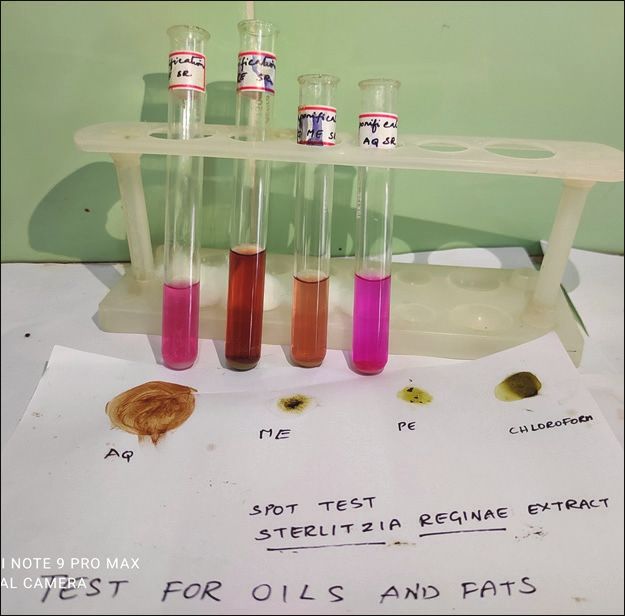
Ramesh Londonkar and Rajani KS

                                                                 grams of dried leaves powder was obtained.
                                                                 Soxhlet extraction:
                                                                 Soxhlet extractor is laboratory equipment invented in
                                                                 1879 by the German agricultural chemist, Franz von
                                                                 Soxhlet. The Soxhlet extraction process is known as a
                                                                 hot continuous extraction process. The main advantage
                                                                 of this method is that it ensures maximum extraction with
                                                                 minimum quantity of solvent6. 92 grams of the powdered
                                                                 leaf of Strelitzia reginae (with grades between moderately
                                                                 coarse and coarse) was taken into the main chamber of
                                                                 the Soxhlet extractor. Based on the polarity index of the
                                                                 solvents -petroleum ether (0.117), chloroform (0.259),
                                                                 methanol (0.762), and distilled water (1.0) - were taken in
                                                                 the same order and the extraction process was carried out.
                                                                 Around 500 ml of each solvent was used for 92 grams of
                                                                 the plant material.
                                                                 1.84 grams of dried extract was obtained with petroleum
                                                                 ether, 1.16 grams of dried extract was obtained with
                                                                 chloroform, 9.05 grams of dried extract was obtained with
                                                                 methanol and 4.96 grams of dried extract was obtained
                                                                 with distilled water. All these extracts were dried and
                                                                 preserved in aseptic containers and kept in the refrigerator
                                                                 for future use.
                                                                 Extractive values are used for extraction and evaluation
                                                                 of crude drugs. Extractive values by different solvents are
                                                                 used to assess quality and purity and to detect adulteration.
                                                                 The extractive value of the various solvents are calculated
                                                                 using the formula
                                                                 Extractive value = (Weight of the dried extract / Weight of
                                                                                 the plant material) * 100
                                                                 Plant material: Strelitzia reginae leaf coarse powder
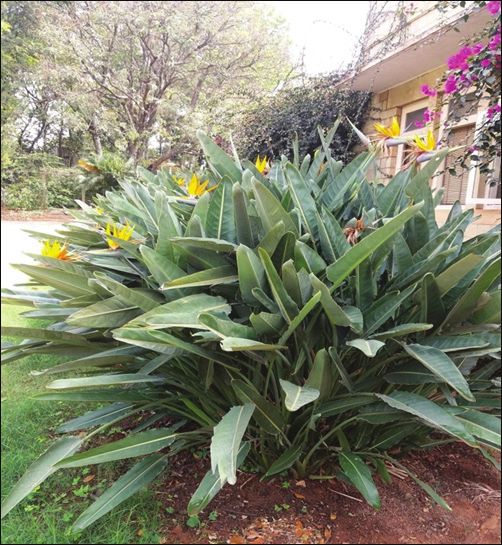
Figure 1: Strelitzia reginae plant at RRI campus, 2020

Figure 2: Strelitzia reginae leaves (5 kg)

                                                              1015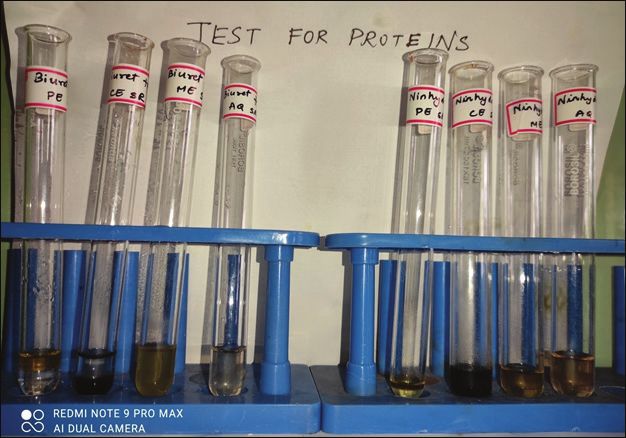
Phytochemical studies on the leaf extracts of Strelitzia reginae

Figure 3: Processed dry leaves of Strelitzia reginae

Figure 4: Size of Strelitzia reginae leaf (122 cm)
Table 1: Extraction conditions with different solvents
 Solvent                                  Temperature                      Duration of extraction        Ratio of material to solvent
 Petroleum ether                       60 degree centigrade                      10 hours                           1: 7
 Chloroform                            60 degree centigrade                      12 hours                           1: 7
 Methanol                              65 degree centigrade                      12 hours                           1: 7
 Distilled water                      100 degree centigrade                       1 hour                            1: 7
Table 2: Extractive value of various polar and non-polar solvents
 Name of the solvent               Weight of the dried extract         Weight of the plant material           Extractive value
 Petroleum ether                          1.18 grams                            92 grams                           1.282
 Chloroform                               1.16 grams                            92 grams                           1.260
 Methanol                                 9.05 grams                            92 grams                           9.836
 Distilled water                          4.96 grams                            92 grams                           5.391

                                                                   1016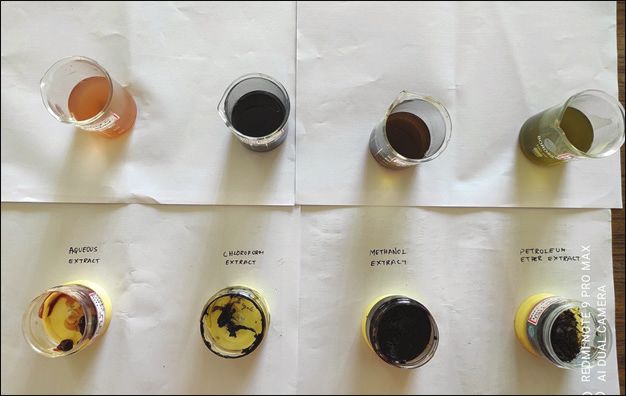
Ramesh Londonkar and Rajani KS

Figure 5: Leaf extracts of Strelitzia reginae using solvents

Figure 6: Carbohydrate test results for Strelitzia reginae leaf extracts
Phytochemical analysis of Strelitzia reginae leaf                   and distilled water as solvents. The phytochemicals were
extract                                                             detected by colour tests following the standard protocol
Phytochemical screening was done to test the various primary        as described by Kokate et al, (1995). The stock was
and secondary metabolites in the leaf extracts of Strelitzia        prepared by dissolving 20 milligrams of the Strelitzia
reginae using petroleum ether, chloroform, methanol,                reginae leaf extract in 60 ml of respective solvents and

                                                                 1017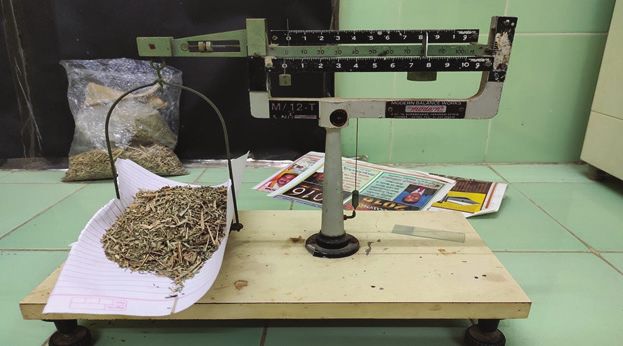
Phytochemical studies on the leaf extracts of Strelitzia reginae

Figure 7: Protein test results on leaf extracts of Strelitzia reginae

Table 3: Test results for primary metabolites (+ indicates presence and – indicates absence)
    Sl. No.   TEST                                                                                         PE   CE        ME    AQ
              Test for carbohydrates
              • Mollisch’s test                                                                            +    +         +      +
      1       • Fehling’s test                                                                             +    -         +      +
              • Benedict’s test                                                                            +    +         +      +
              • Anthrone test                                                                              +    +         +      +
              Test for proteins
      2       • Biuret test                                                                                -    -         -       -
              • Ninhydrin test                                                                             +    +         -       -
              Test for oils and fats
      3       • Spot test                                                                                  +    +         +       +
              • Saponification test                                                                        +    +         +       +
the solution was filtered using Whatman filter paper No.1.                    proteins, vitamins, enzymes, lipids, etc.
The filtrate obtained was used for phytochemical tests.                  •    Primary metabolic end products such as ethanol, lactic
Qualitative analysis of primary metabolites                                   acid, certain amino acids, etc.7
Primary metabolites are compounds directly involved in                   Listed below are the various tests conducted to detect
the metabolic pathways of an organism which are necessary                primary metabolites.
for growth, development, and reproduction. The primary
                                                                         Test for carbohydrates
metabolites usually occur in a high quantity and they can
be extracted easily through simple extraction procedures.                Molisch test: Around 2 ml of the Strelitzia reginae leaf
They are found in most cells throughout the body and are                 extract is mixed with one or two drops of Molisch reagent
also termed as central metabolites. Primary metabolites do               and then 2 ml of concentrated sulphuric acid is added
not have pharmacological activities against other factors.               along the sides of the test tube16. The test tube is allowed
Primary metabolites are categorised into two groups-                     to stand for 2 minutes. Formation of a reddish violet ring
                                                                         at the interfacebetween the layers of Strelitzia reginae leaf
•     Primary essential metabolites such as carbohydrates,
                                                                         extract and concentrated sulphuric acid indicates that the
                                                                     1018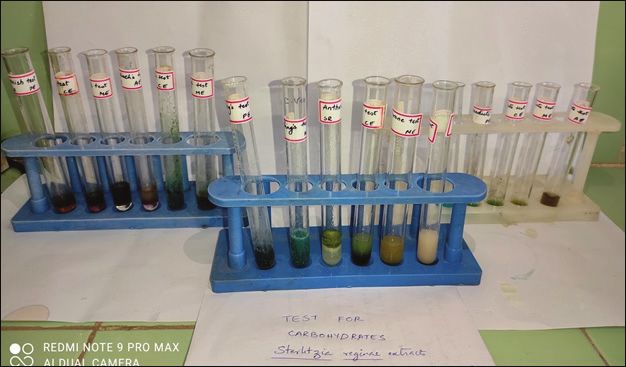
Ramesh Londonkar and Rajani KS

Figure 8: Oil andFat test results on leaf extracts of Strelitzia reginae

Figure 9: Secondary metabolite test results for Strelitzia reginae leaf extracts
carbohydratesare present in the Strelitzia reginae leaf.              precipitate is formed which suggests the presence of
Fehling’s test: Around 2 ml of the Strelitzia reginae leaf            carbohydrates.
extract is mixed with 2 ml Fehling’s reagent. The mixture             Benedict’stest: Around 2 ml of the Strelitzia reginae
is boiled in a water bath for 3 minutes. A reddish brown              leaf extract is mixed with Benedict’s reagent. The mixture

                                                                  1019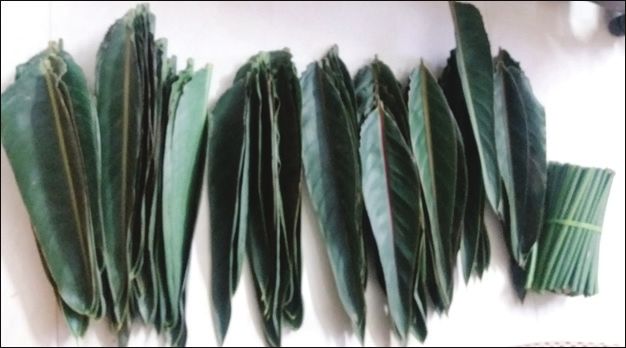
Phytochemical studies on the leaf extracts of Strelitzia reginae
Table 4: Test results for secondary metabolites

  Sl. No.   TEST                                                                                         PE   CE     ME       AQ
            Test for phenols
    1       Phenol test                                                                                  -    -       -        -
            Ellagic test                                                                                 -    +       -        -
            Test for flavonoids
            Flavonoid test                                                                               -    -       +        +
    2       Shinoda test                                                                                 -    -       +        +
            Ferric chloride test                                                                         -    -       +        +
            Lead acetate test                                                                            -    -       +        +
            Test for oils and fats
    3       Spot test                                                                                    +    -       -        -
            Saponification test                                                                          +    +       -        -
            Test for Saponins
    4
            Foam test                                                                                    -    +       +        +
            Test for alkaloids
            Mayer’s test                                                                                 -    -       -        +
    5
            Wagner’s test                                                                                +    -       +        +
            Hager’s test                                                                                 +    -       -        -
            Test for tannins
    6       Ferric chloride test                                                                         -    -       +        +
            Gelatin test                                                                                 -    -       +        +
            Test for glycosides
    7       Keller-Kiliani test                                                                          +    -       +        +
            Concentrated H2SO4 test                                                                      -    -       -        -
is then kept in a hot water bath for 3 minutes. A reddish              help the host organism get a selective advantage. In
precipitate is formed which suggests the presence of                   plants, secondary metabolites are produced by the plant
carbohydrates.                                                         cell through metabolic pathways derived from the primary
Anthrone test: Around 2 ml of the Strelitzia reginae leaf              metabolic pathways8. Phenols, flavonoids, steroids,
extract is mixed with 1-2 ml of water and 1-2 ml of anthrone           alkaloids, saponins, tannins, and glycosides are the major
reagent. The solution is shaken well and the contents are              secondary metabolites in plants. Humans have understood
gently warmed. A blue or green colour appears indicating               the role of secondary metabolites as medicines, flavouring
the presence of carbohydrate.                                          agents, for making pigments, and recreational drugs. Thus,
                                                                       there is a constant search for secondary metabolites by
Test for proteins
                                                                       various researchers.
Biuret test: Around 2 ml of the Strelitzia reginae leaf
                                                                       Test for Phenols
extract is mixed with 2 ml of biuret reagent. A purple
colour appears indicating the presence of proteins.                    Phenol Test: 1ml of ferric chloride solution and 1ml
                                                                       of Strelitzia reginae leaf extract are taken in a glass test
Ninhydrin test: Around 2 ml of the Strelitzia reginae
                                                                       tube. Appearance of intense colour suggests the presence
leaf extract is boiled in 0.1% ninhydrin solution for 1-2
                                                                       of phenols.
minutes. Appearance of blue colour indicates that the
amino acids are present in the leaf extract.                           Ellagic test: 2ml of Strelitzia reginae leaf extractis
                                                                       treated with a few drops of 15% acetic acid and a few
Test for oil and fats:
                                                                       drops of 5% sodium nitrate solution. The appearance
Spot test: A small quantity of Strelitzia reginae leaf extract         of muddy or brown precipitate suggests the presence of
is pressed on butter paper. Appearance of oil stains on the            phenols.
paper suggests the presence of oils.
                                                                       Test for Flavonoids
Saponification test: Around 2 ml of the Strelitzia reginae
                                                                       Flavonoid test: Around 2 ml of the Strelitzia reginae leaf
leaf extract is mixed with 2 ml of 0.5N alcoholic potassium
                                                                       extract is taken in a glass test tube to which a 5-6 drops of
hydroxide. A drop of phenolphthalein is added and heated
                                                                       sulphuric acid are added along with magnesium turnings.
on a water bath for 30 minutes. Formation of soap in the
                                                                       Development of pink or magenta colour suggests the
form of a white precipitate confirms the presence of fatty
                                                                       presence of flavonoids.
acids.
                                                                       Shinoda test: Around 2 ml of the Strelitzia reginae leaf
Qualitative analysis of secondary metabolites:
                                                                       extract is taken in a glass test tube. A few magnesium
Secondary metabolites are secondary products or organic                turnings are added along with 1ml of concentrated
compounds produced by bacteria, fungi, or plants, that                 hydrochloric acid. Appearance of magenta colour in

                                                                   1020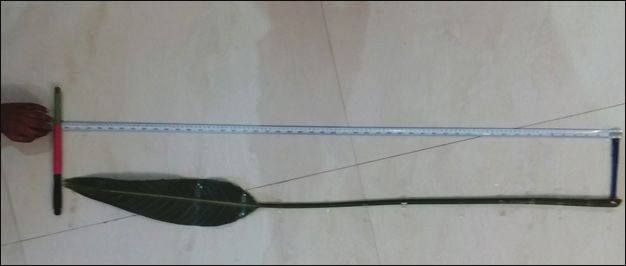
Ramesh Londonkar and Rajani KS

the test tube after few minutes suggests the presence of         Keller-Kiliani test: Around 2ml of Strelitzia reginae leaf
flavonoids.                                                      extract is taken in a glass test tube to which 1ml of glacial
Ferric chloride test: A few drops of ferric chloride solution    acetic acid and 4-5 drops of ferric chloride are added.
are added to 2ml of the Strelitzia reginae leaf extract.         2ml of concentrated sulphuric acid is added to the test
A blackish green colour is produced which suggests the           tube along the sides. Appearance of a reddish brown ring
presence of flavonoids.                                          at the junction of the two layers suggests the presence of
                                                                 glycosides.
Lead acetate test: 2ml of Strelitzia reginae leaf extract
is taken in a glass test tube. A few drops of lead acetate       Concentrated sulphuric acid test: Around 2ml of
solution (10%) are added and shaken well.Formation of            Strelitzia reginae leaf extract is taken in a glass test tube
a yellow precipitate suggests the presence of flavonoids.        to which 1ml of concentrated sulphuric acid is added. The
                                                                 solution is allowed to stand for 2 minutes. Formation of
Test for steroids
                                                                 red colour suggests the presence of glycosides.
Salkowaski test: Around 2ml of Strelitzia reginae leaf
                                                                            Results and Discussion
extract is taken in a glass test tube. 4-5 drops of chloroform
and 1ml of concentrated sulphuric acid are added and             Test results showing the presence or absence of primary
shaken well. Appearance of red colour suggests the               and secondary metabolites.
presence of steroids.                                            The tests were conducted using the 60 ml stock solution
Liebermann-Burchard test: Around 2ml of Strelitzia               prepared with the respective mother solvents.
reginae leaf extractis taken in a glass test tube. A few drops   Two of the primary metabolites viz., oils and fats, and
of chloroform, a few drops of acetic anhydride and 1 ml of       carbohydrates were found in all the solvent extracts namely
concentrated sulphuric acid are added to it. Appearance of       those using petroleum ether, chloroform, methanol, and
a wine red ring at the junction of the two layers suggests       distilled water. However, proteins were found only in the
the presence of steroids.                                        chloroform extract.
Test for saponins                                                Further isolation and characterisation of each of the primary
Foam test: Around 2ml of Strelitzia reginae leaf extract         metabolites is necessary for a greater understanding of the
is taken in a glass test tube. 2ml of distilled water is added   nutritional and medicinal value of Strelitzia reginae leaves.
and shaken vigourously. Formation of a persistent foam           However, these test results presented above constitute
that lasts for more than a minute suggests the presence of       the first ever such attempt at preliminary phytochemical
saponins.                                                        isolation and phytochemical testing of Strelitzia reginae
                                                                 leaves.
Test for Alkaloids:
                                                                 The secondary metabolites, namely, flavonoids, saponins,
Mayer’s test: Around 2ml of Strelitzia reginae leaf extract
                                                                 alkaloids, tannins, and glycosides were present in the
is taken in a glass test tube. 1 ml of liquid ammonia, a few
                                                                 methanolic and aqueous extracts. Chloroform extract has
drops of chloroform and 1ml of dilute hydrochloric acid
                                                                 shown positive result for saponin. Petroleum ether extract
is added. Formation of a white precipitate suggests the
                                                                 indicated a positive result for alkaloids.
presence of alkaloids.
                                                                 Only chloroform extract indicated a positive result for
Wagner’s test: Around 2ml of Strelitzia reginae leaf
                                                                 phenols.
extract is taken in a glass test tube. 2 ml of Wagner’s
reagent is added to it. Formation of reddish brown colour        Petroleum ether extract and chloroform extract indicated a
suggests the presence of alkaloids.                              positive result for steroids.
Hager’s test: Around 2ml of Strelitzia reginae leaf extract      This study constitutes an important first step towards a
is taken in a glass test tube.1 ml of picric acid is added to    greater understanding and further study of the various
the same. Appearance of a yellow precipitate suggests the        secondary metabolites present in the Strelitzia reginae
presence of alkaloids.                                           leaves.
Test for tannins                                                                      Conclusion
Gelatin test: Around 2ml of Strelitzia reginae leaf extract      As mentioned in the introduction, the present investigation
is treated with 1 ml of 1% gelatin solution containing           is the first phytochemical study conducted on the leaves
10% sodium chloride. Appearance of a white precipitate           of Strelitzia reginae leaf extracts. Based on a literature
suggests the presence of tannins.                                study the presence of saponins in the leaf extracts of
                                                                 Strelitzia reginae indicates probable anti-fungal (Porsche
Ferric chloride test: Around 2ml of Strelitzia reginae
                                                                 et al; 2018), anti-cancer (Wang et al; 2019), insecticidal
leaf extract is taken in a glass test tube. 2mlof 1% ferric
                                                                 (Dolma et al; 2017), molluscicidal (Hostettmann et al;
chloride solution is added to the test tube. Appearance of
                                                                 1982) activity. The presence of tannins in the leaf extracts
blue green or brown green colour suggests the presence of
                                                                 of Strelitzia reginae indicates probable antiviral (Galabov
tannins.
                                                                 et al; 2019), antibacterial (Sung et al; 2012), anti-cancer
Test for glycosides                                              (Sukagami et al; 2000) and antioxidant (Sung et al; 2012)

                                                             1021
Phytochemical studies on the leaf extracts of Strelitzia reginae

activity. The presence of steroids in the leaf extracts of                      merged).pdf> Pg 2-3
Strelitzia reginae indicates probable anti-inflammatory                  Rehab A. Hussein and Amira A. El-Anssary. Plants Secondary
(Moura et al; 2018), immune suppressant (Liu et al; 2016),                    Metabolites: The Key Drivers of the Pharmacological
drug potential for pulmonary diseases (Hasan et al; 2020)                     Actions of Medicinal Plants, Herbal Medicine, Philip
and maintenance of male and female sexual characters                          F. Builders, IntechOpen, 5 Nov 2018, DOI: 10.5772/
(Tatem et al; 2019).                                                          intechopen.76139
Further tests in this direction needs to be carried out. It              Pelczar M.J, Chan E.C.S, Krieg N.R. Control of Microorganisms,
is reported that the decoctions prepared from crushed                          the control of microorganisms by physical agents. In:
Strelitzia reginae roots were considered particularly                          Microbiology. New York: McGraw-Hill International;
useful for easing the symptoms of sexually transmitted                         1988. Pp.469-509
diseases (including inflamed glands) in cultures from the
                                                                         Jepson RG, Craig JC, Cranberries for preventing urinary tract
Kwazulu-Natal region of South Africa. There are reports
                                                                              infections. Cochrane Database of Systematic Reviews.
of the presence of bilirubin (animal protein) in the arils of
                                                                              2008;1:CD001321. DOI:10.1002/1465858.CD001321.
Strelitzia reginae and Strelitzianicolai. Further studies can
                                                                              pub4
be carried out to test the presence of bilirubin in other plant
parts too, including the leaf. This paper is an account of the           Montanher AB, Zucolotto SM, Schenkel EP, Fröde TS. Evidence
preliminary phytochemical analysis of the leaf extracts of                    of anti-inflammatory effects of Passiflora edulis in an
Strelitzia reginae which has shown the presence of both                       inflammation model. Journal of Ethnopharmacology.
primary and secondary metabolites.                                            2007;109(2):281-288
                 ACKNOWLEDGEMENTS                                        Serafini M, Peluso I, Raguzzini A. Flavonoids as anti-
                                                                               inflammatory agents. The proceedings of the
The authors are indebted to the Department of
                                                                               Nutrition Society. 2010;69(3)273-278. DOI:10.1017/
Biotechnology, Gulbarga University for providing the
                                                                               S002966511000162X
necessary infrastructure to carry out the work.
                                                                         Seigler DS. Plant Secondary Metabolism. New York: Springer
               DISCLOSURE STATEMENT                                            Science: Business Media; 1995. ISBN: 978-1-4613-7228-
                                                                               8; ISBN: 978-1-4615-4913-0 (eBook). DOI: 10.1007/978-
All the authors declare that there is no conflict of interest.                 1-4615-4913-0
                                                                         Hoffmann D. Medical Herbalism: The Science and Practice of
                      ABBREVIATIONS
                                                                              Herbal Medicine. Healing Arts Press One Park Street,
PE- Petroleum ether extract, CE- Chloroform extract,                          Rochester, Vermont; 2003. ISBN: 978-089281749-8
ME- Methanolic extract, AQ- Aqueous extract
                                                                         Güçlü-Üstündağ Ö, Mazza G. Saponins: Properties, applications
                        REFERENCES                                            and processing. Critical Reviews in Food Science and
Strelitzia reginae, Missouri Botanical Garden, accessed 2                     Nutrition. 2007; 47:231-258. ISSN: 1040-8398. DOI:
       Feb 2021               Manik Sharma, Abid R, Mehak Sajgotra. Phytochemical
What are the different types of Bird of paradise plants?,                     Screening and Thin Layer Chromatography of
    Gardener’s Path, 17 Oct 2020, Laura Melchor                     Biosciences Journal. ISSN: 2582-0540. DOI: http://
Get to know the official flower and tree of Los Angeles, Los                  dx.doi.org/10.20510/ukjpb/5/i1/147022                                       serum biomarker bilirubin predicted lung cancer risk in
Cary Pirone, Jodie V. Johnson, J. Martin E. Quirke, Horacio A.               smokers. Science Daily. 7 Apr 2013.
     Identified in Strelitzia reginae , the Bird of Paradise Flower.     Dwarka et al., Afr J Tradit Complement Altern Med. New
     American Society of Horticultural Sciences: HortScience,                insights into the presence of bilirubin in a plant species
     Sep 2010, Volume 45, Issue 9.                                           Strelitzianicolai (Strelitziaceae).2017. 14(2):253-262
Ian Edwin Cock. Medicinal Plant Images. Pharmacognosy                        doi:10.21010/ajtcam.v14i2.27
     communications. Apr 2017: Vol 7. Issue 2, 102-103.                  R.K Dhanalakshmi and Jyothi V. Vastrad. Phyto constituents: An
K. Gopalasateeshkumar, Significant role of Soxhlet extraction                 analysis of cinnamon (Cinnamomum verum) leaf extracts.
     process in phytochemical research Mintage J pharm and                    Asian Journal of Home Science. Jun 2014.Vol 9/Issue 1/
     Med Sci, 2018. 7(1)                                                      319-321.

Primaryand secondary metabolites, JNKVV, Accessed 1 Feb 2021,            Ajayi, I.A., Ajibabe, O and Oderinde, R.A.Preliminary
Ramesh Londonkar and Rajani KS
Mungole, J.A., Awathi, R., Chaturvedi, A. and Zanwan, P. Screening and Standardization on the Root of Rotula
Preliminary phytochemical screening of Ipomoea obscura aquatica Lour. Indian Journal of Pharmaceutical and
(L).Internat. J. Pharm. Tech. Res.2010. 2(9): 2307-2312. Biological Research. 2013. Vol.1 (Issue1), 63-68.
Rahul, C., Pankal, P., Saman, S.K. and Mahesh, J.K. Arunkumar, S.Muthuselvam Analysis of phytochemical
Phytochemical screening and antimicrobial activity of constituents and antimicrobial activities of Aloe vera L.
Albizzia lebbeck. J. Chem. Pharm. Res.2010. 2 (5):476- against clinical pathogen: world. J. agril. sec. 2009. 5(5):
484. 572-576.
Das K, Tiwari RKS, Shrivastava DK. Techniques for evaluation Amrit Pal Singh Promising phytochemicals from Indian
of medicinal plant products as antimicrobial agent: Current Medicinal plants. Ethnobotanical leaflets. 2005. Vol 2005:
methods and future trends. Journal of Medicinal Plants Issue 1, Article 18.
Research 2010; 4(2): 104-111. Doss A. preliminary phytochemical screening some Indian
Nikhal SB, Dambe PA, Ghongade DB, Goupale DC. Medicinal plants. Anc.sci.life.Oct 2009; 29:12-16.
Hydroalcoholic extraction of Mangifera indica (leaves) Sofowra. Research on medicinal plants and traditional medicine
by Soxhletion. International Journal of Pharmaceutical in Africa .J Altern complement. 1996. Med.2 (3) : 365, 372
Sciences 2010; 2 (1): 30-32.
Abou-Sreea, A. I. B. and Yassen, A. Pollen extracts application
Ncube NS, Afolayan AJ, Okoh AI. Assessment techniques of as a natural growth substance on Strelitzia reginae Ait.
antimicrobial properties of natural compounds of plant Plants. An International Journal of Pharm Tech Research
origin: current methods and future trends. African Journal CODEN (USA): IJPRIF, ISSN: 0974-4304, ISSN
of Biotechnology 2008; 7 (12): 1797-1806. (Online): 2455-9563.2016. Vol.9, No.12. pp 16-23.
Remington JP. Remington: The science and practice of pharmacy, Rajesh Prasad, Surya Bali Prasad. A review on the chemistry and
21st edition, Lippincott Williams & Wilkins, Dec 2005. biological properties of Rutin, a promising nutraceutical
773-774. agent. Asian Journal of Pharmacy and Pharmacology. 9
Handa SS, Khanuja SPS, Longo G, Rakesh DD. Extraction June 2019. 5 (S1): 1-20.
Technologies for Medicinal and Aromatic Plants. A.S.H. Gendy and Abeer A. Mahmoud. Effect of Some
International centre for science and high technology, Preservative Solution Treatments on Characters of
Trieste, 2008, 21-25. Strelitzia reginae Cut Flowers. Authors: Australian
Kokate C.K, “Practical Pharmacognosy” 4th edition, Vallabh Journal of Basic and Applied Sciences. 2012. 6(5): 260-
Prakashan Publication, New Delhi, India, 1999. 267, ISSN 1991-8178
Mace.M.D. Histochemical localization of phenols in healthy and Kokate CK, Purohit AP, Gokhale SB .Textbook of
diseased tomato roots. Phytopathology. 1963, 16:915-925. pharmacognosy. Nirali prakasan. Pune. 2002 pp. 1-4.
Abhishek, Avinash Saini, Evaluation of Physiochemical
1023You can also read


