BIP Mehlhorn Schools An insight into theoretical basics and practical work - Education agency of the MEhlhorn SchoolS
←
→
Page content transcription
If your browser does not render page correctly, please read the page content below
BIP Mehlhorn Schools
An insight into theoretical basics and
practical work

                            Education agency of the MEhlhorn SchoolS >>
BIP Mehlhorn Schools
An insight into theoretical basics and
practical work

                            Education agency of the MEhlhorn SchoolS >>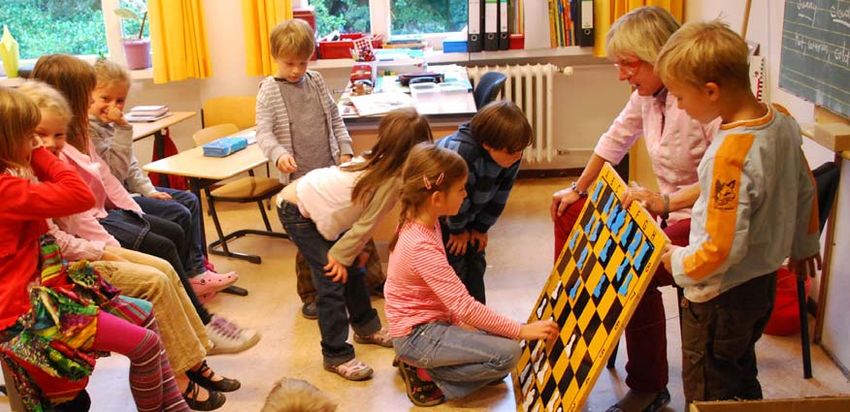
IntroductIon                                                                               3

A special project

For the past 18 years, BIP Mehlhorn           (BIP creativity schools), BIP Schulen (BIP
schools have successfully implemented         schools), BIP Mehlhornschulen (BIP Mehl-
a unique educational project. First and       horn schools), but also BIP Privatschulen
foremost, BIP stands for „Begabung, In-       (BIP private schools) and BIP freie Schu-
telligenz, Persönlichkeit“, which is Ger-     len (BIP free schools). Of course, these
man for talent, intelligence, personality.    names exist for kindergartens as well as
The underlying purpose of this creative       for secondary schools.
education project was to deliver the ful-
lest possible development of talents (in      The aforementioned schools have
particular development of intelligence        worked in accordance with the educa-
and personal qualities) of every child bet-   tional creativity concept developed by
ween the ages of one and eighteen.            professor Hans-Georg Mehlhorn. The
                                              majority of Hans-Georg Mehlhorn’s pre-
As a result of rapid expansion and oral       liminary work took place between 1987
recommendations from satisfied parents,       and 1993, and then together with Ger-
each kindergarten, pre-school, and            linde Mehlhorn and associates (other
school has taken on the process with its      scientists and artists). After the prelimi-
own special dynamics. Meanwhile, you          nary empirical research was completed,
can find different names for these facili-    scientific results were implemented into
ties in documents and in the media. All       educational practice. As of now, more
of these names are correct and have the       than 30 BIP creativity schools have been
same meaning. BIP Kreativitätsschulen         built --- all of which are licensed facilities.
IntroductIon                                                                             4

Since 2010, the educational agency of          thinking, patience, and persistence.
Mehlhorn schools has supervised an in-
creasing number of licensees.                  Besides the foundations of traditional
                                               education, such a comprehensive pro-
In the following, we would like to give        gram requires teachers and educators
you a first insight into the theoretical ba-   that have completed an extensive addi-
sics of creative education --- which is the    tional training (one or two years) as a
foundation of practical work of all BIP        creative educator in addition to their of-
Mehlhorn schools, kindergartens and            ficially recognized degree. Not until they
pre-schools. Furthermore, we will inform       have completed this comprehensive trai-
you about the practical implementation         ning will they have the necessary subject-
of creative education.                         specific and educational requirements to
                                               meet the high demands of the BIP crea-
The creativity educational                     tivity concept in educational practice. To
infrastructure                                 institutionalize and streamline this task,
                                               the Mehlhorn foundation established the
We knew from the very first day of practi-     Academy for Creative Education. The
cal implementation that this creative edu-     Academy for Creative Education’s main
cation should not be provided only to          task is to prepare and teach the educa-
individual levels of education, but to all     tional materials of the Mehlhorn schools.
age groups and education levels. And           However, other teachers, educators, ar-
furthermore, we wanted the students in-        tists or parents with different professional
volved to be able to solve new and ob-         requirements interested in this concept
scure problems later in life by creative       (for both theory and practice) are welco-
                                               med as well.
IntroductIon                                                                          5

Beyond the aim                               In addition, the educational agency of
                                             Mehlhorn schools strives to raise the indi-
Meanwhile, we are able to present a          vidual need for higher education and to
self-contained and independent educa-        determine the content of additional high-
tion system at BIP Mehlhorn schools. Our     er education programs of all employees
concept significantly exceeds nationally     in accordance with the equally licensed
designated educational goals at every        Academy for Creative Education. Some
educational level. Within this education     additional tasks of this agency include
system, the BIP creativity concept is re-    initiating research, cooperating with re-
alized from several kindergartens to an      search establishments, secondary ana-
officially recognized professional school.   lysis of current and preexisting research,
The professional school is also operated     and cooperating with the media for com-
by the Academy of Creative Education         prehensive public relations. At the same
in Leipzig. To complete this education       time, all of these tasks serve to further
system, we intend to found a University      spread the word of our creative educa-
for Creative Education where educators       tion concept.
should receive qualifications and further
trainings on an even higher level.

Quality assurance and development

Mehlhorn schools are responsible for
scientific evaluation of the achieved re-
sults and for external quality assurance.
GEo WIssEn nr. 38, 2006                                                                6

Highest performance through play              ence that it is easy to get those foreign
                                              words mixed up in their heads. At the
Arabic language education begins du-          same time, Annikas older brother Simon
ring the first grade in conjunctions with     and a friend are experimenting with a
a method called „discovering, inventing,      lever arm one floor above. Both levels
exploring“. While “discovering, inven-        of students are „discovering, inventing,
ting, exploring”, students assess each        exploring“--- in German, EEE (Entdecken,
other. In this way, the Mehlhorn priva-       Erfinden, Erforschen).
te creativity schools are different from
other schools. First grade students also      „The children shall learn to recognize
have enjoying some healthy competition        and apply scientific regularities“, teacher
against each other in mathematics.            Steffen Einenkel explains. The thirty-four-
                                              year-old clamps a pencil on one end of
The teacher offers a math problem to her      a contraption made of wooden cases
students in English.                          attached with hinges. Then he traces the
„Ten minus two?” asks the teacher.            contours of a Mickey Mouse with a woo-
„Thamania!“ answers Max.                      den peg attached to the other side of the
His classmates giggle.                        mechanism. As if by magic, the pencil
„Oh Max, Thamania is Arabic“, Annika          also draws a Mickey Mouse.
Wiedensohler criticizes him.                  „Wow, this is a copy machine!“ Franzis-
„Oh, yes! That‘s true. Sorry, I mean eight,   ka is astonished.
of course.“                                   „Exactly“, Einenkel says. „And now it‘s
The other first-grade children are nod-       your turn to replicate this.“
ding. They know from their own experi-        When the doorbell rings, Janek pouts
GEo WIssEn nr. 38, 2006                                                                  7

and sighs, „Darn! This has been so ex-       so keen on having contact with media,
citing!“                                     the 23 private kindergartens and schools
                                             they have founded in Saxony, Thuringia,
Arabic language from the first grade         Berlin and Brandenburg are thriving.
                                             One might say that parents are beating
At Mehlhorn schools, we teach Arabic         down the doors.
and English from the first grade and
French from the third grade. At BIP Crea-    In the case of the Kilian Wiedensohler
tivity Schools, EEE, along with it acting,   family, all of their five children attend
chess, dancing, creative writing and         Mehlhorn establishments. Annika, 7, and
computer skills are inherent parts of the    Simon, 10, attend the primary school,
curriculum. As previously stated, BIP me-    Nico, 11, attends the secondary school,
ans „Begabung, Intelligenz, Persönlich-      Florian visits the pre-school and Daniel,
keit“ (talent, intelligence, personality).   4, is in kindergarten. In Mehlhorn kin-
According to the school founders Hans        dergartens, the youngest children learn
Georg Mehlhorn and Gerlinde Mehl-            to dance, act, sing English songs and
horn, every subject has a certain inten-     practice yoga. Our establishments are
tion: chess and informatics should teach     allocated on a strictly first come, first ser-
strategic thinking, dancing and making       ved basis. There are no selection tests,
music activate the senses, and dealing       but school fees are about 300 Euros per
with Arabic characters should stimulate      month and child on average. Eventually,
the cooperation between the two he-          the Mehlhorns have visited the school
mispheres of our brain. Although Hans        center themselves to explain what they
Georg and Gerlinde Mehlhorn are not          had achieved. Together with her hus-
GEo WIssEn nr. 38, 2006                                                              8

band, Gerlinde Mehlhorn has achieved        ed significantly greater performance
something other scientists can only dream   and proved to be more intelligent and
of: to develop a theory and to implement    creative than those in comparison groups
it into successful practice.                --- completely independent of their social
                                            background. While one group is staying
Creativity is independent of your so-       in the classroom to practice creative wri-
cial background                             ting, Annika and the rest of the second
                                            group head off into the first grade leisure
Back in the days of the GDR (German         room to attend a music lesson. During
Democratic Republic) the couple had         creativity subjects the children are always
already experienced success in dealing      separated, while during subjects like ma-
with the topics of talent and creativity.   thematics or German they are taught by
„On the basis of our studies, we were       two teachers.
able to support a theory that had alrea-
dy been in the minds of many people:        Today, the music lesson starts with an
almost all creative personalities have      exercise to relax the body and impro-
grown up in an inspiring intellectual and   ve one’s sense of rhythm. Meanwhile,
cultural environment.” Hans-Georg Mehl-     Annika‘s younger brother Florian is invol-
horn stated. The Mehlhorns had develo-      ved in a conflict.
ped a teaching concept which they tes-      „I win!“
ted in kindergartens and primary schools    „No, you don‘t!“
in Leipzig between 1988 and 1993            „Yes, I do!“ you can hear in the pre-
with great success. Children who had        school room.
been encouraged in every respect show-      Sophie Theresa took Florian‘s king with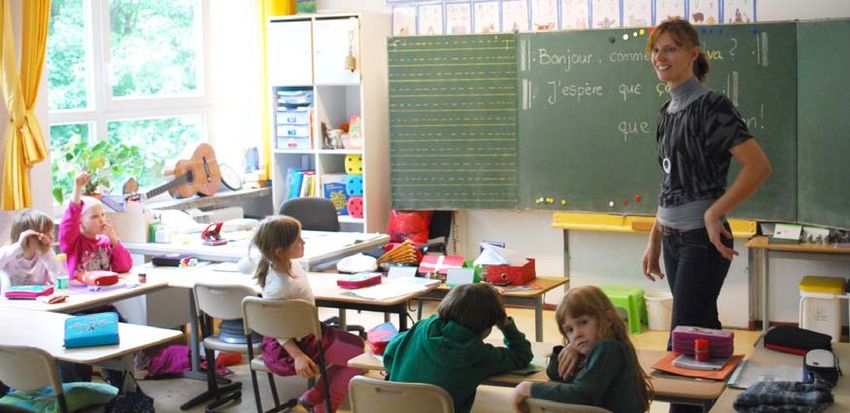
GEo WIssEn nr. 38, 2006                                                                9

her bishop and is happy about this vic-       chess. However, 4 of their 5 children are
tory. However, she had forgotten to say       passionate chess players. Today, chess is
„chess“ before. Florian is annoyed.           taught in the pre-school.
                                              „Initially, Simon was the reason why we
Recognizing talents                           choose the BIP establishments“ the forty-
                                              four-year-old tells us. „At home he was
Maria Herzig, the teacher, is listening to    able to speak in a normal way. But in
the dispute carefully.                        his kindergarten he just didn‘t want to
„No, Sophie-Theresa, you can‘t do it like     speak.“
this“, she says eventually. „The king is      The parents decided to send their son to
actually never taken, it has to be check-     the pre-school group of our creativity kin-
mated. You have to say „chess“ before“.       dergarten.
Sophie-Theresa moves the king to the old      „Only after a few weeks Simon really
position, while sighing. Meanwhile, the-      opened up, he was fascinated by the
re are only a pawn and the king left on       wide selection of offers“ Kilian tells us
the board.                                    enthusiastically.
„Chess“, Florian squeaks.                     Shortly afterwards they also transferred
Shortly afterwards, his opponent is           their oldest son to the BIP primary school.
checkmated.                                   Simon‘s fourth grade class is a very spe-
„Thanks to the Mehlhorn schools we have       cial class.
discovered talents that we never even         „They are our top performers“ Karola
knew existed“, Birgit Kilian, Florian‘s mo-   Schöppe, leader of the primary school in
ther says.                                    Leipzig, says. „Some of them are highly
Florian‘s parents are not well versed in      talented, others just highly motivated“.
GEo WIssEn nr. 38, 2006                                                                   10

In mathematics and German these fourth          they evaluate their own behavior during
grade students have achieved the level          the previous days. Although creative, the
of a fifth grade class, and in English they     BIP schools are not child‘s play. On the
are even on the level of a sixth grade          contrary: in some subjects, marks are as-
class.                                          signed as early as the second semester
„Many of them will probably earn their          of the first grade. At these schools, disci-
high-school diploma after eleven years“,        pline also plays a great role. In Simon‘s
Karola Schöppe says.                            class there is a detailed list showing who
                                                has forgotten his or her homework and
Assessing performances                          when. The teachers also keep lists: good
                                                behavior is rewarded by a so-called
Highly talented children feel comfortable       „Fidibus“-stamp. Bad behavior is also re-
in the creativity schools. Thanks to smaller    marked in the list.
classes with usually less than 20 child-        „At the beginning it was strange to me“,
ren, the teacher can keep a close eye on        Birgit Kilian who moved from Duisburg to
every child and are thus able to promote        Leipzig in the middle of the nineties, ad-
learning. Each child, regardless of natu-       mits. „In my opinion, the best way to get
ral intelligence, is encouraged to exploit      the children adhere to the rules is by un-
their skills and - if possible - to go beyond   derstanding. On the other hand, I am not
their potential.                                the only person educating these children,
Additionally, all students shall learn to as-   and I know that many parents appreciate
sess themselves and their own performan-        those methods. And concrete feedbacks
ces. Teachers ask their elementary school       is important for children.”
children at the end of every week how
GEo WIssEn nr. 38, 2006 11
Poetic exceptional talents Quite recently, Böhning‘s workmate
Sandra Tiebel caused a sensation at the
Gerlinde and Hans-Georg Mehlhorn University when she was attending a phi-
have a low opinion of some new edu- losophical seminar with her group. (The
cational ideas, for example kindergar- BIP teenagers were quite animated du-
tens with mixed-age groups, elementary ring the boring discussion.) But not only
school mixed-grade classes, or the idea strong students are being supported.
that better students should help the less Another day Tiebel and an eighth grade
skilled ones. In their opinion, the better student were sitting in the library.
students should focus on getting even „It is great to see how far you’ve come,“
better. Steffi Böhning is aware of that. she praised the child. „But my wish for
With her blond ponytail and sunglasses the future is that you try to think through
holding back her hair, Steffi stands in the things even just a little better“. The young
staff room. One would assume that the Vietnamese student nodded slowly. She
twenty-eight-year old is a trainee, but she had been living in Germany no longer
has already been a teacher at the creati- than nine months. Eventually, the young
vity secondary school for two years. teacher explained to her very patiently
„Robert is absolutely brilliant“, she tells us how Bismarck‘s Anti-Socialist Law had
with a smile. „His poems are just fabu- been achieved.
lous.“ The exceptional poetic talent is a „At BIP schools it is normal for special
thirteen-year-old member of a supporting subject teachers to sit down with students
group led by Böhning. At BIP secondary having difficulties“, Tiebel says.
schools there are also supporting groups
for other subjects, such as philosophy.GEo WIssEn nr. 38, 2006 12
Teachers show great commitment in Saxony are appointed as tenured civil
servants anymore. Regardless, Birgit Kili-
Above all, teachers are expected to an is happy with her job.
show great commitment, starting with „It might sound strange, but at my previ-
long workdays. Primary school students ous schools I was under greater stress.
have classes until 4 p.m. three days of The classes were overcrowded, all the
the week, another day until half past one teachers were lone fighters, and there
and on Fridays until 3:10 p.m. Additio- was less cooperation between them.
nally, Birgit Kilian needs time on week- Here, everyone identifies with the under-
ends just to evaluate the results of the last takings and everyone is highly motiva-
days for every mathematic student and to ted.”
create an individual week plan. Last but
not least, there are the „normal“ teaching The concept seems to work
preparations; parent-teacher conferen-
ces and class trips. Additionally, the BIP Mehlhorn‘s concept seems to work. The
schools are open during vacations. Du- successes achieved by the BIP schools
ring this time, both teachers and parents are noticeable. Around 90 percent of
supervise projects for children who stay the fourth grade students receive a re-
at home. Birgit Kilian has 26 days of commendation for entrance to a college
paid leave per year, and at the begin- preparatory school and an above-ave-
ning of her job, she had to complete an rage number of students are classified as
extra occupational training as a „creati- highly talented. In performance compa-
vity educator“. She is paid according to risons with mainstream schools, the BIP
the usual „tariff east“, hardly any teachers schools always show significantly betterGEo WIssEn nr. 38, 2006 13 results. In favor of this education for their five children, the Wiedensohler family must sacrifice other interests. Although Mr. Wiedensohler works as a scientist at the Leibniz Institute for Tropospheric Re- search and Ms. Kilian is a teacher, the fees for school and kindergarten of more than 1000 Euros per month leave a big dent in their budget. “In return, we often refrain from going to the cinema or theatre and we don‘t travel too far away.“ says Birgit Kilian. „But this is worth it. We are glad that our children are able to visit this school.“ (English translation of the German unau- thorized translation from „GEO Wissen“, No. 38, 10/2006 by Fenja Mens“)
tHE crEatIvIty concEpt                                                                 14

The creativity concept                        (3) a high artistic and aesthetic level
                                              (4) evolved (psycho-) motor skills and
The creativity concept aims for develop-      (5) a high emotional-social level of perso-
ment and promotion of creativity by de-       nality qualities.
veloping the child‘s talent, intelligence,
and personal qualities.

In doing so, creative processes are seen
and organized as problem solving pro-
cesses. The successful course of those
processes is characterized by high moti-
vation arising from the children‘s interest
in the subject matter. Therefore, educa-
tion and development at BIP creativity
schools are directed towards the whole
personality and appealing to emotion
and reason. In this process we assume,
and have confirmed, the fact that high-
ly creative performances and excellent
school performances are based on              Each of the five lines shows the develop-
                                              ment of skills or the target to be achieved
(1) a high level of logical reasoning         at the BIP schools. If we take a look at
(2) evolved linguistic skills and foreign     the curricula of public schools, the de-
language communication skills                 velopment of the individual lines is very
tHE crEatIvIty concEpt 15 shapeless. The cognitive line is the most lized and promoted at length. All child- developed one, the communicative (nati- ren are equally involved in this program. ve language and foreign language) line Because of this, the process deals with is slightly less developed, the third line each of the five talent dimensions menti- has been reduced due to few art and oned above and includes evolving diffe- music lessons, the fourth one is even less rent profile lines towards the end of the developed and the fifth one, and social primary school years. and emotional development, is almost invisible. The yellow-shaded area in this For our own purposes, all children are in- diagram shows the currently unexploited volved in specific tasks. These tasks are, potential of every dimension that needs according to our previous level of know- to be discovered and further developed. ledge and in addition to the curriculum For that reason, the BIP creativity estab- requirements, most suitable to achieve lishments that have been founded throug- this goal. hout Germany since 1993 as a practical consequence of the empirical research >> learning chess and strategic games project, provide additional elements to >> using computers for puzzling and arouse development in all five dimensi- creative tasks right up to the qualifica- ons. tion for interactive use By means of our complex program and >> presentation, animation as well as in cooperation with a large research introduction into digital media. group of scientists and artists, these five >> creative language use, creative personality dimensions are being specia- writing
tHE crEatIvIty concEpt                                                                    16

>> early sensitization for foreign langua-   >> learning to play a musical instru-
ges (in the BIP creativity primary schools   ment, at least over a 1 year period - in
3 foreign languages from the first grade     case of further interest it is possible to
on, 1 Germanic (English), 1 Romance          continue (at the moment there are dis-
language, 1 non-European (at the             tinctions between the individual classes
moment Arabic, in Berlin you can chose       and schools, the data of about 70% of
between Arabic and Chinese) right up         all students is acquired)
to systematic learning of these foreign
languages                                    The creative education concept using
                                             the example of BIP creativity kinder-
>> demonstrative play, role play, theatre    gartens
play
>> dance and motion                          BIP creativity kindergartens (including
                                             daycare centers, kindergartens and pre-
>> pictorial art (painting, graphics,        school groups) combine the main con-
statuary art, photos)                        cerns regarding childcare and grade
>> music                                     promotion. The creative promotion pro-
                                             gram was developed according to scien-
>> „discovering – exploring – inven-         tific criteria ane was empirically exami-
ting” (permanently from kindergarten         ned by means of a model test. This test
to secondary school, during primary          started in 1988-1889 in four test kinder-
school years we specialize in subjects       gartens in Leipzig. The development of
like general knowledge and handicrafts       those children was compared to children
as well as holiday projects)                 from control kindergartens. Furthermo-
tHE crEatIvIty concEpt 17
re, today‘s work of BIP kindergartens is that during early childhood education,
based on implementations and enhance- children are able to get what they need
ments within the different establishments on their own. Only adults must percei-
since 1992. ve the distinction between play and the
remaining activities, not children. The
The creative education work is based on younger the child is, the more seriously
the assumption that children are active he/she will regard his/her activities.
and curious by nature. Already during This possibly explains the fact that, in
toddler age, they are anxious to expe- accordance with the biological require-
rience and create their environment via ments, the developmental success of ac-
active constructiveness, while constantly tivities is the higher the younger the child
learning. Creativity kindergartens and is. The early sensitive stages are stages
pre-schools are aware of these child- in which the child acquires special and
hood needs and shape essential, life- comprehensive skills. During these stages
sustaining characteristics by evolving in particular, the child takes its activities
and stimulating the creativity processes in very seriously. Seriousness and effort are
every child. related to each other in such a way that
the more intensive the developmental suc-
While adults make a distinction between cess is, the more intensive the self-defined
care and education, between social and acquisition is.
emotional matters as well as between
practical and mental requirements, this Children tend to disregard their activities
separation does not exist from the view- in the long run when parents disregard
point of a child. It must be made clear or belittle the impact of said activities.tHE crEatIvIty concEpt 18
Adults often classify play as meaningless, >> encouragement of the ability to
when it can serve as a strong motivator concentrate
for children. We assume that every child
develops by means of its exerted activi- >> long-term preparation for school
ties; from the day the child is born. That‘s
why our educational task is to encoura- Throughout the year our schools are open
ge and support this activity process. For from (at least) 7 a.m. to 6 p.m. including
this purpose, we always motivate young core times for childcare from 9 a.m. to
people to create their day in stimulating 4 p.m. (It is possible that kindergartens
fields of activities with activity partners. are closed on two days each year for the
These activities follow specific problems purpose of staff qualification in the field
and pursue certain goals: of creative education).
>> groups of the same development Structured daily routine
level and usually of the same age
In BIP establishments, attendance is man-
>> wholistic development of all senses datory. It is our opinion that children need
and in particular development of intel- a regulated and organized daily routine.
lectual, linguistic, aesthetic, motor and Although there are no examination re-
psychomotor skills sults at this point, we behave according
>> social and emotional protection to the hypotheses we have established.
For example, the rapid increase of so-
>> early support of social skills called “hyperactive” children is caused
>> encouragement of talents by the child‘s environment to a large ex-
tent. Dissolution of an organized dailytHE crEatIvIty concEpt 19
routine by parents might be at least one MiniMax pre-school
factor in determining this behavior. Often
times, children do not acquire a certain In addition to our kindergartens, where
daily structure before they start attending children can also attend pre-schools, a
school. However, it is highly probable number of special MiniMax pre-schools
that children without schedule regularity exist. These MiniMax pre-schools are at-
over the years will face disadvantages tended by children who either visit this
at school. establishment once or twice a week, usu-
ally directly at pre-school age and other-
Qualification of our educators wise go to another kindergarten, or they
change from another kindergarten at pre-
Besides their officially recognized basic school age to our pre-school which they
training as teachers for kindergartens, visit the whole week like a kindergarten.
daycare centers or schools, all of our
educators have completed a profound MiniMax pre-schools are particularly sui-
education as creative educators with table for children that are unchallenged
special knowledge about child-oriented in public kindergartens or kindergartens
development of talents, intellectual skills operated by independent organizations,
and personality qualities of all children. as well as for children who need spe-
That is why they understand that every cial support within the above mentioned
child is talented. It is important that pa- fields, and therefore should be promoted
rents and educators develop these talent in a suitable way. Upon request of the
potentials together. child‘s parents accompanying develop-
ments can be made. These schools aretHE crEatIvIty concEpt 20
helpful, as they offer advice in regard to >> volitional and emotional prerequisi-
dealing with the child, activities within the tes enabling concentration and relaxa-
family, and selecting the correct school. tion
Upon request, children attending the >> tasting, hearing, smelling and seeing
MiniMax pre-school will have priority abilities and their differentiation
when applying at a BIP creativity primary >> linguistic and communicative skills
school. That means the order of applica- (vocabulary, sentence structure, support
tion as enrollment criteria is interrupted in of foreign languages)
this case, but only if the children have
been visiting the pre-school for a period >> joyful dealing within the different
of at least ten months. creativity fields as a leading principle of
the active dealing with children: playing
Depending on the age of children, the music, dealing with the Orff Approach,
work within the BIP creativity kindergar- painting, creating, dealing with different
tens mainly focuses on the development materials and different techniques, mo-
of: vement and dance, speaking, talking,
rhyming, introduction to literature, de-
>> playing and learning skills monstrative play, theatre play, role play,
>> tolerant and thoughtful interpersonal body language, expressing one‘s fee-
relationships lings through dance and demonstrative
play, strategic play right up to the game
>> physical skills (coordination of move- of chess, logic games, introducing the
ments, endurance, body consciousness, children to the use of computers.
fine motor skills)tHE crEatIvIty concEpt 21
>> motivation for curiosity, appetite for animated to develop their language
knowledge, joy of discovery right up independently and in a creative way.
to achievement motivation (the wish to Literature shall develop imaginative po-
do something on their own, to achieve wer and fantasy, as well as the patience
something on their own, enjoying the to listen carefully.
self-created results and passing on the
joy to others) >> chess: becoming acquainted with
the movements of all chess pieces, play-
The daily activity lectures contain two ing with all pieces, chess regulations
or three offers, lasting about 30 minutes
with the aim to approach the rhythm of >> computer: dealing with mouse and
a forty-five minute school lesson, step by keyboard, introducing the children to
step until the first day of school. During concentration games, painting and
the activity lecturers, teachers change calculation programs, learning different
between mental and physical activities figures and numbers and practicing the
and promote the individual features of correct association of their terms.
each child very cautiously. >> creative language use: playful expe-
riments with foreign languages, narrati-
All children are educated in the following ves, songs and dances, role plays
areas:
>> pictorial art: developing of artistic
>> literature: becoming acquainted with and creative skills by means of different
children‘s books, learning to tell and materials, experimenting with different
retell stories, inventing stories, rhyming. papers, with paint, wax, chalk, pencils,
In this learning process, children are brushes, small rods, spongestHE crEatIvIty concEpt 22 >> demonstrative play: developing so- cial skills in dealing with other children, loosening-up games and relaxation games, playing of different characters and little stories, expression, role and cooperation games to improve the lan- guage, being able to communicate in a correct way, body language, off-the-cuff games, improvisation >> music/dance: aural training, exer- cises with drums, songs, natural body movements, playing with ORFF, dancing to express body language, experiencing music and expressing it through dance, development of body consciousness >> music lessons: guitar, flute, keyboard upon request discovering, exploiting, inventing within the house and within nature
prof. dr. Hans-GEorG MEHlHorn                                                             23

Life of Mehlhorn
                                                In order to be able to focus completely
After his secondary school leaving exa-         on his own project which he implemen-
mination in 1959 Mehlhorn studied his-          ted in close cooperation with his wife
tory, German philology and education            and numerous other scientists, Mehlhorn
at the University of Leipzig from 1961          asked his minister to terminate his profes-
to 1965. Subsequently, he stayed at the         sorship at the University of Music. This
University of Leipzig until 1669, first as a    happend in 1993. Soon after in 1991,
student, later as a scientific assistant, at    he founded the creativity center as an
the same time he worked part-time as a          education and research institute in Leip-
teacher in Leipzig. In 1969 he gradua-          zig. In 1993, the charitable „GmbH BIP
ted with a PhD from the chair of methodo-       creativity centre“ was established, which
gy of history at the Institute for Education,   was managed by Gerlinde Mehlhorn
Leipzig. During that time he published          (first as chief executive officer, and from
biographies of known German huma-               the year 2000 as companion).
nists and contributed to the preparation
of teaching materials on the subject of         In 1991 the publishing agency Prof. Dr.
Reformation and Peasants‘ wars for the          Mehlhorn was founded.
sixth grade.
                                                Creativity research
From 1970 to 1985 Mehlhorn was em-
ployee and institute secretary at the cen-      The main focus of the research work of
tral institute for youth research in Leipzig.   Hans-Georg Mehlhorn took place in the
From the middle of the 1970th onwards,          fields of intelligence and intellectual gif-
the department youth and education was          tedness (research in the fields of creative
established, and Mehlhorn was the lea-          thinking and acting of individuals--- at the
der of this project as well. In 1975 he         same time as his habilitation work).
graduated with a scientae paed. at the
Humboldt University in Berlin. (In GDR          During the time at the central institute for
times this grade was equal to a habili-         youth research several comprehensive,
tation).                                        research took place on the most talented
                                                and effective personalities among pupils,
In 1982 Mehlhorn accepted a lecture-            trainees, students, young engineers, sci-
ship at the chair of educational psycho-        entists, the best inventors of the GDR, as
logy at the University of Berlin under          well as interviews with top scientists. This
guidance of professor Dr. Rosenfeld.            research included: groups like classes
In 1985 Mehlhorn changed from the               with extended Russian lessons from the
central institute for youth research to the     third grade, students of special classes
University of Music in Leipzig where he         and special schools in different fields,
accepted a position as tenured professor        mathematic Olympians, winners of com-
including a chair.                              petitive exhibitions and Olympics with
prof. dr. Hans-GEorG MEHlHorn 24
comprehensive questionnaires, and the cally continued during the political turna-
use of standardized tests, large longitudi- round in Germany.
nal studies, assistance in the greatest in-
terval studies/longitudinal researches of Projects
the central institute for youth research (for
example within the interval study of the In 1991, the development of an educa-
twelve to twenty-four-year-old students). tion and research institute was started
with the aim of establishing a further
After the results had been thoroughly education projects for educators and
investigated and validated with the aid teachers according to the findings of
of international literature, the main focus his researches. Finally, in 1993 the
from 1980 was on derivations of con- BIP Creativity Centre Leipzig GmbH
clusions for a new prospective education was founded. In 1992 the first creati-
system. In this process, the researchers vity school was founded in the form of
acted on the assumption of possible ge- a supplementary school within the leisure
neralization for development conditions sector in Leipzig.
of the most efficient personalities all over
the world. They searched for possibilities From 1997 onwards, BIP creativity pri-
to transfer those conditions to all young mary schools with daycare centers, as
people from all education levels, as well well as pre-schools and kindergartens
as for possible changes of conveyance were founded. Mehlhorn was suppor-
processes and content for educators (in- ted by partners who established analog
cluding parents). “What would happen, facilities operated by the BIP Creativity
if...” was the methodical approach. This Centre in Leipzig. These facilities were
was followed by a conceptual design of founded within the leisure sector first, and
a research project from the pre-school from 2002 as well within the supplemen-
age onwards. tary school sector. Such facilities are lo-
cated in Leipzig, Dresden, Gera,
Along with his change to the Music Uni- Chemnitz, Berlin and Neubrandenburg,
versity in 1985, he began to prepare Munich will follow in 2011. According
and develop (from 1987) a talent and to this conceptual design, the first BIP
creativity-promoting project of children creativity secondary school was establis-
beyond the influence of national educa- hed in Leipzig, followed by a BIP secon-
tion. In 1988 the empirical implementati- dary school in Berlin in 2008. Currently,
on including targeted interventions seve- these establishments employ more than
ral times a week started in four test and 500 teachers and educators giving less-
control kindergartens. This project had ons to several thousand children.
been continued until 1993 when those
children completed the fourth grade at In 2002 the Mehlhorn charity was foun-
four schools in Leipzig. It was the only ded. In 2004 the charity took over all
social science project that was systemati- activities of the education and researchprof. dr. Hans-GEorG MEHlHorn 25 institute Prof.Dr. Hans-Georg Mehlhorn. Within the framework of a charitable fo- cus, the education activities in the field of creative education have been continued in 2008 in the new-founded academy for creative education in Leipzig. So, in a certain sense, this indicates a completi- on of creating an organizational structure for creative education within an indepen- dent education system from kindergarten right up to the training of socio-educatio- nal assistants at a vocational school and of educators. The highest levels are all thanks to the startup of a professional school for certified social pedagogues. The study for social pedagogues at the professional school started in 2010. The vocational school for socio-educational assistants is intended to start in 2011. In 2010 Mehlhorn founded the educa- tion agency of the Mehlhorn schools to- gether with Dr. Janine Luther. The focus of this agency is on conceptual advanced training and foundation of the creativity concept, as well as on the evaluation of quality standards, nation-wide at all BIP creativity establishments and on the initia- tion of new establishments.
contact                                                         26

          For further information about BIP and the concept please
                                                          contact:

          Education agency of the Mehlhorn Schools
                     Prof. Dr. Hans-Georg Mehlhorn
                                    Dr. Janine Luther
                                     Sonnenweg 12
                                   D-04288 Leipzig
            Mail: mehlhorn@bip-mehlhornschulen.de
               janineluther@bip-mehlhornschulen.de
                Web: www.bip-mehlhornschulen.de
You can also read


