Standards for Bird-Safe Buildings
←
→
Page content transcription
If your browser does not render page correctly, please read the page content below
Standards for
Bird-Safe Buildings
SAN FRANCISCO PLANNING DEPARTMENT | ADOPTED JULY 14, 2011
Adopted July 14, 2011
By the San Francisco Planning Commission

                                   Acknowledgements

                                   We express our appreciation to the Cities of Toronto, New York, and Chicago and the
                                   State of Minnesota, whose guidelines and standards provided a basis for these. Thanks
                                   also to the following people for their work to make the built environment safer for the
                                   winged animals who enrich our world, and with whom we share our City:

                                   San Francisco Planning Commission:
                                   Christina Olague, President
                                   Ron Miguel, Vice President
                                   Michael J. Antonini
                                   Gwyneth Borden
                                   Kathrin Moore
                                   Hisashi Sugaya
                                   Rodney Fong

                                   San Francisco Planning Department:
                                   John Rahaim, Director
                                   Senior Management Team: Alicia John-Baptiste, Assistant Director; Scott Sanchez,
                                   Zoning Administrator; Bill Wycko, Chief Environmental Review Officer; Kelley Amdur,
                                   Manager of Neighborhood Planning; and David Alumbaugh, Acting Manager of Policy
                                   Planning.

                                   Project Team: AnMarie Rodgers, Legislative Manager; Erika Lovejoy, Project Manager
                                   and Senior Environmental Planner; Sheila Nickolopoulos, Senior Administrative Analyst;
                                   Craig Nikitas, Senior Urban Designer; Joshua Switzky, Planner and Gary Chen, Graphic
                                   Design.

                                   Private Contributors:
                                   Christine Sheppard, PhD, The American Bird Conservancy, Bird Collisions Campaign
                                   Noreen Weeden, Golden Gate Audubon Society, Conservation Project Manager
                                   Mike Lynes, Golden Gate Audubon Society, Director of Conservation
                                   Certain graphic images provide courtesy The American Bird Conservancy and the
                                   Audubon Society.

                                   This document is based in part on guidelines published by: New York City Audubon
                                   Society, Inc., May 2007; the Audubon Minnesota, May 2010; and an unpublished draft
                                   of the National Guidelines by the American Bird Conservancy. In addition, material
                                   was drawn from many sources; every effort was made to cite those sources and any
                                   omissions are inadvertent.

                                   NYC Audubon Bird-Safe Building Guidelines Credits:
                                   Project Director: Kate Orff, RLA, Columbia University GSAPP ; Authors: Hillary
                                   Brown, AIA, Steven Caputo, New Civic Works; Project Staff: E.J. McAdams, Marcia
                                   Fowle, Glenn Phillips, Chelsea Dewitt, and Yigal Gelb.

                                   Audubon MN Bird-Safe Building Guidelines Credits:
                                   Project Director: Joanna Eckles, Audubon Minnesota. Contributor: Edward Heinen,
                                   Edward Heinen Architectural Consulting.
Table of Contents

                        PREFACE: PURPOSE OF THE STANDARDS					                       02

                        I. THE ISSUE: BIRDS, BUILDINGS, PEOPLE, AND CITIES			04
                           Changing Nature of North America and Building Design
                           Basics: Birds and Buildings
                              Birds and Glass
                              Birds and Lighting
                              Other Causes of Collisions
                           Implications for San Francisco
                              Lessons from Major Cities
                              Micro-Location vs. Macro-Location

                        II. BIRD-SAFE TREATMENTS 						18
                           Survey of Effective Treatments: Old and Innovative
                              Glass and Façade Treatments
                              Wind Generators
                              Lighting Treatments

                        III. BIRD-SAFE REQUIREMENTS AND GUIDELINES ACROSS AMERICA    26

                        IV. SAN FRANCISCO BIRD-SAFE BUILDING REQUIREMENTS		          27

                        V. RECOMMENDED ACTIONS AND BIRD-SAFE STEWARDSHIP		           33
                              Public Education and Outreach
                              Building Owner and Tenant Information
                              Monitoring of Bird/Building Collisions
                              Lights out San Francisco

                        VI. BIRD-SAFE BUILDING STANDARDS CHECKLIST				               38

Photo by Glenn Nevill                                                                     1
PREFACE: Purpose of the Standards

                                                                                                 “The wide variety of native birds that thrive in urban areas under-
    Photo by Robert Lewis

                                                                                                 scores the importance of these artificial habitats to the survival of
                                                                                                 many bird populations. Creating greenspace in urban environments,
                                                                                                 landscaping with native plants in backyards and parks, adopting
                                                                                                 architecture and lighting systems that reduce collisions, and keeping
                                                                                                 pets indoors will provide the greatest benefit to breeding birds
                                                                                                 and migrants seeking safe places to rest and find food during their
                                                                                                 spectacular journeys.”

                                                                                                 - 2009 State of The Birds Report by the United States Government US Department of Interior

                                                                                                 Pigeons and sparrows are readily visible in San Francisco. These
                                                                                                 ubiquitous city birds are not shy about sharing our urban spaces.
                                                                                                 But the casual observer may be shocked to learn that our City’s birds
                                                                                                 are much more diverse. There are about 400 species of birds in
                                                                                                 San Francisco; remarkably, this is nearly half the species in all North
                            Varied Thrush                                                        America (Kay 2009). For those who look, the shyer species are just
                                                                                                 around the corner. This is due in part to the diverse habitats of the Bay
                                                                                                 Area and its position on the coastal migration path, the Pacific Flyway.
                                                                                                 Some birds are well-adapted to urban life, and they may remain here
                                                                                                 as year-round “residents.” Others are migratory, passing through the
                                                                                                 City southward in autumn en route to their winter feeding grounds,
                                                                                                 then returning northward in spring to establish territories in summer
    Photo by Robert Lewis

                                                                                                 breeding grounds.

                                                                                                 There are special problems posed for birds living in or flying through
                                                                                                 cities. Over 30 years of research has documented that buildings and
                                                                                                 windows are the top killer of wild birds in North America (Banks 1979;
                                                                                                 Ogden 1996; Hager et al. 2008; Klem 2009; Gelb and Delacretaz 2009).
                                                                                                 Structure collision fatalities may account for between 100 million and
                                                                                                 1 billion birds killed annually in North America (United States Fish and
                                                                                                 Wildlife Service 2002; Klem 2009). According to the leading expert,
                                                                                                 Dr. Daniel Klem Jr., this toll strikes indiscriminately culling some of
                                                                                                 the healthiest of the species. “From a population standpoint, it’s a
                                                                                                 bleeding that doesn’t get replaced,” he stated, estimating that between
                                                                                                 one and five percent of the total migratory population die in window
                                                                                                 crashes annually (Klem, 2009). Many of these are endangered or
                            Anna’s Hummingbird                                                   threatened species whose populations are already declining due to
                                                                                                 habitat loss, toxin loads, and other severe environmental pressures.

2                           SAN FR A NCI SCO P L A NNI NG D EPA R TM E N T V. 1 1. 3 0. 2 01 1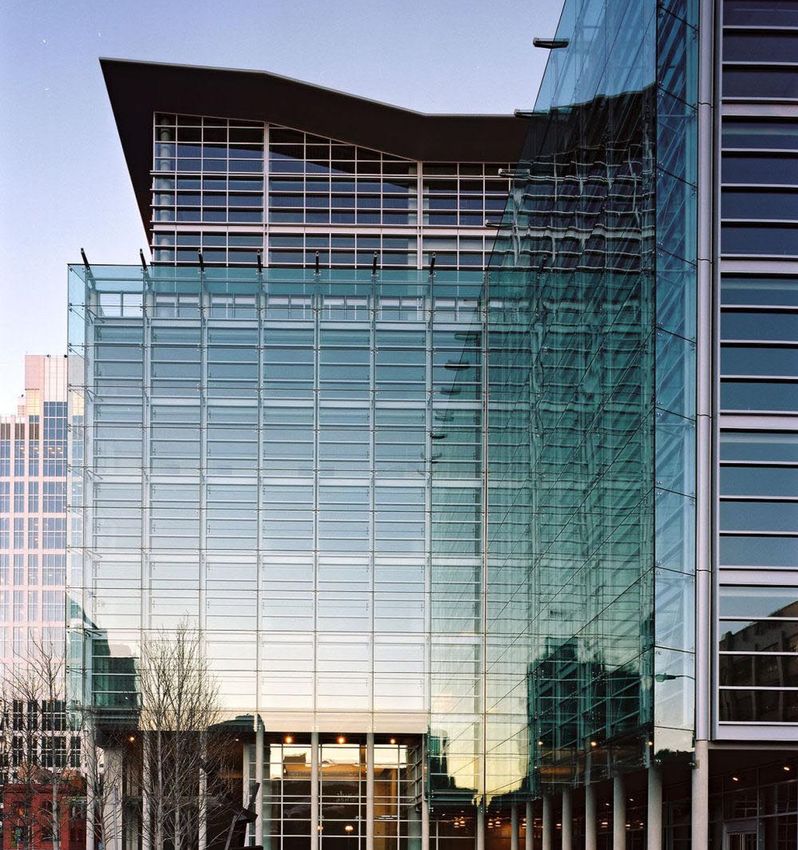
S TA N DA R D S F O R B I R D - S A F E B U I L D I N G S

Juvenile residents and migrants of all ages — those least

                                                                     Photo courtesy New York Audubon’s “Bird-Safe Guidelines”
familiar with the urban setting — face the greatest risk of injury
or death from the hazards of the city environment. Collision
hazards include vehicles, bridges, transmission towers, power
lines, and turbines, but the majority of avian deaths and
injuries occur from impacts with building components such as
transparent or reflective glass. Night-time lighting also inter-
feres with avian migrations. Scientists have determined that
bird mortality caused by collisions with structures is “biologi-
cally significant” for certain species (Longcore et al. 2005).
In other words, building collisions are a threat of sufficient
magnitude to affect the viability of bird populations, leading
to local, regional, and national declines. Night-migrating
songbirds—already imperiled by habitat loss and other
environmental stressors—are at double the risk, threatened
both by illuminated buildings when they fly at night and by
daytime glass collisions as they seek food and shelter.
                                                                                                                                A Red-Tailed Hawk may see its reflection as a territorial
While species that are plentiful may not be threatened by                                                                       rival to be driven away, resulting in a collision.
structure collisions, many species that are threatened or
endangered show up on building collision lists (Ogden 1996
and references therein).
                                                                                                                                    WHAT THIS DOCUMENT DOES
Strategies that improve the urban design quality or sustain-
ability of the built environment may help to make a more                                                                            Annual kills at high-risk structures are foresee-
bird-safe city. For example, San Francisco has a long-standing                                                                      able and avoidable and merit protection (Klem,
                                                                                                                                    2009). This publication serves as the Planning
policy prohibiting installation of mirrored glass, to meet                                                                          Commission’s policy document for Section 139
aesthetic goals. This policy also benefits birds, which mistake                                                                     of the Planning Code, “Standards for Bird-Safe
reflections for real space and don’t perceive the glass as                                                                          Buildings.” The controls described within aim
a deadly barrier. The launch of the Golden Gate Audubon                                                                             to identify high-risk features in an urban setting
Society, Pacific Gas and Electric Company, and Department of                                                                        and regulate these situations to the best of
                                                                                                                                    current scientific understanding. In areas where
the Environment’s voluntary Lights Out San Francisco program                                                                        the risks are less well known, the Department
in 2008 links smart energy policy with bird preservation                                                                            does not propose to apply controls but instead
strategies.                                                                                                                         recommends project sponsors use the check-
                                                                                                                                    list contained in this document as an educa-
Occasionally policy goals may conflict, and we must balance                                                                         tional tool to increase their understanding of
                                                                                                                                    potential dangers. Qualifications for achieving
the benefits and costs of one policy against the other. For
                                                                                                                                    recognition as a Bird-Safe building are included
instance, gains in energy and resource conservation provided                                                                        in the document to acknowledge building own-
by wind generators could also have negative environmental                                                                           ers who voluntarily take measures to help keep
impacts if installations of those wind farms increase mortality                                                                     birds safe above and beyond the requirements.
among flying animals.                                                                                                               At this time, the Planning Department also
                                                                                                                                    urges local researchers to further explore the
                                                                                                                                    issue and for citizens to get involved in local
                                                                                                                                    monitoring efforts.

                                                                                                                                                                                                 3
I. The Issue:
       Birds, Buildings, People and Cities
    Changing Nature of North America and Building Design

    The consequences of our population growth are well-
    known: sprawling development across the country
    compounds habitat loss and disrupts vital ecological
    functions. The rate of sprawl in the United States
    almost quadrupled between 1954 and 2000. An area
    of undeveloped land about the size of Connecticut
    is converted to urbanized landscapes annually in the
    United States (U.S. Department of Agriculture 1997).
    This loss of habitat exerts great pressures on our
    wildlife.

    Less well-known to the general public are the effects
    of our specific development forms on wildlife.
    Buildings and birds have coexisted since people first
    sought shelter. Early blocky buildings posed little
    threat to birds as the building elements were quite
    visibly solid. The advent of mass produced sheet
    glass in 1902 greatly increased the potential for trans-
    parency. The innovation of steel frame buildings with
    glass curtain walls resulted in transparent high-rise
    buildings.

    After the Second World War, these steel and glass
    buildings were widely used and became the iconic                     ABOVE: The proposed new Transbay Terminal presents a transparent
    20th Century American building. Today, planners                      façade with enticing vegetation visible both inside the building and on
                                                                         the roof. The façade is currently planned to include fritted glass.
    and urban dwellers increasingly demand building
    transparency to achieve street activation and
    pedestrian interest. As glass surface area increases
    so do the number of bird collisions. After World War II
    birdwatchers began documenting major bird-building,
    single-event collisions that resulted in the deaths of
    hundreds of birds. The first recorded event occurred
    on September 10, 1948 when more than 200 birds of
    30 species were killed upon collision with the Empire
    State Building (McAdams 2003). Similar events have
    occurred every decade with notable events killing
    10,000 to 50,000 birds at a strike (Bower 2000). In
    2011, the New York Times reported, that “After 5,000
    red-winged blackbirds fell from the sky in Arkansas
    on New Year’s Eve, many Americans awakened to a
    reality that had not necessarily been on their radar:
    many birds die as a result of collisions with buildings”
    (Kaufman 2011). These single-event strikes are often                 ABOVE: Many historic buildings such as the old Transbay Terminal
    tied to inclement weather, night migration, and brightly             present a solid appearance.
    lit structures.

4   SAN FR A NCI SCO P L A NNI NG D EPA R TM E N T V. 1 1. 3 0. 2 01 1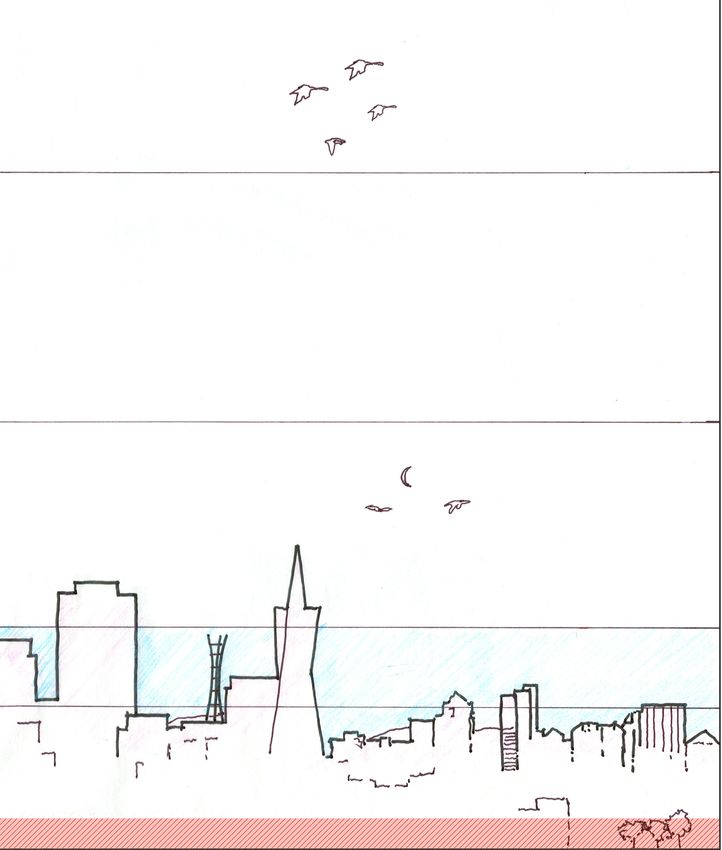
S TA N DA R D S F O R B I R D - S A F E B U I L D I N G S

                                                                                                                  Photo courtesy of Lundberg Design
                                                       While single-event collisions are dramatic, the bulk
                                                       of bird deaths result from the cumulative effects of a
                                                       lone, confused bird mistaking glass for a safe flight
                                                       path. The lone bird strike occurs over and over with
                                                       conservative estimates calculating that each building
                                                       kills 10 birds per year on average in the United States
                                                       (Klem 1990). Poorly designed buildings kill hundreds
                                                       per year (Hager et al. 2008). Current research finds
                                                       that earlier estimates of up to 1 billion bird deaths                                          ABOVE: The City’s new bus shelters designed by Lundberg Design
                                                       per year due to building collisions were conservative                                          use a subtle frit pattern to indicate the barrier. This design, called
                                                       (Klem et al. 2009 and references therein).                                                     “SF Fog,” is effective in alerting both people and birds to the glass.
                                                                                                                                                      INSETS show how the frit pattern is more dense at the bottom and
                                                                                                                                                      dissipates like the City’s fog at the top.
                                                       New trends in green architecture can either increase
                                                       or decrease the risk for birds. Green design that
                                                       facilitates bird safety includes: the avoidance of light                                       wildlife, and incorporate measures to reduce threats.
                                                       pollution, reduced disturbance to natural landscapes                                           Buildings may be certified as silver, gold, or platinum
                                                       and biological systems, and lowered energy use.                                                according to the number of credits achieved. A LEED
                                                       Green design can also be hard on birds. Green                                                  a bird-friendly pilot may be developed as early as
                                                       buildings surrounded by lush landscaping may attract                                           summer 2011, for testing and eventual inclusion
                                                       more birds. Window reflections of adjacent greenery                                            into the main LEED structure. There is still room for
                                                       lure birds to false trees. Green atria inside buildings                                        improvement. In the future, green design should
                                                       too may call birds to an inaccessible haven only to                                            thoroughly consider the impact of design on wild flora
                                                       have their journey harshly interrupted mid-flight. In                                          and fauna.
                                                       2011, the Chicago Tribune reported that birds were
                                                       crashing into the FBI’s Chicago office, a Platinum
                                                                                                                                                      BELOW: The California Academy of Sciences showcases many
                                                       LEED Building, at a clip of 10 birds a day during                                              green design features including a green roof set within a lush, green
                                                       migration (DeVore 2011).                                                                       landscape that is a natural respite for birds migrating through the city.
                                                                                                                                                      Because its use of glass could also pose a collision risk, researchers
                                                       Green building design can go hand-in-hand with                                                 at the Academy are studying the effects of the building on birds and
                                                                                                                                                      testing various methods of improving bird safety, including the use of
                                                       bird-safe design. The Green Building Council rating                                            external screens, as shown on page 29.
                                                       system, LEED, challenges designers to assess
                                                       the impact of building and site development on
http://slowmuse.files.wordpress.com/2008/10/cas1.jpg

                                                                                                                                                                                                                                   5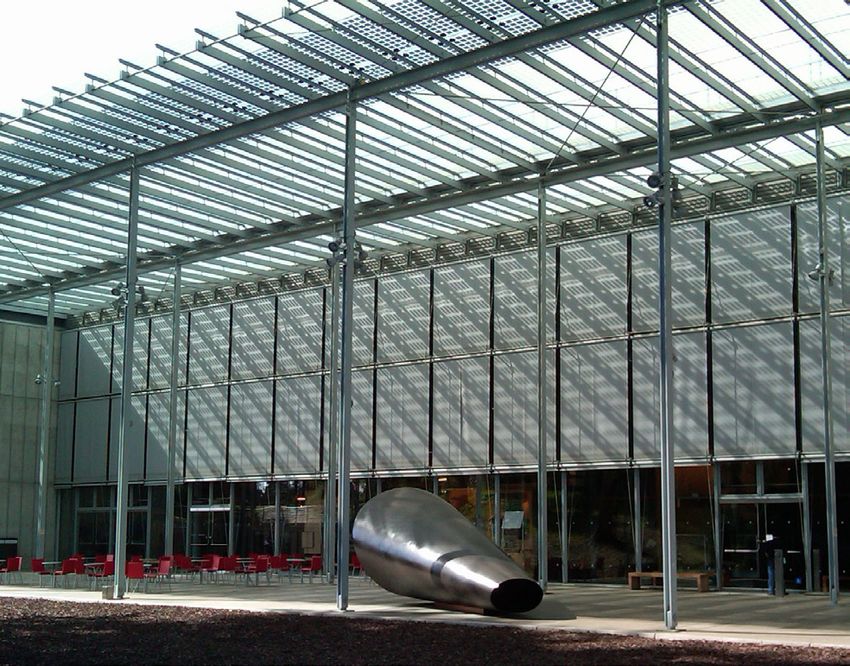
The Basics: Birds and Buildings

    BIRDS AND GLASS
    Glass is everywhere and is one of the least recognized, but most serious, threats to birds; one that is increasing as
    humans continue to build within bird habitats across the planet. Clear glass is invisible to birds and to humans, but
    both can learn to recognize and avoid it. Unfortunately, most birds’ first encounter with glass is fatal. They collide at
    full speed when they try to fly to sky, plants, or other objects seen through glass or reflected on its surface. Death is
    frequently not instantaneous, and may occur as a result of internal hemorrhage days after impact, far away from the
    original collision site, making monitoring the problem even more difficult. The two primary hazards of glass for birds
    are reflectivity and transparency.

    REFLECTIVITY

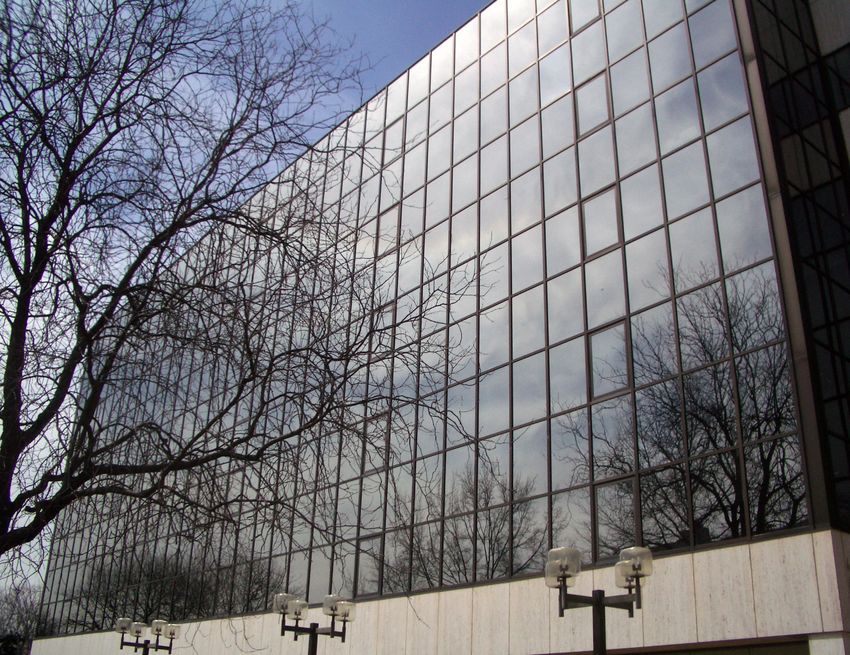
                           Viewed from outside
                           buildings, transparent
                           glass often appears
                           highly reflective.
                           Almost every type of

                                                                                                                                                      http://www.princeton.edu/pr/pictures/l-r/princeton_modern/
                           architectural glass
                           under the right condi-
    tions reflects the sky, clouds, or nearby
    trees and vegetation. Glass which reflects
    the environment presents birds with the
    appearance of safe routes, shelter, and
    possibly food ahead. When birds try to fly
    to the reflected habitat, they hit the glass.
    Reflected vegetation is the most dangerous,
    but birds may also attempt to fly past
    reflected buildings or through reflected
    passageways.

    TRANSPARENCY

                        During daylight hours,
                        birds strike transparent
                        windows as they
                        attempt to access
                        potential perches,
                        plants, food or water
                        sources and other lures
    seen through the glass. “Design traps” such
    as glass “skywalks” joining buildings, glass
                                                                                                                                                  Photo by AnMarie Rodgers

    walls around planted atria and windows
    installed perpendicularly on building corners
    are dangerous because birds perceive an
    unobstructed route to the other side.
                                                                         TOP: Clouds and neighboring trees reflect in the glass curtain wall of
                                                                         Sherrerd Hall on the Princeton campus making it difficult for birds to
                                                                         distinguish real from reflection.

                                                                         BOTTOM: A Market Street building with a transparent corner may lead
                                                                         birds to think the tree is reachable by flying through the glass.

6   SAN FR A NCI SCO P L A NNI NG D EPA R TM E N T V. 1 1. 3 0. 2 01 1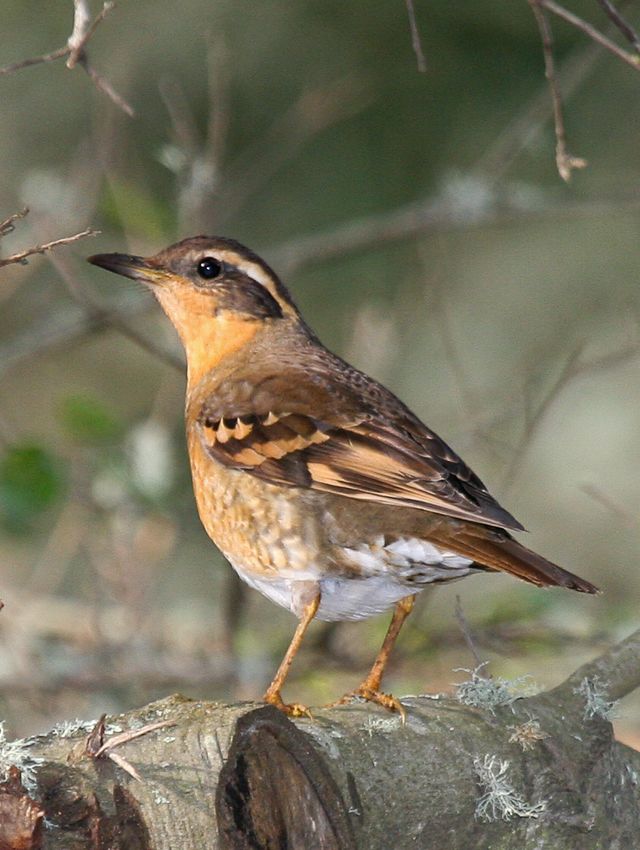
S TA N DA R D S F O R B I R D - S A F E B U I L D I N G S

GLAZING CHARACTERISTICS

Reflective and transparent glass
each present hazards to birds
(Gelb and Delacretaz 2009).

                                                                                                                                                      Photos Courtesy NY Audubon
                   REFLECTIVITY

                                   Image courtesy of Lightsoutindy.org

                   TRANSPARENCY

                                   Image courtesy of Lightsoutindy.org

                                                                         TOP: Reflections: A bird looking for a perch may mistake the
                                                                         reflected tree for an actual tree.

                                                                         BOTTOM: Transparent glass can be mistaken for a clear flight
                                                                         path.

                                                                                                                                                                                   7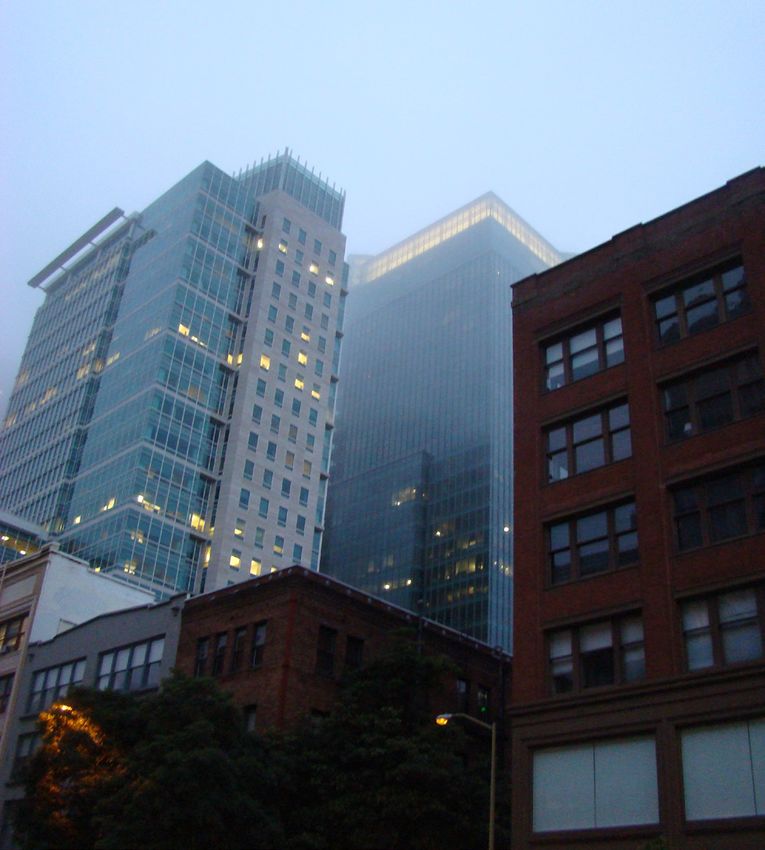
GLASS RELATIVE TO BUILDING HEIGHT AND MASSING

    Typically, as building size increases, so does the amount
    of glass, making larger buildings more of a threat. Lower
    stories of buildings are the most dangerous because
    windows here are at or below canopy height and are more
    likely to reflect trees and other landscape features that
    attract birds. This makes a long, low building more of a
    hazard than a tall one of equal interior square-footage.
    However, as monitoring programs access setbacks and
    roofs of tall buildings, they are finding that birds also
    collide with buildings at the higher floors. This is an area
    where more information is needed.

    AMOUNT OF GLASS

    Glass causes virtually all bird collisions with buildings.
    It’s logical that as the amount of glazing increases on a
    building the threat also increases. A study in New York
    (Klem et al, 2009) found a 10% increase in the area of
    reflective and transparent glass on a building façade
    correlated with a 19-32% increase in the number of fatal
    collisions, in spring and fall, when visiting migrants are
    present.
                                                                         TOP: SoMa’s Foundry Square presents a full façade of
                                                                         highly reflective glass. While all glass can be reflective, glass
                                                                         manufacturers label glass with standards “reflectivity” ratings.
    REDUCING KNOWN BIRD TRAPS

                                                                                                                               Photo Courtesy NY Audubon

    Windowed courtyards and open-topped atria can be                     ABOVE LEFT: This café on Market Street uses
    hazardous, especially if they are heavily planted. Birds             a glass wind barrier lined with attractive flowers
    fly down into such places, and then try to leave by flying           that may entice birds.

    directly towards reflections on the walls. Glass skywalks,           ABOVE RIGHT: This glass walkway allows for
    handrails and building corners where glass walls or                  a clear sightline though the passage. Without
    windows are perpendicular are dangerous because birds                treatment to the glazing, this can create a
                                                                         hazards for birds.
    can see through them to sky or habitat on the other side.

8   SAN FR A NCI SCO P L A NNI NG D EPA R TM E N T V. 1 1. 3 0. 2 01 1
S TA N DA R D S F O R B I R D - S A F E B U I L D I N G S
CLEAR FLIGHT PATHS
Birds have evolved to fly through tree canopies at
speed. This ability to navigate tight places is a benefit
in most natural settings but may be a liability in the built
environment. Early attempts to ward off bird collisions
with glass panes included the unsuccessful attempts at Hand Print Rule: Small
placing falcon stickers in the middle of each pane. As birds may try to fly
through any spaces that
the acrobatic bird below demonstrates and as current are about the size of a
research has shown, collisions are most effectively handprint.
reduced when flight paths are eliminated by the breaking
of glass swaths to less than either 4” vertically or 2”
horizontally (Sheppard 2010).
Exceptional
Acrobats: Some
birds such as
the barn swallow
pictured here
can easily fly
through spaces
that are more
narrow. This bird
is traveling at 35
mph through a
2-inch seam.
http://zuzutop.com/2009/07/a-job-for-superswallow/
We don’t know exactly what birds see when they
look at glass but we do know that the amount of
glass in a building is the strongest predictor of
how dangerous it is to birds. Other factors can
increase or decrease a building’s impact, including
the density and species composition of local
bird populations, the type, location and extent of
Photo by Hendrik Dacquin
landscaping and nearby habitat, prevailing wind
and weather, and patterns of migration through
the area. All must be considered when planning
bird-friendly environments. Commercial buildings
with large expanses of glass can kill large numbers BOTTOM A fatal bird-strike leaves behind a print of the bird’s
of birds, estimated at 35 million per year in the US plumage as evidence of the force of the impact.
(Hager et al 2008). With bird kills estimated at 1-10
per building per year, the large number of buildings
multiplies out to a national estimate of as much
as a billion birds per year (Klem et al 2009; Klem
1990, 2009). As we’ll discuss, certain particularly
hazardous combinations can result in hundreds of
deaths per year for a single building.
9BIRDS AND LIGHTING
LIGHT
While recent research suggests Light at night, especially during bad weather, creates
that nighttime collisions may conditions that are particularly hazardous to night
be more limited in scope than migrating birds. Typically flying at heights over 500
previously thought (Gelb and feet, migrants often descend to lower altitudes during
Delacretaz 2009 and references therein), at night inclement weather, where they may encounter artificial
artificial light degrades the quality of migratory light from buildings. Water vapor in very humid air,
corridors and adds new dangers to an already fog or mist refracts light, greatly increasing the illumi-
perilous journey. These conditions can be exacer- nated area around light sources. Birds circle in the
bated by unfavorable weather and San Francisco illuminated zone, appearing disoriented and unwilling
fog, limiting birds’ ability to see navigational markers or unable to leave (Ogden 2006). They are likely to
like the stars and moon. Flood lights on tall buildings succumb to lethal collision or fall to the ground from
or intense uplights emit light fields that entrap birds exhaustion, where they are at risk from predators.
reluctant to fly from a lit area into a dark one. This type While mass mortalities at very tall illuminated struc-
of lighting has resulted in mass mortalities of birds tures such as skyscrapers have received the most
(Ogden 1996 and references therein). attention, mortality is also associated with ground
level lighting and with inclement weather.
Lights disrupt birds’ orientation. Birds may cluster
around such lights circling upward, increasing the
likelihood of collisions with the structure or each
other. Importantly, vital energy stores are consumed
in nonproductive flight. The combination of fog and
light doubly affects birds’ navigation and orientation.
BELOW: Hazards can combine in downtown San Francisco. In
(Ogden 2006) this photo beacon lighting, light spillage, and fog mix.
Besides reducing adverse impacts on migrating birds,
there are significant economic and human health
incentives for curbing excessive building illumination.
In June 2009, the American Medical Association
declared light pollution a human health threat and
developed a policy in support of control of light
pollution.
Overly-lit buildings waste tremendous amounts of
electricity, increasing greenhouse gas emissions and
air pollution levels, and of course, wasting money.
Researchers estimate that the United States alone
wastes over one billion dollars in electrical costs
annually because poorly designed or improperly
installed outdoor fixtures allow much of the light to go
up to the sky. “Light pollution” has negative aesthetic
and cultural impacts. Recent studies estimate that
over two-thirds of the world’s population can no
Photo by AnMarie Rodgers
longer see the Milky Way, a source of mystery and
imagination for star-gazers. Together, the ecological,
financial, and aesthetic/cultural impacts of excessive
building lighting serve as compelling motivation to
reduce and refine light usage (Scriber 2008).
10 SAN FR A NCI SCO P L A NNI NG D EPA R TM E N T V. 1 1. 3 0. 2 01 1S TA N DA R D S F O R B I R D - S A F E B U I L D I N G S
While we typically think of birds as early
risers, during migration season many species
will travel at night. White lights, red lights,
skyglow, brightly lit buildings and interiors
can distort normal flight routes (Poot et al.
2008). The risks vary by species. Songbirds,
in particular, seem to be guided by light and
therefore appear more susceptible to colli-
sions with lit structures. Migrant songbirds
have been documented by multiple sources
to suffer single night mortalities of hundreds
Image courtesy Lights Out SF
of birds at a single location (Ogden 1996 and
references therein).
ABOVE: Lighting and Navigation: Birds migrate by reading light from the
moon and stars, as well as by geomagnetic signals radiated from earth.
Cumulative light spillage from cities can create a glow that is bright enough to
obscure the starlight needed for navigation.
LEFT: Beacon Effect:
Individual structures may be
lit in a manner that draws
birds like a moth to a flame.
Beacon structures can draw
birds towards land that may
offer little shelter or food or
towards collisions with glass.
Once at the structure, birds
may be hesitant to leave the
lit area causing them to circle
the structure until exhausted.
(Ogden 1996)
RIGHT: Skyglow can be
increased during periods
of inclement weather.
Current research indicates
that red lights in particular
may disrupt geomagnetic
tracking. Red lights required
for airline safety would be
permitted (above image).
Decorative red lighting, such
as on the building below
in New York, would be
discouraged. Image courtesy Lights Out SF Image courtesy NY Audubon
11OTHER CAUSES OF COLLISIONS:
LOCATION: MACRO-SETTING
San Francisco is on the Oceanic Route of
the Pacific Flyway. During migration, birds
tend to follow rivers and the coastline. In this
way migrants funnel southward together in
the fall and disperse northward in the spring.
VISITING BIRDS
Migrating birds are unfamiliar with the City
and may be exhausted from their flight.
Instances of collisions rise during the
migratory seasons as birds travel to lower
elevations to feed, rest, and use light to
recalibrate their navigation. (Hager et al.
2008).
Map courtesy of Texas Parks and Wildlife Department.
LEFT: Millions of birds – more than 350 species – follow
the Pacific Flyway. Of the two primary routes, the Oceanic
Route passes through the Bay Area. Spring migration
occurs between February through May, and fall migration
begins in August and lasts through November. During
this time, collisions with buildings can increase notably.
LEFT: According to the Golden Gate Audubon Society,
over 250 species migrate through San Francisco
Bay, many of them small songbirds such as warblers,
thrushes, tanagers and sparrows that migrate at
night and may be more susceptible to collisions with
structures when descending for feeding and resting
Photos by Eddie Bartley.
because of unfamiliar territory and confusing signals
from the urban environment. Bird photos from left to
right are Anna’s Hummingbird, Yellow Warbler, and
Lazuli Bunting.
12 SAN FR A NCI SCO P L A NNI NG D EPA R TM E N T V. 1 1. 3 0. 2 01 1S TA N DA R D S F O R B I R D - S A F E B U I L D I N G S
LOCATION: MICRO-SETTING
How a building meets adjacent landscape features
can be critical in determining the risk to birds.
Buildings with large windows located adjacent
to extensive vegetation present great hazards. In
suburban areas, buildings with these features have
been documented to kill 30 birds per year (Klem 1990;
and O’Connell 2001). This combination may be even
more lethal in urban areas. Studies of Manhattan
structures with large swaths of glazing adjacent to
large open spaces have recorded well over 100
collisions per year (Gelb and Delacretaz 2009).
BUILDING FEATURES
Well-articulated buildings orient people as well as
birds, directing flow of traffic, creating enticing rest
areas and adding aesthetic appeal.
RIGHT: Although located in a park setting, the De Young
Museum minimizes hazards due to its low amount of
glazing and perforated copper façade.
WEATHER CONDITIONS
Inclement weather can obscure
obstacles and exacerbate
skyglow conditions (Ogden
1996 and references therein).
http://izismile.com/2009/09/30/beautiful_pictures_of_san_francisco_covered_with_fog_10_pics_1_video.html
13Implications for San Francisco
Three decades of researching bird/building colli- complete, anecdotally, local birders have monitored
sions has yielded both many answers and posed several buildings and have noted significant numbers
new questions. The high number of North American of bird injuries and deaths (Weeden, 2010). San
bird deaths and the ecological importance of birds Francisco Animal Care and Control staff further
demonstrate that the problem exists on a national reported collecting 938 wild birds over a two year
level, but it is natural to wonder if the dense nature period from May 2008 through June 2010, noting the
of San Francisco presents the same compelling majority of birds were found during the spring and
pressure for a local response. The short answer is fall migratory periods. The California Academy of
yes—San Francisco has both an important population Sciences in Golden Gate Park is spearheading their
of birds and a potentially injurious built environment own research and bird-safe building methods, in a
for them. As discussed previously, San Francisco is proactive effort to avoid bird fatalities at their facility.
both home to many birds and is on a major migratory In lieu of large-scale local monitoring programs there
pathway. Locally, there are incidents of celebrated are a great many studies of dense urban cities that
birds such, as the Peregrine Falcon, repeatedly we can further draw upon. These studies demonstrate
losing their young due to collisions with downtown that birds respond similarly to certain building and
skyscrapers. With only a few studies currently environmental features, regardless of geographic
underway in San Francisco and results not yet location.
SPOTLIGHT ON A LOCAL CELEBRITY
The Peregrine Falcon population suffered a huge blow to risk for a collision. In other habitats, falcons face predators
their numbers due to the use of pesticides including DDT like eagles, owls, and when on the ground by bobcats, and
beginning in the 1950s. In 1970 the California Peregrine coyotes. Like other birds, Peregrine Falcons see in the ultra
Falcon population was reduced to only two known breed- violet (UV) range.
ing pairs. The Santa Cruz Predatory Bird Research Group
(SCPBRG) participated in the reintroduction of the spe- The architects and designers of the downtown environment
cies and has monitored the Peregrine Falcons nesting in did not consider bird building collision as a potential risk. In
San Francisco and other sites. the future when buildings are being designed and upgrad-
ed, the latest information and options should be considered.
Natural cliff dwellers, the species adapted to nesting
in bridges and downtown high-rises. As the popula- - Noreen Weeden, Golden Gate Audubon Society
tion increased, Peregrine Falcons were reported in the
San Francisco financial district and in 1987 a nest box
was placed near a commonly used perch on the PG&E
Headquarters Building. In 2003, Peregrine Falcons nested
in the downtown for the first time and have been a closely
watched since. SCPBRG trained citizens to participate in a
group called “Fledge Watch” to increase understanding of
how young falcons fare in the city. In 2009, 76 people vol-
unteered for 5 hour shifts monitoring the 36-58 day old
Peregrines from sunrise to sunset in either San Jose or
San Francisco. The public could also view the falcons from
the downtown building nest via a webcam.
Photo by Glenn Nevill
According to Glenn Stewart of SCPBRG, “while there have
been building collision fatalities, the target nest success of
Peregrine Falcons in San Francisco was 1.5 per nest and
has been exceeded at 1.6 young fledged per nest.”
A native San Franciscan juvenile Peregrine Falcon (deceased
It appears that several weeks after fledging, urban Per- offspring of “Dapper Dan” and “Diamond Lil”) perched on
egrine Falcons recognize glass as a barrier. In the first few sill near reflective glass. All three fledged young from that
weeks when the young are learning to fly they are most at year (2009) died as a result of building collisions. Two more
fledglings died from collisions in 2011.
14 SAN FR A NCI SCO P L A NNI NG D EPA R TM E N T V. 1 1. 3 0. 2 01 1S TA N DA R D S F O R B I R D - S A F E B U I L D I N G S
LESSONS FROM MAJOR CITIES downtown core. A 25-year study by researchers
from Chicago’s Field Museum of Natural History
Academic researchers and bird-rescue organiza- documented a particularly problematic building in
tions in Chicago, Toronto, and New York City have Chicago (McCormick Place Convention Center) with
documented thousands of structure collisions and over 30,000 dead birds of 141 species. The lights
come to some interesting conclusions. at the McCormick Palace were left on at night until
2000. Anecdotal reports for this building cited an
Perhaps the most established monitoring program
80% decrease in the number of birds killed, by simply
of bird-building collisions in a dense city is NYC
turning out building lights (Kousky 2004).
Audubon’s Project Safe Flight in Manhattan. Project
Safe Flight documented over 5,400 collisions between Other researchers have agreed that lights can cause a
1997-2008. A recent study (Gelb, Delacretaz 2009) significant problem, but that turning off lights isn’t the
analyzed this data to determine the critical contrib- only answer (Shephard, Klem 2011). As shown in the
uting factors for the structures with the largest number Manhattan study of ten buildings, daytime collisions
of bird fatalities. were higher and occurred in areas with vegetation
opposite glass. Toronto’s approach to tackle this
´´ The study looked at the 10 most deadly collision
dual issue was to provide mandatory construction
sites and found the combination of open space,
standards for daytime, while continuing to increase
vegetation, and large windows (greater than 1
participation in their Lights Out program at night.
meter x 2 meter) to be more predictive of death
than building height.
´´ The frequency of collisions is highest along
façades that have lush exterior vegetation and
either reflective or transparent windows.
´´ The majority of the collisions occurred during the
daytime and involved migrant species.
´´ High-rise buildings and night lighting presented
less risk than windows adjacent to open spaces
one hectare or greater in size.
´´ The majority of collisions are likely due to high-
collision sites that feature glass opposite exterior Morgan Mail Bldg
vegetation.
´´ Urban mortalities may be higher than previously
thought. Non-urban studies estimated that high-
collision sites would have about 30 collisions per Photos courtesy NY Audubon
year. At the Manhattan collision sites examined in
this study, well over 100 collisions were recorded
per year.
The most dangerous building in this study was not
a high-rise, but instead was a 6-story office building ABOVE: The windows
of Morgan Mail
adjacent to densely vegetated open space. Building in Manhattan
are adjacent to green
Studies in Toronto and other eastern and Great Lakes landscaped open
cities have documented tens of thousands of bird spaces, making it the
most dangerous for
fatalities attributable to building collisions. A 10-year birds in a recent study.
study of bird-building collisions in downtown Toronto
found over 21,000 dead and injured birds in the city’s RIGHT: Morgan Mail
Building causality.
15Spotlight on San Francisco’s Migrant Birds
Bird collisions with buildings occur year-round, but peak Diurnal migrants: Daytime
Photo by Eddie Bartley
during the migration period in spring and especially in fall migrants include raptors, which
when millions of birds travel between breeding and winter- take advantage of air currents to
ing grounds. Migration is a complex phenomenon, and reduce the energy needed for flight.
different species face different levels of hazards, depending Other diurnal migrants, including
on their migration strategy, immediate weather conditions, shorebirds and water-birds, often
availability of food, and anthropogenic obstacles encoun- fly in flocks and their stopover sites
tered en route. are less dispersed because of their
dependence on bodies of water.
Nocturnal migrants: Many This means that daytime migration
Photo by Noreen Weeden
songbirds migrate at night, routes often follow land forms such
possibly to take advantage of as rivers and mountain ranges, and
cooler temperatures and less birds tend to be concentrated along these routes or ‘flyways’.
turbulent air, and because they Not all songbirds migrate at night—species such as robins,
need daylight to hunt insects larks, kingbirds and others migrate during the day. Birds’
for food. Generally, these birds daytime flight altitudes are generally lower than their nighttime
migrate individually, not in counterparts.
flocks, flying spread out across
most of their range. Migrants depart shortly after sundown. Millions of birds, especially songbirds, are thus at risk, as they
The number of birds in flight peaks before midnight, then ascend and descend, flying through or stopping at or near
drops. Songbirds may fly as many as 200 miles in a night, populated areas. As city buildings grow in height, they become
then stop to rest and feed for one to three days, but these unseen obstacles by night and pose confusing reflections by
patterns are strongly impacted by weather, especially wind day. Nocturnal migrants, after landing, make short, low flights
and temperature. Birds may delay departure, waiting for near dawn, searching for feeding areas and running a gauntlet
good weather. They generally fly at an altitude of about of glass in almost every habitat: in cities, suburbs and, increas-
2,000 feet, but may descend or curtail flight altogether if ingly, exurbs. When weather conditions cause night flyers to
they encounter a cold front, rain, or fog. There can be a descend into the range of lighted structures, huge kills can oc-
thousand-fold difference in the number of birds aloft from cur around tall buildings. Urban sprawl is creating large areas
one night to the next. Concentrations of birds may develop lit all night that may be causing less obvious, more dispersed
in ‘staging areas’ where birds prepare to cross large barriers bird mortality.
such as the Great Lakes or Gulf of Mexico.
- Christine Sheppard, American Bird Conservancy
THE IMPORTANCE OF MACRO-LOCATION (ON MIGRATION PATH) VS. MICRO-LOCATION (WITHIN A
PARK-LIKE SETTING) AS A RISK FACTOR
A study of collisions at suburban office
Photos by Eddie Bartley
parks in Virginia found a large mortality
rate for migrant birds even though the
office parks were not on a migratory
route—suggesting that the combination
of mirrored windows and vegetation
was more of a collision risk to visiting
birds (O’Connell 2001). This study
also suggests that the location of the
building relative to the flyway may be less
important than other risk factors such
By flying at night, migrants like the Orange-Crowned Warbler (NEAR RIGHT) and
as building design and siting relative to Western Tanager (ABOVE LEFT) minimize predation, and avoid overheating that could
plantings and open space. result from the energy expended to fly such long distances. This also enables them to
feed during the day and refuel for the night.
Daytime migrants like this Cooper’s Hawk (FAR RIGHT) and the Sharp-shinned Hawk
(ABOVE RIGHT) depend on the heating earth for added lift. Riding rising air currents
called thermals, these birds take advantage of this lift to rise to the top of one thermal,
set their wings in the direction they want to travel and then coast to the next thermal.
16 SAN FR A NCI SCO P L A NNI NG D EPA R TM E N T V. 1 1. 3 0. 2 01 1S TA N DA R D S F O R B I R D - S A F E B U I L D I N G S
Spotlight on Building Height and Bird Migration
2000’
Upper Levels:
NOCTURNAL MIGRANTS AND
FLEDGLING RAPTORS
While birds’ migratory paths vary
and with some birds traveling more
than 10,000’ high, radar tracking has
determined that approximately 98%
of flying vertebrates (birds and bats) 1600’
migrate at heights below 1,640 feet
during the spring, with 75% flying
below that level in the fall. Today,
many of the tallest buildings in the Mid-Levels:
world reach or come close to the PRIMARY MIGRATION ZONE FOR
upper limits of bird migration. Storms SMALL BIRDS
or fog, which cause migrants to fly
lower and can cause disorientation, This is the primary migration height for
can put countless birds at risk during small birds. Migrating birds descend from
a single evening. migration heights in the early morning to
rest and forage for food in tree canopies
and on the ground. Migrants also frequent-
ly fly short distances at lower elevations
in the early morning to correct the path of
their migration.
1000’
500’
300’
60’
Bird Building Collision Zone:
INCREASED COLLISIONS FOR LOCAL BIRDS AND MIGRANTS
SEARCHING FOR FOOD AND SHELTER
The most hazardous areas of all buildings, especially during the day
and regardless of overall height, are the ground level and bottom
few stories. Here, birds are most likely to fly into glazed façades that
reflect surrounding vegetation, sky, and other attractive features.
17II. Bird-Safe Treatments
A Survey of Treatments from Easy to Innovative
Effective bird-safe building treatments exist and Bird-safe design options are limited only by the
have been employed on buildings of significant imagination. Safe buildings may have large expanses
architectural stature. San Francisco has a local of glass but use screens, latticework, grilles and other
example of such treatments that has been recognized devices, both functional and decorative, outside the
nationally. The new Federal Building is cited as glass or integrated into the glass. There are treat-
an example of bird-safe building design in United ments for existing glass that will reduce mortality to
States Representative Mike Quigley’s (D-IL) pending zero. These treatments do provide a view from inside,
bill,“Federal Bird-Safe Buildings Act of 2011” (House though often presenting a level of opacity from the
Bill No. 1643). This bill, if adopted, would require outside, a factor that can deter application of these
federal buildings to incorporate bird-safe design solutions. Glass treatments that can eliminate or
principals. greatly reduce bird mortality, while only minimally
obscuring the glass itself, are therefore highly
desirable and encourage more ‘bird-friendly’ design.
RIGHT: The south façade sports perforated steel panels that filter
sunlight and serve as thermal buffers but also may convince birds
that the structure is solid.
BOTTOM: San Francisco’s Federal Building’s north façade boasts
floor-to-ceiling glass buffered behind a grid of metal catwalks and
opaque glass fins.
Photos by Kurt Rodgers, SF Chronicle
http://www.sfgate.com/cgi-bin/article.cgi?f=/c/a/2007/02/25/MNG2DOATDN1.DTL
18 SAN FR A NCI SCO P L A NNI NG D EPA R TM E N T V. 1 1. 3 0. 2 01 1S TA N DA R D S F O R B I R D - S A F E B U I L D I N G S
GLASS AND FAÇADE TREATMENTS
Reduction of bird strikes with new buildings can be achieved with simple and cost-effective means. Creating a visual
signal, or “visual noise barrier,” that alerts the birds to the presence of glass objects can be achieved with relatively
little additional cost. Fritting, the placement of ceramic lines or dots on glass, is one method of creating a visual
noise barrier. People inside the building see through the pattern, which has little effect on the human-perceived
transparency of the window. Fritting can also reduce air conditioning loads by lowering heat gain, while still allowing
enough light transmission for day-lighting interior spaces. There is now a commercially available insulated glass with
ultra-violet patterns that are designed to deter birds while largely being imperceptible to humans.
FRITTED AND FROSTED GLASS ANGLED GLASS
Ceramic dots, or frits, are applied between layers of While angled glass may be a useful strategy for
insulated glass to reduce transmission of light. These smaller panes, it is generally not effective for large
can be applied in different colors and patterns and buildings. Birds approach glass from many angles,
can commonly be seen on commercial buildings. and can see glass from many perspectives. Generally,
At Swarthmore College, external, densely fritted the desired angle for effective treatment is 20-40
glass was incorporated into the design of the Unified degrees. These angles are difficult to maintain for
Science Center. Virtually no strikes have been large buildings, however, this strategy may work in
reported at either site. Fritting is a commonly-used low-scaled buildings with a limited amount of glass
and inexpensive solution that is most successful when (Ogden 1996 and references therein; and Klem et al.
the frits are applied on the outside surface. 2004).
LEFT: Swarthmore College
uses fritting on a large
expanse of glass facing an
open space.
RIGHT: The Minnesota
Central Library’s atrium
features angled glass,
a dramatic architectural
feature that reduces
reflections of habitat and
sky from most angles. The
likelihood of fatal collisions
at this angle is lessened.
Minnesota Bird-Safe Building Guidelines Minnesota Bird-Safe Building Guidelines
19ULTRA-VIOLET GLASS
The Bronx Zoo uses glass that reflects UV
light—primarily visible to birds, but not to
people (Klem 2009). This glass may be
about 50% more expensive than typical
glass but is comparable to energy-efficient
glass (Eisenberg 2010).
TOP RIGHT: The Bronx Zoo from the NYTimes.
FILM AND ART TREATMENT OF GLASS
http://www.nytimes.com/2010/08/29/business/29novel.html?ref=anne_eisenberg
Windows may be used as canvases to
express building use through film and art. In
certain instances, windows made bird-safe
through an application of art may receive
funding through San Francisco’s One
Percent for Public Art Program.
SECOND RIGHT: IIT Student Center, Chicago.
EXTERNAL SCREENS
External screens are both inexpensive
and effective. Screens can be added to
individual windows for small-scale projects
or can become a façade element of larger NY Bird-Safe Design Guidelines
developments. This time-tested approach
precludes collisions without completely
obscuring vision. Before non-operable
windows, screens were more prevalent. At
the other end of the spectrum are solutions
that wrap entire structures with lightweight
netting or screens. To be effective, the
netting must be several inches in front of
the window, so birds don’t hit the glass after
hitting the net.
THIRD RIGHT: The Matarozzi/Pelsinger Building in San
Francisco is a LEED Gold building designed by Aidlin- Minnesota Bird-Safe Building Guidelines
Darling. It has screens over the majority of its façade
that protect birds from impact and allow views out for
users of the building (left nighttime/right daytime)
ARCHITECTURAL FEATURES
Overhangs, louvers, and awnings can
block the view of the glass from birds
located above the feature but do not
eliminate reflections. This approach should
be combined with window treatments to
achieve results.
BOTTOM RIGHT: The award winning Aqua Tower,
Chicago, uses overhangs and other features that
provide bird-safe design as well as energy efficiency. Steve Hall/Studio Gang
20 SAN FR A NCI SCO P L A NNI NG D EPA R TM E N T V. 1 1. 3 0. 2 01 1S TA N DA R D S F O R B I R D - S A F E B U I L D I N G S
NETTING
Netting has proven to be a versatile and effective
option for bird-safe window treatment. Netting is
stretched several inches over windows or entry ways
to prevent birds from hitting the glass. Specifically
designed netting is almost completely invisible and
does not require invasive installation techniques. It
can be used for new buildings, retrofits to existing
buildings, replacement glass façades, and for
preserving original features of historic buildings.
During the spring and fall migrations, agency staff
at the FBI building in Chicago discovered at least 10 Heather Charles, Chicago Tribune
birds a day crashing into windows outside of their
first floor, plant filled indoor atrium. Seasonal netting
was installed and bird collision monitors noted a
substantial reduction in bird strikes, without compro-
mising the look of the building or the ability to see into
or out of the lobby (DeVore 2011).
Netting has also been used successfully to treat
historic buildings, where it’s critical to maintain the
original character of the building. Prestigious historic
preservation awards have been earned for netting
work on famous buildings such as the American
Museum of Natural History and the US Department
of Justice. Other historically significant structures
with netting include New York Metropolitan Opera,
Independence Hall, and even Alcatraz Prison.
TOP RIGHT: Special agent Julia Photo Courtesy of Birdmasters, Inc.
Meredith discovered so many dead
and injured birds on the ground outside
the Chicago offices of the FBI that she
lobbied to have special bird-friendly
netting installed on the building’s first
floor windows. She estimates that
the nets have reduced the number of
birds crashing into the windows by 90
percent.
CENTER RIGHT: A close-up view of the
New York Public Library barely shows
the marble toned and clear netting over
the building.
BOTTOM RIGHT: The netting placed
over the windows at the New York Public
Library is virtually invisible and helps
prevent both bird strikes and building
deterioration from pest species. Photo Courtesy of Birdmasters, Inc.
21WIND GENERATORS
San Francisco has a policy to encourage the LEFT: Horizontal axis
installation of on-site, renewable energy systems, and vertical access
such as small wind generators. Currently, wind generators that
do not present a
there are two general types of wind generators solid appearance are
available. One uses scoops or blades to spin on a discouraged, especially
vertical axis, shown at far left below. It is probable adjacent to water or
open space larger than
that birds would perceive this type as a solid 2 acres.
barrier even when it’s rotating.
The second design uses a propeller-like rotor to
spin on a horizontal axis. This is a small-scale
version of the most common generator used on
large-scale wind farms throughout the world.
While it is unreasonable to believe that these small
urban systems would cause the annihilation of
birds such as the well-known disaster at Altamont,
California (see discussion on adjacent page)
a certain amount of caution is prudent in the
absence of established scientific research. The
Planning Department has exercised that caution
by allowing a more widespread installation of
vertical axis machines, and limiting locations of
horizontal axis, open-bladed generators to areas
that would seem to be less densely populated by
birds, especially migrants and juveniles.
The only clear way at present to learn whether
small urban wind generators will harm birds is to
allow the installation of a few, and to monitor the
interactions with animals, if any. For this reason,
all approvals for wind generators have conditions
that require monitoring and reporting of bird
and bat strikes. These reporting protocols are
in accord with recommendations made by the
Mayor’s Task Force on Urban Wind.
As of June 2011, none of the approved windmills
have submitted monitoring information to the ABOVE: Vertical axis wind generators may vary in appearance.
Blades that present a solid appearance (such as the left image) are
Planning Department. encouraged.
22 SAN FR A NCI SCO P L A NNI NG D EPA R TM E N T V. 1 1. 3 0. 2 01 1S TA N DA R D S F O R B I R D - S A F E B U I L D I N G S
Golden Eagle photo by Eddie Bartley.
Spotlight on the Altamont Windmills
Golden Eagles, named for the golden feathering at the
nape of their necks, are majestic raptors that can be found
throughout most of California and much of the northern
hemisphere. California protects these magnificent raptors
as both a species of special concern and a fully protected In 2004, Golden Gate Audubon joined four other Bay Area
species, making it illegal to harm or kill them. Golden Eagles Audubon chapters (Marin Audubon, Santa Clara Valley
are protected under the Bald and Golden Eagle Protection Audubon, Mt. Diablo Audubon, and Ohlone Audubon) and
Act. Golden Eagle are also protected under the Federal Center for Biological Diversity and Californians for Renew-
Migratory Bird Treaty Act, which forbids the killing (even able Energy (CARE) in challenging the renewal permits for
unintentional killing) of any migratory bird. this facility. The Audubon/CARE CEQA lawsuit settled, with
terms requiring the wind companies to reduce avian mortal-
Golden Eagles typically prefer open terrain, such as the roll- ity by 50% within three years and to complete a comprehen-
ing hills of eastern Alameda County. The open grasslands, sive conservation plan to govern operations in the Altamont.
scattered oaks, and bountiful prey make this area ideal habi-
tat for Golden Eagles. Today, it supports the highest-known Reducing the kill entirely may not be possible as long as
density of Golden Eagle nesting territories in the world. the wind turbines continue to operate at Altamont. However,
significant progress can be made. The CEC estimates that
Conservation Issues wind operators could reduce bird deaths by as much as 50
Every year, an estimated 75 to 110 Golden Eagles are killed percent within three years–the goal stated in the settlement
by the wind turbines in the Altamont Pass Wind Resource agreement–and by up to 85 percent within six years–all
Area (APWRA). Some lose their wings, others are decapi- without reducing energy output significantly at APWRA.
tated, and still others are cut in half. The lethal turbines have These reductions could be achieved by removing turbines
been reduced from 6,000 to less than 5,000 which are still that are the most deadly to birds and shutting down the
arrayed across 50,000 acres of rolling hills in northeastern turbines during four winter months when winds are the least
Alameda and southeastern Contra Costa counties. The productive for wind energy, combined with some additional
APWRA, built in the 1980s, was one of the first wind energy measures. Anecdotal data indicate there may not be a
sites in the U.S. At the time, no one knew how deadly the substantial improvement for Golden Eagles and there may
turbines could be for birds. Few would now deny, however, actually be much higher mortality for bats.
that Altamont Pass is probably the worst site ever chosen for
a wind energy project. According to a 2004 California En- Golden Gate Audubon is working with Alameda County to
ergy Commission (CEC) report, as many as 380 Burrowing ensure that the permits granted to the wind industry achieve
Owls (also a state-designated species of special concern), reductions in bird mortality, in addition to other require-
300 Red-tailed Hawks, and 333 American Kestrels are killed ments that will help address the unacceptable bird kills at
every year. The most recent study by Dr. Shawn Smallwood, Altamont Pass over the long term. Pursuit of clean energy
a member of the Altamont Scientific Review Committee es- technology, when done correctly, can help reduce the risk
timates that approximately 7,600-9,300 birds are killed here of global warming and its impacts on wildlife.
each year. (Smallwood 2010)
Written by the Golden Gate Audubon Society.
23LIGHTING TREATMENTS
While the ultimate cause of collisions are invisible sensors. Building operations can be managed to
surfaces, light pollution can increase risk. Night eliminate or reduce night lighting from activities near
migrants depend on starlight for navigation, and windows. Minimize perimeter and vanity lighting
brightly-lit buildings can draw them off course. Once and consider filters or special bulbs to reduce red
within the aura of bright lights, they can become wavelengths where lighting is necessary. Strobe
disoriented, and may collide with buildings, or may lighting is preferable to steady burning lights. Exterior
fly in circles around the light source, until they drop to light fixtures should be designed to minimize light
the ground from exhaustion, having expended their escaping upwards. Motion detectors are thought to
limited energy reserves needed to complete their provide better security than steady burning lights,
migration. Architects and building owners should because lights turning on provide a signal, and
collaborate to address the two key lighting issues: because steady lights create predictable shadows.
design and operation.
Eliminating unnecessary lighting is one of the easiest
ways to reduce bird collisions, with the added
advantage of saving energy and expense. As much
as possible, lights should be controlled by motion
Minnesota Bird-Safe Building Guidelines
Minnesota Bird-Safe Building Guidelines
REDUCE: UNNECESSARY INTERIOR LIGHT REDUCE: UNNECESSARY EXTERIOR LIGHT
24 SAN FR A NCI SCO P L A NNI NG D EPA R TM E N T V. 1 1. 3 0. 2 01 1You can also read


