JEWELLERY QUARTER HERITAGE TRAIL - The Jewellery ...
←
→
Page content transcription
If your browser does not render page correctly, please read the page content below
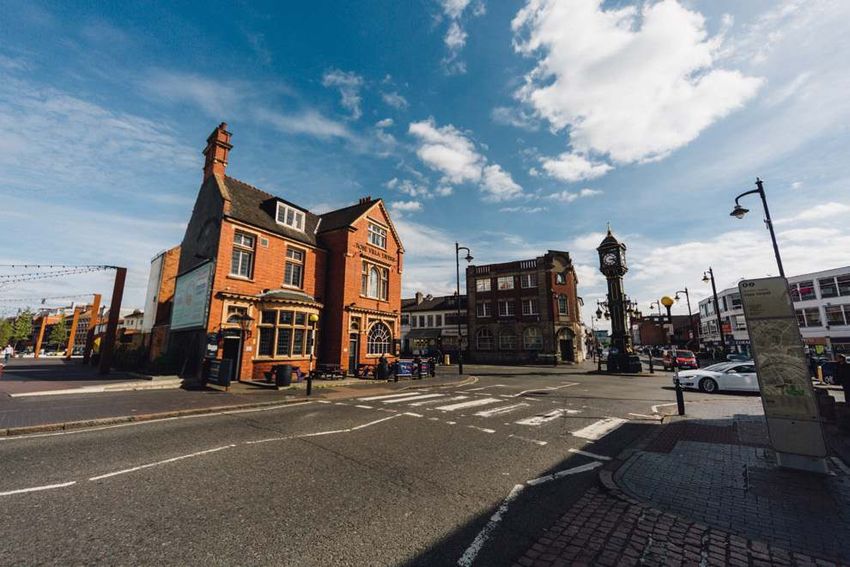
BIRMINGHAM
JEWELLERY QUARTER
  H E R I TA G E T R A I L

                 BROUGHT TO YOU BY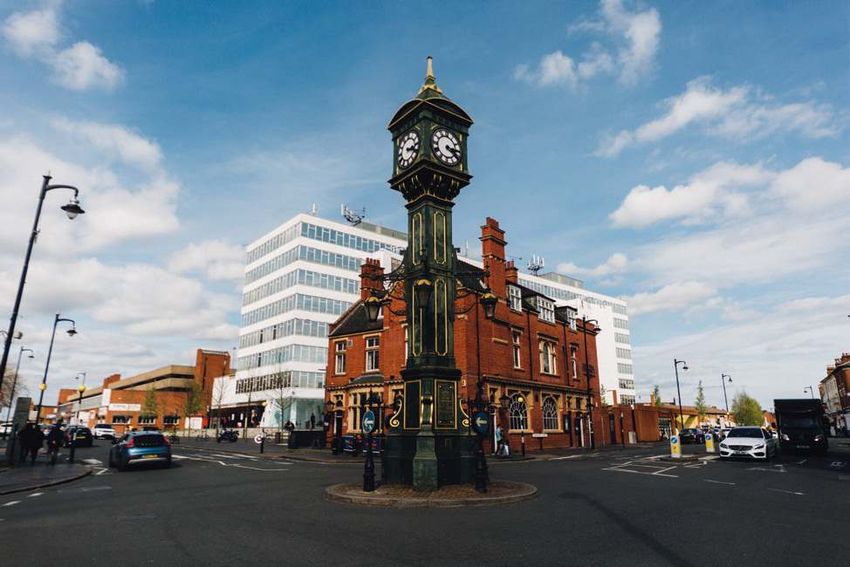
B I RM INGH AM
JE W ELLE RY QUA RTE R
H ERI TAGE T RA IL
Birmingham’s famous Jewellery Quarter is completely
unique - there is no other historic townscape like it in the
world. It is an area rich in heritage, but what makes it so
special is that it is still also a living, working community.

The purpose of this walking trail is to provide an
introduction to the Quarter’s past and present, and
to encourage visitors to discover more about this
fascinating area. This trail is printed and distributed by the
Jewellery Quarter Development Trust (JQDT).

The development of the Jewellery Quarter.
Goldsmiths and silversmiths have been working in what we
now call the Jewellery Quarter for more than 200 years.
Originally scattered across Birmingham, they began to
congregate in the Hockley area from 1760 onwards. The
main reason for this was the development of the Colmore
family’s Newhall estate which released more land for housing
and manufacturing.

Precious metal working grew out of the ‘toy’ trades – not
children’s playthings but buckles, buttons and other small
metal trinkets. ‘Brummagem toys’ were produced in their
hundreds and thousands, in cut-steel, brass and silver.

Westley’s Map of Birmingham, 1731 - Confusingly north is to the right!
As the trade expanded new streets
were laid out across former rural
estates, and substantial new houses
were built for wealthy
manufacturers. Alongside these
large houses, terraces of artisans’
homes were also constructed. In
time the gardens of these houses
became built up with workshops
and spare rooms had work benches
installed.
                                      St. Paul’s Square
The different craftspeople and manufacturers were
dependent on each other’s distinctive specialist skills,
which explains their concentration in so compact an area.
Following the North American gold rushes of the 1840s,
the industry expanded rapidly and reached its height in
1913 when some 70,000 people were employed in the
precious metal trades.

For most of its history the Jewellery Quarter was a closed
community. There were no jewellery shops until the late
1970s when the economic recession prompted some of the
manufacturers to start opening their doors to retail
customers. Soon other retailers moved into the area and in
the 1980s old buildings started to be restored rather than
pulled down.

Since then, the preservation and enhancement of the
Jewellery Quarter has gained strength as its global
historical importance has become more widely appreciated.

Shops on Vyse Street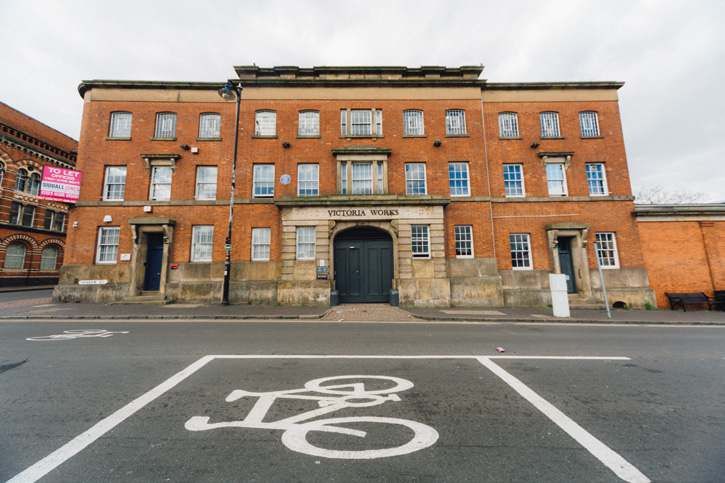
M AP OF TH E JE WE L L E RY Q UA RTE R
L io
Gr
Snow Hill
ll
ne
St P aul ’s
Hi
ea
et
l
W
tre
tC
S
ate
ery
ha
Liv
r
rl
n
St
The Jewellery Quarter is just a
es
tio
re
u
Str
tit
et
15 minute walk from the city
St
s
ee
n
re
tQ
Co
et
centre, or a 5 minute trip on the Hi
ll
eet
ue
Ma
tr te
en
Midland Metro. A one-way trip ry S ga
ry
e
sw
d
Liv Lu
A
Li
from Grand Central / New Street
nn
ay
o
Co
ne
S
x
l
station only costs a £1.
tre
s
ul’
St
Pa are
et
No
re
t
S q u
et
et
rth
S
tre
St
16
wo
13 ll S
re
t a
od
ee wh
et
tr
Br
nS Ne
St
Ha
oo
to ll S t
mp ee
Fle
k
a tre r 14
St
tH et 18 St 15
et
ow
re
ea e 17
Gr et
Str
Ch
lin
et
er R
e
Str C aro
eet
ar
n
sto
lo
S um m
Ho
Rege n
n
tte
Bra
Warstone Lane
eet
ckl
St
Str
Ge
R e g e n t P la c e
tP
re
ey
r a r ad e
nce
o
Gr a h a m S t
rg
e
e
t
Sp
St
eS
ts
pi
1
tre
nd
e
Sa
t
Vi ttoria St
n St
3
7 12
to
2 Hy l 5 8
Vy se S
t r ee t Frederick Street Newhall Hill
Key Hill Jewellery
4 6 11
L egge
10
Albion
Quarter
et
Cemetery
e
e
e Lan
Str
Warstone 9 et
Lane
re
rd
Street
Lane St
sfo
W a r s to n
Cemetery n
p i ts
Toye, Kenning
de
Pit
& Spencer
Ick m
nie Ca
nd
ld S
Sa
tre
et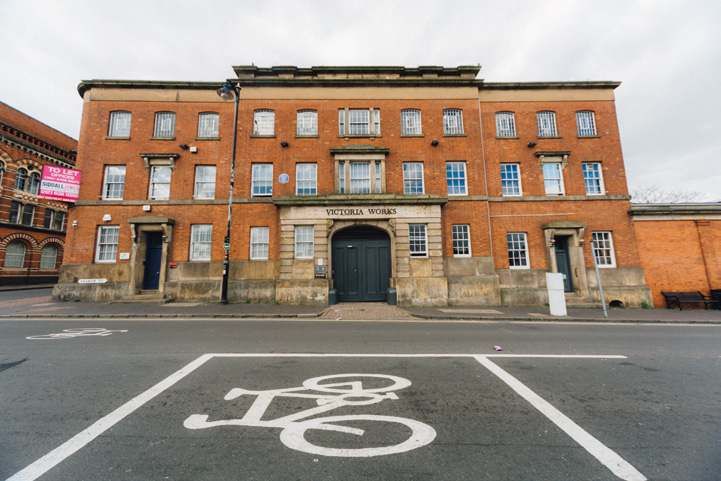
1          MU SE UM OF TH E
           JE WE L LERY QUARTER

Located in and around the original factory of jewellery
manufacturers Smith & Pepper, the museum tells the
story of jewellery and metal working in Birmingham.

Most of the techniques and processes
demonstrated on the fascinating
factory tour are exactly the same as
were used in the 18th century when
the Quarter first developed.

Open all year round.
Tuesday – Saturday
10.30am – 5pm.
Closed on Sundays and Mondays
except bank holidays.
Last tour at 4pm.

Admission charges apply, fully
wheelchair accessible               Claret jug and cover by
                                    John Hardman & Co.

For more information please visit
www.birminghammuseums.org.uk
Telephone 0121 348 8263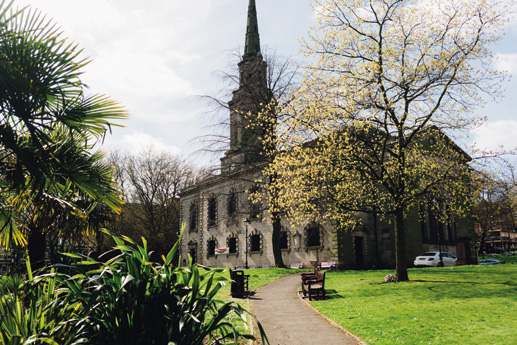
2          KEY HILL CEMETERY

Reached through an alleyway off Hylton Street, Key
Hill was Birmingham's first public cemetery. It was
created in 1836 for the non conformists who were not
permitted to be buried in Church of England
graveyards, but was intended to be open for all
denominations. They could be buried in Church of
England ground but not with their own ministers.

Famous residents include the renowned politician,
Joseph Chamberlain, and the manufacturer of Bird's
custard, Alfred Bird. Open all year round, dawn to
dusk. Some pathways may be a little rough

For more information please visit
www.birminghamconservationtrust.org
3          JEWELLERY BUSINESS
           CENTRE, SPENCER ST.

These former workshops were restored and converted
by the Duchy of Cornwall in 1991 and are now home
to many local businesses. The spectacular gates were
designed by metal craftsman Michael Johnson.

View from the street.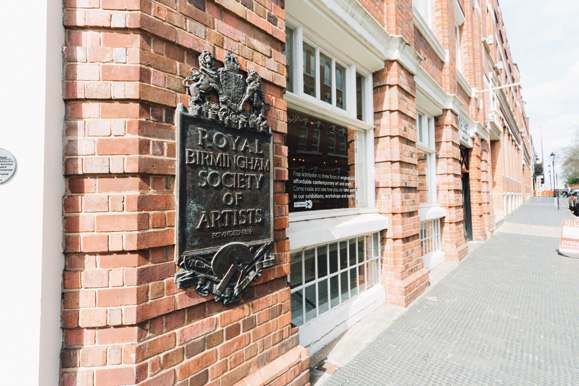
4           WA R S T O N E L A N E
            CEMETERY

                             John Baskerville

The Church of England cemetery was opened in
1848. In the middle of the graveyard are the
catacombs, one of the residents is John Baskerville,
creater of the Baskerville typeface in 1757.

Major Harry Gem, the inventor of Lawn Tennis is
also buried here.

Open all year round, dawn to dusk. Some pathways
may be a little rough.

For more information contact Friends of
Key Hill and Warstone Lane Cemeteries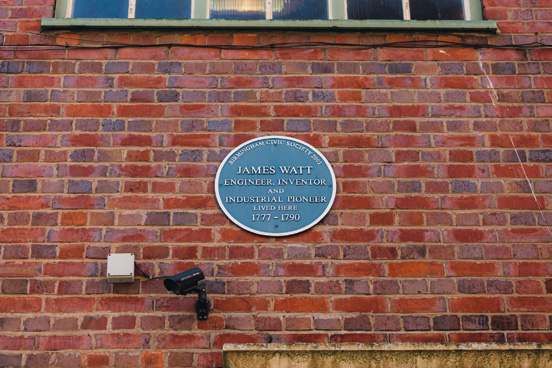
5           R O S E VI L L A TAV E R N

The Grade II listed Rose Villa Tavern was designed by
local architects Wood & Kendrick and built between
1919-1920 for Mitchells & Butlers brewery.

The Modern building behind the Rose Villa Tavern is
The Big Peg. Originally called the Hockley Centre,
this large "flatted factory" was completed in 1971.

The area between The Big Peg and the Rose Villa
Tavern is known as The Golden Square and was
redeveloped into a spectacular new public realm space
in 2015.

For more information please visit
www.rosevillatavern.co.uk
Telephone 0121 236 7910
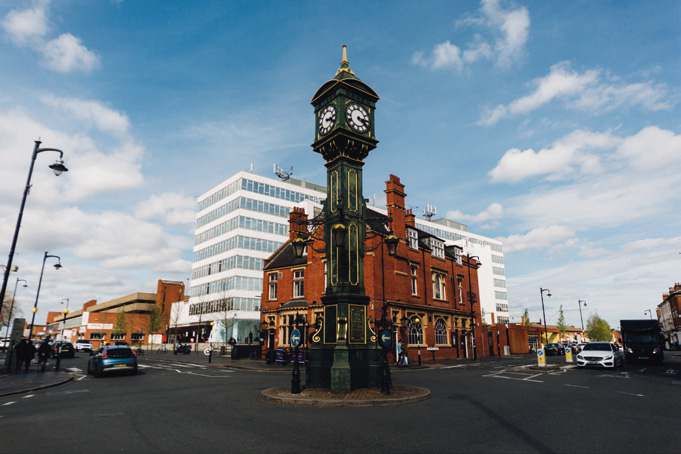
6       C H A M BE R L AI N CLOCK

                    This famous Jewellery Quarter
                    landmark was erected in 1903
                    to commemorate Joseph
                    Chamberlain’s visit to South
                    Africa as Colonial Secretary.

                    Chamberlain was Mayor of
                    Birmingham between 1873
                    and 1876 and a Member of
                    Parliament from 1876 to his
                    death in 1914.
                    Portrait of Josephy Chamberlain by
                    Oswald Burley.

For more information please visit
www.jqrt.org
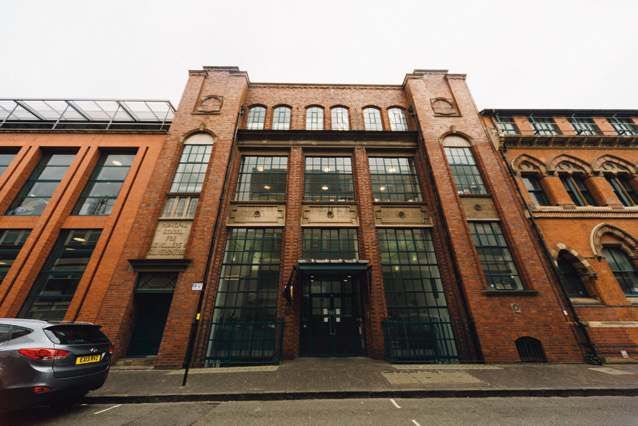
7 SCHOOL OF JEWELLERY
VIT TORIA STREET
Founded in 1890, the School of
Jewellery is now part of
Birmingham City University
(BCU). It is the largest Jewellery
school in Europe and ranks
amongst the foremost institutions
for teaching precious
metalworking in the world
The Atrium Gallery is accessible
to the public 10am-4pm during
exhibitions.
For more information please visit
www.bcu.ac.uk/jewellery
Telephone 0121 331 5940THOMAS FAT TORINI /
8 TOYE, KENNING &
SPENCER
Fattorini's are an old firm starting in
Yorkshire but only starting in the
quarter in 1919. Thomas Fattorini
have been designing and
manufacturing medals and badges,
trophies and other regalia since 1827.
Nearby Toye, Kenning & Spencer on
Warstone Lane date back even further.
Also manufacturers of medals, badges
and military regalia, Toyes were
founded by a family of Huguenot
immigrants in the East of London in CBE medal made
1685 and are considered to be the by Toye, Kenning &
Spencer
oldest company in Birmingham. The
current premises were built after the
Second World War.
For more information please visit
www.fattorini.co.uk and www.toye.com9 J W EVANS,
ALBION STREET
Established in 1881, JW Evans silver plate
works is one of the most complete
surviving factories in the Jewellery Quarter.
The site was rescued and restored by
English Heritage between 2008 and 2011.
Tours of the factory are available on a
limited number of days from April to
October. Numbers are limited to 10 people
per tour and must be booked in advance.
For more information please visit
www.english-heritage.org.uk/visit/places/
j-w-evans-silver-factory/ Tel: 0370 333 118110 THE ARGENT CENTRE,
& THE PEN MUSEUM
Originally known as the Albert Works, this spectacular
Renaissance-revival building was constructed in 1863
as the pen factory of W E Wiley. When first built the
factory boasted a Turkish bath which reused steam
from the production line!
Today the Argent Centre is home to the Pen Museum,
which tells the story of the Birmingham pen trade.
The museum is open all year round, Tuesday to
Saturday 11am - 4pm, Sunday 1pm -4pm
Admission charges apply
For moreinformation please visit
www.penmuseum.org.uk
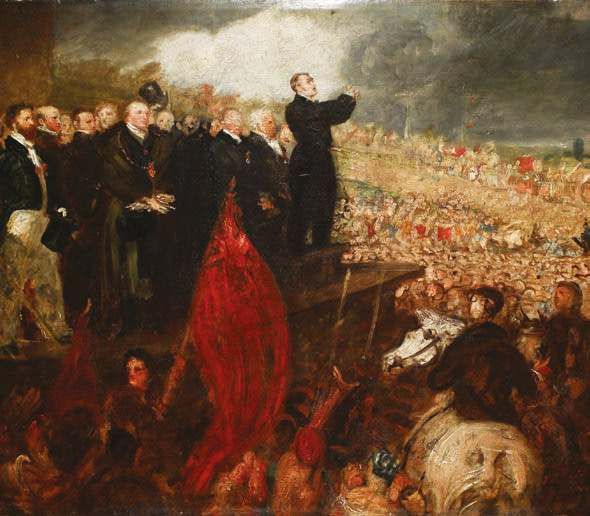
Telephone 0121 236 983411 NEWHALL HILL Meeting of the Birmingham Political Union by Benjamin Haydon, 1832 Newhall Hill was the site of a number of huge rallies organised by the Birmingham Political Union to demand parliamentary reform in the 1820s and 30s. One of the leaders of the Political Union was Thomas Attwood, who along with Joseph Schofield became Birmingham’s first members of Parliament in 1832. Nearby in a house on Legge Lane the American author Washington Irving is said to have written his children’s story RIP Van Winkle and The Legend of Sleepy Hollow in 1819. For more information please contact info@jqdt.org
12               V I CT ORIA W O RKS,
                 G R AH A M STREET

Completed in 1840, the Victoria Works was originally
the pen nib factory of Joseph Gillott. It is one of the
earliest surviving purpose-built manufactories both in
the Quarter and Birmingham as a whole.

During it’s heyday, upwards of 80% of the world’s pen
nibs were supplied by this factory, which routinely made
over one million nibs a year. Visitors to the factory
included the Shah of Persia, the explorer William
Stanley and US President Ulysses S Grant.

Across the street form the Victoria Works is the
Ramgarhia Sikh Temple which was originally built as a
Congregational chapel in 1844.

For more information please contact
info@jqdt.org
13 TH E A SSAY OF F IC E,
BI R M ING H A M
Birmingham's first Assay Office which was established in
1773, thanks to mainly the efforts of silversmith and
manufacturer Matthew Boulton. Originally located in
the city centre, this photograph shows the Newhall
Street building which was purpose-built in 1877 but due
to the rapid expansion of the trade was almost
immediately found to be too small.
The Assay Office is now located in a new purpose-built
building on Moreton Street. It continues to hallmark
precious metal items to guarantee fineness and offers
gemstone testing.
View from the street only.
www.theassayoffiice.co.uk
Telephone 0121 236 695114 E L K I N GTON W O RKS,
N E WH A LL STREET
New Hall depicted on Westley's map, 1731
Across the street from the Newhall Street Assay
Office are the remains of the famous Elkington
Works where the process of electroplating was first
successfully used on a large scale.
Next door to Elkington is the Birmingham and
Fazeley Canal. Completed in 1789, the canal was a
catalyst for the industrial development of the area.
Close to the canal is the original site of New Hall,
home to the Colmore family, which was
demolished in 1787.
For more information please contact
info@jqdt.org15 N E W M A N BROTH ERS
CO FF IN W ORKS
Restored by Birmingham
Conservation Trust in 2014, the
Grade II* listed Newman Brothers
coffin fittings factory is now open
to the public. The factory is where
Winston Churchill and Diana,
Princess of Wales coffin fittings
were made.
Visitors are invited to step back in
time and experience the factory as
a time-capsule, with it’s original
machinery, unusual products and
stories of 100 years of operation.
Open Wed - Sun 10.45 – 3.00pm
Admission charges apply.
The Shroud Room
1950s
For more information please visit
www.coffiinworks.org
Telephone 0121 233 479016 S T PAUL’S SQ UA RE The only surviving Georgian square in Birmingham, St Paul’s was developed in the 1770s and 80s on land belonging to the Colmore family. Designed by Roger Eykyn of Wolverhampton, St Paul’s Church was consecrated in 1779. The spire was added later in 1823. Known as the ‘Jewellers’ Church’, both Matthew Boulton and James Watt worshipped here. Open to members of the public and groups (pre-booking is advised - please visit website for details) For more information please visit www.stpaulsjq.church Telephone 0121 236 7858
17           RRBBSSAA GGAALLL
             BR
              BROOOK
                           LERY,
                    OK STREET
                              ERY,
                          STREET

The second oldest independent Art Society in Britain,
the Royal Birmingham Society of Artists (RBSA) has
a changing programme of exhibitions at their gallery
just off St. Paul's Square on Brook Street.

Discover three floors of curated exhibitions showing
original and affordable contemporary arts and crafts.

Open Monday - Saturday 10.30am - 5pm and Sunday
1pm - 5pm. Admission is free.

For more information please visit
www.rbsa.org.uk
Telephone 0121 236 4353
18 C AROLINE STREET Caroline Street was one of the earliest parts of the Quarter to be developed in the 1780s. A number of fine houses survive which were later converted to workshops, including no’s 65 and 42. On Regent Place, just off Caroline Street, a blue plaque marks the site of the house in which James Watt lived between 1777 and 1790. Watt was Matthew Boulton’s business partner and was instrumental in the development of the steam engine. To return to the start of the walk continue along Caroline Street, then on to Spencer Street which will bring you back to the Museum of Jewellery Quarter on Vyse Street. For more information please contact info@jqdt.org
You can also read


