Blackpool Local Plan Evidence Base The use of the planning system to control hot food takeaways November 2018 - Blackpool Council
←
→
Page content transcription
If your browser does not render page correctly, please read the page content below

Blackpool Local Plan
Evidence Base

The use of the planning
system to control hot food
takeaways

November 2018

1
Contents

Executive Summary                                 3
1.0 Introduction                                  4
2.0 Background                                    7
3.0 Planning Policy Context                       10
4.0 Methodology                                   15
5.0 Obesity and Health                            16
6.0 Obesity, Deprivation and Hot Food Takeaways   18
7.0 Local Strategies to Improve Health            25
8.0 What have other Authorities done?             26
9.0 Case Studies and Appeal Decisions             28
10.0 Discussion and Recommendations               31
Bibliography                                      34

                                2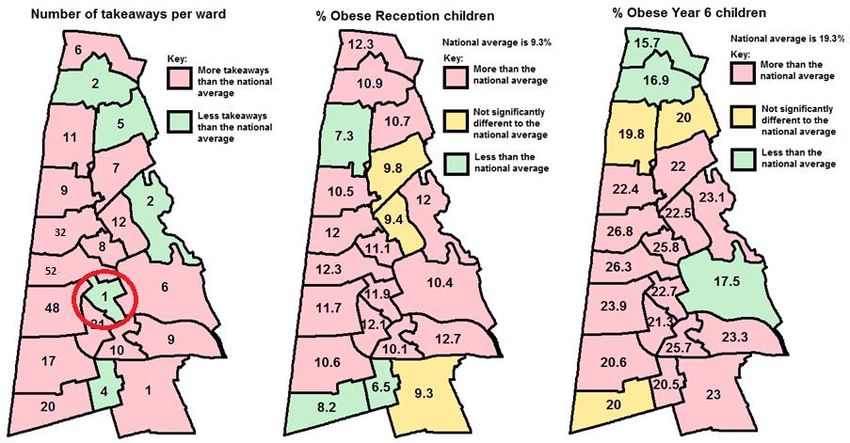
Executive Summary

National planning policy recognises the role of planning in promoting healthy communities, including
how the environment can impact on health and influence healthy lifestyle choices.

Across England there is an upward trend in the prevalence of obesity and the UK’s childhood obesity
rates are now ranked among the worst in Western Europe. Obesity contributes to a growing
prevalence of long-term conditions such as diabetes and cardiovascular disease as well as
contributing to a reduced quality of life.

The 2016/17 data from the National Child Measurement Programme indicates that Blackpool
children in Reception and in Year 6 are heavier than the national averages and the Blackpool Joint
Strategic Needs Assessment (Blackpool Health Profile 2017) confirms that 75% of adults in Blackpool
are overweight (compared to 63% in England) and 31% of adults are obese (compared to 27% in
England). This represents a significant proportion of the community in Blackpool.

There is a growing global evidence base1 which indicates that policies which regulate people’s
exposure to fast food, contribute to improving diet and health.

The proliferation of hot food takeaways is a concern across Blackpool and although the availability of
fast food is not the only factor contributing to poor diet and obesity, the availability of cheap, high
density, high fat, high sugar and high salt food which is typically served in large portions, is a
contributing factor which needs to be taken into consideration as part of Blackpool’s approach to
managing weight and reducing obesity levels.

Blackpool has some of the most deprived areas in England and is the most deprived authority in the
country in terms of Health Deprivation and Disability Domain score2. The Blackpool Local Plan, Part
1: Core Strategy acknowledges the health priorities and inequalities in the town and supports
development which encourages healthy and active lifestyles.

This report identifies a direct correlation between high levels of childhood obesity, high levels of
deprivation and the high numbers of hot food takeaways in Blackpool wards, but does not identify
any particular correlation between high levels of childhood obesity and the numbers of hot food
takeaways within close proximity to schools.

Many local authorities have developed planning policies and guidance to control hot food takeaways
in response to local concerns about a proliferation of takeaways and the effect on diet, eating
behaviour and obesity, in particular childhood obesity.

The report includes recommendations that the authority includes a policy in Part 2 of the Local Plan,
which restricts new hot food takeaway units in and around wards where there are high levels of
childhood obesity.

1                                                                                                                  ,
  Does neighbourhood fast-food outlet exposure amplify inequalities in diet and obesity? A cross-sectional study
The American Journal of Clinical Nutrition, Volume 103, Issue 6, 1 June 2016, Pages 1540–
1547, https://doi.org/10.3945/ajcn.115.128132
2
  The English Indices of Deprivation 2015

                                                            3
1.0 Introduction
1.1 Obesity is a growing problem and is considered to be one of the most serious public health
challenges of the 21st century.
Key national statistics:
Nearly two thirds of adults (63%) in England are classed as being overweight (a body
mass index of over 25); and 27% of adults are classed as being obese (a body mass index
of over 30)3;
Nearly a third of children are overweight or obese and younger generations are
becoming obese at earlier ages and staying obese for longer;
Almost a quarter of Reception children are overweight or obese and in Year 6, it is over a
third4;
The obesity prevalence is higher for boys than girls in both Reception and Year 6 age
groups;
The obesity prevalence for children living in deprived areas is more than double that of
those living in the least deprived areas for both Reception and Year 6;
On average, there are more hot food takeaway outlets in deprived areas than in more
affluent areas;
People exposed to the highest number of takeaways are 80 per cent more likely to be
obese and 20 per cent more likely to have a higher Body Mass Index than those with the
lowest number of encounters5
Overweight children are much more likely to become overweight adults6
It is estimated that obesity is responsible for more than 30,000 deaths each year. On
average, obesity deprives an individual of an extra nine years of life, preventing many
individuals from reaching retirement age. In the future, obesity could overtake smoking
as the biggest cause of preventable death.7
Obesity increases the risk of developing diseases and certain cancers, increases blood
pressure which is a factor in heart disease and type 2 diabetes;
The NHS in England spent an estimated £6.1 billion on overweight and obesity related ill-
health in 2014/15.
The annual spend on the treatment of obesity and diabetes is greater than the amount
spent on the police, the fire service and the judicial system combined8;
Councils are estimated to spend at least £352 million per annum on obesity related
social care costs9;
There was a 34% increase in spending on takeaway food between 2009 and 201610;
In 2016, 12.1% of all food spending was on takeaway food11;
In 2016, £9.9 billion was spent on takeaway food and this is estimated to rise to £11.2
billion by 202112;
3
http://webarchive.nationalarchives.gov.uk/20180328130852tf_/http://content.digital.nhs.uk/catalogue/PUB22610/
4
https://digital.nhs.uk/catalogue/PUB30113
5
https://www.bmj.com/content/348/bmj.g1464
6
https://www.ncbi.nlm.nih.gov/pubmed/26696565
7
https://www.nao.org.uk/wp-content/uploads/2001/02/0001220.pdf
8
https://www.mckinsey.com/~/media/McKinsey/Business%20Functions/Economic%20Studies%20TEMP/Our%20Insights/H
ow%20the%20world%20could%20better%20fight%20obesity/MGI_Overcoming_obesity_Full_report.ashx
9
https://www.local.gov.uk/sites/default/files/documents/15.6%20Obesity-05.pdf
10
Takeaway Economy Report 2017
11
Takeaway Economy Report 2017
12
Takeaway Economy Report 2017
4
Takeaways make up over 1/8th of the entire food services sector13
The food environment contribution to obesity:
The increasing consumption of out of home meals has been identified as an important
factor contributing to rising levels of obesity;14
The total number of takeaway food shops in England has risen by 4,000 since 2014, an
increase of 8% to 56,638 outlets15;
An analysis of the UK National Diet and Nutrition Survey found that more than a quarter
of adults and a fifth of children ate out once or more a week, and one fifth of adults and
children ate takeaway meals at home once per week or more;16
Eating out of home foods, and in particular fast food, is associated with higher levels of
calories, fat and salt;
Portion sizes for meals
eaten outside of the home
tend to be bigger;
Many pupils visit shops on
the way to or from school
and the food and drink
items that can be purchased
are cheap and tend to be
high in calories, fat and
sugar;
People in the UK are around 20% less active now than in the 1960s. If current trends
continue, we will be 35% less active by 2030;
13
Takeaway Economy Report 2017
14
https://www.gov.uk/government/publications/reducing-obesity-future-choices
15
Cambridge University’s Centre for Diet and Activity Research
16
https://www.gov.uk/government/publications/encouraging-healthier-out-of-home-food-provision
5
In 2015, only 22% of children aged between 5 and 15 met the physical activity guidelines
of being at least moderately active for at least 60 minutes every day (23% of boys, 20%
of girls)17.
1.2 Given the scale and cost of obesity, and the significant burden on families, the health and
social care system, employers and society as a whole means prevention of obesity is a high
priority.
1.3 The national childhood obesity: a plan for action 201818 sets out the Governments’ ambition
to halve childhood obesity rates and reduce the gap in obesity between children from the
most and least deprived areas by 2030. This plan confirms that local authorities have a
range of powers and opportunities to create healthier environments, including the power to
develop planning policies to limit the opening of additional hot food takeaway outlets close
to schools and in areas of over-concentration.
1.4 Public health is a statutory responsibility for Councils and the planning system has an
important role in tackling public health issues, from making streets safer and more pleasant
to use, locating housing where there are services, reducing car dependency, creating green
spaces and protecting cultural and social facilities. Improving health and wellbeing is also a
requirement of the National Planning Policy Framework.
1.5 Local authorities in England are also beginning to use the planning system to prevent new
hot food takeaways from opening in certain areas. The aim of this approach is to restrict
access to unhealthy food, which along with other national and local authority initiatives will
assist in improving the health of the population, reducing levels of obesity and associated
preventable diseases.
1.6 This document sets out the Council’s priorities and objectives in relation to the use of the
planning system to restrict new hot food takeaways from opening in areas where they would
have a detrimental impact on the health of the local population. It elaborates upon existing
and emerging planning policies in relation to health and wellbeing.
1.7 Hot food takeaways (Class A5) are a different use class to restaurants or cafes (Class A3),
drinking establishments (Class A4) and shops (Class A1). Under the Town and Country
Planning (Use Classes) Order 1987 as amended, a Class A5 hot food takeaway is an
establishment which primarily sells hot food for consumption off the premises.
17
http://webarchive.nationalarchives.gov.uk/20180328130852tf_/http://content.digital.nhs.uk/catalogue/PUB22610/HSE20
15-Child-phy-act.pdf/
18
https://www.gov.uk/government/publications/childhood-obesity-a-plan-for-action-chapter-2
6
2.0        Background

2.1        Published in October 2007, the Foresight report “Tackling Obesities: Future Choices”19 led to
           the Improvement and Development Agency (IdeA) commissioning Sheffield Hallam
           University to analyse the implications of the report for local government. Both reports
           identified the importance of the built environment and the ability that planning has to
           improve access to healthier lifestyles. The report also highlights that the environment can
           influence a person’s choices for diet and activity and the access to cheap, readily available,
           calorie-rich food makes it harder for an individual to lead a healthy lifestyle.

2.2        There has been an increase in the consumption of out-of-home meals which are often
           cheap, convenient and available throughout the day. This has been identified as an
           important factor contributing to the increase in obesity. Public Health England estimated in
           2017 that there were 56,638 fast food and takeaway outlets in England, a rise of 8% since
           2014. The Takeaway Economy Report 201720 commissioned by Just Eat confirms a 34%
           increase in nominal expenditure on takeaway food from £7.9 billion in 2009 to £9.9 billion in
           2016 and forecasts growth in the sector of up to 2.6% per annum, predicting that the
           industry will be worth 11.2 billion by 2021. That report also confirms that 12.1% of total
           spending on all food in the UK in 2016 was on takeaway food.

2.3        Healthy Weight, Healthy Lives21 published in 2008 encourages local authorities to use
           existing planning regulations to control more carefully the number and location of hot food
           takeaway outlets.

2.4        In 2010, the Marmot Review22 stated ”the lack of
           attention paid to health and health inequalities
           (avoidable differences in health) in the planning
           process can lead to unintended and negative
           consequences. A policy planning statement on
           health would help incorporate health equity into
           planners’ roles.” The Healthy Urban Development
           Unit23 and CABE24 demonstrate in numerous
           reports how good planning can have a positive
           impact on public health and that designers can
           influence people’s well-being and design
           neighbourhoods in a manner that promotes health
           and well-being.” The review goes on to say “A
           new Planning Policy Statement on health could
           ensure that new developments are assessed for
           their impact on health inequalities, for example
           limiting the number of hot food takeaway outlets
           in a Super Output Area. This tool could help to
           provide a lever for local authorities to change the
           way neighbourhoods are designed.”
19
     https://www.gov.uk/government/publications/reducing-obesity-future-choices
20
     https://www.justeatplc.com/files/s3/2215/0045/3682/TAKEAWAY_ECONOMY_REPORT_2017.pdf
21

http://webarchive.nationalarchives.gov.uk/20100408082121/http://www.dh.gov.uk/prod_consum_dh/groups/dh_digitala
ssets/documents/digitalasset/dh_084024.pdf
22
   http://www.parliament.uk/documents/fair-society-healthy-lives-full-report.pdf
23
   https://www.healthyurbandevelopment.nhs.uk/
24
   https://www.designcouncil.org.uk/sites/default/files/asset/document/future-health-full.pdf

                                                       7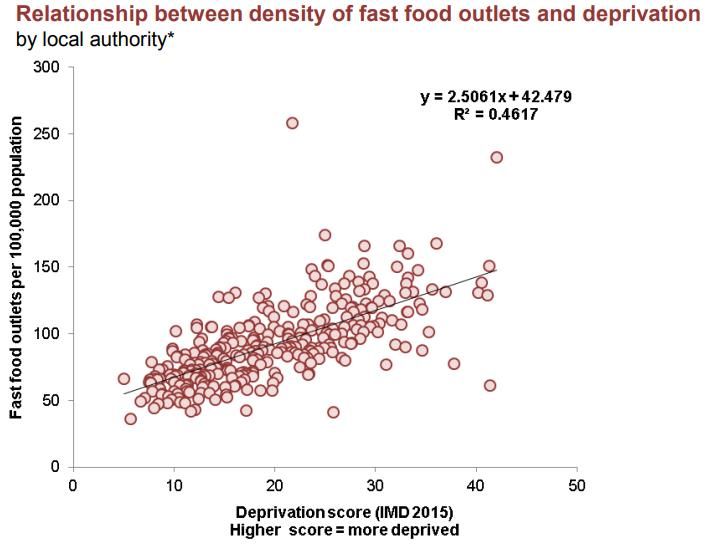
2.5     NICE (National Institute for Healthcare Excellence) Guidance on prevention of cardiovascular
        disease25 outlines that reducing salt and saturated fat intakes for the population will reduce
        morbidity and mortality rates from cardiovascular disease. Furthermore it states that Trans
        fats (Industrially-produced trans fatty acids (IPTFAs)) are a significant health hazard and that
        sections of the population who regularly eat fried fast-food may be consuming substantially
        higher amounts of Trans fats than those on a healthier, well balanced diet. This NICE
        guidance also outlines that food from hot food takeaways and the ‘informal eating out
        sector’ comprises a significant part of many people's diet and indicates that local planning
        authorities have powers to control hot food takeaway outlets. It recommends that local
        planning authorities are encouraged to restrict planning permission for hot food takeaways
        and other food retail outlets in specific areas (for example, within walking distance of
        schools) as well as consider the concentration of hot food takeaway outlets in specific areas
        to address disease prevention. It further recommends that existing planning policy guidance
        should be implemented in line with public health objectives.

2.6     Public Health England (PHE) and the Local Government
        Association have provided a briefing on regulating the
        growth of hot food takeaway outlets26. It outlines the
        obesity epidemic in England and the causal links between
        obesity and type 2 diabetes, raised blood pressure and
        colorectal cancer. It acknowledges the complexity of the
        ways in which the environment promotes obesity and
        explains that actions can be taken by local authorities to
        reduce the extent of obesity promotion locally. It
        identifies that controlling the proliferation of hot food
        takeaway outlets has a role to play. It is acknowledged
        that a causal link between hot food takeaway outlets and
        obesity cannot be established but identifies that there is
        evidence of associations between obesity and the
        availability of fast food.

2.7     PHE also published guidance “Health matters: obesity and the food environment”27 in March
        2017 which outlines what role planning could have in tackling the problem in relation to
        restricting the locations of new Hot Food Takeaways.

2.8     PHE and the Local Government Agency have developed a toolkit ‘Strategies for encouraging
        healthier ‘Out of Home’ food provision28. This has been developed to encourage local
        interventions that will further increase the opportunities for communities to access healthier
        food whilst out and about in their local community. It outlines opportunities both to
        manage new business applications and to work with existing food outlets to provide
        healthier food. The toolkit has been created to support local authorities to work with
        smaller food outlets such as takeaways, restaurants, bakers, sandwich and coffee shops,
        mobile traders, market stalls, and corner shops.

25
   https://www.nice.org.uk/guidance/ph25
26
  https://www.gov.uk/government/uploads/system/uploads/attachment_data/file/296248/Obesity_and_environment_M
arch2014.pdf
27
   https://www.gov.uk/government/publications/health-matters-obesity-and-the-food-environment/health-matters-
obesity-and-the-food-environment--2
28
   https://www.gov.uk/government/publications/encouraging-healthier-out-of-home-food-provision

                                                      8
2.9 In July 2017 PHE produced an evidence review on spatial planning for health29, providing a
resource for planning and designing healthier placesi. The report provides the findings from
an evidence review examining the links between health and the built and natural
environment to help inform policy and support local action. The review concentrated on 5
built environment topics:
Neighbourhood design
Housing
Access to healthier food
Natural and sustainable environment
Transport
2.10 Locally, the Joint Health and Well Being Strategy 2016-201930 for Blackpool outlines the
largest health issues impacting on the lives of the local population and strategies for
addressing those issues, including outlining how planning policy can assist in achieving
healthy weight.
2.11 In January 2016, Blackpool Council
became one of the first authorities
in the country to sign up to a healthy
weight declaration31 which includes
a commitment to consider planning
policies restricting hot food
takeaways, specifically in areas
around schools, parks and where
access to healthier alternatives are
limited.
2.12 In January 2017, Blackpool Council
launched the Healthier Choices
Award32. This is a scheme to help
and support establishments in
Blackpool to offer healthier food
options and encourages simple
changes to the way food is prepared
and cooked.
29
https://www.gov.uk/government/uploads/system/uploads/attachment_data/file/625568/Spatial_planning_for_health_an
_evidence_resource.pdf
30
https://www.blackpool.gov.uk/Residents/Health-and-social-care/Documents/HWB-Strategy-2016-19-final.pdf
31
https://www.blackpool.gov.uk/Your-Council/The-Council/Documents/Blackpool-Declaration-on-Healthy-Weight-PDF-
254KB.pdf
32
https://www.blackpool.gov.uk/Business/Business-support-and-advice/Healthier-Choices-Award.aspx
9
3.0 Planning Policy Context
National Planning Policy Framework (NPPF)33
3.1 The Government introduced a revised National Planning Policy Framework in 2018, with
healthy communities included as a common theme throughout the document.
Policy
Promoting healthy and safe communities – Para 91
Planning policies and decisions should aim to achieve healthy, inclusive and safe places
which enable and support healthy lifestyles, especially where this would address identified
local health and well-being needs – for example through the provision of safe and
accessible green infrastructure, sports facilities, local shops, access to healthier food,
allotments and layouts that encourage walking and cycling.
Promoting healthy and safe communities – Para 92
To provide the social, recreational and cultural facilities and services the community needs,
planning policies and decisions should take into account and support the delivery of local
strategies to improve health, social and cultural well-being for all sections of the
community.
Making effective use of land – Para 117
Planning policies and decisions should promote an effective use of land in meeting the
need for homes and other uses, while safeguarding and improving the environment and
ensuring safe and healthy living conditions.
Achieving well-designed places – Para 127
Planning policies and decisions should ensure that developments create places that are
safe, inclusive and accessible and which promote health and well-being, with a high
standard of amenity for existing and future users; and where crime and disorder and the
fear of crime, do not undermine the quality of life or community cohesion and resilience.
3.2 The range of issues that could be considered through the plan-making and decision making
processes, in respect of health and healthcare infrastructure, include how the local plan:
promotes health, social and cultural wellbeing and supports the reduction of health
inequalities;
considers the local health and wellbeing strategy and other relevant health
improvement strategies in the area;
considers opportunities for healthy lifestyles (e.g. planning for an environment that
supports people of all ages in making healthy choices, helps to promote active travel
and physical activity, and promotes access to healthier food, high quality open
spaces and opportunities for play, sport and recreation).
National Planning Practice Guidance (NPPG)34
3.3 The National Planning Practice Guidance defines the role of health and wellbeing in planning
and ensures health and wellbeing is considered in local and neighbourhood plans and in
decision making. The guidance includes a range of issues that should be considered through
the plan making and decision making process in respect of health. The NPPG requires that:
33
https://www.gov.uk/government/uploads/system/uploads/attachment_data/file/6077/2116950.pdf
34
https://www.gov.uk/guidance/health-and-wellbeing
10 the local plan promotes health, social and cultural wellbeing and supports the
reduction of health inequalities;
the local plan considers any local health and wellbeing strategies; and
opportunities for healthy lifestyles are considered (e.g. planning for an environment
that supports people of all ages in making healthy choices, promotes sustainable
travel modes and activity and promotes access to healthier food, high quality open
space and opportunities for play, sport and recreation).
3.4 Local planning authorities can consider bringing forward, where supported by an evidence
base, local plan policies and supplementary planning documents, which limit the
proliferation of certain use classes in identified areas, where planning permission is required.
3.5 Local planning authorities could have particular regard to the following issues:
proximity to locations where children and young people congregate such as schools,
community centres and playgrounds
evidence indicating high levels of obesity, deprivation and general poor health in
specific locations
over-concentration and clustering of certain use classes within a specified area
odours and noise impact
traffic impact
refuse and litter
Blackpool Local Plan, Part 1 – Core Strategy 2012-202735
3.6 The vision for Blackpool in 2027 includes that
Blackpool has created a more equal society with
sustainable communities having fair access to
quality jobs, housing, shopping, health,
education, open space, sport and recreation.
3.7 Goal 2 in the Core Strategy includes:
Strengthening community wellbeing to
create sustainable communities and
reduce inequalities in Blackpool’s most
deprived areas and to encourage
healthier lifestyles.
Improving the health and well-being of
Blackpool’s residents and reduce health
inequalities by maintaining good access
to health care and encouraging healthy
active lifestyles, including access to open
spaces, the coast, countryside, sport and
recreation facilities
3.8 The Core Strategy confirms that Blackpool is intensely urban and compact, largely built up to
its boundaries and that Blackpool’s Inner Area is densely populated and experiences a high
35
https://www.blackpool.gov.uk/Residents/Planning-environment-and-community/Documents/J118003-107575-2016-
updated-17-Feb-2016-High-Res.pdf
11concentration of acute deprivation levels, leading to extreme health, social and economic
inequalities between the richest members of society and the poorest.
3.9 Regeneration within Blackpool Town Centre, the Resort Core and in deprived
neighbourhoods is crucial to strengthening the economy, balancing the housing market and
targeting investment to address decline and deprivation.
3.10 The Core Strategy acknowledges that the health of people in Blackpool is generally worse
than the national average and that the town records one of the lowest life expectancy rates
nationally and there are inequalities by deprivation and gender. The Core Strategy also
acknowledges that the health priorities in Blackpool include alcohol and drug misuse, mental
health, smoking and obesity.
3.11 Chapter 6 of the Core Strategy, entitled Strengthening Community Wellbeing is devoted to
improving neighbourhoods and reducing inequalities, providing quality homes and quality
environs with the right community facilities where they are needed.
3.12 The Core Strategy policies listed below directly or indirectly support the Council’s ambitions
to improve health and wellbeing in Blackpool.
Core Strategy Policy
CS1 – Strategic Location of Development
Blackpool’s future growth, development and investment will be focused on inner area
regeneration.
CS2 – Housing Provision
Aims to rebalance the housing offer providing choice and a wider mix of new housing in the
inner areas and more affordable housing elsewhere creating neighbourhoods where people
would choose to live; creating more balanced, sustainable and healthy communities.
CS3 – Economic Development and Employment
Provides 22 hectares of business land to strengthen economic prosperity by supporting
business growth, attracting new investment and providing sustainable jobs.
CS4 – Retail and Other Town Centre Uses
In order to strengthen Blackpool Town Centre’s role as the sub-regional centre for retail on
the Fylde Coast, its vitality and viability will be safeguarded and improved by focusing new
major retail development in the town centre to strengthen the offer and improve the
quality of the shopping experience.
For Town, District and Local Centres within the Borough, retail and other town centre uses
will be supported where they are appropriate to the scale, role and function of the centre.
CS5 – Connectivity
A sustainable, high quality transport network for Blackpool will be achieved by developing a
safe, enhanced and extended network of pedestrian and cycle routes to increase the
proportion of journeys made on foot or bike and changing travel behaviour by pro-actively
working with developers and other organisations to increase the proportion of journeys
that use sustainable transport.
12Walking and cycling are important for their effectiveness in reducing road traffic as well as
improving health outcomes, an important consideration given the poor health statistics in
Blackpool. The Council will promote physical activity in line with the recommendations of
NICE Public Health Guidance19. Promotion of physical activity through urban and transport
planning has been shown to be an effective way of improving health outcomes in urban
areas.
CS6 – Green Infrastructure
High quality and well connected networks of green infrastructure in Blackpool will be
achieved by protecting and enhancing existing infrastructure, creating new green
infrastructure and connecting green infrastructure and emphasises that green
infrastructure has a vital contribution to the health and well-being of residents and visitors.
Easy access to good quality green space and infrastructure can provide benefits such as
increased life expectancy and reduced health inequalities, improvements in levels of
physical activity and health, and the promotion of psychological health and mental
wellbeing
CS7 – Quality of Design
New development in Blackpool is required to be well designed, and enhance the character
and appearance of the local area and should incorporate well integrated car parking,
pedestrian routes and cycle routes and facilities and provide appropriate green
infrastructure including green spaces, landscaping and quality public realm as an integral
part of the development
High quality design is central to the creation of attractive, successful and sustainable places,
which in turn has a positive impact on the health and well-being of the communities who
live there.
CS10 - Sustainable Design and Renewable and Low Carbon Energy
It is crucial that all developments incorporate measures that will address the significant
levels of fuel poverty experienced in Blackpool to improve the health and well-being of
communities and to meet the national requirements to reduce carbon emissions and
increase the supply of renewable energy.
All new non-residential development over 1,000m2 will be required to achieve BREEAM
‘very good’ (or any future national equivalent). (Health and well-being is a key focus of
BREEAM)
CS11 – Planning Obligations
Where appropriate, planning contributions will be sought in connection with a
development which may involve contributions to community infrastructure such as health
and educational facilities, sports or other community facilities.
CS12 – Sustainable Neighbourhoods
Sustainable communities should comprise a mix of age groups, incomes and lifestyles
within a safe, healthy and clean environment, with access to a full range of services and
community facilities.
The Council will support development and investment which creates a healthy, safe, secure
and attractive environment and public realm, which promotes local pride and a sense of
13place. Neighbourhood improvement will focus on neighbourhoods in the Inner Area.
CS15 – Health and Education
Improving the health and education of Blackpool’s population is a major challenge, with the
gap in health and education inequalities between Blackpool and the rest of the UK
continuing to widen. Access to quality health and education facilities is integral to raising
educational achievement and improving the health and well-being of communities.
Achieving wider social, health and lifestyle goals is also closely linked to delivering major
physical change and the regeneration of the built environment.
People’s health and education is influenced by the settings of their everyday lives – where
they live, learn, play and work. There is a strong relationship between social and economic
factors such as low income and poor quality housing, with the state of health and levels of
educational attainment in local communities. Improved provision and access to quality
public services, which Policy CS15 aims to address, has a direct positive effect on the health
and well-being of residents.
Development will be supported that encourages health and active lifestyles and addresses
the Council’s health priorities.
CS17 – Blackpool Town Centre
To re-establish the town centre as the first choice shopping destination for Fylde Coast
residents and to strengthen it as a cultural, leisure and business destination for residents
and visitors, new development will be supported which helps re-brand the town centre by
strengthening the retail offer and enhancing the quality of buildings, streets and spaces.
CS22 – Key Resort Gateways
Proposals for improvement and development will be supported to regenerate Central
Drive, Lytham Road, Dickson Road and Talbot Road as prominent and attractive gateways
to the resort and town centre by replacing poor quality seasonal and transient uses with
more viable uses.
144.0 Methodology
4.1 For the purposes of the data in this document, A5 uses have been counted along with uses
which actively advertise hot food takeaway services on mobile apps such as Just Eat and
Hungry House or which have a takeaway menu online. The data was collected in the first
quarter of 2018.
4.2 In order to establish where hot food takeaways are located in the town, data has been
sought from Environmental Services, which undertakes the food control and licensing
functions for Blackpool Council. Additional hot food takeaways were identified through the
Just Eat and Hungry House websites, through internet searches, a survey of the Town
Centre, District and Local Centres and through local knowledge.
4.3 Given the town’s main economy is tourism and tourism is focused primarily on the
Promenade within the Resort Core, hot food takeaways in this area were excluded from the
count as these units are generally seasonal and are not aimed at local residents. However,
units within the Town Centre off the Promenade have been included in the count. Typically,
hot food takeaways within the Town Centre are clustered around the edge in some of the
towns most deprived and densely populated wards presenting more extreme health
inequalities than areas with fewer hot food takeaways. In locational terms, standalone A5
uses would not normally be permitted in the primary and secondary shopping frontages
within the Town Centre as this would be contrary to policies in the Core Strategy and saved
policies in the 2006 Local Plan. Emerging policies in the Local Plan Part 2: Site Allocations
and Development Management Policies document propose to maintain this restriction.
4.4 The national Feat tool (Food Environment Assessment Tool) identifies hot food takeaways by
local authority across England. Whilst this tool was found to be useful, the hot food
takeaway data includes sandwich shops and 8 major retailers (A1 use), 8 major restaurant
chains (A3 use) and some mobile caterers which for planning purposes are not classed as hot
food takeaways. Therefore the Council’s data doesn’t correlate directly with the data on
FEAT.
4.5 Ward data relating to population and obesity levels in each ward was obtained through
Public Health England, with assistance from Public Health Blackpool. The Blackpool Joint
Strategic Needs document also links through to ward data from Public Health England.
4.6 The deprivation data for each Lower Super Output Area (LSOA) was obtained through the
Office for National Statistics and the data extrapolated to ascertain deprivation levels for
each ward.
4.7 Childhood obesity data is collected annually by the National Child Measurement Programme
which involves recording the weight of children in Reception (aged 4-5 years) and Year 6
(aged 10-11 years) in state schools. Map based ward data was obtained online at
http://www.localhealth.org.uk/#v=map13;i=t2.obese_child_year_r;l=en;z=324629,455175,1
8707,31403 and this data is updated annually.
155.0 Obesity and Health
5.1 Public Health England has identified a changing food culture. In previous decades, eating
out was an occasional treat for special occasions. However, now 1 in 6 meals are now eaten
outside of the home, 1 in 3 people in England eat takeaway food as least once a week, 1 in 3
children under the age of three eat at least one takeaway meal per week and 1 in 5 children
under the age of 3 eat takeaway food or ready-made adult meals, every day.
5.2 Childhood obesity can have a harmful effect on the body in a number of ways. Obese
children are more likely to have high blood pressure and high cholesterol which are risk
factors for cardiovascular disease, type 2 diabetes, breathing problems such as sleep apnoea
and joint problems to name a few. Children who are obese are at greater risk from bullying,
discrimination and low confidence and poor self-esteem which can continue into adulthood.
Obese children are also less likely to take regular exercise due to physical constraints and
exertion and poor body image which compounds the problem.
5.3 Being overweight or obese is often maintained into adulthood and adult obesity is
associated with a number of serious health conditions such as heart disease, asthma,
diabetes, stroke, skeletal and joint problems and some cancers and there is a reduced life
expectancy of around 9 years compared to those of a healthy weight.36
5.4 Life expectancy in Blackpool is 74.3 years for males (compared to the UK average of Life
expectancy of 79.5 years) and 79.4 years for females (UK average is 83.1 years). In terms of
the inequalities in Blackpool, life expectancy is 14.3 years lower for men and 9.3 years lower
for women in the most deprived areas of Blackpool than in the least deprived areas.
5.5 The Blackpool Joint Strategic Needs Assessment confirms that 75% of adults in Blackpool are
overweight (compared to 63% in England) and 31% of adults in Blackpool are obese
(compared to 27% in England) and confirms that obesity is an important factor contributing
to the inequality gap in life expectancy in Blackpool residents.
5.6 In terms of childhood obesity, the table below shows a comparison of the Blackpool National
Child Measurement Programme data for 2015/16 and 2016/17ii:
Blackpool Reception Year 6
2015/16 2016/17 2015/16 2016/17
Healthy Weight Nil data * 73.8% 59.3% 65.1%
Overweight 16% 15.7% 17.5% 13.1%
Obese 10.5% 10% 22.5% 21.1%
Overweight and Obese 26.5% 25.7% 40% 34.3%
5.7 The table below shows a comparison of the national average’s for 2015/16 and 2016/17:
National Reception Year 6
2015/16 2016/17 2015/16 2016/17
Healthy Weight Nil data * 76.4% Nil data * 64.4%
Overweight 12.8% 13% 14.3% 14.3%
Obese 9.3% 9.6% 19.8% 20%
Overweight and Obese 21.1% 22.6% 34.2% 34.2%
36
http://www.blackpooljsna.org.uk/Living-and-Working-Well/Healthy-Lifestyles/Adult-obesity.aspx#Footnote1
165.8 The National Child Measurement Programme data indicates that the national average for
2016/17 is 22.6% of children in Reception and 34.2% in Year 6 are overweight or obese. This
means in Blackpool both Reception children and Year 6 children are slightly higher than the
national average, although in recent years, Blackpool’s data has been significantly higher
than the national average. Recently published figures for 2017/18 indicate that levels of
obesity in Reception children are again on the rise in Blackpool and this document will be
updated when the full details are available.
5.9 The table below shows childhood trends in excess weight between 2006 and 2017, locally
and nationally:
5.10 The table below shows childhood trends in obesity between 2006 and 2017, locally and
nationally:
176.0 Obesity, Deprivation and Hot Food Takeaways
6.1 There is consistent evidence which links the number and density of hot food outlets and
deprivation. The Foresight report found that obesity levels tend to be higher in deprived
areas than in wealthy areas. Public Health England has found a strong association between
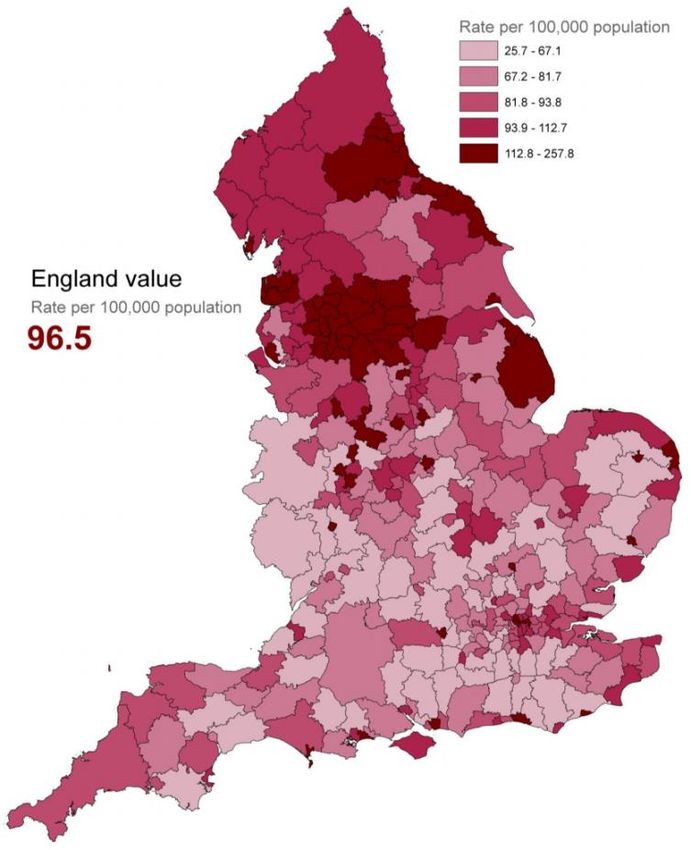
deprivation and the density of hot food takeaways (demonstrated in the graph below which
is published by Public Health England)37:
6.2 Blackpool is currently the most deprived authority based on average deprivation scores for
all LSOAs (2015 Index), a position which has declined since the 2004 Index of Deprivation,
which placed Blackpool as 12th overall. Blackpool is also the most deprived authority in the
country in terms of the Health Deprivation and Disability Domain score.
37
https://assets.publishing.service.gov.uk/government/uploads/system/uploads/attachment_data/file/720058/Fast_Food_
map.pdf
186.3 The graph below shows a positive correlation between the number of hot food takeaways and
the deprivation rank of each ward in Blackpool (excluding the Promenade):
6.4 In 2016/17 the obesity prevalence for children living in England in the most deprived areas
was more than double that of those living in the least deprived areas for both Reception and
Year 6. The obesity prevalence in Reception children ranged from 12.7% of children living in
the most deprived areas to 5.8% in the least deprived areas. In Year 6, 26.3% of children
living in the most deprived areas were obese compared to 11.4% in the least deprived areas.
The combined overweight and obesity prevalence ranged from 40.9% in the most deprived
areas to 24.2% in the least deprived areas.
6.5 In Blackpool, the least deprived ward is Norbreck where 16.9% of Year 6 children are
considered to be obese (under the national average) and there are 2 Hot Food Takeaways in
that ward. The most deprived ward is Bloomfield where 23.9% of Year 6 children are
considered to be obese (well over the national average) and there are 58 Hot Food
Takeaways in that ward (48 if the on the Promenade are discounted).
196.6 The three most deprived wards in the town, Talbot, Bloomfield and Claremont have the
most hot food takeaways and the heaviest children:
Blackpool Deprivation % Obese % Obese HFT's excluding
Wards Score 2015 Reception Year 6 Promenade
Talbot 63.2 12.3 26.3 52
Bloomfield 83.4 11.7 23.9 48
Claremont 74.4 12 26.8 32
Victoria 49.2 12.1 21.3 21
Squires Gate 25.9 8.2 20 20
Waterloo 52.1 10.6 20.6 17
Layton 35.0 9.4 22.5 12
Bispham 25.7 7.3 19.8 11
Hawes Side 42.5 10.1 25.7 10
Clifton 47.9 12.7 23.3 9
Warbreck 37.4 10.5 22.4 9
Brunswick 58.9 11.1 25.8 8
Greenlands 27.1 9.8 22 7
Anchorsholme 25.1 12.3 15.7 6
Marton 24.5 10.4 17.5 6
Ingthorpe 34.6 10.7 20 5
Highfield 28.0 6.5 20.5 4
Norbreck 14.8 10.9 16.9 2
Park 53.4 12 23.1 2
Stanley 23.7 9.3 23 1
Tyldesley 42.4 11.9 22.7 1
England average 21.8 9.3 19.3
Key:
Significantly better than England average
Not significantly different to England average
Significantly worse than England average
6.7 There is increasing research demonstrating strong links into the association between food
availability and obesity38. The graphs below compare adult and Reception and Year 6
childhood obesity levels with the number of hot food takeaways in each ward39. Each graph
shows a positive correlation between a higher prevalence of obesity and the number of hot
food takeaways in a ward.
38
Associations between exposure to takeaway food outlets, takeaway food consumption, and body weight in
Cambridgeshire, UK: population based, cross sectional study
BMJ 2014;348:g1464 http://www.bmj.com/content/348/bmj.g1464
39
Data from http://www.blackpooljsna.org.uk/Blackpool-Profile/Ward-Profiles.aspx
206.8 The graph below compares obesity levels in Reception age children with the number of hot
food takeaways by Blackpool ward (excluding the Promenade):
6.9 The graph below compares obesity levels in children in Year 6 with the number of hot food
takeaways by Blackpool ward (excluding the Promenade):
216.10 The graph below compares obesity levels in adults with the number of hot food takeaways
by Blackpool ward (excluding the Promenade):
6.11 Public Health England have identified that in England, there are on average 96.5 hot food
takeaways per 100,000 head of population:40
40
https://assets.publishing.service.gov.uk/government/uploads/system/uploads/attachment_data/file/720058/Fast_Food_
map.pdf
226.12 In Blackpool, the average number of hot food takeaways per 100,000 head of population is
217 (196.5 when excluding units on the Promenade) compared to 96.5 nationally. In
Talbot ward, there are 959.6 Hot Food Takeaways per 100,000 population (804.83 when
excluding units on the Promenade) and this is a significantly greater number than the
national average.
236.13 It is noted that even in wards with fewer than the national average number of hot food
takeaways, there is still a higher than national average number of obese children in
Reception and Year 6. However, taking Tyldesley ward as an example, which has 15 hot food
takeaways per 100,000 people (significantly under the national average), the 5 adjoining
wards have more or significantly more than the national average of hot food takeaways per
100,000 people (Talbot 804, Bloomfield 715, Waterloo 267, Hawes Side 141 and Marton 89).
This suggests that the number of hot food takeaways in adjoining wards also needs to be
considered when looking at the data.
6.14 The maps below provide a geographical representation of the number of hot food
takeaways in each ward along with the numbers of obese children in Reception and Year 6
in each ward. The first map also indicates Tyldesley ward (circled in red) which was referred
to in paragraph 6.13.
……
247.0 Local strategies to improve health
7.1 All the local key indicators show that there is an urgent need to improve health in Blackpool
and health improvement is a key priority for the Council, NHS Blackpool and all of our
relevant partner organisations.
7.2 Blackpool Council is committed to try and improve the health and well-being of its residents
and has set up free services to assist in healthier lifestyle choices and offers free access to
lifestyle coaches and health buddies with ongoing reviews and support under the Healthy
Lifestyle service.
7.3 HeadStart is a scheme aimed at 10-16 year olds to improve resilience in young people and
improve mental well-being by building a resilience revolution across the whole of Blackpool.
7.4 Blackpool has a free 12 week Weight Management programme called Making Changes for
children aged 5 to 11 who are above a healthy weight, and their families. This programme
includes healthy eating advice, family exercise sessions, support plans including cooking at
home on a budget, gym and sports sessions and free access to the Council’s sports and
leisure facilities.
7.5 The Active Blackpool programme delivers a range of health and physical activity initiatives to
help improve the lifestyles of people in Blackpool including gym and exercise class activities,
a walking and cycling programme and a cardiac programme.
7.6 In January 2017, Blackpool Council launched the Healthier Choices Awardiii. This is a scheme
to help and support establishments in Blackpool to offer healthier food options to the
population of Blackpool and it is about making simple changes to the way food is prepared
and cooked.
258.0 What have other authorities done?
8.1 As many as 164 (of 325) English local authorities have some form of planning policy in place
addressing takeaways (e.g. a policy in a local plan, supplementary planning documents) and
more have draft policies waiting to be adopted. Approaches used include exclusion zones
around schools, restrictions in areas with high levels of childhood obesity, restrictions
centred on areas with high existing density of takeaways and financial levies imposed on
new takeaway business owners. Barking and Dagenham, one of the first local authority’s’ to
implement planning restrictions on new takeaways, have reported a 15% decrease in
takeaways since 2010. However, preventing new hot food takeaways from opening due to
health concerns, is a relatively new practice and little evidence is available which would
indicate what impact such planning policy restrictions are having on local levels of childhood
obesity.
Exclusion zones restricting new hot food takeaways
8.2 400m exclusion zones around schools are commonplace in Local Plans or adopted SPD’s and
this is a stance also favoured by the Mayor of London, Sadiq Khan in the draft London Plan.
Some authorities only have the exclusion zone in place around secondary schools as
generally, primary school children are not permitted to leave school at lunch time and are
usually accompanied to and from school by an adult. Manchester City Council has adopted a
policy which limits opening hours of hot food takeaways within 400m of a school, to after
5pm.
8.3 Some authorities also have a 400m exclusion zone around sixth form colleges, youth
facilities, community centres, playing fields, parks and leisure centres and some also impose
strict opening times so that hot food takeaways are not open during core school hours.
8.4 The 400m figure is based on research conducted by London Metropolitan University
suggesting that 400m was the maximum distance that students could walk to and back in
their lunch break. However, some authorities are proposing to reduce the exclusion zone to
200m (Braintree District Authority and Tower Hamlets Draft Plans) and Brighton and Hove’s
evidence base suggests an 800m exclusion zone would be required if a restrictive policy was
to be effective, but could not be justified in that authority. Some authorities refer to 400m
as being the equivalent to a 5 minute walk; others refer to 400m being the equivalent to a
10 minute walk.
Ward data
8.5 Authorities have also restricted the provision of new hot food takeaways in wards where
there are high levels of childhood obesity, until levels of childhood obesity fall within set
targets.
Over concentration of hot food takeaways
8.6 Some authorities have policies restricting the number of hot food takeaways in shopping
centres and on high streets, such as having no more than x percent of units within a centre
or a frontage should be hot food takeaways; there should be no more than two hot food
takeaways beside each other; or there should be at least two units of another use between
hot food takeaways. Some authorities have introduced area concentration limitations of no
more than 3 units within 400m.
268.7 These policies prevent over-concentrations of hot food takeaways in order to ensure there
are sufficient units available for other A class uses and to protect amenity in terms of late
night noise, parking problems, anti-social behaviour, litter and vermin. Policies which
prevent over-concentrations of hot food takeaways also limit people’s exposure to
unhealthy food and safeguards retail floor space for perhaps healthier food retailing.
Health Impact Assessments
8.8 Some authorities are requiring the submission of Health Impact Assessments with planning
applications, not just for larger developments but also for proposals for new hot food
takeaways. As part of these assessments, contributions could be made/required towards
improving health infrastructure or if the Assessment indicates there would be harm to
health, permission is likely to be refused.
279.0 Case Studies and Appeal Decisions
9.1 North Tyneside adopted its’ Local Plan in July 201741. Policy DM3.7 relates to proposals for
hot food takeaways and like other authorities, this policy restricts hot food takeaways where
there would result in a clustering of A5 uses to the detriment of a defined centre, where
there would be an adverse impact on residential amenity, where there would be two or
more consecutive A5 uses in any one frontage. Where A5 uses exist, a gap of two non A5
uses shall be required before a further A5 use is permitted in the frontage. The policy also
includes the 400m exclusion zone around entry points of secondary schools. However, the
policy goes on to prevent the development of A5 uses in wards where there is more than
15% of the Year 6 pupils or 10% of Reception pupils classed as very overweight (percentages
found sound by the examination inspector) and confirms that an assessment will be made
on an individual basis, what impact a hot food takeaway would have on the wellbeing of
residents. This policy was developed following the publication of the evidence base in
relation to the use of the planning system to control Hot Food Takeaways in North
Tyneside42.
9.2 Whilst this policy was in draft form, two applications were refused for hot food takeaways in
North Tyneside on public health grounds only and subsequent appeals lost on the basis that
the policy hadn’t been through an examination process. One Inspector, in relation to a hot
food takeaway appeal ref APP/W4515/W/16/315471043 stated “Whilst the aim of Policy
DM3.7 in relation to promoting healthy communities is broadly consistent with the
Framework, I am aware that the LPPD has not been subject to an Examination in Public
albeit I note that the Council state that no objections to Policy DM3.7 have been received.
Notwithstanding this, and with regard to Paragraph 216 of the Framework, it is possible that
the policy could be amended or deleted as a result of the examination into the overall
soundness of the plan. As a consequence I can afford the policy only moderate weight as a
material consideration in this matter at this time.” The Inspector acknowledged that there
was a high level of childhood obesity in the ward but also noted that the appeal site was
located directly adjacent to a retail unit which sells a variety of snacks, sweets and other
high calorie produce.
9.3 In the appeal decision ref APP/W4515/W/16/315496044, the Inspector had similar concerns
that Policy DM3.7 could be amended or deleted during examination and therefore gave the
policy little weight. The Inspector also considered the fall-back position of the property
which was as a café, which could sell similar types of food as a hot food takeaway without
challenge and the Inspector concluded that was a material consideration to which he gave
great weight.
9.4 It should be noted that the availability of snacks and sweets etc. in A1 retail shops could not
be controlled by the planning system whereas the location of hot food takeaways can. In
the Blackpool context, retailers are actively encouraged to join the Healthier Choices scheme
and nationally there is a drive for healthier checkouts, where impulse buys for unhealthy
snacks are reduced by replacing crisps, chocolate and fizzy drinks at till points with fruit, nuts
41
http://my.northtyneside.gov.uk/sites/default/files/web-page-related-files/local_plan_0.pdf
42
http://my.northtyneside.gov.uk/sites/default/files/web-page-related-
files/Public%20Health%20Evidence%20in%20relation%20to%20the%20use%20of%20the%20planning%20system%20to%2
0control%20Hot%20Food%20Takeaways%202015%20%28Sub%20Header%29.pdf
43
https://acp.planninginspectorate.gov.uk/ViewCase.aspx?Caseid=3154710&CoID=0
44
https://acp.planninginspectorate.gov.uk/ViewCase.aspx?Caseid=3154960&CoID=0
28and bottled water. Nationally, earlier in 2018 the Government introduced a sugar tax in
which has make sugary drinks less affordable.
9.5 The North Tyneside Local Plan, including policy DM3.7 was adopted in July 2017 following
modifications as a result of the examination process. Following the adoption of the policy
DM3.7, five appeals have been dismissed on public health grounds.
9.6 In the first appeal, reference APP/W4515/W/17/318253445, the Inspector gave only limited
weight to the previous 2 appeal decisions as the policy had been modified and adopted
following examination. The Inspector confirmed that the language used in Policy DM3.7,
and particularly the criterion in relation to the number of obese children in the ward, is very
clear and leaves little room for interpretation. Despite the Council not raising any other
concerns with the appeal proposal, granting permission for the appeal proposal would add
to the opportunities to purchase unhealthy food in the area. “Controlling the proliferation of
fast food outlets is part of the Council’s overall strategy to reduce the extent of obesity and
widening the existing opportunities with further availability would run counter to this.” … “I
have also noted the appellant’s point regarding the relatively high cost of the prospective
occupier’s product acting as a disincentive to children purchasing it. This may well be true,
but does not take into account takeaway food being purchased as a main meal by parents or
by adults for their own consumption. Although some of the indicators and thresholds used by
Policy DM3.7 relate to the percentage of children that are classified as very overweight, the
policy is not restricted in its operation to the health of children.”
9.7 In other matters, the Inspector concluded:
“I have noted the appellants’ suggestion that the implication of dismissing this appeal would
establish that no A5 development could be permitted in the majority of North Tyneside for
the foreseeable future. I do not agree that this is the case. Each planning application must be
considered on its own merits. Whilst Section 38(6) of the Planning and Compulsory Purchase
Act requires that applications must be determined in accordance with the development plan,
this is subject to the proviso that material considerations may indicate otherwise. In addition
criterion e) of Policy DM3.7 states that the Council will assess, on an individual basis, the
impact hot food takeaways have on the wellbeing of residents. In my view, the decision on
this appeal would not preclude other material considerations specific to the proposal in
question indicating that future applications may be approved, or prevent the impact of such
applications on the well-being of residents being considered on an individual basis.”
9.8 In the appeal ref APP/W4515/W/17/317702846, the Inspector stated “In this case, the hot
food takeaway (HFT) would be located within a ward where the most recent National Child
Measurement Programme Data 2015/16 identifies that 18.4% of Year 6 pupils are very
overweight. Furthermore, the appeal site lies within 400m of Wellfield Middle School. On this
basis the proposal directly conflicts with the express requirements of Policy DM3.7. Whilst I
cannot ascertain from the information before me whether children can leave the school
during their lunch hour, the proposed HFT would be open at the end of the school day. Given
the age range of the children it is highly likely that a large number of pupils would be walking
home unsupervised thus the children’s exposure to unhealthy food choices would be increase
as a result of the proposal.” The Inspector acknowledged that “the control of HFTs is not the
only strategy in promoting healthier lifestyles and that obesity is the result of a wide range of
societal and biological factors. Nonetheless, as the Council points out, the nutritional content
45
https://acp.planninginspectorate.gov.uk/ViewCase.aspx?Caseid=3182534&CoID=0
46
https://acp.planninginspectorate.gov.uk/ViewCase.aspx?Caseid=3177028&CoID=0
29You can also read


