Blackpool South Health and Wellbeing Inquiry - A Citizens Inquiry 2017 - Shared Future CIC
←
→
Page content transcription
If your browser does not render page correctly, please read the page content below
Blackpool South
Health and
Wellbeing Inquiry
A Citizens Inquiry 2017
Acknowledgements                                           Contents
Thank you to the members of the Citizens
Inquiry, who placed their trust in the process
and us as facilitators. This diverse, inspiring
group of local people came together week
after week to share their opinions and                     Summary .............................................3
experiences with each other and us in the
hope that their efforts, openness and                      1. Introduction ....................................4
commitment might make a difference to their
own communities.
                                                              Process .............................................4
About the author
The recommendations produced by the                           Recruitment .....................................4
members of the Citizens Inquiry are
reproduced here in their own words. The                       Why Blackpool South?......................6
remaining content was written by Peter
Bryant and Nick Beddow of Shared Future. No
legal responsibility can be accepted for any               2. The Citizens Jury sessions ................8
loss or damage resultant from the contents of
this document. It does not necessarily                        Sharing experiences and ideas:
represent the view of Shared Future in
relation to particular policy or projects.                    sessions one and two .......................8
About Shared Future                                           Commentator sessions:
We are a community interest company                           deliberation in action ..................... 11
primarily serving the North West of England,
and with associates based across the UK. Our
aim is to provide an excellent service that
                                                              Recommendation writing ............... 14
makes a difference to communities and
individuals and works towards a fairer, more               3. Recommendations ........................ 15
equal society.
Through our commitment to creating a fairer                Inquiry Launch Event,
and more sustainable world, we decided to                  25th Jan 2018 ..................................... 18
set up Shared Future in 2009. We’ve built a
team of experienced consultants and
practitioners with a diverse range of skills.
We work together on worthwhile and                         Appendix 1: Commentator sessions .. 20
stimulating projects that reflect our personal
values.                                                    Appendix 2: Evaluation ..................... 24

www.sharedfuturecic.org.uk
February 2018

This work is licensed under a Creative
Commons Attribution-NonCommercial-
ShareAlike 4.0 International License.

 2                     Shared Future • Blackpool South Health and Wellbeing Inquiry 2017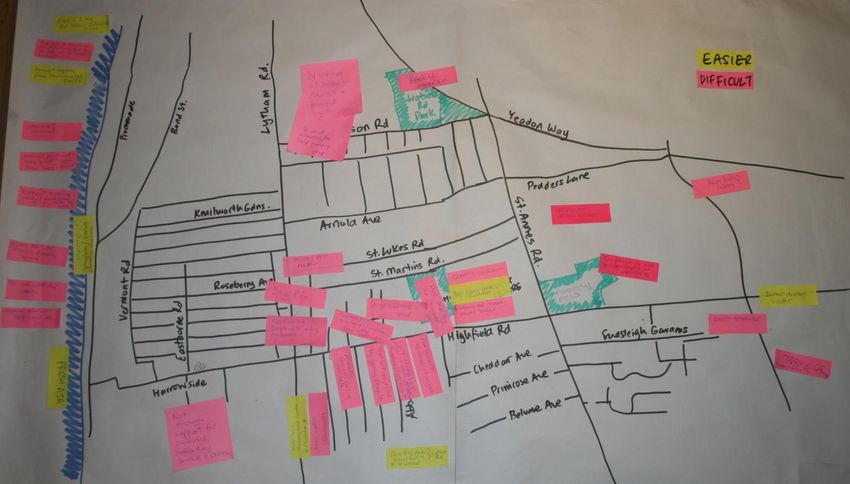
Summary
        Between October and December 2017 eighteen residents from
        Blackpool South were invited to take part in nine sessions of
        deliberation to try and produce a set of recommendations that
        attempted to answer the question:
        ‘for people living in Blackpool South what are the main
        things that affect people’s health and well -being and what
        can be done about them?’

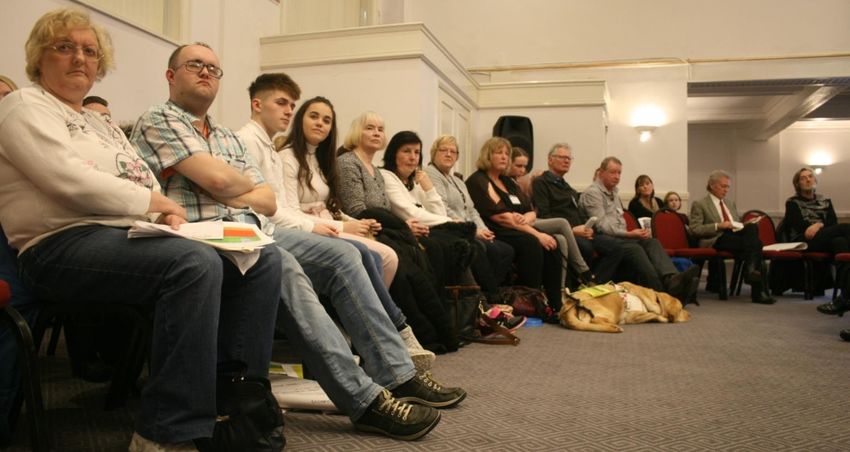
        Members of the Citizens Inquiry shared their experiences and
        opinions in a highly participatory process.
        After the nine Inquiry sessions, the group hosted a launch event at
        which the group’s recommendations were shared and discussed with
        invited local stakeholders.
        This report summarises the process and lists the group’s
        recommendations.

Shared Future • Blackpool South Health and Wellbeing Inquiry 2017             3
1. Introduction
The Blackpool South Health and Well-Being Inquiry            ability to allow citizens to question the ‘expertise’ of
brought together a group of local residents to               others, to appreciate the knowledge and opinions of
discuss the main things that affect people’s health          others and after intense deliberation to strive
and wellbeing and what can be done to address                towards producing agreed conclusions which are for
them. A Citizens Inquiry is an example of a mini             the public good. Similar citizens juries have been
public, in which a diverse group of local people are         organised across the world on a variety of topics;
given the opportunity to share opinions and                  some at a local neighbourhood level, some at a
experiences with each other and to hear from                 regional level and on occasion at a national or on an
others before producing a set of recommendations.            international scale.

                                                             Recruitment
Community orientated primary care                            Central to a citizens jury process is the recruitment
                                                             of participants. A large amount of effort was put
Part of the aim of the Citizens Inquiry process              into making sure that a diverse group of local
is to attempt to encourage a move from a                     residents were able to take part. The aim was to
largely medical model (which encourages                      recruit people who are usually excluded from
services which respond to people's health to                 participatory processes. The project steering group
focus mainly on diagnosis and treatment) to                  met on a number of occasions to identify a strategy
one which recognises the social and other                    for reaching people in the target area.
determinants of health and well-being.
In order to achieve this it is essential to enable
citizens and stakeholders to work closely
together so that they are able to jointly
examine what the reality is now (what is
working and what isn't) and to chart a course
forward together.

Process
The Inquiry took place on Thursdays from October
to December 2017. Each of the sessions lasted
some two and a half hours. During these informal
and relaxed sessions a diverse group of local
residents were encouraged to think and talk about
well-being and health in their neighbourhood. A
number of experts (‘commentators’) were invited to
come and speak at some of the sessions to add
knowledge and to help them explore how things
could be changed.
Elements of the inquiry process are based upon the           Following on from successful practice used in
model of the citizens jury. Deliberative processes           previous Inquiries a recruitment letter was written
such as Citizens’ Juries have been praised for their         outlining the aims of the Inquiry and explaining that
                                                             in recognition of the time commitment required,
 4                    Shared Future • Blackpool South Health and Wellbeing Inquiry 2017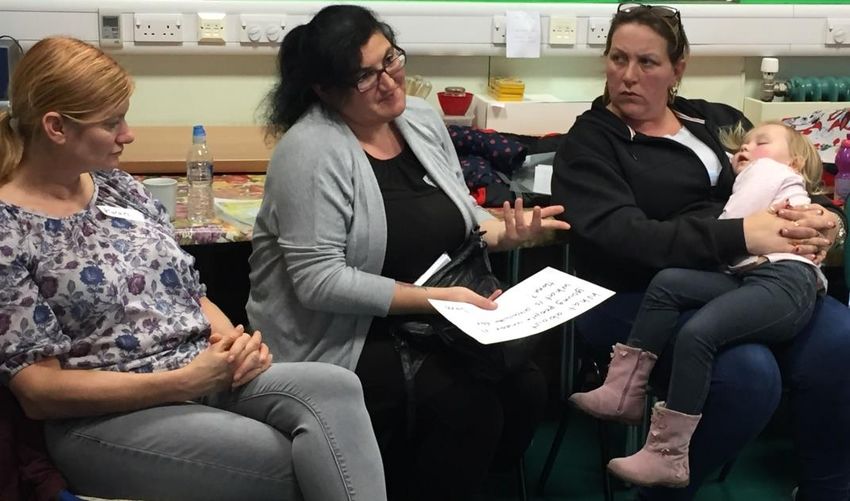
payments in the form of vouchers and expenses Three people older than 60
were available.
None of the applicants required childcare
To incentivise consistent attendance, participants
received shopping vouchers at the end of the Blackpool Council’s community engagement team
Inquiry process (equivalent to £20 per session). identified the South Shore Community centre on
There was also a budget for participant support Highfield Road as a suitable venue due to its central
costs (including child care).
In the letter, residents were invited to complete a
very simple one page form to register their interest
in taking part, and express their preference for
Why did I take part?
afternoon or evening sessions. They also had the ‘I am a mother of two, one with Asperger's and
option of filling-in the form over the telephone to the other with mental health problems. I have
receive additional support. Freepost envelopes my own health problems and I am a carer for
were included within the letter. my mum and son.
Volunteers from the Streetlife Trust posted letters I put my name down for the meetings because I
through as many letterboxes as possible within the wanted to meet new people to give me a break
catchment area, to ensure a large reach (2,000 from my caring role and feel less lonely. The
letters). Streetlife is a Blackpool-based youth work vouchers were an incentive and also to help
charity whose aim is to assist vulnerable young improve services for Blackpool South.
people in the area http://www.wearestreetlife.org/
The volunteers from Streetlife were given vouchers This group has helped me to access the right
to deliver the letters and to further assist with help for my family and I’
recruitment. Blackpool’s Clinical Commissioning
Group (CCG) encouraged all local GP practice
managers to promote the opportunity.
nature, access for wheelchair users and large
As a result of the recruitment process 52 meeting room.
applications were received. The majority of the
applicants were available during the day rather than All participants were spoken to on the phone (or
in the evening and some of the applicants were met in person) prior to the first session. This is
from outside of the target area. This gave us a short important in establishing a relationship and
list of applicants. In an attempt to ensure we had a checking that anybody’s support needs were being
diverse group of participants some additional met.
outreach work was carried out (walking the streets
adjacent to and surrounding Highfield Road and
talking to parents and carers at collection time at The Inquiry answered the
two local primary schools).
following question:
A total of 20 people were invited to the first session.
A total of 18 people attended at least one session
with an average attendance over the 9 sessions of
‘for people living in Blackpool South what
11 people. are the main things that affect people’s
health and wellbeing and what can be
The main group of 18 people had the following
demographics: done about them?’
5 males and 13 females.
Four 20 to 35-year-olds.
Eight 36 to 45-year-olds.
Three 46 to 60-year-olds.
Shared Future • Blackpool South Health and Wellbeing Inquiry 2017 5
Why Blackpool South?                                            Why did I take part?
Discussions     between     Blackpool      Clinical
Commissioning Group and Blackpool Council’s Public              ‘I am a married, 31 year old stay at home
Health Department decided to focus the work of the              mum of two daughters, I enjoy eating out,
Inquiry within a catchment area which aimed to                  movies & family time. I was born and raised in
cover a mix of housing types, moving inland from                Blackpool, and find living here to be a love
South Shore Primary Care Centre towards the other               hate relationship, lots of things to see and do,
Medical Centres within the Neighbourhood:                       but being a tourist town it has its down sides.
Abbeydale and Arnold..                                          My family has been touched many times with
                                                                both physical and mental health issues, and
The boundaries of the target area in Blackpool                  having used many services in Blackpool I have
South’                                                          an avid interest in helping them improve.
                                                                When I saw the advertisement for the Inquiry,
                                                                I was intrigued as to what it was as I hadn’t
                                                                heard of anything like this before.
                                                                Born and raised in South Shore, Blackpool and
                                                                now raising children myself in the area I
                                                                wanted to see how taking part could improve
                                                                the health and well-being of local people.
                                                                I am so glad I took part, I met great people,
                                                                and learnt so much about services available
                                                                locally. Being able to direct questions directly
                                                                to the people who can actually answer them
                                                                was very interesting, and knowing we could
                                                                have an impact on improving services for
                                                                ourselves, family and local people was
Blackpool experiences significant levels of
                                                                rewarding. From taking part, myself and a few
disadvantage; the 2015 IMD ranks Blackpool as the
                                                                other members are starting some courses ran
most deprived local authority area in the country
                                                                by one of organisations that attended the
based on a number of indicators including health,
                                                                Inquiry.
income, employment, and education and skills. The
                                                                The Inquiry was very interesting and a useful
South has slightly better deprivation levels to the
                                                                experience and I am glad I took part’.
Blackpool average, though approximately 39% live in
areas in the most disadvantaged quintile in England.
This neighbourhood generally has the same                   Almost two thirds of the population in South report
population demographic as Blackpool overall, with a         having a long standing health condition. While
larger 65+ population and smaller under 18                  similar to the Blackpool average of 62%, it is
population than national averages. South has the            significantly higher than the national average. The
second lowest employment rate of all the                    proportion of people in paid work/full time
neighbourhoods and the second highest retired               education or who are unemployed is similar to the
rate. It is a relatively settled community and              Blackpool and England average. Overall, South has
housing is mainly affordable semi-detached or               slightly better levels of deprivation than the
terraced with 30% being rented.                             Blackpool average, though is very similar in terms of
                                                            employment, life expectancy and general health.
Life expectancy is one of the key indicators of health
in a population and Blackpool has the lowest life           Smoking is the most important cause of preventable
expectancy in the country for men (74.2 years) and          ill health and premature mortality in the UK. It is a
the second lowest for women (79.5 years). Life              major risk factor for many diseases, such as lung
expectancy in South neighbourhood is estimated to           cancer, chronic obstructive pulmonary disease and
be approximately 75.6 years for males and 80.5              heart disease and is a modifiable lifestyle risk factor.
years for females.                                          It is estimated almost a quarter (24%) of the South
                                                            population are currently smokers and although rates

 6                   Shared Future • Blackpool South Health and Wellbeing Inquiry 2017
are significantly lower than Blackpool overall, they       illnesses.   South neighbourhood generally has
are significantly higher than the national average.        similar rates of diagnosed illness to Blackpool,
However, ex-smoking prevalence is high, suggesting         however there are significantly higher rates of
people do want to give up.                                 diagnosed CHD, hypertension and cancer and lower
                                                           rates of diagnosed mental ill-health. Depression and
                                                           serious mental health are the only conditions where
  Why did I take part?                                     recorded diagnosis is significantly lower than the
  ‘I am 44 years old and have been living in               Blackpool average.       High rates of long term
  Blackpool South for 5 years, since I moved               conditions in older populations and deprived groups
  “up north” after a marriage split. I currently           means there will be rising demand for the
  work in a Bookmakers, have a degree in                   prevention and management of multi-morbidity
  Women’s Studies and have been employed -                 rather than of single diseases.
  in both paid and voluntary roles - in various            Like all neighbourhoods in Blackpool, mortality is
  different areas.                                         significantly higher than the national average,
  I applied to take part in the Blackpool South            though rates in South are similar to the Blackpool
  Health & Well-being Inquiry after receiving              average. One in 3 deaths in England occur among
  information through the door about it. I                 people who are under the age of 75 and around
  thought it sounded interesting, am very                  two-thirds of deaths among the under 75s are
  much community-minded, and am always                     caused by diseases and illnesses that are largely
  looking to meet new people and find new                  avoidable, including cancer, heart disease, stroke,
  things to do in the area. I honestly did not             respiratory and liver disease. Approximately 33% of
  know what to expect, but told my work                    deaths in South were aged under 75 years
  colleagues I’d go along to the first session             compared to 36% across Blackpool. Premature
  and if it was boring I wouldn’t go back! As it           mortality rates are slightly lower than the Blackpool
  turns out, it has been (mostly) extremely                average in South for both males and females.
  interesting and informative, we had some
  excellent speakers in from local agencies,               Although poverty affects one in three children in
  and some of us residents are now about to                Blackpool today, in South the situation is improving
  start training so that we can run some                   with 1 in 5 children in a low income family. Child
  community activities in our local area.                  development outcomes are similar to national
  I would 100% recommend participating in                  averages with over 60% of children having a good
  similar projects to anyone - who knows,                  level of development at the age of 5 years.
  maybe we will even have some effect on                   Approximately 50% of older children achieve 5 A*-C
  shaping the future of Blackpool South’.                  GCSE results although this is lower than the national
                                                           average of 57%. Data from the National Child
                                                           Measurement          Programme        shows      that
Blackpool has some of the highest levels of alcohol        approximately 25% of Reception children are
related harm in the country; this not only directly        overweight or obese whilst in Year 6 the figure
contributes to health effects such as premature            increases to 38%. High levels of sugar consumption
death and chronic liver disease but also carries other     are widely recognised as a key driver of obesity
consequences such as disorder and violence. There          levels; however it also contributes to poor levels of
are an estimated 22% of adults who binge drink in          dental health in children. South has lower teenage
the neighbourhood and though hospital admissions           pregnancy rates than the Blackpool average and is
for alcohol related harm are lower than across             similar to national averages.
Blackpool, they are still 30% higher than the national
average.                                                   South Blackpool’s neighbourhood profile can be
                                                           downloaded at:
People are living longer but spending more years in        http://www.blackpooljsna.org.uk/Documents/Black
ill-health and for several conditions; although death      pool-Profile/South.pdf
rates have declined, the overall health burden is
increasing. Sickness and chronic disability are
causing a much greater proportion of the burden of
disease as people are living longer with several

                           Shared Future • Blackpool South Health and Wellbeing Inquiry 2017                7
2. The Citizens Jury sessions
Sharing experiences and ideas:
sessions one and two
The first two sessions of a Citizens Inquiry process       Everybody was divided into two groups and each
are crucial. For those (like most of us) who are           group looked at a large hand drawn map of their
anxious in new situations the first session should         neighbourhood. Using the map each group was
answer many questions. For example; will I feel            asked to identify firstly:
welcomed and valued? What will the other people
there be like? Will this process make any difference       ‘what are things that make it easier for
to where I live? Who are the organisers? etc.              people to have good health and well-being’?

In session one and two the facilitators attempt to         And secondly:
answer these questions and create a relaxed and
                                                           ‘what are the things that make it difficult for
informal atmosphere where people will feel
comfortable contributing. Transparency is also key         people to have good health and well-being?’
with a full explanation of why the process has been
                                                           The answers to these questions were spoken and
commissioned.
                                                           then written on post-it notes and stuck in the
After a human bingo icebreaker, designed to allow          appropriate place. This activity stimulated a great
participants to find out some more about each              deal of conversation with people sharing their
other, the group took part in a mapping activity.          opinions and personal experiences.

‘Mapping activity from session 1. Participants were asked to record on yellow post its ‘what makes it
easier to have high levels of health and wellbeing’ and on red post its ‘what makes it difficult to have high
levels of health and wellbeing’.

8                   Shared Future • Blackpool South Health and Wellbeing Inquiry 2017
The group also attempted to look at some of the            The group was then encouraged to share with each
root causes of the problems identified during the          other what they felt are the root causes of the
previous activity. They did this through a ‘problem        problem. These were then written on post-its and
tree’. A large tree drawn on a series of flipcharts        stuck on the roots of the tree. The facilitator
was stuck on the wall. On the trunk of the tree was        repeatedly asked the question ’why is that?’ in an
written the problem under consideration i.e. not           effort to identify the root causes of each problem.
very good health and well-being.

 Outputs from the second Problem tree exploring the ‘root causes’ of possible ‘poor health and wellbeing in
 Blackpool South

                           Shared Future • Blackpool South Health and Wellbeing Inquiry 2017                  9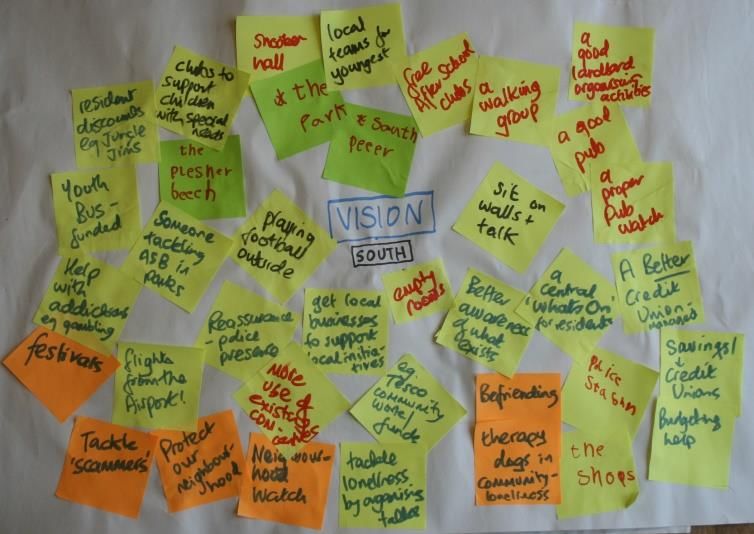
During the second session the group talked in depth      Each person was then given seven anonymous votes
with each other before identifying the 28 key issues     to show which issues they felt were the most
which they felt were ‘the things that make it            important. The results helped decide which topics
difficult for people to have high levels of health       needed to explored in greater depth with the
and wellbeing’?                                          commentators over the next 5 sessions.

Order       Barrier (that makes it difficult for people to have a high levels of health and well-   Number
            being )                                                                                 of votes
Joint 1st   Not enough community mental health services and referral times are too long                 7
Joint 1st Lack of response from the police / lack of police/PCSO presence                              7
Joint 2nd Loneliness                                                                                   6
Joint 2nd No continuity of care means you are passed from pillar to post, a different doctor           6
          each time; (having to tell your story again and again to new GPs)
Joint 3rd Not enough community centres & day centres; those that exist don’t cater for                 5
          everyone
Joint 3rd Unemployment (especially for younger – can lead to drug and alcohol problems                 5
Joint 4th   Cuts to services                                                                           4
Joint 4th   Agencies don’t communicate or join up (therefore no early support)                         4
Joint 4th   Lack of activities for younger people                                                      4
Joint 4th   Lack of understanding of disabilities for example employers, schools and social clubs      4
Joint 4th   Some bus routes will disappear from November                                               4
Joint 5th   Workers not being paid enough – low-paid work                                              3
Joint 5th   Green space being taken away                                                               3
Joint 5th   GP waiting times                                                                           3
Joint 5th   Poverty                                                                                    3
Joint 5th   Tourists demands local health resources (e.g. ambulance                                    3
Joint 6th   Ambulance diverted for silly things                                                        2
Joint 6th   More people moving into the area because of the new builds - which can affect the          2
            existing service provision (e.g. longer waiting lists).
Joint 6th   Drivers/parking around school.                                                             2
Joint 6th   Roadworks – overuse of side roads / pavements.                                             2
Joint 7th   Lack of knowledge about resources and amenities                                            1
Joint 7th   GP’s focus too much on medical issues and are not aware of the root causes                 1
Joint 7th   Accident and emergency waiting times                                                       1
Joint 7th   Litter and dog fouling                                                                     1
Joint
 10
      7th   Lack of trust in big companies/organisations.
                       Shared Future • Blackpool South Health and Wellbeing Inquiry 2017
                                                                                                       1
  th
8           Technology can lead to segregation and isolation                                           0
Commentator sessions:
deliberation in action
The Inquiry now moved into the Commentator
phase: Commentators are an essential part of the
Inquiry process and are invited to speak on the
issues that the participants prioritised in week two
in order to further their understanding.
Commentators can offer new opinions to the
participants and help them to reach their own
conclusions. The Inquiry presents commentators The commentators were briefed in advance to guide
with a rare opportunity to engage directly with local their contributions within the ethos of community-
people in order to understand their realities and to led deliberation:
share ideas about solutions that will have real
benefit. Commentators have found that this All commentators were invited to talk for up to 15
exposure benefits them in their own work. minutes on one or more of the issues prioritised by
the citizens in session two. In their presentations
they were encouraged to include:
Details of who they are (and their organisation)
An explanation what they feel the problem or
issues are
An explanation of what they feel are some of the
solutions.
Essential to the success of the process is the use of
clear, simple, easy to understand language. A red
card system was used where people are encouraged
to show the red card if they are having difficulty
The Commentators are, in effect, the ‘expert
understanding what is being said.
witness’ who are called before the residents to give
their testimony: the residents are the Jury who will After each presentation, commentators are asked to
decide what to accept and what to challenge. leave the room to allow participants the space to
talk with each other about their learning and to
Each commentator was identified based on the
write any questions they may have. These questions
issues prioritised by the residents.
are then shared with the facilitator. Finally in the
absence of the commentator, participants are asked
Commentator Brett Whitehead, Community Development Officer, Headstart, Blackpool Council,
answers questions from the group
Shared Future • Blackpool South Health and Wellbeing Inquiry 2017 11Commentators
Arif Rajpura, Director Public Health, Blackpool Council (2nd November)
Kathy Bradshaw, Integrated Team Manager Primary Intermediate Mental Health Team /Di
Billington, Clinical Lead, Fylde Coast Mental Health Integration Project, Julie Marsden, Fylde
Coast Community mental Health Team (older adults) Integration project Fylde (9th November)
Ethan Gilbey, Claire Walker, PCSOs (Police Community Support Officers), Inspector Graham
Brownsmith, Lancashire Constabulary (16th November)
Anne
Nina Oliver,
Beavers Community
Operations Engagement
Manager, Manager, Age UK Lancashire (23rd November)
UR Potential,
presents
Nina Beavers, to the group
Operations Manager, April Rankin, Participation & Engagement Coordinator, UR
Potential (23rd November)
Janet Barnsley, Director Performance and Delivery, Blackpool Clinical Commissioning Group,
Dr. John Calvert, Waterloo Medical Centre (30th November)
Brett Whitehead Community Development Officer, Headstart, Blackpool Council
to reflect on their learning and deliberate with each
other. This helps to ensure that the conclusions
reached are their own and that they feel ownership
over any actions that they decide upon.
All the questions written by participants for the
commentators are listed in full in Appendix 1.
In addition to the commentator sessions
participants were given the opportunity to spend
lots of time talking to each other, sharing opinions,
challenging each other, arguing, talking through
relevant experiences and so gaining a better
understanding of each person’s needs and
perspectives.
This was achieved through creating lots of small
group spaces for people to talk in. Sometimes the hadn’t been talked about yet but was of great
participants chose which groups they would join and importance.
on other occasions they were allocated to groups to
ensure that everybody spent time with each other. During week six the group were asked to take part in
On one occasion a ‘speed dating activity’ was used a short evaluation activity, reflecting upon the
in an effort to get participants talking to each other process so far. Their thoughts are recorded in
Appendix 2.
about what had interested them so far in the
discussions and secondly to give them an
opportunity to share with others anything they felt
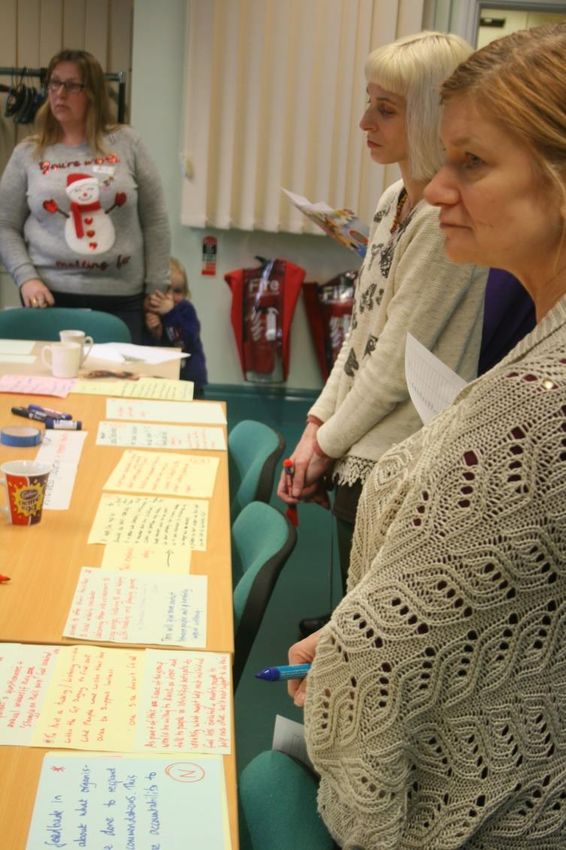
Group members question commentators
12 Shared Future • Blackpool South Health and Wellbeing Inquiry 2017In week three Inquiry members also considered time. A summary of their thoughts is recorded in
their vision of life in Blackpool South in ten years’ the next two photographs.
Shared Future • Blackpool South Health and Wellbeing Inquiry 2017 13Recommendation writing
In the last two sessions the group prepared their set
Why did I take part?
of recommendations. Participants were asked to ‘I was prompted to join the inquiry to see
reflect on the process so far and to think about whether others in the neighbourhood around
some of the draft recommendations they would like me had experienced some of the things that I
to share with others. had and if that was the case then I felt that by
These draft recommendations gave the facilitators a comparing and combining lessons learnt by
set of themes under which all the recommendations these experiences we could help and improve
so far could be grouped. the situation along with the authorities.
Making the area a better place to live in and it
GPs would be a positive step that could help bring
Mental health / loneliness and isolation a healthier environment that would be better
Policing for the wellbeing of the community’.
The way services are delivered
Young people
The group was asked for volunteers to act as
convenors of discussions on each of the five themes,
and all the participants chose to join a themed
group to tighten up the format of the
recommendation and make new ones.
The facilitators circulated to ask probing questions,
to help the group create specific statements which
would be comprehensible to all. Liz Petch and
Suzanne Gilman (Public Health,Blackpool Council),
were available to the participants as ‘resource
people’ under strict instructions to only join a group
if anyone had a specific question that needed their
specialist knowledge.
All the draft recommendations were then displayed
on the wall. The facilitators read out all the
recommendations so that participants could check
their understanding in preparation for voting.
It is at this point that some participants seek
clarification and some of the recommendations may
be edited in the light of the discussions.
It was stressed to all the participants that every
single recommendation is recorded irrespective of
how many votes it gets. Every participant was then
given an individual alphabetised voting sheet to
confidentially choose their top seven
recommendations.
All recommendations irrespective of the number of
votes received are listed in the following section.
14 Shared Future • Blackpool South Health and Wellbeing Inquiry 20173.Recommendations
The participants were asked the question They decided upon recommendations and
prioritised them using a voting system. They had
‘for people living in Blackpool South what are the
seven votes each. Their votes were anonymous.
main things that affect people’s health and
The following table shows the results:
wellbeing and what can be done about them?’
Theme Rank Votes Recommendation
Mental GPs and =1 5 The CCG needs to invest more in early intervention in mental
health, health health for example 1) all GPs should be prescribing activities such
loneliness support as sports, therapy groups etc. rather than just medication.
and Listening to the person’s needs rather than just giving pills. 2)
isolation more health and well-being support workers especially in areas
that are more affected by poor levels of mental health.
Mental health, loneliness =1 5 Mental health should be treated as equally important as physical
and isolation health and resourced accordingly.
The way services are =1 5 The public lacks information on local services and organisations
delivered and agencies require a better understanding of what the public’s
experiences are. A permanent long-term local Inquiry group
would help a lot to combat these issues, break down barriers and
promote understanding between agencies and the public.
The way services are =1 5 Raise awareness of local services and agencies by 1) promoting
delivered the FYI directory (including advising people on how to add their
information to the site). 2) establish pop-up information points in
local places, GPs surgeries, supermarkets etc not just social
media. 3) consider designing an app (with offers and events) 4)
make sure that all practitioners need to be aware of local services
and how to refer.
Police, traffic and parking =1 5 As the police are understandably reluctant to criminalise youths
who are involved in antisocial behaviour we are told that they
and other agencies use other methods to deal with the problem.
To reassure the public could these measures be monitored as to
how effective they are and the outcome be made transparent to
demonstrate that something is being done.
Mental GPs and =2 4 Loneliness and isolation is a big issue in our community.
health, health However, were not clear how widespread this issue is and who is
loneliness support affected. This information is needed so it can better inform what
and local services do to better support our communities. 1) we need
isolation an isolation and loneliness strategy. 2) GPs should ask each
patient in the new patient’s questionnaire and annual reviews if
they ‘struggle on their own’, feel isolated etc. 3) a
talking/listening initiative within the GP surgery to find out what
people want within the local area to support loneliness – ‘one
size doesn’t fit all’. As part of this some of the group would be
willing to knock on doors and talk to people in identified hotspots
to identify what might help each individual feel less isolated and
enable people to help each other. We would need support to do
this.
Shared Future • Blackpool South Health and Wellbeing Inquiry 2017 15Theme Rank Votes Recommendation
Young people. =2 4 Regular local activities for local children for all ages 4-17 for
Community facilities example at Highfield Road Community Centre. Some of the
group are interested in doing this for local teenagers, with some
support.
Young people. =2 4 Re-establish youth workers locally.
Community facilities
Mental Young =2 4 Have a mental health worker in primary and secondary schools
health, people. and youth centres to support young children.
loneliness Community
and facilities
isolation
The way services are =2 4 Ensure that services share common systems for collecting and
delivered communicating data, so that the public don’t have to repeat
personal details each time.
Police, traffic and parking =2 4 More police / PCSO presence, patrolling and walking the streets,
for reassurance and to help prevent crime.
The way services are =2 4 Training for health providers around supporting people with
delivered special needs/conditions, to support them to be able to access
services.
GPs and health support =3 3 To save GP time and pressure, surgeries should have a worker to
help people with practical issues such as basic health
education/life skills e.g. diet, parenting, dealing with colds, caring
for diabetics etc.
Mental health, loneliness =3 3 We need access to all levels of mental health support, regardless
and isolation of what diagnosis we have initially received. No-one should be
refused access to informal support for example relaxation,
mindfulness, support groups.
The way services are =3 3 Service information should show which services are aware of and
delivered cater for particular needs, for example physical, mental and
disabilities including autism, e.g. by using symbols.
The way services are =3 3 We want feedback in six months time about what organisations
delivered have done to respond to our recommendations. This builds more
accountability to the public.
Mental health, loneliness =3 3 More mental health beds (locally and nationally).
and isolation
Young people. =3 3 Communities in South Shore lack opportunities to meet and
Community facilities foster a sense of community spirit. This should be addressed.
There should be for example, an organisation which specialises in
bringing the local community together for events. All ages,
backgrounds, giving support, education, delivering a sense of
South Shore unison and belonging and making the most of the
area, for example an annual South Shore Festival.
GPs and The way =4 2 Not everyone has medical or physical problems. The problems
health services may be caused by social factors for example unemployment,
support / are isolation. GPs should consider social causes of people’s problems
delivered and think of social action for example signposting people to
activity groups, campaigns etc.
The way services are =4 2 More patience and understanding from GP receptionists, as a bad
delivered experience may deter the patient, (who may not want to call
16 Shared Future • Blackpool South Health and Wellbeing Inquiry 2017Theme Rank Votes Recommendation
again due to stress, embarrassment or anxiety). Negative first
impressions can make the patient’s situation worse. Therefore
there needs to be training for receptionists in customer care.
The way services are =4 2 Services have to become joined up so that the public receive a
delivered consistent, holistic approach.
GPs and health support =4 2 The booking system for GPs needs to be improved (it’s too
difficult to ring before 9 am as lines are busy and online slots
don’t always offer you the GP you want). GPs should be able to
give you an advance appointment before you leave the surgery.
We understand the difficulty of making appointments far in
advance because of people not attending, however we should be
able to make appointments at least two weeks in advance.
GPs and health support =4 2 Educate GPs and other health professionals about mental health
issues. Introduce mandatory training at regular intervals for all
levels of health professionals. An introduction to mental health
up to complex needs (accredited courses ?) for carers, GPs,
schools (SENCOs), triage, nurses, dentists etc.
Mental health, loneliness =4 2 Reduce waiting times for mental health services.
and isolation
Young people. =4 2 Schools to offer their facilities to local elderly residents,
Community facilities welcoming them into a classroom to sing songs, listen to and help
with reading and playing games e.g. Downshall Primary School in
Essex. This will give more contact between people and hopefully
improve well-being.
The way services are =4 2 The government should pay for the costs of volunteering for
delivered example insurance, training, and DBS (Disclosure and Barring
Service) checks to reduce pressure on the local voluntary and
charity sector.
The way services are =5 1 Services should bring together different generations rather than
delivered separate them, for example, youth services from adult services.
This would build more social unity.
The way services are =5 1 Why do long-term patients have to go through the same
delivered bureaucratic hoops each time they require an additional service
for example blue badge, wheelchair, etc. simplify the whole
system and save council money and hassle for carers.
Police, traffic and parking =5 1 Police need to be more approachable, especially to children.
They can come across as rude and arrogant. There should be
specialised children’s officers? (Do they exist?) Police in primary
and secondary schools to educate and create a culture of trust.
Mental health, loneliness =5 1 There needs to be a group for people with depression.
and isolation
Mental health, loneliness =6 0 A well-known organisation or service should support people from
and isolation a community so they have the skills and confidence to knock on
people’s doors who may feel isolated. It’s difficult to do this
without authority, backing and support.
Young people. =6 0 DBS checks for more jobs/vocations? This would help deter youth
Community facilities crime - if they understood their future was on the line.
(Disclosure and barring service)
Shared Future • Blackpool South Health and Wellbeing Inquiry 2017 17Inquiry Launch Event, 25th Jan 2018
The launch event brought together agencies and The inquiry members used a PowerPoint slideshow
inquiry participants to hear about the ideas and to describe why they decided to get involved, how
recommendations which the Inquiry group believe they had worked together and to outline their
can improve health and well-being and to begin to recommendations.
identify agency response, future community action
The recommendations were grouped into six key
by residents and greater resident’s influence in
themes:
policy-making. Some 60 people took part in the
event in the Winter Gardens. 1. GPs and health support.
2. Mental health, loneliness and isolation.
3. The way services are delivered.
4. Young people. Community facilities.
5. Employment, training and learning.
6. Police, traffic and parking.
After the slideshow, participants were invited to
pick a theme they felt they could influence and were
interested in. Each theme was allocated a meeting
space, with pre-agreed residents hosting each small
group and recording ideas for action. After 30
minutes participants were invited to rotate to other
The members of the North and South inquiry met in discussions.
advance for two sessions during which they agreed a
format for the event, decided roles and
responsibilities, and practiced their presentations.
18 Shared Future • Blackpool South Health and Wellbeing Inquiry 2017The Inquiry members and any agencies interested in
attending will meet again in April 2018
During these discussions a range of commitments
were made by both agencies and Inquiry members.
For example:
A commitment from the CCG to ‘speak to CCG
Commissioners and GPs to review the capacity of
health and well-being support workers’.
A commitment from Blackpool Council’s Public
health to continue to work on ‘putting together
the case for limiting the number of takeaways by
stopping new ones from opening’.
The CCG to investigate the possibility of Inquiry
members working with the CCG on a training
video for GPs and receptionists.
Inquiry participants to work with Blackpool
Council (Public Health) to look at how they can
best ‘contact lonely residents’
Shared Future • Blackpool South Health and Wellbeing Inquiry 2017 19Appendix 1: Commentator sessions
Questions put to commentators
Arif Rajpura Director Public Health, Blackpool Kathy Bradshaw: Integrated Team Manager
Council (2nd November) Primary Intermediate Mental Health Team /
Di Billington Clinical Lead, Fylde Coast Mental
1. How can you reduce waiting times for mental
Health Integration Project (9th November))
health services? (GP referrals).
2. What support do GPs have to better understand 1. It takes too long to access services,
what alternatives to prescription are available
a. e.g. the Rapid Intervention Team.
locally?
3. These problems have been talked about for b. Getting the services you need but only
years why has nothing changed? We don’t see after complaining
change.
2. Is there a support group for adults with ‘Autistic
4. Online isn’t easy for all and public online Spectrum Disorders’? Or any plans for one?
facilities aren’t private.
3. Where do you refer people to after six months?
5. Although you didn’t touch on the subject I would
Can they come back again?
like to bring up the affair of why there is virtually
no police presence on the streets, that should be 4. What makes the new system better than the old
there acting as a deterrent to vandalism and one? Please answer in plain English.
crime in general.
5. Some people are being sent a long way away for
6. If you are not seeing the same GP each time how
services. Is the new Vanguard system
does the GP system pick up on people’s needs
e.g. loneliness.? addressing this problem?
7. How to make people aware of what’s out there 6. Are you still using the ‘tiers of mental health’ to
in the community if they have no computer or assess levels of mental health? If you have been
social contacts? a higher tier of mental health support, can you
8. What can be done to help people earlier to easily access lower levels of support?
prevent crisis? 7. How many psychiatrists do you have access to?
9. Are GPs to set in their ways and will keep
8. What if no access to FYI (For Your Information)?
prescribing rather than looking at alternatives?
10. Not everyone can go online – why isn’t there a 9. What is the procedure to challenge GPs if they
service that can clarify the entitlements/systems won’t refer us to services?
for the public? So know who to go to and what
10. Are GPs too quick to prescribe antidepressants
you can get?
rather than treating the problem?
11. Why will my son live five years less?
11. 10 minute appointments are too short to explain
12. How much power does the CCG have to move
a mental health problem.
their thinking from a medical to social model?
12. Will your Vanguard teams link into the local
‘enhanced teams’ for primary care?
13. How do lonely people make the first step to
access services?
20 Shared Future • Blackpool South Health and Wellbeing Inquiry 201714. Should you be able to make an appointment 10. After using speed guns, what happens? Is it a
directly with a mental health specialist rather survey or a ‘legal trap’?
than a GP? 11. Homophobic bullying is a hate crime right? Do
you have an input on homophobic bullying in
15. How do you link with people providing benefits
schools?
advice e.g. who provides information on
attendance allowance for older people? 12. How many PCSOs (Police Community Support
Officers) are there in this neighbourhood?
16. Where is the nearest secure mental health
13. Cressida Dick (Metropolitan Police
facility? Does it have beds? Commissioner), talked in the press about youths
17. Is mental health and physical health taken as laughing at the law as it is ‘ineffective’, is it like
seriously as each other by medical professionals that here?
and by the government departments with the 14. Do you have a role in high schools? In primary
money? schools? around parent’s behaviour and tackling
problems (like bullying) in schools?
18. Making the phone call that is the self-referral
15. The mobile phone number – is it only for ASB
can be very daunting. Is this the best way to do
(Anti Social Behaviour)? How is it advertised?
it? What is it?
16. Nina Beavers Operations Manager, April Rankin
Participation & Engagement Coordinator, UR
Ethan Gilbey, Claire Walker PCSOs (Police
Potential (23rd November)
Community Support Officers),
Inspector Graham Brownsmith Lancashire
Constabulary (16th November) Anne Oliver Community Engagement
Manager, Age UK Lancashire (23rd
1. Are you dealing only with incidents (reactive) or November)
do you work proactively with residents on local 1. How can lonely people find out what is
issues? available if they don’t have computers?
2. How do we get the ASB (Anti Social Behaviour) 2. How can we support people with
phone number? How are you promoting it? Alzheimer’s to get involved in community
3. If you arrest someone with Asperger’s for activities?
example, how do you manage the situation? e.g. 3. Is the system more interested in tick boxes
specialists? than face-to-face interaction?
4. At drop off and pick up time at St Nicholas 4. Is laughter the best medicine?
school people park on pavements forcing people
5. Did the Age UK day centres close down went
with prams onto the road. What can be done
Blackpool Age UK closed?
about this?
6. Do hospitals refer people to Age UK after
5. Do you work with any youth workers around
discharge? Do other agencies do it?
here?
7. Why did Age UK go bust?
6. How often are you in this neighbourhood?
8. Tell us again what services/practical support
7. When you go into schools, do you talk about
do you offer?
littering?
9. How can elders have time to themselves in
8. What issues are being raised in Blackpool South,
our community?
PACT meetings?
10. How do you let people know about a) of
9. How do you decide what level of response an
services b) opportunities to volunteer?
incident gets? e.g. riot vans vs one officer in a
car? 11. Do you have a waiting list for your services?
Shared Future • Blackpool South Health and Wellbeing Inquiry 2017 21Nina Beavers Operations Manager, 6. Why can’t you make appointments in advance,
April Rankin, Participation & Engagement i.e. 2 to 3 weeks?
Coordinator, UR Potential (23rd November) 7. I have experience of seeing a foreign GP. I found
it difficult to understand them. This was a
1. You are dependent on 2 to 3 year pots of
problem for me and may also be for older
money, what happens if the funding doesn’t people?
continue? Especially to the local people you
8. The merging of surgeries locally, will it help or
serve?
make all worse?
2. How are you promoting UR Potential, where do 9. When you have accessed specialist mental
young people find out about you? health support, can you then access level mental
3. What about young people under 11? What is health support? If not why not?
available for them? 10. A lot of people are seen in private hospital as
NHS patients. Is this cost effective and will it
4. Would you be prepared to do ‘outreach’? continue?
5. Could we set up a youth group here and ask for 11. Receptionists ask ‘what’s it for?’ Which is not
your support to do it? appropriate. Their manner needs to change,
agreed?
6. What are you doing around here?
12. How are you educating GP about the ‘enhanced’
7. Is there flexibility on age groups to take part? neighbourhood care system/hub?
Can people go to lots of your activities?
13. Is there a single point of information/dedicated
8. Is there any transport provided for young person who can provide information on
people? services? This could take pressure off GP time.
14. There seems to be some confusion on the
patients leaflets?
Janet Barnsley Director Performance and 15. Why can’t minor surgery take place locally? (it
Delivery, Blackpool Clinical Commissioning saves money).
Group, 16. Is there a list of services that are autism friendly
Dr. John Calvert Waterloo Medical Centre (or for people with learning disabilities) for
(30th November) example
17. I am scared of going to the dentist and want to
1. One GP was in my opinion over reliant on know which dentists will best support me?
prescribing medication how can we make sure
GPs don’t prescribe but instead of the other
ways to help? Brett Whitehead Community
2. When you phone they say you have to go online Development Officer, Headstart,
or call back at such and such a time. Isn’t there
a more efficient way of doing this?
Blackpool Council
3. In care homes, it’s very difficult to get a GP to 1. After 16 years of age do you continue with the
visit. How can this gap be plugged? Friend for Life?
4. I can’t get through (on the phone to the GP 2. What is one thing that would create a step
surgery) as instructed, i.e. before nine. Can you change to help kids with problems?
do something about this?
3. How are you telling young people about your
5. GP appointments are either immediate or three services? (apart from social media)
weeks, and nothing in between. Can you
develop a system to plug this gap? 4. How long do you have funding for?
22 Shared Future • Blackpool South Health and Wellbeing Inquiry 20175. Would you branch out to younger children and
adults if the project succeeds?
6. Is the service for all children or just for ‘looked
after children’?
7. Is there a helpline for young people to access?
What is the criteria?
8. How do you become a Friend for Life?
9. Is there potential to extend to under tens and
younger children?
10. What is Headstart doing about cyber bullying?
11. How about provision for young people with
learning disabilities?
12. Do you work together with URPotential and
other youth groups/organisations?
13. Do you do any work bringing together older
people and young people? e.g. younger people
going into care homes.
14. What does LAC stand for? and who does it
cover? Care homes? Fostered? Adopted?
15. Do you think social media has replaced
communication within the family?
16. Do groups meet outside of school hours?
Shared Future • Blackpool South Health and Wellbeing Inquiry 2017 23Appendix 2: Evaluation
During session 6 all participants were asked to talk Things we have not been keen on
to others in the group about their experience of the
Inquiry through a speed dating activity. In particular People walking in the room whilst we are
they were asked to think about ‘Things we’ve liked’, talking and being noisy, rude.
‘Things we have not been keen on’ and any Lots of time pressure in the sessions, felt rushed
suggested ‘changes? to come up with questions. Some had to leave
early. A week to digest and maybe? and
Things we’ve liked formulate questions.
Environment – room temperature/too hot/too
Everyone’s had a chance to speak and get their
cold.
point across.
Noise levels of other people within the centre.
The structure of the Inquiry.
Noise from the centre cleaners banging/talking.
Friendly and organised facilitators.
Rude!
It is good that this group has come about;
Rushed question and answer sessions.
bringing together a diverse cross-section of
Not keen on how rushed some sessions be!
varied people from our community. In particular
Pete’s music.
to discuss with you, geographical issues.
People coming in and out of the room.
Super to hear a general consensus of similar
The expert commentators explanations of
experiences in the community, not just my
shortcomings of their agency by taking the
experience.
political line and blaming under funding.
Pete and Nick.
I only found out about the group through a
A sense of purpose and working towards a
recommendation. Where was my letter?
specific goal.
Having the opportunity to direct questions to
the people in charge.
The £20 vouchers.
Meeting new people. Changes?
Finding out new things from speakers and
finding out where I can get the help I need. Difficult to get to! Would of preferred choice of
Getting to know local people. two groups morning/evening to attend at least
Good range of commentators coming in. one a week a spokesperson from each could
Being able to direct questions to different bring the ideas together.
departments and them having to answer and Maybe organised two sets of times for
not being fobbed off. meetings. Due to some people’s work
Good banter with Pete and Nick. commitments.
Likes meeting new people that actually care Earlier start time so those with kids don’t miss
about the community. out at the end.
Meeting new people. Hope something carries on.
If we hadn’t come along to these meetings we Sometimes may have missed information if
wouldn’t of found out any info. sessions ran after 3 PM.
Been very interesting. More cake!
The info that we been given about Times of the groups as I struggled to get to each
organisations. group, evenings would have been better for me
The facilitators commitment and true belief that personally
these activities will have a proper impact.
24 Shared Future • Blackpool South Health and Wellbeing Inquiry 2017Blackpool South Health and
Wellbeing Inquiry
A Citizens Inquiry 2017
Shared Future Community Interest Company
28 Cromwell Grove, Manchester, M19 3GB
Registered as a Community Interest Company in
England. Company Number: 06919338
Web: www.sharedfuturecic.org.uk.You can also read


