Bottle-O Brabham 469 Palfrey Street, Brabham - Department of Local Government, Sport and ...
←
→
Page content transcription
If your browser does not render page correctly, please read the page content below
p:              (08) 6278 2788
 f:              (08) 6278 2988
 e:              phil@canford.com.au
 mob:            0417 976 009
 postal:         PO Box 389
                 Guildford WA 6935

                         Bottle-O Brabham
                             469 Palfrey Street, Brabham

           Application for the Conditional Grant of
                    a Liquor Store Licence

                              Section 38 Submissions
                            Public Interest Assessment

                                             August 2020

                 COPYRIGHT © Canford Hospitality Consultants Pty Ltd 2020
Copyright in this document is the property of Canford Hospitality Consultants Pty Ltd. This document may not be copied or
   reproduced in whole or in part without the specific prior written consent of Canford Hospitality Consultants Pty Ltd.
Canford Hospitality Consultants Pty Ltd may seek both injunctive relief restraining the unauthorised use of this document
  (or any part thereof) and an accounting for profits action against any person or entity who so copies or reproduces this
                            document (or any part thereof) without said prior written consent.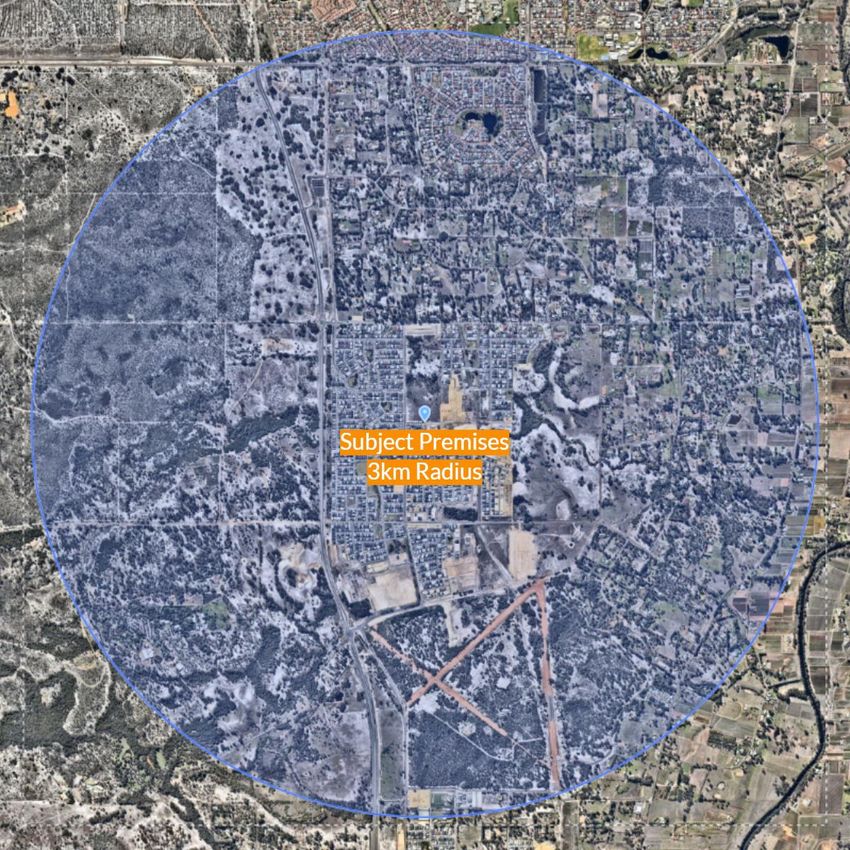
Bottle-O Martin│Public Interest Assessment

August 2020 ................................................................................. 1

1      Introduction......................................................................... 3

2      The Locality......................................................................... 9

3      Demographics of the Locality ................................................... 14

4      Growth in Population and Residential Development in the Locality ...... 19

5      Outlet Density ..................................................................... 27

6      Proposed Style of Operation .................................................... 30

7      Local Government Consultation ................................................ 32

8      Background and Experience of the Applicant ................................. 33

9      Section 36B(4) of the Act – Restrictions on Grant or Removal of Certain
       Licences Authorising Sale of Packaged Liquor ................................ 34

10     Section 38(4)(a) of the Act - Harm or Ill-health .............................. 38

11     Section 38(4)(b) of the Act – A Report on the Amenity of the Locality ... 43

12     Section 38(4)(c) of the Act - Offence, Annoyance, Disturbance or
       Inconvenience ..................................................................... 45

13     Section 5(1)(a) of the Act – Primary Object................................... 46

14     Section 5(1)(b) of the Act – Primary Object .................................. 48

15     Section 5(1)(c) of the Act – Primary Object ................................... 49

16     Section 5(2)(a)(d)(e)(f) of the Act – Secondary Objects..................... 50

17     Objective Public Interest Evidence............................................. 51

18     Conclusion ......................................................................... 53

ATTACHMENTS ............................................................................. 56

                               Canford Hospitality Consultants Pty Ltd | August 2020       Page 2 of 56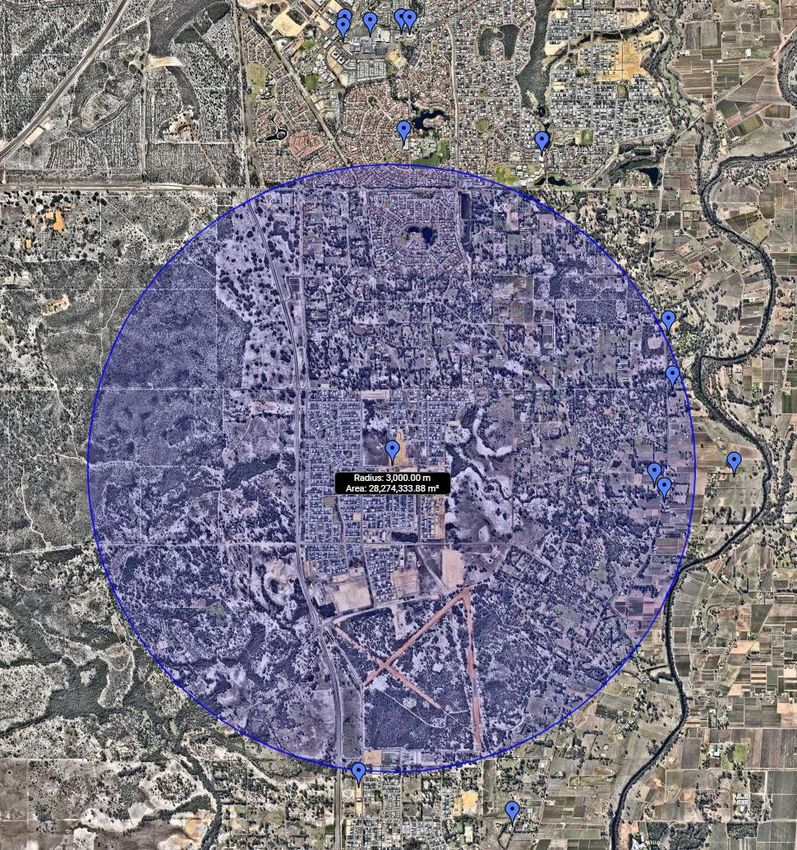
Bottle-O Martin│Public Interest Assessment

1     Introduction
1.1   Appian Properties Pty Ltd will be applying to the licensing authority
      for the conditional grant of a liquor store licence for premises located
      at Lot 469 Palfrey Street, Brabham, Western Australia.
1.2   Brabham is a growing residential suburb in Perth’s northeast,
      estimated to have 3,000 new occupied homes by mid-2021.
1.3   The proposed liquor store will form part of a new shopping facility
      with a lettable area of 2,375sqm and will boast the following services;
      1.3.1 An IGA Supermarket;
      1.3.2 Medical Centre – inclusive of radio imaging, physiology,
            dentistry, podiatry clinics and potentially more;
      1.3.3 Pharmacy;
      1.3.4 Café;
      1.3.5 Deli and
      1.3.6 Liquor store
1.4   The proposed name of the liquor store is “Bottle-O Brabham”, and
      will take up 145sqm of the shopping centre space.

               Early sketch up of proposed Brabham Village
1.5   In the Director’s Decision in respect of an application for the
      conditional grant of a liquor store licence dated 4 th March 2020 for
      Hangawee Outlet Northbridge (attachment BOB1), the Director’s
      Delegate, Peter Minchin stated the following:
      1.5.1   “In addition to the normal administrative requirements,
              applicants for the grant of a new liquor store licence have
              two very distinct obligations under the Act which must be
              discharged before the application can be approved. This first
                       Canford Hospitality Consultants Pty Ltd | Introduction      Page 3 of 56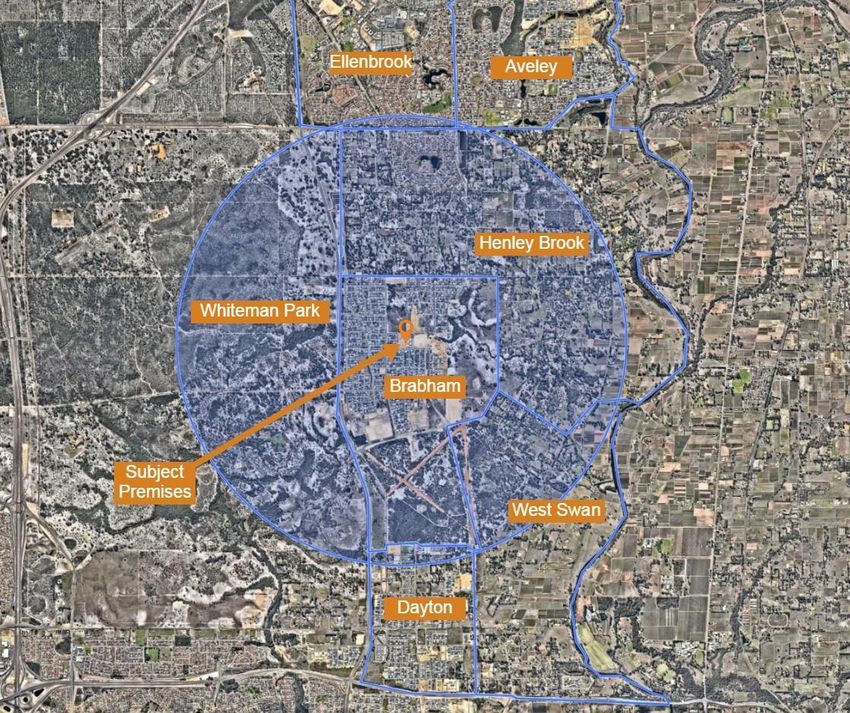
Bottle-O Martin│Public Interest Assessment

               is overcoming the restraint imposed by s 36B and second, by
               demonstrating that the grant of the licence is in the public
               interest as required under s 38(2).”
1.6    These submissions are designed to address:
       1.6.1   the public interest requirements as set out in Section 38(2)
                of the Liquor Control Act 1988 and the (WA) (the “Act”); and
       1.6.2    restrictions on grant of certain licences authorising sale of
                packaged liquor as set out in Section 36B of the Act.
1.7    These submissions have been drafted by Canford Hospitality
       Consultants Pty Ltd in consultation with Mr Robert Nichevich, a
       director of the applicant company and references to the applicant or
       the applicant’s opinion relate to Mr Nichevich.
1.8    Section 38(2) of the Liquor Control Act 1988 sets out the matters to
       be taken into account by the Licensing Authority in deciding whether
       or not to grant a Liquor Store Licence. Specifically, it states:
       1.8.1   “An applicant who makes an application to which this
               subsection applies must satisfy the licensing authority that
               granting the application is in the public interest”
1.9    Section 38(4) of the Liquor Control Act 1988 states the licensing
       authority may have regard to the following matters when considering
       an application for a liquor licence;
       1.9.1   “the harm or ill-health that might be caused to people, or
               any group of people, due to the use of liquor; and
       1.9.2   whether the amenity, quiet or good order of the locality in
               which the licensed premises or proposed licensed premises
               are, or are to be, situated might in some manner be lessened;
               and
       1.9.3   whether offence, annoyance, disturbance or inconvenience
               might be caused to people who reside or work in the vicinity
               of the licensed premises or proposed licensed premises; and
       1.9.4   any effect the granting of the application might have in
               relation to tourism, or community or cultural matters; and
       1.9.5   any other prescribed matter”.
1.10   Also, Section 36B of the Liquor Control Act 1988 was proclaimed and
       came into effect on 2nd November 2019.
1.11   Section 36B(2) of the Liquor Control Act 1988 states:
       1.11.1 “This section applies to an application for the grant or
              removal of any of the following licences –
                1.11.1.1 (a) a hotel licence without restriction;
                1.11.1.2 (b) a tavern licence;
                1.11.1.3 (c) a liquor store licence;
                      Canford Hospitality Consultants Pty Ltd | Introduction      Page 4 of 56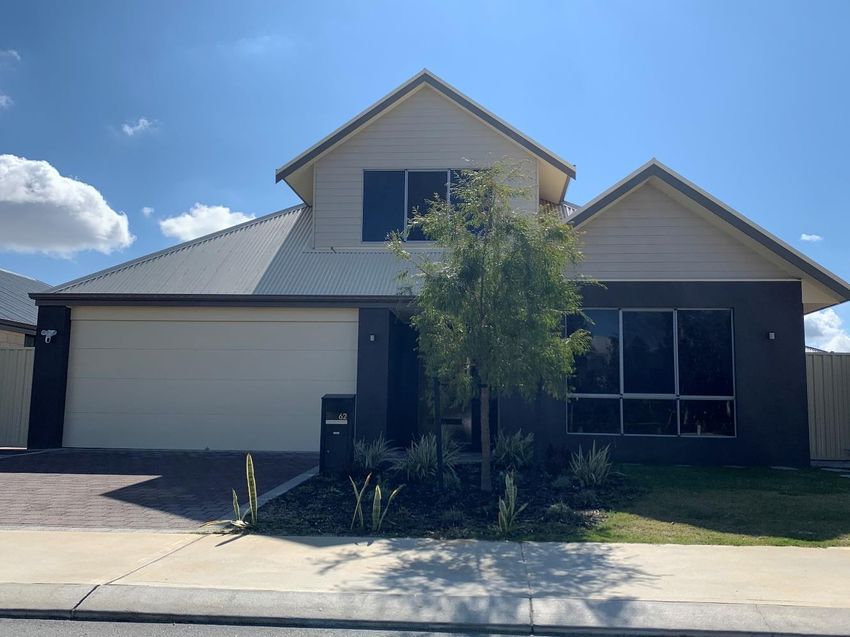
Bottle-O Martin│Public Interest Assessment

                 1.11.1.4 (d) a special facility licence of a prescribed type.”
1.12   Based on the above, Section 36B of the Liquor Control Act 1988
       applies to this application, and therefore will be considered in these
       submissions.
1.13   Section 36B(3) of the Liquor Control Act 1988 states;
       1.13.1    “The licensing authority must not hear or determine an
                 application to which this section applies if —
                 1.13.1.1 (a) packaged liquor premises are situated less
                          than the prescribed distance from the proposed
                          licensed premises; and
                 1.13.1.2 (b) the area of the retail section of those
                          packaged liquor premises exceeds the prescribed
                          area; and
                 1.13.1.3 (c) the area of the retail section of the proposed
                          licensed premises exceeds the prescribed area”.
1.14   Regulations Nos. 9AAA and 9AAB of the Liquor Control Regulations
       1989 stipulate the distance and area prescribed referred to in Section
       36B of the Liquor Control Act;
1.15   Regulation No.9AAA states;
       1.15.1 “Area prescribed (Act s. 36B)
                For the purposes of section 36B, the area of 400m2 is
                prescribed.”
1.16   Regulation No. 9AAB states;
       1.16.1 “Distance prescribed (Act s.36B)
                 1.16.1.1 (1) For the purposes of section 36B, the following
                          distances are prescribed –
                           1.16.1.1.1 For packaged liquor premises in the
                                      metropolitan region – 5 km;
                           1.16.1.1.2 For all other packaged liquor premises
                                      – 12km.
                 1.16.1.2 (2) The distances referred to in subregulation (1)
                          are to be calculated using the shortest route by
                          road.”
1.17   The applicant advises Section 36B(3) above does not apply to this
       application as the proposal is for a 145sqm liquor store, and therefore
       the proposed retail section is less than the prescribed area.
1.18   Furthermore, section 36B(4) of the Act states;
       1.18.1 “The licensing authority must not grant an application to
              which this section applies unless satisfied that local
              packaged liquor requirements cannot reasonably be met by

                      Canford Hospitality Consultants Pty Ltd | Introduction      Page 5 of 56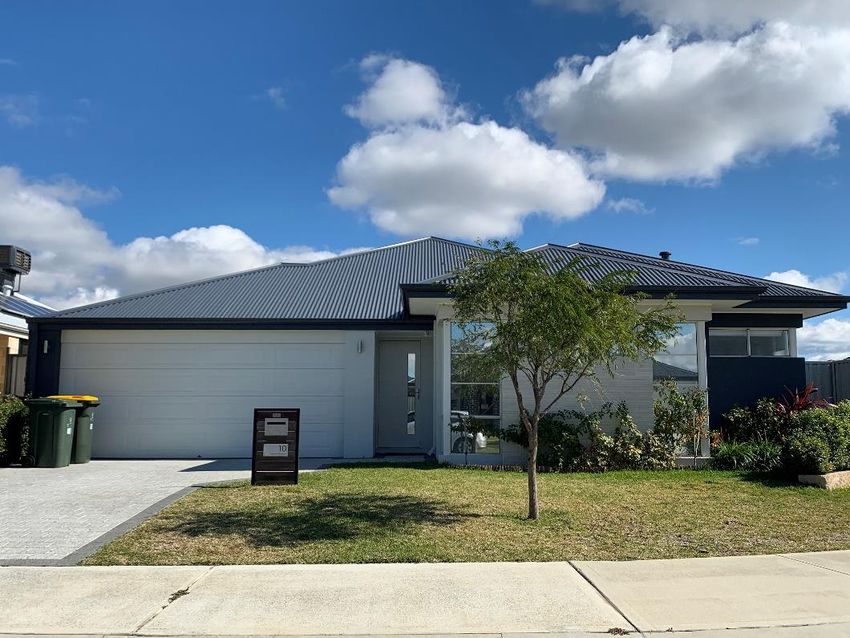
Bottle-O Martin│Public Interest Assessment

                existing packaged liquor premises in the locality in which the
                proposed licensed premises are, or are to be, situated”.
1.19   Later in section 9 of these submissions the applicant will demonstrate
       in more detail how this proposal will comply with section 36B(4) of
       the Act as the existing packaged liquor outlets do not satisfy the
       reasonable requirements of the public for packaged liquor in the
       locality.
1.20   The objects of the Act are contained in section 5, which states the
       primary objects of the Act are (section 5(1)) –
       1.20.1    “to regulate the sale, supply and consumption of liquor;
                 and
       1.20.2    to minimise harm or ill-health caused to people, or any
                 group of people, due to the use of liquor, and
       1.20.3    to cater for the requirements of consumers for liquor and
                 related services, with regard to the proper development of
                 the liquor industry, the tourism industry and other
                 hospitality industries in the State”.
1.21   Section 5(2) of the Act also includes the following Secondary Objects;
       1.21.1    “To facilitate the use and development of licensed
                 facilities, including their use and development for the
                 performance of live original music, reflecting the diversity
                 of the requirements of consumers in the State; and
       1.21.2    To provide adequate controls over, and over the persons
                 directly or indirectly involved in, the sale, disposal and
                 consumption of liquor; and
       1.21.3    To provide a flexible system, with as little formality or
                 technicality as may be practicable, for the administration
                 of this Act, and
       1.21.4    To encourage responsible attitudes and practices towards
                 the promotion, sale, supply, service and consumption of
                 liquor that are consistent with the interests of the
                 community.”
1.22   Further Section 5(3) states “If, in carrying out any function under this
       Act, the licensing authority considers that there is any inconsistency
       between the primary objects referred to in subsection (1) and the
       secondary objects referred to in subsection (2), the primary objects
       take precedence”.
1.23   In the Aldi South Fremantle decision (refusing an application for a
       conditional grant of a liquor store licence), dated 22nd March 2019, at
       paragraph 26, the Director said (attachment BOB2));
       1.23.1    “None of the primary objects of the Act take precedence
                 over each other, however, where conflict arises in
                 promoting the objects of the Act, the licensing authority
                       Canford Hospitality Consultants Pty Ltd | Introduction      Page 6 of 56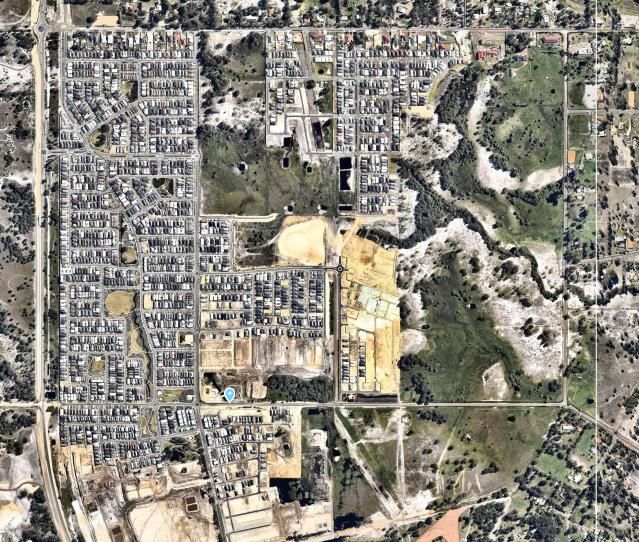
Bottle-O Martin│Public Interest Assessment

                must weigh and balance the competing interests in each
                case11 and it is a matter for the licensing authority to decide
                what weight to give to the competing interests and other
                relevant considerations”.12
1.24   The footnote references at 11 and 12 from the above decision relate
       to the following;
       1.24.1   Footnote 11 - Executive Director of Health v Lily Creek
                International Pty Ltd & Ors [2000] WASCA 258.
       1.24.2   Footnote 12 - Hermal Pty Ltd v Director of Liquor Licensing
                [2001] WASC 356.
1.25   The Director General provides advice to applicants for a liquor licence
       on the Department of Racing, Gaming and Liquor website
       ((https://www.rgl.wa.gov.au/liquor/liquor-news/liquor-news-
       archive/note-from-director-general). The advice note is called ‘A
       note from the Director General on Applying for a Liquor Licence’ and
       in it the Director made the following comments;
       1.25.1   “The public interest, as ascertained from the scope of
                purpose of the Act, involves catering for the requirements
                of consumers of liquor and to have liquor outlets consistent
                with good order and proprietary in relation to the
                distribution and consumption of liquor.”
       1.25.2   “The proliferation of liquor outlets is not in the public
                interest. To increase the number of licensed premises
                without any real and demonstrable consumer requirement,
                would represent proliferation without justification.”
       1.25.3   “The licensing authority must also weigh and balance the
                requirements of consumers against the object of minimising
                harm or ill-health caused to people, or any group of people
                due to the use of liquor.”
       1.25.4   “For an applicant to discharge its onus under section 38(2),
                it must address both positive and negative impacts that the
                grant of the application will have on the local community.”
       1.25.5   “This means applicants must adduce sufficient evidence to
                demonstrate the positive aspects of their application,
                including that the proposed licence will cater for the
                requirements for consumers for liquor and related services.
                The Liquor Commission has determined that failing to do
                this means “...the granting of licences under the Act would
                become arbitrary and not in accordance with the objects of
                the Act.” (LC 32/2010:Element WA Pty Ltd)”.

1.26   In a media release by the Premier’s office “Cheers to WA:
       Everyone’s a winner under State’s new liquor laws” dated 14th

                      Canford Hospitality Consultants Pty Ltd | Introduction      Page 7 of 56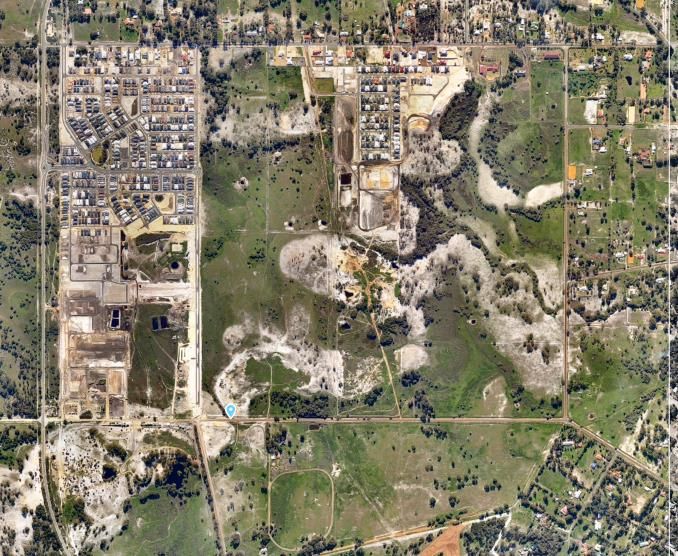
Bottle-O Martin│Public Interest Assessment

       August 2018, Minister Paul Papalia pertaining to the Liquor Control
       Act Amendment Bill 2018, stated;
       1.26.1 “The passing of this legislation represents the most
              significant liquor reforms for the State in over a decade and
              delivers on our Government's plan for jobs by supporting
              opportunities for business growth and driving visitation to
              our wonderful State”.
       1.26.2    “By cutting red tape we are supporting exciting local
                businesses, creating more jobs and moving towards a
                tourism-friendly hospitality industry”.
1.27   The licensing authority regulates the sale, and supply of alcohol. It
       seeks to strike a balance between catering for the requirements for
       liquor and liquor related services whilst minimising the potential for
       harm and ill-health to the community through the abuse of alcohol.
       So, the framework exists for the granting of new liquor licences in
       appropriate circumstances.
1.28   The applicant has also considered the outlet density of the location,
       and it will be shown in these submissions, how this application is in
       keeping with the primary objects of the Act and does not constitute
       a proliferation of liquor licences in this locality.
1.29   The applicant has also considered the demographics of the locality
       and will also demonstrate in other sections of these submissions that
       the proposed liquor store is well planned to provide these important
       packaged liquor services with very little potential for increased harm
       or ill health.

                      Canford Hospitality Consultants Pty Ltd | Introduction      Page 8 of 56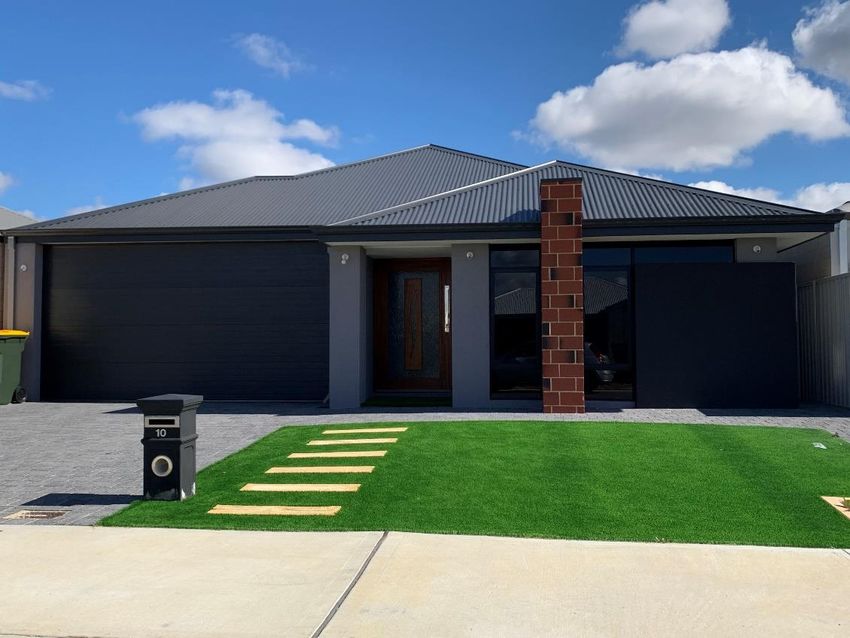
Bottle-O Martin│Public Interest Assessment

2     The Locality
2.1   The proposed liquor store will be located within the new Brabham
      Village shopping centre at Lot 469 Palfrey Street, Brabham.

                                 Brabham Residence
2.2   In defining the “locality” affected by the application, guidance has
      been provided by “Public Interest Assessment – A Policy of the Director
      of Liquor Licensing”.
2.3   The Director’s policy states that:
      2.3.1   “As part of a PIA submission, applicants must provide details
              regarding the community in the vicinity of the licensed
              premises (or proposed licensed premises) and any amenity
              issues in the locality.
      2.3.2   The term “locality” in this instance refers to the area
              surrounding the proposed licensed premises. This locality will
              be the area most likely to be affected by the granting of an
              application in relation to amenity issues.
      2.3.3   ….in terms of addressing objects 5(1)(b) and 5(1)(c) of the
              Act, an applicant may need to consider an area which is much
              broader than the ‘locality’ used for consideration of amenity
              issues. For example, an application for a destination liquor
              store, which may draw its clientele from a large geographic
              area, would need to address 5(1)(b) and 5(1)(c) of the Act in
              a much broader context”.

                     Canford Hospitality Consultants Pty Ltd | The Locality      Page 9 of 56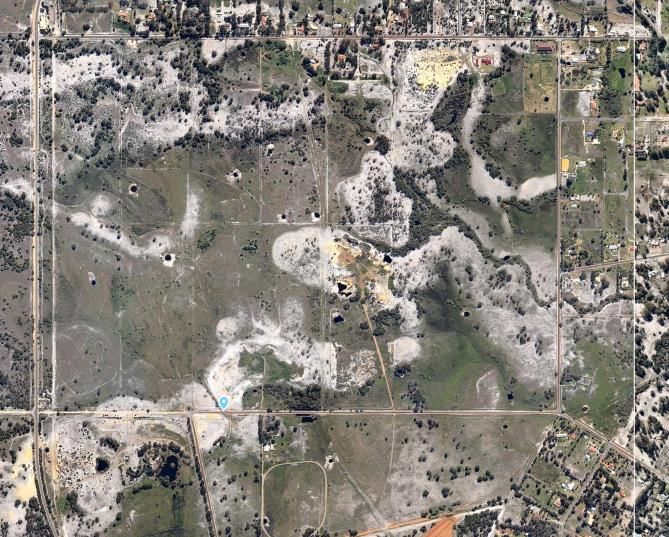
Bottle-O Martin│Public Interest Assessment

2.4   In this policy document, Brabham is not listed as a suburb as it is a
      recently developed location. However, as per the distances provided
      in this document for defining localities for suburbs, we can conclude
      Brabham falls within the 3km locality list, as it is further than 15km
      from Perth CBD.
2.5   The following map, as taken from the Nearmap website shows the
      approximate location of the subject premises within the 3km radius.

2.6   To assist in further defining the locality it will be useful to examine
      the following factors;
      2.6.1   The physical location of the subject premises;
      2.6.2   The presence of natural or man-made boundaries that
              effectively separate one local community from another; and
      2.6.3   The community most likely to be impacted by the grant of this
              application.
                     Canford Hospitality Consultants Pty Ltd | The Locality     Page 10 of 56
Bottle-O Martin│Public Interest Assessment
2.6.4 Demographics of the Locality
2.7 The physical location of the subject premises;
2.7.1 As previously mentioned in paragraph ? above, the subject
premises will be part of the new Brabham Village shopping
centre, which will be located on Lot 469 Palfrey Street,
Brabham.
2.7.2 The proposed Bottle-O Brabham Liquor Store will be
surrounded by other businesses in the new shopping centre,
including;
2.7.2.1 A new IGA supermarket of 1,000sqm,
2.7.2.2 Medical Centre,
2.7.2.3 Pharmacy, and
2.7.2.4 Café
2.8 The presence of natural or man-made boundaries that effectively
separate one local community from another.
2.8.1 Lord Street is an obvious major feature of the locality, but
aside from that the locality is easily accessible, particularly
from the north and south.
2.9 The community most likely to be impacted by the grant of this
application.
2.9.1 There is a rapidly growing residential community within the
Brabham locality – to which, a modestly sized liquor will be of
great benefit, as it will be the first packaged liquor outlet in
the suburb, with the added convenience of being within the
soon to be built Brabham Shopping Village.
2.9.2 Not only would it be the only packaged liquor outlet within
Brabham, but also the only packaged liquor outlet within a
3km radius of the subject premises, as will be evidenced later.
The community will be positively impacted by the applicant’s
proposed liquor store through location convenience.
2.10 Demographics of the locality:
2.10.1. In terms of the relevant locality for the demographic study,
the applicant has established that the following suburbs fall
within the 3km radius, either in whole or in part, as shown
by the image below;
2.10.1.1. Henley Brook;
2.10.1.2. West Swan;
2.10.1.3. Aveley;
2.10.1.4. Dayton;
2.10.1.5. Ellenbrook.
Canford Hospitality Consultants Pty Ltd | The Locality Page 11 of 56Bottle-O Martin│Public Interest Assessment
2.10.2. For the purposes of the demographic study in these
submissions, the applicant will use the following suburbs as
a representation of the locality;
2.10.2.1. Brabham
2.10.2.2. West Swan
2.10.2.3. Henley Brook
2.10.3. Dayton, Aveley and Ellenbrook have been excluded as they
only have very small portions within the locality and will not
impact the figures presented.
2.10.4. Further, Whiteman Park is shown to take up about 30% of the
locality, but we have excluded it too as there is no housing
or residential population.
2.11 Outlet density:
Canford Hospitality Consultants Pty Ltd | The Locality Page 12 of 56Bottle-O Martin│Public Interest Assessment
2.11.1 In terms of outlet density, the following quote has been taken
from the Director’s policy on Public Interest Assessments, last
amended on 3rd October 2018;
2.11.1.1 “Applicants will also need to provide: outlet
density information that includes: If the applicant
intends to sell packaged liquor, the location of all
existing licensed premises within the locality”.
2.11.2 For the purpose of the outlet density study the applicant has
considered all licensed premises within a 3km radius of the
subject premises.
Brabham Residence
Canford Hospitality Consultants Pty Ltd | The Locality Page 13 of 56Bottle-O Martin│Public Interest Assessment
3 Demographics of the Locality
3.1. The potential impact of this proposed licence on the community
within the specified locality is something that any applicant must
consider and is considered here by this applicant.
3.2. In “The Western Australian Alcohol and Drug Interagency Strategy
2018-2022” the priority groups of concern are as follows;
3.2.1. Aboriginal people and communities.
3.2.2. Children and young people.
3.2.3. People with co-occurring problems
3.2.4. People in rural and remote areas including fly-in, fly-out and
drive-in, drive-out workers;
3.2.5. Families, including alcohol and other drug using parents and
significant others;
3.2.6. Those interacting with the justice and corrections systems.
3.2.7. Other target groups of concern include:
3.2.7.1. Older adults:
3.2.7.2. Culturally and linguistically diverse communities,
3.2.7.3. People identifying as lesbian, gay, bisexual,
transgender or intersex; and
3.2.7.4. Homeless people.
3.3. The applicant will consider all ten groups above for which data is
readily available. The following groups were unable to be considered
however, as data is not available for them;
3.3.1. people with co-occurring problems;
3.3.2. Families, including alcohol and other drug using parents and
significant others (see paragraphs 3.5 & 3.6 below);
3.3.3. Those interacting with the justice and corrections systems;
3.3.4. Culturally and linguistically diverse communities, people
identifying as lesbian, gay, bisexual, transgender or intersex;
and
3.3.5. Homeless people.
3.4. Clarification has previously been sought from the Drug and Alcohol
Office regarding the definition of the term “family”.
3.5. The Drug and Alcohol Office replied that “a specific definition of
family is not provided in the Strategy document. There are a number
of reasons for this, including:
3.5.1. “Recognition of the cultural diversity in Western Australia
and that the definition of family can be different for
different cultures.
Canford Hospitality Consultants Pty Ltd | Demographics of the Locality Page 14 of 56Bottle-O Martin│Public Interest Assessment
3.5.2. Recognition that the impact of an individual’s drug and
alcohol use is not always confined to a household or what has
in the past been defined as the ‘immediate family’ – it can
impact more broadly on family members who are external to
a household. For example, Grandparents, Aunts and Uncles
are commonly reported to be impacted upon.
3.5.3. Recognition that not all families are biologically related but
can still be impacted on by a person’s drug or alcohol use –
for example step children/guardians.”
3.6. With such a broad definition, it is impossible for the applicant to
identify or quantify this priority population group in the locality.
3.7. For the purpose of this demographic study, the applicant has selected
relevant Census topics from the Australian Bureau of Statistics (ABS)
website (www.abs.gov.au) to provide an indication of the prevalence
of each of the priority population groups within the locality and
compared them with the same information for the State (Western
Australia).
3.8. As mentioned in paragraph 2.10.2 above, for the purposes of the
demographic study, the applicant will be considering the 2016 census
data relating to Brabham, West Swan and Henley Brook and using that
data as representation for the locality. The applicant has also
provided data for the suburb of Brabham on its own, as this is the
suburb where the subject premises are located, as well as providing
data for the City of Swan for context.
Canford Hospitality Consultants Pty Ltd | Demographics of the Locality Page 15 of 56Bottle-O Martin│Public Interest Assessment
3.9. The selected ABS 2016 Census data is shown in the table below.
Locality Brabham City of WA
ABS Census 2016 Swan
Total Persons 6,723 3,307 133,851 2,474,410
Aboriginal and Torres Strait 4.43% 1.7% 2.85% 3.1%
Islander People
Age
Persons aged 15-24 years 13.75% 13.5% 13.7% 12.6%
Persons 65 years & over 6.75% 1.5% 10.3% 14.0%
Country of birth
Australia 60.2% 49.6% 60.2% 60.3%
Father only born overseas 6.9% 6% 7.7% 7.5%
Mother only born overseas 5.9% 5.4% 6% 5.8%
Language
English only spoken at home 66.1% 57.4% 72.5% 75.2%
Employment
Worked Full-time 59.4% 67.6% 58.2% 60.7%
Unemployed 6.3% 6.2% 8.5% 7.8%
Family Composition
Couple family with children 49.8% 50.2% 48.4% 45.3%
Both parents employed,
worked full-time 26.7% 33.6% 22.1% 19.8%
Private Dwellings
Occupied 93% 89.9% 91.3% 86.7%
Tenure
Rented 11.2% 7.9% 22.1% 28.3%
Household Income
Less than $650 gross weekly
14.3% 5.6% 15.7% 18.3%
income
Rent weekly payments
$337 $400 $350 $347
Median rent
Households where rent
payments are less than 30% 95.6% 98.0% 91.4% 90.3%
of household income
Households where rent
payments greater than or
4.4% 2.0% 8.6% 9.7%
equal to 30% of household
income
Dwelling - Number of
registered motor vehicles 75.8% 72.4% 65.7% 60.4%
2 motor vehicles or more
Canford Hospitality Consultants Pty Ltd | Demographics of the Locality Page 16 of 56Bottle-O Martin│Public Interest Assessment
3.10. The purpose of considering the demographic data for the locality is
to establish whether the priority population groups identified in
paragraphs 3.2 and 3.3 above are over or underrepresented in the
locality.
3.11. Aboriginal people and communities
3.11.1. The table above indicates in 2016 the percentage of
aboriginal people in the locality is slightly higher at 4.43%.
The wider City of Swan however, falls under the State
average.
3.11.2. Most relevantly however, is Brabham’s significant
underrepresentation of Aboriginal people and communities,
comparative to the State – with a population percentage of
1.7%.
3.12. Children and young people
3.12.1. The table indicates that through the three identified areas
(Locality, Brabham suburb, and City of Swan) young adults
exist at a slightly higher average comparative to the state.
3.13. Older adults
3.13.1. One of the more notable rows in the table is the “Persons 65
years & over” category. All 3 of the specified areas show the
representation of older adults to be significantly lower than
Western Australia.
3.13.2. This is especially the case with the suburb in which the
proposed liquor store would be. Brabham’s older adult
population only takes up 1.5% of the suburb, compared to the
State’s 14%.
3.14. Employment, rent and income
3.14.1. All 3 of the selected areas are just about on-par with the
State average for full time employment – though it should be
noted that Brabham far exceeds the State number, with
2/3’s of the suburbs population working full-time.
3.14.2. More importantly however, is the unemployment rate. None
of the selected areas in the table are above the State average
– indicating a high employment rate, be it part-time, casual
or full-time.
3.14.3. Looking at rent and rent repayments, we again see positive
signs
3.14.3.1. All three areas have a lower rent percentage than
the State, indicating higher owner occupancy.
3.14.3.2. Median weekly rent is on par or higher than the
State average
Canford Hospitality Consultants Pty Ltd | Demographics of the Locality Page 17 of 56Bottle-O Martin│Public Interest Assessment
3.14.3.3. Rent repayments in all three areas that are less
than 30% of household income are at better rates
than the State.
3.14.3.4. The same goes for rent payments higher than 30%
of household incomes. This allows the conclusion
that residents who rent in he locality are not
experiencing significant levels of rent stress.
3.14.3.5. It is important to note that within all four of these
categories, Brabham is leading the way, with the
lowest rent percentage, highest median rent,
highest percentage of households whose rent
repayments are below 30% of household income,
and lowest percentage of households whose rent
repayments are above 30% of household income.
3.15. Additional Relevant Demographic Conclusions
3.15.1. Motor vehicle ownership in all three areas is high.
3.15.2. The figure for “Couple family with children” in all three areas
is high.
3.15.3. Further, the figure for both parents being employed full time,
is high
3.16. Overall, it can be concluded from the data that the population, in
terms of priority groups, is unremarkable, and the population is
relatively prosperous.
Canford Hospitality Consultants Pty Ltd | Demographics of the Locality Page 18 of 56Bottle-O Martin│Public Interest Assessment
4 Growth in Population and Residential
Development in the Locality
4.1. Brabham is a very new suburb, only being gazetted in 2011.
4.2. The other two suburbs that make up the locality are Henley Brook
and West Swan. Both Suburbs were gazetted in the 1830s. Both of the
other suburbs within our locality are steeped in the State’s history,
and make up a lot of Perth’s “wine country”.
4.3. From the above, it becomes clear there are two distinct and very
different parts to this locality. The northern, southern and eastern
part is very established and settled, and the western part (Brabham).
4.4. Brabham is part of what the City of Swan has identified as an ‘Urban
Growth Corridor’ (UGC) - https://www.swan.wa.gov.au/Your-
Council/About-us/Local-Area-Planning/Urban-Growth-Corridor
Canford Hospitality Consultants Pty Ltd | Growth in Population and Residential Page 19 of 56
Development in the LocalityBottle-O Martin│Public Interest Assessment
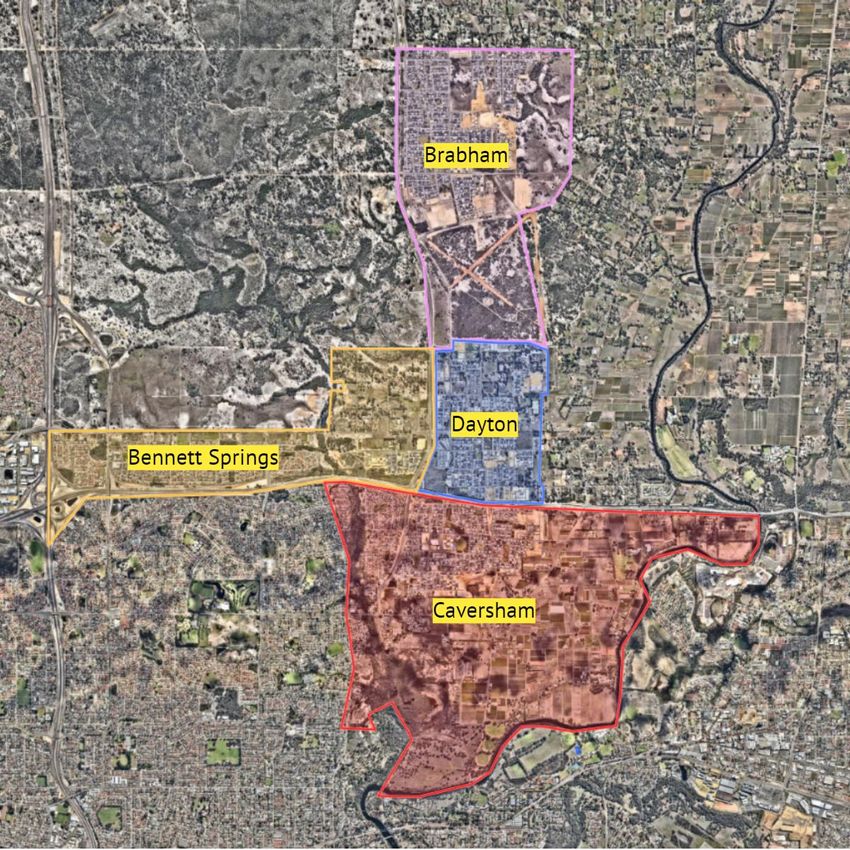
4.5. Pulling directly from the City of Swan website, we note that Brabham
is characterised as one quarter of this UGC, with Bennett Springs,
Dayton and Caversham, making up the rest.
4.6. Why is the term UGC used? In Brabham’s case, the suburb didn’t exist
pre 2010 – and there has been a concerted effort on the Government’s
behalf to establish new housing areas in Perth’s wider metropolitan
area.
4.7. As evidenced by aerial shots below, in 2010 there is no residential
development at all.
Brabham Suburb Centre 2010
Canford Hospitality Consultants Pty Ltd | Growth in Population and Residential Page 20 of 56
Development in the LocalityBottle-O Martin│Public Interest Assessment
4.8. The 2014 image evidences the start of the residential sub-division.
Brabham Suburb Centre 2014
4.9. In the four years from 2014 to 2018 a dramatic increase in completed
housing is very evident, see image below.
4.10. An aerial image from 2020 is also included which shows further
residential growth in just 2 years from 2018 to 2020.
Canford Hospitality Consultants Pty Ltd | Growth in Population and Residential Page 21 of 56
Development in the LocalityBottle-O Martin│Public Interest Assessment
Brabham Suburb Centre 2018
Canford Hospitality Consultants Pty Ltd | Growth in Population and Residential Page 22 of 56
Development in the LocalityBottle-O Martin│Public Interest Assessment
Brabham Suburb Centre 2020
4.11. Further, Brabham has only just recently been separately counted in
the Census data, with the 2016 Census being the first record.
4.12. Knowing this, it then becomes pertinent to talk about Brabham’s
rapid growth as a suburb. From its inception, to the 2016 Census,
through to 2021 predictions.
4.13. Population growth in the suburb of Brabham (from 2011 to 2016
and predicting 2021 and beyond)
4.14. Brabham is a rapidly growing highlight of Perth’s northern region.
4.15. In 2011, when the ABS was not separating Brabham as a distinct
suburb, the City of Swan recorded that only 450 persons existed
within the 1,100 hectare area.
4.16. The UGC (being Brabham, Caversham, Bennett Springs and Dayton) at
the time of the 2016 Census had 8,829 persons, with Brabham
accounting for 37.5% (3,307) of that population.
4.17. The 2016 Census also provides an in-depth look at the suburb of
Brabham, providing insight into the type of people making up the
population.
Canford Hospitality Consultants Pty Ltd | Growth in Population and Residential Page 23 of 56
Development in the LocalityBottle-O Martin│Public Interest Assessment
4.18. So, to make up a picture of the demographic that exists within the
locality, please refer to the table below.
ABS Census Brabham Western Australia
2016 Population 3,307 2,474,410
Age 28 36
Full time employment 67.6% 57.0%
Median weekly household income $947 $724
4.19. As evidenced above the Brabham demographic is a younger,
community with high employment and income levels compared to the
State. Clearly, the suburb has attracted people of a much younger
age, many of whom are in a full-time working capacity.
4.20. The City of Swan states that in 2016, 80% of the households were
owner occupied by families. (https://www.swan.wa.gov.au/Your-
Council/About-us/Local-Area-Planning/Urban-Growth-Corridor)
4.21. This pattern then, may be the cause for the population predictions
for 2021 and beyond. Below is a table comparing this growth to the
growth of Western Australia over the course of 2011 and 2016
Population UGC City of Swan Western Australia
growth
From 2016 to 2021 9,200 to 20,426 136,679 to 162,071 2,559,000 to 2,720,000
(55.0% growth) (15.7% growth) (5.9% growth)
From 2021 to 2026 20,426 – 27,440 162,071 to 189,112 2,720,000 to 2,980,000
(26.4% growth) (14.3% growth) (8.9% growth)
4.22. As clearly shown, Brabham will see population growth over the next
decade and beyond, as a part of this UGC.
4.23. Residential Development in Martin
4.24. The tables and information below is taken from the Forecast id
community website - https://forecast.id.com.au/swan/population-
households-dwellings?WebID=830 from a summary report on the City
of Swan.
4.25. Residential Development in UGC
Canford Hospitality Consultants Pty Ltd | Growth in Population and Residential Page 24 of 56
Development in the LocalityBottle-O Martin│Public Interest Assessment
Canford Hospitality Consultants Pty Ltd | Growth in Population and Residential Page 25 of 56
Development in the LocalityBottle-O Martin│Public Interest Assessment
4.26. The table above gives ForecastID’s estimate the UGC’s population and
households for the next 30 years.
4.27. As can be seen from 2016, through to 2026 and beyond, there is a
steady and significant increase in the amount of occupied private
dwellings within the UGC.
4.28. Robert Nichevich of the applicant, which is also the residential
developer in Brabham, advised there will be 3,000 occupied dwellings
in the suburb by mid-2021. Robert states the suburb is growing by
between 400 and 500 occupied dwellings per year currently.
4.29. This section has shown the locality is experiencing strong growth in
residential population, with further growth forecast in the future.
Canford Hospitality Consultants Pty Ltd | Growth in Population and Residential Page 26 of 56
Development in the LocalityBottle-O Martin│Public Interest Assessment
5 Outlet Density
5.1 The proposed Bottle-O Brabham will be located at the new Brabham
Village shopping centre at Lot 469 Palfrey Street, Brabham WA.
5.2 As stated in paragraph 2.11.1. above, the Director’s policy on Public
Interest Assessment states “Applicants will also need to
provide……….outlet density information that includes:
5.2.1 If the applicant intends to sell packaged liquor, the location
of all existing licensed premises within the locality;
5.2.2 Nature of services provided by the other licensed premises;
and
5.2.3 The level of access to, and diversity of the services.”
5.3 The following suburbs fall in whole or in part within the locality (3km
radius);
5.3.1 Brabham;
5.3.2 Aveley;
5.3.3 Dayton;
5.3.4 Henley Brook;
5.3.5 West Swan;
5.3.6 Ellenbrook.
5.4 In July 2020 the applicant searched the website of the Office of
Racing, Gaming and Liquor for all licensed premises within those
suburbs.
5.5 According to the website, there are no liquor store licences of any
kind in the suburb of Brabham where the proposed liquor store is to
be situated. Therefore, if this application is approved, the proposed
liquor store will be the first packaged liquor outlet available to the
general public in Brabham.
5.6 This is unsurprising, as Brahbam is a relatively new suburb.
5.7 So, in this way the applicant;
5.7.1 Identified all existing licensed premises within the suburbs
listed in paragraph 5.3 above.
5.7.2 The applicant then eliminated any premises which may not
trade in a manner similar to a liquor store.
5.7.3 Subsequently, the applicant eliminated any premises from
that list which is located outside the 3km radius.
Canford Hospitality Consultants Pty Ltd | Outlet Density Page 27 of 56Bottle-O Martin│Public Interest Assessment
5.8 This resulted in the following premises which may trade in a manner
similar to a liquor store which are situated in the locality.
Map Licence Ref Licence Type Premises Name Address
Number
1. 6090043265 LIQ-Special Facility Swan Valley Holiday 10070 West
Licence Cottages Swan Road,
Henley Brook
2. 602210374917 LIQ-Tavern Black Swan Winery Lot 6 3 Forest
and Restaurant Road, Henley
Brook
3. 602213655019 LIQ-Tavern Elmar’s in the 8731 West
Valley Swan Road,
Henley Brook
1
2
3
Canford Hospitality Consultants Pty Ltd | Outlet Density Page 28 of 56Bottle-O Martin│Public Interest Assessment
5.9 A report on the three existing outlets in the locality
5.10 In August 2020 Canford visited the existing relevant licensed premises
in the locality to establish whether any of those identified licensed
venues operate in a similar manner similar to the applicant’s
proposed liquor store – that is, offering a dedicated packaged
takeaway liquor facility. A dedicated packaged liquor facility is taken
to mean that there would be a dedicated section within these venues,
where packaged liquor products are displayed and where customers
are able to physically pick out what packaged liquor they would like
to purchase. This meant, that having packaged liquor behind a bar
counter where only staff of the venue could access it, would not
count.
5.11 In sections 2 & 5 of the PIA, the applicant noted the following premises
within the locality which may sell packaged liquor to the public. These
were;
5.11.1 Black Swan Winery & Restaurant
5.11.2 Elmar’s in the Valley
5.11.3 Swan Valley Holiday Cottages
5.12 To further supplement this research, Canford also conducted online
research of relevant social media and reviews, and Google imaging, to see
whether anyone had identified any of the venues as having a dedicated
packaged liquor facility.
5.13 In summary it can be concluded that;
5.13.1 Elmar’s in the Valley offers packaged takeaway liquor, but
only over the counter. Their takeaway offering consists of
their own craft beers which they make in house.
5.13.2 Black Swan winery has a cellar door where you can go in and
sample their wines, with the option to purchase bottles,
again over the counter. There is no other alcohol they offer
for purchase.
5.13.3 Swan Valley Holiday Cottages don’t offer a dedicated
packaged takeaway liquor section at all.
5.13.4 In conclusion there is no dedicated packaged liquor facility
currently trading in the locality which offers a full range
of packaged liquor products.
5.14 The applicant notes an application was lodged in respect of Liquorland
Whiteman Edge in July 2020, but is yet to be determined by the licensing
authority.
Canford Hospitality Consultants Pty Ltd | Outlet Density Page 29 of 56Bottle-O Martin│Public Interest Assessment
6 Proposed Style of Operation
6.1 As mentioned in paragraph 1.3 above, the proposed liquor store will
be part of the new 6,045sqm Brabham Shopping Village.
6.2 The proposal is for a liquor store of 145sqm.
6.3 The proposed liquor store is targeted at local residents, other people
who work in, visit, shop or otherwise resort to the locality.
6.4 There will be a catchment of residential properties to the immediate
surroundings of the subject premises. This community is expected to
account for a large portion of the customer base for the new Brabham
Shopping Village, including the proposed liquor store.
6.5 The proposed packaged liquor service will feature Swan Valley and Perth
Hills liquor producers selected by the applicant, including;
6.5.1 Riverbank Estate, 126 Hamersley Road, Caversham,
6.5.2 Mandoon Estate, 10 Harris Road, Caversham,
6.5.3 Sittella Winery, 100 Barrett Street, Herne Hill,
6.5.4 Core Cider, 35 Merrivale Road, Pickering Brook,
6.5.5 John Kosovich, 180 Memorial Avenue, Baskerville,
6.5.6 Pinelli Estate Wines, 30 Bennett Street, Caversham,
6.5.7 Vino Volta, 81 Campersic Road, Middle Swan, and
6.5.8 Old Young’s, 10581 West Swan Road, Henley Brook.
6.6 Attachment BOB3 includes three documents which provide the source
for the applicant’s stock range. The attachment includes the IBA
Private and Exclusive Label wine range, a list of locally produced wine
and spirit products and IBA’s “Stem to stern” brochure.
6.7 Whilst the applicant does not guarantee to stock all of these items all
of the time, it will stock as many of them as are in demand locally,
and therefore the list will be continually evolving. The concept is to
be agile and nimble, and to carry small batch liquor products,
especially from WA, according to the level of demand. This is
something chain liquor stores find especially hard to do.
6.8 Attachment BOB4 contains a floor plan showing how the various liquor
product lines are to be ranged throughout the store.
6.9 For the convenience of the local community the proposed liquor store
will also feature mainstream liquor products, including;
6.9.1 A range of WA red, white and sparkling wines,
6.9.2 Australian and international spirits,
6.9.3 Mainstream and boutique beers and ciders,
6.9.4 Ready to drink lines,
6.9.5 Australian and international wines and champagne, and
Canford Hospitality Consultants Pty Ltd | Proposed Style of Operation Page 30 of 56Bottle-O Martin│Public Interest Assessment
6.9.6 Liqueurs, cognacs, and fortified wines.
6.10 Further, the proposed Bottle-O Brabham will also provide and/or
offer the following attributes:
6.10.1 Easy to read in-store signage;
6.10.2 A range of liquor products that that are familiar and well-
known;
6.10.3 Competitive product prices;
6.10.4 Modern and well laid out premises; and
6.10.5 Trolley access from the supermarket.
6.11 By way of ancillary products and services, the liquor store will offer
the following:
6.11.1 A range of cool drinks, water and juice;
6.11.2 Wine tasting;
6.11.3 Ice;
6.11.4 Food and wine matching information;
6.11.5 Combined promotions with products in the IGA store;
6.11.6 Crisps and nuts.
6.12 The applicant is seeking the flexibility afforded by the standard trading
hours in the Liquor Control Act to allow it to respond to the demands of the
local community in respect of when they would like to shop for their liquor
requirements.
6.13 The applicant intends to operate the normal trading hours stipulated in
Section 98 of the Liquor Control Act 1988, which are as follows;
7.1.1. Monday to Saturday from 8am to 10pm;
7.1.2. Sundays from 10am to 10pm.
6.14 An approved manager will be in the liquor store during all trading hours
managing the day to day operations under the liquor licence.
6.15 The applicant and its staff will not allow anyone to enter or remain
on the licensed premises if they are under the age of 18 years unless
they are under the supervision of a responsible adult, or as otherwise
approved under the Liquor Control Act.
6.16 The applicant and its staff will not sell alcohol to people under the
age of 18 years.
6.17 Public health and safety posters will be displayed prominently, along
with responsible service of alcohol messages. There will also be signs
displayed encouraging customers, to respect neighbours in regard to
noise.
6.18 The applicant has a strong harm minimisation plan which will be in
place for the proposed liquor store should the application be granted.
Canford Hospitality Consultants Pty Ltd | Proposed Style of Operation Page 31 of 56Bottle-O Martin│Public Interest Assessment
7 Local Government Consultation
7.1 The applicant lodged its development application for the new
Brabham Shopping Village om 21st May 2019 ad received planning
approval on 24th February 2020.
7.2 On 24th July 2020 the applicant lodged an application for a section 40
certificate with the City of Swan. Mike Davies of Element, the
planning consultant to the applicant advises the premises is approved
as a shop under the initial planning approval, and that “liquor store”
as a use category, falls under “shop”, and therefore a section 40
should be issued without any problem or delay.
Canford Hospitality Consultants Pty Ltd | Local Government Consultation Page 32 of 56Bottle-O Martin│Public Interest Assessment
8 Background and Experience of the Applicant
8.1 Kerry and Robert Nichevich, of the applicant, have been developing
residential land since 2006 in the suburb of Brabham. They began the
process about 4 years ago to get the approvals for Brabham Village.
Final City of Swan approval was granted in February 2002.
8.2 The objective was to provide essential shopping and medical services
for the Brabham community.
8.3 Stockland’s site, which has now been sold to Coles had been promised
as a shopping centre since the Brabham development started. After
much delay it was sold to Coles earlier this year and now is being
developed.
8.4 The applicant advises that with a current community of circa 9,000
growing to probably 40,000 over the next 5 to 10 years there is a
significant need for Grocery and Medical services.
8.5 The Nichevich’s have been associated with the Valley most of their
lives, and they view this centre, with a focus on local produce, as a
wonderful way to serve the greater Swan Valley community.
8.6 Robert is a Fellow of the Institute of Chartered accountants qualified
in February 1973, and also a Fellow of the Institute of Company
Directors. He was admitted on the 1st January 1990.
8.7 Robert has had his own Chartered Accounting Practice, and currently
manages the Avonlee Subdivision in Brabham on behalf of a syndicate.
8.8 The Syndicate has a Responsible Entity that oversees the trust. This
relationship involves a thorough understanding of the rights and
obligations of acting in a trustee arrangement. Robert has had this
role since 2006.
8.9 Robert is thoroughly versed in the process and obligations of good
governance, and he and his wife are committed to the project and to
the Swan Valley.
Canford Hospitality Consultants Pty Ltd | Background and Experience of the Applicant Page 33 of 56Bottle-O Martin│Public Interest Assessment
9 Section 36B(4) of the Act – Restrictions on Grant
or Removal of Certain Licences Authorising Sale of
Packaged Liquor
9.1 Section 36B of the Liquor Control Act was proclaimed and came into
effect on 2nd November 2019. As a result of that Section 36B(4) now
states;
9.1.1 “The licensing authority must not grant an application to
which this section applies unless satisfied that local
packaged liquor requirements cannot reasonably be met by
existing packaged liquor premises in the locality in which
the proposed licensed premises are, or are to be, situated”.
9.2 In this section the applicant considers whether the local packaged
liquor requirements are reasonably met by the existing packaged
liquor premises in the locality.
9.3 In the Decision of Director of Liquor Licensing relating to Liquor and
Gourmet World, dated 19th October 2005 (attachment BOB5), in the
conclusion section, Peter Minchin (Director of Liquor Licensing)
stated;
9.3.1 “The correct test to be applied in respect of an application
for a liquor store licence under section 38(2b) of the Act was
set out by Anderson J in Liquorland (Australia) Pty Ltd v
Austie Nominees Pty Ltd (1999) 20 WAR 405 where he said at
415):
9.3.1.1 “The correct test under s38(2b)
I think that, on the proper construction of s 38,
an applicant for a liquor store licence is required
by subs (2b) to satisfy the licensing authority
that the reasonable requirements of the public
for liquor itself (or liquor of a particular type,
such as bottled table wines) and related services
cannot be provided for in the affected area by
licensed premises already existing in the area;…”
9.4 Mr. Minchin went on to quote His Honour as saying;
9.4.1 “Accessibility of existing premises (i.e. distance travelled
and time taken to get to premises) has been considered
relevant by the courts when considering the level of
inconvenience that could reasonably be expected.”
9.4.2 In Laveson Pty Ltd v Smith & Anor [2003] WASCA 286 Miller
J with whom Steytler and Parker JJ agreed, stated:
9.4.2.1 “27 There was evidence before the Licensing
Court that if residents in the western part of
Eaton wanted to access Woolworths Liquor at
Canford Hospitality Consultants Pty Ltd | Section 36B(4) of the Act – Restrictions on Page 34 of 56
Grant or Removal of Certain Licences Authorising Sale of Packaged LiquorBottle-O Martin│Public Interest Assessment
Eaton Fair, where there was a wider range of
stock than elsewhere, they would be required to
travel a return trip of 6.8km. Residents from
Clifton Park would have to drive substantially
more than 6.8km. This evidence was relevant
because in Downes Family Trust v Woolworths
(WA) Pty Ltd [2001] WASCA 382 this Court
accepted the conclusions of the Licensing Court
that in the Riverton area return Journeys of
between 2 and 8.6km to purchase packaged
liquor meant that “according to contemporary
standards” other premises could not provide for
the reasonable requirements of the section of
the public relied upon for packaged liquor
without substantial difficulty and inconvenience.
9.5 So, in summary, the applicant will feature liquor products produced
in the Swan Valley and Perth Hills (as well as mainstream product),
and it is open for the licensing authority to conclude that Swan Valley
and Perth Hills produced liquor is “liquor of a particular type”.
9.6 If the licensing authority so concludes then the minimum round trip
for a member of the public to obtain their reasonable requirement
for Swan Valley and Perth Hills liquor, would be at least 6km, as they
would most likely have to leave the locality to do so. This is because
currently there is no other packaged liquor outlet in the locality.
9.7 In respect of the proposed Liquorland Whiteman Edge the applicant
maintains the Liquorland model and product range is not known for
featuring Swan Valley or Perth Hills produced liquor. Liquorland have
some local content, but not to the range and extent proposed in this
application.
9.8 In the Supreme Court decision (Laveson Pty Ltd v Smith & Anor [2003]
WASCA 286) dated 27th November 2003 (attachment BOB6), Miller J
examined “the weight of evidence”, and stated;
9.8.1 In paragraph 33, “The appellant contends that in the light
of the evidence before the Court the learned Judge should
have concluded;
9.8.1.1 (a) The population in the affected area had a
subjective requirement for a liquor store at the
corner of Pratt Road and Old Coast Road by
reason of;
9.8.1.1.1 (i) the survey evidence in relation to
the liquor purchasing population in the
affected area (64% of whom would find
it convenient to purchase their liquor
at the corner of Pratt and Old Coast
Roads), and
Canford Hospitality Consultants Pty Ltd | Section 36B(4) of the Act – Restrictions on Page 35 of 56
Grant or Removal of Certain Licences Authorising Sale of Packaged LiquorBottle-O Martin│Public Interest Assessment
9.8.1.1.2 (ii) the size of the population in the
affected area (approaching 10,000) and
its demographics demonstrated prima
facie evidence of demand.
9.8.1.2 (b) The subjective requirement for a liquor store
at the corner of Pratt Road and Old Coast Road
was subjectively reasonable on the grounds that
the population of the affected area had grown
and continues to grow rapidly.
9.8.1.3 (c)The reasonable requirements of the public for
packaged liquor would not be met in the western
and northern parts of the affected area without
substantial difficulty or substantial
inconvenience”
9.9 His Honour concluded;
9.9.1 “The arguments on behalf of the appellant are very
persuasive and, especially in the absence of written reasons
to explain His Honour’s decision, it is very difficult to
understand how the existence and apparent force of this
evidence was not recognised by His Honour.”
9.10 The applicant argues it is open for the licensing authority to draw the
same conclusions in respect of this application as Miller J did in the
decision above, for the following reasons:
9.10.1 There is a subjective requirement for the proposed liquor
store because;
9.10.1.1 According to the Perth Market Research (PMR)
report 86% of the Facebook respondents and 88%
of the telephone survey respondents said they
would be likely or very likely to be a customer of
the proposed Bottle-O Brabham.
9.10.1.2 Both surveys showed very strong interest in the
applicant’s focus on Swan Valley and Perth Hills
liquor products (see pages 23, 24, 45 and 46 of
the PMR report. Attachment BOB9).
9.10.2 The second part of that reasoning was that a population
approaching 10,000 (with four existing packaged liquor
outlets) “demonstrated prima facie evidence of demand”. In
this application the population of the locality is estimated to
be 6,723 and growing rapidly, estimated at around 300-400
households per year, with no existing packaged liquor
outlets. So, His Honour considered 1 outlet per 2,500 people
was evidence of demand, in this application there are fewer
packaged liquor outlets per person at 1 per 6,723 people.
Canford Hospitality Consultants Pty Ltd | Section 36B(4) of the Act – Restrictions on Page 36 of 56
Grant or Removal of Certain Licences Authorising Sale of Packaged LiquorBottle-O Martin│Public Interest Assessment
9.10.3 Further in paragraph 33(b) His Honour concluded the
subjective requirement for a liquor store was subjectively
reasonable due to the growth in population in the affected
area. In this application, as shown in Section 4, the
population in the locality has grown at just short of ten times
the rate of Western Australia as a whole. Therefore, it is
open for the licensing authority to conclude the subjective
requirement for the liquor store the subject of this
application is subjectively reasonable.
Canford Hospitality Consultants Pty Ltd | Section 36B(4) of the Act – Restrictions on Page 37 of 56
Grant or Removal of Certain Licences Authorising Sale of Packaged LiquorBottle-O Martin│Public Interest Assessment
10 Section 38(4)(a) of the Act - Harm or Ill-health
10.1 Section 38(4)(a) of the Liquor Control Act (1988) asks the applicant
to consider “the harm or ill-health that might be caused to people,
or any group of people, due to the use of liquor.”
10.2 In this section the applicant assesses the risk with respect to the harm
or ill-health that might be caused to people, or groups of people
within the locality should this licence be granted.
10.3 This is a proposal for a modestly sized liquor store in a brand-new
shopping centre being built in the rapidly growing suburb of Brabham,
part of the City of Swan’s Swan Valley Urban Growth Corridor.
10.4 The Liquor Commission has found that liquor stores, when combined
(as this one is) with a supermarket are at the passive end of liquor
licence approvals.
10.5 In a decision (LC 21/2009) (attachment BOB7) confirming the Wine
Box Nedlands liquor store licence, the Liquor Commission at 4.11, on
page 13 of that decision noted;
11.1.1. “It is the Commission’s view that a liquor store licence, as
part of the Nedlands IGA grocery outlet, is very much at the
passive end of liquor licence approvals and in particular,
is unlikely to have any bearing on.... liquor consumption
practices”. (Emphasis added)
10.6 The inference here is that a liquor store combined with a supermarket
is unlikely to have a significant impact on the potential for alcohol
related harm or ill-health in a locality.
10.7 The demographics of the locality have been discussed in some detail
in section 3 of these submissions and concluded there are no
significant concerns in respect of the identified priority groups.
10.8 According to the Federal Government’s Snapshot entitled Australia’s
Health 2018 (https://www.aihw.gov.au/getmedia/7c42913d-295f-4bc9-
9c24-4e44eff4a04a/aihw-aus-221.pdf);
11.1.2. “most Australians drink alcohol at levels that cause few
harmful effects”. (Page 204)
11.1.3. “As well, fewer Australians are drinking at levels that
contribute to alcohol-related harm over a lifetime. However,
about 26% of people drink more than is recommended on a
single occasion, and they do this at least once each month.
Younger people show more promising trends when it comes to
alcohol—fewer people aged 12–17 are drinking and a greater
proportion are abstaining from drinking altogether.” (Page
165, emphasis added)
11.1.4. “The NDSHS data reveal several changes in drinking patterns
compared with those for 2013, including that:
Canford Hospitality Consultants Pty Ltd | Section 38(4)(a) of the Act - Harm or Ill-health Page 38 of 56You can also read


