2018 Impacts of the Albright-Knox Art Gallery and its AK360 Expansion Plan Part 1: Baseline - UB Regional Institute
←
→
Page content transcription
If your browser does not render page correctly, please read the page content below
Impacts of the Albright-Knox Art Gallery and
                  its AK360 Expansion Plan
                            Part 1: Baseline

                                    2018

               Prepared by
For more than 150 years, the Albright-Knox Art                        Knox’s mission and drives economic impacts, the
          Gallery (Albright-Knox) has been a cultural leader and                Albright-Knox also generates value through efforts
          contributor to the economy of the City of Buffalo,                    outside the museum that comprise additional
          the Buffalo-Niagara region, and New York State.                       components of the Albright-Knox’s identity.
          As a business, employer, and visitor destination,                     Through case studies, this research also explores the
          the museum is an economic catalyst, attracting and                    Albright-Knox’s impacts on innovation, which
          generating new revenues, supporting local jobs and                    is actively advanced through its Innovation Lab.
          infusing dollars into the economy.                                    Finally, this study offers evidence of the impacts
          Commissioned by the Albright-Knox and prepared by                     of public art on community vitality and quality
          the University at Buffalo Regional Institute, this report             of life in neighborhoods where the Albright-Knox
          offers a comprehensive economic impact study of the                   has placed public artworks in the City of Buffalo and
          Albright-Knox. It quantifies the museum’s direct                      beyond.
          and secondary economic impacts on the local,                          A forthcoming Part II of this study will examine
          regional and statewide economies.                                     how economic impacts will grow as the Albright-
          This study also looks at impacts beyond those measured                Knox implements AK360, a $125 million
          by traditional economic impact studies, such as the                   campus expansion project. It is the largest capital
          museum’s impacts on housing prices and tax                            development project ever undertaken by a cultural
          generation for local governments. While collecting,                   institution in the Buffalo-Niagara region.
          exhibiting and conserving art is central to the Albright-
                                                                                Based in Buffalo, the Albright-Knox is proximate to some
                                                                                of the most populous cities in the United States.

          Prepared by                                                                                                   MONTREAL

                                                                                                         TORONTO
                                                                                                                                   BOSTON

                                                                                                                   BUFFALO

                                                                                                                             NYC
                                                                                    CHICAGO

                                                                                                              WASHINGTON
          Cover photo credit: Blake Dawson

2   Impacts of the Albright-Knox Art Gallery and its AK360 Expansion Plan, Part 1: Baseline
Impacts of the Albright-Knox Art Gallery
                                                                                                  and its AK360 Expansion Plan
                                                                                                                 Part 1: Baseline
                                                                                                                            2018

Table of Contents

4 ABOUT THE STUDY
6    ABOUT THE ALBRIGHT-KNOX ART GALLERY
8    KEY FINDINGS
10 ALBRIGHT-KNOX ART GALLERY’S IMPACTS TODAY
        10 What are the Albright-Knox Art Gallery’s economic impacts?
        18 How do Elmwood Avenue Cultural Institutions impact home values and property taxes?
        22 Does the Albright-Knox Art Gallery’s public art initiative impact neighborhoods?
        30 What are some examples of the Albright-Knox Innovation Lab’s role and impact?

36 ENDNOTES
37 DATA SOURCES AND NOTES
41 BIBLIOGRAPHY
42 APPENDIX
        42 APPENDIX A: PUBLIC ART SURVEY
        45 APPENDIX B: REGRESSION ANALYSIS

Recommended Citation: University at Buffalo Regional Institute, State University of New York at Buffalo, School of Architecture and Planning. 2017. “Impacts of the
Albright-Knox Art Gallery and its AK360 Expansion Plan, Part 1: Baseline.”

                                                           Impacts of the Albright-Knox Art Gallery and its AK360 Expansion Plan, Part 1: Baseline                    3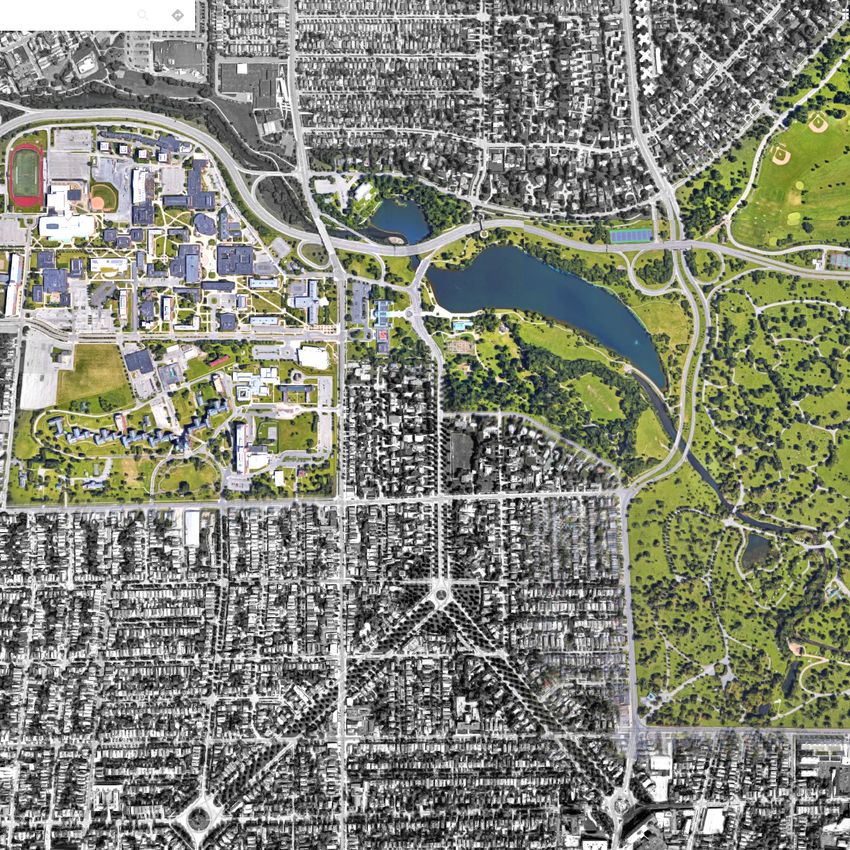
ABOUT THE ALBRIGHT-KNOX ART GALLERY

Founded in 1862 as The Buffalo Fine Arts Academy, the
Albright-Knox is the sixth oldest public art museum in
the United States. It is recognized globally for its world-
renowned collection of modern and contemporary art. The
Albright-Knox’s vast collection contains more than 7,000
works. The museum presents dynamic exhibitions that
attract broad audiences across the community and around
the globe to engage with art, ideas and one another.
The collection features works by artists such as Pablo
Picasso, Paul Gauguin, Vincent van Gogh, Giacomo Balla,
Jackson Pollock, Mark Rothko, Clyfford Still, Joan Mitchell,
Andy Warhol, Robert Rauschenberg, and Frida Kahlo.
More than 123,300 visitors came to the Albright-Knox
in fiscal year 2016. Approximately 420,000 visitors were
served through the museum’s website and 69,000 through
its social media platforms. Through the Albright-Knox
Innovation Lab and the Public Art Initiative, the museum’s
reach in the community extends far beyond its campus in
the Olmsted-designed Delaware Park at the northern end of
Buffalo’s Elmwood Avenue cultural district.

The Albright-Knox                       At the heart of its mission, the Albright-Knox exists to collect,
is a major cultural                     conserve, and exhibit art, while engaging and inspiring audiences.
and economic asset
in Western New                          Present                 Seek                    Create         Engage &    Inspire
York. Its vision is to                  exhibits,               tomorrow’s              education      empower     open dialogue
                                        performances            masterpieces            programs       widening,   and common
flourish as a hub of
                                        and programs            while                   for lifelong   inclusive   understanding
artistic and creative                   that challenge          developing              learning and   audiences
energy that enriches                    and inspire             a world                 discovery
and transforms                                                  renowned
lives. It strives for                                           collection of
excellence, innovation                                          modern and
and sustainability                                              contemporary
in achieving its core                                           art
mission.

4      Impacts of the Albright-Knox Art Gallery and its AK360 Expansion Plan, Part 1: Baseline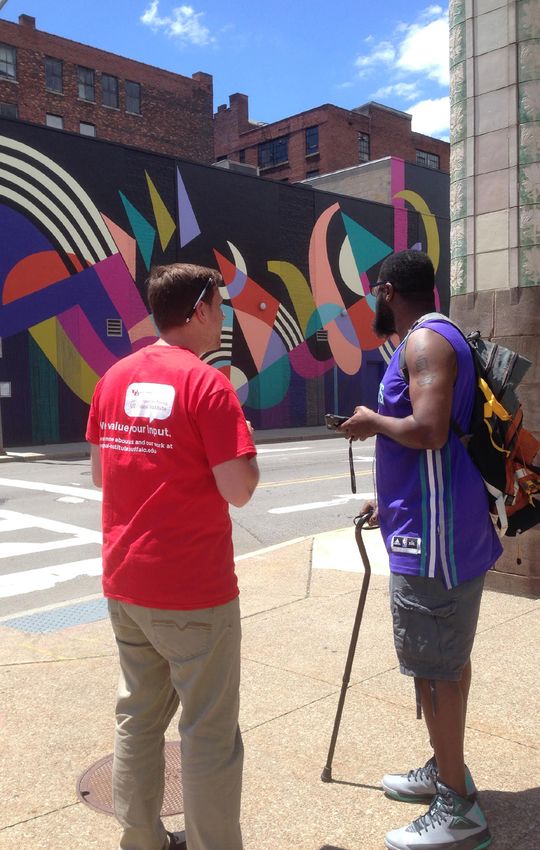
Photograph by Tom Loonan.

In support of its
                        Tourist     As a top rated attraction in Buffalo, the Albright-Knox draws more than 123,300 visitors
core mission, the
                        Destination annually through its permanent collection, special exhibits, tours, lectures, concerts, classes
Albright-Knox offers                    and other programs. Visitors spend money both inside and outside the gallery on admission
a wide variety of                       tickets, meals, accommodations, sightseeing, transportation, shopping and more.
programs that
generate value          Employer        Albright-Knox employees commonly live close by and spend their wages in the region on
and impact. This                        housing, food, transportation, recreation, and shopping. This spending supports businesses,
study presents                          employment and additional economic activity.
quantitative and        Business        Maintaining operations at the Albright-Knox requires goods and services beyond employment
qualitative evidence                    at the museum, which boosts demand for businesses that sell to the Albright-Knox from across
of these impacts on                     the city, region and state.
the city, region and    Cultural        The Albright-Knox anchors a creative hub in Buffalo’s cultural district that positively impacts
state, looking at the   Anchor          home values and property tax generation.
Albright-Knox as a:
                        Public Art      The Albright-Knox partners with artists, the City of Buffalo, and Erie County to generate public
                        Partner         art that has positive impacts at sites across the community.
                        Innovator       Through the Albright-Knox Innovation Lab, the Albright-Knox develops partnerships that explore
                                        solutions and advance research on challenges facing museums and the role they play in an
                                        evolving world.

                                                   Impacts of the Albright-Knox Art Gallery and its AK360 Expansion Plan, Part 1: Baseline      5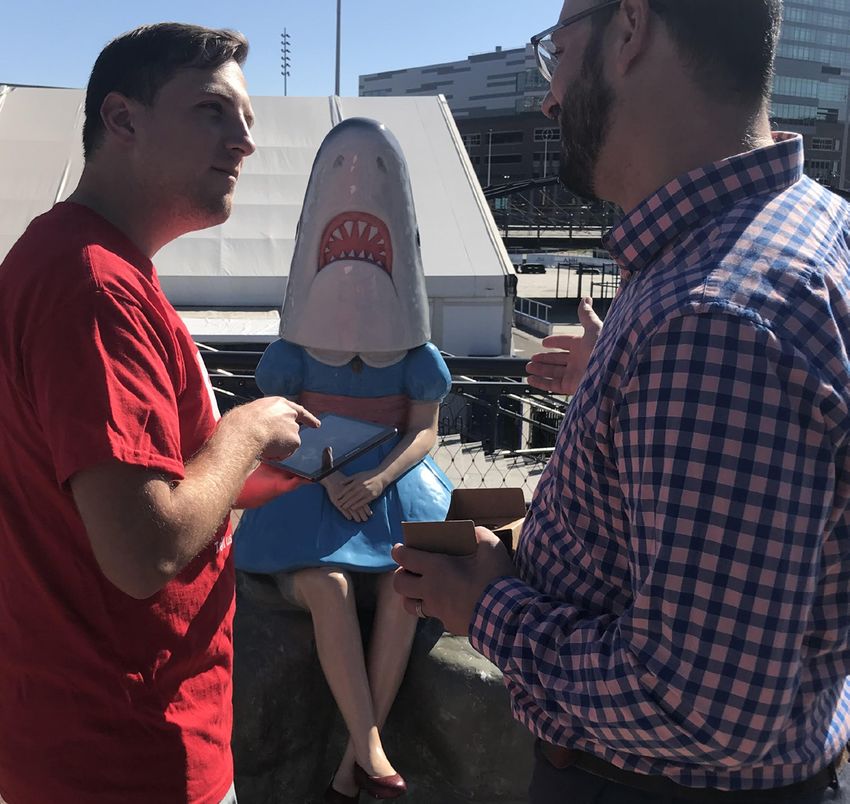
ABOUT THE STUDY                                                               GEOGRAPHIES FOR CONTEXT
                                                                              The Albright-Knox is located in                  Albright-Knox
                                                                                                                               Art Gallery
                                                                              Zip Code 14222 in the City of
                                                                              Buffalo. The museum is situated
                                                                              within Olmsted-designed                         Zip Code
This report presents a comprehensive, independent                             Delaware Park and north of                         14222
assessment of the Albright-Knox’s current economic                            Elmwood Village. This study
impacts. The study examines how Albright-Knox                                 examines the museum’s economic
operations, employees and                                                     impacts for three geographies:
visitors benefit the local,                                                   City of Buffalo, Erie County, and
regional and statewide                                                        New York State.
economies, both directly and
indirectly.                                                                   GEOGRAPHIES FOR EXPLORING IMPACTS
A survey of visitors
informed spending estimates
for visitors. The survey                                                         STATE                 REGION                    CITY
collected information on visitor origin, length of stay,
and purpose and nature of visit. Detailed revenue,
spending, payroll and employment data was supplied
by the Albright-Knox for fiscal year ending in 2016.
Additional impacts to the local community include
an analysis of how proximity to the Albright-Knox
impacts home values and tax generation.                                    New York State             Erie County          City of Buffalo
A housing price model was developed for this
component of the study using home sales and other
market data.                                                              Audiences in Western New York, the nonprofit arts and
The impacts of public art on individuals and                              culture sector in the region generates $352.1 million in total
neighborhood vitality are examined through a survey of                    economic activity and supports 10,160 full-time equivalent
more than 550 people at public art sites in Buffalo.                      jobs. 2
Through case studies, this report describes how the                       Museums also make their surrounding communities
Albright-Knox is laying the groundwork for future impacts                 more attractive places to live and encourage investment
that extend beyond its build-out plan, AK360, through                     in neighborhoods. A recent study found that the opening
research and innovation that tackle pressing regional                     or expansion of a museum in an urban area resulted in
challenges and extend our knowledge of the value of art.                  an increase in residential property values.3 By increasing
                                                                          attractiveness, offering recreational opportunities and
Finally, a forthcoming second part of this study will analyze
                                                                          providing a place for community interaction, museums
how baseline economic impacts are projected to grow when
                                                                          create a positive shift in both home and rental prices,
expansion and renovation of its campus are complete and
                                                                          providing additional property tax revenue for their localities.
the Albright-Knox reopens in 2021 as the Buffalo Albright-
Knox-Gundlach Art Museum.                                                 Museums also have economic impacts in ways we don’t often
                                                                          consider, such as the promotion of health, well-being, and—in
Underpinning this study is the notion that museums are
                                                                          the case of the Albright-Knox—workforce development. A
economic engines—they employ people locally, purchase
                                                                          recent study by the UK’s All-Party Parliamentary Group on
goods and services from within the community, and market
                                                                          Arts, Health and Wellbeing found the arts can help meet
and promote their regions. Museums are not standalone
                                                                          major challenges facing health and social care, including
institutions—they are connected to other arts and
                                                                          aging, long-term care conditions, loneliness and mental
cultural organizations, as well as local businesses and local
                                                                          health, which can help save money in the health care and
government through a web of economic exchanges.
                                                                          social assistance sector.4 Finally, through public art, the
In Western New York, arts and culture contributes                         Albright-Knox can extend into communities, fostering
hundreds of millions to the regional economy each year.1                  “creative placemaking” that animates public and private
According to the 2017 Americans for the Arts report                       spaces and facilitates economic activity through rejuvenated
Arts and Economic Prosperity 5: The Economic Impact                       structures and streetscapes and improved business viability.5
of Nonprofit Arts and Cultural Organizations and Their

6      Impacts of the Albright-Knox Art Gallery and its AK360 Expansion Plan, Part 1: Baseline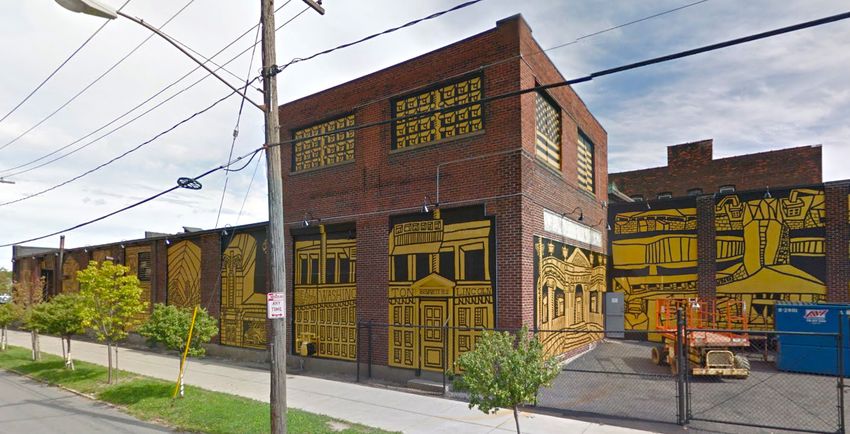
HOW ECONOMIC IMPACTS HAPPEN
$
$ $ $
$
The cycle of economic impact $ GIFTS & AUXILIARY
begins with revenues — new GRANTS PROGRAM SERVICES
dollars that come in annually to the SERVICES
Albright-Knox in a variety of ways. INVESTMENT SUPPORT
INCOME SERVICES
$
$
Spending creates more spending,
which creates more income, and ALBRIGHT-KNOX GENERATED
so on.
Dollars spent by the Albright-Knox,
$9.2M in fiscal year 2016
its visitors and employees have
a ripple effect, as those dollars DOLLARS ARE SPENT BY...
travel across the community and
create additional impacts. ALBRIGHT-KNOX VISITORS EMPLOYEES
$ $ $
Albright-Knox $ Employees pay
purchases for services from
$ supplies and
equipment
local businesses
Albright-Knox Visitors
$ Local contracts with purchase goods
$ and services
businesses local businesses
$ from local Employees
and their for a variety of
employees are services businesses purchase goods
paid wages from local
$ Albright-Knox $ businesses $
$ purchases
Visitors stay
Employees of utilities
overnight and
local businesses
$ Local
businesses buy goods and
$ pay for lodging $
and food Restaurant
purchase services hires employees
$
supplies and Hotel hires and makes
Utility worker pays
equipment employees purchases from
for health care
$ and purchases
goods
other businesses
$ $
Spending by $
employees of local
$ businesses supports Health care Spending by
other businesses company hires employees of local $
employees businesses supports
$
$ other businesses
$ $
$
$
ALBRIGHT-KNOX TOTAL IMPACT
IN THE STATE IN THE REGION IN THE CITY OF BUFFALO
$24M $16M $10M
Impacts of the Albright-Knox Art Gallery and its AK360 Expansion Plan, Part 1: Baseline 7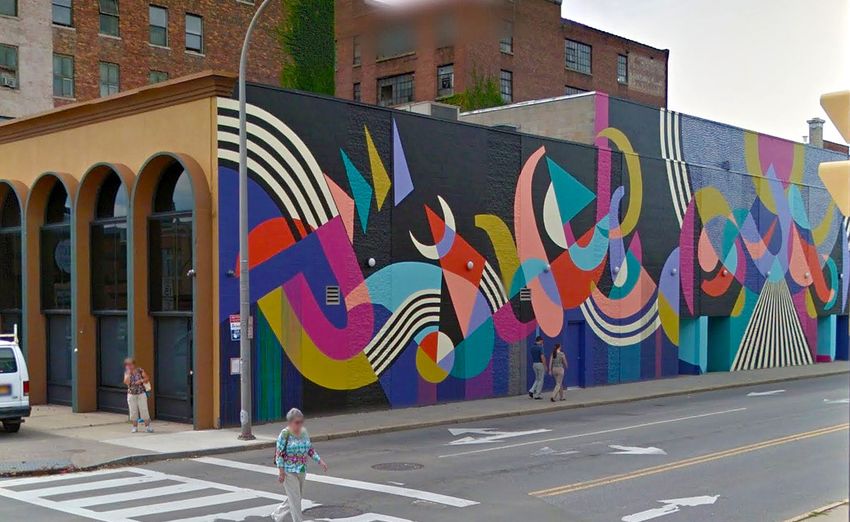
KEY FINDINGS
                  The Albright-Knox is a major cultural institution with notable impacts on the City of Buffalo,
                 Erie County and New York State. It is an economic engine that supports employment, businesses,
                 and tax revenue generation through its operations, employment and the visitors it attracts to the
                  city and region. Beyond economic impacts, the Albright-Knox enhances local communities and
                  quality of life across the region through public art and innovative partnerships that expand the
                        role of art and museums in workforce development, education, training, and health.

                 The Albright-Knox impacts the City of Buffalo, Erie
                 County and New York State by...

                 ...fostering economic activity                   The Albright-Knox, its employees and visitors generated $23.7
                 and impact.                                      million in economic impact for New York State in fiscal year
                                                                  2015-16. Nearly 70% of this statewide impact occurred in
                                                                  Erie County, and 43% of the statewide impact was in the City
                                                                  of Buffalo. Every dollar of spending generates up to $1.49
                                                                  throughout the economy, as dollars recirculate and support
                                                                  secondary economic impacts.

                 ...supporting jobs in the                        126 full- and part-time jobs were held at the Albright-Knox
                                                                  in fiscal year 2015-16. The majority of jobholders were City of
                 local, regional and statewide
                                                                  Buffalo residents. Spending by the Albright-Knox, its employees
                 economy.                                         and visitors supports additional employment in the local
                                                                  community and beyond. Altogether, a total of 227 jobs across
                                                                  New York State are directly or indirectly supported by the
                                                                  Albright-Knox.

                 ...attracting visitors and                       123,332 individuals visited the Albright-Knox in fiscal year
                                                                  2015-16. An estimated 31% of these visitors were from out of
                 supporting visitor spending.
                                                                  town, with half visiting for one day. More than half of out-of-
                                                                  town visitors indicated the Albright-Knox was very important
                                                                  to their decision to visit Buffalo, if not the primary reason for
                                                                  coming here. Total visitor spending attributable to the Albright-
                                                                  Knox totaled $6.9 million in 2015-16, or $159 per visitor party.

                 ...generating sales for business                 Businesses across New York State, and particularly those in the
                 and industry.                                    City of Buffalo and Erie County, benefit from spending by the
                                                                  Albright-Knox, its employees, and visitors. Spending totaled
                                                                  $18.8 million in fiscal year 2015-16, and an estimated 85%
                                                                  of this spending (or $16 million) reflected in-state purchases of
                                                                  goods and services. Businesses in Erie County conducted $11.3
                                                                  million in sales associated with purchasing by the Albright-
                                                                  Knox, its employees and visitors. The large majority of these sales
                                                                  in Erie County (74%) benefited businesses in the City of Buffalo.

8   Impacts of the Albright-Knox Art Gallery and its AK360 Expansion Plan, Part 1: Baseline
...increasing home values and         Proximity to the northern end of the Elmwood Avenue Cultural
                                      District, which the Albright-Knox anchors, adds up to $27,000
generating tax revenues, along
                                      to a home’s value. This price premium controls for a variety of
with other Elmwood Avenue             variables – housing characteristics, neighborhood features and
cultural institutions.                market attributes - that can affect a home’s value. The annual tax
                                      impact associated specifically with the increase in home prices near
                                      the northern end of the Elmwood Avenue Cultural District is $1.8
                                      million in tax revenues annually for the City of Buffalo, Erie
                                      County, Buffalo School District and Buffalo Sewer Authority.

...enhancing space,                   Nearly 100% of individuals surveyed at three public art sites in the
                                      City of Buffalo indicated that the neighborhood benefits from
communities, and access
                                      public art. Beautification, neighborhood image, community
through public art.                   unity, and tourism promotion are some of the ways public art
                                      enhances neighborhoods and visitor destinations. About 70%
                                      of individuals stated that the public art that exists on site today
                                      much improves the street or place compared to how it used to be.

...expanding the role of art and      Since 2014, the Albright-Knox Innovation Lab forged more than
                                      100 diverse partnerships that explore innovative ideas to
museums through innovation.
                                      advance the impact of museums. Sector-specific Innovation Lab
                                      projects have ranged from an extensive regional art education
                                      survey to developing an art-related gaming app targeted to kids.
                                      Two case studies of projects in active development shed light on how
                                      this work is expected to expand knowledge of the role of art, build
                                      networks and capacity for implementation, and impact society over
                                      the longer term.

                                   Impacts of the Albright-Knox Art Gallery and its AK360 Expansion Plan, Part 1: Baseline   9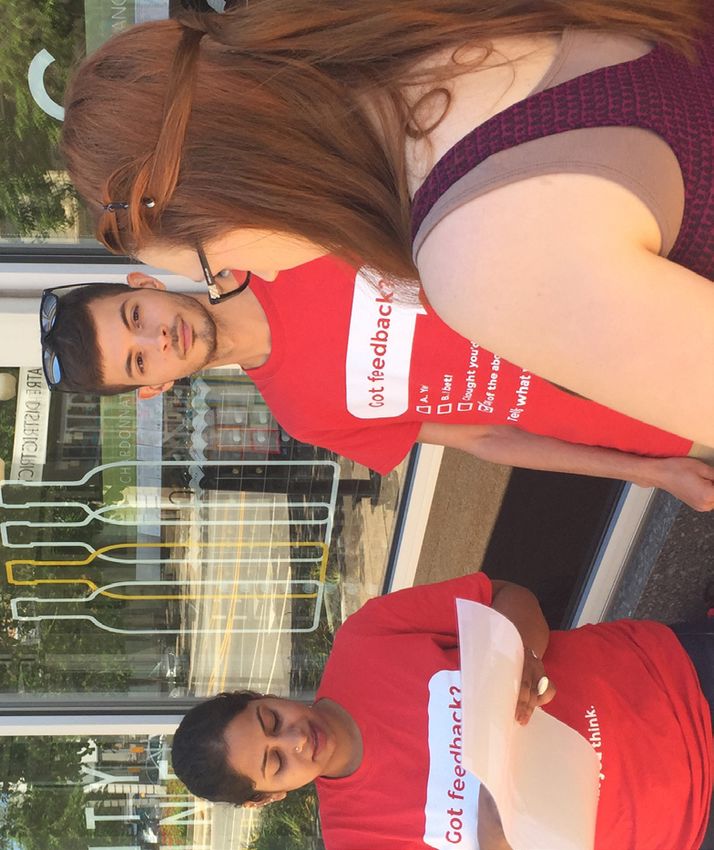
ALBRIGHT-KNOX ART GALLERY’S IMPACTS TODAY

                         WHAT ARE ALBRIGHT-KNOX
                             ART GALLERY’S
                           ECONOMIC IMPACTS?

     Distribution of Revenues by Category, Fiscal Year 2016

       20%                      60%                      20%
       Gov’t.
       Grants
                       Corporate and Foundation
                               Support
                                                         Other
                                                      Unrestricted
                                                                               21%                 8%          11%              17%
                                                         Giving

                      43%     GIFTS & GRANTS                               INVESTMENT
                                                                             INCOME
                                                                                                PROGRAM
                                                                                                SERVICES
                                                                                                               SUPPORT
                                                                                                               SERVICES
                                                                                                                               AUXILIARY
                                                                                                                               SERVICES
                                                                                                (exhibits, (memberships,         (retail,
                                                                                               educational, admissions,       fundraising)
                                                                                                 rentals)     parking lot,
                                                                                                            facility usage)

     IMPACTS OF THE ALBRIGHT-KNOX ART
     GALLERY AS A REVENUE GENERATOR                                                                  Earned revenues from
                                                                                                     Program, Support and
     The cycle of economic impact begins with revenues. Revenues bring new
     dollars to the neighborhood, city, county and state, and support spending                     Auxiliary Services together
     by the Albright-Knox. In 2016, the Albright-Knox generated $9.2 million                      accounted for more than a
     in total revenues.                                                                           third of Albright-Knox’s
     Gifts and grants accounted for the largest proportion of the total or 43%                      $9.2M total revenues.
     of all revenue dollars. Most giving to the museum came in the form of
     corporate and foundation support. Government grants accounted for 20%
     of all gifts and grants to Albright-Knox.
     Earned revenues from program services, support services and auxiliary
     services collectively generated 36% of total revenues, while investment
     income produced the final piece (21%).
     Compared to museums across the United States, the Albright-Knox
     generates comparatively higher proportions of earned revenues and
     investment income and relies on comparatively lower proportions of
     government support.1

10   Impacts of the Albright-Knox Art Gallery and its AK360 Expansion Plan, Part 1: Baseline
Albright-Knox Non-Wage Purchases by Category, Fiscal Year 2016
Other/Miscellaneous Facility Operations and
(interest, bank charges, conservation) Maintenance
2% (utilities, insurance, services,
maintenance contracts,
equipment)
19%
Programs 60%
$7.8M
(art acquisition,
installation, transportation,
marketing, meals and 18% Labor Related
catering, honoraria, etc.) (health insurance, retirement,
FICA, workman’s comp,
professional development)
IMPACTS OF THE
ALBRIGHT-KNOX ART GALLERY
AS A CONTRIBUTOR TO
NON-WAGE SPENDING
Non-wage expenditures by the Albright-Knox totaled
$7.8 million in fiscal year 2016. This total represents the Albright-Knox Spending by Geography, Fiscal Year 2016
goods and services the Albright-Knox purchases from
businesses and contractors to generate programming,
maintain facilities, and provide for employees, above
and beyond wages.
Programming-related expenditures accounted for more
than half (60%) of the total and are the museum’s largest
category of ongoing expenses. Included under this City of
umbrella are expenditures relating to art acquisition, Buffalo Erie County NYS
installation, transportation, marketing, meals and
catering. Programs $399,208 $843,979 $3,225,657
Facility operations and maintenance accounted for 19%
of the total and include utilities, insurance, building
Facility Operations $301,487 $628,465 $991,393
and Maintenance
services, maintenance contracts, and equipment.
Non-wage labor expenses account for 18% of the sum Labor-Related $426,958 $471,409 $680,952
and include the Albright-Knox’s spending on health
insurance, retirement, federal taxes and fees, and Other/Miscellaneous $46,849 $52,078 $52,078
professional development.
Businesses throughout Buffalo, Erie County and New Total Purchases $1,174,502 $1,995,931 $4,950,080
York State benefit from Albright-Knox spending. More
than 60% of the museum’s purchases in fiscal year 2016
were made from businesses within New York State.
Vendors in Erie County supplied almost $2.0 million
in goods and services to the Albright-Knox, while
businesses located in the City of Buffalo made $1.2
million in sales due to Albright-Knox purchasing.
Impacts of the Albright-Knox Art Gallery and its AK360 Expansion Plan, Part 1: Baseline 11IMPACTS OF THE ALBRIGHT-KNOX ART GALLERY
AS AN EMPLOYER
Unlike regional industries such as manufacturing,
which commonly rely on expensive equipment and $4.1M in wages
technology to maintain operations, Albright-Knox
operations are driven by human capital. for 126 employees
The museum supports 126 full- and part-time jobs in
the community. The majority of these jobs (83) are Employment by work status, Fiscal Year 2016
full time. The total also includes 43 part-time workers,
which account for 34% of total jobs.
Employee wages totaled $4.1 million in fiscal year 2016.
This total reflects an annual average wage of $45,346
per full-time worker. This is slightly higher than
Western New York’s regional average wage of $44,986
in 2016. These dollars are important because wages
support employee spending on homes, vehicles, retail,
recreation and more. Most employee spending occurs
Part-time 34%
close to home and benefits the local community. (43) TOTAL JOBS
More than half of the jobs created by the Albright-Knox (FY 2016)
are held by residents of the City of Buffalo. 15% of
workers reside in Zip Code 14222 where the Albright-
Knox is located. Exactly 37% live outside the city of 66% Full-time
Buffalo in suburban and rural areas of Erie County, and (83)
less than 10% live outside Erie County but within New
York State.
Employee’s Residence
Zip City of Buffalo Erie County New York
Code (Outside (Outside State
Zip Code 14222) City of Buffalo)
14222 (Outside
Erie County)
15% 40% 37% 9%
55% of
employees live in
the City of Buffalo.
12 Impacts of the Albright-Knox Art Gallery and its AK360 Expansion Plan, Part 1: BaselineIMPACTS OF THE ALBRIGHT-KNOX ART GALLERY
AS A VISITOR DESTINATION
Exactly 123,332 OUT-OF-TOWN VISITOR SURVEY RESULTS
individuals visited
the Albright- A visitor survey was conducted
Knox in fiscal year between November 2016
and June 2017 by the Close to 250 out-of-town
visitors completed a survey
2015-16. This total
number translates Albright-Knox Art Gallery,
into hundreds of in partnership with the
individuals a day, University at Buffalo Regional
Institute. Out-of-town visitors
on average, who are represented 31% of
drawn year-round An estimated 31% of Albright- 31% Out-of-town
total visitors surveyed Visitors
to the museum’s Knox visitors were from out of between November 2016
collection, special town according to the survey. and June 2017.
exhibitions, studio The large majority of out-of-
classes, lectures, towners came from New York
workshops, State, a neighboring state and/
concerts and other or Canada. Half lived within a
programming. The two-hour drive of the Albright- Half of out-of-town visitors surveyed
Albright-Knox is one
of the region’s top five
Knox. were day visitors.
With many visitors here from
tourism attractions “drive markets,” day trips Length of Visitor Stay in Days
for domestic and were common. More than
international visitors 51%
half said they were visiting for
according to Visit up to one day only. Another
Buffalo Niagara. 27% planned to stay 2 or 3 22%
Visitor spending on 14% 13%
days, and 22% reported being
meals, transportation, here for four days or longer.
accommodations Extended visitors included a 1 day or 2 days 3 days 4+ days
and other goods and few students who were here for less
services is a source of the academic year.
economic activity.
Out-of-town visitors
are particularly 120 mile radius
impactful because (2-hr drive)
they are more likely to
stay longer and spend
Half of out-of-town visitors surveyed
more. were within a 2-hour drive.
Visitor Origin by Postal Code
1 dot represents 1 Postal Code
Impacts of the Albright-Knox Art Gallery and its AK360 Expansion Plan, Part 1: Baseline 13OUT-OF-TOWN VISITOR SURVEY RESULTS
Where visitors stay, how they get around, and what else
they do in the Buffalo-Niagara area are important in
considering the economic impacts of visitation on the The majority of out-of-town visitors
economy. An estimated 36% of Albright-Knox visitors
from out-of-town stay at least one night in a hotel, with
surveyed traveled in their own car.
the majority of these visitors here one or two nights. % Visitors by Mode of Travel
Nearly all visitors traveled by car. Many were here from
drive markets, and the majority of out-of-towners at 61%
the Albright-Knox used their own vehicle to get around.
Six percent said they were using public transit.
18%
Nearly 20% of visitors reported same-day plans to 12% 6% 3%
visit other area attractions, evidence that the region’s
rich cultural landscape helps to extend visitor stays. My car A local friend or Rental Public Other
family member’s car Car transportation
Destinations mentioned by visitors included Niagara
Falls, Darwin Martin House, Buffalo Science Museum,
Burchfield Penney Art Center, Forest Lawn Cemetery,
Elmwood Village, Buffalo Naval Park and the Buffalo
Sabres. Visitors lodging in a hotel or motel most
For a majority of out-of-towners, the Albright-Knox commonly stayed one or two nights.
was influential to their decision to visit Buffalo. Exactly
35% said the Albright-Knox was the primary reason for
their visit, and another 18% said that while it wasn’t the
only reason, it was very important to their decision.
Out-of-town
38% visitors staying in
a hotel or motel
More than half reported that the
Albright-Knox was very important
to their decision to visit Buffalo, if # of nights
not the primary reason. 1 night 2 nights 3 nights 4 nights 5+ nights
26% 36% 16% 6% 18%
% Visitors by
Albright-Knox Motivating Factor Albright-Knox
less of a factor for Trip more of a factor
Not an Not that One of Very Primary 35% of out-of-town visitors
indicated the Albright-Knox
influential important, many important, reason for
reason but I was reasons to but not my visit
was the primary reason for
aware of it visit the only
reason
14% 10% 24% 18% 35%
Note: Out-of-town visitor spending is included in the Albright-Knox’s economic
their visit.
impact to the extent visiting the Albright-Knox is a motivating trip factor.
14 Impacts of the Albright-Knox Art Gallery and its AK360 Expansion Plan, Part 1: BaselineVisitor Profiles
Spending Per Party per Visit
MEALS LODGING TRAVEL ENTERTAINMENT/
Type of Visitor Assumptions SHOPPING TOTAL
Local
Travel party of 2. Attending from local
area. Eat lunch or dinner out.
$33 $0 $5 $10 $48
(An estimated 42,558 visitor parties.)
Travel party of 2. Visiting from out of
town but do not stay overnight. 18%
$67 $0 $11 $25 $102
Day Only visit another area attraction.
(An estimated 9,745 visitor parties.)
Travel party of 2 from out of town
$224 $430 $65 $89 $807
Overnight, and staying overnight in a hotel or
motel. Eat meals out and visit 2 other
Hotel attractions.
(An estimated 6,879 visitor parties.)
Travel party of 2 from out of town. Stay
$300 $0 $71 $129 $500
Overnight, overnight, but not in a hotel or motel.
Eat most meals out and visit 2 other
Other attractions.
(An estimated 2,484 visitor parties.)
Note: Various surveys and assumptions informed visitor spending profiles. See Data Sources and Notes for details.
How much visitors spend in the region depends on various hotel are here for three nights, on average, while overnight
factors including length of stay, type of accommodations, visitors who stay with family and friends are here for 4-5 days.
purpose of trip, and travel party size. Average visitor spending in the region is $159 per party per
Four visitor profiles estimate spending for the Albright-Knox’s visit, ranging from $48 per party per visit for local visitors
123,332 visitors. Local visitors are residents who visit the art to $807 per party per visit for out-of-towners who stay in a
gallery and purchase a meal at a nearby restaurant immediately hotel. Total visitor spending is estimated to be $9.8M with
before or after their visit. Day only visitors are here from drive $6.9M (70%) attributable to the Albright-Knox. Attributable
markets. They purchase two meals at local establishments but visitor spending was estimated based on the extent to which
do not stay overnight. An estimated 18% of day-only visitors the Albright-Knox was a motivating factor for the trip. Total
visit another area attraction. Those who stay overnight in a visitor spending in the community exceeds what the Albright-
Knox spends on operations.
Impacts of the Albright-Knox Art Gallery and its AK360 Expansion Plan, Part 1: Baseline 15TOTAL ECONOMIC IMPACTS
OF THE ALBRIGHT-KNOX ART GALLERY
Spending by the Albright-Knox, its employees and
visitors generated a total economic impact of $23.7
million on New York State’s economy. Nearly 70% of
this is captured in Erie County where spending has a
total economic impact of $16.3 million. The economic
impact on the City of Buffalo, where the Albright-Knox
is located, is $10.3 million.
The Albright-Knox directly and indirectly generates
227 jobs across New York State. This includes the
126 full- and part-time jobs at the museum and an
additional 101 jobs across the city, region and/or state
that are supported from the “spin-off” in economic
activity fueled through spending by the museum, its
employees and visitors. The majority of jobs created
directly or indirectly by the Albright-Knox are held
by residents in the City of Buffalo. Every job at the
museum supports additional employment beyond
the museum’s walls across New York State. This is the
employment multiplier effect.
The statewide spending multiplier is 1.49. For
every dollar infused in the statewide economy by
the Albright-Knox, its employees and visitors, an
additional $0.49 in spending results from purchases
made by the businesses that benefit from the Albright-
Knox. The largest employment impacts benefit
businesses in the hospitality and tourism industry:
restaurants, retail establishments, hotels and motels.
Meanwhile, the real estate and housing market is
among the industries that benefit the most from
employment supported by the Albright-Knox in terms
of economic output.
16 Impacts of the Albright-Knox Art Gallery and its AK360 Expansion Plan, Part 1: BaselineCity of Erie New York
Buffalo County State
TOTAL SPENDING
Sum of purchasing by the Albright-Knox, its
employees, and visitors in Fiscal Year 2016. $18.8M (across all geographies,
including out of state)
DIRECT SPENDING
Purchases made by the Albright-Knox, its employees and
visitors in the City of Buffalo, Erie County and NYS. $8.4M $11.3M $16.0M
ADDITIONAL ECONOMIC ACTIVITY
Secondary impacts—direct and induced—associated
with direct spending by the Albright-Knox, its $1.9M $5.1M $7.8M
employees and visitors.
TOTAL ECONOMIC IMPACT $10.3M $16.3M $23.7M
EMPLOYMENT
Full- and part-time employment at the Albright-Knox
by location of employee residence. 69 115 126
EMPLOYMENT FROM ADDITIONAL
ECONOMIC ACTIVITY
Jobs supported by secondary impacts or the
49 54 101
businesses that provide goods and services to the
Albright-Knox, its employees and visitors.
TOTAL EMPLOYMENT 118 169 227
DIRECT SPENDING MULTIPLIER
The increase in spending in the economy for every
dollar directly spent by the Albright-Knox, its 1.23 1.45 1.49
employees and visitors.
Impacts of the Albright-Knox Art Gallery and its AK360 Expansion Plan, Part 1: Baseline 17ALBRIGHT-KNOX ART GALLERY’S IMPACTS TODAY
HOW DO ELMWOOD AVENUE
CULTURAL INSTITUTIONS
IMPACT HOME VALUES AND
PROPERTY TAXES?
Buffalo cultural institutions can be found Determining the price premium of homes
in all corners of the city, but the location of near the northern end of the Elmwood
the Albright-Knox is unique. The Albright- Avenue cultural district involved an in-
Knox is one of several nearby prominent
depth study of more than 2,500 home
institutions located at the northern end of
the Elmwood Avenue cultural district. The prices from 2012 to 2017. To target
Albright-Knox is an influential anchor impacts related to location only, several
among these world-class art, education, other housing, neighborhood and market
architecture and greenspace attractions that factors were controlled for, including:
draw visitors from across the city, region
and beyond.
While the northern end of the Elmwood HOUSING CHARACTERISTICS
Avenue cultural district boasts a one-of-a- Number of bathrooms
kind collection of institutions, its location
in the city is unique as well. Typically, Number of bedrooms
cultural institutions are concentrated in Home size (square feet)
more dense urban cores or central business
districts, whereas the Albright-Knox—and Number of units (single-family or two-
its companion institutions—are located family)
in close proximity to several historic
neighborhoods. This creates a market
premium for houses located nearby. NEIGHBORHOOD CHARACTERISTICS
Median household income
Violent crimes (number)
MARKET CHARACTERISTICS
Average days on market (city-wide
average on a monthly basis)
18 Impacts of the Albright-Knox Art Gallery and its AK360 Expansion Plan, Part 1: BaselineThe northern end of the Elmwood Avenue
cultural district is a one-of-a-kind location.
Albright-Knox
1
Art Gallery
2
3
1 6
4
5
7
The symbiotic relationship between the Albright-Knox and other cultural
amenities has created a unique destination in the city.
2 3 4 5 6 7
Buffalo Buffalo State Burchfield Richardson Delaware Park Forest Lawn
History College Penney Art Olmsted Cemetery
Museum Center Complex
Impacts of the Albright-Knox Art Gallery and its AK360 Expansion Plan, Part 1: Baseline 19Proximity to the northern
end of the Elmwood Avenue
cultural district adds to
home values.
Impact on home prices
When compared to homes across the City of Buffalo, those that outweigh their proximity to the northern end of the
closest to the northern end of the Elmwood Avenue cultural Elmwood Avenue cultural district.
district sell for a premium of up to $27,000. These homes are The map on the next page shows the distribution of housing
worth more than they would be in a similar neighborhood in premiums. Greatest impacts are on home values in the
Buffalo with similar market conditions except for proximity neighborhood just south of the Albright-Knox and Delaware
to a cultural district. This premium is fully realized for Park. Overall, the northern end of the Elmwood Avenue
homes closest to the Albright-Knox, while the premium cultural district reaches 3,997 homes between Hertel Avenue
drops off as the distance from the Albright-Knox increases. at the north, Main Street on the east, West Ferry Street to the
Homes that are just outside the impact area begin to be south, and Grant Street on the west.
more strongly influenced by other neighborhood factors
Impact on tax revenues
Annual tax impacts associated with the boost in
The additional premiums that home owners living close home values
to the northern end of the Elmwood Avenue cultural
district enjoy also add to the city and county tax base.
Jurisdiction Total Annual Tax Revenue,
Increased home values—and higher property assessments—
2016-17
contribute to tax revenue for the City of Buffalo, the
Buffalo School System, The Buffalo Sewer Authority and Erie County $321,849
Erie County. In total, the northern end of the Elmwood
Avenue cultural district has an annual impact of $1.76 City of Buffalo $673,256
million on local tax revenues.
Buffalo Schools $678,093
Buffalo Sewer Authority $82,406
Total Tax Revenue $1,755,603
Source: UBRI analysis of tax rates provided by the City of Buffalo Department of Assess-
ment and Taxation.
20 Impacts of the Albright-Knox Art Gallery and its AK360 Expansion Plan, Part 1: BaselineDistribution of Home Value Premiums
Hertel Ave
Amherst St
198
2
3 Albright Knox
Art Gallery
1
4 6
5
Grant St
7
Elmwood Ave
St
in
Ma
ve
a re A
N
Richmond Ave
Delaw
W Ferry St
Price premium due to Institutions at the northern end of the
proximity to cultural district Elmwood Avenue cultural districtALBRIGHT-KNOX ART GALLERY’S IMPACTS TODAY
DOES THE ALBRIGHT-KNOX
ART GALLERY’S PUBLIC
ART INITIATIVE IMPACT
NEIGHBORHOODS?
[P]ublic art...
Public art can be used to enhance
landscapes, brighten gateways, foster civic
life, contribute to a cultural destination has as its goal
a desire to
and identity, and offer work opportunities
for artists. While the roles of public art are
broad and diverse, its impacts are not well engage with its
audiences and to create
documented.
As part of this study, the Albright-Knox
sought to explore the neighborhood impacts spaces—whether
of its Public Art Initiative. Launched in
2013, twenty public art works have been
material, virtual or
installed across the City of Buffalo and Erie imagined—within which
County, at the time of this writing. Artists’
work can be found on vacant buildings,
people can identify
inside public transit stations, at visitor themselves, perhaps by
hubs, in parks and libraries, on commercial
buildings, and more. The works include
creating a renewed
murals, sculptures and structures created by reflection on community,
local and visiting artists.
on the uses of public
A survey conducted at three sites in Buffalo
reveals that public art is not only noticed spaces or on our
and positively perceived, but also fosters behaviour within them.1
dialogue and shapes traveling behavior. It
is also understood to have tangible positive
impacts on neighborhoods.
22 Impacts of the Albright-Knox Art Gallery and its AK360 Expansion Plan, Part 1: Baseline20
17
20 public art 3
works have been
17
15 10
14
placed at sites 15
14 1
5 18
around Buffalo
17
17 7 17
2 15 6
and Erie County 20
8
4
14
17 City of 17
since 2014. 19 17 Buffalo 15
13 15
12
Currently on View Previously on View 9 17 17
15
Some public art works are located at more than one site and
are mapped at all locations where they have been installed. 11
16
1 2 3 4 5 6 7
John Baker, Julia Betsy Casanas. Bunnie Reiss. Keir Johnston Shantell Martin. Shasti O’Leary Alice Mizrachi.
Bottoms, Chuck Patria, Será Magic Buffalo. and Ernel Dance Everyday. Soudant. Gut Dream Keepers.
Tingley, and Porque Quisiera 2017. Martinez. 2017. Flora. 2017. 2016.
Edreys Wajed. Que Vueles, Que Welcome Wall.
The Freedom Sigue Siendo 2017.
Wall. 2017. Tuyo Mi Vuelo.
2017. Surveys were
conducted at
these three public
art sites.
8 9 10 11 12 13
Jessie and Roberley Bell. Daniel Galas. 72 Charles Clough. Casey Riordan Jaume Plensa.
Katey. Noodle Locus Amoenus. Jewett. 2016. Hamburg Arena Millard. Shark Silent Poets.
in the Northern 2016. Painting. 2014. Girl. 2013. 2012.
Lights. 2016.
14 15 16 17 18 19 20
Amanda Browder. Jenny Kendler. Shayne Jenny Kendler. Kaarina Tape Art. Buffalo Matthew
Spectral Locus. Milkweed Dark. Natural Rewilding New Kaikkonen. We Caverns. 2014. Hoffman. You
2016. Dispersal Conditions. York (Community Share a Dream. Are Beautiful.
Balloons. 2015. 2015. Seed Stations). 2015. 2014.
2015.
Note: Freedom Wall was completed in September 2017 and not available as a potential survey site for this study.
Impacts of the Albright-Knox Art Gallery and its AK360 Expansion Plan, Part 1: Baseline 23A SURVEY WAS CONDUCTED AT
THREE PUBLIC ART SITES IN THE
CITY OF BUFFALO.
About the Survey
The perspectives of more than 550 residents,
workers and visitors were captured through a survey
at three sites in Buffalo where the Albright-Knox’s
Public Art Initiative has installations.
Survey takers viewed how the site looked before the
public art was installed, using a Google Cardboard
viewer and Street View technology, and they were
given an opportunity to comment on the change.
Surveys were conducted 7 days a week over a
4-week interval during June and July 2017. The
first 200 respondents received a complimentary
admission ticket to the Albright-Knox.
24 Impacts of the Albright-Knox Art Gallery and its AK360 Expansion Plan, Part 1: BaselineBEFORE AFTER
2014 2016
Daniel Galas. 72 Jewett. 2016.
2015 2016
Jessie and Katey. Noodle in the Northern Lights. 2016.
2015 2016
Casey Riordan Millard. Shark Girl. 2013; installed 2014,
and reinstalled 2016.
WHAT INFLUENCE CAN Daniel Galas. 72 Jewett. 2016.
PUBLIC ART HAVE ON
PUBLIC SPACES? Jessie and Katey. Noodle in the
552 participated in Northern Lights. 2016.
surveys conducted
PUBLIC ART
at 3 public art sites SITES IN
BUFFALO, NY Casey Riordan Millard. Shark Girl. 2013.
from June-July 2017
Impacts of the Albright-Knox Art Gallery and its AK360 Expansion Plan, Part 1: Baseline 25FINDINGS I attend school
near here
1%
42% 11% 42% 4%
Who visits public art sites around What brings them to the
Erie County? neighborhood?
I am visiting for
services,
I live
nearby
I work nearby Other
shopping,
Public artSURVEYED
PEOPLE reaches audiences that are similar in demographics More than 50%dining and/or
of those surveyed at the three public art sites
AT PUBLIC ARTthat
SITESthe Albright-Knox attracted to the art leisure
to the visitors reported being in the neighborhood for shopping, leisure, or
gallery during 2016-17. Those surveyed at the three public
VISITORS TO services. Nearly 40% indicated they work nearby, while only
ALBRIGHT-KNOX (FY 2016-17)
art sites selected for this study were PEOPLE SURVEYED
16% said they lived near the public art survey site. Less than 5%
POPULATION
highly OF mostly white, and
educated, said they Over
attended school nearby
ERIE COUNTY (2015) AT PUBLIC ART SITES
eight of out tenorsurvey
were inrespondents
the area for other
said they w
predominately female. reasons.
VISITORS TO
ALBRIGHT-KNOX (FY 2016-17)
neighborhood around the public art for work or se
POPULATION OF
ERIE COUNTY (2015) What brings you to this location?
100%
AGE
Visiting for shopping, 80%
54%
leisure, services 18-34 35-64 65+
18-34 35-64 65+ Works nearby 38% 60%
Lives nearby 16% 40% 18-34
18-34 35-64 65+ Less than
Other 3%5+ years
1-5 years 1 year 20%
Attends school
1%
ETHNICITY 22% nearby 49% 17% 11%0%
76% 18-34 35-64 65+
White, Not Applicable
81%
Non-Hispanic (do not live, work,
76% 100%
or attend
24% school in this18-34
The majority of respondents reported relatively long-standing
Non-white, neighborhood)
19% 80%
roots in the neighborhoods. Nearly 60% reported living, working
including Hispanic
24% or attending school there for five or more years. Nearly 25% said
they were connected to the neighborhood through their60% home,
workplace or school for one to five years. Only 18% reported a
EDUCATIONAL ATTAINMENT relationship with the site of one year or less. 40%
AT PUBLIC ALBRIGHT- ERIE Among survey respondents who said they20% work, live or a
ART SITES KNOX COUNTY How long have you lived, worked or attended
in the neighborhood,
school in the area? the majority have been there fo
HS or Less 15% 14% 38% 0%
Non-white, including Hispanic
Other
Female
Male
Bachelor's Degree or more
Some College/Associate's Degree
HS or Less
White, Caucasian
Some College/
Associate’s Degree
23% 24% 30% 5+ years 59%
Bachelor’s Degree or
62% 62% 32%
Other
Female
Male
Bachelor's Degree or more
Some College/Associate's Degree
HS or Less
Higher 1-5 years 23%How many notice the public art and how does it engage them?
Nearly 80% of survey respondents indicated that they noticed To assess the extent to which public art engages those nearby,
the public art as they were passing by that day, before they were respondents were asked whether they ever had a conversation
surveyed. Nearly the same percentage indicated they noticed the with someone about the public art. About 60% indicated they
public art before the day of the survey. had. The percentage was highest (72%) at Shark Girl, an attraction
at Buffalo’s Canalside that has become a destination point
Did you notice the art as you were passing by? for visitation and photos. It was slightly lower (62%) at Tri-
Main Center, a business hub, where some survey respondents
described watching the public art go up one summer and
having the opportunity to meet and talk with Daniel Galas, the
22% artist and creator of 72 Jewett. In the Theatre District, 34% of
NO respondents reported conversing with someone about the public
art existing there.
YES
78%
Have you had a conversation with someone about it?
To understand how public art influences individual behavior
41% NO
and traveling patterns, survey respondents were asked if they go 59% YES
out of their way to pass by the public art piece about which they
were surveyed. Across the three sites, nearly 40% indicated that
they did. Percentages were highest at Shark Girl (58%) and lowest
at Theatre District’s Noodle in the Northern Lights (23%).
Did you go out of your way to pass the public art?
39% NO
61% YES
Impacts of the Albright-Knox Art Gallery and its AK360 Expansion Plan, Part 1: Baseline 27How does public art impact individuals?
Survey takers were asked how the public art makes them feel. More than 40% of survey takers described how the public art
More than 90% described a positive feeling, mentioning, for generated positive emotions for them, making them feel, for
instance, that it makes them feel cheerful, proud of the city or instance, happy, optimistic or creative. Another 17% described
happy. Less than 10% of respondents described feeling neutral how the public art produced positive feelings about the street,
or negative towards it. neighborhood or city. For some, it was a sign of investment and
turnaround; for others, it made the area feel more welcoming,
vibrant and open to interaction. Another 40% reported feelings
directed towards the art itself and/or the artist.
What type of feelings does it create? Does it create feelings about...
7% 2%
42% 40%
...yourself? ...the art or
91% 17% artist?
“ Happy to see this
“
kind of thing. Makes
me feel grateful.” Makes me feel
intrigued about the
“
artist’s inspiration.”
POSITIVE NEUTRAL NEGATIVE ...the place?
I feel happy, lot
91% 7% 2%
“
of creative emotions,
“
makes me want to It makes me
paint.” Took away an feel happy that i
eyesore, makes [the] work across such a
“
neighborhood feel like beautiful thing. I am
“ “ “
I feel like I people care about it.” proud of the artist.”
It makes me I feel neutral Makes me feel would want to do
“ “
feel proud of to it, although I confused...” something around this
neighborhood.” It’s more pleasant Shark girl artwork
“
the city for the enjoy the colors is very humorous.”
and vibrant rather
artwork.” and details. Yet, I Looks
“
than a dull wall.
“
would have done amateur.”
“
It gives me a Brings life to the
“
Makes me a different type of sense of optimism.” whole street.” Curious as to
cheerful as I like art piece for this Not my type of how the artist came
the colors.” space.” art.”
“
up with something
“ “
Makes me want unusual.”
It makes me No feelings, to see more art in
happy to see that not colors I like…” Buffalo.”
“
somebody took
“
the time to bring Does not make
Gives a little bit of
change to the me feel anything.” pride to the city and
place.” the area.”
28 Impacts of the Albright-Knox Art Gallery and its AK360 Expansion Plan, Part 1: Baseline42% 40%
How
17%
does public art impact How do the
neighborhoods? survey results
Nearly 100% of survey takers believe the neighborhood
vary by location?
benefits from the public art. A large majority (71%) Canalside Theatre Tri-Main
indicated the site is “much improved” with the addition (n=219) District Center
(n=166) (n=167)
of the public art. Beautification and neighborhood image
were the most common neighborhood benefits of public Demographics
art described by survey respondents. Age 18-34 37% 42% 37%
Age 35-64 56% 52% 54%
Does the neighborhood benefit in any way from Age 65+ 6% 6% 10%
the public art being present? At least some college and/or bachelor's 90% 81% 83%
degree
White, Non-Hispanic 87% 62% 64%
Yes
Non-white and/or Hispanic 13% 38% 36%
No Male 36% 62% 44%
98% Not sure/ Female 64% 38% 54%
No opinion
Connection to Neighborhood
Most common reason for being at or Visiting for Work Work
around the public art site services, nearby nearby
shopping, (45%) (71%)
What is the impact on the street/place dining or
leisure
appearance from how it used to be? (76%)
Engagement with public art
Much improved 71% % saying they noticed the public art 87% 70% 74%
while passing by
Somewhat improved 22% % saying they have had a conversation 76% 34% 62%
with someone about the art
Neutral 6%
% saying they go out of their way to pass 58% 23% 34%
Somewhat worse 1% by the art
Impact on individuals
Much worse 0% % with positive feelings about the art 45% 34% 30%
% with positive feelings about the place 7% 19% 29%
% with positive feelings about the public 37% 39% 32%
art piece, art in general or artist
In what ways does the neighborhood benefit from
the public art? Impact on neighborhood
% saying area is "much improved" from 66% 71% 78%
Beautification 26% how it used to be
Neighborhood image 21%
Other 12% Top 3 neighborhood benefits
Community unity 11% #1 #2 #3
Local pride 10% Canalside Beautification Neighborhood Image Community Unity
Quality of life 8% (21%) (18%) (17%)
Promotes visitation, tourism 7% Theatre Beautification Neighborhood Image Local Pride (9%)
Street safety 3% District (30%) (22%)
Benefits arts industry, local artists 2% Tri-Main Beautification Neighborhood Image Quality of Life
Center (28%) (22%) (10%)
Impacts of the Albright-Knox Art Gallery and its AK360 Expansion Plan, Part 1: Baseline 29ALBRIGHT-KNOX ART GALLERY’S IMPACTS TODAY
WHAT ARE SOME EXAMPLES
OF THE ALBRIGHT-KNOX
INNOVATION LAB’S ROLE
AND IMPACT?
Immediately following his arrival in Buffalo focus on preservation and Buffalo’s historic built
in 2013, Peggy Pierce Elfvin Director of the environment; the other exploring the impact of art
Albright-Knox, Janne Sirén, appointed a team of on healthcare and patient well-being. Each Albright-
staff to explore ideas surrounding innovation and Knox Innovation Lab project has the potential
museums. Central to the work of the team was the to generate long-term economic impact locally,
search for answers to some pressing questions: regionally and globally.
• Can contemporary art museums apply their skill
and acumen in seeking out new artistic innovations
ABOUT THE INNOVATION LAB
to areas of operations outside curatorial practice?
• Should museums engage in research and Established
development activities that extend beyond their 2014
collections? Mission
• As museums and societies evolve in an era of To engage a broad-based series of intellectual
rapid social and technological change, how should collaborations across an array of disciplines in
the Albright-Knox evolve to meet the needs of its the arts, sciences, and technology to explore
community in the twenty-first century? new ideas and develop solutions to challenges
Months of extensive research began to highlight confronting museums and societies locally,
the fact that art museums are uniquely positioned regionally, and globally.
to bring together the diversity of skills and the Vision
resources necessary to take new, innovative and
To serve as a catalyst for creativity and innovation
creative approaches to solving urgent problems
in their communities; to explore the real-world that develops new and dynamic approaches to
potential impact of the visual arts on quality of pressing issues in museums and contemporary
life; and to bring together an array of disciplines society. The Lab strives to define new models for
in the arts, sciences, and beyond to form unique museums in the twenty-first century as productive
collaborative partnerships. and engaged creative hubs at the center of social
These early insights formed the basis of the and civic vitality.
Albright-Knox Innovation Lab, which was officially Objective
founded in 2014. It is believed to be the only
interdisciplinary research and development arm of To catalyze new inter-disciplinary ideas that solve
an art museum in existence today. complex problems facing museums and society.
During the summer of 2017, the Albright-Knox Geographic Scope
Innovation Lab had two important projects in The Albright-Knox Innovation Lab works on issues
active development, one bringing together multiple facing the Buffalo Niagara region that have
community partners and organizations to provide potential global impact.
artisanal training in construction trades with a
30 Impacts of the Albright-Knox Art Gallery and its AK360 Expansion Plan, Part 1: BaselineSince 2014, the Albright-Knox Innovation Lab has
explored new ideas across a variety of
disciplines with two projects in active
ARTS
EDUCATION
development by the summer of 2017.
SOLUTIONS:
WORKFORCE
DEVELOPMENT knowledge creation/
Brainstorm intellectual property
Topical Focus
HEALTH & Areas
HEALING
VISUAL
LITERACY
Screen
the Ideas
...advanced
5 ideas
for development
Research
...partnered
with 119
individuals across
Develop
40 entities
Project/ (universities, businesses, non
Prototype SOLUTIONS: profits, individual artists,
museums, etc.)
expanded
Albright-Knox
...raised $816K
capacity through for moving ideas into action
partnerships (since FY 2013/14)
Implement in the Community
SOLUTIONS:
new training
programs ...will train and
educate 30
people in FY 2017-18
Impacts of the Albright-Knox Art Gallery and its AK360 Expansion Plan, Part 1: Baseline 31CASE STUDY #1
How the Innovation
Lab supports
workforce
development
The city of Buffalo originates from the late 18th century.
Following completion of the Erie Canal in 1825, the city entered
a period of rapid growth, becoming one of the most populous
and prosperous cities in the U.S. by the turn of the twentieth
century. By the middle of the last century, due to a number of
factors that include suburbanization and de-industrialization,
the city’s economy and population entered a sustained period
of decline. While the city’s former prosperity fostered a
building boom, a lack of investment during the downturn left
a remarkable built heritage virtually intact and undisturbed by
Top: Assembly House, in a
redevelopment. Today, the city is often referred to as a ‘living repurposed church. Photo:
architecture museum,’ retaining some extraordinary examples Douglas Levere. Right: Assembly
of commercial, residential, and cultural buildings. House Architectural Project. Photo
by Dennis Maher.
The decline in the city’s population was accompanied by a decline
in the artisanal skills needed to care for and restore the many
historic properties that today form this notable architectural
legacy. In partnership with professor of architecture and artist
Dennis Maher and an array of collaborators (shown in the bottom
left corner of this page), the Albright-Knox Innovation Lab’s
Society for The Advancement of Construction-Related Arts (SACRA)
aims to address this problem while providing vital job skills
training, job placement, and economic opportunity for under-
served members of the community.
The SACRA initiative offers candidates, recruited through
the Buffalo Public School’s Adult Education Department and
the Erie County Department of Social Services, a fifteen-week
training course in construction trades, in collaboration with local
artisans, trade unions, and instructors in the design and building
trades at Erie Community College. Maher, who is also a faculty
32 Impacts of the Albright-Knox Art Gallery and its AK360 Expansion Plan, Part 1: BaselineYou can also read


