BROKE - Consumer Federation of America
←
→
Page content transcription
If your browser does not render page correctly, please read the page content below
BROKE
                       How payday lenders crush Alabama communities

                                                                  Photo courtesy of Valerie Downes

There are more payday and title lenders in Alabama
than hospitals, high schools, movie theaters, and
county courthouses combined. Their business model
depends on churning a profit out of desperate, financially
fragile customers. Alabama provides them with plenty.

About 18.5 percent of people in Alabama live at or below
the poverty line, which is $24,257 for a family of four,     UNDER STATE
making us America’s sixth poorest state. More than three-
fourths of American workers report living paycheck to        LAW, PAYDAY
paycheck with little or no savings, making payday lenders
a tempting option for many people with financial             LENDERS
emergencies. But in Alabama, they hurt more than they
help.
                                                             CHARGE UP TO
Payday lenders are responsible for bringing financial
                                                             456% APR.
hardship to hundreds of thousands of Alabamians and
their families every year, swooping in to extract profits
from the struggles of hard-working people. Unless the
state legislature decides to act, the scourge of predatory
payday loans will continue to decimate family budgets
and local economies.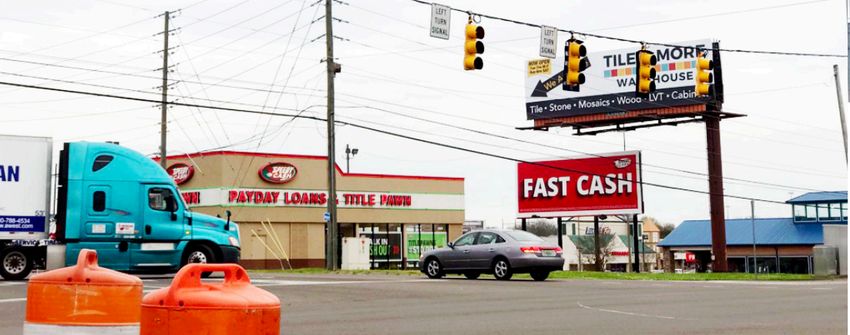
Payday lenders are draining                                    By the Numbers
our communities.                                                1.7 million: Number of
                                                                payday loans taken out in
Though they are made out to be easy and fast, for               Alabama in 2018.
most borrowers, payday loans create long-term                   33,032: Average number of
damage. The fine print on payday loans includes annual          payday loans taken out in
percentage rates (APR) up to 456 percent. With                  Alabama per week in 2018.
astronomical rates like that, “small-dollar,” “short-term”      201,418: Number of
loans frequently become expensive, multi-year burdens           Alabamians who took out a
for Alabamians. And because we know that 85 percent             payday loan in 2018.
of payday loans are taken out to cover emergencies or           $101.6 million: Amount paid
bills like rent, groceries, or utilities, we know that these    by Alabamians in payday loan
long-term burdens are only making hard times harder             fees in 2018. These payments
for families across the state. When these lenders sap           did not decrease the principal
our neighbors’ household budgets and drain money                amount owed.
from our local economies, we all lose.                          85: Percent of Alabama
                                                                payday borrowers who took
Alabama has the third highest concentration of payday           out multiple loans in 2018.
lenders in the nation, and the payday lending industry          7: Average number of loans
extracts more than $100 million from the pockets of             taken out by a payday
low- and middle-income Alabama borrowers every year             borrower in Alabama in 2018.
in loan fees. Predatory lending is a highly profitable          73.6: Percentage of
activity: Over the next decade, lenders are on pace to          Alabamians who support a 36
take more than a billion dollars out of Alabama. Most of        percent APR rate cap for
that total will be siphoned out of neighborhoods and            payday loans, according to
communities badly in need of those dollars. The money           the Public Affairs Research
will flow to out-of-state companies headquartered in            Council of Alabama (PARCA).
states like Ohio, Illinois, Kansas, and South Carolina, and     74.1: Percentage of
it will deepen the economic difficulties of the                 Alabamians who support
Alabamians left behind.                                         mandating payday loan terms
                                                                of at least 30 days, according
The overwhelming majority of Alabamians want to see             to PARCA.
payday lending either significantly reformed or banned          52.5: Percentage of
from our state entirely. It is time for lawmakers to listen     Alabamians who support
to the voices of their constituents and address the             banning payday lending
harms caused by predatory payday lenders.                       outright, according to PARCA.
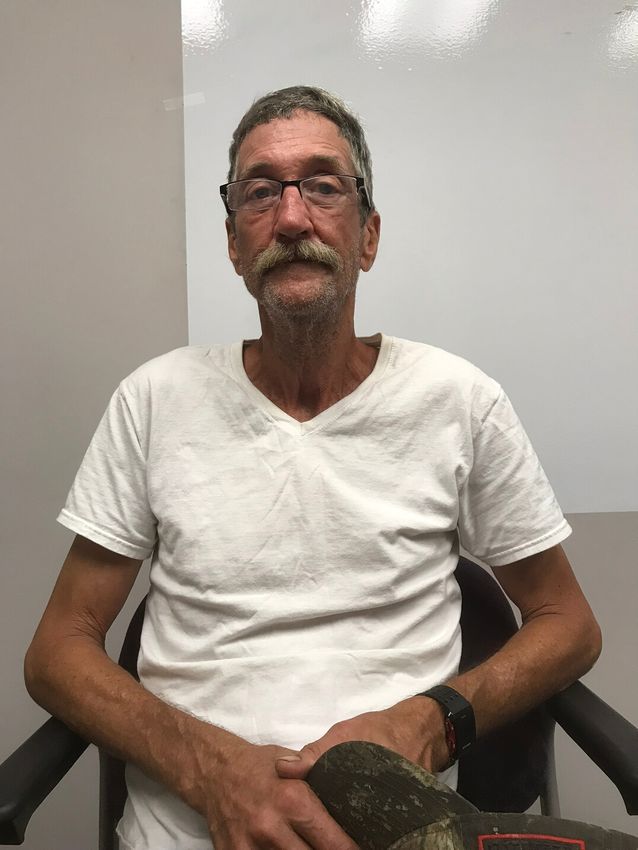
Life After Payday Homeless because of
Loan Reform
payday loan debt.
There are 95 million Americans
living in states without payday Terry Knowles took out his first payday loan because his daughter was
suffering from scoliosis, and he could not afford her care. “She’s got it
loans. Tens of millions more live in
pretty bad,” he said. “We couldn’t afford any prescriptions. Couldn’t
states where reforms have
afford to lose any time out of work [for her appointments] either, but I
substantially driven down APRs on did.” When he went to the payday lender and explained what was going
payday loans. on, they expressed concern for her health. “When you first go in and
you’re there to get money, they are sympathetic. But after it’s all done
In North Carolina, a 30% APR rate and over with and you sign, it changes, and they know they got you.”
cap for small loans has led payday
lenders to leave the state and make As his payday debt mounted, Knowles and his family began to struggle
money elsewhere. Careful follow- keeping up with the payments while still buying groceries. Eventually,
up studies commissioned by the they could no longer afford to pay rent. Knowles tried to negotiate with
the lender about making payments, but the lender wouldn’t hear it.
state government found that "the
“Doesn’t matter how many kids I had when I said that we were fixing to
absence of storefront payday
lose our home. Just didn’t matter. They wanted their money.” Knowles,
lending has had no significant
his wife, and their young children became homeless.
impact on the availability of
credit for households in North In the dead of winter, they were evicted from their Huntsville apartment
Carolina." Focus groups with and left out in the cold. Knowles had a friend who owned a trucking
former payday borrowers showed company. Knowles reached out to him, and the friend allowed the family
that the majority were glad the to move into an unheated, 400 square foot tin storage shed on the lot.
industry was gone. “It was because of the payday loan that we had to go to the storage
shed,” Knowles said. “We didn’t have nowhere else to go. It was cold. Kids
didn’t have no place to sleep other than all together. We had to try to
In many states where payday
keep them kids warm any way we could, and it was pretty tough.” The
lenders still operate, they remain
family lived in the tin shed for six months. Knowles was employed and
profitable while issuing loans with
working the whole time. A significant portion of his income went to the
much lower APRs than they use in payday lender.
Alabama, such as Virginia (254%),
Minnesota (200%), New Mexico “We should limit them to
(175%), and Oregon (154%) to name a certain amount that
a few. Alabamians pay more to they can charge for
access credit from payday these loans,” Knowles
lenders than residents of other said. “When I did that,
you pay three, four times
states.
what you borrowed from
them. There were really
While storefront lenders often raise
times when we needed
concerns about the threat of that money. People are These graffiti
unregulated online lenders, the trying to get rich off of
Pew Charitable Trusts has found the poor people —
artists are looking
that internet lending has not people who have for volunteers. This
increased in states that have doctor’s bills and kids
reformed their payday lending that aren’t well, and is your chance to
laws. struggling to survive and
to raise their children paint the town red
the best way they can,”
- literally.Recommendations for the Legislature
Cap APRs at 36 percent. Establishing sensible rate caps on the APRs for payday loans is the simplest and most
effective way to protect Alabamians from high-cost loans. A 36 percent APR cap would align with historical rate
caps used to protect borrowers against loan sharks, and it would also align with the Military Lending Act of 2006,
which Congress passed to protect active service members and their families from high-cost payday loans. Many
other states have successfully adopted 36 percent APR rate caps, and 74% of Alabamians support the idea.
Lengthen loan terms. Under current state law, payday lenders can require full loan repayment within as few as
10 days. Requiring payday lenders to use loan terms of at least 30 days would give borrowers more time to
marshal financial resources, which increases the likelihood of borrowers paying off the loans on time and as-
advertised. It would place payday loan bills on the same payment schedule as virtually all other household bills,
and it would also lower the effective APR to 213 percent — a rate that has remained profitable for the same
payday lending companies in other states.
Mandate ability-to-repay standards. Payday lenders currently do not have to assess whether a borrower will
be able to repay a loan before issuing it. Setting the maximum borrowable amount at ten percent of a borrower’s
income after basic expenses would reduce the number of borrowers trapped. Conducting an ability-to-repay
inquiry that considers a borrower’s complete financial situation for all loans would have the same effect.
Mandate loan amortization and installment plans. The current practice of borrowers paying fees with no
reduction in the amount owed leaves many borrowers with no path to freedom from their financial problems.
Loan amortization would mean that every loan has an identifiable end date when the borrower would be free of
the financial burden of accumulating debt. Requiring lenders to provide a cost-free installment plan for people
having trouble repaying their loans would likewise relieve the burden on people who can demonstrate
circumstances causing an inability to repay the loan.
Strengthen reporting requirements. Strengthening reporting requirements would allow harm reduction
efforts to be focused on the populations and the geographical areas disproportionately targeted by lenders.
Understanding the extent of disparate treatment would help legislators and advocates to be more responsive to
the borrowers who are most harmed.
Eliminate court costs and fees, and scale fines to each person's ability to pay. In 2018, Alabama Appleseed
found that almost half of all people with court debt take out payday loans to pay the state and stay out of jail.
Given this relationship and the large scale of both court and payday debt in Alabama, addressing court debt as a
major driver of payday borrowing would bring relief to the thousands of Alabamians who regularly must decide
whether to swap their public debt for a private one in order to remain free. For more detailed recommendations,
see the full report (available at http://www.alabamaappleseed.org/underpressure/).
Increase access to civil legal aid for indigent borrowers. There are legal protections against wage
garnishments for qualifying individuals who are in debt, but without legal representation in court, many
borrowers do not know their rights. Payday lenders frequently file successful motions for default judgment
against borrowers who could have been protected by a knowledgeable attorney. Because Alabama is one of only
three states that does not fund civil legal aid, many Alabamians who are too poor to afford an attorney wind up
in court unrepresented. Indigent borrowers need — and deserve — legal counsel.
www.alabamaappleseed.org | @AlaAppleseed | (334) 263-0086You can also read


