BUCKS COUNTY TECHNICAL HIGH SCHOOL 2020-2021 STUDENT HANDBOOK & CODE OF CONDUCT
←
→
Page content transcription
If your browser does not render page correctly, please read the page content below
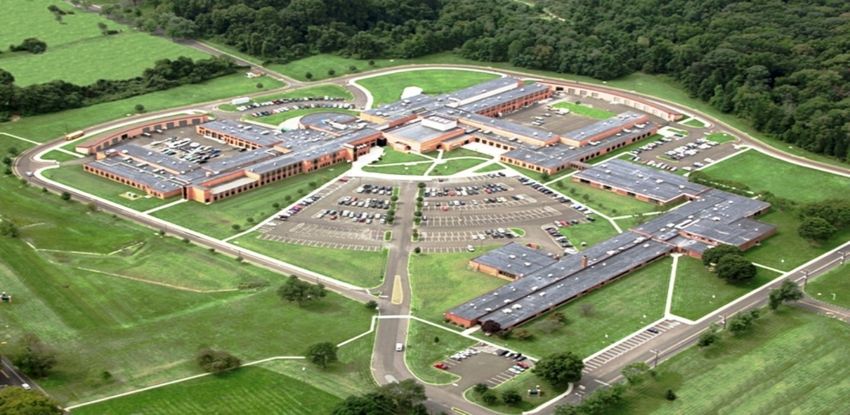
BUCKS COUNTY TECHNICAL HIGH SCHOOL

               2020-2021 STUDENT HANDBOOK & CODE OF CONDUCT

Contained in this Student Handbook and Code of Conduct are procedures and policies that will help to guide
us as we begin the new school year. It cannot cover every situation that occurs at BCTHS. Rather, it offers a
blueprint to guide students to success and avoid the potential barriers to success. Like any work in progress,
we will continue to refine our procedures and policies to ensure that each student is provided with the tools
necessary to become a productive citizen and life-long learner. This document will be posted on the BCTHS
website, www.bcths.com. Updates will be made throughout the year.

                                                 610 Wistar Road
                                             Fairless Hills, PA 19030
                                            Main Office: 215-949-1700
                                               Fax: 215-949-2104
                                            Website: www.bcths.com
MISSION
Our mission, in cooperation with participating school districts, is to prepare all students for careers, post-secondary education, and life-long
learning, by providing knowledge and practical skills through high quality, integrated, standards-driven curriculum, access to current
technologies, work-related experiences, and partnerships within the community.
BELIEFS
• We believe family is the foundation for human development.
• We believe the use of state-of-the-art and emerging technology is essential to quality education.
• We believe education is a societal responsibility.
• We believe communication is vital for success.
• We believe learning is a life-long process.
• We believe higher expectations lead to higher results.
• We believe an emotionally and physically safe environment is essential for learning.
• We believe all people are unique and have the potential to learn.
• We believe that all students should be given equal opportunity to learn to their fullest potential.
• We believe high ethical standards are critical to effective citizenship.
HISTORY OF THE SCHOOL
BCTHS began in spirit in 1955 when seven school districts voted to support an area technical school. The seven districts were Bensalem
Township, Bristol Township, Falls Township, Lower Makefield Township, Yardley Borough, Tullytown Borough, and Morrisville Borough.
Shortly thereafter, a 47 acre site was chosen on Wistar Road in Fairless Hills, PA. Construction of the building began in 1957, and the
school opened its first session in September 1958 with an enrollment of approximately 600 students. During the years 1958 to 1963, there
was increased interest on the part of students to enroll in the various course offerings of the school. In addition, overtures were made by
the Neshaminy and Bristol Borough School Districts. By September 1964, plans were developed for expansion of facilities. Construction
began and was completed in September 1965. In 1976, four additional instructional units (portable classrooms) were completed to enable
minimal expansion for the increased enrollment of students. A new, state-of-the-art comprehensive technical high school opened in
September 2000 with a maximum capacity of 1,500 students. The school also plays an active role in the community by providing Adult
Education Programs during the evening. BCTHS is currently under the leadership of Leon Poeske, Ed.D., Administrative Director.
CIVIL RIGHTS
It is the policy of Bucks County Technical High School not to discriminate on the basis of race, color, religion, age, gender, sexual
orientation, national origin, handicap/disability, genetic information or any other legally protected classification in its admissions,
educational programs, activities or employment policies as required by Title VI of the Civil Rights Act of 1964, Title IX of the Educational
Amendments of 1972, Section 504 of the Rehabilitation Act of 1973, Age Discrimination Act of 1975, the Americans with Disabilities Act of
1990 and the Pennsylvania Human Relations Act. For information regarding services, activities and facilities that are accessible to and
usable by handicapped persons and in compliance with Title VI, Title IX, Section 504 and Section 504, please contact the Human
Resources Coordinator, Bucks County Technical High School, 610 Wistar Road, Fairless Hills, Pennsylvania 19030. 215-949-1700 x
2807.
Es la política de Bucks County High School secundaria técnica no para discriminar basándose en raza, color, religión, edad, género,
orientación sexual, origen nacional, impedimento/discapacidad, información genética o cualquier otra clasificación protegida legalmente en
sus admisiones, programas educativos, actividades o políticas de empleo según lo requerido por el título VI de la ley de derechos civiles
de 1964, Título IX de las enmiendas educativas de 1972 , Sección 504 de la Rehabilitation Act de 1973, Ley de discriminación de edad de
1975, los americanos con acto de las inhabilidades de 1990 y la ley de las relaciones humanas de Pennsylvania. Para obtener
información acerca de los servicios, actividades e instalaciones que son accesibles a y utilizables por personas con discapacidad y en
cumplimiento del título VI, Título IX, sección 504 y la sección 504, póngase en contacto con la Coordinadora de recursos humanos,
HighSchool secundaria técnica de la Condado de Bucks, 610 Wistar camino, colinas de Fairless, Pennsylvania 19030. 215-949-1700 x
2807.TABLE OF CONTENTS
Page No. Page No.
SECTION I
Admissions Criteria 1 Intramural Program 24
Armed Forces/Selective Services 1 Keystone Exams 24
Assembly Programs 1 Late for School 25
Athletic Eligibility 1 Locks/Lockers 25
Attendance Policy 1 Lost and Found 25
Automated Calling 3 Meal Charging Policy 25
Automatic External Defibrillator 3 Medical Insurance 26
Back to School Night 3 National Honor Society 26
Before, During, and After School Regulations 3 News Media Authorization 26
Bell Schedules 4 NOCTI 27
Building and Campus Pride 4 Nurse Aide Record Keeping Procedures 27
Cafeteria Use 4 Obligations 27
Calendar of Days off for Students 5 Open House for Prospective Students & Their Families 27
Career Exploratory Program/9th Grade Placement 5 Participation in Dissection Labs 27
Change of Address/Telephone Number 6 Payments 27
Character Education 6 Perkins Participatory Planning Committee 28
Cheating 6 Personal Work Orders 28
Children’s Health Insurance Program (CHIP) 6 Plagiarism 28
Clubs and Club Advisors 7 Possession of Dangerous Substances 28
Competency Based Instruction (CBI) for Technical Students 7 Programs for Eligible or Protected Handicapped Students 28
Computer Ethics and Network Security 7 Proms, Dances, Field Trips & Class Trips 29
Computer Vandalism Guidelines 7 Proof of Purchase 29
Conferences 8 PSAT/SAT/ACT Test Dates 29
Cooperative Education 8 Pupil Records Policy 30
Course Selection/Student Schedules 8 Report Card Schedule 30
Course Types 8 Reporting Crimes 30
Courtesy 9 Resources for Help/STAR Program 31
Curricula 9 School Colors/Mascot 32
Discipline Policy - See Section II 40 School Nurse Services 32
Discrimination & Harassment of Students and/or Staff 9 School Property 34
Dress Code 10 School Store 34
Driving and Parking Regulations 11 School-to-Career Program 34
Drug and Alcohol Policy 12 Searches 35
Early Dismissals 12 Skyward Family Access Portal 35
Electronic Devices 13 Student Council/Class Officers 36
Elevator Policy 13 Student Projects 36
FERPA – Family Educational Rights and Privacy Act 13 Suspension & Expulsion 36
Final Exams 14 Textbooks 37
Fire Drills and False Alarms 14 Tobacco Use 37
Free & Reduced Breakfast & Lunch Programs 15 Transcripts 37
Grading Policy 15 Transportation Information 37
Graduation Information 17 Trespassing Law 38
Guidance Services 17 Valedictorian/Salutatorian 38
Hallway Conduct and Passes 18 Valuables 38
Health & Physical Education 18 Visitor Information 39
Homeless Act (McKinney Vento Act) 18 Weapons 39
Homework/Makeup Policy 19 Withdrawing from School 39
Identification Badges 20 Working Papers 39
Inclusion 20 Section II - Discipline Policy 40
Integrated Pest Management (IPM) 20
Internet Policy 20JOINT BOARD COMMITTEE
BENSALEM
Heather Nicholas
Kim Rivera
BRISTOL BOROUGH
Al Pirollo
John Ruszin, Board President
BRISTOL TOWNSHIP
Kellie Buchanan, 2nd Vice President
Gallus Obert
MORRISVILLE
Donna Getty
Joseph Gilleo
NESHAMINY
John Allen
Cyndie Bowman
PENNSBURY
Gary Sanderson
Christian Schwartz, 1st Vice President
ADMINISTRATION
Administrative Director
Leon Poeske, Ed.D.
Assistant Director
Henry DeGeorge
Business Administrator
Sharon Rendeiro
Principal
Robert S. Azar
Assistant Principal
Lynthia Scott
Supervisor, Pupil Personnel Services
Kevin Gentilcore
Supervisor, Special Education
Pegeen Kopera
Human Resources Coordinator
Karen Moyer
Supervisor, Information Technology
John HaneyFACULTY & STAFF
Engineering & Industrial Technology- Engineering & Industrial Technology- GUIDANCE
Construction Manufacturing Kathryn Eby
Carpentry Applied Engineering Technologies (AET) Cluster Lisa McWilliams
Evan Baker Angela Ponist
Mechatronics Technologies
Civil Engineering Technology James Crotts David Sine
Douglas Bennet
Electronic/Green Energy Technologies
HEALTH & PHYSICAL EDUCATION
Electrical Occupations Technology Michael Hatrock
Mark Schumann Paul Hawkinson
Computer Systems Jennifer Hubler
Facilities Support Services Thomas Ryan Marcella McAdams
Hans Rikson Bryan McGinty
Machine Technology
Fine Woodworking Charles Raybold Gerard Rooney
Scott Ribarchik Michael Thim
Welding & Fabrication Technology
HVAC/R Technology Christopher Panzitta
Roger Smith
INSTRUCTIONAL FACILITATORS
Landscape & Floral Design Engineering & Industrial Technology- Diane Bach
James Long Transportation Penny Boring
Plumbing & Heating Technology Automotive Technology Lawrence Breault
Michael Muncer Byron Cesari
Nicole Cole
Allan Young
Cheryl DeGroot
Collision Repair Technology Mary DeSandro
William Bacon Cecilia Devlin
Business Arts & Technology Academy
COMMERCIAL & ADVERTISING Diesel Technology Victoria DiMatteo
ARTS CLUSTER Timothy McCrane Michelle Epperson
Rosita Mullane Outdoor Power Equipment Rosemarie Franz
John Paone Jeffrey Cesari William Gormley
Ken Smith Susan Haas
Entrepreneurship & Small Business Development Judy Hutchinson
Lisa Mayo CAFETERIA STAFF
Anthony Mazzocchi, Cafeteria Manager Kathleen Krawczun
Multimedia Digital Design & Programming
Barbara Carrigan Patricia Luszczak
Tracey Glorioso
Irene Cartolaro Kimberly McManamon
Cindy DeValerio Jill Morges
Health & Human Services
Allied Health Kelly Hunter N. Corey Mucklow
Ann Knowles, R.N., B.S.N., M.B.A. Albert Maurizzio William Rigney
Tracey Sabara, R.N. Brandon McFillin Jennifer Saba
Amy Shelly, R.N. Jane Nowakowski Judy Wong
Meg Offenback Rita Zaks
Baking & Pastry Arts Beth Wyatt-Wilson
Kelly Laba MAINTENANCE/CUSTODIAL
Child Development & Early Learning COMPUTER LAB ASSISTANT Michael Gaspar, Facility Manager
Keri Gehring Debra Pelka Anthony De Silva, Custodial Supervisor
Cosmetology Ruben Alvarez
Brandee Baker ENGLISH Joseph Amo
Karen Nemia Michael Breece, Ed.D. Mariano Arriola
Nicole Fix Dave Brous
Culinary Arts
Ruth Gomes Elizabeth Giuliano James Codispoti
Colin Marsh, C.E.C. Craig Meyers, Reading Specialist Robert Huff
Scott Saunders Maria Morrow Weldon Jones
Jenny Naylor Aynee Lopez
Dental Health Careers Leonard Quici Esban Lopez
Tracy Brasier Daniel Sabatini Alan Marietta
Lauren Toll Jeffrey Otto
Emergency Services Technology Elizabeth Walp Sharon Stinus
Barry Boring Kelly Woehr
Kimberly Caron
ESL/ELL
Rebecca Hicks/EnglishMANAGEMENT ASSISTANTS
George Leonhauser SCIENCE
June Morris Todd Breuer
Janine Gugger
Elise Kern
MATHEMATICS David Kratz
Shirley Booz Jake Madera
Barbara Chatot Eileen McDonald
Carly Cofer Theresa Prato
Kenneth Daubert Kevin Sackett
Terrence Gallagher James Sohenuick
Victoria Heintz Kenneth Sperling
Paul Lobecker Joseph Theis
Eileen McDonald Travis Whisenant
Anna Shemyakina
Jason Solt SECURITY
Alexander Sowa Michael Bachmayer
Anne Waita Thomas Bachmayer, Jr.
Robert Bray
J. Richard Gudknecht, Jr.
MEDIA SPECIALIST Patte Kail
Georgette Helbling
SOCIAL STUDIES
Adrienne Bogarde Roach
NURSE’S OFFICE Ryan Devine
Katie Engelhardt, R.N. Bryan Haas
Denise Liberto, R.N Katelyn Hyland
Christopher Johnston
Karen McKinley
OFFICE SUPPORT Anthony Rudy
Jill Brochon David Weidner
Anna Bryan Robert Woehr
Audrey Carmasine Jeffrey Yoder
Penny Carmasine
Patricia Cumberland
Joanne Dominik SPANISH
Elizabeth Fellmeth Kimberly Secoda
Charles Fitch Douglas Smith
Nancy Greco
Barbara Hawke
Barbara Long SPECIAL EDUCATION
Amy McKeon Michael Alexander
Diane Pallotta Lauren Almlof
Morgan Ryan April Bates
Kathleen Schmidgall Andrea Beal
Marie Schultz Jean Bellus
Alice Small Michelle Black
Colleen Stough Amanda Bucantis
Elizabeth Zemanek Eric Culnan
Kelly Foley
Beth Hennegan
OFFICE TECHNOLOGIES Jennifer Henry
James DiGuiseppe Albert Hopkins, Jr.
Kevin Roode Thomas Irwin
Tracey Kent
SCHOOL PSYCHOLOGIST Andrea Kley
Margaret Angelitis Christopher Lucarini
Tracey Marks Steve Reach
Shannon Seratch
Sean Simon
SCHOOL-TO-CAREER
Eugene Talarico
COORDINATORS
Walter Hansell
Ronald MartinoSECTION I
ADMISSIONS CRITERIA
Students interested in attending BCTHS must complete an application, which is available at the school and in the guidance offices at the sending school
districts. The philosophy of BCTHS is that passing grades, attendance, punctuality, and appropriate behavior are important to employers and to
successfully enter post-secondary education. As a result, the criteria for acceptance into the school will be determined by grades in Math, Science,
English and Social Studies, attendance, punctuality, and a student’s discipline record.
ARMED FORCES/SELECTIVE
All young men have an obligation to register with the Armed Forces/Selective Service System within 30 days of their 18th birthday. You can register at
any U.S. Post Office. More information concerning registration can be obtained from your counselor. Armed Forces/Selective Service is comparing
registrations against lists supplied by the PA Department of Transportation, the Social Security Administration, and the Internal Revenue Service to
locate possible violators. Young men applying for grants, loans, or work assistant programs under Title IV of the Higher Education Act will be required to
complete a Statement of Compliance at the school, college, or university they are attending or plan to attend. Failure to register may result in
cancellation of your loan, grant, or other assistance. Section 9528 of the No Child Left Behind Act of 2001 requires schools to release a family’s private
information to military recruiters unless an “OPT OUT” in writing is turned in to Pupil Personnel Services. For example, “As a parent, I am exercising the
right to request that you do not turn over the name, address, telephone number, and school records to the Armed Services, Military Recruiters, or Military
School.” Another example would be, “As a student of the age of majority, I request my own name, address, telephone number, and school records not be
released to the Armed Forces, Military Recruiters, or Military Schools.”
ASSEMBLY PROGRAMS
Assembly programs may be held during the year with additional programs scheduled, if needed. Students are expected to conduct themselves in an
orderly and mannerly fashion during the programs and when traveling to and from an assembly.
ATHLETIC ELIGIBILITY
A student who participates in interscholastic athletics at a school which is a member of Pennsylvania Interscholastic Athletic Association, Inc. (“P.I.A.A.”)
must adhere to the P.I.A.A. eligibility rules for student athletes. If you fail to comply with the P.I.A.A. rules, you will lose your eligibility to represent your
school in interscholastic athletics. If you participate while ineligible, your school or team will be penalized. It is, therefore, important for you to be aware
of the requirements to which you are subject. Our principal is responsible for verifying eligibility, therefore, if you have any questions concerning your
athletic eligibility, either present or future, contact the principal, who has a complete list of all the P.I.A.A. eligibility rules. The principal may also obtain
from the appropriate P.I.A.A. District Committee, a formal ruling as to your athletic eligibility. Students who would like to participate in collegiate athletics
at the Division I or Division II level must register with the N.C.A.A. clearinghouse after the completion of their junior year. Forms are available from your
guidance counselor or the principal in charge of extracurricular activities. BCTHS is registered with the N.C.A.A. Clearinghouse.
ATTENDANCE POLICY
Start Time 7:18am Dismissal Time 1:54PM
Students between the ages of 6 and 18 years of age are under the PA Compulsory Attendance Law. Exceptions from compulsory attendance shall be
permitted under conditions as specified in Sections 1327 and 1333 of the School Laws of PA. Attendance at BCTHS is viewed as preparation to enter
the world of work. Student absences impact directly upon grades, as follows:
On the academic rotation and on the technical rotation, students with 3 or more UNEXCUSED ABSENCES per marking period WILL receive a
failing grade for that marking period in all classes on that rotation, unless missed work is made up. Students can receive a maximum grade of 82 for all
courses on that rotation.
Saturday Detention – Saturday detentions will be held 8am until 12 Noon. A Saturday detention will be required for the following reasons:
• 1 Saturday detention for every 6 unexcused absences.
• 1 Saturday detention for every 12 unexcused tardies (lateness).
Students owing Saturday detentions are ineligible for school sponsored activities such as proms, dances and class trips. In special circumstances,
teachers may request that an exception be granted by administration. Students owing Saturday detentions at the end of the school year may (a) not be
permitted to return to BCTHS the following year, if underclassmen; and (b) not be permitted to participate in the graduation ceremony and will have their
diplomas withheld, if seniors.
1The PA Truancy Act of 138 of 2016 requires that a warning letter be issued to the parent/guardian of a student who has been absent without excuse
(illegal absence) for three days. If the student is absent without excuse for one additional day (4 illegal absences) the law requires that a School
Attendance Improvement Conference (SAIC) be convened.
Under this law, a child is considered Habitually Truant if he/she accumulates 6 or more unexcused (illegal) absences. Habitually Truant will be
referred either to a school/community based school attendance program (such as Bucks County Children & Youth) or a Truancy Citation will be
submitted to the District Magistrate.
TRUANCY COURT
Under this law, a person convicted of an offense may be:
1. Sentenced to pay a fine not exceeding $300 plus court costs for the first offense; a fine not exceeding $750 for a third or subsequent offense.
2. Sentenced to perform community service or:
• Be required to complete a course or program designed to improve school attendance.
• Have the student’s driver’s license suspended.
Unexcused (Illegal) Absences: Illegal absences are punishable by law. An absence is unexcused/illegal if it does not qualify under the definition of an
excused/legal absence. An absence will be considered unexcused/illegal if an excuse note is not presented to the Pupil Services Office within three
days of the student’s return to school. As per Section 11.24 of the Pennsylvania School Code, students age 17 and older who accumulate 10
consecutive unexcused absences at any time in the school term will be removed from the BCTHS membership roll and returned to the appropriate
sending school district.
Excused (Legal) Absence – Please refer to BCTHS Policy Section 200, Number 204: Attendance.
A legal absence will be granted for the following reasons: illness, obtaining professional health care or therapy rendered by a licensed practitioner of the
healing arts; quarantine; death in the family, impassable roads, inclement weather, home emergencies directly related to the student and exceptionally
urgent reasons. A legal absence will not be granted for oversleeping, missing the bus or serving as a caregiver for adults or children. For an
absence to be deemed excused, the student must present a note signed by his/her parent/guardian (or a signed doctor’s note) directly to the Pupil
Services Office within 3 school days of the absence. Official excused absence cards (blue in color) are available in the Pupil Services Office and should
be used exclusively. Students must receive a date/time stamped receipt in exchange for the excuse note and present the date/time stamped receipt to
resolve any discrepancies concerning their attendance record (excused and unexcused absences). Excuse notes received in the Pupil Services Office
beyond the third school day will not be accepted and the absence will be considered unexcused/illegal. Students, regardless of reason, are personally
responsible for the completion of all missed work. Make up work must be handed in within 3 days after returning to the missed class in the same rotation
or within 3 days of the end of the marking period, whichever comes first. Excused absences are determined at the discretion of the Supervisor of Pupil
Services. If a student accumulates 18 or more excused absences, he/she will be considered chronically absent, and may be required to present a
doctor’s note for any further absences to be deemed excused, at the discretion of the Supervisor of Pupil Services.
Pre-Approved Excused Absences - Occasionally, situations arise which may have a clear educational benefit, but which are not addressed directly in
statements regarding excused or unexcused absences. These situations include college visits, vacations/family trips, community service trips, etc.
Parents/guardians must petition the Supervisor of Pupil Services in writing two (2) weeks in advance to request an excused pre-approved absence. Pre-
approved excused absences are awarded at the discretion of the Supervisor of Pupil Services and are generally limited to a maximum of 5 school days.
All other days absent will be counted as unexcused absences and are subject to BCTHS attendance policy and Pennsylvania compulsory attendance
law. Parents/guardians should anticipate that a number of days will be added to the school calendar as a result of weather related closings during the
winter months. Accordingly, requests for family vacations for the last week of the school calendar will not be approved, to avoid conflicts with final
examinations. Requests for family vacations for the first week of school may not be approved. School will generally begin the week prior to Labor Day.
Leaving the building before the end of school - Parents/guardians are required to send written notification to the main office to verify the need for a
student to leave the building prior to the end of the school day. Likewise, it is essential for parents to have current telephone numbers on record in the
event there is a need for parent notification.
Students who are absent from school are ineligible to participate in any extracurricular activities scheduled for that day unless prior approval
has been given by administration. If an absence occurs before a weekend or holiday, students will not be able to participate in any
extracurricular activities scheduled for that weekend or holiday.. Extreme circumstances will be handled by administration on a student-by-student
basis. High absenteeism leads teachers and potential employers to question one’s reliability and accountability. Excessive absenteeism is a clear
indication of lack of interest in a comprehensive education.
LEAVING SCHOOL GROUNDS WITHOUT PERMISSION:
Except for approved early dismissals, students are not permitted to leave school property during school hours. No permission for students leaving may
be given by faculty, only by Pupil Services or Administration. Once students have arrived on school property, they are prohibited from leaving the
property without proper authorization from Pupil Services. Also, students are not permitted to go to their cars parked off school grounds during school
hours.
2AUTOMATED CALLING
BCTHS uses an automated calling system to notify parents/guardians and staff in the case of an emergency (i.e. weather related school closings) and to
communicate special activities and events. A registration packet, which will be given to students on the first day of school, will include a request for
phone numbers to be contacted through our automated calling system. An automated phone call will be placed to the parents/guardians of all students
who are not in the building by 8:30am.
AUTOMATIC EXTERNAL DEFIBRILLATOR
BCTHS has important emergency procedures in place. In the event of a sudden cardiac arrest, CPR followed by defibrillation, is the only known therapy.
BCTHS is fortunate to have four strategically placed Automatic External Defibrillators, (AEDs) to be used in the event of a sudden cardiac arrest.
Because the AEDs must be readily available, they are kept in unlocked storage units in high traffic areas of the school. The storage units are clearly
marked and are connected to an alarm system that will sound when the storage unit is opened. Unauthorized opening of the AED storage units will
result in an automatic suspension of the student(s). Theft or damage to the defibrillators or storage units will be treated as a criminal offense and the
police will be summoned immediately.
BACK-TO-SCHOOL NIGHT
Back-to-School Night is scheduled for Thursday, October 1, 2020, from 6pm to 8pm (pending health restrictions). This is an evening for parents to
follow their child’s roster and meet their teachers. If you wish to discuss a personal matter, please call and set up an appointment.
BEFORE, DURING, & AFTER SCHOOL REGULATIONS
Students are expected to act like responsible citizens. Upon arrival at school, all students are to proceed directly to their first period class - no roaming
the halls. Only students with minute passes may enter the classroom after the bell. After the late bell rings, if you do not have a minute pass, do not
enter the classroom; report directly to the SWEEP area for a pass (see SWEEP procedure below).
There will be no loitering in cars, on the grounds, in the lavatories, or in the halls at any time during the day.
Before, during and after school students staying on Tuesday and Thursday for after school activities/tutoring must remain in the classroom until
3:30pm. If the activity/tutoring ends prior to that time, students are required to bring a book or additional resources to remain on task. Once a
student exits the building, they may not re-enter without permission.
Congregating in parked cars before or after school or during lunch periods is not allowed.
No student may leave school property without authorization by administration.
Students arriving at school after 7:30am will report directly to the security desk and submit a late excuse signed by their parent or guardian on the
next school day of attendance. Failure to submit a signed excuse will be cause for a parental/guardian conference. There will be no smoking on
school property at any time. BCTHS has a strict no smoking policy. (See “Tobacco Use”, Page 37) Violators warrant suspension and/or will
receive a citation. As soon as classes are dismissed by teachers, students are expected to proceed to their lockers and leave school property in an
orderly manner, unless they are scheduled for a conference or after school activities.
SWEEP PROGRAM:
To assure quick and safe student passing between classes, BCTHS has initiated a SWEEP Program. Students are to travel directly from one class to
another without stopping in the hallways for breaks, meeting with other students, etc. No restroom stops, or other stops, should be made during class
changes, but may be handled during class time with a pass signed by a teacher. Sanctions for violations of the SWEEP procedures may result in
disciplinary actions and classroom/grading actions.
There are provisions for those students who have great distances to travel between classes; for details, see the following procedures. The current bell
schedule will be utilized for this program. Please act according to the bells, not the clocks. At the bell denoting the end of a class period, students
will be released to their next class. No restroom stops, or other stops, should be made during this three-minute time. Restroom breaks should be made
during class times and only with an appropriate pass.
At the late bell, designating the beginning of the class period, teachers are to close their classroom doors.
Late students should not be permitted into class without an appropriate pass (late pass, sweep pass, minute pass, etc.).
Students who are late to class should immediately report to the sweep area which will be manned for approximately 10 minutes after the late
bell. If students do not arrive to the sweep area by the 10 minute limit, they will be considered cutting class.
After a sweep pass has been issued, the student must report immediately to class.
For every three SWEEP accumulations, a student will receive a disciplinary sanction. This action will be progressive (minimum of Saturday
detention, with possibility of sanctions from 1 to 10 days possible).
3BELL SCHEDULES
BELL SCHEDULE
Regular School Day BELL SCHEDULE
Two Hour Delay
Period Ring Time
Report to Period 1 7:10 Period Ring Time
Report to Period 1 9:10
Period 1 7:18 - 8:03
Period 1 9:18 - 9:38
Period 2 8:08 - 8:47
Period 2 9:42 - 10:02
Period 3 8:52 - 9:31
Period 3 10:07 - 10:29
Period 4 9:36 - 10:15
Period 4 10:33 - 10:54
School-Wide Locker Break 10:15 - 10:22
Lunch 1 10:22 - 10:50
Lunch 1 10:59 - 11:27
Lunch 2 10:54 - 11:22
Lunch 2 11:31 - 11:59
Lunch 3 11:26 - 11:54
Lunch 3 12:03 - 12:31
Lunch 4 11:58 - 12:26
Lunch 4 12:35 - 1:03
Period 5/6 10:22 - 12:26
Period 5/6 10:59 - 1:03
Change between 5/6 Period
for those having 1st lunch 11:38 - 11:43 Change Period 5/6 with Lunch 1 12:15 - 12:19
Change Period 5/6 with Lunch 4 11:43 - 11:47
Period 7 12:31 - 1:10
Period 8 1:15 - 1:54 Period 7 1:08 - 1:29
Period 8 1:33 - 1:54
Disregard all bells when following a 2-hour delay bell schedule.
Students will be dismissed according to the above schedule.
BUILDING & CAMPUS PRIDE
Take pride in our school! We are given the opportunity to share and use this building, the facilities, and the campus, and students are asked to assist in
the preservation and maintenance of the building and campus. Picking up paper in the classrooms and hallways is everyone’s obligation. Do not permit
others to damage or destroy your school property. Please join with the faculty, student/school organizations and student leaders every year as we
promote building pride.
CAFETERIA USE
Students are scheduled for a half-hour lunch daily in the school cafeteria and must report to the cafeteria on time. The following rules will apply while
in the cafeteria:
Food and beverages are not to be removed from the cafeteria or brought into classrooms and instructional areas.
Use of lavatory facilities during lunch is for emergencies only.
Conduct in the cafeteria should exemplify your conduct in your own dining room at home, including noise levels.
Every student is to eat in the cafeteria, whether or not lunch is purchased, and remain there during the entire lunch period.
Students are responsible for the cleanliness of the table at which they eat and the area surrounding it. Receptacles are provided for trash and
recyclables. It is expected that the cafeteria be left in a clean condition.
Any cafeteria monitor or staff member has the right to make the simple request of any student to pick up debris in the general area of the
student’s table.
Littering and throwing of food or trash will not be tolerated.
It is inappropriate to yell, scream, clap or make loud noises in the cafeteria.
4 Language that is inappropriate will not be tolerated.
Maintain orderly lines and wait your turn. Do not cut in front of others who are waiting.
Theft of food or beverages will be considered “theft of services” and will be handled in accordance with the school’s discipline policy.
All students must have their ID badge scanned to obtain a lunch.
Students may access their cell phone during their 30 minute lunch period while in the cafeteria. This privilege could be suspended at any time
if so deemed by administration.
Food and beverages are permitted in the career program classrooms for a 10 minute break as approved by the individual instructor for the purpose of
modeling a real-world work environment, provided it does not occur until 30 minutes after the last lunch is served.
CALENDAR OF DAYS OFF FOR STUDENTS
AUGUST 2020
31 Monday In-Service Day- Teachers
JANUARY 2021
SEPTEMBER 2020 1 Friday New Year Recess
1 Tuesday In-Service Day - Teachers 18 Monday Martin Luther King, Jr. Day
2 Wednesday First Day for All Students
3 Thursday Grades 10-12 only FEBRUARY 2021
4 Friday Holiday- Labor Day 15 Monday Presidents Day
7 Monday Holiday- Labor Day
28 Monday Yom Kippur MARCH 2021
17 Wednesday In-Service Day/ACT 80
OCTOBER 2020
21 Wednesday In-Service Day/ ACT 80 APRIL 2021
1-5 Easter Break
NOVEMBER 2020
3 Tuesday Election Day/ In Service Day/ACT 80 MAY 2021
11 Wednesday Veterans Day 18 Tuesday Election Day/In-Service/ACT 80
25 Wednesday In-Service Day 31 Monday Memorial Day
26-27 Thursday/Friday Thanksgiving Holiday
JUNE 2021
DECEMBER 2020 14 Monday Last Day for Students (½ day)
23 Wednesday 1/2 Day students 15 Tuesday In-Service Day
24- 31 Christmas Break 16 Wednesday In-Service Day/Last Day for Teachers
This calendar is subject to change.
^Designated local holidays per School Code, Article XV, 1502.
NOTE: All days missed due to emergency closing will be made up at the discretion of the BCTHS Joint Board Committee until the approved number of days has been
reached. Please note that March 17, 2021, April 1, 2021, April 5, 2021 and MAY 18, 2021 may be used as student days if necessary.
Board Approved: 05-18-20
CAREER EXPLORATORY PROGRAM/9th GRADE PLACEMENT
The 9th Grade Career Exploratory Program provides an opportunity for students to make an educated decision about their career. The course includes
hands-on experience in each technical lab as well as the support of a faculty advisor. Each 9th grade student will declare his/her major during the third
marking period of their freshman year.
In order for students to meet the national certification requirements in their field of expertise, they will need to commit to a decision without
changing programs, as changing programs results in lost hours required for certification. Regardless of where a student is assigned first, each student
will rotate to the next class on the 9th grade exploratory list, in sequential order, every 2 days, during the career exploratory period on his/her schedule.
While we realize that all students are not interested in every technical area, we believe that awareness creates a respect for differences. Furthermore,
awareness also discovers untapped interests; therefore, all students must attend every class – without exception.
Placement of 9th Grade Students into Technical Programs
9th grade students participate in the Career Exploratory Program through the middle of Term 3, visiting each technical area for a total of four (4) blocks.
Guidance counselors meet with each 9th grade student during Term 2 to discuss career pathways and the technical placement process. In February, 9th
grade students attend a technical placement assembly, and are asked to list their placement preferences in order of priority. Upon receipt of the student
5placement choice forms, the guidance department creates a data base of students and placement choices and evaluates each student relative to Term 2
GPA/CLASS rank. Ties are broken by referencing attendance and discipline data. Permanent placement decisions are made by placing students in
their preferred programs in order of GPA/CLASS rank. If a student’s first choice is full, then he/she is placed in his/her second choice; if the second
choice is full, he/she is placed in his/her third choice, etc. An assembly is held prior to the start of permanent placement to provide students with their
new schedules and answer questions. Waiting lists are maintained for each technical area which has filled. Students may not request to be added to a
waiting list until the end of the first full technical rotation.
Students desiring placement on a waiting list in 9th grade will be added to the list in order of Term 2 GPA/CLASS rank at the end of the first full
technical rotation. Beginning with the day prior to the second full technical rotation, students will be added to a waiting list on a first-come, first-served
basis. Waiting lists are maintained through the end of the 9th grade year and are then discarded.
Students desiring placement on a waiting list in 10th grade must make an appointment with their guidance counselor. Students will be placed on a
waiting list on a first-come/first-served basis. Waiting lists are maintained through Term 2 and then discarded.
The above procedures are subject to modification during the school year to accommodate the best interests of our students and programs.
CHANGE OF ADDRESS/TELEPHONE NUMBER
In the event a student moves to a new address within or outside the district, or there is a change in a home telephone number, or if there is a change in
emergency contacts listed on the health card, or if there is a change in the email address, please contact Pupil Personnel Services immediately.
CHARACTER EDUCATION
Character education is an educational movement that supports the social, emotional and ethical development of students. It is the proactive effort by
schools, districts, communities and states to help students develop important core ethical (recognizing what’s right) and performance (doing what’s right)
values such as caring, honesty, diligence, fairness, fortitude, responsibility, grit, creativity, critical thinking, and respect for self and others. Character
education provides long-term solutions to moral, ethical, and academic issues that are of growing concern in our society and our schools. Through
character education, students learn how to be their best selves and how to do their best work while making school a place where students and educators
feel comfortable and able to work. Character education has always been an essential part of our schools’ mission. In fact, since the founding of our
nation’s public schools, character development was always an integral part of schooling along with academics. Today’s character education movement is
a re-emergence of that important mission (www.character.org).
Character Education is an essential aspect of the mission of Bucks County Technical High School and is at the core of all that the school does:
leadership, curriculum, teaching strategies, school culture and clubs and activities. BCTHS believes that a strong ethical character is the foundation for
college and career readiness, and that students, staff and parent/guardians all benefit as members of a caring community.
BCTHS is committed to educating the “whole child”. The Association for Supervision and Curriculum Development (ASCD) defines “whole child”
education as “ensuring each child, in each school, in each community is healthy, safe, engaged, supported, and challenged”.
All BCTHS students participate in SkillsUSA (www.skillsusa.com), a national membership association with over 360,000 members serving high school,
college and middle school students who are preparing for careers in trade, technical and skilled service occupations, including health occupations, and
for further education. The SkillsUSA mission is built upon — and its success depends on —the commitment of its members and partners to the following
values: integrity, respect, responsibility, citizenship and service. Workforce training supports each of these values and they are embedded in all BCTHS
technical programs.
CHEATING
Cheating is defined as the copying of someone’s work and representing it as your own, allowing someone to copy work, or take a test, quiz or exam in a
dishonest way. Students involved in cheating on a test, quiz, mid-year or final exam, term paper, book report, etc., will receive a “0” for their part in that
activity. A parent/guardian will be contacted and membership in National Honor Society will be jeopardized.
CHILDREN’S HEALTH INSURANCE PROGRAM (CHIP)
This program provides free or low cost health insurance for children whose parents do not have health insurance through their employer or for those who
make too much money to qualify for welfare, but not enough to purchase health insurance. CHIP covers the cost of immunizations, routine check-ups,
prescriptions, and other services covered by comprehensive insurance plans. To apply, go to CHIPcoversPAkids.com, apply online or print an
application and mail to the address indicated or you can call 1-800-986-KIDS (5437) for information.
6CLUBS & CLUB ADVISORS
Be the Change Steve Reach & Marcella McAdams
Bowling Al Hopkins, Jr. & Chris Lucarini
Buddies of BCTHS Michelle Black
Challenge Adventure Paul Hawkinson & David Weidner
Class Advisors: Class of 2021 James Sohenuick
Class of 2022 Jean Bellus & Al Hopkins, Jr.
Class of 2023 Brandee Baler
Class of 2024 Douglas Smith
Dance Club Carly Cofer & Elise Kern
DECA Lisa Mayo
Drama Adrienne Bogarde Roach
Eligibility Coordinator Bryan McGinty
FFA James Long
Future Teachers Gerard Rooney
GSA Kelly Woehr
Intramural Advisor/Coordinator Paul Hawkinson
Key Club Amanda Bucantis & Katelyn Hyland
Literary Magazine/Writers Mimi Morrow
Mathletes TBA
National Honor Society Jenny Naylor
Peer Tutoring Angela Ponist
Reading Olympics Georgette Helbling
SADD Leonard Quici
SkillsUSA Shannon Seratch
Student Council Kelly Woehr
Video James Crotts
Wellness Program Michael Thim
STUDENTS MUST REMAIN WITH THEIR ADVISOR(S) AND NOT RE-ENTER THE BUILDING ONCE THEY LEAVE.
COMPETENCY-BASED INSTRUCTION (CBI) FOR TECHNICAL STUDENTS
Students entering BCTHS for the first time will be oriented to the requirements for completing their years of work as outlined on a progress chart. All
students will be given a copy of the progress chart along with learning guides defining what the student must do, what standards of performance are to
be met, and what test will be used to measure the student’s performance. The progress chart contains spaces which will be checked by the teacher as
competencies are met by the student. The grade issued for each marking period will be based on the completion of work identified on a grade contract.
The chart, when all competencies have been met, will become an official certificate of performance. A similar chart will be maintained by the teacher
which will be considered the official transcript of the student’s progress. Although a student’s progress will primarily be measured through the use of
competency evaluation, attitude and attendance will most certainly impact as well.
COMPUTER ETHICS & NETWORK SECURITY
According to School Board Policy, no student will be permitted computer access until the required signatures are obtained on the Application for Internet
Use. (See “Internet Policy”, Page 20)
COMPUTER VANDALISM GUIDELINES
(The following is not all inclusive)
Due to the complexity and cost of technology within BCTHS, when any student action results in damage to electronic equipment or computer software,
all costs incurred for repair will be the responsibility of the student.
Equipment: If a student damages computer equipment and service is required (such as, but not limited to, switching keys on the keyboard, changing dip
switches, etc.), the student will pay for the service call and will be disciplined per the BCTHS Discipline Code.
Files: If a student is in a file or part of the program where he or she does not belong, the teacher may assign an academic penalty and refer the student
for disciplinary action. If a student gets into a file or a part of the program that results in a service call and the technician can directly connect the repair
7to the student’s actions, the cost of the service will be incurred by the student, and the student will be referred as per the discipline code. BCTHS
prohibits downloading files or file sharing.
Video: Uploading of any video/file that depicts the school in a negative way is also prohibited.
CONFERENCES
Students and parents/guardians are encouraged to seek the help of teachers or administrators whenever necessary. Please make arrangements for a
mutually agreeable time at least 24 hours in advance.
COOPERATIVE EDUCATION
(See “School-to-Career Program”, Page 34)
COURSE SELECTION/STUDENT SCHEDULES
Students’ current teachers will make course recommendations for the upcoming school year based on student performance and prerequisites. Parents
will be able to view these recommendations electronically through the Skyward Parent Portal and contact a counselor regarding any concerns. A
deadline date regarding any concerns relative to course recommendations will be communicated to parents through our Sky Alert Now phone contact
and school website. After that deadline, changes to schedules will only be made if extenuating circumstances exist and if approved by administration.
COURSE TYPES
The following is a guide for choosing appropriate course levels:
Recommendations: A student’s recommended schedule for the upcoming school year will be completed on the basis of teacher recommendations. It is
important that course selections be made with regard to the individual’s needs, aptitude, ability, and interests. Students are encouraged to consult with
the guidance counselors, teachers, and parent/guardian with questions relating to the selection and continuation in any of the courses of study. It is
considered a good educational practice to establish standards for students who wish to continue to work in areas of specialized study. A grade of 74 is
the minimal grade that a student may earn in order to be recommended for continued study in sequential subjects which also require the
recommendation of the present teacher in that subject area. Students are expected to remain in their selected courses for a full year.
No dropping of any course is permitted after October 10, and no lateral or other course changes will be permitted without administrative
approval. Careful thought must be given to courses selected, and students, parents/guardian, teachers, and counselors should be in agreement to
assure the greatest success for each student’s assignments.
COURTESY
Students will extend professional courtesy to all faculty members and will address them by using an adult’s proper title as Mr., Mrs., Miss, or Dr. and a
faculty member’s last name. Addressing faculty by any other manner will be deemed unacceptable and could result in insubordination. This includes the
use of last name only or any title that negates the professional courtesy intended for a faculty member.
CURRICULA
The planning of a student’s high school program is an extremely important project. Competition for college entrance, technical and vocational training
and for job placement has made it even more important that each student’s program be planned wisely in close cooperation between parent and school.
Students are expected to remain in their selected pattern of study for a full year.
DISCIPLINE
(See Section II, Page 40)
8DISCRIMINATION & HARASSMENT OF STUDENTS AND/OR STAFF
Purpose: It is the policy of the Joint Board to fully support the laws prohibiting harassment and discrimination because of race, sex, sexual orientation,
religion, color, national origin, ancestry, marital status, familial status, disability, medical condition, and age, and to maintain a learning environment
which is free of any such harassment and discrimination.
Examples of Impermissible Discrimination and/or Harassment - The Joint Board recognizes that impermissible discrimination and/or harassment
may take many forms, including, but not limited to:
Verbal conduct such as epithets, derogatory or degrading comments, slurs, telephone calls, invitations, or comments.
Visual conduct such as derogatory posters, cartoons, drawings, letters, notes, or gestures.
Physical conduct such as assault, offensive or unwelcome touching, clocking normal movement, unwanted sexual advances or interference with
school studies, courses, programs, or activities.
Threats and/or demands to submit to sexual requests or activity as/or:
• a condition or term of the student’s status in a course, program, or school-related activity;
• the basis for academic or other decisions which may affect a student, or
• which has the purpose or effect of interfering with a student’s educational experience, or
• which creates an intimidating, hostile, or offensive learning environment
Retaliation for having reported harassment or discrimination.
Denial of any of the benefits of a complete educational program for an impermissible reason such as race, religion, sex, sexual orientation, age,
marital status, familial status, national origin, color, or disability.
Report Procedures: Students, who feel they are being harassed or discriminated against by an employee or another student, or who is aware of
harassment or discrimination against another student, should report it immediately to the school principal, guidance counselor, teacher, or school nurse.
Any employee who believes that a student is being harassed or discriminated against by another employee or a student should report it immediately to
the school principal. Any employee receiving a complaint of harassment or discrimination shall immediately notify the school principal who shall begin an
investigation of the charge. If a student has a complaint against an administrator, the complaint should be reported to the administrative director who
shall begin an investigation. Complaints should be made in writing. If it is not possible for the complaint to be made in writing the investigator shall
confirm, in writing, the substance of the complaint.
Investigation Procedure: The investigator shall forward a summary of the complaint to the management assistant (designee). The investigator shall
review all evidence collected with the management assistant (designee) and shall make a determination as to whether there is sufficient evidence to find
that the harassment or discrimination occurred.
Discipline of Offenders: A finding by the investigator and management assistant ( designee) that a student has engaged in harassment or
discrimination shall subject the student to disciplinary action which may include exclusion from social activities. Detention, suspension, and/or expulsion
from school may occur. Any exclusion from school shall be governed by the laws of Pennsylvania.
Reporting Acts of Retaliation: If harassment, bullying (See Bullying/Cyber Bullying below) and/or discrimination is found to have occurred, prompt
and appropriate remedial action will be taken in addition to discipline of the offender. There will be no retaliation against any student or employee for
reporting harassment, bullying/cyber bullying, or discrimination or participating in an investigation thereof. Students or employees who feel they have
been retaliated against for making a complaint or participating in an investigation should immediately report the retaliatory act to the investigator of the
original complaint who will immediately begin an investigation in accordance with the procedures outlined.
School Commitment: BCTHS will continue to build conflict resolution procedures and positive mediation behavior into their daily operation to
encourage all students and staff to find non-violent physical and mental methods to reduce incidents of harassment and discrimination in a positive
manner.
Notice of Policy: Students, parents/guardians, and employees shall be advised of this policy by posting the policy on bulletin boards accessible to
students and through publication in the Student Handbook & Code of Conduct.
BULLYING/CYBER BULLYING:
BCTHS is committed to establishing and maintaining an educational culture which promotes tolerance for others, an appreciation for diversity, and the
elimination of incidents of bullying. Per the Pennsylvania Department of Education Office of Safe Schools, BCTHS has adopted a Bullying/Cyber
Bullying Policy as follows: The Joint Board Committee (JBC) is committed to providing a safe, positive learning environment for its students. The JBC
recognizes that bullying/cyber bullying creates an atmosphere of fear and intimidation, detracts from the safe environment necessary for student
learning, and may lead to more serious violence. Therefore, the JBC prohibits bullying/cyber bullying by students.
Bullying/Cyber Bullying means an intentional electronic, written, verbal or physical act or series of acts directed at another student or students, which
occurs in a school setting and/or outside a school setting, that is severe, persistent or pervasive and has the effect of doing any of the following:
1. Substantially interfering with a student’s education.
2. Creating a threatening environment.
3. Substantially disrupting the orderly operation of the school.
9School setting means in the school, on school grounds, in school vehicles, at a designated bus stop or at any activity sponsored, supervised or
sanctioned by the school.
The Joint Board Committee prohibits all forms of bullying by students and encourages students who have been bullied to promptly report such
incidents to the principal or designee. The Joint Board Committee directs that complaints of bullying shall be investigated promptly, and corrective action
shall be taken when allegations are verified. Confidentiality of all parties shall be maintained, consistent with the school’s legal and investigative
obligations. No reprisals or retaliation shall occur as a result of good faith reports of bullying.
Each student shall be responsible to respect the rights of others and to ensure an atmosphere free from bullying.
The Administrative Director or designee shall develop administrative procedures to implement this policy and shall ensure that this policy and
administrative regulations are reviewed annually with students. The administrative director or designee, in cooperation with other appropriate
administrators, shall review this policy every three (3) years and recommend necessary revisions to the Joint Board Committee.
The school’s administration shall annually provide the following information with the Safe School Report:
1. Joint Board Committee’s Bullying Policy.
2. Report of bullying incidents.
3. Information on the development and implementation of any bullying prevention, intervention or education programs.
The Code of Student Conduct, which shall contain this policy and shall be disseminated annually to students during class meetings, shall be
accessible in every classroom. This policy is available on the school website.
Education
The school may develop and implement bullying prevention and intervention programs. Such programs shall provide staff and students with the
appropriate training for effectively responding to, intervening in, and reporting incidents of bullying.
Consequences for Violations
A student who violates this policy shall be subject to appropriate disciplinary action consistent with the Code of Student Conduct, which may include:
Counseling within the school
Parental conference
Loss of school privileges
Exclusion from school-sponsored activities
Detention
Suspension
Expulsion
Recommendation for counseling/therapy outside of the school
Referral to law enforcement officials
References:
School Code – 24 P.S. Sec. 1302-A, 1303.1-A
State Board of Education Regulations – 22 PA Code Sec. 12.3
See Section II, “Discipline Policy”, Page 40, for specific information regarding consequences for bullying/cyber bullying and harassment.
DRESS CODE
The following list is not all inclusive. BCTHS retains the right to determine acceptable safe levels of dress, hair, and jewelry.
Safety instruction is a vital part of the total program of instruction. Every effort is made to safeguard all equipment; however, moving equipment has
the element of danger and students are taught safe working practices and respect for tools and equipment. It is mandatory for students, teachers,
visitors, and spectators in any technical lab, or within a known danger area, to wear quality industrial eye protective devices at all times while engaged in
or exposed to known dangers in accordance with Act 116 of 1965. A grade of “0” will be given for not being prepared for class on a daily basis.
Violators of the school’s safety rules will be disciplined (See Section II: “Discipline,” Page 40). Safety violators will be handled with a parent/guardian
conference and/or further disciplinary action.
COVID-19 Dress Code – During the COVID-19 period, BCTHS will adhere to the rules, guidelines, and regulations from the PA Department of Health,
and/or the PA Department of Education, and/or local Health Officials regarding face coverings.
While attending technical classes, students must comply with the specific dress code of their assigned technical program. Students in 9th grade
must comply with the exploratory program dress code while attending every technical program.
While attending academic and/or technical classes, offensive or otherwise inappropriate clothing is not considered proper dress at any time or
place within the school. No see-through shirts or clothing showing a bare midriff may be worn. No shirts with narrow shoulder straps, low-cut tops,
spaghetti straps, tank tops, or tops that reveal cleavage, etc., may be worn. Clothing that expose underwear or bare skin, are not permitted. Baggy,
10You can also read


