Building engaging and effective instruction: Does inquiry learning alone suffice to do the job?
←
→
Page content transcription
If your browser does not render page correctly, please read the page content below
Building engaging and effective
     instruction: Does inquiry learning
        alone suffice to do the job?

                                             Ton de Jong
                                         University of Twente

                               INHERE conference Munich
                                     March 2018

This project has received funding from the European Union's Horizon 2020 research and innovation programme under grant agreement No 731685.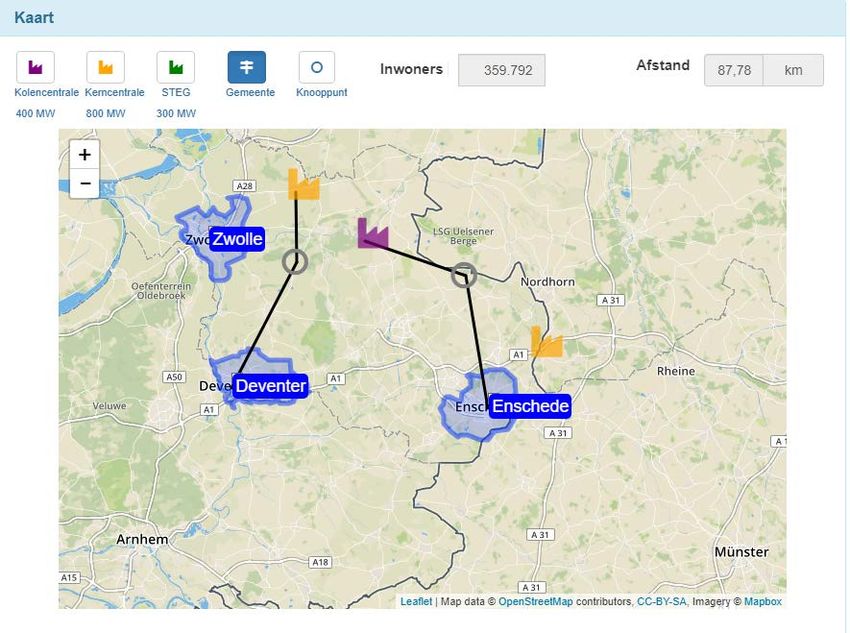
Active – Engaged learning with online labs Is there a reason for change in science education? Active and engaged learning Learning with online labs The Go-Lab ecosystem Some future developments Is learning with online labs effective? Co-funded by the EU (Horizon 2020 Programme) | NEXT-LAB
Is there a reason for change in
science education?
Baseball bat problem

     Ortiz, L. G., Heron, P. R. L., & Shaffer, P. S. (2005). Student understanding of static equilibrium: Predicting and accounting for
     balancing. American Journal of Physics, 73, 545-553.

Co-funded by the EU (Horizon 2020 Programme) | NEXT-LAB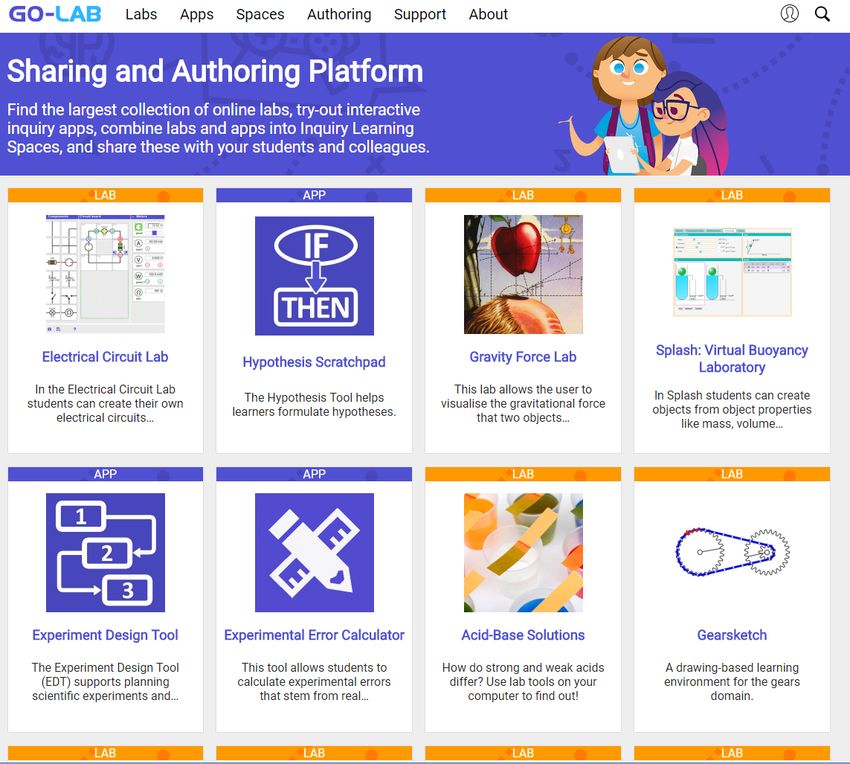
Baseball bat problem
Correct response:
Mass and distance are both factors whose product must be an equal
amount on both sides. Thus ma is less.
Typical incorrect response:
If the bat is to be balanced, there must be an equal amount of mass to
the left and right point of P.
Co-funded by the EU (Horizon 2020 Programme) | NEXT-LAB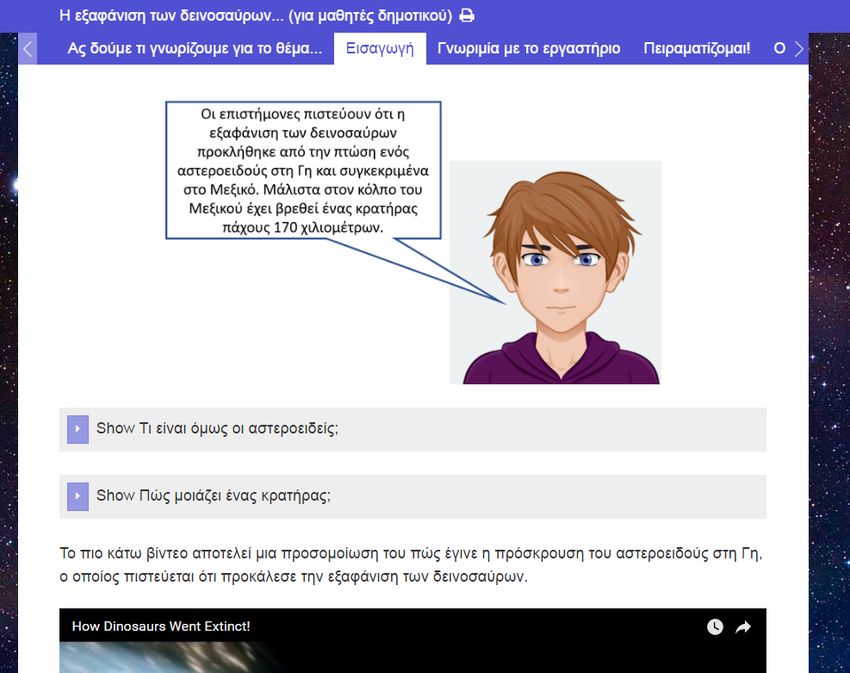
Correct responses
   Study Ortiz: University of Washington first year engineering, physics,
   math and computer science with high school physics experience (N =                                           20%
   674)

   Primary school teachers (N = 582)                                                                             3%

   Lower secondary physics teachers (N = 167)                                                                    6%

   University physics students in introductory calculus-based Mechanics
                                                                                                                14%
   (N => 1000 in 4 different countries)

   University engineering students in introductory engineering statics (N
                                                                                                                18%
   > 2500 in 4 different countries)

               From Costas Constantinou. EARLI presidential address 2015. https://www.researchgate.net/publication/
               282440831_EARLI_2015_Presidential_Address_Presentation_on_Modeling_Based_Learning_in_Science

Co-funded by the EU (Horizon 2020 Programme) | NEXT-LAB
Many similar results ….
    Viennot, L. (1979). Spontaneous reasoning in elementary dynamics. European Journal of Science Education, 1, 205-
            221.
    Trowbridge, D. E., & McDermott, L. C. (1980). Investigation of student understanding of the concept of velocity in
            one dimension. American Journal of Physics, 48, 1020-1028.
    Gunstone, R. F., & White, R. T. (1981). Understanding of gravity. Science Education, 65, 291-299.
    Cros, D., Chastrette, M., & Fayol, M. (1988). Conceptions of second year university students of some fundamental
            notions in chemistry. International Journal of Science Education, 10, 331-336.
    Kruger, C. J., Summers, M. K., & Palacio, D. J. (1990). An investigation of some English primary school teachers’
            understanding of the concepts force and gravity. British Educational Research Journal, 16, 383-397.
    Bodner, G. M. (1991). I have found you an argument: The conceptual knowledge of beginning chemistry graduate
            students. Journal of Chemical Education, 68, 385.
    Nakhleh, M. B. (1992). Why some students don't learn chemistry: Chemical misconceptions. Journal of Chemical
            Education, 69, 191.
    Smith, K. J., & Metz, P. A. (1996). Evaluating student understanding of solution chemistry through microscopic
            representations. Journal of Chemical Education, 73, 233.
    Lin, H., Cheng, H., & Lawrenz, F. (2000). The assessment of students and teachers' understanding of gas laws. Journal
            of Chemical Education, 77, 235.
    Burgoon, J. N., Heddle, M. L., & Duran, E. (2010). Re-examining the similarities between teacher and student
            conceptions about physical science. Journal of Science Teacher Education, 21, 859-872
    Trouille, L. E., Coble, K., Cochran, G. L., Bailey, J. M., Camarillo, C. T., Nickerson, M. D., & Cominsky, L. R. (2013).
            Investigating student ideas about cosmology III: Big bang theory, expansion, age, and history of the universe.
            Astronomy Education Review, 12
    Etc.

Co-funded by the EU (Horizon 2020 Programme) | NEXT-LAB
The proposed solution
Engaged learning – effect
Meta-analysis of 225 studies
Active learning increases performance by 0.47 SD
Students in traditional lectures were 1.5 times more like to fail than
students in active learning classes
“If the experiments analyzed here had been conducted as
randomized controlled trials of medical interventions, they may
have been stopped for benefit—meaning that enrolling patients
in the control condition might be discontinued because the
treatment being tested was clearly more beneficial” (p. 8413)
Freeman, S., Eddy, S. L., McDonough, M., Smith, M. K., Okoroafor, N., Jordt, H., & Wenderoth, M. P. (2014). Active learning increases
student performance in science, engineering, and mathematics. Proceedings of the National Academy of Sciences, 111, 8410-8415.
Co-funded by the EU (Horizon 2020 Programme) | NEXT-LAB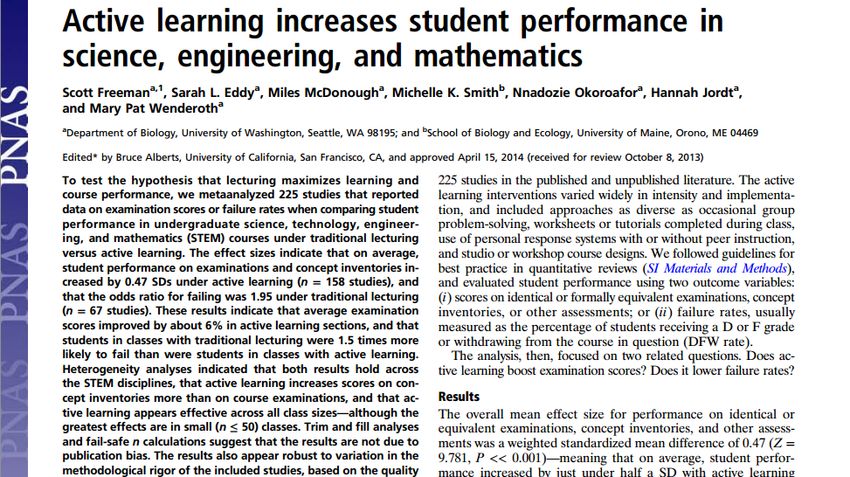
Forms of engaged learning

                                                                        Problem-based
             Experiential
                        Anchored instruction

                                                                           Peer tutoring
                   Exploratory
                                                             Inquiry Learning/
                                                             Inquiry Learning
                                                                Online Labs          Case-based
                   Collaborative
                      learning
Self-directed learning
                                                                  Project-based Response systems

   Co-funded by the EU (Horizon 2020 Programme) | NEXT-LAB
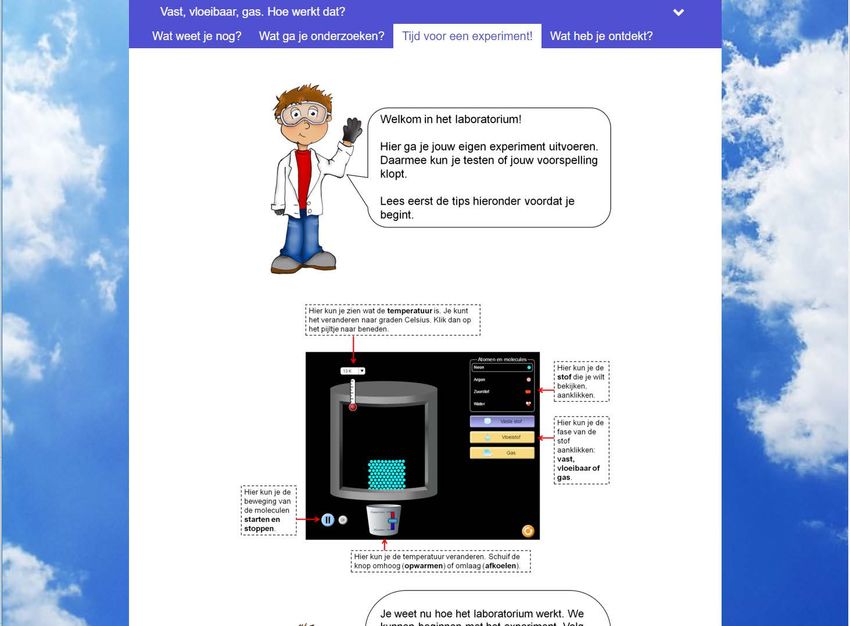
Learning with online labs
Online labs

Co-funded by the EU (Horizon 2020 Programme) | NEXT-LAB
An example from psychology
Inquiry as engaged learning
Expository methods (teaching) Inquiry methods (learning)
Teacher explains – students do Students do explorations first and
)
• •
exercises (ready made science) concepts
design and laws together
with their teachers (science-in-the
making)
• First: presentation of scientific • Students construct (not only
principles (lecture) confirm) meaning
• Then: experiment to verify • No clear separation between the
(confirm) the principle (laboratory) lecture and the lab
Schuster, D., Cobern, W. W., Adams, B. A. J., Undreiu, A., & Pleasants, B. (in press). Learning of core disciplinary ideas: Efficacy
comparison of two contrasting modes of science instruction. Research in Science Education.
Trout, L. Lee, C., Moog, R., Ricky, D. (2008). Inquiry learning: What is it? How do you do it? In: Chemistry in the National
Science Standards, 2nd Edition, S.L. Bretz (Ed.). Washington, DC: American Chemical Society.
Co-funded by the EU (Horizon 2020 Programme) | NEXT-LABHow to make inquiry learning effective?
Open inquiry (discovery) doesn’t work
Students need support (guided inquiry):
By providing students with an overall strategy
(inquiry cycle)
By giving students the right level of control
By ensuring the right level of prior knowledge
By providing students with guidance, e.g., scaffolds
(apps)
Mayer, R. E. (2004). Should there be a three-strikes rule against pure discovery learning? American Psychologist, 59, 14-19.
Riah, H., & Fraser, B. J. (1998, April). Chemistry learning environment and its association with students’ achievement in chemistry.
In annual meeting of the American Educational Research Association, San Diego, CA.
Co-funded by the EU (Horizon 2020 Programme) | NEXT-LABThe Go-Lab inquiry cycle Pedaste, M. Mäeots, M. Siiman L. A., de Jong, T., van Riesen, S. A. N., Kamp, E. T., Manoli, C. C., Zachariac, Z. C., & Tsourlidaki, E. (2015). Phases of inquiry-based learning: definitions and the inquiry cycle. Educational Research Review, 14, 47-61. Co-funded by the EU (Horizon 2020 Programme) | NEXT-LAB
Levels of inquiry
                          Traditional Structured                     Guided               Student               Student
                          Hands-on Inquiry                           Inquiry              directed              research
                                                                                          Inquiry               inquiry
   Topic                  Teacher             Teacher                Teacher              Teacher               Student
   Question               Teacher             Teacher                Teacher              Teacher/              Student
                                                                                          Student
   Materials              Teacher             Teacher                Teacher              Student               Student
   Procedures/            Teacher             Teacher                Teacher/             Student               Student
   design                                                            Student
   Results/               Teacher             Teacher/               Student              Student               Student
   analysis                                   Student
   Conclusions            Teacher             Student                Student              Student               Student

          Bonnstetter, R. J. (1998). Inquiry: learning from the past with an eye on the future. Electronic Journal of Science
          Education, 3 (1).

Co-funded by the EU (Horizon 2020 Programme) | NEXT-LAB
Aligning with prior knowledge
Programs that promote deep learning programs (e.g.,
problem-based learning, inquiry learning) give low
effect sizes if they are not preceded by surface
learning (Hattie & Donoghue, 2016).
A moderator analysis shows that simulations are only
effective if preceded by instruction of the relevant
concepts (Schneider & Preckel, 2017).
Hattie, J. A. C., & Donoghue, G. M. (2016). Learning strategies: a synthesis and conceptual model. Npj Science Of Learning, 1, 16013.
Schneider, M., & Preckel, F. (2017). Variables associated with achievement in higher education: A systematic review of meta-analyses.
Psychological Bulletin, 143, 565-600.
Co-funded by the EU (Horizon 2020 Programme) | NEXT-LABSequencing inquiry and instruction
Genetics: students take My Money game Inquiry environment (wet
the role of a plant or math skills lab) on magnetism
animal breeder and solve
breeding problems
A. Classroom instruction A. Study before play A. Information before lab
before simulation
B. Study after play B. Information after lab
B. Classroom instruction
C. Play only C. No information
after simulation
C. No simulation
Immediate effect: A = B > C
B>A=C A>B=C
Long term effect: A > B= C
Barzilai, S., & Blau, I. (2014). Wecker, C., Rachel, A., Heran-Dörr,
Brant, G., Hooper, E., & Sugrue, B. Scaffolding game-based E., Waltner, C., Wiesner, H., &
(1991). Which comes first, the learning: Impact on learning Fischer, F. (2013). Presenting
simulation or the lecture?, Journal of achievements, perceived theoretical ideas prior to inquiry
Educational Computing Research, 7, learning, and game activities fosters theory-level
469-481. experiences. Computers & knowledge. Journal of Research in
Education, 70, 65-79. Science Teaching, 50, 1180-1206.
Co-funded by the EU (Horizon 2020 Programme) | NEXT-LABConcurrent inquiry and instruction
Fictitious domain, shoe selling shop, so no prior
knowledge
Three conditions
A. Information before simulation
B. Information before simulation and during
C. No information
B > A > C
B and A more hypothesis driven behavior
Lazonder, A. W., Hagemans, M. G., & de Jong, T. (2010). Offering and discovering domain information in simulation-based inquiry
learning. Learning and Instruction, 20, 511-520.
Co-funded by the EU (Horizon 2020 Programme) | NEXT-LABNever go beyond the ZPD
Comparison of
Low prior knowledge students who learn much (LH)
Low prior knowledge students who do not learn that much
(LL)
PhET electrical circuit simulation
LH students use more pauses to reflect on their
experiments
LH students choose electrical circuits that are less
complex, clearly staying within their possibilities (Zone
of Proximal Development)
Perez, S., Massey-Allard, J., Butler, D., Ives, J., Bonn, D., Yee, N., & Roll, I. (2017). Identifying productive inquiry in virtual labs using
sequence mining. In E. André, R. Baker, X. Hu, M. M. T. Rodrigo, & B. du Boulay (Eds.), Artificial intelligence in education: 18th
international conference, AIED 2017, Wuhan, China, June 28 – July 1, 2017, proceedings (pp. 287-298). Cham: Springer
International Publishing.
Co-funded by the EU (Horizon 2020 Programme) | NEXT-LABModern guided inquiry with scaffolds
(tools/apps)
Mixed and dynamic initiative
Geared towards specific
difficulties that students
experience
Possibility of fading
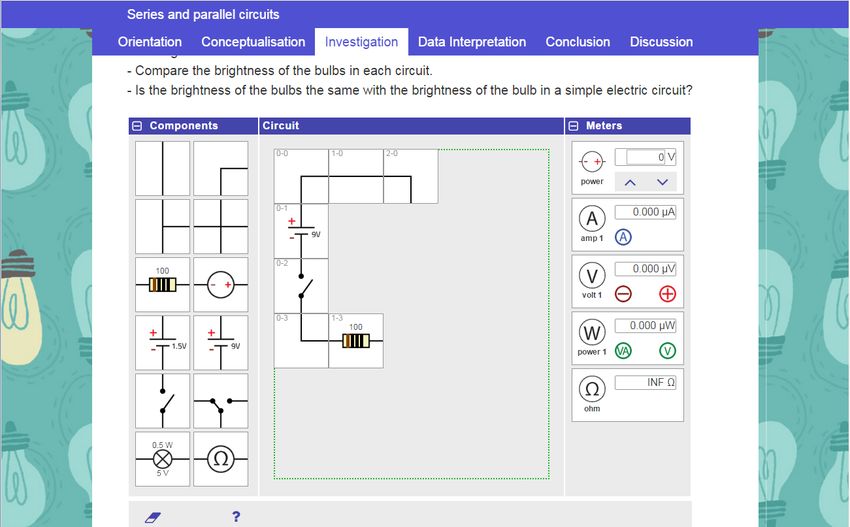
Co-funded by the EU (Horizon 2020 Programme) | NEXT-LABAn example: the hypothesis scratchpad
Domain terms provide content
Conditionals help to formulate a testable hypothesis
Based on: van Joolingen, W. R. & de Jong, T. (1991). Supporting hypothesis generation by learners exploring an interactive
computer simulation. Instructional Science, 20, 389-404.
Co-funded by the EU (Horizon 2020 Programme) | NEXT-LABThe Go-Lab ecosystem
Go-Lab in one slide
Federation of online labs ….
                                                           …. Embedded into educational
                                                          resources and guidance ….

                                                                              .. Shared with the
                                                                              community of users

Co-funded by the EU (Horizon 2020 Programme) | NEXT-LAB
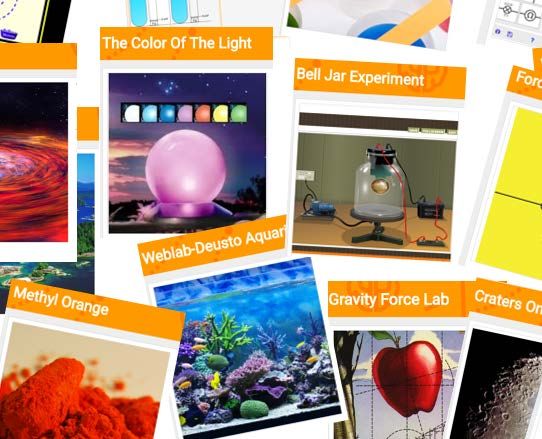
Go-Lab sharing platform (www.golabz.eu) Co-funded by the EU (Horizon 2020 Programme) | NEXT-LAB
What makes the Go-Lab ecosystem
unique?
It collects online labs from around the world in one
portal
Teachers can combine each lab with texts, videos, and
apps (scaffolds) in structured learning environments and
very easily adapt these to their own needs
These learning environments can be distributed to
students with one click of the button
And they can be directly shared with other teachers who
can re-use them by copying and adapting
And much much more …
Co-funded by the EU (Horizon 2020 Programme) | NEXT-LABIs Go-Lab a success?
Sharing platform
> 500 online labs
> 700 published learning spaces
42 apps
Over 200.000 different visitors
14:000 visits per month
> 20.000 registrations authoring platform
> 10.000 individuals developed a learning space
Co-funded by the EU (Horizon 2020 Programme) | NEXT-LABwww.golabz.eu (520 labs) Co-funded by the EU (Horizon 2020 Programme) | NEXT-LAB
www.golabz.eu (42 apps)

Co-funded by the EU (Horizon 2020 Programme) | NEXT-LAB
An app for every phase
                                                          DISCUSSION
                     ORIENTATION
                     CONCEPTUALIZATION
                     INVESTIGATION
                     CONCLUSION

Co-funded by the EU (Horizon 2020 Programme) | NEXT-LAB
www.golabz.eu (743 inquiry spaces) Co-funded by the EU (Horizon 2020 Programme) | NEXT-LAB
21st century skills

Collaboration
The professional of the future T-shaped professional Wikipedia: “The concept of T-shaped skills, or T-shaped persons is a metaphor used in job recruitment to describe the abilities of persons in the workforce. The vertical bar on the T represents the depth of related skills and expertise in a single field, whereas the horizontal bar is the ability to collaborate across disciplines with experts in other areas and to apply knowledge in areas of expertise other than one's own.” Funded by the EU (Horizon 2020 Programme) | NEXT-LAB
Example: collaboration - Tw1st education
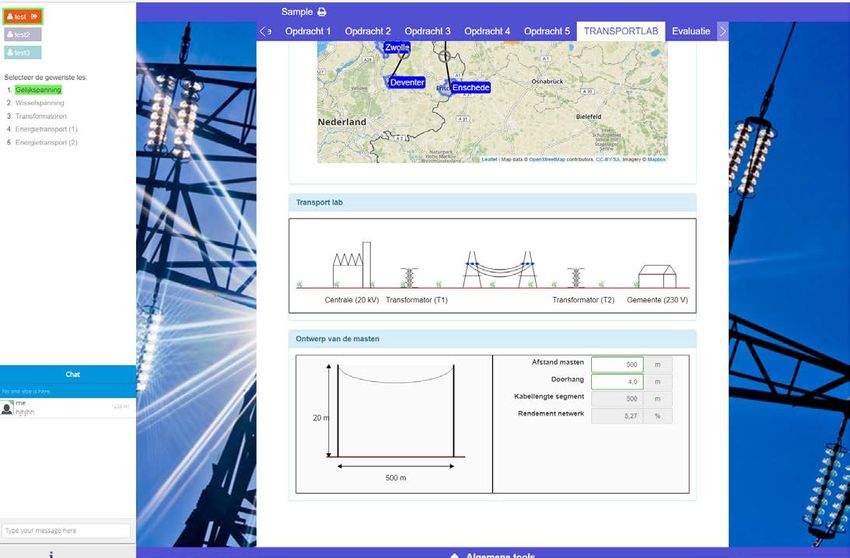
Knowledge about electricity transport for vocational
students
Shared lab on electricity transport, chat, role division
RIDE rules
Collaboration app:
Collaboration charting tool
Collaboration assessment tool
Evaluation, future actions
The Tw1st Education project is sponsored by NWO and Tech Your Future as project 409-15-209 and is a collaborative project
between the University of Twente, Saxion University of Applied Sciences and four schools for Vocational training. The UT
researchers are Elise Eshuis, Judith ter Vrugte, Anjo Anjewierden and Ton de Jong
Co-funded by the EU (Horizon 2020 Programme) | NEXT-LABTw1st: Electricity transport lab
Chat
Co-funded by the EU (Horizon 2020 Programme) | NEXT-LAB21stC Learning goal: the RIDE rules
RIDE Rule Sub-rules
(R) Respect Everyone will have a chance to contribute
Everyone’s ideas will be thoroughly considered
(I) Intelligent collaboration Sharing all relevant information and suggestions
Clarify the information given
Explain the answers given
Give criticism
(D) Deciding together Explicit and joint agreement will precede decisions and actions
Accepting that the group (rather than an individual member) is
responsible for decisions and actions
(E) Encouraging Ask for explanations
Ask till you understand
Give positive feedback
Separate instruction before the lab
Through the collaboration app
From: Saab, N., van Joolingen, W., & van Hout-Wolters, B. (2012). Support of the collaborative inquiry learning process: influence
of support on task and team regulation. Metacognition and Learning, 7, 7-23. (p. 13)
Co-funded by the EU (Horizon 2020 Programme) | NEXT-LABAwareness: charting the collaboration
Judge yourself
and the others
on the four RIDE
rules
Co-funded by the EU (Horizon 2020 Programme) | NEXT-LABAwareness: Visualizing the collaboration
Overview per
member of their
Overview
own score and of
the
average
average group
score by
score
others perthem,
about RIDE
rule rule
for each RIDE
Co-funded by the EU (Horizon 2020 Programme) | NEXT-LABAssessment – Lessons learned
• Did we reach our
collaboration targets?
• What went right?
• What can be improved?
• This we will continue to do.
• This we will improve.
Co-funded by the EU (Horizon 2020 Programme) | NEXT-LAB21st century skills Reflection
Reflection/critical thinking
Reflection is a process “in which people
recapture their experience, think about it, mull
it over and evaluate it”
• Boud D, Keogh R, Walker D. Reflection: turning experience
into learning. London: Kogan Page; 1985. Promoting
reflection in learning: a model; pp. 18–40.
Reflection components
Awareness: product or process
Comparison to a norm (of expert, peers, theory)
Guiding questions
Funded by the EU (Horizon 2020 Programme) | NEXT-LABReflection can be associated with learning
Comparison of
Low prior knowledge students who learn much (LH)
Low prior knowledge students who do not learn that much
(LL)
PhET electrical circuit simulation
LH students use more pauses to reflect on their
experiments
See also:
Fratamico, L., Conati, C., Kardan, S., & Roll, I. (2017). Applying a framework for student modeling in exploratory learning
environments: Comparing data representation granularity to handle environment complexity. International Journal of Artificial
Intelligence in Education, 27, 320-352.
Bumbacher,
Perez, E., Salehi, S.,J.,Wierzchula,
S., Massey-Allard, M., &J.,Blikstein,
Butler, D., Ives, Bonn, D.,P.Yee,
(2015).
N., &Learning environments
Roll, I. (2017). andproductive
Identifying inquiry behaviors
inquiry in
in science inquiry
virtual labs using
learning: How
sequence their
mining. In interplay
E. André,affects theX.development
R. Baker, of conceptual
Hu, M. M. T. Rodrigo, understanding
& B. du Boulay (Eds.),inArtificial
physics. intelligence
In O. C. Santos, J. G. Boticario,
in education: 18th C.
Romero, M. Pechenizkiy,
international conference, A. Merceron,
AIED P. Mitros,
2017, Wuhan, J. M.
China, Luna,
June 28 C. Mihaescu,
– July 1, 2017,P.proceedings
Moreno, A. Hershkovitz,
(pp. 287-298). S. Cham:
Ventura, & M. Desmarais
Springer
(Eds.), Proceedings
International of the 8th international conference on educational data mining (pp. 61-69). Madrid.
Publishing.
Co-funded by the EU (Horizon 2020 Programme) | NEXT-LABAggregated concept map - awareness
Aggregated concept map
For every concept it is given in how many
individual concept maps it appears. The
thickness of the relations indicates how often
this relation occurs.
Co-funded by the EU (Horizon 2020 Programme) | NEXT-LABAggregated concept map - assessment
Comparison with the ACM
Which concepts in your CM are missing compared
to the ACM?
Are the concepts you can remove compared to the
ACM?
Etc.
Application of general rules
Can you make the concept map simpler without
losing explanation power?
Can you group concepts at the same level of
abstraction?
Etc.
Co-funded by the EU (Horizon 2020 Programme) | NEXT-LABApp: Reflection over time spent
Awareness
Guiding Criterion
questions
Co-funded by the EU (Horizon 2020 Programme) | NEXT-LABIs inquiry learning effective?
Is inquiry learning effective?
On the basis of meta-analyses: yes
Compared to direct instruction better results of
inquiry learning
• But only when guidance is offered
• If introduced after surface learning
Comment:
Only studies with a significant result are published
de Jong, T. (2006). Computer simulations - Technological advances in inquiry learning. Science, 312, 532-533.
de Jong, T., Linn, M.C., & Zacharia, Z.C. (2013). Physical and virtual laboratories in science and engineering education. Science, 340, 305-308
Hattie, J. A. C., & Donoghue, G. M. (2016). Learning strategies: A synthesis and conceptual model. Npj Science Of Learning, 1, 16013.
Co-funded by the EU (Horizon 2020 Programme) | NEXT-LABIs inquiry learning effective?
On the basis of PISA data: no
PISA data show a negative correlation between
exposure to inquiry and scores in science
Comment:
Based on student reporting
Teacher/course quality is not measured
May often refer to traditional recipe like practicals
Data concerns frequency
OECD. (2016). Pisa 2015 results (volume II): Policies and practices for successful schools, . Paris (France): PISA, OECD Publishing.
Cairns, D., & Areepattamannil, S. (in press). Exploring the relations of inquiry-based teaching to science achievement and
dispositions in 54 countries. Research in Science Education.
Co-funded by the EU (Horizon 2020 Programme) | NEXT-LABConclusion – a balanced curriculum
Inquiry learning (with online labs) may help
to improve students’ conceptual knowledge
Should be embedded in (teacher – peer –
software) guidance
Should be at the right place in the curriculum
(after acquiring surface knowledge)
Should be used to a certain frequency level
Teachers should receive an adequate (in/pre-
service training on pedagogy and
technology)
Co-funded by the EU (Horizon 2020 Programme) | NEXT-LABwww.golabz.eu Co-funded by the EU (Horizon 2020 Programme) | NEXT-LAB
You can also read


