BULLETIN - FINTECH REGULATION SOUTH AFRICA LAYS THE GROUNDWORK FOR - Masthead
←
→
Page content transcription
If your browser does not render page correctly, please read the page content below
BULLETIN        QUARTER 2: 2018/19

SOUTH AFRICA LAYS THE GROUNDWORK FOR

FINTECH REGULATION

BULLETIN
                                            contents
The FSCA Bulletin is published quarterly    EDITOR’S NOTE                                            03
and distributed free of charge. Views
expressed by the contributors are not
necessarily those of the Financial Sector
Conduct Authority (FSCA). Reproduction,
copying or extraction, by any means,
of the whole or part of this publication,
may not be undertaken without the
permission of the editor.                   PAGE 04
                                            SOUTH AFRICA LAYS THE GROUNDWORK FOR
EDITORIAL TEAM                              FINTECH REGULATION
Tembisa Marele
Nokuthula Mtungwa
Reneilwe Mthelebofu                         REGULATORY FOCUS                                         08
                                            Report by the FSCA                                       08
SUBSCRIPTIONS
All enquiries should be directed to         Nepi Rockcastle and Greenbay added to FSCA               11
                                            investigation
Reneilwe Mthelebofu using the contact
details provided below.                     A regulatory update on Directive 8                       14
                                            Financial Sector Regulation and Financial Inclusion      16
DESIGN PRINTING & LAYOUT
Tirommoho Communications
(012) 343 4561
                                            INDEPENDENT PERSPECTIVE                                  17
                                            Financial Intelligence Act Broadened to Stem Crime by    17
CONTRIBUTIONS                               FSP's
Contributions to the FSCA Bulletin are
welcomed and should be sent to              WARNINGS                                                 20
Reneilwe Mthelebofu at the address
                                            EVENTS                                                   23
below. The editor reserves the right to
edit contributions.                         FSCA at the IISA Conference                              23

CONTACT INFORMATION                         CONSUMER EDUCATION                                       25
P O Box 35655                               Inter–Provincial Financial Literacy Speech Competition   25
Menlo Park,                                 2018 Final
0102
Republic of South Africa
Tel: 012 428 8000
Fax: 012 346 6481
reneilwe.mthelebofu@fsca.co.za
EDITOR’S NOTE

                    EDITOR: Tembisa Marele

W     e have recently released our three year strategy;
      which details our regulatory approach and priority
areas in the short to medium term. We have six key goals
                                                            currency landscape have made it necessary for a
                                                            regulatory framework to be developed.

                                                            To this end, the South African Reserve Bank (SARB) has
we want to achieve during this period. They are about
                                                            established a FinTech programme that is designed to
building a new organisation; an inclusive and transformed
                                                            assess the regulatory implications of these technological
financial sector, a robust regulatory framework that
                                                            developments, and in this regard, to strengthen the
promotes fair customer treatment, informed financial
                                                            ongoing collaboration with fellow regulators. This newly
customers, strengthening the efficiency and integrity of
                                                            established Intergovernmental FinTech Working Group
our financial markets, and understanding new ways of
                                                            (IFWG) recently introduced a market outreach workshop
doing business and disruptive technologies.
                                                            to help regulators and policy makers to better understand
The financial services sector continues to evolve and       the FinTech environment.
new technologies are fueling the rate of change, creating
                                                            In this issue, we further look at Directive 8 in the
opportunities to improve efficiencies, reach more
                                                            retirement fund space, which was issued to combat and
customers and drive inclusion. These opportunities
                                                            prevent corruption and corrupt activities by prohibiting
however, if not effectively managed and understood,
                                                            acceptance of gratification by trustees. The Directive has
comes with the risk of creating instability and further
                                                            garnered a lot of attention in the retirement funds industry,
exclusion resulting in poor outcomes for customers and
                                                            attention possibly caused by the extensive breadth of its
markets. Traditionally, regulators have been behind the
                                                            scope and its possible impact on officials and service
curve in Financial Technology (FinTech) developments,
                                                            providers involved with commercially sponsored funds.
and due to the escalating pace of change and the scale
of the risk and opportunity that FinTech presents, we       As always we value any feedback from you, so get in touch
recognise that this has to be a strategic focus area for    with us using the contact details provided.
the FSCA, in collaboration with other financial sector
stakeholders.

For us, the appropriate regulatory response is to create    Enjoy the issue!
balance between innovation and risk management,
with the ultimate goal of ensuring good outcomes for
customers. The financial risks involved in the virtual      Tembisa

                                                       3                                 FSCA Bulletin | Quarter 2 2018/19
SOUTH AFRICA LAYS
     COVER STORY
                                    THE GROUNDWORK FOR
                                    FINTECH REGULATION

BY CAROLINE DA SILVA - DIVISIONAL EXECUTIVE: REGULATORY POLICY

F   inancial Technology (FinTech)
    has become an increasingly
popular phenomenon, with people
                                         that they are not regulated and
                                         there are no legal requirements or
                                         standardised documents for the
                                                                                  are expected to include the
                                                                                  facilitation of the development of
                                                                                  refreshed policy stances for the SARB
familiarising    themselves     with     issuer to adhere to, made it necessary   across the FinTech domain. This will
crypto-currencies such as Bitcoin,       for a regulatory framework to be         be done by robustly analysing both
SAFcoin and many others. The             developed.                               the pros and the cons of emerging
main issue with all these currencies                                              FinTech innovations as well as the
                                         The SARB later announced the
is that they operate in a relatively                                              appropriate regulatory responses
                                         establishment of the FinTech
unregulated    environment;     thus                                              to these developments. A critical
                                         programme, designed to assess
government is unable to either track                                              success factor of the programme will
                                         the emergence and regulatory
or protect consumers from potential                                               be the ongoing collaboration with our
                                         implications of FinTech. FinTech
fraud that may be associated with                                                 fellow regulators”.
                                         is simply the process of infusing
these platforms.
                                         technology into financial services,      The     newly     established    Inter
According to an article published on     which will potentially yield benefits,   governmental      FinTech     Working
the official site of Moneyweb (http://   including     improving     financial    Group, which comprises the National
www.moneyweb.co.za/), “the South         inclusion, this a definition adopted     Treasury (NT), the Financial Sector
African Reserve Bank (SARB) issued       by the various policymakers and key      Conduct Authority (FSCA) and the
a position paper on virtual currencies   industry players in SA.                  Financial Intelligence Centre (FIC),
in 2014. At the time, the central                                                 introduced its inaugural market
                                         The SARB has recently decided
bank opted not to oversee, supervise                                              outreach workshop. The Working
                                         to establish a broader FinTech
or regulate the virtual currency                                                  Group was formed to develop a
                                         programme, with dedicated full-time
landscape as it posed no threat to                                                common       understanding     among
                                         staff members. Although it is at an
financial stability. The SARB did,                                                regulators and policymakers of
                                         early stage, this programme will be
however, reserve its right to change                                              FinTech developments and relevant
                                         required to strategically review the
its position, should the landscape                                                policy and regulatory implications for
                                         emergence of FinTech and assess the
warrant regulatory intervention.”                                                 the South African financial sector and
                                         related user cases.
                                                                                  economy. It also seeks to develop and
Although this seemed like a positive
                                         According to Francois Groepe, Deputy     co-ordinate an approach to FinTech
paradigm shift, the financial risks
                                         Governor of the South African Reserve    policy making in the country.
involved when it comes to crypto-
                                         Bank, “The primary responsibilities
currencies and tokens and the fact

FSCA Bulletin | Quarter 2 2018/19                            4
COVER STORY

The workshop focused on the following key areas.

               1. PRIVATE CRYPTO-CURRENCIES: the session aimed to gain insight from the industry on broader
               crypto-currency activities such as the existing and emerging use cases, the role of crypto-currency
               exchanges and more specific activities relating to Initial Coin Offerings (ICOs). For the purposes of
               this document, crypto-currencies and tokens are referred to as separate concepts.

               2. FINANCIAL INCLUSION: the session aimed to achieve greater understanding of the existing and
       R       potential future impact of FinTech on financial inclusion, as well as an understanding of risks,
               including consumer protection risks, regulatory challenges and possible policy or regulatory
               solutions. Innovations such as digital identity were also discussed.

               3. INNOVATION FACILITATION: the session aimed to identify learnings from the experience of
               other regulators that have implemented innovation facilitators and/or policy positions conducive
               to innovation facilitation as well as improved engagement between regulators, FinTech providers
               and incumbents.

               4. REGULATORY AND POLICY RESPONSES: the closed session aimed to provide the IFWG and its
       R       members with the opportunity to reflect on the feedback provided by workshop participants. During
               the session, policymakers and regulators considered the inputs that were received. Input received
               from participants was contrasted to work-in-progress on respective focus areas.

According to the National Treasury,      A tangential question was where           The discussions that occurred
the workshop brought regulators,         this innovation should be sourced         throughout the workshop have
policymakers and industry players        from. The discussion emphasised           influenced the production of a draft
together to develop a ‘harmonised’       the importance of understanding           policy paper which will set out the
approach     to   FinTech-    driven     the financial service needs of the        policy position on FinTech and
innovation and consider appropriate      currently underserved consumers.          innovation in South Africa’s financial
policies and regulatory frameworks.      The second major issue indicated          sector by 2019.
                                         by delegates was the difficult
The conference conceded that                                                       The IFWG will host another industry
                                         Know Your Client/Customer. (KYC)
a robust regulatory framework                                                      workshop before the end of 2018.
                                         requirements that are placed on
would be beneficial to protect and                                                 In this workshop there will be more
                                         financial institutions, assigned by
educate investors against bad                                                      discussion on issues that were not
                                         global Anti Money Laundering and
actors. Regulators have an option                                                  covered in the first workshop. The
                                         Counter Terrorism Financing (AML/
to either amend existing laws by                                                   SARB National Payments Service
                                         CTF) standards that South Africa
changing current definitions to cater                                              Department will also host its
                                         subscribes to. These approaches
for emerging innovation or create                                                  payments and innovation workshop.
                                         would require regulatory changes in
a new overarching regulation that
                                         whatever kind of KYC due diligence        The National Treasury has indicated
would cater for FinTech. To monitor
                                         is acceptable among financial             that a FinTech framework will
the quality and credibility of issuers
                                         institutions.                             form part of the much-anticipated
it was proposed that registering all
                                                                                   Conduct of Financial Institutions
ICOs with a central body would be        Going forward
                                                                                   (COFI) Bill, which may also include
ideal.
                                         The market participants, in particular,   the introduction of a ‘regulatory
The workshop discussion also             were excited that regulators were         sandbox’-type initiative to encourage
brought up a few regulatory issues       taking steps toward making the            innovation within a controlled
that may be hampering South Africa’s     environment in South Africa more          environment.
progress on financial inclusion.         enabling for innovation, showing
                                                                                   One of the FSCAs priority focus area
Two debates emerged among the            that South Africa was indeed ‘open
                                                                                   in the newly released Regulatory
workshop delegates. Both sides of        for business’ to investors and
                                                                                   Strategy is understanding new
the debate recognised the role that      entrepreneurs looking to make an
                                                                                   ways of doing business          and
technology must play.                    impact in the local financial market.

                                                         5                                FSCA Bulletin | Quarter 2 2018/19
COVER STORY

disruptive technologies. This will         where financial institutions can         as controlled environments within
assist the Authority to understand         approach the conduct authority for       which innovation can occur is
the impact this focus area will have       direction on how regulation impacts      evidence that they acknowledge that
on the consumers by institutions.          on new innovative developments           FinTech presents both opportunities
Furthermore, research will need to         and to test new innovations in a safe    and challenges. Some of these
be conducted to inform the FSCAs           environment.                             challenges arise in the areas of risk
position in FinTech. There are                                                      and regulation.
                                           The fact that regulators and
discussions with the regulatory
                                           supervisory bodies across the world
quarters to establish innovation hubs,
                                           are creating ‘regulatory sandboxes’
acceleration hubs, and sandboxes,

SOME FINTECH BUZZWORDS
 CRYPTOCURRENCY: A digital currency that relies on ETHEREUM: A type of blockchain network. The bitcoin
 cryptography to validate and secure transactions. There and Ethereum blockchains differ primarily in purpose
 are different types of cryptocurrencies - bitcoin and Ether and capability. While the bitcoin blockchain is used
 are amongst the best known.                                    to track ownership of the digital currency bitcoin, the
 BITCOIN: A digital - or crypto - currency that enables Ethereum blockchain can be used to build decentralised
 payment in a decentralised peer-to-peer (P2P) network applications. The virtual currency associated with
 not governed by any central authority or middleman.            Ethereum is called Ether.

 SANDBOXING: Is a process of allowing testing of new P2P LENDING: Also known as social lending, peer-to-peer
 technologies in a managed space, affording customers lenders run websites where borrowers can secure money
 appropriate protection and resolution should the FinTech directly from lenders bypassing banks.
 initiative not deliver to expectations.                        SMART CONTRACTS: Software that runs on blockchain
 INSURTECH: Inspired by the term fintech, insurtech technology and can automatically enforce the terms
 champions the use of technology to modernise and of an agreement. A “smart bond”, for example would
 improve the insurance business.                                automatically make interest payments to investors.

 REGTECH: Or regulatory technology. The term refers to ROBO-ADVICE: Financial advice given through the use
 software and other technology aimed at helping financial of computer algorithms. Robo-advisors, also known as
 services businesses comply with regulations efficiently online investment managers, typically invest their clients’
 and inexpensively, or regulators enforce rules.         money in portfolios made up of low cost exchange-traded
                                                                funds.
 BLOCKCHAIN: Software that first emerged as the system
 underpinning bitcoin. Also known as distributed ledger KYC: Or know your client/customer. A process to ensure
 technology (DLT), it is a shared record of information that businesses identify and verify the identity of their clients,
 is maintained and updated by a network of computers for anti-money laundering (AML) purposes.
 rather than a central authority. It is protected and secured
 by advanced cryptography.

FSCA Bulletin | Quarter 2 2018/19                               6
Our Vision
To ensure an efficient
financial sector where
customers are informed
and treated fairly

            7      FSCA Bulletin | Quarter 2 2018/19
REGULATORY
        FOCUS

REPORT BY THE FSCA
BY SOLLY KEETSE, MARKET                   In market manipulation and false           (or the now repealed Insider Trading
INFRASTRUCTURE, FSCA                      reporting cases, the FSCA may              Act and Securities Services Act)
                                          impose a penalty and a cost order          was contravened. In 91 cases the

T    he FSCA is mandated to
     investigate and in appropriate
instances take enforcement action in
                                          on the offender. In addition, market
                                          abuse transgressions are criminal
                                                                                     FSCA/DMA decided to proceed with
                                                                                     enforcement action. The penalties
                                          offences in terms of the FMA               imposed on offenders to date
cases of market abuse in the financial
                                          (Financial Markets Act, No. 19 of 2012).   amounts to approximately R108
markets. Three kinds of market
                                          The Director of Public Prosecutions        million.
abuse are prohibited in South Africa,
                                          may institute criminal action against
namely; insider trading, market                                                      The Regulatory Actions Forum of
                                          any person.
manipulation (prohibited        trading                                              the FSCA (Financial Sector Conduct
practices) and false reporting relating   It is not the function of the FSCA         Authority) held a meeting on 24 July
to the affairs of a public company.       to institute criminal prosecutions;        2018 to discuss various market abuse
                                          however, it provides all information       investigations. Below is a list detailing
In matters of insider trading, the
                                          necessary to assist the Director of        the current status of insider trading
FSCA may order that the alleged
                                          Public Prosecutions.                       and prohibited trading practices
offender pay to the profit made or
                                                                                     investigations. It should be noted
the losses avoided as a result of the     Since 1999, the FSCA and its
                                                                                     that these are not investigations of
offending transactions, and a penalty     predecessors, the Directorate of
                                                                                     the affairs of the companies listed
of up to three times such amount.         Market Abuse and the Insider Trading
                                                                                     but of trading in shares on the stock
These funds are distributed, after        Directorate, have investigated a
                                                                                     exchange.
recovery of costs, to persons who         total of 413 cases. 295 cases were
may have been prejudiced by the           closed because there was no, or
offending transactions.                   insufficient, evidence that the FMA

FSCA Bulletin | Quarter 2 2018/19                              8
REGULATORY FOCUS

POSSIBLE INSIDER TRADING CASES

 Security                                            JSE code        Period                        Case status

1.    Capitec Bank Holdings                          CPI         2018-01 – 2018-02                Ongoing
2.    EOH Holdings Limited                           EOH         2017-11 – 2017-12                Ongoing
3.    Famous Brands Limited                          FBR         2017-10                          Closed
4.    Fortress Income Fund Limited (nr 2)            FORT        2017–2018                        Ongoing
5.    Greenbay Properties Limited                    GRP         2017–2018                        Ongoing
6.    Mr Price Group Limited                         MRP         2017-11                          Ongoing
7.    Murray & Roberts Holdings Limited              MUR         2018-03                          Ongoing
8.    Resilient REIT Limited (nr 2)                  RES         2017–2018                        Ongoing
9.    Steinhoff International Holdings N.V. (nr 1)   SNH         2017-08                          Ongoing
10.   Steinhoff International Holdings N.V. (nr 3)   SNH         2017-11 – 2017-12                Ongoing
11.   Steinhoff International Holdings N.V. (nr 4)   SNH         2017-12                          Ongoing
12.   Super Group Limited (nr 2)                     SPG         2017-09 – 2017-10                Closed
13.   Times Media Group Limited                      TMG         2014-02 – 2014-03                Ongoing
14.   Trustco Group Limited                          TTO         2017-11                          Ongoing
15.   Vodacom Group Limited                          VOD         2017-10                          Ongoing
16.   WG Wearne Limited                              WEA         2017-09                          Ongoing
17.   Wheat Futures Contracts                        WEAT        2017-04 – 2017-05                Ongoing

POSSIBLE PROHIBITED TRADING PRACTICES (MARKET MANIPULATION) CASES

 Security                                             JSE code         Period                      Case status
18.   Aspen Pharmacare Holdings Limited (nr 2)        APN              2018-01                    Ongoing

19.   Capitec Bank Holdings (nr 2)                    CPI              2018-01 – 2018-02          Ongoing

20.   December 2016 WEAT                              WEAT             2016-09                    Ongoing

21.   15 June 2016 ALSI Futures Contract              15June16ALSI     2016-04                    Ongoing

22.   Oakbay Resources and Energy Limited (nr 2)      ORL              2014-11 – 2015-04          Ongoing

23.   Resilient REIT Limited                          RES              2018-01                    Ongoing

24. Resilient REIT Limited (nr 2)                     RES              2017–2018                  Ongoing

25.   SABMiller PLC                                   SAB              2016-03-09                 Ongoing

26.   The Foschini Group Limited                      TFG              2016-03-09                 Ongoing

27.   Trustco Group Limited (nr 2)                    TTO              2017-12 – 2018-02          Ongoing
28.   White Maize Futures Contract 24 March 2017      WMAZ             2017-03-24                 Ongoing
29.   Fortress Income Fund Limited (nr 2)             FORT             2017–2018                  Ongoing
30.   Nepi Rockcastle PLC                             NRT              2017–2018                  Ongoing
31.   Greenbay Properties Limited                     GRP              2017–2018                  Ongoing

                                                           9                           FSCA Bulletin | Quarter 2 2018/19
REGULATORY FOCUS

POSSIBLE FALSE OR MISLEADING REPORTING CASES

 Security                                             JSE code      Publication                 Case status
 32.   African Dawn Capital Limited                   AFD           2007-03-01 – 2010-06-30     Ongoing
 33.   Alliance Mining Corporation Limited            ALM           2007-03-01 – 2009-09-30     Ongoing
 34.   Aspen Pharmacare Holdings Limited (nr 2)       APN           2018-01                     Ongoing
 35.   Capitec Bank Holdings (nr 2)                   CPI           2018-01 – 2018-02           Ongoing
 36.   Lewis Group Limited (nr 2)                     LEW           2015-01 – 2016-10           Ongoing
 37.   Resilient REIT Limited                         RES           2018-01                     Ongoing
 38.   Resilient REIT Limited (nr 2)                  RES           2017–2018                   Ongoing
 39.   Steinhoff International Holdings N.V. (nr 2)   SNH           2015, 2016 & 2017           Ongoing
 40. Steinhoff International Holdings N.V. (nr 4)     SNH           2017-12                     Ongoing

Investigations are ‘closed’ once it becomes evident that no, or insufficient, evidence has been obtained to warrant
action in terms of the Act.

PRELIMINARY INVESTIGATIONS

 Security                                             JSE Code      Period                     Case status
 1.    EOH Holdings Limited                           EOH           2017-07-18                 Ongoing

FSCA Bulletin | Quarter 2 2018/19                           10
REGULATORY FOCUS
NEPI ROCKCASTLE AND GREENBAY ADDED
TO FSCA INVESTIGATION
BY RAY MAHLAKA, MONEYWEB Greenbay has been included in the of Nepi Rockcastle and Green bay for
market regulator’s roll of ongoing the period beginning in 2017 to 2018.
M arket regulator’s probe into
possible insider trading and
market manipulation within the
investigations.
The two are new additions to the
Nepi Rockcastle, Green bay and
Fortress have long been considered
Resilient group is expanded. FSCA's probe. The regulator began by market watchers to be associate
an investigation in March 2018 to companies or stablemates of
The Financial Sector Conduct scrutinise trades in Resilient and Resilient, given their complex web of
Authority (FSCA) has broadened Fortress Income Fund shares after cross-shareholdings in each other.
its investigation into the Resilient scathing allegations of share price
group of companies, casting its net To recap: Resilient holds a 13% stake
manipulation by key directors and
wide to include Nepi Rockcastle in Nepi Rockcastle and 21% in
associates surfaced.
and Greenbay Properties for Greenbay. Fortress holds a 9.9%
possible insider trading and market Nepi Rockcastle is being probed stake in Resilient and 24% in Nepi
manipulation. for possible market manipulation, Rockcastle (see image below).
while the investigation into Green Resilient recently unwound its
A FSCA update of investigations bay centres on both possible market shareholding in Fortress, disposing
dated 26 July 2018 reveals that JSE- manipulation and insider trading. of its 15.5% stake to existing
listed Nepi Rockcastle and The FSCA will review the share trades shareholders.
Exhibit 1: Group Structure
FFB: 172 930 000, 15.92%
RESILIENT FORTRESS
RES: 36 610 000, 8.61%
%
GR
.12
NRP: 75 000 000, 12.98%
P: HM
20
19 N:
62
0,
81 60
00
30 000
0
0 , 0.
63
00 78%
09
0,
20
19
.9
P:
0%
GR
NEPIROCK
GREENBAY HAMMERSON
CASTLE
NRP: 139 850 000, 24.2%
Source: Argaam Capital Research, Company Data
As at April 2018, Resilient sold its Fortress shareholding.
11 FSCA Bulletin | Quarter 2 2018/19REGULATORY FOCUS
Scathing reports by asset managers “normal market activity but from The FSCA said its investigation is
36ONE and Mergence, stockbroker deliberate (and frequently concealed) not centred on the company affairs
Navigare, and independent sell-side actions by some of the influential of Nepi Rockcastle and Greenbay, but
research house Arqaam Capital have owners and key management of the that it will probe the share trades of
put the spotlight on questionable group”. both companies to determine if there
practices in the Resilient group of has been market manipulation or
However, an independent investiga- insider trading
companies.
tion – commissioned by Resilient
The property group has been accused and led by former auditor-general
If found guilty of unfair
of using its cross-shareholdings, Shauket Fakie – has cleared the
black economic empowerment trust property group’s key directors and trading, the four companies
Siyakha, and questionable accounting related parties of any wrongdoing or the company directors
policies to artificially boost share relating to insider trading and share
prices, dividend payments, and net price manipulation.
could face administrative
asset values. sanctions, including
Market watchers have been highly
36ONE’s report concluded that critical of the independent review, monetary fines. The
Resilient’s related parties – meaning calling it a “whitewash”, as its scope findings of the FSCA might
companies associated with it was set by Resilient in the first place
be referred to the National
and individuals close to Resilient and its capacity to review individual
executives – traded large volumes of share trades was limited. Prosecuting Authority,
Resilient, Fortress, Nepi Rockcastle
The FSCA investigation will have
where the directors
and Greenbay shares with the
intention of boosting share prices.
access to a full set of Resilient’s JSE could face penalties of
share transactions, as the market R15 million or 10 years
36ONE concluded that the high regulator will collaborate with the
valuation of shares in the four JSE. imprisonment.
companies was not because of
This article was first published on Moneyweb and may be viewed using the following link: https://www.moneyweb.
co.za/news/companies-and-deals/nepi-rockcastle-and-greenbay-added-to-fcsa-investigation/
FSCA Bulletin | Quarter 2 2018/19 12Our Mission
To ensure a fair and
stable financial market,
where consumers are
informed and protected,
and where those that
jeopardise the financial
well-being of consumers
are held accountable
13 FSCA Bulletin | Quarter 2 2018/19REGULATORY FOCUS
A REGULATORY
UPDATE ON
DIRECTIVE
8
BY RENEILWE MTHELEBOFU, The directive is based on the general During the FSCAs regulatory update
COMMUNICATIONS AND principle that a board member, session at the recent Institute
LANGUAGE SERVICES, FSCA principal officer, employee of a of Retirement Fund Association
retirement fund, auditor, valuator, Conference, delegates were
E arlier this year Directive 8
which speaks of prohibition on
the acceptance of gratification has
administrator, employee of an
administrator, or service provider
encouraged to approach regulation
positively, and, when criticising, their
to a retirement fund should not be criticism of regulation should be
garnered a lot of attention in the involved in any conduct constituting based on facts and ethical grounding.
retirement funds industry. From the corruption or corrupt activities. The positive point of Directive 8 is
viewpoint of industry participants, Any such involvement will have that trustees can now understand
this attention has possibly been a bearing on such persons’ fitness what is required of them. Directive
caused by the extensive breadth of and propriety to hold office and/or 8 was intended by the FSCA to be
its scope and the possible impact to provide a service. The conditions a proactive measure to prevent
on officials and service providers in the directive were prescribed in corruption and corrupt activities.
involved with commercially order to aid in the combatting and “Ethical behaviour by trustees and
sponsored funds. As a result of prevention of corruption and corrupt principal officers is an integral part
concerns, the context and thinking activities. of the theme of this conference
behind the directive, issued to and majority of the speakers at this
combat and prevent corruption It was issued as part of the conference said something that is
and corrupt activities, has been a FSCAs continuous and enhanced related to ethical behaviour,” said
subject of debate amongst industry supervisory approach to ensuring Naheem Essop, from the FSCA.
participants. that retirement funds are properly
managed and that trustees are “Trustees and principal officers
The directive presents an extensive not unduly influenced. According are leaders in their own right and
overview of what the Registrar to Olano Makhubela, Divisional they make decisions on behalf
of Pension Funds views as Executive for Retirement Funds at of members, so leaders have the
gratifications. These include money, FSCA, the aim of the directive is to responsibility to act ethically and are
whether in cash or otherwise; any prescribe conditions to combat and required to conduct themselves in
donation, gift, loan, fee, reward, prevent potential corrupt activities. a manner which is consistent with
valuable security, property or interest He also noted that gifts could be seen putting the needs of members above
in property of any description, as attempted bribes. “Such excessive their own,” said Essop.
whether movable or immovable or influence and conduct could impair
any other similar advantage; any trustees’ ability to objectively assess
forbearance to demand any money or service providers and the true value
money’s worth or valuable thing; and they offer to retirement funds,” he
any payment, release, discharge or says.
liquidation of any loan, obligation or
other liability, whether in whole or in
part among other gratifications.
FSCA Bulletin | Quarter 2 2018/19 14REGULATORY FOCUS
The Pensions Fund Adjudicator, According to the directive, board
Muvhango Lukhaimane, said members, principal officers, deputy
that Directive 8 cannot exist principal officers, employees of
independently of governance retirement funds, auditors, valuators,
processes, and that people should administrators, employees of
raise their hands when something administrators and service providers
does not look right. “I was to retirement funds are also directed
disappointed when I saw people to report or disclose to the Registrar
require something like this, but any breach or attempted breach of
after seeing what I have seen, I do this directive immediately upon
know that Directive 8 is required; the becoming aware of it and are referred
thing now is to look around for the to Information Circular 1 of 2018 for
enforcement and oversight of it, so guidance on how to report or to make
that people know you are watching,” a disclosure to the Registrar.
said Lukhaimane.
Specific types of gratification that are • Any gratification relating to In the end, trustees must have the
not permitted are: local or international due strength to be unwaveringly ethical,
diligence including, but not clear and unbiased in both their
• Any gratification, which,
limited to, subsistence, travel or thinking and decision-making, and
objectively viewed, creates a
accommodation; also not be distracted by the many
conflict of interest with their
distractions around them.
fiduciary duty towards the fund; • Any gratification relating
to local or international Information Circular 1 of 2018 can
• Token gift/s that exceed/s the
entertainment or sporting be accessed using the link below:
annual limit set by the board in
events including, but not https://www.fsb.co.za/NewsLibrary/
terms of the fund’s gift policy,
limited to, subsistence, travel or Information%20Circular%20No.%20
which annual limit shall not be
accommodation; or 1%20of%202018.pdf
more than R500.00 per annum
in aggregate from any one • Conferencing costs or board of
service provider; fund expenses.
15 FSCA Bulletin | Quarter 2 2018/19REGULATORY FOCUS
FINANCIAL SECTOR REGULATION
AND FINANCIAL INCLUSION
BY THANDOLWETHU MASANGO, as the increased complexity of some Going forward, the FSCA will provide
COMMUNICATIONS AND products, pose a challenge to all for a broader scope for financial
LANGUAGE SERVICES, FSCA users of such products. It is therefore education: current themes and
the responsibility of the industry topics will be supplemented by
O ne of the key objectives of
financial regulation is to create
a safe and stable financial services
and its authorities to demystify the
technical jargon in some of these
additional information, which will
help with enabling the consumer to
financial products and to make it be financially savvy.
sector, in which all South Africans
easy for consumers to understand.
will have the freedom to transact A stable and more inclusive financial
in good faith without fear of being For individuals and firms, access sector is needed to support increased
taken advantage of by unscrupulous to affordable and reliable financial economic growth in South Africa.
characters. The first challenge the products and services enables At a macroeconomic level, a stable
financial sector is faced with in people to engage in economic and well-developed financial sector
achieving this objective is the low transactions on a daily basis, to supports real economic activity
levels of financial inclusion in South save for retirement and other long- through the efficient channeling
Africa. term goals, to insure against varied of savings into productive forms
risks, and to avoid an over-reliance of investment, contributing to the
According to the Financial Sector
on debt and exploitative or reckless country’s objectives of job creation
Regulation (FSR) Act, financial
lending practices. Consumer issues, and a more inclusive economy as
inclusion means that all persons have
such as the inability to evaluate the set out in the National Development
timely and fair access to appropriate,
appropriateness of financial products Plan.
fair and affordable financial products
in relation to personal circumstances,
and services. Accessibility should be The regulation and supervision of
to appropriately assess fee and
accompanied by usage, which should financial institutions and markets
pricing structures, and limited
be supported through financial seeks to respond to the market
knowledge of recourse mechanisms,
education. Simply put, financial failures that can arise due to the
further highlight the need for
inclusion is one of the fundamentals particular nature of risks and
consumer financial education.
for financial regulation. challenges in the financial sector.
The Financial Sector Conduct The consumer-centric approach as
It does not end there: consumer
Authority (FSCA) will also have the set out in the FSR Act will necessitate
financial education on the use of
responsibility to protect financial the integration of strategic financial
financial services is important if the
customers by: education, inclusion and protection
previously disadvantaged are to use
that will empower consumers with
these services in a productive and (i) promoting fair treatment
of financial customers by the financial capability to access
responsible manner. This means
financial institutions; and quality financial products and
that financial consumer education
services that cater to the consumer’s
is integral in ensuring sustainable (ii) providing financial
needs.
financial inclusion. customers and potential
financial customers
The lack of knowledge about with financial education
programmes, and otherwise
financial products and services promoting financial literacy
must be overcome to ensure and the ability of financial
beneficial use of these products customers and potential
and services. Increased and more financial customers to make
sound financial decisions.
diversified product offerings, as well
FSCA Bulletin | Quarter 2 2018/19 16FINANCIAL INTELLIGENCE ACT
BROADENED TO STEM CRIME BY FSP'S INDEPENDENT
PERSPECTIVE
BY PHILLIP LANGENHOVEN, FINANCIAL INTELLIGENCE CENTRE
T he broad range of services offered
by financial services providers
can make them vulnerable to being
and its institutions, and to strengthen
them against abuse.
IDENTIFYING WHO REALLY OWNS
AND BENEFITS FROM COMPANIES
exploited by criminals involved FINANCIAL SERVICE PROVIDERS
TRANSPARENCY AND GLOBAL
Institutions need to know the people
behind companies – those who
STANDARDS FOR SOUTH AFRICA
in money laundering and/or the
financing of terrorist activities. AND STEMMING CRIME
benefit financially – to bring greater
As money movements within and transparency to the financial system.
It is for this reason that financial across borders continue, across the This will help authorities detect,
globe, the call for transparency is investigate and prosecute instances
T
services providers are included as
one of the 16 Schedule 1 accountable increasinghe broad
at a range
similar of pace.
services offered by financial services
where corporate structures TRANSPARENCY
have been
providers can make them vulnerable to being exploited by
institutions in the Financial
In South criminals
Africa, involved
muchinconsideration
used to
money laundering and/or the hide illicit STANDARDS
financial dealings. FO
Intelligence Centre Act, 2001 (Act 38 financing of terrorist activities.
on transparency in the financial
of 2001) (FIC Act). IMPROVING THE MANAGEMENT As money movements
OF w
system has gone into the
It is for this reason that financial services providers are included WITHacross
RELATIONSHIPS the globe, the call
PROMINENT
The FIC Act gives the Financial amendments
as one of the 16made Scheduleto the Financialinstitutions in the
1 accountable similar pace.
Intelligence Centre Act, 2017 (Act INFLUENTIAL PERSONS
Intelligence Centre (FIC) the mandate Financial Intelligence Centre Act, 2001 (Act 38 of 2001)
to identify funds generated from 1(FIC
of Act).
2017) which was promulgated
According to globalIn South Africa, much con
standards,
on 2 May 2017. A more transparent
criminal acts, to combat money financial institutionsfinancial needsystem to has gone
The FIC Act
financial gives the
system Financial
entails Intelligence Centre (FIC) the
application Financial Intelligence Ce
laundering and terror financing. As pay close attention to people in
mandate to identify funds generated from criminal acts, to
South Africa’s centre for gathering of customer due diligence, proper was promulgated on 2 Ma
combat money laundering and terror financing. As Southprominent positions in the public
and analysing financial data, the FIC record keeping, reportingand measures system entails application
Africa’s centre for gathering sector.data,
analysing financial The amendments to the FIC
is able to develop valuable financial to enable detection, investigation and
the FIC is able to develop valuable financial intelligence reports this record
Act has adopted
keeping, reporting
measure and
sanctioning of illicit activity.
for investigative and prosecutorial authorities broadened
for their follow investigation and sanction
intelligence reports for investigative its scope to include people
and prosecutorial authorities for their up actions and investigations. This information gathering
The builtin innovative standards in the private sector who Thedobuilt
business
in innovative stan
and report development, however, is largely reliant on the
follow up actions and investigations. with government (those in senior
compliance
and of accountable
provisions brought institutions
about in the and the submission the amended FIC Act are
This information gathering and of reports from
amended FICthem.Act are designed to positions responsible for high system
financial value in line wit
report development, however, is
bring South Africa’s financial system procurement contracts).to the FIC Act include:
largely reliant on the compliance Financial service providers, like all accountable
in line with global practices. The
of accountable institutions and the institutions, are required to fulfil compliance IMPOSING UNITED NATIONS
ADOPTION OF A RISK-
major changes
obligations that istogeared
the FIC
to Act include:
protect the financial
submission of reports from them. SECURITY COUNCIL FINANCIAL
KNOWING THE CUSTO
system and its institutions, and to strengthen SANCTIONS
them
ADOPTION OF A RISK-BASED This approach gives finan
Financial service providers, like all against abuse.
APPROACH TO KNOWING THE and manage risk depend
accountable institutions, are required The amended FIC ActInstitutionsestablishes can vary their
CUSTOMER
to fulfil compliance obligations that is a legal framework to as applying and
type of customer, busin
geared to protect the financial system
FIC ACT DEFINITION OF FSPadministering financial sanctions
This approach
A financial gives requiring
services provider financial
authorisation in terms of the
institutions the flexibility
Financial Advisory Servicesemanating
to assess
and Intermediary Act, 2002 (Actfrom
37 of United Nations WHO RE
IDENTIFYING
2002), to provide advice and
and manage risk depending on theintermediary Security
services in respectCouncil
of Resolutions.
BENEFITS FROM COM
FIC ACT DEFINITION OF FSP The
the investment of any financial product (but excluding FIC Act
a short will
term beInstitutions
responsible need to know
category of the customer. Institutions
insurance contract or policy referred to in the for
Short-term Insurance the
administering who measures
benefit financially – t
A financial services provider can vary (Act
Act, 1998 their
53 approach,
of 1998) anddepending
a health service benefit provided
requiring accountable financial system.
institutions to This will
requiring authorisation in terms on
by afactors
medicalsuch
schemeas type of customer,
as defined in section 1(1) of the Medical prosecute instances wher
of the Financial Advisory and business
Schemes Act,relationship, of 1998).and freeze property or transactions that
product
1998 (Act 131
to hide
are subject to these Resolutions. illicit financial deal
location.
Intermediary Services Act, 2002
(Act 37 of 2002), to provide advice IMPROVING THE MAN
Theseseven
These sevencompliance
compliance obligations
obligations are:
are: WITH PROMINENT INF
and intermediary services in
According to global stand
respect of the investment of any close attention to people i
financial product (but excluding sector. The amendments
Client identification
a short term insurance contract and verification Record keeping Compliance officer
adopted this measure and
or policy referred to in the Short- Apply risk-based
people in the private secto
approach government (those in sen
term Insurance Act, 1998 (Act 53 of
high value procurement c
1998) and a health service benefit Risk management
and compliance programme Reporting
provided by a medical scheme
as defined in section 1(1) of the
Medical Schemes Act, 1998 (Act 131 Training of employees Registration with the FIC
of 1998).
17 FSCA Bulletin | Quarter 2 2018/19INDEPENDENT PERSPECTIVE
The legislative amendments also other accountable and reporting RISK MANAGEMENT COMPLIANCE
bring South Africa’s anti-money institutions and supervisory bodies PROGRAMME
laundering and counter terror to take steps to identify and assess
financing standards in line with the risk of doing business with To meet compliance requirements
recommendations made by the their customers with a view to of the Financial Intelligence Centre
international standard setting body, deciding how best to manage that Act, 2001 (Act 38 of 2001), accountable
the Financial Action Task Force risk. By rating their clients in terms institutions need to fulfil the
(FATF). of risk for money laundering and following obligations:
terrorist financing against specific
This should augur well for South products, services and other factors, • Client identification and
Africa in 2019, when the FATF is institutions are able to allocate their verification using a risk-based
scheduled to conduct a mutual resources more efficiently using the approach
evaluation of the country’s risk-based approach. Where money • Risk management and
implementation of measures to laundering or terror financing risks compliance programme using a
combat money laundering and terror are amplified, stronger controls will risk-based approach
financing. be needed. Conversely, where there is • Record keeping
low level of risk, fewer or a reduced • Reporting
amount of controls will be needed. • Appointment of a compliance
• officer
As part of implementation of their • Training of employees
risk-based approach, institutions • Registration with the FIC.
need to know and practice the
following: One of these obligations, the risk
management and compliance
• Institutional risk framework programme, was introduced as part
needs to be in writing – a risk of the suite of amendments to the
management compliance Financial Intelligence Centre Act, 2017
RISK-BASED APPROACH: GREATER
programme (Act 1 of 2017). Included in section 42
FLEXIBILITY AND INCLUSIVITY
• The above programme needs to of the amended Act, this amendment
Fundamental to the amendments be regularly updated obliges accountable institutions to
in the Financial Intelligence • When doing client profiles in develop, document, maintain and
Centre Act, 2017 (Act 1 of 2017) has regard to money laundering and implement a risk management and
been the introduction of a risk-based terror financing risk, consider compliance programme (RMCP).
approach. these scenarios as high risk:
The letter and spirit of institutions’
The regulatory framework for Type of client – politically RMCP need to be fully understood by
protecting the integrity of the exposed persons, legal their boards and senior management
South African financial system entities, non-face-to-face who need to actively lead the process
was originally set in place with clients. to understand money laundering and
the promulgation of the Financial terror financing risks that they need
Product type – Internet
Intelligence Centre Act, 2001 (Act to take into account.
accounts, private banking,
38 of 2001). This has been further
money remittals, stock
strengthened by the introduction of The RMCP is integral to the
brokering, annuities,
the risk-based approach to customer application of the amended FIC Act’s
insurance products,
due diligence by the amendments to risk-based approach. For institutions’
off shore services,
the FIC Act in 2017. to know how and to what extent they
correspondent banking etc.
are vulnerable to money laundering
The intention of the risk-based Geographical location and terrorist financing, they need to
approach is to introduce greater – Countries listed on conduct a risk assessment, which
efficiencies and to offer a less terrorism and sanctions in turn will help them determine
burdensome and cost-effective lists of governments and the extent of resources required to
alternative to prescriptive methods international organisations mitigate that risk.
for institutions to meet compliance and non-members of the
measures. Financial Action Task Force
(FATF) or of a FATF style
The risk-based approach requires
regional body.
the FIC, financial institutions,
For more information please call 012 641 600 or visit
FSCA Bulletin | Quarter 2 2018/19 18Our Values
Agility
Camaraderie
Diligence
Fairness
Integrity
Perseverance
19 FSCA Bulletin | Quarter 2 2018/19WARNINGS THE FINANCIAL SECTOR CONDUCT AUTHORITY (FSCA) WARNS THE PUBLIC TO ACT WITH CAUTION WHEN DEALING WITH THE FOLLOWING ENTITIES: GLOBAL ELECTION INVESTMENTS The Financial Sector Conduct Authority (FSCA) warns the public to act with caution when dealing with Global Election Investments, Ms Melissa Denraj and Ms Shaunita Singh. According to the information received, the aforementioned people purport to be financial services providers. The FSCA confirms that Global Election Investments, Ms Melissa Denraj and Ms Shaunita Singh are not authorised in terms of the Financial Advisory and Intermediary Services Act, 2002 (“FAIS Act”), to render any financial advice and intermediary services. HARTNICK RECARDO IZAK HILTON (HRIH) INVESTMENTS The Financial Sector Conduct Authority (FSCA) warns the public to act with caution when dealing with HRIH Investments. The FSCA received information of the activities of HRIH Investments on Facebook through Facebook posts, from a Facebook account named: Hartnick Recardo Izak Hilton. HRIH Investments purports to be the only conceded Cyberasset Investment Company with the FSCA and to have a high ranking with the FSCA. HRIH Investments claims that it is 100% legitimate and secure. HRIH Investments claims to offer an unreasonably high return on its investments. HRIH Investments is not authorised in terms of the Financial Advisory and Intermediary Services Act, 2002 (“FAIS Act”), to render any financial advice and intermediary services. Furthermore, the FSCA does not have any relationship as claimed by HRIH Investments and neither does it hold HRIH Investments in high ranking. MUZI KHUMALO AND LIEZEL JOHNSON The Financial Sector Conduct Authority (FSCA) warns the public to act with caution when dealing with Muzi Khumalo (who also uses the name Liezel Johnson). According to the information received, this individual purports to be a financial services provider. The FSCA confirms that he is not authorised in terms of the Financial Advisory and Intermediary Services Act, 2002 (“FAIS Act”), to render any financial advice and intermediary services. The FSCA received information that Muzi Khumalo, who uses the alias Liezel and Liesl Johnson on Facebook, refers customers to the GT247.COM website as his own website. GT247 (Pty) Ltd, trading as GT247.COM, with company registration number 2017/190488/07, is a subsidiary and juristic representative of Purple Group Limited. Purple Group Limited has confirmed that neither they nor their affiliates have any relationship with Muzi Khumalo and/or Liezel / Liesl Johnson and neither have they given them permission to use their name. FSCA Bulletin | Quarter 2 2018/19 20
WARNINGS
SADIA AKBAR
The Financial Sector Conduct Authority (FSCA) warns the public to act with caution when dealing with Sadia Akbar.
According to the information received, Mrs Akbar purports to be an employee of an entity called Financial Service
Authority. The FSCA confirms that ‘Financial Service Authority’ is not authorised in terms of the Financial Advisory
and Intermediary Services Act, 2002 (“FAIS Act”), to render any financial advice and intermediary services.

Mrs Akbar also claims that Financial Service Authority has its head office at the same office address as that of the
FSCA and that they advise members of the general public on payments made to them via cheque, which may be
couriered to members of the public through courier companies such as Aramex. Mrs Akbar and Financial Service
Authority use the following email address and contact number: financialservicestax@gmail.com and 060 409 0863.

The FSCA is not affiliated with either Mrs Sadia Akbar or Financial Service Authority, nor has it granted them
permission to use the official FSCA office address.

XCHANGE SHARE TRACKING AND TRADING (PTY) LTD & DSB BROKERS / DSB SECURITIES LTD
                                               The Financial Sector Conduct Authority (FSCA) warns the public to act
                                               with caution when dealing with Xchange Share Tracking and Trading
                                               and/or DSB Brokers / DSB Securities Ltd, which are not authorised in
                                               terms of the Financial Advisory and Intermediary Services Act, 2002
                                               (“FAIS Act”), to render any financial advice or intermediary service.

                                               It was brought to the attention of the FSCA that the aforementioned
                                               entities were purporting to be authorised financial services providers
                                               who provide various money market facilities on the Johannesburg Stock
                                               Exchange. It has further been brought to the attention of the FSCA that
                                               the entities were soliciting money from the members of the public under
                                               false pretenses that such money would be invested to their benefit.

Neither Xchange Share Tracking & Trading nor DSB Brokers / DSB Securities Ltd are financial services providers
authorised to render financial services as contemplated under the FAIS Act.

GLOBAL TRADING SOLUTIONS
The Financial Sector Conduct Authority (FSCA) would like to warn
the public not to conduct financial services business with Global
Trading Solutions and Mr Ryan Venter.

It has been brought to the attention of the FSCA that Global Trading
Solutions and Mr Ryan Venter have been claiming to be associated
with True North Capital Management (Pty) Ltd (an authorised
financial services provider) when interacting with clients, creating
an impression that they (Global Trading Solutions and Mr Ryan
Venter) are affiliated/authorised by the FSCA to render financial
services. True North Capital Management (Pty) Ltd has informed
the FSCA that it neither has any relationship with Global Trading
Solutions and Mr Ryan Venter nor has authorised them to use its
business information.

Global Trading Solutions and Mr Ryan Venter are not authorised as financial services providers and are not
representatives of any authorised financial services provider. Persons rendering financial services without a licence
or without being appointed as representatives are acting in contravention of the Financial Advisory and Intermediary
Services Act, 37 of 2002. Such contravention is an offence which carries a fine not exceeding R10 million or period of
imprisonment not exceeding 10 years.

The FSCA again reminds consumers who wish to conduct financial services with an institution
or person to check beforehand with the FSCA on either the toll-free number (080 0110 443) or on
the website www.fsca.co.za whether or not such institution or person is authorised to render
financial services.

                                                         21                             FSCA Bulletin | Quarter 2 2018/19
www.fsca.co.za
Your money.
Your destiny.
Know your
rights and responsibilities.
FSCA Bulletin | Quarter 2 2018/19 22S
EVENTS
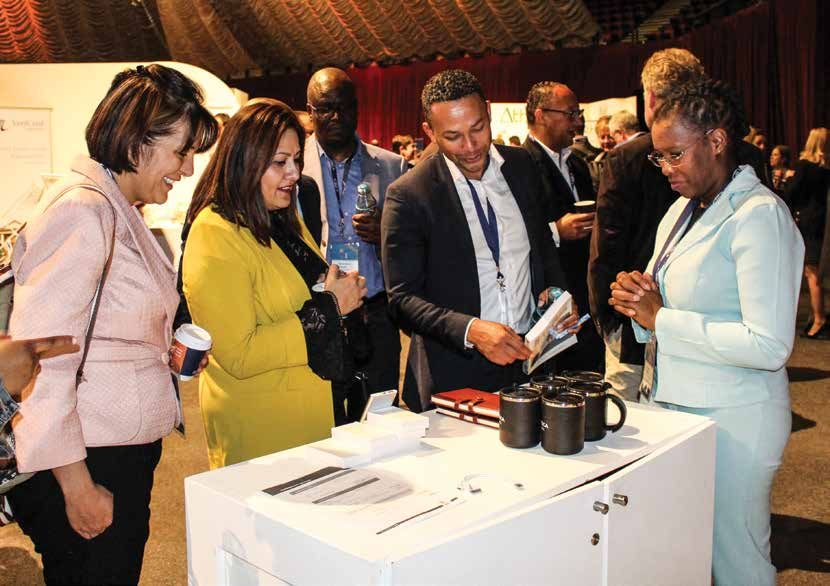
FSCA AT THE INSURANCE INSTITUTE OF
SOUTH AFRICA (IISA) CONFERENCE
BY BOITUMELO MANGANYI, The overarching statutory objects of This year’s conference hosted a
COMMUNICATIONS AND the FSR Act include the establishment dedicated panel of speakers who
LANGUAGE SERVICES, FSCA of a supervisory and regulatory exchanged knowledge on some of
framework that promotes financial the transformational challenges
The Insurance Institute of South inclusion and transformation of faced within the industry; more
Africa (IISA) hosted its annual the financial sector. The FSCAs specifically the inclusion of Africa
conference recently. The IISA, being transformation strategy will focus more widely, gender issues in terms
the only professional body for the both on transformed financial of women representation in the
short-term insurance industry, institutions and optimising the role industry, disability in the industry
themed the conference “Exploring that the sector plays in supporting and throughout Africa, as well as the
New Frontiers - African Insurance economic growth. progress made thus far in order to
Exchange.” ensure a sustainable future.
The FSCA seeks to ensure that
Prevalent at the conference was the its regulatory and supervisory South Africa is characterised
issue of transformation. With the frameworks support and strengthen by amongst other things social
mandate of the FSCA, broadened the aims of the Financial Sector inequalities. For this reason,
to look after the myriad of issues, Code (FSC) in achieving broadbased transformation should be encouraged
including transformation. The economic empowerment. In and used as a tool to address the
insurance industry which is criticised addition, focus will be given to issue of inequality. The pace of
as being the least transformed sector reducing barriers faced by financial transformation in the insurance
was under the spotlight. The FSCA is institutions wishing to participate industry has been slow, and not
expected to play a role in supervising meaningfully in the sector and to reflective of the realities of South
compliance by financial institutions creating an enabling environment for Africa, with there being only a few
with their transformation targets. them to develop inclusive business executives of colour, as well as few
models. female executives.
23 FSCA Bulletin | Quarter 2 2018/19EVENTS
The Insurance Act 18 of 2017, aims, themselves from unfavourable This year’s conference
amongst other things, to increase financial circumstances. This is was attended by delegates
low- income earners’ ability to especially important for low-income working in insurance,
access insurance products and foster households, where insurance assists
reinsurance, insurance
transformation in the insurance with covering any loss and can
broking, risk management,
sector, but also to give small prevent them from sinking further
insurance regulatory bodies,
businesses the opportunity to enter into a poverty pit.
the insurance industry. The Act seeks
insurance skills development
to link licensing with the sector’s
According to the CEO of IISA, and service providers to
overall transformation targets as set
Thokozile Mahlangu, the purpose the industry and has given
of IISA is to build capacity within delegates the opportunity to
out in the FSC which will empower
the insurance industry through engage with some of Africa’s
the FSCA to push for development
insurance skills development
targets, financial inclusion and greatest insurance leaders
and exposure into insurance as a
transformation objectives. and industry experts.
profession, thereby mitigating skills
Ameliorating access to insurance is shortage, improving opportunities for
of great significance as it plays a part employment and social security thus
in enhancing inclusion, because of its making a sustainable contribution
ability to contribute to the country’s to the insurance industry and the
growth. An access to insurance economy.
for all South Africans, would mean
affording the ability to protect
FSCA Bulletin | Quarter 2 2018/19 24You can also read


