CALL + RESPONSE
Pratt SOFA CONNECT LOUNGE CHICAGO 2014
←
→
Page content transcription
If your browser does not render page correctly, please read the page content below
CALL + RESPONSE Pratt SOFA CONNECT LOUNGE CHICAGO 2014
Inhabitation as a defining
concern differentiates the ap-
proach to the design of the
interior from other design
disciplines. The interior exists
and is activated by humans; it
is a place of constant flux. The
Pratt Call + Response lounge
was conceptualized to height-
en the experience of inhabita-
tion by engaging SOFA visitors
with the installation and of-
fering a multi-sensory experi-
ence.
call + response
The process of Call + Response, an inherent quality of Jazz improvisation solos, is critical to the design of the lounge
and is represented with the balance of give and take, the juxtaposition of hand made and machine manufacture, and
the notion of an ongoing evolution.

As a schematic strategy, we studied the densities of human activity in Chicago and in particular the metro system, also
known as the “L”, and discovered the centrality of its system. The “L” transports people, creating a constant and circular
movement. Our canopy shape acts as the central point of our design; circulating people around the installation.
seating process

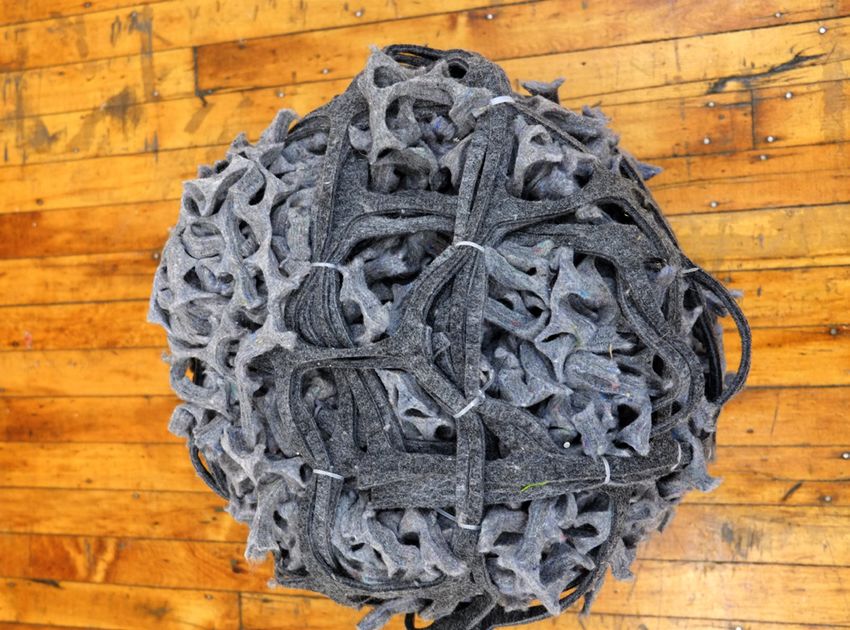
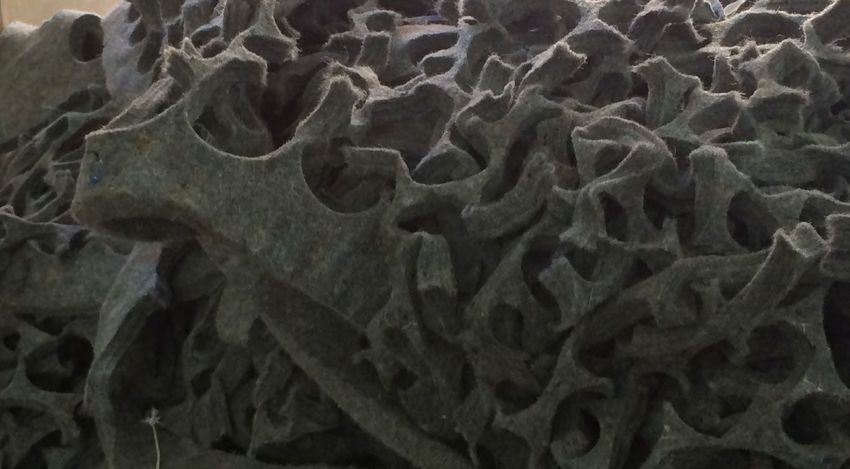
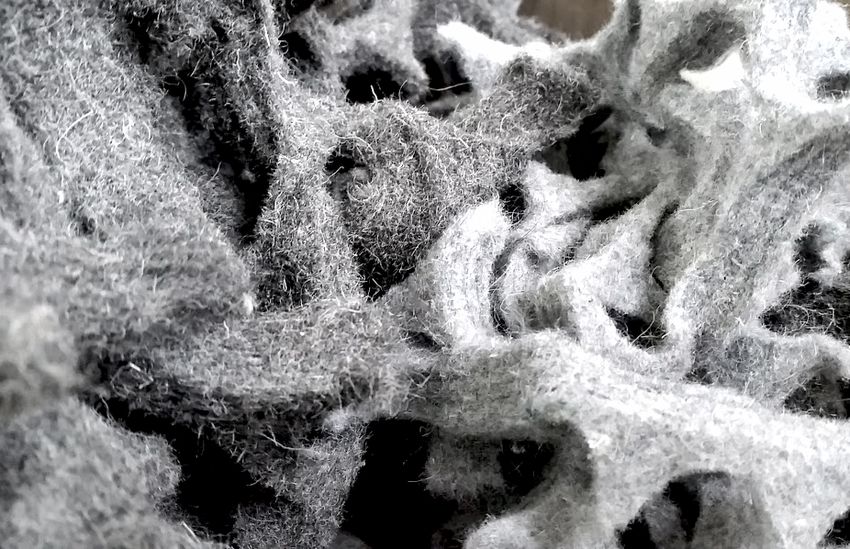
 The stools and flooring are made from the post-industrial remnant felt, a mate-
 rial inherently tied to the sense of touch and sound. The seating was entirely
 handcrafted--with no use of the woodshop, machines, or glue--evoking the
 craft and making that was inherent in the traditional interior. We created 3
 variations of felt stools, each with its own pattern and weaving technique.

The first stool design is a woven pattern, taken
from the strong edges of the grey felt material.
The structure is a 12” cardboard concrete
formwork tube
seating process
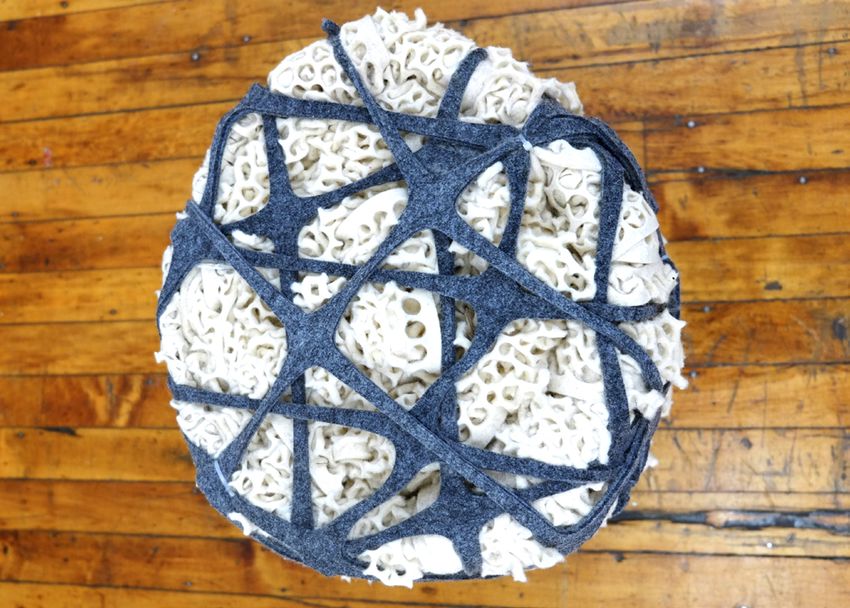
Stool #2: wrapped white
The second stool design is a
wrapped pattern containing a
more delicate white
felt within a stronger grey felt.
Initially, the white felt was too
weak to be incorporated into the
design, but when compressed,
it acts as cushioning. The
same structural tubing acts as
substructure.

                                     elevation wrapping: white felt around tube

                                    elevation wrapping: net over white felt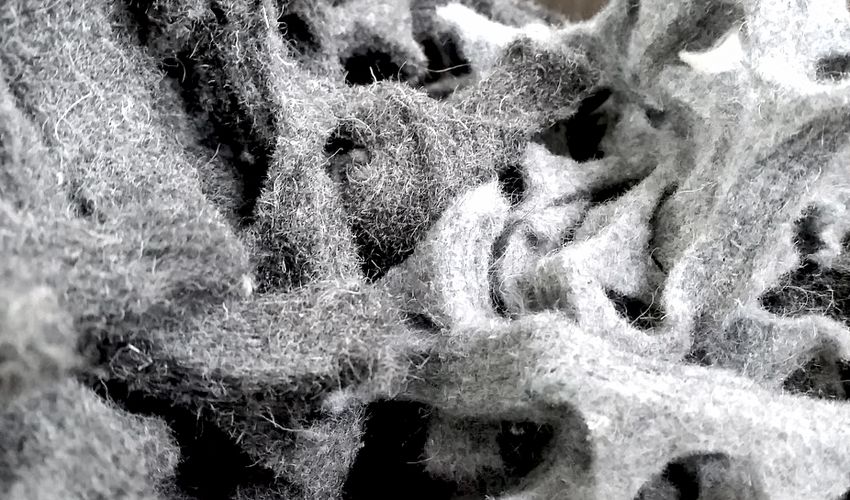
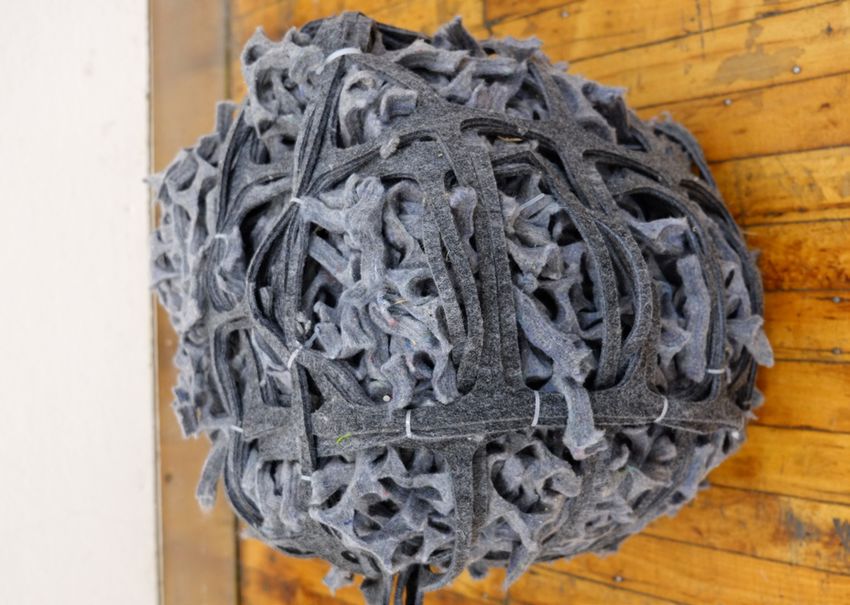
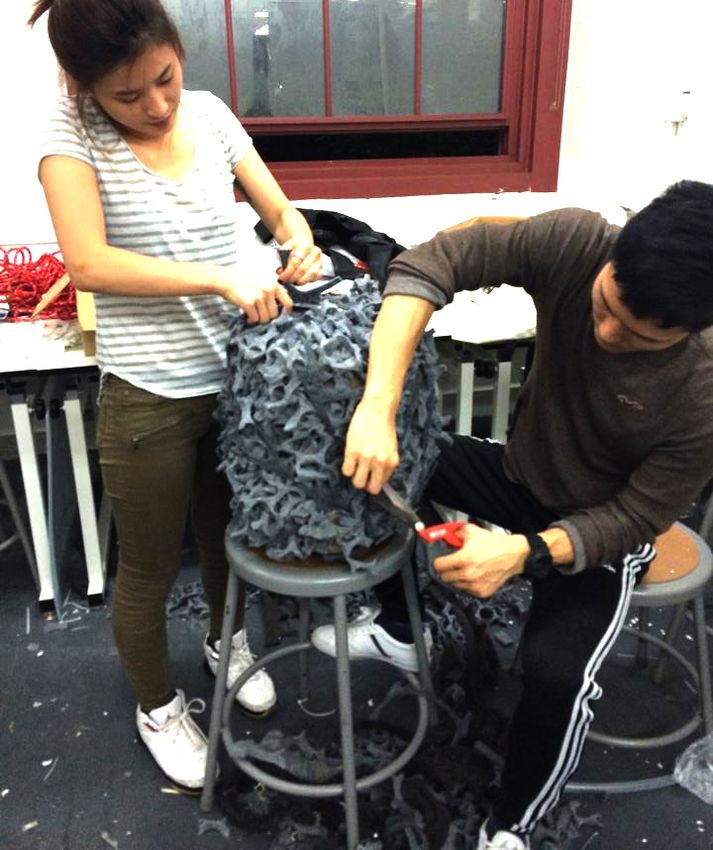
Stool #3: wrapped grey
                                             The third stool design is similar
                                             to the wrapped white design.
                                             However, the weak inside area
                                             of the grey felt is used as the
                                             primarily seating material. The
                                             tattered leftover pieces are ‘tamed’
                                             by the same thin strong grey felt.

 plan-view wrapping: grey felt around tube

elevational wrapping: net over grey felt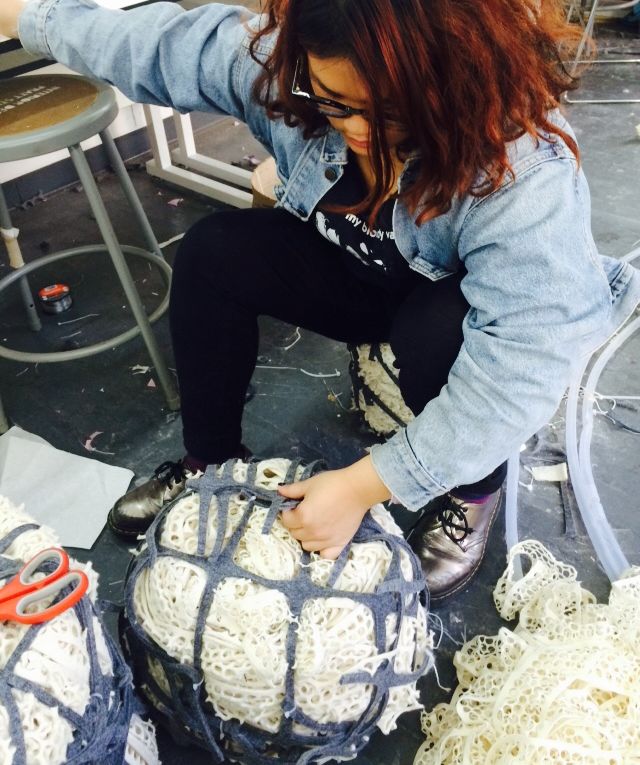
Chicago is internationally recognized
for innovation in Jazz music. The
process of Call + Response, borrowed
from the improvisation inherent in
Jazz solos, had significant impact on
the design of the lounge canopy.

The laser etched cards represent the
Pratt students’ call to the visitors at
SOFA Chicago and the blank cards
act as the response. The carpeting
is etched with a series of questions
that visitors are able to answer on the
blank cards. The written cards can
then be exchanged with the laser-
etched cards (an object of art and
design which the visitor can keep). In
this exchange the canopy will evolve
from a space generated by pattern to
one formed by color.

canopy process
The closer a visitor is to the installation, the more integrated into the constructed interior environment they
become. The canopy creates an interior environment distinct from the rest of the exhibition. Jazz music,
emanating from within the seats and under the large canopy is an integral aspect of this differentiated place.
canopy intereaction instructions
                                                                                                         Notice there are two
   The floor pieces are prepared with questions that                                                     layers of the canopy.
   invite the visitor to reflect while the stools provide                                                Place the sticky note on
   seating and rest for the thoughts and responses. The                                                  the inner blank
   lounge visitors can respond to the questions [below]                                                  layers. This is the additive
   by placing their responses [above] onto the canopy.                                                   element.

Look on the floor where the            Feel free to sit and reflect on the
questions are located. Read the        question asked. When ready,
questions and select one               sticky notes will be provided to
to answer. Most of the questions are   write responses on.
art, space or intimacy related.
                                                                             After placing the answer, feel free to take a laser cut card
                                                                             from the outer layer of the canopy. This is the subtractive
                                                                             process. The installation is always in state of flux from this
                                                                             addition and subtraction; growing and shrinking.
modular pieces
stitching detail
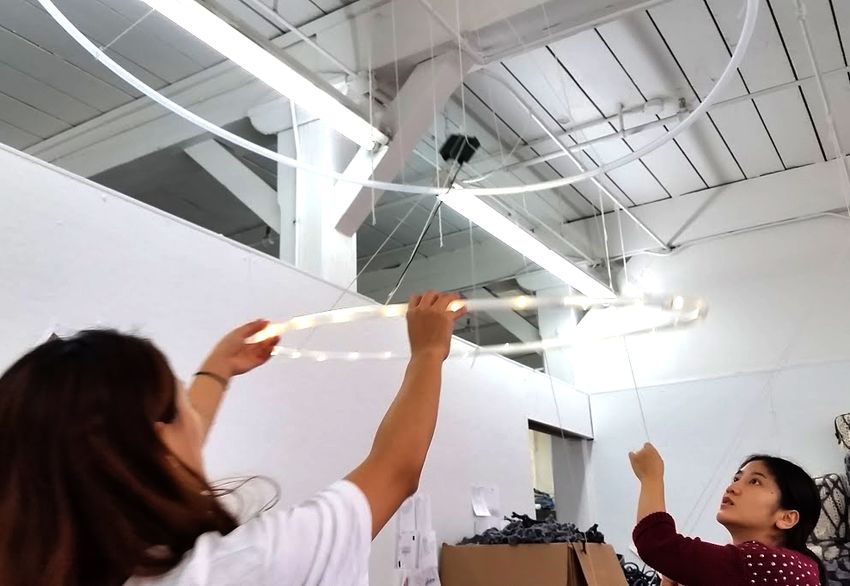
flooring processThe primary installation lighting, a wearable programmable element, is also activated by the SOFA visitor. We crafted the wearable lighting elements by sewing circuits, lights sources, and a power source to a textile base using conductive thread. Visitors are invited to wear the lighting element while inhabiting the lounge and are also able to program the lighting pattern of their wearable textile on a smart phone. The lighting again juxtaposes hand making with technology and acts as a Call + Response, evolving and unique to each set of visitors at any given moment. Additional lighting is supplied in the canopy support that acts primarily as a way-finding device The result is a lounge that engages its inhabitants and evolves over the course of the fair. The lounge makes ‘place’ through the reinvention of discarded salvage material, all additional material used in the making of the lounge has a planned next use; The post-it cards become a book, the laser-etched, cards are given to visitors and the hoops and refabricated in hula hoops which will be donated to children. The “L” system that inspired the schematic of the lounge is cyclical as is the materiality of the lounge.
the team

linette chang
eujin choi
joo-hee choi
Tracy Ding
aiden han
hyon-joo kim
ashley lee
cherry lee                                   thank you
dreena mauricio
ping-ping wanapinyosak
olivia wang
Becca Wong                          SOFA + Urban Expositions
                                               Pratt Institute
Katherine Castañeda                                Aetna Felt
Sylvia Zywno             Imari Lab +Rebeccah Pailes-Friedmen
Tali Oren                                         Aniomagic
Chen Ni

deborah schneiderman
You can also read


