CAREER PLANNING-NOW, DURING THE FOUNDATION PROGRAMME AND BEYOND - Elaine Denniss Careers Consultant - UCL
←
→
Page content transcription
If your browser does not render page correctly, please read the page content below
UCL CAREERS

              CAREER PLANNING-NOW,
              DURING THE FOUNDATION
              PROGRAMME AND BEYOND

              Elaine Denniss
              Careers Consultant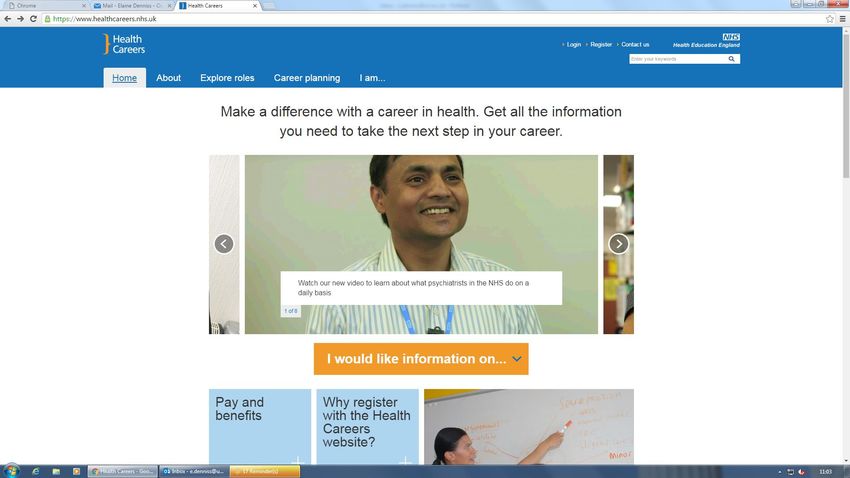
UCL CAREERS

       What we will look at

    Introduce four part career management cycle
    Encourage reflection on your existing preferences and
    priorities
    Look at ways to maximise your Foundation
    Programme from a specialty choice perspective
    Start thinking beyond the Foundation Programme
UCL CAREERS

   Four part Careers Management Cycle

  Self Awareness – What’s important to me?

  Option Generation – What’s available to me?

  Decision Making – How do I choose?

  Implementation – How do I make it happen?
UCL CAREERS

 Making the parallel
 Clinical Decision Making        Career Decision Making
     Taking patient history        Self understanding

     Examination/investigation     Exploring options

     Differential diagnosis        Making a career decision

     Treatment plan                Implementing actions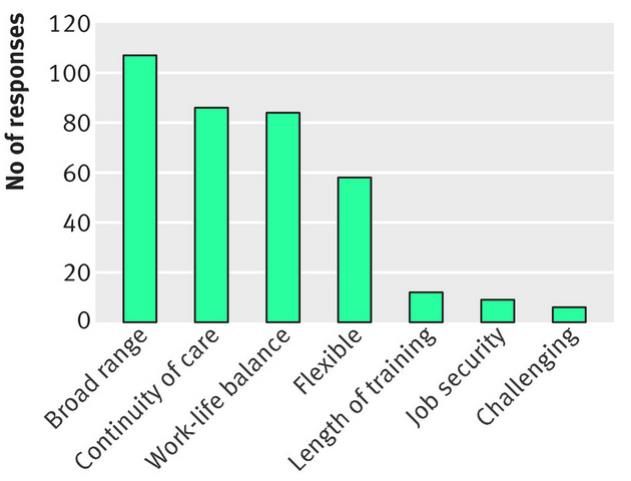
UCL CAREERS

      Think about yourself

     What do you know about yourself already?
     How can you find out more?
UCL CAREERS

      Building the picture
     Values / Priorities
     Skills
     Strengths / Energisers
     Stressors
     Personality traits
     Self report, feedback from others
UCL CAREERS

    Your Priorities
  Working in a well known hospital
  Community based
  Hospital based
  Opportunity to carry out research
  Continuity of care
  Geographical location
  Work/life balance, regular hours
  Variety
  Clinical autonomy
  Working with technology
  Acute settings
And ....?
UCL CAREERS

      Different Roles of a Doctor
   Investigator
   Counsellor
   Researcher
   Organiser
   Decision maker
   Leader / Manager
   Entrepreneur
   Technician
   Strategist
   Social Worker
   and more!
UCL CAREERS

      Option Generation and Research
     How many specialities do you know?
     Which ones appeal to you and why?
     Which ones do not attract you and why?
     Which ones are you just clueless about?
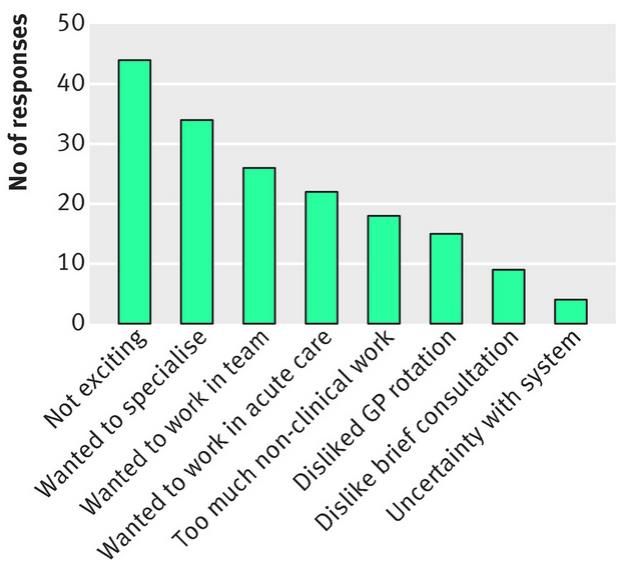
UCL CAREERS What drives trainees to choose general What stops trainees from becoming practice? GPs?
UCL CAREERS

      Option Exploration
     Challenges – What makes the job exciting or stimulating?
     Demands       – What does it take to be successful?
     Rewards       – What do people enjoy or get out of the job?
     Prospects      – What are the chances for future development?
     Limitations – What restrictions will this job place on you?
     Conditions – What kind of working conditions are typical?
     Downsides – What are the toughest bits of the job?
     Personalities – What are the people like?
     Alternatives – What other options have similar characteristics?
UCL CAREERS
How can you find out more?
On line resources eg healthcareers.nhs.uk, LETBs, BMJ Careers
Engage with Royal Colleges
Voluntary work
Work shadowing
Using your network (information interviewing)UCL CAREERS
Frame your questions in the right way
Why do you like being a How much autonomy do
Paediatrician? you get in your work as a
Paediatrician?
= A potentially limited = A focused question which
question which is linked to is linked to YOUR self
THEIR self awareness/bias/needs
awareness/bias/needsUCL CAREERS
Decision Making
Ask yourself
Do I have enough information?
Have I tested my assumptions (image vs reality!)
Have I played devil’s advocate with my choice?
Are there any factors that I’m giving too much/too
little weight to?UCL CAREERS
Implementation
Anticipate
Prepare
Practice
Stand out!UCL CAREERS
Maximise your Foundation Programme
Use your rotations as a chance to network with a range of fellow
clinicians, at all stages of training
Explore taster courses and work shadowing opportunities if possible
Keep in touch with relevant Royal Colleges
Many LETB’s offer careers support workshops for F1/F2s
Complete clinical audit(s) (including re-audit, presentation) ideally
resulting in service change
Seek out opportunities to make presentations (local, regional, national,
international)
Seek out opportunities for teaching, gain a teaching qualification
PublicationsUCL CAREERS
‘Commitment to specialty’
Relevant clinical work experience, e.g. rotations
Additional work experience – electives, voluntary work
Illustration of interests and preferences – SSCs,
supplementary reading, research
Any involvement in relevant research – journal clubs,
poster presentations, IBSc research, previous degrees,
papers
Additional achievements - Prizes/Awards/exams
Royal College involvement - events/conferences,
presentations/networking events
Extra-curricular activities – clubs and societiesUCL CAREERS
Personal qualities – gather examples
– Managing others & – Working under
teamwork pressure
– Communication skills – Empathy & sensitivity
– Vigilance & situational – Decision making
awareness – Problem solving &
– Organisation & conceptual thinking
planningUCL CAREERS
Working with personal qualities
Understand and unpack skills
Observe others in action
Ask for examples/anecdotes
Review and reflect on your own experiences
Compile examples
Fill gaps by gaining relevant experience
Record learningUCL CAREERS
Your Portfolio – What does it say about
you as a doctor?
Researcher
Systematic
Teacher
Organised
Scientist
Logical thinker
Clinician
Good decision maker
Mentor
Reflective
Leader
Proactive
Commitment to specialityUCL CAREERS
Wider NHS issues
Clinical governance
Evidence-based medicine
NHS Constitution – NHS Values
GP commissioning
Public health / public policy
Integration of social and health care to meet demands of an ageing
population
Five Years Forward (NHS strategic priorities)
24 serviceUCL CAREERS
www.medicalcareers.nhs.ukUCL CAREERS
Medical Careers Post FoundationUCL CAREERS SERVICE
Basic Medical Career Structure
MBBS Degree
Foundation Programme (2 years) Other
Less than FT training,
non-training careers
Academic Foundation Programme (2 years) Options:
time out, LAT, LAS
GMC registration after F1
Academic
Specialty training – uncoupled, run-through Medicine
Core specialty training
Higher specialty training Medical
GP Training Education
Academic Fellowship Programme Work
CCT Abroad
Research
Senior medical postsUCL CAREERS
Core Specialty Training
Core Medical Training (2 years)
Core Surgical Training (2 years)
Psychiatry (CT1 – CT3)
(Acute Care Common Stem – ACCS)
(3 years)
Acute Medicine (from ACCS and CMT)
Anaesthesia
Emergency Medicine
Intensive Care Medicine (from ACCS, CMT, Anaesthesia
core training)UCL CAREERS
Run Through Specialities
Chemical pathology
Clinical radiology
Emergency Medicine (new initiative)
General Practice
Histopathology
Medical microbiology/virology – microbiology
Medical microbiology/virology – virology
Neurosurgery
Obstetrics & Gynaecology
Paediatrics
Public HealthUCL CAREERS
Specialty recruitment – the process
Most specialties
Interview/ Offer/
Register Application assessment clearing
(November) (December) (December/ (by beginning
January) March)
GP recruitment and Broad Based Training
Assessment Offer
Register Test
centre (by beginning
(November) (January)
(February) March)UCL CAREERS
Specialty recruitment
Each specialty run by a Royal College, LETB or National
Organisation (Units of Application)
Slightly different logistics for each pathway
Most applications open late Nov, but some are earlier (ACF & GP)
Details from the Oriel website
!! TIP: Start familiarising yourself in your F1 year (or before)!UCL CAREERS
What can you boost?
Academic qualifications Can do very
Awards and prizes little about by F2 year
Achievements
Presentations
Publications Might do
Teaching something
Audit about
Commitment to specialtyUCL CAREERS
Maximum points CMT(max 64)
Additional undergraduate degrees and qualifications -10 pts
Degree obtained during medical course or prior to starting medicine – 1st class honours
Postgraduate degrees and qualifications – 10 pts
PhD or DPhil
Additional Achievements – 10 pts
National prize related to medicine
Presentations – 6 pts
Have made an oral presentation or shown more than one poster at a national or international
meeting
Publications – 8 pts
First author or joint first author in more than one PubMed-cited research publication (or in press)
Teaching Experience – 10 pts
Have designed and organised a regional medical teaching programme consisting of at least two
sessions and I have undergone formal training in teaching methods lasting between 5 and 20
days
Clinical Audit- 10 pts
Have designed and led an audit or quality improvement project leading to a documented change in
practice and I have presented it at a meeting
Source: CMT shortlisting criteriaUCL CAREERS
Academic Clinical Fellowship
Targeted at doctors in the early years of specialty
training (ST1 onwards).
Provides a clinical and academic training environment to
help the trainee in post prepare a competitive application
for a training fellowship for a higher degree (e.g. from
NIHR, Wellcome Trust, Medical Research Council) or, if
applicable a postdoctoral fellowship.
NIHR ACF posts are profiled for a maximum of three
years, or up to four years for GP posts.UCL CAREERS
UCL CAREERS

      Specialty Training - Resources

              www.oriel.nhs.uk
              www.specialtytraining.hee.nhs.uk
              www.medicalcareers.nhs.uk
              www.gprecruitment.hee.nhs.uk/
              www.nihrtcc.nhs.uk
              (for academic clinical fellowships)
UCL CAREERS
Where we are
4th Floor, ULU
Building, Malet Street
Mon – Thu 9:30 – 5
pm; Fri – 11 am – 5
pm
careers@ucl.ac.uk
020 7866 3600UCL CAREERS
Medical School Careers and Foundation
Training website
https://www.ucl.ac.uk/medicalschool/staff-students/careers-
foundation-trainingYou can also read


