Case Management Practices for Supporting Substance Use and Mental Health Treatment
←
→
Page content transcription
If your browser does not render page correctly, please read the page content below
Case Management Practices for Supporting Substance
         Use and Mental Health Treatment
Effectively accessing care and leveraging case management services to
                 ensure positive outcomes for patients

                              Presenter
            Thomasine Heitkamp, LCSW, PI and Co-Director
                  Mountain Plains ATTC and MHTTC
The Mountain Plains
  Mental Health and Addiction Technology Transfer Centers
The Mountain Plains Mental Health Technology Transfer Center
(Mountain Plains MHTTC) and Mountain Plains Addiction
Technology Transfer Center (Mountain Plains ATTC) provide
training and technical assistance to individuals who serve
persons with mental health and substance use concerns
throughout Region 8 (Colorado, Montana, North Dakota, South
Dakota, Utah and Wyoming).

The Mountain Plains MHTTC and ATTC belong to the
Technology Transfer Center (TTC) Network, a national network
of training and technical assistance centers serving the needs of
mental health, substance use and prevention providers. The
work of the TTC Network is funded under a cooperative
agreement by the Substance Abuse and Mental Health Services
Administration (SAMHSA).

The Mountain Plains MHTTC and ATTC are hosted at the
University of North Dakota.

Disclaimer and Funding Statement
This presentation was prepared for the Mountain Plains Mental Health Technology Transfer Center (Mountain
Plains MHTTC) and Mountain Plains Addiction Technology Transfer Center (Mountain Plains ATTC) under a
cooperative agreement from the Substance Abuse and Mental Health Services Administration (SAMHSA). All
material appearing in this presentation, except that taken directly from copyrighted sources, is in the public
domain and may be reproduced or copied without permission from SAMHSA or the authors. Citation of the
source is appreciated. Do not reproduce or distribute this presentation for a fee without specific, written
authorization from the Mountain Plains MHTTC or Mountain Plains ATTC. For more information on obtaining
copies of this presentation please email david.v.terry@und.edu.

At the time of this presentation, Tom Coderre served as acting SAMHSA Assistant Secretary. The opinions
expressed herein are the views of Thomasine Heitkamp and do not reflect the official position of the Department
of Health and Human Services (DHHS), or SAMHSA. No official support or endorsement of DHHS, SAMHSA, for the
opinions described in this presentation is intended or should be inferred.

The work of the Mountain Plains MHTTC is supported by grant H79SM081792 from the Department of Health and
Human Services, Substance Abuse and Mental Health Services Administration.

The work of the Mountain Plains ATTC is supported by grant TI080200_01 from the Department of Health and
Human Services, Substance Abuse and Mental Health Services Administration.
Stay Connected
  attcnetwork.org/centers/mountain-plains-attc/home

  mhttcnetwork.org/centers/mountain-plains-mhttc/home

  @Mountain-Plains-MHTTC

  @MPMHTTC or @MT_Plains_ATTC

  mhttcnetwork.org/centers/mountain-plains-mhttc/subscribe-our-mailing-list

Objectives
This session will:
1. Explore crucial components of system response to
   serving people with co-occurring substance use and
   mental health disorders
2. Describe components of access to care including case
   management
3. Describe a client-centered approach in addressing
   needs and pitfalls in service delivery systems

COD – Co-occurring substance use
      disorders (SUD) and mental disorders
 • Addiction counselors serve
   patients/clients with COD as a rule,
   not an exception.
 • The co-existence of SUD and other
   psychiatric disorders pose
   treatment challenges.
 • People diagnosed with COD
   present as clinically complicated

https://atforum.com/documents/OP1-DefinitionsandTerms-8-13-07.pdf
file:///C:/Users/thomasine.heitkamp/Downloads/PEP20-02-01-004_Final_508%20(1).pdf
https://www.naadac.org/integrating-co-occurring-disorders---an-introduction-to-what-every-addiction-counselor-needs-to-know
Co-Occurring Disorders (COD)
• 9.5 million people 18 or older had BOTH an SUD and a mental
  illness
     • Only 12.7% of people with co-occurring serious mental
       illness and substance use disorders received any treatment
       for both conditions in 2019.
• COD is to expected in all behavioral health settings (not the
  exception)
• Present with significant clinical, functional, social, and economic
  challenges

                       https://www.samhsa.gov/data/data-we-collect/nsduh-national-survey-drug-use-and-health
Moving the Needle
• Over 387,000 Americans died from a drug overdose between
  October 2019 and September 2020.
   • 29% increase in overdose deaths compared to the previous
     year) with the largest increase in deaths shown in March and
     April 2020.
• Emergency department visits for overdoses, mental health
  conditions, and suicide attempts all increased in 2020.

            https://www.cdc.gov/nchs/nvss/vsrr/drug-overdose-data.htm?mkt_tok=NzczLU1KRi0zNzkAAAF8nnXMcT0JJpYTuNBZIQ37H3HVlNuSJYQnwalC4G-VUcgLYZcwuf7a-
                                                                                                     5MjTnyTZKRxwbBnzefYdZA8HZltn2gQmI1FSpPQbCIXpsXPukw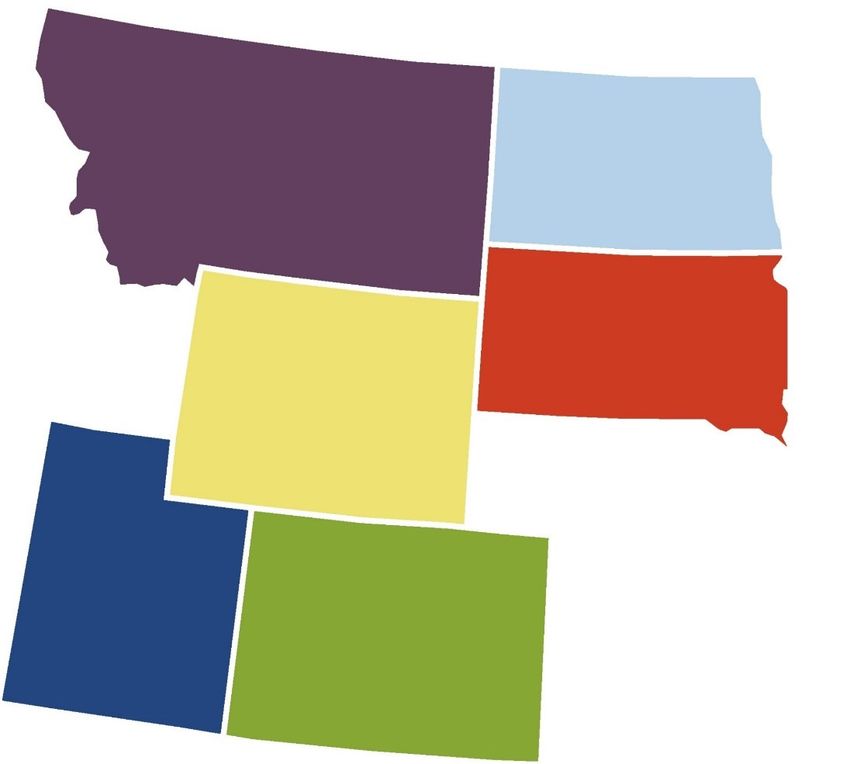
Problematic Outcomes
The risk of inpatient psychiatric hospitalization was nearly three times higher for people with co-occurring
opioid use disorder than in those with severe mental illness alone.

In a study of Veteran populations, “Participants with dual diagnosis had more severe symptoms, more
indicators of suicidality, poorer quality of life, more hospitalizations, and more arrests than those without
dual diagnosis”.

“As substance use and addiction disorders come to be recognized more as health conditions than criminal
behaviors, treatment options have become more accepted and widespread. However, despite evidence of
the benefits of treatment, a complete array of evidence-based treatment options for people with severe
mental illness and co-occurring substance use disorders is still not available in a majority of communities”.

                                                                                  https://www.tandfonline.com/doi/full/10.3109/08039488.2015.1059884
                                                                                   https://www.tandfonline.com/doi/abs/10.1080/15504263.2013.835162
                                      https://www.treatmentadvocacycenter.org/storage/documents/TAC_Co-occuring_Evidence_Brief_March_2021_Final.pdf
Additional Indicators of Concern
Tobacco and Alcohol Use:
• People with serious mental illness are more likely to smoke tobacco
and misuse alcohol compared to those without mental illness.
Cannabis Use
• Cannabis is one of the most common drugs used by people with
serious mental illness. Almost 40% of individuals with serious mental
illness used marijuana in 2019, compared to approximately 13% of
people without serious mental illness.
• Increased potency of cannabis.
“Alcohol, other illicit substances and, to a certain degree, cannabis should be
considered important risk factors for suicide and suicide attempts in people
with severe mental illness.”
Østergaard, M. L. D., Nordentoft, M., & Hjorthøj, C. (2017).Why COD?
Top Training Need in Four Assessments Conducted
• 2018 Mountain Plains ATTC Needs Assessment
• 2019 Training and Technical Assistance Needs: Findings from a Survey of Professional Who
Serve Individuals with Mental Illness in Region 8
• 2019 CHC Primary Care Provider’ Perceptions, Practices, and Training Needs in Relation to
Substance Use Disorders and Medication Assisted Treatment
• 2020 Mental Health Training and
Technical Assistance Needs
Among Probation and Parole
Officers in Region 8Not a New Concept:
History of Case Management in Social Casework
Mary Ellen Richmond
wrote What is Social
Case Work? (1922)
• Adjustment
between the
individual and the
environmentDefinition of Case Management
“Coordinated integrated approach to service delivery, ongoing
supportive care and help to access resources for living and
functioning in the community”
https://www.frontiersin.org/articles/10.3389/fpsyt.2017.00051/fullImperative due to Negative Outcomes
• Increase in representation in population of people who are homeless
• Unemployed/underemployed
• Increase risk of suicide
• Overrepresented in every part of the criminal justice system
o 45 percent of individuals in state and local prisons and jails have a
mental health problem comorbid with substance use or addiction
https://www.drugabuse.gov/publications/research-reports/common-comorbidities-substance-use-disorders/part-4-barriers-to-comprehensive-treatment-individuals-co-occurring-disorders
https://www.drugabuse.gov/publications/research-reports/common-comorbidities-substance-use-disorders/part-2-co-occurring-substance-use-disorder-physical-comorbidities
https://www.drugabuse.gov/publications/research-reports/common-comorbidities-substance-use-disorders/what-are-some-approaches-to-diagnosisImperative due to Negative Outcomes
• High risk of other co-morbid health conditions including HIV,
Hepatitis, and STDs
• Lack of safety
• victims of violent crimes
• Polysubstance use is common, “people with a heroin use disorder
over 66 percent are dependent on nicotine, nearly 25 percent have
an alcohol use disorder, and over 20 percent have a cocaine use
disorder”
https://www.drugabuse.gov/publications/research-reports/common-comorbidities-substance-use-disorders/part-4-barriers-to-comprehensive-treatment-individuals-co-occurring-disorders
https://www.drugabuse.gov/publications/research-reports/common-comorbidities-substance-use-disorders/part-2-co-occurring-substance-use-disorder-physical-comorbidities
https://www.drugabuse.gov/publications/research-reports/common-comorbidities-substance-use-disorders/what-are-some-approaches-to-diagnosisPersons with COD:
• Racial minorities more impacted
• Women are more impacted – Impact of IPV
• Free Resource: Women in the Mirror: Addressing Co-
Occurring Mental Health Issues and Trauma in Women with
Substance Use Disorders HealtheKnowledge Course
developed by Advocates for Human Potential
• Early exposure to stress (ACEs)
• Experience limitations in access to services - especially
in rural area
https://attcnetwork.org/centers/mountain-plains-attc/product/rural-intimate-partner-violence-survivors-and-substance-use
https://healtheknowledge.org/course/search.php?search=co-occurring+disorders
https://attcnetwork.org/centers/mountain-plains-attc/product/depression-alcohol-and-farm-stress-addressing-co-occurringRural Intimate Partner
Violence Survivors and
Substance Use Disorders:
Implications for Treatment
and Recovery Support
Providers
A free product developed by
Mountain Plains ATTC
https://attcnetwork.org/centers/mountain-plains-attc/product/rural-intimate-
partner-violence-survivors-and-substance-useComponent of COD program recommended by SAMHSA in TIP 42 1. Screening, assessment, and referral for people with CODs 2. Physical and mental health consultation [integrated care] 3. Prescribing onsite psychiatrist [pharmacological treatment] 4. Psychoeducational classes 5. Relapse prevention
Component of COD program
recommended by SAMHSA in TIP 42
6. Case management
  [assertive outreach-access to comprehensive services]
  [being a travel guide not a travel agent for those at greatest risk]
7. COD-specific treatment components
8. Continuity of Care Services
  [case manager critical in this role]
9. Support groups and mutual aid
  [mutual self-help support groups - double trouble in recovery – caution
  on support for use of medications to support recovery]
Professional Backgrounds of Case Managers
 “I think one’s feelings waste themselves in words; they ought all to
 be distilled into actions which bring results” - Florence Nightingale
• National Association for Social Workers has Standards for Social
  Work Case Management
• Professions: it’s about the intervention rather than the profession
  doing the intervention
     • Social work
     • Nursing
     • Mental health care

                               https://www.nursingworld.org/~4ae0a9/globalassets/catalog/sample-chapters/nursingcasemgmt-samplechapter.pdf
                                      https://cdn.ymaws.com/www.naswtx.org/resource/resmgr/GovtTPACE/Case_Management_White_Paper.pdf
Principles to Support the Role of Case Manager
on the Team
• Address Stigma - Your Words and Actions Matter
https://www.drugabuse.gov/nidamed-medical-health-professionals/health-professions-education/words-matter-terms-to-use-avoid-when-talking-about-addiction
https://www.ncbi.nlm.nih.gov/books/NBK384915/
https://attcnetwork.org/centers/mountain-plains-attc/addressing-stigma-and-substance-use-disorders-healtheknowledge-courseAddressing Stigma and Substance Use
Disorders
A Free HealtheKnowledge Course Developed By
Mountain Plains ATTC
https://attcnetwork.org/centers/mountain-plains-attc/addressing-stigma-and-substance-use-disorders-healtheknowledge-courseUse Strong Engagement Skills-
Relationships are Critical to Success
• Use and practice skills of empathy and
respect
o believe in recovery
• Develop an authentic healing relationships
• Acknowledge inner-strengths and resilience
• Recognize consumers’ contribution to
community
https://www.ncbi.nlm.nih.gov/pmc/articles/PMC4965703/Adopt Evidence-based Practices
• Assertive Community Treatment (ACT) – Dartmouth
• Integrated Dual Disorder Treatment (IDDT)
• Screenings – Depends on costs, skills of professional,
relevance to prevalent disorder, psychometric
qualities, and ability to interpret.
• Integrated Care
• Trauma Informed Care – Seeking Safety
• Understand stages of Change/Stages Awareness of
EB Treatment (e.g., CBT, Assertiveness Training,
DBT, MI) https://www.centerforebp.case.edu/resources/tools/act-dacts
https://www.centerforebp.case.edu/practices/sami/iddt
https://www.samhsa.gov/sites/default/files/sbirtwhitepaper_0.pdf
https://www.nasmhpd.org/sites/default/files/TAC_Paper_8_508C_5.pdf
https://www.treatment-innovations.org/seeking-safety.htmlPolicies to Support Effective Treatment –
Case Manager as Advocate
• Ensure No Wrong Door Policy – Accessibility from Multiple
Points
• Support program funding instead of system funding
• System change to address wait lists
• System recognition that NO one size fits all
https://namirensco.files.wordpress.com/2015/01/x306x-co-occurring-overarchingprinciples28op329.pdf
https://www.niatx.net/Policies to Support Effective Treatment –
Case Manager as Advocate
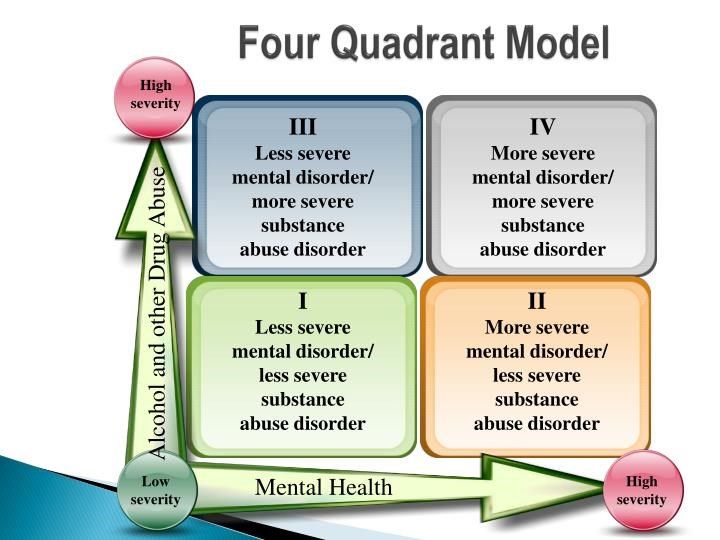
• Remember the importance of serving people with the greatest
severity
o High substance use severity and high mental health
disorders severity require greater intervention
• Address implementation of evidence-based treatment options
for people with severe mental illness and co-occurring
substance use disorders in a majority of communities
• Serve people in the context of their environment
https://namirensco.files.wordpress.com/2015/01/x306x-co-occurring-overarchingprinciples28op329.pdf
https://www.niatx.net/Depression, Alcohol and
Farm Stress: Addressing
Co-Occurring Disorders in
Rural America
A free product developed by
Mountain Plains ATTC
And
Mountain Plains MHTTC
https://mhttcnetwork.org/centers/mountain-plains-mhttc/product/depression-alcohol-
and-farm-stress-addressing-co-occurringAcknowledge and Address Workforce Shortage
Issues
Rural Implications
• Limitations of access to workforce
resulting in especially rural areas having
lack of access, availability, and
acceptability in care
• Recruitment, hiring, and retention is more
difficult
• States have different educational, licensing
requirements and these requirement differ
across the mental health and substance use
systems
https://www.nasmhpd.org/sites/default/files/TAC_Paper_3_508C_0.pdfCase Manager Models - Seeing the
Forest for the Trees
Models
• Broker/generalists
• Strengths perspective
• Assertive Community Treatment
• Clinical/Rehabilitation
https://store.samhsa.gov/product/TIP-27-Comprehensive-Case-Management-for-Substance-Abuse-Treatment/SMA15-4215Case Manager Roles and Function
• Client engagement
• Promote optimal client safety
• Flexibility in service location
• Provide supportive services including access to:
• Transportation
• Child Care
• Vocational Supports
• Address Life Supports
• Financial Well-Being
• Ensure Reimbursement
• Ability to obtain and maintain safe housing
• Permanent supportive housing appears to be an effective way to end homelessness for
people with complex behavioral health issues
https://pubmed.ncbi.nlm.nih.gov/27070841/Case Manager Roles and Function
• Skills in accessing health and human services agencies
o Referral to Resources
o Warm Hand Off
• Function as a Single Point of Contact
o Boundary Spanning
o Real World Engagement
• Outreach that targets people in greatest need
• Improve family functioning
• Support access to:
• Smoking cessation programs
• Medication-Assisted Treatment (MAT)
• Inpatient and outpatient services for serious mental illness/substance use
disorders
https://pubmed.ncbi.nlm.nih.gov/27070841/Case Management Standards
A model of practice that underscores need for
understanding:
• Social Policy Implications
• Human Behavior in the Social Environment
• Practice skills (empathy and engagement)
• Outcome measures – Research
• Experience
http://www.courts.state.ny.us/reporter/webdocs/nasw_standards_socialwork_casemgt.htm
https://www.abqaurp.org/DOCS/2010%20CM%20standards%20of%20practice.pdfRationale for Case Managers: Improves
Outcomes
• Overall functioning and • Improves compliance
treatment adherence improved • Improves communications
• Promotes participation and • Decrease costs (less ER and
retention in services hospital visits)
• Address stigma and • Responds holistically
discrimination, social isolation,
increase confidence, assist in
addressing complex health and
behavioral health needs,
supported resilience, respond
to emergencies
Penzenstadler, L. Machado, A. and Khazaal, Y. (2020)
https://www.ncbi.nlm.nih.gov/pmc/articles/PMC5176181/
https://cdn.ymaws.com/www.naswtx.org/resource/resmgr/GovtTPACE/Case_Management_White_Paper.pdfRespond with Caution and Humility
• Person-centered
o Recognize how our personal perspectives
influences our work
• Trauma-informed
• Culturally responsive
1. valuing diversity
2. include in assessment
3. incorporating cultural knowledge
4. adapting practices to address diversity
• Comprehensive response
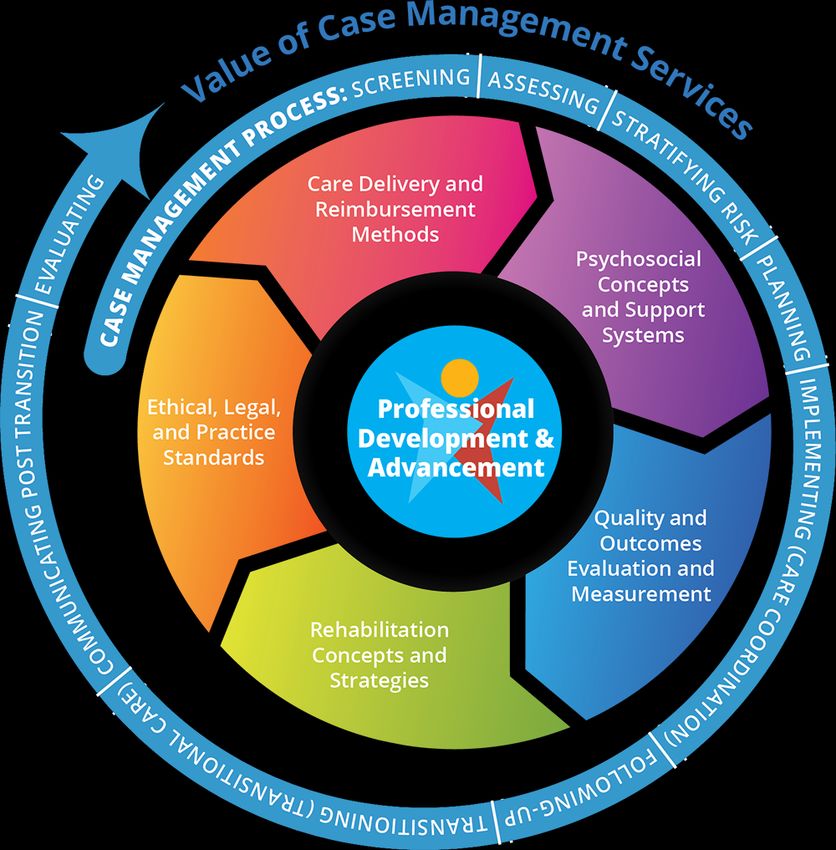
https://store.samhsa.gov/product/SAMHSA-s-Concept-of-Trauma-and-Guidance-for-a-Trauma-Informed-Approach/SMA14-4884Components of Case Management Process
Primary steps in the case management process
include:
1. Client identification and selection:
• Focuses on identifying clients who would benefit from case
management services.
2. Assessment and problem/opportunity identification:
• Begins after the completion of the case selection and is
ongoing.
• Understand the client – (determine if they are a citizen, the
languages they speak, educational level achieved, are they
active in the community, what are their social outlets or hobbies,
identify family relationships, determine if there is a spiritual
affiliation, etc.)
• Use of assessment tools support this work and many exist.
https://cmbodyofknowledge.com/references/powell-tahan%C2%A02008
https://www.thenationalcouncil.org/wp-content/uploads/2012/11/DLA-Sample.pdf?daf=375ateTbd56The Four Quadrant Model of Assessment
Components of Case Management Process
   Continued
3. Development of the case management plan:
    • Establishes goals of the intervention and prioritizes the
      client’s needs, examine the the type of services and
      resources that are available [do not set up for failure] many
      include a commitment of transportation.

4. Implementation and coordination of care activities:
    • Puts the case management plan into action.
Components of Case Management Process
Continued
5. Evaluation of the case management plan and follow-up:
• Involves the evaluation of the client’s status and goals and
the associated outcomes.
6. Termination of the case management process:
• Brings closure to the care and/or episode of illness.
https://thekennedyforum-dot-org.s3.amazonaws.com/documents/MBC_supplement.pdfMultidisciplinary Teams as Central:
Requires inter-professional competency
• Vision • Navigate difficult
• Confidence conversations
• Communication skills • Politically astute
• Fairness • Conflict resolution
• Ability to think • Manage crisis
strategically
https://bmchealthservres.biomedcentral.com/articles/10.1186/1472-6963-14-159Ingredients to Strong Meetings
• The team has appropriate expertise to accomplish its work.
• Shared purpose of meeting and pre-circulate agenda.
• Correct size for function.
• The right people need to be present – leadership is clear
o The people present have capacity to follow-through and
speak for their work on behalf of their agency.
o The client present and input from the clients is in the plan
o Capacity to problem solve in addressing hurdlesMeetings Continued
• Share purpose, function, and group
norms.
o Don’t let incessant complainers take
over
o Consensus driven decision-making
• Use effective management systems
• Leverage technology, data, and human
intervention effectivelyThank you so much for Joining!
Questions?
Comments?References • “Addressing Stigma and Substance Use Disorders: A HealtheKnowledge Course.” Addiction Technology Transfer Center (ATTC) Network, attcnetwork.org/centers/mountain-plains-attc/addressing-stigma-and-substance-use-disorders-healtheknowledge- course. • “Co-Occurring Disorders.” HealtheKnowledge, HealtheKnowledge, healtheknowledge.org/course/search.php?search=co- occurring%2Bdisorders. • “Integrated Dual Disorder Treatment.” Jack, Joseph and Morton Mandel School of Applied Social Sciences, Center for Evidence- Based Practices at Case Western Reserve University, www.centerforebp.case.edu/practices/sami/iddt. • “Mountain Plains ATTC Needs Assessment Survey .” Addiction Technology Transfer Center (ATTC) Network, Nov. 2018, attcnetwork.org/centers/mountain-plains-attc/survey. • “NASW Standards for Social Work Case Management” National Association of Social Workers. June, 1992. • “Products - Vital Statistics Rapid Release - Provisional Drug Overdose Data.” Centers for Disease Control and Prevention, Centers for Disease Control and Prevention, 14 Apr. 2021, www.cdc.gov/nchs/nvss/vsrr/drug-overdose- data.htm?mkt_tok=NzczLU1KRi0zNzkAAAF8nnXMcT0JJpYTuNBZIQ37H3HVlNuSJYQnwalC4G-VUcgLYZcwuf7a- 5MjTnyTZKRxwbBnzefYdZA8HZltn2gQmI1FSpPQbCIXpsXPukw. • “Rural Intimate Partner Violence Survivors and Substance Use Disorders: Implications for SUD Treatment and Recovery Providers: Addiction Technology Transfer Center (ATTC) Network.” Rural Intimate Partner Violence Survivors and Substance Use Disorders: Implications for SUD Treatment and Recovery Providers | Addiction Technology Transfer Center (ATTC) Network, Mountain Plains Addiction Technology Transfer Center, 23 Mar. 2021, attcnetwork.org/centers/mountain-plains-attc/product/rural- intimate-partner-violence-survivors-and-substance-use.
References
• “Screening, Brief Intervention and Referral to Treatment (SBIRT) in Behavioral Healthcare.” Evidence Supporting the
  Effectiveness of an SBIRT.
• Case Management Society of America. “Standards of Practice for Case Management” Case Management Society of America,
  2010.
• Clark, Colleen et al. “Case Management Models in Permanent Supported Housing Programs for People With Complex Behavioral
  Issues Who Are Homeless.” Journal of dual diagnosis vol. 12,2 (2016): 185-92. doi:10.1080/15504263.2016.1176852
• Committee on the Science of Changing Behavioral Health Social Norms; Board on Behavioral, Cognitive, and Sensory Sciences;
  Division of Behavioral and Social Sciences and Education; National Academies of Sciences, Engineering, and Medicine. Ending
  Discrimination Against People with Mental and Substance Use Disorders: The Evidence for Stigma Change. Washington (DC):
  National Academies Press (US); 2016 Aug 3. Available from: https://www.ncbi.nlm.nih.gov/books/NBK384915/ doi:
  10.17226/23442
• de Stampa, M., Vedel, I., Trouvé, H. et al. Multidisciplinary teams of case managers in the implementation of an innovative
  integrated services delivery for the elderly in France. BMC Health Serv Res 14, 159 (2014). https://doi.org/10.1186/1472-6963-14-
  159
• Evanson, Tracy A. CHC Primary Care Providers' Perceptions, Practices, and Training Needs in Relation to Substance Use
  Disorders and Medication Assisted Treatment. Mountain Plains Addiction Technology Transfer Center, 30 July 2019,
  attcnetwork.org/centers/mountain-plains-attc/news/chc-primary-care-providers-perceptions-practices-and-training.
References
• Grinberg, Charlotte et al. “The Core of Care Management: The Role of Authentic Relationships in Caring for Patients with
  Frequent Hospitalizations.” Population health management vol. 19,4 (2016): 248-56. doi:10.1089/pop.2015.0097
• Kahan, Deborah et al. “Perceived Case Management Needs and Service Preferences of Frequent Emergency Department Users:
  Lessons Learned in a Large Urban Centre.” PloS one vol. 11,12 e0168782. 21 Dec. 2016, doi:10.1371/journal.pone.0168782
• Kivimies, Kristiina, et al. “Opioid Abuse and Hospitalization Rates in Patients with Schizophrenia.” Nordic Journal of Psychiatry,
  vol. 70, no. 2, 14 Aug. 2015, doi:10.3109/08039488.2015.1059884.
• Making the Case for Social Work Case Management.
• Minkoff, Kenneth, and Nancy Covell. “Integrated Systems and Services for People with Co-Occurring Mental Health and
  Substance Use Conditions: What’s Known, What’s New, and What’s Now? .” Integrated Systems and Services for People with
  Co-Occurring Mental Health and Substance Use Conditions: What’s Known, What’s New, and What’s Now?, National Association
  of State Mental Health Program Directors , Aug. 2019, www.nasmhpd.org/sites/default/files/TAC_Paper_8_508C_5.pdf.
• National Institute on Drug Abuse. “Words Matter - Terms to Use and Avoid When Talking About Addiction.” National Institute on
  Drug Abuse, 18 Apr. 2021, www.drugabuse.gov/nidamed-medical-health-professionals/health-professions-education/words-
  matter-terms-to-use-avoid-when-talking-about-addiction.
References
• National Survey on Drug Use and Health (NSDUH). Substance Abuse and Mental Health Services
  Administration, 2021. https://www.samhsa.gov/data/data-we-collect/nsduh-national-survey-drug-use-and-health
• Niatx.net
• NIDA. "Part 2: Co-occurring Substance Use Disorder and Physical Comorbidities." National Institute on Drug
  Abuse, 13 Apr. 2021, https://www.drugabuse.gov/publications/research-reports/common-comorbidities-
  substance-use-disorders/part-2-co-occurring-substance-use-disorder-physical-comorbidities
• NIDA. "Part 4: Barriers to Comprehensive Treatment for Individuals with Co-Occurring Disorders ." National
  Institute on Drug Abuse, 13 Apr. 2021, https://www.drugabuse.gov/publications/research-reports/common-
  comorbidities-substance-use-disorders/part-4-barriers-to-comprehensive-treatment-individuals-co-occurring-
  disorders
• NIDA. "What are some approaches to diagnosis?." National Institute on Drug Abuse, 13 Apr. 2021,
  https://www.drugabuse.gov/publications/research-reports/common-comorbidities-substance-use-disorders/what-
  are-some-approaches-to-diagnosis Accessed 28 Apr. 2021.
• Østergaard, Marie L., et al. “Associations between Substance Use Disorders and Suicide or Suicide Attempts in
  People with Mental Illness: a Danish Nation-Wide, Prospective, Register-Based Study of Patients Diagnosed with
  Schizophrenia, Bipolar Disorder, Unipolar Depression or Personal.” Addiction, vol. 112, no. 7, 13 Feb. 2017, pp.
  1250–1259., doi:10.1111/add.13788.
References
•   Penzenstadler  L, Machado A, Thorens G, Zullino D and Khazaal Y (2017) Effect of Case Management
    Interventions for Patients with Substance Use Disorders: A Systematic Review. Front. Psychiatry 8:51. doi:
    10.3389/fpsyt.2017.00051
• Powell, S. K., & Tahan, H. A. (2008). CMSA core curriculum for case management (2nd ed.). Philadelphia, PA:
  Lippincott Williams & Wilkins.
• Presmanes, Willa S. DAILY LIVING ACTIVITIES (DLA) FUNCTIONAL ASSESSMENT. MTM Services,
  www.thenationalcouncil.org/wp-content/uploads/2012/11/DLA-Sample.pdf?daf=375ateTbd56.
• SAHMSA'S Co-Occurring Center for Excellence. “Definitions and Terms Relating to Co-Occurring Disorders”. US
  Department of Health and Human Services.
• SAHMSA'S Co-Occurring Center for Excellence. “Overarching Principles To Address the Needs of Persons With
  Co-Occurring Disorders”. US Department of Health and Human Services.
• Schroeder, Shawnda, and Thomasine Heitkamp. Training and Technical Assistance Needs: Findings from a
  Survey of Professionals Who Serve Individuals with Mental Illness in Region 8. Mountain Plains Mental Health
  Technology Transfer Center Network, Apr. 2019, mhttcnetwork.org/sites/default/files/2019-05/survey-findings-
  mental-illness-professionals-region-8.pdf.
References • Sheehan, Timothy and Woods, Mary. “Integrating Treatment for Co-Occurring Disorders.” The Association for Addiction Professionals, 14 July 2014. https://www.naadac.org/integrating-co-occurring-disorders---an-introduction-to-what-every-addiction- counselor-needs-to-know • Shroeder, Shawnda, et al. Mental Health Training and Technical Assistance Needs Among Probation and Parole Officers in Region 8: Mental Health Technology Transfer Center (MHTTC) Network. Mountain Plains Addiction Technology Transfer Center, 29 Jan. 2020, mhttcnetwork.org/centers/mountain-plains-mhttc/product/mental-health-training-and-technical-assistance-needs- among. • Sinclair Hancq, Elizabeth, et al. DUAL DIAGNOSIS: Serious Mental Illness and Co-Occurring Substance Use Disorders. Treatment Advocacy Center, Mar. 2021, www.treatmentadvocacycenter.org/storage/documents/TAC_Co- occuring_Evidence_Brief_March_2021_Final.pdf. • Substance Abuse and Mental Health Services Administration, and Center for Evidence-Based Practices at Case Western Reserve University. ACT | Dartmouth Assertive Community Treatment Scale (DACTS) & Protocol, Substance Abuse and Mental Health Services Administration, 2016, www.centerforebp.case.edu/resources/tools/act-dacts. • U.S Department of Health and Human Services. A Treatment Improvement Protocol: Improving Cultural Competence. Substance Abuse and Mental Health Services Administration. • Wik, Amanda, et al. Developing a Behavioral Health Workforce Equipped to Serve Individuals with Co-Occurring Mental Health and Substance Use Disorders, National Association of State Mental Health Program Directors, Aug. 2019, nasmhpd.org/sites/default/files/TAC_Paper_3_508C_0.pdf. • Wrenn, Glenda. A Core Set of Outcome Measures for Behavioral Health Across Service Settings. The Kennedy Forum.
Stay Connected
  attcnetwork.org/centers/mountain-plains-attc/home

  mhttcnetwork.org/centers/mountain-plains-mhttc/home

  @Mountain-Plains-MHTTC

  @MPMHTTC or @MT_Plains_ATTC

  mhttcnetwork.org/centers/mountain-plains-mhttc/subscribe-our-mailing-list
You can also read


