Case Study: Private Sector Supply Chain Development for Launch of New Ugandan Beer - infoDev
←
→
Page content transcription
If your browser does not render page correctly, please read the page content below
Case Study:
Private Sector Supply Chain
Development for Launch of
New Ugandan Beer

infoDev
INNOVATION & ENTREPRENEURSHIP

Case Study:
Private Sector Supply Chain Development
for Launch of New Ugandan Beer

© 2018 The World Bank Group

1818 H Street NW

Washington, DC 20433

Website: www.infodev.org

Email: info@infodev.org

Twitter: @infoDev

Facebook: /infoDevWBG

This work is a product of the staff of the World Bank Group. The
findings, interpretations, and conclusions expressed in this work
do not necessarily reflect the views of the donors of infoDev, the
World Bank Group, its Board of Directors, or the governments
they represent. The World Bank Group does not guarantee the
accuracy of the data included in this work. The boundaries,
colors, denominations, and other information shown on any map
in this work do not imply any judgment on the part of the World
Bank Group concerning the legal status of any territory or the
endorsement or acceptance of such boundaries.

Rights and Permissions: This work is available under the Creative
Commons Attribution 3.0 Unported license (CC BY 3.0) http://
creativecommons.org/licenses/by/3.0. Under the Creative
Commons Attribution license, you are free to copy, distribute,
transmit, and adapt this work, including for commercial purposes,
under the following conditions:

Attribution: Please cite the work as follows: “Case Study: Private
Sector Supply Chain Development for Launch of New Ugandan
Beer.” 2018. Washington, DC: The World Bank Group. License:
Creative Commons Attribution CC BY 3.0

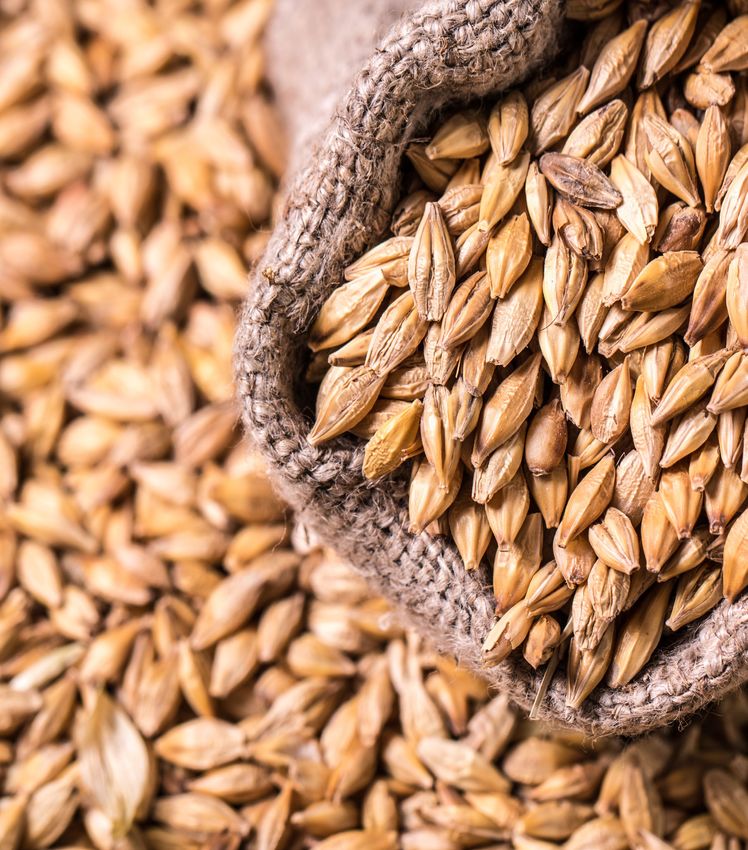
Photo Credits: Cover Photo: id-art/AdobeStock

Case Study:
Private Sector Supply Chain
Development for Launch of
New Ugandan Beer

  infoDev
  INNOVATION & ENTREPRENEURSHIP

Case Study:
 Private Sector Supply Chain Development
 for Launch of New Ugandan Beer

Acknowledgements

 This case study was developed by the infoDev and Industry Solutions Units of the
 Finance, Competitiveness & Innovation Global Practice of the World Bank Group
 with technical support from Agland Investment Services and J.E. Austin Associates.
 Other contributors include the International Finance Corporation and the Agriculture
 Global Practice of the World Bank Group.

 The study team included Anupa A Pant, Blair Edward Lapres, Ellen Olafsen,
 Loraine Ronchi, and Peter A Cook of the Finance, Competitiveness & Innovation
 Global Practice, and William Mott, Martin Webber, Stephanie Haile, Madeleine
 Nelson, William Scott, Gareth Smail, Donald M. Taylor, and Laya Hess-Skinner of
 a consortium of Agland Investment Services and J.E. Austin Associates. The team
 received guidance from a decision review panel chaired by Ganesh Rasagam and
 consisting of Dietrich Fischer, Milaine Rossanaly, and Christopher Ian Brett. The
 paper benefited from discussions with and guidance from numerous World Bank
 colleagues, Bradford Roberts, Parmesh Shah, Selchuk Tanatar, Bas Rozemuller, and
 Sarah Ockman.

 This study was made possible through the support from the governments of Norway,
 Sweden, Finland, and the UK’s Department for International Development (DFID).
Table of Contents
  Synopsis                                                                   1

  Introduction: The Launch of a New Product                                  1
     Establishing the Sorghum Supply Chain: The Critical Role of Grower
     Associations and Agro-Processing Small and Medium Enterprises (SMEs)    1
     Afro-Kai Ltd:                                                           2
     Farmer Associations:                                                    3
     AgroWays Ltd.:                                                          4
     Nile Breweries Ltd:                                                     5

  BRANDING AND MARKETING OF EAGLE LAGER                                     6

  RESULTS                                                                   6
     Lead Firm: Growth of Nile Breweries Ltd.                                6
     Growth of SMEs                                                          7
     More Opportunities for Women in Management                              8
     Expanding Corporate Social Responsibility                               8
     Rising Government Tax Revenues                                          8

  Looking Forward                                                           9
     Replication and Knowledge Spillovers                                    9

  Linkage Lessons Learned                                                   9
     Lesson 1: The relationship functioned best when the
               farmer associations functioned as SME processors.             9
     Lesson 2: Public policy can facilitate win-win situations
               for public and private benefit.                               9
     Lesson 3: Each raw material supply chain must be evaluated
               to develop an optimum organization.                           9
     Lesson 4: Demonstration and replication of success.                    10
     Lesson 5: Local market opportunities can be more
               attractive than export opportunities.                        10
     Lesson 6: The Role of Social Responsibility.                           10

  Bibliography                                                              10
1
Synopsis Introduction:
Nile Breweries Ltd. (NBL), the leading producer and
The Launch of a
New Product
marketer of beer in Uganda, wanted to develop a
competitively priced beer for the local market. Using
local grain rather than imported malted barley, NBL
saw an opportunity to produce and market a new
low-cost, sorghum-based beer. Pilot trials showed
that brewing using the local sorghum produced Nile Breweries Limited (NBL), a leading Ugandan
a high-quality, clear beer. To achieve their ends, brewery within the global SABMiller beverage company,
NBL developed a supply chain through strategic wanted a lower-priced product to sell within the
partnerships with small and medium enterprises local market. NBL had been importing most of the
(SMEs) that could reliably deliver a consistent quality ingredients for its beers, including expensive malted
of raw material. The resulting success created barley. High production costs, coupled with an excise
benefits throughout the value chain, fostered tax of 60 percent, made the import-based products too
knowledge spillovers and replication on a pan- expensive for many local consumers. In contrast, home-
African scale, and improved grain yields and farmer brewed products were priced at 10 percent or less
incomes. than NBL’s import-based brewed products. In the early
2000s, NBL started the search for local ingredients
NBL faced the challenge of developing a scalable that could be substituted at a lower cost.
local supply chain, in which thousands of small
farmers, aggregators, and processors would collect There is a tradition of home brewing in Uganda, though
and prepare grain and deliver a uniform raw material the quality and hygiene of the product is inconsistent.
to the brewery. The 2002 launch and subsequent The traditional red and yellow varieties of local
success of Eagle Lager was carefully built on a sorghum often produced a bitter-tasting product,
combination of product research, institutionally which did not meet the company’s standards. With
backed plant breeding, government support, seed the expertise of researchers at the National Semi-Arid
production, an active crop extension program, Resources Research Institute (NASARI), a new variety
farmer associations, and SME processing and drying of white sorghum, Epuripur, was identified as having
capacity, all within the supply chain to support a the right characteristics for producing beer.
market and brand development program. From its
Epuripur-type sorghum proved to have excellent
origins of importing 100 percent of raw material
brewing qualities, and pilot brewing using the sorghum
requirements, NBL now sources 70 percent of raw
produced a high-quality, clear beer. These trials gave
material locally, and is aiming for over 95 percent in
rise to a new product, Eagle Lager, a flagship product
the near future.
for what would eventually become the best-selling
An Eagle-branded beer is now the highest-selling brand in the Ugandan market.
beer product in the country,1 with Eagle beers
contributing substantially to NBL’s 60 percent Establishing the Sorghum Supply
market share. Last year, the company reported
it had acquired 12,000 tons of sorghum from Chain: The Critical Role of Grower
SME agro-processors and farmer associations Associations and Agro-Processing
representing approximately 20,000 smallholder
farmers who received total revenue of US$4 million.
Small and Medium Enterprises (SMEs)
The evolution of the program to produce and utilize
local raw material in NBL’s products created two supply
1 Weston, Shaun, “SABMiller opens new Nile brewery in Uganda,” chains: one for sorghum, and eventually, one for barley.
FoodBev Media, August 22, 2013, http://www.foodbev.com/
The program was initially self-financed from NBL’s own
news/sabmiller-opens-new-nile-brewery-in-ugan/
revenue streams.2
FIGURE 1: NILE BREWERIES LIMITED (NBL) TIMELINE (1995-2015)
1995-1998 2001 2002-2003 2003 2006 2008 2015
NBL Product
Research with Collection and
Epuripur
(AgroWays)
30 SME
12,000 Tons
Epuripur Epuripur Crop in 4
(Afro-Kai)
The sourcing of Epuripur sorghum by NBL had a supplied grain to NBL through Afro-Kai. Most of the
modest beginning. The sorghum supply chain started grower associations that supply NBL are not agro-
with small groups of farmers loosely organized into processing SMEs; rather, they are primarily product
associations focused on four geographic locations. aggregators. As grower associations became stronger,
This clustering facilitated the aggregation of crops and even started processing grain, AgroWays, a local
produced by numerous small farmers, and the SME grain-trading firm, took over most of the sourcing.
provision of extension services and training to farmers.
NBL contracted Afro-Kai Ltd, an SME input distributor
with some exposure to grain trading and processing.
Afro-Kai Ltd
The company was responsible for supplying seed, as In 2003, NBL contracted with a local SME, Afro-Kai,
well as purchasing, aggregating, cleaning, grading, to develop a reliable supply chain for a new variety of
drying, and storing the sorghum prior to delivery at sorghum. While farmers were used to growing sorghum
the brewery. Through its relationship with Afro-Kai, in the initial four target locations, the challenge was
NBL offered a supportive sorghum production and keeping the production and harvest of the Epuripur
off-taking program, which was welcomed by farmers variety separate from the traditional, common
affected by falling global demand and prices for varieties. NBL required a partner with direct ties to
cotton, the principal cash crop in the targeted growing production communities in order to overcome this
areas for the initial supply program. Sorghum became obstacle.
a much-needed substitute cash crop.
Afro-Kai was incorporated in 1984 as a local
With the beer’s commercial success, production and agricultural service SME. In the 1990s, the company
sourcing volumes grew, drawing new actors into was active with donor and aid agencies in procuring
the supply chain. The loose associations of farmers grain for famine relief. Additionally, Afro-Kai was one of
received sufficient revenue to invest in their operations the earliest suppliers of agricultural seed and inputs in
and organize, developing formal organizations Uganda. As an input distributor with grain aggregation
with business charters. Some of these entities also and trading experience, Afro-Kai was well positioned to
purchased grading and drying equipment to take on distribute the new seed variety and organize farmers
some processing activities, though they still sold and for collection during the early days of the project.3
Afro-Kai built cereal collection and storage facilities in Farmer Associations
the initial four districts, and established cereal grain
cleaning and processing facilities. The contract with Initially, the associations were loose groups of 50 to 60
NBL allowed Afro-Kai to finance the crop aggregation. farmers who would join together to market their crop.
In the initial pilot, 350 farmers from the four districts After several years, culminating in the bumper harvest
grew and sold Epuripur sorghum to Afro-Kai. Farmer of 2006, NBL found procurement to be too centralized
participation increased to 1,133 the following year, and around one SME (Afro-Kai), with both NBL and farmers
again to 8,326 farmers in 2006. wanting more decision-making power. Furthermore, as
NBL’s demand for sorghum grew, the sourcing program
This considerable growth can be attributed to several needed to support expansion into the major production
factors. Epuripur-type seed, the most expensive areas beyond the four pilot districts.
production input, was heavily subsidized by NBL
through Afro-Kai. In addition, Afro-Kai’s reliable off- Historically, the primary buyers of grain from farmers
taking had a “demonstration effect,” attracting other were the so-called “middlemen” who offered prices with a
farmers in the community who were anxious to have “take it or leave it” attitude. NBL did not want to be seen
a secure cash crop. Most importantly, Afro-Kai had as a middleman or to rely on such sources, yet the firm
the ability to organize sufficient seed production and also wanted to avoid direct sourcing from the thousands
ensure its full and proper use. Thus, the sorghum of smallholder farmers. As a result, NBL decided to
production package offered by NBL—including a evolve its sourcing program by supporting the formation
guaranteed price, improved and subsidized seed, of formal farmer associations.
and access to NBL extension services—caused many Developed without financing from NBL, these formalized
farmers to switch to the new sorghum variety. associations provided the structure necessary to deliver
In 2006, NBL was then a victim of its own success. certain supply chain program functions, particularly
Without participation caps or direct control by NBL, for farmers distant from the initial four pilot districts,
the reach and appeal of the sorghum production and allowed NBL to engage more directly with farmers
program resulted in a harvest more than double NBL’s on pricing and crop contracts. The associations would
needs. The company honored their contracts, as NBL deliver training and support programs for farmers, serve
knew that this was a pivotal point in the development as collection and processing points for farmers, and
of its sorghum supply chain. If NBL rejected excess deliver crop payments initiated under NBL’s contract
supplies, it would likely tarnish the good reputation of farming scheme (i.e., with the purchase price determined
the program as a reliable buyer, discouraging farmers before planting). The associations might also handle
from future cultivation. maize, an important food crop in Uganda, for their
members.
A traditional supply chain management approach
was applied in the early years, where Afro-Kai NBL employs a technical agricultural manager who
purchased grain as the agent of NBL, and NBL left the develops contracts with farmer associations, and
procurement management to Afro-Kai’s staff. After supervises the company’s support of the production
the oversupply of the 2006 harvest, NBL realized that program through the provision of regional extension
it required greater control over procurement, and that services and the subsidized seed distribution system.
NBL extension staff should be directly involved with Farmers also learn best farming practices through the
pricing and contract decisions with farmers and farmer associations.
associations. In addition, the company protected Currently, the associations are legally registered entities,
against further gluts by encouraging diversification. incorporating the best elements of a cooperative and
The following season, NBL distributed other seed, such commercial business structure. Each association has
as rice and maize, that had a local market or could be a board of directors and designated management, all
consumed by the family, as no sorghum was purchased controlled by the farmers. The larger associations have
in 2007. While NBL’s relationship with Afro-Kai was processing and storage facilities and sell $600,000
initially fruitful, it eventually turned to organizations to $700,000 of grain annually, but most are smaller
with more experience in the collection and storage of organizations without processing equipment. As of 2016,
grain at a larger scale.4
FIGURE 2: NILE BREWERIES LIMITED (NBL) SORGHUM SUPPLY CHAIN, UGANDA
Distributors
National Semi-Arid Resources Government Licensing,
Research Institute Regulations, and Excise Taxes
30 farmer associations are selling to NBL, although
about 10 of these associations provide over 80 percent
FIGURE 3: AGROWAYS CORN AND SORGHUM
of the raw material.
MILLING FACILITY, JINJA, UGANDA
The emergence of associations as processors broadened
NBL’s sourcing options. However, the brewery still
required an intermediary to acquire and process the
grain from the smaller, non-processing associations, as
well as to store and deliver the grain from the processing
associations to NBL. AgroWays, an experienced SME
grain trader, served as this link.
AgroWays Ltd.
AgroWays possesses a nationwide footprint of
facilities to clean, dry, bag, and grade sorghum to NBL’s
specifications. AgroWays was the first of only a few
grain procurement companies to receive a license from
the government of Uganda to issue warehouse receipts;
Afro-Kai was not licensed. AgroWays’ government-
licensed receipts allow its clients and suppliers to use
their storage documents as security to obtain bank
financing. AgroWays is also developing facilities to
market bulk grain in order to become more efficient and
reduce logistical costs.5
FIGURE 4: AGROWAYS GRADING AND MILLING FACILITY
With these resources, AgroWays became the primary With cooperation from its supplying farmers and
aggregation and processing SME supplying NBL farmer associations, NBL initiated a contract farming
with sorghum. The company buys sorghum from up scheme to support and sustain this trust, involving
to 30 farmer associations. The firm is also a buyer an open and transparent method for calculating each
and marketer of maize, working with 142 farmer seasonal price (given two crops per year). In partnership
associations for this crop. with the grower associations, NBL calculates the cost
of production, marking up the cost by 15 percent to
Under contract with the brewery, AgroWays pays the determine the seasonal price offered. If farmers accept
farmer associations for grain received, then processes, the price, it becomes a contract between NBL and the
warehouses, and delivers the crop to the brewery with association of farmers. Thus, the farmers know what
its fleet of trucks. Approximately 80 percent of the they will receive from their crop in advance of planting.
sorghum that arrives at their facility requires further
processing (i.e., cleaning, drying, and bagging). Much For NBL, contracting with AgroWays is important to the
of the grain is delivered to AgroWays in used bags of financial side of their beer business, as well. AgroWays
various sizes, while NBL seeks a uniform 50-kilogram shoulders the significant working capital requirements
bag for delivery to the brewing facility. The remaining necessary to receive and carry seasonal grain inventory,
20 percent comes from SME grower associations thereby keeping the capital off of NBL’s financial
that have their own equipment to process the grain to statements. This location of working capital enhances
approved specifications. cash flow and the return on investment, an important
factor for NBL as part of a public corporation. This
structure also allows the brewery to do what it does
Nile Breweries Ltd best, produce and market beer, while providing a flexible
Sorghum-based beer production required an structure for NBL to link with the farming community.
investment in new equipment, including a mash press
and different operating procedures. Securing a reliable
supply of raw material was important in order to
support the company’s investment in new equipment.
Building trust between NBL, as an off-taker, and the
farmers was essential to achieving stable sourcing
of raw material.6
BRANDING AND TABLE 1: PRICES OF SELECTED NILE
BREWERIES PRODUCTS
MARKETING OF Brand
Price/Bottle
(Ugandan
Price/Bottle
EAGLE LAGER Schillings)
(US$)
The introduction of NBL’s lower-cost Eagle brand Eagle Lager 1,500 0.50
beer attracted considerable attention, as it
continued to grow its market share. The Economist
commented in a July 2003 issue, “In Uganda, a Eagle Extra 2,200 0.75
cold lager after work is an expensive luxury. Until
recently, the main alternative was a cloudy, foul- Nile Special 3,000 1.00
smelling and sour brew made by local families. But
now, an innovative new local lager is challenging Source: The Beer Frontier, The Economist, May 31, 2014
these rivals—leading some to wonder if it will
change the way that beer is made everywhere.”2
RESULTS
The Economist was not far off in its early
prognostications.
The objective of producing the sorghum-based
Eagle brand was to provide a reasonably priced beer The development of the sorghum-based Eagle Lager and
to compete with the wide variety of home-brewed its related products under the Eagle brand has been a
products available to Uganda’s consumers. The tremendous commercial success. Additionally, it has had
price structure is as follows: positive impacts up and down the supply chain.
This structure is a product of the 20 percent excise Lead Firm: Growth of Nile
tax on sorghum beer, in comparison to the 60
percent on beer made from imported raw material. Breweries Ltd.
Eagle Extra is a sorghum-based variant of the The introduction of Eagle Lager has had a dramatic
original Eagle Lager, while Nile Special is produced impact on the growth of NBL and the demand for local
with imported malted barley. When NBL wanted agricultural products, particularly sorghum. A little
to establish a low-price, local sorghum-based beer, over a decade ago, NBL imported all the raw materials
the government cooperated by reducing the excise for its brewed products from South Africa, Europe, and
tax, first through an excise tax holiday and then Australia. Now, NBL sources 70 percent of its brewing
by maintaining a rate of 20 percent for beer made raw material locally. The company has also initiated
from domestic sorghum. a program to reduce the import of malted barley by
sourcing from Ugandan farms located above 1,500
Sales of Eagle Lager and Eagle Extra have soared
meters (the microclimate needed for barley production).
from one million cases per annum in 2003 to
As local barley production increases in the next few years
nearly 10 million cases in 2015. However, NBL
with NBL’s support, the company plans to be able to
management feels there is still a large domestic
market to capture. The company estimates that procure 97 percent of its raw material locally.
formal beer products are only capturing 4 to 5
The lower-cost, local raw material decreased overall
percent of the total alcoholic beverage market, with
production costs, and much of the raw material
home-brewed products and various hard alcohol
cost savings were passed on to the consumer. These
drinks dominating the remainder of the large
lower-cost products of more uniform quality were
informal market’s consumption. able to compete with the traditional low-cost choice:
homebrews. Nile Breweries’ gross income has increased
2 “The Eagle Has Landed,” The Economist, June 10, 2003, steadily since the introduction of Eagle beer, primarily
http://www.economist.com/node/1915350 due to the sales of sorghum-based beers. In addition,7
FIGURE 5: NILE BREWERIES’ ANNUAL Growth of SMEs
SORGHUM AND BARLEY USAGE & VALUE Without the agro-processing SMEs to reach and organize
2002/03 TO 2011/12 farmers to supply the required raw material, NBL would
still be a brewer of beer dependent on imported grains,
junior to the leading brewer in the Ugandan market.
Afro-Kai and AgroWays both played a key role in
linking the sorghum farmers, and their eventual grower
associations, to NBL. The majority of grower associations
operate as crop aggregators, with a few emerging as
separate agro-processing SMEs.
The expansion of the sourcing program beyond the
target region and the growth of grower associations
has allowed for specialization among NBL’s SME
partners. Afro-Kai now focuses primarily on seed and
input distribution for participating sorghum farmers,
while AgroWays is the lead grain collection, processing,
storage, and delivery entity. Nevertheless, NBL still
maintains direct contact with the grower associations,
meeting annually to establish quantity and pricing
Source: George Mbogo, Local Enterprise Manager, Nile contracts, and to determine the extension services
Breweries, March 2013
needed.
the company’s market share has risen from below 50 Increasing Farmer Income
percent several years ago to 60 percent today. Based
on these products’ success, NBL rolled out additional The backbone of the program and the primary
products in the Eagle brand family, such as Eagle Dark. beneficiaries are the 20,000 farmers who have a reliable
contract buyer for their production. Many farmers now
The increased demand for their products prompted rely on Epuripur production as their principal cash crop,
an investment in 2013 of $90 million to build a new an important source of funds to pay school fees. The
brewery with increased plant capacity. This investment production of a cash crop for NBL is important to the
created one hundred permanent factory jobs, and farmer. Furthermore, the knowledge gained from the
numerous indirect jobs in construction, transportation, Epuripur production package, such as good farming
distribution, and retailing. A 2015 independent study practices and the proper use of inputs and seed, can also
conducted by the U.S.-based Beer Institute, an be applied to corn and sorghum as a staple food.
industry association, found that for each job created
in beer manufacturing, 34 indirect jobs are created in Farmers are reaping additional benefits from the overall
wholesaling, retailing, and other manufacturing and increased demand for sorghum, and seeing higher prices
farming activities. Since beer manufacturing is more paid. Last season, the price per kilogram was 1,090
automated in the United States than in Uganda, the Ugandan schillings, while this season, the price is 1,240,
job multiplier effect is probably closer to 50 to 60 jobs representing a 12 percent price increase over a six-month
per beer employee in Uganda.3 Additionally, the new period. Still, NBL is finding it hard to obtain all the
factory’s increased capacity has further expanded the supplies they want at this price.
demand for sorghum and barley. NBL would like 10,000 metric tons of sorghum this
season, but may only obtain 8,500 metric tons
due to competition from other buyers. With NBL’s
successful support of more organized, higher-quality
grain production, buyers from surrounding countries
3 John Dunham & Associates, The Beer Industry Economic and humanitarian aid groups are offering Epuripur
Contribution Study (Washington, D.C.: July 2015), www. producers even higher prices than those negotiated
beerinstitute.org/assets/uploads/general-upload/BSA-2015- with NBL for their high-quality grain. The World Food
Report.pdf8
Program is reported to be one of the largest single buyers The company believes these initiatives represent good
of grain in Uganda. Sorghum, independent of variety, is corporate citizenship, but also have long-term payoffs
a staple food crop, which humanitarian groups prefer in the form of building trust and commitment between
to purchase locally. The net impact is that demand the company and its supplier-farmers. By providing
is outstripping supply. funding for secondary school, NBL is increasing the
likelihood that rural children can access university
education, which would not happen in rural areas
More Opportunities for without external assistance. In addition, the company
Women in Management is in a particularly advantageous position to deliver
The Epuripur production program also encouraged social programs because of their direct, established
women to form and lead farmer groups and associations. relationships with farmers and exposure to the needs of
Information published by NBL indicates that: the community.
• Women lead half of the top 10 farmer associations Rising Government Tax Revenues
supplying sorghum.
The government of Uganda played an important role
• 30 percent of the sorghum supply chain’s farmer- in the introduction of Eagle beer through the reduction
suppliers operate under women-led groups. of excise taxes on NBL’s sorghum-based beers. At this
• 26 percent of income paid by NBL goes to women-led lower tax point, the price of Eagle beer is closer to
groups. that of homebrews, and thus more competitive with
home-brewed products. Due in part to this lower price
point, Eagle beer sales have been immense, generating
Traditionally, women managed the local trade and considerable tax revenues for the government, with
sale of foodstuffs, while men typically managed the an estimated $70 million in excise and value-added
production activities. A number of women affiliated with taxes paid by the company. This figure makes NBL the
the sorghum supply chain had been educated in schools. second-largest Ugandan taxpayer.
This combination of education and a background in sales Onapito Ekomoloit, corporate affairs director at Nile
provides an opportunity for women to become staff or Breweries, describes the company’s relationships: “Nile
managers in the associations. NBL has devoted additional Breweries is in partnership with both small farmers and
resources to investing in the education of individuals, as the government. … It is a win-win situation: We provide
well as providing extension and other capacity building a reliable cash market for grain coupled with technical
services. assistance for the farmers, and the government
receives ever-increasing tax revenue from our success.”
Expanding Corporate Social
The government is also anxious to bring the informal
Responsibility home-brewing and synthetic alcohol market into the
NBL has initiated social responsibility programs in the formal economy, where it can be monitored and provide
farming districts that improve the lives of small farmers. tax revenue. Since the government receives little to no
The actions generally fall into three categories: taxes from the informal market for alcoholic beverages,
any capture of that market by sales of Eagle beer
• Health: HIV/AIDS education in concert with USAID gives the government the opportunity to collect tax
programs revenue on previously untaxed activities. In addition,
there can be serious health problems associated with
• Clean water: providing village wells the consumption of home-brewed products sold in
• Education scholarships: NBL has granted 63 all- markets and on the street, including recent reports of
expenses-paid scholarships to gifted primary school fatalities in Kenya from consuming such products. The
students from poor farming families so that they may government understands this situation and is eager
study in prestigious secondary schools, which would to support NBL as it seeks new markets and sales
have otherwise been too expensive. opportunities for its beverages.9
Looking Forward associations functioning as SMEs carried out light or
more extensive processing, which provided a variety of
benefits within in the value chain:
Replication and Knowledge Spillovers • An SME often has lower overhead and can provide a
Two significant impacts have emerged from NBL’s service at a lower cost than the lead firm.
successful sourcing of Epuripur, a new variety • An SME better understands the local environment and
of sorghum. its potential pitfalls, particularly in rural areas.
While there have been other efforts to utilize sorghum • SMEs expand and create jobs to support an agro-
as a raw material for beer and other alcoholic drinks, industry supply chain in related fields such as
the commercial success of Eagle Lager at Nile Breweries warehousing, transportation, retailing, finance,
is reinvigorating the development of similar products in and banking. A consumer product, such as Eagle-
other parts of Africa. NBL’s parent company, SABMiller, branded beer, creates numerous jobs in the retail and
a leading global brewer and marketer, has initiated entertainment sectors.
sorghum beer development projects in Zambia,
• An SME can provide specialized services that a lead
Tanzania, and Swaziland, using the Ugandan model to firm prefers not to handle itself. Early in the project,
source local supplies of sorghum and barley. Heineken Afro-Kai served as a seed supplier and grain buying
Breweries is reported to be initiating plans for sorghum service, without direct involvement by NBL in the
beer production in Ghana and Sierra Leone. Diageo (the procurement process. The 2006 harvest and the
distributor of Guinness throughout Africa) is pursuing growth of formal farmer associations prompted NBL to
locally sourced raw material through the production of contract AgroWays to provide buying, processing, and
a cassava-based beer in Uganda and the acquisition delivery services, while Afro-Kai continued its input
of rivals specializing in local product-derived beers.4 provision role. This allowed NBL to focus on developing
Success in these initiatives will drive increased revenue in direct contact with grower associations on contract
rural agricultural production and in agro-processing. negotiation and the provision of extension services.
Lesson 2: Public policy can facilitate
win-win situations for public and
Linkage Lessons private benefit.
Learned
In this case, government tax policy (i.e., a reduction of
the excise tax for the introduction of a new product) was
a useful tool for creating new markets for the private
sector. If the new markets expand, governments can see
Lesson 1: The relationship functioned long-term benefits through significant increases in tax
best when the farmer associations revenue.
functioned as SME processors.
The farmer associations tended to be loose groups,
Lesson 3: Each raw material supply
aggregating product from a large number of producers. chain must be evaluated to develop an
However, some of the associations became strong optimum organization.
organizations and built processing facilities to clean and
store grain, functioning as full SME processors. These Working with a network of SME farmer associations,
aggregators, and processors is a lower-cost model
for sorghum production, and more efficient than the
4 Biryabarema, Elias and Duncan Miriri, “Global vertically integrated hub and spoke system utilized
brewers push local beers to quench African palates,” for barley. The barley supply chain was approached
Reuters Africa, July 15, 2016, http://news.trust.org/ differently due to the need for large up-front
item/20160715131643-x0qwt/ investments in barley malting facilities, coupled with10
Bibliography
the fact that barley was a new crop for local farmers.
Training programs and a demonstration farm were
required to attract farmer interest and bridge the
information gap. In contrast, while Epuripur was a new Balya, Chris. 2006. “Supporting Smallholder Farmers to
sorghum variety, farmers in a number of regions of Grow in Uganda: The Story of Eagle Lager.” Afro-Kai Ltd.
Uganda have experience growing sorghum.
World Bank Group. 2011. “Case Studies: Upgrading for
the Domestic Market and for Traditional Export Markets.”
Lesson 4: Demonstration and Making the Grade: Smallholder Farmers, Emerging
Standards, and Development Assistance Programs in Africa:
replication of success. A Research Program Synthesis. Washington, DC: World
Bank. siteresources.worldbank.org/INTARD/Resources/
Opportunities to transfer a successful crop or product
CH6_example1.pdf
model to another country or region is one of the easiest
ways to create new enterprises and industries; indeed, “How the Launch of a New Beer Brand Impacted a
this is now occurring with the development of sorghum Country.” SAB South Africa. June 12, 2015. http://www.
sab.co.za/prosper/how-the-launch-of-a-new-beer-brand-
and other local crop-based beers in a number of
impacted-a-country/
African countries.
John Dunham & Associates. 2015. The Beer Industry
Economic Contribution Study. Washington, DC: Beer
Lesson 5: Local market opportunities Institute and National Beer Wholesalers Association. www.
beerinstitute.org/assets/uploads/general-upload/BSA-2015-
can be more attractive than export Report.pdf
opportunities. SABMiller. 2016. “Locally Grown Livelihoods.” http://www.
Producing consumer products that satisfy existing sabmiller.com/home/stories/locally-grown-livelihoods
domestic demand and taste preferences can become Mbogo, George. 2013. Impact of Local Sourcing Initiatives:
more important to an economy than export markets. A case of Nile Breweries Ltd’s (SABMiller) Sorghum and
Domestic markets in Africa are expanding, and will be Malting Barley Programmes in Uganda. www.ibdafrica.co.za/
important as incomes increase and demand expands for wp-content/uploads/2013/05/Mbogo-manuscript.pdf
processed food products designed to meet local tastes. Mbogo, George. 2013. “Impact of Local Sourcing
Initiatives: A case of Nile Breweries Ltd’s (SABMiller) Sorghum
and Malting Barley Programmes in Uganda.” Presentation on
Lesson 6: The Role of Social March 5, 2013.
Responsibility. Biryabarema, Elias and Duncan Miriri. 2016. “Global
brewers push local beers to quench African palates.” Reuters
Since NBL works at the village level with farmers Africa, July 15. http://news.trust.org/item/20160715131643-
through farmer associations, the company is aware x0qwt/
of farm family needs. NBL initiated an independent
social responsibility and support program. Founded on “The Beer Frontier.” The Economist. May 31, 2014. http://
www.economist.com/news/business/21602999-long-
specific knowledge of local needs, such programs can established-african-firm-went-global-only-find-fastest-
be effective in providing direct, responsive support and growing-market-was-its
sustaining the long-term relationship between the lead
company and the farming communities. Although it is “The Eagle Has Landed.” The Economist. June 10, 2003.
http://www.economist.com/node/1915350
not a substitute for a strong commercial link, a modest
amount of funding goes a long way in strengthening the Weston, Shaun. 2013. “SABMiller opens new Nile brewery
supplier and buyer relationship and reducing conflicts. in Uganda.” FoodBev Media, August 22. http://www.foodbev.
com/news/sabmiller-opens-new-nile-brewery-in-ugan/11 Interview List Organization Interviewee Name(s) Date of Interview Nile Breweries & SABMiller Anna Swaithes March 31, 2016 Nile Breweries, Public Affairs Onapito Ekomoloit May 10, 2016 Nile Breweries, Technical Joseph Kalule May 9, 2016 AgroWays, Bus. Devel. Richard Ibengo May 11, 2016 AgroWays, Manager Herbert May 11, 2016
Case Study:
© 2018 The World Bank Group

      Private Sector Supply Chain Development
1818 H Street NW

      for DC
Washington, Launch
              20433 of New Ugandan Beer

Website: www.infodev.org

Email: info@infodev.org

Twitter: @infoDev

Facebook: /infoDevWBG

         infoDev
         INNOVATION & ENTREPRENEURSHIP
You can also read


